AMD add a new unlocked APU to their Kaveri family, representing great value mainstream computing with all the goodness of hUMA and HSA computing.

Product on Review: AMD A8-7650K
Manufacturer & Sponsor: AMD
Street Price: £78
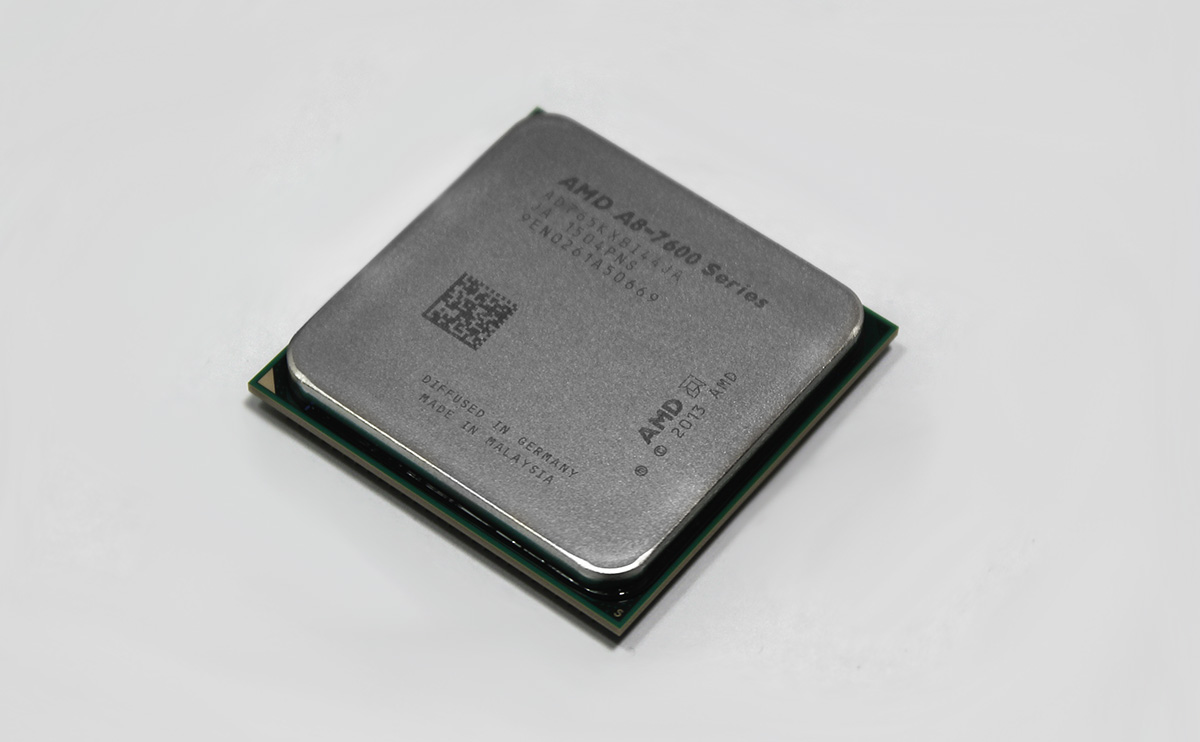
AMD recently made an addition to their Kaveri line up of APUs with the release of the unlocked A8-7650K. This was done in tandem with the new A68 chipset with the aim to tempt buyers with a well rounded low cost system. Coming in at less than £80 for the APU and from just £33 for an A68 motherboard, it is interesting to see how AMD are now attacking that ‘price’ part of ‘price-performance’.
The A8-7650K has 10 compute cores, which translates as 4 CPU cores amd 6 Graphics cores (4C + 6G) and has a base/turbo frequency of 3.3/3.8GHz. As with its brethen Kaveri APUs it is equipped with HSA features which allow it to use the graphics compute cores to accelerate everyday multimedia processing and tasks. The primary hit in performance in comparison to the A10 APUs will undoubtedly be in its graphics performance, having two less graphics compute cores.
AMD’s Overview of the APU
Unlock your system’s full potential with HSA
Revolutionary Heterogeneous System Architecture (HSA) is a new standard in processor design where the CPU and GPU work together in harmony. With HSA, the full potential of AMD hardware enables more efficient performance, so applications are fast and responsive.
Get extreme performance with GCN architecture
Immerse yourself in leading-edge graphics technology with Graphics Core Next (GCN) architecture from AMD. This third-generation technology unlocks advanced features and the stunning performance of AMD Radeon™ graphics.
Raise your game with Mantle
AMD Mantle technology is a groundbreaking API that brings some of the most popular and advanced games to life. With this technology in the latest AMD APUs, you can game at unprecedented levels with hyperefficient performance.
Experience breathtaking immersive audio
AMD TrueAudio technology provides 32-channel surround audio to make games sound better and deliver more accurate voice recognition. Experience a whole new level of immersion.
Revolutionary Heterogeneous System Architecture (HSA) is a new standard in processor design where the CPU and GPU work together in harmony. With HSA, the full potential of AMD hardware enables more efficient performance, so applications are fast and responsive.
Get extreme performance with GCN architecture
Immerse yourself in leading-edge graphics technology with Graphics Core Next (GCN) architecture from AMD. This third-generation technology unlocks advanced features and the stunning performance of AMD Radeon™ graphics.
Raise your game with Mantle
AMD Mantle technology is a groundbreaking API that brings some of the most popular and advanced games to life. With this technology in the latest AMD APUs, you can game at unprecedented levels with hyperefficient performance.
Experience breathtaking immersive audio
AMD TrueAudio technology provides 32-channel surround audio to make games sound better and deliver more accurate voice recognition. Experience a whole new level of immersion.
Specifications & Features
Model: A8-7650K
Socket: FM2+
Radeon™ Brand: Radeon™ R7 Graphics
Compute Cores: 10(4 CPU + 6GPU)
GPU Cores: 384
CPU Clock Speed: 3.8GHz/3.3GHz
GPU Clock Speed: 720MHz
TDP: 95W
Total L2 Cache: 4MB
DDR3 Speed: 2133
Socket: FM2+
Radeon™ Brand: Radeon™ R7 Graphics
Compute Cores: 10(4 CPU + 6GPU)
GPU Cores: 384
CPU Clock Speed: 3.8GHz/3.3GHz
GPU Clock Speed: 720MHz
TDP: 95W
Total L2 Cache: 4MB
DDR3 Speed: 2133
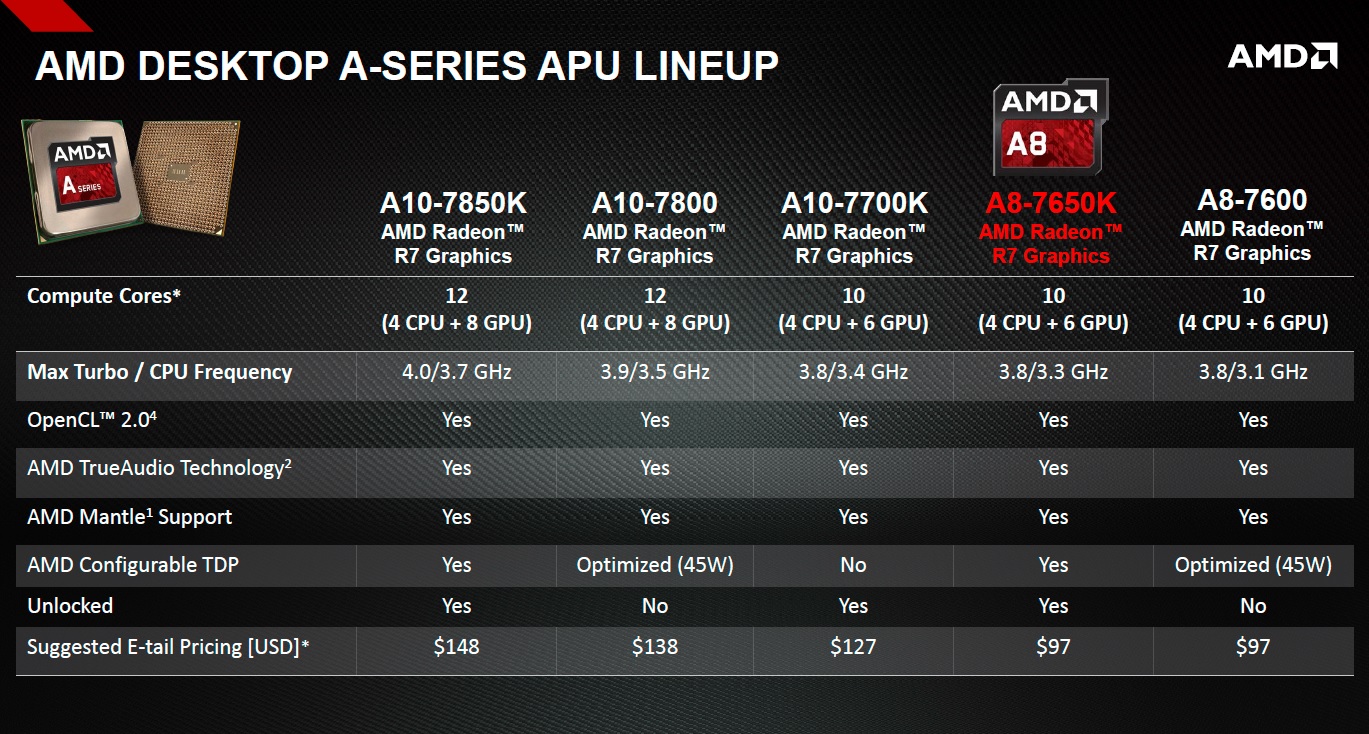
Coming in priced at the same as the previous A8 APU, though coming unlocked, will allow users to squeeze that extra performance from their chip at no extra cost. Of course as with its stablemates, the A8-7650K will also support technologies such as TrueAudio, Mantle, and various other video technologies making it ideal for a seamless high defintion media centre supporting 4K resolution via HDMI.
Test Setup
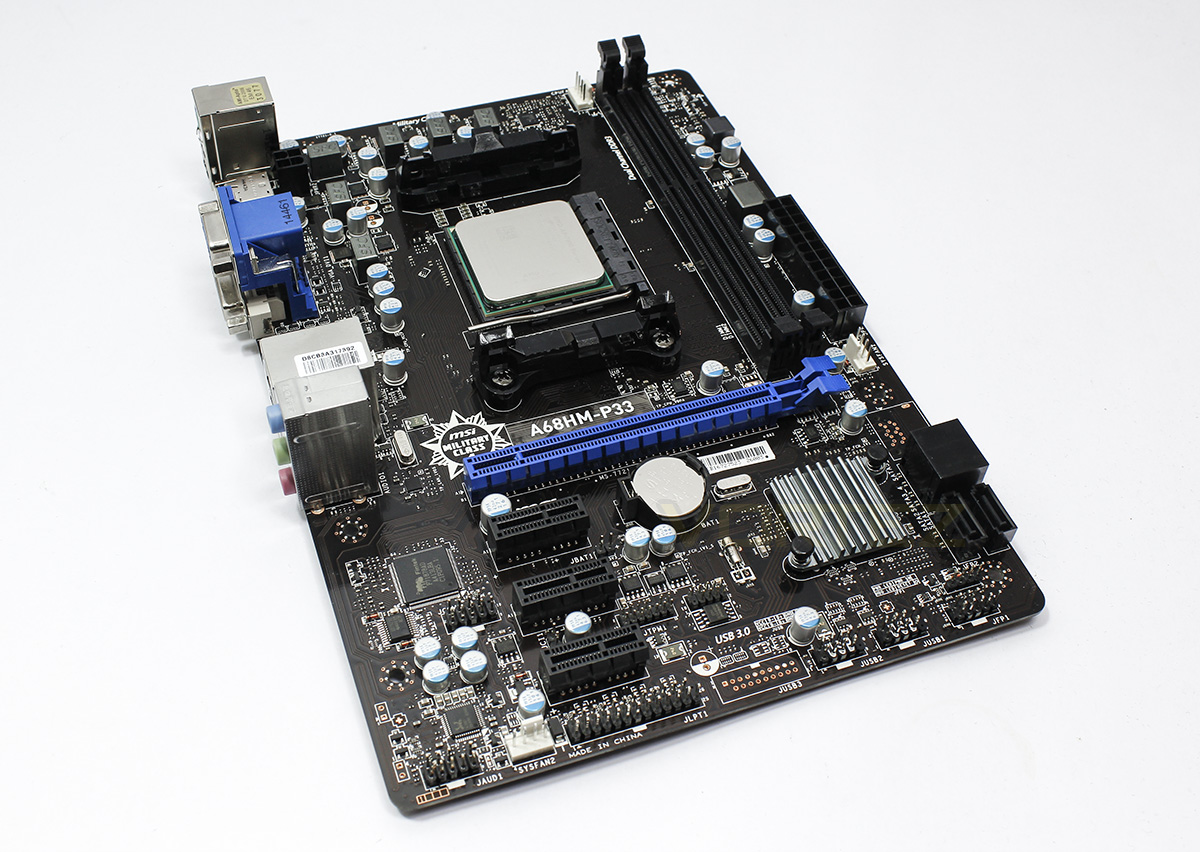
A68 Setup
APU – A8- 7650K
Motherboard – MSI A68HM-P33
RAM – Xtreem LV PC3 19200 DDR3 LV 2400
SSD – Kingston Hyper X 120GB
Power Supply – NZXT Hale82 650W
Cooler – Noctua NH-U12S
APU – A8- 7650K
Motherboard – MSI A68HM-P33
RAM – Xtreem LV PC3 19200 DDR3 LV 2400
SSD – Kingston Hyper X 120GB
Power Supply – NZXT Hale82 650W
Cooler – Noctua NH-U12S
APU Configurations
A8-7650K @ 3.3 GHz/3.8 GHz @ 100 MHz x 37/40, (OC @ 4000 MHz)
Radeon R7 integrated graphics @ 720 MHz, (OC @ 960 MHz)
Memory @ 2133 MHz 9-9-9-24, (OC @ 2400 MHz 11-11-11-33)
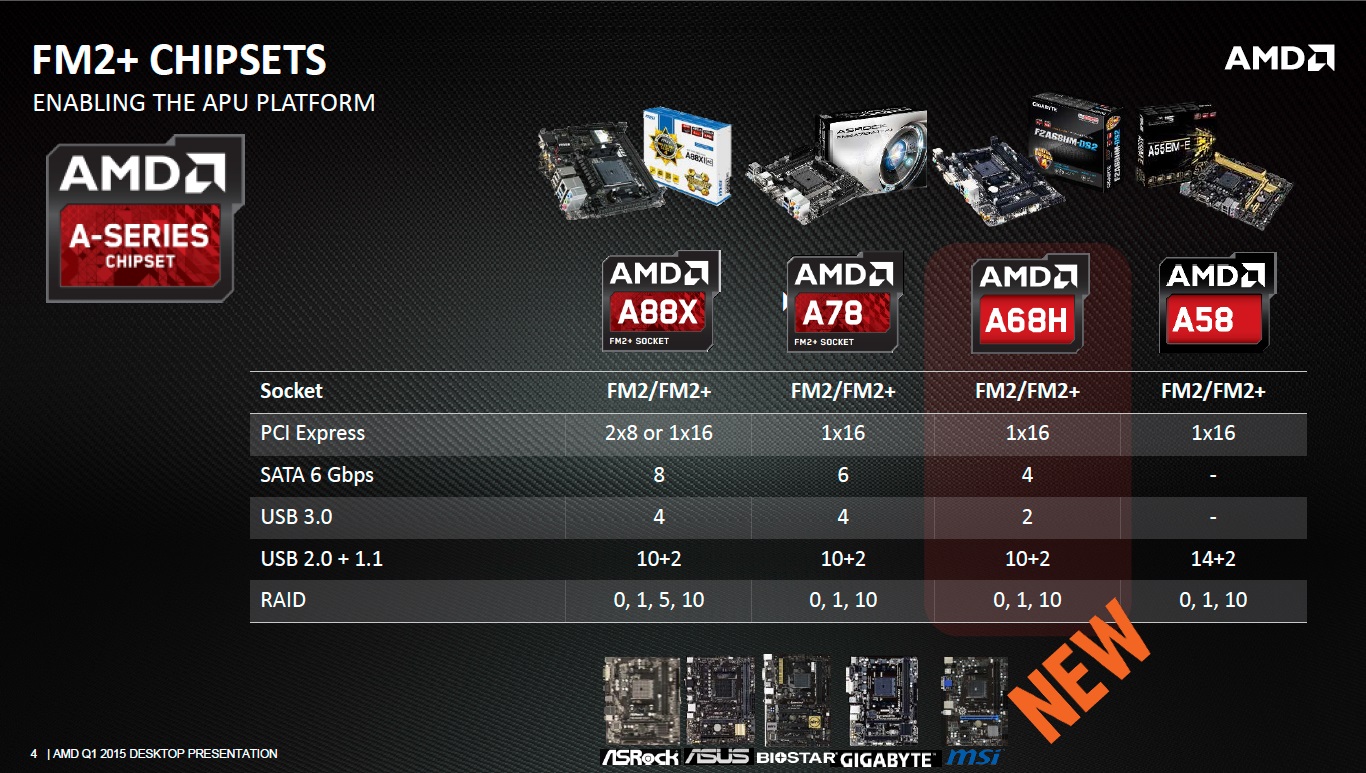
The A68 platform comes with some integrated USB 3.0 and 4x SATA 6Gbps which should be more than enough for the majority of users. The MSI A68HM-P33 motherboard in use with testing comes in priced at just £33 making for an incredibly well featured, seamless performing PC setup at a very low price, potentially an entire system under £250.
Overclocking
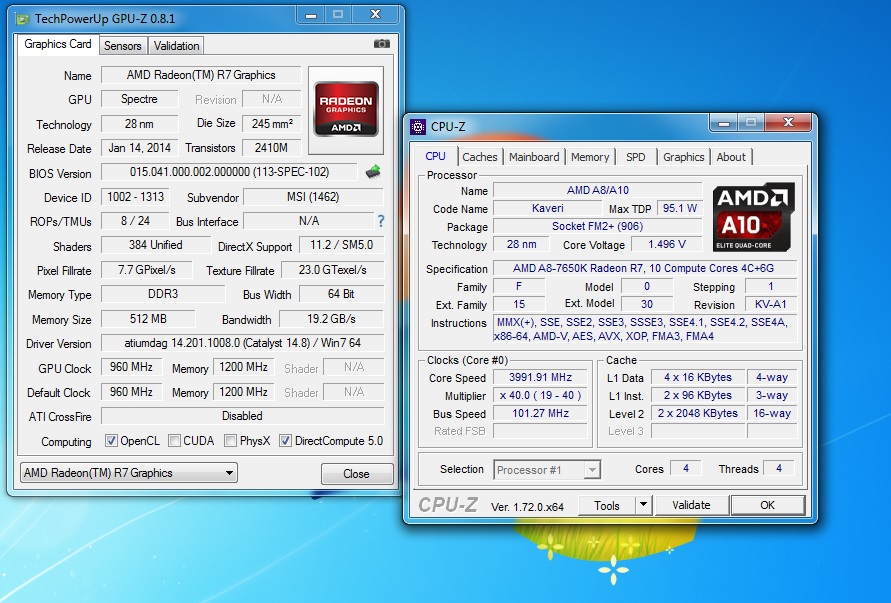
The A68 had few overclocking features and misses out the CPU voltage control, however with an unlocked multiplier, it was easy to get the CPU frequency to 4GHz, and the GPU to 960 MHz. The Kaveri APUs do not seem to like going much higher than maybe 4.2 GHz, and this may be achievable, but the limitations of the options of the motherboard didn’t allow for much finer tuning. Realistically, the GPU and memory frequency is more more significant than the CPU core and so will see greatest gains here without much impact to extra power usage.
Power Consumption
It’s interesting to note the power consumption across all motherboards because energy results can fluctuate between manufacturers due to the features and specifications that are integrated. First of all, for the idle tests the system is cold booted into Windows and no additional applications are executed – the watts are noted on the external energy monitor we use. Then the system is loaded with LinX 0.6.4 and MSI Kombustor simultainiously – watts are again monitored throughout the period of testing and the highest rated watts are then noted down. Below are the results of this energy test.
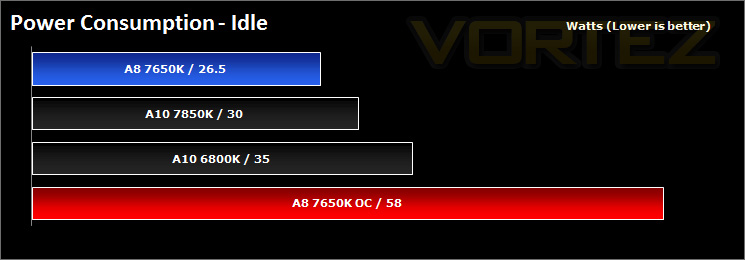
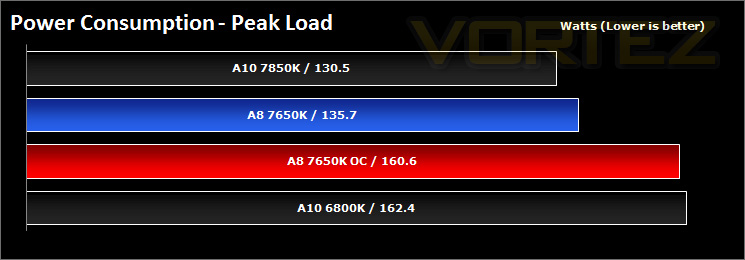
The power usage was fairly low at stock settings, doubling when overclocked and the power saving features disabled.
Synthetic Benchmarks: AIDA64
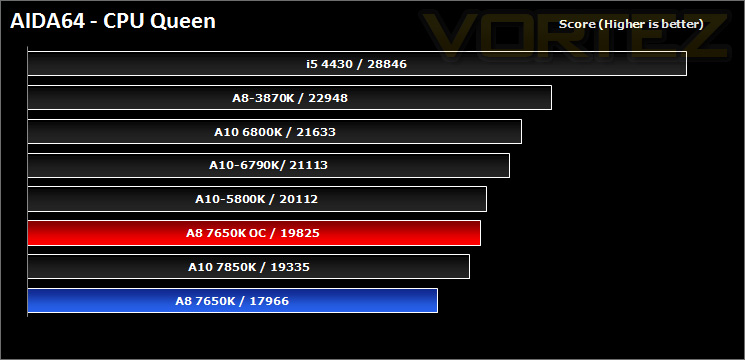
CPU Queen Benchmark
This simple integer benchmark focuses on the branch prediction capabilities and the misprediction penalties of the CPU. It finds the solutions for the classic “Queens problem” on a 10 by 10 sized chessboard. At the same clock speed theoretically the processor with the shorter pipeline and smaller misprediction penalties will attain higher benchmark scores. For example — with HyperThreading disabled — the Intel Northwood core processors get higher scores than the Intel Prescott core based ones due to the 20-step vs 31-step long pipeline. CPU Queen test uses integer MMX, SSE2 and SSSE3 optimizations.
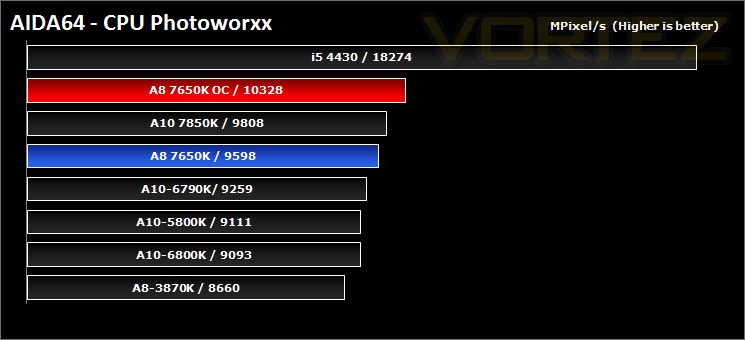
CPU Photoworxx Benchmark
This benchmark stresses the integer arithmetic and multiplication execution units of the CPU and also the memory subsystem. Due to the fact that this test performs high memory read/write traffic, it cannot effectively scale in situations where more than 2 processing threads used. For example, on a 8-way Pentium III Xeon system the 8 processing threads will be “fighting” over the memory, creating a serious bottleneck that would lead to as low scores as a 2-way or 4-way similar processor based system could achieve. CPU PhotoWorxx test uses only the basic x86 instructions, and it is HyperThreading, multi-processor (SMP) and multi-core (CMP) aware.
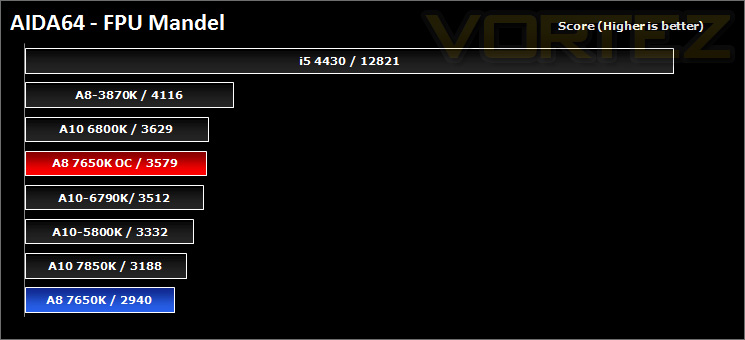
FPU Mandel Benchmark
This benchmark measures the double precision (also known as 64-bit) floating-point performance through the computation of several frames of the popular “Mandelbrot” fractal. The code behind this benchmark method is written in Assembly, and it is extremely optimized for every popular AMD, Intel and VIA processor core variants by utilizing the appropriate x87, SSE2, AVX or FMA4 instruction set extension. FPU Mandel test is HyperThreading, multi-processor (SMP) and multi-core (CMP) aware.
Synthetic Benchmarks: x264 HD
Simply put, this test measures how fast your machine can encode a short, DVD quality MPEG-2 video clip into a high-quality x264 video clip. What’s x264, you ask? It’s more or less the next-generation Xvid/DivX codec. I think it’s ideal for a benchmark because the application (x264.exe) reports fairly accurate compression results (in frames per second) for each pass of the video encoding process, and it uses multi-core processors very efficiently.
Synthetic Benchmarks: Cinebench
CPU Rendering
CINEBENCH can measure systems with up to 64 processor threads. This test scene contains approximately 2,000 objects which in turn contain more than 300,000 polygons in total, and uses sharp and blurred reflections, area lights, shadows, procedural shaders, antialiasing, and much more. The result is displayed in points (pts). The higher the number, the faster your processor.
Open GL Graphics Rendering
This procedure uses a complex 3D scene depicting a car chase (by renderbaron) which measures the performance of your graphics card in OpenGL mode. The performance depends on various factors, such as the GPU processor on your hardware, but also on the drivers used. The graphics card has to display a huge amount of geometry (nearly 1 million polygons) and textures, as well as a variety of effects, such as environments, bump maps, transparency, lighting and more to evaluate the performance across different disciplines and give a good average overview of the capabilities of your graphics hardware.
Synthetic Benchmarks: SiSoftware SANDRA
SANDRA isn’t always a benchmark that is included in hardware reviews but We believe it shouldn’t be ignored. SANDRA provides a vigorous package that tests your system in a rather large array of benchmarks. There are many aspects of benchmark that can be executed. We will be considering – CPU, memory and GPGPU tests.
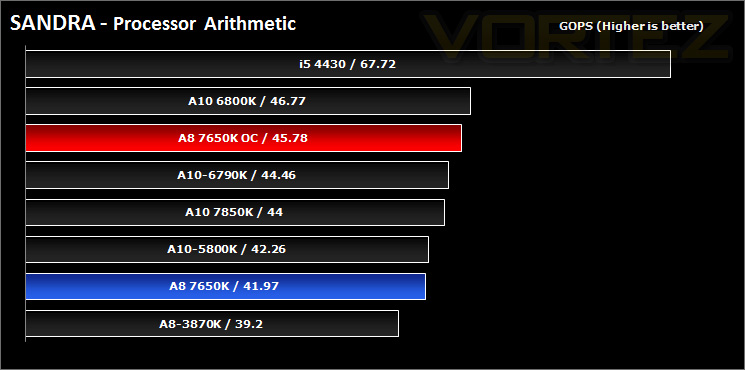
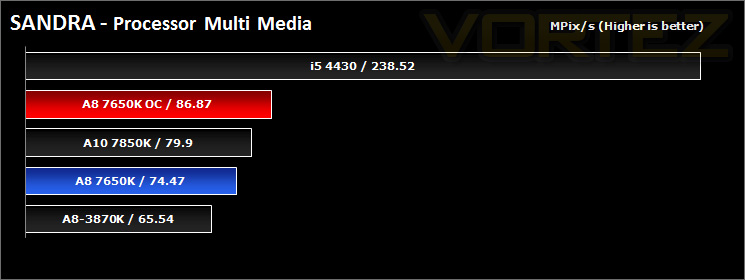
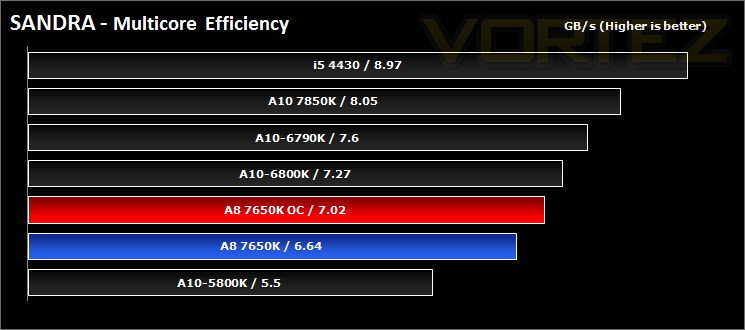
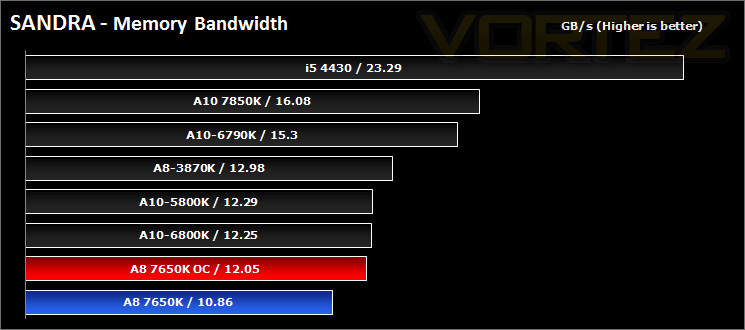
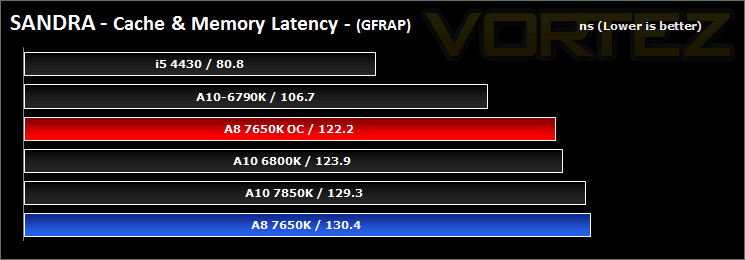
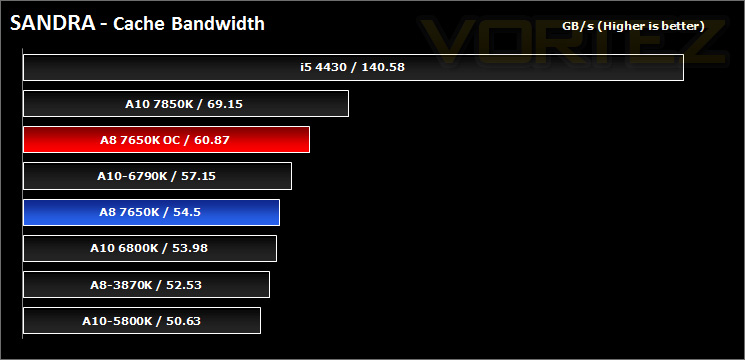
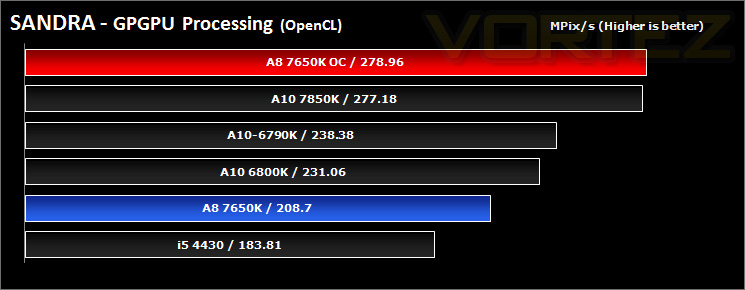
In the memory bandwidth, the A8-7650K seemed to lag a little, which could be due to the motherboard, or maybe a sign that our memory modules are dying (retesting in another system confirmed that they are fine), which will drain at the GPU performance a little.
Synthetic Benchmarks: 3DMark – Fire Strike & Basemark CL
3DMark – Fire Strike
Fire Strike is our new showcase DirectX 11 benchmark designed for high-performance gaming PCs. It is our most ambitious and technical benchmark ever, featuring real-time graphics rendered with detail and complexity far beyond what is found in other benchmarks and games today. Fire Strike will only be available in the Windows editions of 3DMark initially.
Basemark CL
Basemark CL by Rightware is a comprehensive benchmark tool designed to measure the performance of OpenCL 1.1 implementations on various devices ranging from desktops to embedded systems. Basemark CL uses OpenGL ES 2.0 or OpenGL 2.1 for rendering, depending on the platform.
Synthetic Benchmarks: UNIGINE Heaven 4.0 & Valley 1.0
UNIGINE Heaven 4.0Heaven Benchmark with its current version 4.0 is a GPU-intensive benchmark that hammers graphics cards to the limits. This powerful tool can be effectively used to determine the stability of a GPU under extremely stressful conditions, as well as check the cooling system’s potential under maximum heat output. It provides completely unbiased results and generates true in-game rendering workloads across all platforms, such as Windows, Linux and Mac OS X.
UNIGINE Valley 1.0
Valley Benchmark is a new GPU stress-testing tool from the developers of the very popular and highly acclaimed Heaven Benchmark. The forest-covered valley surrounded by vast mountains amazes with its scale from a bird’s-eye view and is extremely detailed down to every leaf and flower petal. This non-synthetic benchmark powered by the state-of-the art UNIGINE Engine showcases a comprehensive set of cutting-edge graphics technologies with a dynamic environment and fully interactive modes available to the end user.
Game Benchmarks: Tomb Raider, Thief, DOTA 2
Tomb Raider
Tomb Raider explores the intense and gritty origin story of Lara Croft and her ascent from a frightened young woman to a hardened survivor. Armed only with raw instincts and the ability to push beyond the limits of human endurance, Lara must fight to unravel the dark history of a forgotten island to escape its relentless hold.
Thief
Garrett, the Master Thief, steps out of the shadows into the City. In this treacherous place, where the Baron’s Watch spreads a rising tide of fear and oppression, his skills are the only things he can trust. Even the most cautious citizens and their best-guarded possessions are not safe from his reach.
As an uprising emerges, Garrett finds himself entangled in growing layers of conflict. Lead by Orion, the voice of the people, the tyrannized citizens will do everything they can to claim back the City from the Baron’s grasp. The revolution is inevitable. If Garrett doesn’t get involved, the streets will run red with blood and the City will tear itself apart.
As an uprising emerges, Garrett finds himself entangled in growing layers of conflict. Lead by Orion, the voice of the people, the tyrannized citizens will do everything they can to claim back the City from the Baron’s grasp. The revolution is inevitable. If Garrett doesn’t get involved, the streets will run red with blood and the City will tear itself apart.
DOTA 2
Dota is a competitive game of action and strategy, played both professionally and casually by millions of passionate fans worldwide. Players pick from a pool of over a hundred heroes, forming two teams of five players. Radiant heroes then battle their Dire counterparts to control a gorgeous fantasy landscape, waging campaigns of cunning, stealth, and outright warfare.
Irresistably colorful on the surface, Dota is a game of infinite depth and complexity. Every hero has an array of skills and abilities that combine with the skills of their allies in unexpected ways, to ensure that no game is ever remotely alike. This is one of the reasons that the Dota phenomenon has continued to grow.
Irresistably colorful on the surface, Dota is a game of infinite depth and complexity. Every hero has an array of skills and abilities that combine with the skills of their allies in unexpected ways, to ensure that no game is ever remotely alike. This is one of the reasons that the Dota phenomenon has continued to grow.
Conclusion
The most impressive thing about the A8-7650K is that for its relatively low price, it offers a known level of performance comparable to previous generation flagship APUs, with the added benefit of the accelerated performance that Kaveri has to offer. While our high resolution gaming benchmarks are done as to push the GPU to its limit, it does and can game well in a casual or ‘lite’ scenarios, reducing some eye candy and the resolution a little. As discussed in the A10-7850K review, the most significant gains from the Kaveri architecture are actually the things people often take for granted. Utilising all 10 compute cores to accelerate day to day productivity and media creation, you will find the user experience quicker and snappier, making this an ideal candidate for that well balanced mainstream system. This is highlighted by AMDs JPEG decoder benchmark, showing the APUs ability to throw around large packets of data via the compute cores.
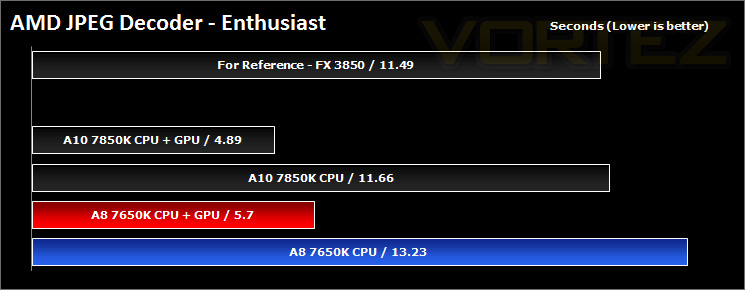
The APU isn’t limited to accelerating just the rendering of large JPEG images, you will find that the APU accelerates image editing in the likes of Photoshop, video editing in Sony Vegas and calculations in Libre Office. This list isn’t exhaustive but it does represent the increasing number of applications that are taking advantage of this technology. The only real downside with this APU is that it comes with a lower stock frequency compared to the rest of the APU family, reducing the already weakest aspect of the APU itself, the pure CPU processing grunt. It could be argued that sheer CPU grunt is becoming irrelevant, residing in marginalised and specific performance tasks. In this event, the APU is not for you. For everything else, the A8-7650K allows a low priced, great performing all rounder that will only let you down if you expect it to be that ‘low power gaming chip’ of your dreams.
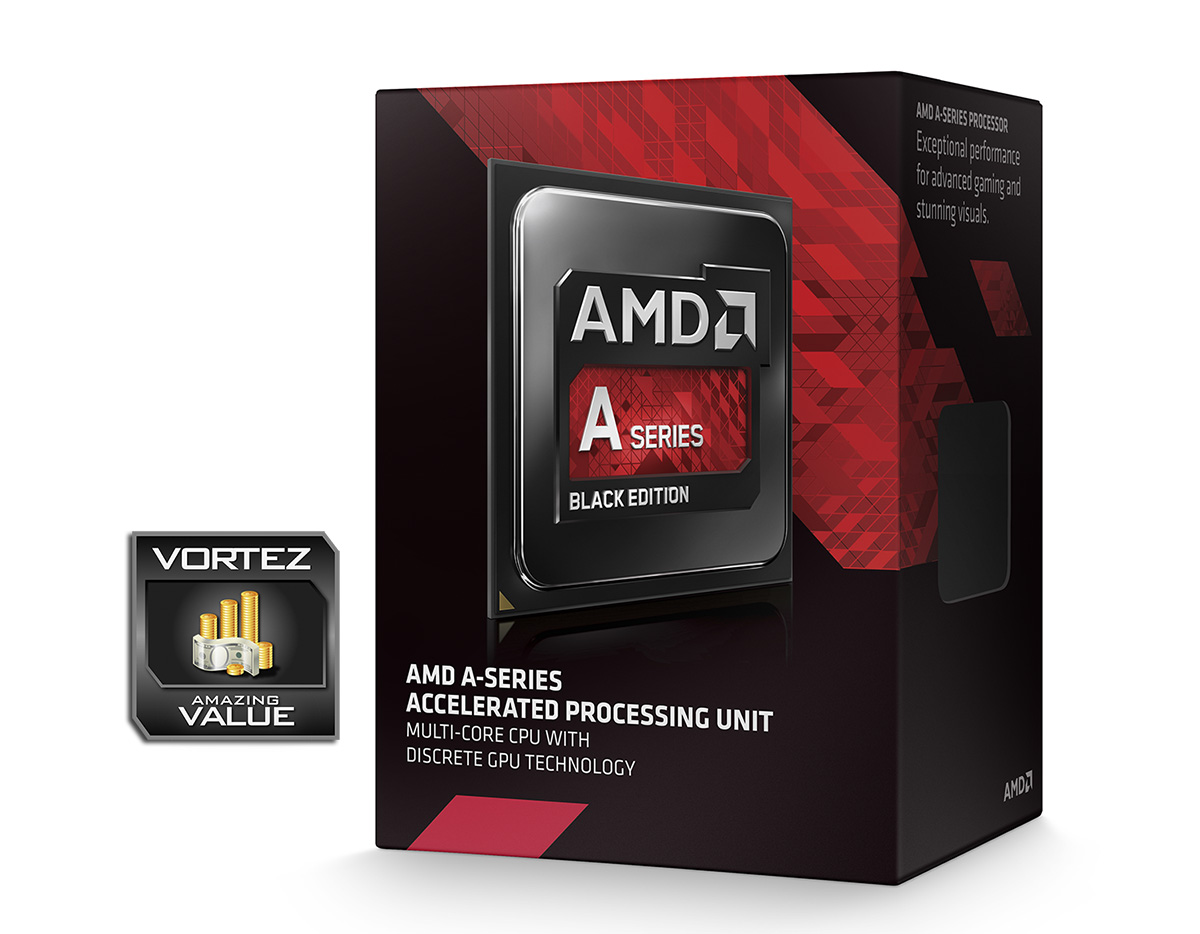
Considering that you can squeeze extra GPU and CPU performance out of the A8-7650K due to it being unlocked, you can appreciate the sense of value it represents; particularly when paired with a low cost motherboard like the A68 chipset. You will struggle to find this level of ‘balanced’ performance from the competition. This is why the APU really does push the boundaries of what ‘mainstream’ computing means in regards to performance expectations. This is why the AMD A8-7650K gets our Amazing Value award.
Affordable and capable of handling your everyday workload and media needs in a seamless user experience. If you want to push the performance a little bit more you can easily overclock it too.
Pros.
+ Price
+ Low power
+ Unlocked, easy to overclock
+ Great all round performance
+ 10 compute cores to accelerate your user experience
Cons.
– None
+ Price
+ Low power
+ Unlocked, easy to overclock
+ Great all round performance
+ 10 compute cores to accelerate your user experience
Cons.
– None

Click here for an explanation of our awards at Vortez.net.