



Corsair adds an E-ATX capable mid-tower to the Carbide Series which focuses primarily on silence. With PWM fan controller, USB 3.1 Gen2 and more… is this the best silent enclosure money can buy?

Product on Review: Carbide Series 678C
Manufacturer & Sponsor: Corsair
Street Price: UK: £179 US: $200 AUD: $279
Of the different compute case series that Corsair supplies, the Carbide Series has been a highly active range for Corsair – barely a month goes by without the brand adding a new chassis to the family. While the portfolio blends together great features and decent value for money, there are a variety of different styles on offer which should satisfy gamers or enthusiasts.
Today marks the release of another addition to the Carbide Series, namely the 678C. Stepping away from the garish designs we might expect for a gamer case, 678C settles with a more elegant approach, characterised by an emphasis on silence.
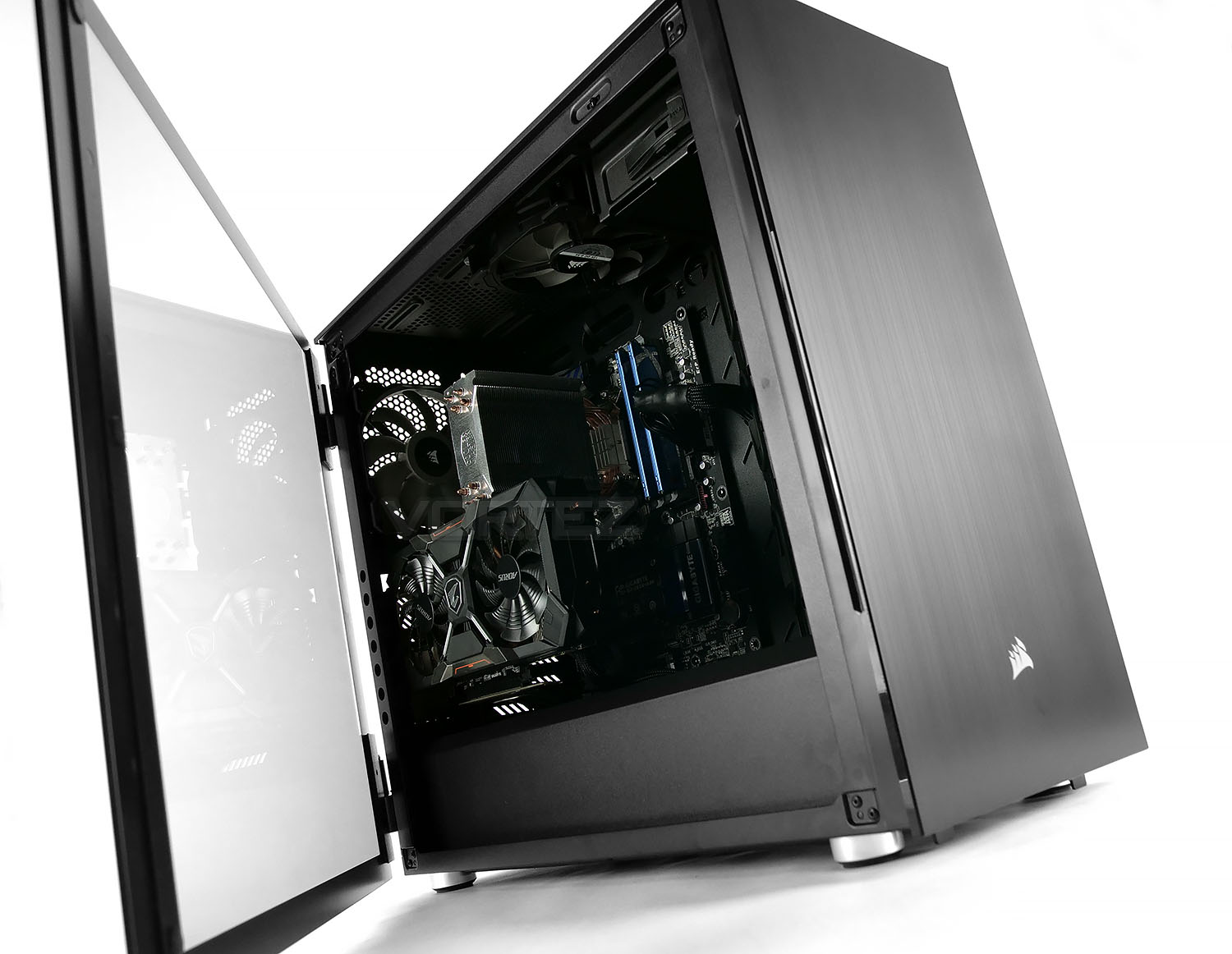
The 678C features noise dampened panels and a thick tempered glass panel. After combining this with the PWM fan controller and the recipe for silence is certainly there.
Corsair on their 678C
The CORSAIR Carbide Series 678C is a mid-tower ATX case with sophisticated style and serious versatility. Sound damping side, front and roof panels ensure whisper-quiet operation. Keep your system cool with space for multiple radiators, including up to a 360mm in the front and roof. Regulate speed for three included SP140 PWM fans and up to three more with an included PWM fan controller. Install up to 6x 3.5in and 3x 2.5in drives, with a modular HDD/ODD design that allows you to move six trays to any of eight different mounting locations. And with hinges on both the front panel and tempered glass side panel, you’ll have tool-free easy access to your system.
Technical Specifications
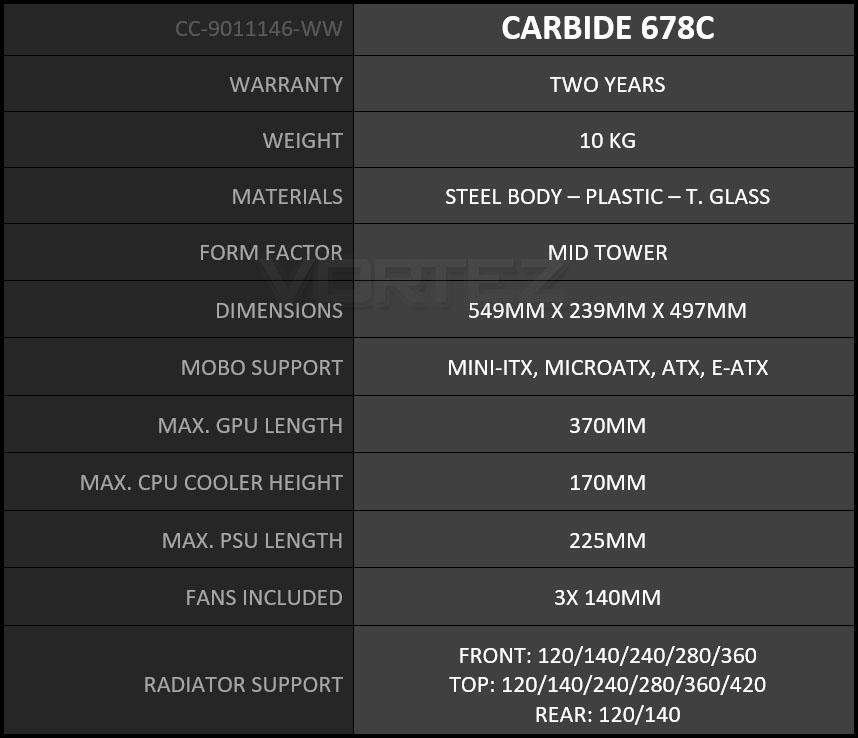
Below are the technical specifications surrounding Corsair’s 678C.
Closer Look Video
For this review we’ve also created a YouTube video which highlights all of the key features, shows a full system install and identifies the good/bad points regarding this computer case. Click the video below or go to the Corsair Carbide Series 678C Video.
Thermal Performance Testing
Inside our 678C we have three 140mm cooling fans which are in key locations. This type of arrangement usually delivers good results!
For this test, we will use the top panel with the noise damping material.
To discover the thermal performance of 678C we will record idle temperatures after 20 minutes from a cold boot. We will then stress the system and temperatures will again be monitored after 30 minutes have elapsed.
For the purpose of accurate analysis, the idle and load temperatures for CPU will be recorded and the range between idle and load will be calculated to determine how efficient cooling is.
NOTE: Ambient temperature is 20C
System Components
CPU Intel Pentium K G3258 @ 4GHz
Motherboard GIGABYTE Z87X-D3H
CPU Cooler Cooler Master Hyper 212 LED Turbo
Graphics NVIDIA GTX 1080 Ti
Memory 4GB Kingston HyperX DDR3
HDD Samsung Spinpoint 500GB SATA-II
PSU Corsair RM850
Motherboard GIGABYTE Z87X-D3H
CPU Cooler Cooler Master Hyper 212 LED Turbo
Graphics NVIDIA GTX 1080 Ti
Memory 4GB Kingston HyperX DDR3
HDD Samsung Spinpoint 500GB SATA-II
PSU Corsair RM850
Noise
Thanks to its thick panels and noise damping material, noise is barely heard from 678C.
Conclusion
It might be odd to see another computer chassis enter the market without RGB but after all is said and done, there’s a lot to like about Corsair’s new addition to the Carbide Series. Not only does this case achieve near-silence but it also offers a lot of features including a USB 3.1 Gen2 port.
Available in black or white, the 678C is an elegant, stylish computer chassis capable of housing up to E-ATX motherboards. Inside there is enough space to install the biggest of components whether that is the CPU cooler, graphics card or even super-sized water cooling radiators.
Out of the box in its stock condition the 678C arrives with three 140mm cooling fans (SP140 PWM) which should be sufficient for most users’ needs, however there is the option to deck this chassis out with up to nine 120mm fans or seven 140mm fans.
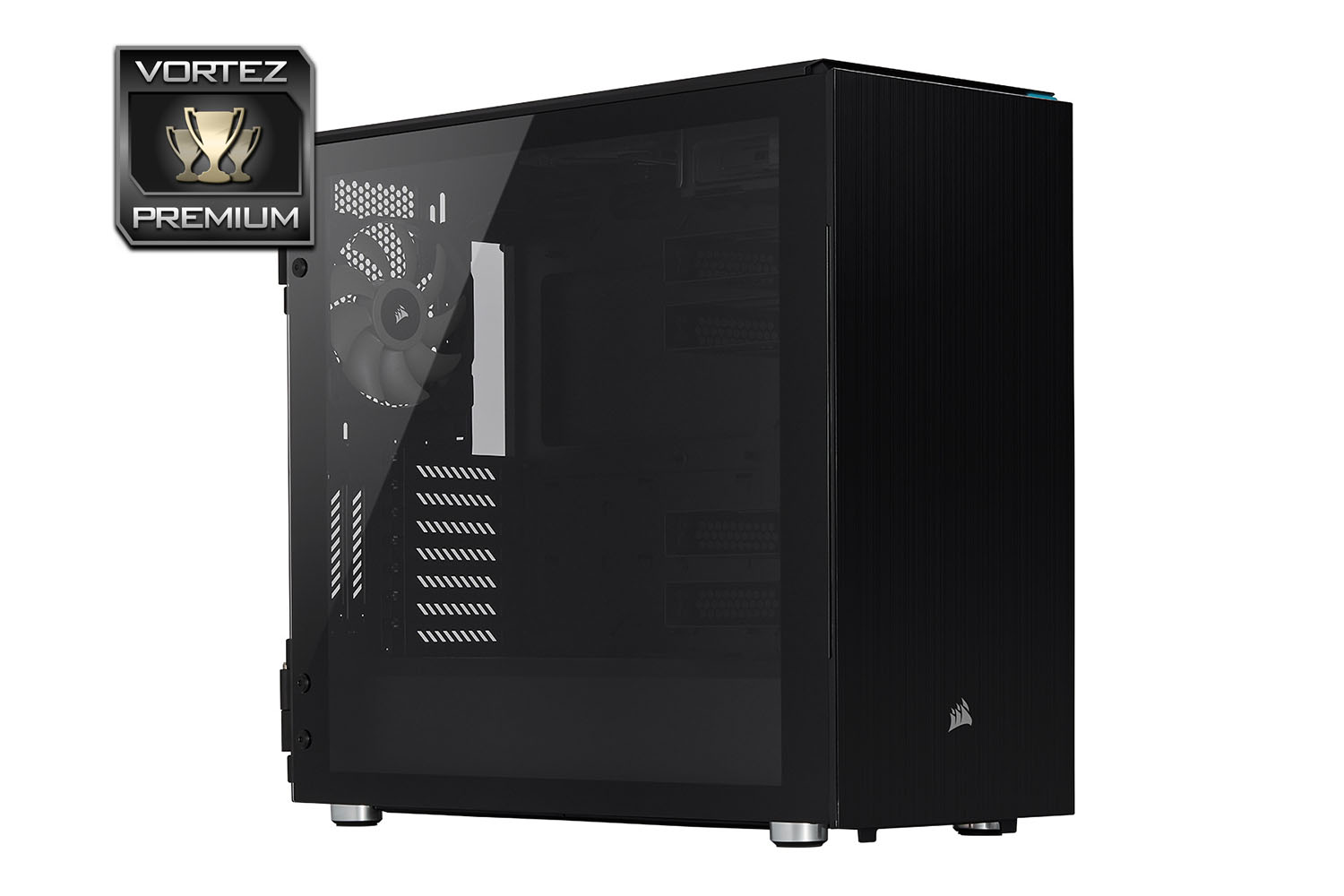
We’re really pleased to see that Corsair has included two options for the top panel – allowing the user the choice between better airflow or lower noise. Not only is it superb to have this available but swapping between the options is quick and simple too.
The only points we’d raise which could be regarded as tedious is the limited space behind the motherboard tray which adds extra time when setting out cabling. If the cables are protruding, this can mark the noise damping material on the inside of the side panel. You’ll notice in our configuration with the graphics card rotated and with the use of a heatsink for the CPU, both parts came extremely close to touching. Our AORUS graphics card is much wider than other models but this highlights a limitation if you have a wider GPU (120mm+) and a heatsink and would like to rotate the graphics card.
678C costs £179 GBP, $200 USD and $279 AUD. This is in the upper bracket for mid-range computer cases but for that price we’re getting a big list of features and a case which is tailored to low-noise.
678C combines elegance, flexibility and silence. System builders who demand a plethora of features which aren’t just gimmicks should look no further!
Pros
+ Available in black or white
+ Looks stylish and elegant
+ Features USB 3.1 Gen2 port
+ Good build quality
+ Flexible storage options
+ Includes PWM fan controller
+ Can house high-end kit
+ Very flexible for liquid coolers
+ Good cooling performance
+ Hinged panels are convenient
+ Optional top panels
Cons
– Limited space behind mobo tray for cables
+ Available in black or white
+ Looks stylish and elegant
+ Features USB 3.1 Gen2 port
+ Good build quality
+ Flexible storage options
+ Includes PWM fan controller
+ Can house high-end kit
+ Very flexible for liquid coolers
+ Good cooling performance
+ Hinged panels are convenient
+ Optional top panels
Cons
– Limited space behind mobo tray for cables
Click here for an explanation of our awards at Vortez.net.
Stay connected with the Vortez Social Media pages:
Join in with the discussions on Discord