Patriot, a market leader in the memory game have released their latest Viper 4 DRAM modules available in a range of frequencies and with compatibility for Ryzen 3rd Gen. CPUs. Check out our verdict.

Product on Review: Patriot Viper 4 Blackout
Manufacturer: Patriot
Street Price: GBP £109.99 / USD $119.99
Viper Gaming is a brand of Patriot, a world leader in flash-based PC components based in the United States. They have plenty of experience producing high performance memory kits for enthusiasts and gamers alike.
The Patriot Viper 4 Blackout Edition is under the spotlight today, with a 3600MHz frequency out of the box with XMP 2.0 timings of 17-19-19-39. The 3600MHz kit may find itself being favoured by many Ryzen 3rd Gen. users with AMD recommending higher speed DRAM kits to complement their Infinity Fabric.
Featuring no RGB LEDs, the Blackout Edition is just that, blacked out. The custom-designed black heat shield is engineered to dissipate heat and ensure rock solid performance during even the most demanding tasks.
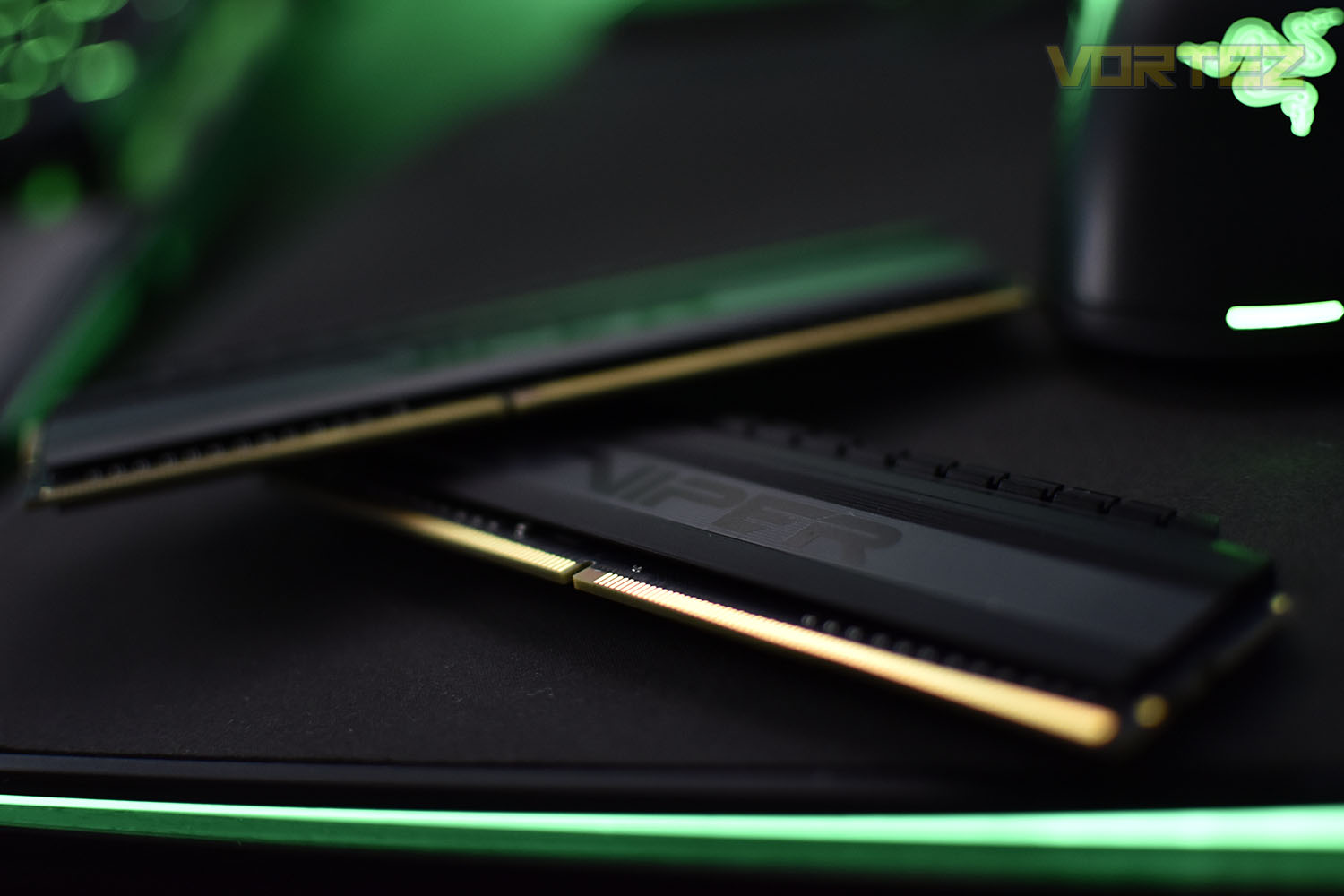
Available in 3000MHz, 3200MHz, 3600MHz and 4000MHz and in 4GB and 8GB DIMMs, there should be a capacity and performance level for everyone. Bolstering that claim, Patriot have extensively tested their modules to ensure the best compatibility for AMD Ryzen 3rd Gen. and Intel platforms alike.
Priced at £109.99 in the UK and $119.99 in the US, the kit is averagely priced so let’s get stuck into the testing and see what’s what.
Patriot on the Viper 4 Blackout:
Patriot Viper 4 Blackout Series memory modules are designed with both true performance and sleek style in mind. Built for the latest platforms, the Viper 4 Blackout Edition Series provides top quality performance and matches perfectly with almost any PC build. The Viper 4 Blackout Series utilizes a custom, newly designed, high performance black heat shield for superior heat dissipation to ensure rock solid performance even when using the most taxing applications. Built from the highest quality Build of Materials, Patriot Viper 4 Blackout Series memory modules are hand tested and validated for system compatibility.
Technical Specifications
SPECIFICATIONS:
Capacity: 16GB (2 x 8GB)
Base Frequency: PC4-17000 (2133MHz)
Base Timings: 15-15-15-36
Tested Frequency Profile 1: PC4-28800 (3600MHz)
Tested Timings: 17-19-19-39
Tested Voltage for Profile 1: 1.35V
Format: NON-ECC Unbuffered DIMM
Pin Out: 288-Pin
Capacity: 16GB (2 x 8GB)
Base Frequency: PC4-17000 (2133MHz)
Base Timings: 15-15-15-36
Tested Frequency Profile 1: PC4-28800 (3600MHz)
Tested Timings: 17-19-19-39
Tested Voltage for Profile 1: 1.35V
Format: NON-ECC Unbuffered DIMM
Pin Out: 288-Pin
Packaging & Product
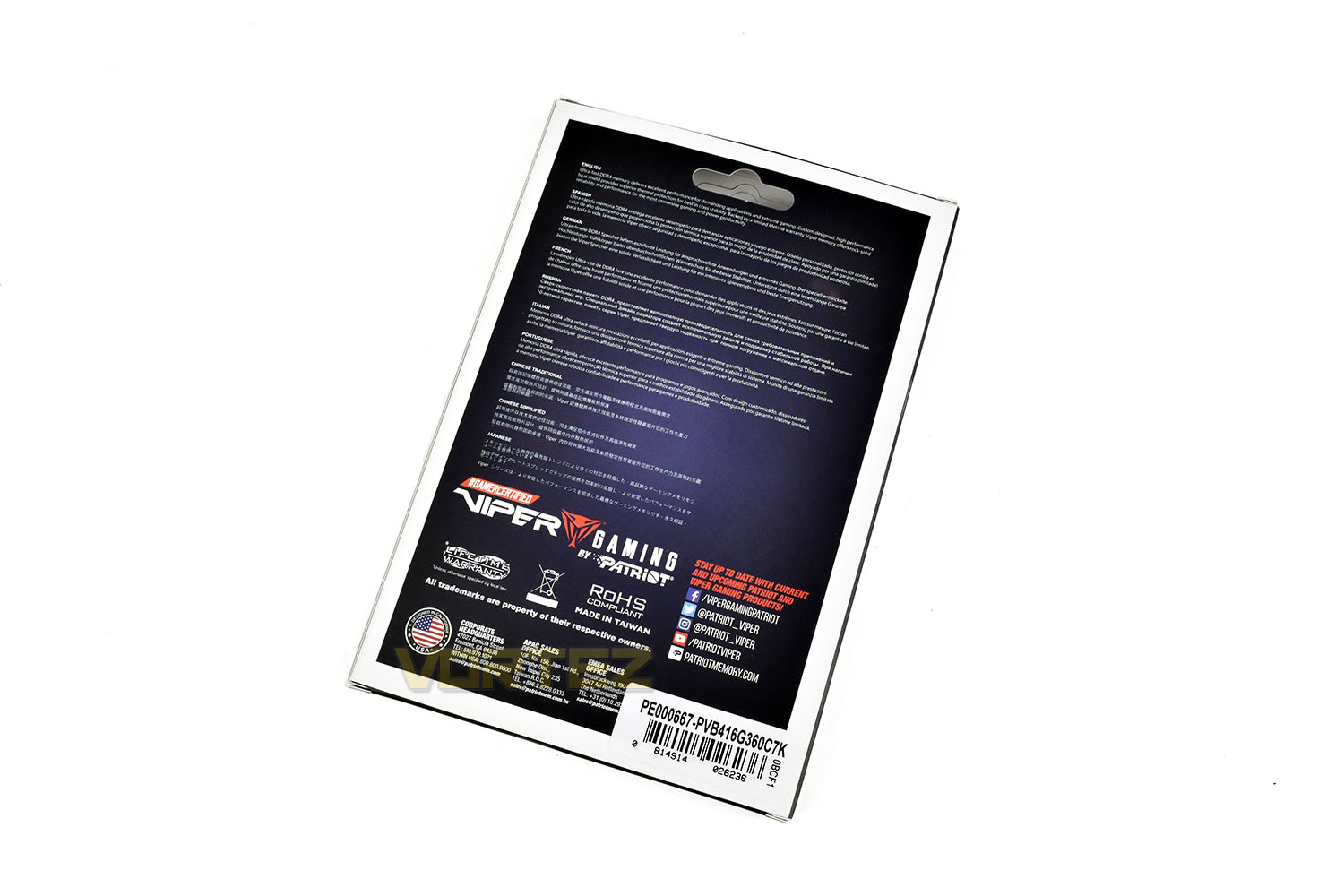
Short, snappy and informative would be the best way to describe Patriot’s packaging for the Viper 4 Blackout Edition. The single window allows you to see one of the two modules in all of its glory.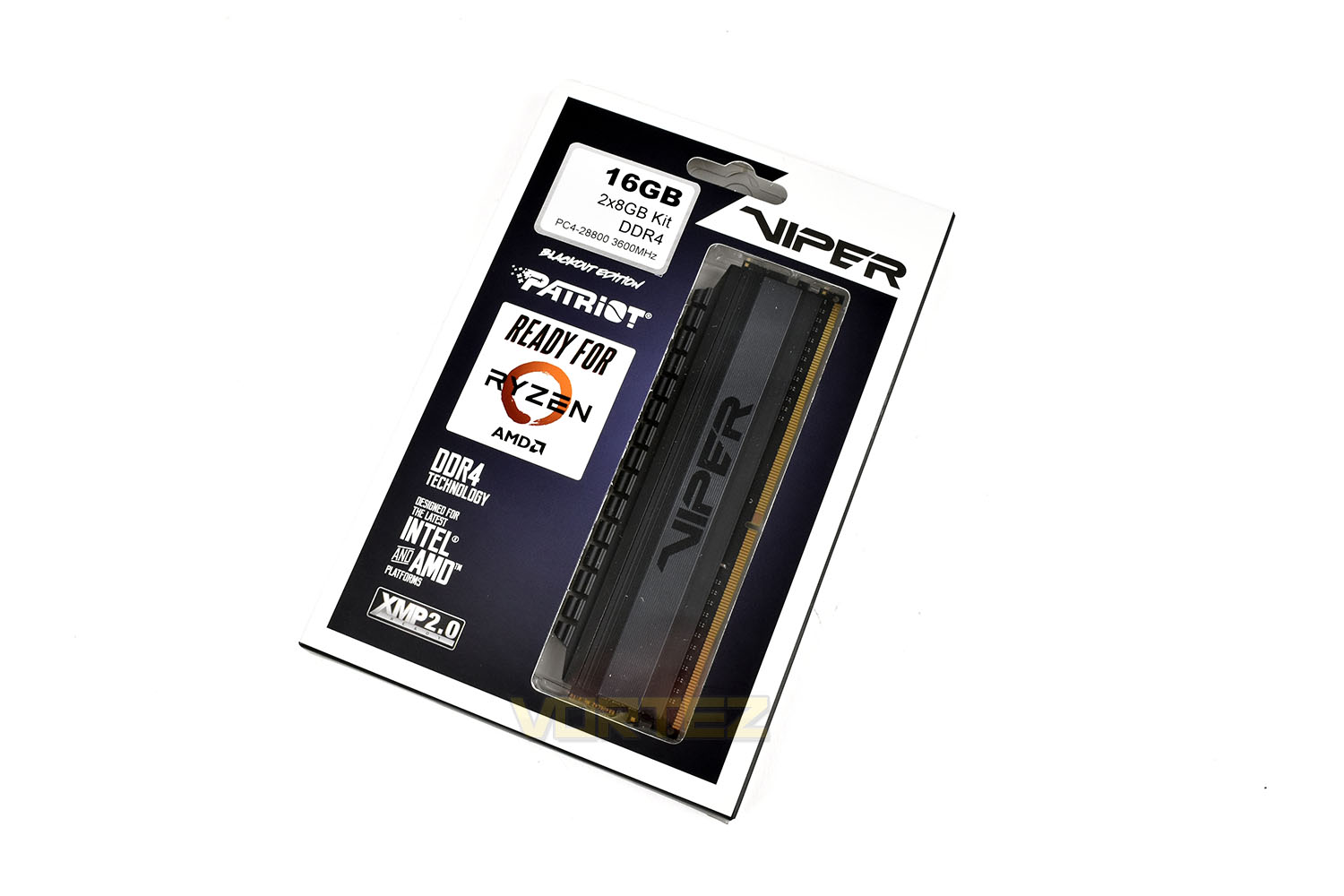
One thing missing from both the front and back is a mention of the CAS timings of the DRAM modules.
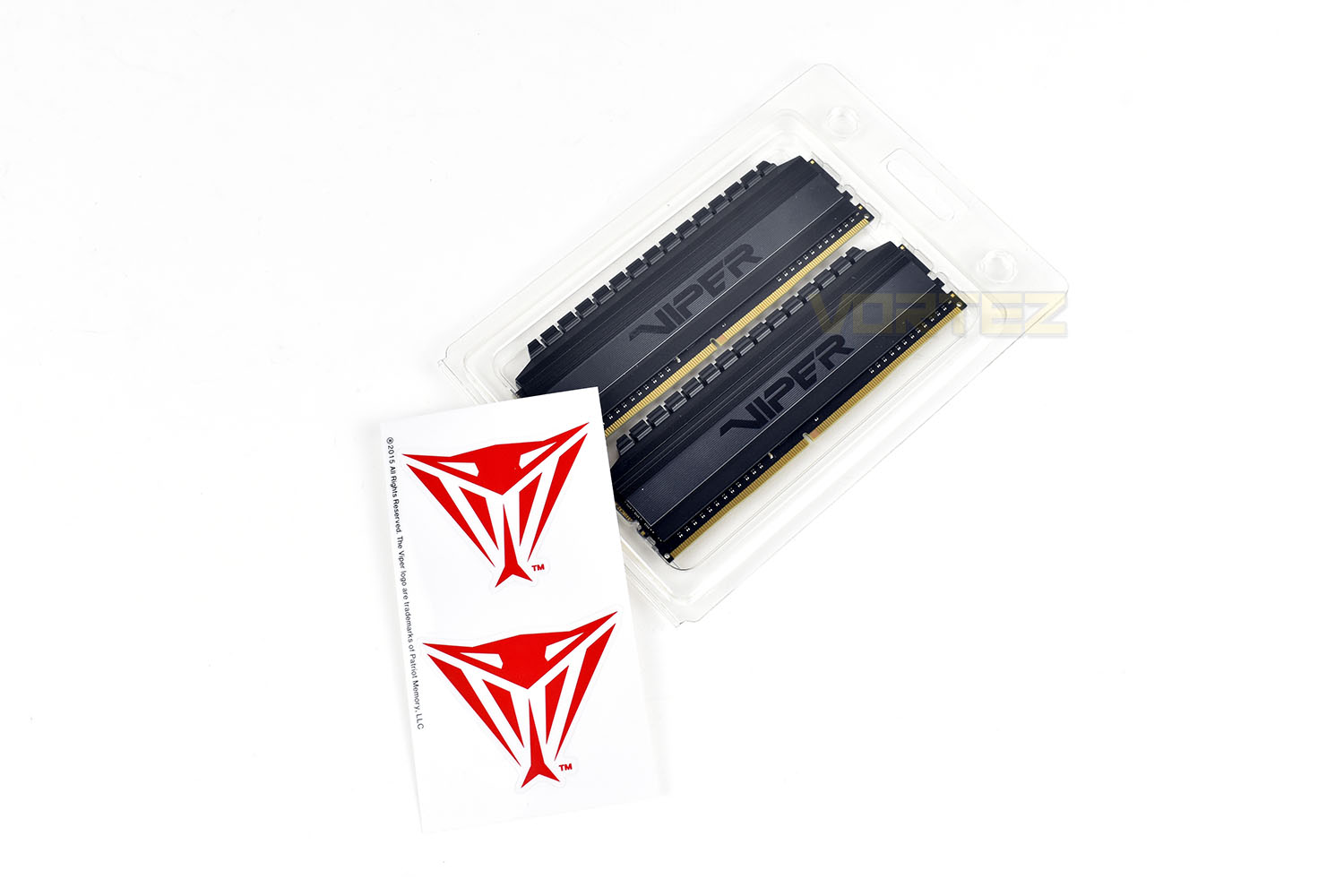
Included inside are a pair of large Patriot stickers.
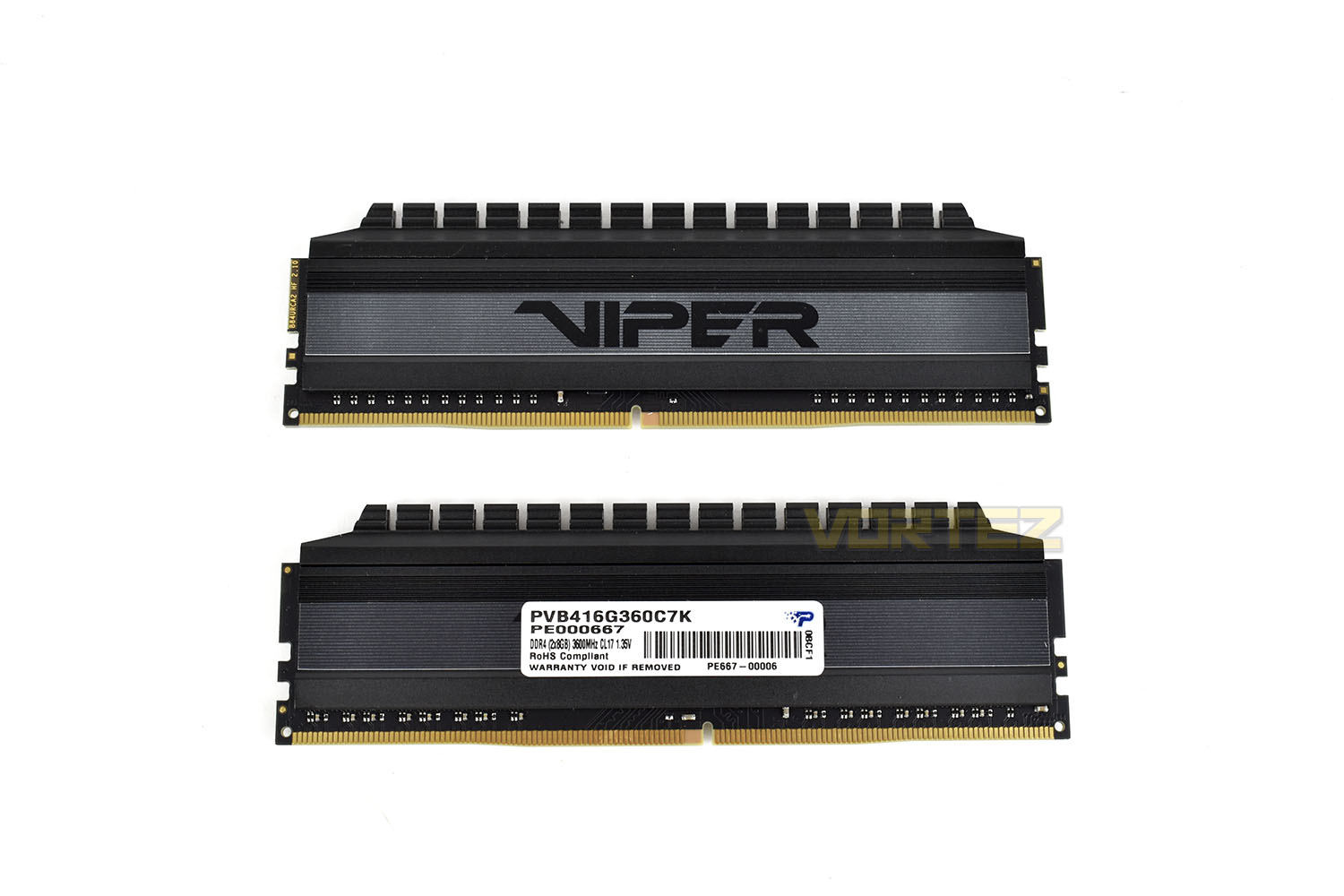
Front and back of the modules are the same, save for the VIPER logo on one side and the product label on the other. They stand at 40mm tall so should slide under most CPU tower coolers but make sure to check the specifics before you buy.
Test Setup & Software
Our test system is formatted and a fresh version of Windows is installed with just drives in place – no additional applications. Windows is then updated to the latest release and the drivers are installed.Included in the list of benchmarks are the following applications:
Benchmarks:
AIDA64
SiSoftware SANDRA
Cinebench R20
PCMark 8 Photoshop
Rise of the Tomb Raider
War Thunder
SiSoftware SANDRA
Cinebench R20
PCMark 8 Photoshop
Rise of the Tomb Raider
War Thunder
Test system
CPU: AMD Ryzen 7 3800X
Motherboard: MSI Prestige X570 Creation
Graphics: AMD Radeon RX480
Memory:
PSU: Corsair RM750x
OS: Microsoft Windows 10 Pro 64-Bit
Monitor: ASUS ROG PG279Q
Motherboard: MSI Prestige X570 Creation
Graphics: AMD Radeon RX480
Memory:
PSU: Corsair RM750x
OS: Microsoft Windows 10 Pro 64-Bit
Monitor: ASUS ROG PG279Q
Memory Transfer Performance – AIDA64
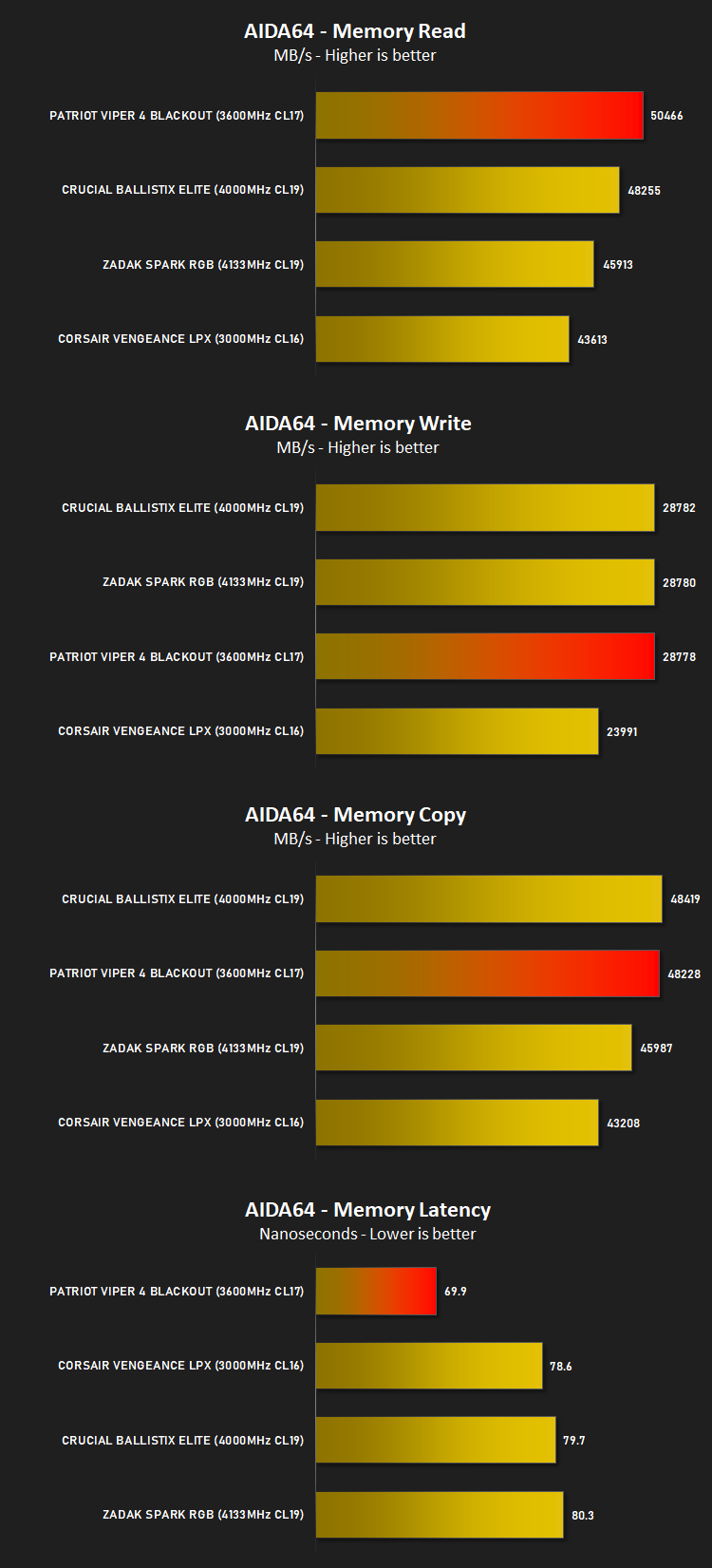
AIDA64 Product PageMemory bandwidth benchmarks (Memory Read, Memory Write, Memory Copy) measure the maximum achiveable memory data transfer bandwidth. The code behind these benchmark methods are written in Assembly and they are extremely optimized for every popular AMD, Intel and VIA processor core variants by utilizing the appropriate x86/x64, x87, MMX, MMX+, 3DNow!, SSE, SSE2, SSE4.1, AVX, and AVX2 instruction set extension.
The Memory Latency benchmark measures the typical delay when the CPU reads data from system memory. Memory latency time means the penalty measured from the issuing of the read command until the data arrives to the integer registers of the CPU.
The Memory Latency benchmark measures the typical delay when the CPU reads data from system memory. Memory latency time means the penalty measured from the issuing of the read command until the data arrives to the integer registers of the CPU.
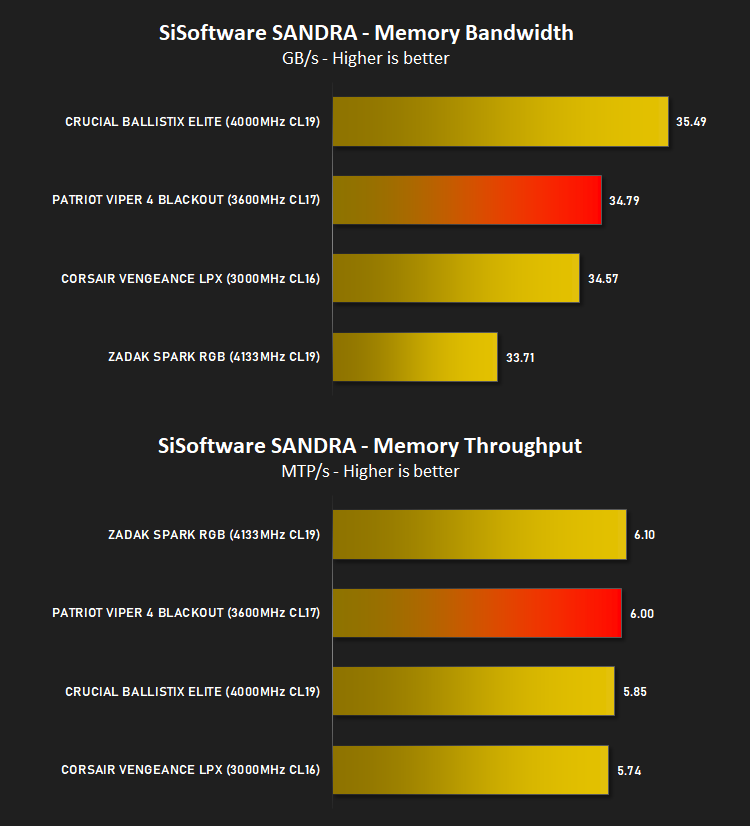
Bandwidth Performance – SiSoftware SANDRA
SANDRA isn’t always a benchmark that is included in hardware reviews but I believe it shouldn’t be ignored. SANDRA provides a vigorous package that tests your system in a rather large array of benchmarks. There are many aspects of benchmark that can be executed.
Processing Power Performance – Cinebench R20
Cinebench is a real-world cross-platform test suite that evaluates your computer’s hardware capabilities. Improvements to Cinebench Release 20 reflect the overall advancements to CPU and rendering technology in recent years, providing a more accurate measurement of Cinema 4D’s ability to take advantage of multiple CPU cores and modern processor features available to the average user.
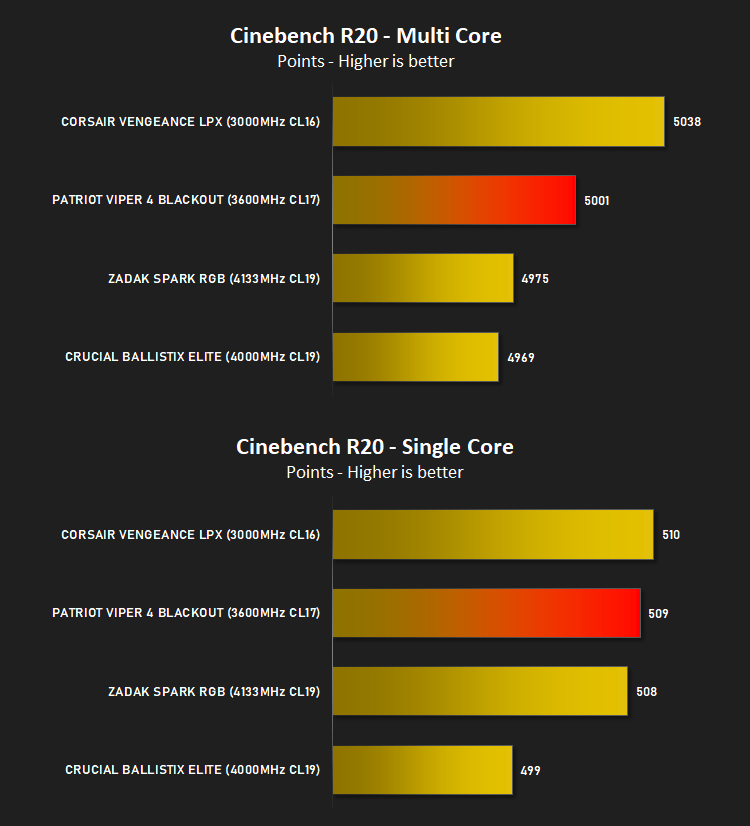
Image Editing Performance – PC Mark 8 Photoshop
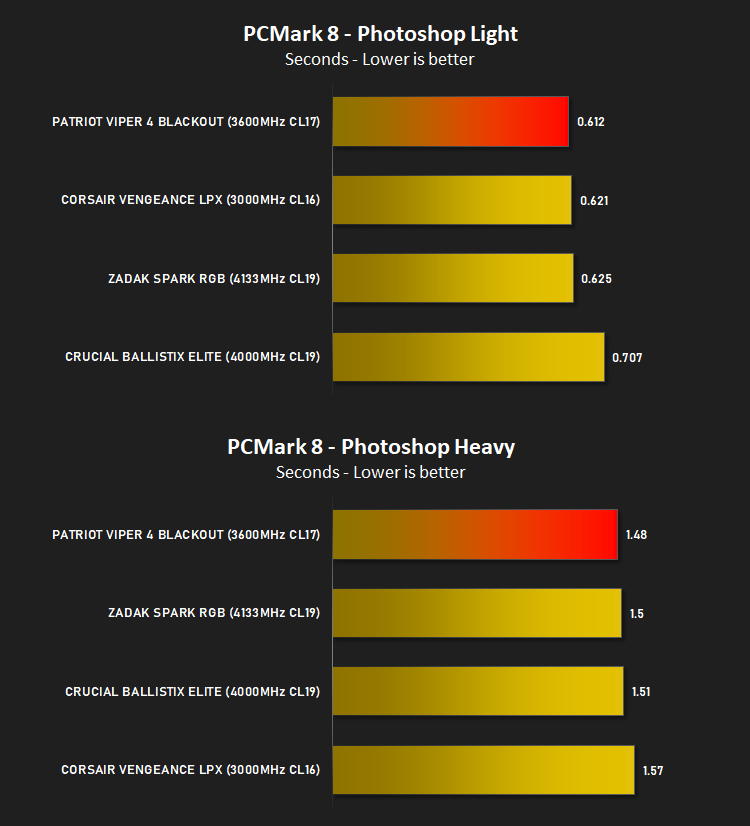
PCMark 8 Product Page Developed in partnership with Benchmark Development Program members Acer, AMD, Condusiv Technologies, Dell, HGST, HP, Intel, Microsoft, NVIDIA, Samsung, SanDisk, Seagate and Western Digital, PCMark 8 is the latest version in FutureMark’s popular series of PC benchmarking tools. Improving on previous releases, PCMark 8 includes new tests using popular applications from Adobe and Microsoft.
Gaming Performance – Rise of the Tomb Raider & War Thunder
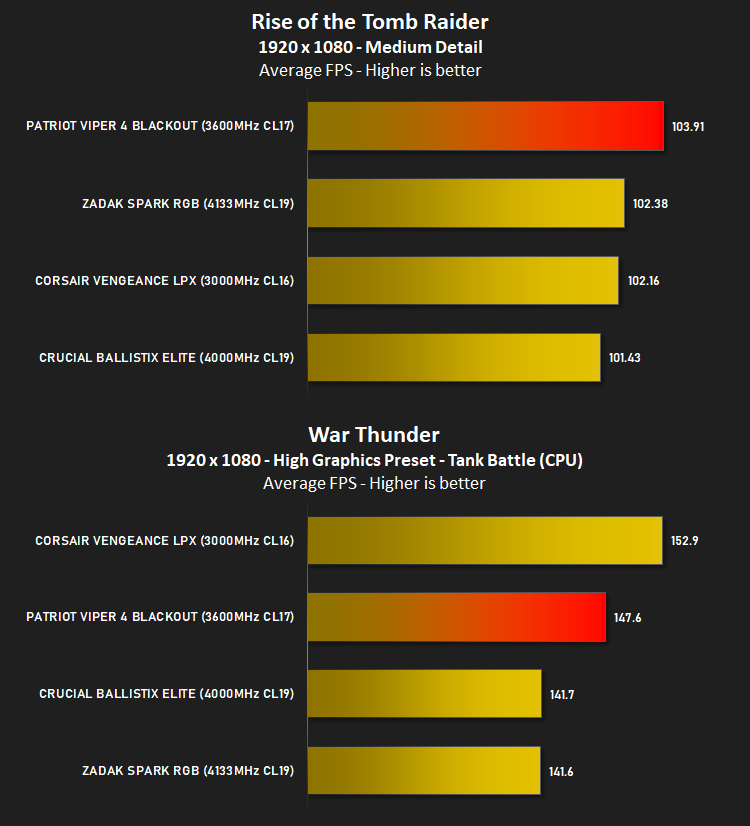
To test out the benefit of faster memory in a real world scenario, we have taken a recent game and created a CPU limited scenario by reducing the resolution and graphics settings to minimum, while setting the CPU dependent settings at their highest.
Conclusion
Thanks largely to the new Ryzen 3rd Gen. systems, we’re seeing an influx of faster memory. Where once the go-to was 3000-3200MHz, we predict we’ll see that shift closer to the 3600-3733MHz region. And that’s precisely where you’ll find the Viper 4 Blackout Edition, with its 3600MHz XMP frequency and 17-19-19-39 timings.While it’s not topping the charts in raw data throughput, which you wouldn’t expect with 4000MHz and 4133MHz kits being included in our tests, it does perform much better in gaming and Cinebench.
The heatsinks aren’t there to look fancy, they’re designed to serve a purpose and dissipate heat away from the ICs and out of the case. The small fingers on the top of the heatsinks should help the modules to tap into airflow through the case better than some plainer designs. And of course, the lack of RGB lighting not only keeps the cost down but pacifies those who have grown to hate the rainbows flowing through everything these days.
Arriving at £109.99/$119.99 puts it right where we’d expect, and the lifetime warranty that it lands with also helps boost its position as a good RAM kit to purchase. Not to mention Patriot’s extensive tests with X570 and 3rd Gen. Ryzen processors for the best possible compatibility.
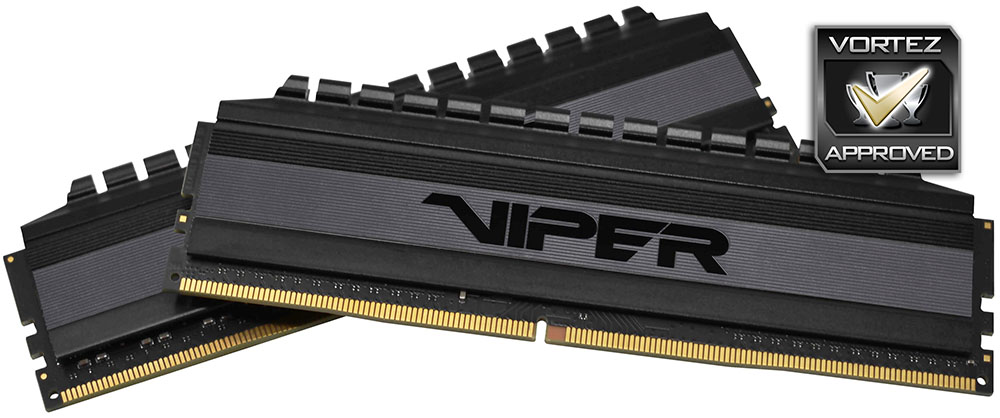
The Patriot Viper 4 Blackout Edition is produced by a well-established, reputable brand with a lifetime warranty, with the performance to match. It’s no looker but you won’t go far wrong with this RAM kit.
Pros
+ Good heatsinks with a sleek design
+ Right within AMD’s optimal performance window for their new CPUs
+ Lifetime warranty
Cons
– No RGB, if that’s your thing
– Not the tightest of timings
+ Good heatsinks with a sleek design
+ Right within AMD’s optimal performance window for their new CPUs
+ Lifetime warranty
Cons
– No RGB, if that’s your thing
– Not the tightest of timings
Click here for an explanation of our awards at Vortez.net.
Stay connected with the Vortez Social Media pages:
Join in with the discussions on Discord