



The UK-based system integrators return with a new configurable system range that boasts Ryzen 5000-series CPUs and GeForce RTX 30-series hardware, but can it cut the mustard?

Product on Review: Cyberpower Ultra 7 RTX Elite
Manufacturer: Cyberpower PC
Quoted Price: £1599 inc. V.A.T. (as configured)
It has been a turbulent fourth quarter of 2020 for the PC hardware market. High levels of demand following a series of national and regional lockdowns and social distancing measures have combined with the release of brand new technologies to change the landscape in unforeseen ways, and owning a desktop PC for both business and leisure is now well and truly in vogue. But with only a fraction of customers actually confident in assembling their own system the market at large has to turn to System Integrators to do much of the heavy lifting.
This winter etailer Cyberpower PC UK have returned to our test benches with a range that satisfies the resurgent demands in the market, and takes advantage of cutting-edge tech. just launched by AMD and NVIDIA that’s still difficult for consumers to get hold of. The Cyberpower PC Ultra 7 RTX Elite utilises AMD’s Zen 3 processors, NVIDIA’s GeForce RTX 30-series graphics and configurable components to define a system that offers great bang for your buck without the hassle of building your own.
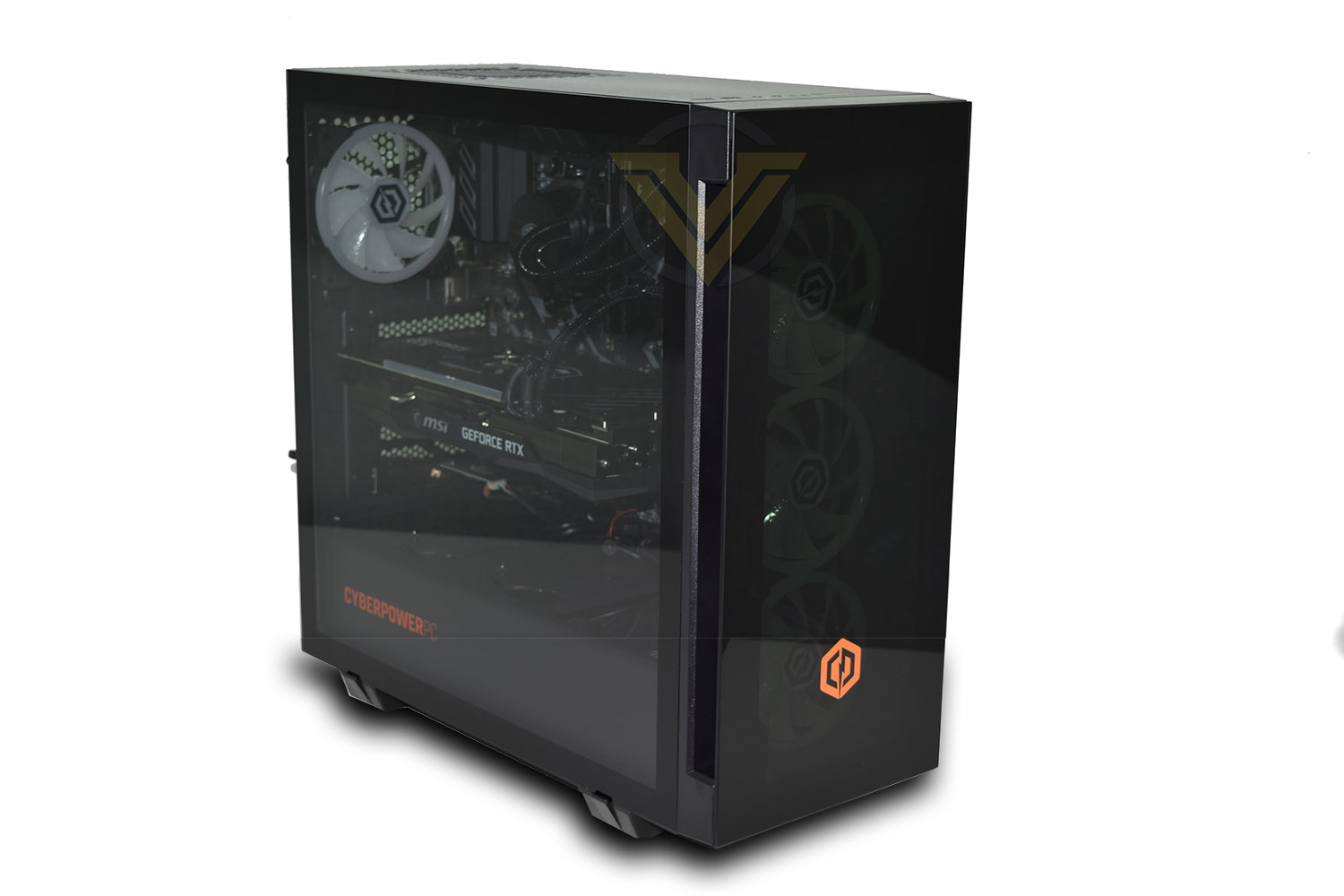
As is the case with the majority of Cyberpower PC’s desktop systems, the configuration options for this range are extensive. They include wide selections for CPU, motherboard, memory, storage and graphics, as well as more aesthetic differentiators including case and lighting. The selection available may not be quite as extensive as if you were bringing together your own parts, but you also have the peace-of-mind associated with knowing a trusted vendor has tested your particular combination of components and warrants them as compatible. Definitely a plus if you’re a newcomer or have pangs of anxiety about those aspects of owning a new desktop.
The system reviewed today brings together some of the best hardware possible within the window of a sensible mainstream gaming budget. While not the fastest component in any particular field, the selection offers what should be an excellent balance that matches each with another of appropriate performance tier.
AMD’s Ryzen 7 5800X heads the lineup alongside the MSI RTX 3060 Ti Gaming X Trio, backed up by X570 motherboard, 16GB DDR4 RAM and 1TB NVMe SSD. Nods to productivity are there in the form of a 2TB HDD primarily for storage, and cooling is handled by a 240mm closed loop liquid cooler from Cooler Master. They’re enclosed within Cyberpower PC’s own ONYXIA II chassis bedecked with tempered glass panelling and finished off with just a touch of colour in the form of six of their 120mm RGB fans.
So it’s attractive, contains some mouth-watering hardware, and should offer you the performance needed for the newest games. Time to take a closer look at Cyberpower PC’s Ultra 7 RTX Elite.
About Cyberpower PC
Originally founded in the United States, Cyberpower Inc is one of the leading brands in the competitive US computer market. With vast global backing from leading technology brands such as Intel, AMD, Nvidia, Asus and Microsoft etc, we aim to deliver the most up to date hardware for your needs at wholesale prices, and bring the well renowned name of Cyberpower Inc to the UK. With vision, commitment and determination we can manufacture a vast range of custom built PC systems to suit the needs of any individual or company. Our PC systems are built with utmost care and attention as we strive towards making this not just our profession, but our obsession.
Technical Specifications
Processor: AMD Ryzen 7 5800X
Graphics Card: MSI GeForce 3060 Ti GAMING X TRIO
Motherboard: MSI X570-A Pro
Memory: 16GB HyperX FURY DDR4 3200MHz
Storage:
1TB WD Blue PCIe 3.0×4 M.2 NVME SSD
2TB Seagate BarraCuda 7200rpm HDD
Chassis: Cyberpower PC ONYXIA II
PSU: CORSAIR CV650M
CPU Cooler: Cooler Master Master Liquid Lite 240
Additional:
Intel PCIe Wireless Network Adaptor
6x 120mm Cyberpower RGB fans
LED Controller Hub
Microsoft Windows 10 OEM (license included)
Graphics Card: MSI GeForce 3060 Ti GAMING X TRIO
Motherboard: MSI X570-A Pro
Memory: 16GB HyperX FURY DDR4 3200MHz
Storage:
1TB WD Blue PCIe 3.0×4 M.2 NVME SSD
2TB Seagate BarraCuda 7200rpm HDD
Chassis: Cyberpower PC ONYXIA II
PSU: CORSAIR CV650M
CPU Cooler: Cooler Master Master Liquid Lite 240
Additional:
Intel PCIe Wireless Network Adaptor
6x 120mm Cyberpower RGB fans
LED Controller Hub
Microsoft Windows 10 OEM (license included)
AMD launched the Ryzen 5000-series in October to an overwhelmingly positive response. Their Zen 3 architecture maintained the high core count of the mainstream desktop Ryzen range – support for up to 16 cores and 32 threads – but crucially also greatly improved the key instructions per clock metric through larger caches and lower internal latencies. Lessons learned in the development of other 7nm products have maintained and increased operating frequencies across the processor. All in all, it’s a major step forward from the 3000-series that is set to seriously impact the dominance of Intel’s 10th Generation processors on raw performance alone.
The Ryzen 7 5800X is an 8-core, 16-thread mainstream/gaming processor that tops out at 4.8GHz under dynamic overclocking schemes. This new range of processors are ideal for a gaming paradigm that is finally starting to leverage more than four CPU processor cores whilst still being heavily reliant on high IPC and core clock speeds. Like the previous generation they also support PCIe 4.0 for graphics and NVMe storage, both of which are open standards currently exclusive to AMD’s desktop platform. These chips are widely understood to be more than a match for the comparable Intel 10th Gen Comet Lake processors in the key gaming workload, something that even the much-vaunted Ryzen 3000-series couldn’t boast.
Just before AMD’s biggest launch of the year NVIDIA revealed their GeForce RTX 30-series. The Ampere architecture is the most ambitious yet conceived by the green team, increasing the complexity of the die greatly to expand real-time ray tracing capabilities while maintaining class-leading rasterisation performance. Transitioning to an 8nm lithographic node has allowed the RTX 30-series to remain within somewhat reasonable power limits in mainstream segments, while the high-end RTX 3090 sets new performance records in all aspects of GPU-based number crunching. Advances in hardware video encoding for game streaming and low ‘click-to-screen latency’ gaming also make members of the RTX 30-series as a whole tempting propositions outside of raw frames per second.
A GeForce RTX 3060 Ti is the current entry-point into the series, featuring 4864 CUDA cores and 8GB GDDR6 memory. It packs 3rd Generation Tensor cores (used for DLSS) and 2nd Gen Ray Tracing cores, improving capabilities and performance of RTX-specific features in games and supported applications. Performance is comparable with that of the RTX 2080 Super, indicating how significant a leap this generation is over the previous.
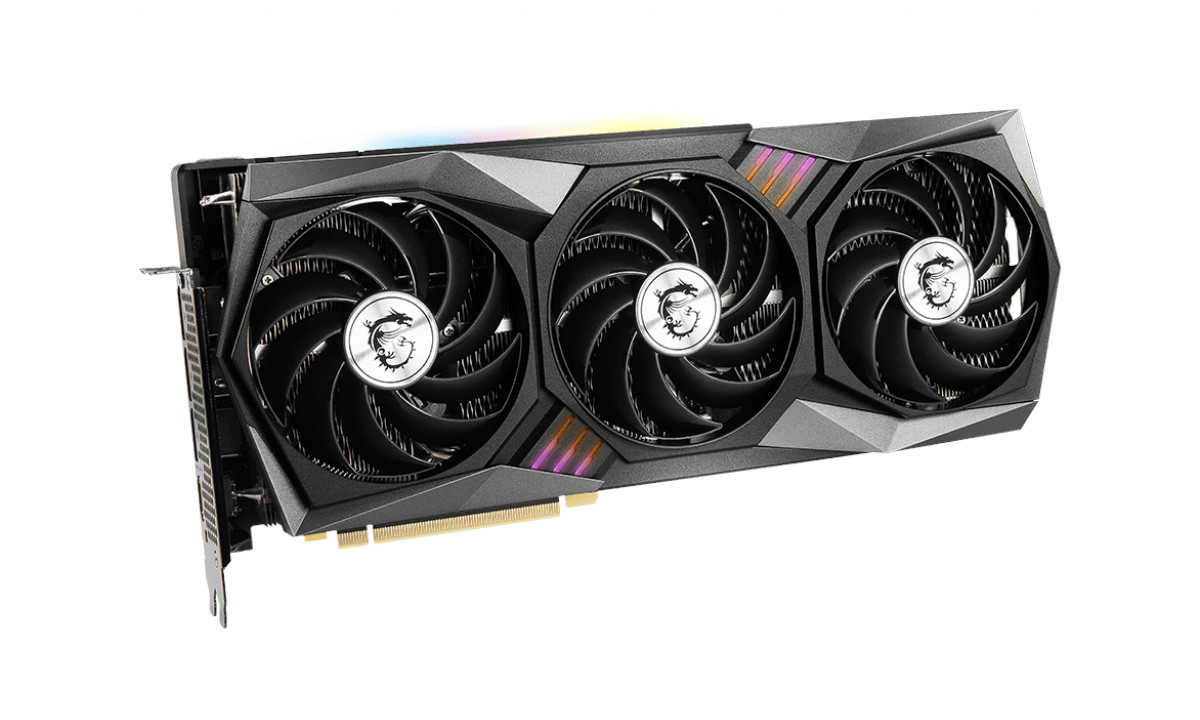
This Cyberpower PC system was supplied with MSI’s RTX 3060 Ti Gaming X Trio. The card utilises a 3-slot triple-fan cooling solution, oversized PCB, aluminium backplate and dual-8-pin power delivery, making it appear to be a premium design well beyond mid-range aspirations. Cooling should be ample enough for pushing Boost Clocks well into the 2GHz range, but the size of the card will put constraints on compatible cases. The Cyberpower configurator for this range does not allow the customer to select a specific brand and model of GPU, as a result the RTX 3060 Ti model (or RTX 3070, or 3080 etc.) supplied may vary from the one in this review.
Both the RTX 30-series and Ryzen 5000-series are currently extremely difficult to find through component retailers, but somewhat paradoxically have been slightly more readily available through system integrators as part of custom systems. We’re not privy to why this might be the case, but the reality is that if you are looking to assemble a high performance system with the latest technology but aren’t too fussy about the exact component selection then a system integrator is a route you may wish to go down.
MSI’s X570-A Pro motherboard is pitched at the more affordable end of the spectrum compared to their out-and-out gaming designs while still being in the mainstream segment, but still supports critical features including overclocking, PCIe 4.0 NVMe storage, PCIe 4.0 graphics and full I/O bandwidth to the chipset. It’s an ideal match for AM4 processors up to the Ryzen 7 (8-core) range, offering overclocking headroom if desired with a cut-down feature-set a tier below deluxe productivity motherboards. The selection emphasises the baseline affordability of this system range.
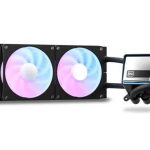
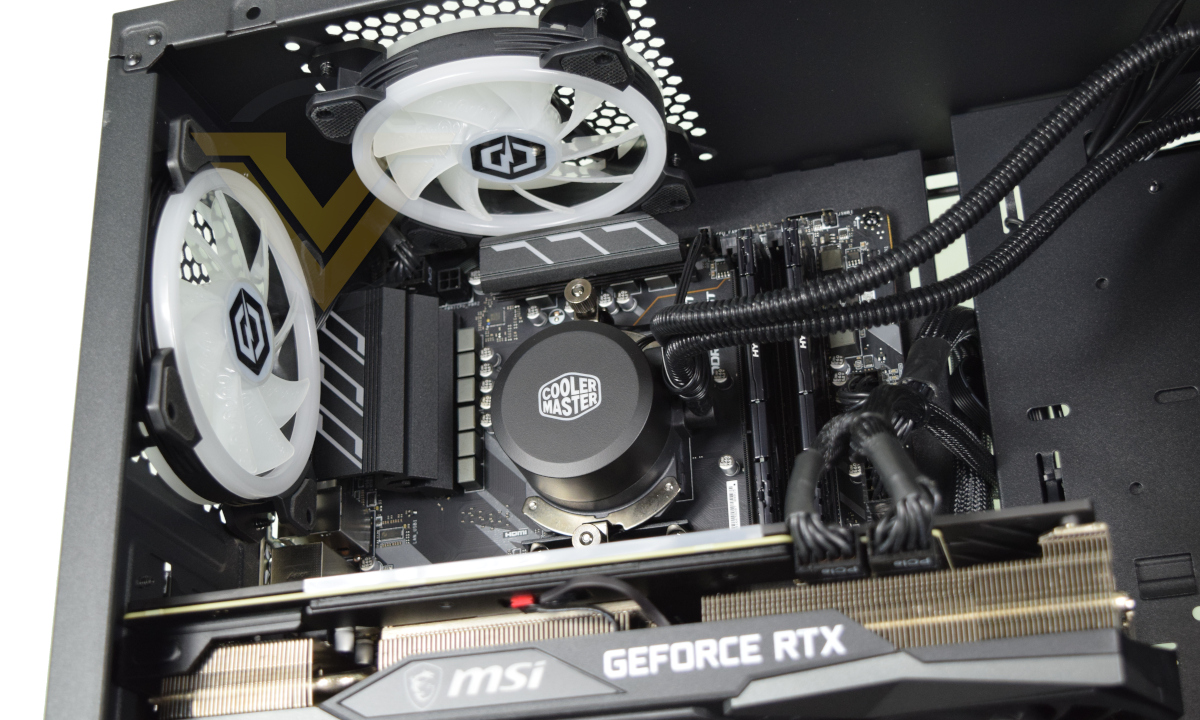
The CPU is kept in check by Cooler Master’s Master Liquid Lite 240. This closed loop liquid cooler is mounted in the front rather than roof of the chassis (where a 240mm rad isn’t supported) and the 27mm-thick radiator should be ample for the Ryzen 7 5800X. Two Cyberpower branded 120mm fans push air through the rad, and the orientation of cooler and fans means that the GPU will be fed warmed rather than ambient temperature air.
Cyberpower PC have selected HyperX’s FURY DDR4 3200MHz memory as standard for this system. This doesn’t hit the performance sweet-spot of approaching DDR4-4000MHz for Ryzen 5000-series chips, but diminishing returns do start to kick in. Sixteen Gigabytes is plenty for gaming and some productivity work; opting for more or faster memory again starts to eat into budgets without necessarily offering much more than is needed for the target market.
NVMe storage is currently the go-to for even mainstream systems where just a few years ago it was the exclusive province of performance-oriented setups. This Ultra 7 RTX Elite is equipped with a 1TB SN550 NVMe M.2 SSD from WD (formerly Western Digital) that’s part of their Blue range; not as fast as the PCIe 4.0 counterparts, but still capable of up to 2.4 GB/s read and a healthy 1.95 GB/s write. This capacity is more than enough for the operating system, productivity applications and a host of games, but just in case you can also pick up an optional mechanical HDD for storage of data infrequently accessed such as video or photos.
The system is powered by a Corsair CV650M. This 80PLUS Bronze-rated non-modular PSU is perhaps the one aspect of the system that is aggressively oriented towards the budget end of the spectrum. It certainly meets all minimum requirements, but will make upgrading a little more difficult than it strictly needs to be.
All in all, the system on review is an amazingly well-rounded configuration with parts that complement each other while also offering reasonable scope for future expansion.
Value
Core Component UK Retailer Pricing
AMD Ryzen 7 5800X:- 469.99
MSI RTX 360 Ti Gaming X Trio:- ~449.99 (estimated)
16GB HyperX Fury DDR4 3200MHz RAM:- 65.96
1TB WD SN550 NVMe M.2 SSD :- 124.99
2TB Seagate BarraCuda HDD:- 49.85
Corsair CV650M:- 57.48
Cooler Master Master Liquid Lite 240:- 52.99
MSI X570-A Pro:- 144.99
Microsoft Windows 10 Home (OEM):- 97.97
Total: £1514.21 (inc. V.A.T., excl delivery)
Not accounted for:
Cyberpower ONYXIA II ATX chassis
6 x Cyberpower 120mm RGB fans
MSI RTX 360 Ti Gaming X Trio:- ~449.99 (estimated)
16GB HyperX Fury DDR4 3200MHz RAM:- 65.96
1TB WD SN550 NVMe M.2 SSD :- 124.99
2TB Seagate BarraCuda HDD:- 49.85
Corsair CV650M:- 57.48
Cooler Master Master Liquid Lite 240:- 52.99
MSI X570-A Pro:- 144.99
Microsoft Windows 10 Home (OEM):- 97.97
Total: £1514.21 (inc. V.A.T., excl delivery)
Not accounted for:
Cyberpower ONYXIA II ATX chassis
6 x Cyberpower 120mm RGB fans
Our review of the Cyberpower Infinity X10 in August included a brief section that compared the total system cost to the price of parts sourced individually from UK retailers. The market was fairly stable during the summer months, whereas today simply sourcing some crucial parts (notably the CPU and GPU) can be impossible.
At the time of publication both the processor and GPU are listed as officially out of stock at UK etailers, with some unwilling to even offer pre-orders and pricing. Once stock re-enters retail channels we may experience huge mark-ups reflecting constrained supply and inflated demand. The prices listed above are our best estimate of where they should be today based on MSRP and price data to this point.
Cyberpower PC quoted a price of £1599.99 including V.A.T. for the assembled variant and is the default configuration listed through the Ultra 7 Elite RTX config tool. It should be noted that attempting to mimic the configuration through other pre-assembled system ranges leads to a different, and appreciably higher, price; the closest we could manage was £1743.60 through the AM4 Ryzen 7X config tool. In both instances the exact model of RTX 3060 Ti was unavailable for selection, so the actual RTX 3060 Ti it arrives with may differ from this system.
Assuming uniform availability and component price breaking down as stipulated above, the system at £1599 is exceptionally good value for money. The ~£85 differential would encompasses chassis, RGB fan kit, labour, delivery and warranty*, which is frankly ludicrous.
We should however note that the MSRP of NVIDIA’s RTX 3060 is around £350, whereas the MSI RTX 360 Ti Gaming X Trio is one of the premium partner variants. The ambiguous nature of the configuration page could indicate that customers will receive a standard variant, changing the equation somewhat. On the other hand Cyberpower are somewhat stymied if card pricing spikes again due to external factors.
Either way, the effective ‘cost’ of having Cyberpower assemble and ship the system appears to be between 7 and 15%, which is very reasonable.
*the long-term effectiveness of a Cyberpower PC’s 3 yr limited warranty is beyond the scope of this review.
Packaging and Bundle
The Cyberpower PC Ryzen 7 system was shipped by courier in the packaging of the ONYXIA II chassis. Cellulose foam packaging 45mm thick rather than polystyrene helped to protect the system and should continue to be effective should a return be necessary. Polystyrene tends to lose its effectiveness after the first heavy impact.
As always, customers should check the exterior for signs of damage, but ours arrived safely.
Air pillows and an expandable foam packet once again ensured that internal system components were held securely in place during transit, and in the short term should be retained for returning the system if necessary. Opting for an AIO Liquid CPU cooler reduces the stress on the socket during transit, significantly reducing the risk of damage.
Prior to first boot all internal connectors and components should be checked just in case they became dislodged. Furthermore, PCIe graphics power is often shipped disconnected but is trivial to rectify.
An accessory pouch contains what couldn’t be conveniently packaged within the system chassis. In this instance cables bundled with the MSI X570 motherboard, the wireless networking antennas and stand, RGB controller remote, GPU support bracket and additional CPU cooler accessories are all safely tucked here during shipping.
First Look
Cyberpower PC’s Ultra 7 RTX Elite system cuts a striking figure when out of its wrapping thanks to the ONYXIA II chassis. Clean lines once again dominate – an aspect of pre-built systems neglected altogether too often in favour of a ‘gaming style’ – and the all black exterior will probably never go out of fashion. At first glance the case certain belies its ‘budget’ nature.
The front fascia is entirely tempered glass with a dark smokey tint, making it a little more flamboyant that your typical home office system, but not especially so. No 5.25” bay will only disappoint those ten people nationwide who really need an optical drive.
The ONYXIA II’s smokey tinted tempered glass side panel extends from top to bottom and has conventional screw points. A lip extending from where the case feet meet the side panel means that you have to be very careful to lift when removing the panel rather than let it angle towards the horizontal. These feet may also damage desk tops when the case is placed on its side.
The shroud design also means that the PSU is accessible only from the right hand side of the system.
Perforations run down from just behind the tempered glass fascia as ventilation for internal intakes. The size of these perforated zones (35cm high x 2cm wide) is larger than many comparable case designs with solid front fascias, but it will still restrict air flow to the three 120mm fans and 240mm radiator. Compensating for this, Cyberpower PC have opted to install a further intake fan on the floor of the chassis.
The ONYXIA II’s modest I/O panel is located at the top front of the chassis and offers two USB 3.0 ports, microphone and headphone jacks, and power/reset buttons alongside activity LEDs. How ideal this location is will depend on where you wish to situate your PC. The matte black paint finish of the roof and side panel is a little on the rough side, indicative of a budget construction.
Lack of a USB Type-C connector will disappoint some. Also worthy of note is that neither 240mm radiators nor two 120mm fan exhausts are supported in the chassis roof.
The rear IO is an unexceptional affair. Of note are the two antenna we’ve installed for the PCIe wireless network card due to it not being a feature of MSI’s X570-A Pro motherboard chipset.
Overall the system is compact with little wasted space. The case external dimensions are 472 x 475 x 27mm, which is itself compact as full-size ATX designs go. Cooling is a little restrictive but not appreciably so, and should be far more robust than most <£50 budget chassis on the market for well-known brands.
Closer Look
Once again we’re in for something of a treat as we slide the side panel off.
A clean build from a system integrator is so often a minimum bar that should be cleared but is still failed time and time again, and yet Cyberpower PC haven’t let the side down. The system is tidy and well presented and almost show ready from day one, with just a little bit of unavoidable clutter below the GPU.
The ONYXIA II chassis doesn’t support vertical GPU mounting, but in all fairness even a much larger (and more costly) case would struggle with a graphics card this size.
Two 120mm fans draw air in through the front venting and push it through the 240mm radiator of the closed loop CPU cooler. A third below the radiator adds additional air flow directed towards the PSU and lower positioned components. A fourth draws air in through the floor, but the direction of flow (perpendicular to the three in the front) may be detrimental overall. It also makes sitting the case on the carpeted floor especially unwise.
The NVMe SSD is located in the lower of two M.2 slots, connected via PCIe lanes off the chipset rather than directly to the CPU. This leaves the upper slot, with faster PCIe 4.0 connectivity from the CPU, free for potential upgrades; a good decision all things considered.
Note that a small speaker has also been installed on the motherboard header which will help to troubleshoot issues with the system, and can in time be removed.
This chassis incorporates a PSU shroud that extends its length, masking off both PSU and cabling. Normally merely a nice feature to have, it’s made especially valuable in this instance due to the use of a fully wired rather than modular PSU as it allowed Cyberpower PC to fully hide the inevitable nest of cables from prying eyes.
A shot of the opposite side shows the enviable cabling job performed by the assembler, as well as the 3.5” mount location for that Seagate Barracuda HDD. A fully wired PSU isn’t easy to work with, but the job performed here is more than acceptable and only marred slightly by the tangle of cables next to the PSU itself. Out of sight, out of mind; and it should be straightforward to extract any particular cable you need for later system upgrades.
Those who read our previous review will spot the familiar sight of the Cyberpower branded ARGB controller. This device is matched to the supplied wireless remote and ARGB fans and offers a series of pre-baked lighting effects without the use of 3rd party software.
Benchmarks: Temperatures, Power Draw & Boot Time
In our first test we observe the max. CPU/GPU temperatures of the system while allowing Unigine Heaven 4.0 to run on a 30-minute loop with default system fan profile. Idle temperatures were read 10 minutes later, indicating how well the system exhausted latent heat. To report back on the temperatures we used Ryzen Master CPU package temperature readings and GPU-Z.
The MSI triple-fan GPU cooling solution is clearly well overspecced for the RTX 3060 Ti and only reached 68C under load, allowing the card to boost to the limits of the silicon. At default fan speeds the noise generated by the six 120mm fans was a low but not unpleasant drone; the GPU fans were effectively inaudible over this.
—
System power draw readings at the wall were taken using a digital power meter during long idle and gaming load, allowing us to broadly assess overall power draw and PSU suitability. Lighting was disabled during this period.
* We should also note that average power draw during gaming was ~363W.
80 PLUS Bronze Efficient PSUs are at the top of their rated efficiency curve at ~50% power draw, which for the Corsair CV650M is ~325W. This unit is therefore a little under specced for best possible efficiency under gaming load, but still well within tolerances with a peak system power draw of just 403W under typical conditions.
Those who intended to overclock either CPU or GPU may wish to upgrade this PSU to a more robust modular design in configuration.
—
Total boot time is typically determined by time spent on the motherboard POST and loading into the operating system. We observed how fast the boot into Windows 10 is by using a digital stopwatch.
AMD Ryzen systems are still not quite as swift to boot as Intel’s desktop equivalents (which routinely hit <15 seconds), but dipping under 20 seconds is creditable.
Benchmarks: Cinebench R20, R23 & 7-Zip
Cinebench is a real-world cross-platform test suite that evaluates your computer’s hardware capabilities. Improvements to Cinebench Release 20 reflect the overall advancements to CPU and rendering technology in recent years, providing a more accurate measurement of Cinema 4D’s ability to take advantage of multiple CPU cores and modern processor features available to the average user.
In October 2020 Maxon launched Cinebench R23. This updated release formulated an updated test that defined a minimum runtime of 10 minutes for both single and multicore tests, minimising the impact of initial performance spikes caused by a high Turbo/Boost clock at the start. The scores generated are not directly comparable to the R20 results, but we’ve included them here for reference.
AMD’s Ryzen 7 5800X really starts to stretch its legs in the R20 benchmark suite. A multi-core score of 5792 is deceptively good for an 8-core processor, but not as awe-inspiring as the single core score of 618. It beats Intel’s flagship Core i9-10900KF by over 70pts, an unheard of feat prior to the introduction of the Zen 3 architecture and despite giving away plenty of raw clock frequency. The 5000-series leap in IPC really has been that good.
—
7-Zip is open-source software which unpacks compressed (zipped) files. It also features a benchmark which measures your systems ability to unpack files, typically stressing CPU and memory performance.
The system achieved a total rating of 92035 MIPS during decompress testing, edging out the i9-10900KF’s <90000 score of just a few months ago despite supporting two fewer cores and four fewer threads. Not only is the new Ryzen’s IPC just that good, underlying improvements in the architecture and AMD’s implementation of Simultaneous Multithreading are paying dividends.
Benchmarks: PCMark 10, Unigine Heaven & 3D Mark
PCMark 10 by UL combines performance benchmarking with battery life measurement where applicable and includes tests based on popular Adobe and Microsoft applications. Whether you are looking for long battery life, or maximum power, PCMark 10 will help you find the devices that offer the perfect combination of efficiency and performance for your needs. It’s the complete PC performance benchmark for home and business.
To put this figure in context, a 6-core Intel system with 8GB DDR4-3000MHz and SATA III SSD would be expected to achieve a score of around 6500 and an i9-10900KF with 16GB DDR4-3200 RAM and NVMe SSD reached 7595. Once the province of Intel, now AMD’s Ryzen platform is starting to shove its weight around.
The time savings achieved by this performance differential will be most obvious in workhorse tasks operating near-constantly, but both real-world productivity improvements and a decline in user frustration are other tangible benefits.
—
3D Mark Time Spy by UL is a DirectX 12 benchmark test for gaming PCs running Windows 10. With its pure DirectX 12 engine, built from the ground up to support new API features like asynchronous compute, explicit multi-adapter, and multi-threading, Time Spy is the ideal benchmark for testing the DirectX 12 performance of the latest graphics cards.
A Time Spy combined score just shy of 12000 outpaces expectations for even the RTX 2080 SUPER. The RTX 3060 Ti is in relative infancy by comparison, but even here the next-generation card that is two full tiers below its predecessor is starting to show its heels to Turing-based graphics cards.
—
Unigine’s Heaven 4.0 utility is a performance and stability test for PC hardware: video card, power supply, cooling system. Check your rig in stock and overclocking modes with real-life load! Also includes interactive experience in a beautiful, detailed environment.
While relying on a DirectX 11 API renderer rather than more modern DX12 framework, Heaven 4.0 and DX11 performance is still a relevant metric today.
The RTX 3060 Ti doesn’t have it all its own way however. The system trailed the RTX 2080 SUPER-powered setup in this DX11 benchmark that emphasises pure rasterisation and tessellation performance.
Benchmarks: Gaming (1440p)
NVIDIA’s GeForce RTX 3060 Ti straddles the line between 1080p/144Hz and 1440p/60Hz gaming, particularly with advanced visual fidelity features such as hybrid ray tracing enabled. We have chosen to put the card through its paces at the latter resolution to assess the upper limit of its capabilities. Monitors with variable refresh rate support such as NVIDIA G-SYNC are increasingly attractive at 1440p and widespread at 1080p, making frame rates in excess of 60fps valuable even if 144fps cannot be attained consistently.Where possible we have also chosen to utilise graphically taxing features such as NVIDIA RTX ray-tracing.
Mordor: Shadow of War
The oldest of our titles, Mordor: Shadow of War is still an exceptionally attractive game that utilises the DirectX 11 API. We expect that the Ultra 7 RTX Elite will cope well with the title at 1440p Ultra settings..
Shadow of the Tomb Raider
The second sequel to the rebooted Tomb Raider franchise, Shadow of the Tomb Raider was also one of the first titles to incorporate NVIDIA RTX ray-traced shadows and DLSS. Ray tracing in particular will test the system alongside the highest graphic quality presets, and we’ll allow no DLSS to fall back on.
Horizon Zero Dawn
This game was new to PC in August 2020 and already has a reputation for taxing GPU hardware. It doesn’t feature ray tracing, but nonetheless has some of the most stunning scenes ever rendered in games. We’ve used the Ultimate preset here, but Favoured also offers a visual feast with markedly higher performance.
Control
Critically acclaimed on release, Control is the title which makes most comprehensive use of NVIDIA RTX ray tracing to date. Shadows, lighting and reflections all make use of this advanced rendering standard, helping the transition from mundane world to its nightmarish reflection. We opted for the Highest settings preset with RTX features enabled including the default recommended level of DLSS (50% rendering scale).
Tests were performed with the GeForce 460.89 WHQL Game Ready Driver.
The oldest of our titles, Mordor: Shadow of War is still an exceptionally attractive game that utilises the DirectX 11 API. We expect that the Ultra 7 RTX Elite will cope well with the title at 1440p Ultra settings..
Shadow of the Tomb Raider
The second sequel to the rebooted Tomb Raider franchise, Shadow of the Tomb Raider was also one of the first titles to incorporate NVIDIA RTX ray-traced shadows and DLSS. Ray tracing in particular will test the system alongside the highest graphic quality presets, and we’ll allow no DLSS to fall back on.
Horizon Zero Dawn
This game was new to PC in August 2020 and already has a reputation for taxing GPU hardware. It doesn’t feature ray tracing, but nonetheless has some of the most stunning scenes ever rendered in games. We’ve used the Ultimate preset here, but Favoured also offers a visual feast with markedly higher performance.
Control
Critically acclaimed on release, Control is the title which makes most comprehensive use of NVIDIA RTX ray tracing to date. Shadows, lighting and reflections all make use of this advanced rendering standard, helping the transition from mundane world to its nightmarish reflection. We opted for the Highest settings preset with RTX features enabled including the default recommended level of DLSS (50% rendering scale).
Tests were performed with the GeForce 460.89 WHQL Game Ready Driver.
The Ultra 7 RTX Elite maintained excellent mean frame rates at 1440p despite the use of RTX ray tracing in two of our tests, and would likely be an ideal candidate for 1080p gaming at high fps (100+) levels. Pushing visual fidelity and resolution would likely necessitate a G-SYNC compatible/Adaptive Sync monitor at 1440p to manage frame rate dips below 60fps while maintaining a smooth and tear-free experience.
Enabling DLSS where supported would similarly boost frame rates, although only the 2.0 implementation provides an adequate mix of performance improvements without impacting image quality. For example, DLSS in Shadow of the Tomb Raider clawed back an additional 10fps in average frame rates when RTX Ray Tracing is set to high, while turning it off in Control tanked average frame rates by >50%.
This review isn’t intended as a direct comparison between the RTX 3060 Ti and RTX 2080 SUPER as seen in our previous system review. The two appear to be roughly comparable, but our experiences with them are separated by 4 months, different CPU platforms, and multiple driver/game updates. The RTX 2080 SUPER should still be the slightly better choice for >1440p gaming, but diminishing returns and a large difference in MSRP will make the 3060 Ti a better option for 1080p gaming. This resolution (1440p) is an inflection point where the two are nip and tuck, warranting more detailed examination before pronouncing one or other the victor.
Conclusion
We’ve had the opportunity to review a number of Cyberpower PC systems in the recent past, and from the budgetary heights of the Infinity X10 RTX in August it’s good to have a reality check and take a look at a system which is a little more affordable. The Ultra 7 RTX Elite isn’t quite mainstream but it does hit the right notes for an upper echelon mainstream gaming platform. Hitting the ground running on major new hardware launches also helps, as is the case in this instance.By supporting mainly AMD Ryzen 5000-series CPUs and NVIDIA RTX 30-series GPUs, the Ultra 7 RTX Elite range satisfies that natural desire to be on the cutting edge of technology when it comes to an investment in new hardware. This configured variant, with Ryzen 7 5800X and RTX 3060 Ti, helps to control costs while still presenting a system that is more than capable of 1080p@144fps and 1440p@60fps gaming, both of which are ballooning in popularity as quality panels supporting Adaptive Sync technologies come down in price.
After a slow start, NVIDIA’s RTX features (such as ray tracing and DLSS) are hitting a wider selection of titles at launch and the RTX 3060 Ti gets in at the ground floor of performance after a couple of technological iterations. Similarly, AMD’s Ryzen platform is the first to support PCIe 4.0, making it fertile ground for in-place upgrades of both future-gen GPUs and high speed NVMe storage. The Ryzen 7 5800X takes the fight to Intel’s desktop platform like never before and is an excellent highlight for the system.
Sadly, the current state of the UK market means that these two components command the lion’s share of the system’s BoM, leaving little room for components of equal stature. The NVMe storage and motherboard options are fine, while DDR4-3200MHz RAM is perhaps a touch slower than one would have liked, but the PSU and chassis picks weren’t quite up to the same level. Corsair’s CV650M power supply in particular is ripe for an upgrade to a modular design that supports additional 4-pin EPS 12V and PCIe connectors.
Assembly was once again up to Cyberpower PC’s usual excellent standard. In particular, we should give credit to them for correct selection of M.2 slot for the SN550 NVMe SSD, leaving the PCIe 4.0 slot free for later upgrades; it’s a small thing but something that sticks out. Cable management was good, compensating for the awkward nature of using a non-modular PSU. The Seagate BarraCuda was uninitialised when Windows 10 had finished its setup process however, and that could fox novice PC users. In fact, our only significant reservation turned out to be using one PCIe cable for the dual 8-pin GPU power rather than two; this is a >200W TGP card after all.
Performance was great, trading blows with the i9-10900KF/RTX 2080 SUPER system reviewed earlier this year but at a considerably lower price. What a difference a few months have made. We’d comfortably recommend the Ultra 7 RTX Elite for 1080p 144Hz and 1440p 60Hz gaming, particularly if it’s possible to take advantage of a G-SYNC certified panel. However, while compatibility with ray tracing is near guaranteed, you will want to lean heavily on per-game DLSS 2.0 support to boost frame rates to a comfortable level.
So we come to one major sticking point: availability. Systems powered by both AMD’s Ryzen 5000-series and NVIDIA’s RTX 30-series will be affected by the stock levels of both in the UK and, in this instance, at Cyberpower PC specifically. Supply issues appear to mean that Cyberpower aren’t willing to a specific make and model of RTX 3060Ti (or 3070, 3080 etc.) on the configurator page, and preorders have a three week expected shipment delay (January 12th) at the time of publication.
That being said, this may turn out to be moot. Both Ryzen 5000-series and RTX 30-series components are extremely hard to find through retail channels, inflating prices even where they become available. Buying as part of a complete system through system integrators such as Cyberpower PC might be the best solution as their stock levels have tended to weather spiking demand in individual components. Still, while Cyberpower list these parts on pre-order currently, even they aren’t immune to the tides of COVID-19 and Brexit in the beginning of 2021.
Cyberpower PC’s Ultra 7 RTX Elite brings together AMD’s Ryzen 5000-series and NVIDIA’s RTX 30-series in a range of configurable systems that are keenly priced and assembled with care. While the selection of GPU brand’s isn’t currently wide, other aspects of the final system can be tinkered to your heart’s content. If you’re in need of a complete system decked with the latest hardware for excellent gaming performance and backed by a 3 year RTB warranty then you should absolutely spend some time on the Configurator. Assuming they can meet the quoted price and timely delivery dates, they more than warrant both Value and Approved awards.
Pros
+ Great performance
+ Great value for money on cutting-edge components
+ Attractive despite budget case
+ Snappy, responsive experience
+ Simple system set-up on delivery
+ Wide selection of configuration options for most components
+ 3-year limited warranty
Cons
– Warm component temperatures under load despite high fan speeds
– Long pre-order times
– Minor setup niggles for novice users
– Budget PSU
– Not all air intakes have dust filters
+ Great performance
+ Great value for money on cutting-edge components
+ Attractive despite budget case
+ Snappy, responsive experience
+ Simple system set-up on delivery
+ Wide selection of configuration options for most components
+ 3-year limited warranty
Cons
– Warm component temperatures under load despite high fan speeds
– Long pre-order times
– Minor setup niggles for novice users
– Budget PSU
– Not all air intakes have dust filters