




Two new NAS models powered by AMD Ryzen and featuring 10GbE networking. Should you consider DXP2800 GT or DXP4800 GT for your networking needs?

Product on Review: DXP2800 GT + DXP4800 GT
Manufacturer & Sponsor: UGREEN
Street Price: DXP2800 GT: $429 USD | DXP4800 GT: $560 USD
UGREEN has rapidly established itself as a serious contender in the network-attached storage market, and its latest GT Series aims squarely at users who demand enterprise-inspired hardware without the enterprise price tag. In this review, we’re taking a close look at the UGREEN NASync DXP2800 GT and DXP4800 GT, two new AMD Ryzen-powered NAS appliances designed for enthusiasts, content creators, home labs, and small businesses. While differing primarily in their two-bay and four-bay storage configurations, both models share the same underlying platform, offering a compelling combination of high-speed networking, expandability, and modern hardware wrapped in a premium aluminium chassis.
The DXP2800 GT and DXP4800 GT are built around AMD’s Ryzen Embedded R2514 quad-core, eight-thread processor, paired with 8GB of DDR4 memory with support for expansion up to 64GB and ECC memory compatibility. Both systems feature dual M.2 NVMe SSD slots for SSD caching or high-speed storage, HDMI output, multiple 10Gbps USB ports, and UGREEN’s UGOS Pro operating system. The DXP2800 GT offers two SATA drive bays with up to 80TB of total storage and a single 10GbE network port, while the DXP4800 GT expands that to four drive bays supporting up to 144TB of storage, dual 10GbE ports capable of link aggregation, SD card support, and RAID 5, RAID 6 and RAID 10 alongside the standard RAID modes.
Beyond the hardware specifications, both NAS models place a strong emphasis on performance and usability. UGREEN positions the GT Series as a platform for demanding workloads including high-speed file transfers, collaborative content creation, Docker containers, virtual machines, media streaming, surveillance storage, and private cloud services. UGOS Pro further expands the experience with integrated remote access through UGREENlink, AI-assisted photo management, comprehensive backup tools, and an expanding application ecosystem, while thoughtful touches such as the quiet cooling system, magnetic dust filter, and premium industrial design reinforce the impression that these systems are intended to deliver both speed and long-term reliability.
For this review, we’ll be focusing not only on the hardware but also on the overall ownership experience. Both the DXP2800 GT and DXP4800 GT will undergo a complete installation from scratch, including drive installation, initial setup, configuration, and day-to-day use of UGOS Pro, providing a practical look at how these new GT Series NAS systems perform in real-world use.
Hardware Specifications
Below are the hardware specifications regarding the DXP2800 GT and DXP4800 GT:
MODEL
DXP2800 GTCPU: AMD Ryzen R2514 – 4 Cores 8 Threads, 3.7GHz
Memory: 8GB DDR4
Drive Bays: 2-Bay
Max Storage: 80TB
LAN Ports: 1x 10GbE
Connectivity Ports: 1x USB-C, 2x USB-A (10GB/s) 2x USB-A (5GB/s)
Power Consumption: 42W Under Load
MODEL
DXP4800 GTCPU: AMD Ryzen R2514 – 4 Cores 8 Threads, 3.7GHz
Memory: 8GB DDR4
Drive Bays: 4-Bay
Max Storage: 144TB
LAN Ports: 2x 10GbE
Connectivity Ports: 1x USB-C, 2x USB-A (10GB/s) 2x USB-A (5GB/s)
Power Consumption: 42W Under Load
DXP2800 GT
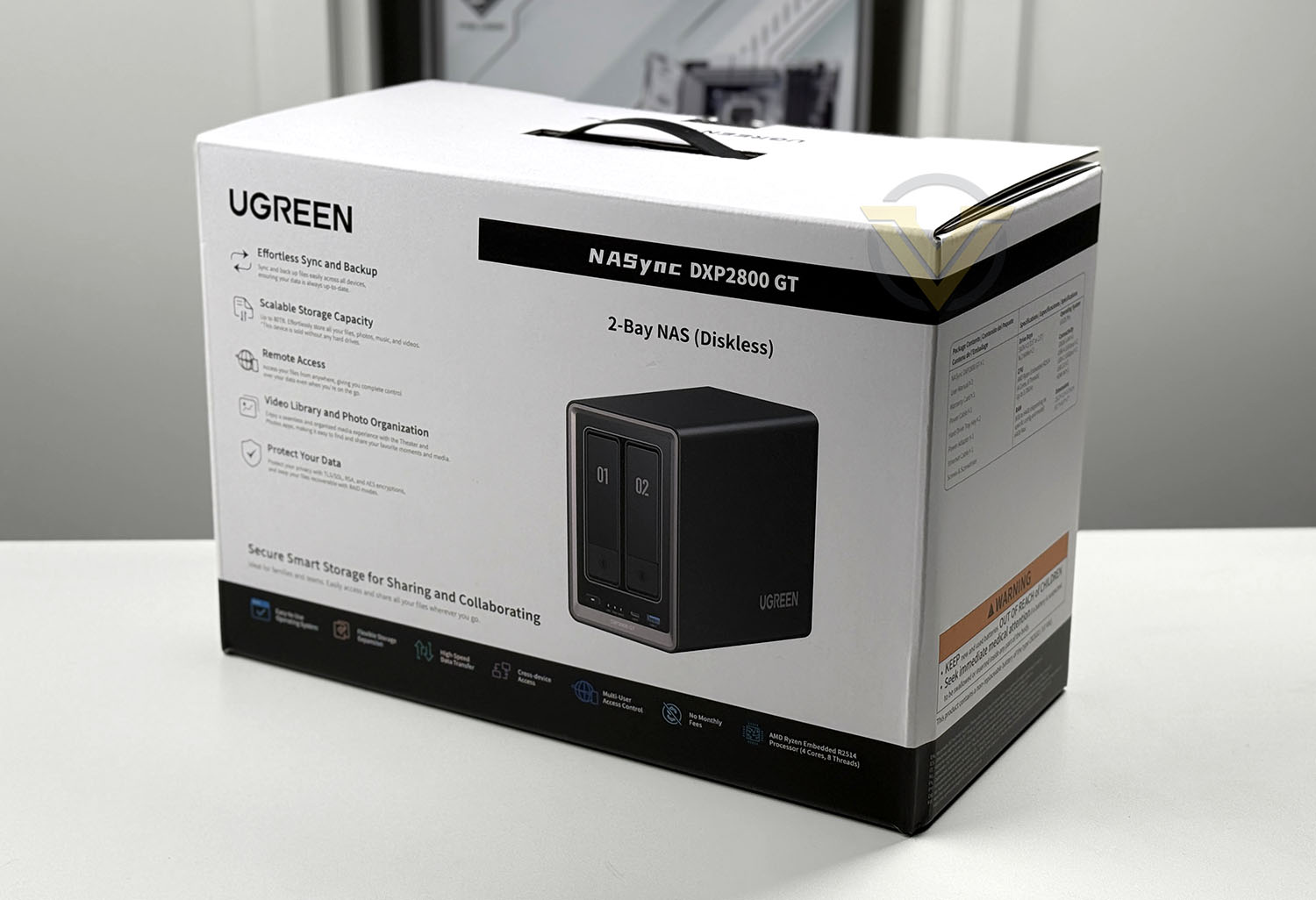
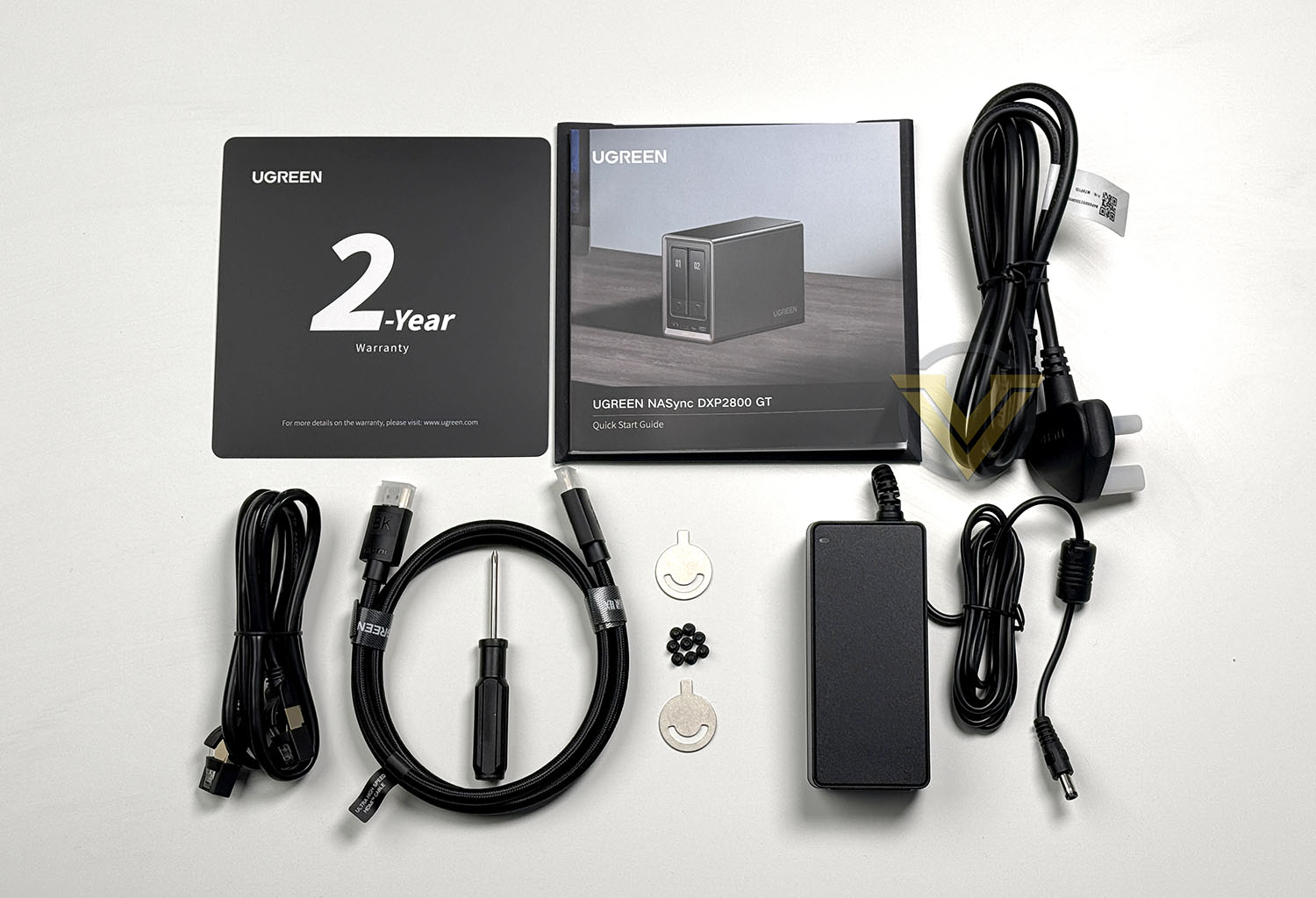
The DXP2800 GT is supplied with everything needed to get the hardware up and running, with the exception of storage drives. Inside the box you’ll find the NAS unit itself, a 120W external power adapter and mains cable, an Ethernet cable, screws for installing both 2.5-inch drives and M.2 SSDs, a screwdriver for installation, and a quick start guide. The inclusion of the required mounting hardware and tools means there’s no need to source additional accessories before installing drives, allowing the setup process to begin straight out of the box.
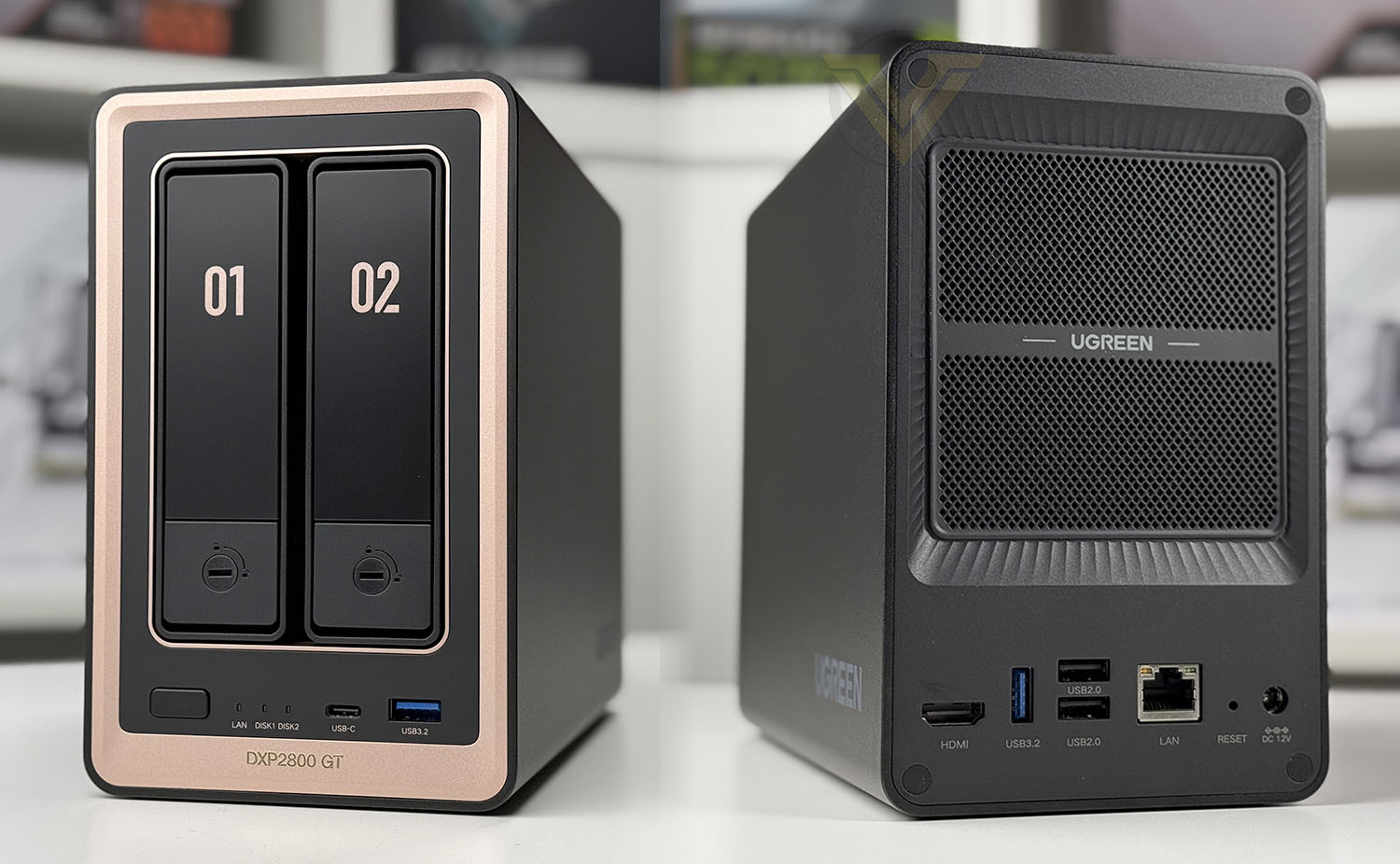
The DXP2800 GT is powered by an AMD Ryzen Embedded R2514 processor, featuring four cores and eight threads with boost speeds up to 3.7GHz. It ships with 8GB of DDR4 memory, supports ECC memory, and can be upgraded to a maximum of 64GB. Storage consists of two front-accessible SATA drive bays, accompanied by two internal M.2 NVMe slots that can be used for SSD storage or caching. The front panel houses the drive bays, power button, status LEDs, a 10Gbps USB-C port and a 10Gbps USB-A port for high-speed external devices and one-touch backups. Around the rear are a single 10GbE RJ45 network port, an additional 10Gbps USB-A port, two USB 2.0 ports for peripherals such as UPS units or keyboards, a 4K HDMI output, the DC power input, cooling fan, and a removable magnetic dust filter. The system also includes a dedicated 64GB eMMC module for the UGOS Pro operating system, ensuring the installed drives remain entirely available for user storage.
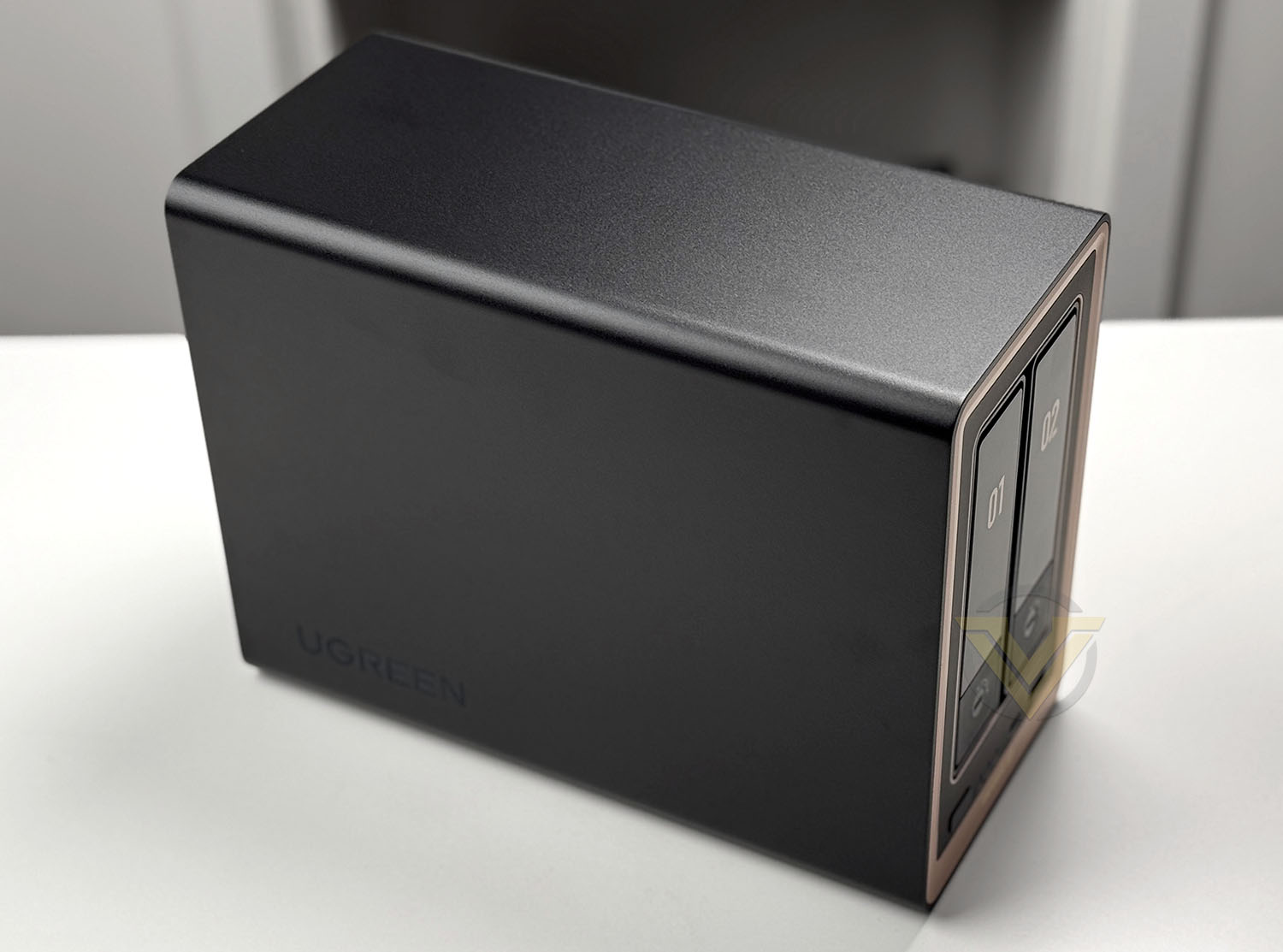
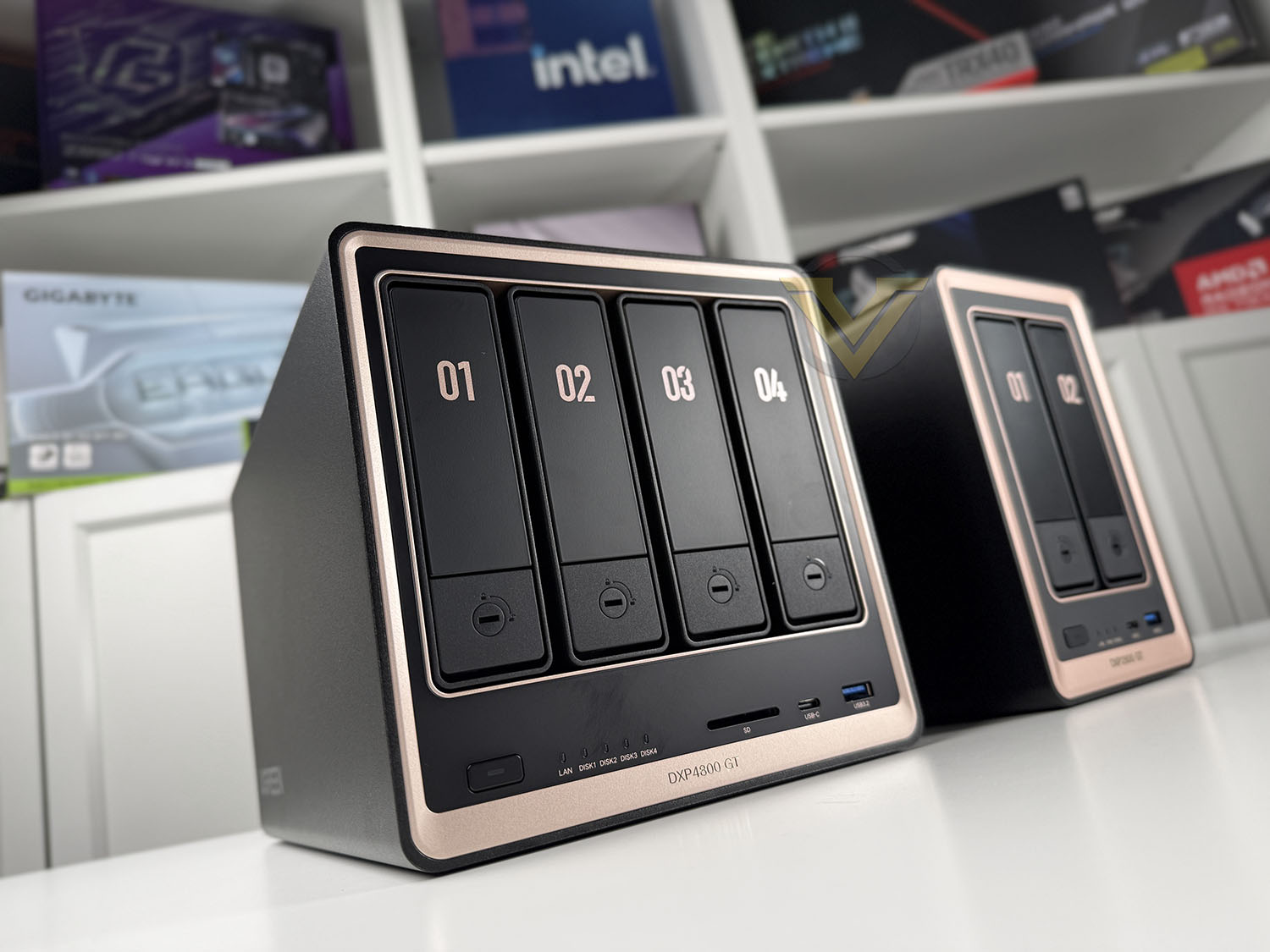
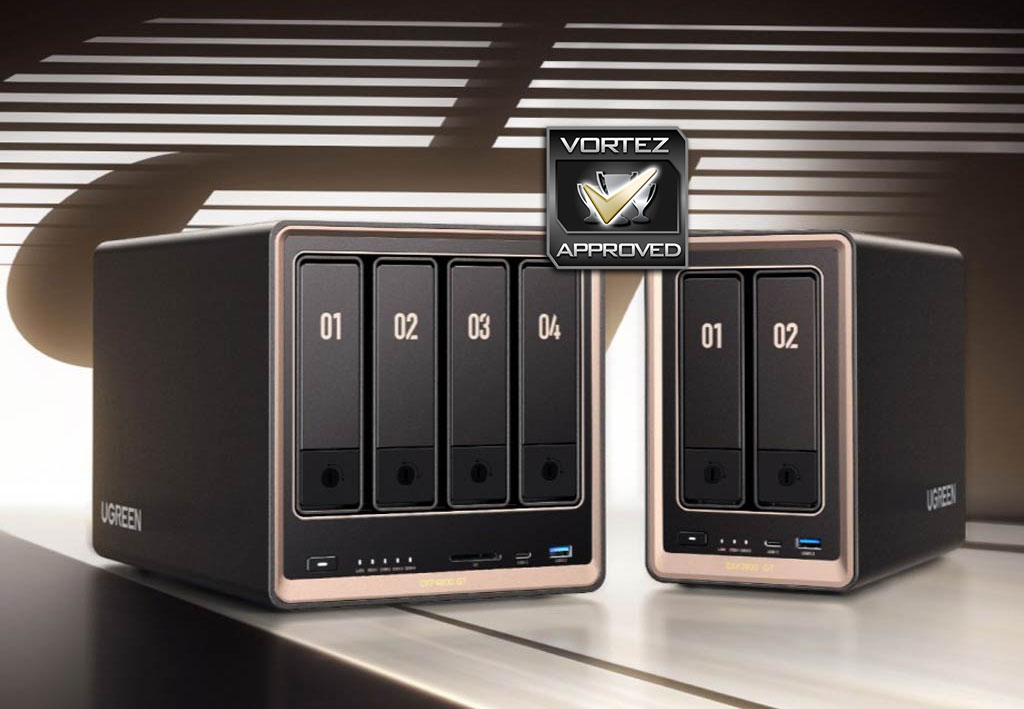
UGREEN has given the DXP2800 GT a noticeably more premium appearance than many NAS appliances in this class. The enclosure is constructed from aluminium with a space grey finish, complemented by subtle gold accents that distinguish the GT series from previous models. The metal outer shell not only contributes to a rigid and durable chassis but also assists with heat dissipation during prolonged operation. Cooling is handled by a large hydraulic-bearing fan, while the rear-mounted magnetic dust mesh filter helps reduce dust accumulation inside the enclosure without making routine maintenance difficult. Combined with its understated industrial design and quoted operating noise of around 29–34dB, the chassis feels well suited to both office and home environments.
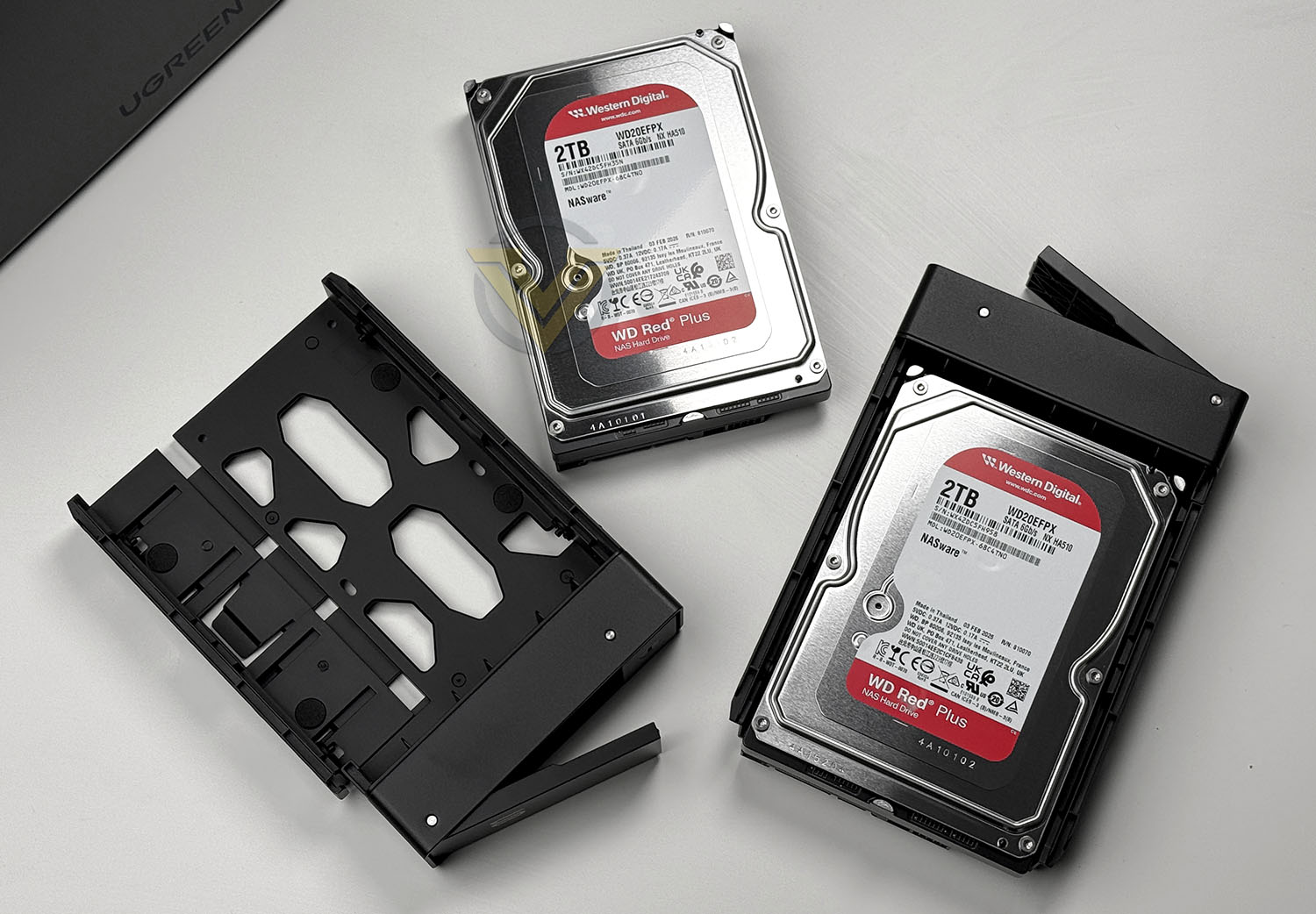
Accessing the storage bays is straightforward thanks to the tool-less drive trays. Each tray is designed to hold a single 3.5-inch SATA hard drive and can be removed by releasing the front latch before sliding it out of the chassis. To install a drive, the side retaining rails slide outwards, allowing the hard drive to be placed into the tray. The moulded locating notches on the rails align with the mounting holes on each side of the drive, securely holding it in place without requiring screws for standard 3.5-inch disks. The DXP2800 GT supports drives up to 32TB each, allowing a maximum raw HDD capacity of 64TB across the two bays, while the additional M.2 slots increase the system’s total supported storage capacity to 80TB. The first two drive bays also support high-speed U.2 SSDs, providing additional flexibility for users requiring enterprise-class solid-state storage.
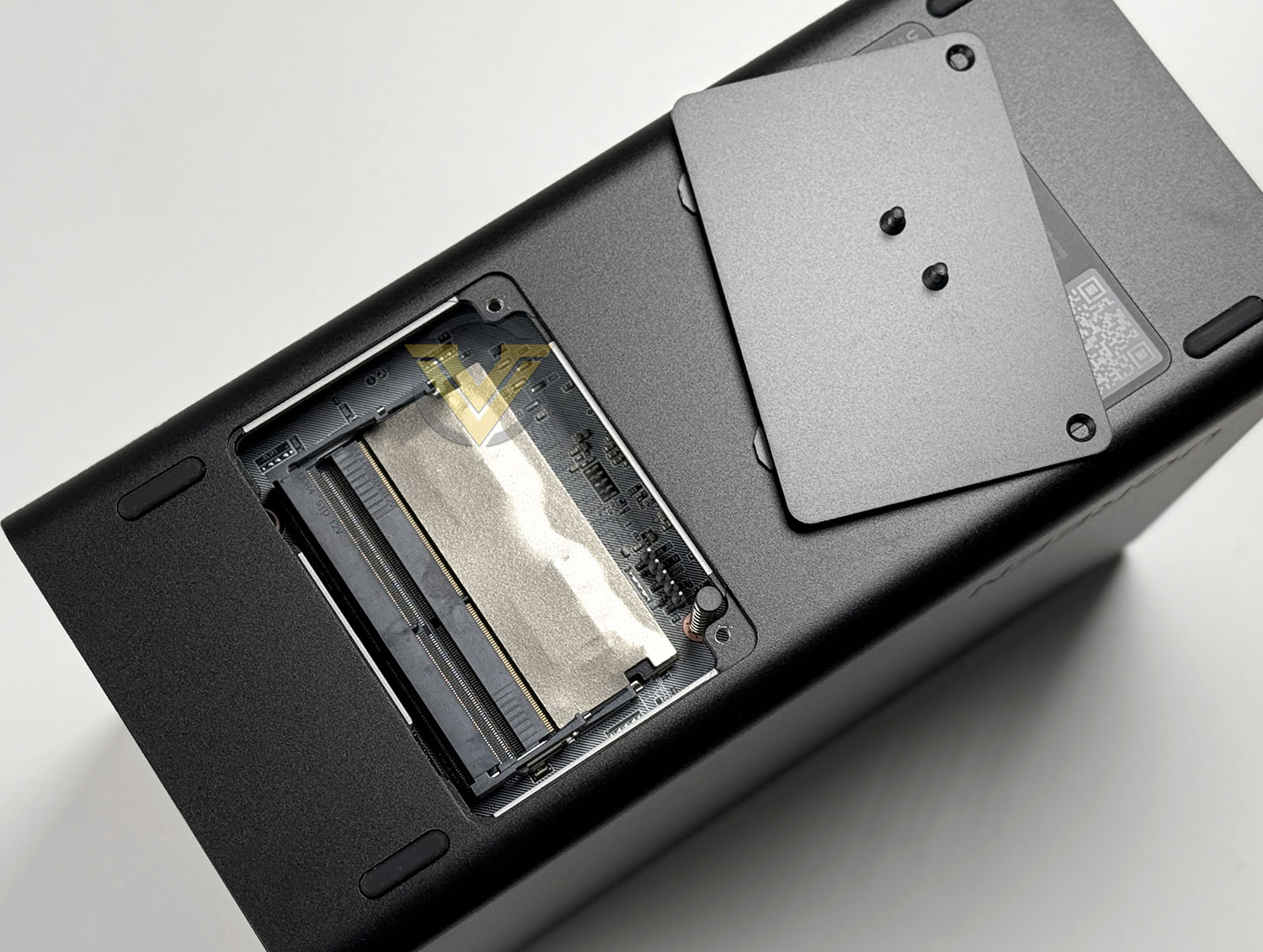
One particularly welcome design feature is the dedicated memory access panel located on the underside of the NAS. Removing this small cover provides direct access to the SO-DIMM memory slots without requiring the entire chassis to be dismantled. The DXP2800 GT is supplied with a single 8GB DDR4 ECC-compatible SO-DIMM installed, leaving a second memory slot vacant for future expansion. This makes upgrading memory a quick and straightforward task, allowing users to increase the system capacity all the way to 64GB simply by removing the bottom cover and installing an additional module. It’s a thoughtful design choice that makes future upgrades significantly easier than on many competing NAS systems.
DXP4800 GT
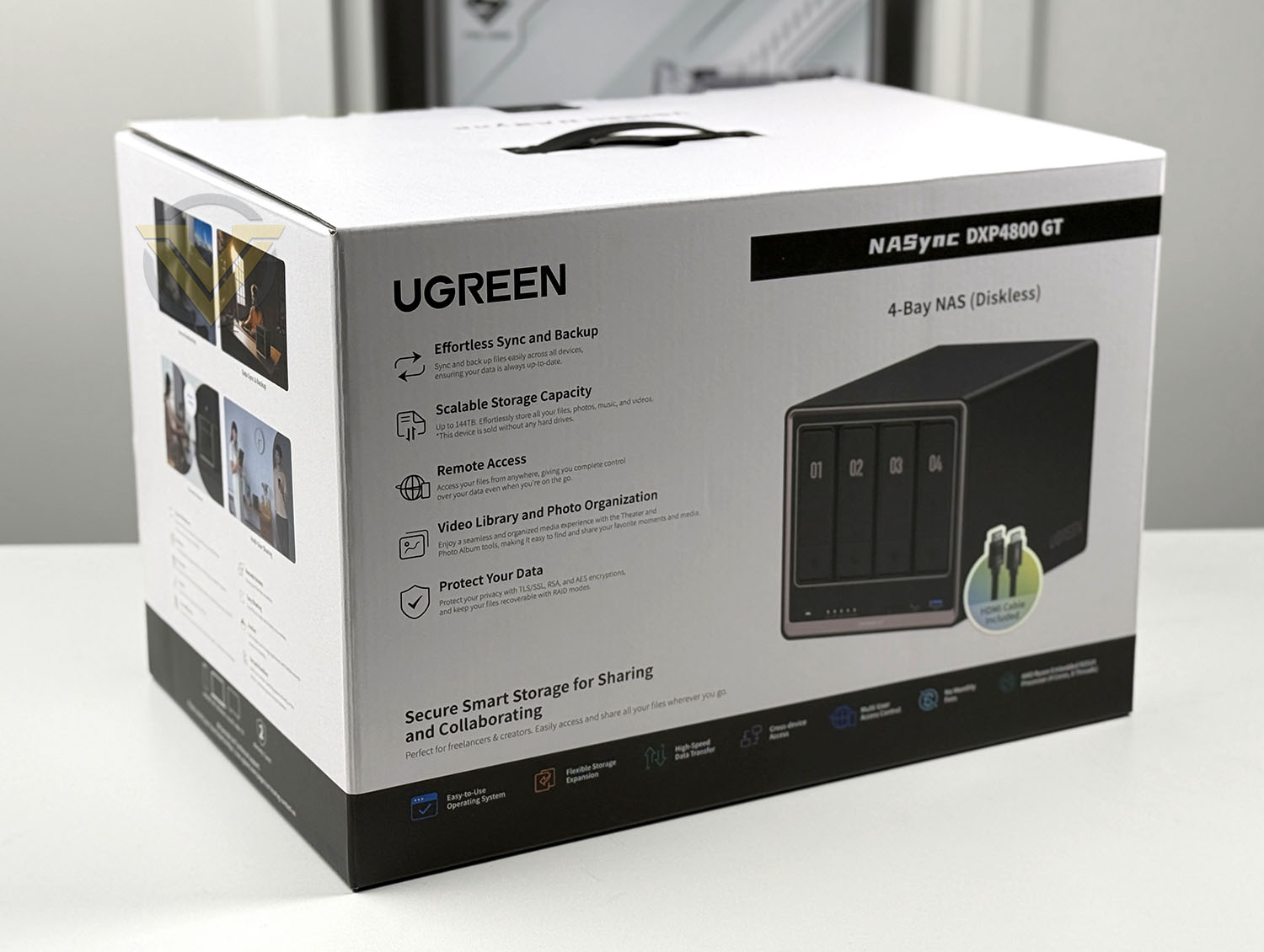
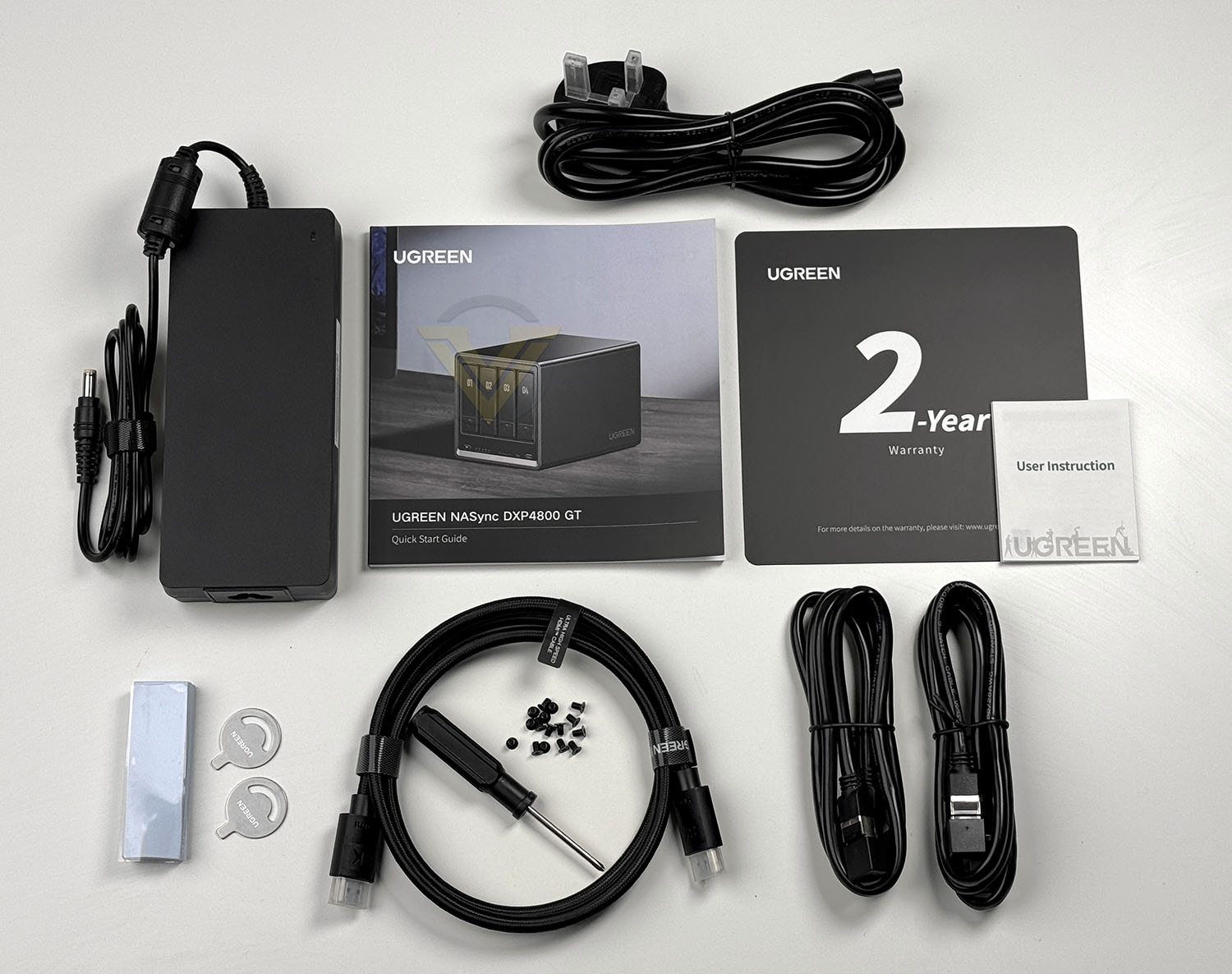
In a similar vein, UGREEN includes a comprehensive accessory pack with the DXP4800 GT, allowing the system to be assembled and configured with minimal preparation. Alongside the NAS enclosure, the package contains a 120W power adapter, regional power cable, Ethernet cable, quick installation guide, mounting screws for both 2.5-inch drives and M.2 SSDs, and a screwdriver to assist with installation. Apart from supplying your own storage media, everything required to install the system is included in the box, making the initial setup process simple and convenient.
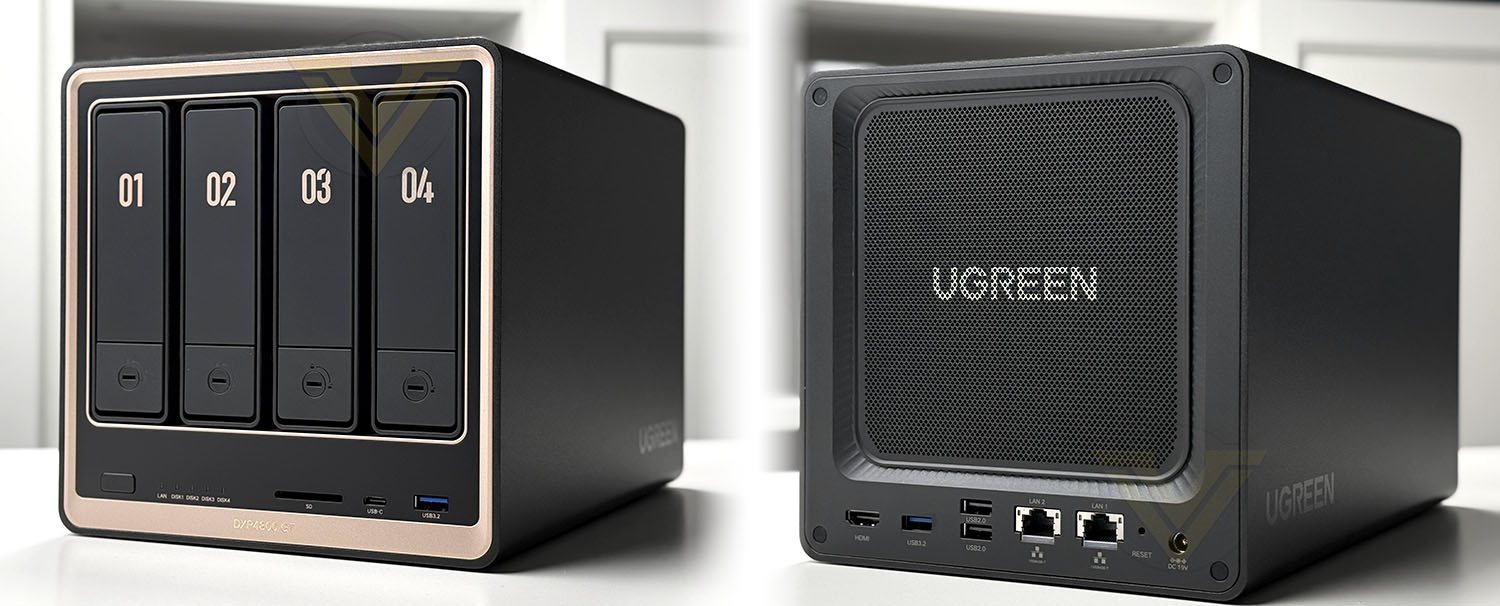
At the heart of the DXP4800 GT is an AMD Ryzen Embedded R2514 processor, providing four cores and eight threads with boost frequencies reaching up to 3.7GHz. The NAS comes fitted with 8GB of DDR4 memory, supports ECC memory modules, and can be expanded to a maximum of 64GB. The front panel accommodates four lockable SATA drive bays, together with system status indicators, a power button, a 10Gbps USB-C port and a 10Gbps USB-A port for connecting high-speed storage devices. Around the rear, connectivity is significantly enhanced with dual 10GbE RJ45 Ethernet ports supporting link aggregation, another 10Gbps USB-A port, two USB 2.0 ports for accessories such as UPS monitoring or input devices, a 4K HDMI output, the DC power connector, a large cooling fan, and a removable magnetic dust filter. Internally, the NAS also houses two M.2 NVMe SSD slots for high-speed storage or cache acceleration, while a dedicated 64GB eMMC module stores the UGOS Pro operating system separately from the user storage drives.
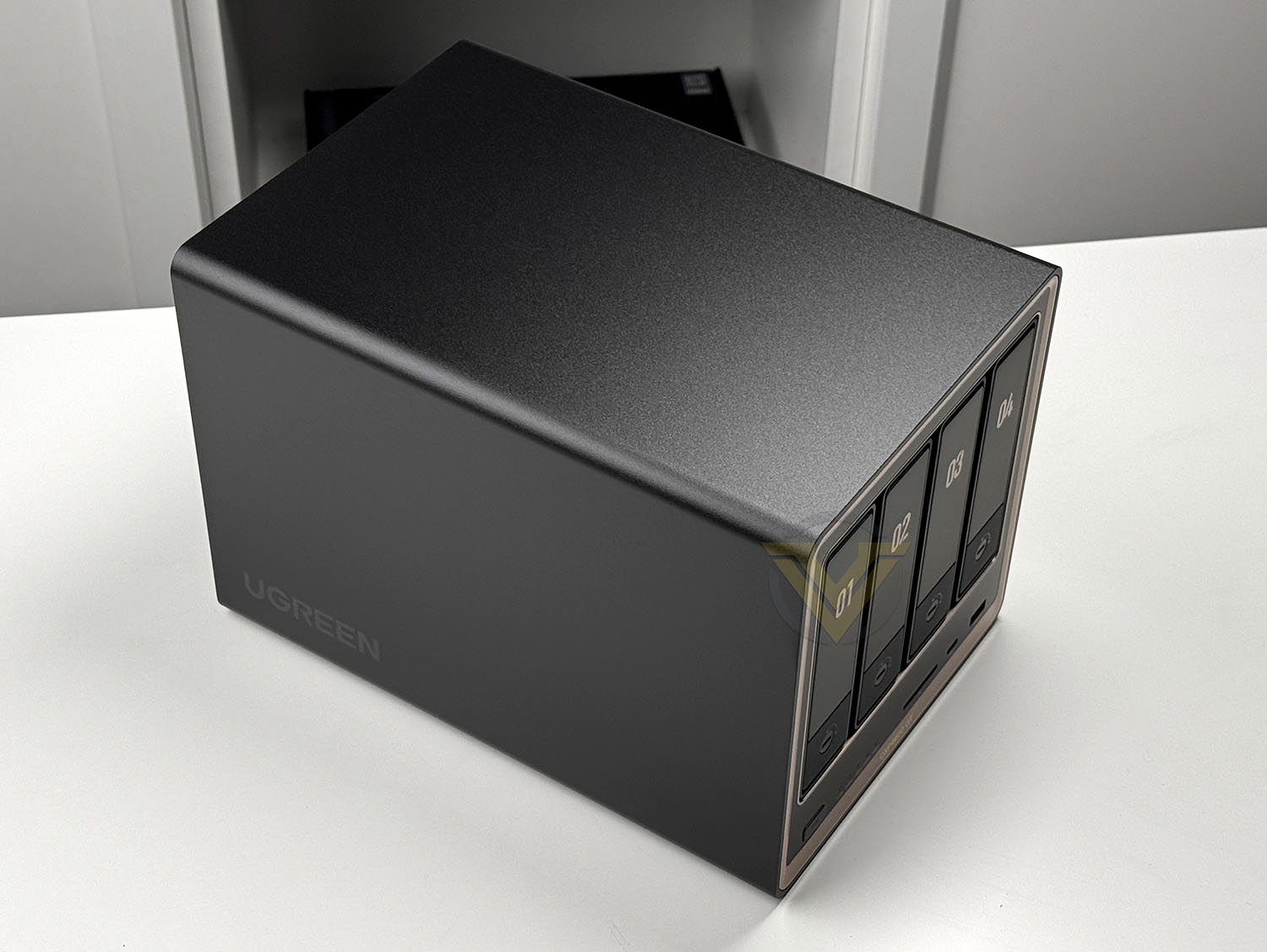
The DXP4800 GT features a premium all-metal enclosure that immediately gives the impression of a robust, high-quality storage appliance. Finished in a refined space grey colour with subtle gold detailing unique to the GT range, the aluminium construction provides excellent rigidity while also helping to dissipate heat generated by the internal components. Cooling duties are handled by a large hydraulic-bearing fan, with fresh air drawn through the chassis and protected by a removable magnetic dust filter positioned at the rear for easy cleaning. The overall design balances professional aesthetics with practicality, resulting in a NAS that looks equally at home on a desktop, in a studio, or within a small business environment while maintaining quiet day-to-day operation.
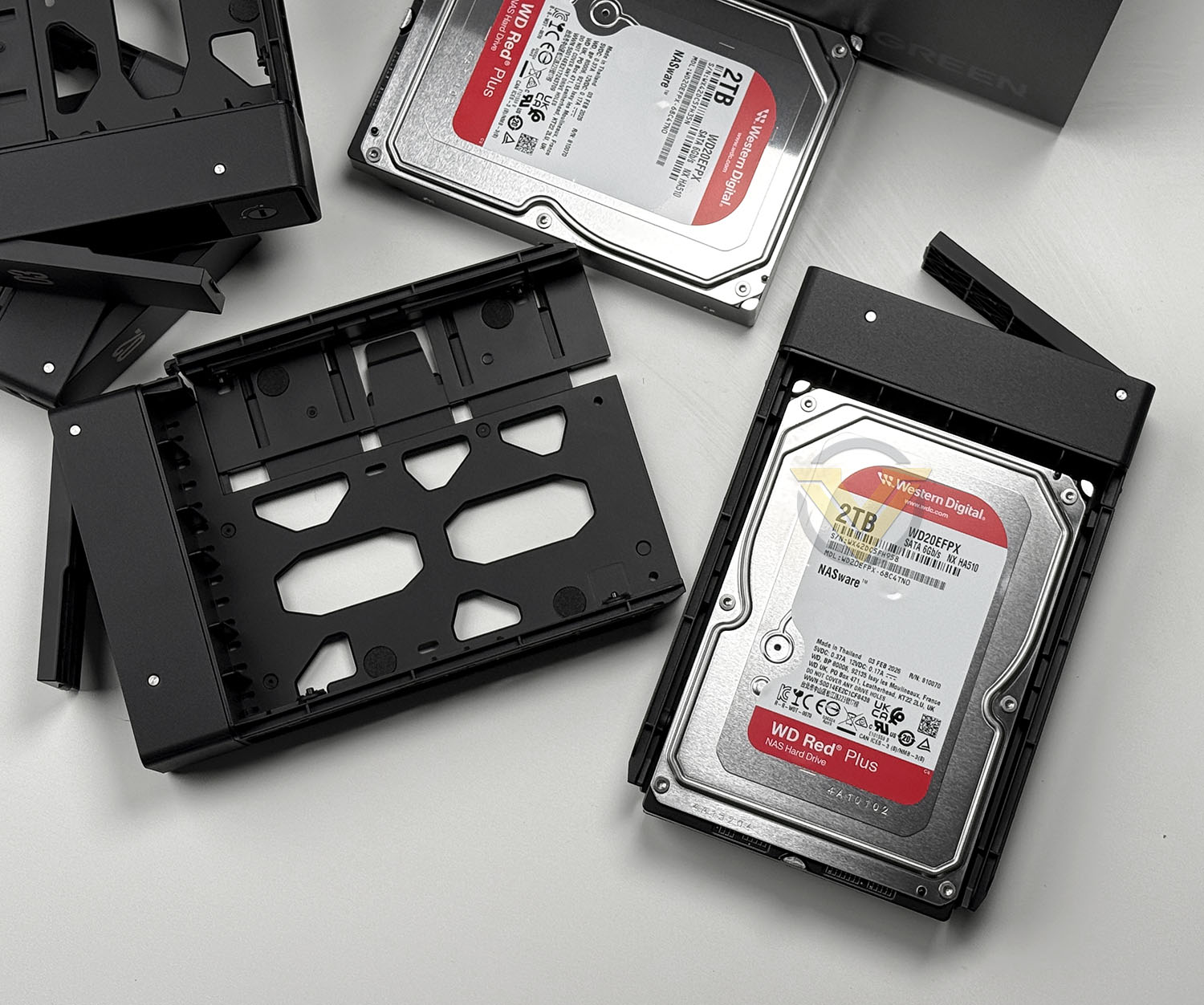
The four front-mounted drive trays are designed for straightforward installation of 3.5-inch SATA hard drives without requiring tools. Each tray can be released from the chassis using the front latch before the side retention rails are pulled away from the tray. This creates sufficient clearance for the drive to be positioned into place, after which the rails are pushed back in so their locating pins engage with the mounting holes on either side of the hard drive, securing it firmly without screws. The DXP4800 GT supports hard drives up to 32TB in capacity, providing a maximum raw HDD capacity of 128TB across its four bays. Combined with the two internal M.2 NVMe slots, the system supports an overall storage capacity of up to 144TB. Additionally, the first two drive bays are compatible with U.2 SSDs, giving users the flexibility to deploy enterprise-grade solid-state storage where higher performance is required.
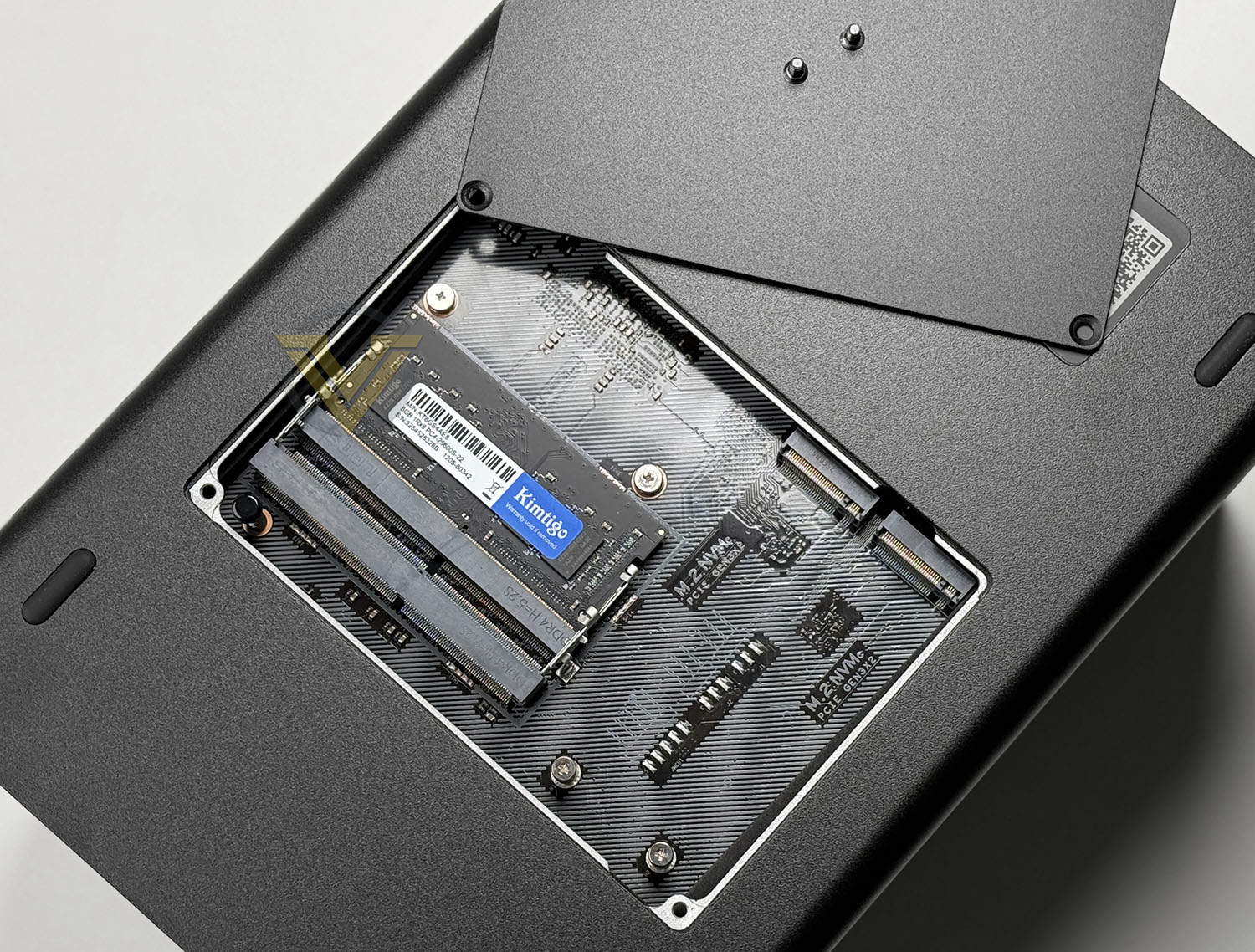
UGREEN has made future memory expansion particularly straightforward by incorporating a dedicated service panel into the underside of the chassis. Removing this cover provides direct access to the SO-DIMM sockets, eliminating the need to dismantle the NAS to perform an upgrade. The DXP4800 GT is equipped with a single 8GB DDR4 ECC-compatible SO-DIMM from the factory, while the second slot remains available for additional memory. With support for up to 64GB across the two slots, users can easily expand the available RAM by installing another compatible module, making upgrades quick, accessible, and far less involved than on many competing NAS platforms.
Setting up, UGOS Pro and Usage

Getting both the units up and running is the exact same process, and both are a very straightforward process. After installing the hard drives and connecting the NAS to the network, we installed the UGREEN desktop app (because our firewall was preventing the web link install from finding either unit). The installation wizard guides you through the entire process, including firmware updates, administrator account creation, storage pool configuration, and volume creation. The interface provides clear explanations throughout, making it approachable for first-time NAS users without becoming restrictive for those already familiar with network storage. From powering on the unit to reaching the UGOS Pro desktop took only a matter of minutes, and the guided setup removed much of the complexity traditionally associated with configuring a NAS for the first time.
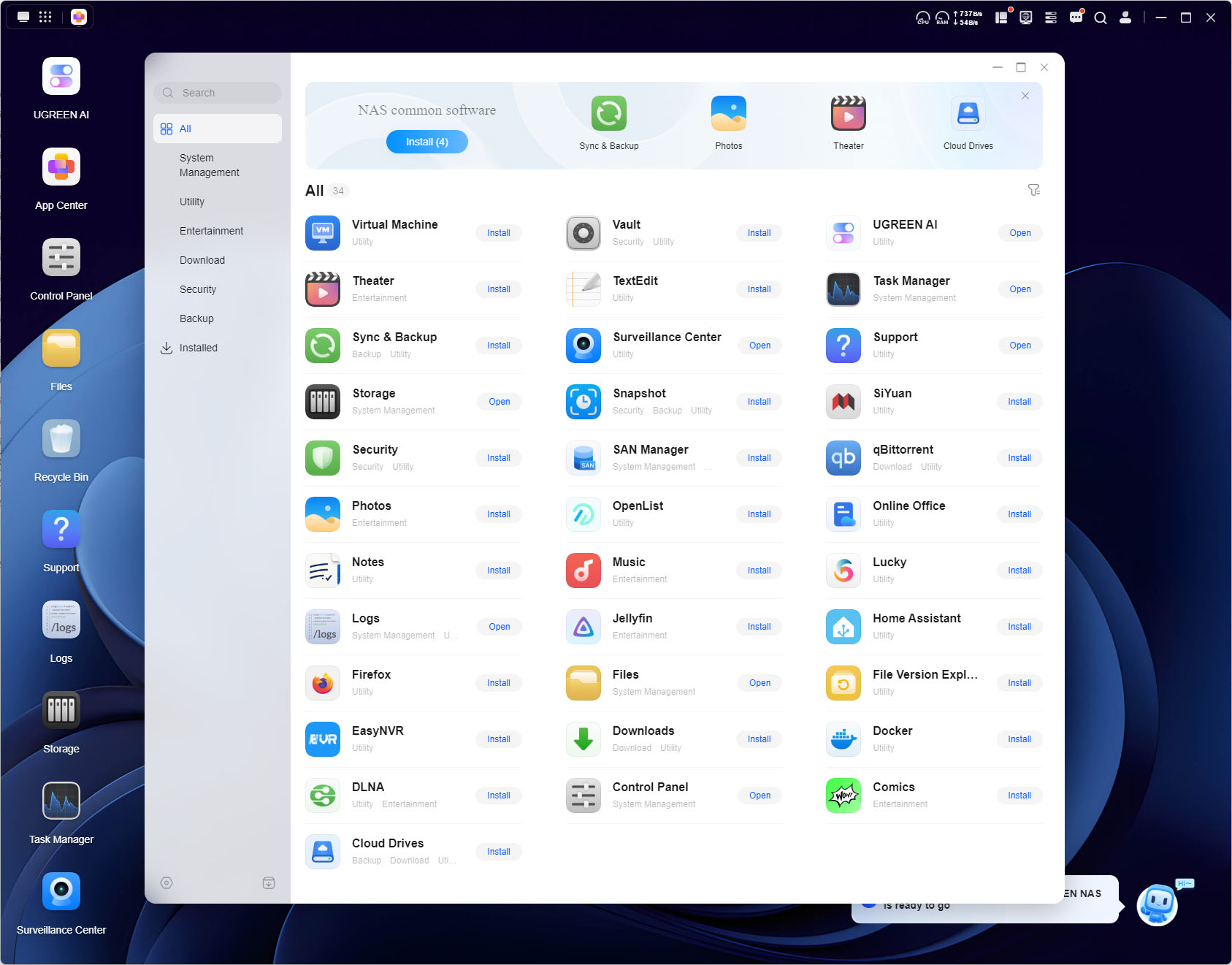
Once the initial configuration is complete, UGOS Pro presents a clean desktop-style interface that feels more like a conventional operating system than a typical web management portal. Navigation is intuitive, with applications displayed as desktop icons and settings grouped logically within an easy-to-understand Control Panel. During testing, the interface remained responsive, with menus opening quickly and system changes being applied without noticeable delays. Users familiar with Windows or Linux desktop environments will feel comfortable almost immediately, while newcomers benefit from built-in tutorials that explain storage management, RAID configuration, and other core functions as they begin using the system. Although the native application catalogue is still smaller than some long-established competitors, the overall polish of the operating system has improved considerably and provides a pleasant day-to-day experience.
UGOS Pro includes a comprehensive collection of storage and networking features designed for both home and professional users. User and group management, shared folders, snapshots, storage pools, scheduled backups, and remote access are all integrated into the operating system, while UGREENlink provides secure remote connectivity without requiring manual port forwarding. Docker support significantly extends the platform’s capabilities by allowing applications such as Plex, Jellyfin, Home Assistant, Immich, and many other self-hosted services to be deployed through containers. Networking is equally well catered for, with straightforward configuration of the dual 10GbE interfaces, support for Link Aggregation, jumbo frames, VLAN configuration, and multiple network management options directly within the interface. Storage configuration is equally flexible, supporting RAID 0, RAID 1, RAID 5, RAID 6, RAID 10, JBOD, and Basic volumes, allowing users to prioritise either performance, capacity, or data protection depending on their requirements.
Having completed a full installation and spent time exploring the operating system, UGOS Pro leaves a positive impression. The combination of a simple installation process, responsive user interface, and sensible layout means very little time is spent learning where features are located. Most commonly used functions are readily accessible, while more advanced capabilities remain available for users wanting to build virtual machines, Docker environments, or more complex storage configurations. Although the software ecosystem continues to grow and still trails some of the more mature NAS platforms in terms of native applications, the underlying operating system feels stable, well-designed, and perfectly capable of supporting both everyday file storage and considerably more demanding workloads. Combined with both DXP2800 and DXP4800 GT’s modern hardware platform and high-speed networking, the overall user experience is both polished and very enjoyable.
Conclusion
After spending time with both the DXP2800 GT and DXP4800 GT, it’s clear that UGREEN has produced two exceptionally capable NAS systems that place a strong emphasis on modern hardware, premium construction, and ease of use. From the moment they’re unboxed, both models leave a positive impression thanks to their solid aluminium construction, understated styling, and thoughtful design. The installation process is refreshingly straightforward, while UGOS Pro has matured into an operating system that is intuitive to navigate, responsive in daily use, and well suited to both newcomers and experienced NAS users alike. Whether you’re looking for centralised storage, media serving, backup, virtualisation, or container workloads, both systems provide a flexible platform that can comfortably adapt to a wide variety of applications.
One of the biggest strengths of both NAS units is undoubtedly the underlying hardware. The AMD Ryzen Embedded R2514 processor delivers significantly more processing capability than many similarly priced competitors, while features such as integrated 10GbE networking, expandable ECC memory support up to 64GB, dual M.2 NVMe SSD slots, HDMI output, and dedicated operating system storage all contribute to a specification that feels remarkably complete. The easily accessible memory upgrade compartment deserves particular praise, making future expansion a matter of minutes rather than requiring the chassis to be dismantled. Meanwhile, the DXP4800 GT further distinguishes itself with dual 10GbE ports supporting link aggregation, additional RAID options, and the inclusion of an integrated SD card reader, making it especially attractive for photographers, videographers, and creative professionals.
Perhaps the most impressive aspect of these systems is the value they represent. When compared directly with similarly priced alternatives, the specifications are difficult to ignore. The DXP2800 GT competes closely on price with the Synology DS225+, yet offers a considerably more powerful Ryzen processor, integrated 10GbE networking, HDMI output, dual M.2 SSD slots, and substantially greater memory expansion. Likewise, the DXP4800 GT offers noticeably stronger hardware than the Synology DS925+ while sitting in a similar price bracket, providing dual 10GbE networking, Ryzen processing, ECC memory support, HDMI connectivity, and premium chassis construction. For buyers comparing hardware specifications alone, UGREEN has established a very compelling position within the current NAS market.
That isn’t to say there are no compromises. UGOS Pro has evolved significantly over the past year and continues to improve, but its application ecosystem still cannot match the breadth of mature platforms such as Synology DSM or QNAP QTS. Users heavily invested in first-party applications may find fewer native options available, although Docker support helps bridge much of that gap for more technically inclined users. Both systems also ship with memory operating in a single-channel configuration until a second SO-DIMM is installed, and while the dual M.2 SSD slots are certainly welcome, they are limited to PCIe Gen3 rather than Gen4. None of these issues are deal-breakers, but they are worth considering depending on your intended workload.
Overall, both the DXP2800 GT and DXP4800 GT are easy to recommend. They combine excellent hardware, premium build quality, modern connectivity, and a polished user experience into products that represent outstanding value for money. The two-year warranty provides additional peace of mind, while the accessible upgrade path ensures the systems can grow alongside future storage and memory requirements.
For users prioritising raw hardware performance and connectivity over an expansive first-party software ecosystem, these GT Series NAS units are among the strongest options currently available. The DXP2800 GT is an excellent choice for home users and small offices seeking high-performance two-bay storage, while the DXP4800 GT builds on that foundation with additional capacity, networking flexibility, and features that make it particularly well suited to demanding enthusiasts and professional content creators.
Pros
+ Excellent build quality
+ Stylish but professional design
+ Armed with 10GbE networking
+ Hardware spec beats rivals for same price
+ Very easy to get up and running
+ Memory can be added to from accessible panel/slot
+ DXP4800 GT has SD card slot reader
+ 2 year warranty provided
Cons
– Single-channel memory
– APP support isn’t as broad as competition
– M.2 SSD slots are Gen3 only
+ Excellent build quality
+ Stylish but professional design
+ Armed with 10GbE networking
+ Hardware spec beats rivals for same price
+ Very easy to get up and running
+ Memory can be added to from accessible panel/slot
+ DXP4800 GT has SD card slot reader
+ 2 year warranty provided
Cons
– Single-channel memory
– APP support isn’t as broad as competition
– M.2 SSD slots are Gen3 only
Click here for an explanation of our awards at Vortez.net.
Stay connected with the Vortez Social Media pages:
Join in with the discussions on Discord