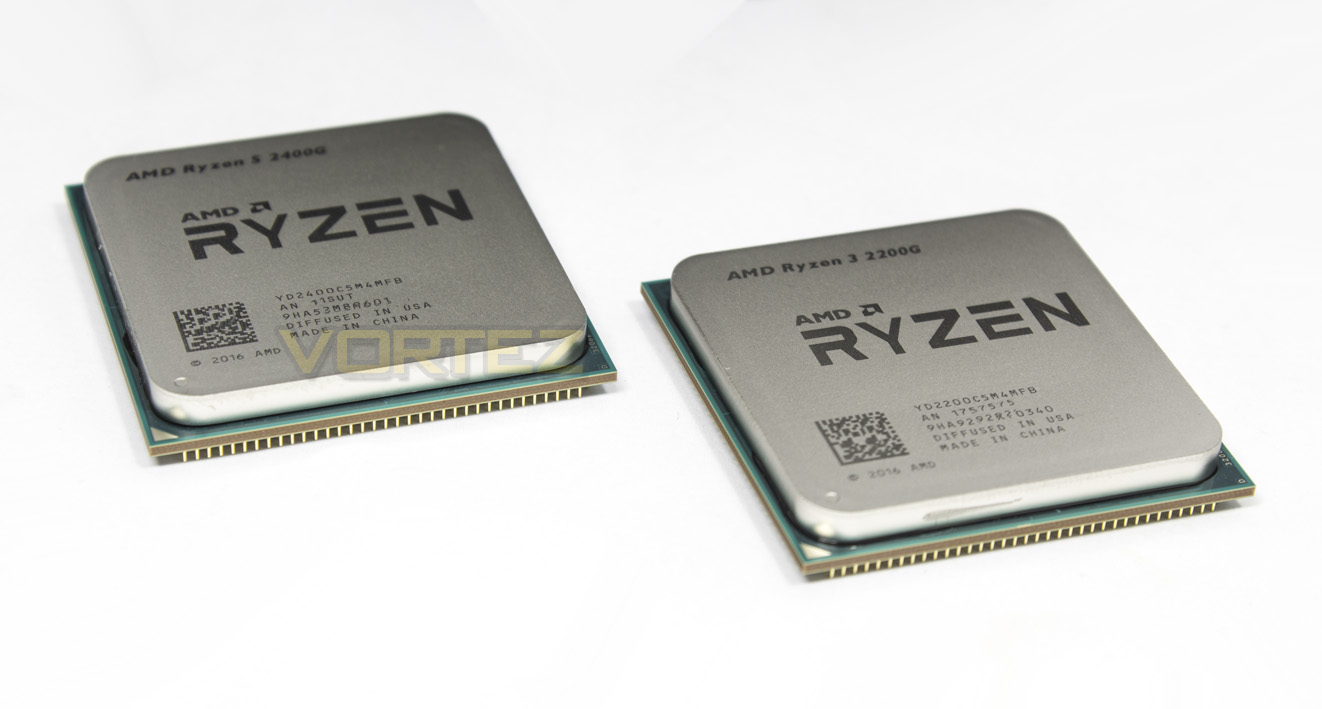
The long anticipated Raven Bridge APUs fuse Ryzen CPU architecture with Vegas graphics on one chip. As they are compatible with the AM4 socket, you won’t be needing a dedicated platform for these APUs either!

Product on Review: Ryzen 5 2400G and Ryzen 3 2200G
Manufacturer: AMD
MSRP: R5 2400G – UK: £149.99, US: $169
R3 2200G – UK: £89.99, US: $99
The 2nd Generation of AMD Ryzen kicks off with two Raven Bridge APUs, the 2200G and the 2400G, with the end aim of replacing the Ryzen 3 1200, and the Ryzen 5 1400. As a fusion of Zen+ CPU cores and Vegas GPU cores, the ultimate aim is to undermine the entry level discrete GPU market (up to $75), and offer a new benchmark in balanced, mainstream performance. Considering the CPUs they replace, you are effectively getting a strong GPU for the same price (or cheaper) than the CPU alone, along with the added benefit of having a genuine upgrade path to a discrete graphics card or 8core/16thread+ CPU thanks to being compatible with the existing AM4 ecosystem, with the potential base platform cost starting from around £120 for an A320 motherboard and the R3 2200G APU.
The R3 2200G is a 4core/ 4thread part with a base clock of 3.5GHz and a turbo of 3.7GHz, it features the Vegas 8 GPU that features 512 ALUs (shaders) clocked up to 1100MHz. Alternatively the R5 2400G is a 4core/ 8thread CPU @3.6/3.9GHz, and features the Vegas 11 GPU (704 ALUs) clocked up to 1250MHz. Thanks to Precision Boost 2, each has a more responsive turbo boost, and as both are unlocked, they benefit from the granular 25MHz overclocking increments. The GPU cores too can be overclocked with an expected ceiling of around 1600MHz. Both Raven Bridge APUs now support DDR4 2933MHz natively, up from the 2666MHz of previous Ryzen CPUs. We note that the frequencies of both parts are higher than their former counterparts, but we also note that the R5 2400G only features 4MB L3 cache rather than the 8MB found in the R5 1400. This is because AMD chose to use 4cores from a single CCX, meaning that the extra cache no longer exists, and that the frequency boost compensates for any potential performance lost.
Another note to make is that both APUs also feature a cut to the PCIe lanes, each having 8x, rather than 16x. This was likely to help reduce the cost and provide better value. This isn’t likely to have any effect on mid-range graphics cards, but could hinder those that want to, for whatever reason, use these APUs with a GTX Titan xp. Though, pay attention to the storage maps in your motherboard manuals, as the reduction in PCIe lanes could potentially cause a conflict in the somewhat confusing storage maps (due to motherboards increasing their reliance on PCIe lanes) especially if your motherboard features several M.2 sockets.
AMD on Ryzen
AMD Ryzen™ Processors with Radeon™ Vega Graphics are armed with some of the most advanced, powerful computing and graphics hardware available today, fused together in a single processor to deliver the high performance you need for demanding work and serious play, without compromise.
Technical Specifications
Ryzen 3 2200G
CPU Cores: 4 Cores, 4 Threads (1CCX)
CPU Base Clock: 3.5GHz
CPU Max Boost Clock: 3.7GHz
GPU Cores: 8 Radeon Vegas CUs
GPU Clock: up to 1100MHz
L1 Cache: 64K I$, 32K D$ per core
L2 Cache: 512K per core
L3 Cache: 4MB Shared
TDP: 65W
DRAM: DDR4-2933 – Dual Channel
Transistors 4.94Billion
Die Size: 209.78mm2
Ryzen 5 2400G
CPU Cores: 4 Cores, 8 Threads (1CCX)
CPU Base Clock: 3.6GHz
CPU Max Boost Clock: 3.9GHz
GPU Cores: 11 Radeon Vegas CUs
GPU Clock: up to 1250MHz
L1 Cache: 64K I$, 32K D$ per core
L2 Cache: 512K per core
L3 Cache: 4MB Shared
TDP: 65W
DRAM: DDR4-2933 – Dual Channel
Transistors 4.94Billion
Die Size: 209.78mm2
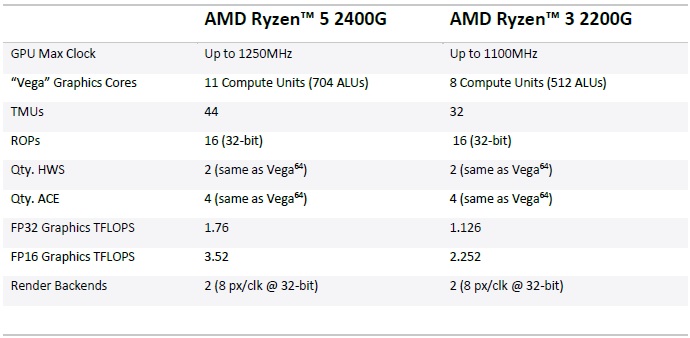
CPU Cores: 4 Cores, 4 Threads (1CCX)
CPU Base Clock: 3.5GHz
CPU Max Boost Clock: 3.7GHz
GPU Cores: 8 Radeon Vegas CUs
GPU Clock: up to 1100MHz
L1 Cache: 64K I$, 32K D$ per core
L2 Cache: 512K per core
L3 Cache: 4MB Shared
TDP: 65W
DRAM: DDR4-2933 – Dual Channel
Transistors 4.94Billion
Die Size: 209.78mm2
Ryzen 5 2400G
CPU Cores: 4 Cores, 8 Threads (1CCX)
CPU Base Clock: 3.6GHz
CPU Max Boost Clock: 3.9GHz
GPU Cores: 11 Radeon Vegas CUs
GPU Clock: up to 1250MHz
L1 Cache: 64K I$, 32K D$ per core
L2 Cache: 512K per core
L3 Cache: 4MB Shared
TDP: 65W
DRAM: DDR4-2933 – Dual Channel
Transistors 4.94Billion
Die Size: 209.78mm2
Packaging & Product
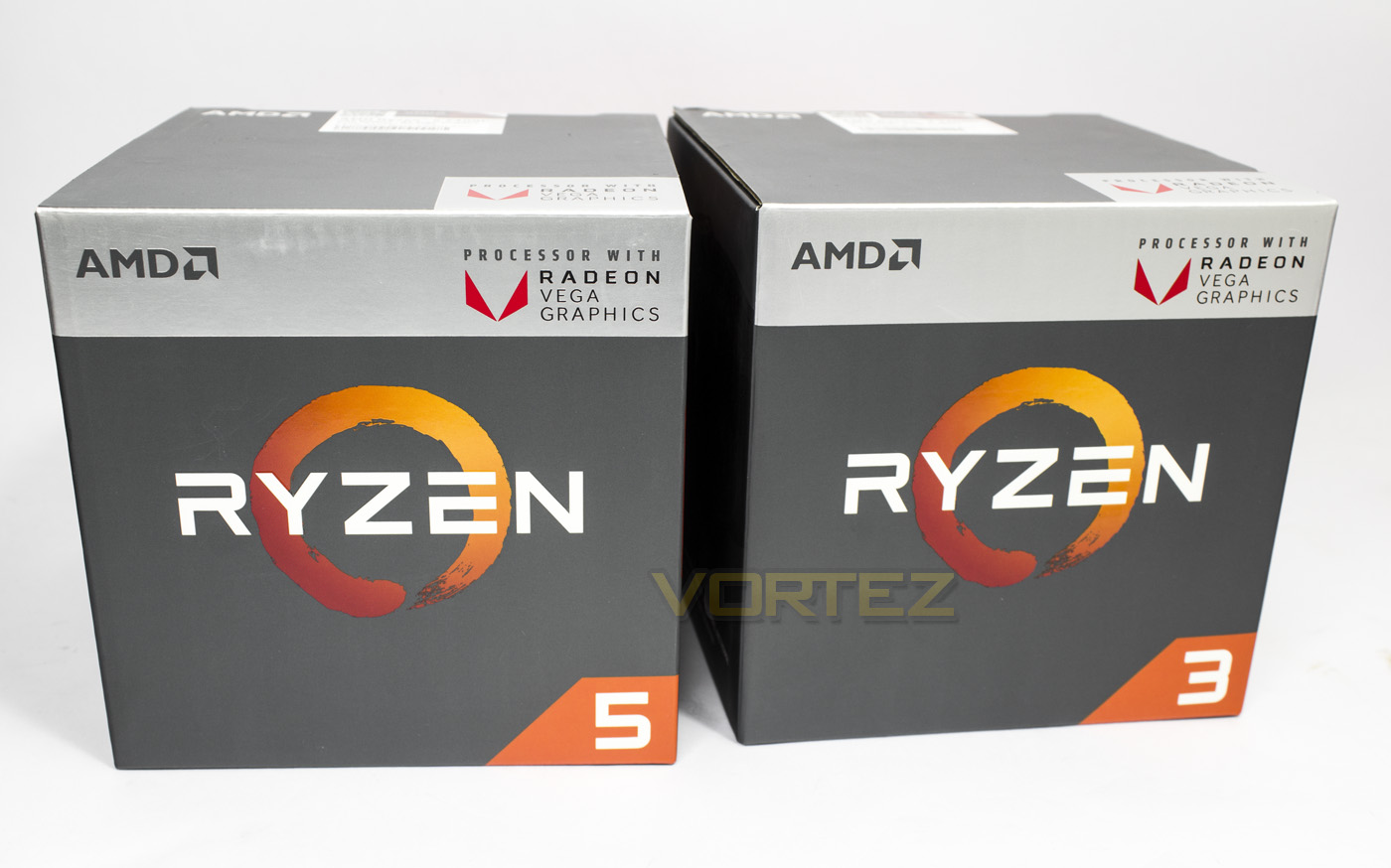
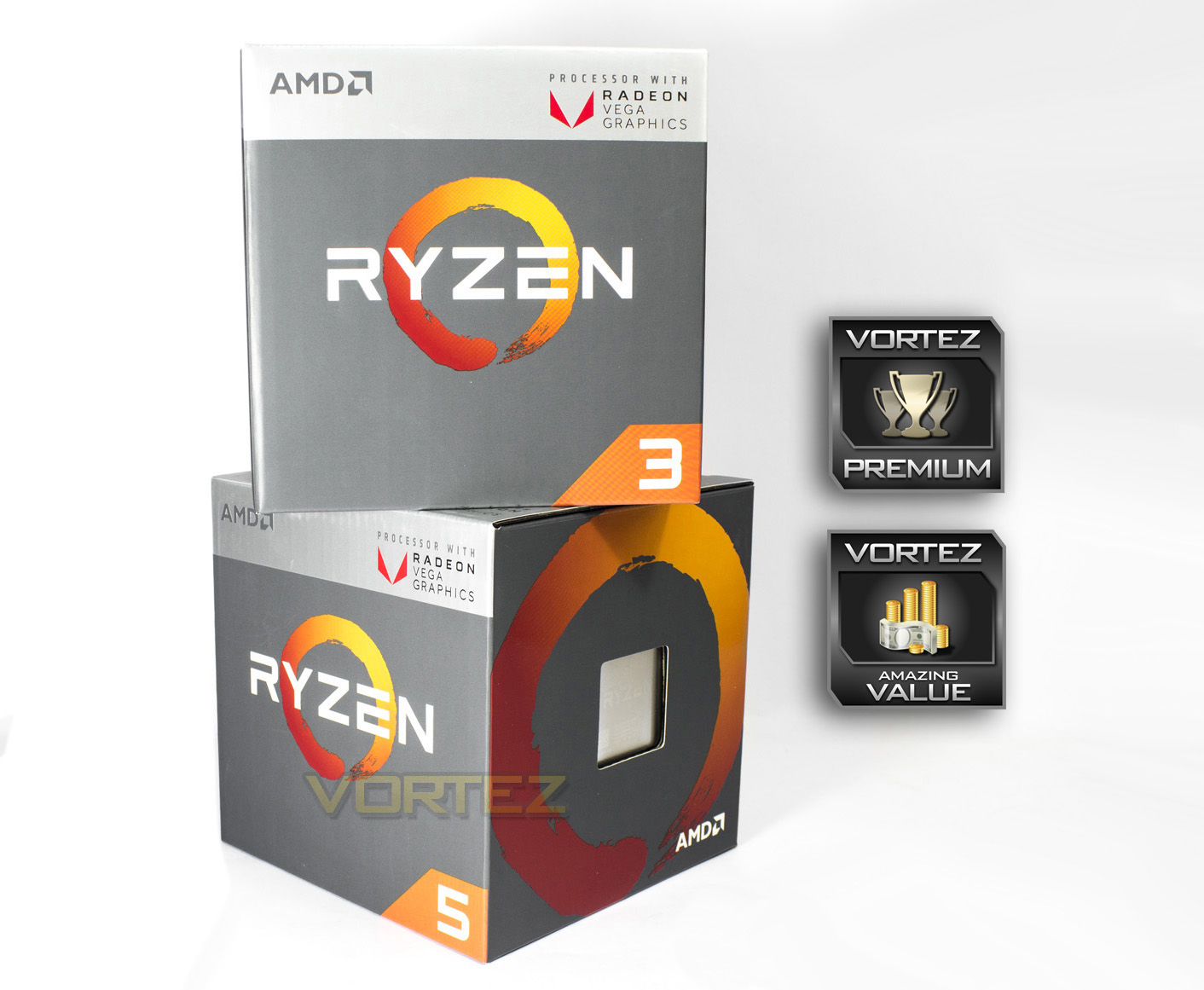
The product packaging fits in nicely with the previous Ryzen packaging, but has a distinct silver band at the top clearly displaying the inclusion of Vegas graphics.
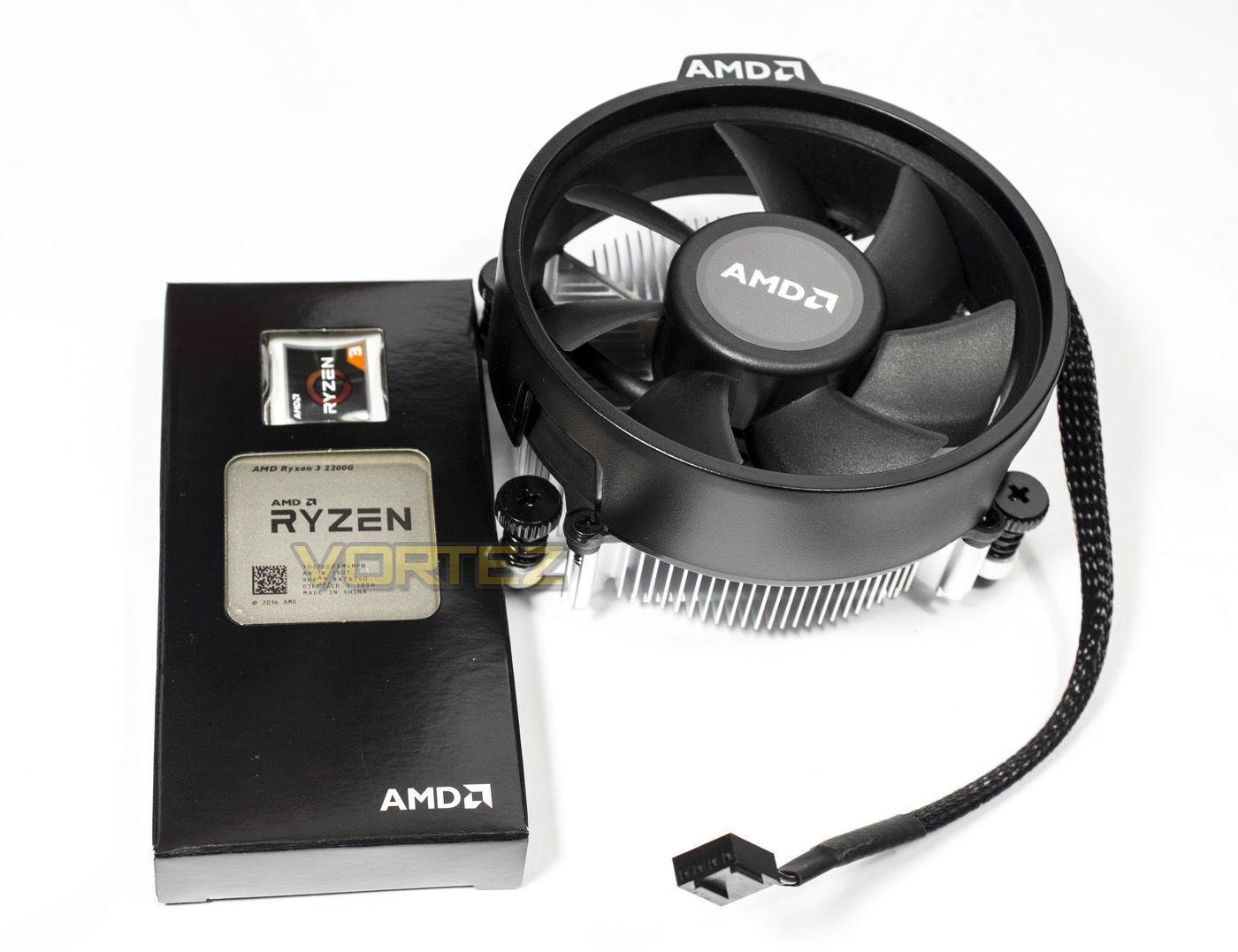
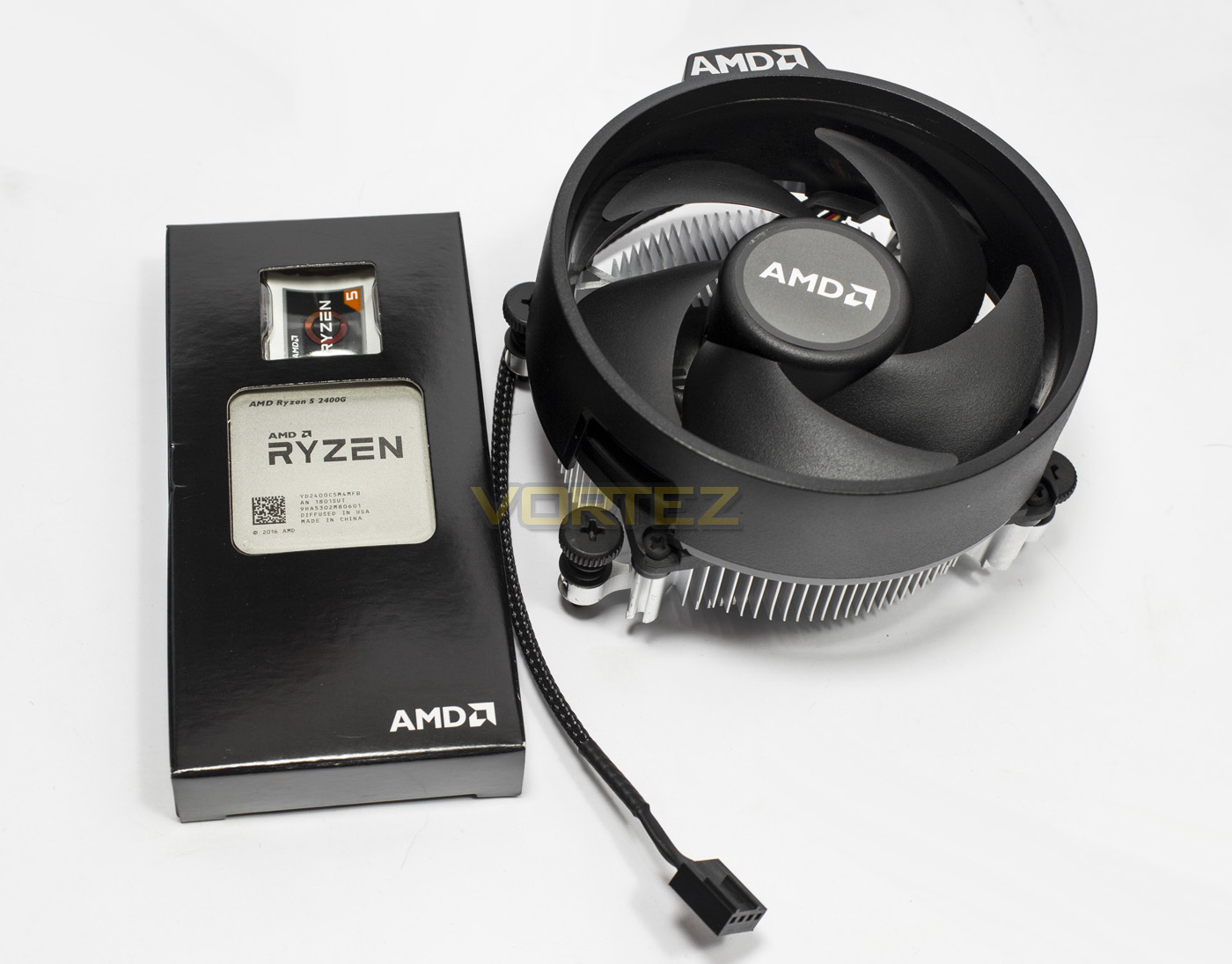
The APUs each come with the same cooler, however the fan is slightly different, with the 2200G featuring a 7 bladed fan, while the 2400G features a slightly larger 5 bladed fan.
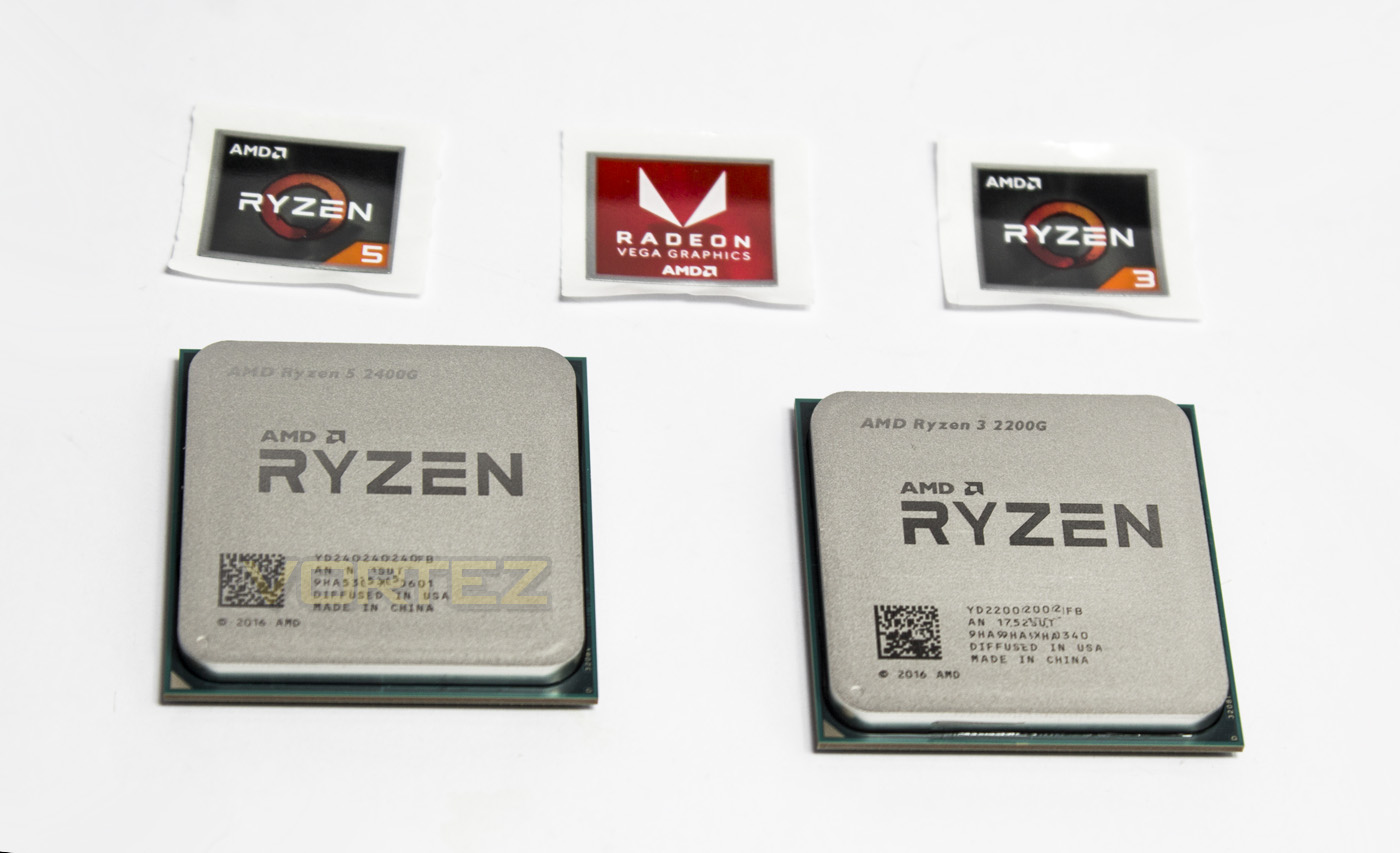
Included with the APUs is not just a Ryzen 3/5 sticker, but also a shiny Radeon Graphics sticker.
Test Setup & Software
CPUs being tested
AMD Ryzen 3 2200G (3.5/3.7GHz) Raven Ridge
AMD Ryzen 5 2400G (3.6GHz/3.9GHz) Raven Ridge
AMD Ryzen 3 2200G (CPU 4GHz OC, GPU 1500MHz OC) Raven Ridge
AMD Ryzen 5 2400G (CPU 4GHz OC, GPU 1500MHz OC) Raven Ridge
Test Setup
Cooling Noctua NH-U12S SE-AM4
Motherboard GIGABYTE GA-AX370-GAMING 5, MSI B350M MORTAR
Memory 16GB Corsair Vengeance LPX 3200MHz
Graphics Radeon RX 480 8GB, (Vegas 8/11 where indicated)
Storage Corsair Force LE 480GB
PSU Corsair RM 750X 80 Plus Gold Certified PSU
Compared against
AMD Ryzen 3 1200 (3.1/3.4GHz) Summit Ridge
AMD Ryzen 3 1300X (3.4/3.7GHz) Summit Ridge
AMD Ryzen 5 1400 (3.2GHz) Summit Ridge
AMD Ryzen 5 1600 (3.2GHz) Summit Ridge
AMD Ryzen 7 1700 (3.0GHz) Summit Ridge
AMD Ryzen 7 1700X (3.4GHz) Summit Ridge
AMD Ryzen 7 1800X 3.6GHz) Summit Ridge
AMD FX-8350 (4.0GHz) PileDriver
Intel Core i7-8700K (3.7GHz) Coffee Lake
Intel Core i9-7900X (3.3GHz) Skylake-X
Intel Core i7-7800X (3.5GHz) Skylake-X
Intel Core i7-7740X (4.3GHz) Kaby Lake-X
Intel Core i5-7700K (4.2GHz) Kaby Lake
Intel Core i5-7600K (3.8GHz) Kaby Lake
Intel Core i7-6950X (3.0GHz) Broadwell-E
Intel Core 7-6900K (3.2GHz) Broadwell-E
Intel Core i7-5960X (3.0GHz) Haswell-E
Intel Core i7-6700K (4GHz) Skylake
AMD Ryzen 3 2200G (3.5/3.7GHz) Raven Ridge
AMD Ryzen 5 2400G (3.6GHz/3.9GHz) Raven Ridge
AMD Ryzen 3 2200G (CPU 4GHz OC, GPU 1500MHz OC) Raven Ridge
AMD Ryzen 5 2400G (CPU 4GHz OC, GPU 1500MHz OC) Raven Ridge
Test Setup
Cooling Noctua NH-U12S SE-AM4
Motherboard GIGABYTE GA-AX370-GAMING 5, MSI B350M MORTAR
Memory 16GB Corsair Vengeance LPX 3200MHz
Graphics Radeon RX 480 8GB, (Vegas 8/11 where indicated)
Storage Corsair Force LE 480GB
PSU Corsair RM 750X 80 Plus Gold Certified PSU
Compared against
AMD Ryzen 3 1200 (3.1/3.4GHz) Summit Ridge
AMD Ryzen 3 1300X (3.4/3.7GHz) Summit Ridge
AMD Ryzen 5 1400 (3.2GHz) Summit Ridge
AMD Ryzen 5 1600 (3.2GHz) Summit Ridge
AMD Ryzen 7 1700 (3.0GHz) Summit Ridge
AMD Ryzen 7 1700X (3.4GHz) Summit Ridge
AMD Ryzen 7 1800X 3.6GHz) Summit Ridge
AMD FX-8350 (4.0GHz) PileDriver
Intel Core i7-8700K (3.7GHz) Coffee Lake
Intel Core i9-7900X (3.3GHz) Skylake-X
Intel Core i7-7800X (3.5GHz) Skylake-X
Intel Core i7-7740X (4.3GHz) Kaby Lake-X
Intel Core i5-7700K (4.2GHz) Kaby Lake
Intel Core i5-7600K (3.8GHz) Kaby Lake
Intel Core i7-6950X (3.0GHz) Broadwell-E
Intel Core 7-6900K (3.2GHz) Broadwell-E
Intel Core i7-5960X (3.0GHz) Haswell-E
Intel Core i7-6700K (4GHz) Skylake
Benchmarks
Cinebench R15 – CPU/OpenGL Score
x264 HD 4.0 – 1st and 2nd pass encoding
SiSoftware SANDRA – CPU & Memory benchmarks
POV-RAY – CPU benchmarks
TrueCrypt – CPU benchmarks
AIDA64 – CPU benchmarks & Memory
PCMark 8 – Creative & Photoshop
3DMark FireStrike – 3D Benchmark
PCMark 10 – Extended
3DMark FireStrike – 3D Benchmark
3DMark TimeSpy – 3D Benchmark
Games – Rise of the Tomb Raider & Total War: WARHAMMER
Additional GamesDota 2, CS:GO
x264 HD 4.0 – 1st and 2nd pass encoding
SiSoftware SANDRA – CPU & Memory benchmarks
POV-RAY – CPU benchmarks
TrueCrypt – CPU benchmarks
AIDA64 – CPU benchmarks & Memory
PCMark 8 – Creative & Photoshop
3DMark FireStrike – 3D Benchmark
PCMark 10 – Extended
3DMark FireStrike – 3D Benchmark
3DMark TimeSpy – 3D Benchmark
Games – Rise of the Tomb Raider & Total War: WARHAMMER
Additional GamesDota 2, CS:GO
Other Software
Temperature Analysis: Aida64/Ryzen Master
Stress Testing Software: AIDA64 Stability Test
CPU Specification Monitoring: CPU-Z
Performance Monitoring: MSI Afterburner
Stress Testing Software: AIDA64 Stability Test
CPU Specification Monitoring: CPU-Z
Performance Monitoring: MSI Afterburner
Temperatures & Overclocking
The base frequencies of the Raven Bridge APUs have been boosted over their predecessors (R3 1200/ R5 1400) mostly to offset the drop in L3 cache (in the case of the 1400) as it featured 2x CCX, and thus had double the L3 Cache. Though, fortunately this also means that the process has been improved and that a 4GHz overclock is a fairly easy achievement using 1.38V. The 2400G was a little more temperamental, requiring the use of high/extreme Load Line Calibration. The previous ceiling is still in place in regards to maximum OC results, making 4.1GHz fairly difficult.The Vegas 8/11 GPUs too can be overclocked, and have their performance improved, their base clocks of 1100/1250 can easily be clocked to 1500MHz, and with 1600MHz possible. At 1600MHz we experienced some artefacts on the Vegas 8 so reduced it back down to 1500MHz. The GPU performance can also be improved with faster memory, however we are limited to around 3200MHz in these tests due to our memory modules, which is only a little over the 2933MHz native support. Here we would like to note, that, with the motherboard we tested, we were only able to allocate up to 2GB memory for use with the integrated graphics, which is a slight shame as this may cause a bottle neck on many modern games (even the no-so demanding ones) at 1080p.
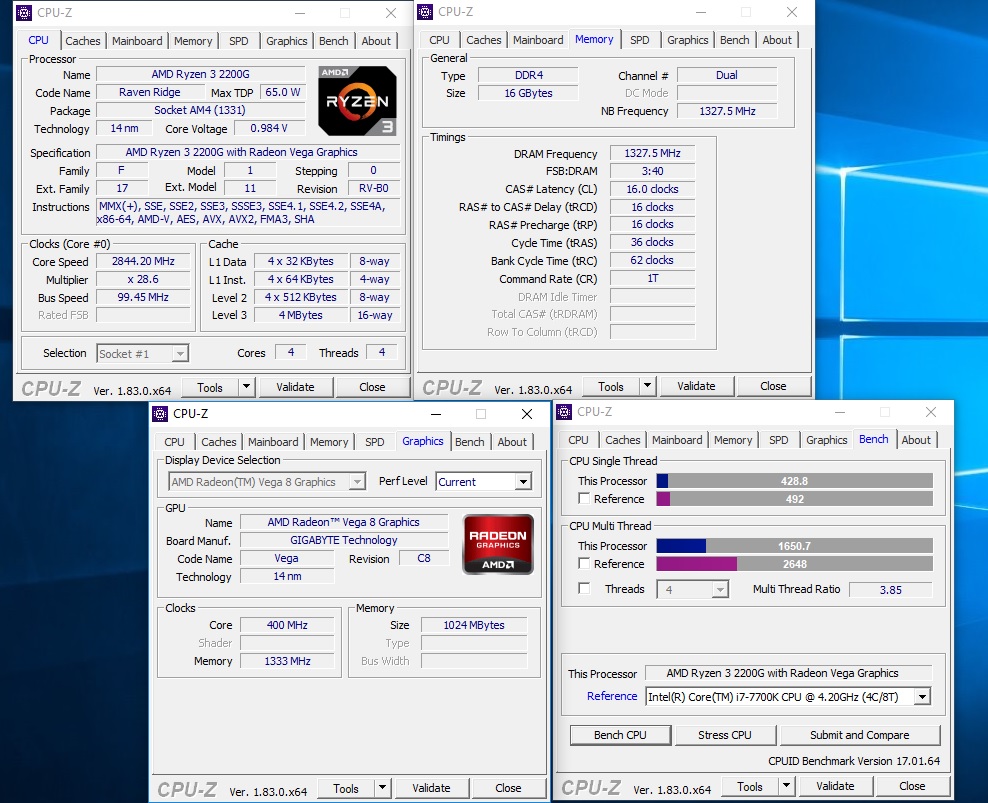
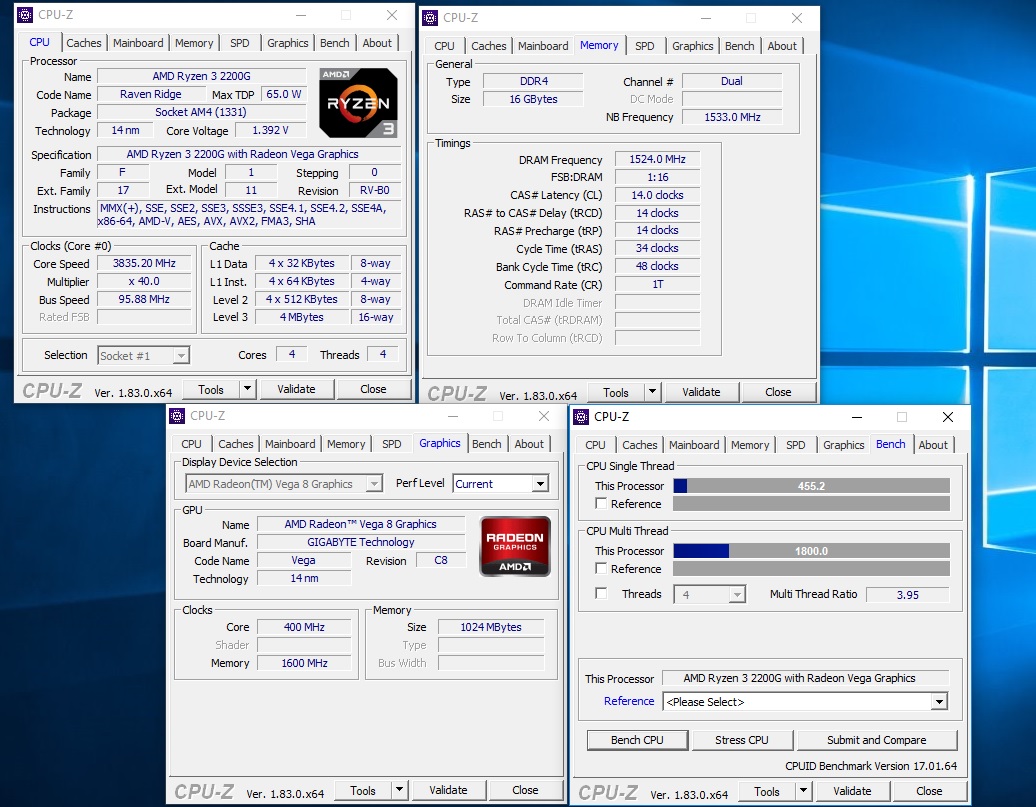
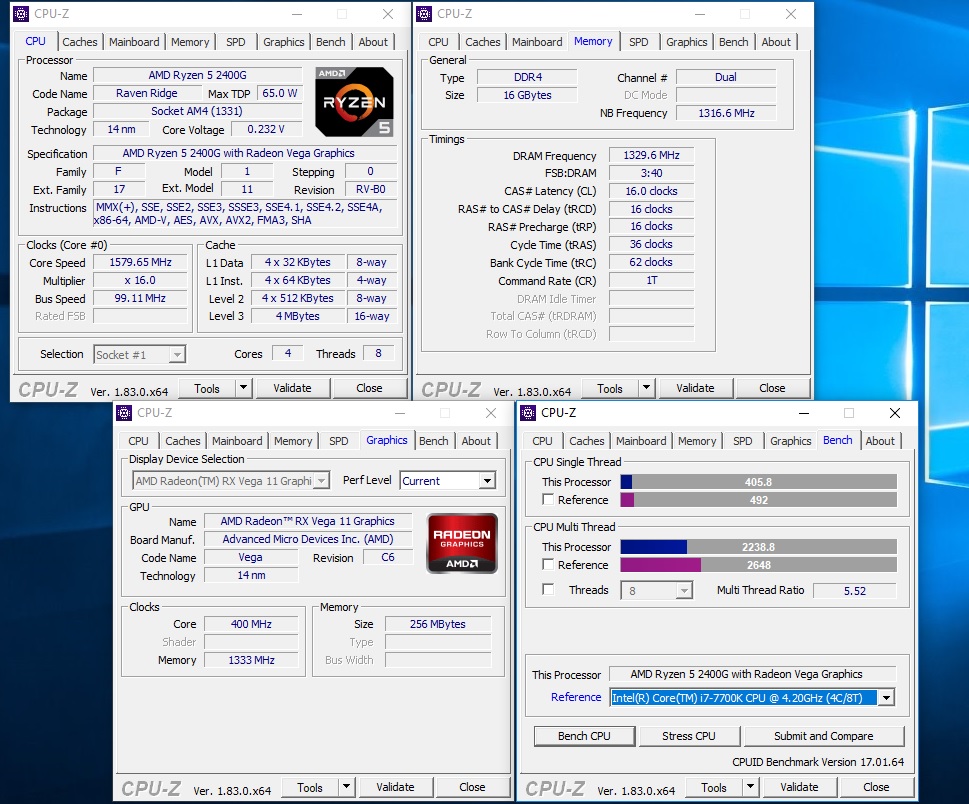
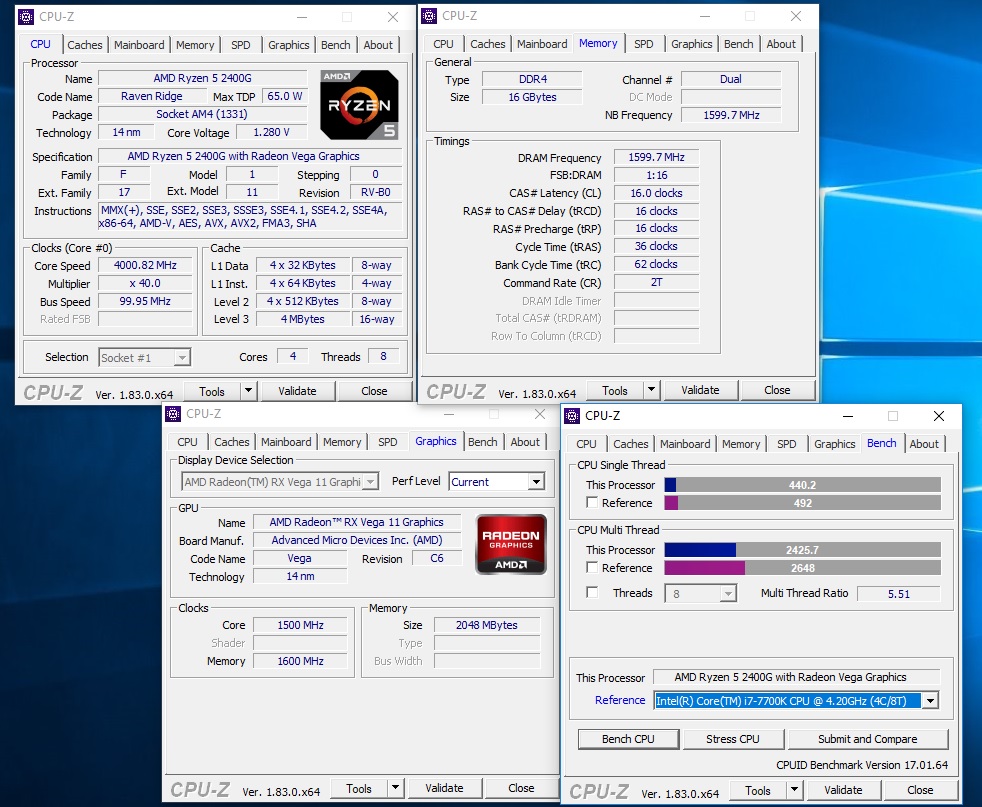
Temperatures
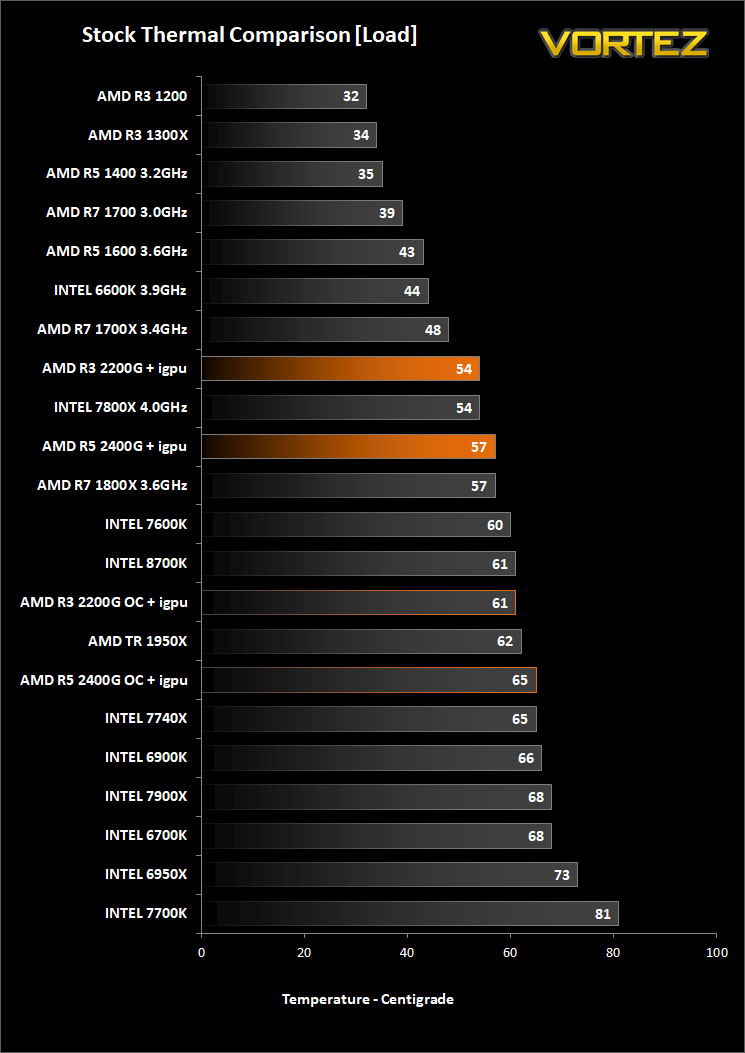
To get the temperatures, we fully loaded the CPU and iGPU using the AIDA64 stability testing tool. At stock frequencies, the temperatures are significantly higher than what we would expect from the CPU alone, and we would expect the temperatures to be significantly higher if you are using the provided stealth coolers. Once overclocked, the APUs temperature sits firmly alongside that of octo-core CPUS, however with adequate cooling, these temperatures are nothing too concerning.
Benchmarks: Power Consumption
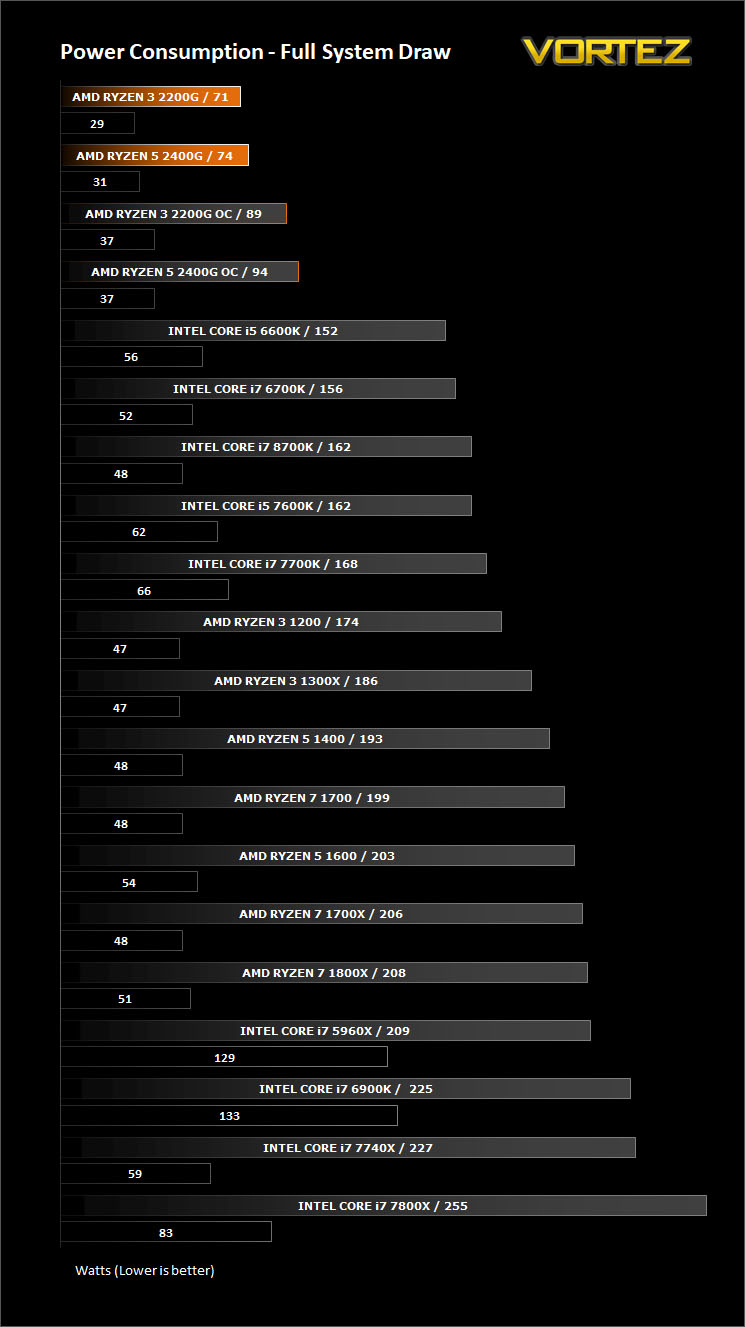
It’s interesting to note the power consumption across all processors. Although they are using a combination of different motherboard chipsets, energy results can fluctuate between manufacturers due to the features and specifications that are integrated. First of all, for the idle tests the system is cold booted into Windows and no additional applications are executed – the watts are noted on the external energy monitor we use and then the system is loaded with 3DMark FireStrike – watts are again monitored for the duration of the test and the highest rated wattage result is then noted down. Below are the results of this energy test.
In these results we have only included the power draw of the APU itself (without the RX480), including the RX480, the APUs under FIRESTRIKE loading sit between 145-160W, however, it is worth noting that the GIGABYTE AX370 Gaming 5 is amongst the power power hungry X370 motherboards.
Ray Tracing Performance – POV-Ray 3.7
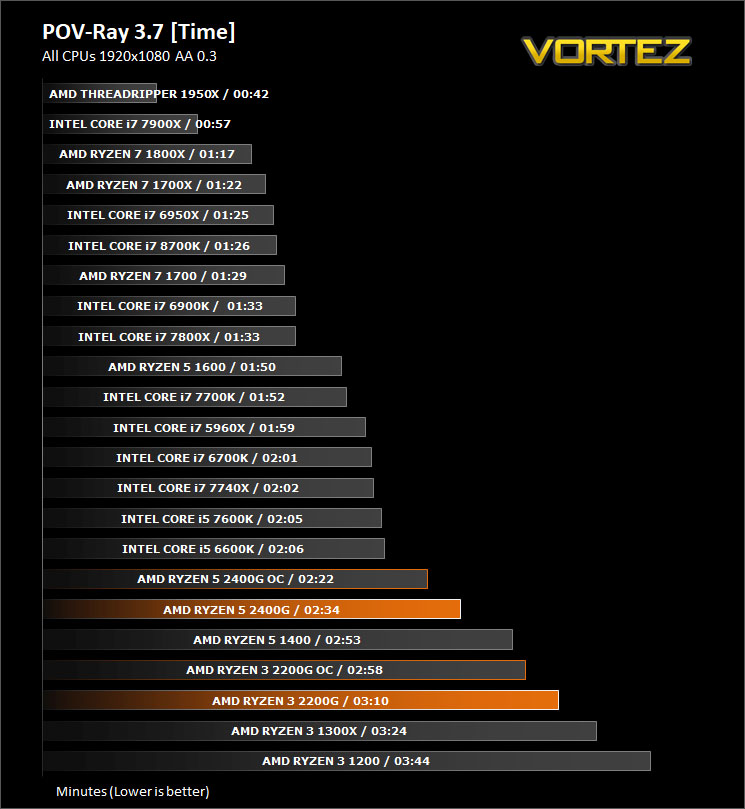
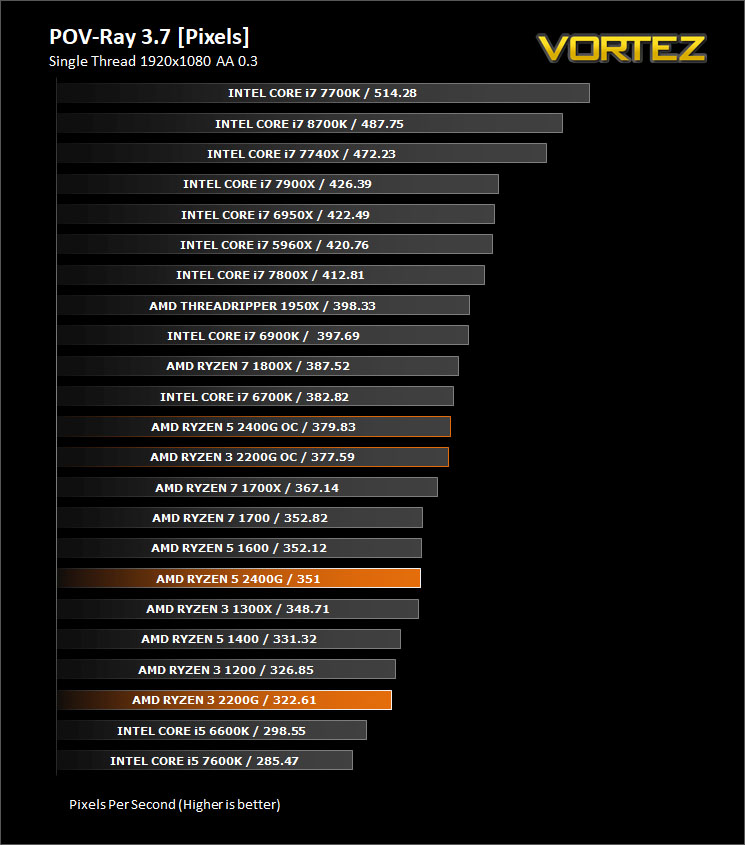
Persistence of Vision Raytracer’s PovRay is a free and open source 3D animator application with versions for computers with different operating systems.
This product allows users to build their custom 3D worlds with excellent quality despite their computer’s hardware. It has adjustable options for levels of radiance, refraction, and reflection. Calculation time may vary depending on the computer model, but PovRay can adapt to many computer builds, and is supported by the open source community.
This product allows users to build their custom 3D worlds with excellent quality despite their computer’s hardware. It has adjustable options for levels of radiance, refraction, and reflection. Calculation time may vary depending on the computer model, but PovRay can adapt to many computer builds, and is supported by the open source community.
AES Encryption Performance – TrueCrypt 7.1a
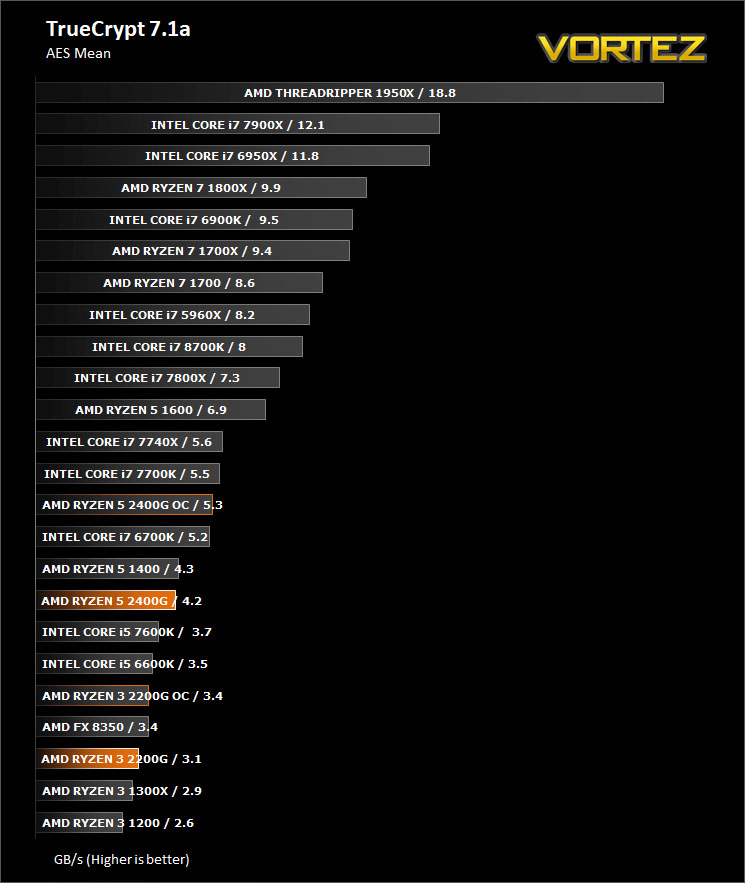
TrueCrypt is a discontinued source-available freeware utility used for on-the-fly encryption (OTFE). It can create a virtual encrypted disk within a file or encrypt a partition or (under Microsoft Windows except Windows 8 with GPT) the entire storage device (pre-boot authentication).
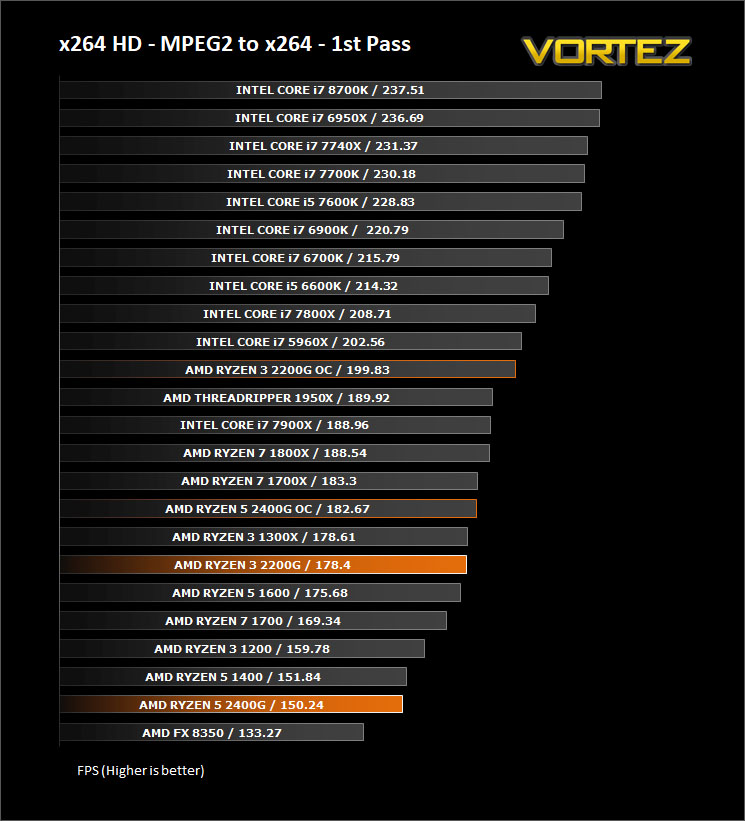
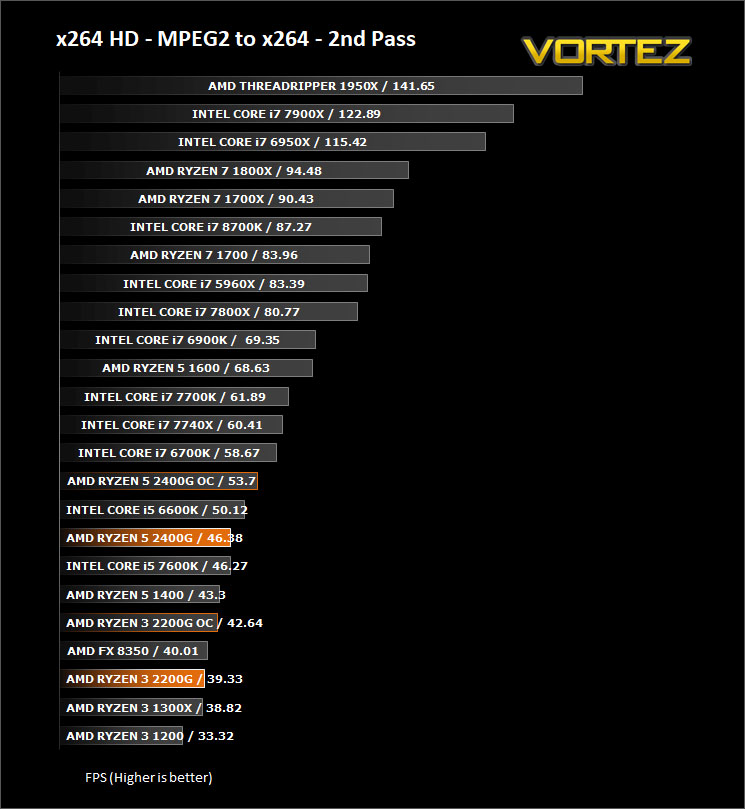
Encoding Performance – X264 HD
Simply put, this test measures how fast your machine can encode a short, DVD quality MPEG-2 video clip into a high-quality x264 video clip. What’s x264, you ask? It’s more or less the next-generation Xvid/DivX codec. I think it’s ideal for a benchmark because the application (x264.exe) reports fairly accurate compression results (in frames per second) for each pass of the video encoding process, and it uses multi-core processors very efficiently.
The first pass is limited in its use of available threads, and prefers a better IPC, while the 2nd pass favours a multi-threaded approach. This is why we see the roles reversed between the 4cores vs 8 threads in the 1st pass.
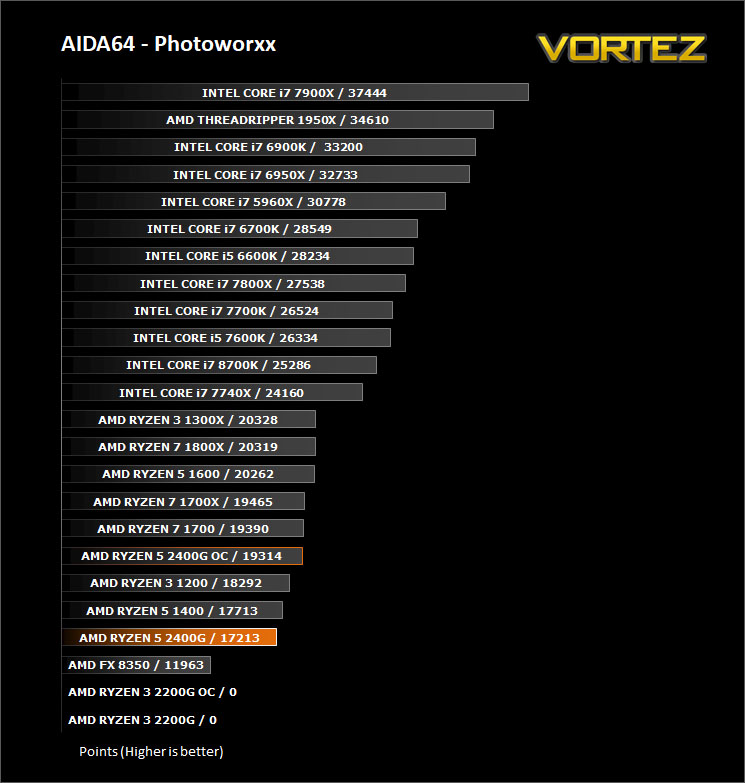
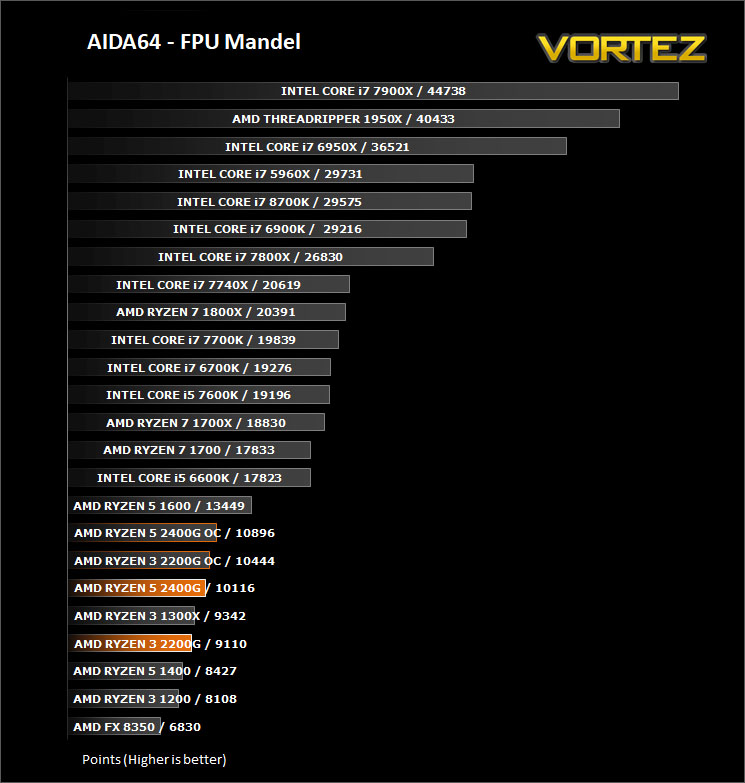
Processing Features Performance – AIDA64
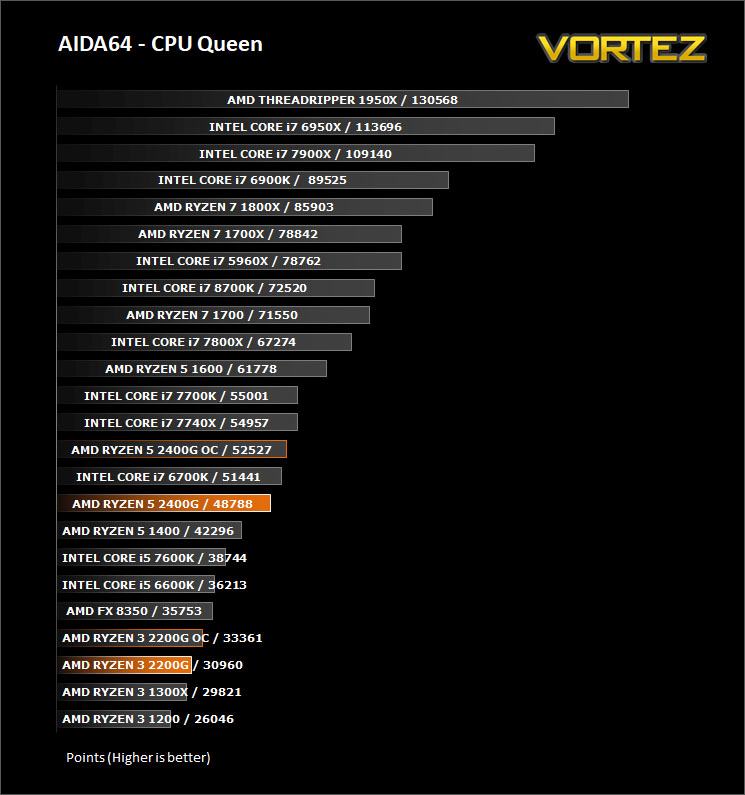
AIDA64 Product PageThis simple integer benchmark focuses on the branch prediction capabilities and the misprediction penalties of the CPU. It finds the solutions for the classic “Queens problem” on a 10 by 10 sized chessboard. At the same clock speed theoretically the processor with the shorter pipeline and smaller misprediction penalties will attain higher benchmark scores. For example — with HyperThreading disabled — the Intel Northwood core processors get higher scores than the Intel Prescott core based ones due to the 20-step vs 31-step long pipeline. CPU Queen test uses integer MMX, SSE2 and SSSE3 optimizations.
Memory Transfer Performance – AIDA64
AIDA64 Product PageMemory bandwidth benchmarks (Memory Read, Memory Write, Memory Copy) measure the maximum achiveable memory data transfer bandwidth. The code behind these benchmark methods are written in Assembly and they are extremely optimized for every popular AMD, Intel and VIA processor core variants by utilizing the appropriate x86/x64, x87, MMX, MMX+, 3DNow!, SSE, SSE2, SSE4.1, AVX, and AVX2 instruction set extension.
The Memory Latency benchmark measures the typical delay when the CPU reads data from system memory. Memory latency time means the penalty measured from the issuing of the read command until the data arrives to the integer registers of the CPU.
The Memory Latency benchmark measures the typical delay when the CPU reads data from system memory. Memory latency time means the penalty measured from the issuing of the read command until the data arrives to the integer registers of the CPU.


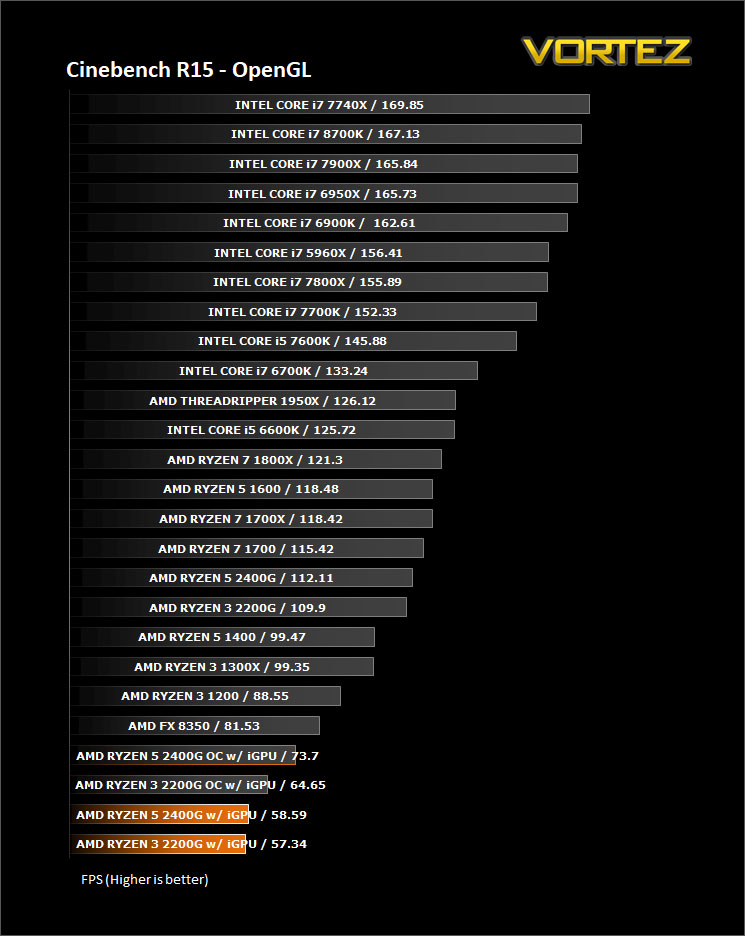
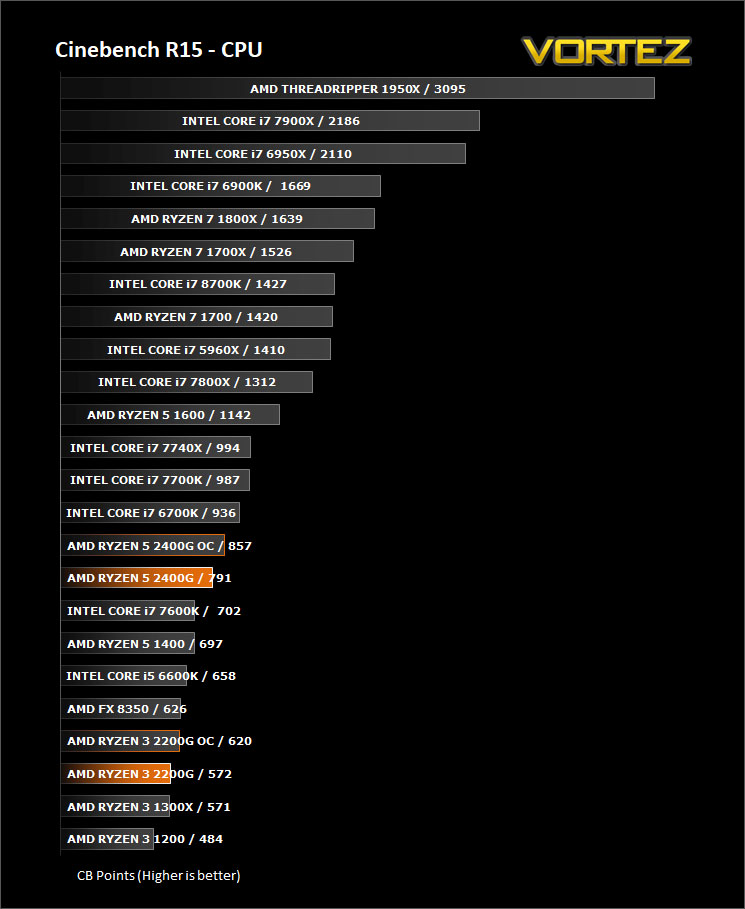
Processing Power Performance – Cinebench R15
CINEBENCH can measure systems with up to 64 processor threads. This test scene contains approximately 2,000 objects which in turn contain more than 300,000 polygons in total, and uses sharp and blurred reflections, area lights, shadows, procedural shaders, antialiasing, and much more. The result is displayed in points (pts). The higher the number, the faster your processor.
Bandwidth Performance – SiSoftware SANDRA
SANDRA isn’t always a benchmark that is included in hardware reviews but I believe it shouldn’t be ignored. SANDRA provides a vigorous package that tests your system in a rather large array of benchmarks. There are many aspects of benchmark that can be executed. We will be considering – CPU and memory tests.
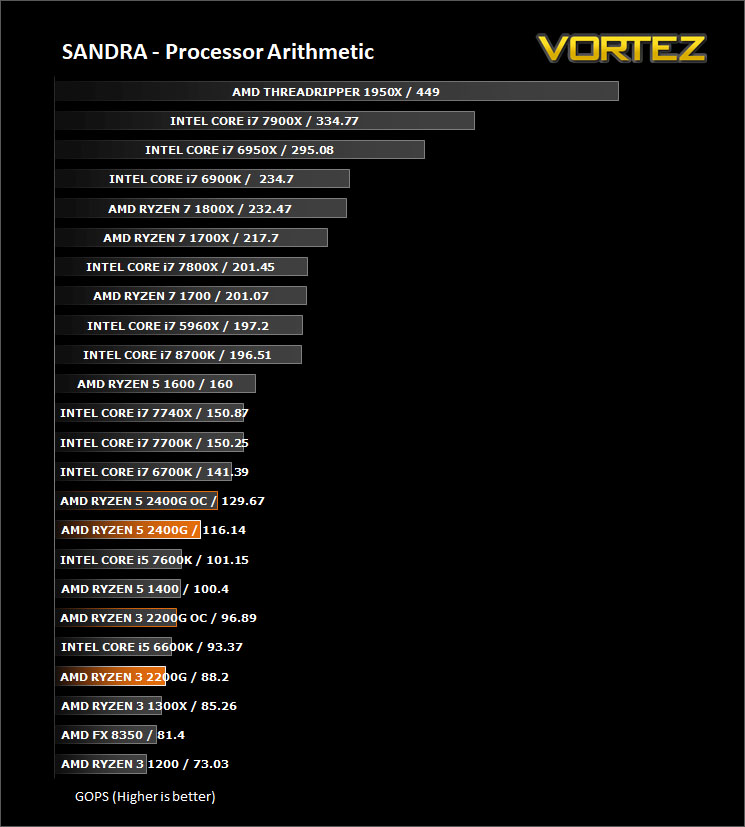
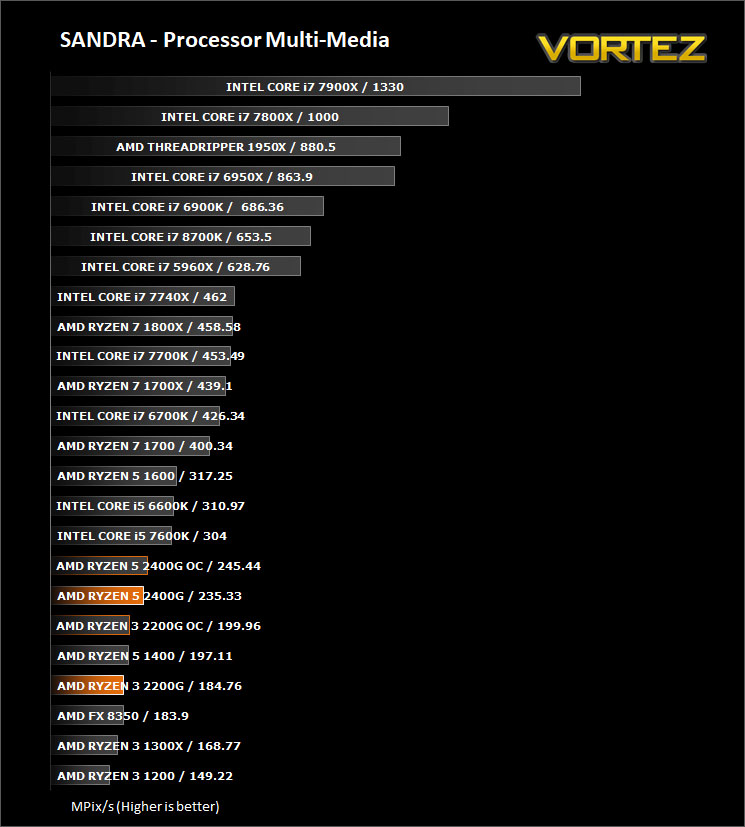
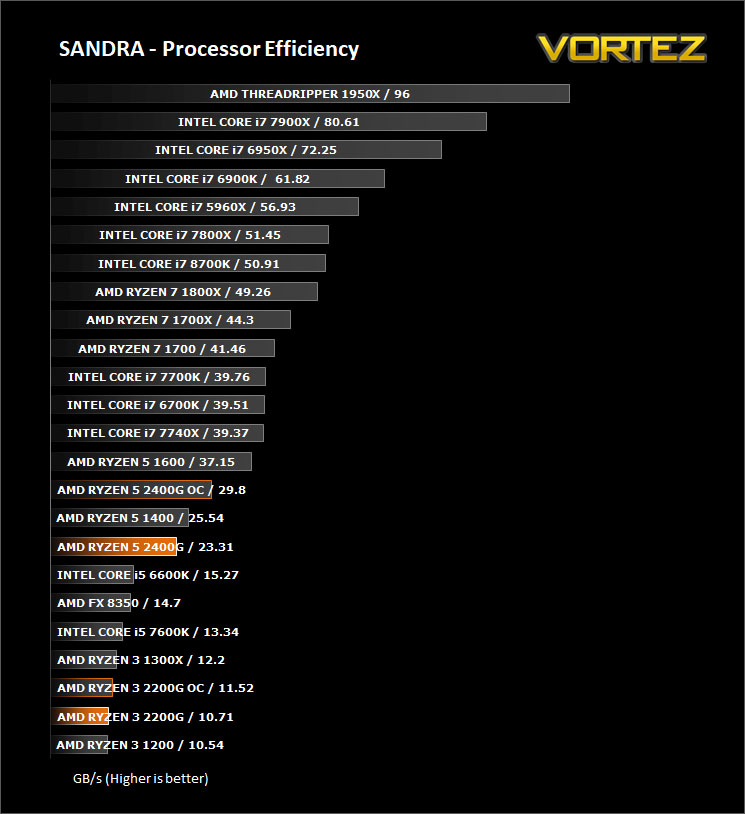
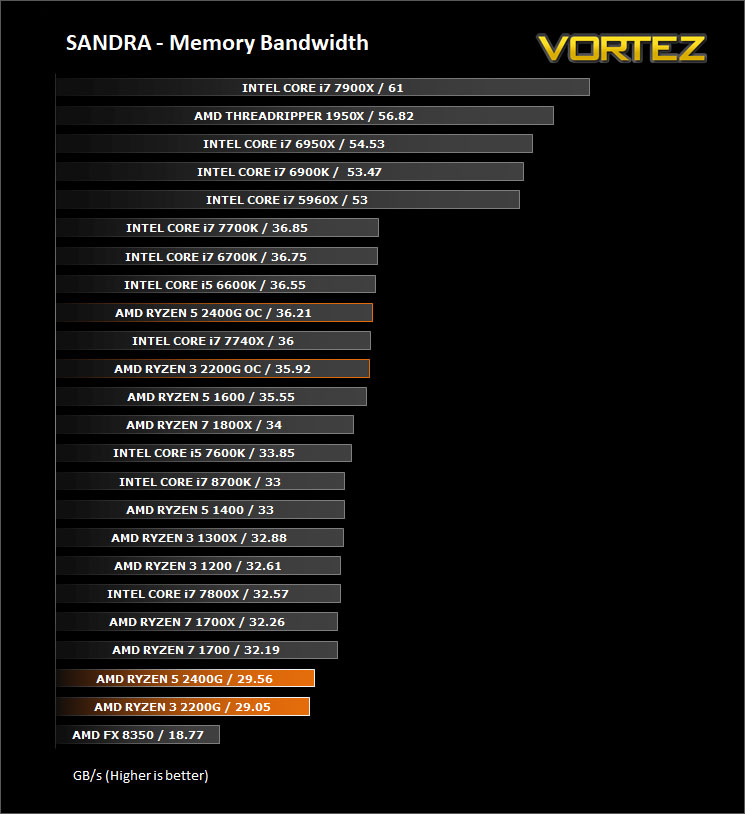
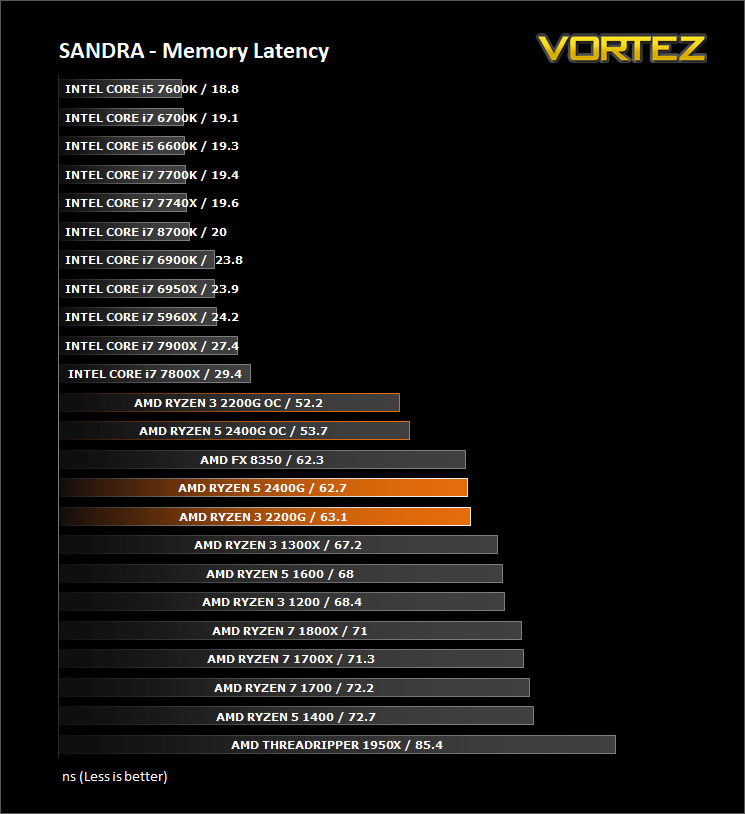
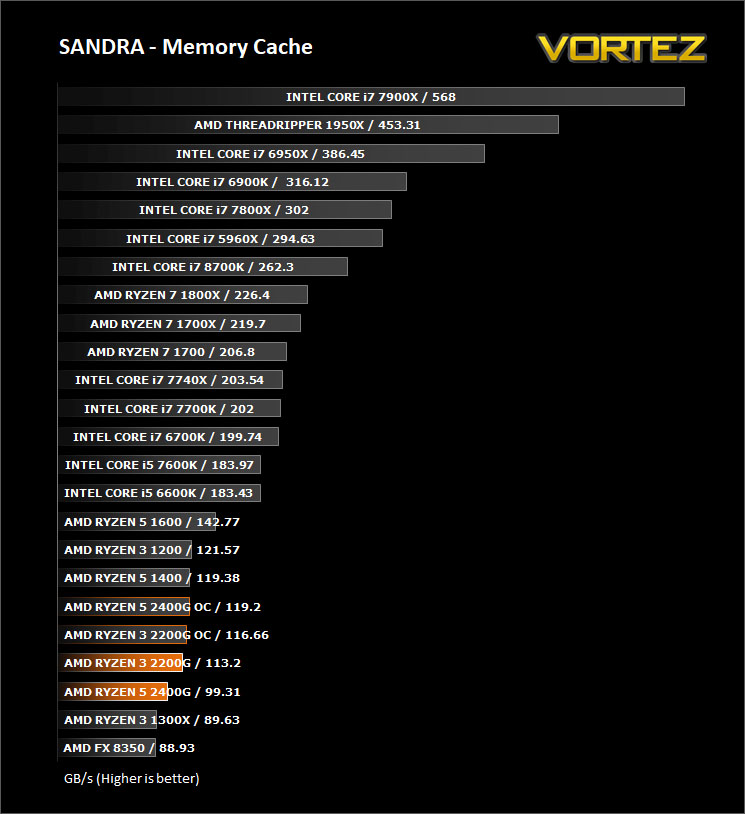
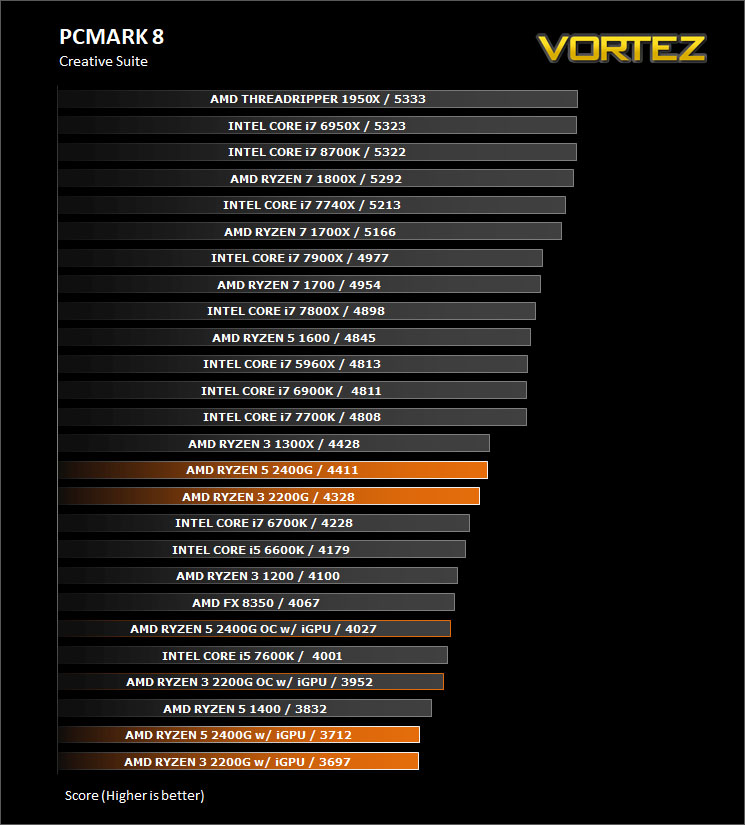
Image Editing Performance – PCMark 8 Photoshop
PCMark 8 Product Page Developed in partnership with Benchmark Development Program members Acer, AMD, Condusiv Technologies, Dell, HGST, HP, Intel, Microsoft, NVIDIA, Samsung, SanDisk, Seagate and Western Digital, PCMark 8 is the latest version in FutureMark’s popular series of PC benchmarking tools. Improving on previous releases, PCMark 8 includes new tests using popular applications from Adobe and Microsoft.


Overall System Performance – PCMark
PCMark 8 Product Page Developed in partnership with Benchmark Development Program members Acer, AMD, Condusiv Technologies, Dell, HGST, HP, Intel, Microsoft, NVIDIA, Samsung, SanDisk, Seagate and Western Digital, PCMark 8 is the latest version in FutureMark’s popular series of PC benchmarking tools. Improving on previous releases, PCMark 8 includes new tests using popular applications from Adobe and Microsoft.
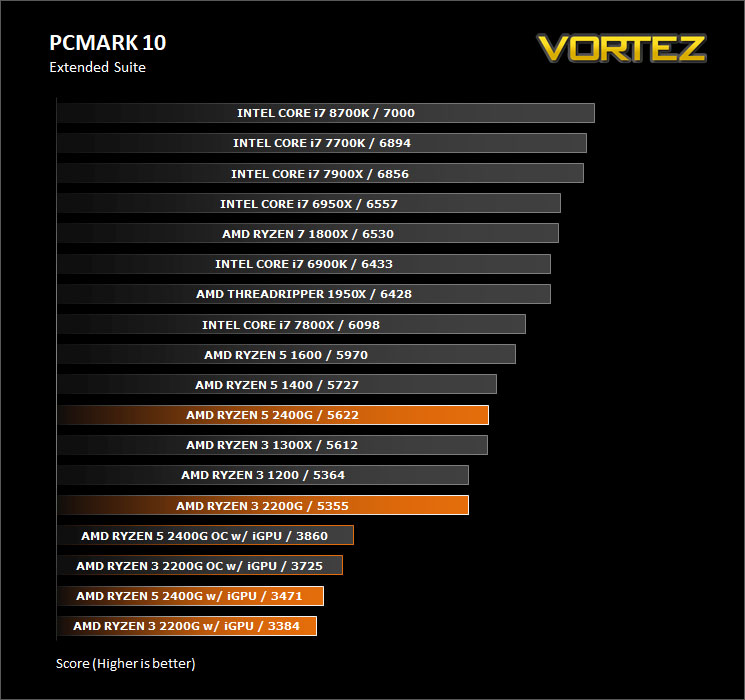
Updated for Windows 10 with new and improved workloads, PCMark 10 is also faster and easier to use. PCMark 10 features a comprehensive set of tests that cover the wide variety of tasks performed in the modern workplace. With express, extended, and custom run options to suit your needs, PCMark 10 is the complete PC benchmark for the modern office and an ideal choice for organizations that buy PCs in high volumes.
Updated for Windows 10 with new and improved workloads, PCMark 10 is also faster and easier to use. PCMark 10 features a comprehensive set of tests that cover the wide variety of tasks performed in the modern workplace. With express, extended, and custom run options to suit your needs, PCMark 10 is the complete PC benchmark for the modern office and an ideal choice for organizations that buy PCs in high volumes.
VR Performance – VRMark
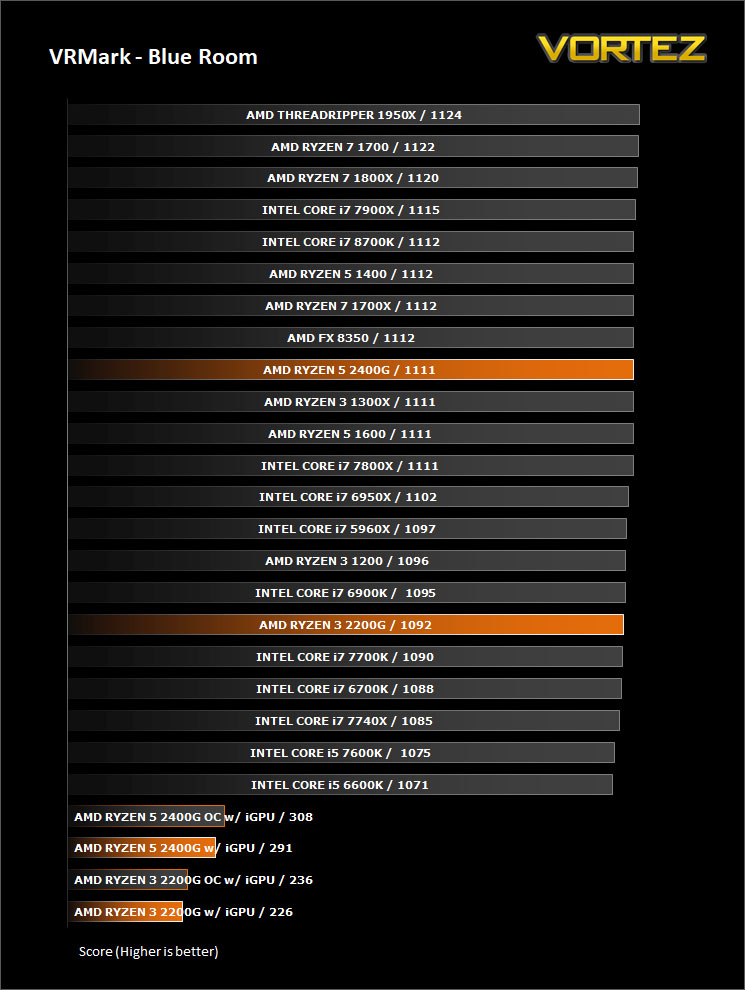
VRMark Product PageVRMark includes two VR benchmark tests that run on your monitor, no headset required, or on a connected HMD. At the end of each test, you’ll see whether your PC is VR ready, and if not, how far it falls short.

3D Performance – 3DMark
3DMark FireStrike Product PageFire Strike is our new showcase DirectX 11 benchmark designed for high-performance gaming PCs. It is our most ambitious and technical benchmark ever, featuring real-time graphics rendered with detail and complexity far beyond what is found in other benchmarks and games today. Fire Strike will only be available in the Windows editions of 3DMark initially.


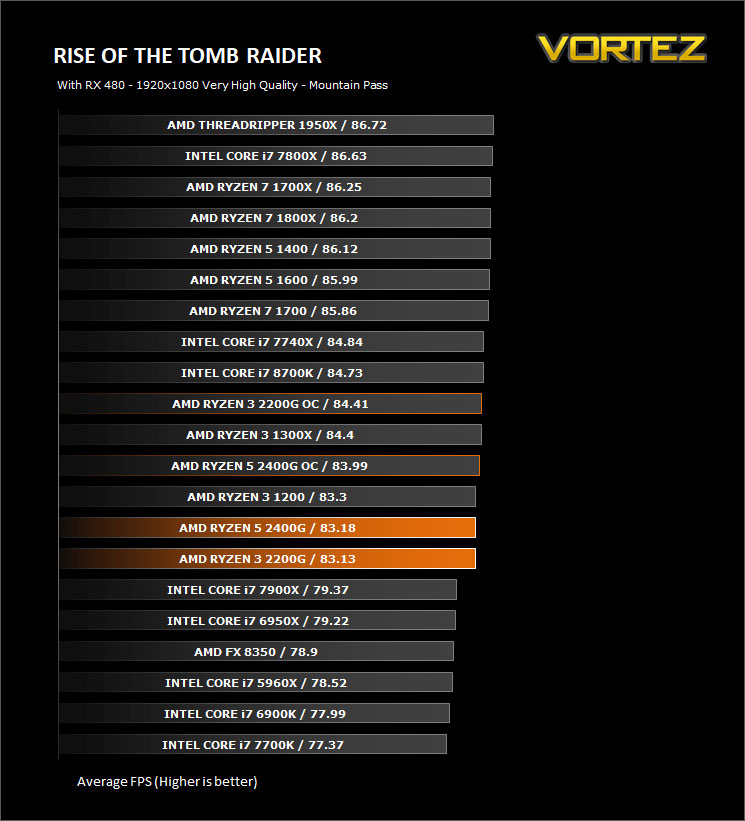
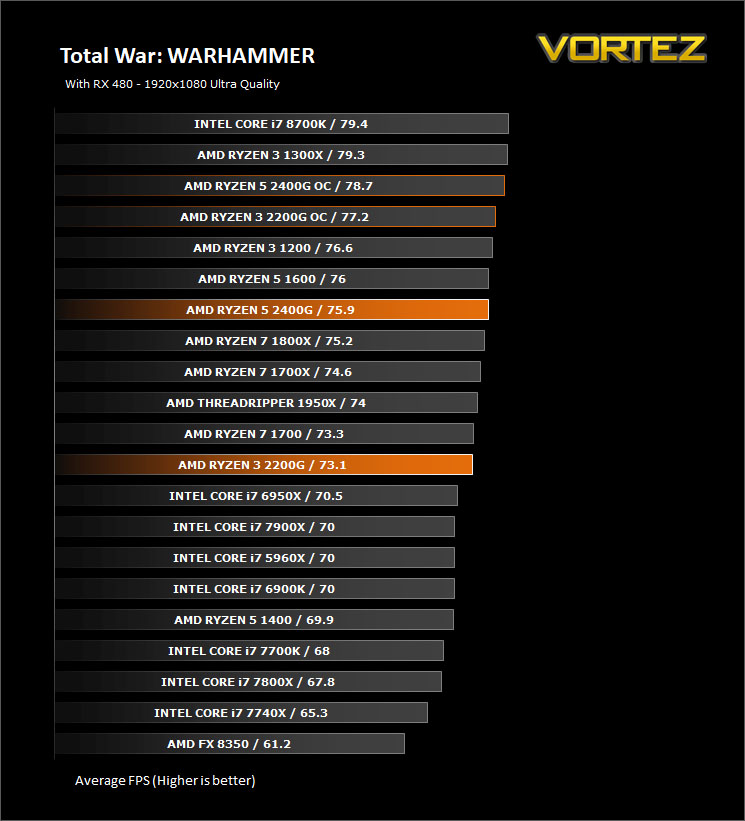
Gaming Performance – Rise of the Tomb Raider & Total War: WARHAMMER
It’s important for us to perform a number of game benchmarks as well as the synthetic tests because gamers will want to know if there are any significant benefits. So here we have two recent gaming titles.
Conclusion
One of the biggest upsets of the initial Ryzen 3 CPUs was the lack of integrated GPU. AMD have now come back, and potentially destroyed the need for a discrete graphics card for a large demographic due to the console-level power packed into the R3 2200G and R5 2400G APUs. For many, this will mean that they have a capable all-round home computer solution. This is certainly revealed by the competitive figures given in the PCMARK benchmark results.
Gamers specifically will appreciate the genuine upgrade path of the AM4 platform, along with the competitive CPU performance alongside a discrete graphics card, moving the integrated Vegas GPU into that safety-net that many have come to cherish (especially those that have experienced issues with their discrete graphics card).
It isn’t all smooth sailing however, much like the launch of Ryzen (Summit Bridge), Raven Bridge has its own host of teething issues that people should be weary of. Several applications would simply refuse to work with the R3 2200G, causing freezes, BSOD and other lock-ups.
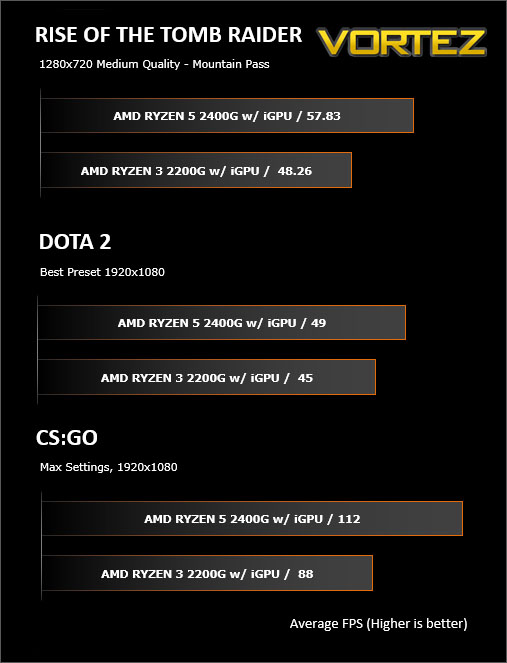
We can easily say that the 2400G should be able to comfortably run the majority of current games at reasonable settings at 1280×720 (much like the consoles). However, in every game we tested with the 2400G in particular, we experienced a strange issue where there were dramatic frame rate drops in intervals of around 20s. EG, in DOTA2, we experienced a short period of stable frames of around 51-56FPS (best preset, 1920×1080) then it would drop to around 17FPS, returning to normal after 3s or so. This is not exactly playable, and strangely, the 2200G didn’t suffer from this problem (so maybe its tied to SMT?). So, it is clear that there are some early BIOS/Driver issues that very much need to be ironed out, and early adopters may be stung by some of these issues.
Despite these things, it is very much worth looking at the bigger picture. AMD are offering exceptional value. Coming cheaper than their predecessors, the Ryzen 3 1200, and the Ryzen 5 1400, and you are now getting a massive iGPU strapped on. Sure, AMD haven’t quite hit the same level of IPC as Intel, but it is worth noting that these APUs can be found for £89, and £146 respectively, and are scratching at the heels of the i7 7700K, something that is still selling for around £270+. Once AMD are able to smooth out the drivers, it is clear to see that we are seeing the next-level benchmark in mainstream computing.
AMD have once again crushed the entry level GPU market with the Raven Bridge APUs. The 2200G/2400G make a compelling case for a stand-alone PC solution that also has a genuine upgrade path on an established platform.
Pros
+ Low platform cost
+ Easy to overclock
+ Sense MI technologies
+ Low Power use
+ Excellent Value
+ Competitive CPU Performance
+ Compelling integrated Vegas GPU
+ Genuine upgrade path (AM4 socket compatibility)
Neutral
+- Can get a little warm
+- Only 8x PCIe lanes (rather than 16x)
Cons
– Early uptake/teething issues
+ Low platform cost
+ Easy to overclock
+ Sense MI technologies
+ Low Power use
+ Excellent Value
+ Competitive CPU Performance
+ Compelling integrated Vegas GPU
+ Genuine upgrade path (AM4 socket compatibility)
Neutral
+- Can get a little warm
+- Only 8x PCIe lanes (rather than 16x)
Cons
– Early uptake/teething issues
Click here for an explanation of our awards at Vortez.net.