


AMD are back with their latest flagship CPU, the Ryzen 7 1800X and with it they are promising to shake up the status quo. Fanboys (and girls), are you ready?

Product on Review: Ryzen 7 1800X
Manufacturer: AMD
MSRP: UK: 489, US: $499
Many years ago, desktop PCs had choice and diversity that split the enthusiast market into a rivalry that become one of the most important in contemporary technological history. By 2010, Intel and AMD were at a crux regarding their corporate relationship, engineers were poached, secrets leaked, fines were paid, and some heads rolled.
Despite a huge settlement in AMD’s favour, Intel had bounced back from the awful Pentium D processors with the Core 2 series. AMD on the other hand had finally managed to acquire ATI and was in the midst of a full reshuffle. By the time the first Sandy Bridge CPU hand landed, AMD was (at least quietly) unsettled, and they had then begun to offer hex-core ‘Thuban’ Phenom II CPUs to remain competitive. This was over half a decade ago, and in the midst of selling off fabrication facilities to try and keep afloat, AMD were promising to bring to market an unknown new CPU architecture that ended up being part of a media storm of speculation and cryptic comments about how Intel should be worried. By the time the ‘Bulldozer’ based FX Series had landed, one could say it was akin to walking into a room where there are eight deep-fried whales.
AMD later made a few improvements in the ‘Piledriver’ CPUs and despite having relatively strong multi-threaded performance, their presence remained purely to undercut the middle market while Intel and their Tick-Tock development process left AMD eating dirt. It was at this point AMD announced that they would retire from the High-End Desktop Market and focus more on their APUs and SoCs.
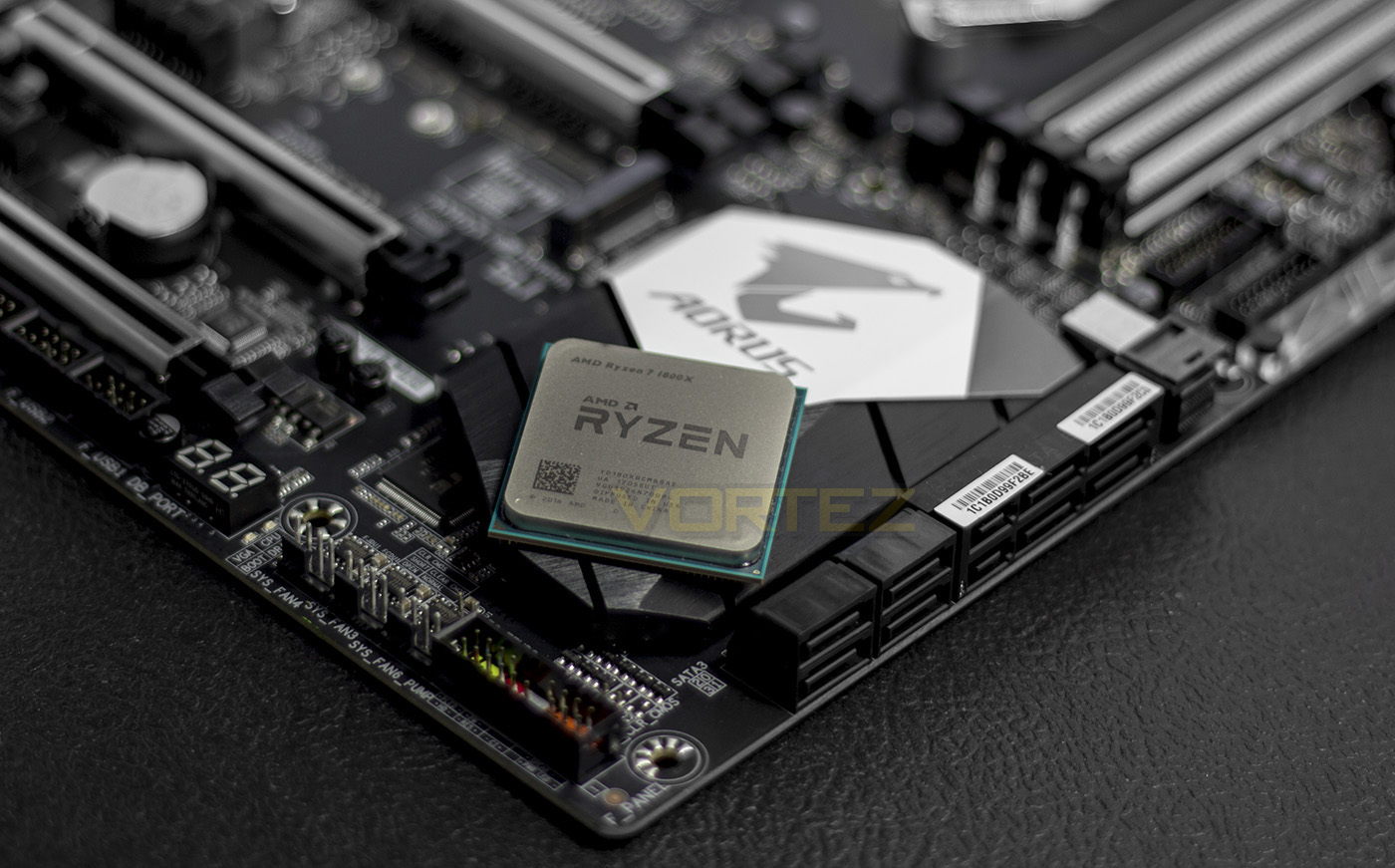
This was, unfortunately, terrible for consumers due to Intel’s stranglehold on the performance market. Desktop computer performance has somewhat stagnated despite headway made in storage bandwidth and graphics performance, so quad-core CPUs ended up dominating the mainstream for close to 10 years; meanwhile the ‘Extreme’ platform from Intel remains at a considerable premium.
AMD needed a plan, and eventually word of the ‘Zen’ architecture started echoing around the internet. It became clear that AMD had wiped the slate clean to develop something new, a risky but necessary venture. After 4 years of development, and two million engineer hours, AMD were finally ready to announce ‘Ryzen’.
There will be three markets, Ryzen 7 (Prosumer/enthusiast), Ryzen 5 (High Performance) and Ryzen 3 (mainstream). Today we take a look at the flagship ‘Summit Ridge’ CPU, the Ryzen 7 1800X. It features 4.8 Billion transistors based on Globalfoundaries’ 14nm fabrication process using FinFET ‘3D’ Transistor technology. There are 8 ‘real’ cores (as opposed to modules) that features SMT (Simultaneous Multi-Threading) similar to Intel’s Hyperthreading, providing a total of 16 threads of computing power. AMD claimed to have aimed to improve IPC (instructions per clock) by 40% over their previous CPUs, and latest news and press releases revealed that they have smashed that target. Now, we get to find out.
Features – Ryzen
Ryzen is AMD’s brand new desktop line of CPUs based on the Zen microarchitecture. Draw a line under that, it’s important. The principles of Ryzen’s design will also be applied to new APU and workstation-class CPU designs in the coming months and years, but for now the brand is being used solely for their Desktop CPU line which do not feature on-die graphics components. These CPUs, based on a brand new architecture differing substantially from the Bulldozer-derived parts of the past half decade, are manufactured with Globalfoundries’ 14nm FinFET process.The Ryzen desktop line is split broadly into three categories: Ryzen 3, for entry-level and mainstream systems; Ryzen 5, for performance mainstream and gaming systems; and Ryzen 7, an enthusiast and prosumer category. This echoes the nomenclature of Intel’s Core i3/i5/i7 product range, a choice which is intentional on AMD’s part. The launch Ryzen CPUs are all only Ryzen 7 models; Ryzen 3 and 5 are expected in Q2 2017.
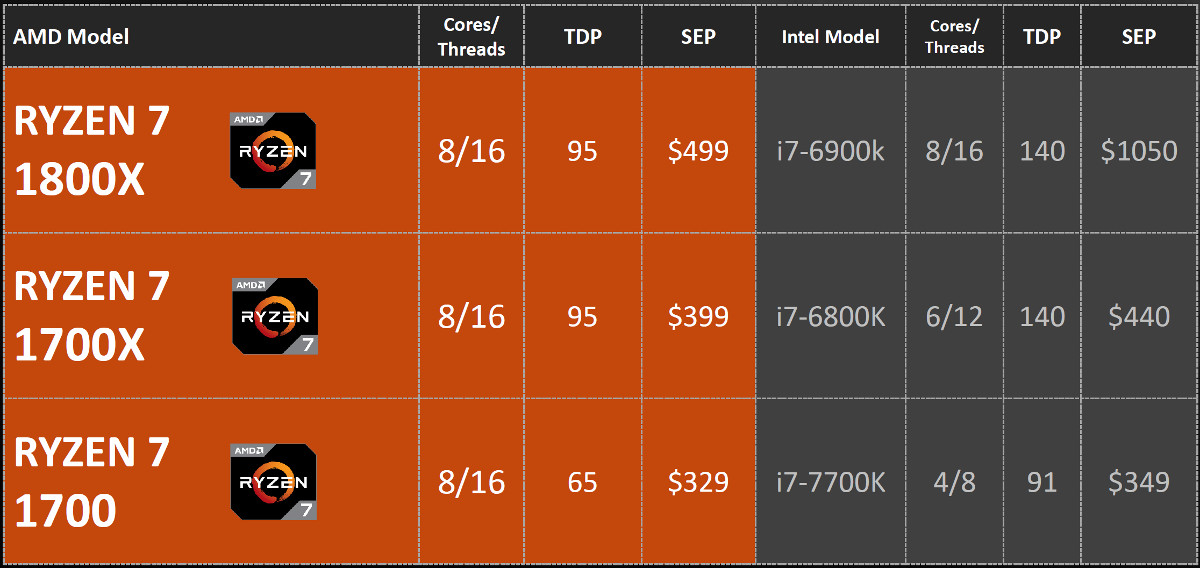
Ryzen 7’s launch comprises three SKUs, the Ryzen 7 1700, 1700X & 1800X. All are 8-core parts which support Simultaneous Multithreading (SMT) for a total of 16 threads.
Ryzen Fundamentals – The CPU Complex (CCX)
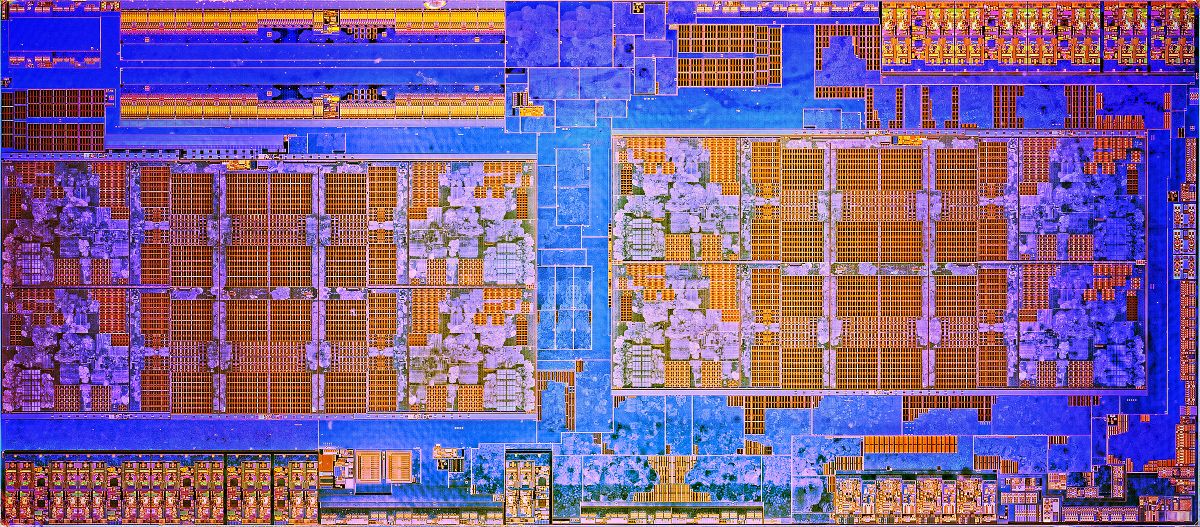
AMD Ryzen 7 CPU Die
AMD’s Bulldozer architecture was a modular design made up of Compute Units, one large core coupled to a smaller one with a shared cache, and that’s one of the fundamental aspects which has changed with Zen. The new architecture defines a CPU Complex, or CCX, which is four fully functional cores connected to a L3 Cache 8MB in size (16-way associative) which can be accessed at full speed (and with similar averaged latencies) by any core. Furthermore each core has 512KB L2 cache (8-way associative), double the size of Intel’s Skylake and Broadwell-E L2 cache.
Ryzen L3 cache is a pure Victim Cache of the L2 rather than the write-back type present on Intel’s desktop CPU products.
Clearly one of the advantages of the CCX structure is its scalability – quad-core Ryzen 3’s will include just the one CCX, 8-core Ryzen 7 CPUs feature two CCX modules, and the upcoming Naples server designs are set to be equipped with many more. However fine control is also possible as AMD include tools to disable sections of the CCX on a per-core basis, allowing not only 6-core configurations but also single-core modes for competitive overclocking.
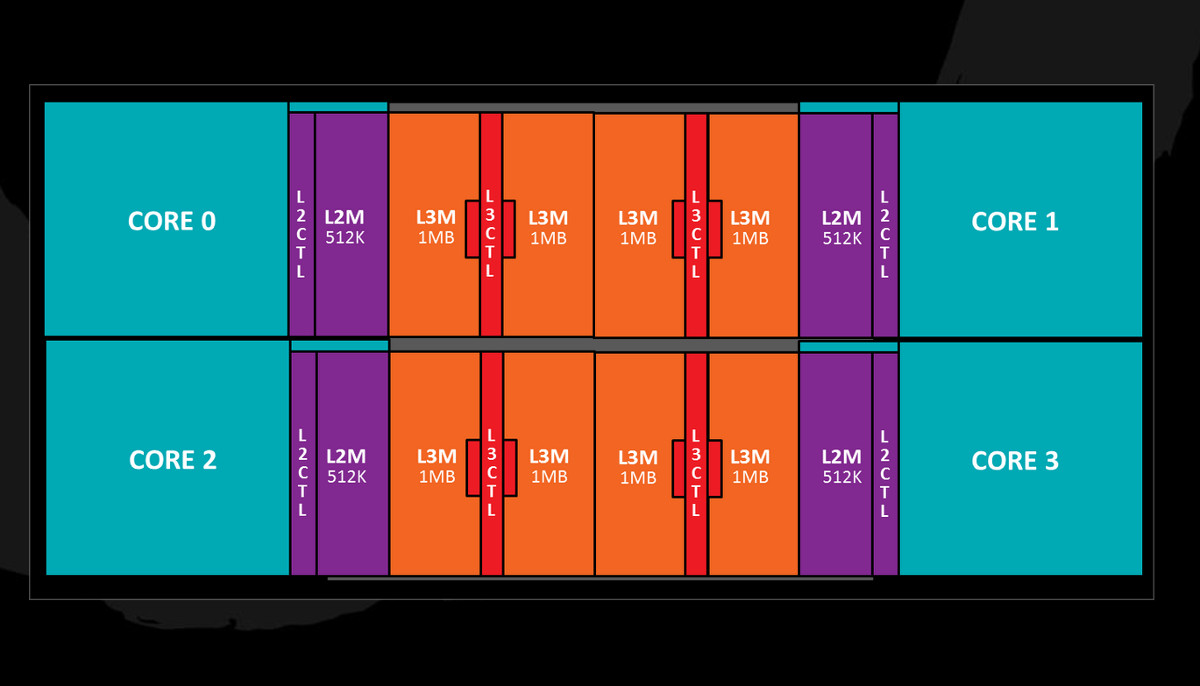
AMD Ryzen CCX Block Diagram
IPC Improvements
An oft-criticised aspect of the Bulldozer architecture was poor Instructions Per Clock performance, requiring the part to operate at very high frequencies in order to remain competitive. Staying ahead of the field by using a more advanced lithographic process may have kept them in the game, but remaining at 32nm for too long and only transitioning to 28nm relatively late gave Bulldozer the reputation of a hot, slow architecture. Improving IPC became a core design goal early on for Zen.
AMD’s target was a minimum of 40% improved IPC vs. Piledriver (2nd Gen Bulldozer), an extremely ambitious target. Thanks to the revolutionary design of Zen, and a transition to the Samsung/Globalfoundaries 14nm process, AMD are claiming an average IPC improvement of over 51%. That’s huge whichever way you want to shake it, and goes to show how much of a misstep Bulldozer turned out to be.
Changes to the cache structure and implementation of Simultaneous Multithreading, as well as integration of new instructions, have been key to IPC improvements. These come at a price however: increased die size, potentially impacting yields and pushing up manufacturing costs.
Higher IPC has also allowed reduced operational frequencies compared to Bulldozer (whilst still hitting a very healthy 3.6GHz+ on high-end SKUs), and sub-100W TDP envelopes. It will also be interesting to see how well the chip can overclock, another core expectation of the enthusiast market.
Clock Speeds and XFR
In common with the vast majority of CPU models released in the last 10 years, AMD have explicitly defined base and boost clocks for their Ryzen 7 CPUs. These indicate the base level of performance whilst under heavily multi-threaded load, and peak clock acceleration whilst under a load suitable for two cores. Given that all Ryzen 7 SKUs feature eight cores with SMT, clock speed is the key differentiating factor between retail models.
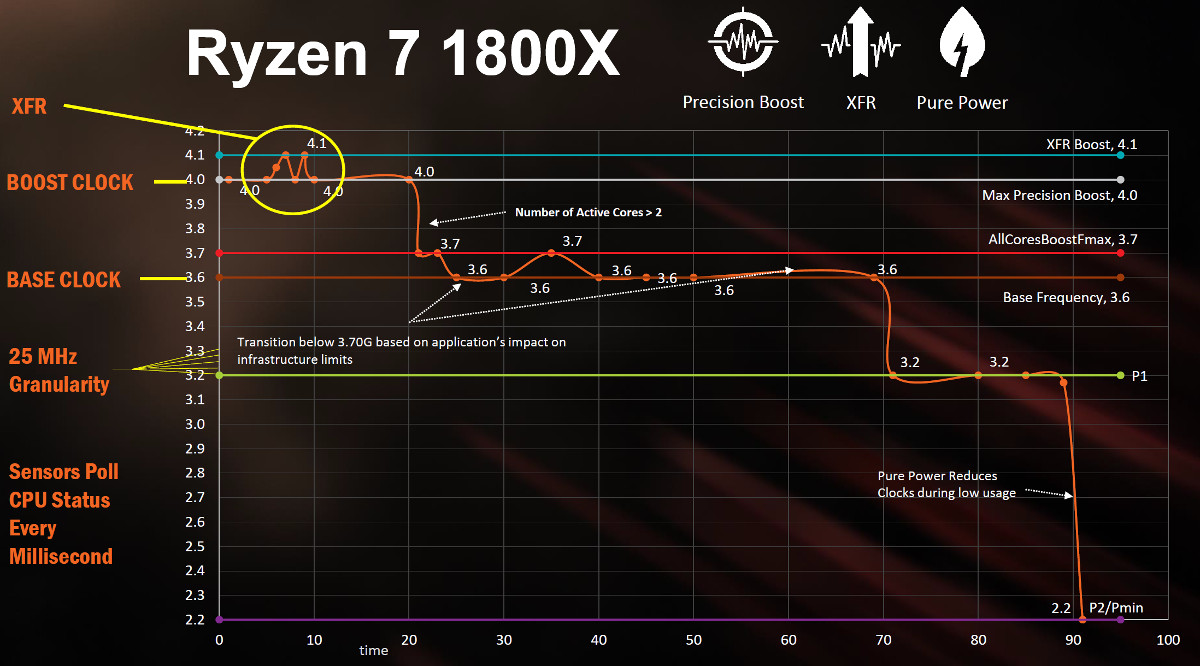
AMD Precision Boost takes this a step further by continually adjusting clock speeds based on workloads and SenseMI sensor data. Utilising 25MHz steps the CPU can vary between base and boost frequencies, with key levels for fully loaded (8-core, 16-thread) and infrastructure (power draw) limited operation. Meanwhile, AMD Pure Power downclocks the CPU in low-load/idle operation; critically all this can be performed quickly thanks to improved sensor data collection.
Muddying the water somewhat is a new feature AMD are calling Extended Frequency Range (XFR). Sensor data (esp. temperatures and voltages) gathered by SenseMi is analysed to determine whether additional headroom is available above the Boost clock speeds. The CPU will then clock to a higher state beyond boost clock levels, providing just a little more performance.
The XFR boost levels are indicated to consumers by the CPU SKU. Those with feature an ‘X’ suffix are equipped with a 100MHz XFR, whereas those without have an XFR of half that. It’s worth noting that when user overclocking tools are enabled Boost and XFR frequencies are ignored, so they’re only applicable to stock clocked configurations.
Simultaneous Multithreading (SMT)
Intel’s proprietary Hyperthreading technology has been core to their CPU design for fifteen years now, parallelising computations such that multiple threads of instructions are processed in a more optimal manner on each x86 CPU core. It has become a key selling point for Intel’s premium SKUs, but arguably also resulted in a stagnation of core counts such that entry-level chips are often still limited to two physical cores. In fairness, only relatively recently have applications begun to exploit these capabilities; notably game engines tended to rely on strong single-core performance rather than evenly distributed multi-core processing.
Although proprietary, Hyperthreading is an implementation of a more general technique known as Simultaneous Multithreading, where two threads with broadly shared resources can be processed at the same time. Bulldozer featured partial SMT – the integer cores were single-threaded whilst other sections were multi-threaded – but Zen implements 2-way SMT (or two threads per CPU core).
The benefits of SMT are two-fold. Firstly threads can share resources, notably caches, improving performance compared with sequential processing. Secondly, the more optimal use of processor resources can significantly improve power efficiency, a key factor for enterprise markets in particular.
Thanks to the implementation of SMT across the Ryzen range, application developers can be reassured that hardware resources are available to take advantage of multi-threaded design even at an entry level. It will be interesting to see how, if at all, Intel respond to this move by AMD.
Memory Support
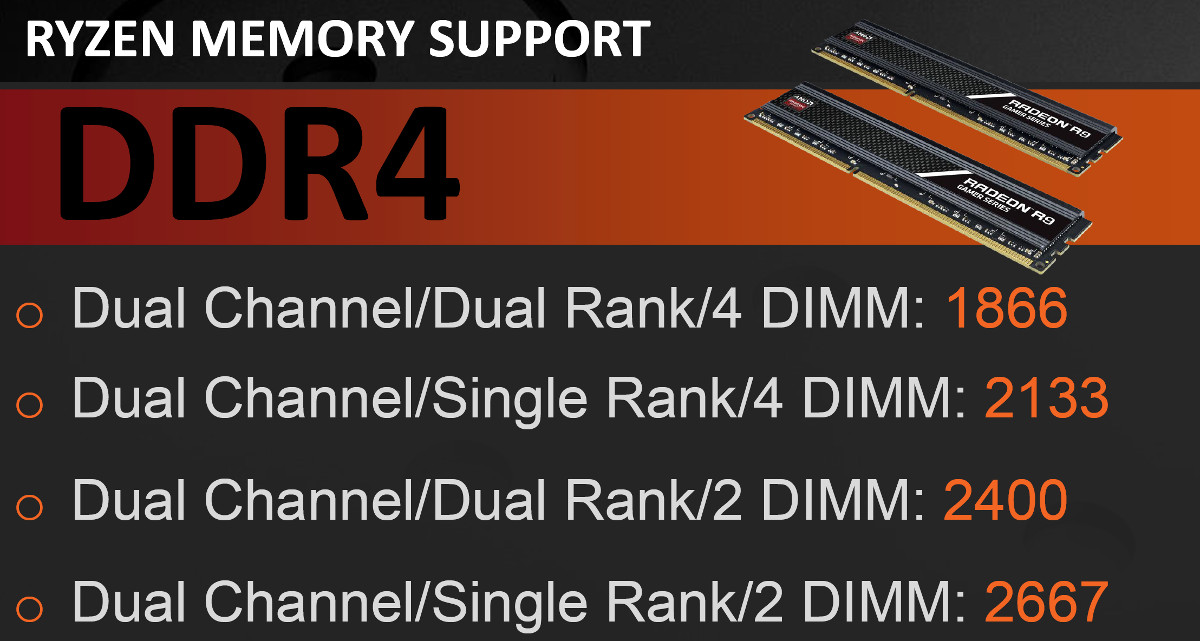
AMD Ryzen on the AM4 platform supports dual-channel DDR4 DIMMs up to a maximum frequency of 2667MHz according to JEDEC standards. AMD representatives indicated that while the maximum memory capacity possible is 128GB, the cost of 32GB DIMMs effectively limits support to 64GB or 32GB in two-DIMM configuration.
It should come as no surprise that Ryzen does not support XMP, Intel’s proprietary extension to the JEDEC SPD information resident on RAM DIMMs. Consequently additional memory timings will need to be input manually, but this will also allow support for frequencies beyond the stock 2667MHz defined by JEDEC.
Although Ryzen doesn’t support quad-channel memory configurations, this reduced bandwidth compared to Intel’s X99 HEDT platform may not be quite as significant as it might seem. Applications which can exploit this bandwidth effectively are quite uncommon, and may not be a factor in typical desktop workloads.
Cooling
Ryzen 7 1800X and 1700X CPUs are 95W parts, significantly lower than Intel’s Core i7-6900K which sits at 140W TDP. Perhaps more impressively, the eight-core Ryzen 7 1700 has a listed TDP of only 65W, lower even than the quad-core Kaby Lake Core i7 7700K’s 91W. As each are on a similarly modern 14nm lithographic process it shows just how aggressively AMD have targeted improving TDP with the Zen architecture.
Both 1800X and 1700X are enthusiast designs for performance-oriented systems with bespoke cooling, and as a result are not equipped with an AMD stock cooler. It’s expected that users will make use of 3rd party coolers bought for the new systems, such as high-end air cooling or water cooling. If both can hold to their 95W TDP the options available are wide-ranging, limited only by AM4 support.
The Ryzen 7 1700 meanwhile is shipped with AMD’s Wraith Spire cooler, an evolution of the Wraith Stealth introduced last year to mainstream desktop systems. Among the changes in this generation are the spring-screw mounting system, a lower noise fan, and RGB lighting (which can be controlled via RGB headers present on many new motherboards).
PCI-Express
Ryzen marks AMD’s transition to PCI-Express 3.0, double the bandwidth of PCI-E 2.0. Ryzen 7 CPUs make available 24 PCI-E 3.0 lanes to the motherboard, 16 of which are reserved for the GPU and the rest distributed among other motherboard features and peripheral devices.
PCI-Express 3.0 support hasn’t come too soon for AMD. Although for years GPUs didn’t chafe under the limitations of x16 PCI-E 2.0, larger textures and 4K resolution gaming has stretched the 4GB/s per lane available under the spec. PCI-E 3.0 offers twice the bandwidth per lane, greatly increasing headroom as desktop computing transitions to a world were high resolution (4k and Virtual Reality) is ever more commonplace.
Also notable is (chipset-dependent) support for NVMe storage, typically via a single M.2 slot. Depending on system configuration this may entail up to x4 NVMe support (four PCI-Express lanes) or x2 with additional peripheral connectivity.
In Summary
Ryzen is, in all aspects, a substantial technological step forward for AMD which should set them up for competitiveness throughout the product stack. By all accounts they have addressed both IPC and TDP weaknesses, lining up competitive advantage over Intel even at the performance end of the market, and rolled in feature improvements necessary for modern gaming. Although the launch lineup consists only of eight-core Ryzen 7 CPUs, competing at the entry-level and mid-range will be critical to claw back market share lost over the last few years.
Features – AM4 Motherboard Platform
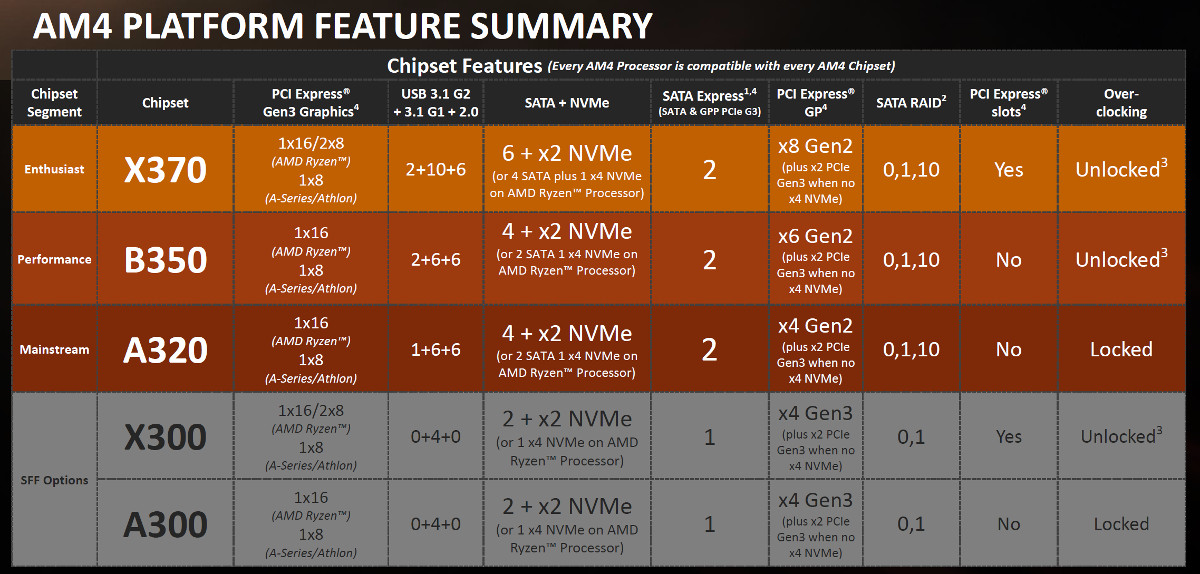
Although focus will be on the new Ryzen CPUs with updated architecture, that’s only one half of the picture when it comes to assessing AMD’s new platform. Complementing the CPUs release are a new series of motherboard chipsets, catering to enthusiast, gaming and entry-level segments. Plus, unlike Intel’s 200-series motherboard platform, AMD have kept their 300-series platform quite simple.
The first notable fact is that the AM4 socket is supported throughout the CPU and motherboard range – there’s no high-end exclusive analogue to Intel’s X99/LGA 2011. This will make piecemeal upgrades much simpler (and hopefully cheaper) in the long-run; for instance you could purchase an X370 motherboard and Ryzen 3 processer, and then upgrade to a high performance Ryzen 7 1800X later solely by replacing the CPU.
Another budgetary consideration is that all Ryzen CPUs are fully unlocked; instead overclocking is limited on a motherboard chipset basis with both X370 and B350 lines capable of pushing the CPU beyond spec. Budget overclockers will therefore be eagerly anticipating the release of Ryzen 3 and 5 CPUs, and in the long run will be better served by AMD’s lineup if overclocking is important to them.
At the top of the ladder sits X370, designated as the enthusiast chipset. The key differentiating factor between it and B350 is multi-GPU support, bifurcating the 16 PCI-E 3.0 lanes to dual 8x configurations. Both NVIDIA and AMD have de-emphasised multi-GPU graphics recently and very few consumers opt for these configurations due to cost, so the delineation makes a lot of sense; it may however dampen the enthusiasm of those who slot-in second GPUs late in that model’s life cycle.
Stepping down to B350 also limits I/O support, reducing the number of native USB 3.1 Gen1 ports to only six (but retaining six USB 3.1 Gen2 ports) and SATA 3 6Gbps ports to four. That’s no great hardship however, and may be offset by additional functionality added by board manufacturers. Overclocking support and high-performance GPU possibilities afford the B350 the label of ‘performance chipset’ below X370.
The mainstream section of the market is catered to by the A320 chipset. It’s only at this point that overclocking is restricted, and other I/O options are also shaved off compared to the higher-end models. Full x16 PCI-E 3.0 graphics are still an option however, as is NVMe storage (although board manufacturers may well not include this feature depending on cost).
Additionally, AMD have created two small form factor chipsets specifically for the AM4 platform – the X300 and A300. We’ll got into more depth when these chipsets are released, but the chief take-away point is that the X300 is an overclocking-capable chipset that is physically very small, allowing for far more flexibility in motherboard design than typical desktop platforms.
AM4 Socket
In recent months CPU cooler manufacturers have been falling over themselves to announce support for the new AM4 socket, but little information has been released regarding the differences between AM3 and AM4. As it turns out, the differences are quite small.
Firstly, the classic ‘clip-on’ cooler mount will continue to be supported on AM4 at the same specs as AM3. That will reduce the cost for many users towards the budget end of the spectrum, and has hastened support for low TDP coolers.
The chief difference between AM3 and AM4 is in the bolt-through cooler mounts often used with high-performance coolers. The hole positions for AM4 are offset from those for AM3, requiring a new mounting mechanism and backplate in many cases. Some motherboard manufacturers are supporting both AM3 and AM4 bolt-through holes in their designs – such as the ASUS ROG Crosshair VI – but this should not be assumed to be true in all cases.
All in all AM4 appears tailored to be minimally disruptive to both users and cooler manufacturers, whilst providing a good basis for the platform going into future generations.
An Eye on the Future – APU Support Built In
It will be apparent when the full range of motherboards are released that APUs are support, despite Ryzen 7’s not being equipped with integrated/on-die graphics components. This is because AMD wanted to ensure full support for AM4 Ryzen APUs when they become available later in the year, and not restrict them on a per-model or per-chipset basis.
Product Gallery
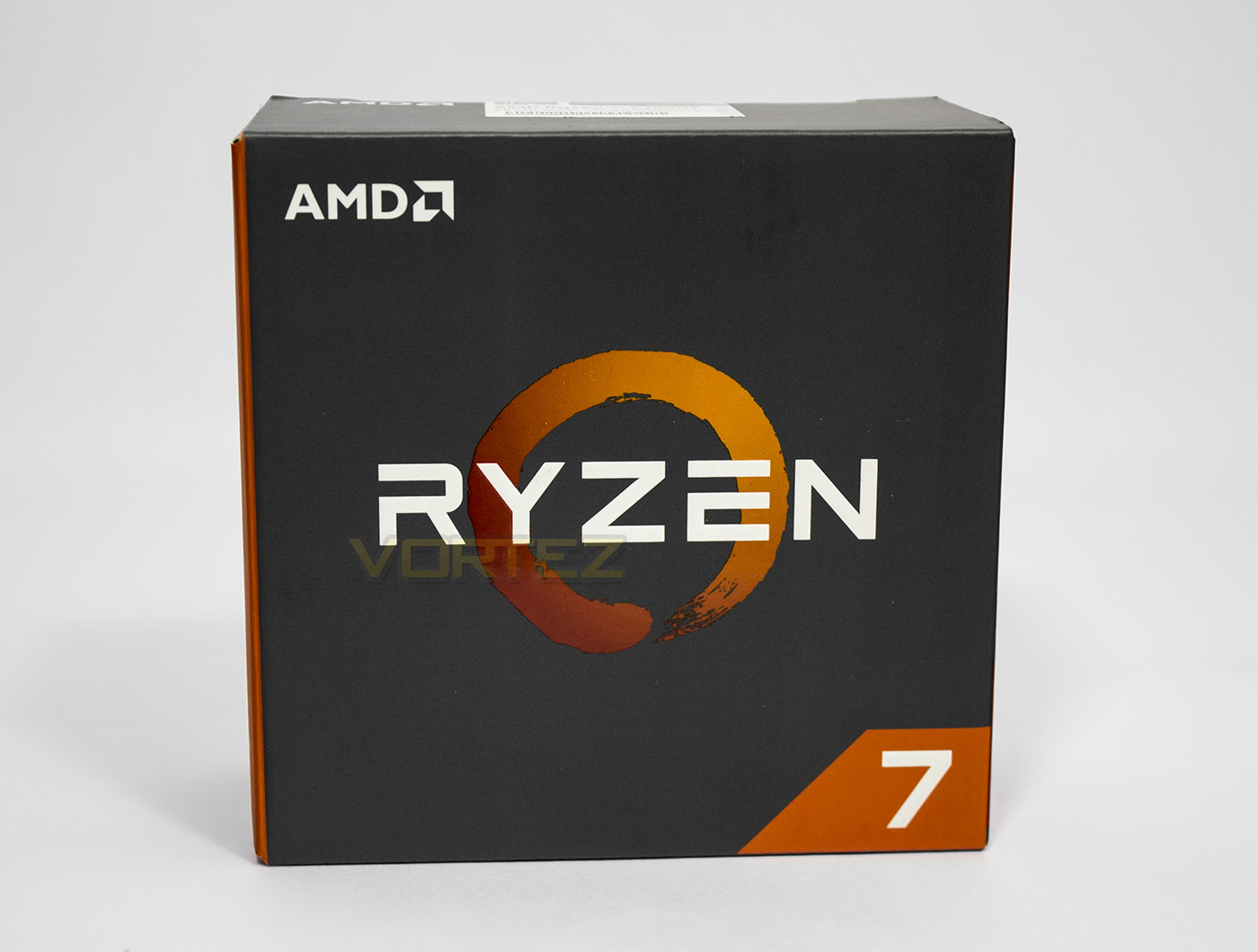
The Ryzen 7 packaging features an abstract Sumi-e circle that has been coloured in a glowing red/orange colour, likely inspired by the fact that all the retail products will feature new ‘Wraith’ coolers with adjustable RGB lighting that forms a circle.
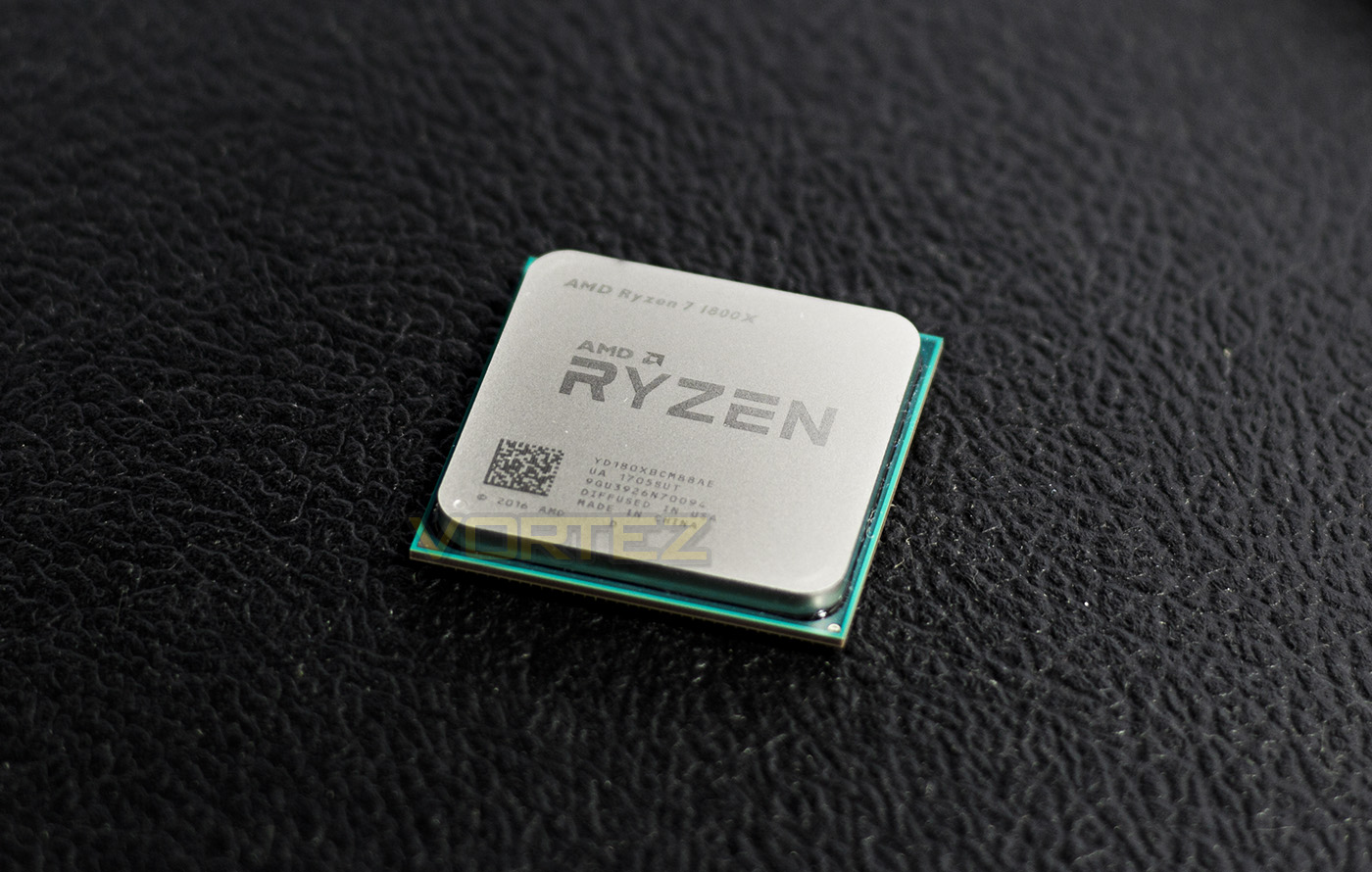
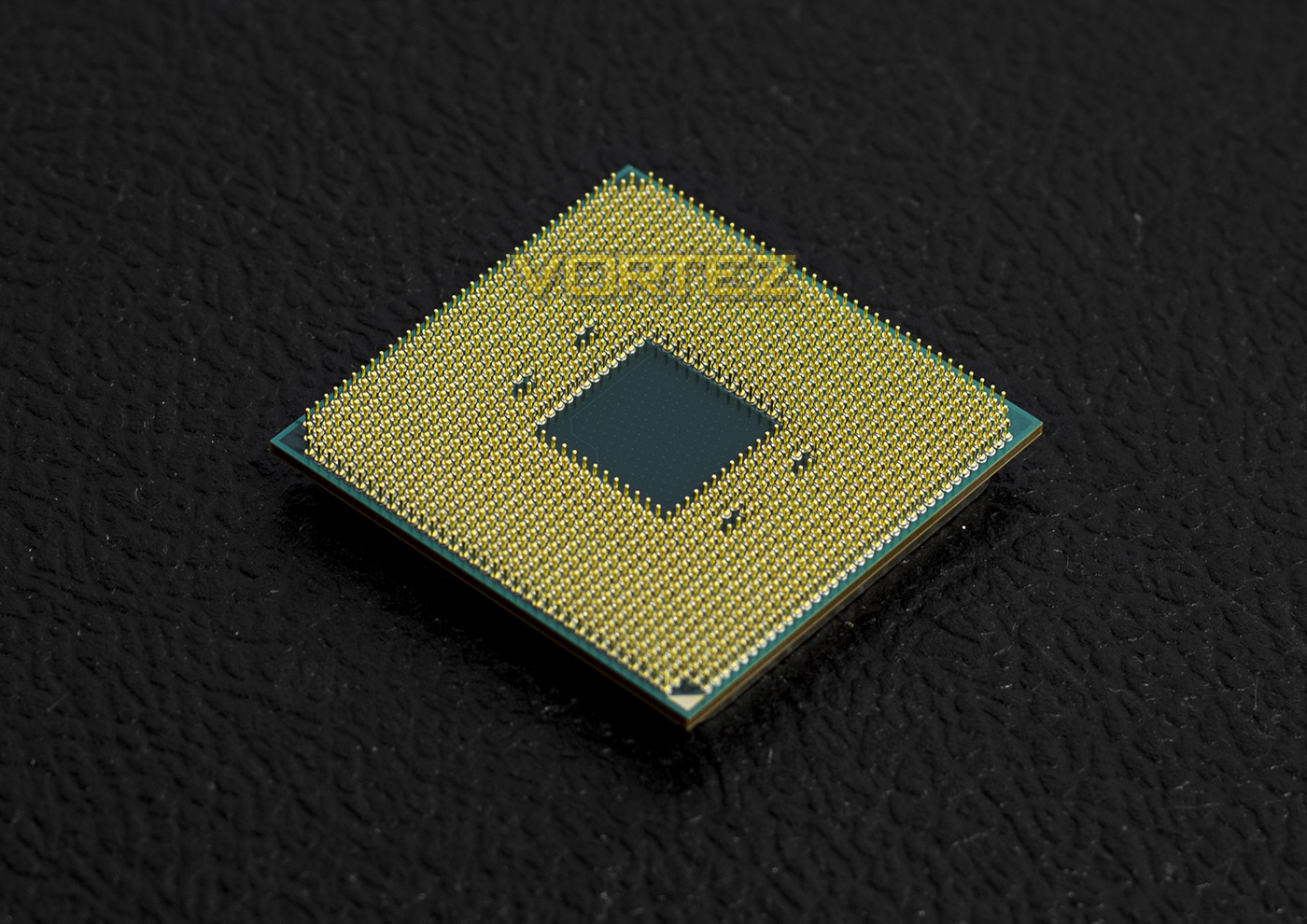
The Chip itself comes in the familiar AMD format with a large headspreader, though breaking form from tradition, the Ryzen CPUs boasts its brand rather visibly. They are however still using pins and so care is needed when handling the CPU, that is 1331 little mistakes waiting to happen.
Test Setup & Testing
CPUs
CPU being tested:AMD Ryzen 7 1800X (3.6GHz) Summit Ridge
Cooling Noctua NH-U12S SE-AM4
Motherboard GIGABYTE GA-AX370-GAMING 5
Memory 16GB Corsair Vengeance LPX 3000MHz
Graphics Radeon RX 480 8GB
Storage Corsair Force LE 480GB
PSU Corsair RM 750X 80 Plus Gold Certified PSU
Other CPUs used in comparison
AMD FX-8350 (4.0GHz) PileDriver
Intel Core i5-7700K (4.2GHz) Kaby Lake
Intel Core i5-7600K (3.8GHz) Kaby Lake
Intel Core i7-6950X (3.0GHz) Broadwell-E
Intel Core 7-6900K (3.2GHz) Broadwell-E
Intel Core i7-5960X (3.0GHz) Haswell-E
Intel Core i7-6700K (4GHz) Skylake
CPU being tested:AMD Ryzen 7 1800X (3.6GHz) Summit Ridge
Cooling Noctua NH-U12S SE-AM4
Motherboard GIGABYTE GA-AX370-GAMING 5
Memory 16GB Corsair Vengeance LPX 3000MHz
Graphics Radeon RX 480 8GB
Storage Corsair Force LE 480GB
PSU Corsair RM 750X 80 Plus Gold Certified PSU
Other CPUs used in comparison
AMD FX-8350 (4.0GHz) PileDriver
Intel Core i5-7700K (4.2GHz) Kaby Lake
Intel Core i5-7600K (3.8GHz) Kaby Lake
Intel Core i7-6950X (3.0GHz) Broadwell-E
Intel Core 7-6900K (3.2GHz) Broadwell-E
Intel Core i7-5960X (3.0GHz) Haswell-E
Intel Core i7-6700K (4GHz) Skylake
Benchmarks
Cinebench R15 – CPU/OpenGL Score
x264 HD 4.0 – 1st and 2nd pass encoding
SiSoftware SANDRA – CPU & Memory benchmarks
POV-RAY – CPU benchmarks
TrueCrypt – CPU benchmarks
AIDA64 – CPU benchmarks & Memory
PCMark 8 – Home Suite & Photoshop
3DMark FireStrike – 3D Benchmark
Games – Rise of the Tomb Raider & Total War: WARHAMMER
x264 HD 4.0 – 1st and 2nd pass encoding
SiSoftware SANDRA – CPU & Memory benchmarks
POV-RAY – CPU benchmarks
TrueCrypt – CPU benchmarks
AIDA64 – CPU benchmarks & Memory
PCMark 8 – Home Suite & Photoshop
3DMark FireStrike – 3D Benchmark
Games – Rise of the Tomb Raider & Total War: WARHAMMER
Other Software
Temperature Analysis: Aida64/Ryzen Master
Stress Testing Software: AIDA64 Stability Test
CPU Specification Monitoring: CPU-Z
Stress Testing Software: AIDA64 Stability Test
CPU Specification Monitoring: CPU-Z
Temperatures & Overclocking
**EDIT**In some of our tests we had run into some early constraints in regards to memory compatibility, this reflects a little in some of our results (specifically the memory based ones). Right now Ryzen Supports relatively slow DDR4 speeds, 1866-2667MHz, which to some is surprising when 3000MHz+ DDR4 is widely available. In the coming days you can expect manufacturers to release Ryzen specific memory, so ensure that you select the correct type of memory when choosing to purchase a Ryzen CPU. Pay specific attention to whether the memory is Dual/Single rank (Whether the memory is attached on one/both sides of the memory stick, as to what speed it is rated for.
That being said, overclocking with the Ryzen CPUs is a little different than other platforms. In our BIOS we aren’t presented with any turbo core controls or the ability to adjust the baseclock. Instead, the only way we can adjust the frequencies are with the given ratios for CPU and memory, and thanks to ‘Pure Boost’ (AMDs core boost to ~ 4GHz on the 1800X) this ratio is adjustable in 0.25x (25MHz) increments over a baseclock of 100. As the Ryzen 1800X features XFR+ (eXtended Frequency Range) technology too, at stock settings, it will automatically boost one of the cores ever higher than ‘Pure Boost’ when the CPU senses it has the additional thermal headroom, and it is a feature that scales with better cooling. This is just a few of the new Smart Technologies contained within the Ryzen architecture.
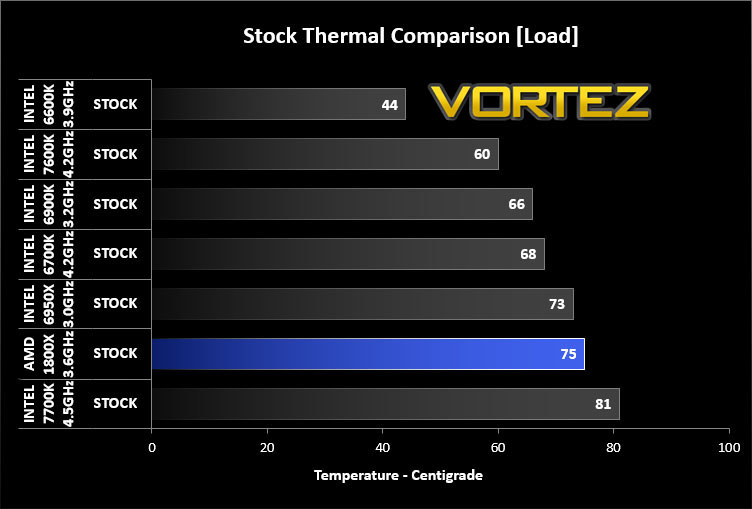
At stock settings, fully loading the CPU core with Aida64 stability test resulted in the CPU hitting 75°C, which is rather toasty but well within specification. This isn’t a direct comparison of thermal performances, but merely a guideline.
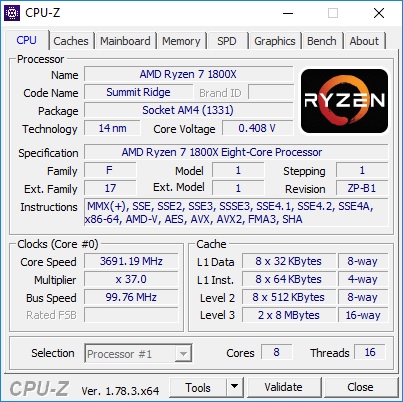
Stock settings
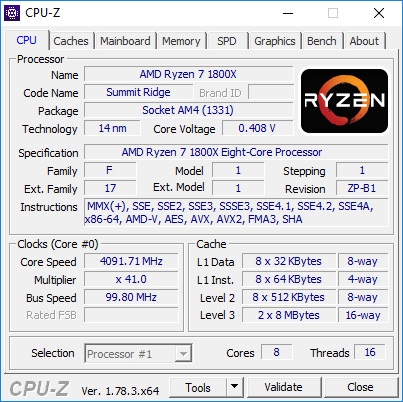
With Pure Boost/XFR+
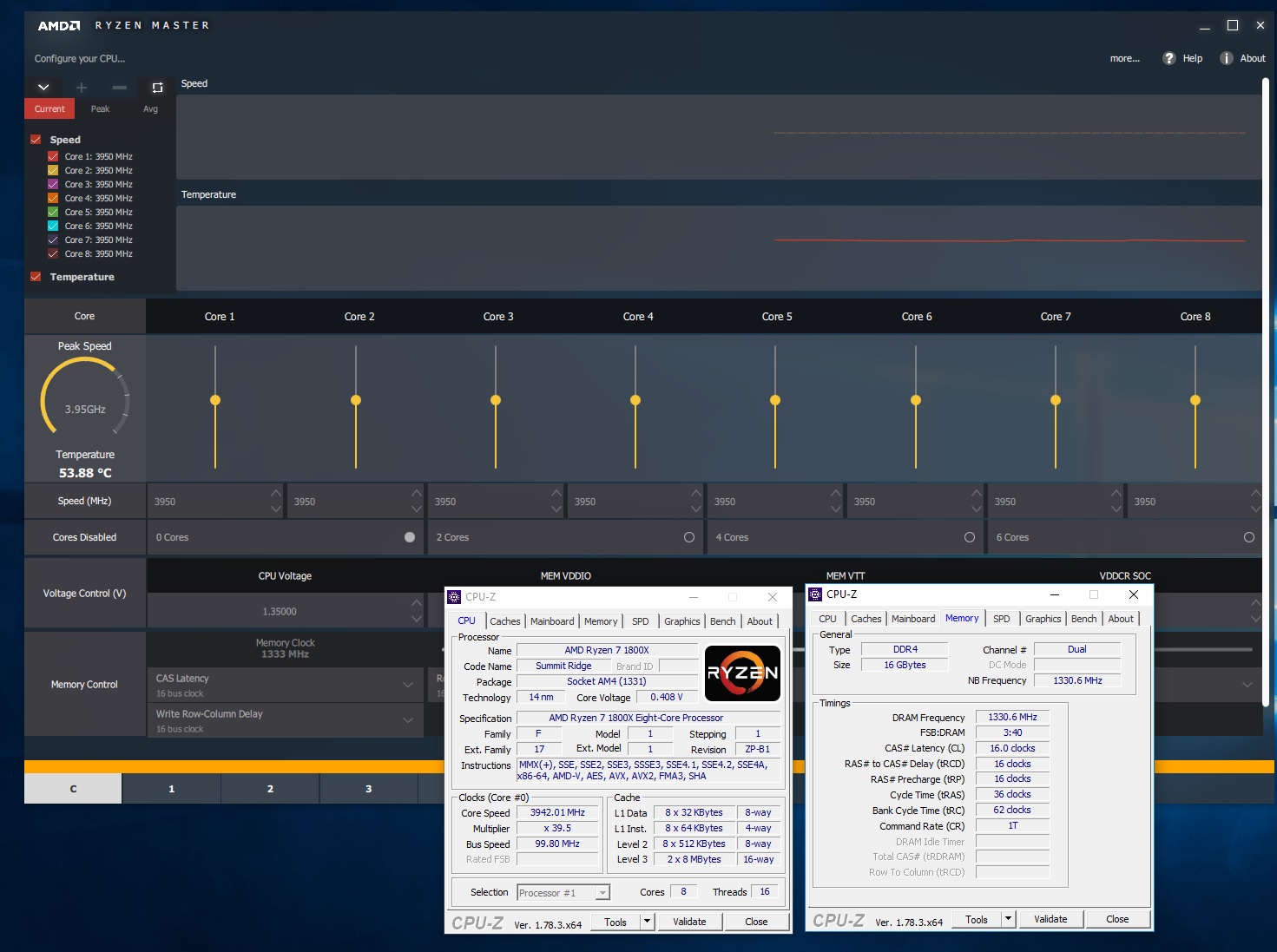
This also means that, CPU overclocking is fairly easy. All Ryzen CPUs are unlocked and are said to be able to reach 4.1-4.2GHz on decent cooling. With the Noctua NH U12S we were supplied with, we managed to easily get all the cores to 4GHz completely solid, though after some burn time and with the CPU hitting 86°C, we felt that pushing it with this cooler isn’t a great idea. At 4GHz, there is a decent boost in performance to be had.
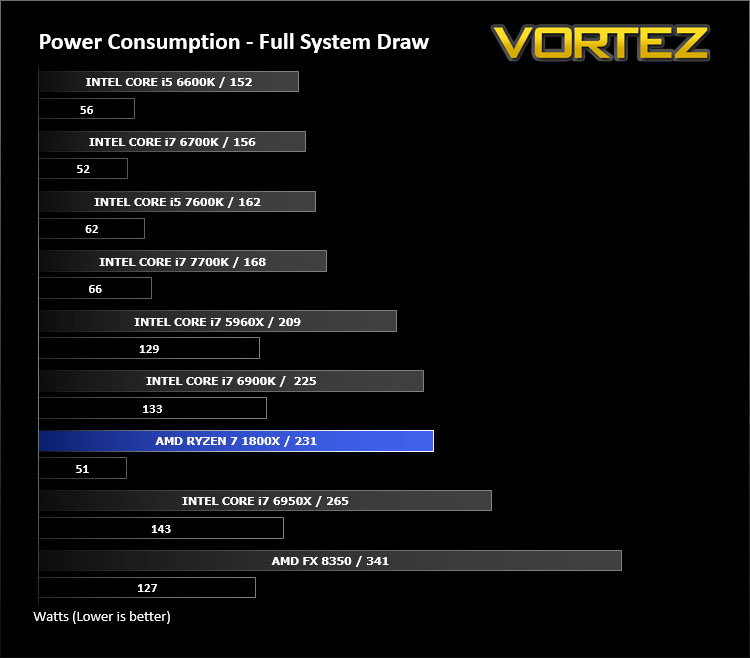
Power Consumption
It’s interesting to note the power consumption across all processors. Although they are using a combination of different motherboard chipsets, energy results can fluctuate between manufacturers due to the features and specifications that are integrated. First of all, for the idle tests the system is cold booted into Windows and no additional applications are executed – the watts are noted on the external energy monitor we use and then the system is loaded with 3DMark FireStrike – watts are again monitored for the duration of the test and the highest rated wattage result is then noted down. Below are the results of this energy test.
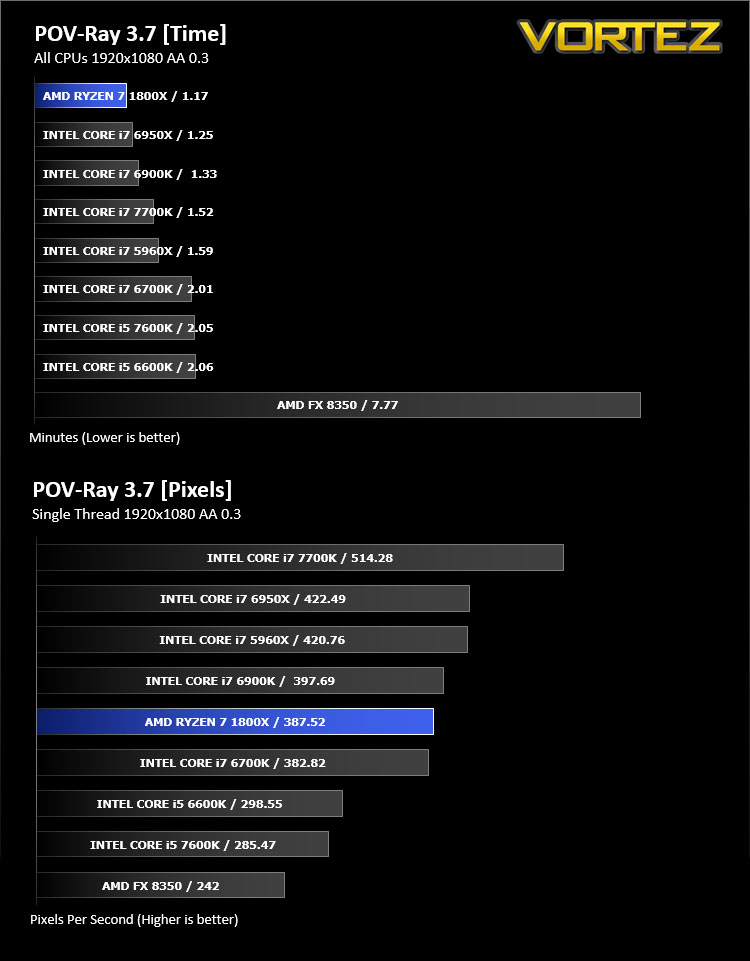
Ray Tracing Performance – POV-Ray 3.7
Persistence of Vision Raytracer’s PovRay is a free and open source 3D animator application with versions for computers with different operating systems.
This product allows users to build their custom 3D worlds with excellent quality despite their computer’s hardware. It has adjustable options for levels of radiance, refraction, and reflection. Calculation time may vary depending on the computer model, but PovRay can adapt to many computer builds, and is supported by the open source community.
This product allows users to build their custom 3D worlds with excellent quality despite their computer’s hardware. It has adjustable options for levels of radiance, refraction, and reflection. Calculation time may vary depending on the computer model, but PovRay can adapt to many computer builds, and is supported by the open source community.
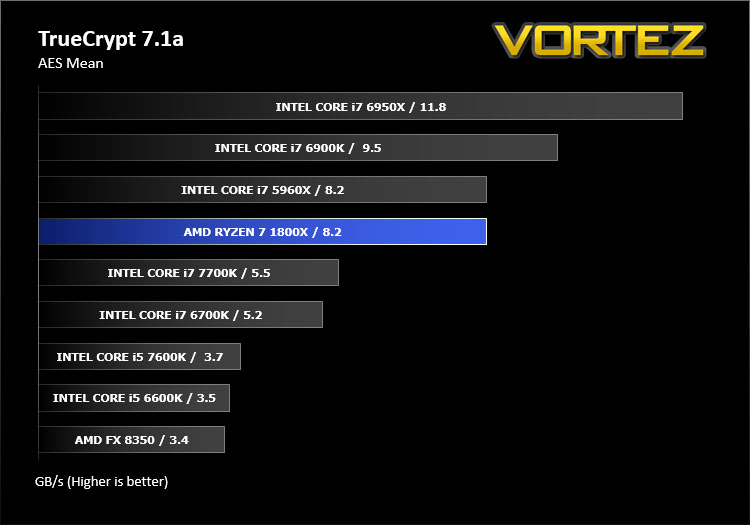
AES Encryption Performance – TrueCrypt 7.1a
TrueCrypt is a discontinued source-available freeware utility used for on-the-fly encryption (OTFE). It can create a virtual encrypted disk within a file or encrypt a partition or (under Microsoft Windows except Windows 8 with GPT) the entire storage device (pre-boot authentication).
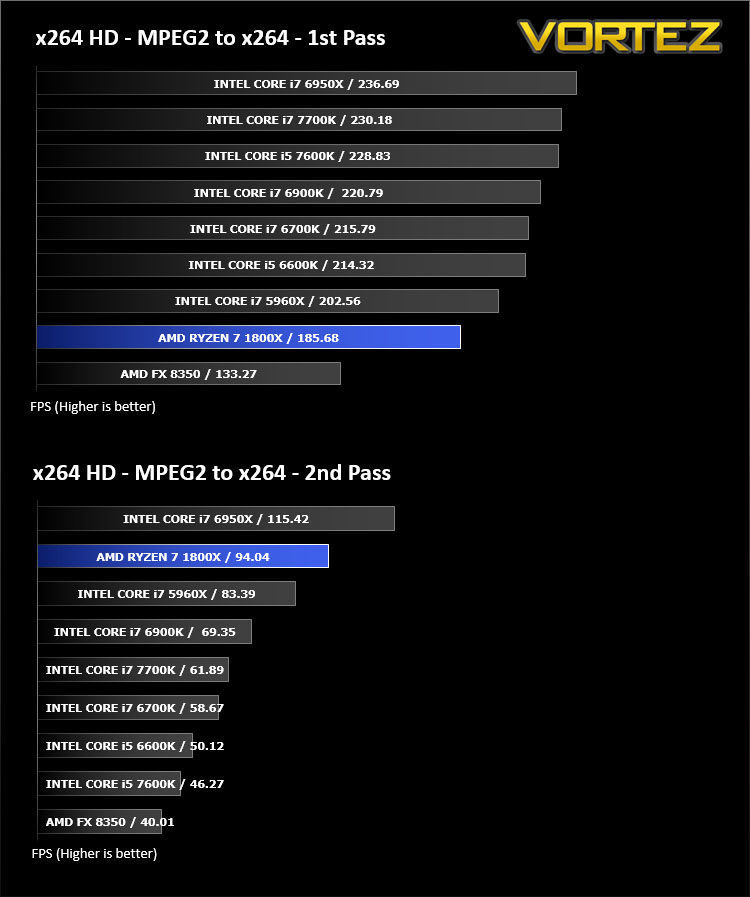
Encoding Performance – X264 HD
Simply put, this test measures how fast your machine can encode a short, DVD quality MPEG-2 video clip into a high-quality x264 video clip. What’s x264, you ask? It’s more or less the next-generation Xvid/DivX codec. I think it’s ideal for a benchmark because the application (x264.exe) reports fairly accurate compression results (in frames per second) for each pass of the video encoding process, and it uses multi-core processors very efficiently.
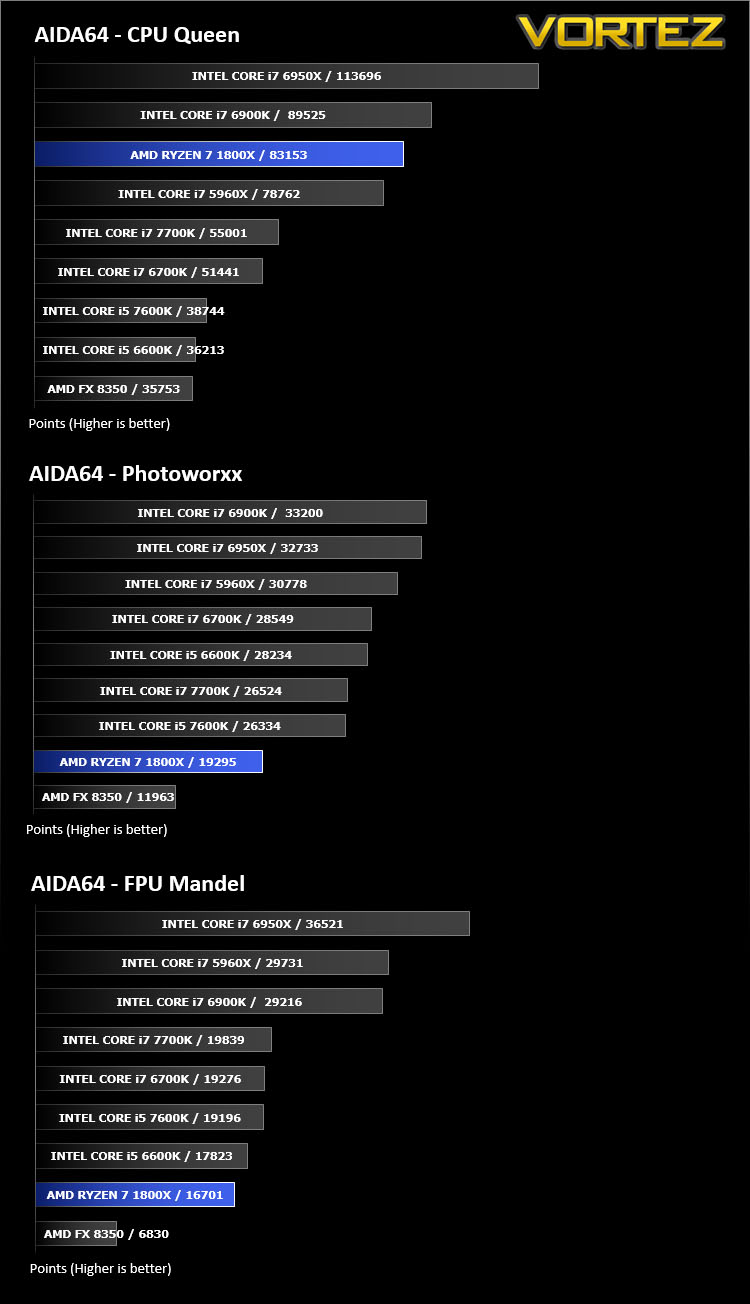
Processing Features Performance – AIDA64
AIDA64 Product PageThis simple integer benchmark focuses on the branch prediction capabilities and the misprediction penalties of the CPU. It finds the solutions for the classic “Queens problem” on a 10 by 10 sized chessboard. At the same clock speed theoretically the processor with the shorter pipeline and smaller misprediction penalties will attain higher benchmark scores. For example — with HyperThreading disabled — the Intel Northwood core processors get higher scores than the Intel Prescott core based ones due to the 20-step vs 31-step long pipeline. CPU Queen test uses integer MMX, SSE2 and SSSE3 optimizations.
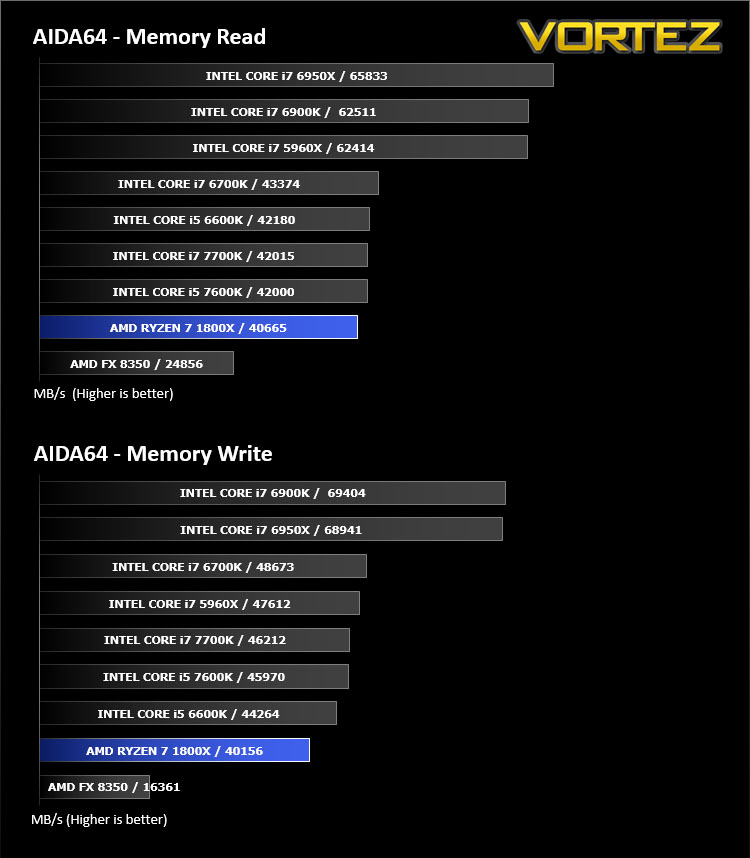
Memory Transfer Performance – AIDA64
AIDA64 Product PageMemory bandwidth benchmarks (Memory Read, Memory Write, Memory Copy) measure the maximum achiveable memory data transfer bandwidth. The code behind these benchmark methods are written in Assembly and they are extremely optimized for every popular AMD, Intel and VIA processor core variants by utilizing the appropriate x86/x64, x87, MMX, MMX+, 3DNow!, SSE, SSE2, SSE4.1, AVX, and AVX2 instruction set extension.
The Memory Latency benchmark measures the typical delay when the CPU reads data from system memory. Memory latency time means the penalty measured from the issuing of the read command until the data arrives to the integer registers of the CPU.
The Memory Latency benchmark measures the typical delay when the CPU reads data from system memory. Memory latency time means the penalty measured from the issuing of the read command until the data arrives to the integer registers of the CPU.
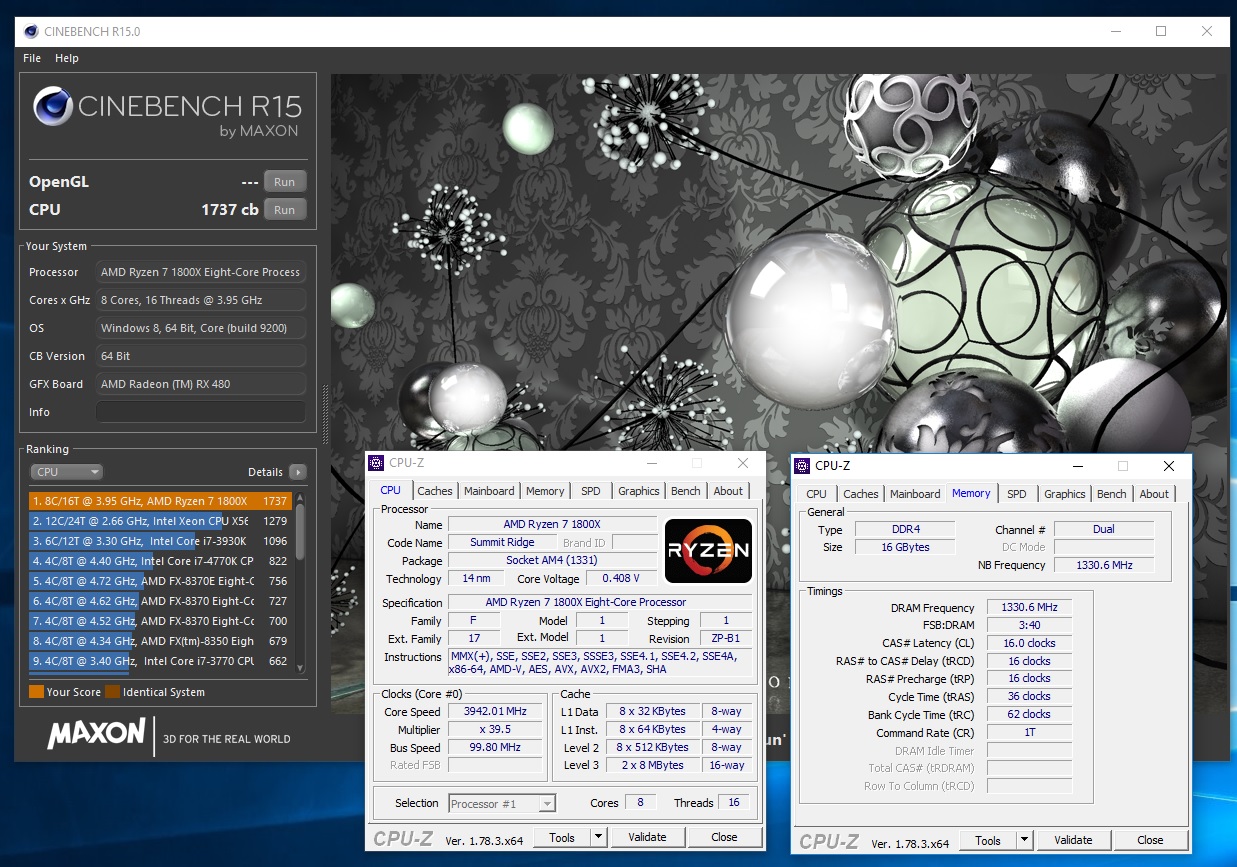
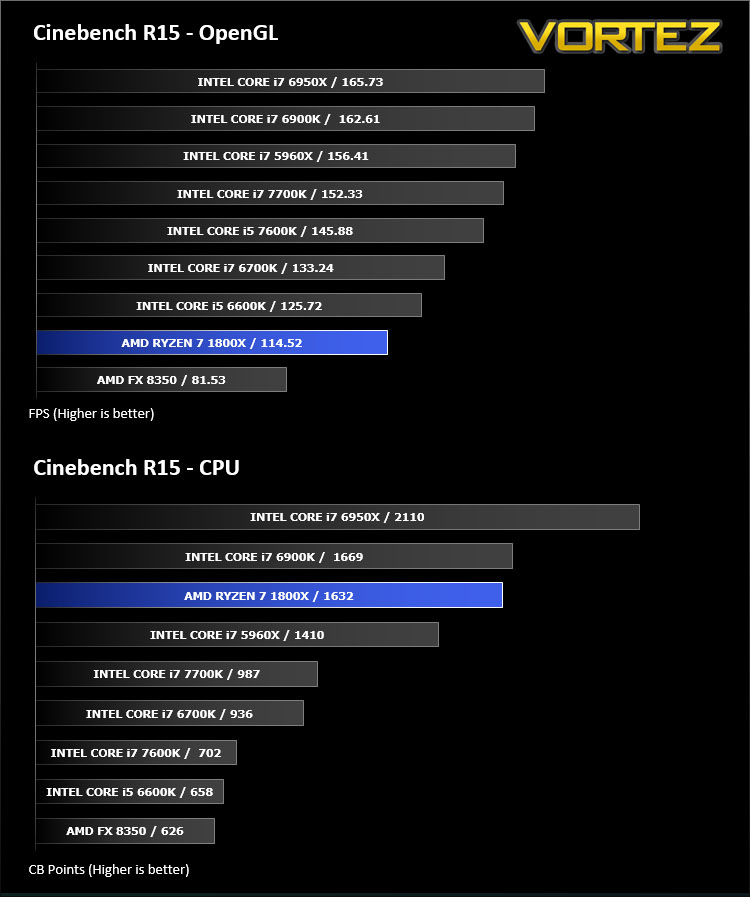
Processing Power Performance – Cinebench R15
CINEBENCH can measure systems with up to 64 processor threads. This test scene contains approximately 2,000 objects which in turn contain more than 300,000 polygons in total, and uses sharp and blurred reflections, area lights, shadows, procedural shaders, antialiasing, and much more. The result is displayed in points (pts). The higher the number, the faster your processor.
Bandwidth Performance – SiSoftware SANDRA
SANDRA isn’t always a benchmark that is included in hardware reviews but I believe it shouldn’t be ignored. SANDRA provides a vigorous package that tests your system in a rather large array of benchmarks. There are many aspects of benchmark that can be executed. We will be considering – CPU and memory tests.
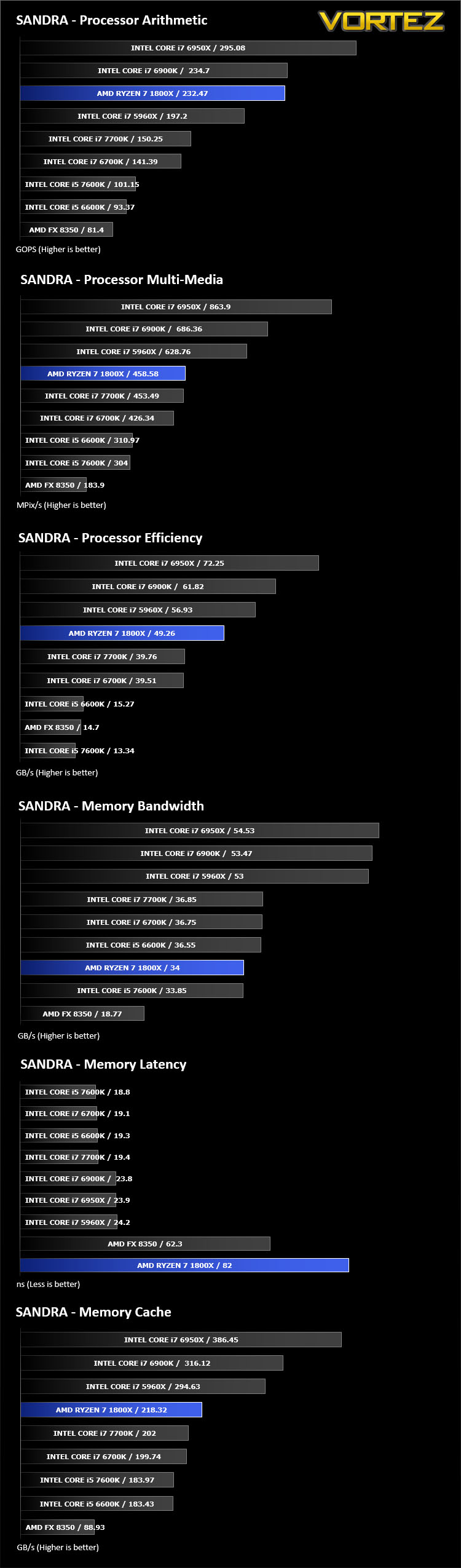
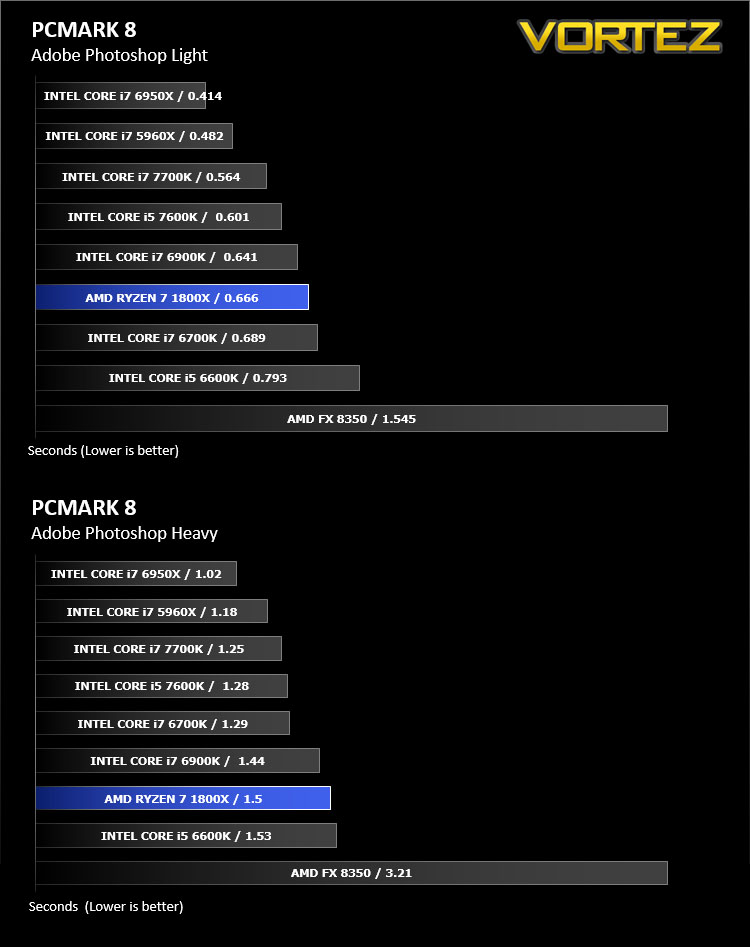
Image Editing Performance – PCMark 8 Photoshop
PCMark 8 Product Page Developed in partnership with Benchmark Development Program members Acer, AMD, Condusiv Technologies, Dell, HGST, HP, Intel, Microsoft, NVIDIA, Samsung, SanDisk, Seagate and Western Digital, PCMark 8 is the latest version in FutureMark’s popular series of PC benchmarking tools. Improving on previous releases, PCMark 8 includes new tests using popular applications from Adobe and Microsoft.
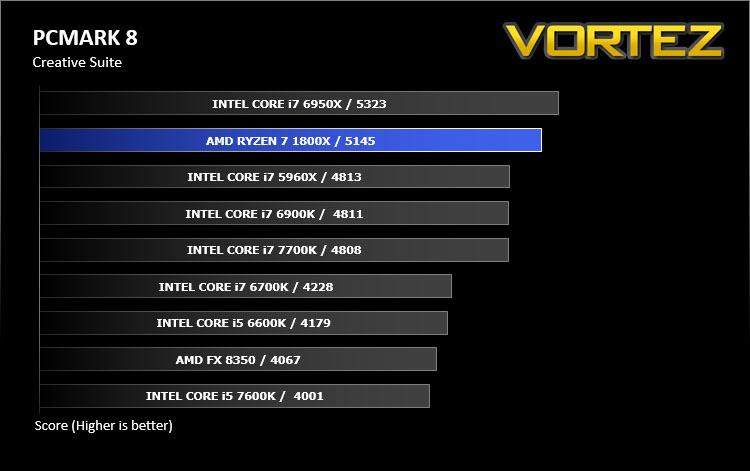
Overall System Performance – PCMark 8
PCMark 8 Product Page Developed in partnership with Benchmark Development Program members Acer, AMD, Condusiv Technologies, Dell, HGST, HP, Intel, Microsoft, NVIDIA, Samsung, SanDisk, Seagate and Western Digital, PCMark 8 is the latest version in FutureMark’s popular series of PC benchmarking tools. Improving on previous releases, PCMark 8 includes new tests using popular applications from Adobe and Microsoft.
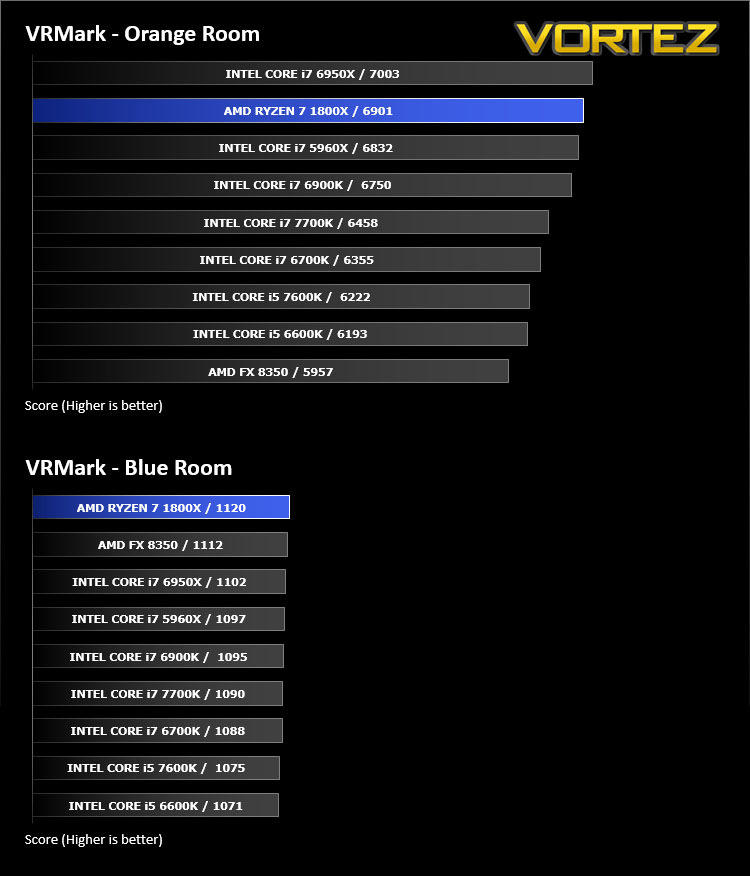
VR Performance – VRMark
VRMark Product PageVRMark includes two VR benchmark tests that run on your monitor, no headset required, or on a connected HMD. At the end of each test, you’ll see whether your PC is VR ready, and if not, how far it falls short.
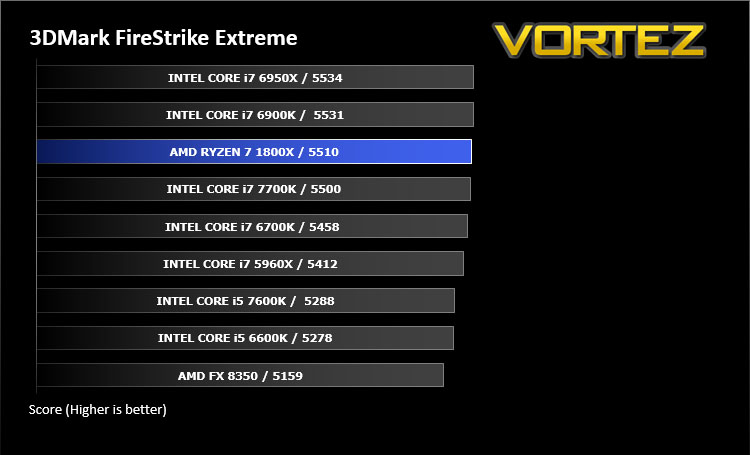
3D Performance – 3DMark FireStrike
3DMark FireStrike Product PageFire Strike is our new showcase DirectX 11 benchmark designed for high-performance gaming PCs. It is our most ambitious and technical benchmark ever, featuring real-time graphics rendered with detail and complexity far beyond what is found in other benchmarks and games today. Fire Strike will only be available in the Windows editions of 3DMark initially.
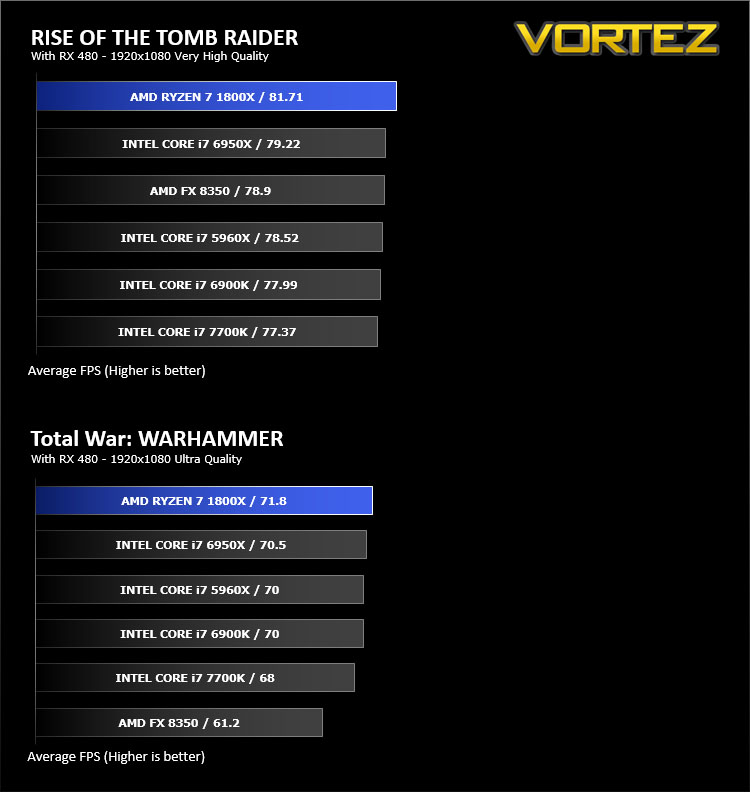
Gaming Performance – Rise of the Tomb Raider & Total War: WARHAMMER
It’s important for us to perform a number of game benchmarks as well as the synthetic tests because gamers will want to know if there are any significant benefits. So here we have two recent gaming titles.
Conclusion
There we have it, the tests are in and Ryzen 7 gives a great right hook to the Blue team. In highly threaded performance, the 1800X often falls right between the i7 6900K and the i7 6950X. Considering its launch price is £489/$499. In some results, the 1800X falls between the Skylake/Kabylake ‘high performance’ position either because of lack of current support (such as experienced by the pop up warnings in Aida64), its marginally lower clock for clock performance, or simply because it is being compared against some CPUs that feature QUAD channel memory. Many will be wondering why AMD didn’t implement quad channel memory for Ryzen 7, then logically it would be to reduce the platform cost by removing a feature that isn’t largely required by the majority of people. So if you can get 95% of the performance at 50% of the cost, is it a winner?
Though, it ISN’T 95% of the performance, Ryzen 7 trades blows against Intel’s entire lineup in all but low/single-threaded workloads, and it is regularly dancing between the i7 6900 and the i7 6950X in multi-threaded workloads.
We would argue that, while a perfectly viable option, the Ryzen 7 1800X isn’t quite the ‘gamers’ chip. Mostly because from that perspective the price/performance ratio isn’t that great, especially when even the FX-8350 can bring the goods. Though we need to consider that the alternatives are considerably cheaper. Even then, having a faster CPU such as the i7 6700/7700K may still be the preference of many people.
As 8 core+ CPUs become more widespread, developers will undoubtedly undertake the process needed for optimising applications to take advantage of the extra resources, not forgetting that games are still maturing on the current generation games consoles both equipped with 8 core CPUs, so it is highly likely that these optimisations will come rather quickly, causing a shift in the desktop performance paradigm, a shift that is much needed as consumers, content creators, and gamers move towards VR and 4/8K content.
To round up our thoughts, Ryzen 1800X gives the consumer fantastic choice, it performs wonderfully and is aggressively priced. The 1800X may not be the gamers choice regarding the Ryzen 7 lineup due to being relatively high in price still, but compared to the target competition it is an absolute steal. We hope AMD develop and continue on this route to bring competitive products to the market, and considering the delay of Cannonlake, and the steep price slashes of current i7 CPUs, Intel have certainly been rattled. As for the consumer, the future certainly has more cores.
AMD have returned to the fray, and with the Ryzen 7 they have officially ended the era of quad core computing.
Pros
+ Highly competitive multi-threaded performance
+ Competes against Intel’s top tier CPUs
+ Supplied with RGB Cooler
+ Fully featured platform
+ 8/16 cores threads priced lower than the competition
+ Significantly improved performance per watt
+ Smart technologies (XFR+ headroom)
+ Easy to overclock
Cons
– Can be beat in memory intensive applications
– Not quite as fast clock for clock
– Specific memory requirements
+ Highly competitive multi-threaded performance
+ Competes against Intel’s top tier CPUs
+ Supplied with RGB Cooler
+ Fully featured platform
+ 8/16 cores threads priced lower than the competition
+ Significantly improved performance per watt
+ Smart technologies (XFR+ headroom)
+ Easy to overclock
Cons
– Can be beat in memory intensive applications
– Not quite as fast clock for clock
– Specific memory requirements
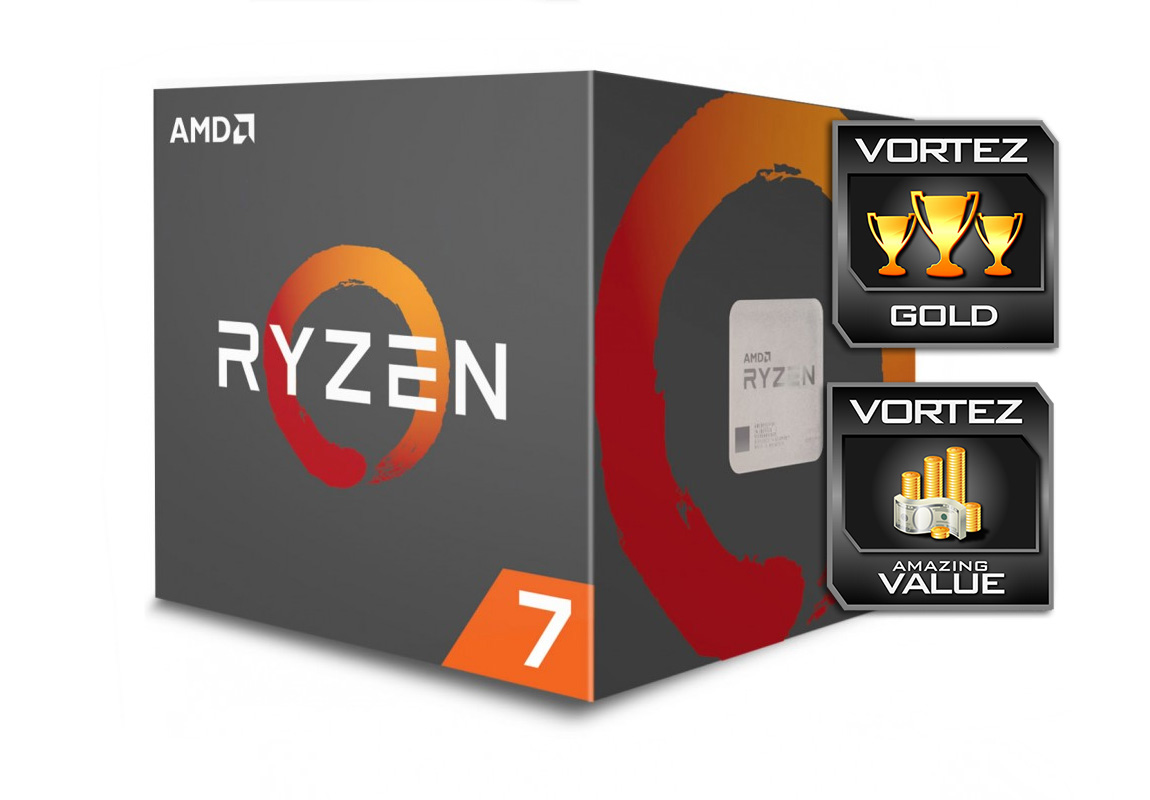
Click here for an explanation of our awards at Vortez.net.