Adopting the Intel Z270 chipset and a sleek monochrome theme, Maximus IX Hero is a feature-packed motherboard which is able to push the Intel Core i7-7700K beyond its limits.

Product on Review: Maximus IX Hero Motherboard
Manufacturer & Sponsor: ASUS
Street Price: £260 GBP @ CCL Computers / $229 USD
In part the Intel Kaby Lake and Intel Z270 release has been somewhat underwhelming in terms of tangible feature improvements over the previous generation and yet at the same time we’ve been presented with a multitude of new motherboards to choose from. Indeed, ASUS alone released some fourteen motherboards bearing the Intel Z270 chipset; an indicator as to how competitive the mainstream/performance segment has become. Today we turn to ASUS and their renowned ROG team for a detailed look at what the Maximus IX Hero has to offer.
Adopting the new Intel Z270 chipset, we have the Maximus IX Hero, which sits at the bottom of the ROG performance stack. Hero features a fresh new design with a monochrome theme. Across this motherboard, we have stunning aesthetics and a bag full of features which include support for up to 4133MHz DDR4, USB 3.1 front panel header and trademark ROG features like 5-Way Optimization with Auto-Tuning and FanXpert 4.
Having already checked out the STRIX Z270F, can the Maximus IX Hero offer anything extra? Let’s find out.
ROG on their Maximus IX Hero
For more than a decade, Republic of Gamers has delivered exemplary design and performance to thrill the world’s best players and PC enthusiasts. Our journey is a road without end. Now, it’s time for competitors to be warned and for gamers and enthusiasts to push the limits: The packed and pumped ROG Maximus IX Hero Series motherboard is ready to defeat all challengers.
Technical Specifications
Below are the technical specifications concerning the ROG Maximus IX Hero:
CPU
• Supports 7th Gen Intel® Core™ i3/i5/i7 processors, and Intel® Pentium® and Celeron® processors for Socket LGA1151
Chipset
• Intel® Z270 Chipset
Main Memory
• 4 x DDR4 memory slots, support up to 64GB
– Supports DDR4 Up to 4133MHz
• Dual channel memory architecture
• Supports ECC, un-buffered memory
– ECC UDIMM memory (non-ECC mode)
• Supports Intel® Extreme Memory Profile (XMP)
Slots
• 3 x PCIe 3.0 x16 slots (Modes: 16, 8,
• 2 x PCIe 3.0 x1 slot
Onboard Graphics
• 1 x HDMI™ port (1.4b)
• 1 x Displayport™ port (1.2)
Multi-GPU
• Supports 3-Way AMD® CrossFire™ Technology
• Supports 2-Way NVIDIA® SLI™ Technology
Storage
• Intel® Z270 Chipset
• 6 x SATA 6Gb/s ports
• 2 x M.2 slots (Supports Intel Optane Memory – 7th Gen Processor required)
RAID
• Intel® Z270 Chipset
– Supports RAID 0, RAID1, RAID 5 and RAID 10 for SATA storage devices
Audio
• SupremeFX (Using Realtek ALC 1220)
– 7.1-Channel High Definition Audio
– Supports S/PDIF output
LAN
• 1 x Intel i219 Gigabit LAN controller
Back Panel I/O Ports
– USB Flashback button
– Reset CMOS button
– Displayport 1.2
– HDMI 1.4b
– 4x USB 2.0 ports
– 4x USB 3.0 ports
– 1x USB 3.1 Gen2 Type A
– 1x USB 3.1 Gen2 Type C
– Gigabit LAN (Intel i219 Controller)
– 1 x Audio ports with Optical Out
Dimension
• 12 inch x 9.6 inch ( 30.5 cm x 24.4 cm )
• ATX Form Factor
• Supports 7th Gen Intel® Core™ i3/i5/i7 processors, and Intel® Pentium® and Celeron® processors for Socket LGA1151
Chipset
• Intel® Z270 Chipset
Main Memory
• 4 x DDR4 memory slots, support up to 64GB
– Supports DDR4 Up to 4133MHz
• Dual channel memory architecture
• Supports ECC, un-buffered memory
– ECC UDIMM memory (non-ECC mode)
• Supports Intel® Extreme Memory Profile (XMP)
Slots
• 3 x PCIe 3.0 x16 slots (Modes: 16, 8,
• 2 x PCIe 3.0 x1 slot
Onboard Graphics
• 1 x HDMI™ port (1.4b)
• 1 x Displayport™ port (1.2)
Multi-GPU
• Supports 3-Way AMD® CrossFire™ Technology
• Supports 2-Way NVIDIA® SLI™ Technology
Storage
• Intel® Z270 Chipset
• 6 x SATA 6Gb/s ports
• 2 x M.2 slots (Supports Intel Optane Memory – 7th Gen Processor required)
RAID
• Intel® Z270 Chipset
– Supports RAID 0, RAID1, RAID 5 and RAID 10 for SATA storage devices
Audio
• SupremeFX (Using Realtek ALC 1220)
– 7.1-Channel High Definition Audio
– Supports S/PDIF output
LAN
• 1 x Intel i219 Gigabit LAN controller
Back Panel I/O Ports
– USB Flashback button
– Reset CMOS button
– Displayport 1.2
– HDMI 1.4b
– 4x USB 2.0 ports
– 4x USB 3.0 ports
– 1x USB 3.1 Gen2 Type A
– 1x USB 3.1 Gen2 Type C
– Gigabit LAN (Intel i219 Controller)
– 1 x Audio ports with Optical Out
Dimension
• 12 inch x 9.6 inch ( 30.5 cm x 24.4 cm )
• ATX Form Factor
Packaging, Bundle & First Look
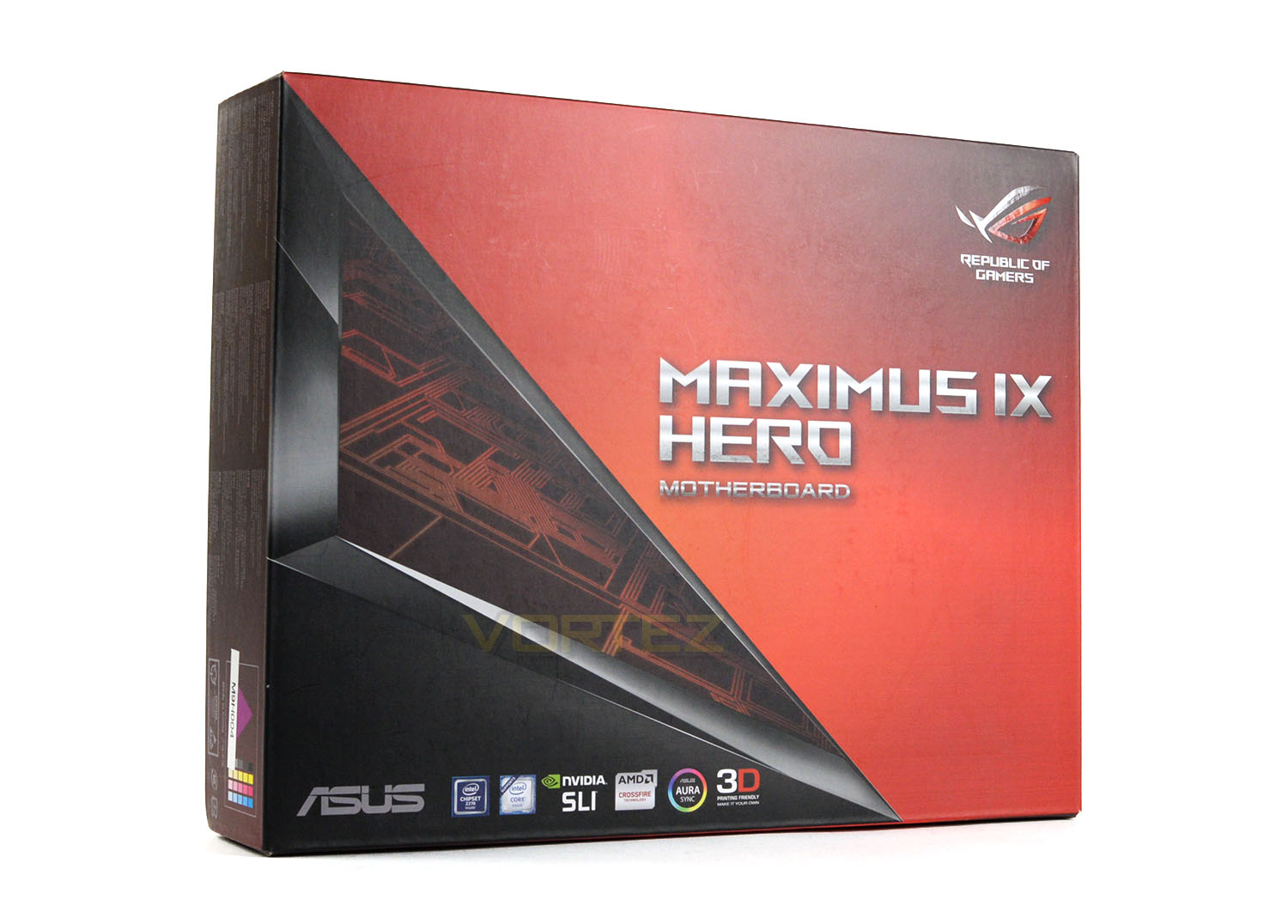
Hero arrives in an eye-catching box which features a ‘new look’ for the ROG series. Arriving as a premium offering, the packaging has been given the premium treatment too.
Over on the back side of the box there is more detail on the included features. The motherboard arrives in its own carboard tray with plastic lid to ensure it arrives without any damage.
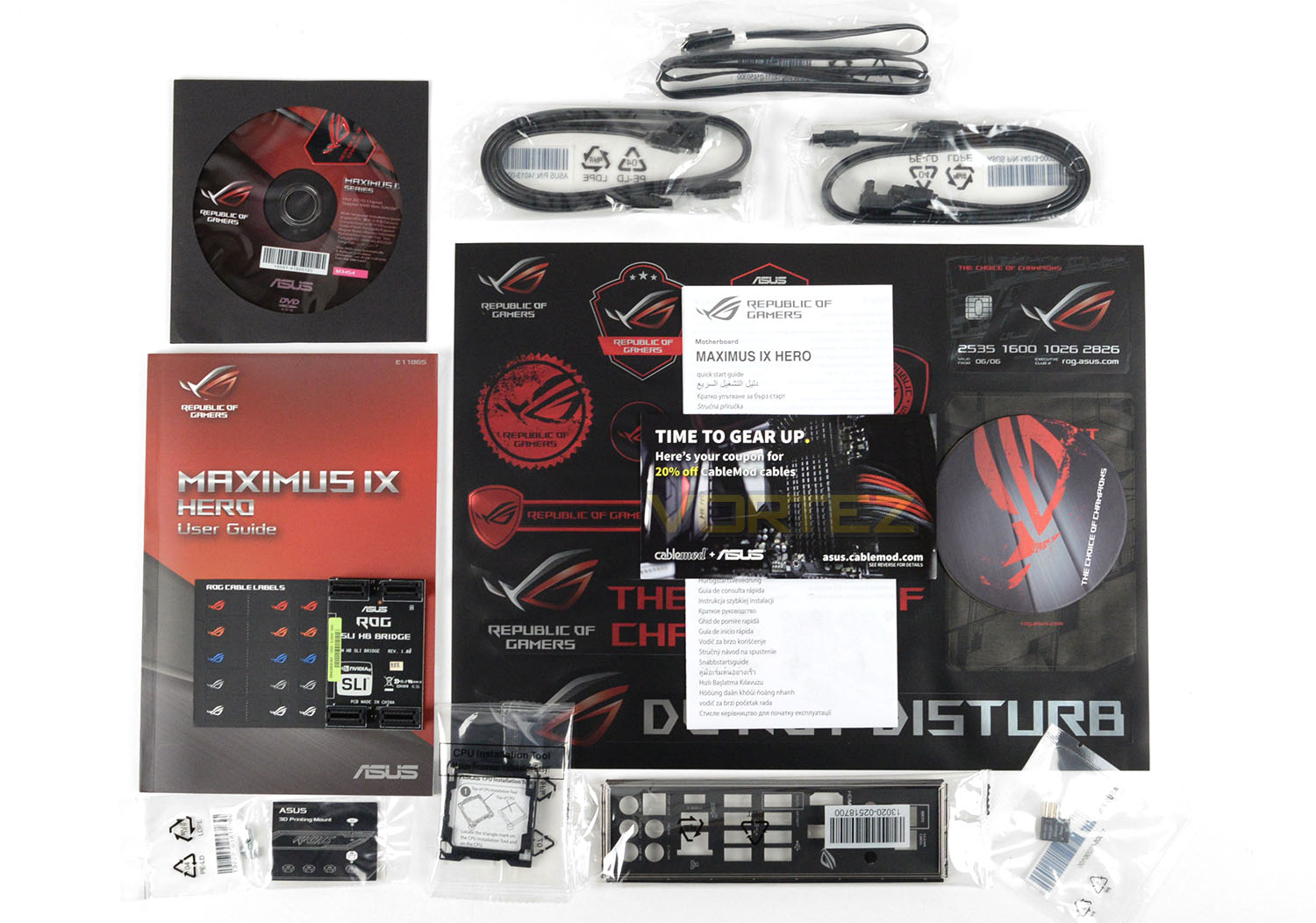
Inside the box we have quite a number of included accessories bundled with the motherboard. The following are included:
• User’s manual
• ASUS Q-Shield
• 4 x SATA 6Gb/s cable(s)
• 1 x M.2 Screw Package
• 1 x CPU installation tool
• 1 x Supporting DVD
• 1 x SLI HB BRIDGE(2-WAY-M)
• 1 x ROG big sticker
• 1 x Q-Connector
• 1 x 10-in-1 ROG cable label
• 1 x 3D printing mount package
• 1 x ROG coaster
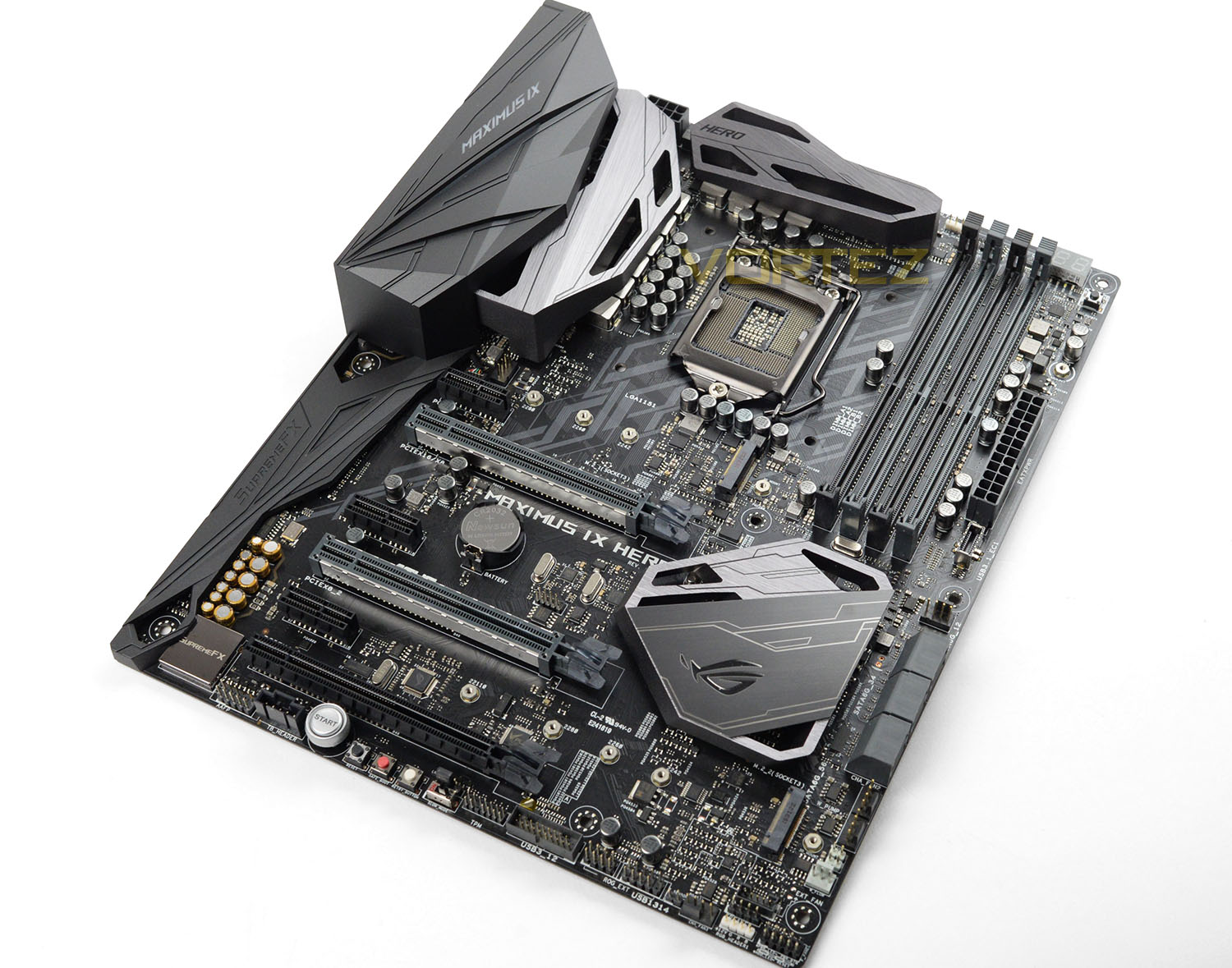
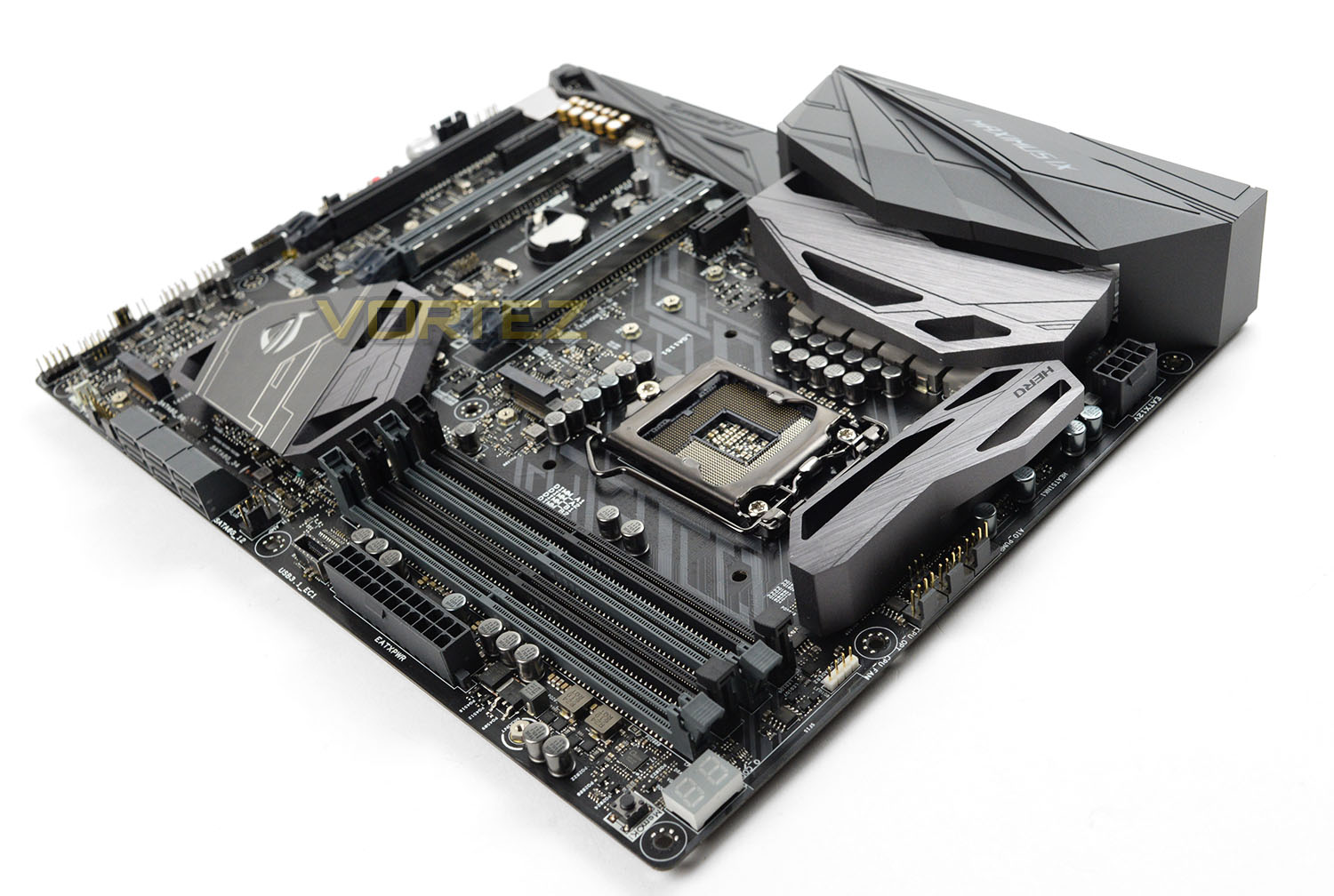
Removing the Hero from its packaging we have one incredibly aggressive looking motherboard. The ROG team has made quite a departure from previous generations where a black/red theme would be customary – instead we have a gun metal livery which looks stunning.
At the base of Hero, we have a matt PCB with grey ports, lanes and slots. The overall theme is likely to match black/grey hardware very well indeed – so if a monochrome type of design is the aim of the game, this board is a good choice.
Hero conforms to the ATX form factor and measures: 30.5 cm x 24.4 cm.
Closer Look
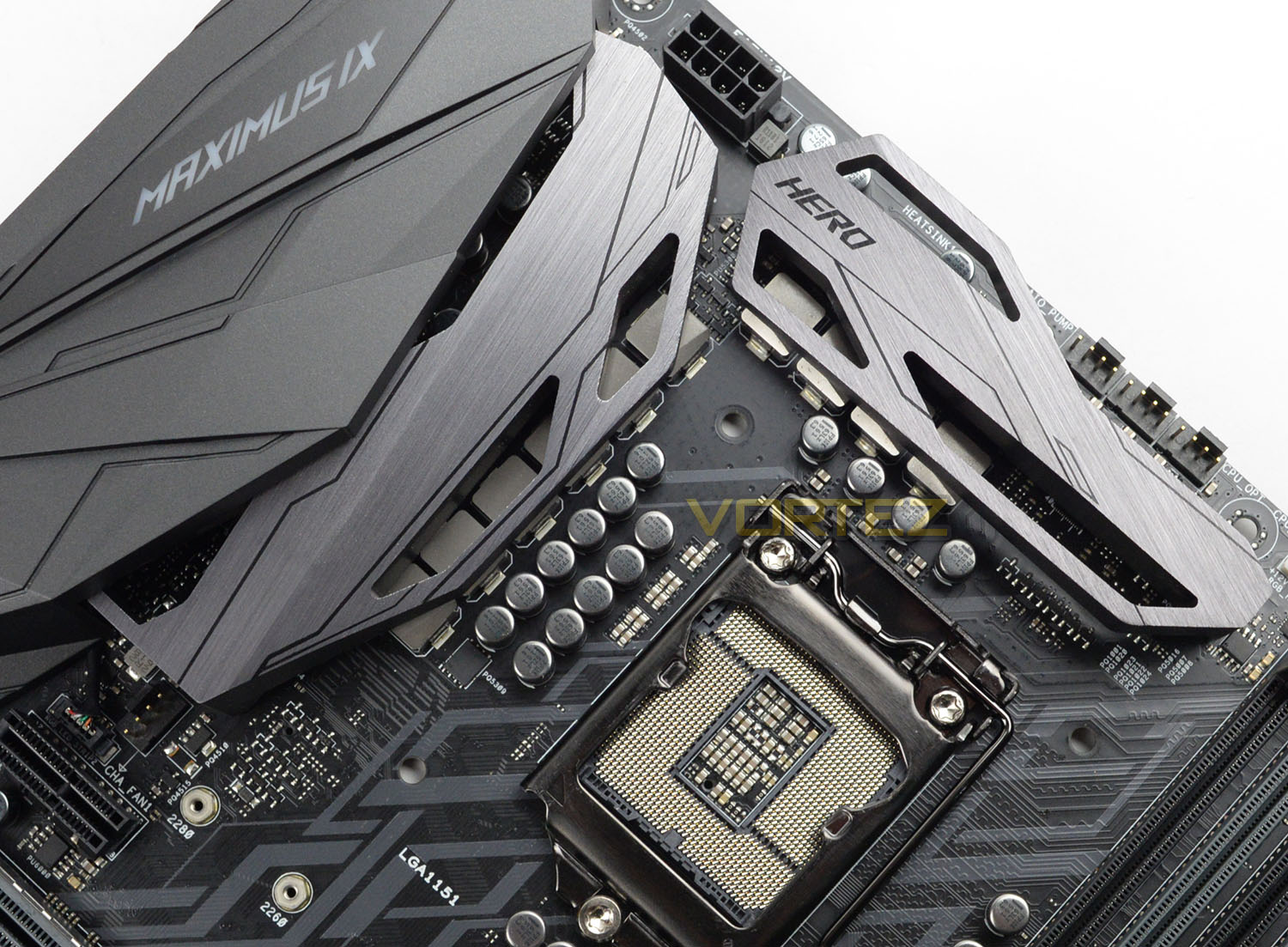
Hero is an Intel 200-series motherboard and as such carries support for the latest Intel 7th Generation of Core Processors codenamed Kaby Lake. Therefore, our socket is LGA 1151 – if you already have a Skylake processor such as the Intel Core i7-6700K, then this will also work perfectly on this motherboard too.
Hero employs a 10-phase power design which arrives with Digi+. Also around the socket, we have long-life black solid CAPs for longevity and stability.
Covering the VRM system we have two independent heatsinks which adopt the gunmetal design which we’ve already taken note of. Both heatsinks feature a hollowed-out design which we’ve never seen before and it certainly gives the board a fresh style.
On the top-edge of the board we have an 8-pin CPU power socket and there is a triple fan header arrangement also found on the top-edge which provides support for two CPU fans and pump compatibility.
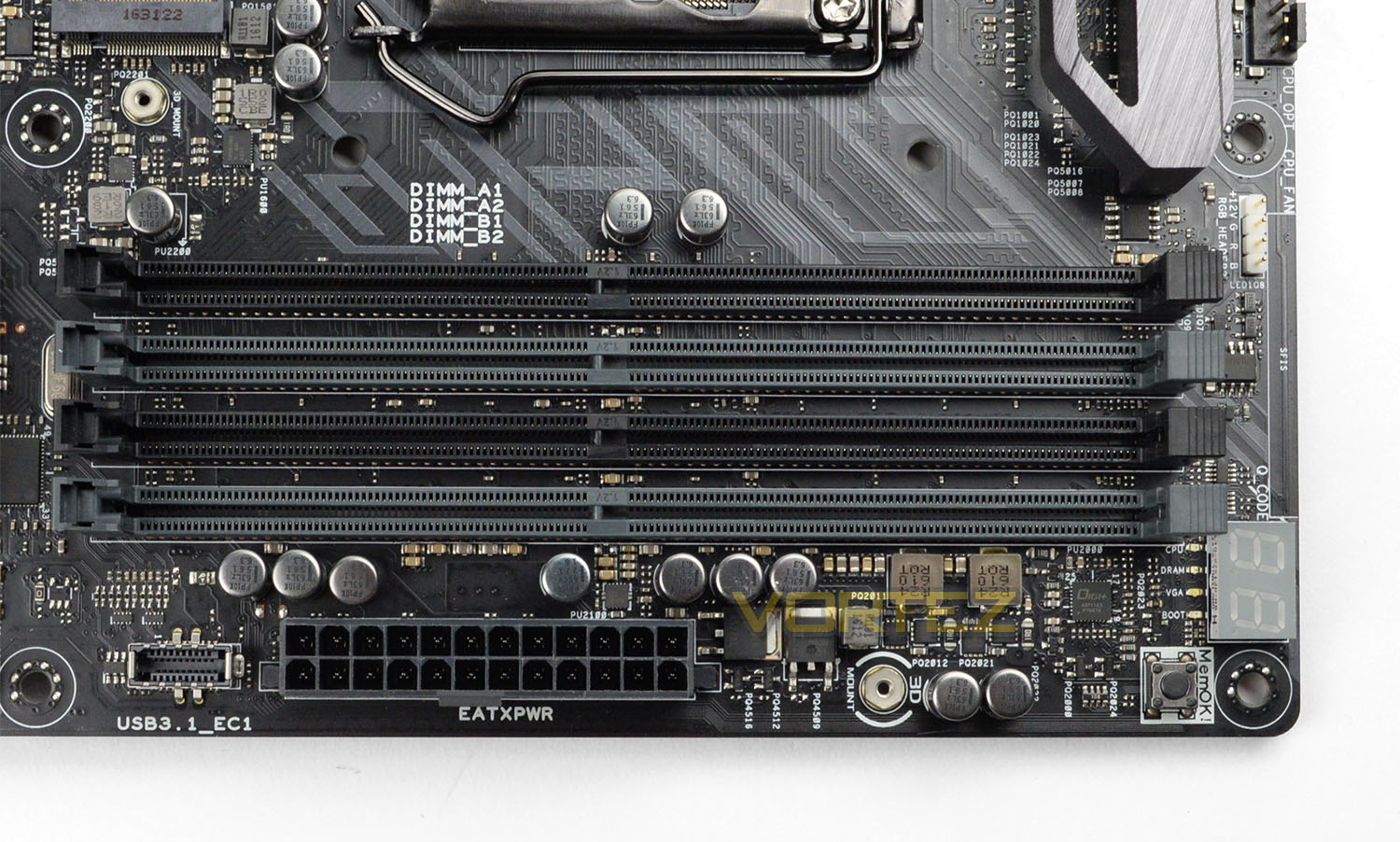
Viewing the memory region, there are four slots for dual channel DDR4 and there is support for up to 64GB and 4133MHz kits. Few boards manage to stretch beyond 3800MHz so this is an option to look out for if you’re intending to use a high frequency kit.
ROG has decided to shy away from any steel reinforcement for the memory slots – perhaps this indicates that such a feature found on rival boards is just a gimmick.
Dotted around the memory we have a series of additional features which should serve up some useful functionality. These features are as follows:
• RGB header – for use with LED strips and Aura software
• LED Debug – for diagnostics on POST
• Diagnostic LEDs – quick diagnosis of malfunction of CPU, VRAM, VGA or HDD.
• MemOK! – ensures enhanced compatibility for troublesome memory
• 3D Mount – one of many to allow 3D object to be fitted
• USB 3.1 header – USB 3.1 functionality for the front panel of the case
While many vendors and boards are still opting for USB 3.0 headers, Hero jumps into the spotlight with support for USB 3.1 – though there may not be many cases supporting this yet, it’s great to see such a board futureproofing the user.
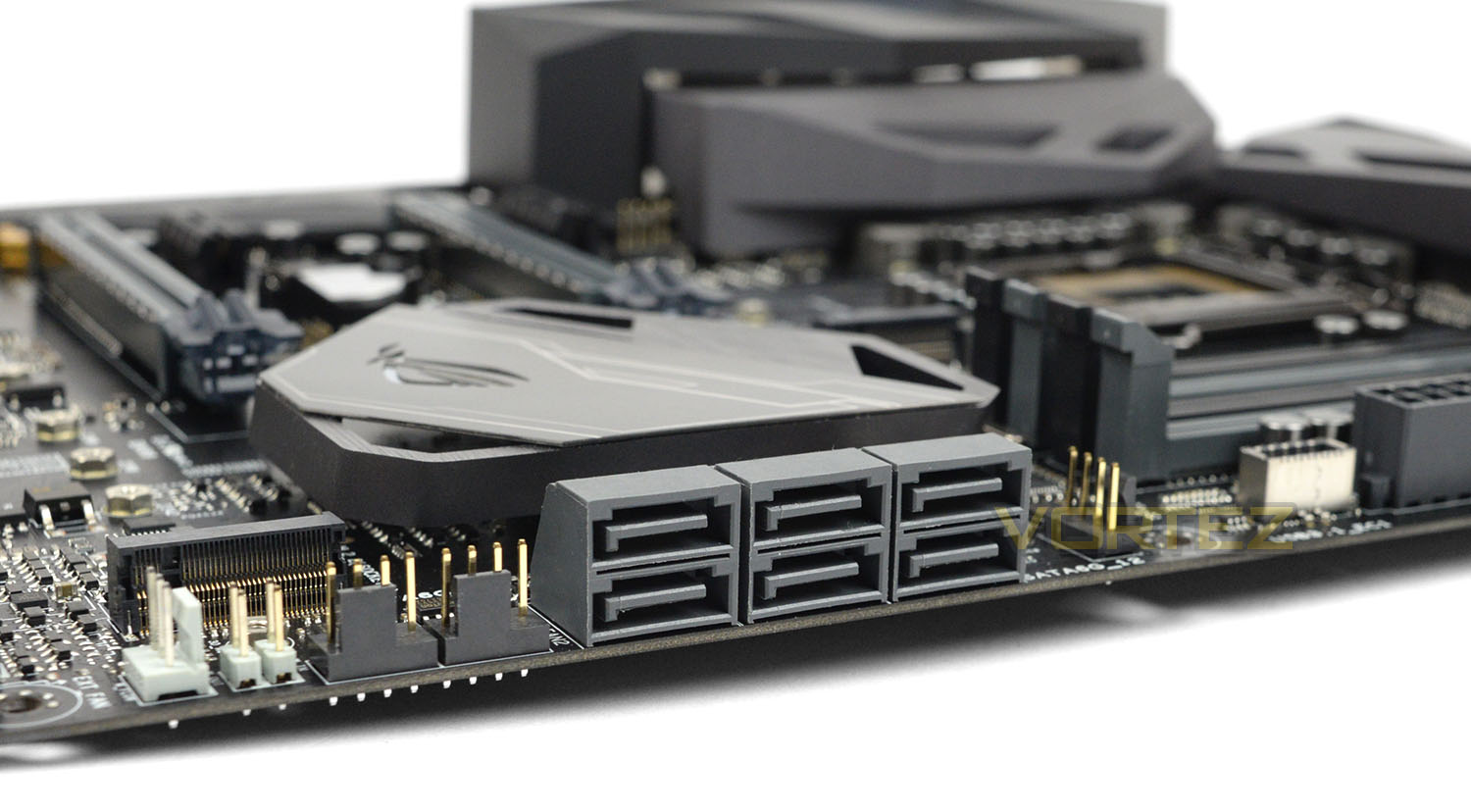
Where we saw strong emphasis on SATA Express on the ASUS Intel 100-Series, ASUS are now stepping away from this standard as it doesn’t appear to have really gained any momentum. Instead, the focus is on SATA and M.2. Hero supplies us with:
• 6x SATA 3 (6GB/s) ports
• 2x M.2 (PCIe 3.0 x4 with Intel Optane Memory support)
Although we have plenty of SATA support, it surprising to see a high-end ROG motherboard without any U.2 ports. In fact, looking at the flagship models in this range which cost double the price, there are no U.2 ports found on these boards either. So, it seems that SATA-Express isn’t the only standard being abandoned by ASUS.
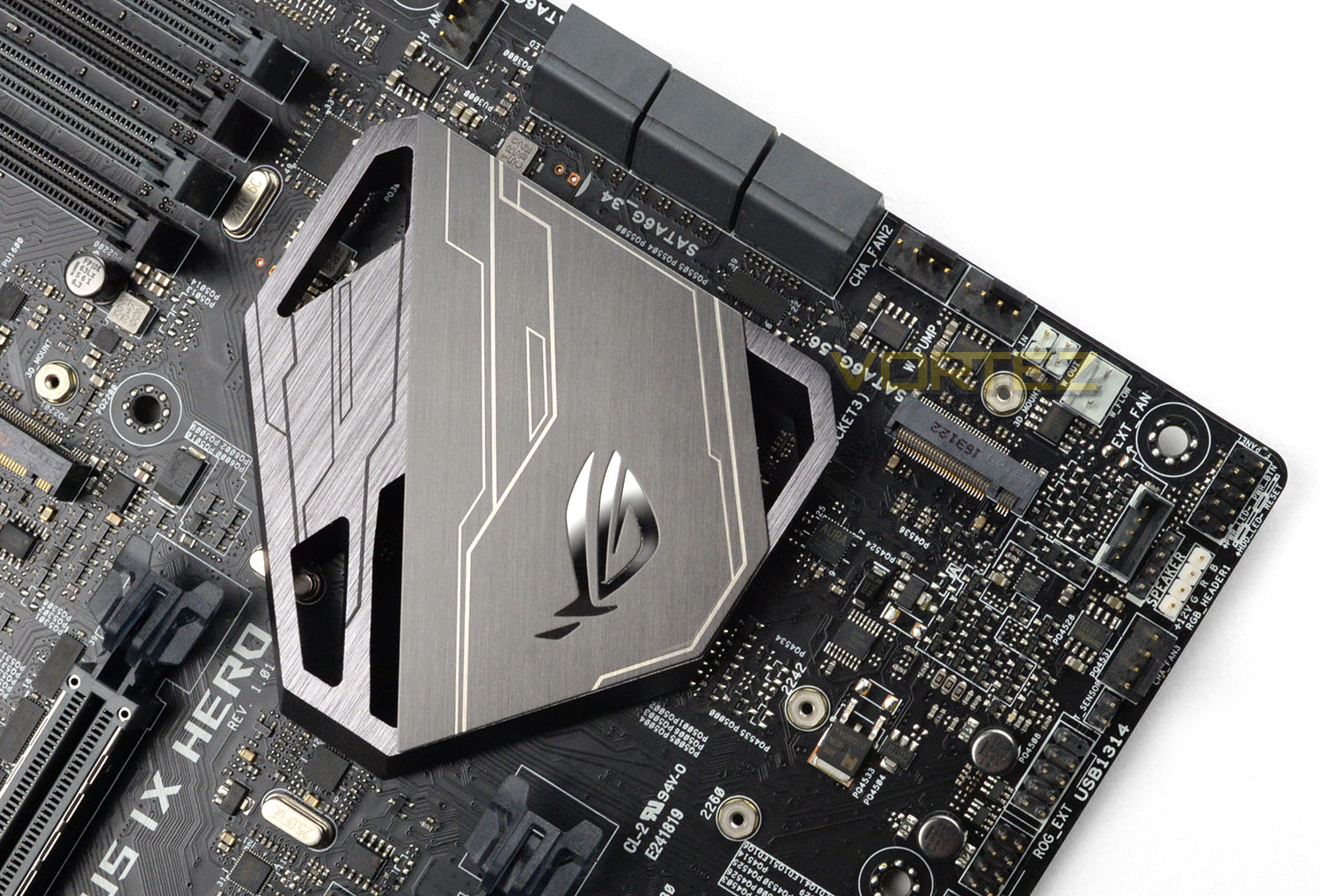
Behind all the storage ports we have a substantial heatsink sitting on top of the Intel Z270 chip. This heatsink has a lovely gunmetal finish, is again, hollowed-out and features the ROG logo which illuminates once the board has power.
Running along the bottom of the board there is another RGB header – this again, allows LED strips to be connected to the board for use in your computer chassis. All of the lighting can be controlled using the Aura software.
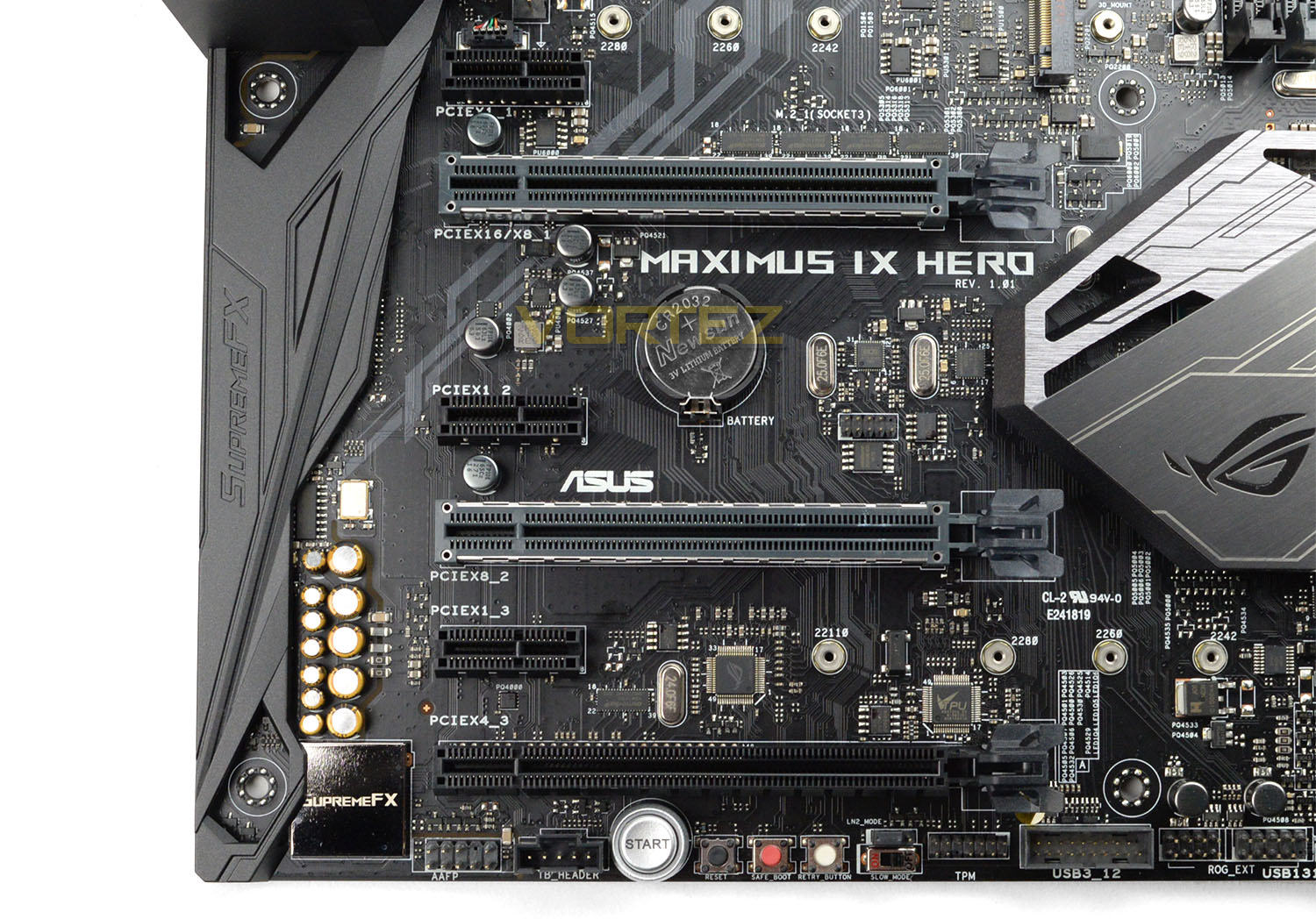
Moving over the PCI Express department, we have the following available:
• 3x PCI Express 3.0 X16
• 3x PCI Express 3.0 X1
The modes for each of the PCI Express X16s are: x16, x8, x4. So, if you are intending to use just one graphics card the top slot is the best one to go with. The two upper-most PCI Express 3.0 X16s have been given what ASUS term “Safe Slot”. The slots are strengthen with metal plates to provide durability and prevent sustained pressure being applied to the plastic – which is a great idea since high-end graphics cards are large and heavy.
At the bottom of Hero – running along the bottom-edge we have onboard power (START), reset, safeboot, retry and slow-mode switches.
Safeboot powers the system into safe mode (a handy tool to have if on the test bench) and retry button forces a hard reboot.
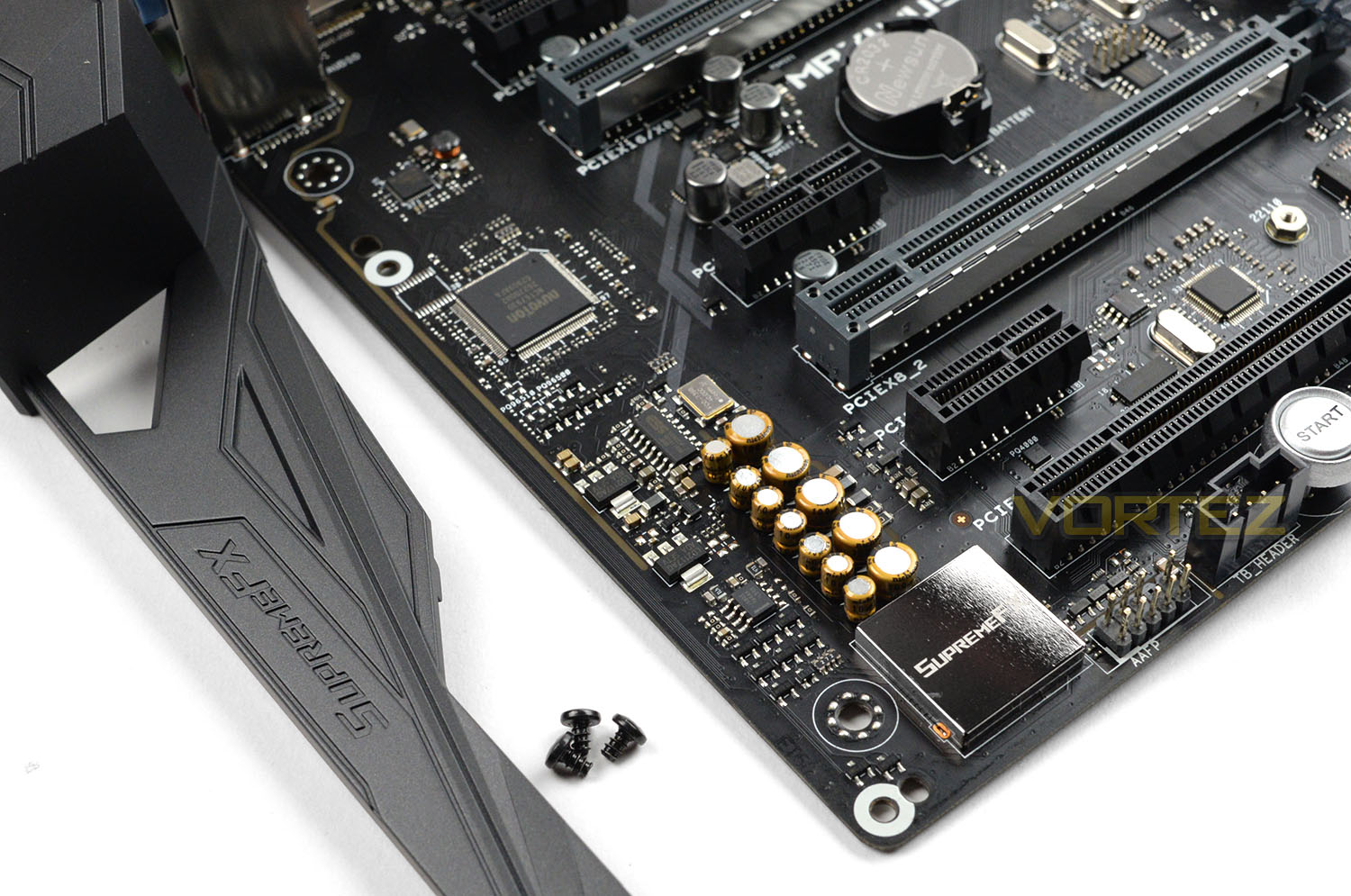
ROG’s renowned SupremeFX makes a return to the 200-Series with an improved codec by way of the new Realtek ALC 1220 – delivering 10 DAC channels and 7.1 playback.
All of the components are isolated and include Nichicon CAPs, switching mosfets, ESS9023P DAC. The finer details of the audio can be modified using Sonic Studio III which allows users to create their own profiles for different applications.
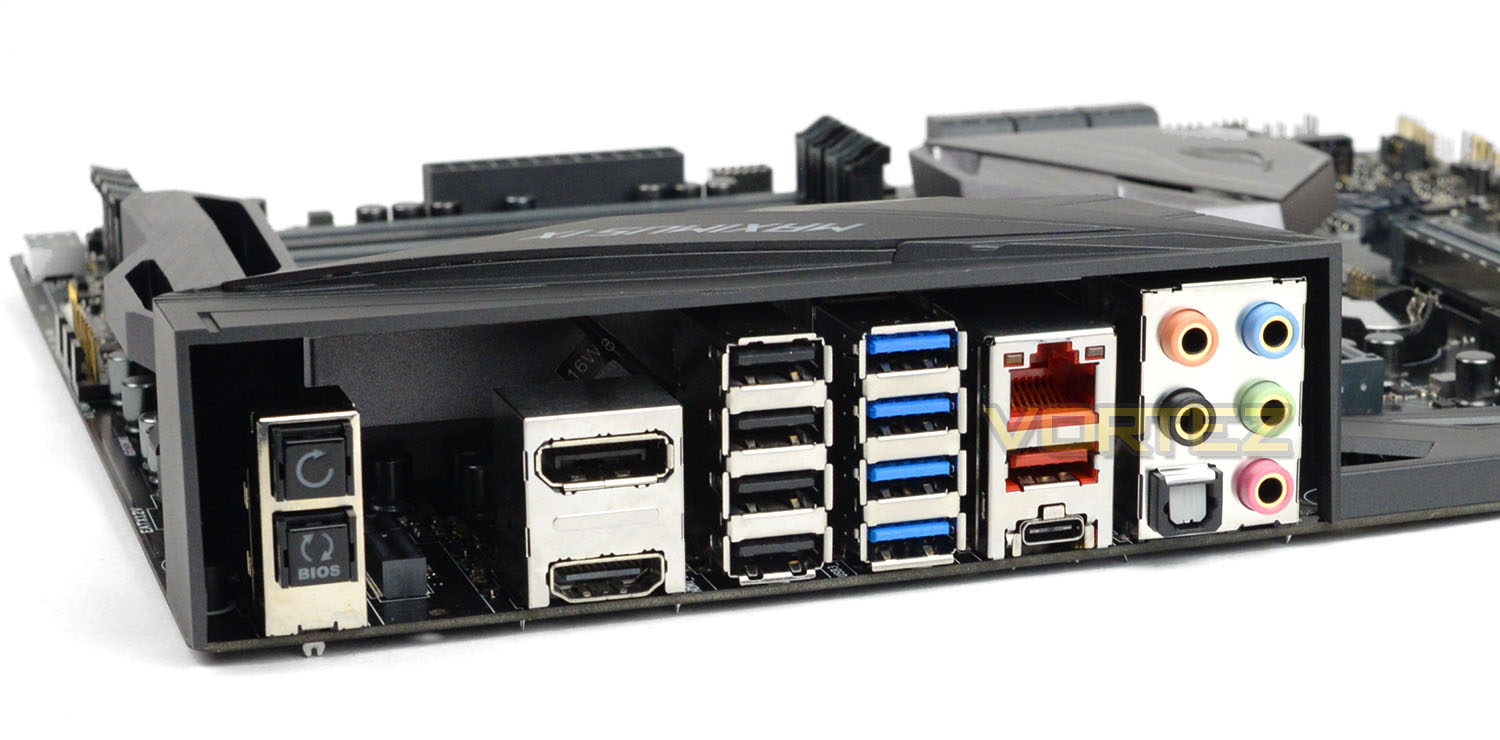
Last of all, we come to the Rear IO section which hosts quite a large selection of ports. Included here we have:
• 1 x DisplayPort 1.2
• 1 x HDMI 1.4
• 1 x LAN (Gigabit LAN via Intel i219 – with Languard protection)
• 1 x USB 3.1 (black)Type-C
• 1 x USB 3.1 (red)Type-A
• 4 x USB 3.0 (blue)
• 4 x USB 2.0 (one port can be switched to USB BIOS Flashback)
• 1 x Optical S/PDIF out
• 1 x Clear CMOS button(s)
• 1 x USB BIOS Flashback Button(s)
The back panel delivers a bit of disappointment which is two-fold. First of all, the video out ports aren’t using the latest standard. HDMI 1.4 and Displayport 1.2 are included but there are rival Z270 boards which offer HDMI 2.0 and/or Displayport 1.4. The newer standards support larger frame/refresh rates.
The other matter is the inclusion of so many USB 2.0/3.0 and just two USB 3.1 ports. Comparing this newer Maximus IX Hero to the previous generation Maximus VIII Hero we actually gain no extra USB 3.1 on this back panel – we just have additional USB 2.0/3.0. The extra ports will be useful but next-gen is surely the objective with a fresh new chipset.
Test Setup & Overclocking
Test Setup
CPU Intel Core i7-7700K
Cooling Corsair H100i GTX
Motherboard ASUS Maximus IX Hero
Memory 16GB Corsair Vengeance LPX 3000MHz
Graphics GIGABYTE GTX 1080 G1 Gaming
Storage Corsair Force LX 512GB
PSU Corsair HX1050 80 Plus Gold Certified PSU
Monitor AOC U2879VF
Capture Device Epiphan AV.iO 4K
Cooling Corsair H100i GTX
Motherboard ASUS Maximus IX Hero
Memory 16GB Corsair Vengeance LPX 3000MHz
Graphics GIGABYTE GTX 1080 G1 Gaming
Storage Corsair Force LX 512GB
PSU Corsair HX1050 80 Plus Gold Certified PSU
Monitor AOC U2879VF
Capture Device Epiphan AV.iO 4K
Benchmarks
Cinebench R15 – CPU/OpenGL Score
x264 HD 4.0 – 1st and 2nd pass encoding
SiSoftware SANDRA – CPU & Memory benchmarks
POV-RAY – CPU benchmarks
TrueCrypt – CPU benchmarks
AIDA64 – CPU benchmarks & Memory
PCMark 8 – Home Suite & Photoshop
3DMark FireStrike – 3D Benchmark
Games – Civilization IV & Total War: WARHAMMER
x264 HD 4.0 – 1st and 2nd pass encoding
SiSoftware SANDRA – CPU & Memory benchmarks
POV-RAY – CPU benchmarks
TrueCrypt – CPU benchmarks
AIDA64 – CPU benchmarks & Memory
PCMark 8 – Home Suite & Photoshop
3DMark FireStrike – 3D Benchmark
Games – Civilization IV & Total War: WARHAMMER
Other Software
Temperature Analysis: Real Temp
Stress Testing Software: AIDA64 Stability Test
CPU Specification Monitoring: CPU-Z
Stress Testing Software: AIDA64 Stability Test
CPU Specification Monitoring: CPU-Z
Overclocking
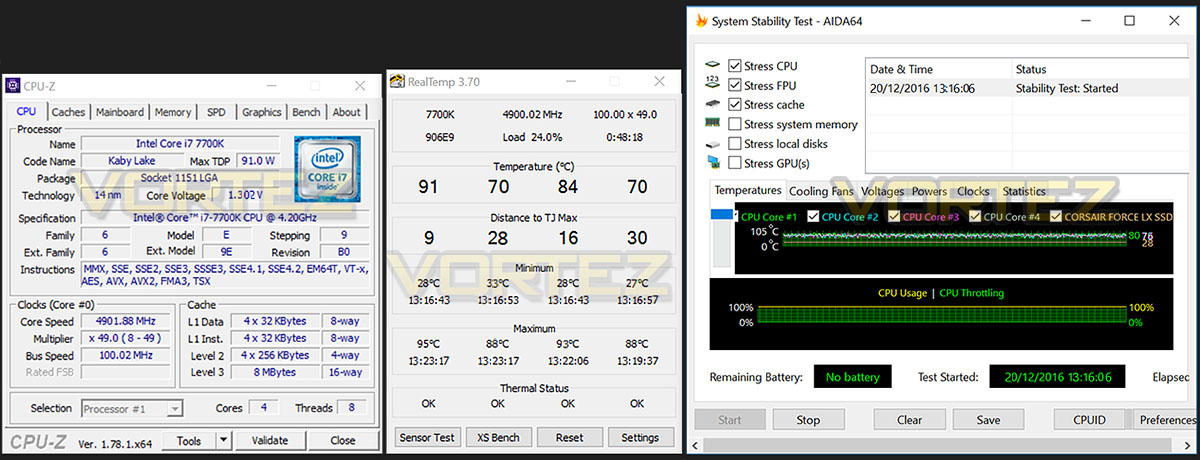
Like previous generations, the Intel Core i7-7700K (Kabylake) is unlocked and also has flexible attributes in terms of the BCLK and ratio/multiplier. This makes the job of overclocking much easier.
Our current milestone is 4.9GHz with the Intel Core i7-7700K – not only were we able to achieve this frequency but we were also able to drive down the CPU voltage to its lowest at 1.3v. Other motherboards require more voltage through the CPU to gain stability at 4.9GHz. With a lower voltage, we can enjoy lower temperatures too. Various safety features and LLC were tweaked to arrive at this result.
Benchmarks: Power Consumption
It’s interesting to note the power consumption across all motherboards. Although they are using the Z270 chipset, energy results can fluctuate between manufacturers due to the features and specifications that are integrated. First of all, for the idle tests the system is cold booted into Windows and no additional applications are executed – the watts are noted on the external energy monitor we use and then the system is loaded with 3DMark FireStrike – watts are again monitored for the duration of the test and the highest rated wattage result is then noted down. Below are the results of this energy test.
Benchmarks: Cinebench R15
CINEBENCH is a real-world cross platform test suite that evaluates your computer’s performance capabilities. CINEBENCH is based on MAXON’s award-winning animation software CINEMA 4D, which is used extensively by studios and production houses worldwide for 3D content creation. MAXON software has been used in blockbuster movies such as Iron Man 3, Oblivion, Life of Pi or Prometheus and many more.
Benchmarks: X264 HD
Simply put, this test measures how fast your machine can encode a short, DVD quality MPEG-2 video clip into a high-quality x264 video clip. What’s x264, you ask? It’s more or less the next-generation Xvid/DivX codec. I think it’s ideal for a benchmark because the application (x264.exe) reports fairly accurate compression results (in frames per second) for each pass of the video encoding process, and it uses multi-core processors very efficiently.
Benchmarks: SiSoftware SANDRA
SANDRA isn’t always a benchmark that is included in hardware reviews but we believe it shouldn’t be ignored. SANDRA provides a vigorous package that tests your system in a rather large array of benchmarks. There are many aspects of benchmark that can be executed. We will be considering – CPU and memory tests.
Benchmarks: POV-RAY
Persistence of Vision Raytracer’s PovRay is a free and open source 3D animator application with versions for computers with different operating systems.
This product allows users to build their custom 3D worlds with excellent quality despite their computer’s hardware. It has adjustable options for levels of radiance, refraction, and reflection. Calculation time may vary depending on the computer model, but PovRay can adapt to many computer builds, and is supported by the open source community.
This product allows users to build their custom 3D worlds with excellent quality despite their computer’s hardware. It has adjustable options for levels of radiance, refraction, and reflection. Calculation time may vary depending on the computer model, but PovRay can adapt to many computer builds, and is supported by the open source community.
Benchmarks: TrueCrypt
TrueCrypt is a discontinued source-available freeware utility used for on-the-fly encryption (OTFE). It can create a virtual encrypted disk within a file or encrypt a partition or (under Microsoft Windows except Windows 8 with GPT) the entire storage device (pre-boot authentication).
Benchmarks: AIDA64
AIDA64 Product PageThis simple integer benchmark focuses on the branch prediction capabilities and the misprediction penalties of the CPU. It finds the solutions for the classic “Queens problem” on a 10 by 10 sized chessboard. At the same clock speed theoretically the processor with the shorter pipeline and smaller misprediction penalties will attain higher benchmark scores. For example — with HyperThreading disabled — the Intel Northwood core processors get higher scores than the Intel Prescott core based ones due to the 20-step vs 31-step long pipeline. CPU Queen test uses integer MMX, SSE2 and SSSE3 optimizations.
Benchmarks: PCMark 8
PCMark 8 combines performance benchmarking with battery life measurement and includes tests based on popular Adobe and Microsoft applications. Whether you are looking for long battery life, or maximum power, PCMark 8 will help you find the devices that offer the perfect combination of efficiency and performance for your needs. It’s the complete PC performance benchmark for home and business.
Benchmarks: PCMark 8 Photoshop
The PCMark 8 Applications benchmark measures system performance using popular applications from the Adobe Creative Suite and Microsoft Office. You can choose which tests to run based on the applications installed on your system. Each test automatically steps through a series of actions such as opening, editing and saving a file. The results are used to calculate the PCMark 8 Applications scores for the system.
Benchmarks: 3DMark
3DMark FireStrike Product PageFire Strike is our new showcase DirectX 11 benchmark designed for high-performance gaming PCs. It is our most ambitious and technical benchmark ever, featuring real-time graphics rendered with detail and complexity far beyond what is found in other benchmarks and games today. Fire Strike will only be available in the Windows editions of 3DMark initially.
Benchmarks: Civilization IV & Total War: WARHAMMER
It’s important for us to perform a number of game benchmarks as well as the synthetic tests because gamers will want to know if there are any significant benefits. So here we have two recent gaming titles which are heavily CPU-based. For this test we remove the graphics card and rely on the integrated graphics from the Core i7-7700K.
Conclusion
We’re left with quite a large volume of motherboards after ASUS ROG team extended their portfolio to now include STRIX products and so there should be an offering to satisfy all users out there; especially those with an affinity for all things ROG!
While the Maximus IX Hero is at the bottom of the performance stack it still has a wealth to offer in terms of visual appearance, features and performance. Casting an eye over the expanse of our ROG motherboard we have an appealing matt PCB with well-crafted heatsinks bearing a gunmetal finish. The aesthetics alone will form the basis for a visually attractive system and pairing up other hardware should be fairly easy too.
Compared to other Intel Z270 motherboards, Hero is low key when we consider LED lighting. There may be twin RGB headers to add LED strips to your chassis but as far as on-board LEDs go, ASUS hasn’t got carried away in the current lighting craze which seems to be touching every conceivable product nowadays. What we do have is the inclusion of a USB 3.1 header which many vendors are choosing to omit. There may not be many computer cases supporting USB 3.1 at the moment but this is certain to change and by having this feature integrated, Hero is futureproof and can take advantage when this becomes mainstream.
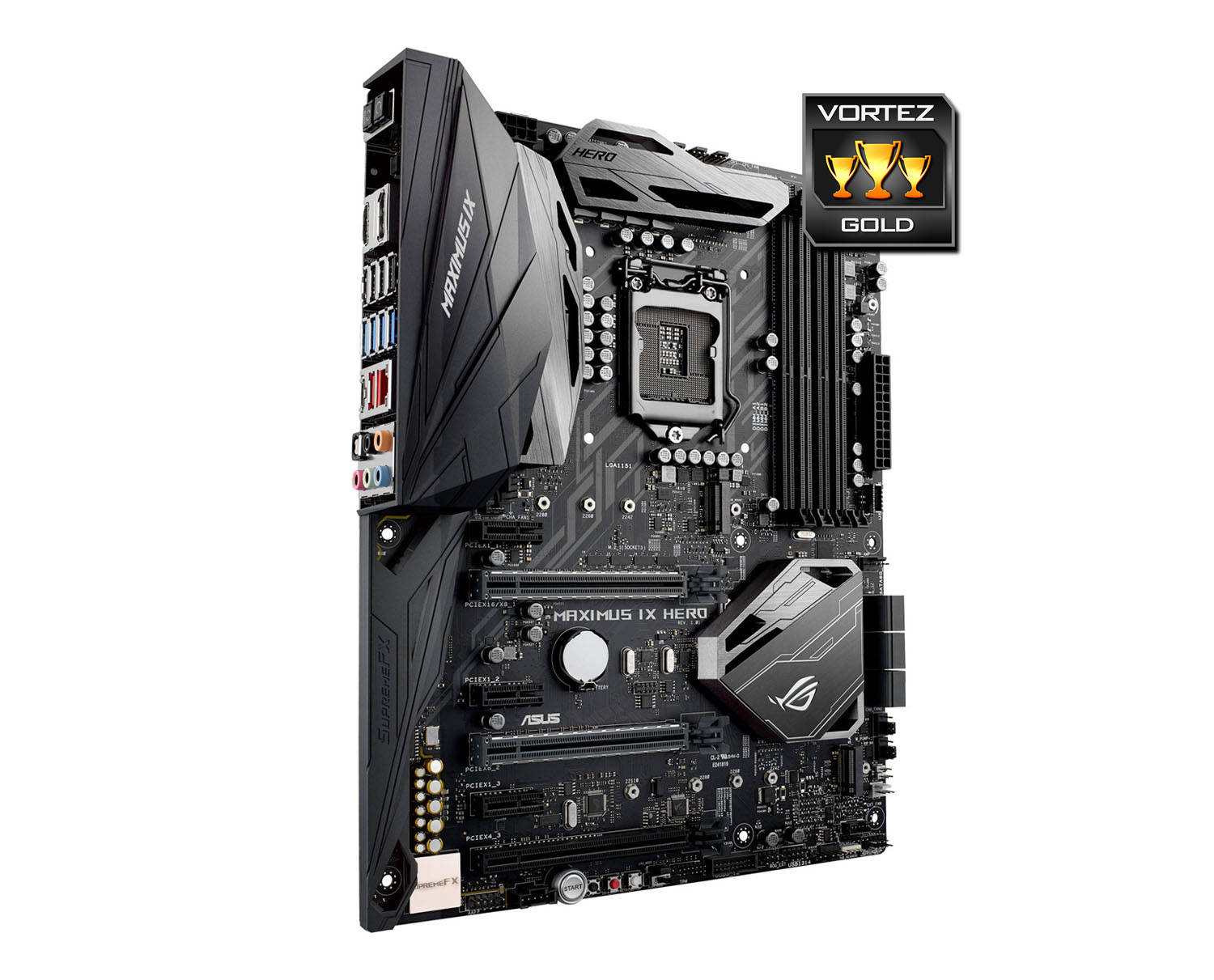
Dipping into the performance – we experienced a resilient offering in the Maximus IX Hero. This motherboard performs consistently across a wide range of situations and benchmarks. Reliability and performance are certainly something to be confident about and this is further strengthened by the overclocking result – which realised a 4.9GHz overclock to our Intel Core i7-7700K. While this is our current milestone and has been met by various other models, Hero was able to achieve this result with the lowest voltage compared to other Intel Z270 motherboards. This, therefore proving how capable the ASUS Digi+ power delivery system really is.
For those wanting to squeeze the most out of Intel’s new Kaby Lake, Hero is an option which creates a great platform to achieve such results. Dotted around the board there are additional, trademark ROG-features which take the user experience beyond the average and mundane. That being said, we were disappointed that others are supplying HDMI 2.0 and Displayport 1.4 but this motherboard supplies HDMI 1.4 and Displayport 1.2 – this may not affect some users but the newer standard is something which should be offered for the added benefit of higher resolution/framerate. We also felt the heavy presence of USB 2.0/3.0 on the back panel should have been minimized somewhat in favour of USB 3.1. Comparing the back panel to last year’s Maximus VIII Hero reveals no extra USB 3.1 – just the same quantity and alternatively more USB 2.0/3.0.
Maximus IX Hero is priced at £260 GBP @ CCL Computers in the UK and $229 in the US – which is a large amount of cash to put down on a mainstream/performance motherboard. At this price, we’re in same realms as the Intel X99 chipset and the High-End Desktop platform. As we stretch beyond the £200 – $200 mark there are only a few things which warrant the premium, these often boil down to features like dual x16 mode, extended overclocking features and multiple storage solutions. In light of this we feel the cost (especially in the UK) should be lowered
The ROG Maximus IX Hero is another visual masterpiece and thankfully it isn’t just style over substance either. Throughout this board we have a solid lineup of enthusiast-grade features which mark this solution out as a great choice.
Pros
+ Desirable monochrome theme
+ Features twin RGB headers
+ Excellent performance
+ Excellent for overclocking
+ Arrives with USB 3.1 header
+ Uses strengthened PCI Express slots
+ Extra advanced/overclocking buttons
+ Plenty of fan headers
+ Features dual-M.2
+ Capable audio solution
Cons
– HDMI 1.4 rather than 2.0
– Lack of USB 3.1 on back panel
– No U.2 ports
+ Desirable monochrome theme
+ Features twin RGB headers
+ Excellent performance
+ Excellent for overclocking
+ Arrives with USB 3.1 header
+ Uses strengthened PCI Express slots
+ Extra advanced/overclocking buttons
+ Plenty of fan headers
+ Features dual-M.2
+ Capable audio solution
Cons
– HDMI 1.4 rather than 2.0
– Lack of USB 3.1 on back panel
– No U.2 ports
Click here for an explanation of our awards at Vortez.net.