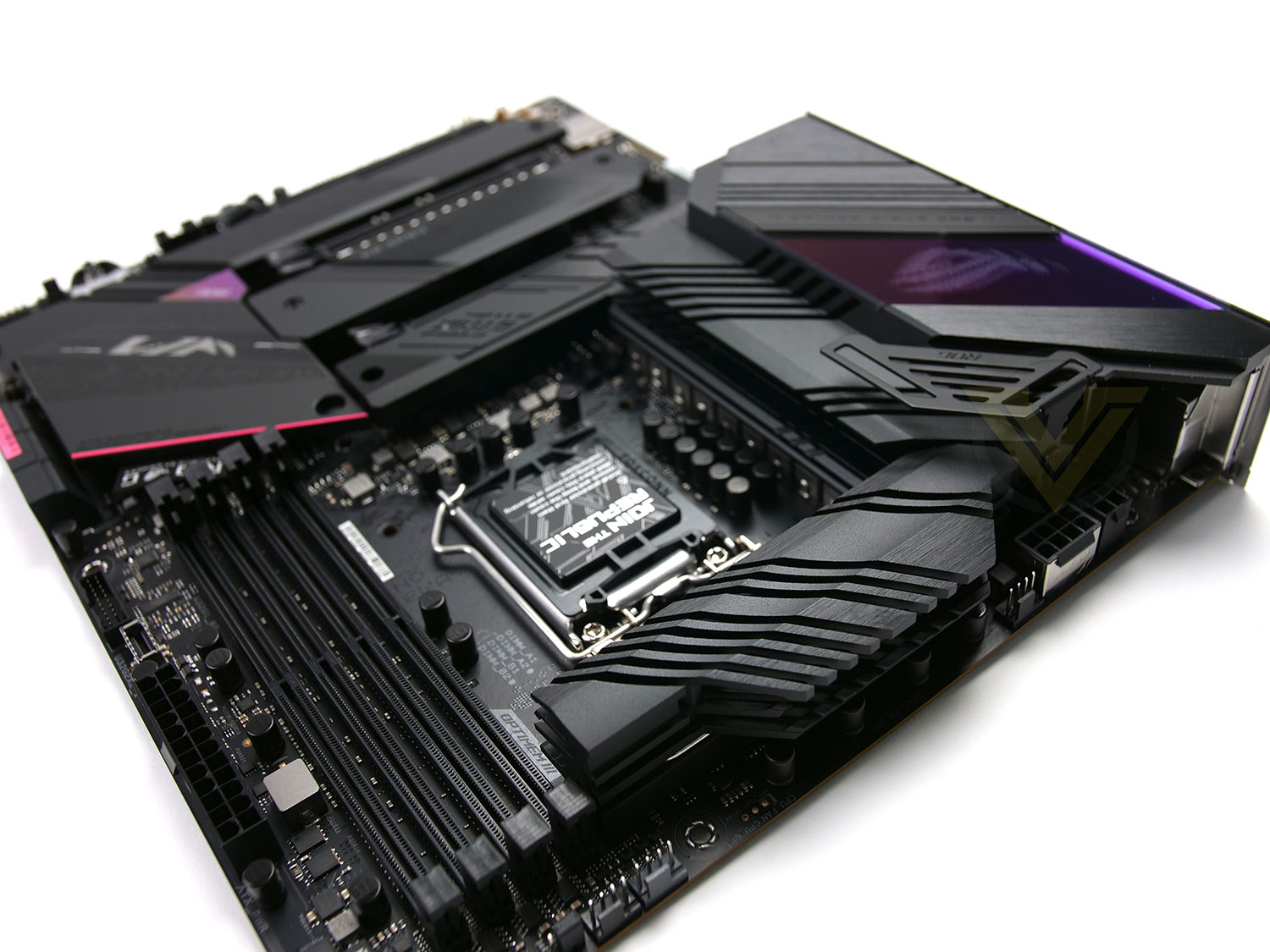
Touted as one of ROG’s flagship Intel Z590 motherboards, the STRIX Z590-E Gaming WiFi is laden with some brilliant features. Will it entice a move to Intel’s 11th Gen platform?

Product on Review: ROG STRIX Z590-E Gaming WiFi
Manufacturer: ASUS Republic of Gamers
Street Price: GBP £339 | USD $380 | AUD $550
In the aftermath of the Intel 11th Gen. launch, we’re left with a multitude of Intel Z590 motherboards to examine. To take full advantage of Rocket Lake, it is advised to indulge in one of these new motherboards so that the very latest tech/features are available.
Although the ROG STRIX Z590-E Gaming WiFi is defined as ROG’s flagship (in their own words) this motherboard isn’t their top-of-the-line model, with a number of other boards being above it in the stack. Nevertheless, the Z590-E Gaming WiFi is a high-performance solution which is jam-packed with a plethora of features including 4x M.2 Slots, 2x PCIe 4.0 X16 slots, and of course, WiFi 6E.
This motherboard looks the business, but does it deliver on features and performance? Let’s find out!
ASUS on their ROG STRIX Z590-E WiFi
The flagship ROG Strix Z590-E Gaming WiFi motherboard is designed with boosted power delivery and optimized cooling to cope with the demands of powerful 11th Generation Intel® Core™ Rocket Lake processors. Along with the latest Intel® Wi-Fi 6E and PCI Express® 4.0 M.2 for superfast transfer speeds and storage, Strix Z590-E Gaming WiFi features Two-Way AI Noise Cancelation to ensure clear communication in any scenario. This powerhouse of a motherboard is wrapped in a futuristic look that’s highlighted with a brushed-metal finish, iridescent ROG logo on the I/O shroud, and Aura Sync illumination.
Technical Specifications
Below are the technical specifications concerning the STRIX Z590-E Gaming WiFi:
CPU
Intel 10th and 11th Generation Core Processors
Chipset
Intel Z590 Chipset
Memory
DDR4 5333-2133 MHz Non-ECC, Un-buffered Memory*
Dual Channel Memory Architecture
Supports Intel® Extreme Memory Profile (XMP)
Graphics
1 x HDMI 2.0
1x DP 1.4
Expansion Slots
3x PCIe x16 slots (x16, x8, x4)
– 2x PCIe 4.0 + 1x PCIe 3.0
Multi-GPU Support
Supports 2-Way NVIDIA® SLI™ Technology
Storage
6x SATA 6Gb/s ports (from Z590 chipset)
4x M.2 slots (Key M) (2x PCIe 4.0 x4 and 2x PCIe 3.0 x4)
Ethernet
1x Intel® I225V 2.5Gbps LAN controller
Wireless & Bluetooth
2×2 Tri-Band Intel Wi-Fi a/b/g/n/ac/ax/az + BT5.2
USB
1 x USB 3.2 Gen 2×2 port(s) (1 x USB Type-C®)
3 x USB 3.2 Gen 2 port (2 x Type-A, 1 x USB Type-C® )
4 x USB 3.2 Gen 1 port (4 x Type-A)
2 x USB 2.0 port(s) (2 x Type-A)
Front USB: Total 7 ports
1 x USB 3.2 Gen 2×2 connector(s) (suppport(s) USB Type-C®)
1 x USB 3.2 Gen 1 header(s) support(s) additional 2 USB 3.2 Gen 1 ports
2 x USB 2.0 header(s) support(s) additional 4 USB 2.0 ports
Audio
– SupremeFX Shielding Technology
– ALC4080 + Savitech SV3H712 AMP
– Gold-plated audio jacks
– Rear optical S/PDIF out port
– Premium Japanese audio capacitors
– Audio cover
Back Panel I/O Ports
1 x USB 3.2 Gen 2×2 port (1 x USB Type-C®)
3 x USB 3.2 Gen 2 port(s) (2 x Type-A, 1 x USB Type-C® )
4 x USB 3.2 Gen 1 port(s) (4 x Type-A)
2 x USB 2.0 port(s) (2 x Type-A)
1 x HDMI™ port
1 x DisplayPort
1 x Intel® Wi-Fi 6E
2 x Intel® I225-V 2.5Gb Ethernet
5 x Gold-plated audio jacks
1 x Optical S/PDIF out port
1 x BIOS FlashBack™ button
1 x Clear CMOS button
Accessories
4 x SATA 6Gb/s cables
1 x Assistant fan (40mm)
1 x Screw package for cooling kit
1 x ASUS 2×2 Dual-Band Wi-Fi moving antennas
1 x M.2 Q-Latch package
2 x M.2 Rubber Packages
1 x ROG key chain
1 x cable tie
1 x ROG Graphics card holder
1 x ROG STRIX stickers
1 x ROG STRIX thank you card
1 x Support DVD
1 x User manual
Operating System
Windows 10 64bit
Form Factor
ATX 12 inch x 9.6 inch ( 30.5 cm x 24.4 cm )
Intel 10th and 11th Generation Core Processors
Chipset
Intel Z590 Chipset
Memory
DDR4 5333-2133 MHz Non-ECC, Un-buffered Memory*
Dual Channel Memory Architecture
Supports Intel® Extreme Memory Profile (XMP)
Graphics
1 x HDMI 2.0
1x DP 1.4
Expansion Slots
3x PCIe x16 slots (x16, x8, x4)
– 2x PCIe 4.0 + 1x PCIe 3.0
Multi-GPU Support
Supports 2-Way NVIDIA® SLI™ Technology
Storage
6x SATA 6Gb/s ports (from Z590 chipset)
4x M.2 slots (Key M) (2x PCIe 4.0 x4 and 2x PCIe 3.0 x4)
Ethernet
1x Intel® I225V 2.5Gbps LAN controller
Wireless & Bluetooth
2×2 Tri-Band Intel Wi-Fi a/b/g/n/ac/ax/az + BT5.2
USB
1 x USB 3.2 Gen 2×2 port(s) (1 x USB Type-C®)
3 x USB 3.2 Gen 2 port (2 x Type-A, 1 x USB Type-C® )
4 x USB 3.2 Gen 1 port (4 x Type-A)
2 x USB 2.0 port(s) (2 x Type-A)
Front USB: Total 7 ports
1 x USB 3.2 Gen 2×2 connector(s) (suppport(s) USB Type-C®)
1 x USB 3.2 Gen 1 header(s) support(s) additional 2 USB 3.2 Gen 1 ports
2 x USB 2.0 header(s) support(s) additional 4 USB 2.0 ports
Audio
– SupremeFX Shielding Technology
– ALC4080 + Savitech SV3H712 AMP
– Gold-plated audio jacks
– Rear optical S/PDIF out port
– Premium Japanese audio capacitors
– Audio cover
Back Panel I/O Ports
1 x USB 3.2 Gen 2×2 port (1 x USB Type-C®)
3 x USB 3.2 Gen 2 port(s) (2 x Type-A, 1 x USB Type-C® )
4 x USB 3.2 Gen 1 port(s) (4 x Type-A)
2 x USB 2.0 port(s) (2 x Type-A)
1 x HDMI™ port
1 x DisplayPort
1 x Intel® Wi-Fi 6E
2 x Intel® I225-V 2.5Gb Ethernet
5 x Gold-plated audio jacks
1 x Optical S/PDIF out port
1 x BIOS FlashBack™ button
1 x Clear CMOS button
Accessories
4 x SATA 6Gb/s cables
1 x Assistant fan (40mm)
1 x Screw package for cooling kit
1 x ASUS 2×2 Dual-Band Wi-Fi moving antennas
1 x M.2 Q-Latch package
2 x M.2 Rubber Packages
1 x ROG key chain
1 x cable tie
1 x ROG Graphics card holder
1 x ROG STRIX stickers
1 x ROG STRIX thank you card
1 x Support DVD
1 x User manual
Operating System
Windows 10 64bit
Form Factor
ATX 12 inch x 9.6 inch ( 30.5 cm x 24.4 cm )
Board layout, features and RGB
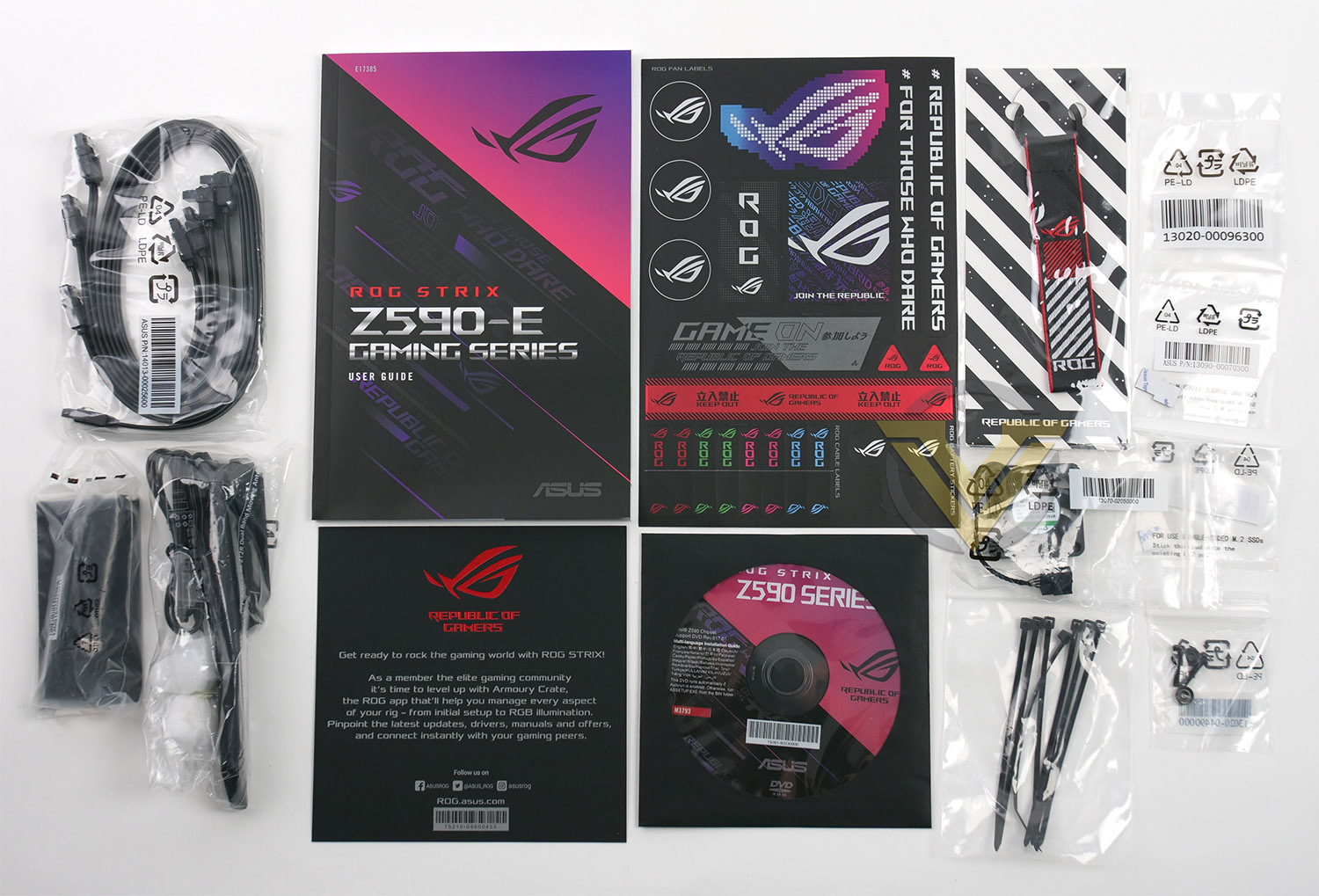
Being a high performance model from ROG, the E has quite a few accessories included. Here they are: :
4 x SATA 6Gb/s cables
1 x Assistant fan (40mm)
1 x Screw package for cooling kit
1 x ASUS 2×2 Dual-Band Wi-Fi moving antennas
1 x M.2 Q-Latch package
2 x M.2 Rubber Packages
1 x ROG key chain
1 x cable tie
1 x ROG Graphics card holder
1 x ROG STRIX stickers
1 x ROG STRIX thank you card
1 x Support DVD
1 x User manual
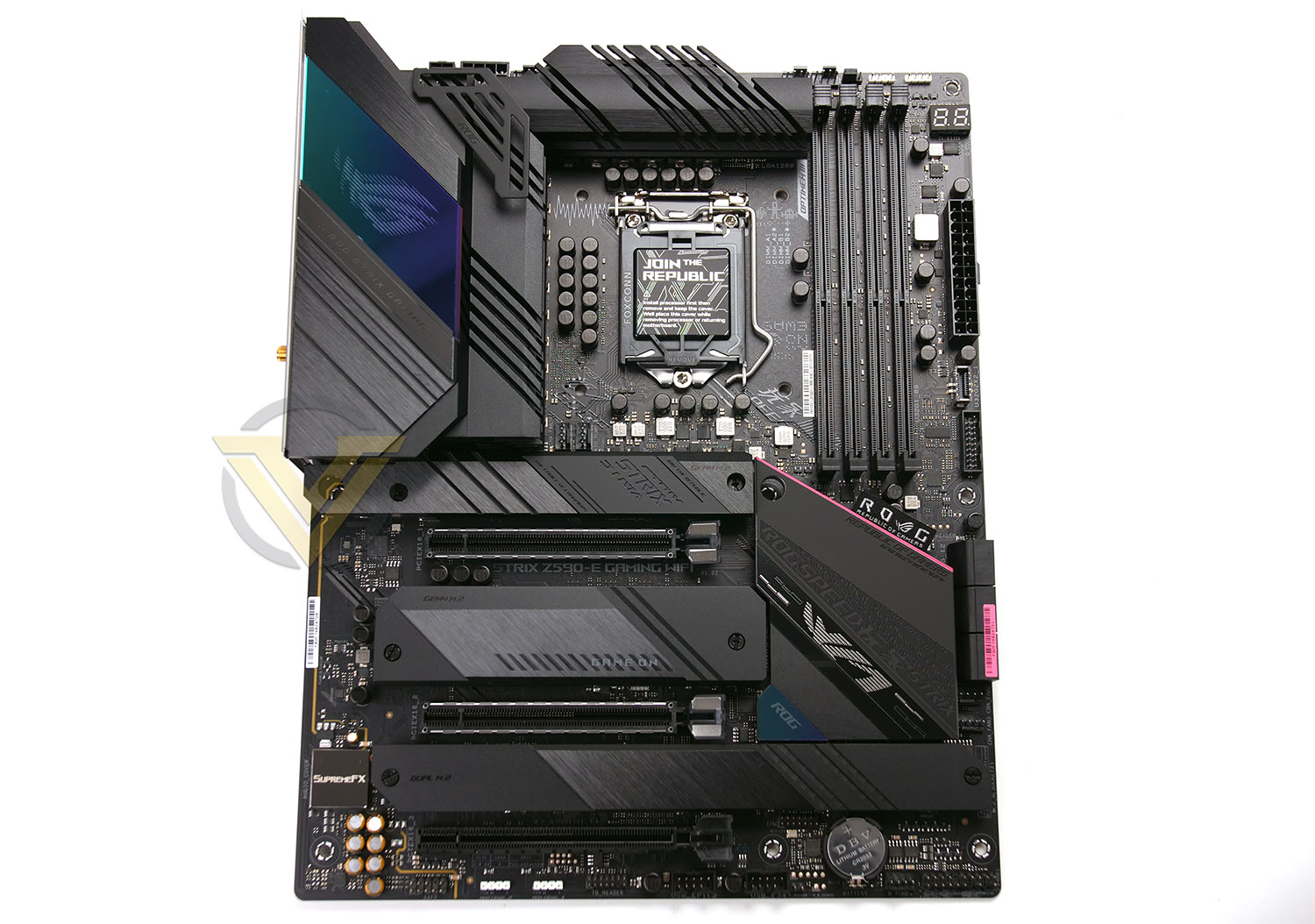
E conforms to the ATX form factor and follows a traditional layout. Compared to other STRIX motherboard bearing the Z590 chipset, E has very similar styling.
Being a Z590 motherboard, we have support for the Intel 11th Gen. Processors (as well as support for 10th Gen. too) with LGA1200. E comes in with a 14 + 2 digital phase design with alloy chokes and black solid caps throughout. Two large heatsinks cover the mosfets and ROG has included a fan in the accessories pack to amplify the cooling ability. Behind the heatsinks there are two CPU power connectors which utilise “Pro Cool II” – steel pins and reinforcement. The connectors here come in the form of an 8+4pin.
There are 8x 4-pin fan headers spread out at the top, side, bottom and middle of the board with designated compatibility for water pumps. 4 RGB LED headers are also present for lighting strips and other devices. This pairs up with ASUS Aura Sync tech.
Memory support sees us able to use up to 128GB of DDR4 and up to 5300MHz. In the memory region there is also Debug LED panel which is a handy diagnostic feature identifying any problems on bootup. Q-Code is also present which is a simple LED pinpointing if there is a problem area.
Connectivity for your computer case comes in the form of 1x USB 3.2 Gen 2 header and 1x USB 3.2 Gen 1 header for the front panel. In terms of storage, there are up to 6 SATA 6GB/s ports and 4x PCIe M.2 slots. Two of these are PCIe 4.0 x4 ready (the two upper slots) while the other two are PCIe 3.0 x4. The two lower slots are situated side-by-side, allowing space for an additional slot. All M.2 slots feature a corresponding heatsink to control temperatures – ROG has done an excellent job in providing such an array of M.2 storage.
For graphics delivery there is are 2x PCIe 4.0 X16 slots and 2x PCIe 3.0 x16 slots. Most Z590 motherboards only feature a single PCIe 4.0 slot so it’s excellent to see allocation for multiple options. As usual the uppermost X16 is wired for the full 16 lanes and should be used for a single GPU configuration. The second and third slots are wired for 8 and 4. The two upper slots use the ASUS “Safe Slot” which provides steel reinforcement and are wider to stabilise the graphics card.
For audio, boards using the Z590 are coming in with a variety of different audio codecs but E uses the Realtec ALC 4080 processor, which is one of the latest from Realtec. The audio package itself includes:
– Audio line shielding
– Savitech SV3H712 Amp
– Premium nichicon audio CAPs
– Isolated circuitry
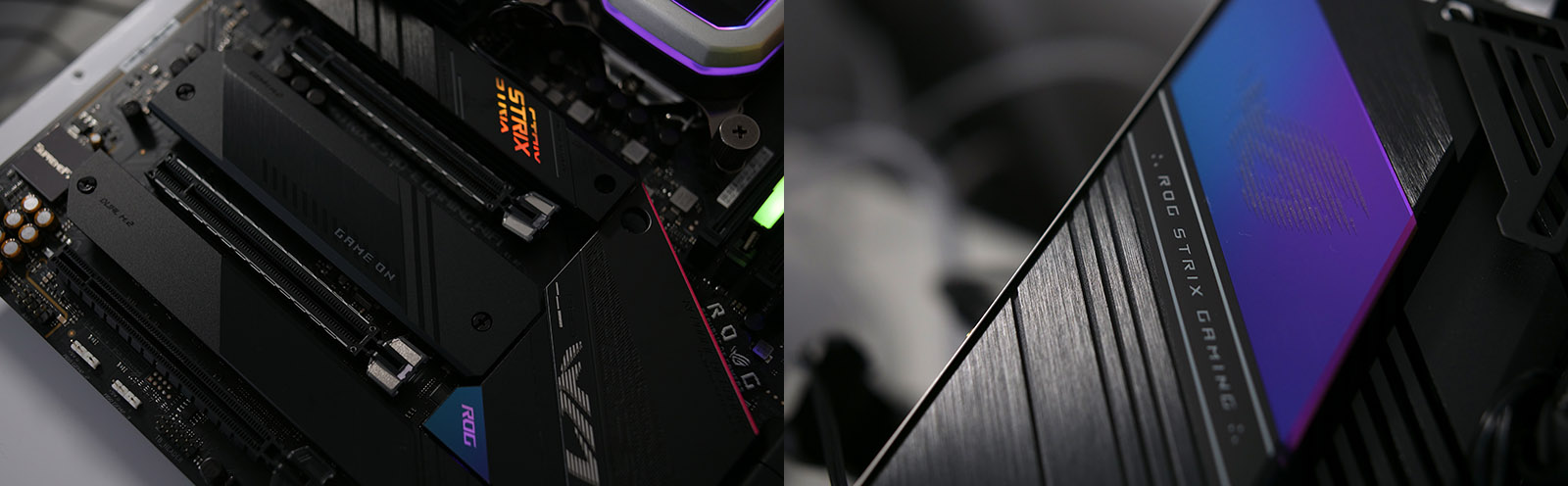
The RGB lighting on E is fairly subdued with just the rear IO shield, one of the M.2 heatsink covers and chipset heatsink using illumination – this uses Zone Aura Lighting and of course connects up to Aura Sync lighting.
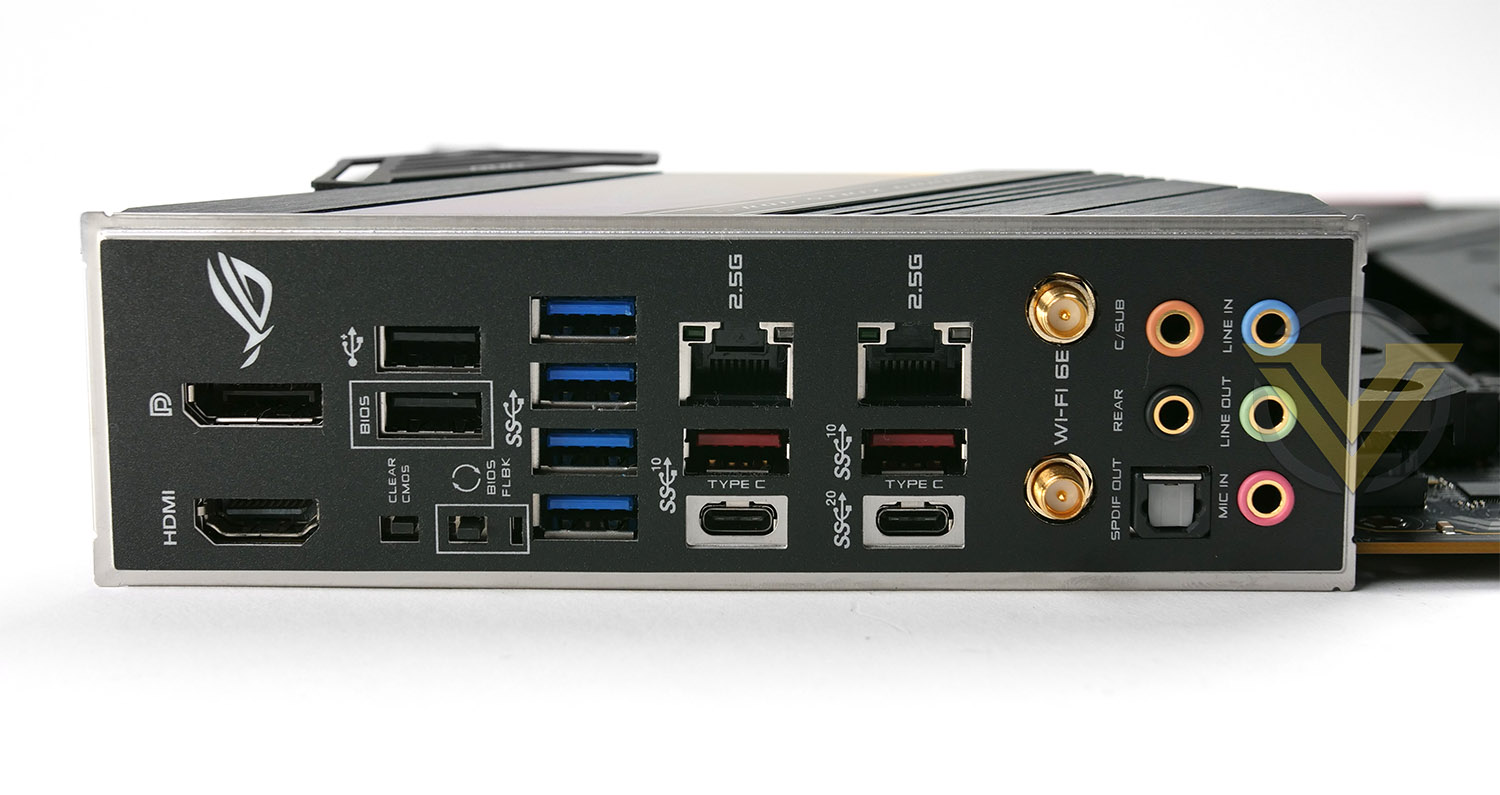
The back panel of E is loaded with a plethora of connectivity – enough to satisfy the needs of most users. On offer here we have:
1 x USB 3.2 Gen 2×2 port (1 x USB Type-C®)
3 x USB 3.2 Gen 2 port(s) (2 x Type-A, 1 x USB Type-C® )
4 x USB 3.2 Gen 1 port(s) (4 x Type-A)
2 x USB 2.0 port(s) (2 x Type-A)
1 x HDMI™ port
1 x DisplayPort
1 x Intel® Wi-Fi 6E
2 x Intel® I225-V 2.5Gb Ethernet
5 x Gold-plated audio jacks
1 x Optical S/PDIF out port
1 x BIOS FlashBack™ button
1 x Clear CMOS button
Test Setup & Methodology
Notes: We’ve revamped our benchmark regime by removing a number of tests which reveal little, to no difference between each motherboard model. Gaming performance is one such area which has been removed due to the inability for each motherboard to offer any advantage over another. Instead, we have focussed on meaningful/tangible analysis which examines the VRM/chipset design, and the storage performance which will be far more informative to the end user.
TEST SETUP
CPU Intel Core i9-11900KCooling: Corsair Hydro Series H110i
Motherboard: ASUS ROG STRIX Z590-E Gaming WiFi
Memory: 16GB Corsair Vengeance RGB PRO SL 3600MHz
Storage: Crucial MX300 SATA SSD + Kingston KC2500 PCIe 3.0 SSD
PSU: Corsair HX1050 80 Plus Gold Certified PSU
Monitor: AOC U2879VF
BENCHMARKS
PCMark 10 – Overall Extended ScoreSiSoftware SANDRA – SATA/PCIe Storage Tests
SiSoftware SANDRA – Processor Image Processing
OTHER SOFTWARE
Temperature Analysis: HWMonitorStress Testing Software: AIDA64 Stability Test
CPU Specification Monitoring: CPU-Z
Benchmarks: Power Consumption
In this first test we analyse the power efficiency from the wall for each motherboard (Minus the GPU). While each model uses the same chipset/platform, energy results can fluctuate between manufacturers due to the features and specifications that are integrated. First of all, for the idle tests the system is cold booted into Windows and no additional applications are executed – wattage is noted on the external energy monitor we use and then we open Aida64 stability test and execute a stress test, noting the highest reading on the monitor. Below are the results of this energy test.
Benchmarks: VRM & Chipset Cooling
Each motherboard manufacturer designs their board with a unique set of heatsinks to cover key areas like the VRM/mosfets and the chipset itself. In these test we use HWMonitor to identify the minimum values for VRM and chipset and then we load up Aida64 stability test again and perform a 20 minute run, recording the maximum value for both attributes.
Benchmarks: PCMark 10
PCMark 10 features a comprehensive set of tests that cover the wide variety of tasks performed in the modern workplace. With a range of performance tests, custom run options, and the new Battery Life Profile, PCMark 10 is the complete PC benchmark for the modern office.
Benchmarks: SATA Performance
In order to ascertain the SATA performance for our motherboards we use SiSoftware SANDRA and the File System Bandwidth performance test. This allows us to obtain the sequential read/write transfer rates for the drive being tested – Crucial MX300 SSD.
Benchmarks: PCIe M.2 Performance
In order to ascertain the PCIe M.2 performance for our motherboards we use SiSoftware SANDRA and the File System Bandwidth performance test. This allows us to obtain the sequential read/write transfer rates for the drive being tested – Kingston KC2500.
Benchmarks: CPU Image Processing
In our last test we observe the Image Processing performance from the CPU attached to the motherboard. For this we use SiSoftware SANDRA and the benchmark specifically designed for measuring the common algorithms associated with processing imagery.
Overclocking
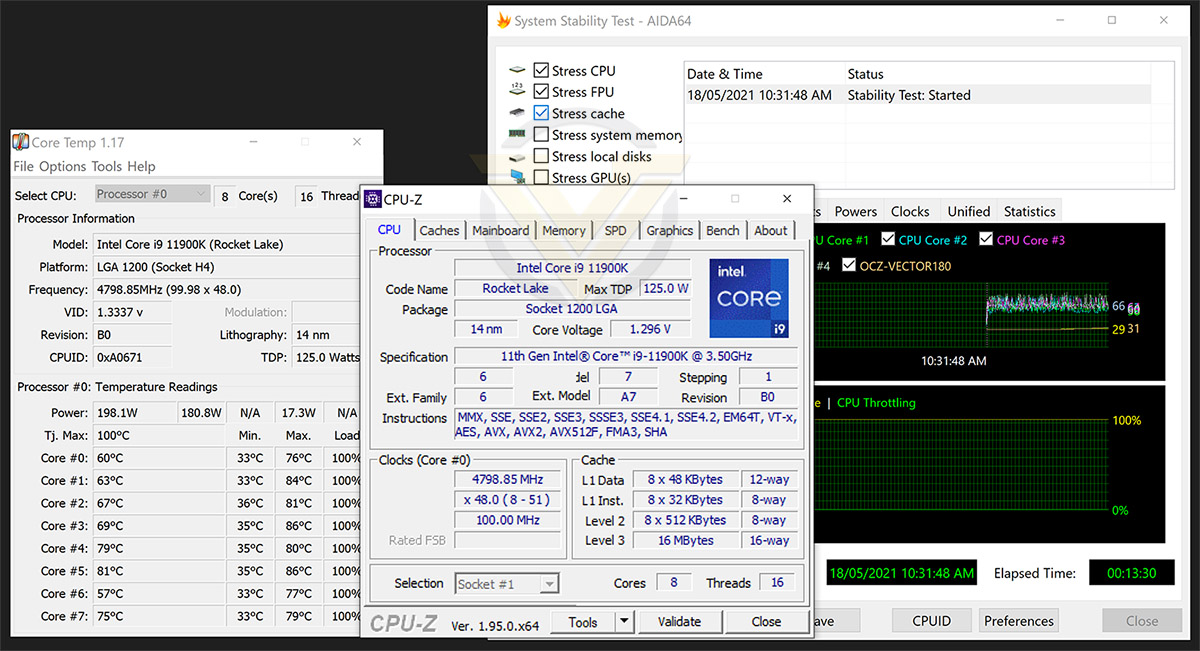
For the overclocking phase, we already know that our CPU (Intel Core i9-11900K) is capable of having all cores operate at 5.3GHz without any stress being applied, and at 5.0GHz with stress/stability test approval, so this is the target which we aimed for with our STRIX motherboard.
Sadly, E wasn’t able to climb up to an all-core 5GHz overclock with the 11900K. Instead, we had to settle for 4.8GHz with 1.35v – This is somewhat disappointing, given that other boards are able to reach 5GHz without this much voltage. We should point out that the Hero we reviewed also gave similar results.
Conclusion
We’ve already feasted our eyes on a number of Z590 models here at Vortez – each having their own strengths and weaknesses, but should the STRIX Z590-E Gaming WiFi compel you to make a definitive move to Intel’s new 11th Gen platform?
We have to firstly say that ROG has done a superb job on the aesthetics with this motherboard, it is definitely up there as one of the most appealing models we’ve seen. It may be adorned in a dark, monochrome theme as many other offerings are, but the design choices on E mark this model out as a step above the rest.
Surprisingly, even though this model is somewhat cheaper than the top of the line offerings, it still arrives with a good assortment of features for you to get the most out of an Intel 11th Gen experience. There are up to 4x M.2 slots with two of them being ready to serve PCIe 4.0 and likewise, there are 3x PCIe x16 slots with two of those being PCIe 4.0. Both of these attributes are rare to see on this platform so ROG should be commended for providing them. There is also a great assortment of USB 3.2 Gen 2 but were slightly disappointed to see USB 2.0 still present and that Thunderbolt 4 ports are absent. However, there are extras such as LED debug, Q-Code and a plethora of fan headers.
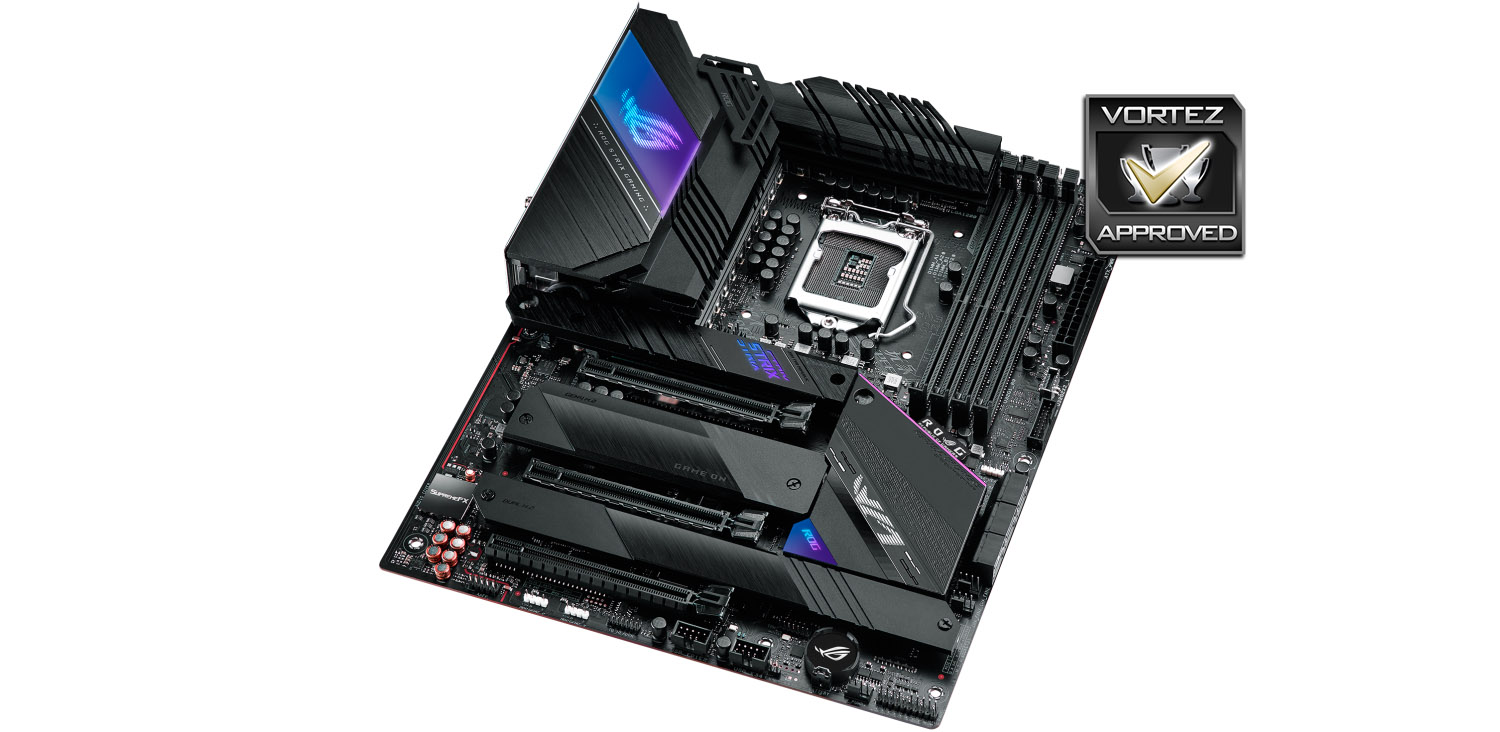
Performance from E is solid and consistently good, but we weren’t able to push the Intel Core i9-11900K as far as we’d have liked. Most of our Z590 motherboards have allowed us to hit 5GHz on all-cores but this ROG motherboard only allowed us to achieve 4.8GHz and even required 1.35v which is substantial.
This motherboard may not be the most expensive Z590 out there on the market, but it still costs a pretty penny at GBP £339 | USD $380 | AUD $550.
Packed with some superb features, the STRIX Z590-E Gaming WiFi is a very capable board for Intel’s new platform.
Pros
+ Visually impressive design
+ Good layout
+ Features a number of advanced diagnostic features
+ Offers solid performance
+ Plenty of USB connectivity
+ Up to 8 fan headers
+ Support for up to 5300MHz DDR4 memory
+ Provides not one but two PCIe 4.0 x16 slots
+ Offers four M.2 slots (including 2x PCIe 4.0)
+ Extensive accessories bundle
Cons
– Still being supplied with USB 2.0 ports
– Overclocking could be better
– No Thunderbolt 4 ports
+ Visually impressive design
+ Good layout
+ Features a number of advanced diagnostic features
+ Offers solid performance
+ Plenty of USB connectivity
+ Up to 8 fan headers
+ Support for up to 5300MHz DDR4 memory
+ Provides not one but two PCIe 4.0 x16 slots
+ Offers four M.2 slots (including 2x PCIe 4.0)
+ Extensive accessories bundle
Cons
– Still being supplied with USB 2.0 ports
– Overclocking could be better
– No Thunderbolt 4 ports
Click here for an explanation of our awards at Vortez.net.
Stay connected with Vortez social media pages: