The X470 chipset has proven to be quite the powerhouse, but how does Biostar’s flagship ‘board fair in our tests? Click here to find out more.

Product on Review: Biostar X470 GT8
Manufacturer: Biostar
Street Price: GBP £139.99 / USD $162.99
Biostar are a Taiwanese company that specialise in products such as motherboards, graphics cards and other home electronics products, finding excellent market penetration within Chinese markets.
The X470 chipset has been out for some months now, but today we take a little step back and look at another motherboard utilising the popular chipset. Biostar have provided their flagship model, the X470 GT8, offering RGB lighting, M.2 NVMe storage, carbon-fibre effect heatsinks and lightning charger capability, amongst other features.
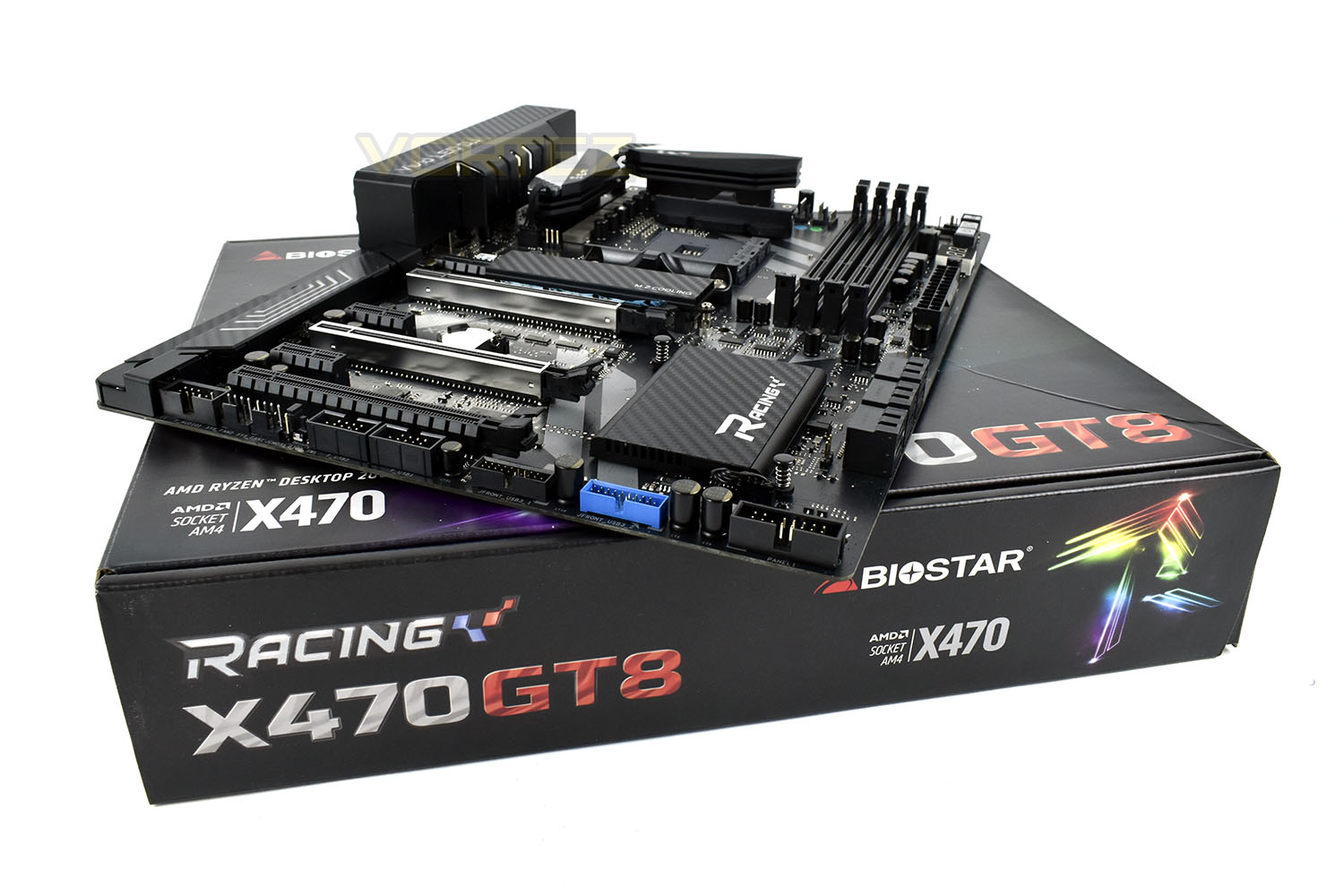
Biostar aren’t a manufacturer we see often at Vortez, but the X470 GT8 sounds promising on paper. How does it perform in our tests? Read on to find out.
Biostar on the X470 GT8:
BIOSTAR unveils RACING X470GT8, a full ATX motherboard with the AMD X470 chipset for the second generation AMD Ryzen processors, Raven Ridge. The BIOSTAR RACING X470GT8 offers performance and aesthetics for today’s overclockers and gamers. It has a premium black RACING themed PCB design, Digital Power+, Hi-Fi zone design, integrated USB 3.1 Gen 2 (Type A + C), Iron Slot Protection, and Advanced VIVID LED DJ for more RGB lighting control.
Technical Specifications
Chipset: AMD X470
CPU SUPPORT: AMD A-series APU / Ryzen CPU / NPU for Socket AM4
Maximum CPU TDP (Thermal Design Power): 105Watt
MEMORY:
Support Dual Channel DDR4 1866/ 2133/ 2400/ 2667/ 2933(OC)/ 3200(OC) MHz
4 x DDR4 DIMM Memory Slot
Max. Supports up to 64GB Memory
* DDR4 2667 for AMD Ryzen CPU
※Athlon 200GE does not support ECC DDR4 memory module.
INTEGRATED VIDEO: By CPU model
Supports DX12
STORAGE:
6 x SATA3 Connectors (6GB/s)
Support SATA RAID: 0,1,10
Support Hot-Plug in AHCI mode
1 x M.2 Key M 32Gb/s Connector(32Gb/s)
Support both PCIE NAND for PCIE SSD and SATA NAND for SATA SSD
LAN:
Intel I211AT GbE LAN – Gigabit Ethernet PHY
CODEC:
Realtek ALC1220 8-Channel Blu-ray Audio
Support Blu-ray Audio
Support SPDIF_out
Support Biostar Hi-Fi
USB:
1 x USB 3.1 Gen2 Type-C Port
1 x USB 3.1 Gen2 Type-A Port
4 x USB 3.1 Gen1 Ports
2 x USB 3.1 Gen1 Header
2 x USB 2.0 Header
EXPANSION SLOT:
2 x PCI-E 3.0 x16 Slots
1 x PCI-E 2.0 x16 Slot (x4)
3 x PCI-E 2.0 x1 Slots
REAR I/O:
1 x PS/2 Keyboard/Mouse
1 x USB 3.1 Gen2 Type-C Port
1 x USB 3.1 Gen2 Type-A Port
4 x USB 3.1 Gen1 Ports
1 x DisplayPort Connector, resoltuion up to 4096*2160@60Hz
1 x HDMI Connector, resoltuion up to 4096*2160@24Hz, compliant with HDMI 2.0
1 x DVI-D Connector, resolution up to 1920 x 1200 @60Hz
1 x LAN port
5 x Audio Jacks
1 x S/PDIF Out Port
INTERNAL I/O:
2 x USB 3.1 Gen1 Headers
2 x USB 2.0 Headers (each header support 2 USB 2.0 ports)
6 x SATA3 6Gb/s Connectors (6Gb/s)
1 x M.2 Key M 32Gb/s Connector
1 x Front Audio Header
1 x Front Panel Header
2 x CPU Fan Connector
3 x System Fan Connector
1 x LN2 Switch
2 x 5050 LED Header
H/W MONITORING:
CPU / System Temperature Monitoring
CPU / System Fan Monitoring
Smart / Manual CPU1/ CPU2/ System1/ System2/ System3(PWM FAN) Fan Control
System Voltage Monitoring
DIMENSION:
ATX Form Factor Dimension: 30.5 cm x 24.4 cm ( W x L )
OS SUPPORT:
Support Windows 10(x64)
Support Windows 7 (x64) for Bristol / Summit /Pinnacle Ridge only
BUNDLE SOFTWARE Racing GT Utility
BullGuard
Smart Ear headphone Utility
ACCESSORIES:
4 x SATA Cable
FEATURES:
VIVID LED DJ
VIVID LED ARMOR
5050 LED FUN ZONE
Digital Power+
Lightning Charger
M.2 Cooling Protection
Dual BIOS
Iron Slot Protection
CPU SUPPORT: AMD A-series APU / Ryzen CPU / NPU for Socket AM4
Maximum CPU TDP (Thermal Design Power): 105Watt
MEMORY:
Support Dual Channel DDR4 1866/ 2133/ 2400/ 2667/ 2933(OC)/ 3200(OC) MHz
4 x DDR4 DIMM Memory Slot
Max. Supports up to 64GB Memory
* DDR4 2667 for AMD Ryzen CPU
※Athlon 200GE does not support ECC DDR4 memory module.
INTEGRATED VIDEO: By CPU model
Supports DX12
STORAGE:
6 x SATA3 Connectors (6GB/s)
Support SATA RAID: 0,1,10
Support Hot-Plug in AHCI mode
1 x M.2 Key M 32Gb/s Connector(32Gb/s)
Support both PCIE NAND for PCIE SSD and SATA NAND for SATA SSD
LAN:
Intel I211AT GbE LAN – Gigabit Ethernet PHY
CODEC:
Realtek ALC1220 8-Channel Blu-ray Audio
Support Blu-ray Audio
Support SPDIF_out
Support Biostar Hi-Fi
USB:
1 x USB 3.1 Gen2 Type-C Port
1 x USB 3.1 Gen2 Type-A Port
4 x USB 3.1 Gen1 Ports
2 x USB 3.1 Gen1 Header
2 x USB 2.0 Header
EXPANSION SLOT:
2 x PCI-E 3.0 x16 Slots
1 x PCI-E 2.0 x16 Slot (x4)
3 x PCI-E 2.0 x1 Slots
REAR I/O:
1 x PS/2 Keyboard/Mouse
1 x USB 3.1 Gen2 Type-C Port
1 x USB 3.1 Gen2 Type-A Port
4 x USB 3.1 Gen1 Ports
1 x DisplayPort Connector, resoltuion up to 4096*2160@60Hz
1 x HDMI Connector, resoltuion up to 4096*2160@24Hz, compliant with HDMI 2.0
1 x DVI-D Connector, resolution up to 1920 x 1200 @60Hz
1 x LAN port
5 x Audio Jacks
1 x S/PDIF Out Port
INTERNAL I/O:
2 x USB 3.1 Gen1 Headers
2 x USB 2.0 Headers (each header support 2 USB 2.0 ports)
6 x SATA3 6Gb/s Connectors (6Gb/s)
1 x M.2 Key M 32Gb/s Connector
1 x Front Audio Header
1 x Front Panel Header
2 x CPU Fan Connector
3 x System Fan Connector
1 x LN2 Switch
2 x 5050 LED Header
H/W MONITORING:
CPU / System Temperature Monitoring
CPU / System Fan Monitoring
Smart / Manual CPU1/ CPU2/ System1/ System2/ System3(PWM FAN) Fan Control
System Voltage Monitoring
DIMENSION:
ATX Form Factor Dimension: 30.5 cm x 24.4 cm ( W x L )
OS SUPPORT:
Support Windows 10(x64)
Support Windows 7 (x64) for Bristol / Summit /Pinnacle Ridge only
BUNDLE SOFTWARE Racing GT Utility
BullGuard
Smart Ear headphone Utility
ACCESSORIES:
4 x SATA Cable
FEATURES:
VIVID LED DJ
VIVID LED ARMOR
5050 LED FUN ZONE
Digital Power+
Lightning Charger
M.2 Cooling Protection
Dual BIOS
Iron Slot Protection
Packaging, Bundle & First Look
The front of the packaging isn’t exactly indicative of what you’ll receive, with no actual imagery, but the Socket type and chipset are mentioned in the bottom-left and the box looks fancy.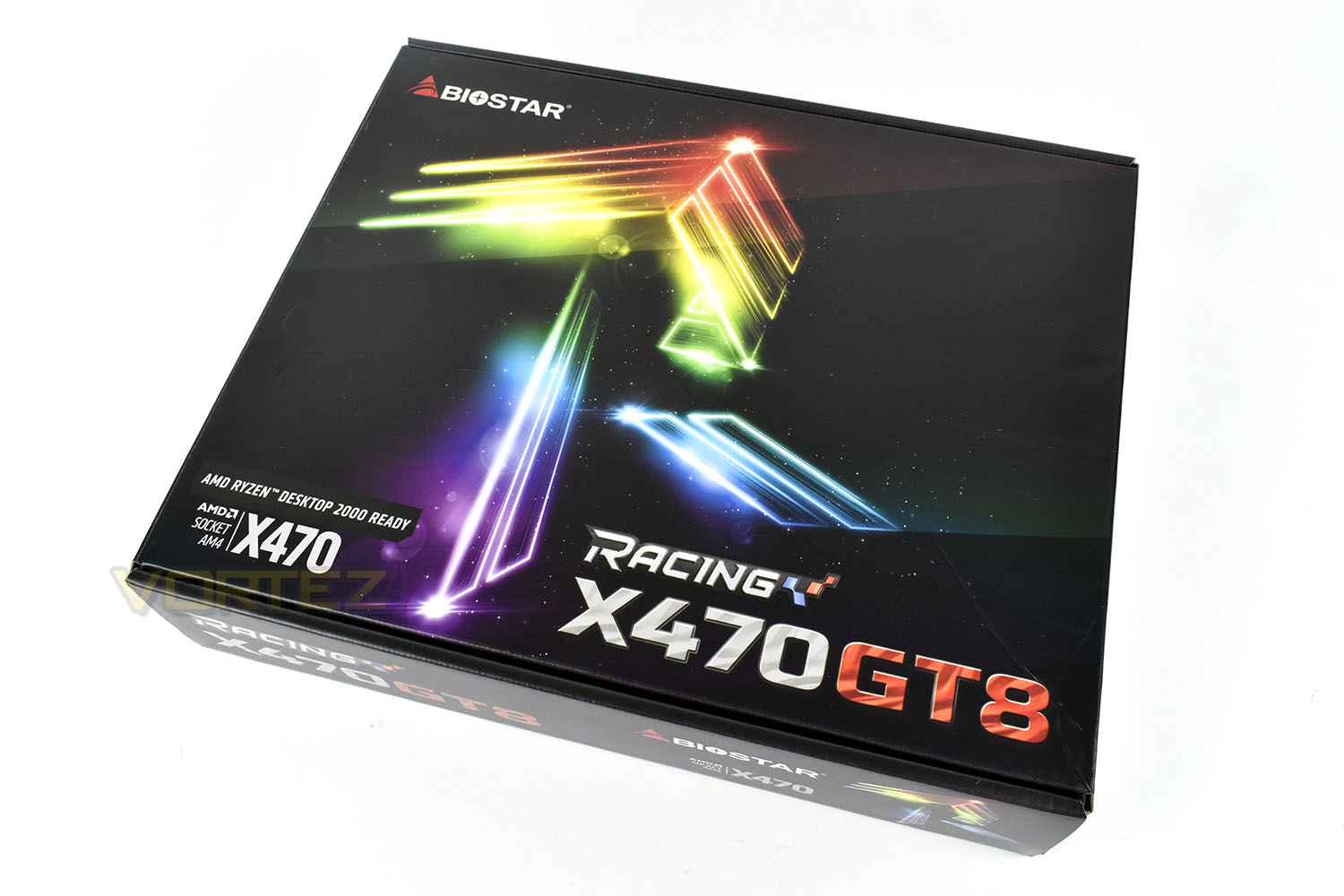
The flip side gives a good overview of what to expect, with key features and an annotated diagram.
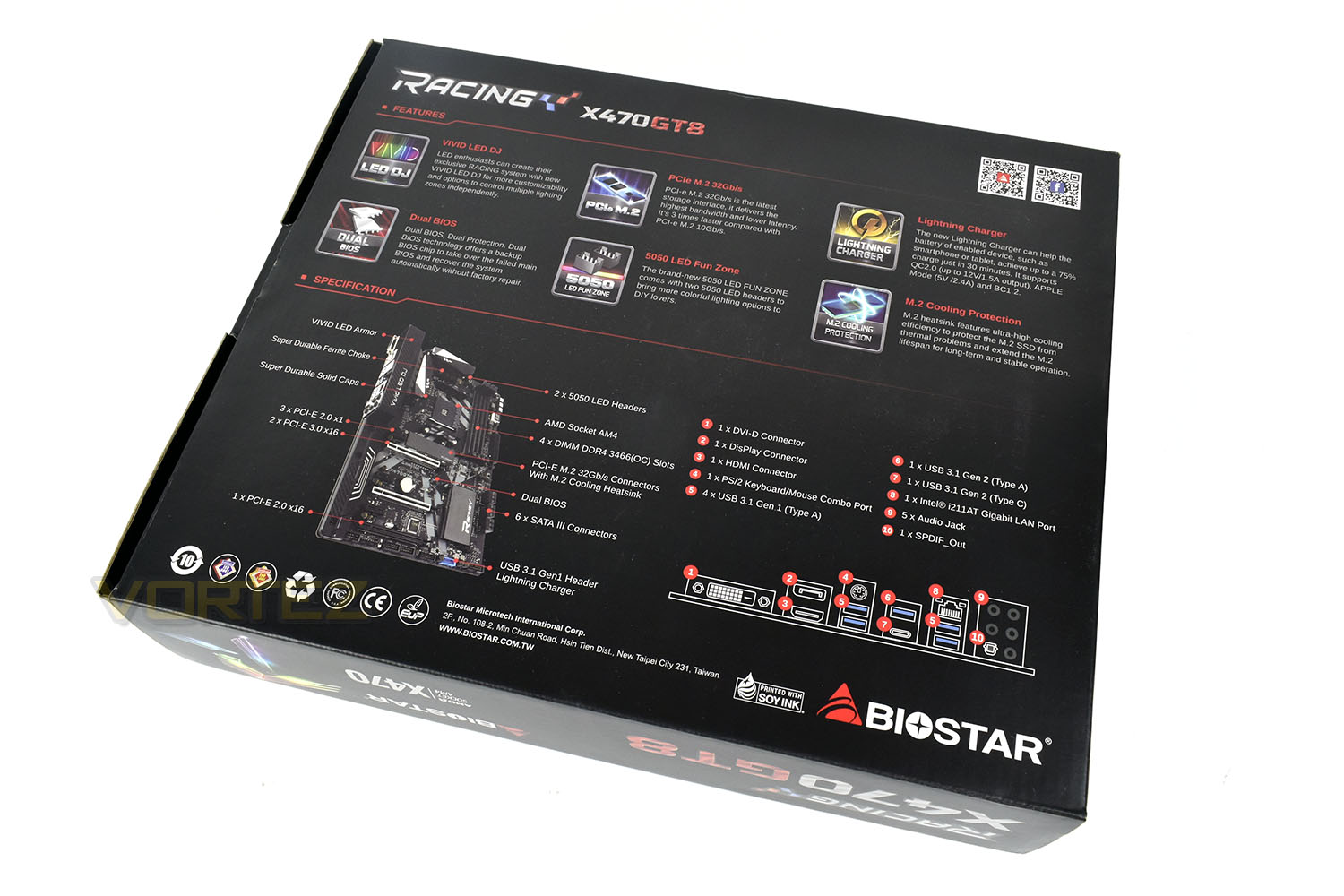
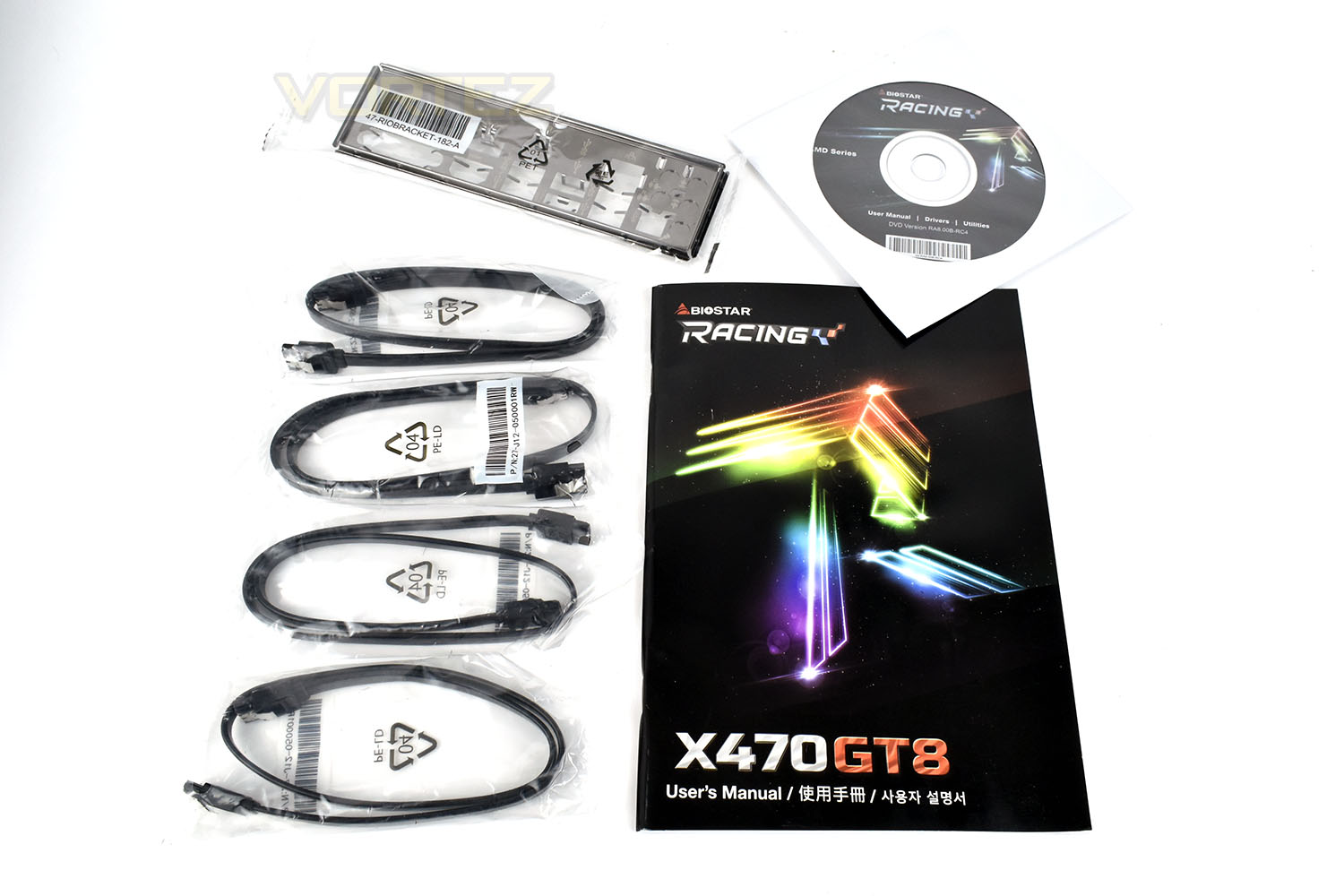
Considering the usual inclusion with an enthusiast-class motherboard, such as anything running the X470 chipset, the included extras are a little thin on the ground. There’s a driver disc, if you still possess a disc drive, the rear IO shield, four SATA cables and a user manual.
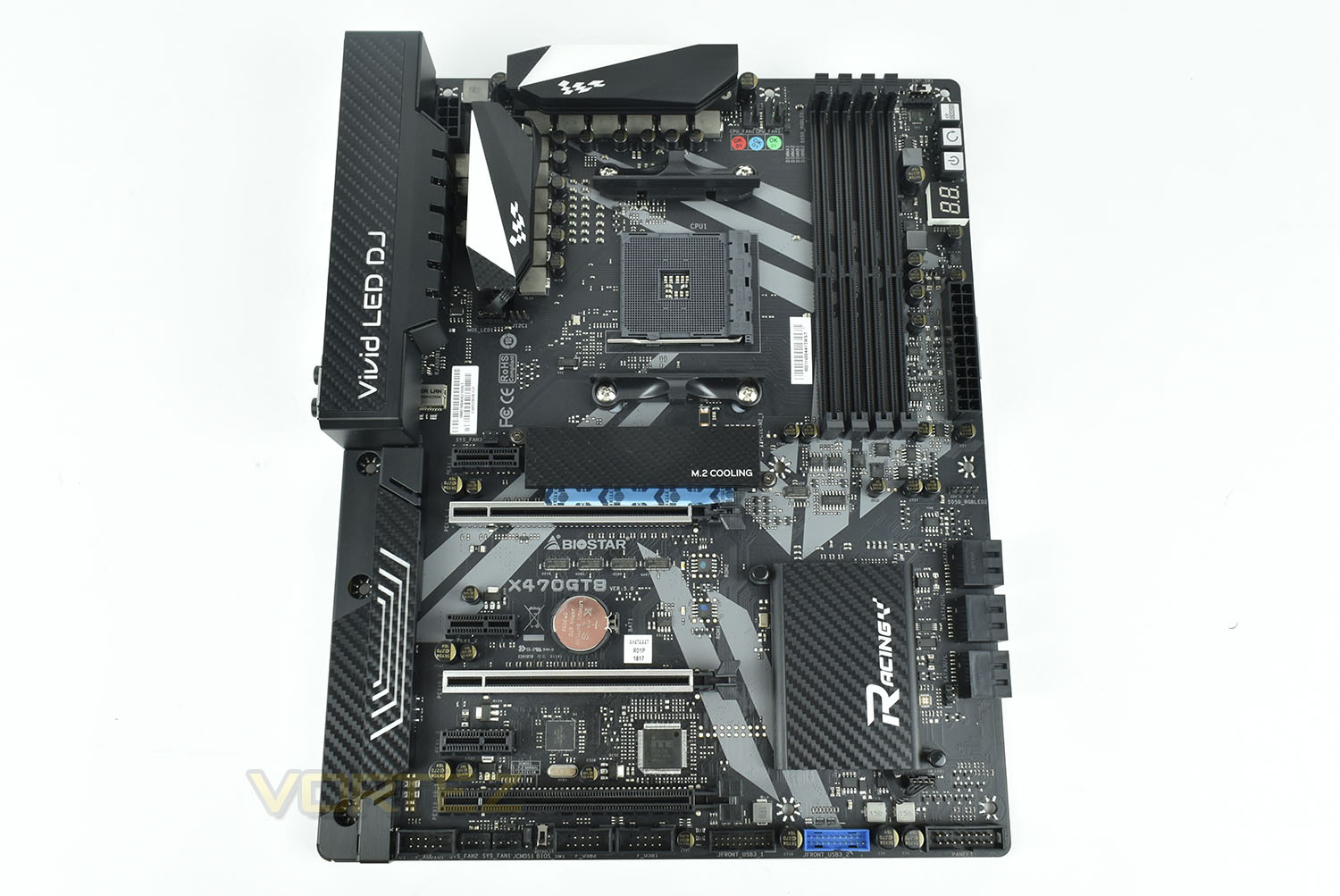
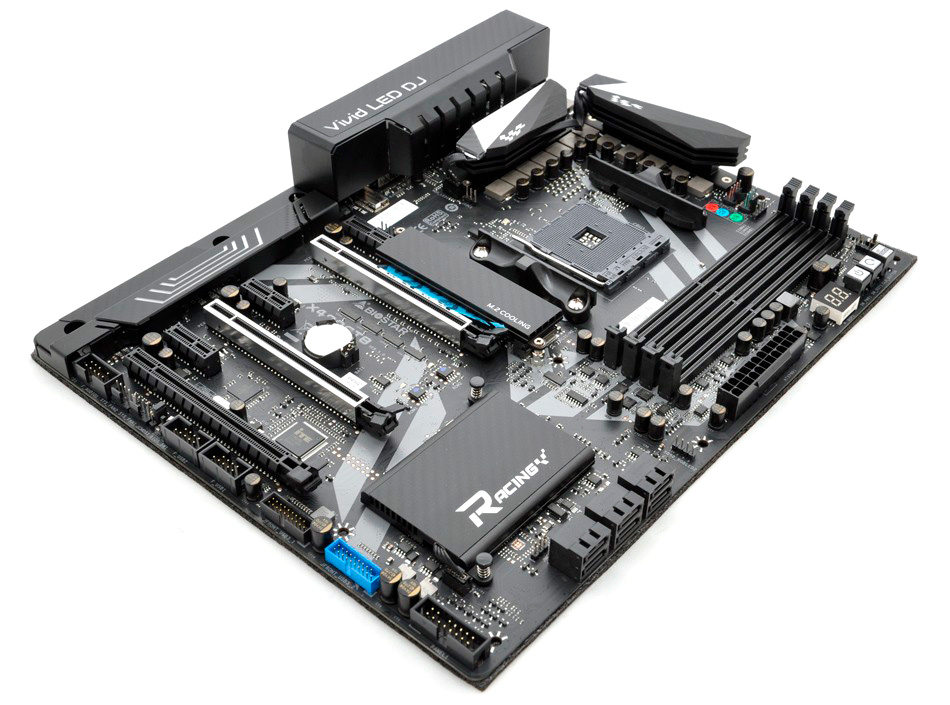
The all-black design of the X470 GT8 is appealing, giving a blank canvas for the components you choose, along with carbon-fibre effects that might suit your build perfectly.
Closer Look
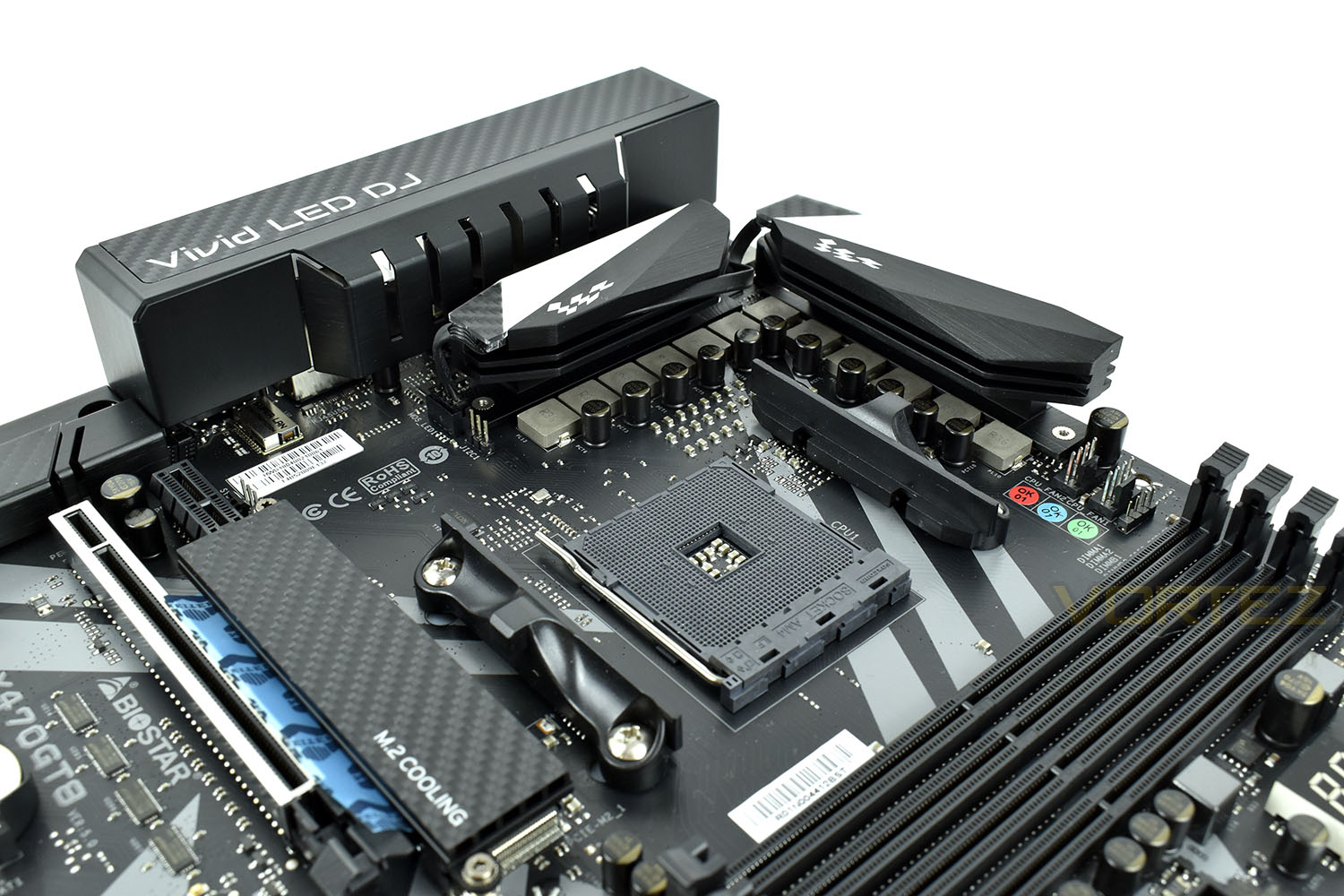
Utilising the AMD X470 chipset, the AM4 socket can accept 1st and 2nd Gen. Ryzen processors which have proved incredibly popular in the last couple of years.Around the socket are a pair of heatsinks, helping to cool the IR Digital PWM Controller and PowlRstage ICs, claiming 100% fixed voltage and a wider PWM spectrum for faster power delivery speed. Each phase is capable of up to 60A which provides enthusiasts the maximum overclocking potential, apparently.
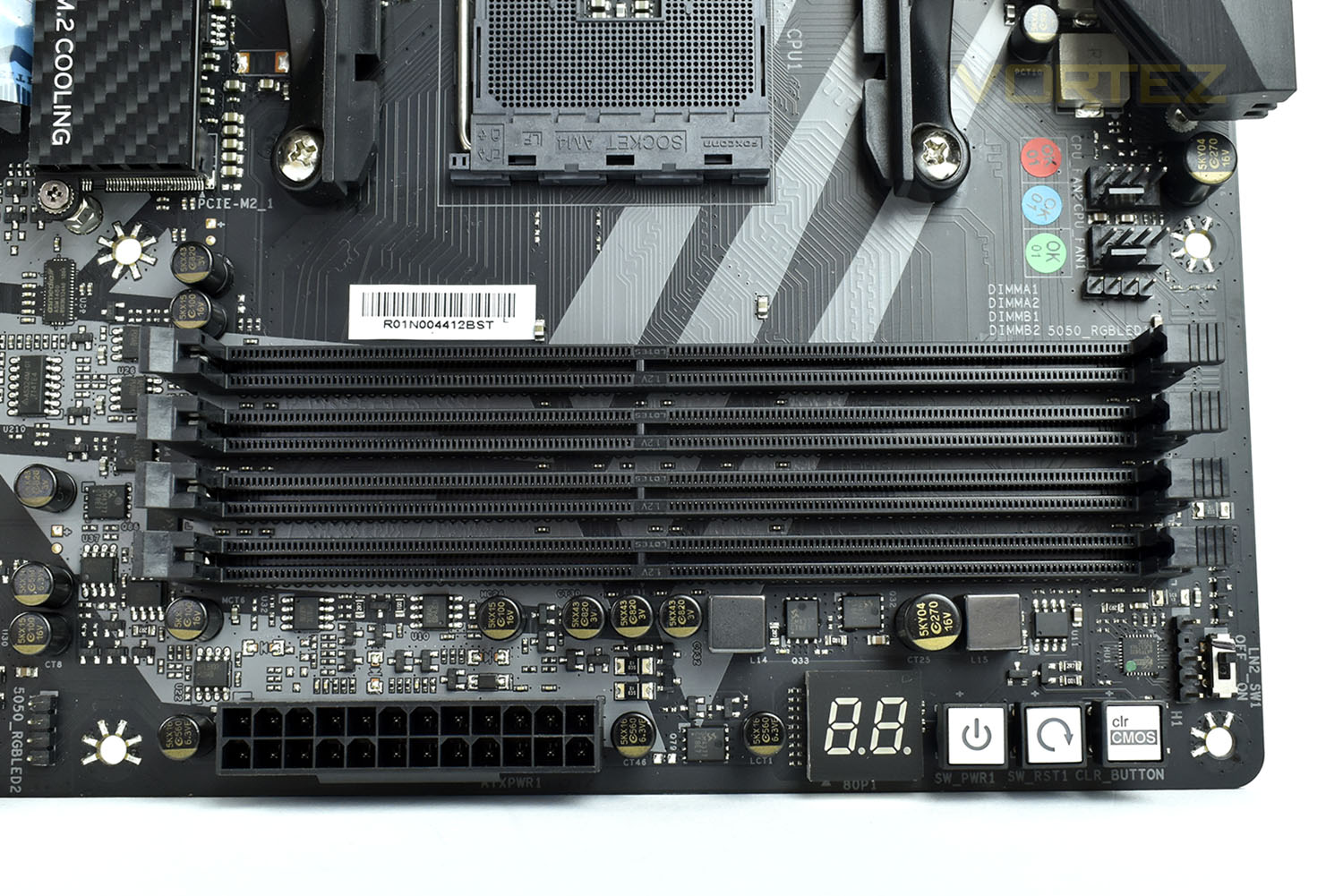
To the right of the CPU socket are a bank of 4 DDR4 DIMM slots supporting up to DDR4-3200 and 64GB capacity.
Users that set up on an open bench will be glad of the POST Code display as well as the onboard power, reset and clear CMOS switches, located in the very top-right. Extreme power users will also find an LN2 switch, for booting the system under incredibly cold temperatures.
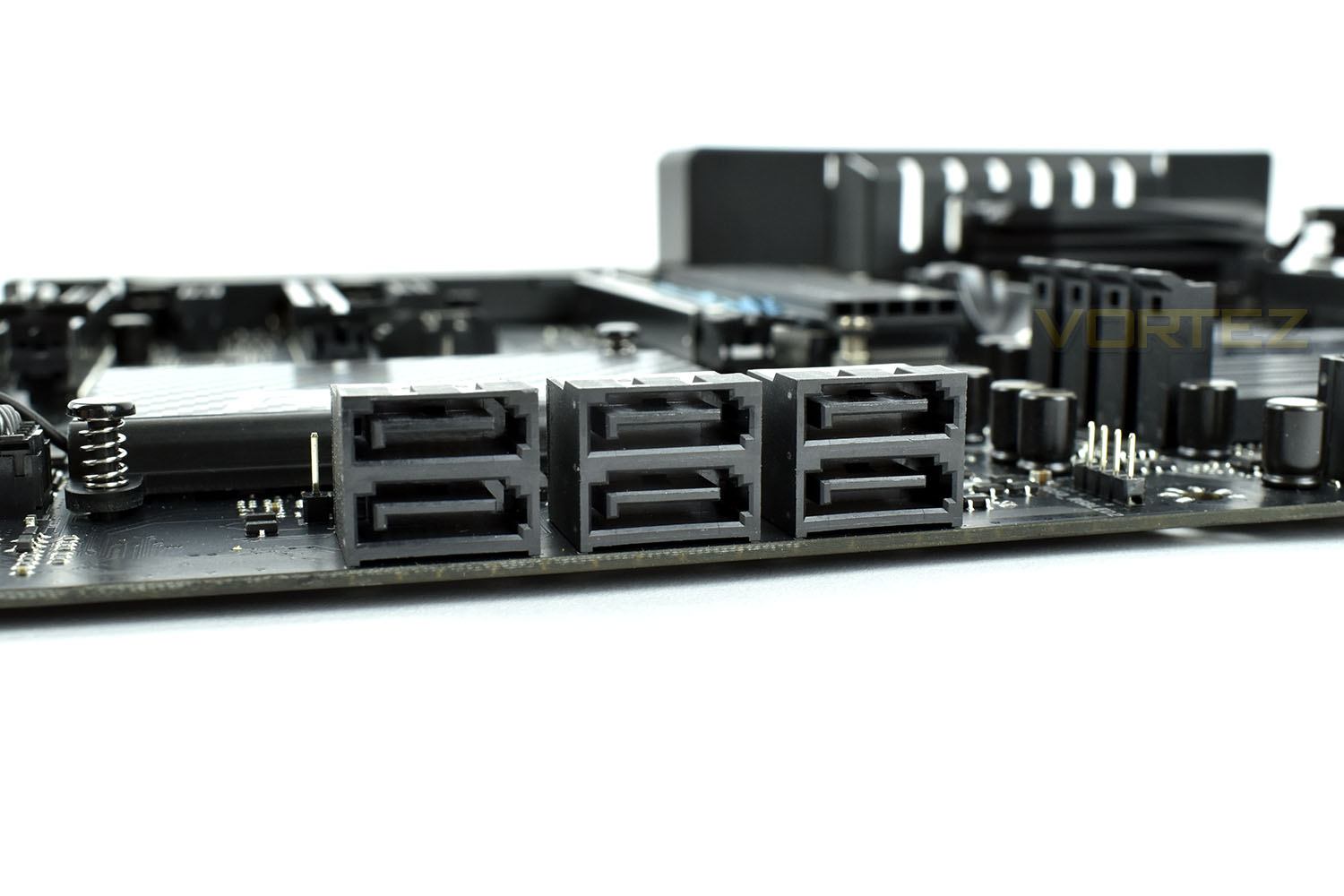
Six 90° SATA 6Gbps ports are located to the right of the chipset.
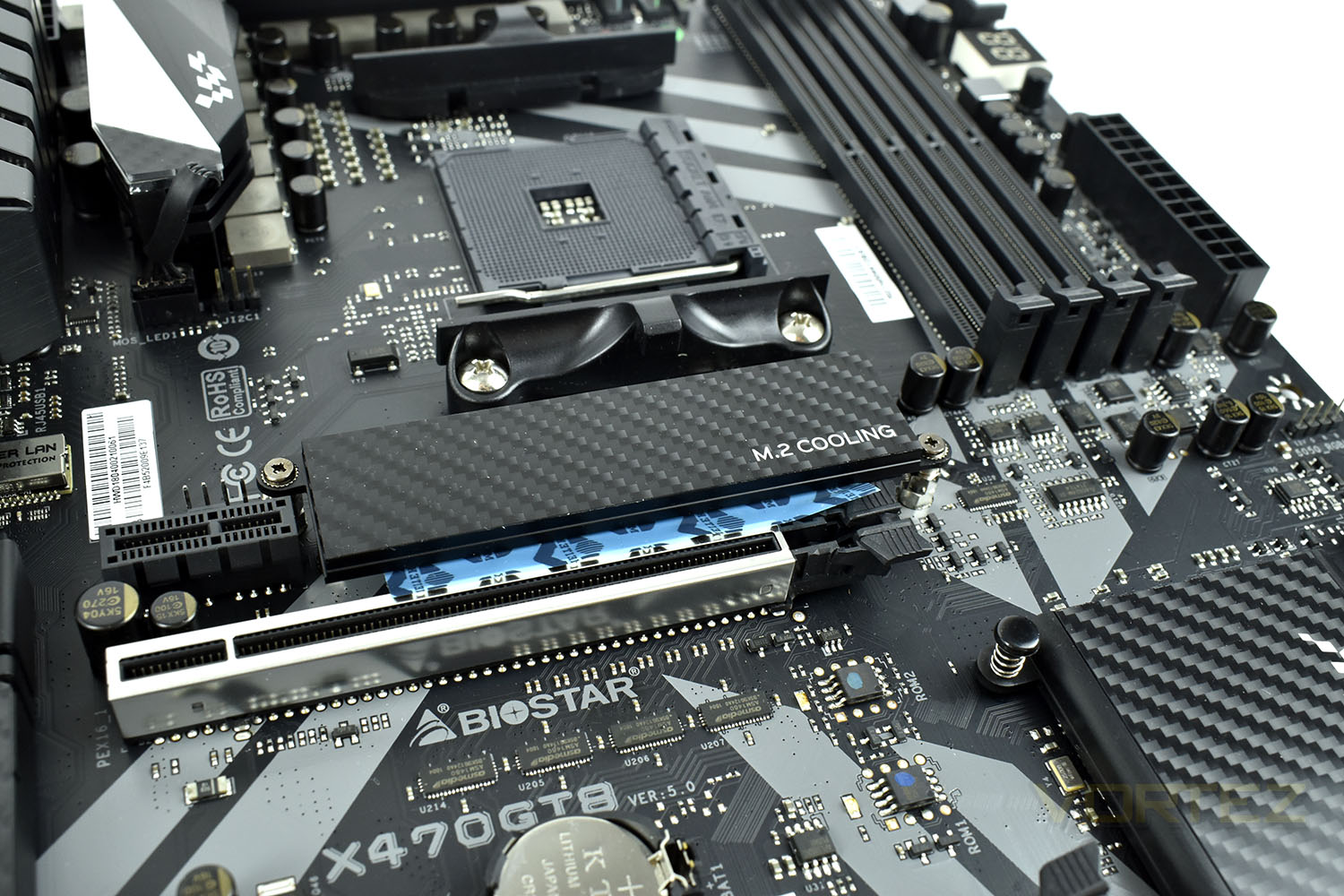
While SATA storage may still be the go-to option for many, M.2 NVMe is multiple times faster. The X470 GT8 is home to a single M.2 NVMe slot, located just south of the AM4 socket. The slot is covered by an M.2 heatsink with carbon-fibre effect, which claims to reduce NVMe temperatures by 5°C.
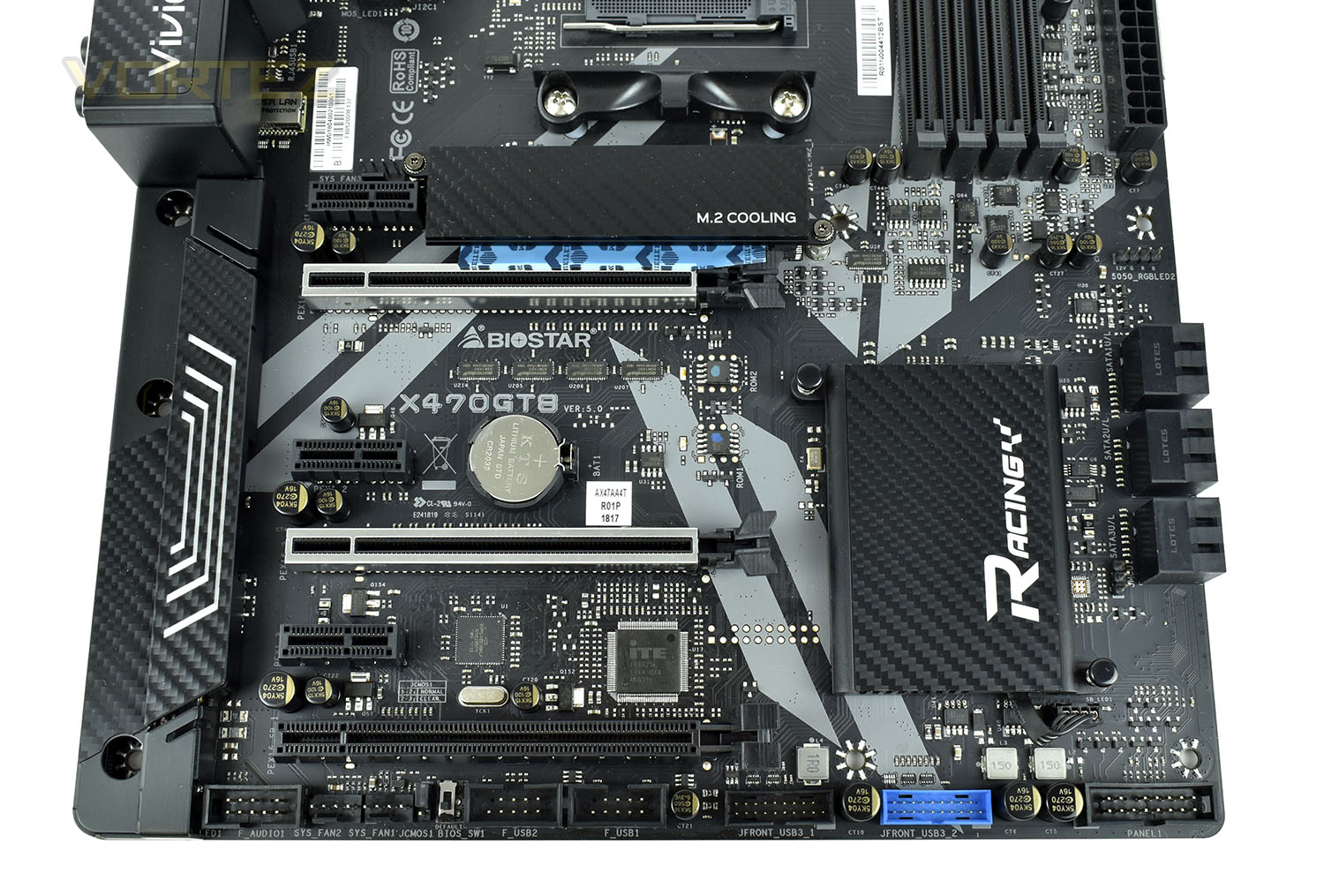
In terms of add-in cards, you’re catered to by a trio of PCI-E x1 ports and x16 ports, two of which are strengthened by Iron Slot Protection which can help support some of today’s hefty graphics cards.
The bottom row is awash with additional connections, too. Including a Fast Charge front USB header.
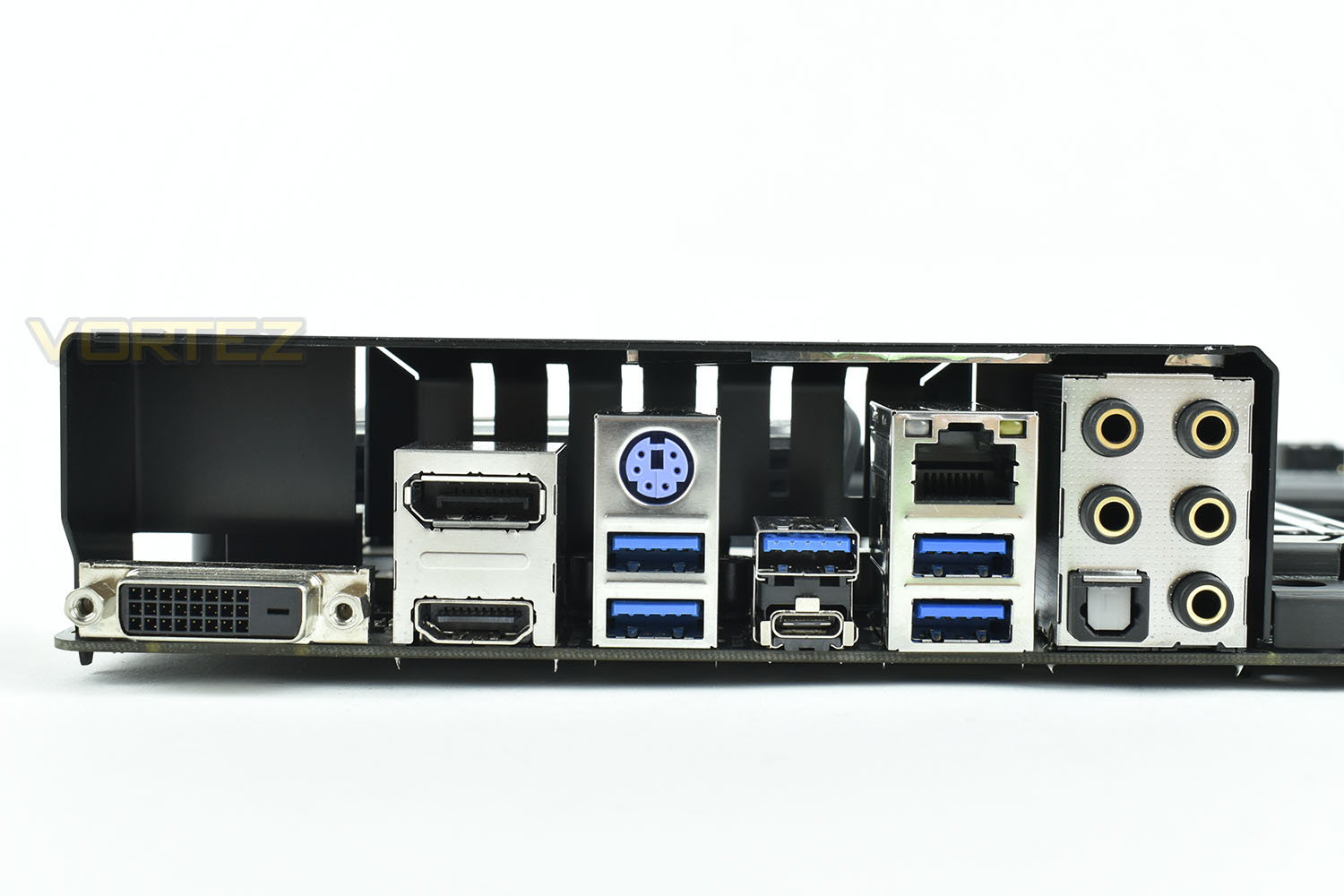
Lastly, the rear IO. Here we have the following:
1x DVI
1x DP 1.4
1x HDMI 2.0
1x PS/2 mouse/keyboard
2x USB 3.0
1x USB 3.1 Gen. 2 Type-A
1x USB 3.1 Gen. 2 Type-C
2x USB 3.0
1x Intel Gigabit Ethernet
5x 3.5mm Audio connections
1x SPDIF Out
BIOS & Overclocking
BIOSThe X470 GT8 uses its own BIOS, with an odd and unintuitive design. We found it difficult to find specific settings, and had overclocking hidden behind a tab labelled “O.N.E”.
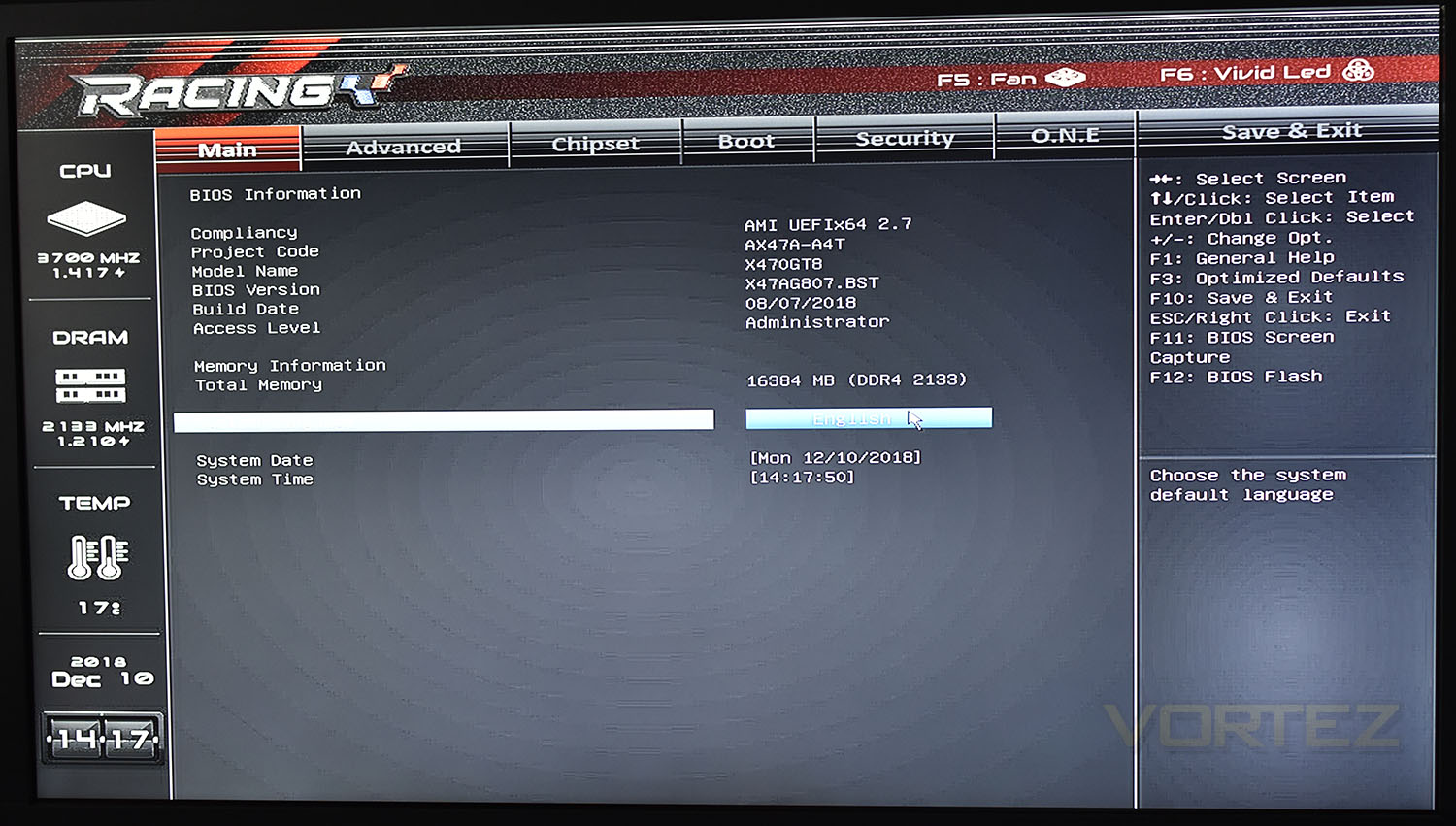
We pressed the entire row of F keys, with F12 typically being the screenshot key within a BIOS but nothing worked, including the print screen key, instead option to photograph the display instead.
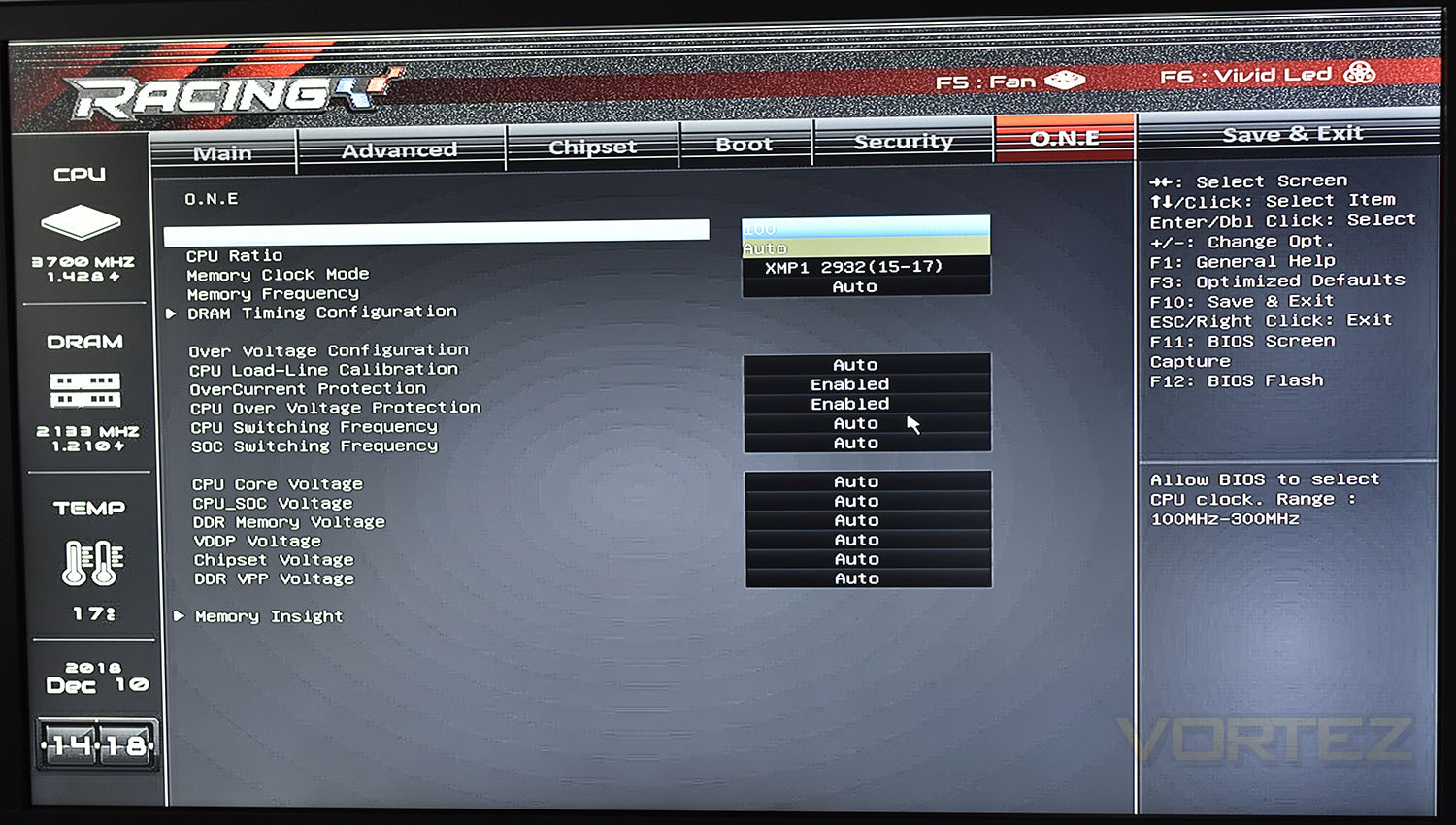
We messed about with XMP settings, and RAM timings but couldn’t get the system to boot without issue at anything above 2933MHz, on a 3200MHz memory kit. Voltage was set at 1.35v and all timings entered manually but still no luck. Which brings us onto overclocking.
Overclocking
With this being based on the X470 chipset, we expected at least a decent overclocking experience. That, we did not receive. Instead, we found the overclockability to be non-existent. We tried higher than usual voltages, following YouTube guides, the whole hog, to no avail.
Test Setup & Software
Test SetupCPU AMD Ryzen 7 2700X
Cooling Noctua NH-U12S-SE-AM4
Motherboard AORUS B450 I Pro WiFi
Memory 16GB Corsair Vengeance LPX 3200MHz @ 3000MHz @ 15-17-17-38-58
Graphics AMD Radeon RX 480 8GB
Storage Corsair Force LE 480GB
PSU Corsair RM750X 80 Plus Gold Certified PSU
Cooling Noctua NH-U12S-SE-AM4
Motherboard AORUS B450 I Pro WiFi
Memory 16GB Corsair Vengeance LPX 3200MHz @ 3000MHz @ 15-17-17-38-58
Graphics AMD Radeon RX 480 8GB
Storage Corsair Force LE 480GB
PSU Corsair RM750X 80 Plus Gold Certified PSU
Benchmarks
Cinebench R15 – CPU/OpenGL Score
x264 HD 4.0 – 1st and 2nd pass encoding
SiSoftware SANDRA – CPU & Memory benchmarks
POV-RAY – CPU benchmarks
TrueCrypt – CPU benchmarks
AIDA64 – CPU benchmarks & Memory
PCMark 8 – Home Suite & Photoshop
3DMark FireStrike – 3D Benchmark
Games – Rise of the Tomb Raider & Total War: WARHAMMER
x264 HD 4.0 – 1st and 2nd pass encoding
SiSoftware SANDRA – CPU & Memory benchmarks
POV-RAY – CPU benchmarks
TrueCrypt – CPU benchmarks
AIDA64 – CPU benchmarks & Memory
PCMark 8 – Home Suite & Photoshop
3DMark FireStrike – 3D Benchmark
Games – Rise of the Tomb Raider & Total War: WARHAMMER
Other Software
Temperature Analysis: Aida64 & Ryzen Master
Stress Testing Software: AIDA64 Stability Test
CPU Specification Monitoring: CPU-Z
Performance Monitoring: MSI Afterburner
Stress Testing Software: AIDA64 Stability Test
CPU Specification Monitoring: CPU-Z
Performance Monitoring: MSI Afterburner
Software
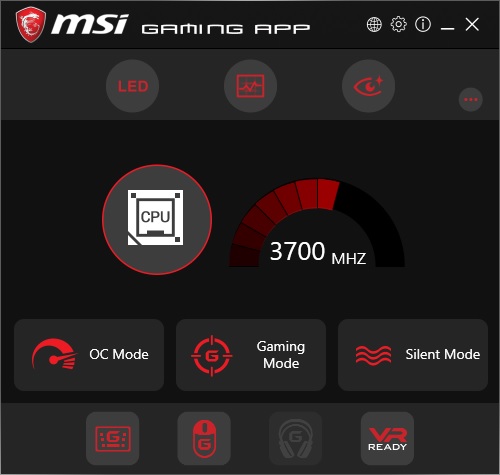
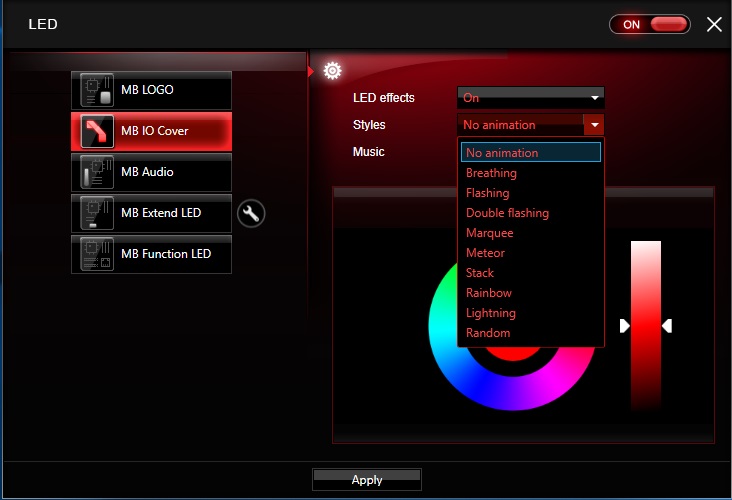
Benchmarks: Power Consumption
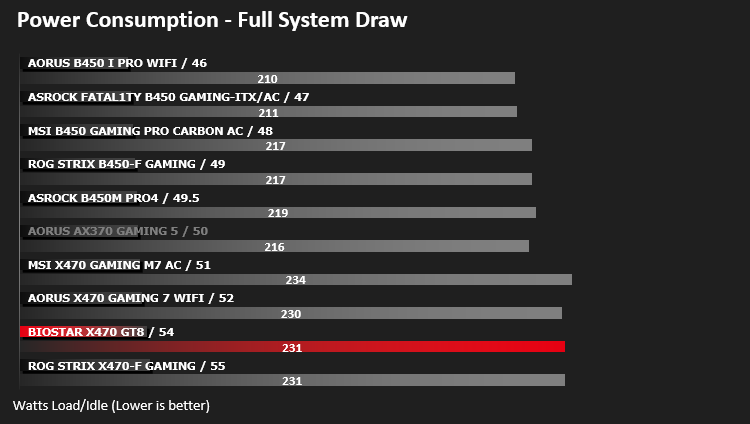
It’s interesting to note the power consumption across all motherboards. Although they are using the Z270 chipset, energy results can fluctuate between manufacturers due to the features and specifications that are integrated. First of all, for the idle tests the system is cold booted into Windows and no additional applications are executed – the watts are noted on the external energy monitor we use and then the system is loaded with 3DMark FireStrike – watts are again monitored for the duration of the test and the highest rated wattage result is then noted down. Below are the results of this energy test.
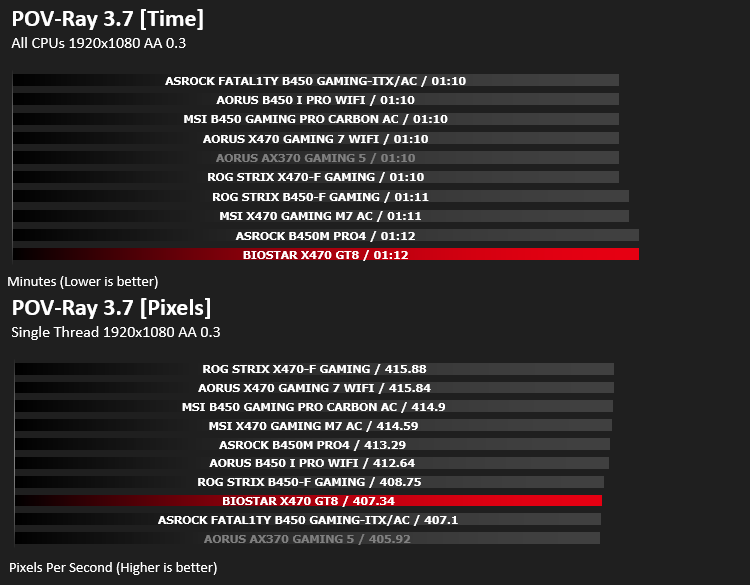
Ray Tracing Performance – POV-Ray 3.7
Persistence of Vision Raytracer’s PovRay is a free and open source 3D animator application with versions for computers with different operating systems.
This product allows users to build their custom 3D worlds with excellent quality despite their computer’s hardware. It has adjustable options for levels of radiance, refraction, and reflection. Calculation time may vary depending on the computer model, but PovRay can adapt to many computer builds, and is supported by the open source community.
This product allows users to build their custom 3D worlds with excellent quality despite their computer’s hardware. It has adjustable options for levels of radiance, refraction, and reflection. Calculation time may vary depending on the computer model, but PovRay can adapt to many computer builds, and is supported by the open source community.
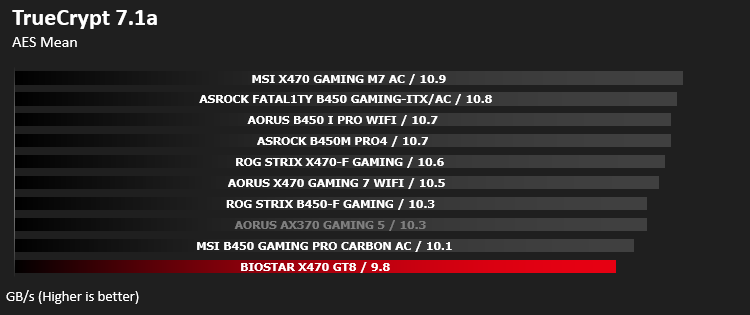
AES Encryption Performance – TrueCrypt 7.1a
TrueCrypt is a discontinued source-available freeware utility used for on-the-fly encryption (OTFE). It can create a virtual encrypted disk within a file or encrypt a partition or (under Microsoft Windows except Windows 8 with GPT) the entire storage device (pre-boot authentication).
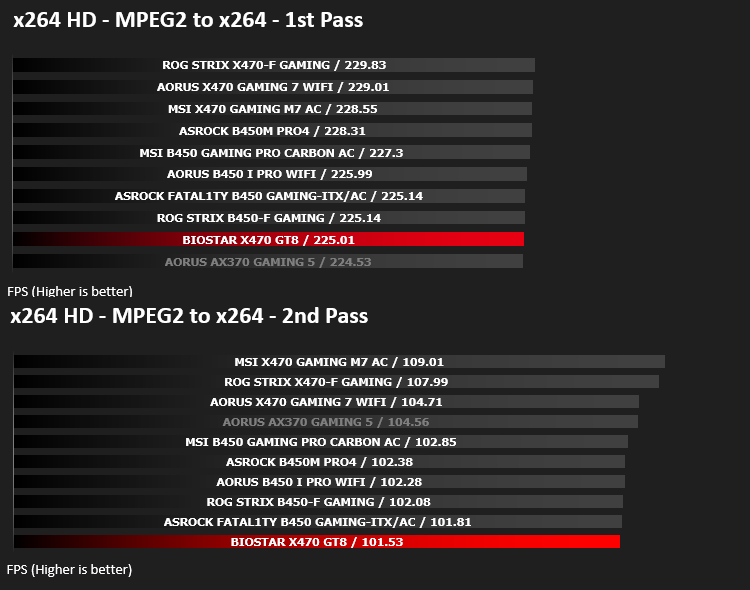
Encoding Performance – x264 HD
Simply put, this test measures how fast your machine can encode a short, DVD quality MPEG-2 video clip into a high-quality x264 video clip. What’s x264, you ask? It’s more or less the next-generation Xvid/DivX codec. I think it’s ideal for a benchmark because the application (x264.exe) reports fairly accurate compression results (in frames per second) for each pass of the video encoding process, and it uses multi-core processors very efficiently.
Processing Features Performance – AIDA64
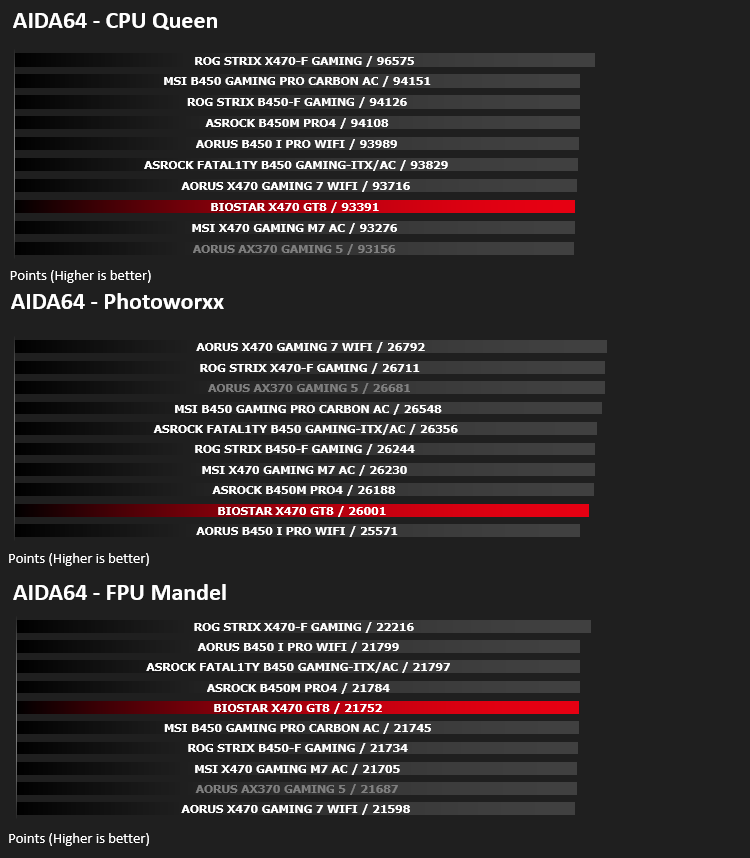
AIDA64 Product PageThis simple integer benchmark focuses on the branch prediction capabilities and the misprediction penalties of the CPU. It finds the solutions for the classic “Queens problem” on a 10 by 10 sized chessboard. At the same clock speed theoretically the processor with the shorter pipeline and smaller misprediction penalties will attain higher benchmark scores. For example — with HyperThreading disabled — the Intel Northwood core processors get higher scores than the Intel Prescott core based ones due to the 20-step vs 31-step long pipeline. CPU Queen test uses integer MMX, SSE2 and SSSE3 optimizations.
Memory Transfer Performance – AIDA64
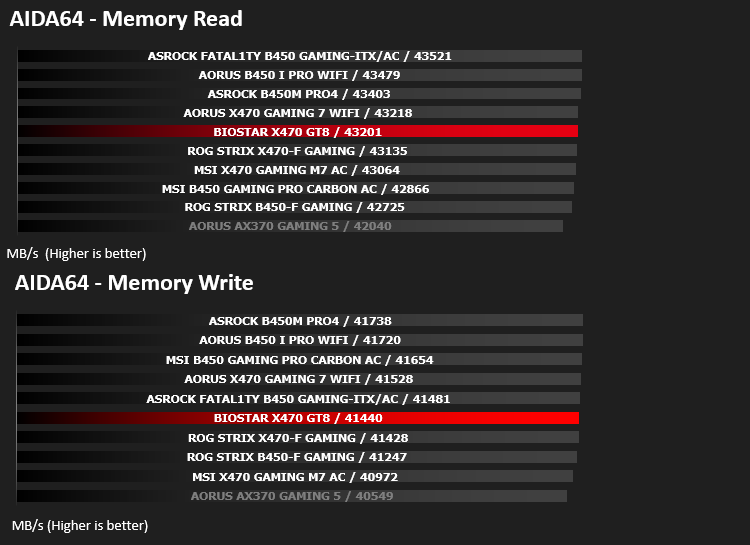
AIDA64 Product PageMemory bandwidth benchmarks (Memory Read, Memory Write, Memory Copy) measure the maximum achiveable memory data transfer bandwidth. The code behind these benchmark methods are written in Assembly and they are extremely optimized for every popular AMD, Intel and VIA processor core variants by utilizing the appropriate x86/x64, x87, MMX, MMX+, 3DNow!, SSE, SSE2, SSE4.1, AVX, and AVX2 instruction set extension.
The Memory Latency benchmark measures the typical delay when the CPU reads data from system memory. Memory latency time means the penalty measured from the issuing of the read command until the data arrives to the integer registers of the CPU.
The Memory Latency benchmark measures the typical delay when the CPU reads data from system memory. Memory latency time means the penalty measured from the issuing of the read command until the data arrives to the integer registers of the CPU.
Processing Power Performance – Cinebench R15
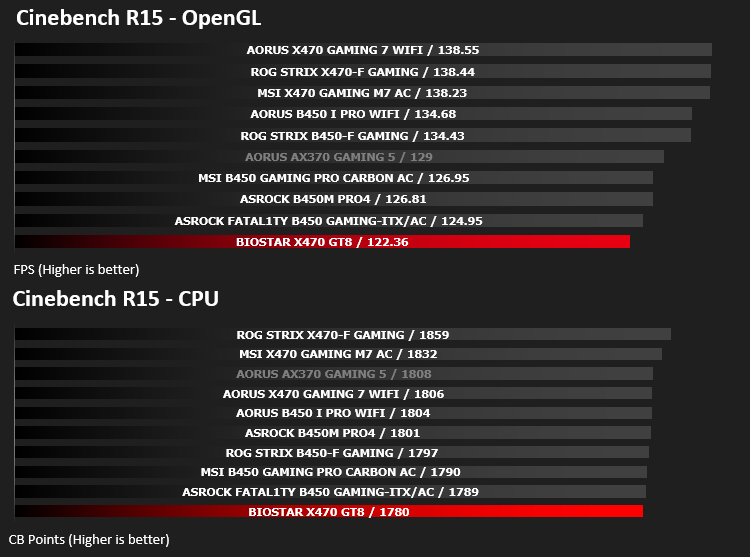
CINEBENCH can measure systems with up to 64 processor threads. This test scene contains approximately 2,000 objects which in turn contain more than 300,000 polygons in total, and uses sharp and blurred reflections, area lights, shadows, procedural shaders, antialiasing, and much more. The result is displayed in points (pts). The higher the number, the faster your processor.
Bandwidth Performance – SiSoftware SANDRA
SANDRA isn’t always a benchmark that is included in hardware reviews but I believe it shouldn’t be ignored. SANDRA provides a vigorous package that tests your system in a rather large array of benchmarks. There are many aspects of benchmark that can be executed. We will be considering – CPU and memory tests.
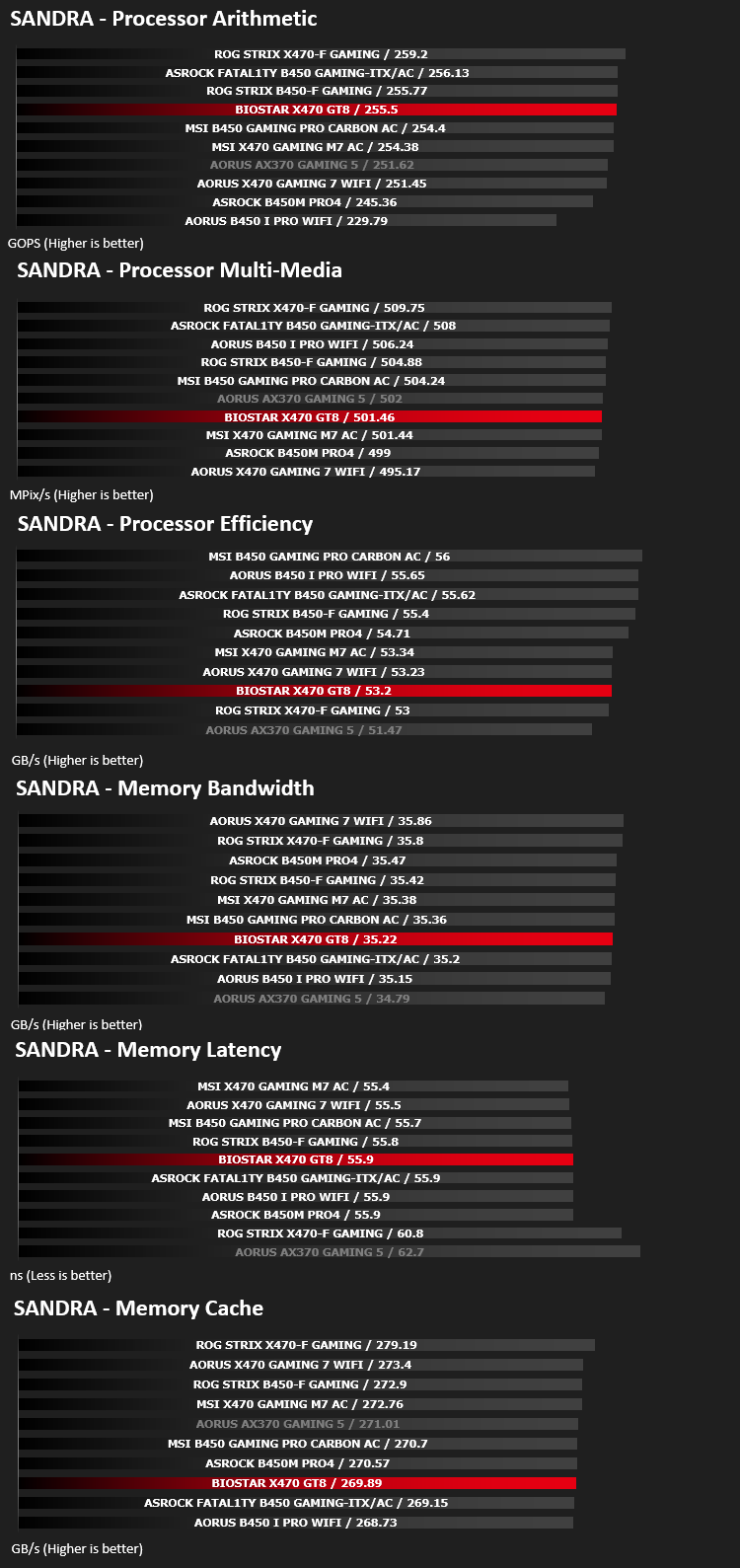
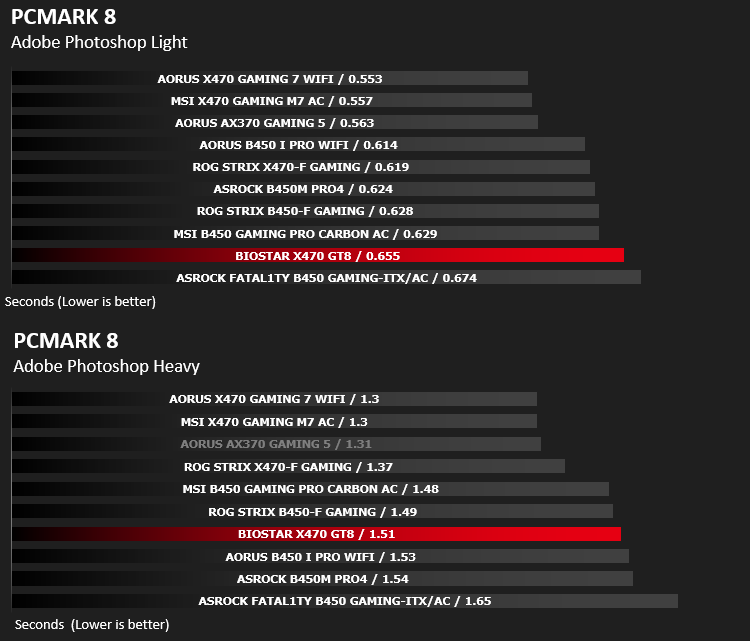
Image Editing Performance – PCMark 8 Photoshop
PCMark 8 Product Page Developed in partnership with Benchmark Development Program members Acer, AMD, Condusiv Technologies, Dell, HGST, HP, Intel, Microsoft, NVIDIA, Samsung, SanDisk, Seagate and Western Digital, PCMark 8 is the latest version in FutureMark’s popular series of PC benchmarking tools. Improving on previous releases, PCMark 8 includes new tests using popular applications from Adobe and Microsoft.
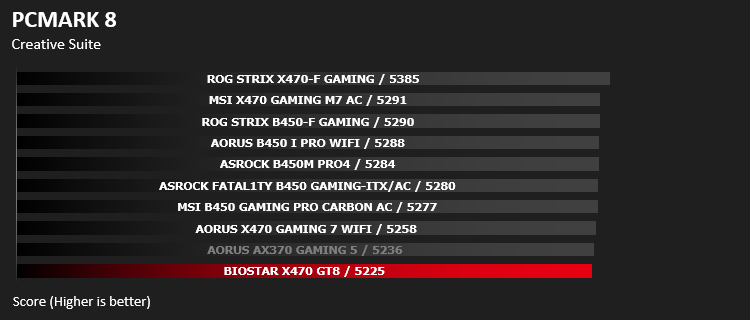
Overall System Performance – PCMark 8
PCMark 8 combines performance benchmarking with battery life measurement and includes tests based on popular Adobe and Microsoft applications. Whether you are looking for long battery life, or maximum power, PCMark 8 will help you find the devices that offer the perfect combination of efficiency and performance for your needs. It’s the complete PC performance benchmark for home and business.
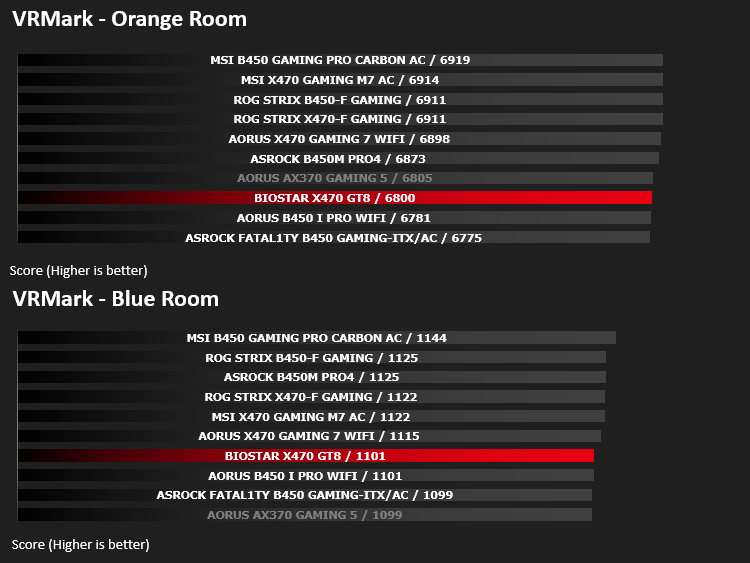
VR Performance – VRMark
VRMark Product PageVRMark includes two VR benchmark tests that run on your monitor, no headset required, or on a connected HMD. At the end of each test, you’ll see whether your PC is VR ready, and if not, how far it falls short.
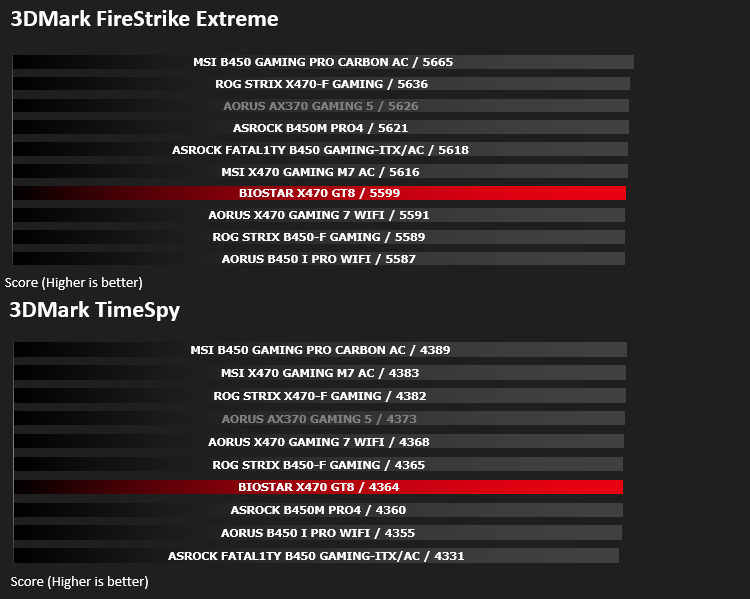
3D Performance – 3DMark
3DMark FireStrike Product PageFire Strike is our new showcase DirectX 11 benchmark designed for high-performance gaming PCs. It is our most ambitious and technical benchmark ever, featuring real-time graphics rendered with detail and complexity far beyond what is found in other benchmarks and games today. Fire Strike will only be available in the Windows editions of 3DMark initially.
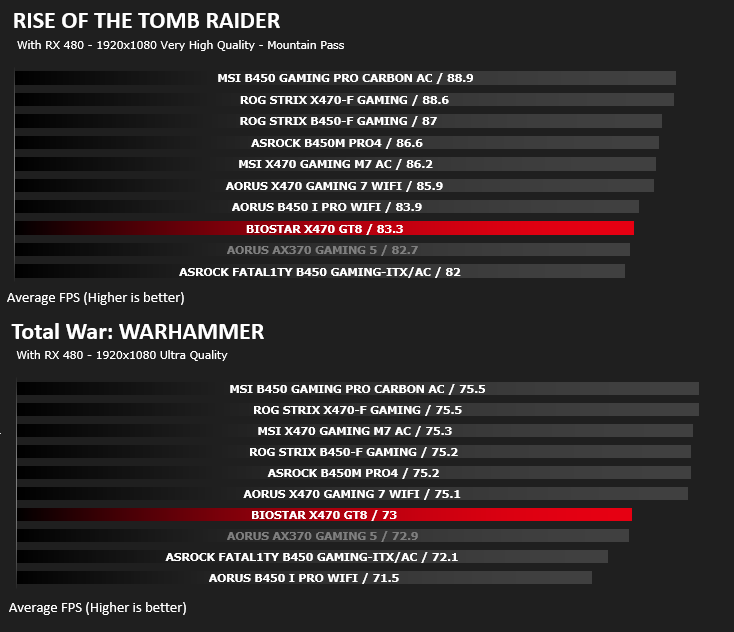
Gaming Performance – Rise of the Tomb Raider & Total War: WARHAMMER
It’s important for us to perform a number of game benchmarks as well as the synthetic tests because gamers will want to know if there are any significant benefits. So here we have two recent gaming titles.
Conclusion
With our previous experience of X470 motherboards, we had high hopes for the Biostar X470 GT8, with its relatively low pricetag, however, in testing, we were left a little disappointed.Starting off with previous problems, we began testing on this motherboard about 3 months before the release of this review, and ran into constant blue screens and other issues. We shelved the ‘board then went back to it, hoping for some BIOS updates or a fresh approach on it; we believe we located the root of the issue. With the Corsair Vengeance RAM running at 3000MHz, we were experience inconsistent blue screen events, with different codes each time. Setting the RAM at, what the system believed to be XMP, at 2933MHz @ 15-17-17-38-58, we managed to complete our testing.
Aesthetically, we’re a fan of the GT8, with the carbon fibre effect and all-black appearance, we believe it’ll fit into most builds without an issue, though the RGB lighting can be a little jarring and garish at first, especially with the random “Vivid LED DJ” writing on the IO shield.
Performance in all of our tests, most of which it was at the bottom of, let the GT8 down hugely. This may well be down to the 70MHz drop in memory speed, but it’s unlikely to cause a massive hit as seen in some benchmarks. Overall, the performance was underwhelming compared to all other X470 and most of the B450 offerings. We’d also find it difficult to recommend an X470 motherboard with a single M.2 slot, we consider a pair the bare minimum for enthusiast boards.
If you’re not bothered about overclocking and seek a cost-effective introduction to an X470 chipset, the GT8 will perform reasonably well but better performance and features aren’t too far out of reach.
Pros
+ Carbon-fibre effect looks great
+ Decent price
+ Power/reset/clear CMOS on the motherboard
+ Fast charge USB header
Cons
– RGB lighting is jarring and garish
– Only one M.2 slot
– No overclocking ability
– DDR4 XMP issues
+ Carbon-fibre effect looks great
+ Decent price
+ Power/reset/clear CMOS on the motherboard
+ Fast charge USB header
Cons
– RGB lighting is jarring and garish
– Only one M.2 slot
– No overclocking ability
– DDR4 XMP issues
Click here for an explanation of our awards at Vortez.net.
Stay connected with the Vortez Social Media pages:
Join in with the discussions on Discord