In the spotlight is a new compact Micro-ATX computer case capable of supporting up to 10 cooling fans, reverse-connector motherboards and more!

Product on Review: 2800X RS-R ARGB
Manufacturer: CORSAIR
Street Price: 89 USD | 69 GBP | 129 AUD
Compact PC cases have evolved considerably in recent years, delivering premium aesthetics and enthusiast-grade hardware support without demanding the space of a traditional mid-tower. The CORSAIR 2800X RS-R ARGB aims to strike that balance by combining a panoramic tempered glass design with impressive cooling potential, extensive hardware compatibility, and a builder-friendly layout. Despite its Micro-ATX footprint, the 2800X has been engineered to accommodate today’s flagship components while maintaining a clean, modern appearance that puts your hardware on full display.
The 2800X features wraparound tempered glass front and side panels, three pre-installed RS120-R ARGB reverse-rotor intake fans, support for up to ten 120 mm fans, and room for a 360 mm radiator in both the top and side mounting positions. Large graphics cards are well catered for thanks to 410 mm of GPU clearance, while an integrated adjustable anti-sag support helps keep heavier cards properly supported. Storage support includes a combination drive plate for either a single 3.5-inch hard drive or two 2.5-inch SSDs, and the front I/O provides both USB 3.2 Gen 2×2 Type-C and USB 3.2 Gen 1 Type-A connectivity alongside a combined audio jack. These features are complemented by removable glass panels and dust filtration to simplify both assembly and ongoing maintenance.
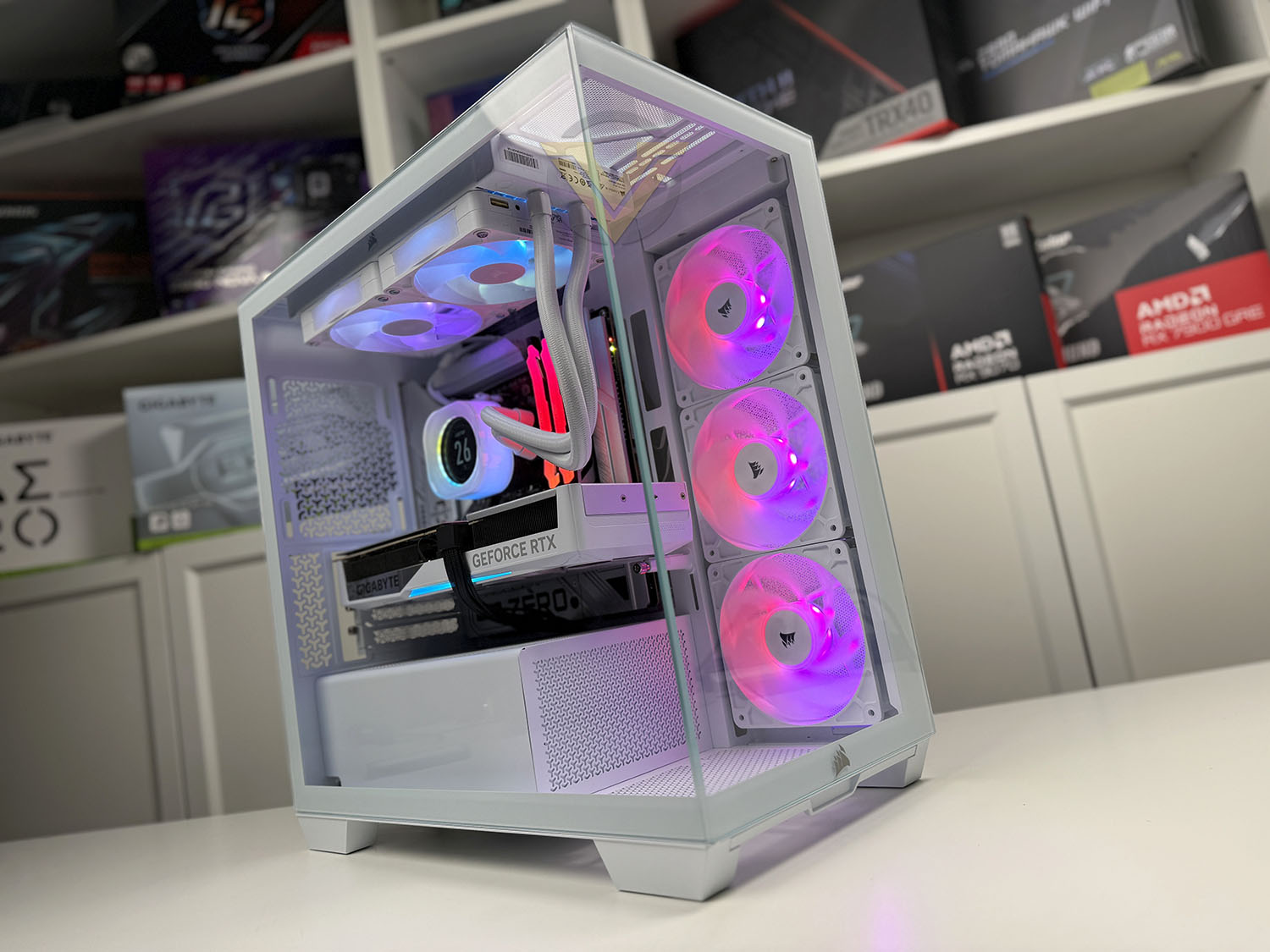
One of the standout features of the 2800X is its compatibility with reverse-connector Micro-ATX motherboards from manufacturers including ASUS BTF, MSI Project Zero, and GIGABYTE Project Stealth. By routing the majority of motherboard connections behind the tray, these boards allow for exceptionally clean cable management, perfectly complementing the case’s panoramic design. Combined with generous cable routing space, a standard ATX power supply mount, and support for both Mini-ITX and Micro-ATX systems, the 2800X is designed to appeal equally to first-time builders and experienced enthusiasts looking to create an exceptionally tidy showcase build.
In this review, we’ll be building a complete Micro-ATX test system inside the 2800X, using a reverse-connector motherboard to evaluate just how well the chassis takes advantage of its cable management features and builder-friendly design. We’ll also examine the installation process, component compatibility, cooling flexibility, and overall user experience to see whether the 2800X delivers on its impressive feature set.
Closer Look Video Review
For this review we’ve also created a YouTube video which highlights all of the key features, shows a full system install and identifies the good/bad points regarding this computer case. Click the video below or go to the CORSAIR 2800X RS-R ARGB:
Thermal Performance Testing
Inside 2800X there are three 120mm cooling fans – in a push configuration, mounted to the side of the case.
To discover the thermal performance of 2800X we will record idle temperatures after 20 minutes from a cold boot. We will then stress the system and temperatures will again be monitored after 30 minutes have elapsed.
For the purpose of accurate analysis, the idle and load temperatures for CPU will be recorded and the range between idle and load will be calculated to determine how efficient cooling is.
NOTE: Ambient temperature is 20C
We only have a few results for this configuration since it is Micro-ATX and reverse connector:
System Components
CPU AMD Ryzen 9 9900X
Motherboard MSI B650M Project Zero
CPU Cooler CORSAIR iCUE Link Titan 240
Graphics GIGABYTE RTX 5070 TI EAGLE
Memory 64GB HYPERX FURY 7600MHz
SSD 1TB Samsung 840
PSU CORSAIR SHIFT RM850X
Motherboard MSI B650M Project Zero
CPU Cooler CORSAIR iCUE Link Titan 240
Graphics GIGABYTE RTX 5070 TI EAGLE
Memory 64GB HYPERX FURY 7600MHz
SSD 1TB Samsung 840
PSU CORSAIR SHIFT RM850X
Noise
2800X is surprisingly quiet when it comes to noise emission. To see the audio results please check out our video review.
Conclusion
The 2800X delivers an impressive combination of style, practicality, and enthusiast-focused features in a compact Micro-ATX form factor. Its wrap-around tempered glass design gives it a premium showcase appearance, while support for reverse-connector motherboards allows builders to take full advantage of cleaner cable routing than ever before. Rather than simply focusing on aesthetics, CORSAIR has designed a chassis that is genuinely enjoyable to build in, with a well-thought-out internal layout that makes component installation straightforward from start to finish.
Cooling is another area where the 2800X bodes well. The inclusion of three RS-R ARGB reverse-rotor fans provides good airflow while keeping the attractive fan blades visible through the glass panels. Support for up to ten 120 mm fans and the ability to install a 360 mm radiator within such a compact enclosure offers an impressive amount of cooling flexibility. The integrated GPU anti-sag bracket is another welcome addition, helping to support today’s increasingly heavy graphics cards without the need for aftermarket accessories.
Building inside the case proved to be one of its strongest qualities. The reverse-connector motherboard compatibility works exactly as intended, making cable management exceptionally clean, while the generous routing channels and tie-down points make organising cables remarkably easy. Even smaller touches, such as the pre-installed PSU mounting thumbscrews, help streamline the build process and demonstrate that careful attention has been paid to the overall user experience.
The 2800X isn’t without compromise, however. Storage options are somewhat limited compared to larger chassis, particularly if you’re installing a CORSAIR iCUE LINK System Hub, as this can occupy mounting space that would otherwise be available for another drive. Similarly, while radiator support is excellent, out of the box a push/pull fan configuration isn’t present.
At around $89 USD, however, the 2800X represents excellent value for money. It combines premium styling, thoughtful design features, strong cooling support, reverse-connector motherboard compatibility, and an exceptionally builder-friendly layout into an affordable package. Aside from its relatively modest storage capacity and the lack of native push/pull radiator support, there is very little to criticise.
For anyone looking to build a clean, modern Micro-ATX system that punches well above its price point, the 2800X is an easy recommendation.
Pros
+ Unique wrap-around design
+ Supports reverse-connector motherboards
+ Is very easy to build inside
+ GPU anti-sag feature
+ Includes 3x ARGB reverse rotor fans
+ Compact but can still house 360mm radiator
+ Pre-installed thumbscrews for PSU install
+ Excellent cable management options
+ Is able to house up to 10 cooling fans
+ Decent value for money at $89 USD
Cons
– Limited storage (especially with LINK hub installed)
– Lacks push/pull cooling configuration out of the box
Click here for an explanation of our awards at Vortez.net.+ Unique wrap-around design
+ Supports reverse-connector motherboards
+ Is very easy to build inside
+ GPU anti-sag feature
+ Includes 3x ARGB reverse rotor fans
+ Compact but can still house 360mm radiator
+ Pre-installed thumbscrews for PSU install
+ Excellent cable management options
+ Is able to house up to 10 cooling fans
+ Decent value for money at $89 USD
Cons
– Limited storage (especially with LINK hub installed)
– Lacks push/pull cooling configuration out of the box
Stay connected with the Vortez Social Media pages: