A premade system for performance gamers by UK system integrators Cyberpower PC, the X10 Infinity RTX powered by Intel and NVIDIA certainly has the specs but can it live up to the promise?

Product on Review: Cyberpower Infinity X10 RTX
Manufacturer: Cyberpower PC
Street Price: £2199 inc. V.A.T. (as configured)
Introduction
Assembling your own system is, for many of our readers, key to the fun derived from the hobby that is PC gaming. Whether it be to a tight £450 or stonking £3000 budget, there is a tangible pleasure in unboxing each individual component and creating your own thing, potentially even an end result that’s quite unique. Not everyone feels the same way however, which is where ‘system integrators’ such as Cyberpower PC come into play.
In providing a framework for a build within a given budget range and then offering configuration options to tweak overall performance, SI’s can take a huge amount of the hassle out of purchasing a new system. Whether it be a lack of confidence in handling expensive components, personal time constraints, or just needing that additional peace of mind, companies like Cyberpower PC are valuable alternative outlet for entering into the hobby or getting to the next step for your personal or business hardware needs.
Take for example the Cyberpower Infinity X10 RTX. This configurable system sits at the head of Cyberpower’s Gaming PC range, featuring NVIDIA GeForce RTX hardware and Intel’s 10th Generation Core processors for enthusiast-level performance tailored to your own needs. A plethora of options include dozens of different cases and cooling options, A-RGB LED lighting, sound deadening material and of course key individual components to help you along your road to gaming greatness.
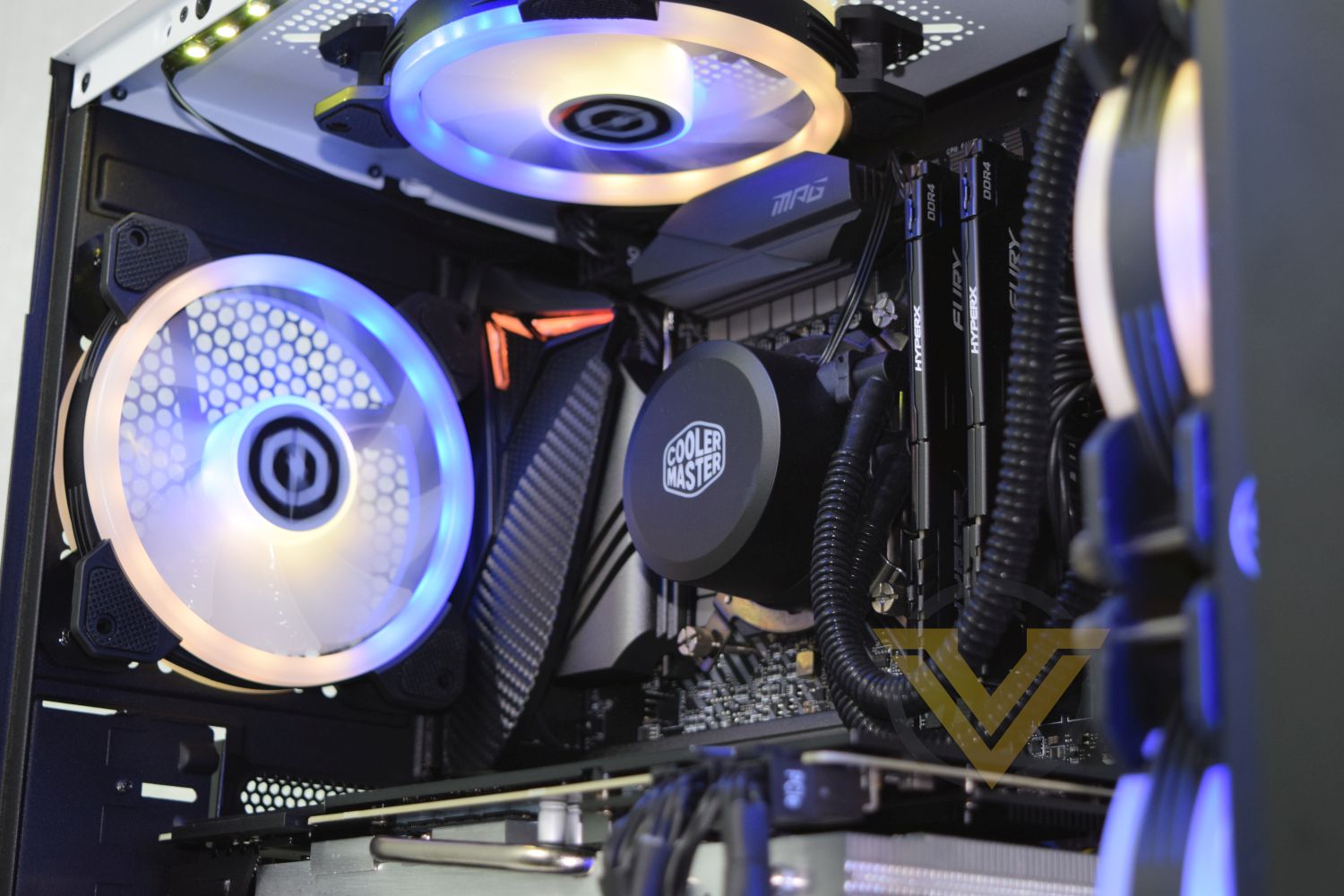
Each system is assembled to order and put together with care, with particular attention given to internal cable management so it looks its best wherever it may be used. If overclocking is not your forte they also offer a guaranteed performance boost, the magnitude of which depends on the chosen processor and cooling solution. All-in-all, it’s a comprehensive solution that aims to defy the reputation for restrictive design common to pre-assembled systems of yesteryear.
The model we’re reviewing today is a top-notch configuration equipped with Intel’s Core i9-10900KF, an NVIDIA GeForce RTX 2080 SUPER, MSI Z490 Motherboard, NVMe SSD and 16GB of DDR4 memory. The system is housed within a compact mid-tower chassis from NZXT and also incorporates RGB lighting and AIO cooling for a sharp, crisp finish. The question is, does it live up to its enormous promise and justify its £2200 price?
About Cyberpower PC
Originally founded in the United States, Cyberpower Inc is one of the leading brands in the competitive US computer market. With vast global backing from leading technology brands such as Intel, AMD, Nvidia, Asus and Microsoft etc, we aim to deliver the most up to date hardware for your needs at wholesale prices, and bring the well renowned name of Cyberpower Inc to the UK. With vision, commitment and determination we can manufacture a vast range of custom built PC systems to suit the needs of any individual or company. Our PC systems are built with utmost care and attention as we strive towards making this not just our profession, but our obsession.
Technical Specifications
Processor: Intel Core i9-10900KF OEM
Graphics Card: MSI RTX 2080 SUPER VENTUS XS OC 8GB
Motherboard: MSI MPG Z490 GAMING CARBON WIFI
Memory: 16GB (2x8GB) HyperX Fury Black DDR4-3200
Storage:
ADATA XPG SX8200 PRO NVME PCIE GEN.3 SSD 512GB
SEAGATE 2TB SATAIII 256MB ST2000DM008
Chassis: NZXT H511 CASE MATTE WHITE
PSU: CORSAIR RM750X
CPU Cooler: Cooler Master Master Liquid Lite 240
Additional:
4x 120mm Cyberpower RGB fans
2x 600mm A-RGB LED strips
LED Controller Hub
Microsoft Windows 10 OEM (license included)
Graphics Card: MSI RTX 2080 SUPER VENTUS XS OC 8GB
Motherboard: MSI MPG Z490 GAMING CARBON WIFI
Memory: 16GB (2x8GB) HyperX Fury Black DDR4-3200
Storage:
ADATA XPG SX8200 PRO NVME PCIE GEN.3 SSD 512GB
SEAGATE 2TB SATAIII 256MB ST2000DM008
Chassis: NZXT H511 CASE MATTE WHITE
PSU: CORSAIR RM750X
CPU Cooler: Cooler Master Master Liquid Lite 240
Additional:
4x 120mm Cyberpower RGB fans
2x 600mm A-RGB LED strips
LED Controller Hub
Microsoft Windows 10 OEM (license included)
Intel’s Core i9-10900K is part of their flagship 10-core/20-thread CPU range operating at clock speeds up to 5.3 GHz. Its raw performance metrics are on par with the i9-10900K but dispenses with the chip’s integrated GPU, a fact that’s unlikely to be a hardship in a desktop system with discrete graphics card. The i9-10900KF is a best-in-class solution for gaming due to exceptional raw clock speed, yet the high number of processor cores also makes it a flexible solution for gaming, streaming and workhorse applications such as video rendering.
NVIDIA’s RTX 2080 SUPER was part of the 2019’s GeForce RTX 20-series refresh and incorporates considerably more shaders than the RTX 2080. It supports all the current crop of RTX features including real-time ray tracing and DLSS 2.0, despite the Turing architecture now approaching two years old. It will on paper handily cope with all current generation games at the enthusiast standard of 1440p60, and prepare you for the next generation beginning with Cyberpunk 2077 this holiday season. This variant from MSI arrives with proprietary cooling and factory overclock.
MSI’s MPG Z490 GAMING CARBON WIFI is based on Intel’s Z490 chipset but is also equipped with a comprehensive set of features beyond the basic level. In addition to overclocking support for all LGA 1200 K-series processors, the all-black CARBON WIFI also adds Intel WiFi 6 support, 2.5G LAN, Dual M.2 slots, augmented VRM cooling and configurable RGB lighting. In truth, it’s an exceptionally high-end component for the gaming segment.
Sixteen gigabytes of DDR4 memory is the recommended level for gaming systems today, and 3200MHz is a good spot for Intel-powered systems. AMD 3rd Gen Ryzen configurations would push to 3600MHz to compensate for relatively high CPU latency and leverage their large L3 cache. The relatively affordability of RAM at the present moment would lean us towards 32GB. HyperX meanwhile, a subsidiary of Kingston Technology, are a reliable memory manufacturer to opt for.
The storage configuration is robust for a gaming system, with ADATA’s 512GB NVMe offering sufficiently high performance for a boot and primary gaming drive, while the 2TB Seagate Barracuda is appropriate for long-term storage of files and games less impacted by storage speeds. We’re pleased to see that Cyberpower PC view an M.2 NVMe SSD as an integral part to a premium gaming system, something which we view as standard but not echoed across all quarters.
Last but not least is the CORSAIR RM750X PSU. Both hobbyist builders and major system integrators have often been guilty of scrimping on the power supply, but that’s not the case in this instance. The RM750X is a rock-solid choice, and in fact the entire field of potential PSU options in the Infinity X10 RTX configurator are good choices for an appropriate budget level.
Value
Core Component Retailer Pricing
Intel Core i9-10900KF:- 589.99
MSI RTX 2080 SUPER VENTUS:- 749.99
16GB HyperX Fury RAM:- 64.00
512GB ADATA NVMe SSD:- 69.99
2TB Seagate Barracuda HDD:- 52.34
Corsair RM750X:- 129.98
Cooler Master Master Liquid 240 Lite:- 49.99
MSI MPG Intel Z490 GAMING CARBON WIFI:- 259.99
NZXT H510*:- 74.99
Total: £2041.26 (inc. V.A.T., excl delivery)
The NZXT H511 is a model exclusive to SI’s but with few changes from the H510
MSI RTX 2080 SUPER VENTUS:- 749.99
16GB HyperX Fury RAM:- 64.00
512GB ADATA NVMe SSD:- 69.99
2TB Seagate Barracuda HDD:- 52.34
Corsair RM750X:- 129.98
Cooler Master Master Liquid 240 Lite:- 49.99
MSI MPG Intel Z490 GAMING CARBON WIFI:- 259.99
NZXT H510*:- 74.99
Total: £2041.26 (inc. V.A.T., excl delivery)
The NZXT H511 is a model exclusive to SI’s but with few changes from the H510
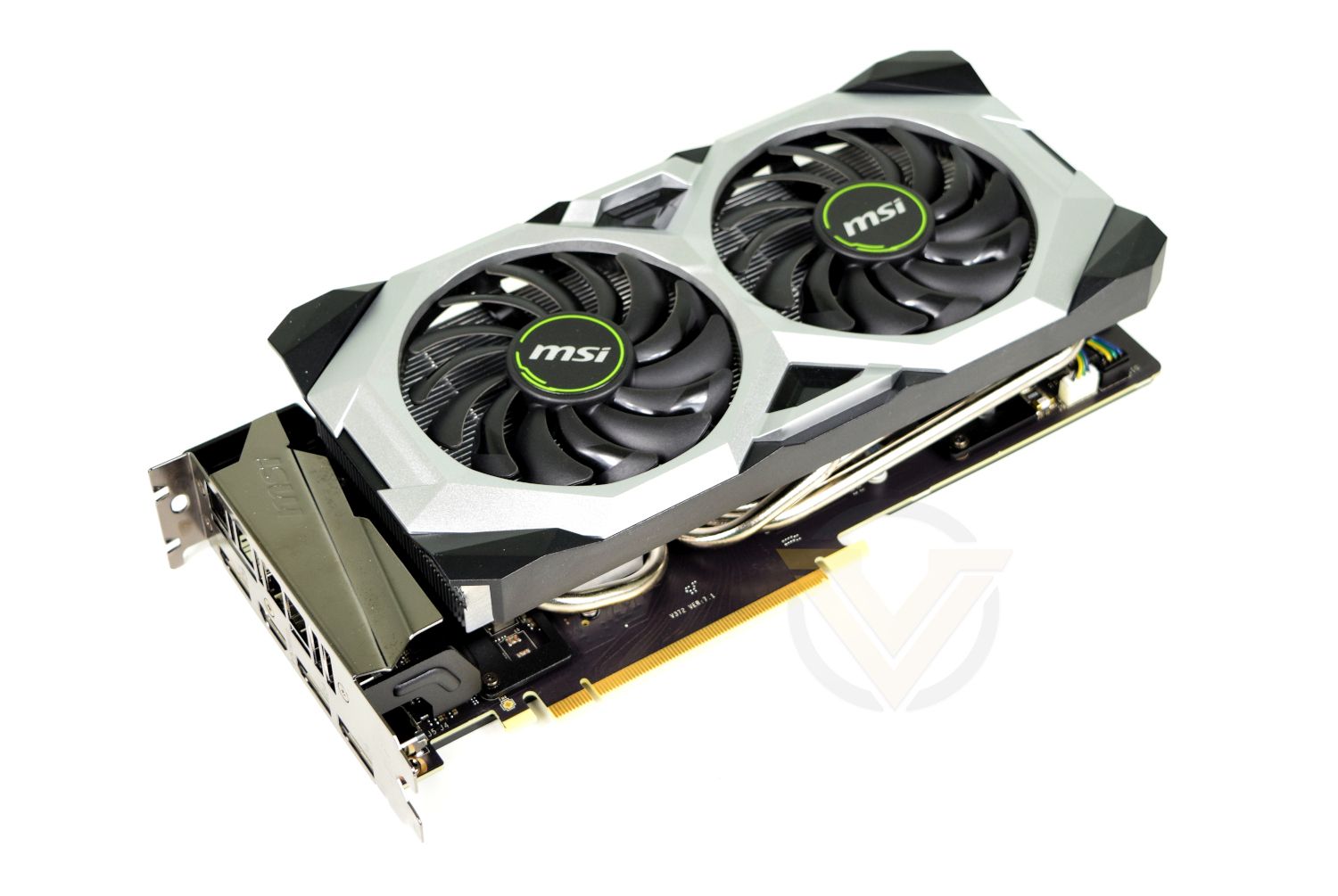
MSI’s RTX 2080 SUPER VENTUS 8G OC is by some margin the most expensive component in this configuration
The differential between Infinity X10 RTX as configured and combined retail pricing for each of its major components is £159, less than 10% of the overall system price. This covers the RGB fans and lighting, Windows 10 Installation, 1yr Bullguard Internet Security, 3 year limited warranty (2 years for parts) and system assembly including testing. Standard Insured delivery to mainland UK is included in the price.
On the face of it this seems like exceptional value for customers who place a premium on their time or worry about their personal expertise, but that conclusion is also contingent on acceptable cable management and good long-term support. The latter cannot be assessed in a short-term review but, given the wide range of component choices available through the Infinity X10 RTX configurator, at no point would we be dissuaded from opting for their route to putting together a system.
Packaging and Bundle
The Infinity X10 RTX was shipped assembled in the packaging for the NZXT H511 chassis. In general this is acceptable, but customers should ensure they double-check the exterior for signs of damage during transit.
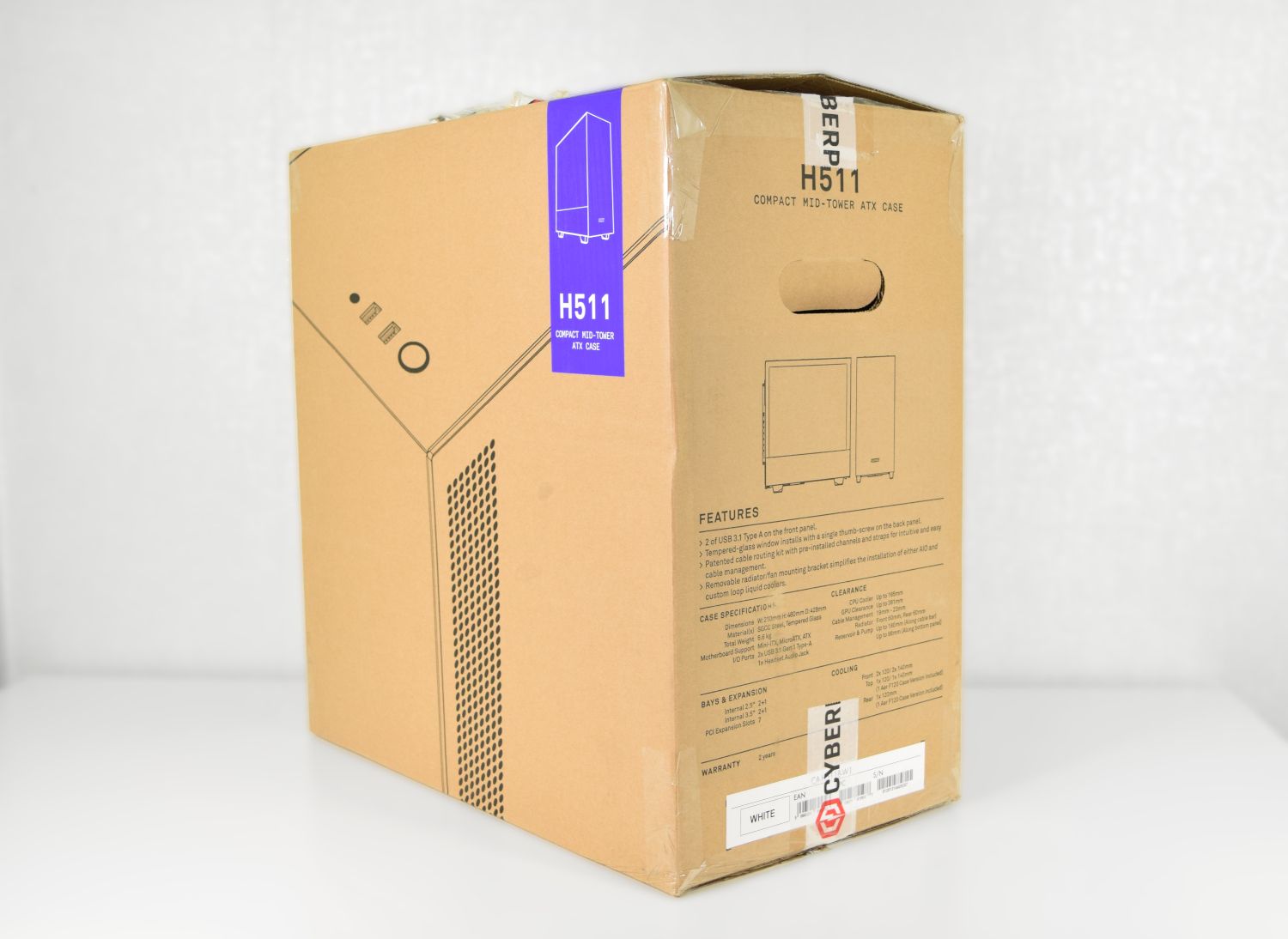
Note that the weight of the package will be significantly higher than the chassis alone.
Air pillows and an expandable foam packet ensure that internal system components are held securely in place during transit, and in the short term should be retained for returning the system if necessary. Opting for a AIO Liquid CPU cooler reduces the stress on the socket during shipping, significantly reducing the risk of damage.
Remove all internal and external packaging and check power connectors prior to booting up the system.
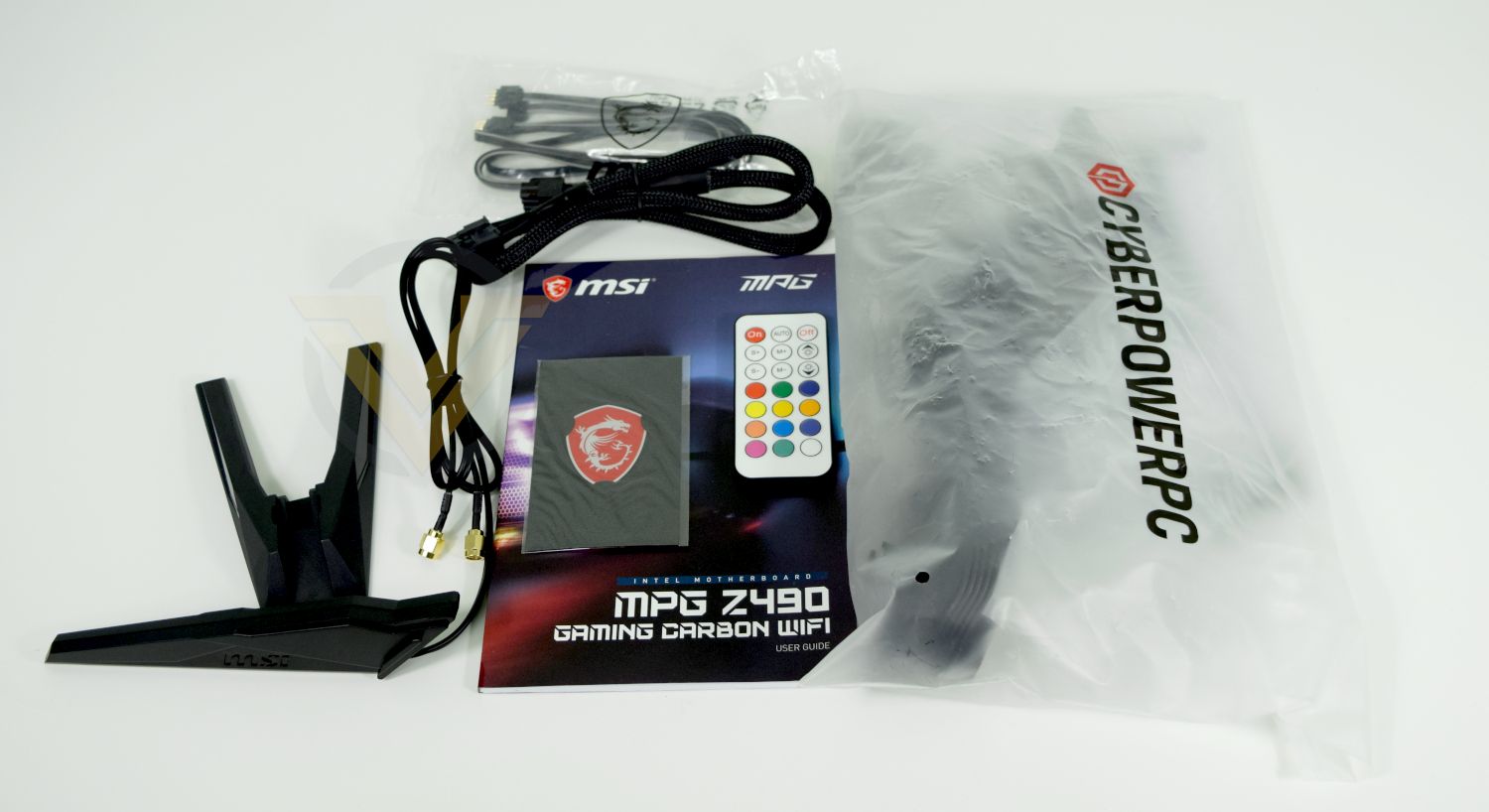
An accessory pouch contains what couldn’t be conveniently packaged within the system chassis. In this instance spare PSU cables, cables bundled with the MSI Z490 motherboard, the wireless networking antenna and stand, and RGB controller remote are all safely tucked away here during shipping.
Closer Look
NZXT’s H511 has sharp lines and a classy look that’s only slightly marred by the inclusion of Cyberpower’s logo on the lower front fascia. It’s held in place with an adhesive and so is removable if strictly necessary.The entire front is solid steel in matte white, with no perforations to speak of. It’s immediately obvious that air flow has the potential to be of concern given the higher performance components inside. No 5.25” bay means no space for optical drives, just in case you were still stuck in the 1990’s.
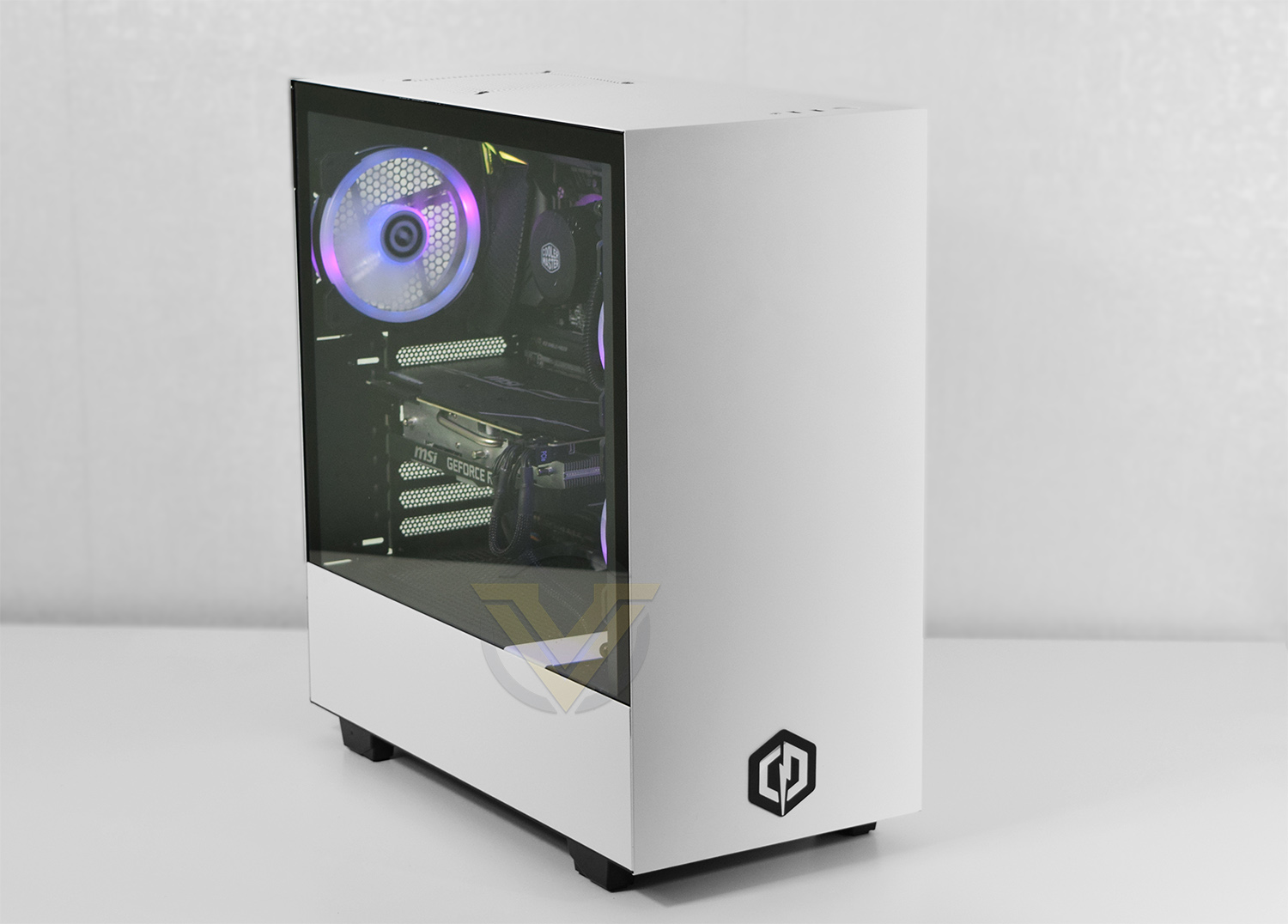
A 3-quarters height tempered glass side panel dominates the left side of the chassis, with the bottom quarter masking PSU and HDD bays. It’s an attractive solution that lends some confidence when removing the glass side panel, but also means that access to the PSU is solely from the other side.
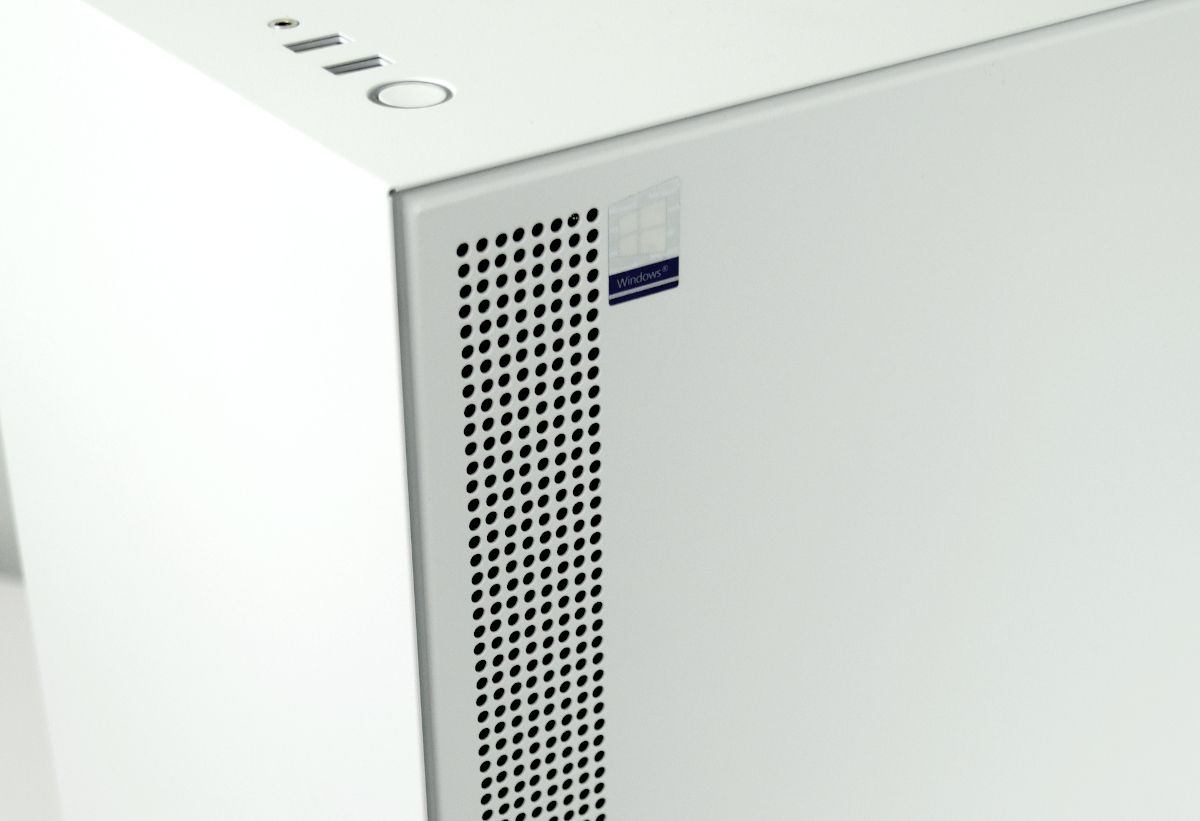
At that other side a steel side panel maintains the sleek looks of the H511. A perforated section running down the panel is the case’s main air intake, with filtered air being drawn through the Master Liquid 240mm radiator. A smaller filtered intake is also present on the floor of the chassis.
Air flow cooling the PSU is isolated by a further intake on the floor of the chassis and direct exhaust out the rear, maintaining that component’s temperature but not meaningfully changing the air flow dynamics within the main section of the chassis.
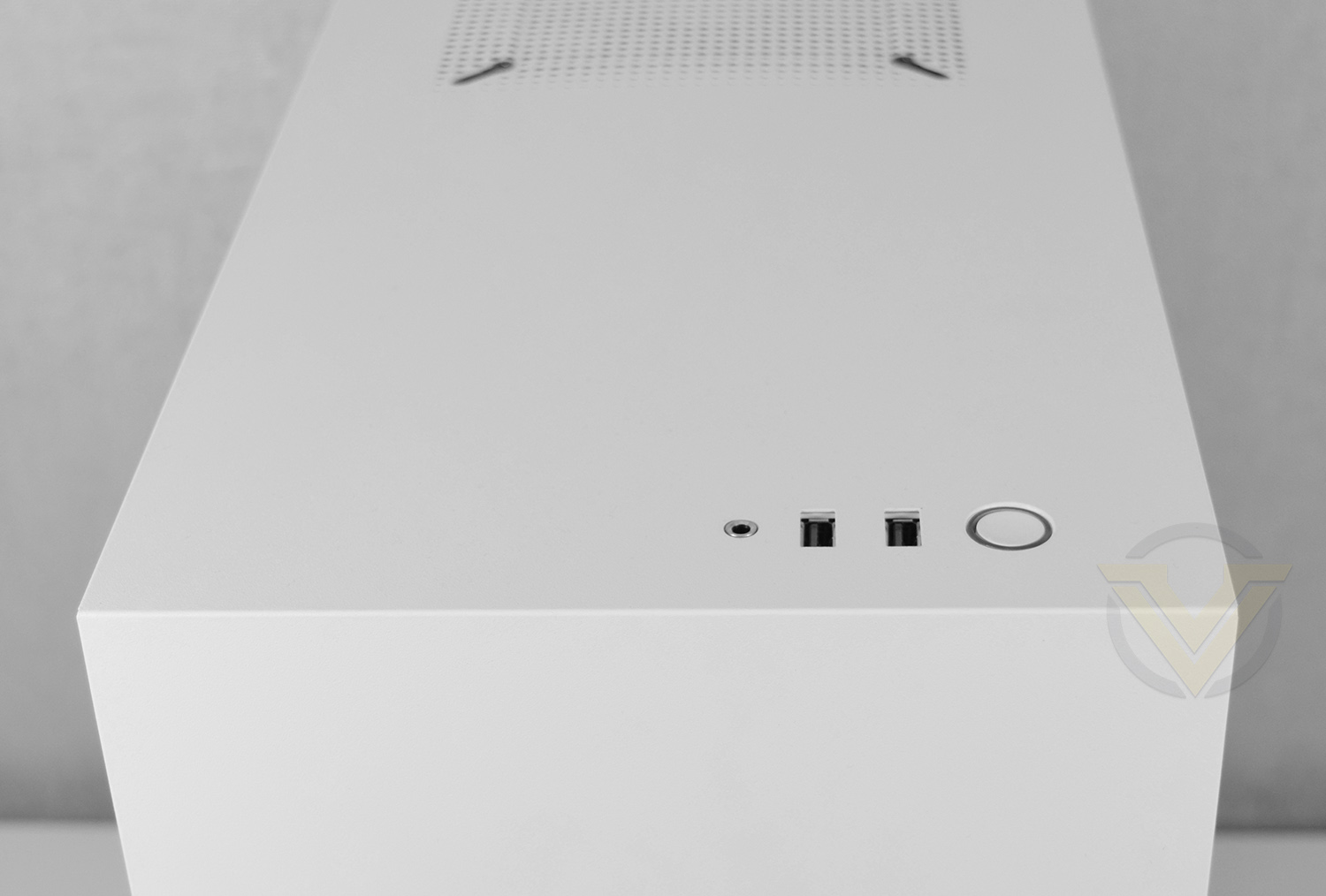
The IO panel – located on the top of the chassis at the front – is limited to two USB 3.0 ports and a single multi-function audio jack alongside the illuminated power button. Further back is a single 140/120mm fan exhaust where a 120mm RGB fan comes pre-installed, but this location is not filtered for dust ingress. It’s disappointing that unlike the H510 the H511 isn’t equipped with a front panel USB Type-C connector given that the motherboard selected does support this feature.
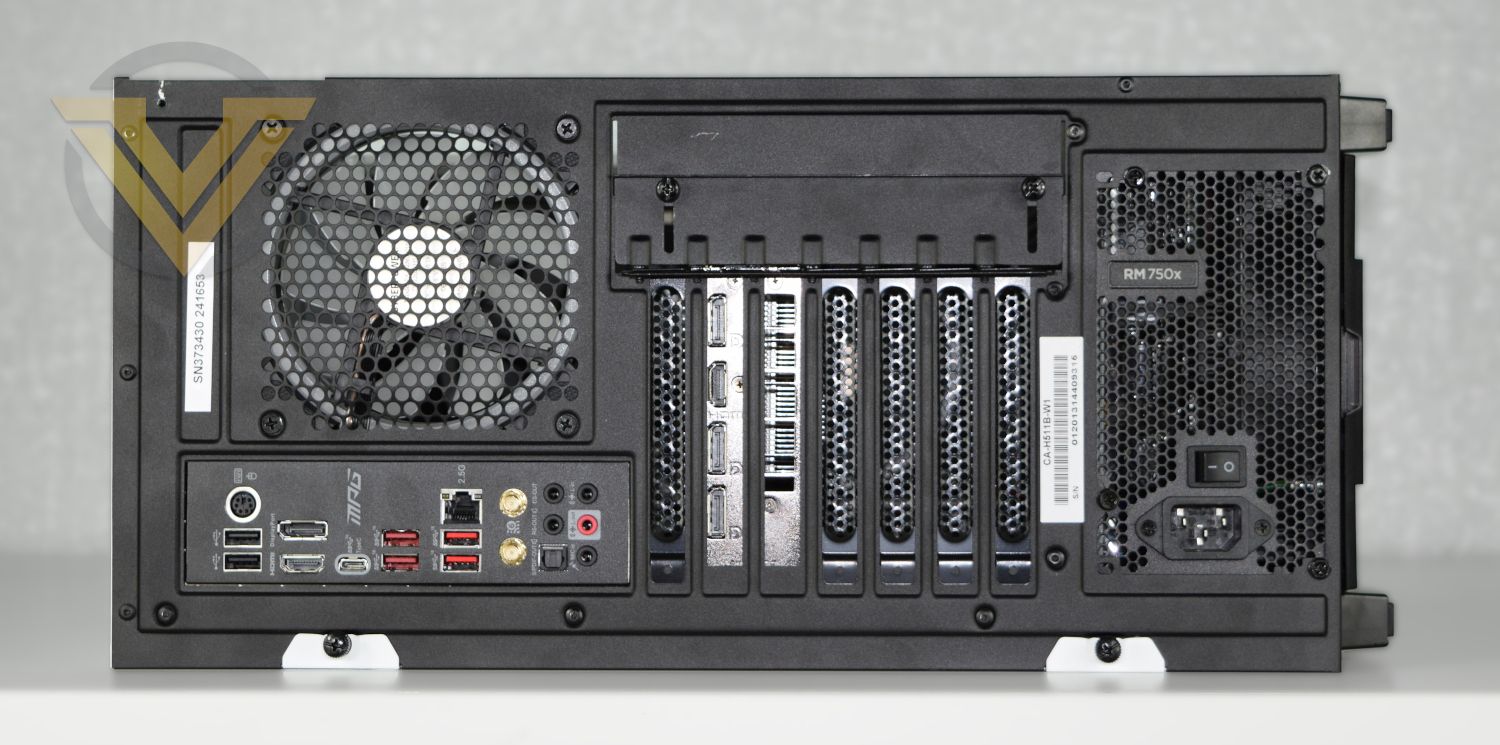
Transitioning to the rear shows a fairly standard configuration of 120mm fan exhaust, ATX rear I/O, seven PCI slots (with tool-less installation) and floor-mounted PSU location. The thumbscrews for both side panels are captive, easing removal and re-installation.
Overall the system is a compact 460mm tall, with additional clearance necessary for installed USB devices and air exhaust. That’s a good height to be positioned on or below a desk, and doesn’t dominate the desk top as much as a full tower chassis would.
Closer Look (Internals)
Sliding off the window exposes the Infinity X10’s internals, and it’s a treat.
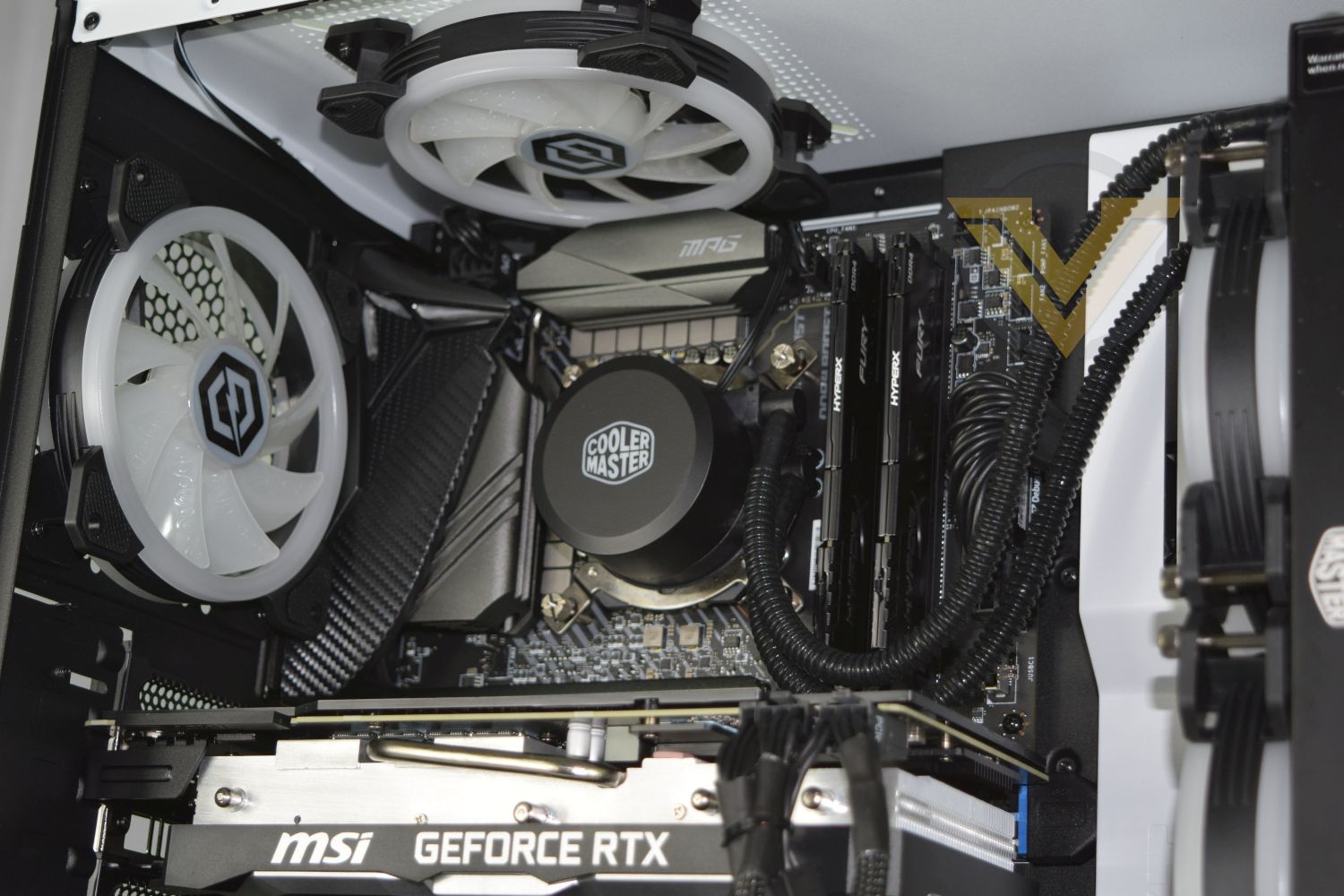
Cyberpower should be credited here with an exceptionally clean build and components that complement each other aesthetically. A monochrome base with black as the major colour acts as a great canvas for your own RGB lighting, whatever colour you choose. Masking off the PSU section with a shroud keeps the cables away from prying eyes too.
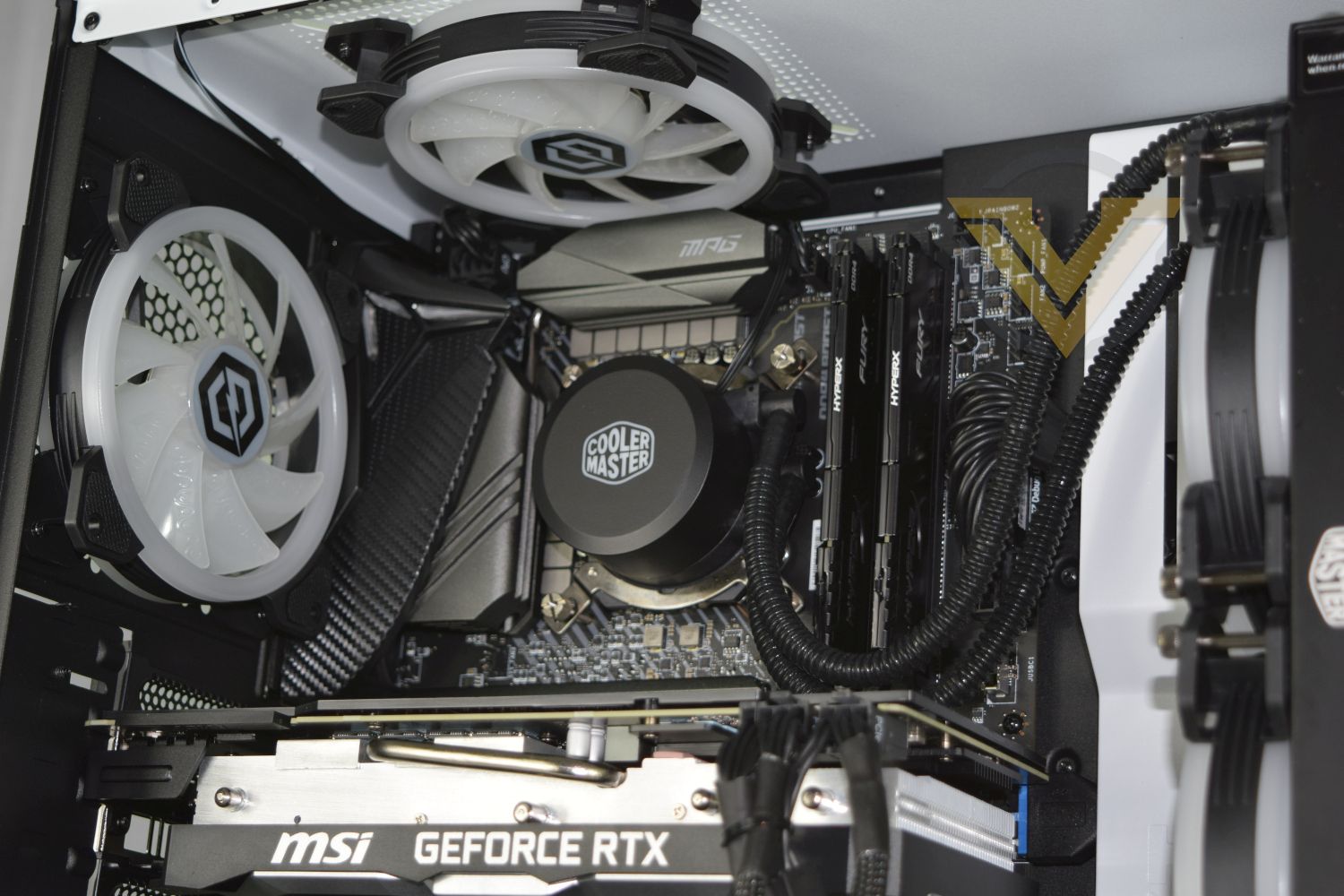
Perhaps the only disappointment for the true aesthetic aficionados will be the lack of vertical GPU mounting capability. Sadly this alternative graphics card mounting orientation isn’t possible on the H511 without 3rd party tools, but there are plenty of other chassis options to choose from.
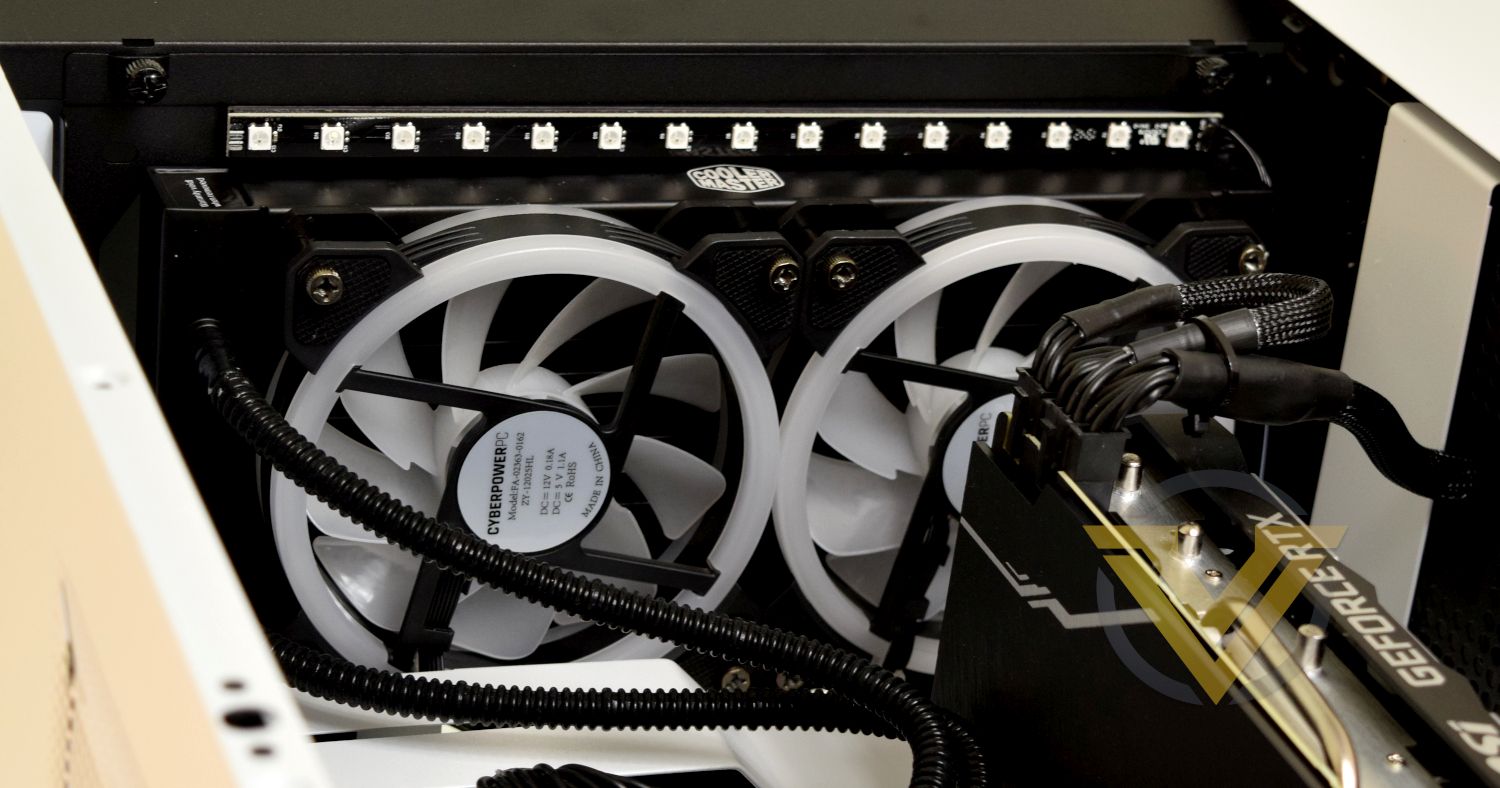
Two 120mm Cyberpower RGB fans are mounted to the Cooler Master Master Liquid 240 Lite’s radiator rather than the standard pair, drawing cool air into the chassis and through the radiator. Similar fans are mounted in the roof and rear, acting as exhausts. A strip of SMD LEDs next to the cooler and in the roof augment the RGB lighting, and are linked to the same RGB controller as the fans.
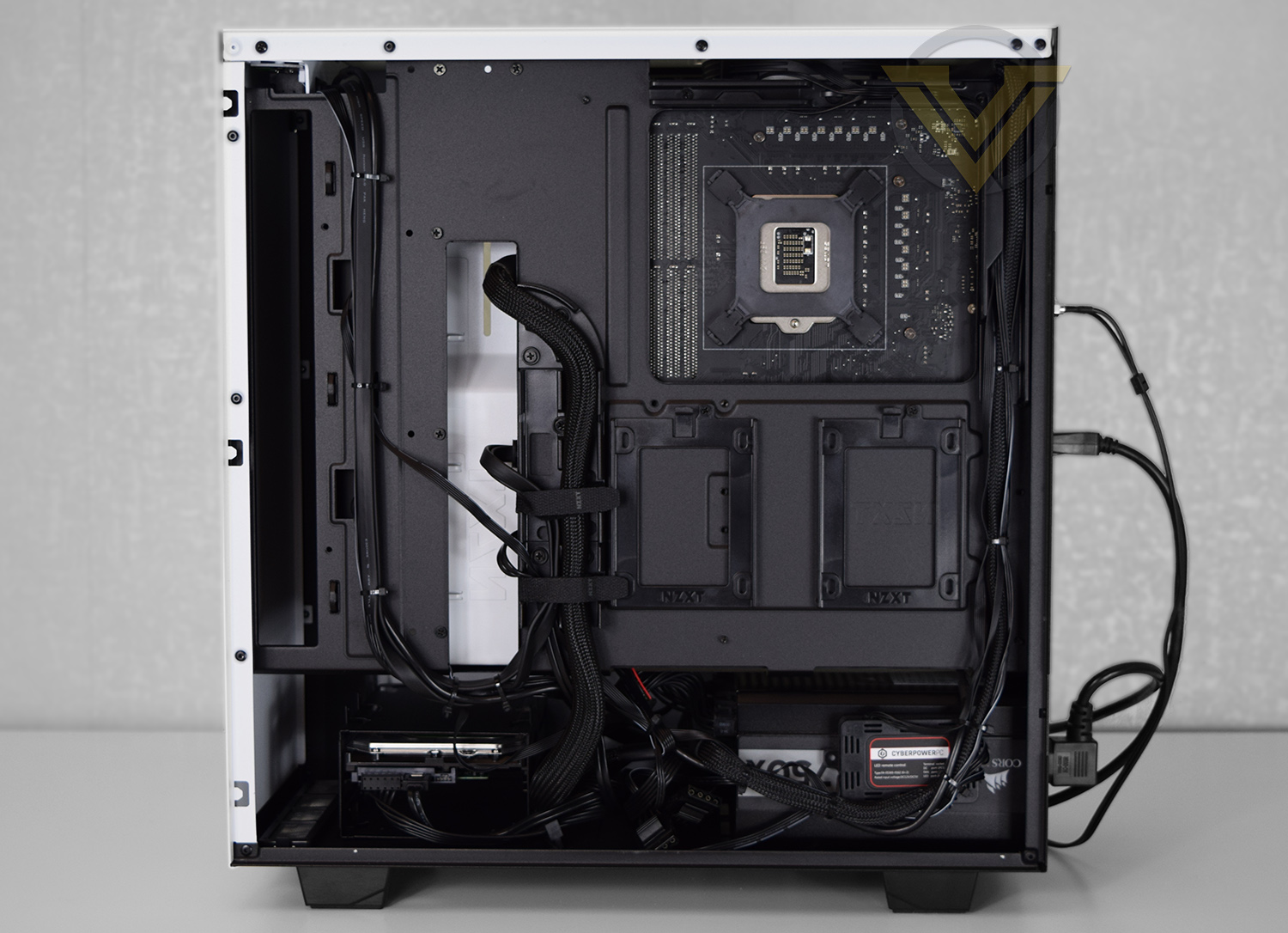
A quick glance behind the motherboard tray demonstrates Cyberpower’s attention to detail. Tidy, well thought-out cable management speaks to their experience, and with no extraneous lengths flapping about they’re not liable to get caught between the case and side panel. Use of velcro cable ties should also make it relatively easy to add to without ruining the overall effect.
A single (Cyberpower branded) RGB controller hub has been attached to the PSU for relatively easy access and expandability. ARGB LED lighting is controlled via the included wireless remote, which has been pre-configured with a wide variety of modes, colour presets, and on-the-fly adjustment capability.
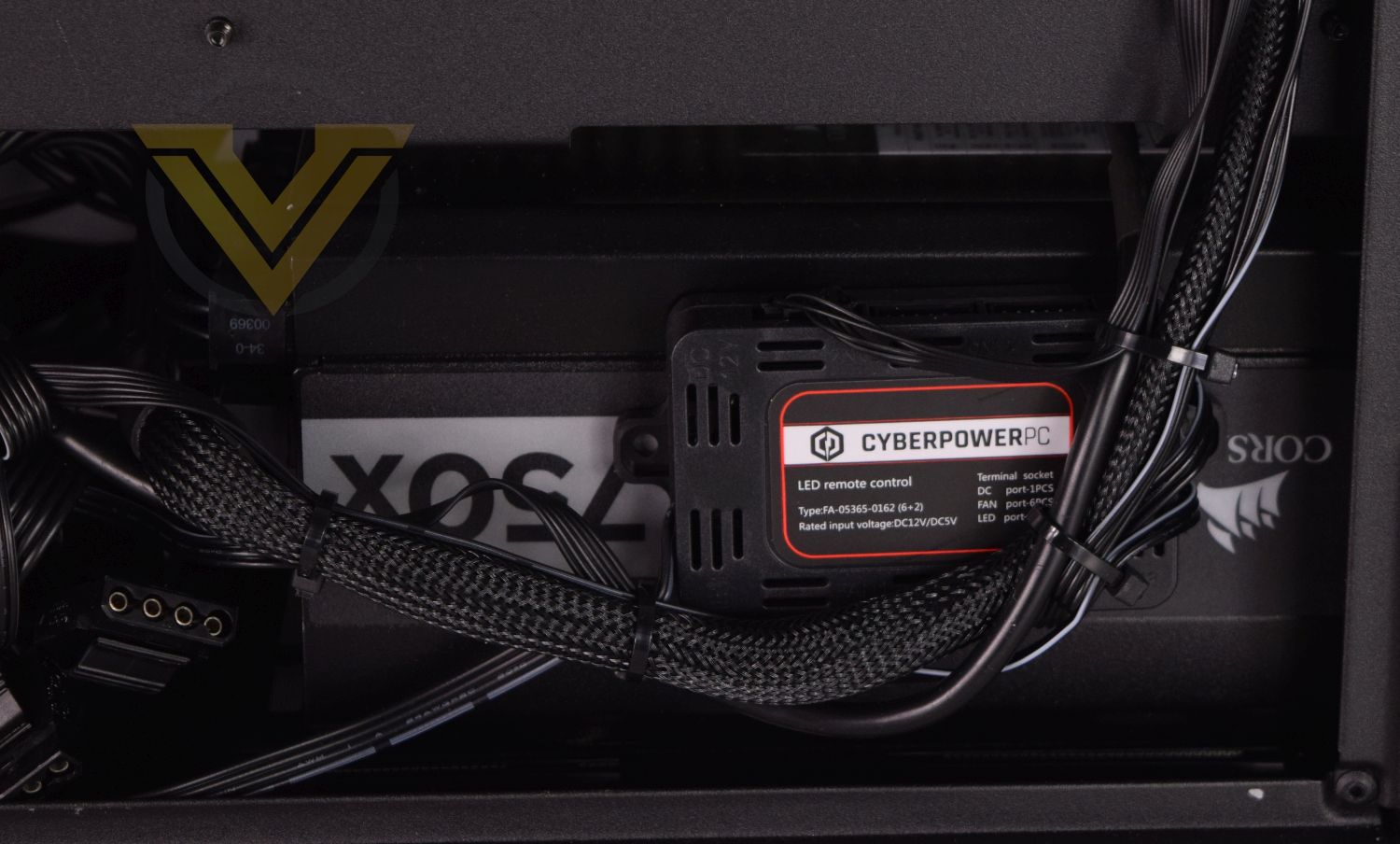
Overall, the fit and finish of the Infinity X10 RTX is exceptional.
Benchmarks: Temperatures, Power Draw & Boot Time
For our first benchmark test we observe the max. CPU/GPU temperatures of the system while allowing Unigine Heaven 4.0 to run on a 30-minute loop with default system fan profile. To report back on the temperatures we use RealTemp and GPU-Z which provide the peak figures.
The maximum temperatures achieved during the testing period were not exceptional, but we should note that the default fan speed of this system was high and clearly audible over ambient noise.
—
System power draw readings at the wall were taken using a digital power meter during long idle and gaming load, allowing us to broadly assess overall power draw and PSU suitability. Lighting was disabled during this period.
* We should also note that standby power draw was ~2.2W, and average power draw during gaming was ~356W.
80 PLUS Gold Efficient PSUs are at the top of their rated efficiency curve at ~50% power draw, which for the RM750x is ~375W. This unit would therefore be ideal for a gaming system with typical draw of around 356W peaking to a little over 400W.
—
Total boot time is typically determined by time spent on the motherboard POST and loading into the operating system. We observed how fast the boot into Windows 10 is by using a digital stopwatch.
The system’s PCIe NVMe SSD certainly helped here, but a relatively low time spent in POST speaks to the relative maturity of MSI’s UEFI BIOS. The days of powering on a system and having time to boil of kettle of water are long gone, thankfully.
Benchmarks: Cinebench R20 & 7-Zip
Cinebench is a real-world cross-platform test suite that evaluates your computer’s hardware capabilities. Improvements to Cinebench Release 20 reflect the overall advancements to CPU and rendering technology in recent years, providing a more accurate measurement of Cinema 4D’s ability to take advantage of multiple CPU cores and modern processor features available to the average user.
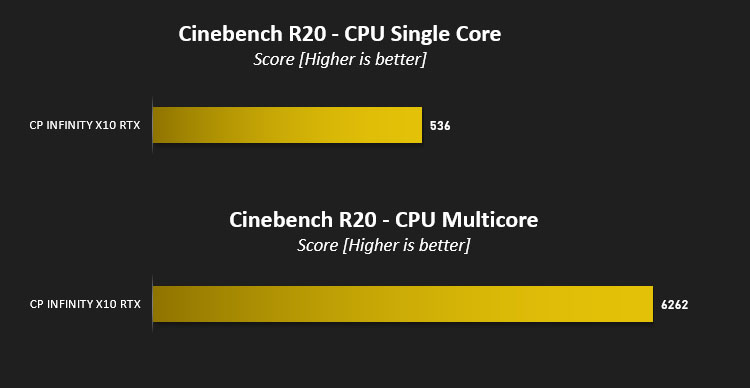
A R20 multi-core score of 6262 is exceptional and tracks with our previous testing of the Core i9-10900K during Intel’s 10th Gen. CPU launch. A single core score of 536 is similarly great and speaks to the fantastic scalability of Intel’s underlying architecture. Competing processors with higher core counts may have higher multi-core scores, but none have so strong a set of single-core scores.
—
7-Zip is open-source software which unpackages compressed (zipped) files. It also features a benchmark which measures your systems ability to unpack files, typically stressing CPU and memory performance.
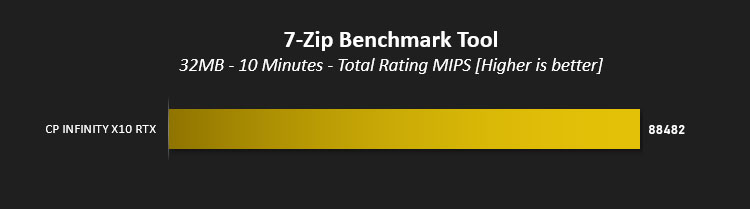
The system achieved a total rating of 88482 MIPS during decompress testing, indicating that the test was making effective use of all 20 threads available.
Benchmarks: PCMark 10, Unigine Heaven & 3D Mark
PCMark 10 by UL combines performance benchmarking with battery life measurement where applicable and includes tests based on popular Adobe and Microsoft applications. Whether you are looking for long battery life, or maximum power, PCMark 10 will help you find the devices that offer the perfect combination of efficiency and performance for your needs. It’s the complete PC performance benchmark for home and business.
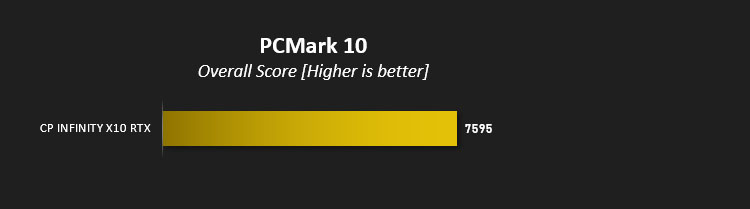
To put this figure in context, a 6-core Intel system with 8GB DDR4-3000MHz and SATA III SSD would be expected to achieve a score of around 6500.
The time savings achieved by this performance differential will be most obvious in workhorse tasks operating near-constantly, but both real-world productivity improvements and a decline in user frustration are other tangible benefits.
—
3D Mark Time Spy by UL is a DirectX 12 benchmark test for gaming PCs running Windows 10. With its pure DirectX 12 engine, built from the ground up to support new API features like asynchronous compute, explicit multi-adapter, and multi-threading, Time Spy is the ideal benchmark for testing the DirectX 12 performance of the latest graphics cards.
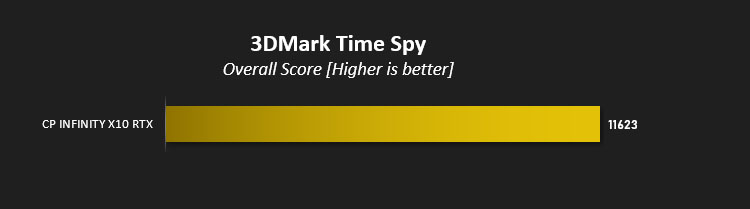
A Time Spy score of 11623 is on the upper echelons of expectations for the GeForce RTX 2080 SUPER, and a generous ~10% higher than typical RTX 2080 results.
—
Unigine’s Heaven 4.0 utility is a performance and stability test for PC hardware: video card, power supply, cooling system. Check your rig in stock and overclocking modes with real-life load! Also includes interactive experience in a beautiful, detailed environment.
While relying on a DirectX 11 API renderer rather than more modern DX12 framework, Heaven 4.0 and DX11 performance is still a relevant metric today.
Benchmarks: Gaming (1440p)
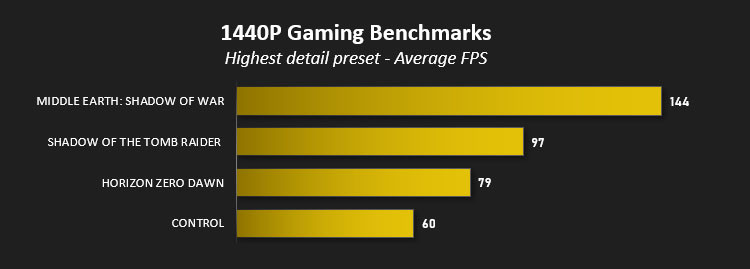
In lieu of a 4K display to pair with the system we have opted to put it through the ringer of modern graphically demanding games with representatively high image quality presets at a resolution of 2560×1440 (1440p). At this time 1440p is at a sweet sport for gaming, with 144Hz monitors both plentiful and affordable. Monitors with variable refresh rate capability such as NVIDIA G-SYNC are also widely available an more attractively priced than their 4K counterparts, making them an ideal match for high-end gaming systems running with quality settings that allow frame rates to vary between 60 and 144 fps.
Where possible we have also chosen to utilise graphically taxing features such as NVIDIA RTX ray-tracing.
Mordor: Shadow of War
The oldest of our titles, Mordor: Shadow of War is still an exceptionally attractive game that utilises the DirectX 11 API. We expect the Infinity X10 RTX to blast through the title with relative ease even at the chosen 1440p Ultra preset.
Shadow of the Tomb Raider
The second sequel to the rebooted Tomb Raider franchise, Shadow of the Tomb Raider was also one of the first titles to incorporate NVIDIA RTX ray-traced shadows and DLSS. Ray tracing in particular will test the system alongside the highest graphic quality presets, and we’ll allow no DLSS to fall back on today.
Horizon Zero Dawn
This game was new to PC in August 2020 and already has a reputation for taxing GPU hardware. It doesn’t feature ray tracing, but nonetheless has some of the most stunning scenes ever rendered in games. We’ve used the Ultimate preset here, but Favoured also offers a visual feast with markedly higher performance.
Control
Critically acclaimed on release, Control is the title which makes most comprehensive use of NVIDIA RTX ray tracing to date. Shadows, lighting and reflections all make use of this advanced rendering standard, helping the transition from mundane world to its nightmarish reflection. We opted for the Highest settings preset with RTX features enabled, but no DLSS.
Tests were performed with the GeForce 451.77 WHQL Game Ready Driver.
The oldest of our titles, Mordor: Shadow of War is still an exceptionally attractive game that utilises the DirectX 11 API. We expect the Infinity X10 RTX to blast through the title with relative ease even at the chosen 1440p Ultra preset.
Shadow of the Tomb Raider
The second sequel to the rebooted Tomb Raider franchise, Shadow of the Tomb Raider was also one of the first titles to incorporate NVIDIA RTX ray-traced shadows and DLSS. Ray tracing in particular will test the system alongside the highest graphic quality presets, and we’ll allow no DLSS to fall back on today.
Horizon Zero Dawn
This game was new to PC in August 2020 and already has a reputation for taxing GPU hardware. It doesn’t feature ray tracing, but nonetheless has some of the most stunning scenes ever rendered in games. We’ve used the Ultimate preset here, but Favoured also offers a visual feast with markedly higher performance.
Control
Critically acclaimed on release, Control is the title which makes most comprehensive use of NVIDIA RTX ray tracing to date. Shadows, lighting and reflections all make use of this advanced rendering standard, helping the transition from mundane world to its nightmarish reflection. We opted for the Highest settings preset with RTX features enabled, but no DLSS.
Tests were performed with the GeForce 451.77 WHQL Game Ready Driver.
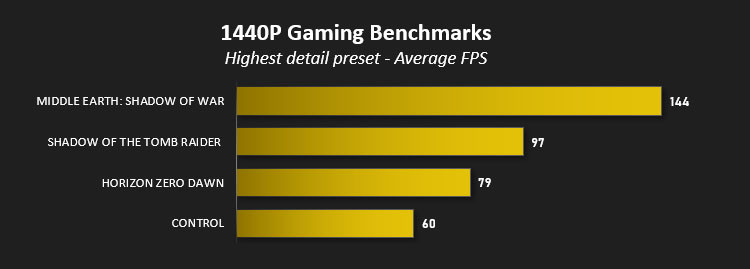
Performance expectations were quite clearly met, with average FPS values that underscore the advantages of pairing with a variable refresh rate monitor. Managing a consistent 60fps in Control is particularly impressive, and far more telling than a by-rote 200+fps in Apex Legends/CS:GO would be. Simply tweaking the settings slightly from their exceptionally high levels will also bear fruit in many instances.
There is however a caveat to that assessment. Horizon Zero Dawn, though generally a good experience, did at times drop to untenable levels. These aberrations were consistent and occurred at lower resolutions/presets, indicating that Guerilla still need to perform additional optimisations for the PC platform.
Conclusion
Assessing Cyberpower PC’s Infinity X10 RTX isn’t a trivial matter; the performance levels and overall cost necessitate a considered and (if possible) holistic approach. Bear with us as we sum up our thoughts.For many the visual style of the system will be of primary importance, and Cyberpower have done solid work in this instance. NZXT’s H511 is one of the more attractive chassis on the market and the assembly team have kept things simple but effective. As a traditional ‘gaming system’ it looks great, but this PC would be equally at home in an office or living room if you chose to remove the logo and switch off the lighting. Not many systems can boast such versatility without considerable thought being put into its configuration.
Setting up the system was a doddle, thanks both to Windows 10 coming pre-installed and the inclusion of a motherboard that supports built-in WiFi, so much so that even a novice should have no difficultly in getting started with minimal aid. With Microsoft transitioning to requiring internet access for smooth setup we shouldn’t understate how useful that might be in the future.
The finish is exceptional. Cable management is the classic go-to and it’s genuinely that good, but ostensibly minor aspects such as including an RGB LED controller and taking the time to affix it in a discrete but accessible location that really show care and attention. It feels like a finished product, as much as a premium console and far more than any off-the-shelf OEM system.
Performance is… well… dominating, and we would expect nothing less given the choice of components. Intel’s i9-10900KF is likely the fastest CPU for gaming on the planet right now, and it’s only a small step up from the RTX 2080 SUPER to reach the RTX 2080 Ti. It coped well with all the titles tested 1440p, which we judge to still be the sweet spot resolution for gaming today, and the system would be a perfect match for a 144Hz monitor with NVIDIA G-SYNC. Even Horizon Zero Dawn, a new very title with some way to go before full optimisation on current-gen hardware, felt like a joy to play.
If there was a down-side to the system as configured, it was noise. NZXT’s H511 is not the best when it comes to cooling chiefly due to a confined air intake, and the fans worked overtime to maintain sensible temperatures. There will always be a trade-off in noise versus cooling, and there’s scope to loosen the aggressive fan curve, but out of the box it’s too loud to use comfortably without headphones. Alternatively it’s possible to opt for a different chassis, one not so attractive perhaps but better suited to the components installed.
Two more minor grips on the grand scale are memory capacity and the default chassis. For £2200 we’d really like to see 32GB of DDR4 RAM rather than 16, but on the other hand it would be sad to trade off against any of the selected components. Going for the H511, rather than H510 or some other case, leaves the system without a USB-C front panel connector despite the motherboard supporting one. That seems like an oversight, but once again does take the system down a few notches from perfection.
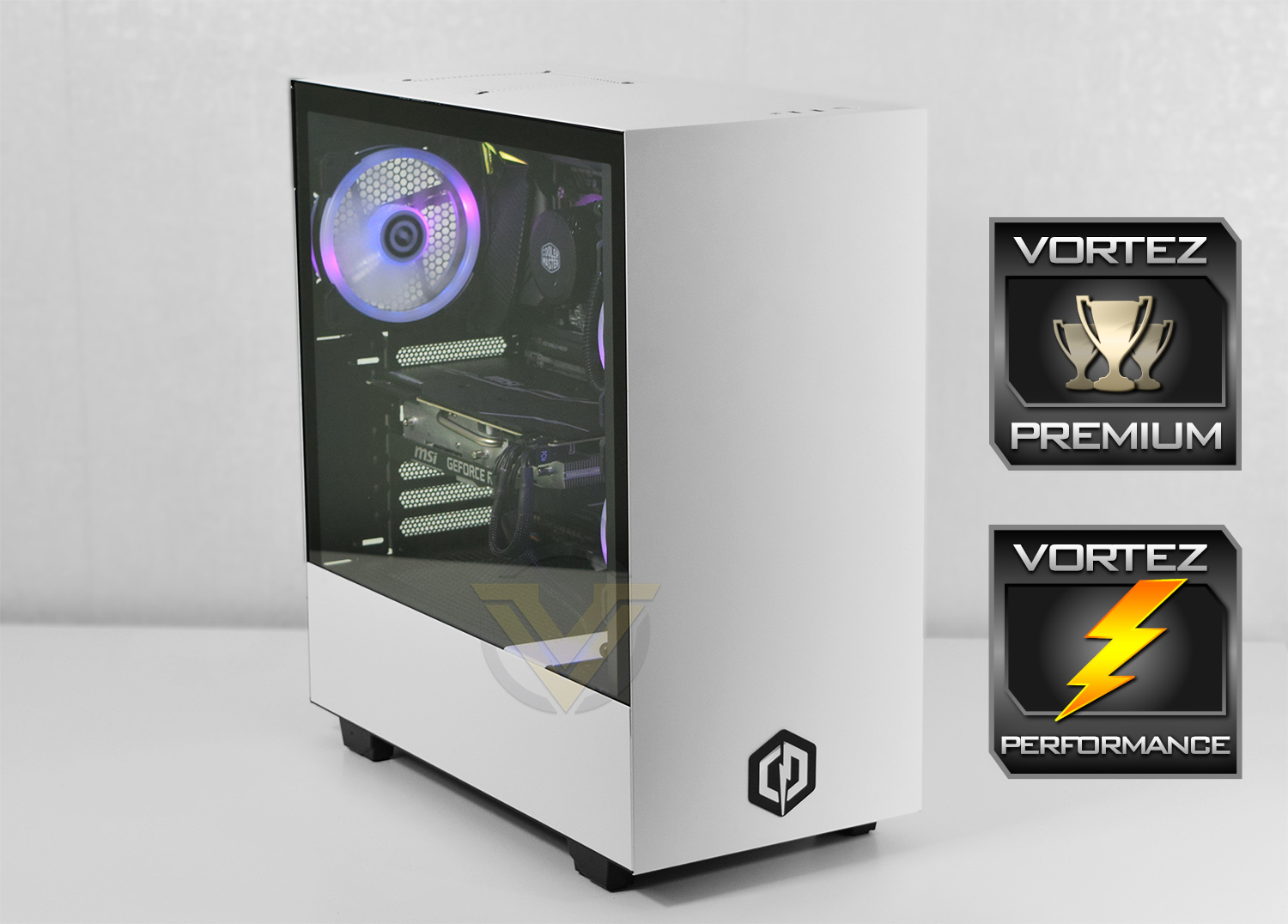
Finally, we come to value for money. In our view Cyberpower nailed it, restricting the system cost to within 7.5% of the street price of the most significant individual components and including more besides. Furthermore the sheer breadth of options available in the configurator for the Infinity X10 RTX range aren’t much of a restriction if you’re in the market for a system at this level of performance.
We should state that there are two aspects we are unable to assess. Order fulfillment times and the quality of the warranty are both important and often cited as reasons both for and against purchasing from a system integrator, and a single bad experience can easily sour the entire concept. Cyberpower PC’s terms for both delivery and long-term warranty are within industry norms, but we strongly urge potential customers to weigh consumer reports in their deliberations.
Cyberpower PC’s Infinity X10 RTX range offers exceptional component configuration options and competitive value for money compared to self-assembly. The system as reviewed demonstrated exceptional performance characteristics at 1440p, pushing well beyond 60fps norms in modern demanding titles, and exhibited a finish worthy of its status as a premium gaming machine. Uncomfortable fan noise didn’t detract from the overall high quality of assembly and ease of set-up, and simply altering the default fan curve or selecting a different chassis would ameliorate this specific issue.
Pros
+ Exceptional performance
+ Great value for money despite premium components
+ Snappy, responsive experience
+ Pleasant ambient semi-custom RGB lighting
+ Simple system set-up on delivery
+ Wide selection of configuration options across the range
+ 3-year warranty
Cons
– Loud fan noise at idle and load
– Warm component temperatures under load despite high fan speeds
– Restrictive chassis air intake.
+ Exceptional performance
+ Great value for money despite premium components
+ Snappy, responsive experience
+ Pleasant ambient semi-custom RGB lighting
+ Simple system set-up on delivery
+ Wide selection of configuration options across the range
+ 3-year warranty
Cons
– Loud fan noise at idle and load
– Warm component temperatures under load despite high fan speeds
– Restrictive chassis air intake.