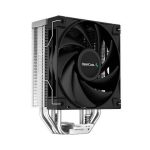
A single tower air CPU cooler which targets the mainstream segment. Is this cooler worth buying for your Intel/AMD computer build?

Product on Review: AK400 CPU Cooler
Manufacturer & Sponsor: Deepcool
Street Price: $30 USD
Although the CPU cooling market certainly leans in the direction of AIO liquid coolers, there is a lot to be said for smaller, single tower air coolers. Not everyone has the space to squeeze such a monstrous configuration into their computer chassis, and traditional cooling believe it or not, is still favoured by avid system builders.
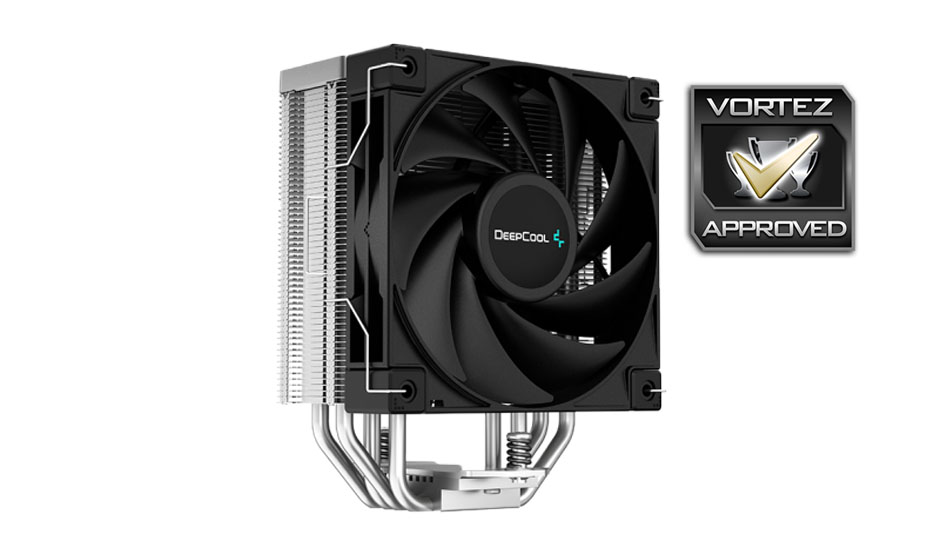
Today sees the launch of AK400 from the team over at Deepcool. AK400 is a single tower air cooler which is just 155mm in height, features a single 120mm cooling fan and comes in at an astounding $30 USD.
About Deepcool
We founded Deepcool with the mission of providing the best and personalized thermal solutions for customers around the world. Deepcool was first established 1996 with its headquarters in Beijing and factory facilities in Shen Zhen that produced coolers and cooling accessories for desktops and servers. In response to rapid advancements in the PC sector Deepcool further expanded into AIO liquid cooling products, chassis, and power supplies.
Technical Specifications
Below are the technical specifications surrounding the AK400, supplied by Deepcool.
Socket Compatibility Intel LGA1700/1200/1151/1150/1155
AMD AM4
Product Dimensions 127×97×155 mm
Heatsink Dimensions 120×45×152 mm
Net Weight 661 g
Heatpipe 4
Fan Dimensions 120×120×25 mm
Fan Speed 500~1850 RPM±10%
Fan Airflow 66.47 CFM
Fan Air Pressure 2.04 mmAq
Fan Noise ≤29dB(A)
Fan Bearing Type Fluid Dynamic Bearing
Fan Rated Voltage 12 VDC
Fan Rated Current 0.13 A±10%
Fan power Consumption 1.56 W
Warranty 3 years
AMD AM4
Product Dimensions 127×97×155 mm
Heatsink Dimensions 120×45×152 mm
Net Weight 661 g
Heatpipe 4
Fan Dimensions 120×120×25 mm
Fan Speed 500~1850 RPM±10%
Fan Airflow 66.47 CFM
Fan Air Pressure 2.04 mmAq
Fan Noise ≤29dB(A)
Fan Bearing Type Fluid Dynamic Bearing
Fan Rated Voltage 12 VDC
Fan Rated Current 0.13 A±10%
Fan power Consumption 1.56 W
Warranty 3 years
Packaging & Bundle
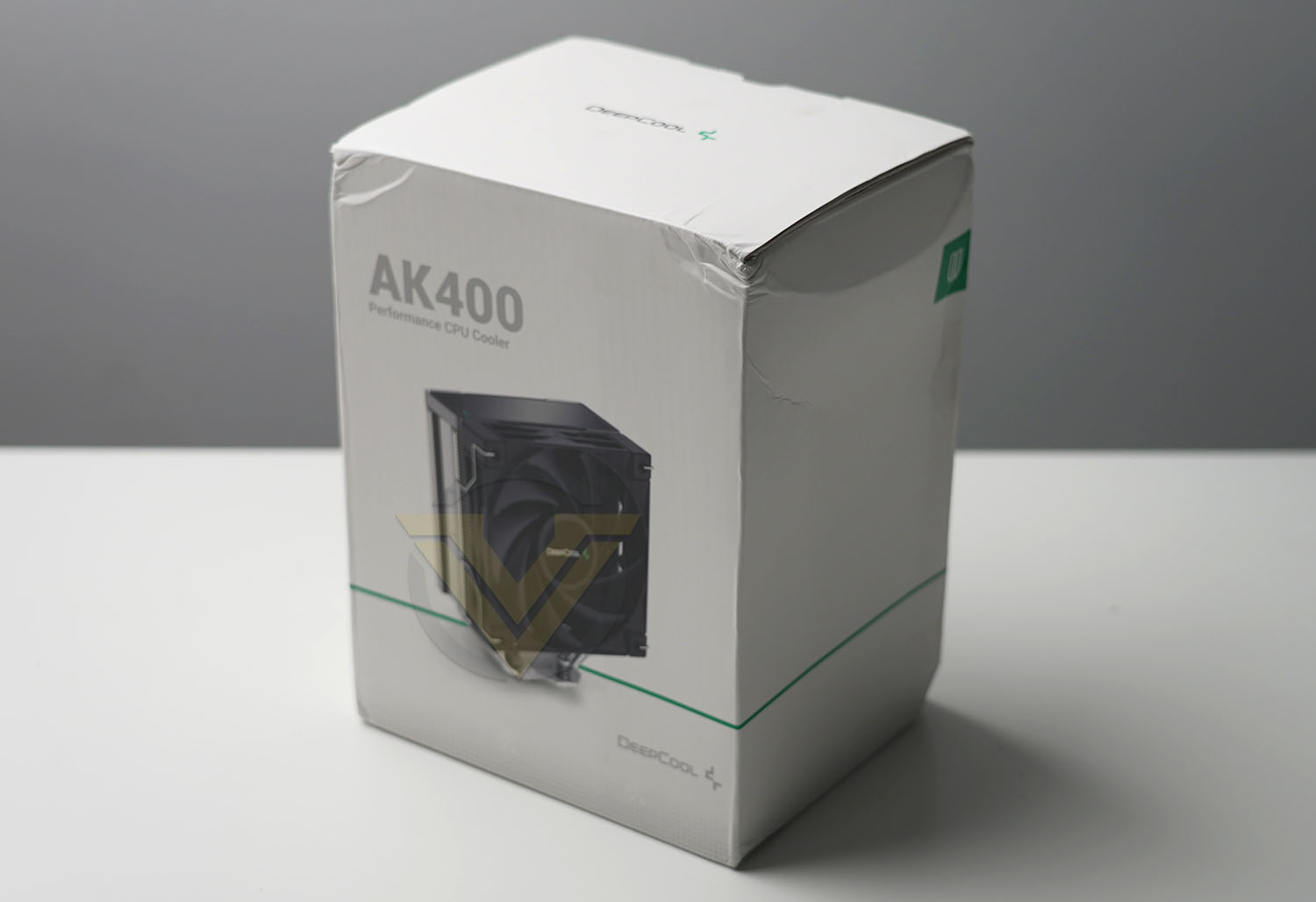
Deepcool’s AK400 arrives in a small, nicely designed box with the depiction of the cooler on the front. The technical specifications can be found on the reverse. (our box arrived crumpled thanks to poor distributor packaging)
Inside, the cooler is well-protected and the accessories are supplied in a small bag.
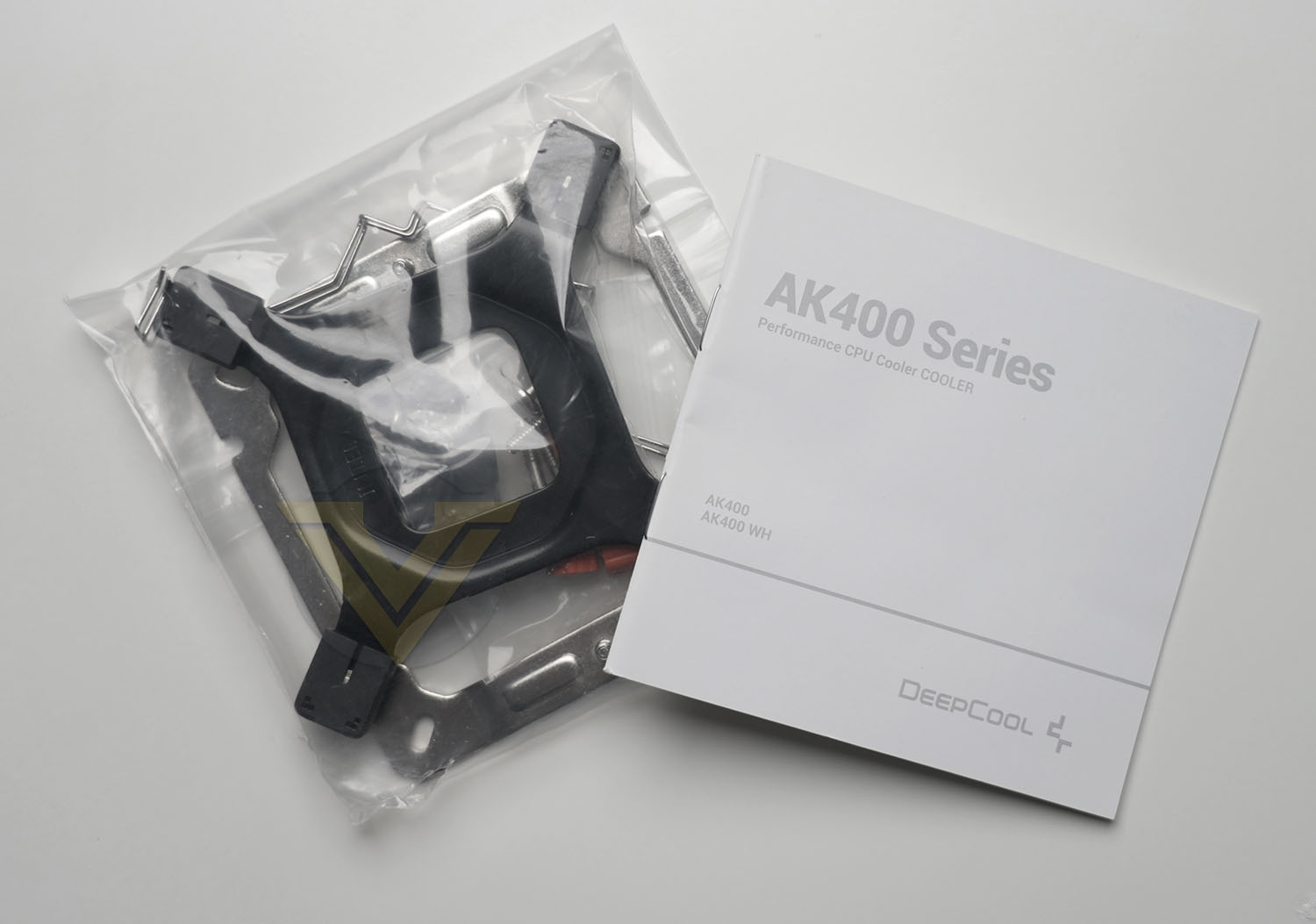
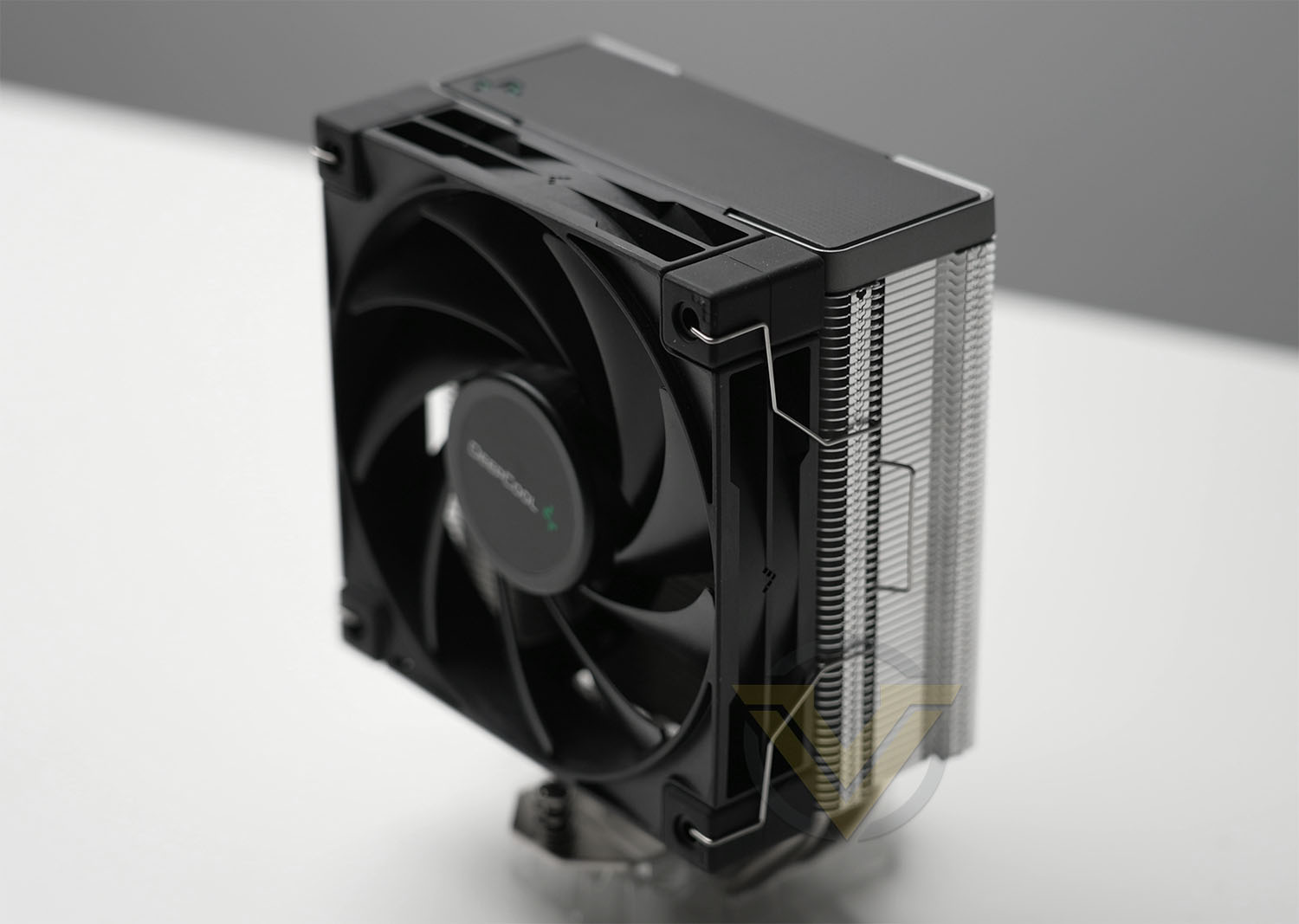
There are various parts for installing this cooler into a computer case since it is compatible with numerous socket types including the new LGA1700. The bundle consists of:
• Cooler + 120mm PWM fan
• Mounting kit for Intel/AMD platforms
• Installation guide
Closer Look
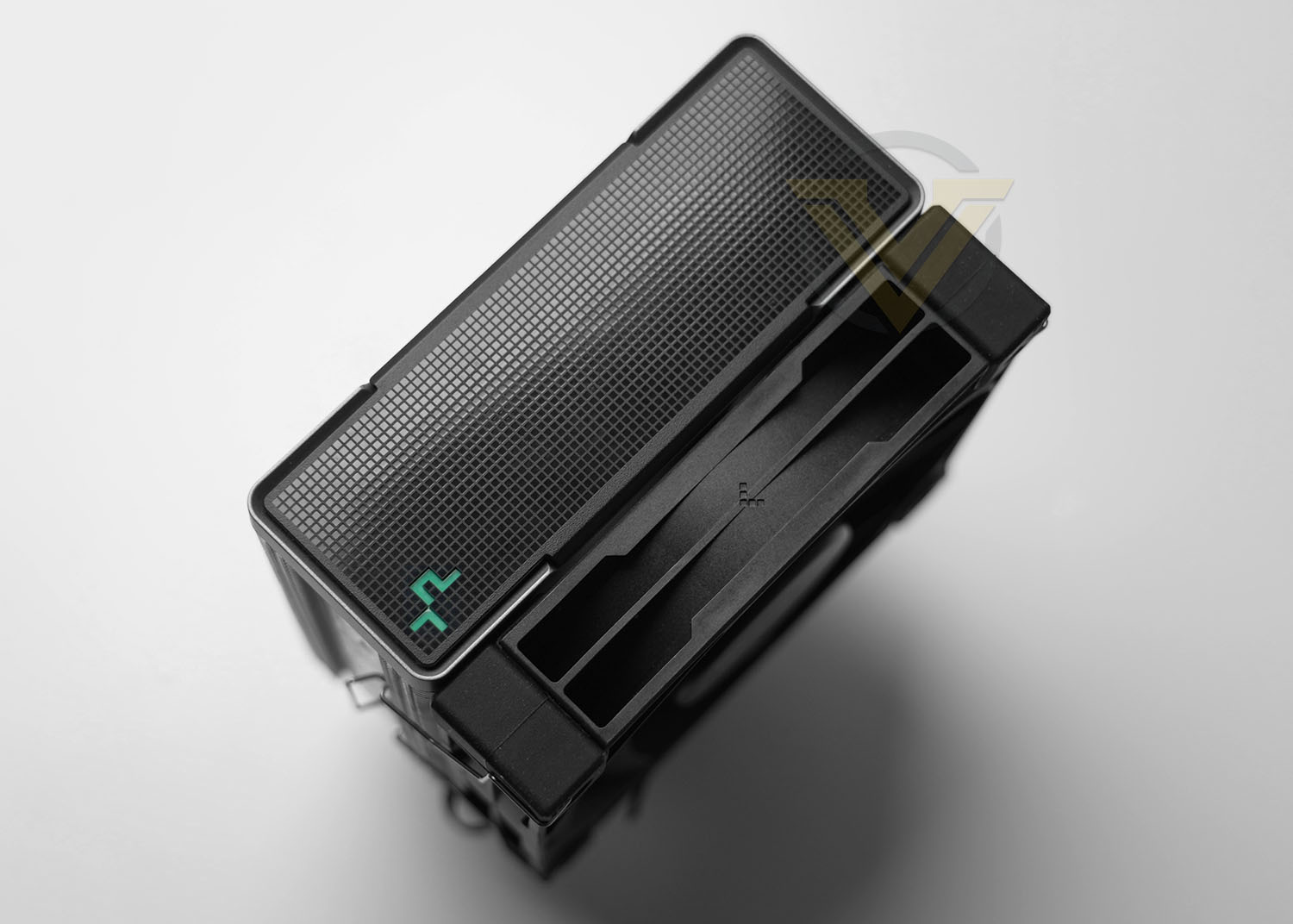
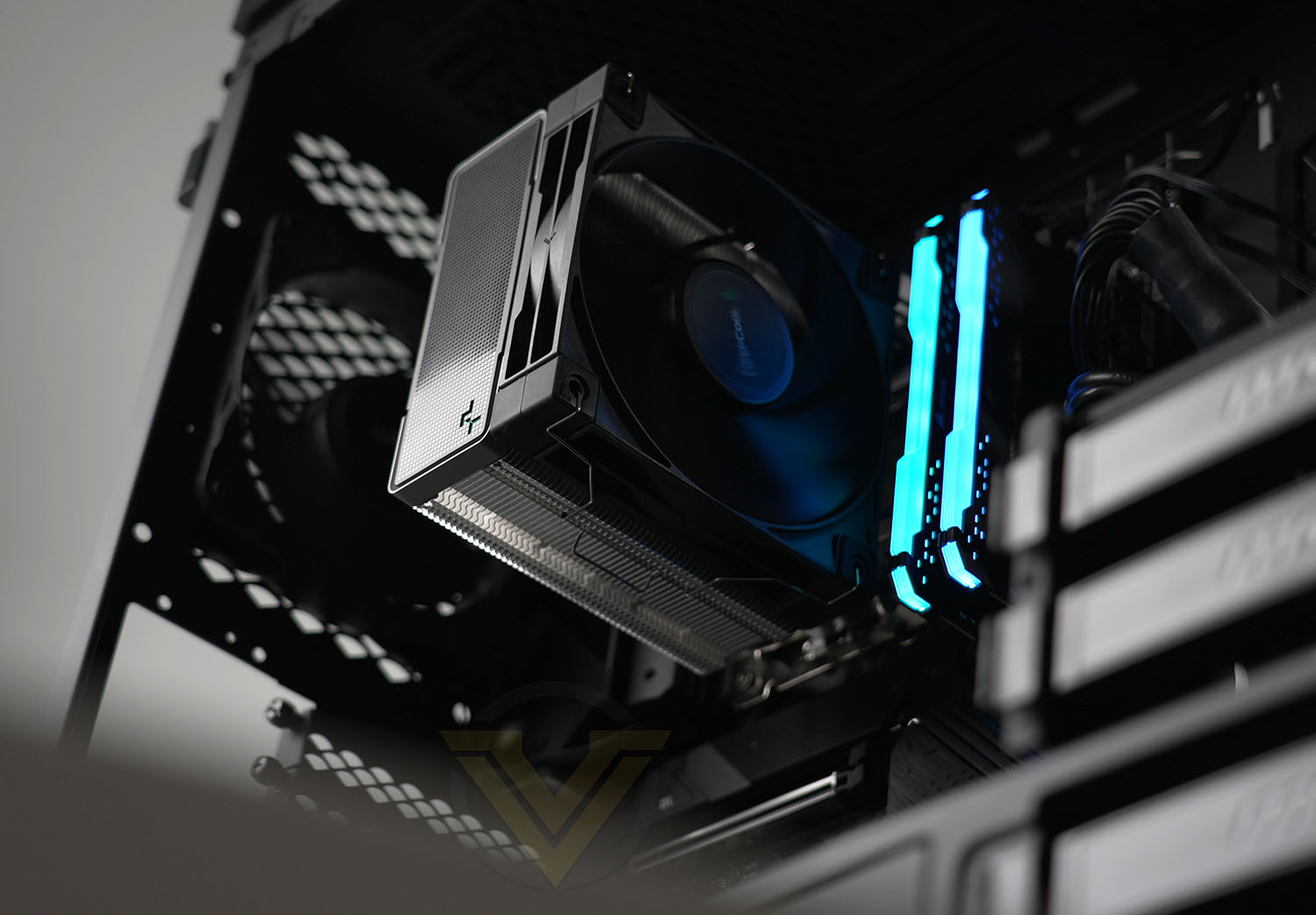
The top section of AK400 sports plastic top piece which covers the heatpipes and retains a sleek look. This plastic cover features the Deepcool logo and definitely adds appeal to the build.
From this top angle you can see how compact AK400 is with its thin heatsink dimensions (97mm).
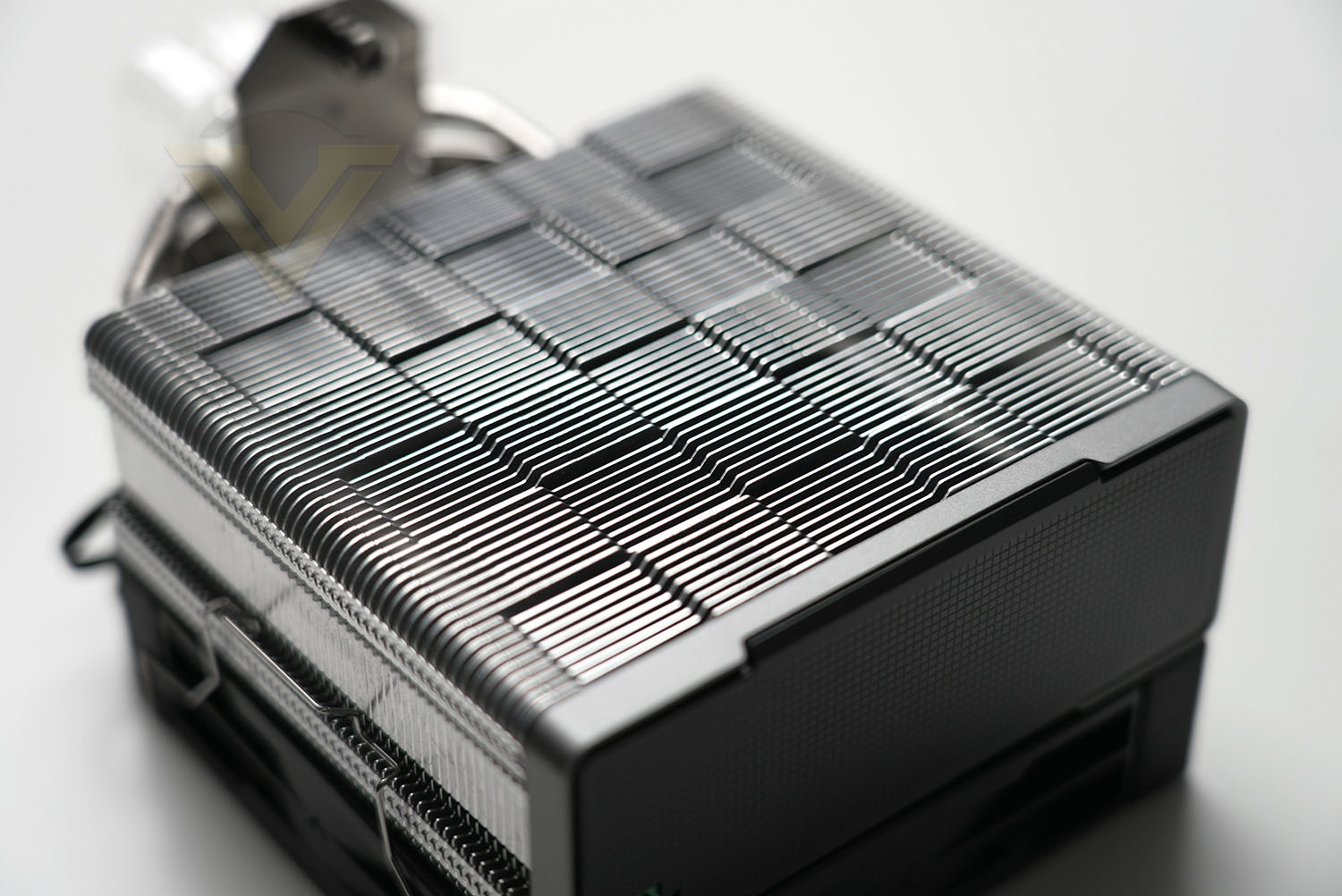
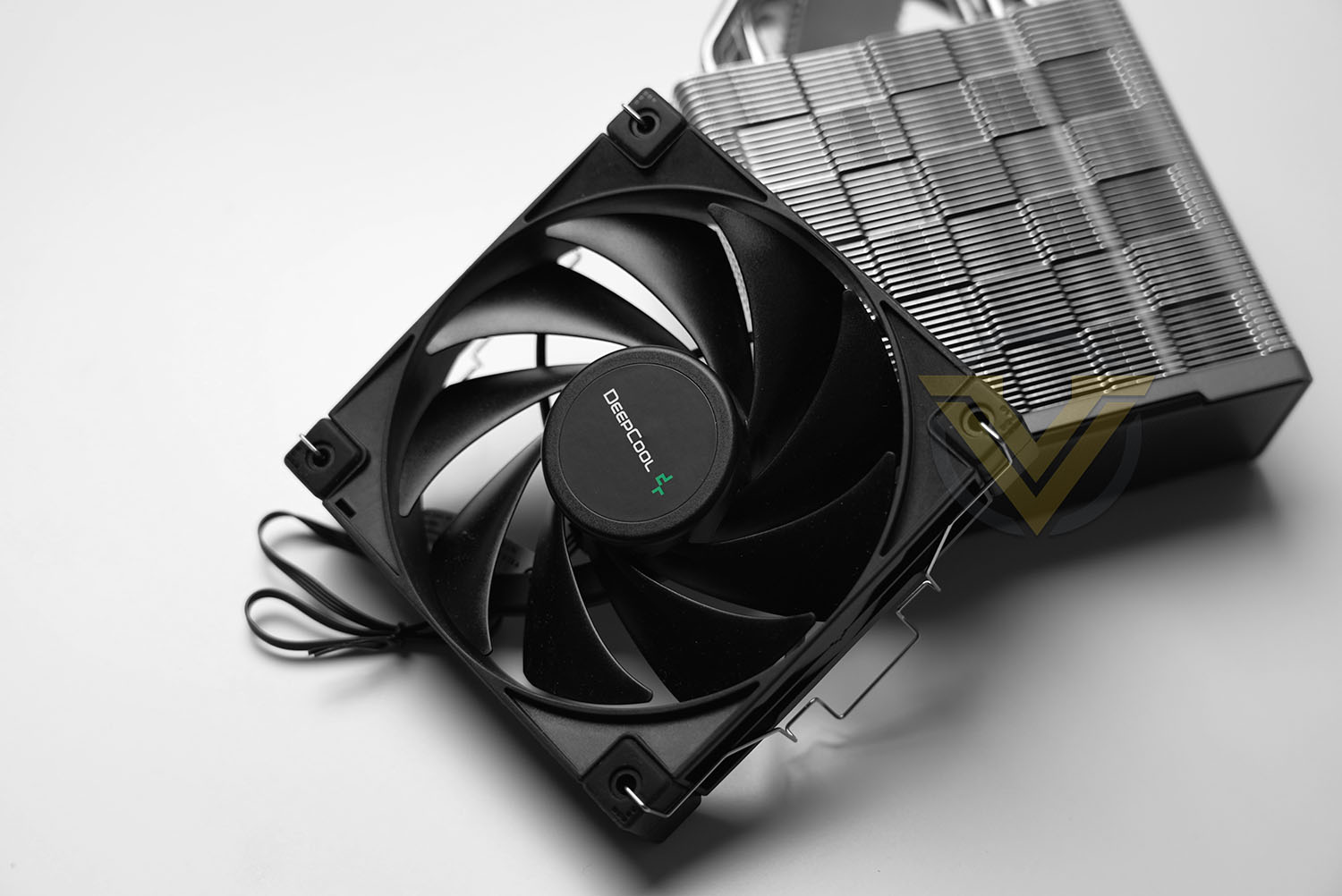
Deepcool is using a premium nickel-plated heatsink and a matrix- shaped fin-array for AK400.
Included with this cooler is a single 120mm fan which uses a fluid dynamic bearing. These fans are capable of 500-1850 RPM and airflow of up to 66.47 CFM. Deepcool also provide another set of fan clips to attached a second fan onto the other side of the heatsink.
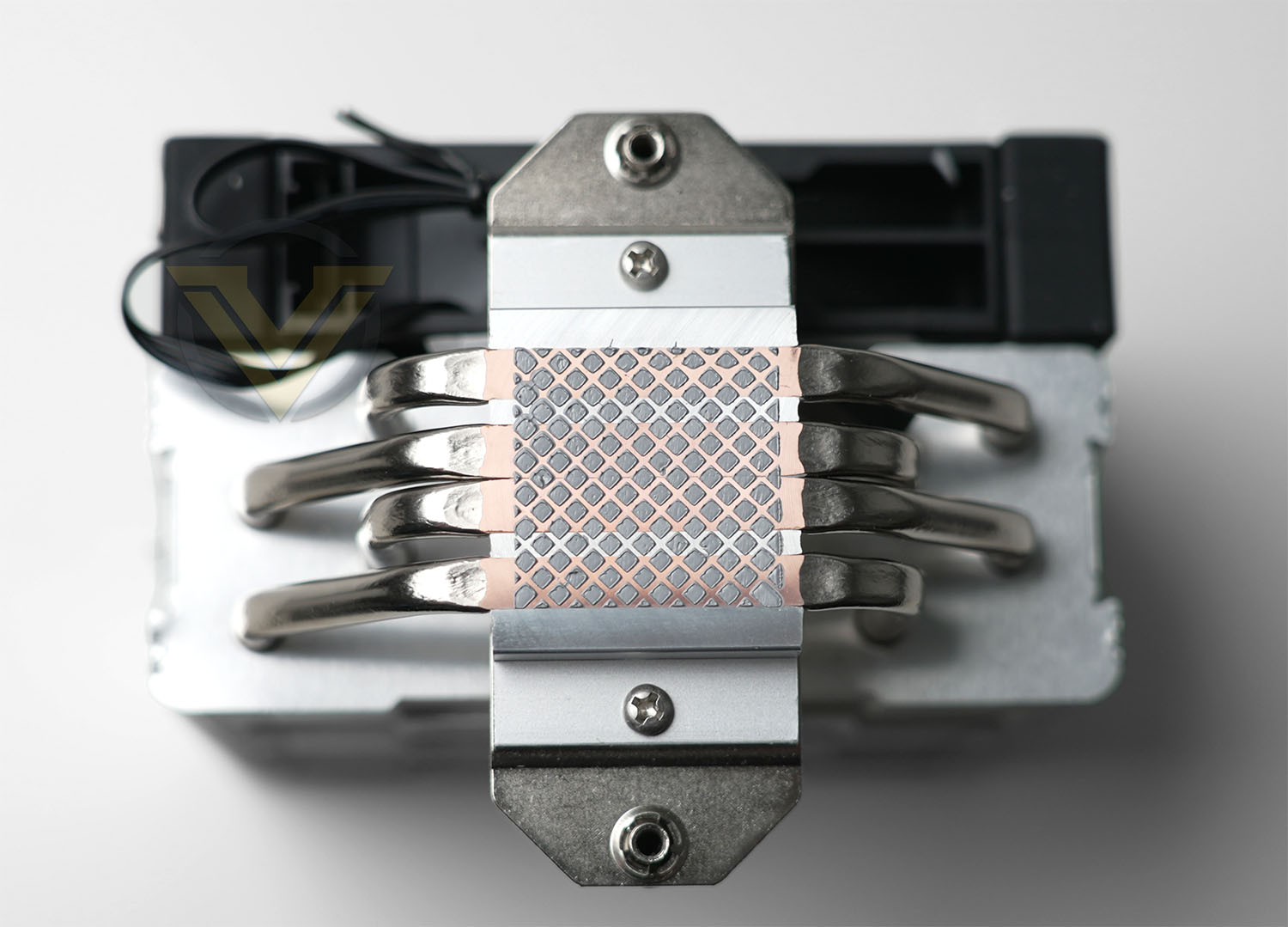
The baseplate is copper and features direct touch with the four copper heatpipes in a bid to transfer heat away from the processor, dissipating through the fin stack. Deepcool includes pre-applied thermal paste to the cooler and have chosen to use an interesting grid pattern. (No thermal paste is supplied in the accessories bundle).
Installation Process
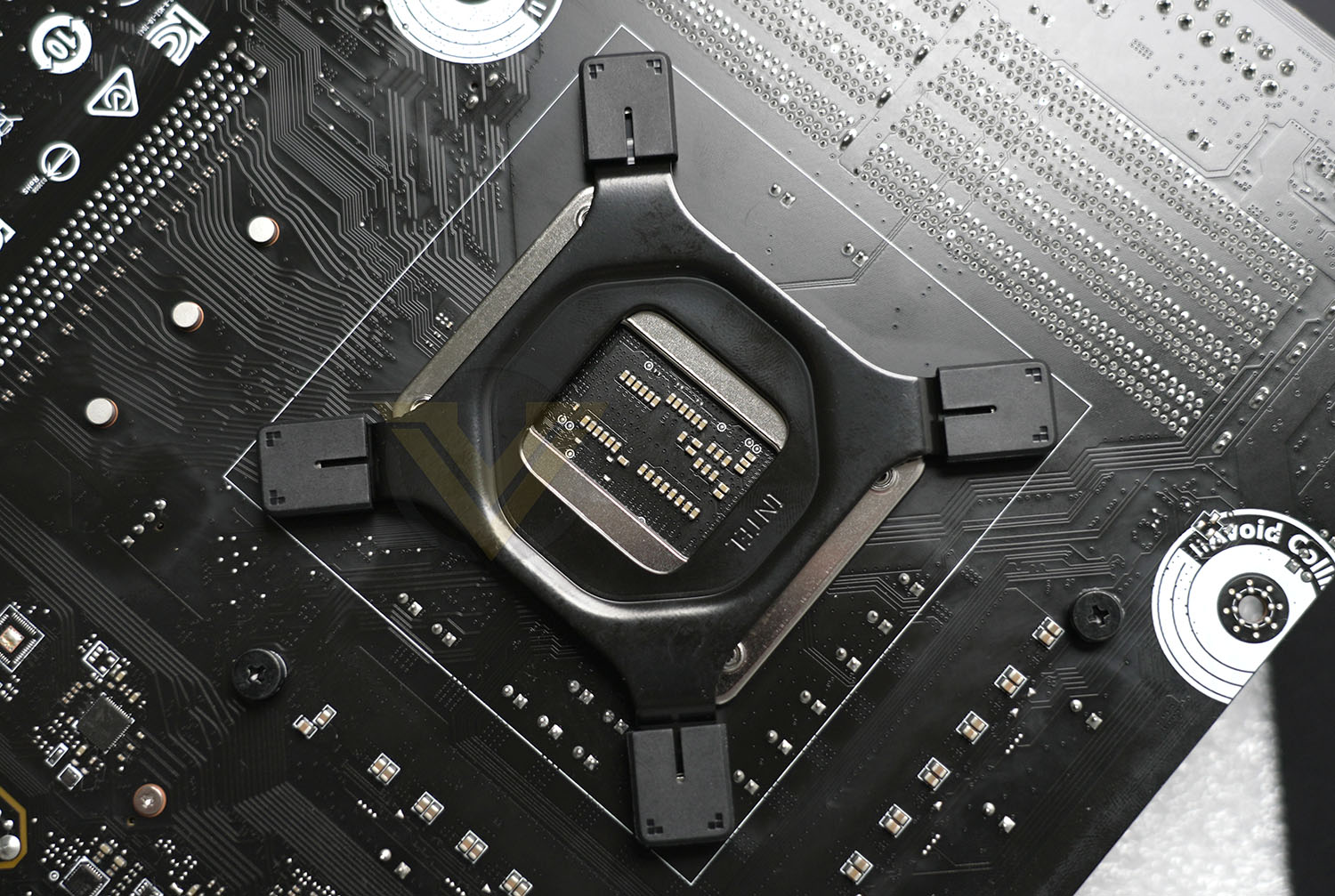
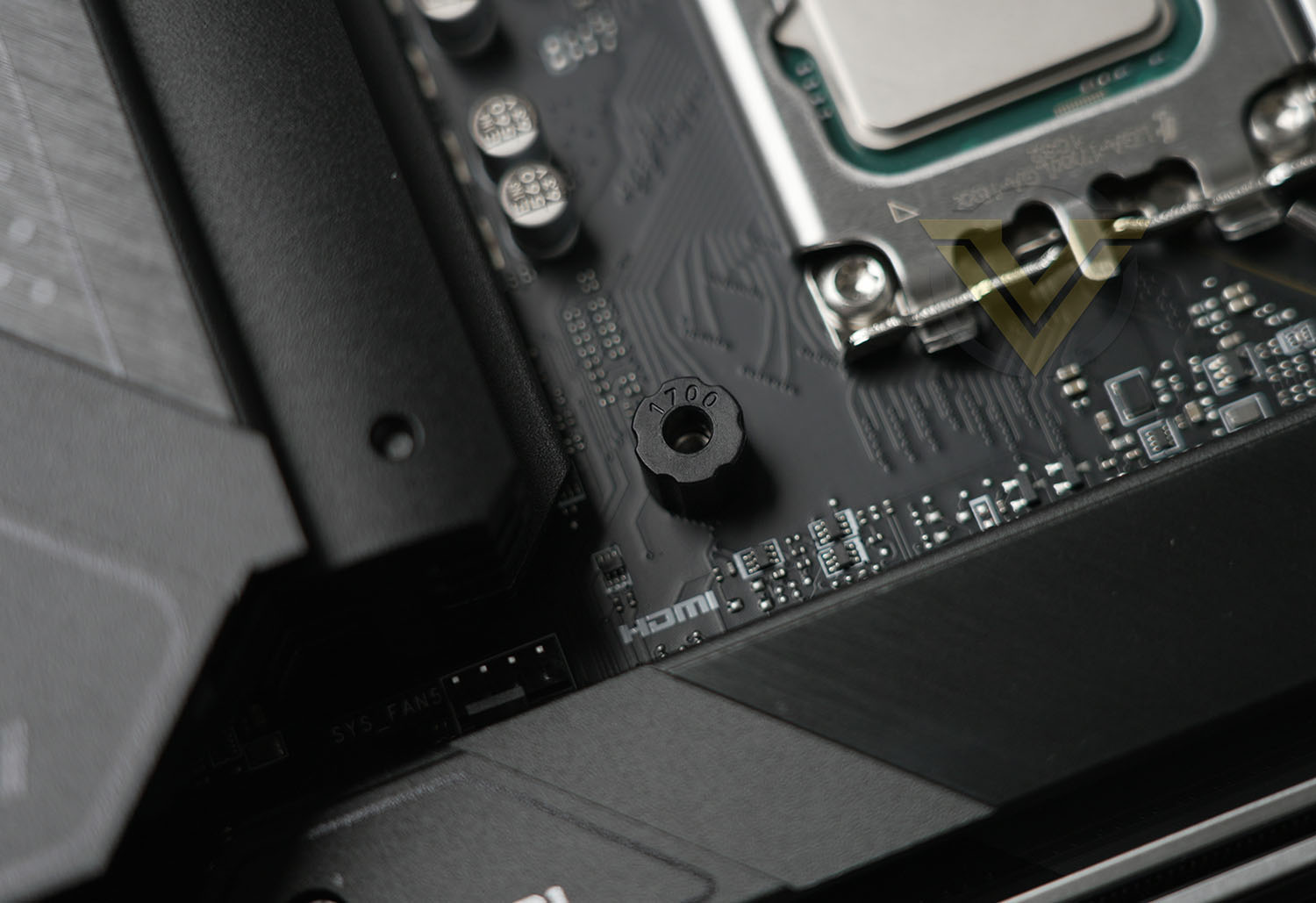
For the installation we’ve chosen to use LGA1700 since this is new and AK400 has compatibility for it.
So, for the first step, its necessary to attach the provided backplate and then install the rubber buffers labelled “1700”.
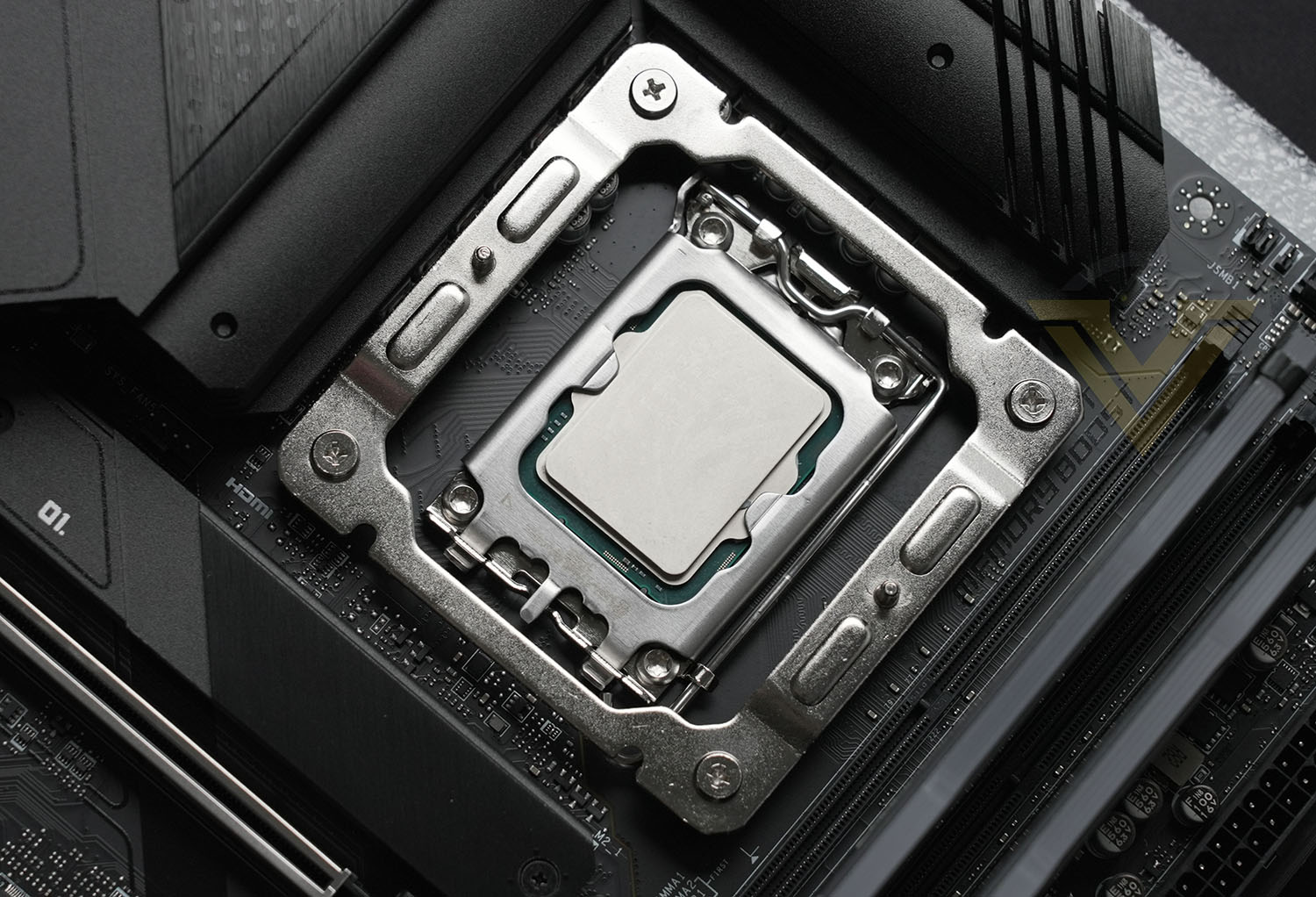
Next, the large square shaped bracket needs to be placed over the top of the buffers and four of the supplied screws fix this bracket into place. Note: this cooler should be mounted horizontally (with the fan facing the rear exhaust fan inside your case or front of the case, therefore, the two pins need to be positioned as shown, so the cooler is correctly aligned.
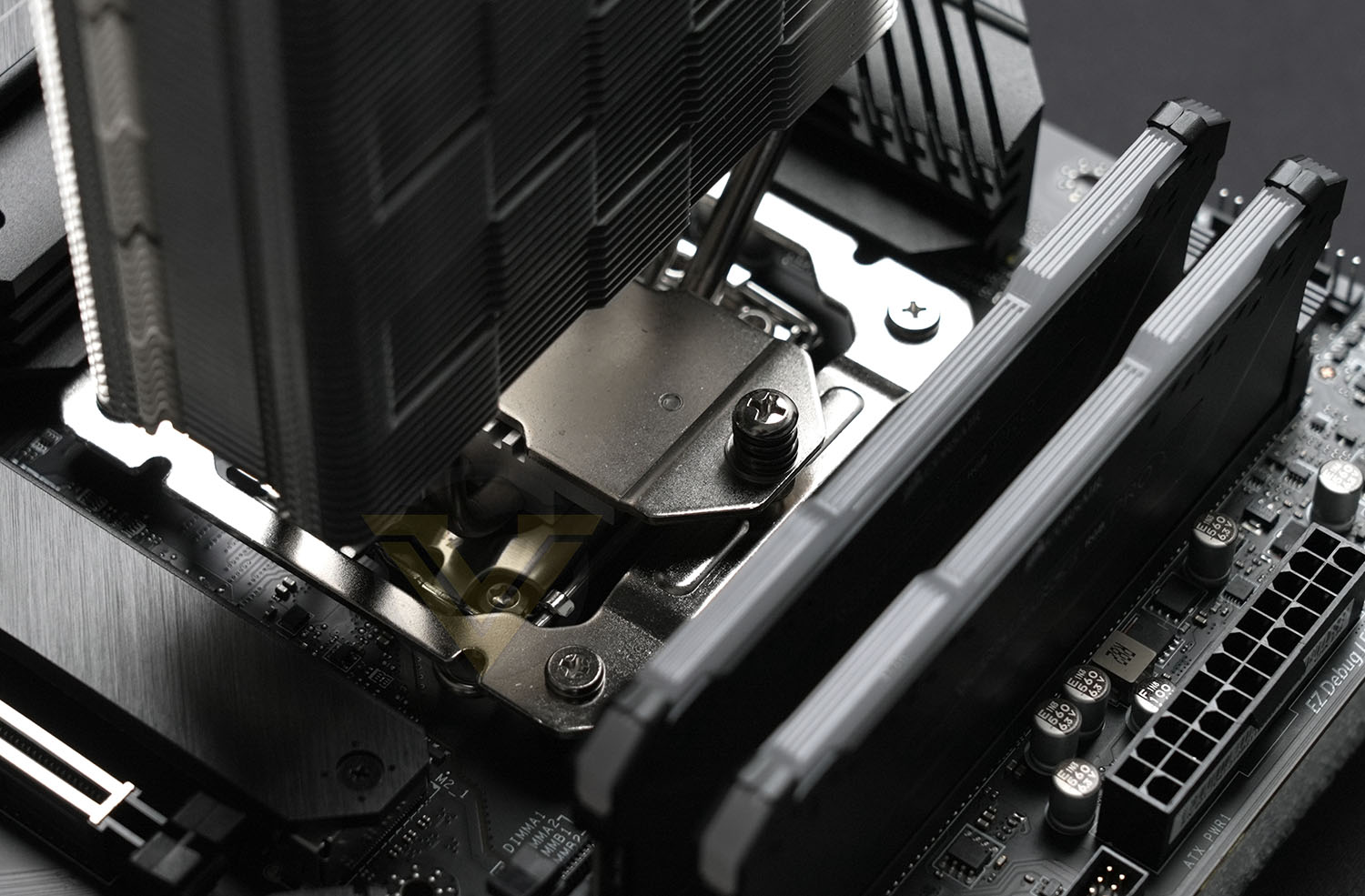
The last step in the process is to place the baseplate of the cooler over the CPU, lining up the screws to the pins and then one full rotation of each screw to apply even pressure. Once both screws are tight, and the PWM fan connector is attached to the CPU fan header on the motherboard, the job is done!
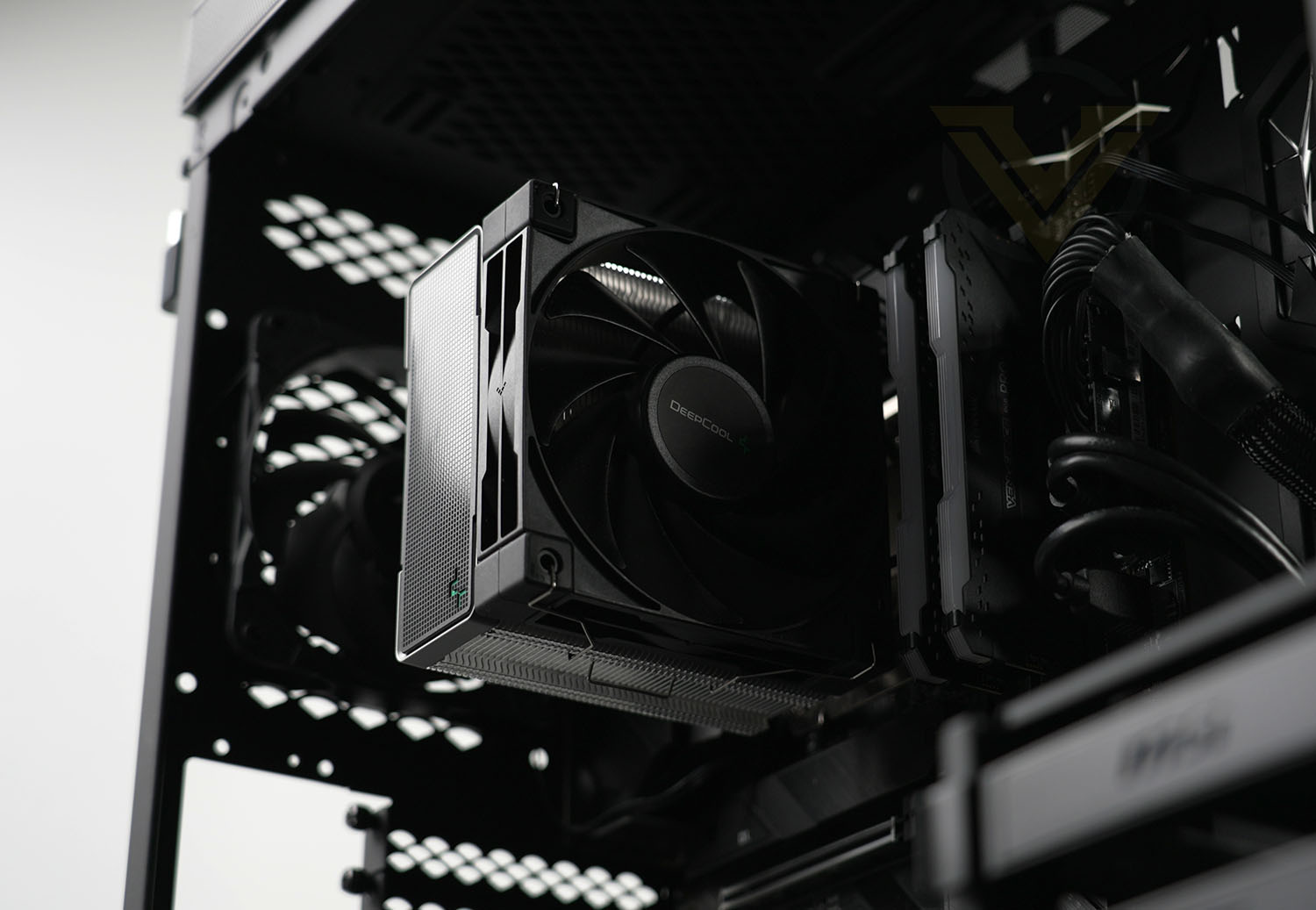
Here is the finished look.
Although we may not have any RGB lighting (which may in fact please some of you) this cooler definitely makes an impact. It also matches up perfectly with other components.
Test Setup & Methodology
HARDWARE
Rather than analyse CPU coolers on a test bench, we prefer to simulate a real-world configuration where all of the components are housed within a computer case. By doing this, our readers are able to see the CPU cooler in a real-world scenario.Special thanks go to Intel, MSI, Corsair, Noctua and AverMedia for providing the hardware configuration for our CPU cooler reviews:
Motherboard:
CPU – Intel Core i9-12900K
Board – MSI MAG B660 Tomahawk WiFi DDR4
RAM – Corsair Vengeance RGB PRO SL (16GB)
Power Supply – Corsair RMx850
Hard Drive – Intel S3500 128GB
Case – MSI SEKIRA 500G
CPU – Intel Core i9-12900K
Board – MSI MAG B660 Tomahawk WiFi DDR4
RAM – Corsair Vengeance RGB PRO SL (16GB)
Power Supply – Corsair RMx850
Hard Drive – Intel S3500 128GB
Case – MSI SEKIRA 500G
BENCHMARKS
In order to perform our thermal and acoustics tests we use AIDA64 Stability test. The 12900K CPU is left in its default stock state with EIST, Turbo enabled.For the moment, the comparison results highlight only a small number of CPU coolers, this is because we’ve updated our hardware configuration. The number of tested coolers will increase.
To reflect the most accurate user experience we always test our coolers in their out-of-the-box state, with the cooling fans/components they are sold with. However, we do not use the supplied thermal paste as this would skew results – for our thermal paste we use Noctua NT-H2 which provides us with that level playing field and consistency.
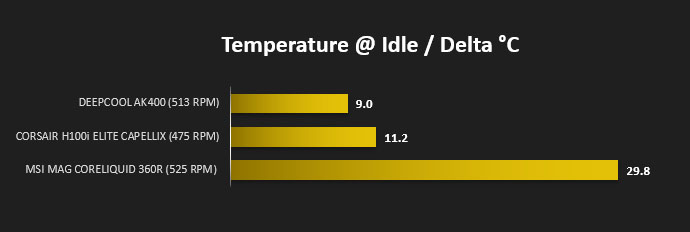
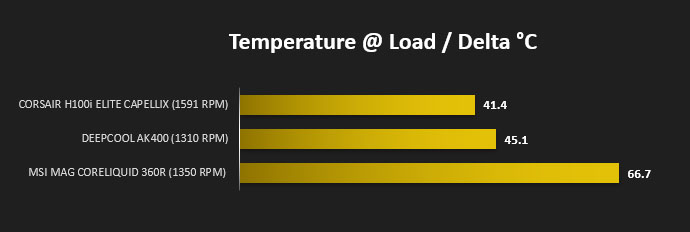
To record the idle temperatures result, our system is booted into Windows and left to idle for 20 minutes. The average core temperatures are recorded (Using Core Temp), and then we following this we apply the AIDA64 Stability test to apply an intensive load on the CPU. After 20 minutes have elapsed, we then record the average core temperatures.
All temperature results are delta, this is calculated by subtracting the ambient from the average core temperature. Ambient temperature is recorded using a digital thermometer placed near the front intake of the case.
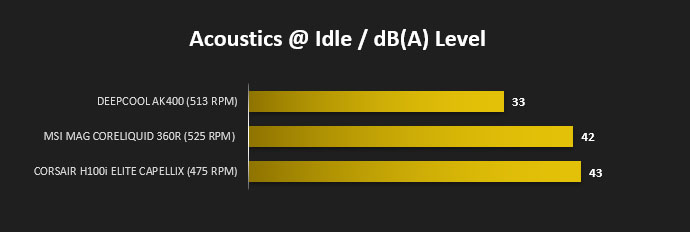
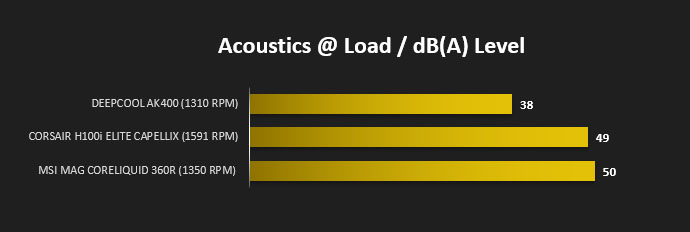
In regards to acoustics we use the exact methodology above except all case system fans are disabled. This isolates the CPU cooler fans and allows us to accurately report on the decibel readings. We record acoustics using the NDI KC-330D Sound Level Meter at a distance of approximately 30cm.
Thermal Results
Below are the results for our thermal test. We record both the idle and load temperatures – stress is applied to the CPU using AIDA64’s stability test.
Acoustic Results
In terms of the acoustics test, we disable all case fans and place our sound level meter approximately 30cm away from the cooling fans and the result is then obtained.
Conclusion
Deepcool’s new AK400 is designed to appeal to the mainstream system builder, looking for an affordable CPU cooler for the next PC build.
For a cooler costing this much, you may not expect much from the thermal performance but AK400 will surprise you. It didn’t trail that far behind a competing, high-performance AIO liquid cooler in our tests with the mighty Intel Core i9-12900K. This cooler managed to keep the temperatures at more than acceptable levels.
Our cooling test system uses LGA 1700 and the entire installation process was simple and easy. We were able to have the cooler installed in less than 15 minutes, there are just a small handful of steps to follow and thanks to the dimensions of AK400, it will fit onto most motherboards easily – not hindering the memory slots and with a height of just 155mm, computer case compatibility is very good.
The highlight for this CPU cooler is the price which sees AK400 available for just: $30 USD with a lengthy 3 years warranty. At such a low-cost, and proven reliable performance, this makes AK400 a great buy.
Deepcool’s AK400 may not cost much but it delivers big on performance and low-noise!
Pros
+ Clean and tidy aesthetics
+ Equipped to tackle multiple socket types
+ Low noise operation
+ Good overall performance
+ Very affordable
+ 3 years warranty
Cons
– Not all sockets are covered
– No thermal paste included in accessories
+ Clean and tidy aesthetics
+ Equipped to tackle multiple socket types
+ Low noise operation
+ Good overall performance
+ Very affordable
+ 3 years warranty
Cons
– Not all sockets are covered
– No thermal paste included in accessories
Click here for an explanation of our awards at Vortez.net.
Stay connected with the Vortez Social Media pages:
Join in with the discussions on Discord