Expanding on the Epoch lineup of computer cases, Fractal unveils the Epoch XL – a contemporary design which is packed with space and features like a trio of Momentum 14 cooling fans.

Product on Review: Epoch XL Case
Manufacturer & Sponsor: Fractal
Street Price: USD $119.99
The Fractal Epoch XL expands the minimalist elegance of the Epoch series into a larger, more capable chassis. Its clean black exterior, paired with a lightly tinted tempered-glass panel, delivers a refined modern look, enhanced by premium touches like a laser-etched aluminum badge and textile pull tab.
Designed with strong thermal performance in mind, the Epoch XL features ventilated mesh front and top panels and includes three Momentum 14 fans with LCP blades for quiet, efficient airflow. Support for up to 360 mm radiators in both the front and top, along with GPU clearance up to 425 mm, ensures compatibility with today’s highest-performance components.
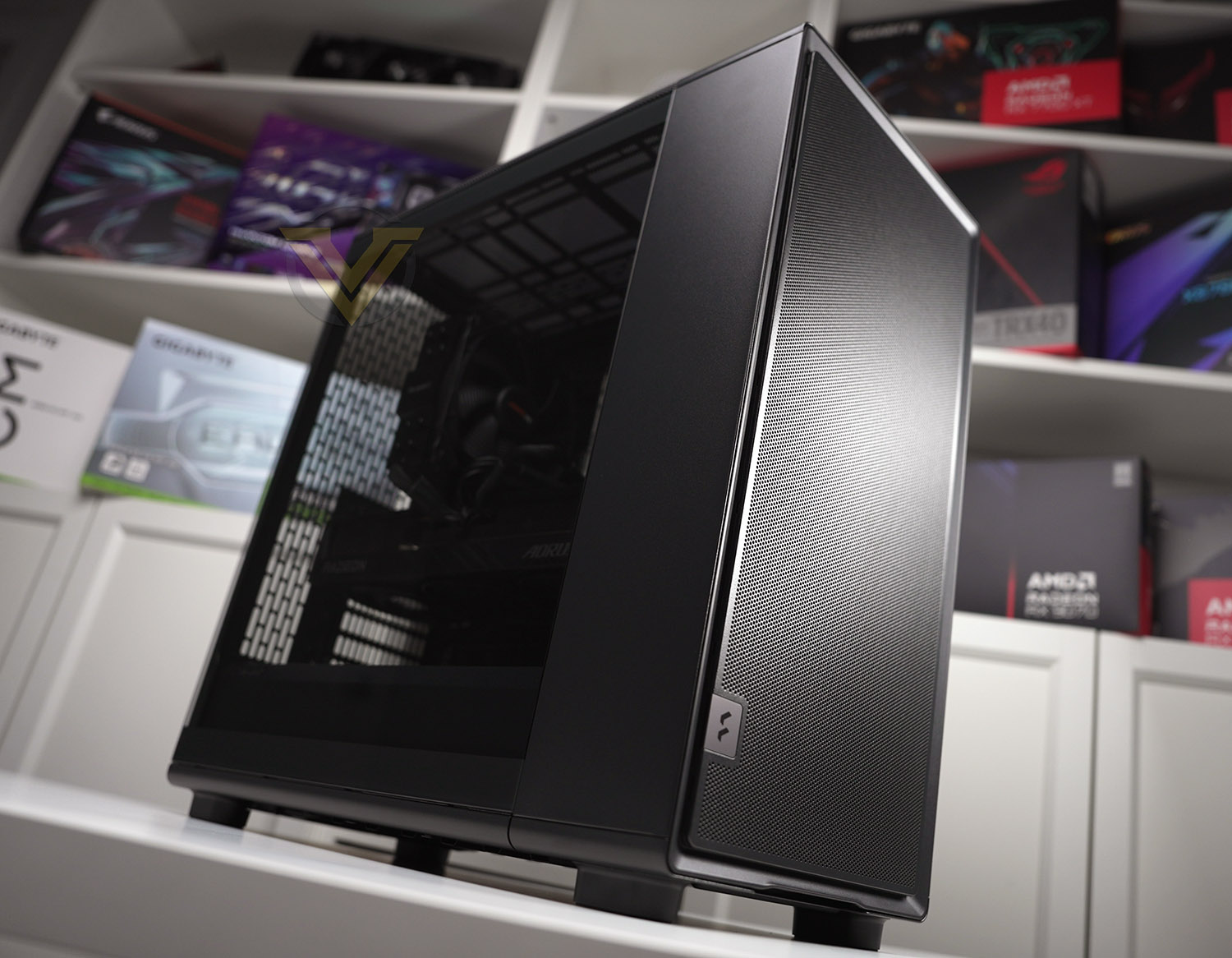
Inside, the chassis offers broad motherboard support—ATX, mATX, ITX, and reverse-connector layouts—along with tidy cable-routing features and tool-free panel access. In our review, we’ll be building a system inside the Epoch XL and more specifically the Black TG Light Tint version, to put these features to the test and evaluate its overall usability, compatibility, and build quality.
Fractal on their Epoch XL
Epoch XL scales up the clean and contemporary design of the Epoch series to a more spacious format. With a mesh front panel, optimized airflow layout, and three powerful Momentum 14 fans included, it ensures that high-performance components stay cool under load.
Technical Specifications
Below are the technical specifications surrounding the Epoch XL:
Closer Look
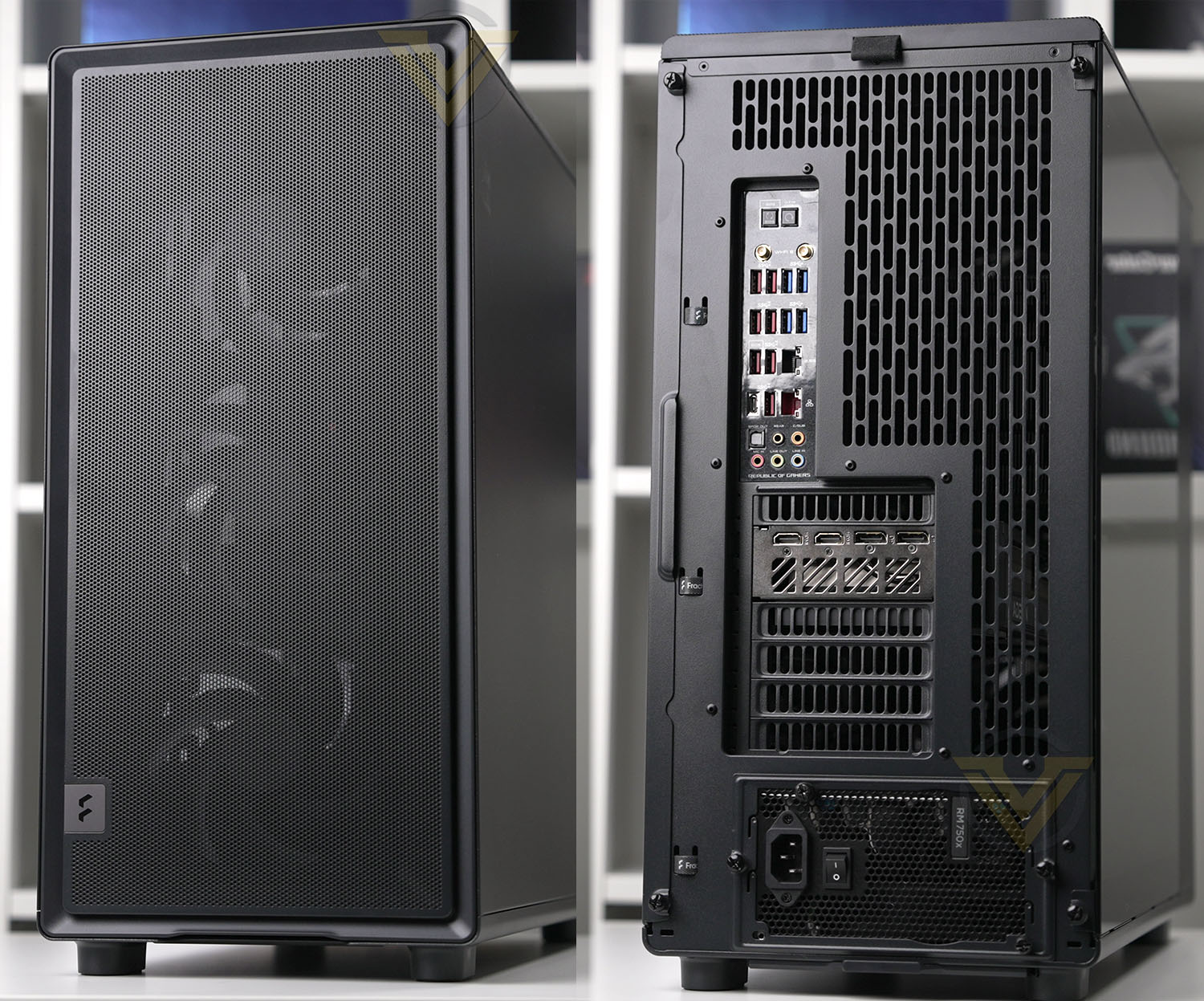
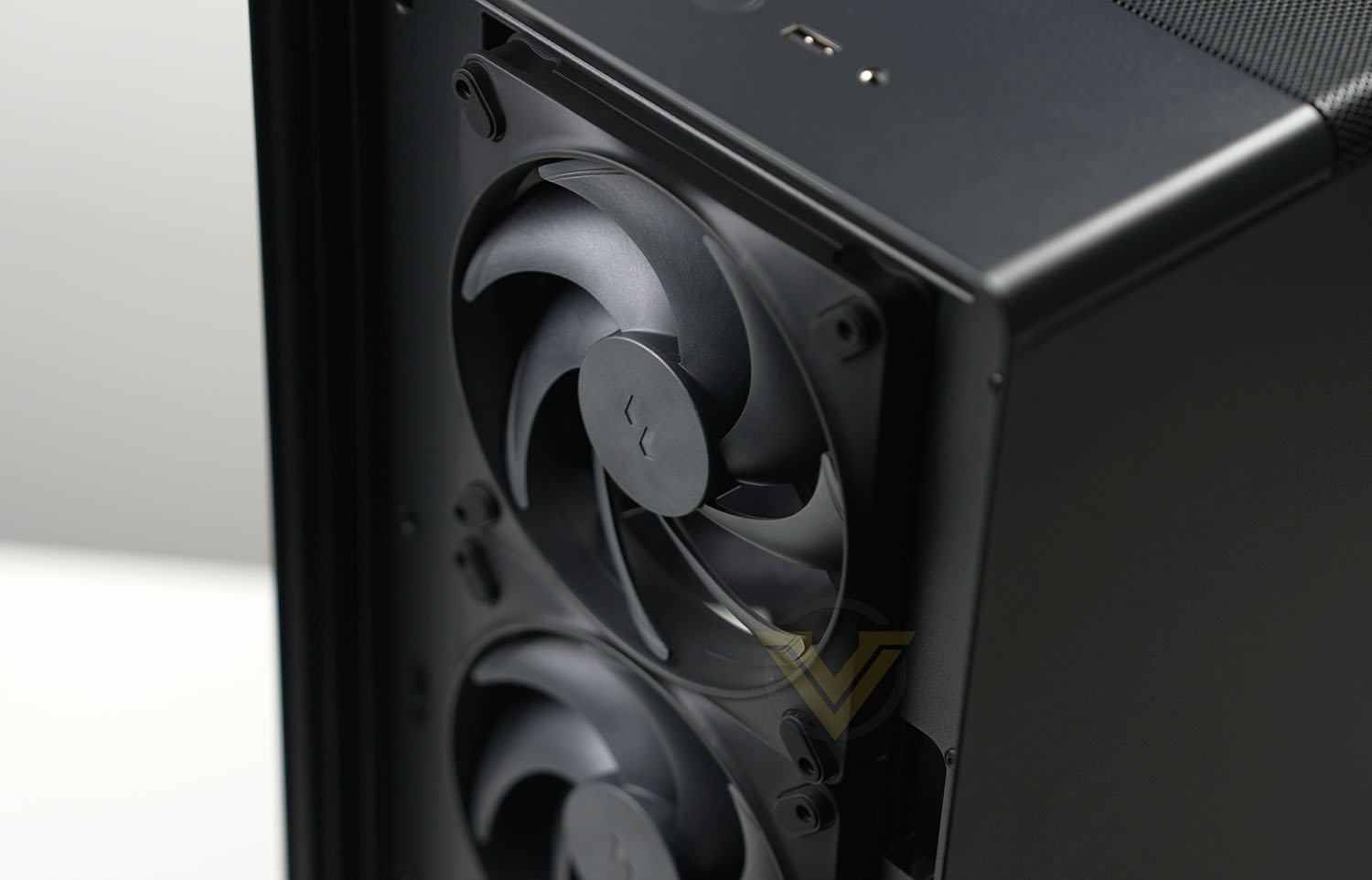
Being primarily designed with airflow in mind, Epoch XL opts for a fully perforated front panel which allows cool air to enter the chassis. This front panel is plastic and does not feature a detachable dust filter. Underneath, we have a trio of Momentum 14 cooling fans which are 140mm. These fans are all configured in a push-configuration to blow air across the system and out through the rear of the case.
Around the back of the case we have another heavily ventilated panel, which oddly enough does not feature the typical rear exhaust cooling fan. There are a total of 7 expansion slot covers, and the PSU seating area is at the bottom of the chassis. To install the PSU, it is necessary to remove the provided fascia and slide the unit in from this back section because there is insufficient space behind the motherboard tray.
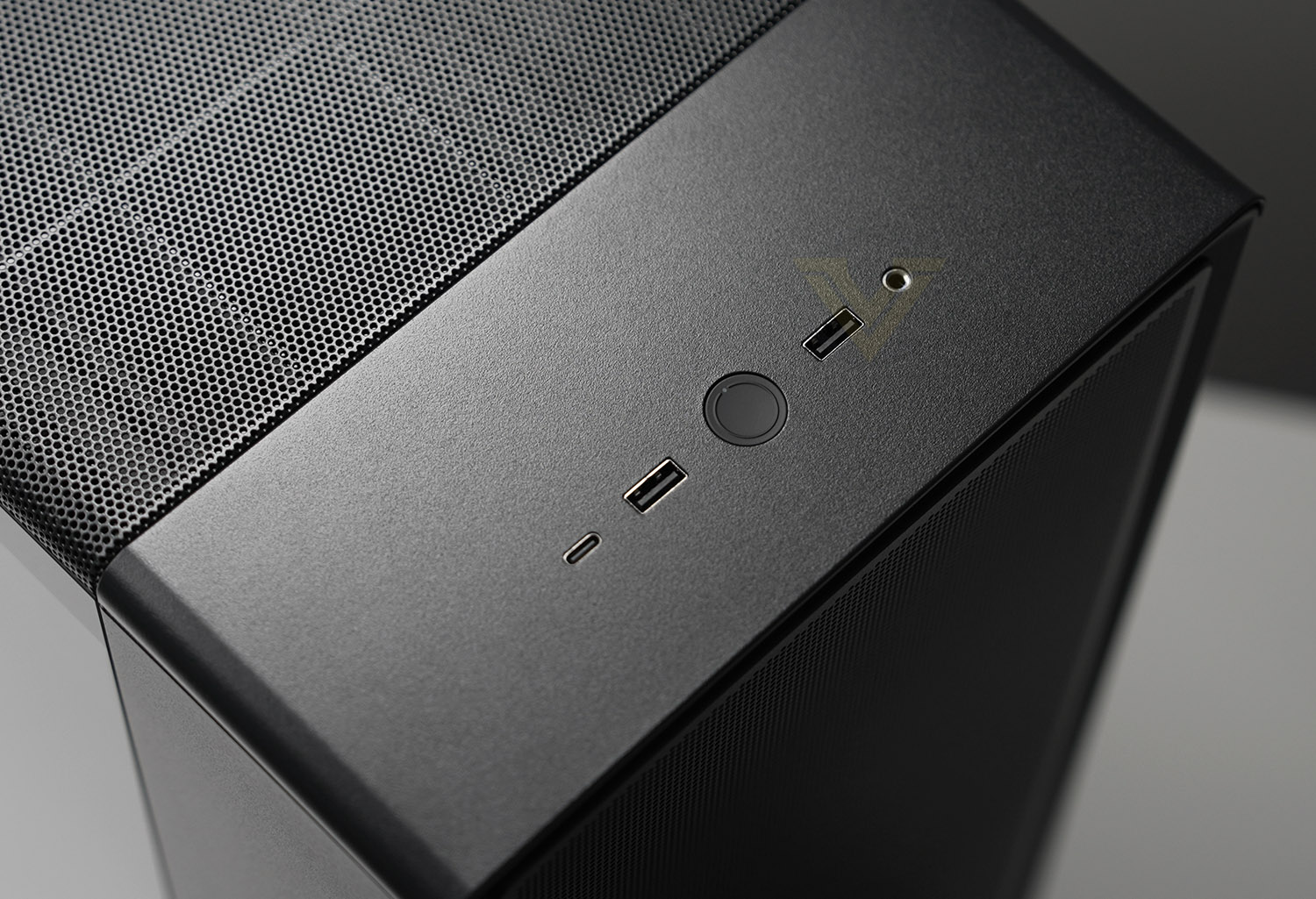
Front panel connectivity takes on the form of dual USB 2.0 ports, a single USB 3.2 Gen 2 port, an audio/microphone jack and a large power button in the centre.
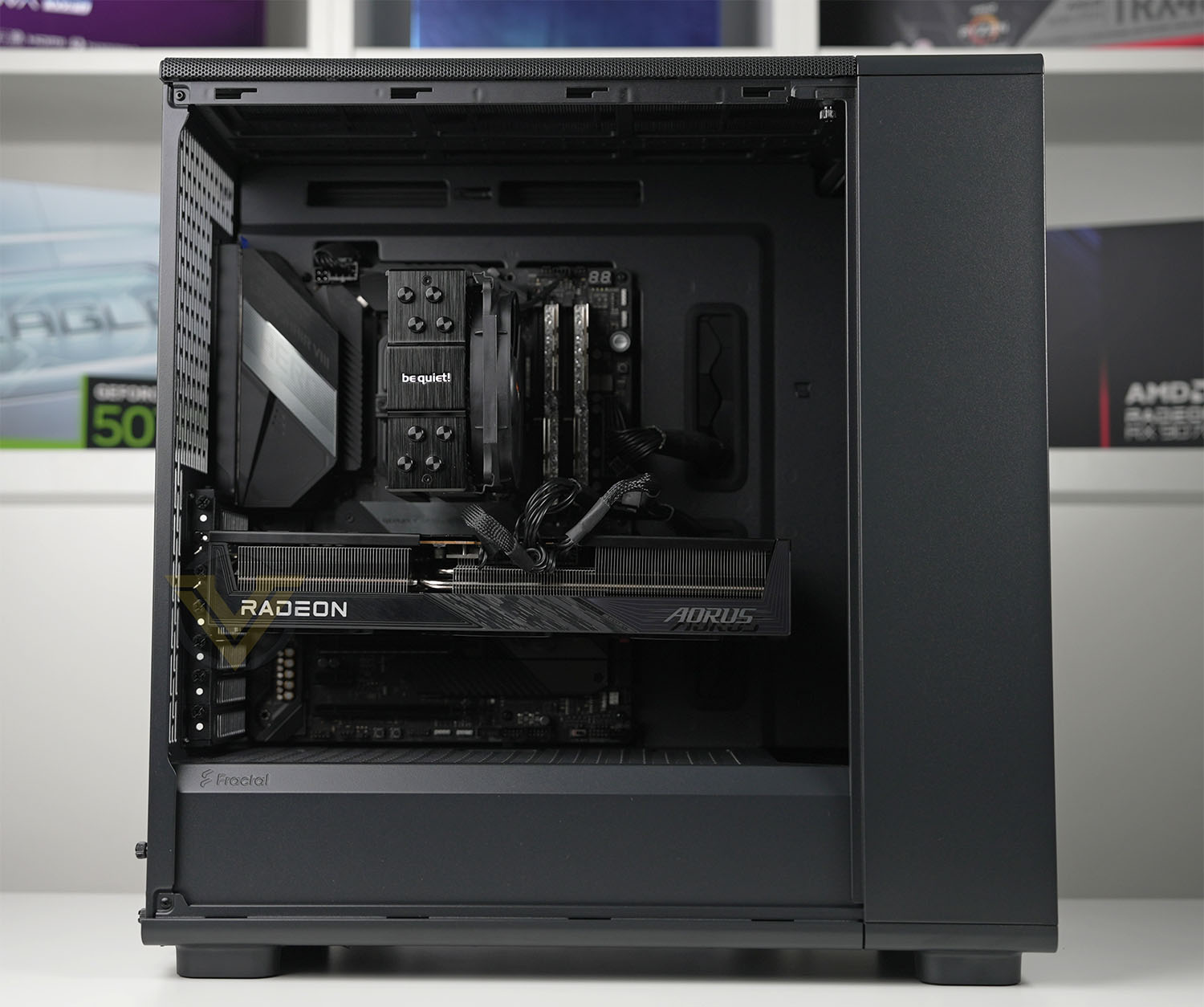
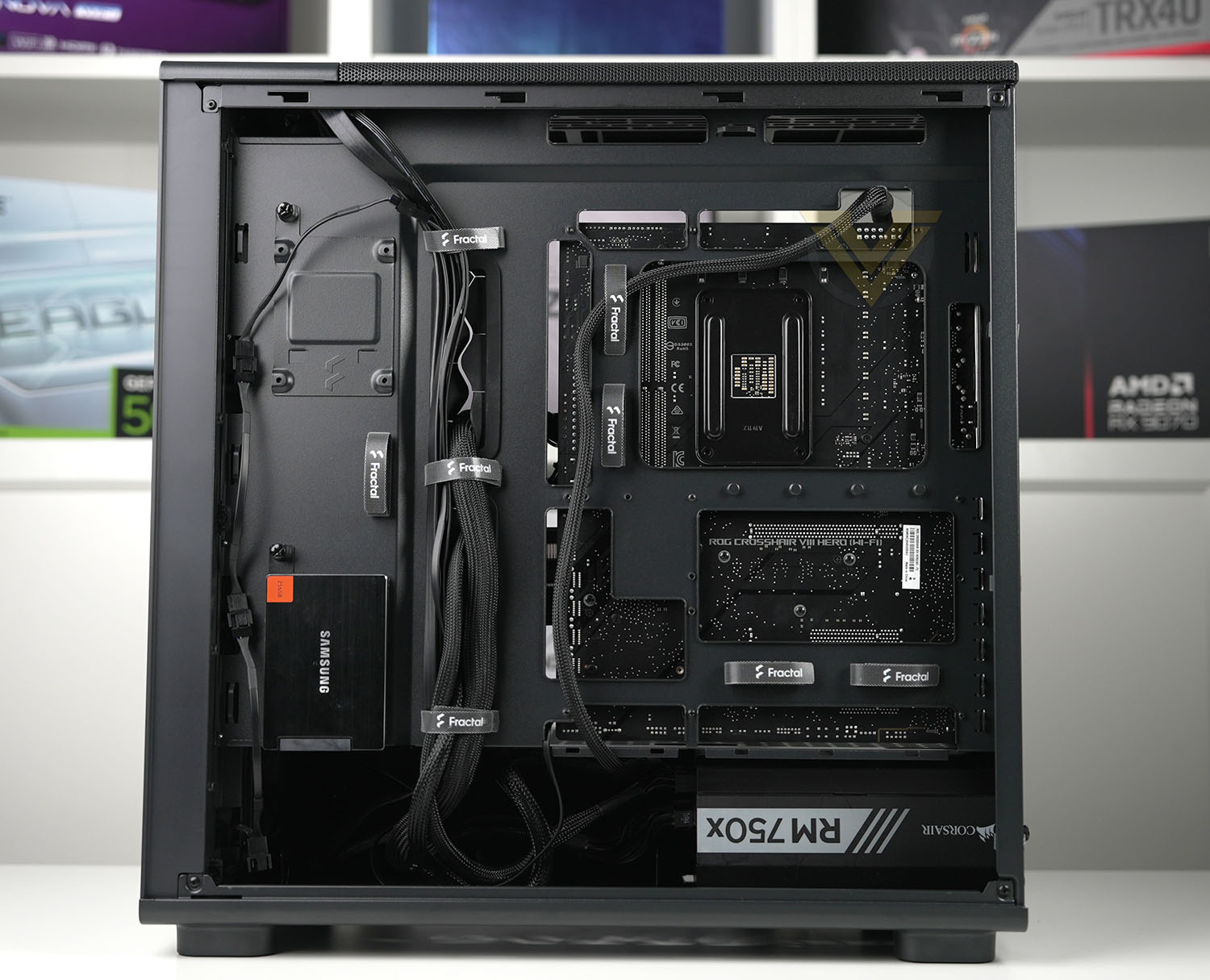
Epoch XL follows a traditional layout and can accommodate motherboards up to the ATX form factor.
There is enough room for large CPU coolers (up to 176mm) and long graphics cards (up to 425mm). This should not present any compatibility issues. The only difficulty that may arise are for those with CPU coolers which extend to 180mm in height.
You can clearly see that above the motherboard there is a huge amount of space for attaching liquid cooling. Fitting a radiator and fan combo will be no issue, even for the thicker variants. The top can house 360mm radiators, and likewise, the front can also.
On the reverse side there are plenty of integrated Velcro ties for cable management, and cut-outs to feed cables into the necessary locations. Cable management is a particular highlight for Epoch XL.
On the backside of this case there are 2x SSD attachment trays and a further 2x HDD trays in the lower region which can house 3.5” and 2.5” drives. For those wanting to install a longer PSU, the first tray will need to be removed.
Overall, we found Epoch XL very easy to work with. Installing our test system inside the chassis was an absolute breeze and we encountered no compatibility issues, nor did we experience any quality gripes.
Thermal Performance Testing
Inside Epoch XL there are three 140mm cooling fans – placed as front intakes. We would have liked to see a push-pull configuration out of the box as this would typically yield better results, but if we only have the choice of intake or exhaust, intakes are more favourable for cooling.
To discover the thermal performance of Epoch XL we will record idle temperatures after 20 minutes from a cold boot. We will then stress the system and temperatures will again be monitored after 30 minutes have elapsed.
For the purpose of accurate analysis, the idle and load temperatures for CPU will be recorded and the range between idle and load will be calculated to determine how efficient cooling is.
NOTE: Ambient temperature is 20C
The below system configuration is different to that which is displayed/installed within the pictures. We use this below configuration for historic comparison.
System Components
CPU Intel Pentium K G3258 @ 4GHz
Motherboard GIGABYTE Z87X-D3H
CPU Cooler Cooler Master Hyper 212 EVO (Different to cooler in pictures)
Graphics NVIDIA GTX 760
Memory 4GB Kingston HyperX DDR3
HDD Samsung Spinpoint 500GB SATA-II
PSU DeepCool DQ750
Motherboard GIGABYTE Z87X-D3H
CPU Cooler Cooler Master Hyper 212 EVO (Different to cooler in pictures)
Graphics NVIDIA GTX 760
Memory 4GB Kingston HyperX DDR3
HDD Samsung Spinpoint 500GB SATA-II
PSU DeepCool DQ750
Noise
Though we do have a total of 3x cooling fans inside Epoch XL, the case remains relatively quiet. It should be noted that this case is not designed to be quiet and favours airflow over noise. Nevertheless, the results are still decent!
Conclusion
The Fractal Epoch XL Black TG Light Tint ultimately stands out as a well-rounded, thoughtfully executed chassis that delivers both style and substance. With five variants available—including black or white finishes and different tempered-glass tints—the lineup offers excellent choice for builders who want a case that matches their aesthetic. Its sleek, minimal design, combined with premium touches and an easy, tool-free panel system, gives the Epoch XL a sophisticated feel that fits beautifully in both gaming and professional setups.
Cooling performance is another major strength. The ventilated mesh front and top panels, paired with the included Momentum 14 fans, provide excellent airflow for high-performance hardware. The roomy upper chamber makes top-mounted radiators or liquid cooling solutions easy to accommodate, giving users plenty of headroom for ambitious thermal configurations. Throughout the chassis, build quality feels solid and confidence-inspiring, reinforcing Fractal’s reputation for durable, well-engineered cases.
Cable management is equally impressive. Generous routing clearance, Velcro ties, and well-placed grommets make it straightforward to achieve a clean internal layout. This attention to detail doesn’t just improve airflow— it also enhances the overall building experience and final presentation. The inclusion of modern connectivity, such as USB 3.2 Gen2 Type-C, is a welcome touch that future-proofs the front I/O and keeps the case competitive at its price point.
However, the Epoch XL isn’t without compromises. The push-only cooling configuration, with no rear exhaust fan position, may limit certain airflow setups, and its heavily ventilated mesh design—while great for thermals—means users should expect to clean dust filters regularly. Still, these drawbacks feel minor in the bigger picture. For builders seeking a spacious, elegant, and thermally capable mid-tower with excellent cable management and strong overall execution, the Epoch XL earns an easy recommendation.
Pros
+ 5 different options
+ Sleek, attractive design
+ Easy to remove panels (tool-free pull-tab at for top)
+ Includes USB 3.2 Gen2 Type-C
+ Excellent cooling potential
+ Roomy for top-mounted radiator/liquid support
+ Good build quality
+ Excellent cable management options
Cons
– Push cooling configuration only
– Heavily ventilated, attracts dust
+ 5 different options
+ Sleek, attractive design
+ Easy to remove panels (tool-free pull-tab at for top)
+ Includes USB 3.2 Gen2 Type-C
+ Excellent cooling potential
+ Roomy for top-mounted radiator/liquid support
+ Good build quality
+ Excellent cable management options
Cons
– Push cooling configuration only
– Heavily ventilated, attracts dust
Click here for an explanation of our awards at Vortez.net.
Stay connected with the Vortez Social Media pages: