GameMax, an emerging PC hardware brand, offered their GameMax GX-850 PRO power supply unit to test featuring ATX 3.1 and PCIe 5.1 standards. Available in black and white options with a fully modular cable design and an attractive price point, can it go up against the offerings from more popular brands in the market?
Product Name: GX-850 PRO WH (ATX3.1 PCIe5.1)
Manufacturer: GameMax
MSRP: $94.99
GameMax, an emerging PC hardware brand based in China, has sent us one of their latest ATX 3.1 power supply units to check out – the GameMax GX-850 PRO featuring ATX 3.1 and PCIe 5.1 standards. The unit comes in black and white colours and we got the white model to review. The GX-850 PRO features native 12V-2×6 connectors. The power supply features an 80PLUS Gold efficiency rating and a fully modular cable design. If you are building an all-white gaming PC, the GameMax GX-850 PRO White is a great choice for matching colours. Apart from aesthetics, is it a good PSU to begin with? Let’s find out.
GameMax GX PRO Series
The Gamemax GX PRO Modular 80PLUS Gold ATX Power Supply is a cutting-edge solution designed with innovation at its core. Built on a Gold design base with Platinum-level performance, it features an LLC and DC-DC circuit for superior stability and efficiency. With a classic efficiency rating of over 92%, this power supply ensures optimal energy usage. Its modular design incorporates free-cable technology, allowing for easier cable management and improved airflow within the system.
Features and Specifications
Features
• 850W 80 Plus Gold ATX3.1 PCIe5.1 power supply with PCIe5.1 12V-2*6 connector for direct RTX™ 40 Series GPU connection, minimizing current loss.
• ATX3.1 & PCIe5.1 ready with 12V-2×6 connector
• LLC MPS1213 Chipset optimizes LLC resonant circuit for high efficiency at all loads
• UP3861 Chip ensures stable 3.3V and 5V outputs with reduced ripple noise
• MPS6924 Chip boosts efficiency via optimized synchronous rectification
• 105°C Japanese bulk capacitors ensure long life and stable output
• Quiet, temperature-controlled axial fan for efficient cooling
• Seven protection levels: OTP, OCP, SCP, OVP, UVP, OPP, SIP
• Black flat copper output cables for efficient power delivery
• SMT-produced components for fast heat dissipation and stability
• ATX3.1 & PCIe5.1 ready with 12V-2×6 connector
• LLC MPS1213 Chipset optimizes LLC resonant circuit for high efficiency at all loads
• UP3861 Chip ensures stable 3.3V and 5V outputs with reduced ripple noise
• MPS6924 Chip boosts efficiency via optimized synchronous rectification
• 105°C Japanese bulk capacitors ensure long life and stable output
• Quiet, temperature-controlled axial fan for efficient cooling
• Seven protection levels: OTP, OCP, SCP, OVP, UVP, OPP, SIP
• Black flat copper output cables for efficient power delivery
• SMT-produced components for fast heat dissipation and stability
Specifications
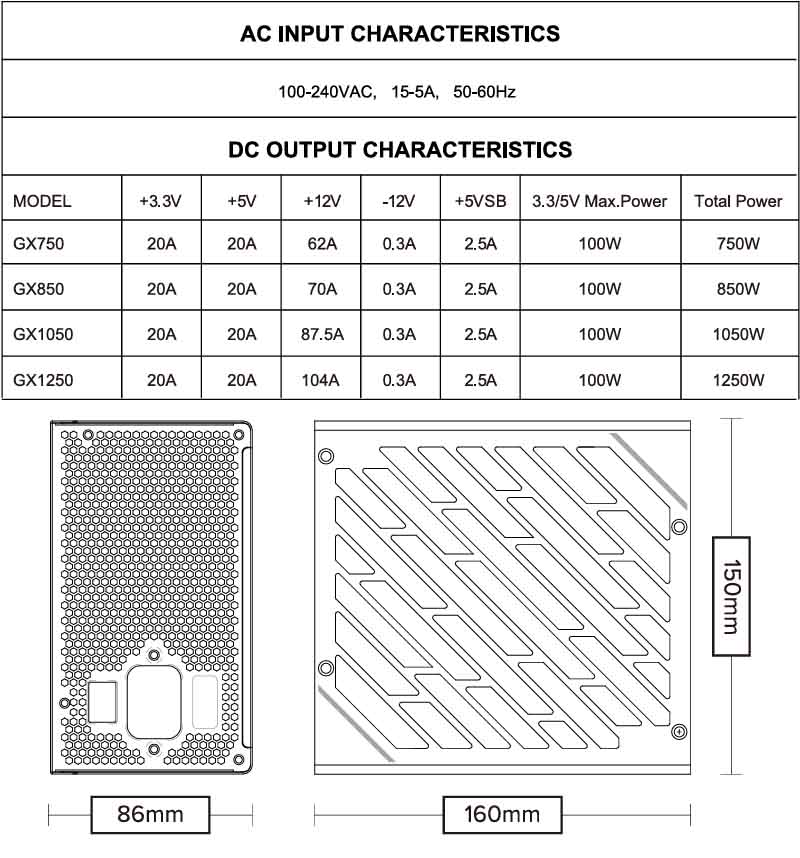
Dimensions (L*W*H)
160 x 150 x 86 (mm)
Packaging, Bundle, and Cables
At the front of the box, the wattage capacity is indicated using a sticker with the print “PCIe 5.1 ready” and “ATX 3.1 ready” badges.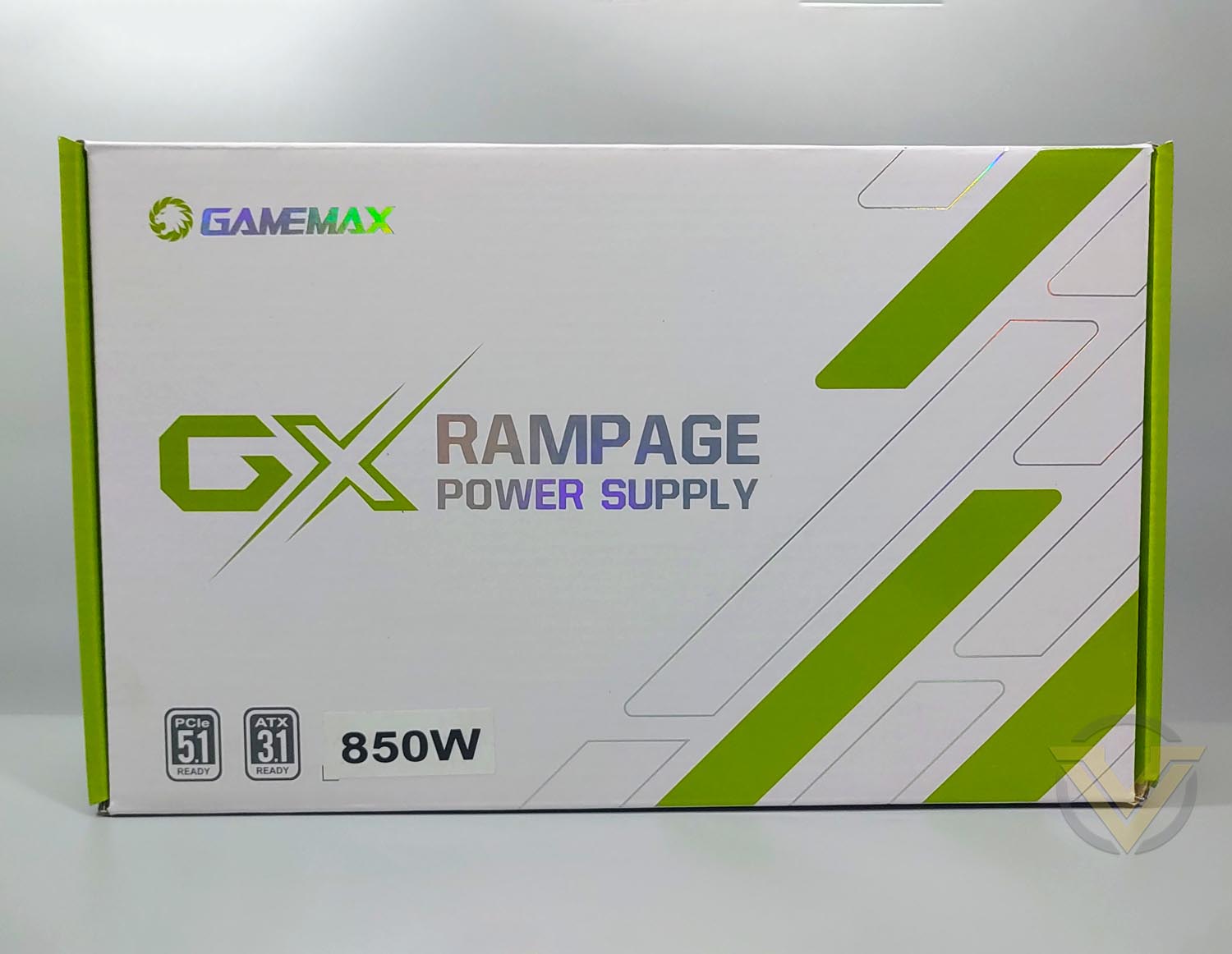
The GameMax GX850 PRO comes in box packaging which appears to be the same box used in other models seeing all the possible models of the series printed on the side of the box.
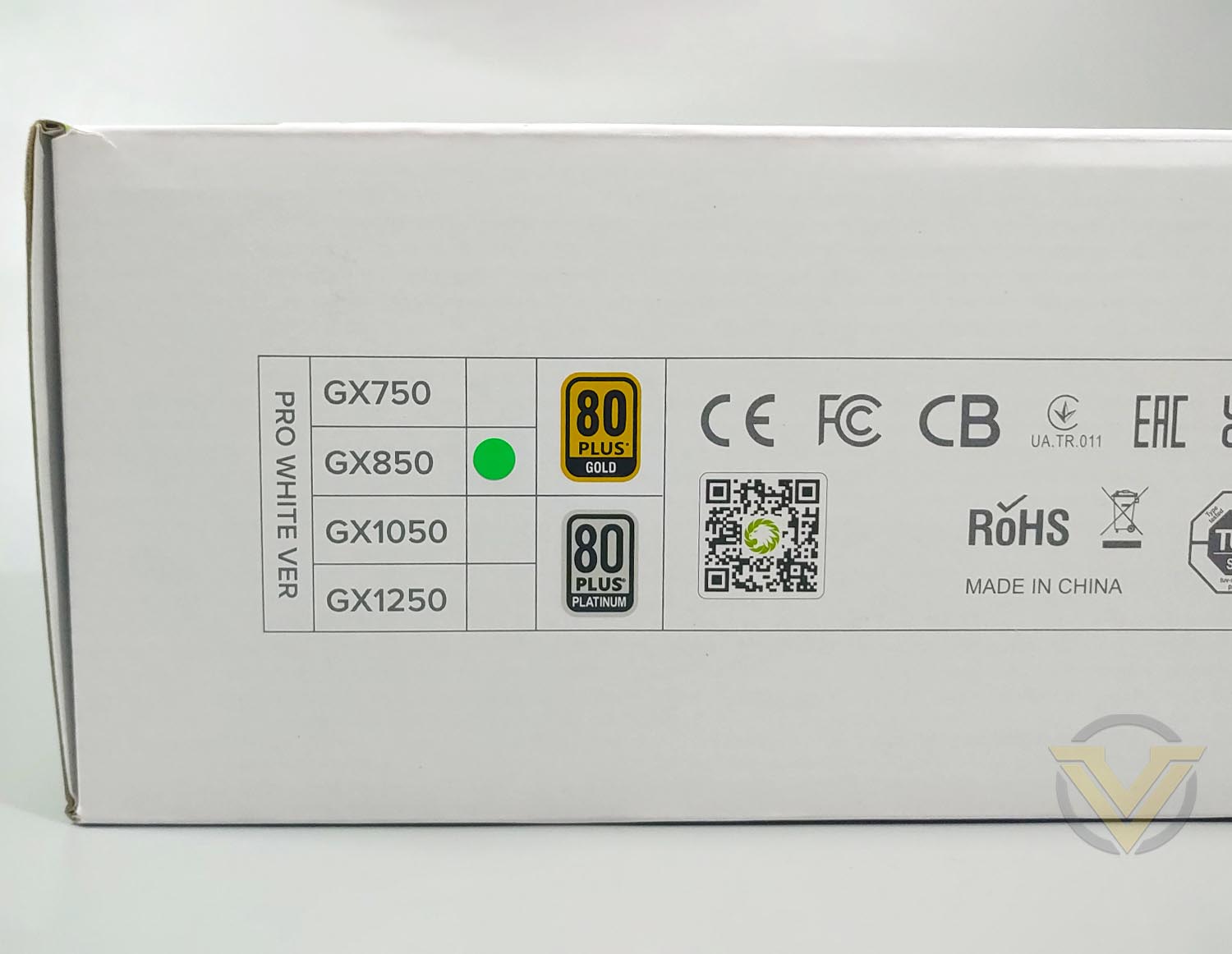
GameMax uses a green dot sticker to indicate what model is inside the box.
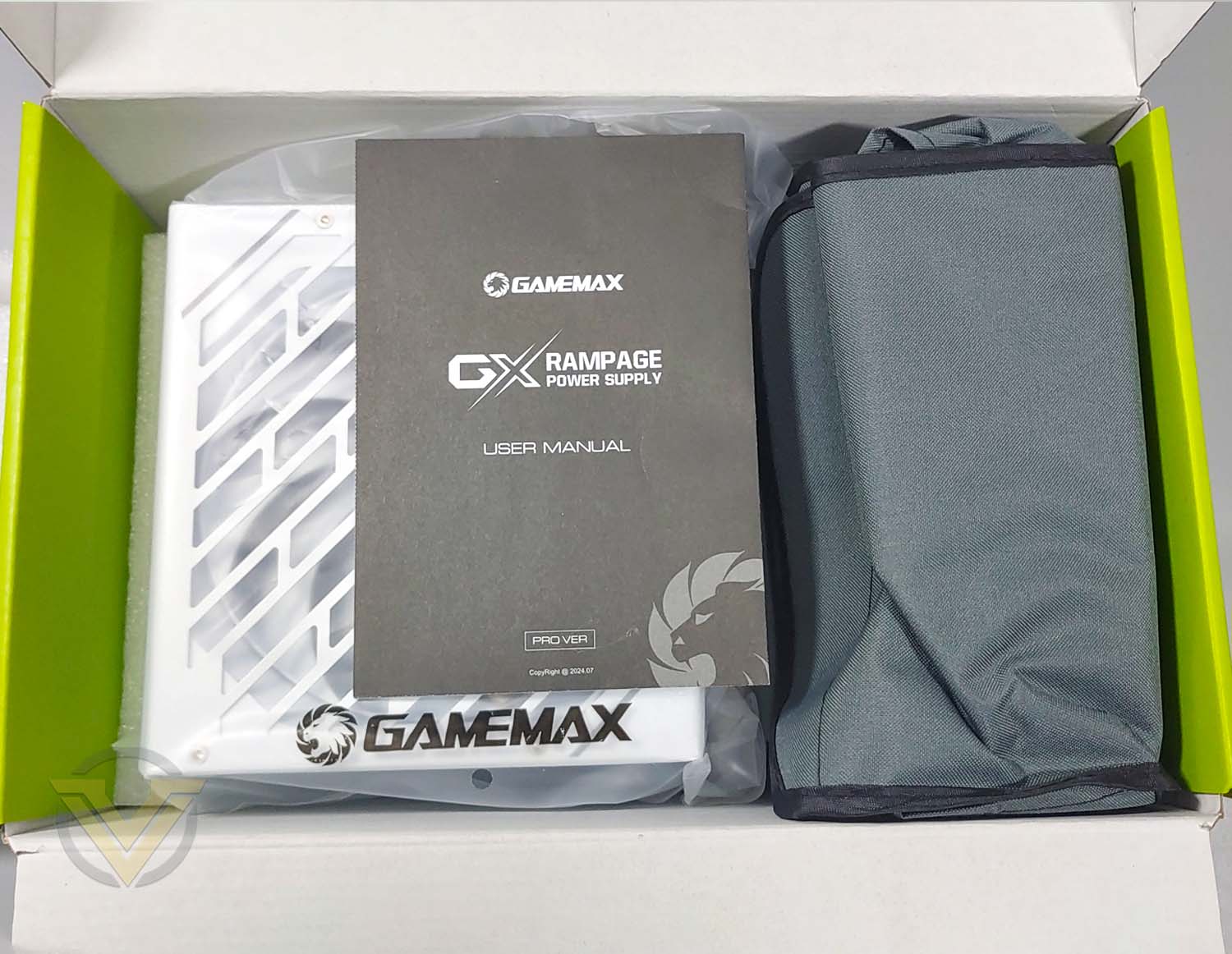
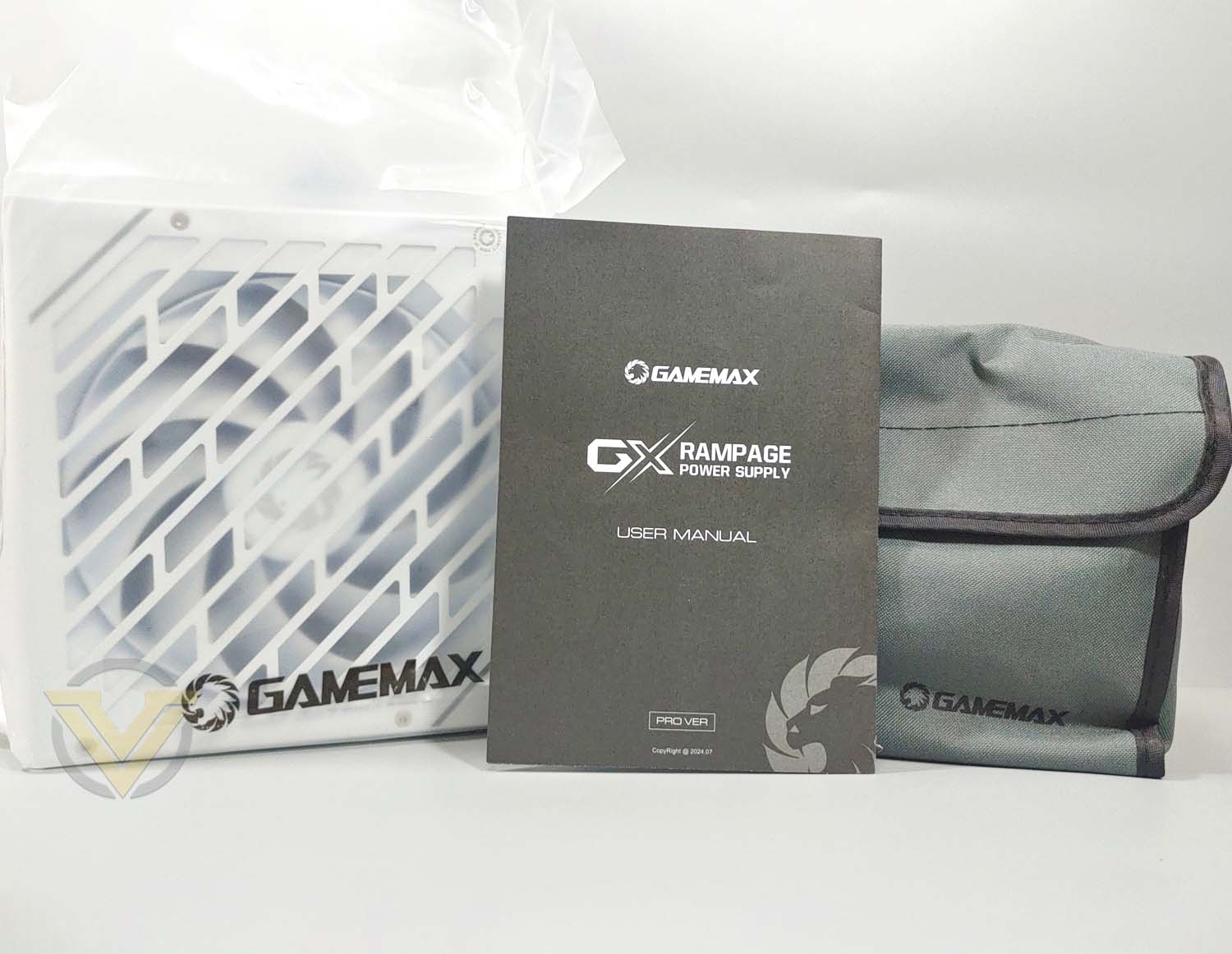
The PSU is packed inside a plastic bag while the cables and accessories are inside a grey fabric bag, quite a fancy touch nowadays.
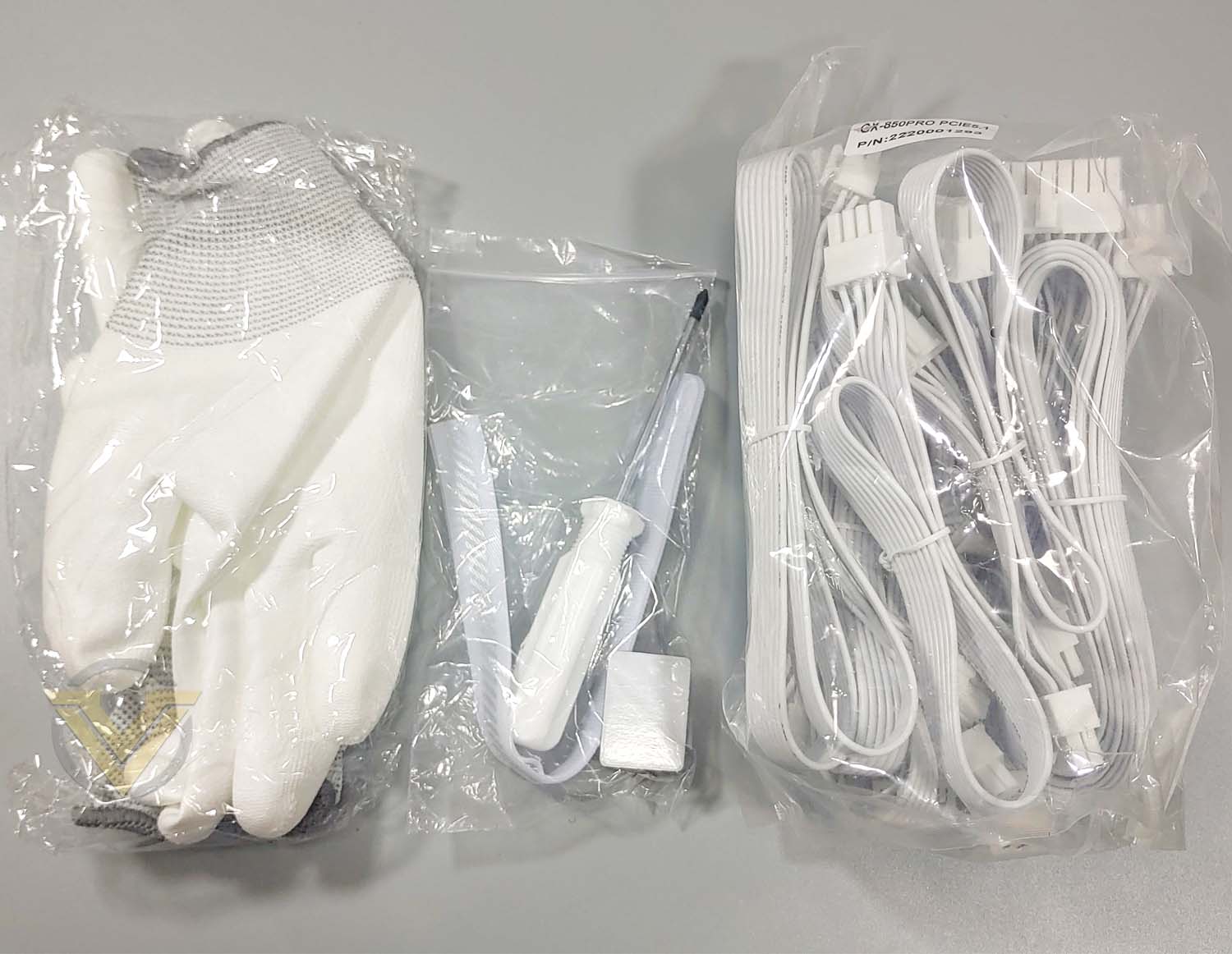
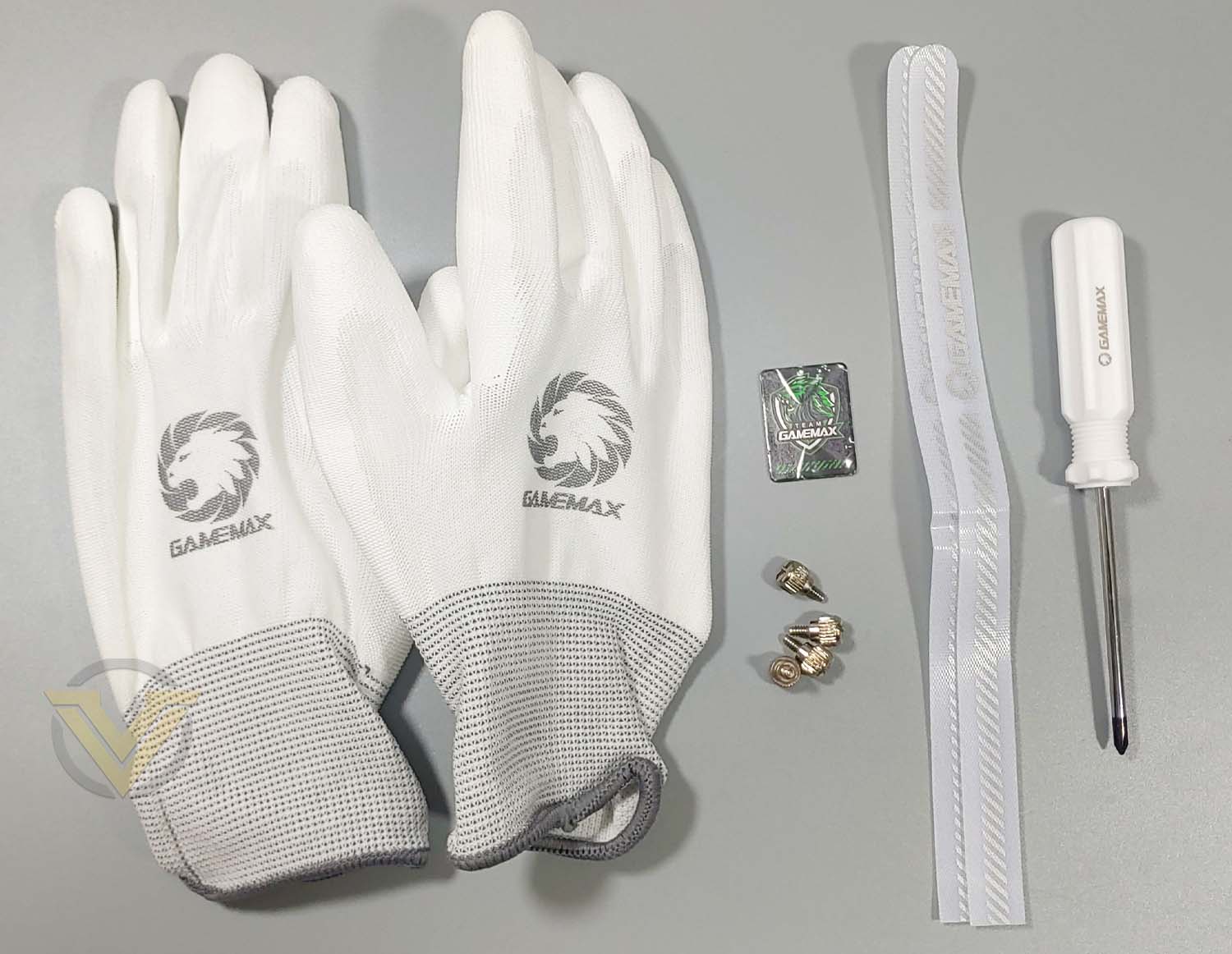
GameMax went a bit overboard with the accessories that came with the GX850 PRO power supply unit given its price compared to offerings from popular brands. The PSU came with a screwdriver, a pair of gloves, a pair of Velcro straps for cable management, a GameMax sticker badge, and four thumbscrews for installing the PSU in a PC case.
The GameMax GX850 PRO comes with the following cables below:
1x 20+4Pin Motherboard ATX (650mm)
1x 8(4+4Pin) + 8(4+4Pin) EPS (150mm)
2x 2×8(6+2Pin) PCIe (550+75mm Cable)
1x 16Pin PCIe 5.1 (650mm Cable)
2x 3xSATA (500+150+150mm)
1x 3xMolex (500+150+150mm)
1x 8(4+4Pin) + 8(4+4Pin) EPS (150mm)
2x 2×8(6+2Pin) PCIe (550+75mm Cable)
1x 16Pin PCIe 5.1 (650mm Cable)
2x 3xSATA (500+150+150mm)
1x 3xMolex (500+150+150mm)
Unlike the Super Flower LEADEX III GOLD ATX 3.1 850W that uses two separate 4+4pin EPS cables for motherboards with two 8-pin EPS connectors, the GameMax GX850 PRO would only use one cable wherein the EPS cable has a split with two 4+4pin connectors. This means the entire CPU load would be drawn from one cable. Nevertheless, this PSU is not marketed to extreme overclockers. This cable configuration should suffice for average gaming PC configurations that require an 850W PSU or less.
Closer Look (External)
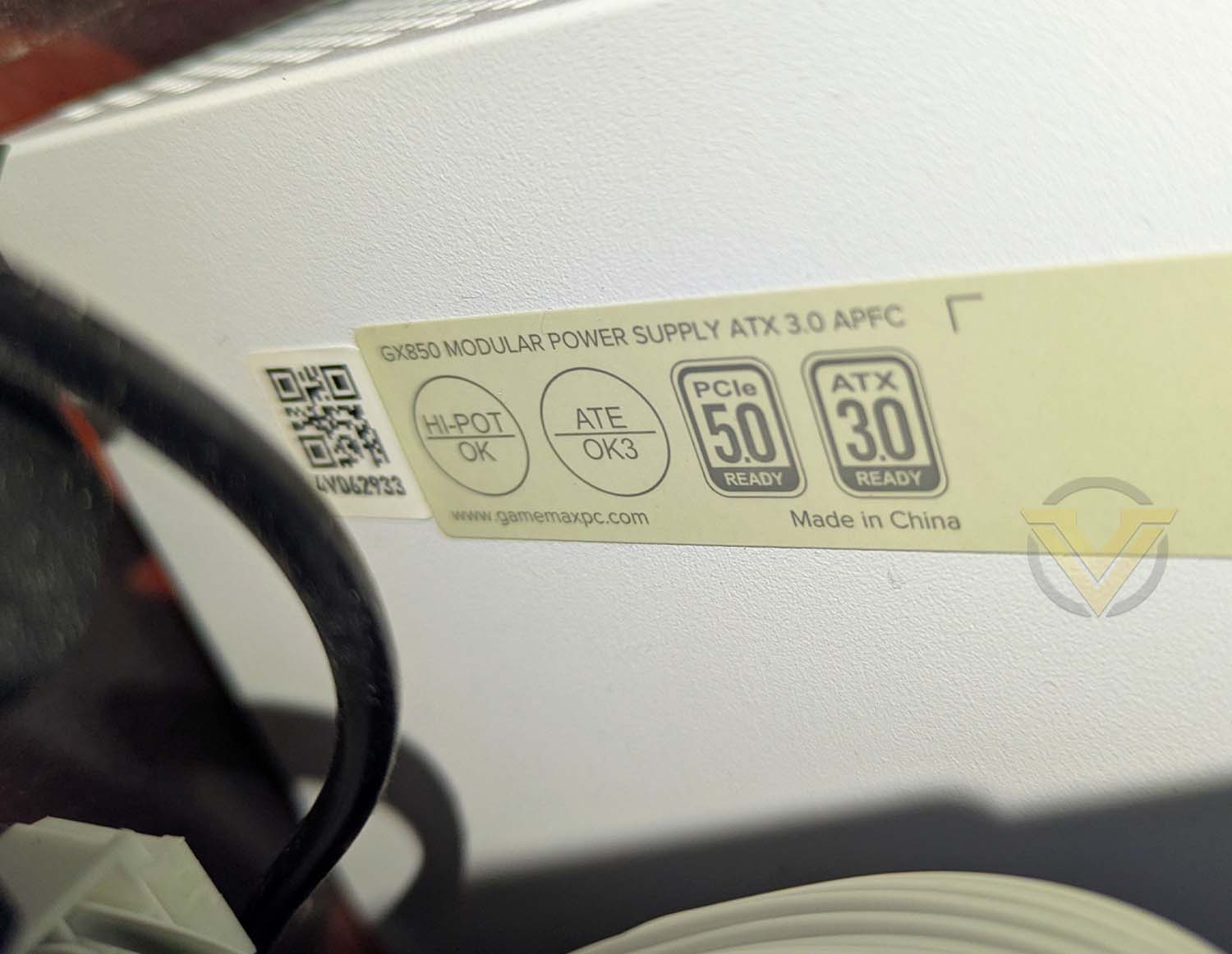
Upon the first inspection of the power supply and details placed on it, a sticker saying “PCIe 5.0 ready” and “ATX 3.0 ready” can be seen which is different from what’s on the box. We reached out to GameMax about it and told us it was an oversight in the production given that it’s a new SKU. GameMax is now working on fixing this minor error.
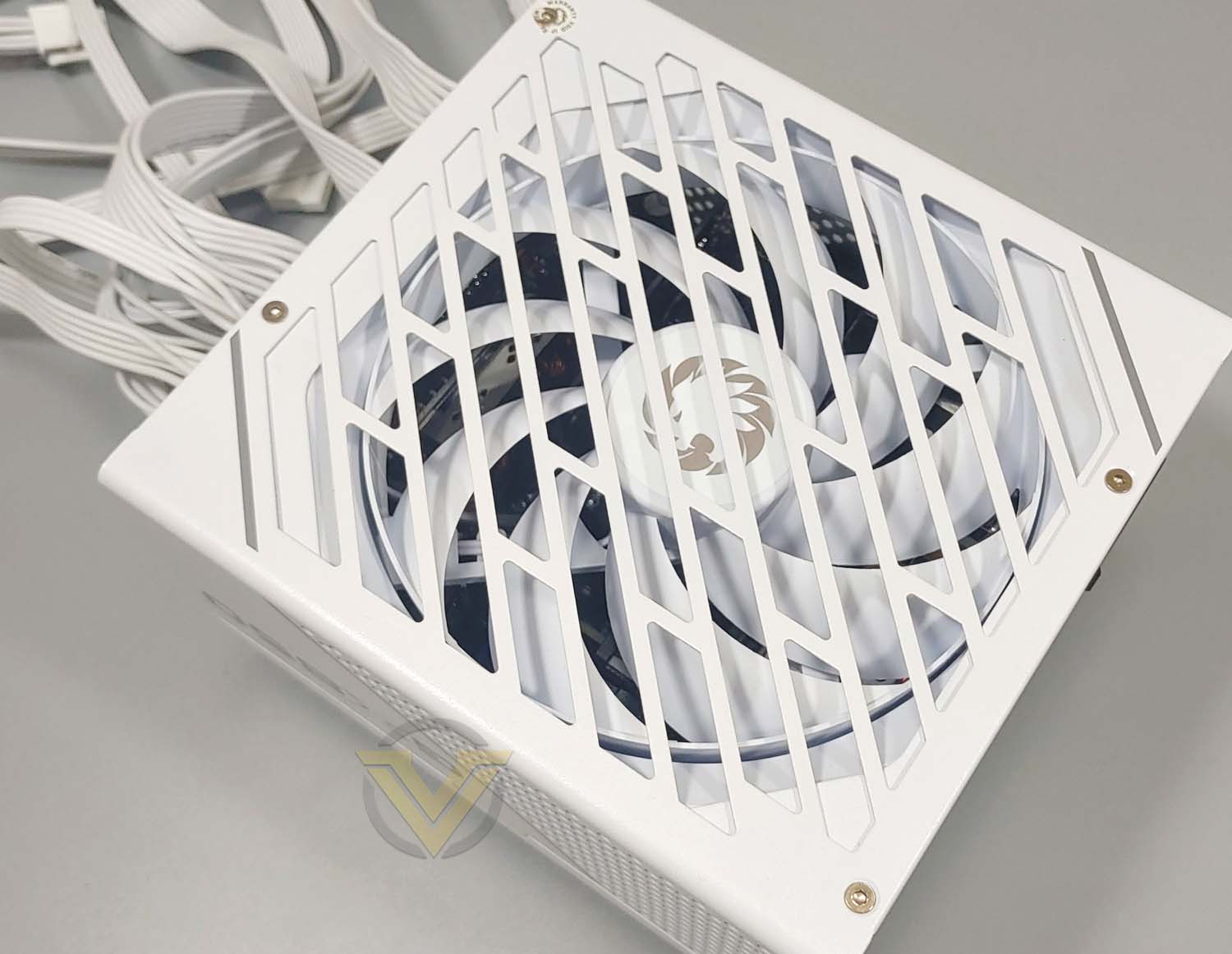
Moving on, the GameMax GX850 PRO has an unusually open vent for the cooling fan – it looks cool but you could easily drop a screw inside the PSU accidentally.
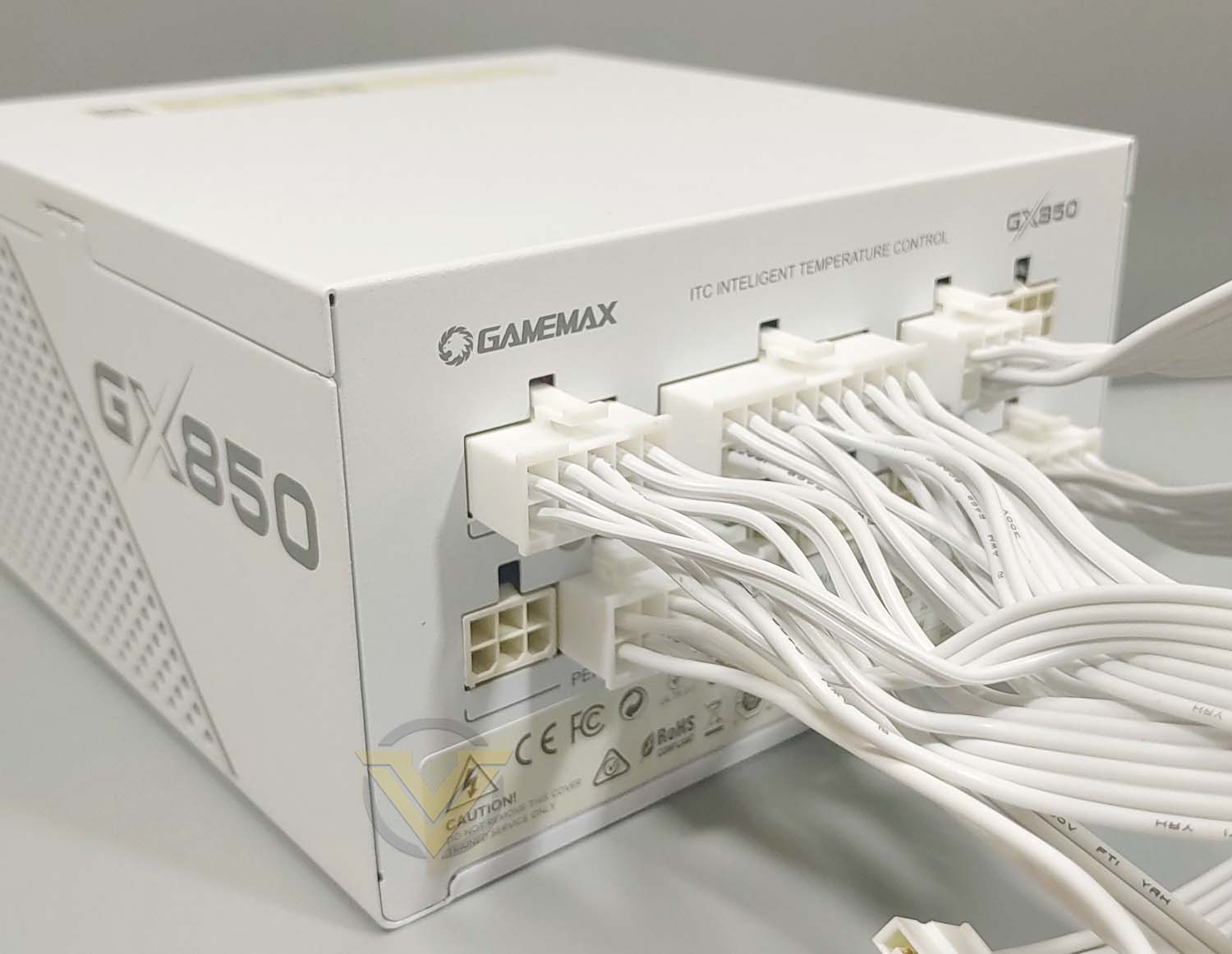
The majority of the PSU and its cables are white including the connectors and the top has a small sticker that has the model name and essential information. The sticker is quite small compared to what most brands place on that part of the PSU.
Closer Look (Internal)
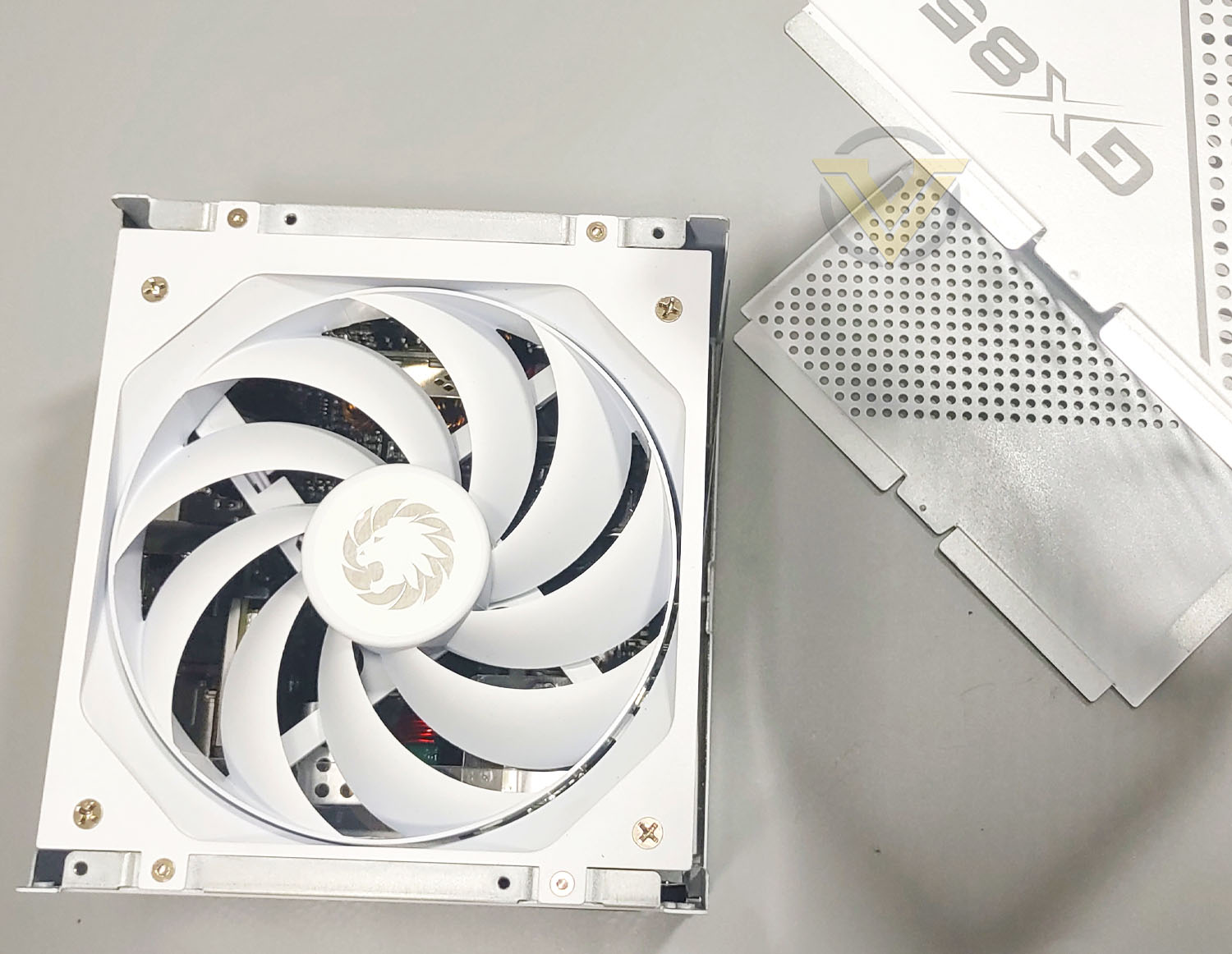
The GameMax GX850 PRO comes equipped with a 135mm FDB fan that GameMax calls a “Turbo Axial Flow” fan design, similar to some of the ASUS DUAL and EVO graphics cards which they also call “Axial-Tech” Fans. Moving on, the FDB fan is installed on the main housing of the PSU and not the cover. The fan is secured by 8 screws because it’s installed on a bracket and the bracket is installed on the housing.
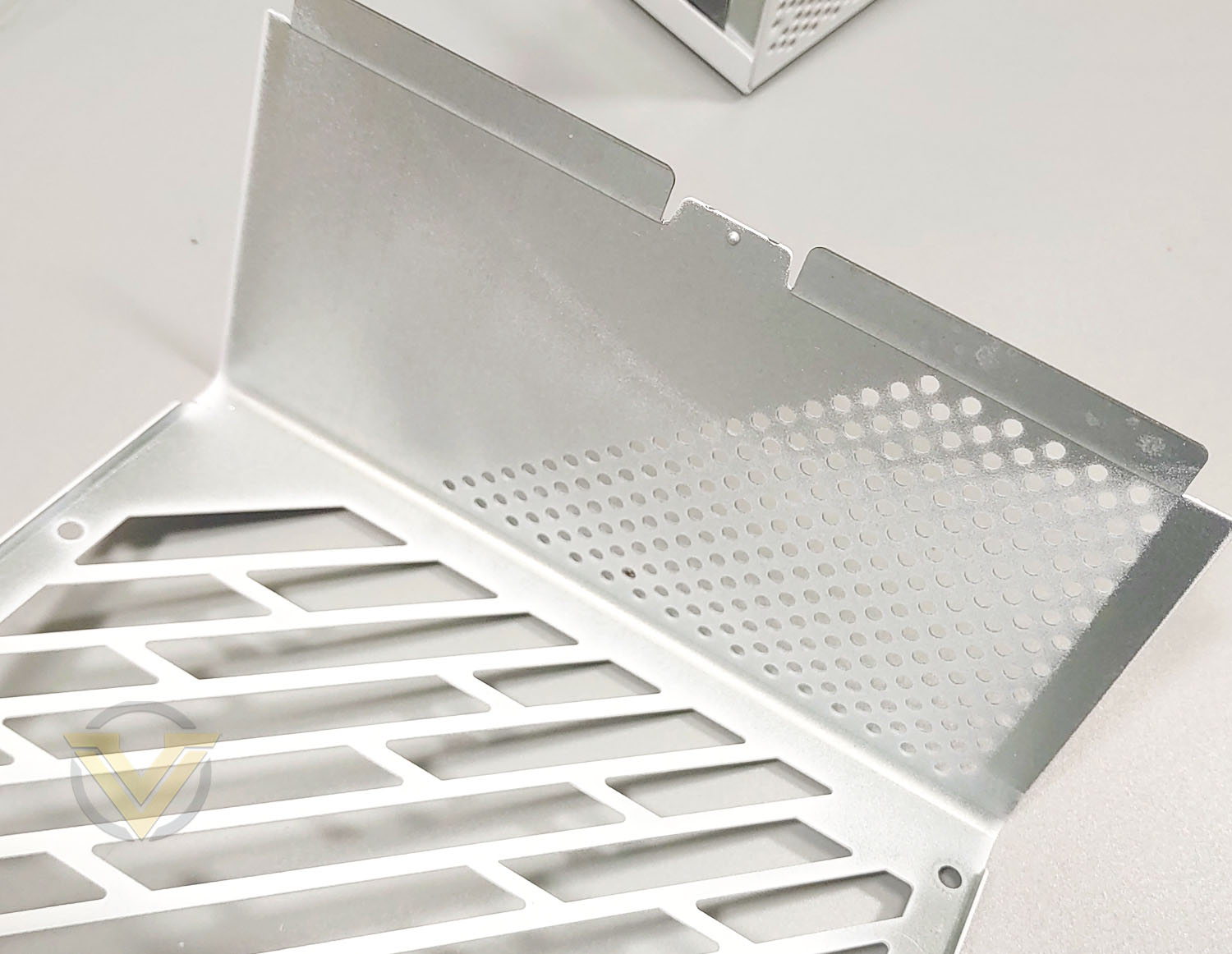
The underside of the cover is lacking some powder coating. This would not affect the aesthetics of the PSU but this portion of the cover is susceptible to rust particularly if you live in a humid region.
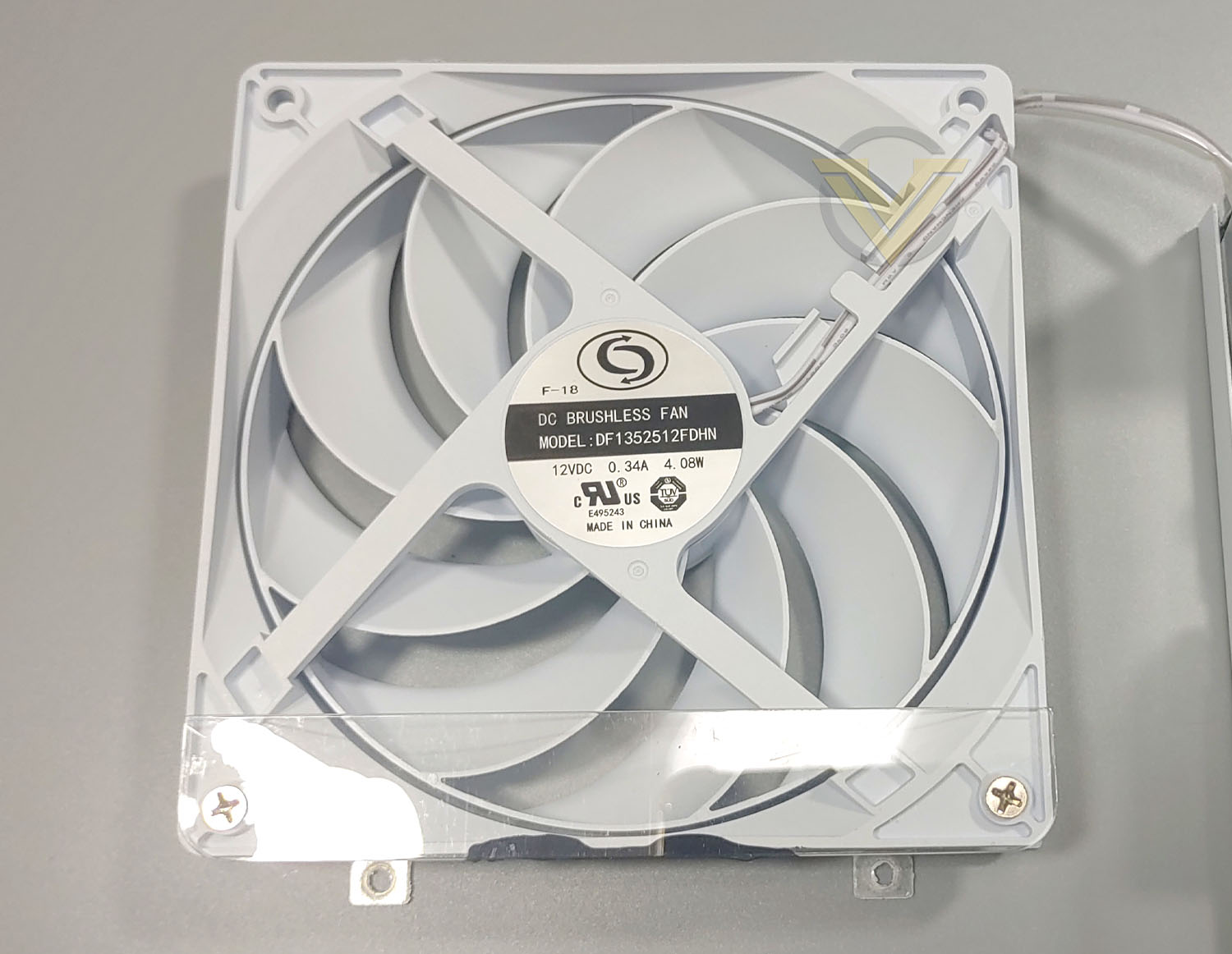
Here’s a closer look at the fan removed from the housing.
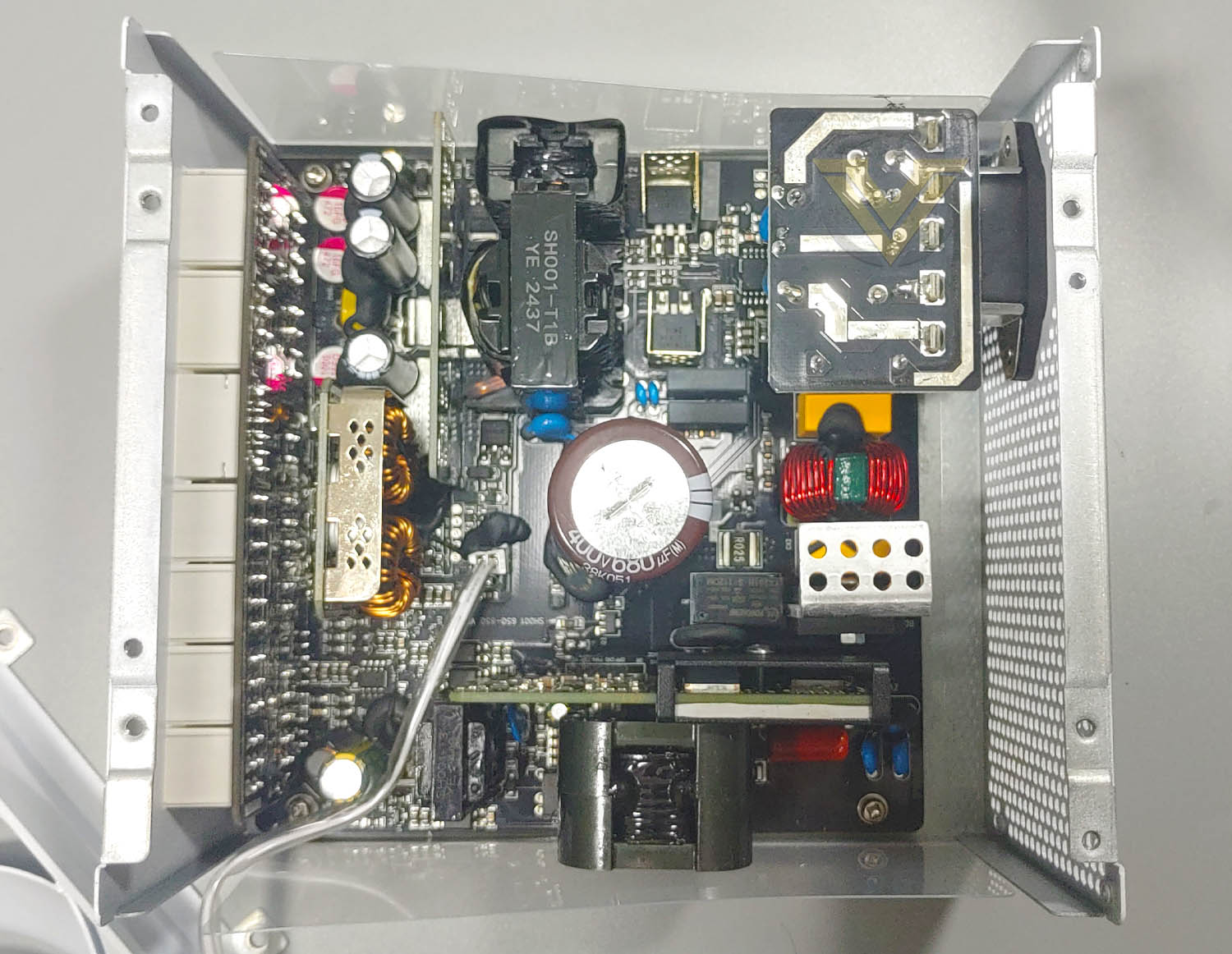
The inside of the GX850 PRO boasts impressive and clean soldering, which goes to show the “Wireless Technology” GameMax is talking about on the product page. The only component that uses a wire is the cooling fan.
The PSU doesn’t have heatsinks that would help dispel heat from the components and has surprisingly fewer capacitors compared to the LEADEX III GOLD UP ATX 3.1. This is likely why this model is on the cheaper end of modular 80PLUS Gold-certified 850W PSUs on the market.
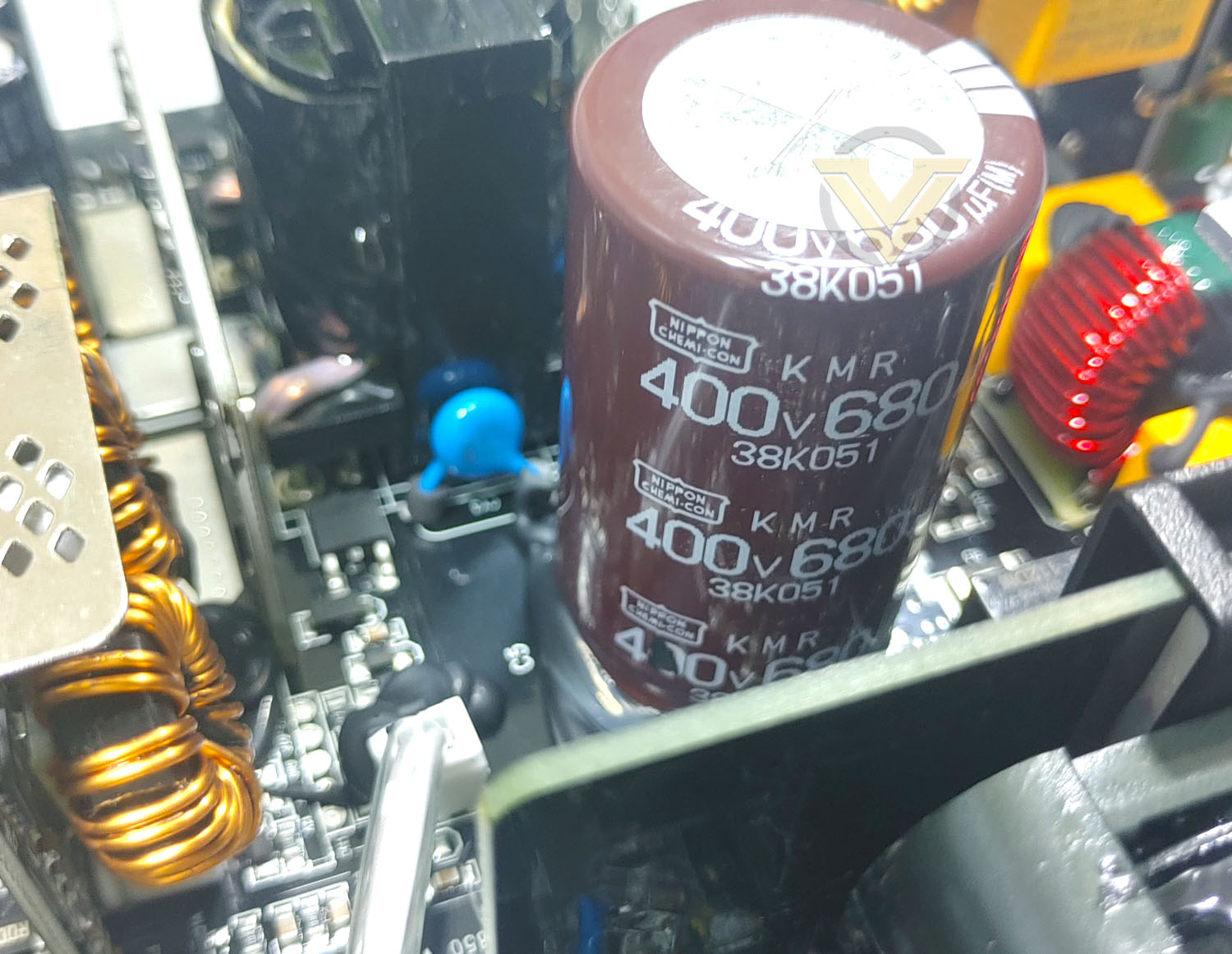
The PSU packs a single Nippon Chemi-Con 400v 680uF 105°C main capacitor. Nippon Chemi-Con is a Japanese brand. On the product page, you’ll see a Nichicon capacitor used on the product images which is also Japanese. Both Nichicon and Nippon Chemi-Con are among the top three Japanese electrolytic capacitor brands along with Rubycon. GameMax might want to change the images on their website to be accurate. Nevertheless, the PSU is using a top-quality Japanese capacitor.
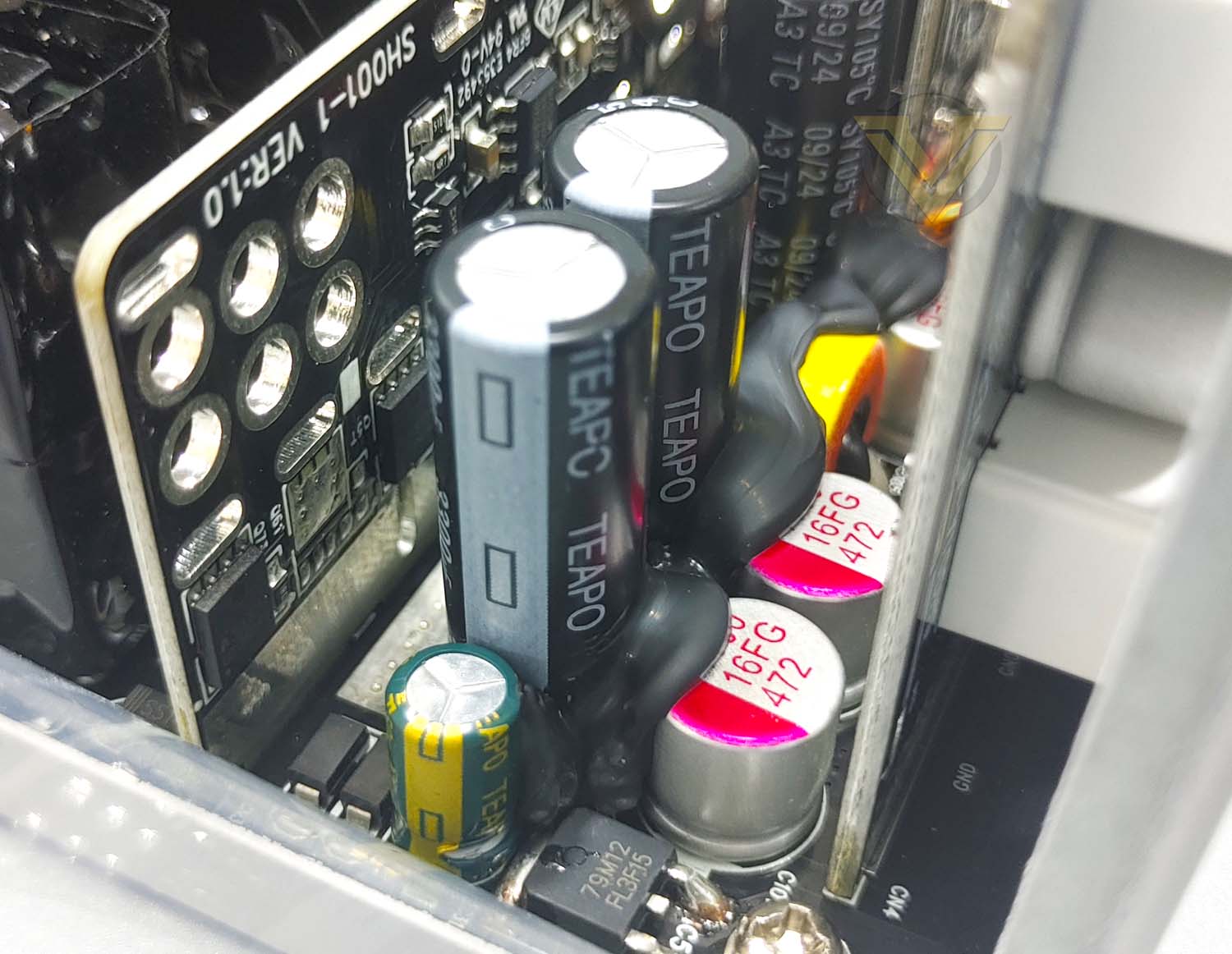
The other electrolytic capacitors used on the PSU are from a Teapo which is Taiwanese. GameMax did not indicate “100%” Japanese capacitors on the product page so we could say their product description is accurate on this aspect of the product. If you want to nerd out about every component of the GX850 Pro, GameMax does provide a very detailed diagram on the PSU’s product page on the GameMax website.
Testing Methodologies & Results
Our testing methodology for PSUs is straightforward, using a multi-meter and high-precision wattmeter and power analyser that we installed on the 12V+, 5V+, and 3.3V+ output rails. We used a high-precision wattmeter and power analyser on two 12V+ cables – one on the 12V+ PCIe cable and one on the 12V+ peripherals cable. With this, we can compare if the 12V+ output for the PCIe cables and peripherals are the same particularly when the system is loaded. We also have a wattage and power meter for the entire system to monitor the total wattage pulled by the computer. The test computer’s configuration is as follows below which is on an open-frame testbench.CPU: Intel Core i7-13700K (stock)
Cooling: Noctua NH-U12A chromax.black
Motherboard: GIGABYTE Z790 AORUS EXTREME X
Graphics Card: GIGABYTE GeForce RTX 3070 EAGLE OC
Memory: KLEVV CRAS XR5 RGB DDR5-6000 2x16GB Kit
Storage: ADATA Legend 960 Max 1TB / 2TB Seagate SkyHawk 5900 RPM
Cooling: Noctua NH-U12A chromax.black
Motherboard: GIGABYTE Z790 AORUS EXTREME X
Graphics Card: GIGABYTE GeForce RTX 3070 EAGLE OC
Memory: KLEVV CRAS XR5 RGB DDR5-6000 2x16GB Kit
Storage: ADATA Legend 960 Max 1TB / 2TB Seagate SkyHawk 5900 RPM
To load the system, we used a combination of the Unigine Heaven Extreme graphics benchmarking tool and the Intel XTU CPU stress testing tool. Both applications ran simultaneously for 10 minutes and delivered an entire system power load of 550~570 watts which is approximately 65% load for the PSU.
Aside from loading the GPU and CPU with the workload, we also used a Lamptron FC5V3 fan controller and a 33mm-thick HF DC Brushless 120mm (Model JLFS12E12BS6) 12V 3.0A, rated for up to 7000 RPM. This fan can draw 20 watts of power at full speed. This setup is to pull power from the 12V+ peripheral cable since the Lamptron fan controller is powered by a 4-pin Molex connector.
Results:
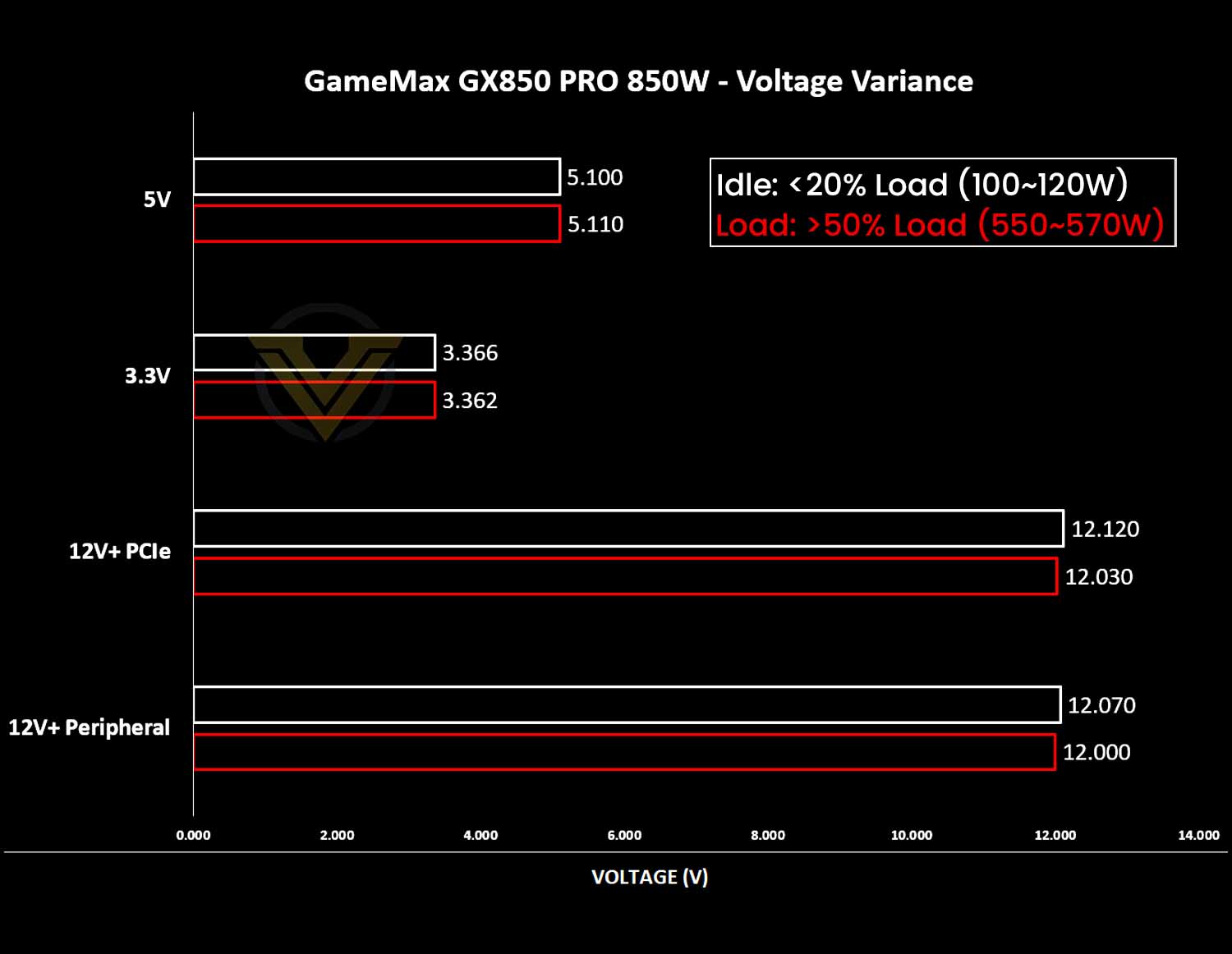
We observed a difference in voltage between the +12V on the PCIe cables and the +12V on the peripheral/MOLEX cables. The PSU supplied strong and stable power for the 12V+ used on the PCIe cables which would be the very cables used on graphics cards. Based on the layout of the connectors, this same rail also supplies the 12V+ on the EPS cables for the motherboard where the CPU draws power. The design of the GX850 PRO ensures strong power delivery to these key components.
The 12V+ on the peripheral cables tells a different story. Upon maximizing power on the 7000RPM DC fan which drew 20 watts, the 12V+ reading fell to 12.00V and even went below 11.99V. If the system had more than 2 HDDs, which typically draws 8~12 watts plus multiple fans connected to the peripherals cable, the 12V+ reading might even go lower. For devices like HDDs, running below +12V might have an adverse effect on its function. As for our testing, we did not experience any abnormality while running Unigine Heaven and Intel XTU CPU stress tests simultaneously.
Voltage Regulation

Based on Intel regulation standards of ±5%, the GameMax GX850 PRO does pass the standards. The variance for the +5V and +3.3V rails is close to 2% which isn’t bad but not as tight as the likes of the SuperFlower LEADEX III GOLD Up and other premium PSUs like the Seasonic Prime TX – something I would like to get my hands on or anything on top-end calibre in the future.
Like most PSUs, the peak efficiency of the GX850 PRO is at 50% load and it’s also the load range where the PSU’s voltage regulation is at its tightest.
Acoustics
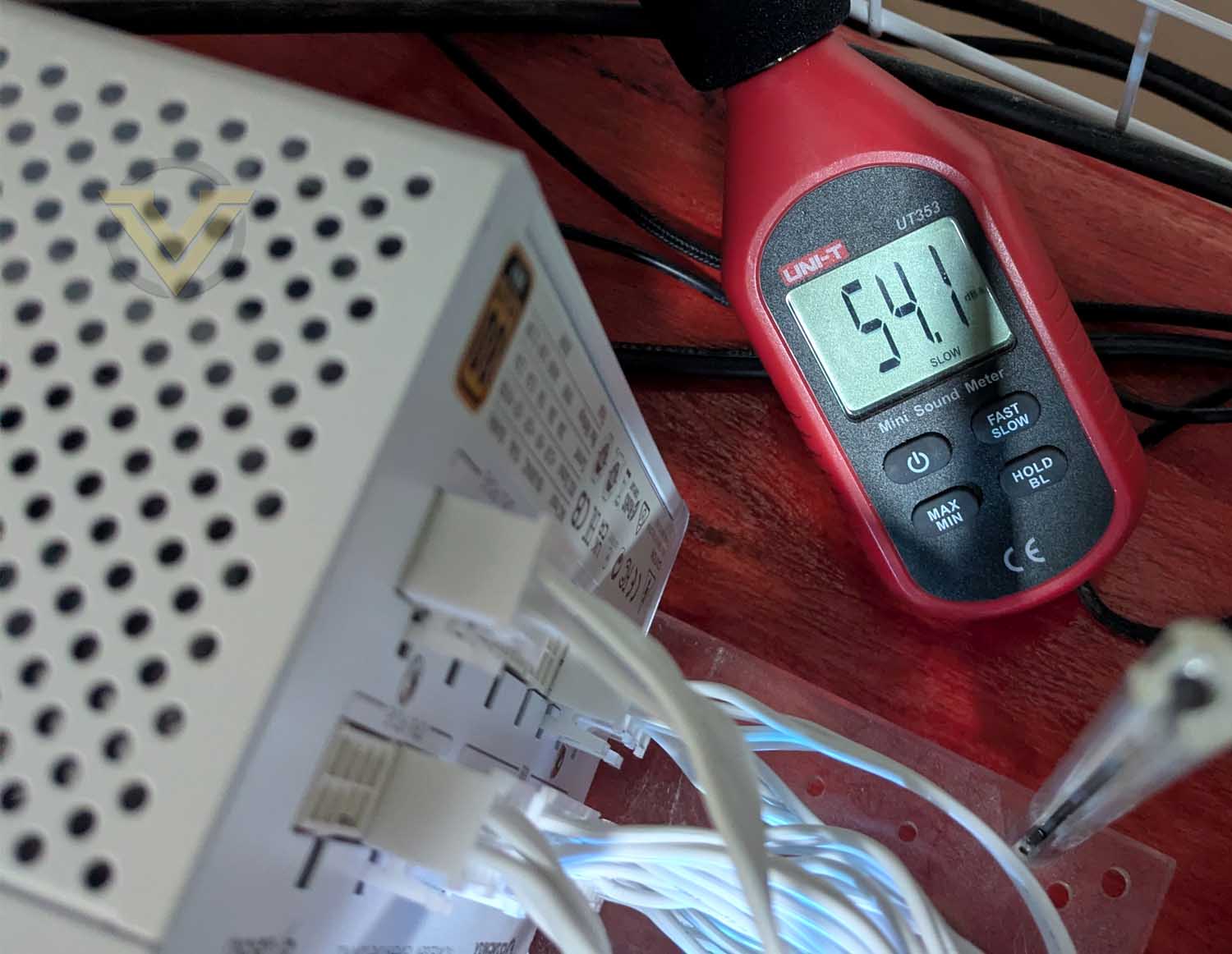
The GameMax GX850 PRO runs silent at idle wherein the CPU cooler and graphics card is the major source of noise. Placing the sound meter directly below the PSU while stress testing the system, it reads ~54 dBA but likely coming from the noise of the three fans of the graphics cards spinning at close to max RPM speeds. Nevertheless, noise is not a concern with the GameMax GX850 PRO at any load range.
Conclusion
In today’s PC building, a mid-range or high-end NVIDIA RTX graphics card requires a 12V-2×6 connector. Therefore, it is a good idea to invest in a PSU with ATX 3.0 and PCIe 5.0 standards. The GameMax GX850 PRO, with ATX 3.1 and PCIe 5.1 standards, offers the necessary connectors for building with the latest PC components, particularly the recently released NVIDIA RTX 50 Series graphics cards. The GameMax GX850 PRO is on the cheaper end of fully modular 80PLUS-certified 850W PSUs available on the market today.The PSU’s components are one reason it can be placed at a lower SRP: fewer components, lower cost. This is also the perfect time to explain why most brands have several 80PLUS Gold or 80PLUS Platinum models in their lineup with varying prices. The more expensive models tend to have more capacitors and/or premium components.
Japanese-brand capacitors from the likes of Rubycon, Nippon Chemi-Con and Nichicon are deemed first-tier or top-of-the-line. On the other hand, Chinese and Taiwanese capacitors from the likes of Teapo are deemed second-tier. PSUs that exclusively use first-tier capacitors would be more expensive to produce and thus would have a more premium price. Hence, some brands boast models for having “100% Japanese capacitors”, meaning all the capacitors (main, secondary, etc) used in the PSU are all from first-tier Japanese brands.
For the GX850 PRO, GameMax opted for a first-tier main capacitor from Nippon Chemi-Con and second-tier secondary capacitors from Teapo. Furthermore, The GX850 PRO only has one main capacitor. Capacitors work like filters that stabilize the voltage passing through them. For capacitors, it’s a case of “more is better” wherein premium PSUs could have as much as four large capacitors for primary voltage filtering. Having only one is not a red flag, the design can simply be improved by having more capacitors in a different configuration. Nevertheless, the PSU does pass the industry standards set by Intel, more expensive and premium models are simply superior when it comes to having tighter voltage regulation as well as smoother ripple and lower noise.
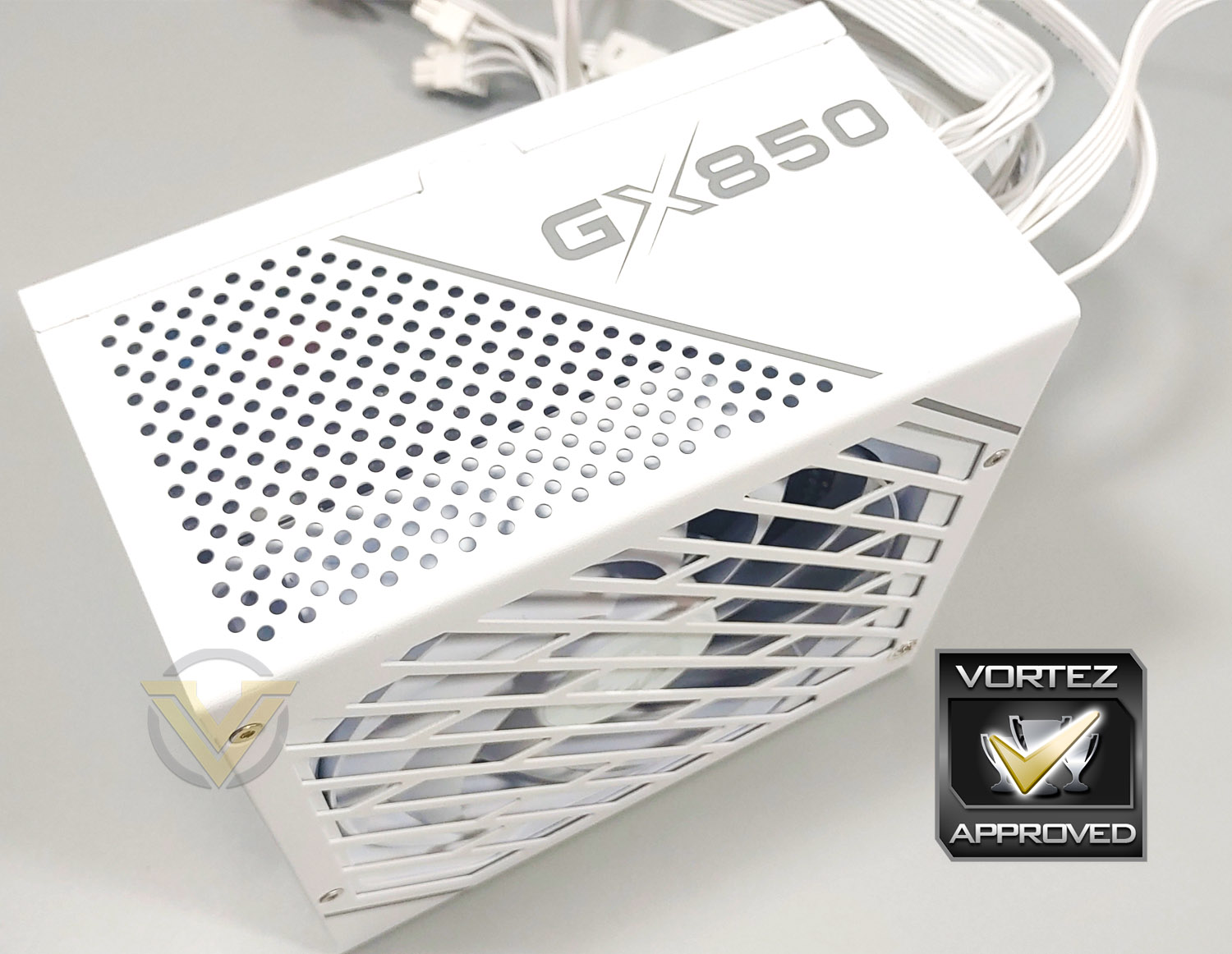
Priced at US$94.99 at the time of this writing, the GameMax GX850 PRO is quite a compelling option for PC builders on a budget. It comes in black and white models, which are ideal for colour-matching PC hardware now that white PC builds are popular. Its nearest competitor from a reputable brand appears to be the MSI MAG A850GL PCIE5 priced at US$109.99 which only uses one primary capacitor but both primary and secondary capacitors are Taiwanese. If you want a white model, it’s even more expensive.
The GameMax GX850 PRO is backed with a 10-year warranty, the longest warranty coverage GameMax offers for its PSUs. That is comparable with what the top PSU brands offer regarding warranty coverage. The PSU features a Japanese primary capacitor. Depending on the region, it could come equipped with either a Nichicon or Nippon Chemi-Con Japanese-brand capacitor. Nevertheless, the GameMax GX850 PRO offers an incredible value at its price point and warranty.
Pros
+ Strong 12V+ PCIe/CPU Rail
+ Fully modular cable design
+ Flexible flat cables
+ 10-year warranty
+ Black and white colour options
Cons
– No heatsinks to disperse heat
– Not available in some regions
+ Strong 12V+ PCIe/CPU Rail
+ Fully modular cable design
+ Flexible flat cables
+ 10-year warranty
+ Black and white colour options
Cons
– No heatsinks to disperse heat
– Not available in some regions
Click here for an explanation of our awards at Vortez.net.
Stay connected with the Vortez Social Media pages:
Join in with the discussions on Discord