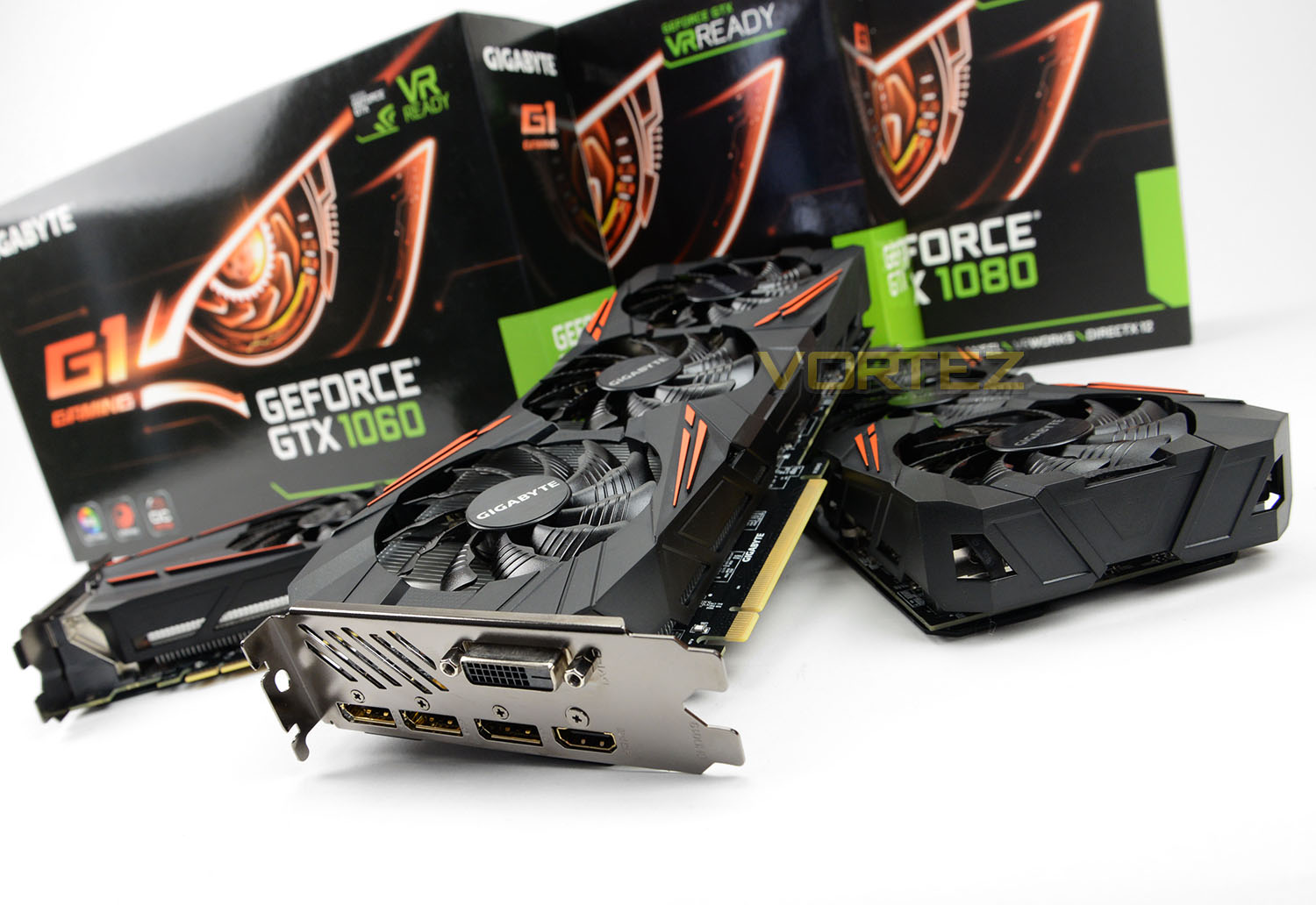
In the spotlight is the entire NVIDIA GTX 10 Series lineup from GIGABYTE’s G1 Gaming graphics card range, which all feature the renowned WindForce cooling system.

Product on Review:
GTX 1060 G1 Gaming
GTX 1070 G1 Gaming
GTX 1080 G1 Gaming
Manufacturer & Sponsor: GIGABYTE
Street Price:
GTX 1060 G1 Gaming – £275
GTX 1070 G1 Gaming – £429
GTX 1080 G1 Gaming – £629
Since NVIDIA released their GTX 10 Series we’ve reviewed quite a selection of different graphics cards ranging from the GTX 1060 all the way to the GTX 1080. It’s fair to say that the desktop graphics segment is a fiercely competitive arena and as such, graphics partners have had to ‘up their game’ in a bid to avoid being out-muscled by rivals. Some of the custom designs have really impressed and for the most part, cards from different brands actually share similar qualities in that they are cool and quiet. This therefore makes things quite tricky for brands to diversify and steal the spotlight.
Today we’re in the favourable position of being able to test out and review the entire range of G1 Gaming GTX 10 series graphics cards from GIGABYTE. So no matter which particular GPU you’re interested in we should be able to provide you with a definitive verdict as to how these cards compare to other options currently on the market.
Under our critical eye today are GIGABYTE’s GTX 1060, 1070 and 1080 G1 Gaming. Each graphics card features the renowned WindForce cooling system and a factory overclock.
About GIGABYTE
Founded in 1986, GIGABYTE is committed to providing top-notch solutions that “upgrade your life”. We are regarded as a pioneer in innovation with groundbreaking excitements such as Ultra Durable™ — a revolutionary technology that redefines the industry, WINDFORCE™ — exclusive heat dissipation design that builds for extreme performance, G1™ Gaming series—the perfect solutions for gamers and enthusiasts, P series — a powerful gaming laptop less than an inch thick, and BRIX series—a versatile mini-PC in the palm of your hand. GIGABYTE has continuously brought unique new ways of digital world and created marvelous products that empower you with meaningful and charming experiences.
Technical Specifications
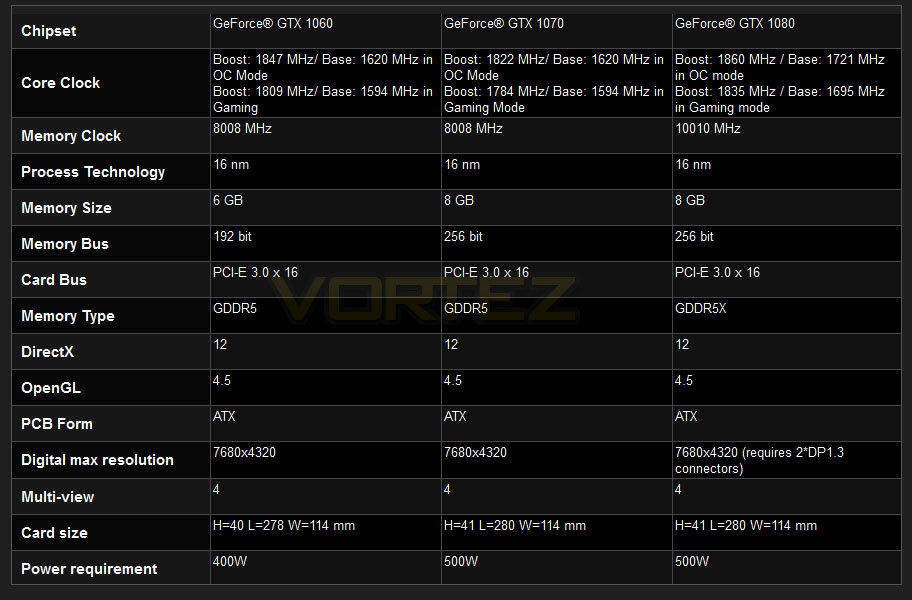
Below are the technical specifications surrounding all three cards provided by GIGABYTE:
GTX 1060: Closer Look
For the GTX 1060 we’ve produced a video which reveals the packaging, bundle and a close, detailed overview of the graphics card. Please check out the video below for a comprehensive look at this model:
GTX 1070: Closer Look
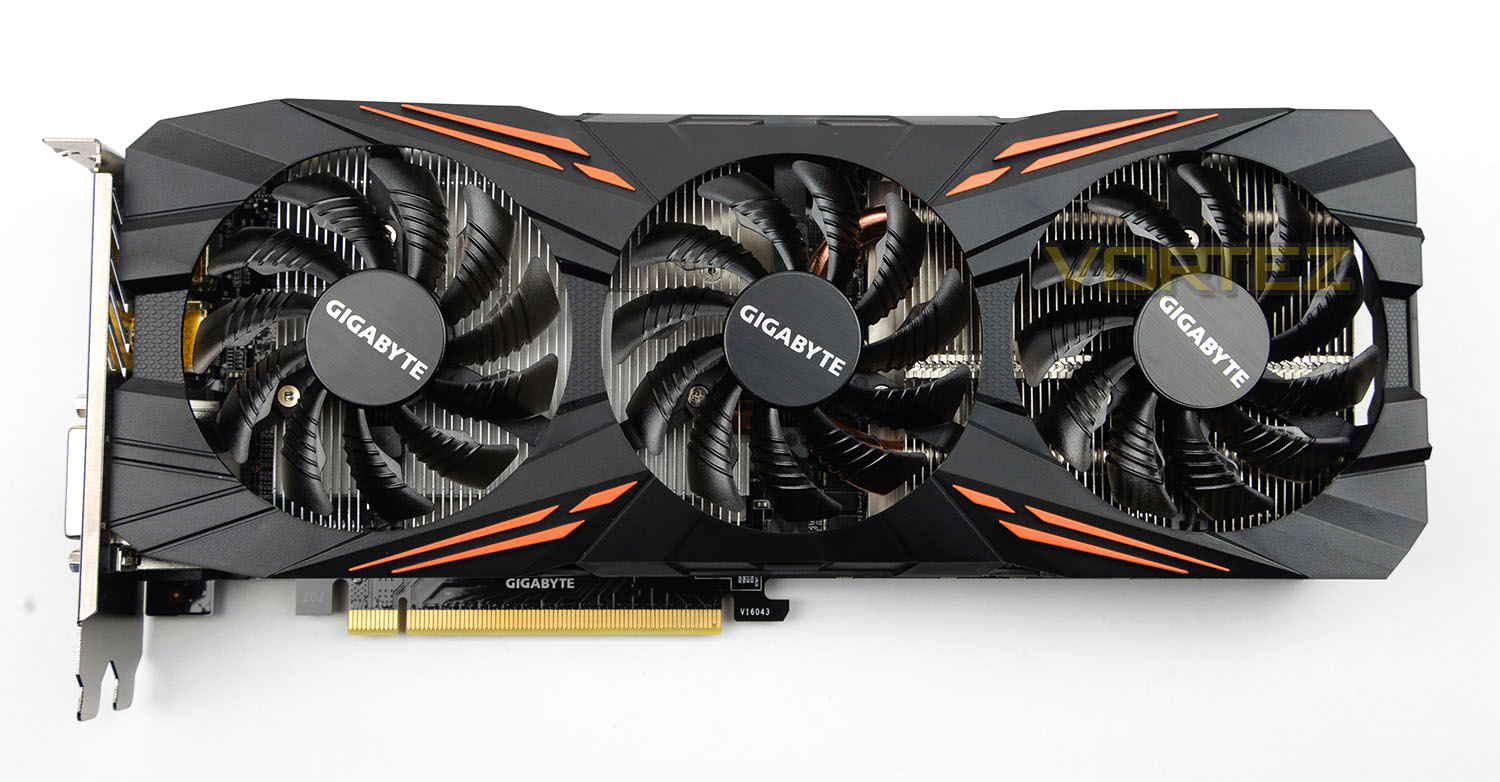
All of GIGABYTE’s GTX 10 Series G1 Gaming graphics cards make use of the same theme with only minor adjustments between each model. The GTX 1070 has a black plastic shroud with orange accents. From a top view its clear to see the GTX 1070 variant adopts a triple fan configuration with GIGABYTE’s 3D active design. The cooler fixed to the card is the renowned WindForce 3X which uses composite copper heatpipes and direct touch baseplate.
For the shroud, we’d have preferred metal over plastic. The plastic cheapens the look and overall quality of the card.
The actual size of this graphics card is: 280 x 114 x 41 mm.
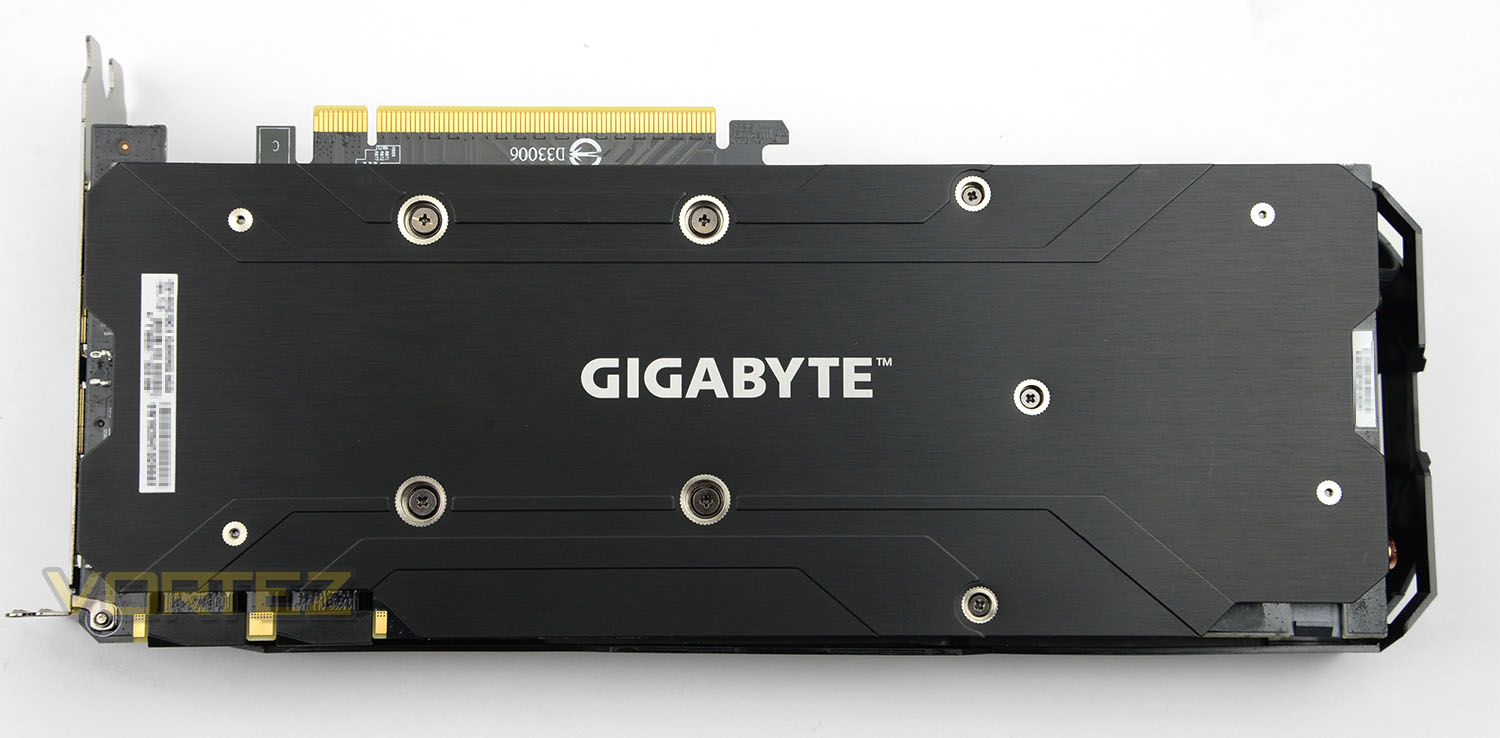
Flipping the card over, on the reverse we have a large steel backplate which protects the components on our graphics card and also prevents it from flexing or bending. Having such a feature on a graphics card is great because the overall size and weight of the unit can cause warping so this backplate provides some rigidity.
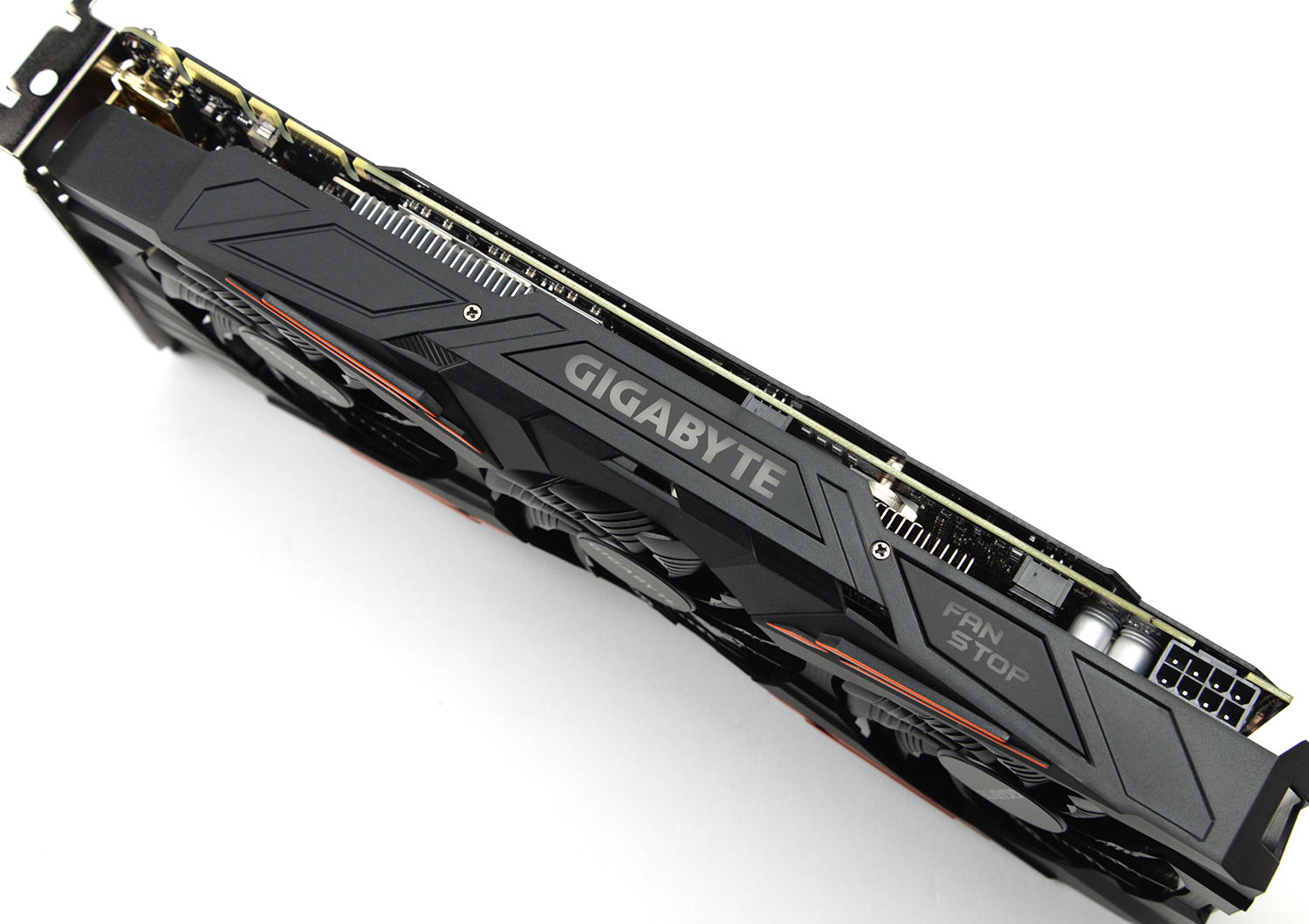
Along the edge of the GTX 1070 we have the GIGABYTE logo which illuminates when the card has power. We have the option to modify the colour of this logo since GIGABYTE has included RGB LEDs (OC Guru can be used to tweak this). GIGABYTE also includes “Fan Stop” which also illuminates too, but only when the cooling fans stop spinning. As we’ve seen on previous generations of GIGABYTE graphics cards this G1 Gaming card has the ability to reduce noise when the system is idle by causing the fans to remain motionless. This icon lights up to notify you of this.
The GTX 1070 also has multi-SLI ports which allows us to pair up this card with more than one other graphics card.
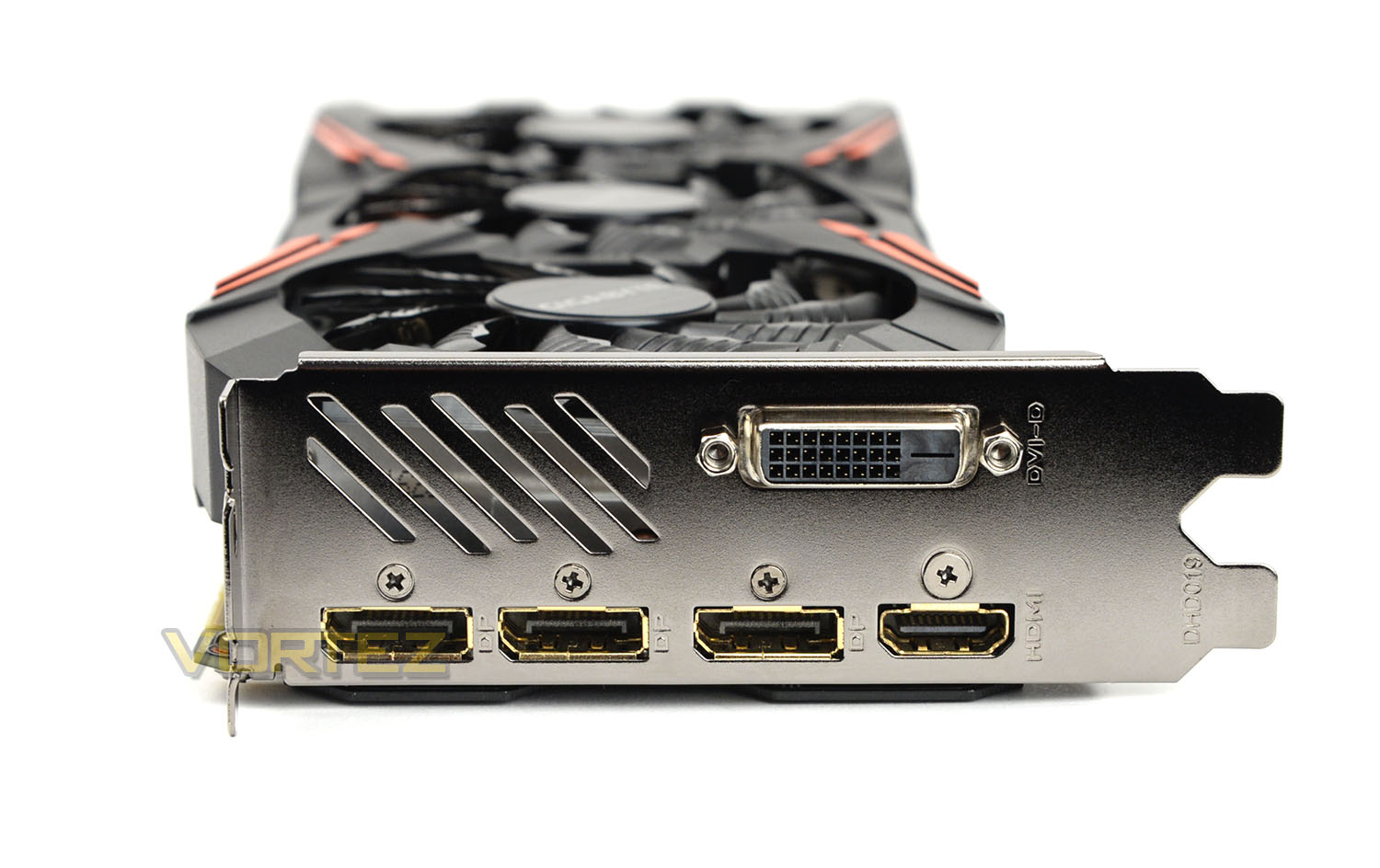
The GTX 1070 arrives with an assortment of video out ports which include:
• 1x Dual Link DVI-D port (Up to 3K)
• 3x DisplayPort 1.4 (8K @ 60Hz)
• 1x HDMI 2.0 port (4K @ 60 Hz)
The selection of ports here should be sufficient for most users, it’s great to see DP 1.4 being used as this now supports up to 8K output and was only released a matter of months ago.
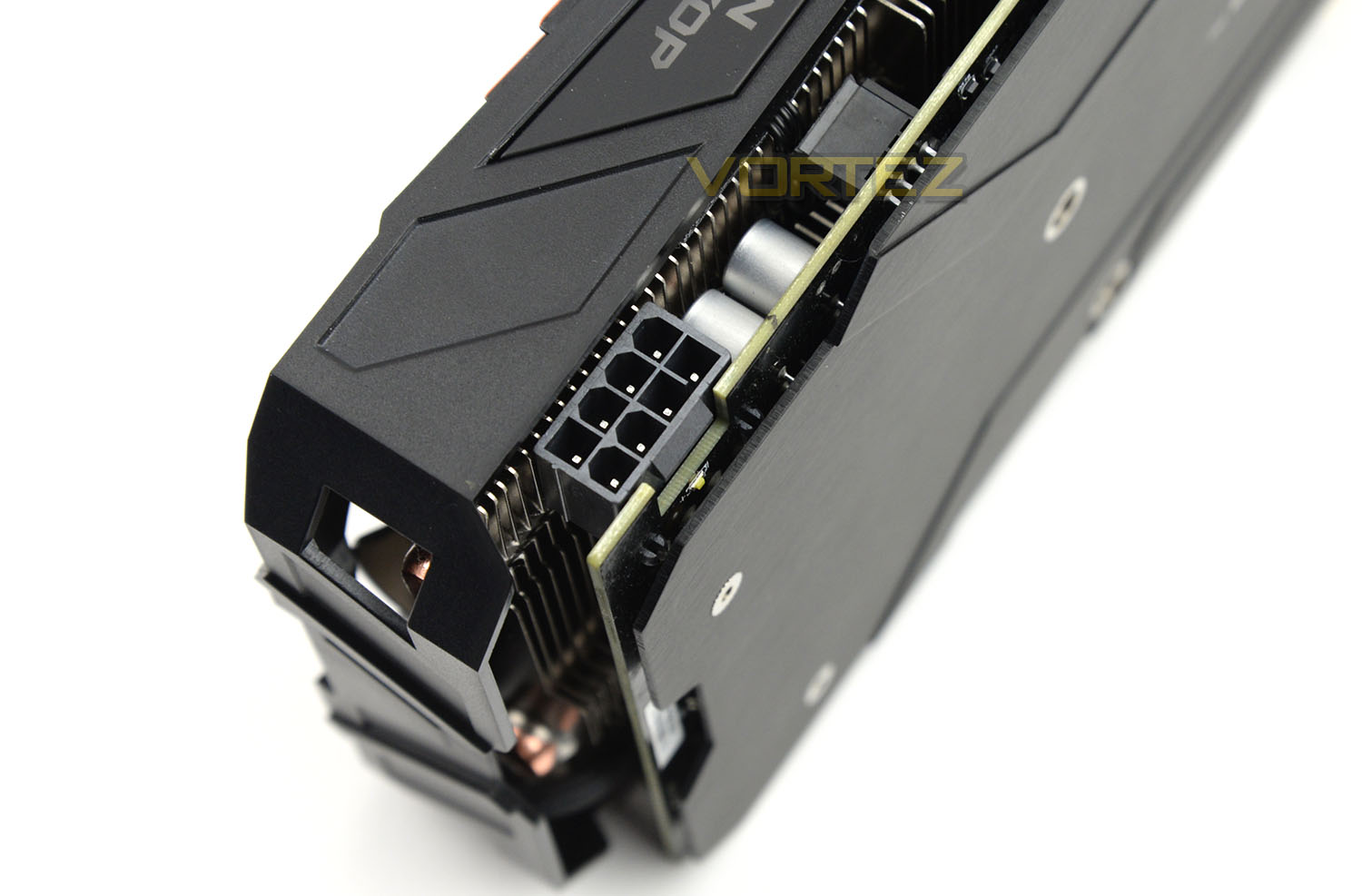
The Founder’s Edition of GTX 1070 requires a single 8pin PCI express connection and likewise, this G1 Gaming edition also arrives with an 8pin connector – which comes as a surprise given the custom PCB, factory overclock, upgraded components and not to mention the RGB functionality.
This graphics card requires a minimum of a 500W PSU.
Other things to mention: GIGABYTE has kept the memory clock speeds on GTX 1070 G1 Gaming at their stock/default settings, but the GPU clocks have recieved a factory overclock taking the base to 1620 MHz and therefore the boost to 1822 MHz.
GTX 1080: Closer Look
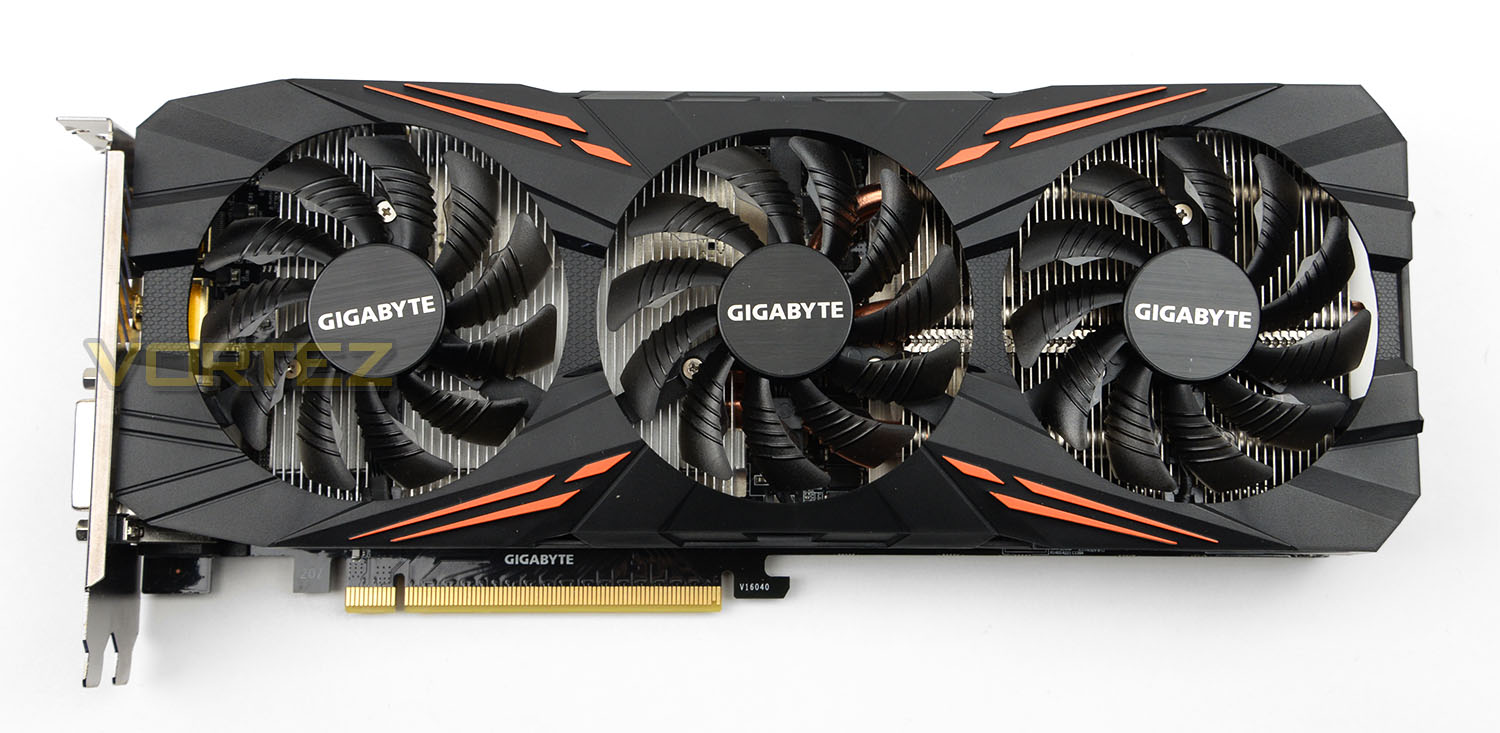
The GTX 1080 G1 Gaming is almost identical to the GTX 1070. Viewing the card from an aerial perspective, we can see a dark plastic shroud is used with orange accents. WindForce 3X is once again a prominent feature which brings in a triple fan arrangement using GIGABYTE’s unique fan blade design and a dual-heatsink sits underneath – bearing composite copper heatpipes and a direct touch baseplate. This cooling solution offers better thermal performance and lower noise compared to NVIDIA’s Founder’s Edition.
Again, we’d have liked to see a metal shroud rather than a plastic one as this cheapens the look and feel of the card and since it costs £620+ we expect more!
The actual size of this graphics card is: 280 x 114 x 41 mm.
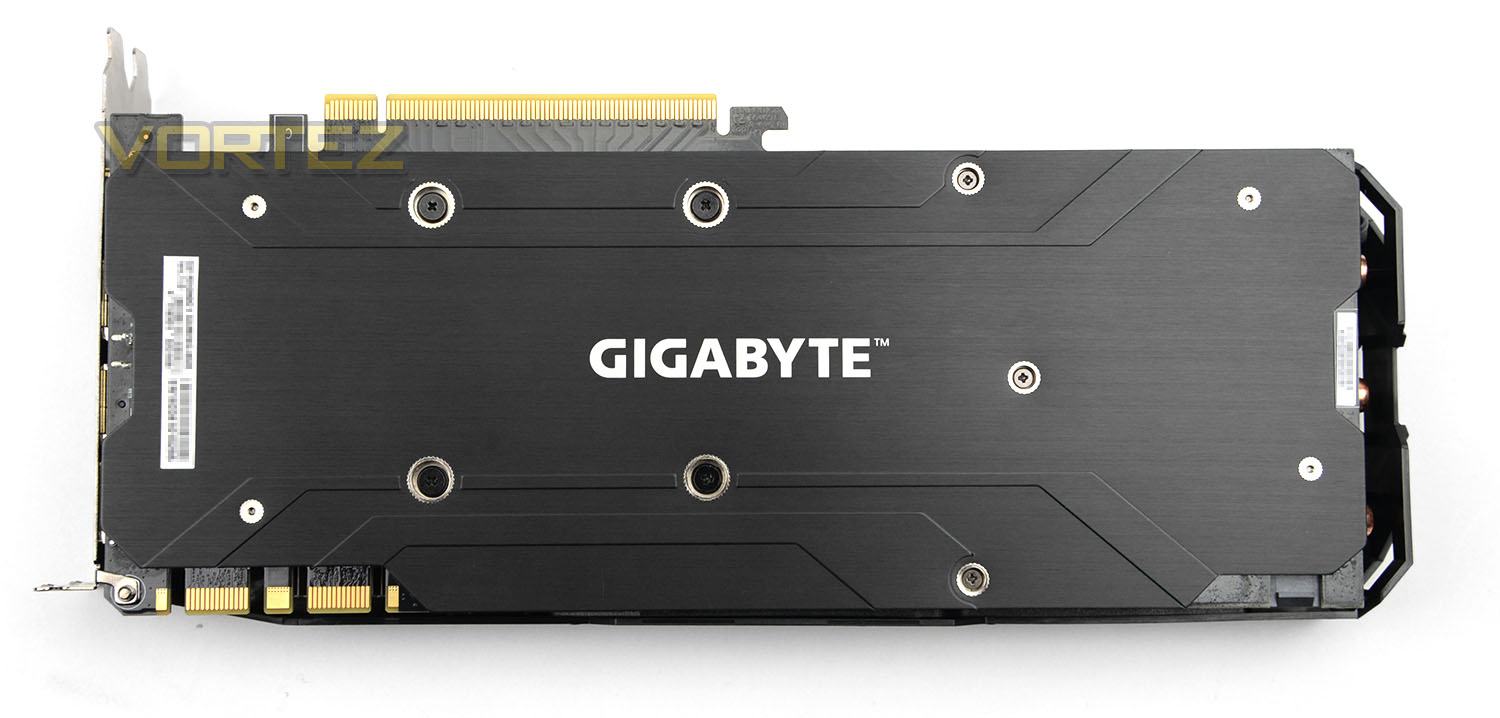
Over on the backside of the card we have a steel backplate which protects the PCB from getting scratched or from flexing. This sturdy panel is a welcome addition to any card and should help with longevity.
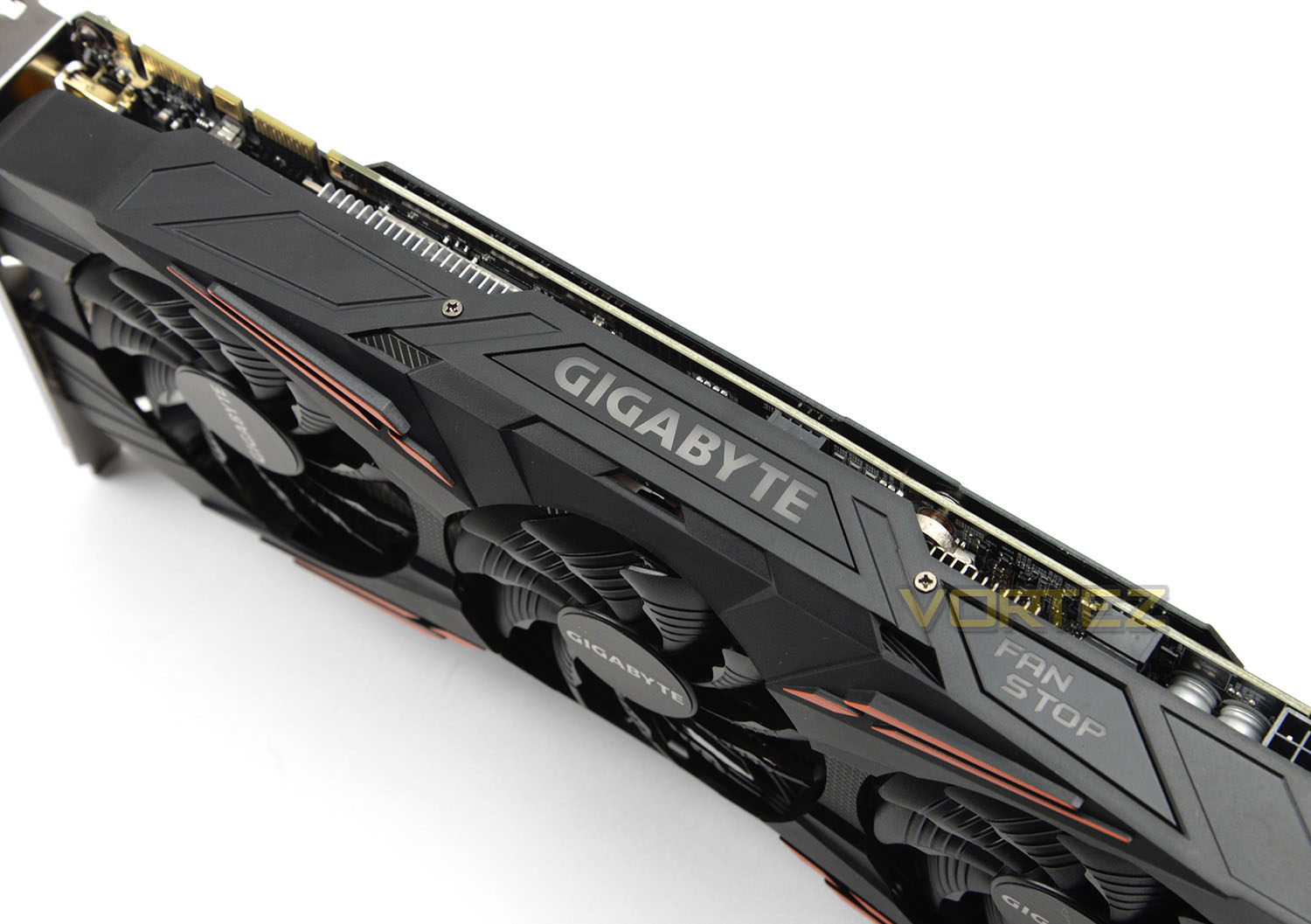
Observing the edge of our GTX 1080 card we have the GIGABYTE logo which features RGB LED lighting – this lights up once the card has power and can be customised via the OC Guru software. 16.8M colours are available! Just like other GIGABYTE cards the GTX 1080 here benefits from the “Fan Stop” mode. Under light load the cooling fans on the card cease to spin and the logo shown above lights up to signify this.
GIGABYTE has placed multi-SLI ports on our card too, which allows us to pair up this card with more than one other graphics card.
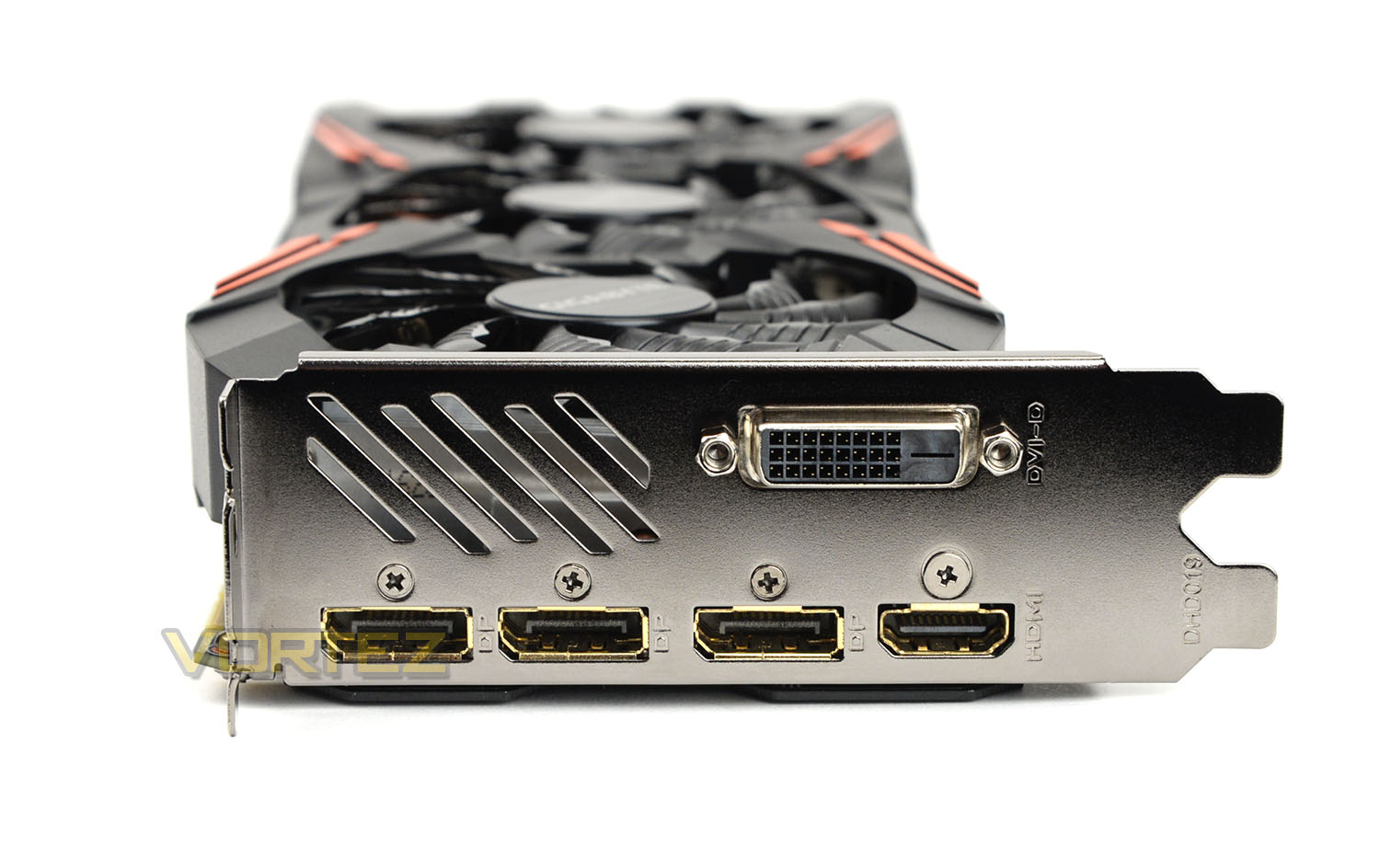
The GTX 1080 arrives with an assortment of video out ports which include:
• 1x Dual Link DVI-D port (Up to 3K)
• 3x DisplayPort 1.4 (8K @ 60Hz)
• 1x HDMI 2.0 port (4K @ 60 Hz)
This selection of ports will be compatible with a range of displays and givens plenty of flexibility for gamers.
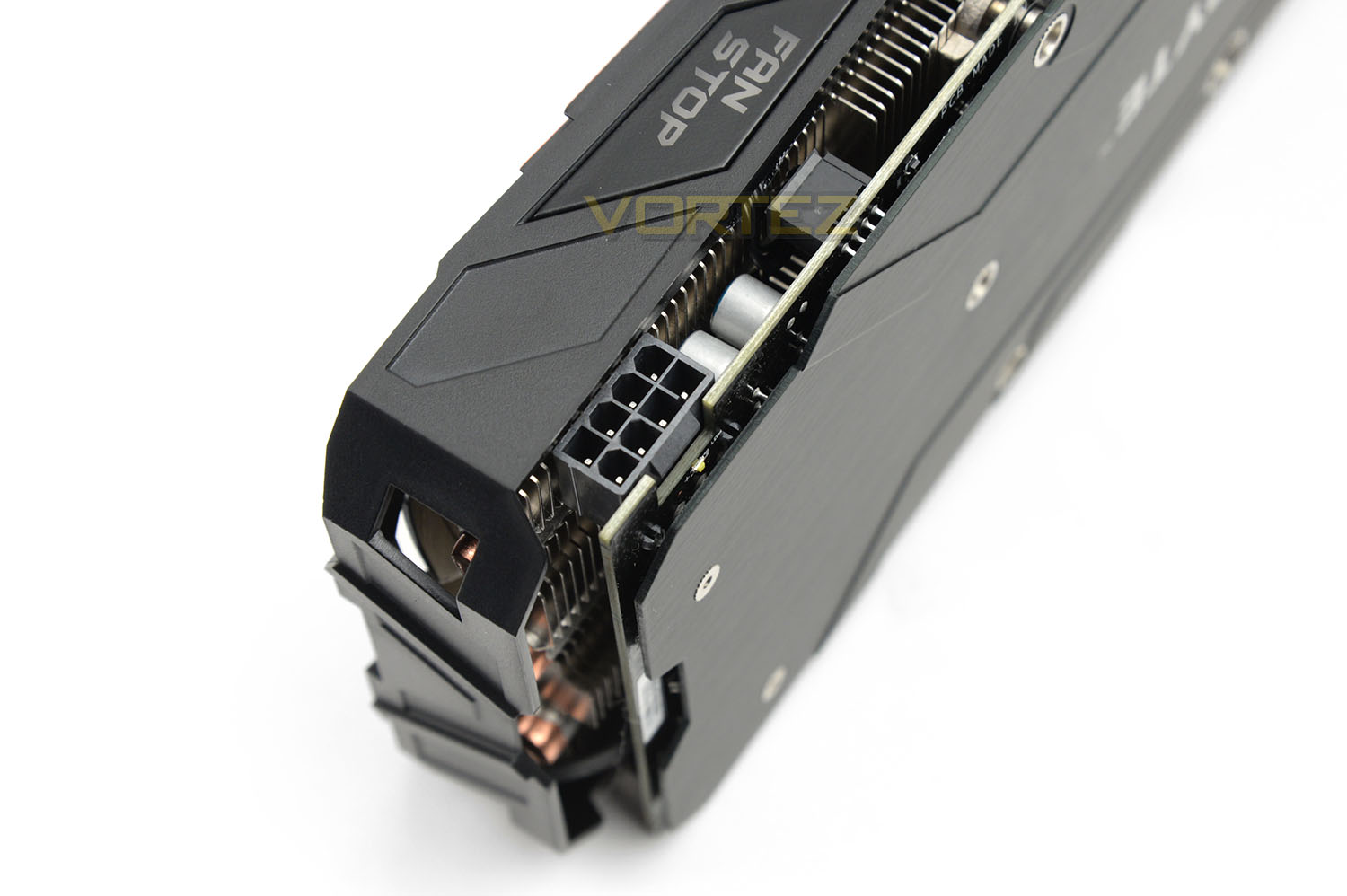
The Founder’s Edition of GTX 1070 requires a single 8pin PCI express connection and likewise, this STRIX edition also arrives with an 8pin connector – which comes as a surprise given the custom PCB, factory overclock, upgraded components and not to mention the RGB functionality.
This graphics card requires a minimum of a 500W PSU.
Other things to note with this card is the factory overclock. While the memory clock speeds on our graphics card remain at stock. GIGABYTE has applied an overclock to the GPU clock speed, taking the base to 1721 MHz and this boosts to 1860 MHz.
Test Setup & Methodology
How we test graphics cards
Testing a graphics card is an extremely lengthy process. We sometimes see reviews where a graphics card has been tested using out of date equipment, out of date games and even out of date drivers. While the latter can be excused due to the sheer amount of driver updates making a thorough review impossible we will however notify the reader when we have used a different driver to the normal for example a pre-release driver. For the most part however we will always use the same hardware and latest drivers so this does certainly need to be taken into consideration when viewing our testing results. Each game and benchmark is tested times with the lowest and highest scores omitted out of the 5 results and the average then taken from the three remaining to give us our final result for each resolution and setting used.
Hardware
Taking Intel’s High-End Desktop platform, our hardware utilises the Intel X99 chipset. Combined with this we use the Intel Core i7-5960X Extreme Edition processor clocked to a realistic and achievable 4GHz to ensure we have no CPU bottlenecks. With 16GB (4x4GB) of DDR4 at 2666MHz and a 750GB SSD there should be minimal paging so the benchmarks we run today will hopefully give a true reflection of the graphics card’s performance.
High End Graphics Cards on test:
ASUS STRIX GTX 1070 (NVIDIA 372.54)
GIGABYTE GTX 1060 G1 GAMING (NVIDIA 372.54)
GIGABYTE GTX 1070 G1 GAMING (NVIDIA 372.54)
GIGABYTE GTX 1080 G1 GAMING (NVIDIA 372.54)
PowerColor RED DEVIL RX 470(Crimson 16.8.1)
PowerColor RED DEVIL RX 480 (Crimson 16.7.2)
ZOTAC GTX 1080 AMP! Extreme (NVIDIA 368.81)
ASUS STRIX GTX 1080 (NVIDIA 368.81)
Gainward GTX 1070 Phoenix Golden Sample (NVIDIA 368.81)
MSI GTX 1060 Gaming X (NVIDIA 368.64)
Gainward GTX 1060 Phoenix Golden Sample (NVIDIA 368.64)
NVIDIA GTX 1060 (NVIDIA 368.64)
NVIDIA GTX 980Ti OC (NVIDIA 368.81)
NVIDIA GTX 980 (NVIDIA 368.81)
NVIDIA GTX 970 (NVIDIA 368.81)
AMD Radeon RX 480 CrossFire (Crimson 16.7.2)
AMD Radeon RX 480 (Crimson 16.7.2)
XFX R9 FURY (Crimson 16.7.2)
AMD Radeon R9 390X (Crimson 16.7.2)
Special thanks go to Intel, Corsair, MSI and AOC for providing the extreme spec components used for our test bench:
Motherboard: MSI X99S GAMING 9 AC
CPU: Intel Core i7-5960X Extreme Edition @ 4GHz
RAM – 16GB (4x4GB) Corsair LPX Vengeance (Red) DDR3 @ 2666MHz 16-17-17-35 C1
Power Supply – CORSAIR HX1050
Hard Drive – Samsung 840 EVO 750GB
Cooler – CORSAIR Hydro Series™ H105 240mm Extreme Performance Liquid CPU Cooler
Monitor – AOC 28″ 4K U2879VF
Capture Card – Razer Ripjaw
CPU: Intel Core i7-5960X Extreme Edition @ 4GHz
RAM – 16GB (4x4GB) Corsair LPX Vengeance (Red) DDR3 @ 2666MHz 16-17-17-35 C1
Power Supply – CORSAIR HX1050
Hard Drive – Samsung 840 EVO 750GB
Cooler – CORSAIR Hydro Series™ H105 240mm Extreme Performance Liquid CPU Cooler
Monitor – AOC 28″ 4K U2879VF
Capture Card – Razer Ripjaw
Benchmarks
If you are a regular reader of our reviews you will know we like to test the latest hardware with the latest games and benchmarks on the market. Here are the games we’ve chosen:
DOOM (OpenGL 4.5 & Vulkan)
Total War: Warhammer
Rise of the Tomb Raider
HITMAN
DiRT Rally
Total War: Warhammer
Rise of the Tomb Raider
HITMAN
DiRT Rally
To capture framerates we use a combination of in-game benchmark tools, FRAPS and PresentMon.
We also take into consideration the benchmarkers out there so have included three of the more popular synthetic benchmarks available:
Unigine: Valley
Unigine: Heaven 4
Futuremark 3DMark Firestrike
Futuremark 3DMark Time Spy
Unigine: Heaven 4
Futuremark 3DMark Firestrike
Futuremark 3DMark Time Spy
Let’s see how today’s graphics card performed…
Power, Temperatures, Acoustics
To test for power consumption, we take a measurement from the plug socket. It is important to note that the figures below represent total system power use and not just the GPU. The CPU was always in a fixed state (4GHz overclock) so did not affect the additional power load when the GPU was placed under 100% load using Heaven 4.0 which was ran for 20 minutes at which point a load reading was taken. Idle readings were taken 5 minutes after system boot to ensure any background services and applications had loaded.
Temperature
To test temperatures we measured idle temperatures after booting windows, letting all applications finish loading and ran a few benchmarks. Once the benchmarks were complete we left the card to reach a cooling plateau where we then took the idle temperatures. For the load tests we set Heaven 4.0 running continuously for ~30 minutes recorded the peak/maximum GPU temperature.
Acoustics
All three cards benefit from GIGABYTE’s revered WindForce cooling system. While the GTX 1060 has just two cooling fans, the GTX 1070 / 1080 have three, but even under load these cards remain quiet and difficult to hear – especially once concealed within a computer chassis.
DX12: 3DMark Time Spy
With its pure DirectX 12 engine, which supports new API features like asynchronous compute, explicit multi-adapter, and multi-threading, 3DMark Time Spy is the ideal benchmark for testing the DirectX 12 performance of the latest graphics cards.
DX11: 3DMark FireStrike
Fire Strike is the new showcase DirectX 11 benchmark designed for high-performance gaming PCs. It is Futuremark’s most ambitious and technical benchmark ever, featuring real-time graphics rendered with detail and complexity far beyond what is found in other benchmarks and games today.
DX11: Unigine Heaven 4.0
Heaven Benchmark with its current version 4.0 is a GPU-intensive benchmark that hammers graphics cards to the limits. This powerful tool can be effectively used to determine the stability of a GPU under extremely stressful conditions, as well as check the cooling system’s potential under maximum heat output. It provides completely unbiased results and generates true in-game rendering workloads across all platforms.
DX11: Unigine Valley
Valley Benchmark is a new GPU stress-testing tool from the developers of the very popular and highly acclaimed Heaven Benchmark. The forest-covered valley surrounded by vast mountains amazes with its scale from a bird’s-eye view and is extremely detailed down to every leaf and flower petal. This non-synthetic benchmark powered by the state-of-the art UNIGINE Engine showcases a comprehensive set of cutting-edge graphics technologies with a dynamic environment and fully interactive modes available to the end user.
DX12: DOOM OpenGL 4.5
By default DOOM utilises an OpenGL 4.5 renderer, and is one of relatively few Windows PC titles to not use DirectX 12. It tests how well NVIDIA and AMD’s GPUs deal with a less mainstream approach, especially in regards to driver optimisations, and like all of id titles stretches graphics quality to the limit.
DX12: DOOM Vulkan
id have also released an optional Vulkan rendering path for DOOM. This API is a development of AMD’s Mantle low level which has been taken on board by the Kronos Group for implementation as the next generation of Open graphics APIs. Like DirectX 12 Vulkan is capable of Asynchronous Compute in specific configurations.
DX12: Total War: WARHAMMER
Total War: WARHAMMER is a pseudo Real-Time Strategy title which leverages DirectX 12 to render huge numbers of complex units on screen at any one time.
DX12: Rise of the Tomb Raider
Square Enix’s Rise of the Tomb Raider is the sequel to 2013’s Tomb Raider reboot. An enormously challenging title graphically, the developers also released an optional DirectX 12 render path for Windows 10 users. Although it has undergone a number of iterations this rendering pathway notably doesn’t currently utilise the full capabilities of DirectX 12.
DX12: HITMAN
Yet another DirectX 12 title, 2016’s Hitman from Square Enix and developer IO Interactive has a more robust DirectX 12 implementation than Rise of the Tomb Raider. We’ve tested at a full range of resultions, from 1080p through to 4K, which provides a look at the impact of GPU speed and memory utilisation.
DX11: DiRT Rally
Overall Performance
Here we take a look at the overall performance of the graphics card. This figure is determined by finding the average FPS across all of the settings used in a particular benchmark(game) to give us an overall value.
Value For Money
We make a simple calculation for this set of results. For each game we add all of the resulting FPS totals together and then divide by the four sets to give us an overall performance figure. While the figures alone do not give you an accurate picture of how the card will perform in any given scenario, they do tell you, when averaged, which GPU is the more capable across all of the benchmarks and settings tested.
Conclusion
If you’ve checked out our video review of the GTX 1060 G1 Gaming and have seen the photos of the 1070 / 1080 you’ll see very little difference between each of the different NVIDIA models. Fundamentally, they use the same styling and cooling system – though the 1060 does opt for a twin fan configuration rather than a triple arrangement.
GIGABYTE’s WindForce cooler has gained notoriety over the years for a very good reason and the GTX 10 Series iteration is no exception – the design offers up low-noise and delivers low temperatures regardless of the GPU to which the heatsink/fans are sat over.
From a visual/styling perspective we’d liked to have seen a metal shroud as opposed to the plastic shroud which wraps around each card – something which corodinates with the metal backplate would have been preferred and when looking at the GTX 1080 – something befitting of the price-tag. The cover feels and looks cheap, we’d also have liked to see GIGABYTE bring the RGB lighting to other areas of the shroud too, rather than just the GIGABYTE logo.
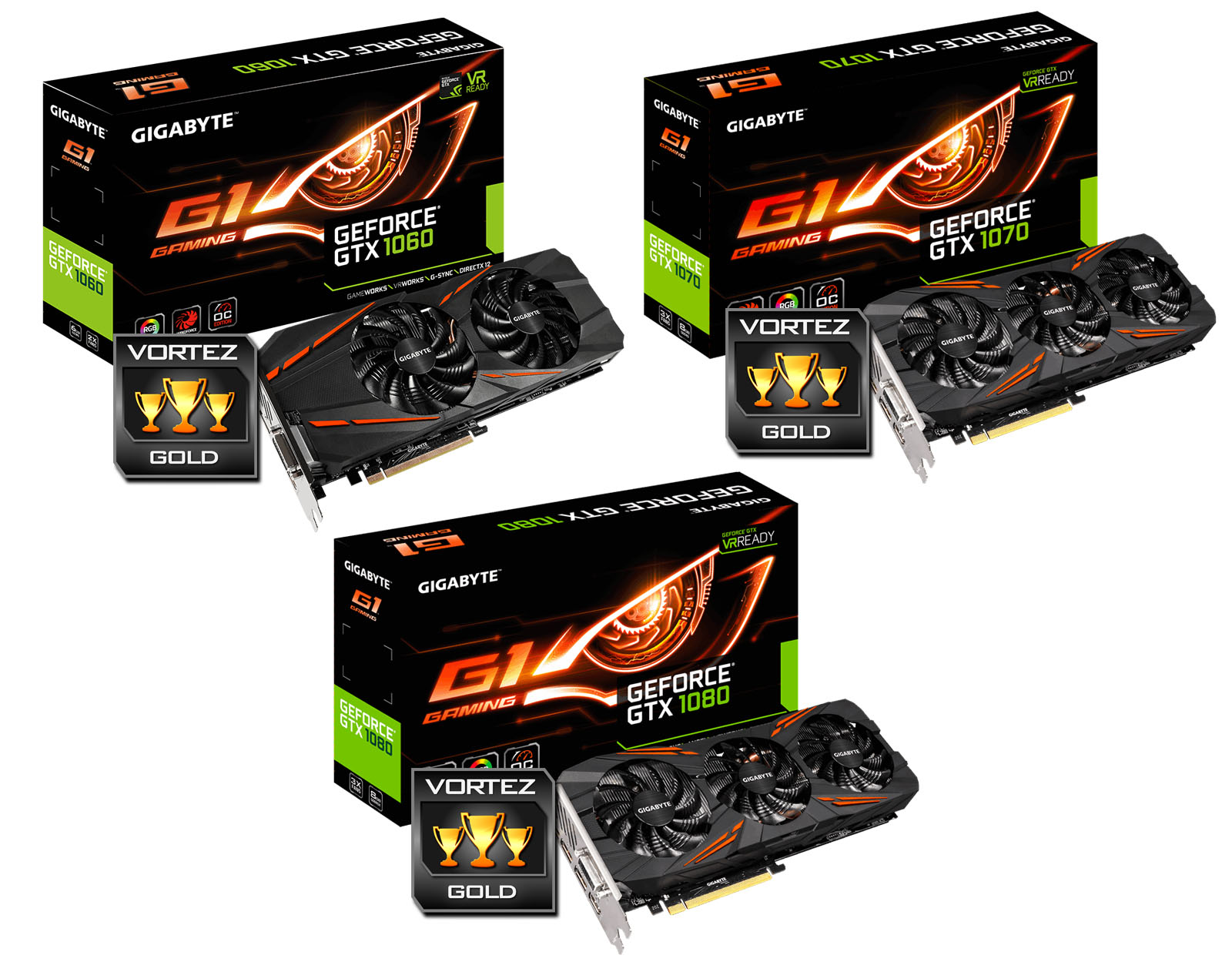
In each of the DX11/DX12 games and applications we tested, all three cards responded very well. rivalling the performance of previously reviewed GTX 1060, 1070 and 1080 models. In some cases our GIGABYTE cards managed to gain a slight advantage over these competitors. So the factory overclocks obviously allow for this boost in performance but we’re pretty certain that, had GIGABYTE nudged up the memory clock speeds also, we’d have had an even greater increase and a set of unmistakable winners. Thankfully, we’re able to apply further overclocks to the already modified GPU clock speeds.
Our GIGABYTE cards cost the following: GTX 1060 G1 Gaming – £275, GTX 1070 G1 Gaming – £429, GTX 1080 G1 Gaming – £629. Neither of these G1 Gaming graphics cards are the cheapest in their range – in some instances GIGABYTE’s offerings will cost £20-40 premium over similar custom designs which also feature overclocks. The extra year of warranty over the competition (which commonly offer 2 years) could help seal the deal though.
GIGABYTE’s G1 Gaming lineup is a clear demonstration of how to bring out the best of NVIDIA’s GTX 10 Series. Regardless of the card, the GTX 1060, 1070 and 1080 all offer superb performance and thanks to the WindForce cooling design, noise and temperatures are kept under control.
VIDEO REVIEW – GTX 1060 – VORTEZ TV
Pros
+ All arrive with factory overclock to GPU clock
+ WindForce design is cool and quiet
+ All cards overclock beyond factory OC
+ Offer great performance
+ DirectX 12 ready
+ 3-year warranty
Cons
– Cheap, plastic shrouds
– Lighting only involves GIGABYTE logo
– No factory memory overclocks
+ All arrive with factory overclock to GPU clock
+ WindForce design is cool and quiet
+ All cards overclock beyond factory OC
+ Offer great performance
+ DirectX 12 ready
+ 3-year warranty
Cons
– Cheap, plastic shrouds
– Lighting only involves GIGABYTE logo
– No factory memory overclocks
Click here for an explanation of our awards at Vortez.net.