Looking for a new GPU upgrade? We check out GIGABYTE’s RTX 5080 GAMING OC. Can this graphics card offer outstanding all-round performance?

Product on Review: GV-N5080GAMING OC-16GD
Manufacturer: GIGABYTE
Street Price: GBP £1200 | USD $1500 | AUD $2600
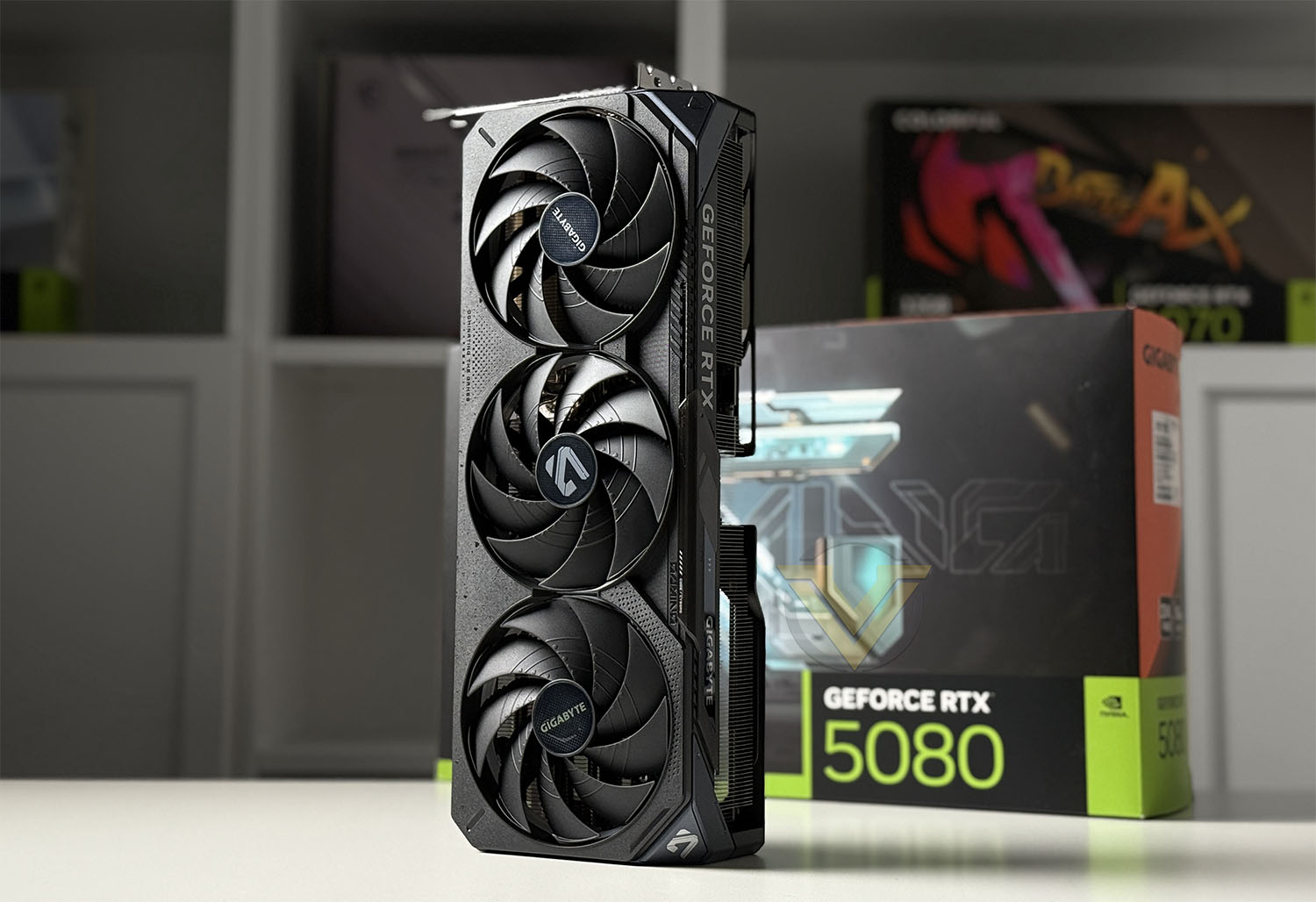
The GIGABYTE RTX 5080 GAMING OC is a custom-cooled, factory-overclocked version of NVIDIA’s latest flagship GPU, based on the advanced Ada Lovelace architecture and fabricated on a cutting-edge 4nm process. Equipped with enhanced RT and Tensor cores, 24GB of high-speed GDDR7 memory, and support for PCIe 5.0, it’s built to handle 4K gaming, ray-traced visuals, and compute-heavy creative tasks with ease. GIGABYTE’s Windforce cooling system—featuring triple 100mm fans, a vapor chamber, and extended fin arrays—promises to keep thermals in check, while the reinforced design and upgraded power delivery aim to ensure performance stability under sustained load.
In this review, we’ll put the GIGABYTE RTX 5080 GAMING OC through a comprehensive round of tests, including synthetic benchmarks, gaming workloads, and thermal analysis. We’ll explore how this card performs across demanding titles, how effectively it maintains clock speeds under pressure, and whether GIGABYTE’s enhancements translate into meaningful real-world gains. If you’re wondering whether this card is worth the investment for your next high-end build, you’ll want to see what we uncover.
About GIGABYTE
Technical Specifications
Graphics Processing
GeForce RTX™ 5080
Core Clock
2730 MHz (Reference: 2617 MHz)
CUDA® Cores
10752
Memory Clock
30 Gbps
Memory Size
16GB
Memory Type
GDDR7
Memory Bus
256 bit
Card Bus
PCI-E 5.0
Digital max resolution
7680 x 4320
Multi-view
4
Card size
L=340 W=140 H=70 mm
PCB Form
ATX
DirectX
DirectX 12 API
OpenGL
OpenGL 4.6
Recommended PSU
850W
Power Connectors
16 pin*1
Output
DisplayPort 2.1b x3
HDMI 2.1b x1
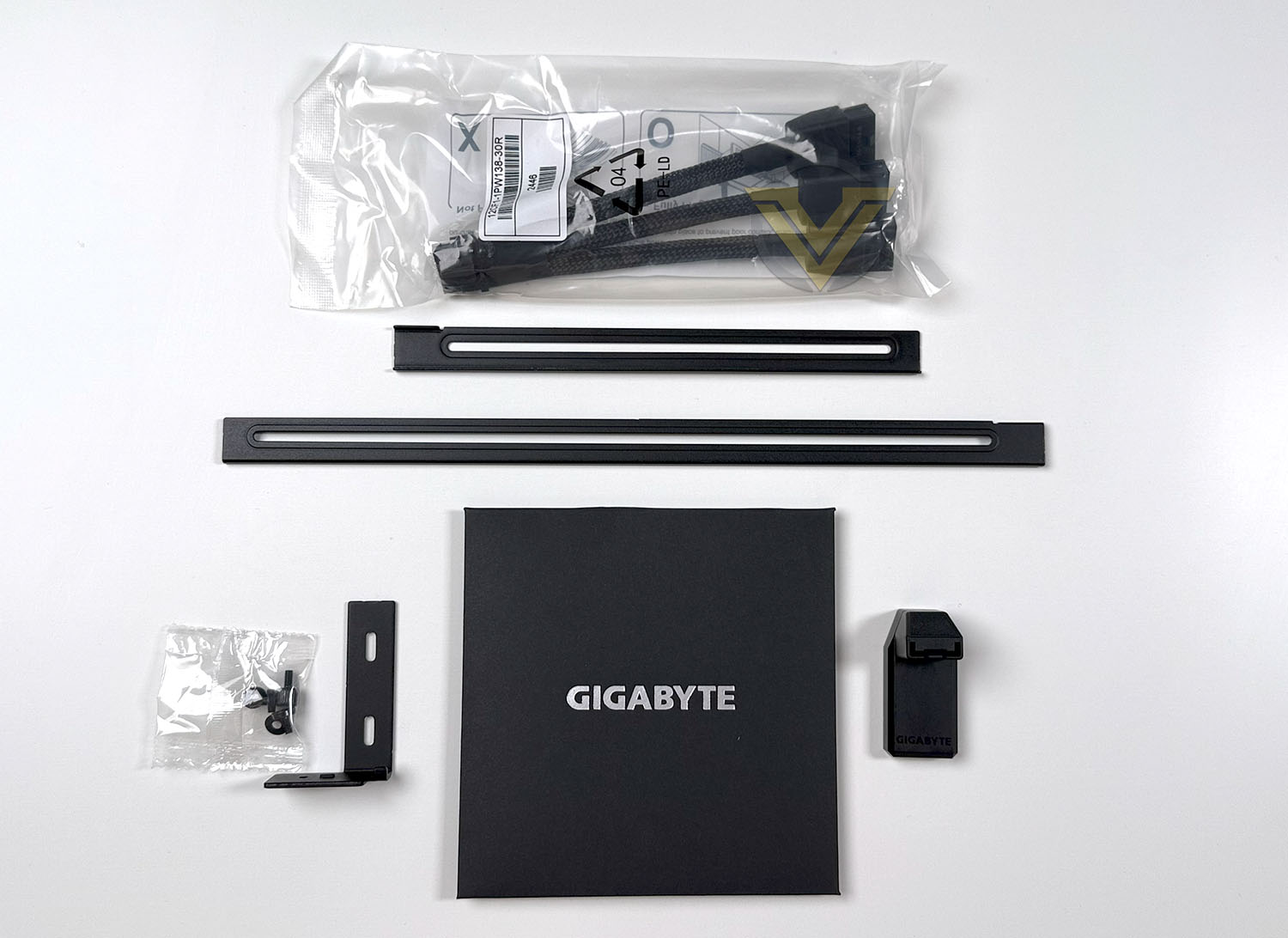
Accessories
1. VGA manual
2. Warranty notice
3. 1x 12V-2×6 to 3x PCIe 8pin adapter
4. Versatile VGA holder
5. Versatile VGA holder manual
Closer Look
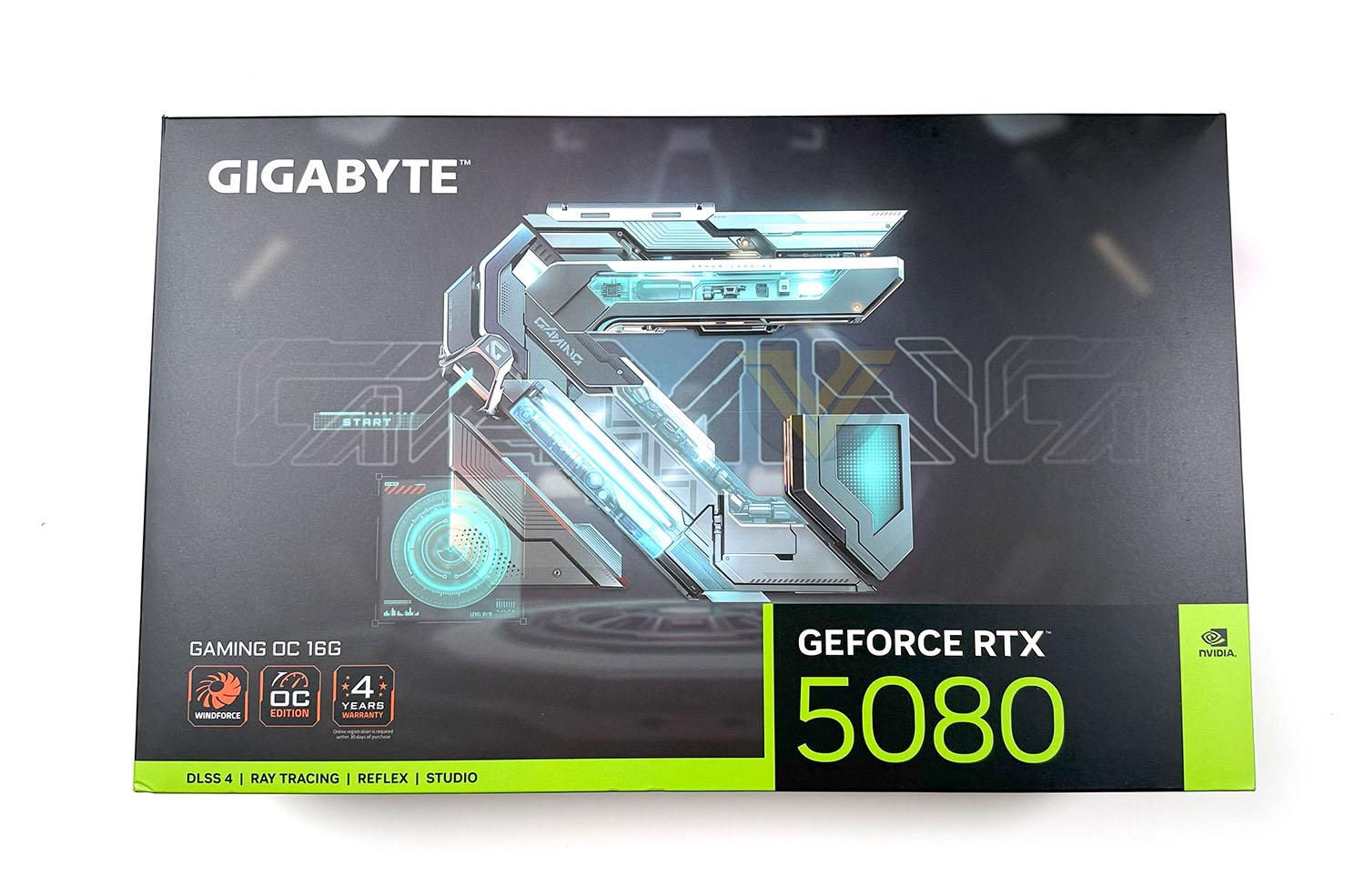
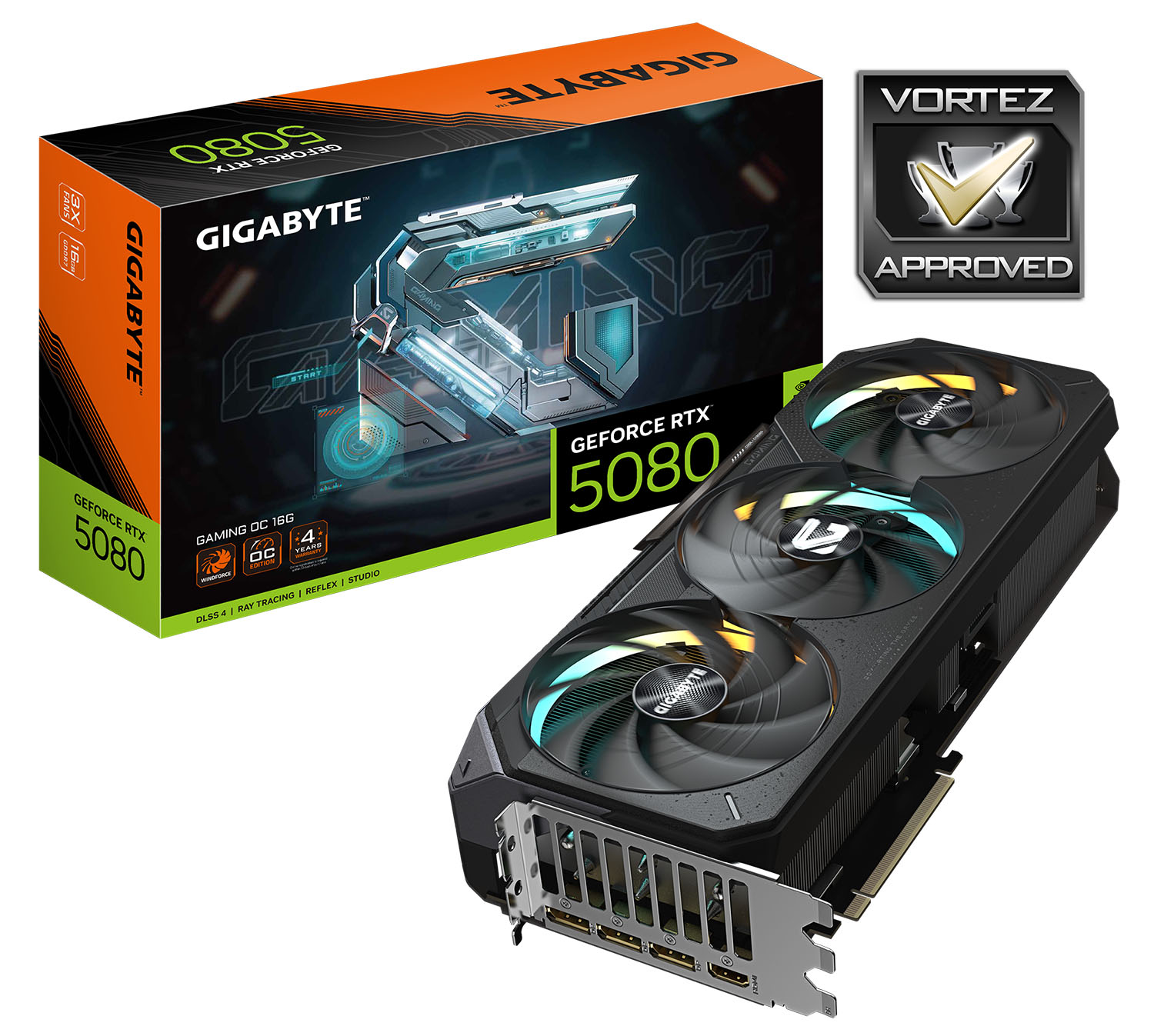
GAMING OC arrives in a nicely designed box – all of the standout features are listed as per usual and on the reverse we get a depiction of the card itself.
Inside the box, the card is well packaged and GIGABYTE has provided a manual, warranty notice, 1x 12v 2×6 to 3x PCIe 8pin adapter, and a GPU bracket to support the card inside the computer chassis.
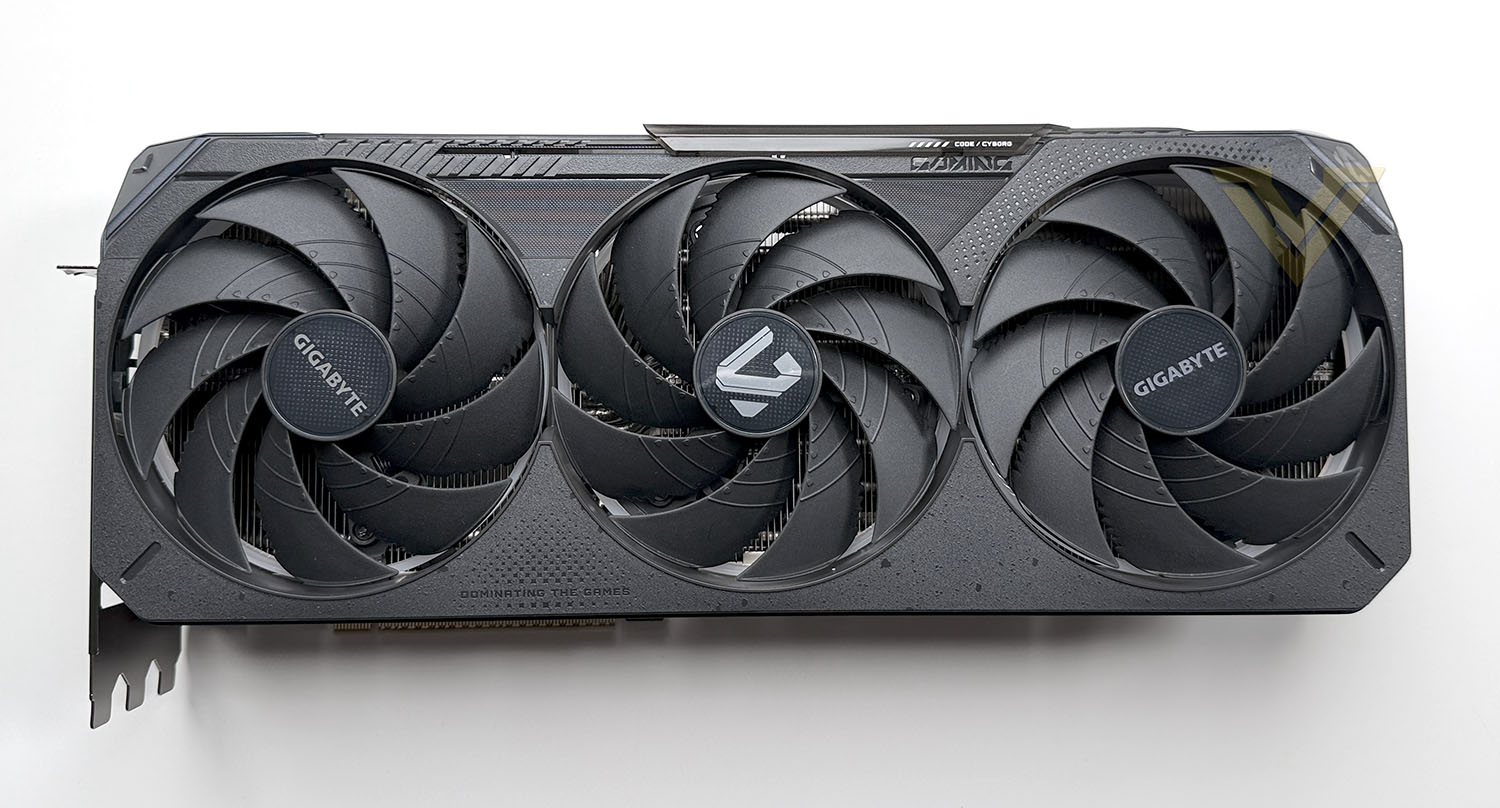
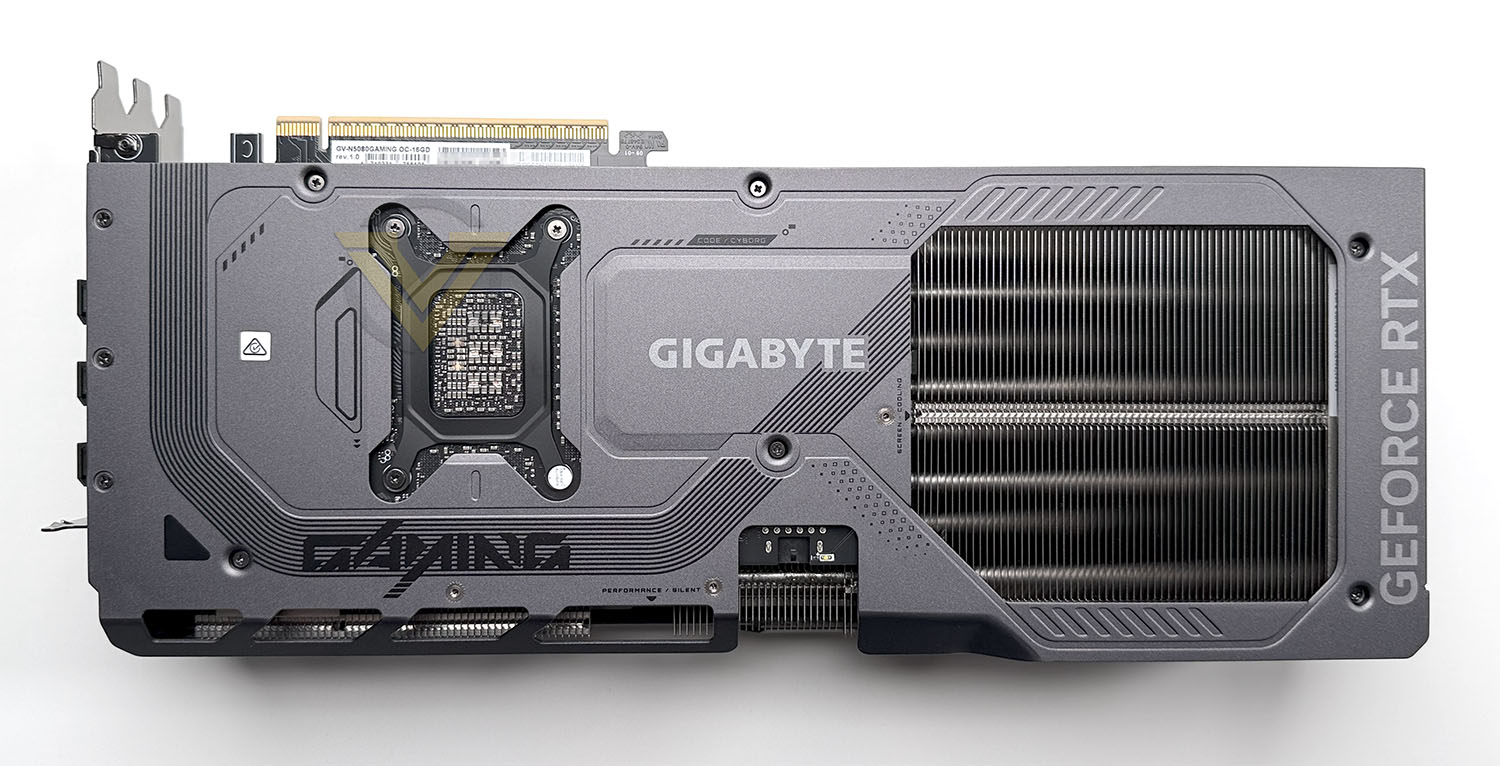
The shroud on the GIGABYTE RTX 5080 GAMING OC features a clean, angular design with a mix of brushed metal and matte plastic, giving it a sleek, premium look. Subtle RGB accents and sharp contours add a modern touch without being overly flashy. It neatly frames the triple-fan Windforce cooling system, balancing form and function with an emphasis on airflow and durability.
The GIGABYTE RTX 5080 GAMING OC uses the Windforce cooling system, which includes three 100mm fans with alternate spinning to reduce turbulence and improve airflow. A large vapor chamber and extended heatsink array ensure efficient heat transfer from the GPU and VRAM. As is usual with GIGABYTE GPUs, the fans will seize from spinning during moments when the card is being used in and around windows and when idle.
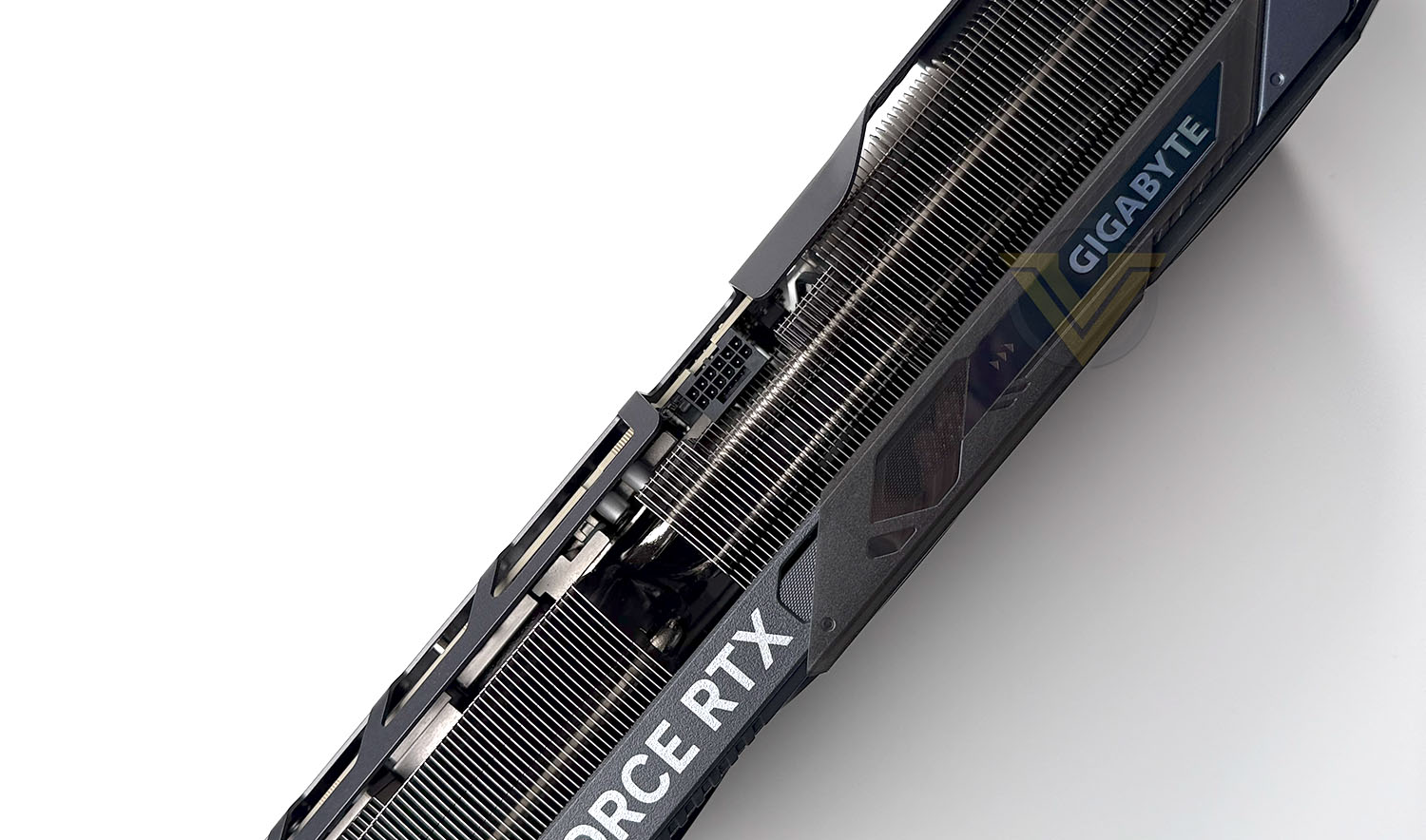
This card features a single 12VHPWR connector – meaning you will need a power supply which is PCIE Gen 5 ready if you want to use the 16-ppin directly. However, GIGABYTE has included an adapter to mitigate this. It is recommended that an 850W power supply is used to sufficiently power this card.
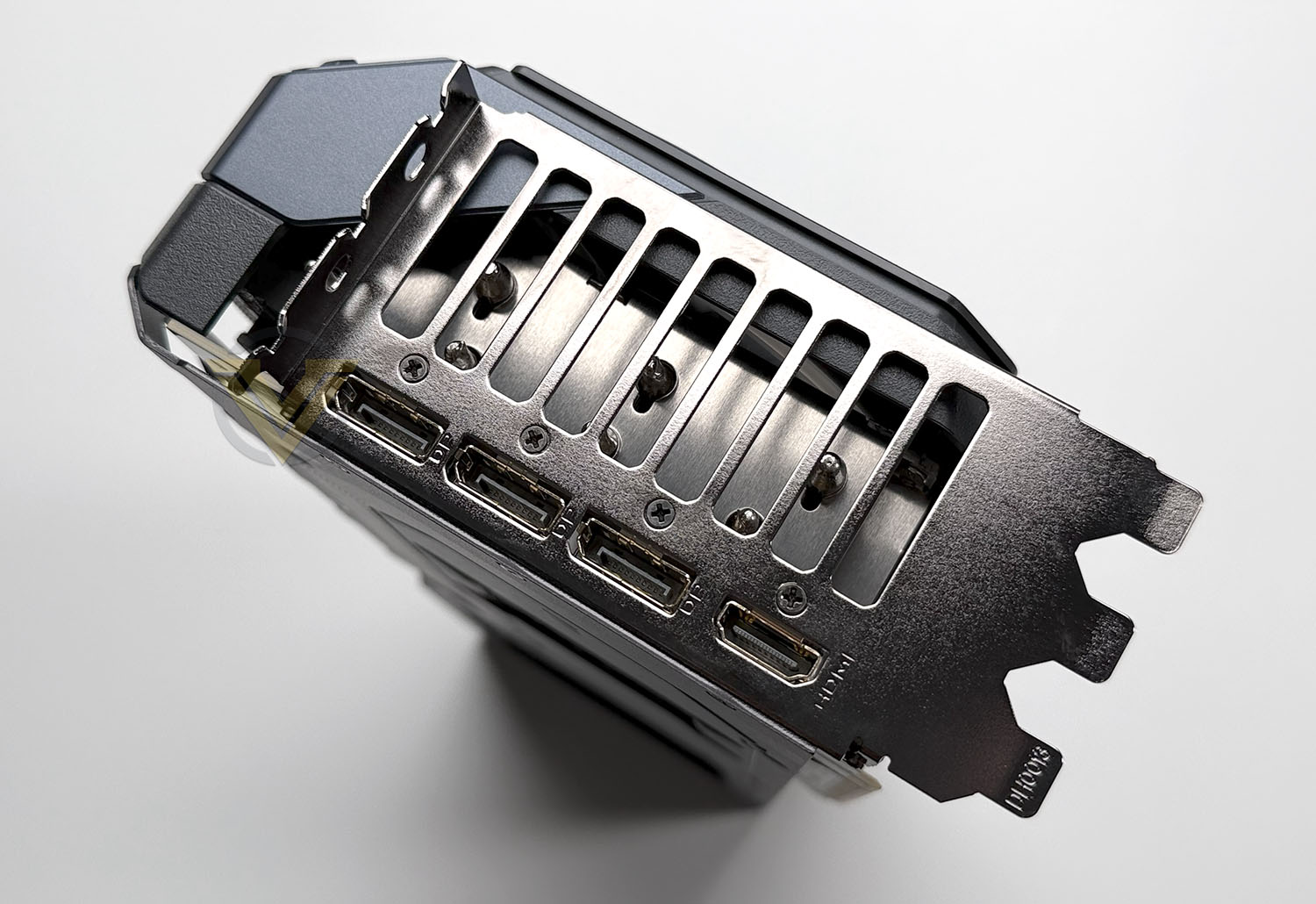
On the rear IO panel there are a total of four video outputs – 3x DisplayPort 2.1b and 1x HDMI 2.1b. So if you need additional display support, it will have to come by way of DP.
From this angle you can clearly see our card is a triple slotter and this should be taken into account when fitting into your case and onto your motherboard.
GAMING OC comes with a factory overclock, boosting its GPU clock speed to 2730 MHz—an increase of 113 MHz over the NVIDIA reference boost clock of 2617 MHz. This represents a 4% uplift which can be regarded as marginal.
Test Setup & Methodology
HOW WE TEST GRAPHICS CARDS
Testing a graphics card is an extremely lengthy process. We sometimes see reviews where a graphics card has been tested using out of date equipment, out of date games and even out of date drivers. While the latter can be excused due to the sheer amount of driver updates making a thorough review impossible we will however notify the reader when we have used a different driver to the normal for example a pre-release driver. For the most part however we will always use the same hardware and latest drivers so this does certainly need to be taken into consideration when viewing our testing results. Each game and benchmark is tested times with the lowest and highest scores omitted out of the 5 results and the average then taken from the three remaining to give us our final result for each resolution and setting used.HARDWARE
In Q1 2025 we decided to upgrade our test system to the very latest AMD X870E platform with the renowned AMD Ryzen 7 9800X3D – currently regarded as one of the best gaming CPUs to date. AMD’s platform is one of the most popular choices for gamers and by using such a configuration, we can hopefully showcase to our readership what they can expect.This new platform provides us with the very latest technology and standards to be able to accurately report back on performance of modern graphics cards.
Graphics Cards on test:
MSI VENTUS 2X OC RTX 4060 TI
ASUS PRIME RTX 4070 SUPER
INNO3D RTX 4080 SUPER X3
PNY RTX 4090 XLR8 VERTO EPIC-X
GIGABYTE RTX 5070 TI EAGLE OC ICE
GIGABYTE RTX 5080 GAMING OC
GIGABYTE RTX 5080 AERO OC SFF
AORUS RTX 5090 MASTER
GIGABYTE RX 7700 XT GAMING OC
POWERCOLOR RED DEVIL RX 7800 XT
POWERCOLOR HELLHOUND RX 7900 GRE
XFX MERC 310 RX 7900 XTX
POWERCOLOR HELLHOUND RX 9070
Special thanks go to MSI and Corsair for providing the hardware configuration for our graphics card reviews:
CPU: AMD Ryzen 7 9800X3D
RAM – 32GB HyperX FURY Renegade 7600MHz
Power Supply – Corsair RM1000X
Hard Drive – Samsung 990 PRO
Cooler – Corsair iCue Link Titan 360 RX LCD
BENCHMARKS
If you are a regular reader of our reviews you will know we like to test the latest hardware with the latest games and benchmarks on the market. Here are the games we’ve chosen:Indiana Jones and the Great Circle
Black Myth: Wukong
Silent Hill 2 Remake
TEKKEN 8
Horizon Forbidden West
To capture framerates we use CapFrameX.
Other benchmark tools have been included to give a broad overview of performance and these include:
PugetBench for Davinci Resolve
ProCyon AI Image Generation
ProCyon Video Editing
3DMark SpeedWay
3DMark Nomad
Let’s see how today’s graphics card performed…
Power, Temperatures, Acoustics
To test for power consumption, we take a measurement from the plug socket. It is important to note that the figures below represent total system power use and not just the GPU. The CPU was always in a fixed state so did not affect the additional power load when the GPU was placed under 100% load using AIDA64 stability test (GPU Only) which was ran for 20 minutes at which point a load reading was taken. Idle readings were taken 5 minutes after system boot to ensure any background services and applications had loaded.
TEMPERATURE
To test temperatures we measured idle temperatures after booting windows, letting all applications finish loading and ran a few benchmarks. Once the benchmarks were complete we left the card to reach a cooling plateau where we then took the idle temperatures. For the load tests we use GPU-Z and have this running throughout all of our benchmarks, and then report back on the maximum temperatures at the end of this exhaustive session.ACOUSTICS
For the purpose of testing audio levels we have the NDI KC-3300 sound level meter. During the temperature recording above, while in Black Myth Wukong benchmark we monitored the audio and the results are found below. All graphics cards are tested in their out of the box state (auto).PugetBench for Davinci Resolve
Procyon AI Image Generation
Procyon Video Editing Benchmark
Procyon benchmarks use real applications to test performance whenever possible. The Procyon Video Editing Benchmark uses Adobe Premiere Pro in a typical video editing workflow.
3DMark Speed Way
3DMark Steel Nomad
S.T.A.L.K.E.R 2
Silent Hill 2 Remake
Indiana Jones and the Great Circle
Black Myth: Wukong
TEKKEN 8
Horizon Forbidden West
Conclusion
The GIGABYTE RTX 5080 GAMING OC stands out immediately with its premium design and well-executed shroud. Subtle RGB accents, and angular lines give it a high-end, modern aesthetic that will complement any gamer or enthusiasts build. GIGABYTE has also clearly prioritised structural integrity, with a sturdy metal backplate and reinforced frame that both look good and help support the card’s considerable weight.In terms of thermal and acoustic performance, the Windforce cooling system delivers on all fronts. Even under heavy gaming loads, the card remains impressively quiet, with fan noise rarely noticeable above system ambient levels. Temperatures stay well within optimal ranges thanks to the vapor chamber and triple-fan setup, which work together to efficiently dissipate heat. This ensures the card maintains its factory overclocked boost clocks without thermal throttling, contributing to more consistent performance during extended sessions.
Performance-wise, the RTX 5080 GAMING OC is a powerhouse. It handles 1440p gaming effortlessly and delivers smooth, high-frame-rate gameplay at 4K across even the most demanding titles. Compared to the RTX 4080 SUPER, this card consistently pulls ahead by margins of 10 to 20 frames per second, giving it a noticeable edge in real-world gameplay scenarios. Whether you’re chasing ultra settings in AAA titles or leveraging its horsepower for ray tracing and AI-enhanced visuals, the 5080 rises to the challenge.
However, this level of performance comes at a cost—literally. The RTX 5080 GAMING OC is a physically large and heavy card that may require case compatibility considerations, and its price tag is steep: £1200 in the UK, $1500 in the US, and AUD $2600 in Australia. For many, that will be a tough pill to swallow, especially with the RTX 4080 SUPER offering solid performance at a lower price. But for enthusiasts who want cutting-edge performance and don’t mind paying a premium, the GIGABYTE RTX 5080 GAMING OC makes a strong case as one of the most capable GPUs available today.
+ Aesthetically pleasing
+ Delivers brilliant 1440p/4K gaming performance
+ Operates quietly under load
+ WindForce cooler keeps GPU/VRAM cool
Cons
– Large footprint
– Cost is hefty
Click here for an explanation of our awards at Vortez.net.
Stay connected with the Vortez Social Media pages:
Join in with the discussions on Discord