







Gigabyte’s latest foray into the X79 world is the X79-UP4, a mid-range motherboard with more features than you can shake a memory stick at. See how it gets on today!

Product on Review: X79-UP4
Manufacturer and Sponsor: GIGABYTE
Street Price: £195inc. VAT (At time of review)
GIGABYTE are one of the first names that crop to mind when anybody asks who make the best motherboards. Indeed, these days GIGABYTE are not only a top motherboard manufacturer but also hold sway in the graphics card department too. They have been ridiculed in the past for their gaudy multi-colour motherboard designs but clearly listening to enthusiast feedback they have upped their game and released some stunning pieces of hardware. This kicked off with the X58 chipset which was one of the first chipsets to see this aesthetic change and despite being an excellent motherboard range regardless of the colour scheme chosen, the X58 UDX range were extremely powerful and feature packed motherboards. It should come as no surprise then that these motherboards sold very well.
Fast-forward to the advent of X79 and GIGABYTE dropped the ball a little in the QC department because of a ‘bad firmware’. Some suggested it was a poor quality PWM components which resulted in motherboards VRM failing. Thankfully our X79-UD5 that we reviewed upon X79 launch suffered none of these problems despite pushing it to its limit. GIGABYTE’s reputation did however suffer a media backlash because of these failure rates, not least because their Ultra Durable range were anything but! A new BIOS sorted the issue by simply crippling overclocking on the boards which is perhaps not the answer people were looking for having shelled out their hard earned cash for a quality and it has to be said, expensive motherboard.
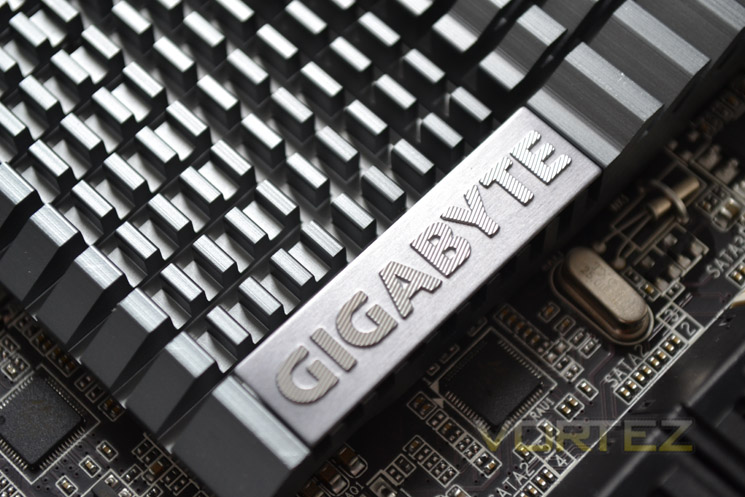
Thankfully, all this appears to be in the past now with GIGABYTE rectifying the issues with excellent BIOS revisions which don’t cripple overclocking and are once again back to their best. The GIGABYTE UP4 we have for review today has a totally new VRM design using PowIRstage with the IR3550, part of the new Ultra Durable 5 design which also incorporates 60A chokes that we will cover later in the review.
Here’s what GIGABYTE had to say about their new Power delivery components:
Specification
CPU
Support for Intel® Core™ i7 processors in the LGA2011 package
L3 cache varies with CPU
Chipset Intel® X79 Express Chipset
Memory
8 x 1.5V DDR3 DIMM sockets supporting up to 64 GB of system memory
4 channel memory architecture
Support for DDR3 2133/1866/1600/1333/1066 MHz memory modules
Support for non-ECC memory modules
Support for Extreme Memory Profile (XMP) memory modules
Audio
Realtek ALC892 codec
High Definition Audio
2/4/5.1/7.1-channel
Support for S/PDIF Out
LAN
Intel GbE LAN chip (10/100/1000 Mbit)
Expansion Slots
2 x PCI Express x16 slots, running at x16 (PCIEX16_1, PCIEX16_2)
2 x PCI Express x16 slots, running at x8 (PCIEX8_1, PCIEX8_2)
* The PCIEX8_2 slot shares bandwidth with the PCIEX16_2 slot. When the PCIEX8_2 slot is populated, the PCIEX16_2 slot will operate at up to x8 mode.
(All PCI Express x16 slots conform to PCI Express 3.0 standard.)
2 x PCI Express x1 slots
(All PCI Express x1 slots conform to PCI Express 2.0 standard.)
1 x PCI slot
Multi-Graphics Technology
Support for 4-Way/3-Way/2-Way AMD CrossFireX™/NVIDIA SLI technology
Storage Interface
Chipset:
2 x SATA 6Gb/s connectors (SATA3 0/1) supporting up to 2 SATA 6Gb/s devices
4 x SATA 3Gb/s connectors (SATA2 2~5) supporting up to 4 SATA 3Gb/s devices
Support for RAID 0, RAID 1, RAID 5, and RAID 10
* When a RAID set is built across the SATA 6Gb/s and SATA 3Gb/s channels, the system performance of the RAID set may vary depending on the devices being connected.
3 x Marvell 88SE9172 chips:
4 x SATA 6Gb/s connectors (SATA3 6~9) supporting up to 4 SATA 6Gb/s devices
2 x eSATA 6Gb/s connectors on the back panel supporting up to 2 SATA 6Gb/s devices
Support for RAID 0 and RAID 1
USB
Chipset:
Up to 14 USB 2.0/1.1 ports (8 ports on the back panel, 6 ports available through the internal USB headers)
2 x Fresco FL1009 chips:
Up to 4 USB 3.0/2.0 ports (2 ports on the back panel, 2 ports available through the internal USB header)
Internal I/O Connectors
1 x 24-pin ATX main power connector
1 x 8-pin ATX 12V power connector
6 x SATA 6Gb/s connectors
4 x SATA 3Gb/s connectors
1 x CPU fan header
4 x system fan headers
1 x front panel header
1 x front panel audio header
1 x S/PDIF Out header
1 x USB 3.0/2.0 header
3 x USB 2.0/1.1 headers
1 x serial port header
1 x Clear CMOS jumper
1 x Trusted Platform Module (TPM) header
Back Panel Connectors
1 x PS/2 keyboard/mouse port
1 x optical S/PDIF Out connector
1 x coaxial S/PDIF Out connector
8 x USB 2.0/1.1 ports
2 x USB 3.0/2.0 ports
2 x eSATA 6Gb/s connectors
1 x RJ-45 port
6 x audio jacks (Center/Subwoofer Speaker Out/Rear Speaker Out/Side Speaker Out/Line In/Line Out/Microphone)
I/O Controller
iTE I/O Controller Chip
H/W Monitoring
System voltage detection
CPU/System temperature detection
CPU/System fan speed detection
CPU overheating warning
CPU/System fan fail warning
CPU/System fan speed control
* Whether the CPU/system fan speed control function is supported will depend on the CPU/system cooler you install.
BIOS
2 x 64 Mbit flash
Use of licensed AMI EFI BIOS
Support for DualBIOS™
PnP 1.0a, DMI 2.0, SM BIOS 2.6, ACPI 2.0a
Form Factor
ATX Form Factor; 30.5cm x 24.4cm
Features
GIGABYTE 3D Power
GIGABYTE X79 series motherboards are the first to take advantage of the exclusive GIGABYTE 3D Power, an all new hardware and software-based Digital Power Engine for both the PWM and Memory that delivers unprecedented power delivery control.
All New Digital Power Control for the CPU and Memory
Utilizing a brand new Digital PWM controller, GIGABYTE’s 3D Power features precise Auto Voltage Compensation to deliver a steady flow of power to the CPU and memory no matter the loading. This all new, all digital power system provides enthusiast users with exceptional control over the overclocking potential of their GIGABYTE X79 motherboard.
GIGABYTE is the first in the industry to utilize digital memory controllers for not only the Memory, but VTT and VSA, for real-time monitoring and adjusting. Digital memory control allows users to monitor and record DDR power and current in real-time while gaming, overclocking or at idle. Users can also set OVP (Over Voltage Protection) to safeguard your memory, adjust memory Load-line Calibration to fix memory vdrooping for a quicker response time and adjust memory PWM frequency on-the-fly.
GIGABYTE 3D Power(patent pending) Utility
Users can now enjoy a fully interactive 3D utility that facilitates adjustment of the 3 dimensions that control the power delivery to your CPU and Memory: Voltage, Phase and Frequency. These parameters are crucial to how the digital PWM supplies power to critical areas of the motherboard and can help users quickly obtain the highest, most stable overclock.
3D Power: Voltage Control
Voltage parameters can be modified within 3D Power, including load line calibration the of CPU. By adjusting load line calibration, Vdrooping can be avoided, maintaining optimal voltages levels despite increasing current levels. OVP (over voltage protection) can also be adjusted to change default protection range of the CPU, memory controller, VTT and system memory.
3D Power: Phase Control
Users can calibrate OCP (Over Current Protection) for the CPU, integrated memory controller and system memory power levels. This allows the Phase control to deliver even more power to the system when needed.
3D Power: Frequency Control
GIGABYTE’s digital PWM allows for adjustable frequency control via the International Rectifier (IR3567) PWM controller. 3D Power frequency control allows users to change the PWM controller frequency so that the CPU VRM can adjust power delivery speeds more quickly. Users can also adjust the PWM spectrum or maximum and minimum overall frequencies.
GIGABYTE 3D BIOS(patent pending)
The revolutionary GIGABYTE 3D BIOS application is based on our new GIGABYTE UEFI DualBIOS™ technology and is available to consumers in two new exclusive modes of interaction never before seen in a BIOS environment. GIGABYTE has re-drawn the traditional BIOS experience providing mainstream and enthusiast users with a choice of unique and powerful graphical interfaces.
UEFI DualBIOS™ Technology
At the heart of this exciting 3D BIOS technology is a pair of 8MB physical BIOS ROMs containing GIGABYTE’s exclusive in-house designed UEFI BIOS technology. With a superior graphical interface capable of 32-bit color imaging and fluid user-friendly mouse navigation, UEFI DualBIOS™ makes BIOS configuration a new and exciting experience for novice and experienced users alike. UEFI BIOS also brings native support for large hard drives on 64-bit operating systems.
3D Mode
Designed to provide an extremely streamlined and user-friendly BIOS environment, GIGABYTE’s exclusive 3D mode offers a fully interactive and illustrative GUI that allows users to easily and intuitively make key adjustments to the UEFI BIOS settings for optimum performance. 3D Mode allows novice or casual users to more clearly understand the areas of the motherboard that are being affected through the BIOS settings, gaining a clearer understanding of the BIOS functionality.
Advanced Mode
Advanced mode provides a more comprehensive UEFI BIOS environment that is designed specifically for overclockers and power users who want maximum control over their PC’s hardware. GIGABTYE’s signature M.I.T. tuning technology can be found alongside fully configurable parameters for GIGABTE’s all new digital 3D Power engine. In short, advanced mode combines the signature GIGABYTE BIOS expertise you’ve come to expect, wrapped a slick, new and optimized graphical UEFI interface.
GIGABYTE Ultra Durable™ 5
The GIGABYTE motherboard employ award winning GIGABYTE Ultra Durable™ 5 technology that includes high current capable components for the CPU power zone including IR3550 PowIRstage® ICs from International Rectifier, 2X Copper PCB and high current Ferrite Core Chokes rated up to 60A, which together are able to deliver up to 60°C* cooler temperatures than traditional motherboards. Featured on a range of new motherboards based the Intel®X79 and Z77 Express Chipsets, GIGABYTE Ultra Durable™ 5 technology is the next evolution in quality motherboard design.
4 Channel Memory Architecture
The latest Intel® 2nd Gen Core™ i7 processors feature a new integrated memory controller that supports four channel DDR3 memory for the first time. Offering unrivalled memory performance with incredible potential data bandwidth, GIGABYTE X79 series motherboards give you the ultimate performance for today’s memory-intensive applications.
Designed for PCI Express Gen.3 Support
The GIGABYTE motherboard is fully configured to provide gamers with the latest Gen.3 PCI Express technology, delivering maximum data bandwidth for forthcoming discrete graphics cards.
* PCIe Gen. 3 is dependent on CPU and expansion card compatibility.
4-way CrossFireX™ and 4-way SLI™ Support
The GIGABYTE X79-UP4 delivers the industry’s most scalable graphics platform, with support for both 4-way AMD CrossfireX™ and Nvidia SLI™. Providing 4 PCI Express 3.0 x16 connectivity, X79-UP4 delivers ultra smooth 3D rendering, blazing-fast frame rates and enhanced graphics capabilities for users wanting to get the highest level of graphics performance from their system.
GIGABYTE 333 Onboard Acceleration
GIGABYTE X79 series motherboards feature GIGABYTE 333 Onboard Acceleration , a range of the latest technologies that are designed help speed up data transfer, including SuperSpeed USB 3.0 technology, SATA Revision 3.0 (6Gbps) technology and an unprecedented 3x USB power boost on all USB ports for more power hungry USB devices.
GIGABYTE On/Off Charge
GIGABYTE X79 series motherboards feature ON/OFF Charge, a unique GIGAYTE technology which allows you not only to charge your iPhone, iPad or iPod Touch, but also allows you to Quick Charge it. As an added bonus, it can even be charged when your PC is turned off, so even if you forget to plug it into your charger after you’ve synced up your music, it will be fully charged when you need it.
Packaging & Accessories
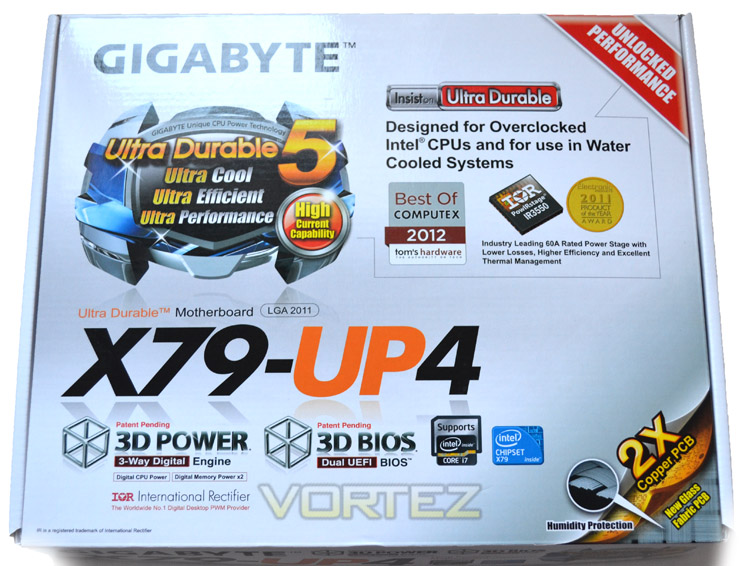
The front of the box looks near identical to other X79 or indeed Z77 motherboard packaging designs save for a few key details. Most obvious is the product title. Perhaps the most important detail though is are the awards given for using the new 60A PowIRstage. The usual 3DPOWER, 3DBIOS and Intel monikers are found below the product title.
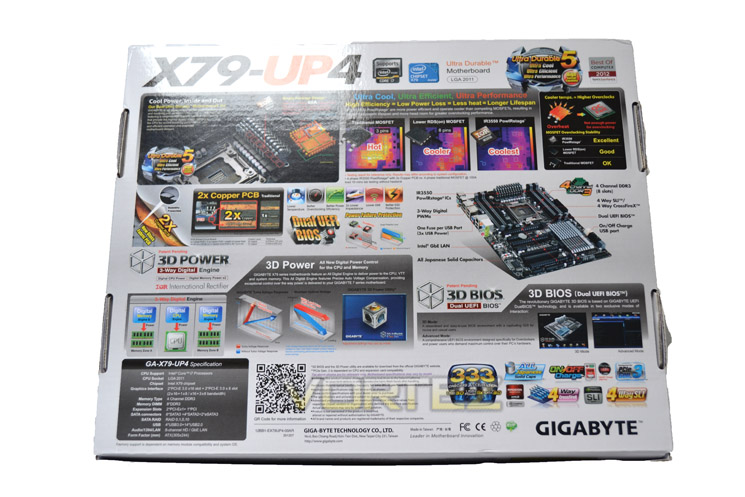
Flipping the box over it is clear that GIGABYTE have gone to great lengths to rectify mistakes of the past as they (rightly so) are making a lot of noise about their redesigned VRM. This is depicted in great detail along with a diagram of the motherboard and explanations of their 3D Power and 3DBIOS features. We do like it when manufacturers detail what makes their motherboard special rather than just dreaming up a name to make it sound better than it really is. The new Ultra Durable 5 components are not only highly specified but the package also explains the differences between its components and that of the competition.
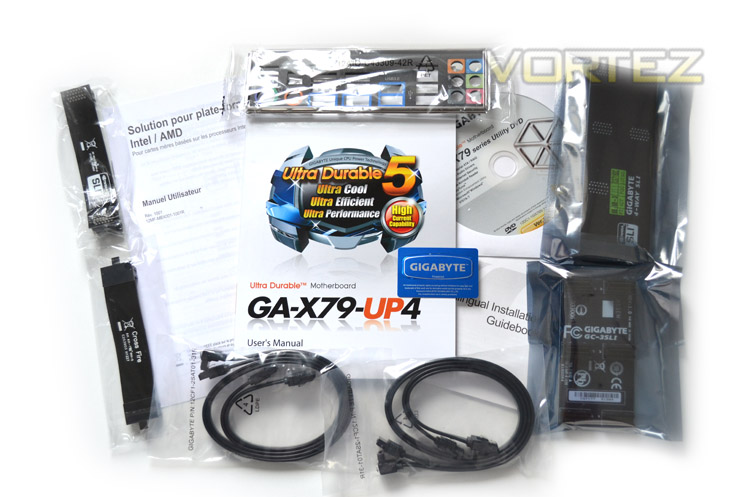
The accessory list is very well catered for too thanks to the 3 SLI bridges (2x, 3x and 4x SLI) and Crossfire bridge which is an unusual addition considering most if not all Crossfire capable graphics cards comes with its own bridge. There’s a well written motherboard manual, a couple of multi lingual guides, 4x SATA cables (2 with 45 degree connectors at one end), a colour coded I/O shield and obligatory driver and utilities DVD.
First Look
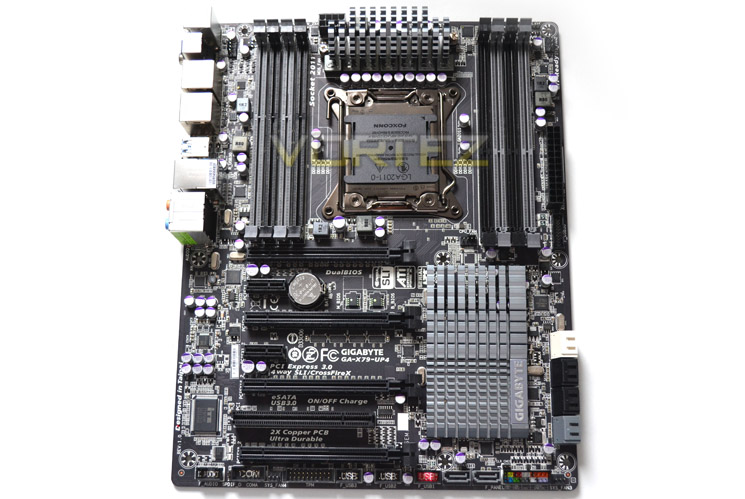
Remember how we said GIGABYTE were known for gaudy ‘rainbow-esque’ designs? Looking at this board you certainly wouldn’t believe it. It has to be said that this has to go down as being one of the best looking motherboard designs we have come across. Some may claim it is drab in comparison to other designs but the black and gunmetal grey work perfectly together. The best thing about neutral colour schemes is that regardless of what case or lighting scheme you have, this motherboard will complement it time and again.
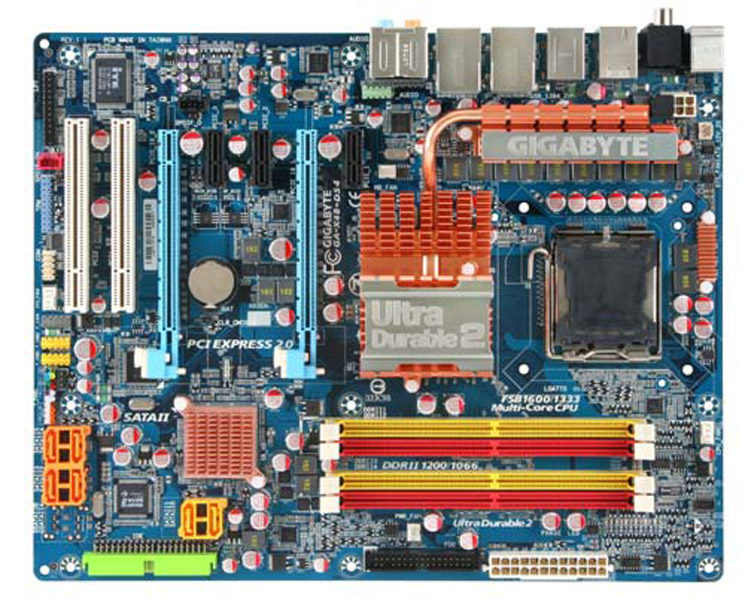
Compared against the equivalent X48 design, we know which colour scheme we prefer here at Vortez!
The motherboard layout is very good too with everything where you would expect to find it around the leading edges. There are no misplaced power points, odd SATA placements nor bizarre PCIe layouts to be found on this motherboard.
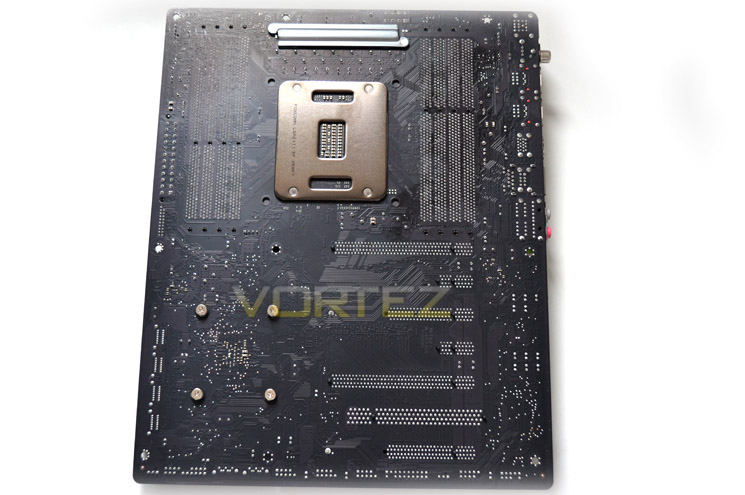
The MOSFETs are notable by their absence on the rear of the mainboard which is great to see. Worthy of note is the MOSFET heatsink brace above the CPU brace and the screw type method of holding the X79 heatsink in position securely. No cheap plastic push-pins here!
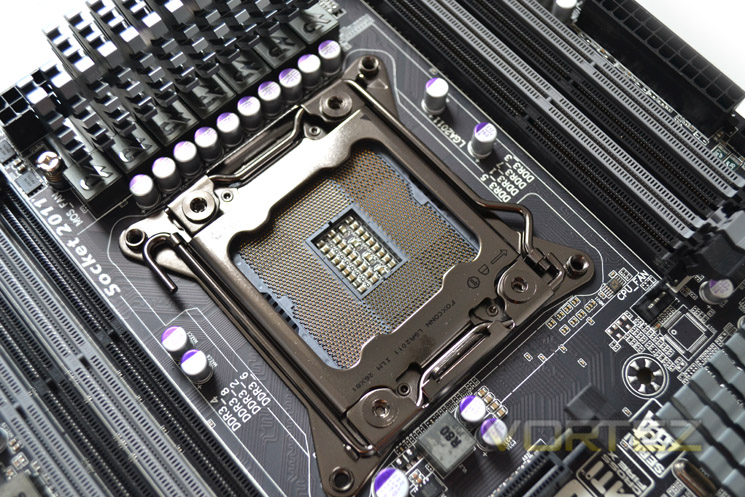
The CPU socket area is relatively cramped due to the 4 DIMMS available on this board. GIGABYTE have however done a fairly good job of keeping it clear with only a few Solid caps getting in the way of what would be an fairly easy board to insulate for extreme cooling. The CPU bracket is of Foxconn origin, not that this really matters on X79 as both Foxconn and Lotes are as good as one another in our experience.
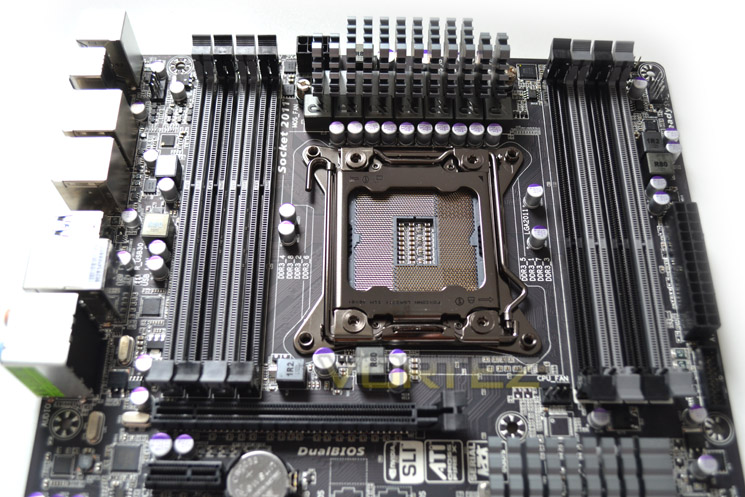
As previously stated, the X79-UP4 is a quad channel capable motherboard capable of running 2 quad channel sets thanks to the 8 DIMM slots supporting a maximum 64GB at 2133MHz.
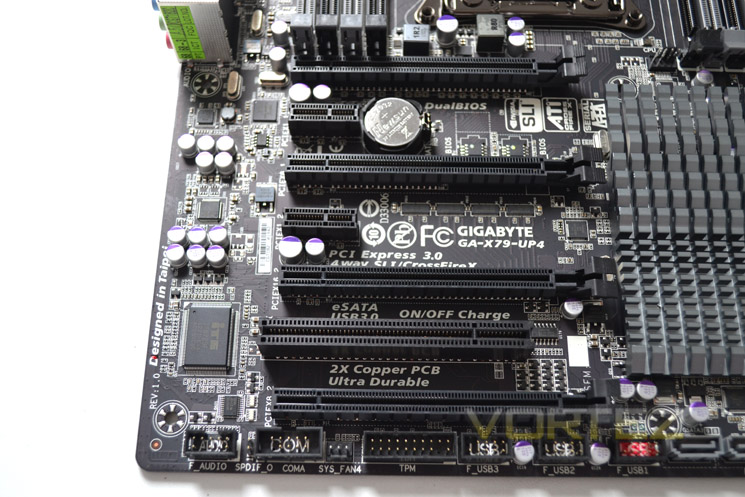
The layout of the PCIe 3.0 slots is perfect. From top to bottom 16x,1x,8x,1x,16/8x, PCI, 8x. With 4x PCIe slots, the GIGABYTE UP4 is quad SLI capable although the limitation of the X79 chipset dictates that the slots would fall back 4×8 lanes, which is still plenty given the current requirements for graphics cards.
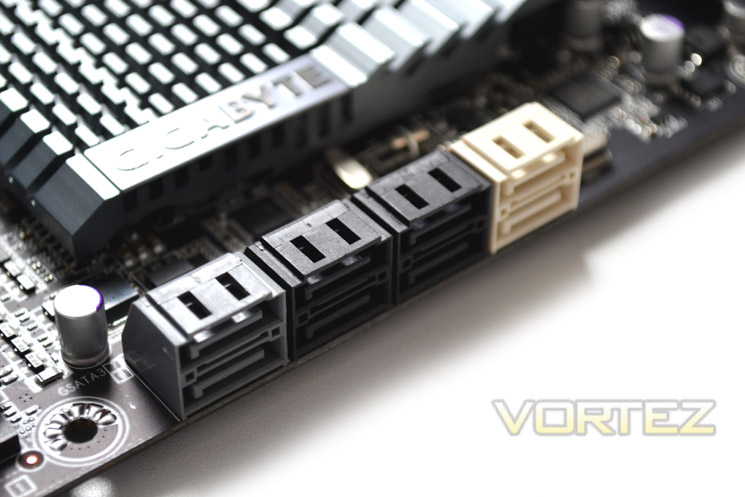
There are ten SATA ports of which two are SATA 6G courtesy of Intel (white), 4 Marvel SATA III ports (black) with the 2+2 grey ports Intel 3G ports, 2 with the main set and 2 perpendicular ports towards the bottom of the mainboard.
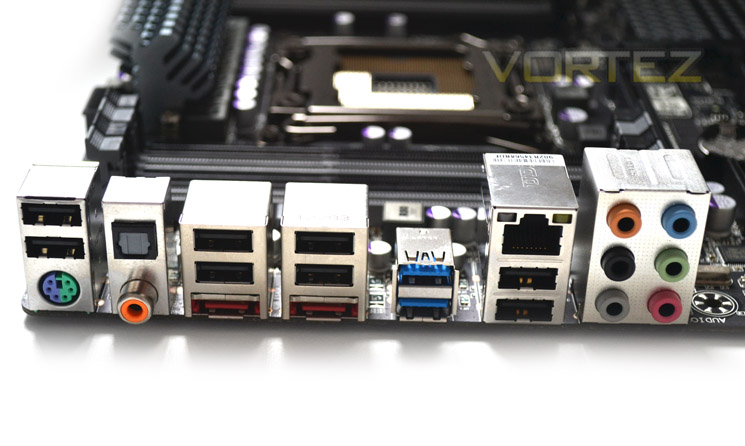
The I/O area features from left to right: 2x USB 2.0 ports above a PS/2 keyboard/mouse combo port, S/PDIF Out port and coaxial port, 4xUSB 2 ports, 2x eSATA ports, 2x USB 3.0 ports, RJ-45 port, 2x USB2 ports and six 3.5mm audio/mic jacks.
Let’s take a closer look…
Closer Look
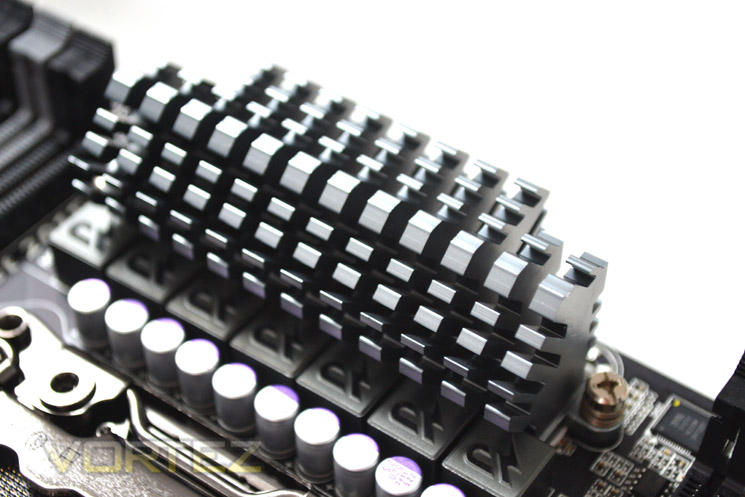
The VRM heatsink of the UP4 is a jagged aluminium affair which is staggered to cool the VRM while making most use of the area. The X79 heatsink is of a familiar design which again is oversized but not intrusively so. Both heatsinks have a gunmetal grey coating which contrasts against the Matt black PCB perfectly.
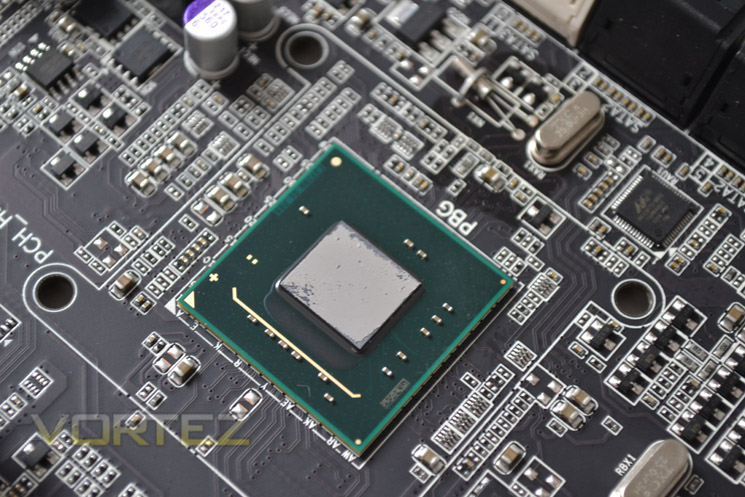
Removing the heatsinks was a little more involved than usual thanks to the spring loaded screws, normally only found on high-end motherboards. With the chipset heatsink removed we can see that the X79 chipset heatsink was perfectly mounted.
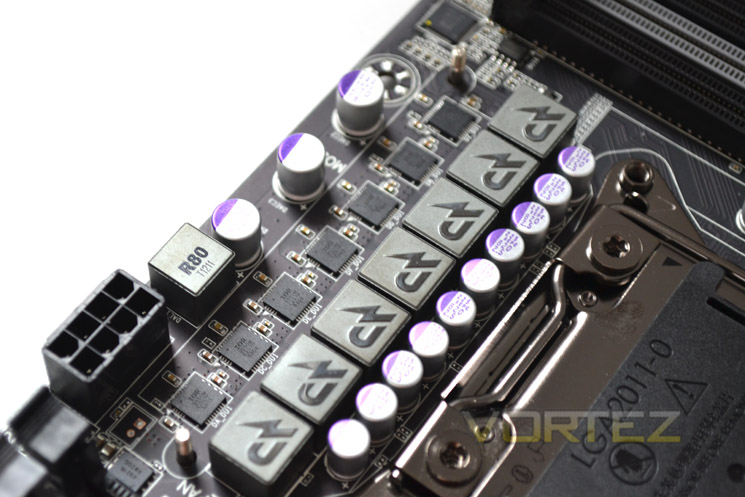
Here we can see the new VRM from GIGABYTE. There are 8 phases in total, 6+1 above (CPU and System Agent) and a further choke below the CPU socket controlling the VTT. There are also further 2 Power stages for the memory (40A each). All of the components come under the Ultra Durable 5 banner which also includes sold capacitors and a 2oz Copper PCB, twice as much copper as other leading manufacturers.
It is also interesting to note that the PCB is ‘designed for overclocking use’. It would be easy to dismiss this as marketing babble to mean it is a performance motherboard but the motherboard features weaved ‘humidity’ protection which should offer better protecting against spillages than other mainboards. That isn’t, of course, to say the usual precautions shouldn’t be used when watercooling rather this mainboard offers a little more protection than usual should the worst happen and you get a leak.
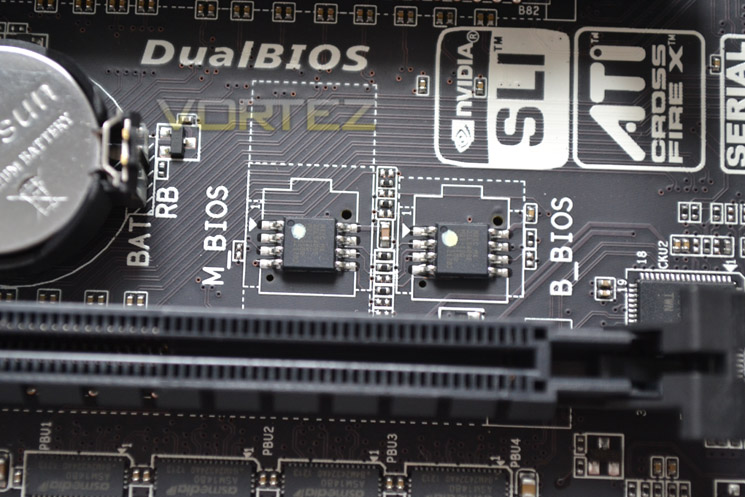
The dual BIOS makes another appearance on this main board allowing users to flash their BIOS without fear of ‘bricking’ the board due to corruption as there is a back-up BIOS available to flashback to if required.
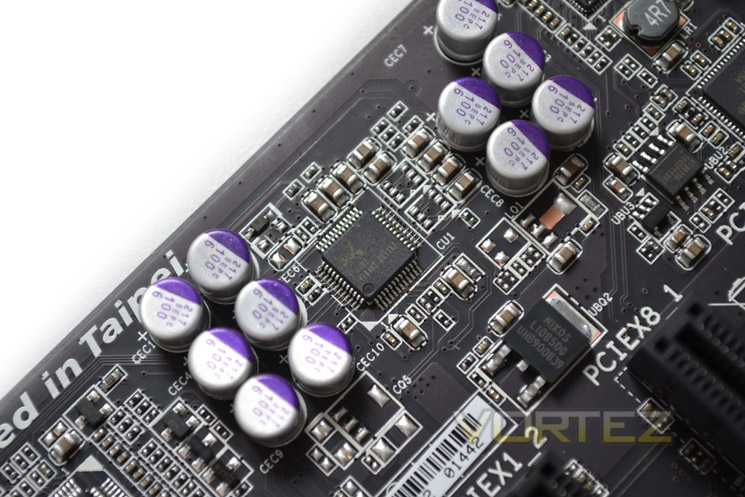
Finally we see that the on-board audio is controlled via the Realtek ALC892 controller, standard on most motherboard today.
Test Setup
When we decided to put the test bench together for X79 we wanted a system that would not only perform well but also last the test of time given that X58 has been around for some 3 years now so we saw no reason to believe that its successor, X79 would not be able to do the same.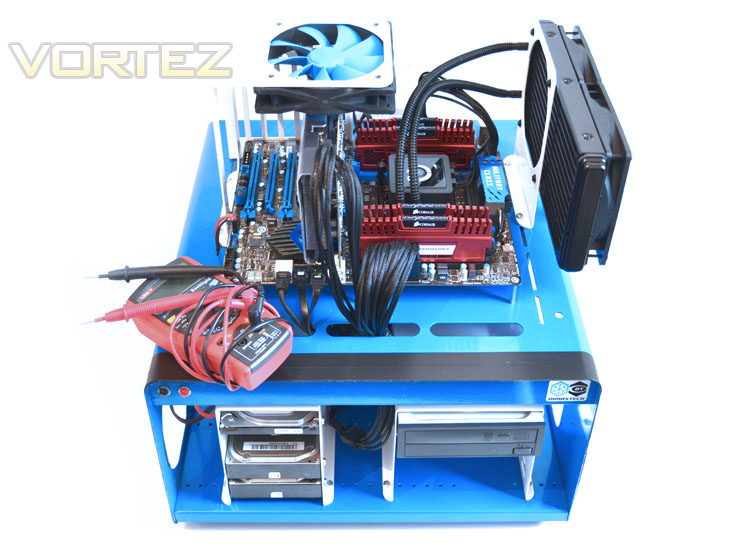
Some of the components for our test bench were kindly donated by CORSAIR who provided the majority of components without whom we would not have been able to bring you this review so a big thanks to them. Thanks also go to MSI who donated their NVIDIA GTX560Ti.
Motherboards on test:
MSI X79A-GD45 8D
ASRock Extreme6 GB
GIGABYTE X79-UD3
MSI X79 Big Bang XPower II
ASRock X79 Extreme4-M
GIGABYTE X79-UD5
MSI X79A-GD65 8D
CPU: Intel Core i7-3960X Extreme Edition
Graphics Card: NVIDIA GTX560Ti
RAM – 16GB (4x4GB) Corsair Vengeance (Red) DDR3 @ 1866MHz 9-10-9-27
Power Supply – Corsair TX750M 750W
Hard Drive – Hitachi SATA II 250GB
Samsung F3 1TB
Cooler – Corsair H100
Benchmarks
Cinebench 11.5 – CPU Score
x264 HD 4.0 – 1st and 2nd pass encoding
SiSoftware SANDRA 2011 – CPU benchmarks
AIDA64 – CPU benchmarks
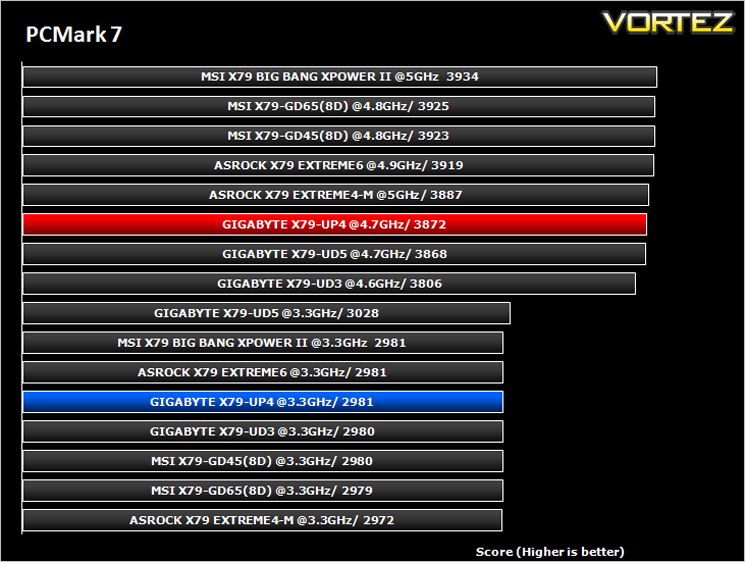
PCMark 7 – System Benchmark
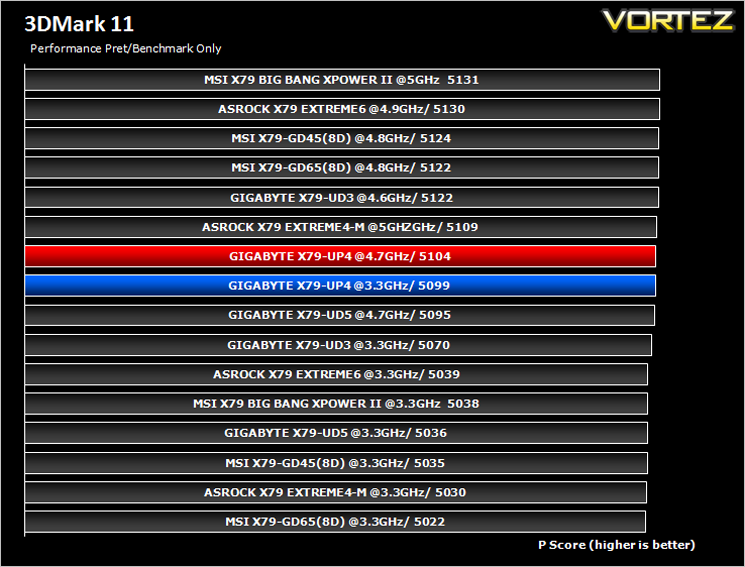
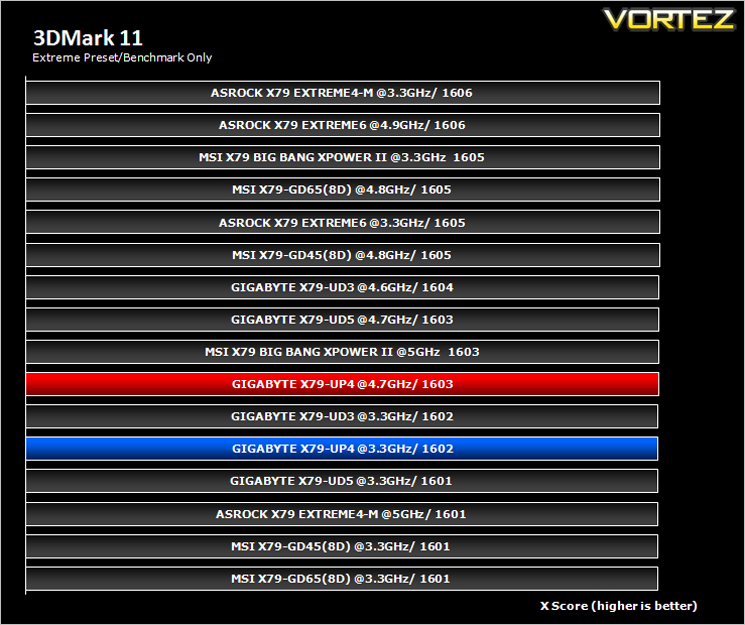
3DMark 11 – Performance and Extreme preset
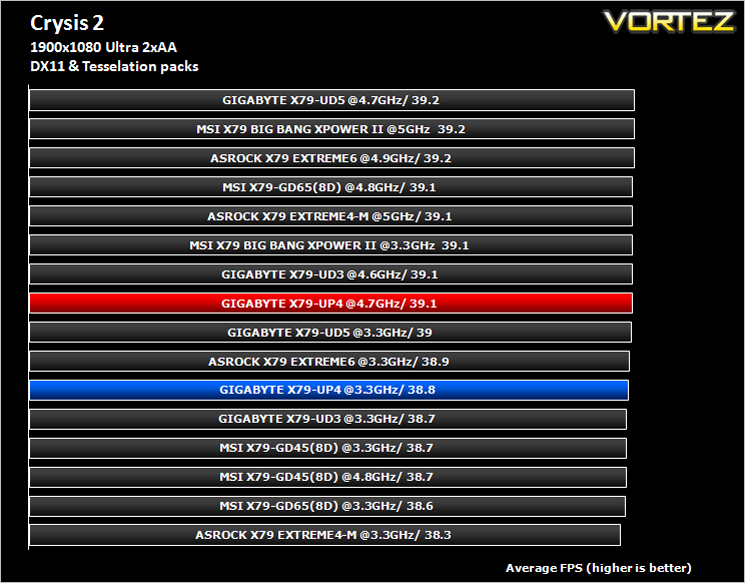
Games – Crysis 2 & DiRT3
Other Software
Core Temp 0.99.5
LinX stress Test
CPUID HWMonitor
Overclocking
The 3D BIOS takes a little getting used to if you have never used a UEFI BIOS before. Full mouse control is afforded and worked perfectly with our setup. The BIOS layout will be familiar if you have used a GIGABYTE BIOS before and for the most part is very easy to control and adjust the vast amount of settings available.
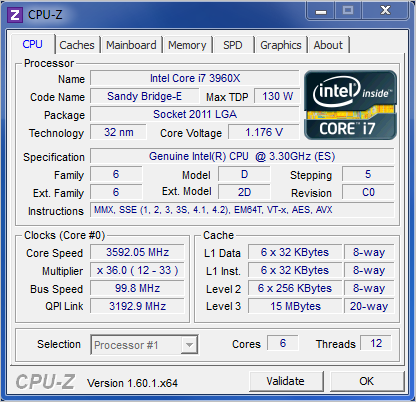
Above are the stock settings of the X79-UP4 which shows the CPU running at an idle 1200MHz. Strangely, when placed under load, the GIGABYTE motherboard only ran to 3.6GHZ instead of 3.9GHz we have seen previously. This is perhaps because it is only one core on the extreme edition CPU which blasts it’s way to 3.9, with the remaining 5 cores running at 3.6GHz. Another oddity was that CPU-z reported the GIGABYTE underselling itself by having the Bus speed running at 99.8MHz instead of the standard 100MHz. Either way, as we will see, this made little difference to the benchmark results but we thought it was worth noting nonetheless.
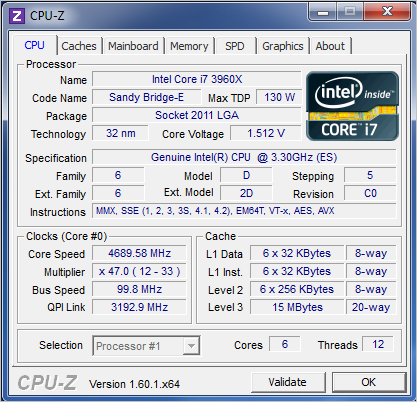
Our overclocking went very well up until we got to the 4.5GHz, after which we had to start making some fine tuning instead of just upping the vCore. With the vCore set to 1.52 and the SA and Vtt set to 1.25 and 1.15 respectively we managed a maximum 4.8GHz. This is a little disappointing as we know this chip is capable of 5ghz+ with those settings. Sadly even 4.8GHz proved to be unstable for 24/7 use so after testing with Prime95 for 8 hours we settled for a rock solid stable 4.7GHz.
Power Consumption
To test for power consumption we use the same basic components for each motherboard on test. Readings are then taken from the wall both in stock (Optimised defaults loaded) and maximum overclocked (Voltages may vary).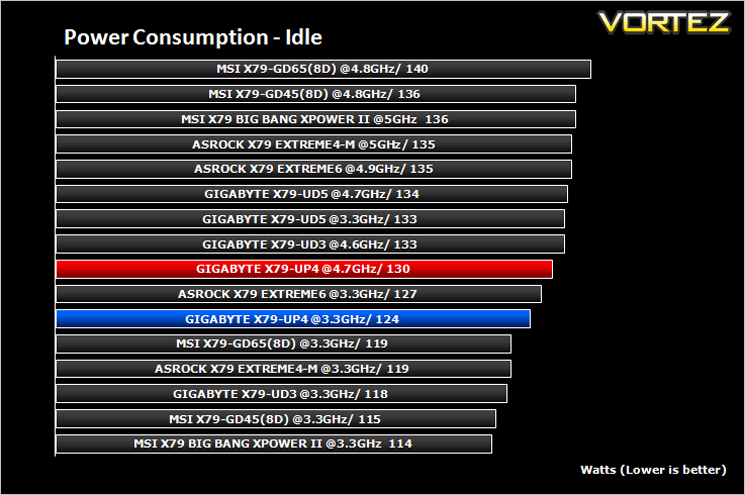
Under idle conditions the MSI GD456 performed very well, second only to its big brother, the big Bang II.
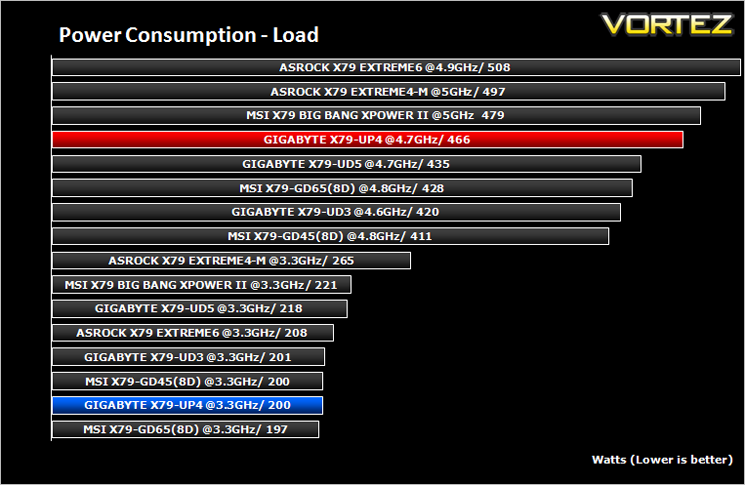
Under 100% load using Prime95, the news got even better by being the most efficient on test(albeit at less voltage of course) however, it still beat its nearest rival (which used less voltage) by a fair margin.
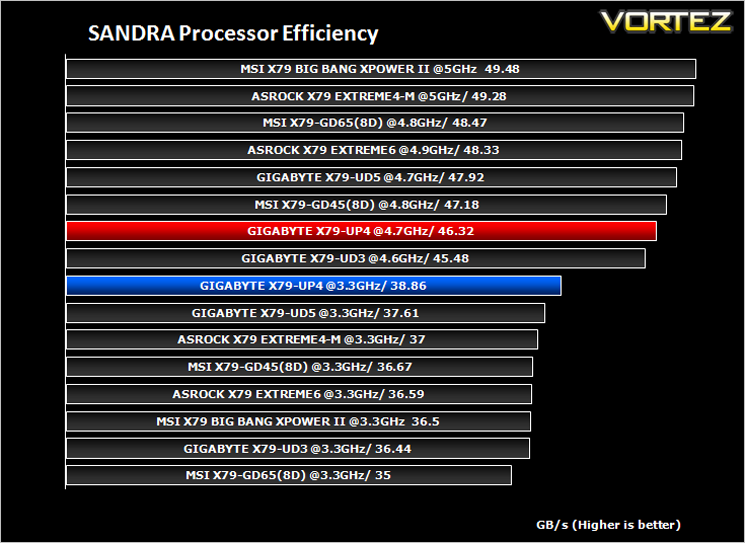
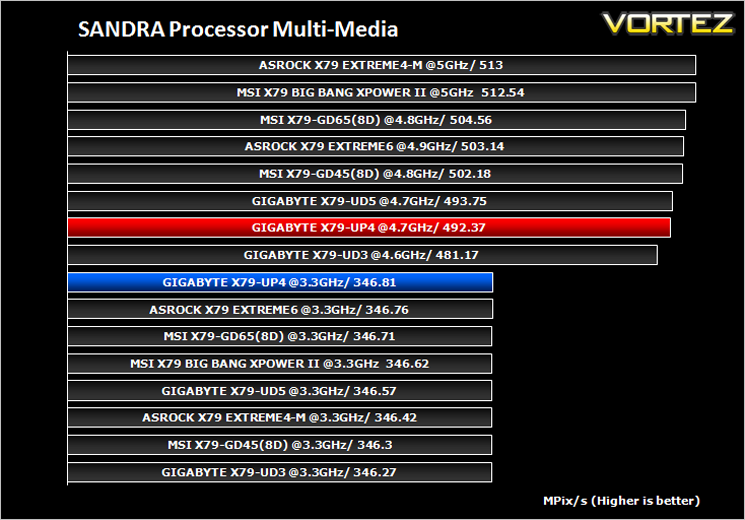
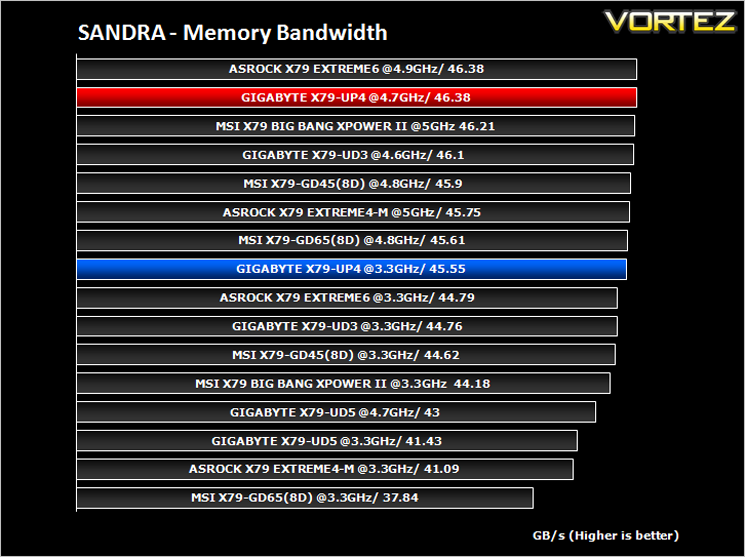
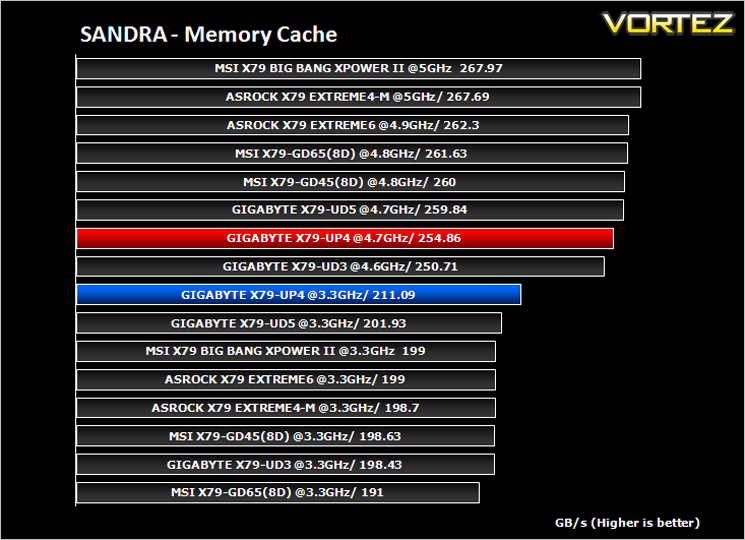
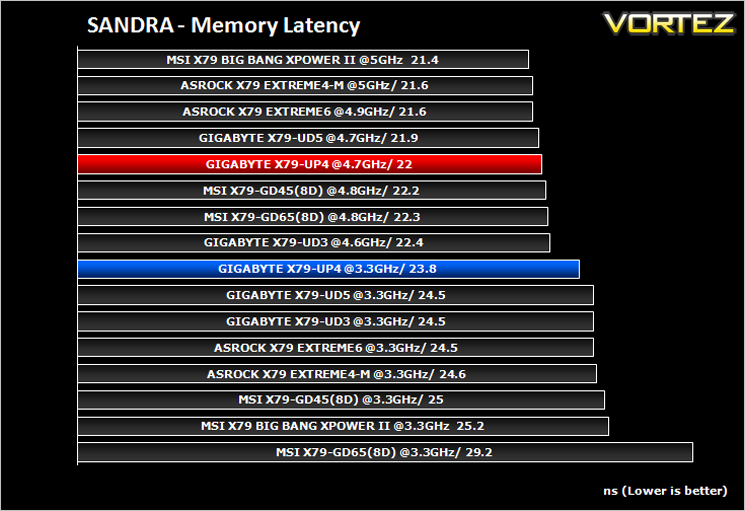
Sisoft Sandra 2012
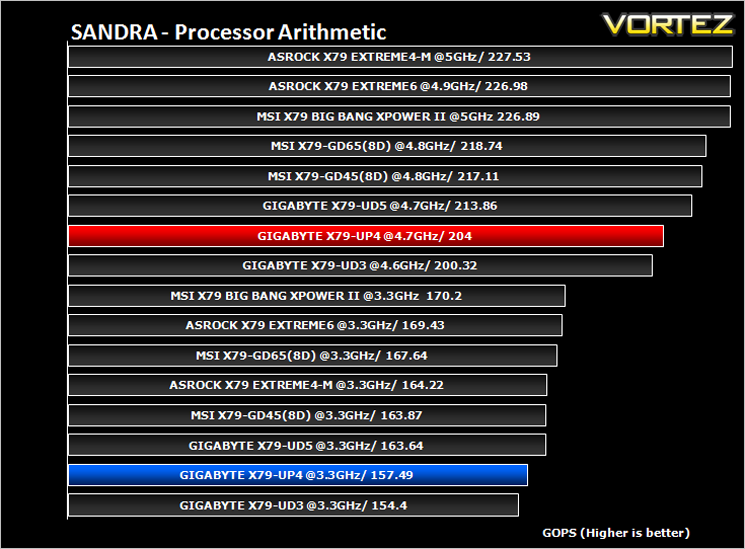
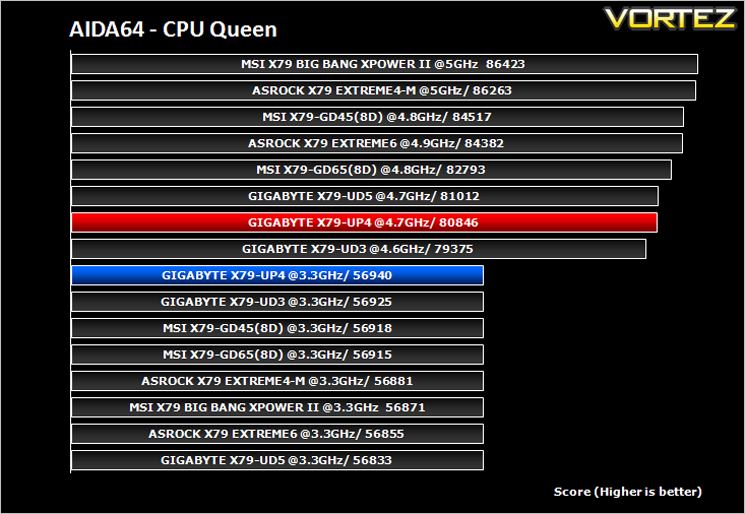
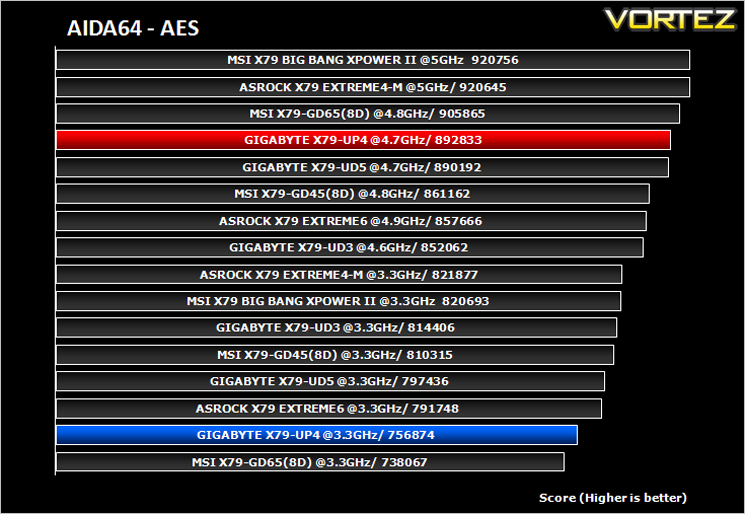
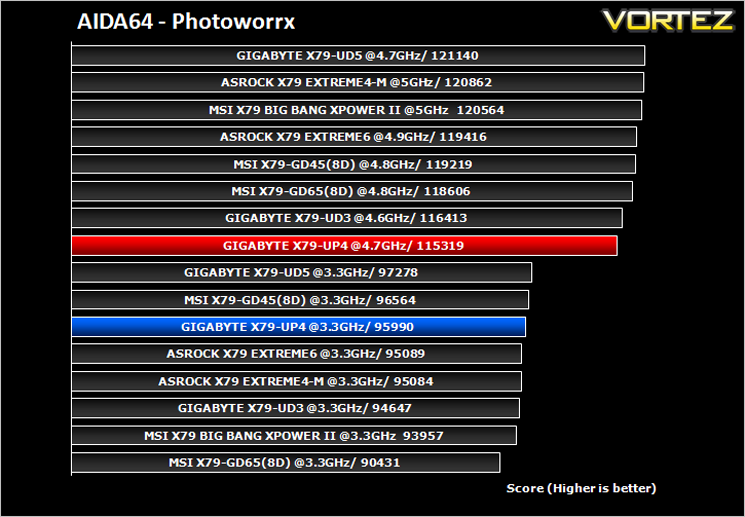
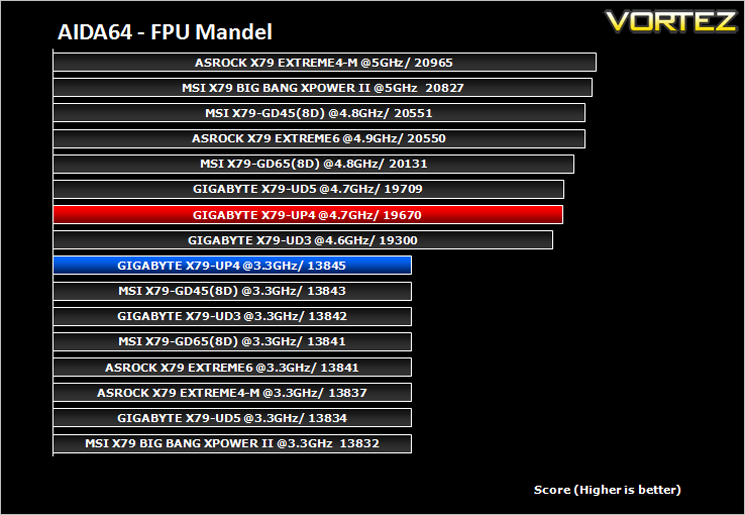
AIDA64
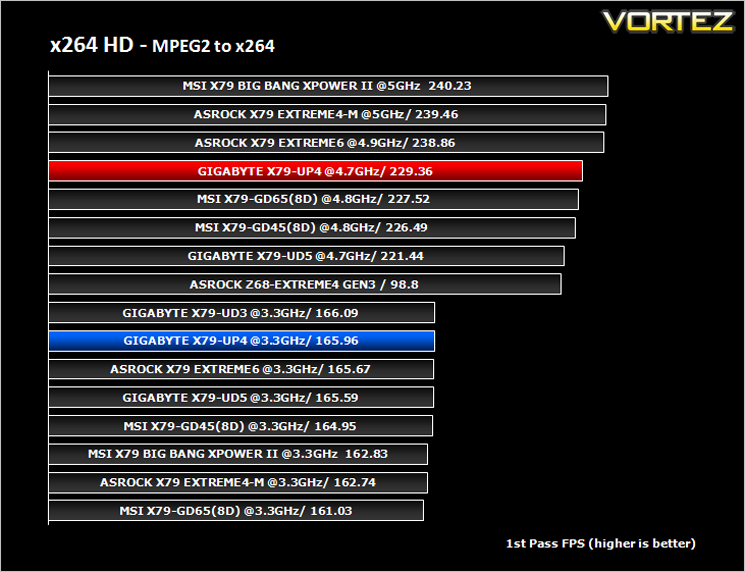
x264 HD V4.0
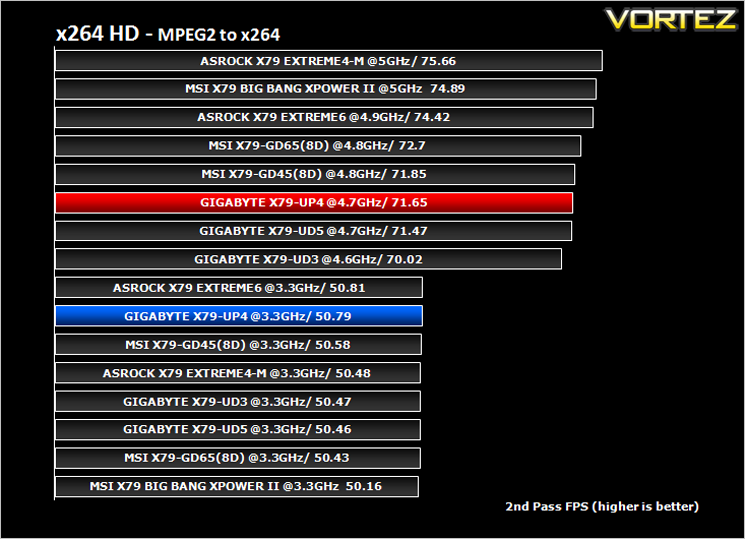
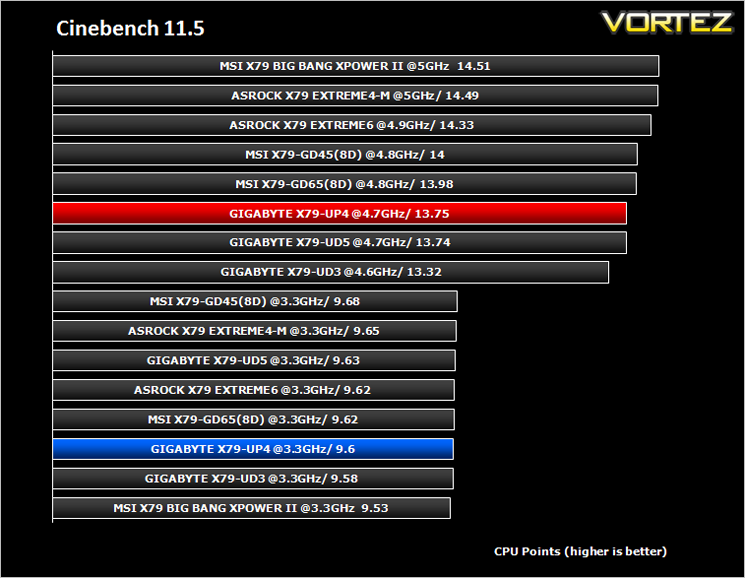
Cinebench 11.5
CINEBENCH can measure systems with up to 64 processor threads. This test scene contains approximately 2,000 objects which in turn contain more than 300,000 polygons in total, and uses sharp and blurred reflections, area lights, shadows, procedural shaders, antialiasing, and much more. The result is displayed in points (pts). The higher the number, the faster your processor.
Futuremark 3DMark 11
Futuremark PCMark 7
Gaming Benchmarks
Crytek took an internet beating from its loyal fans due to the fact that they pandered to the console masses and dumbed down the graphics to DirectX 9. Fortunately, fans of the PC version of Crysis managed to force Cryteks hand and they have since developed a DX11 patch and have also enhanced the textures with added tesselation. It is for this reason that we have decided to include it in our suite of benchmarks.
As players race to elevate their global standing, DiRT 3 is back delivering mud, sweat and gears world over: from the intense weather-beaten rally stages of Europe, Africa and the US, to executing performance driving showcases and career challenges where car control is pushed to spectacular limits.
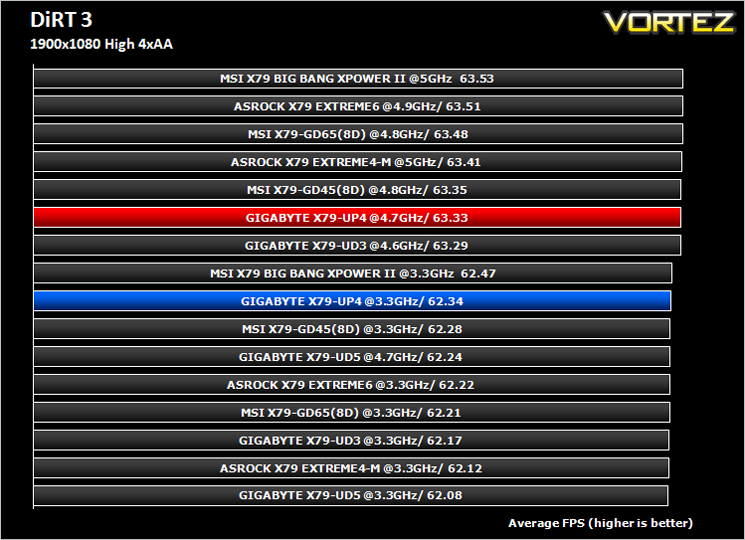
Conclusion
The GIGABYTE X79 UP4 is a very good motherboard. It not only looks the part but performs very well too. In our benchmarks it was near the top of the pile when running at stock speeds and while the overclocking performance wasn’t the best we have seen in an X79 motherboard, 4.7GHz is nothing to be scoffed at on a 6 core CPU. With future BIOS revisions maybe this result could increase.This average performance and the lack of on-board switches makes us believe that despite GIGABYTE’s claims, this is not a motherboard designed for overclocking, at least not at the extreme end. Even those new to the game who just want a few more MHZ out of their CPU will be disappointed to learn there is neither a CMOS clear button in the I/O area or indeed on the main-board itself. GIGABYTE have only provided a jumper with which to clear the CMOS. Couple this with the fact that the batter is hidden below the primary GPU slot and matters do not get any better. An overclockers dream this motherboard is certainly not.
On the flipside, the X79-UP4 has more features than you can shake a stick at and thanks to the revised Ultra Durable 5 VRM, these features will last the test of time and stand up to a serious amount of abuse. 8 DIMMS, Quad SLI/Xfire, Dual BIOS, USB and SATA 3 along with USB power ports capable of charging peripherals are just some of the features normally only found on higher end motherboards.
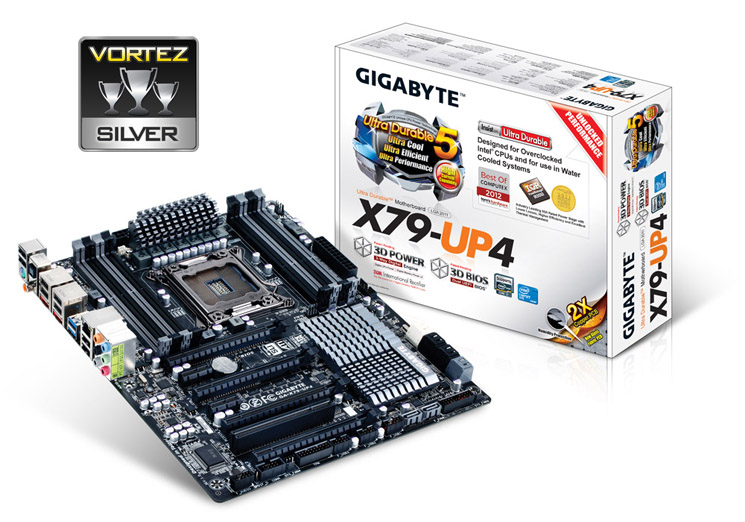
The X79-UP4 is available for just under £200 and at that price, it represents good value for money, especially considering the features it has. The one thing that perhaps lets it down slightly is its mediocre overclocking abilities. If this doesn’t bother you then we would have no reservations in recommending the X79 UP4, especially as a base for a modern gaming or indeed crunching machine because with 4 graphics cards and 8 memory slots available you are going to be future proofed for quite some time.
+ Near perfect Aesthetics
+ Good range of BIOS options
+ 4-way SLI/Crossfire
+ Quad Channel Memory
+ PowIRstate VRM
Cons:
– No On-board Power, Reset or CMOS clear buttons
– No USB Bracket included

Click here for an explanation of our awards at Vortez.net.


