







DDR4 is fast, very fast. G.SKILL have upped the ante with their latest 2800MHz RIPJAWS 4 16GB DDR4 memory kit, here is our review with Intel X99.

Product on Review F4-2800C16Q-16GRK
Manufacturer & Sponsor: G.SKILL
Street Price: £237 GBP / $329 USD
Up there as a firm favourite with system builders and overclockers alike, G.SKILL are a leader in PC memory products. The Ripjaws range are extremely popular with enthusiasts not only because of the excellent performance offered but also because of the stunning looks and lifetime warranty. They are a favourite here at Vortez too because of their fantastic compatibility and ultra reliability.
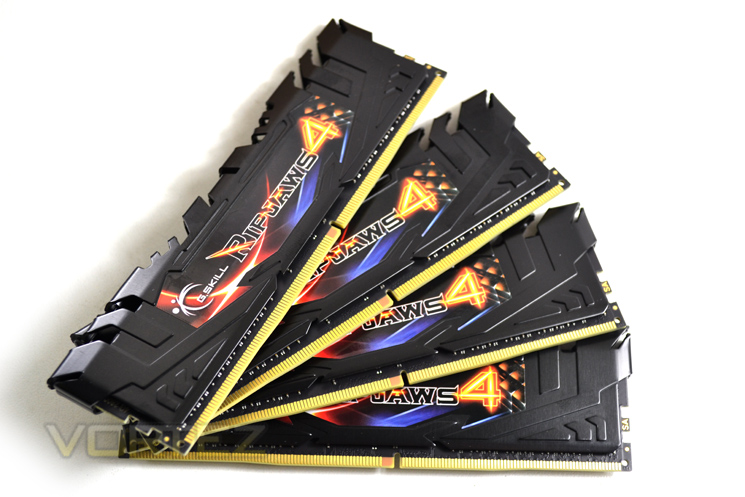
The range starts from 2133MHz up to the recently released 3200MHz kit which is one of the fastest currently available on the X99 platform. We will be testing the 2800MHz kit with a CAS reading of 16 today but G.SKILL also have a lower latency CAS 15 kit in the same speed band should you wish although that kit requires a little extra voltage (1.25v) over the 1.2v this kit is designed to draw. We’ve already seen what performance is offered by the Crucial and Corsair kits so it’s time for the fastest kit we have had on the bench table. Let’s see how it performs…
G.SKILL on their Ripjaws 4 range
Ripjaws 4 series DDR4 memory are validated for compatibility with most X99 motherboards under a series of rigorous tests in quad channel memory operations. It’s guaranteed to provide the best-in-class performance, compatibility, and stability with the widest range of X99 motherboards.
Specification
Series Ripjaws 4
Memory Type DDR4
Capacity 16GB (4GBx4)
Multi-Channel Kit Quad Channel Kit
Tested Speed 2800MHz
Tested Latency 16-16-16-36-2N
Tested Voltage 1.20v
Registered/Unbuffered Unbuffered
Error Checking Non-ECC
SPD Speed 2133MHz
SPD Voltage 1.20v
Fan lncluded No
height 40 mm / 1.58 inch
Warranty Limited Lifetime
Features Intel XMP 2.0 (Extreme Memory Profile) Ready
Memory Type DDR4
Capacity 16GB (4GBx4)
Multi-Channel Kit Quad Channel Kit
Tested Speed 2800MHz
Tested Latency 16-16-16-36-2N
Tested Voltage 1.20v
Registered/Unbuffered Unbuffered
Error Checking Non-ECC
SPD Speed 2133MHz
SPD Voltage 1.20v
Fan lncluded No
height 40 mm / 1.58 inch
Warranty Limited Lifetime
Features Intel XMP 2.0 (Extreme Memory Profile) Ready
First Look
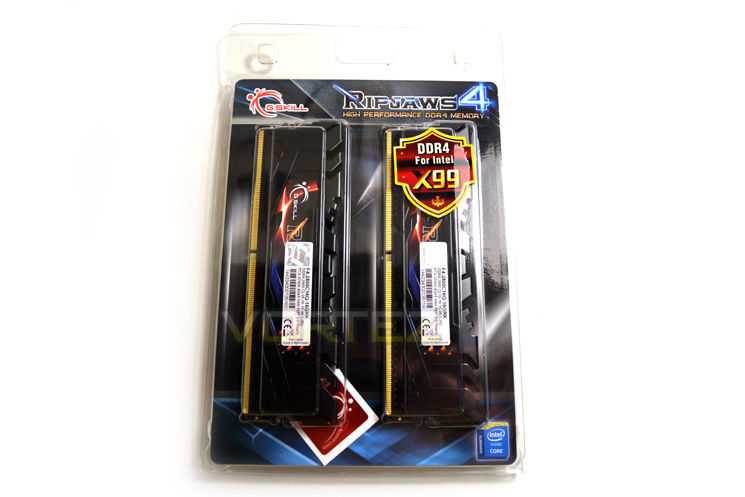
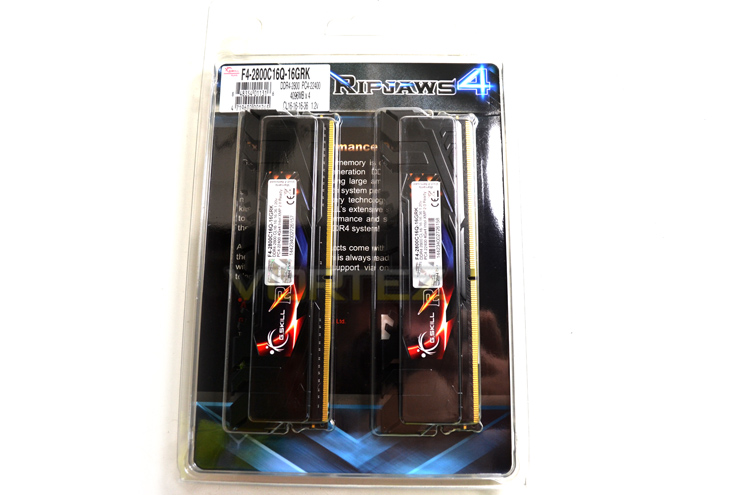
the packaging is pretty much the same as you will find elsewhere in that the modules are encased in a blister style package. GSKILL do go that little bit extra by including a case badge which was nice but overall, it is a basic design that does the job.
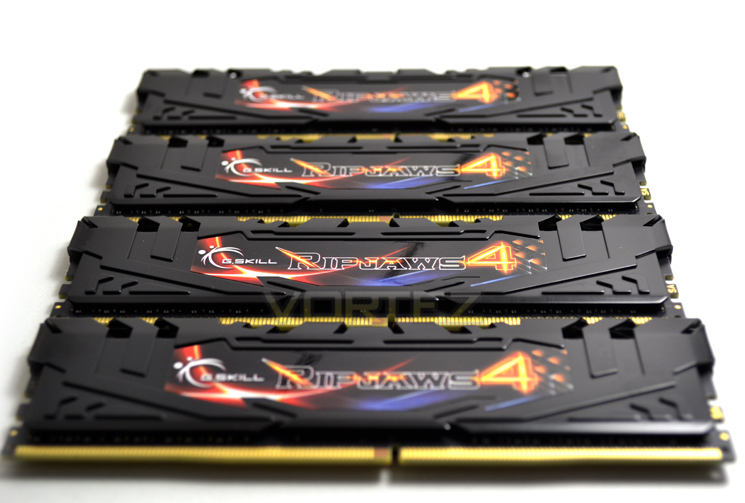
The modules themselves look stunning. The black heatsinks with matching black PCB look very sleek and the contrasting stickers set the tone nicely. The kits come in a variety of colours depending on the speed you choose with options of blue and red coloured heatsinks being available so no matter what the colour scheme of your PC build, the Ripjaws family have a colour to compliment your build.
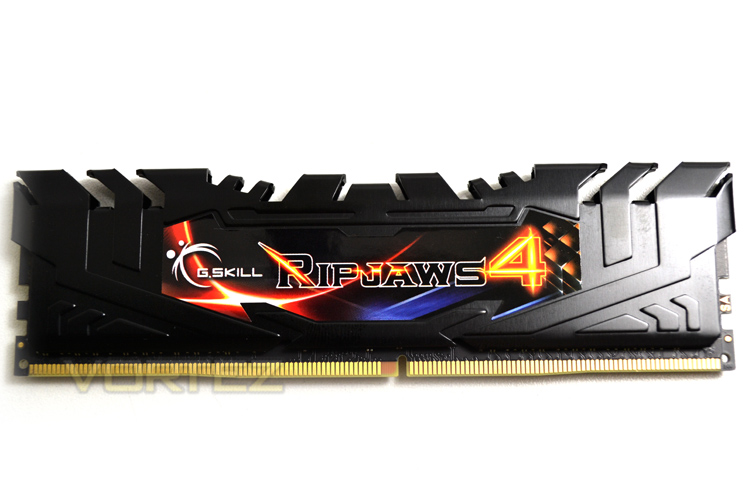
The front of the modules are dominated by the aluminium heatspreader complete with louvres that reminded us of a Transformer emblem. The sticker, while small, looks great and contrasts well with the theme of the sticks.
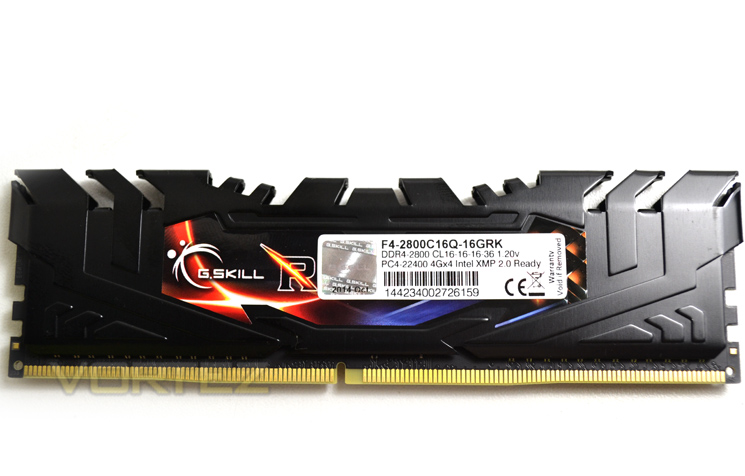
We see a mirror of the front at the rear of the sticks however, this time we find GSKILL have added some specs stickers that tell us everything we need to know including voltage, latencies and the bandwidth these sticks are tested to run at.
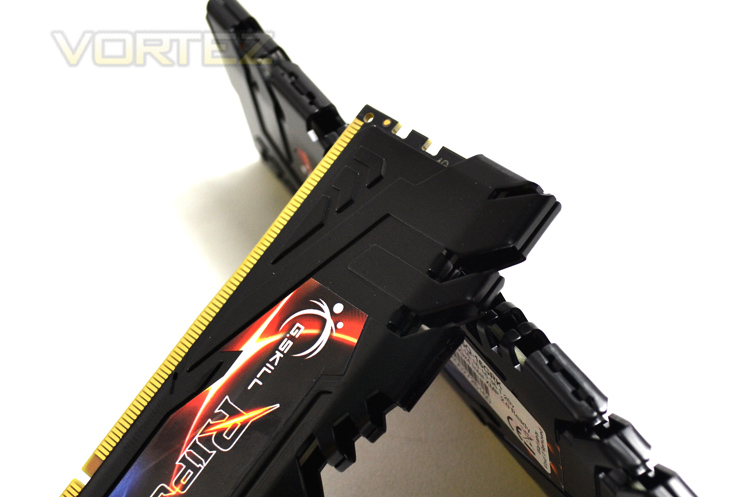
Of concern to most system builders, especially those with oversized heatsinks will be the height of the modules. These modules are the same design as previous and as such measure just 40mm so will not cause any issues with most air cooled CPU heatsinks.
Test Setup & Methodology
GPU: NVIDIA GTX 760
Power Supply: Corsair RM1000
Cooler: Corsair H105
Motherboard: MSI X99S Gaming 9 AC
SSD: Corsair Force LX 512GB
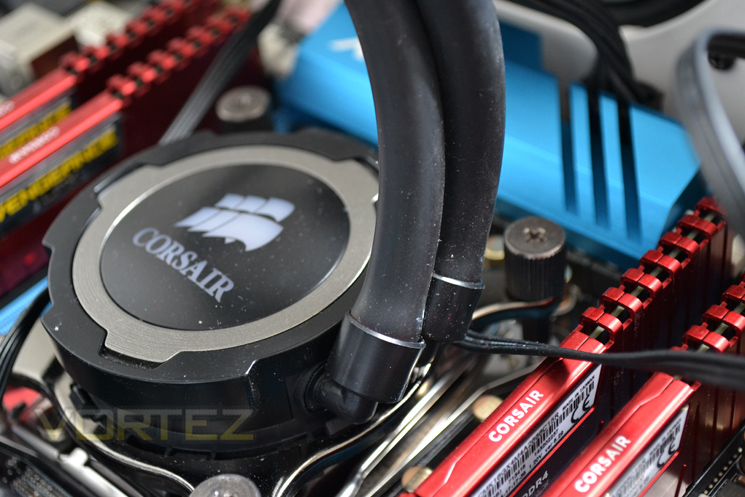
Memory on test
Crucial Ballistix Sport 16GB (4x4GB) 2400MHz 16-16-16-39 2T
Corsair Vengeance LPX 16GB (4x4GB) 2666MHz 16-17-17-35 2T
Crucial Desktop 16GB (4x4GB) 2133MHz 15-15-15-36 2T
GSKILL RipJawZ 16GB (4x4GB) 2800MHz 16-16-16-36 2T
Crucial Ballistix Sport 16GB (4x4GB) 2400MHz 16-16-16-39 2T
Corsair Vengeance LPX 16GB (4x4GB) 2666MHz 16-17-17-35 2T
Crucial Desktop 16GB (4x4GB) 2133MHz 15-15-15-36 2T
Benchmarks
We have taken a long hard look at our memory benchmarks and feel that many of the utilities that are commonly used such as games and ‘overall’ benchmarking systems give an inaccurate representation of the memory on test. For example, a game is just as likely to be influenced by CPU speed as memory speed and if th CPU frequency is required to be adjusted to attain the correct bandwidth then there is little point in using said game as a benchmark as the system with the higher CPU speed will possibly reflect a greater score. IT is akin to testing a set of tyres at 100Mph and then testing another setat 50Mph. You wouldn’t compare the results between them so we don’t think it is correct for us to compare results of benchmarks where there are other influencing factors at play. For this reason we will be sticking to memory specific benchmarks for our comparisons. While these will not show ‘real world’ effects, they will show you which kit is the faster and thus you can draw your own conclusions from those results more accurately than using a game as the basis of comparison! The following tests were used to compare performance of the memory kits on test:
SiSoft Sandra
AIDA64
Passmark 8
We have taken a long hard look at our memory benchmarks and feel that many of the utilities that are commonly used such as games and ‘overall’ benchmarking systems give an inaccurate representation of the memory on test. For example, a game is just as likely to be influenced by CPU speed as memory speed and if th CPU frequency is required to be adjusted to attain the correct bandwidth then there is little point in using said game as a benchmark as the system with the higher CPU speed will possibly reflect a greater score. IT is akin to testing a set of tyres at 100Mph and then testing another setat 50Mph. You wouldn’t compare the results between them so we don’t think it is correct for us to compare results of benchmarks where there are other influencing factors at play. For this reason we will be sticking to memory specific benchmarks for our comparisons. While these will not show ‘real world’ effects, they will show you which kit is the faster and thus you can draw your own conclusions from those results more accurately than using a game as the basis of comparison! The following tests were used to compare performance of the memory kits on test:
SiSoft Sandra
AIDA64
Passmark 8
SPD, XMP & Overclocking
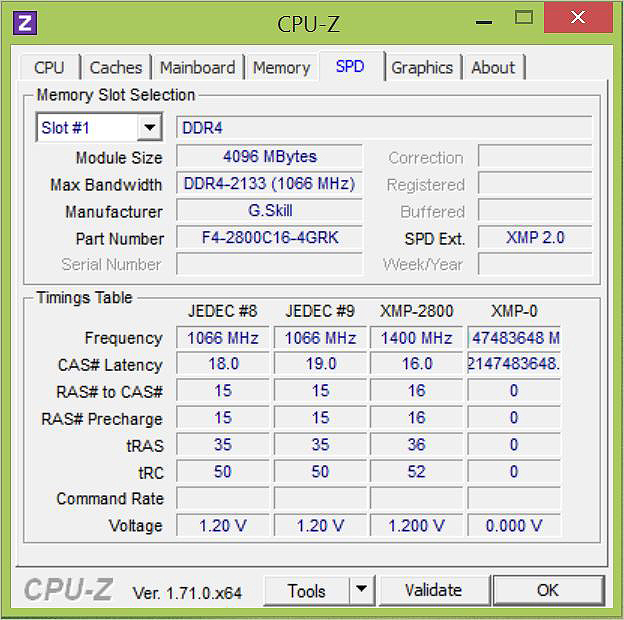
Above you can see the SPD readings from CPU-Z.
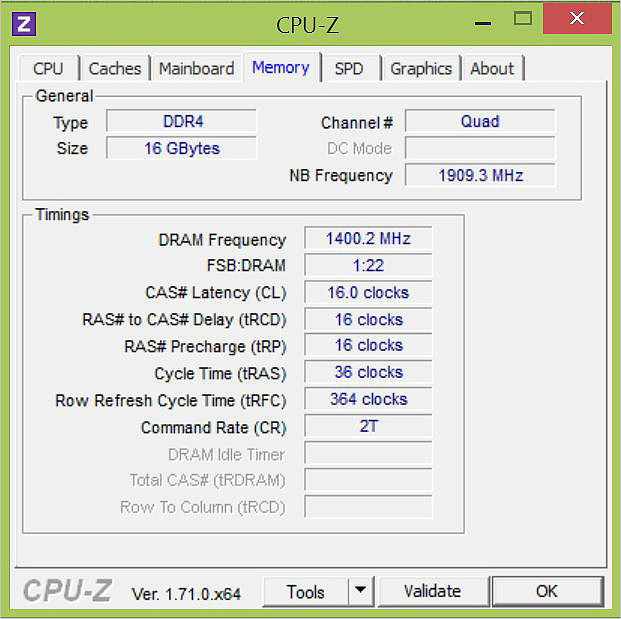
With XMP enabled in the BIOS we tested the sticks at 2800 MHz. It is worth noting that the to reach this speed, the baseclock frequency of the CPU required adjusting to 125MHz which gave us a very mild overclock on the CPU. We do not envisage any Haswell-E CPU struggling with this however it may affect higher end overclocks as rather than ’round’ figures being achieved with simple CPU multiplier adjustments, you will get uneven overclocks due to the baseclock frequency being changed from 100MHz to 125MHz. Not a negative by any means but worthy of note.
The kit was fully stable at 2800MHz CAS16 which we verified with a number of Prime95 runs.
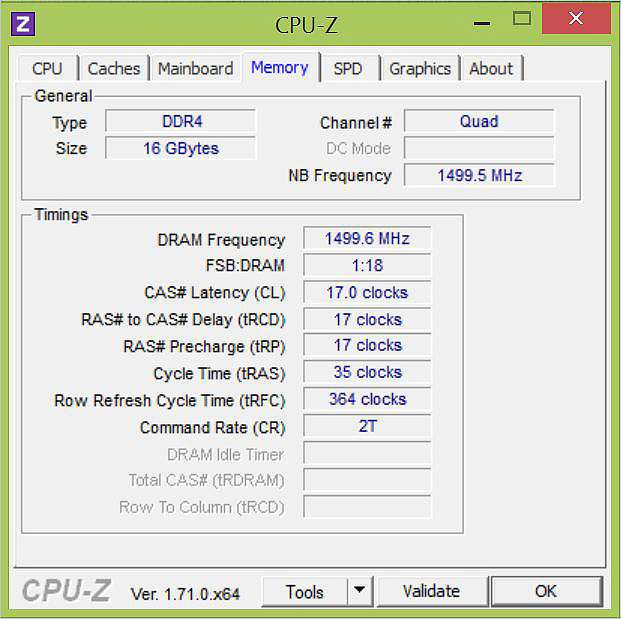
Not content with this speed we pushed the kit a little further however this meant raising the voltage to 1.3v and lowering the latency a little to CAS17. Reaching 3000MHz is no mean feat so we were pleased with the results however we have seen a lessor specced kit hit the same frequency with lower latencies so we were hoping for a little better.
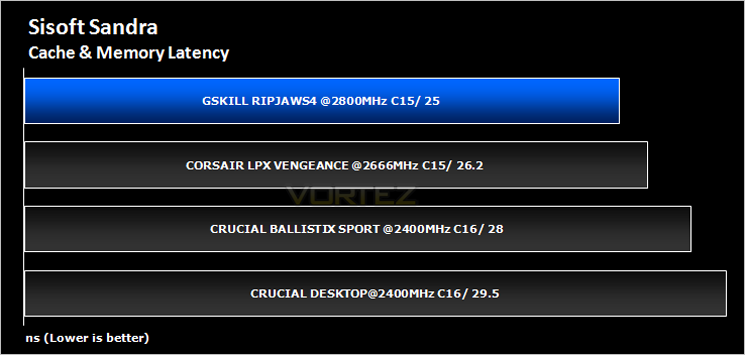
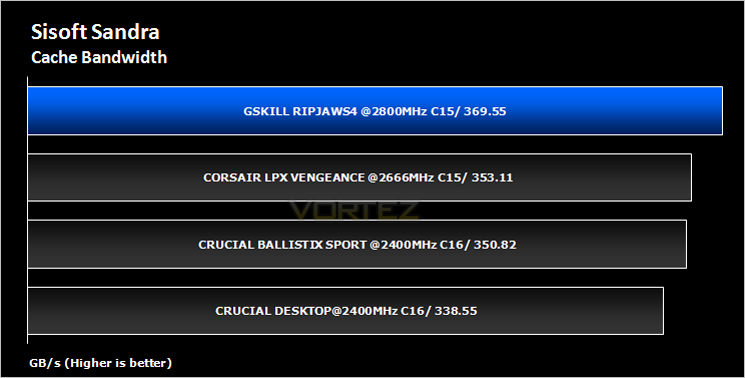
SiSoft Sandra
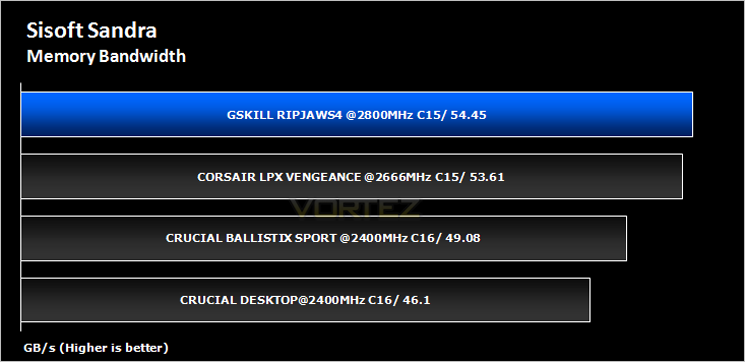
SANDRA isn’t always a benchmark that is included in hardware reviews but I believe it shouldn’t be ignored. SANDRA provides a vigorous package that tests your system in a rather large array of benchmarks. There are many aspects of benchmark that can be executed. We will be considering – CPU and memory tests.
AIDA64
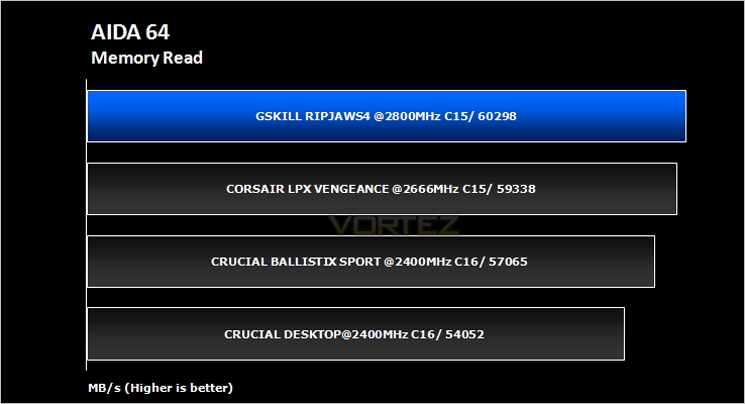
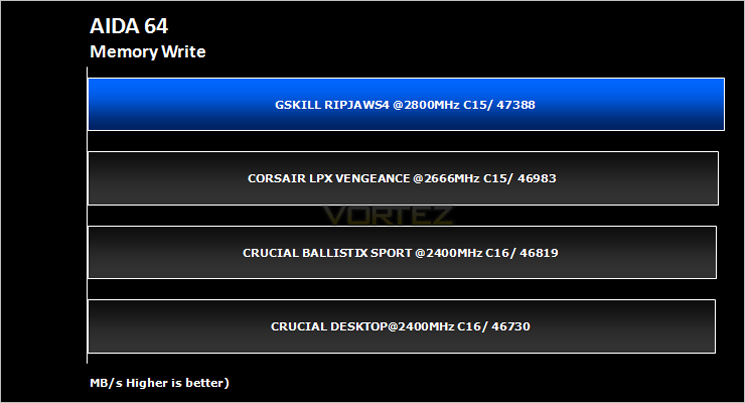
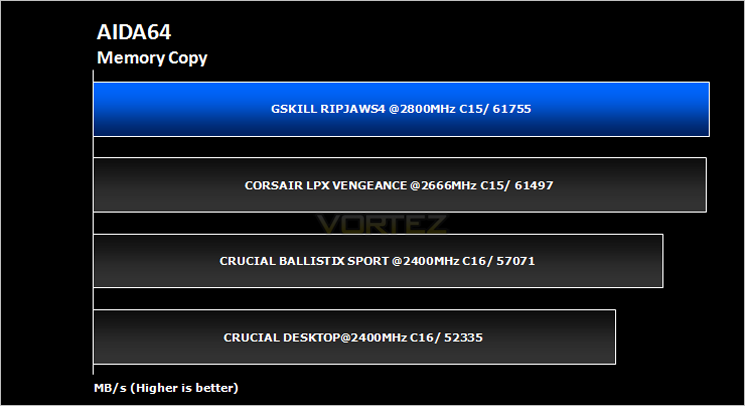
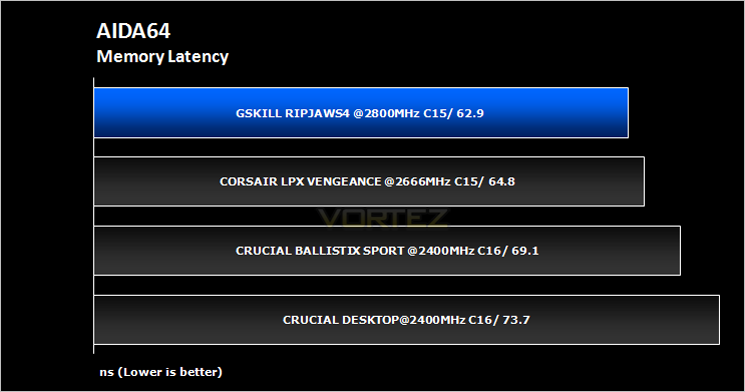
AIDA64 is the successor to Everest ULTIMATE. This application not only details every component within a system but it also incorporates a comprehensive memory benchmarking tool that will ascertain bandwidth and latency figures.
Passmark8
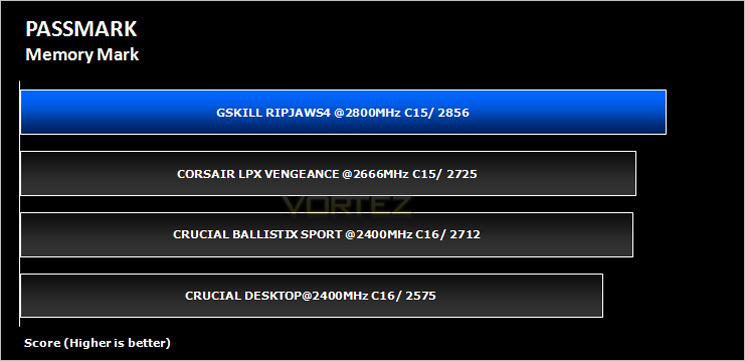
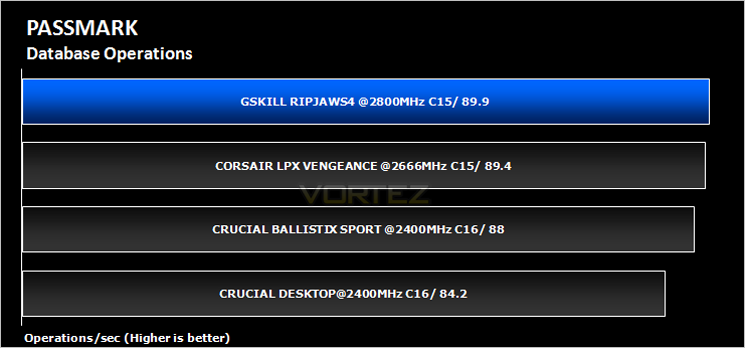
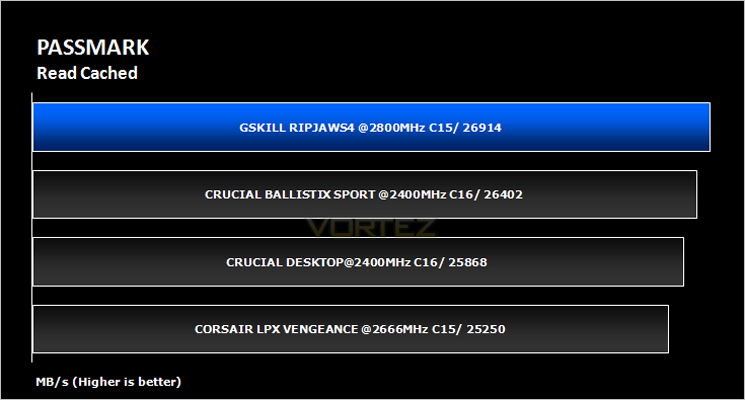
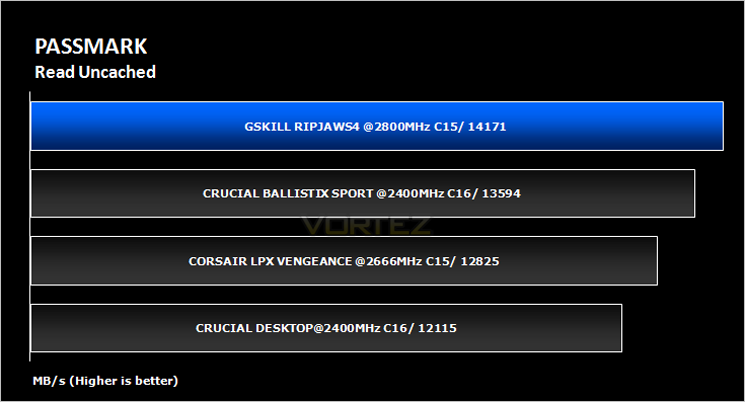
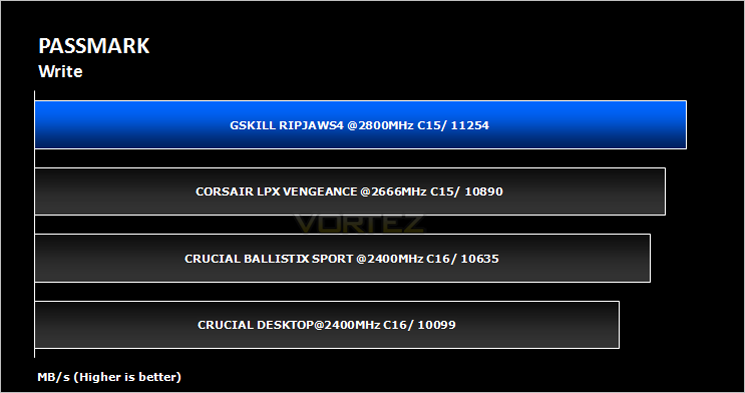
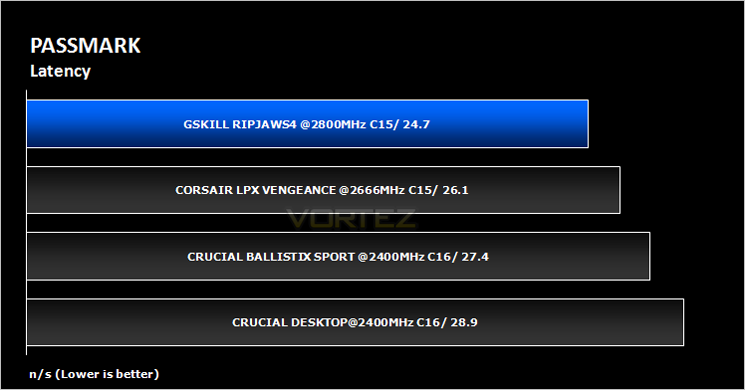
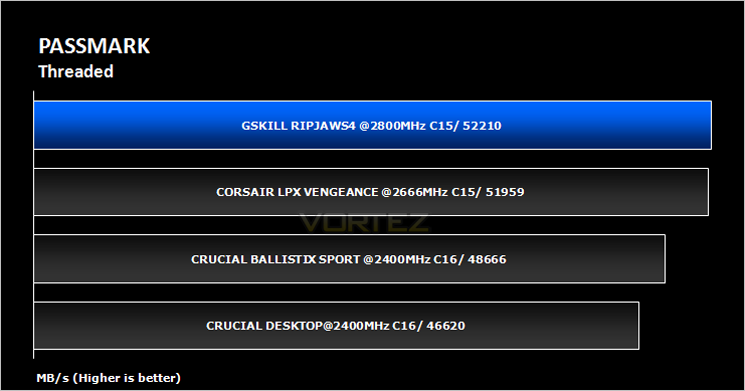
Fast, easy to use, PC speed testing and benchmarking. PassMark PerformanceTest ™ allows you to objectively benchmark a PC using a variety of different speed tests and compare the results to other computers. Memory tests allocating and accessing memory speed and efficiency.
Conclusion
We had the luxury of trying out G.SKILL’s 3000MHz kit when we reviewed the ASUS X99 Deluxe motherboard so we expected great performance from the G.SKILL kit and we were not disappointed. It topped our benchmark charts throughout the testing which reflected the higher speed of the memory kit when compared to the competition on test. Overclocking the kit was a little more tricky due to the kit already running at 2800MHz. We still managed to hit 3000MHz although we were a little let down because to reach this speed we had to slacken the timings ever so slightly, something we didn’t have to do with a ‘lesser’ memory kit costing £40 less than this one.
Aesthetically, the kit looks great. We love the G.SKILL design as it isn’t over-the-top but is still a little showy so will fit the bill regardless of whether looks are a prime factor or an afterthought.
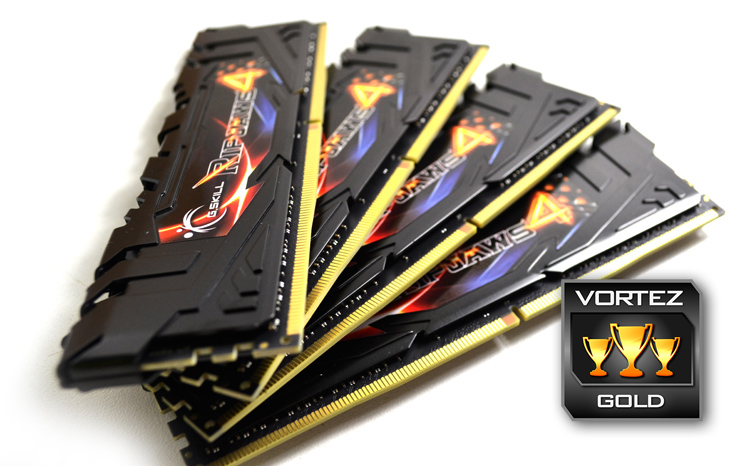
The price of the kit is fair when compared to the competition. Costing around £235 GBP / $329 USD, the G.SKILL Ripjaws offers excellent performance and good looks, offers a little overclocking headroom and will suit both high end overclockers or system builders. For this reason, it just scrapes under the radar into our Gold category of awards. It is a great memory kit but we look forward to sampling the range topping kit in the near future which is sure to lay all other kits to waste. We will keep you posted on that one.
The G.SKILL RIPJAWS 4 16 GB memory kit has both the looks and speed to match any high end X99 system very well
Pros
+ Fantastic performance
+ Gorgeous looks
+ OVerclocking headroom
Cons
– 2800MHz XMP will require CPU baseclock adjustments
+ Fantastic performance
+ Gorgeous looks
+ OVerclocking headroom
Cons
– 2800MHz XMP will require CPU baseclock adjustments

Click here for an explanation of our awards at Vortez.net.


