Intel is looking to restore their performance leadership in the desktop CPU market, have they done enough with the new Rocket Lake-S processors? We examine the Core i5-11600K and Core i9-11900K.

Product on Review: Core i5-11600K & Core i9-11900K
Manufacturer: Intel
Street Price:
Core i9-11900K: $539
Core i5-11600K: $262
For six years – from January 2011 until February 2017 – Intel largely dominated the Desktop PC marketplace. Riding high with smash release after smash release starting with the 32nm Sandy Bridge era, even the debut of Ryzen couldn’t entirely take the wind out of their sails. The architectural heart of the Sandy Bridge era beat strongly as they transitioned to 14nm and Skylake, followed by Kaby Lake, and eventually 10th Generation Core Comet Lake CPUs in April 2020. By this point however the game had changed.
AMD’s Ryzen CPU platform launched in 2017 and quickly garnered a reputation for high performance multi-core processing, pushing core counts up to eight on a single die intended for conventional desktop systems. But Intel maintained a mature 14nm process, increasing clock speeds while maintaining higher Instructions per Clock over the competitors. Coffee Lake introduced higher core counts for mainstream desktop processors – up to 8 Cores and 16 threads to match the Ryzen flagship of the time; Intel’s lead was slipping, but still secure in core markets.
Ryzen 3000-series CPUs debuted the Zen 2 architecture and chiplet design, and once again extended AMD’s core count lead. Intel’s IPC and clock speed advantage remained as they pushed to a 10-core model, but they languished on 14nm even as AMD were working with a mature 7nm process. And then, late last year, the bomb was dropped – Zen 3, and the Ryzen 5000-series.
Suddenly the IPC advantage, once seemingly insurmountable, had closed to appear almost negligible. The TDP advantage had long since passed, on paper at least. Only a 5GHz+ single-core Max Turbo frequency advantage remained, and even that was debated as applications began to leverage multiple cores.

Embattled. Doubted. Ridiculed by some. Today may be the day that Intel begin their fightback in earnest as they launch the 11th Generation Core family of desktop CPUs. Codenamed Rocket Lake-S, a future-looking processor that incorporates technologies developed for cutting-edge 10nm ‘Ice Lake’ mobile processors. A top to bottom processor stack update for the Desktop PC platform claims PCIe 4.0, higher IPC, higher and improved Turbo Frequency characteristics and a more powerful GPU, all while maintaining both the 14nm manufacturing process and LGA1200 socket.
The chips have been afforded a staggered unveiling, first at CES 2021 where the flagship Core i9-11900K was presented to the world and then an event two weeks ago that introduced the rest of the range. Today we’re reviewing that same flagship 11th Gen Core i9-11900K and the mid-range i5-11600K, both of which are unlocked and both of which are looking to take the fight to AMD Ryzen on grounds of performance, features and price.
Intel’s Core i9-11900K is an 8-core/16-thread CPU that comes in at a list price of US$539, very close to the 12-core/24-thread Ryzen 9 5900X. Lack of worldwide stock however will see it face off against the 8-core/16-thread Ryzen 7 5800X in a battle for enthusiast gaming supremacy.
Meanwhile, the Core i5-11600K is a 6-core/12-thread chip with a list price of $262, making it appear remarkably well positioned against the 6-core/12-thread $299 Ryzen 5 5600X. In this dramatic reversal of fortunes Intel, as the apparent underdog, is appears to have compelling budget alternatives to the segment leader AMD. But will performance validate their assumptions?
Joining the 11th Generation launch is the release of motherboards based on the Z590 chipset. Previous Z490 motherboards may be forwards-compatible with the new processor designs for slot-in upgrades (if desired) and PCIe 4.0 support, but new builds will surely want the fully validated and more advanced chipset.
So, stop-gap substitute to keep the wolf from the door, or new predator keep to gobble-up market share prior to a radical 12th Gen. platform shake-up? It’s time to find out.
Technical Specifications
Model No.: Intel Core i9-11900K
Intel Thermal Velocity Boost Freq (Single Core): up to 5.3GHz
Intel Thermal Velocity Boost Freq (All Core): up to 4.8GHz
Base Clock Speed: 3.5 GHz
Cores/Threads: 8/16
Intel Smart Cache: 16MB
TDP: 125W
Unlocked: Yes
PCIe Platform Lanes: up to 44 (20)
Memory Support: DDR4-2933 / DDR4-3200 (Gear 1)
Graphics: Intel UHD Graphics 750
Intel Thermal Velocity Boost Freq (Single Core): up to 5.3GHz
Intel Thermal Velocity Boost Freq (All Core): up to 4.8GHz
Base Clock Speed: 3.5 GHz
Cores/Threads: 8/16
Intel Smart Cache: 16MB
TDP: 125W
Unlocked: Yes
PCIe Platform Lanes: up to 44 (20)
Memory Support: DDR4-2933 / DDR4-3200 (Gear 1)
Graphics: Intel UHD Graphics 750
Model No.: Intel Core i5-11600K
Intel Thermal Velocity Boost Freq (Single Core): NA
Intel Thermal Velocity Boost Freq (All Core): NA
Intel Turbo Boost 2.0: up to 4.9 GHz
Base Clock Speed: 3.9 GHz
Cores/Threads: 6/12
Intel Smart Cache: 12MB
TDP: 125W
Unlocked: Yes
PCIe Platform Lanes: up to 44 (20)
Memory Support: DDR4-2933 / DDR4-3200 (Gear 1)
Graphics: Intel UHD Graphics 750
Intel Thermal Velocity Boost Freq (Single Core): NA
Intel Thermal Velocity Boost Freq (All Core): NA
Intel Turbo Boost 2.0: up to 4.9 GHz
Base Clock Speed: 3.9 GHz
Cores/Threads: 6/12
Intel Smart Cache: 12MB
TDP: 125W
Unlocked: Yes
PCIe Platform Lanes: up to 44 (20)
Memory Support: DDR4-2933 / DDR4-3200 (Gear 1)
Graphics: Intel UHD Graphics 750
With the launch of 11th Gen. Core processors Intel have taken the unprecedented step of reducing rather than maintaining parity with or increasing the core count of the flagship SKU. The i9-11900K has two fewer cores than the ‘Comet Lake’ i9-10900K, which is partially mitigated by a clock speed bump of 100MHz on Turbo states across the board. The base clock also drops, in this instance to 3.5 from 3.7 GHz, although new opportunistic overclocking algorithms may make the Base Clock figure irrelevant in the long run.
Smart Cache levels are unchanged at 16MB, and as a K series SKU the multiplier is unlocked ready for overclocking. Default memory support for the 11900K has been increased to DDR4-3200 when in a synchronised (1:1 AKA Gear 1) mode; the rest of the range supports memory at DDR4-2933 synchronised by default. Note that these are Intel’s guidelines, but motherboard and memory manufacturers may choose to step outside them if it’s to their competitive advantage without sacrificing stability.
Surprisingly Intel are also introducing a second 8-core/16-thread SKU further down the product stack. The i7-11700K doesn’t incorporate their new Thermal Velocity Boost technology for higher and more consistent all-core Turbo speeds, nor default synchronised DDR4-3200 memory speeds, but it does come in $140 cheaper at $399. Budget streamers and content creators may already be leaning towards this CPU as an alternative to the Ryzen 7 5800X, and we wouldn’t be surprised to see it cannibalise sales of the 11900K.
The i5-11600K sits in the current gaming sweet-spot of a 6 core and 12 thread configuration, benefiting from relatively high base clocks (3.9GHz) alongside a creditable Turbo Boost clock (for Intel) of 4.9GHz. Like the i7-11700K, the i5 only supports up to DDR4-2933 memory speeds out of the box within Intel’s reference specification, but motherboard manufacturers may exceed these limits at their discretion. The i5-11600K and i5-11600KF are currently the cheapest unlocked 11th Gen processors at $262 and 237 respectively.

Intel marketing lists the Rocket Lake-S platform as providing up to 44 PCIe lanes, but this is a conflation of CPU and Chipset lanes. Just like the 10th Gen the platform will supply 20 full-speed lanes to the GPU and an attached peripheral (in a combination of 16x, 8x and 4x lane configurations) off the CPU with further expansion offered by the chipset. The difference here however is that the 20 lanes off the CPU will operate at PCIe 4.0 speeds, matching AMD Ryzen 3000 and 5000-series processors.
The Rocket Lake-S product stack extends from Core i9 down the Core i5 tiers with a minimum of 6 cores and 12 threads. SKUs with the ‘F’ have the on-board graphics fused off, while the ‘T’ suffix indicates a low power (35W TDP) desktop SKU. Their Core i3 tier inherits silicon from the Comet Lake-S product line.
On paper the evolution from Comet Lake-S and Rocket Lake-S appears to be relatively minor. A few frequency bins and a brand new Turbo mode is part of the status quo for general changes over the lifetime of the Intel Core series of processors, opportunities for marketing rather than major performance improvements. The body language out of Intel however is one of a far more significant boost, attributable to more comprehensive changes under the hood not captured in the raw specifications.
Gear 1 and Gear 2 Memory Stepping
Prior generations of the Core architecture utilised a matched frequency approach for the memory controller and DRAM with a 1:1 ratio, requiring a robust memory controller to push the memory to extreme speed outside of conventional operation. The 11th Generation are changing things up through the use of Gears.
In Gear 1 mode the platform maintains this longstanding 1:1 ratio. In Gear 1 mode a speed of up to DDR4-3200 is supported by default on the i9-11900K(F) SKUs, and a DRAM speed of up to DDR4-2933 on other SKUs down the product stack.
Under Gear 2 the platform shifts the ratio to 2:1. The memory controller can operate at a more relaxed speed, while the memory itself can be pushed to a far more aggressive level without corresponding strain on the controller.
The change may help enthusiast overclockers push memory speeds well past conventional performance levels found in retail DRAM DIMMS, which currently top out at DDR4-4600. Intel have also exposed a few new tools to overclockers that allow finer stability control when overclocking, some of which interact with these Gear ratios.
Features
CYPRESS COVE CORE ARCHITECTURE
The architecture underpinning 11th Generation Core CPUs is known as Cypress Cove. It’s a back-port of the 10nm Sunny Cove architecture developed for Ice Lake, adapted for 14nm rather than necessarily developed for it.This revised architecture boasts double-digit percentage performance improvements over the previous generation through a broad increase in Instructions per Clock, with figures between 10 and 20% often quoted.
INTEL XE GRAPHICS ARCHITECTURE
Rocket Lake-S is the debut of Intel’s new Xe graphics architecture on Desktop platform. Scalable, such that similar principles can be utilised in on-board implementations or discrete graphics, it’s an evolutionary leap over 10th Gen. graphics. Intel UHD Graphics 750 are configured with 32 Execution Units (256 Shaders) operating from 1.2-1.3 GHz; Intel Iris variants may be equipped with more execution units.The implementation of Intel Xe graphics contributes significantly to performance improvements in workloads that can better leverage the parallel processing capabilities of a GPU architecture. Video Encoding, Machine Learning and photo creation are all use cases that contribute towards an up to 50% improvement in graphics performance compared to the 10th Gen.

PCI EXPRESS 4.0
Intel finally supports PCIe 4.0, allowing the attachment of compatible GPUs and NVMe SSDs at near twice the bandwidth of PCIe 3.0. Rocket Lake on the desktop also supports the Resizeable Bar optional feature of PCI Express, allowing the CPU to address the entirety of discrete GPU memory through the PCI Express bus rather than smaller sections of limited size. Resizeable Bar support is already available on NVIDIA’s GeForce RTX 3060 GPUs, and should be rolled out to other members of the RTX 30-series in the near future with a vBIOS update.INTEL THERMAL VELOCITY BOOST
Over previous generations Intel created a series of automatic mechanisms which temporarily boosted the operating frequency of one or more cores beyond its base clock. The 11th generation institutes a new dynamic overclocking mode, discretely defined rather than wrapped up in a wider package of tools.Intel Turbo Boost v2.0 (v1.0 was withdrawn with the Sandy Bridge architecture in 2011) holds the CPU at its base clock when processing lighter workloads, then shifts to a higher clock speed when a more heavy workload is encountered. It now operates across all cores, and the duration of the boost is largely workload and time dependent, and this form of Turbo Boost is successfully used to reduce long-term power consumption.
Intel Turbo Boost Max Technology 3.0 dynamically allocates workloads to the cores it’s most suited to, and further pushes the operating frequency of those selected cores if there is headroom to do so. The limits are more flexible and dependent on workload and thermal headroom.
Currently exclusive to Intel’s Core i9-11900K(F) series processors, Thermal Velocity Boost is a new adaptive opportunistic overclocking scheme which dynamically manages operating frequencies based on power budget and temperature below a pre-defined maximum. It operates across all cores, and the level of boost will be determined by the workload, time spent on the workload, silicon capability and cooling solution.
WIDENING OVERCLOCKING SUPPORT
Intel continues to feed small overclocking tweaks into products that attract enthusiasts, where possible aiding them in their quest to squeeze every crumb of performance from the platform. The 11th Gen is no different.Part of this is the Gearing system of memory ratios, but that’s also augmented by support for wider timings to improve overall stability during tests on the limits. Joining them is a real-time memory frequency modifier, which allows overclockers to boot with on memory configuration, switch it for an overclocking pass, and then step back down once testing has concluded. A Gear change typically will require a system reset, whereas Intel are providing tools to nonetheless manipulate memory frequencies with greater flexibility.
Joining that call for greater flexibility the unlocking of memory overclocking on H570 and B560 Chipsets. It’s not quite the full-fledged overclocking we enjoy on AMD’s mainstream B-Series platform – Intel’s dual-clock K-SKU CPU plus Z-SKU motherboard restriction effectively remains in place – but it should allow a little more headroom to eek out performance from mainstream systems.
Per-core Hyperthreading control when overclocking is also a feature, allowing overclockers to disable Hyperthreading on a per-core basis rather than across the whole platform.
Finally, Intel have also enabled the option to modify AVX2 and AVX-512 frequency offsets and the Voltage Guard-Band Override. AVX workloads in particular can be a significant contributor to the overall CPU workload; by reducing the frequency at which AVX instructions are processed it can allow more thermal headroom for the CPU as a whole. Alternatively, there is also a option to enabled or disable AVX alternate instructions entirely, reverting to standard x86 codepaths.
INTEGRATED USB GEN2X2 SUPPORT (20G)
The complex ecosystem of USB standards isn’t getting any simpler, but Intel are doing their best by integrating a USB controller that supports the latest USB Gen2x2 standard. Prior to this platform update support was patchy and frequently required an add-in card or relied on dubious motherboard implementations; Intel grabbing the bull by the horns should hopefully widen the number of peripherals that support this SuperSpeed standard.Test Setup & Testing
For the purpose of testing both Rocket Lake-S Processors we used the ASRock Z590 Taichi since it is placed as a high-end motherboard, this should give us the capabilities of showing the true potential for both models.
CPUs being tested
Intel Core i5-11600KIntel Core i9-11900K
TEST SETUP
Cooling Corsair Hydro Series H110iMotherboard ASRock Z590 Taichi
Memory 32GB Corsair Vengeance LPX 3000MHz
Graphics Radeon RX 480 8GB
Storage OCZ Vector 256GB SSD + Kingston KC2500 M.2
PSU Corsair RM 1000 80 Plus Gold Certified PSU
Monitor AOC U2879VF
BENCHMARKS
Cinebench R15/R20 – CPU/OpenGL Scorex264 HD 4.0 – 1st and 2nd pass encoding
SiSoftware SANDRA – CPU & Memory benchmarks
POV-RAY – CPU benchmarks
TrueCrypt – CPU benchmarks
AIDA64 – CPU benchmarks & Memory
PCMark 8 – Home Suite & Photoshop
3DMark FireStrike – 3D Benchmark
Games – Rise of the Tomb Raider & Total War: WARHAMMER
OTHER SOFTWARE
Temperature Analysis: CoreTempStress Testing Software: AIDA64 Stability Test
CPU Specification Monitoring: CPU-Z
Temperatures & Overclocking
Below are the temperatures for each of the CPUs – without any overclock applied. We’ve also compared to previously released AMD and Intel counterparts (which we’ve also benchmarked against on the subsequent pages too):
Best Overclock
OVERCLOCKING
We will be updating this section of the review soon – more time with this platform was needed to provide adequate results.Power Consumption
It’s interesting to note the power consumption across all processors. Although they are using a combination of different motherboard chipsets, energy results can fluctuate between manufacturers due to the features and specifications that are integrated. First of all, for the idle tests the system is cold booted into Windows and no additional applications are executed – the watts are noted on the external energy monitor we use and then the system is loaded with 3DMark FireStrike – watts are again monitored for the duration of the test and the highest rated wattage result is then noted down. Below are the results of this energy test.
Ray Tracing Performance – POV-Ray 3.7
Persistence of Vision Raytracer’s PovRay is a free and open source 3D animator application with versions for computers with different operating systems.
This product allows users to build their custom 3D worlds with excellent quality despite their computer’s hardware. It has adjustable options for levels of radiance, refraction, and reflection. Calculation time may vary depending on the computer model, but PovRay can adapt to many computer builds, and is supported by the open source community.
This product allows users to build their custom 3D worlds with excellent quality despite their computer’s hardware. It has adjustable options for levels of radiance, refraction, and reflection. Calculation time may vary depending on the computer model, but PovRay can adapt to many computer builds, and is supported by the open source community.
AES Encryption Performance – TrueCrypt 7.1a
TrueCrypt is a discontinued source-available freeware utility used for on-the-fly encryption (OTFE). It can create a virtual encrypted disk within a file or encrypt a partition or (under Microsoft Windows except Windows 8 with GPT) the entire storage device (pre-boot authentication).
Encoding Performance – X264 HD
Simply put, this test measures how fast your machine can encode a short, DVD quality MPEG-2 video clip into a high-quality x264 video clip. What’s x264, you ask? It’s more or less the next-generation Xvid/DivX codec. I think it’s ideal for a benchmark because the application (x264.exe) reports fairly accurate compression results (in frames per second) for each pass of the video encoding process, and it uses multi-core processors very efficiently.
x264 HD gives results for 2 passes when compressing an MPEG-2 clip into x264. It presents 4 separate results for each pass giving a total of 8 – all results are given in FPS. For each pass I have averaged out the results.
Processing Features Performance – AIDA64
AIDA64 Product Page
This simple integer benchmark focuses on the branch prediction capabilities and the misprediction penalties of the CPU. It finds the solutions for the classic “Queens problem” on a 10 by 10 sized chessboard. At the same clock speed theoretically the processor with the shorter pipeline and smaller misprediction penalties will attain higher benchmark scores. For example — with HyperThreading disabled — the Intel Northwood core processors get higher scores than the Intel Prescott core based ones due to the 20-step vs 31-step long pipeline. CPU Queen test uses integer MMX, SSE2 and SSSE3 optimizations.
Memory Transfer Performance – AIDA64
AIDA64 Product PageThis simple integer benchmark focuses on the branch prediction capabilities and the misprediction penalties of the CPU. It finds the solutions for the classic “Queens problem” on a 10 by 10 sized chessboard. At the same clock speed theoretically the processor with the shorter pipeline and smaller misprediction penalties will attain higher benchmark scores. For example — with HyperThreading disabled — the Intel Northwood core processors get higher scores than the Intel Prescott core based ones due to the 20-step vs 31-step long pipeline. CPU Queen test uses integer MMX, SSE2 and SSSE3 optimizations.
Processing Power Performance – Cinebench R15
CINEBENCH can measure systems with up to 64 processor threads. This test scene contains approximately 2,000 objects which in turn contain more than 300,000 polygons in total, and uses sharp and blurred reflections, area lights, shadows, procedural shaders, antialiasing, and much more. The result is displayed in points (pts). The higher the number, the faster your processor.
Bandwidth Performance – SiSoftware SANDRA
3DMark 11 Product PageSANDRA isn’t always a benchmark that is included in hardware reviews but I believe it shouldn’t be ignored. SANDRA provides a vigorous package that tests your system in a rather large array of benchmarks. There are many aspects of benchmark that can be executed. We will be considering – CPU and memory tests.

Image Editing Performance – PCMark 8 Photoshop
PCMark 8 Product Page Developed in partnership with Benchmark Development Program members Acer, AMD, Condusiv Technologies, Dell, HGST, HP, Intel, Microsoft, NVIDIA, Samsung, SanDisk, Seagate and Western Digital, PCMark 8 is the latest version in FutureMark’s popular series of PC benchmarking tools. Improving on previous releases, PCMark 8 includes new tests using popular applications from Adobe and Microsoft.

Overall System Performance – PCMark 10
PCMark 10 Product Page Developed in partnership with Benchmark Development Program members Acer, AMD, Condusiv Technologies, Dell, HGST, HP, Intel, Microsoft, NVIDIA, Samsung, SanDisk, Seagate and Western Digital, PCMark 10 is the latest version in FutureMark’s popular series of PC benchmarking tools. Improving on previous releases, PCMark 10 includes new tests using popular applications from Adobe and Microsoft.
VR Performance – VRMark
VRMark Product PageVRMark includes two VR benchmark tests that run on your monitor, no headset required, or on a connected HMD. At the end of each test, you’ll see whether your PC is VR ready, and if not, how far it falls short.
3D Performance – 3DMARK FireStrike & TimeSpy
3DMark FireStrike Product PageFire Strike is our new showcase DirectX 11 benchmark designed for high-performance gaming PCs. It is our most ambitious and technical benchmark ever, featuring real-time graphics rendered with detail and complexity far beyond what is found in other benchmarks and games today. Fire Strike will only be available in the Windows editions of 3DMark initially.
Gaming Performance – Tomb Raider & Total War: WARHAMMER
It’s important for us to perform a number of game benchmarks as well as the synthetic tests because gamers will want to know if there are any significant benefits. So here we have two recent gaming titles benchmarked with a Radeon RX 480 installed.
Conclusion
It hasn’t even been 12 months since the release of Intel’s 10th Gen processors and we’re already being introduced to their successor – perhaps indicating that the battle for desktop domination is still well and truly on. The unveiling of the Intel Z490 chipset, which lacked PCIe 4.0 support from a capable CPU signified that a compatible processor, which incorporated such technology (and more) was on the horizon.Casting an eye over the benchmark results on the previous pages highlights how tough the battle is – Intel maintains a decent lead in some of the tests, while in others Rocket Lake-S is still playing catchup with Zen 3. Having fewer cores/threads than last seasons Core i9-10900K, the Core i9-11900K can still outperform in tasks such as intensive encoding, ray tracing and media editing. The 11900K has an IPC uplift, which comes from the new ‘Cypress Cove’ architecture – justifying a drop in core/thread count on the i9 chip.
One of the more alarming discoveries in our testing results is the power/thermal reports which clearly highlights that Intel has hit the thermal limit. Power consumption for both the Core i5-11600K and Core i9-11900K step into HEDT territory – this is something which will need to be taken into account, especially if this platform is being combined with the current RTX/RX generation of graphics cards (which are known for being power hungry also).
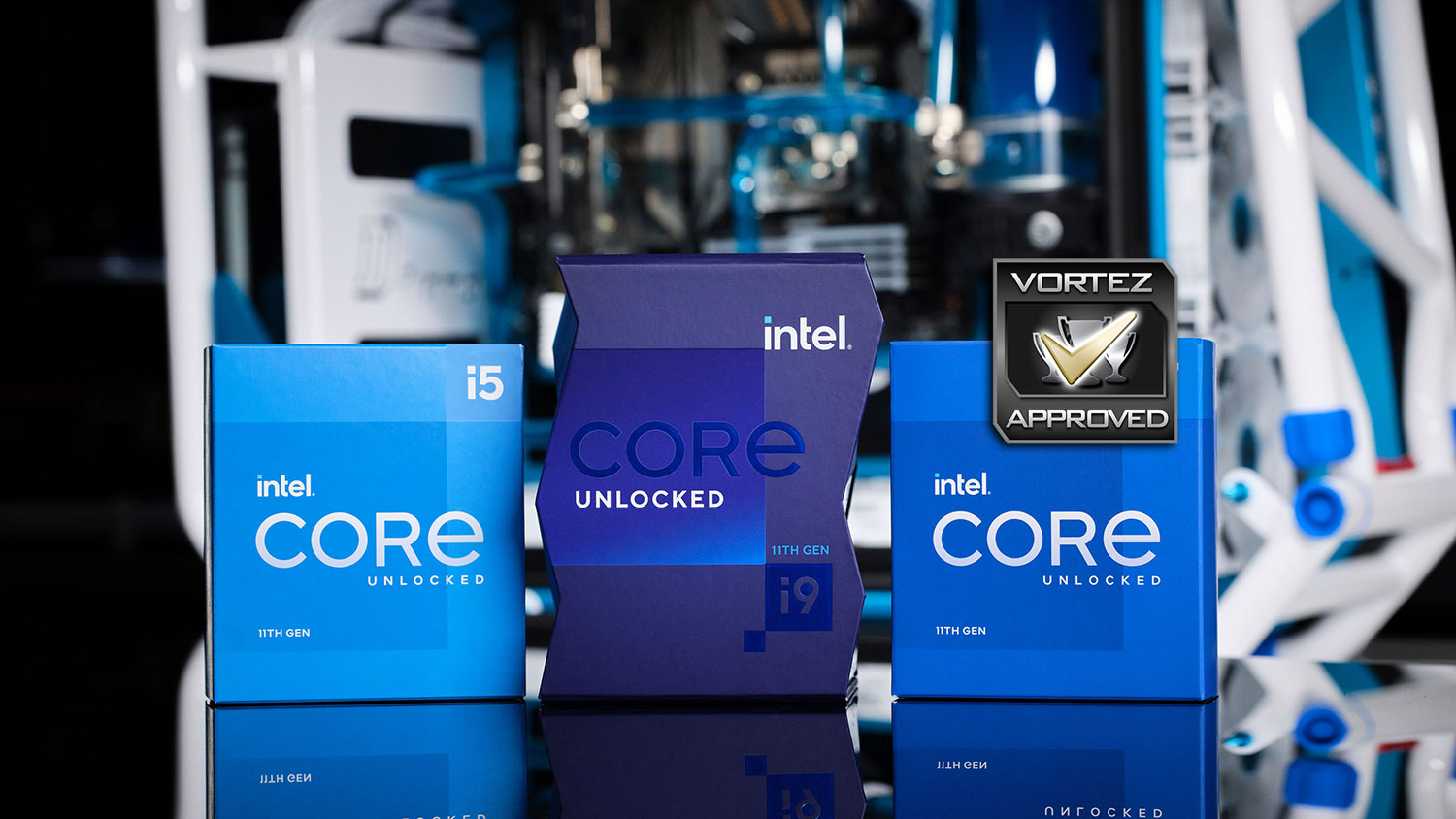
In the coming days/weeks we’ll be exploring the overclocking potential of both CPUS and updating this review accordingly – we feel this particular topic requires time than has been allotted (late sample shipments, cumbersome Z590 BIOS builds etc).
Matching up in specification and price, the Core i9-11900K and Ryzen 5800X are very close rivals. To Intel’s advantage, the flagship chip arrives with a whopping 5.3GHz Turbo Boost, something which AMD has struggled to strive for.
Lining yourself up for a new Rocket Lake-S CPU will require the new Z590 chipset (Some Z490 boards will accept the new CPUs via BIOS update) motherboards to provide access to the full range of features on offer. In the coming days/weeks we’ll be supplying coverage of a range of these boards so stay tuned.
Pricing for the Core i5-11600K and Core i9-11900K are $539 USD and $262 USD. At this pricepoint, they compete with AMD’s equivalent.
Pros
+ Impressive Tubro/Velocity clock boost
+ Great single/multi-core performance
+ PCIe 4.0 ready
Cons
– Requires new chipset to take full advantage of tech.
– At the very peak of thermal limit
– Power consumption surpasses some HEDT chips
+ Impressive Tubro/Velocity clock boost
+ Great single/multi-core performance
+ PCIe 4.0 ready
Cons
– Requires new chipset to take full advantage of tech.
– At the very peak of thermal limit
– Power consumption surpasses some HEDT chips
Click here for an explanation of our awards at Vortez.net.
Stay connected with the Vortez Social Media pages: