The G433 is a new breed of gaming headset that comes with advanced features for gaming, yet has been designed to fit the rest of your life.

Product on Review: Logitech G433
Manufacturer: Logitech
Street Price: UK: £109.99, US: $99.99
Logitech have done some head-scratching over how to deliver a gaming headset that will give people everything they need for their day-to-day audio needs regardless of their platform or media, and so have set out to do just that.
Every aspect of the G433 speaks loudly of innovative thinking, from the sleek aesthetic finish using a hydrophobic mesh (available in 4 colours: Black, red, blue, camo blue), to the patent-pending 40mm Pro-G drivers that are made with a hybrid-mesh material for super-low distortion, are just two examples of this. Furthermore, the G433 is fully modular as it features removable cables and microphone boom, allowing the user to maintain the sleek aesthetic for on-the-go listening. The use of 4pole jacks ensure wide versatility, from games consoles to mobile devices, while gamers receive a treat in the form of a USB dongle that has advanced DTS HEADPHONE:X for immersive virtual surround. Comfort should be no issue also as the material used is breathable, while the headset itself is just 259g, nearly 100g lighter than most competitors. Supporting the G433 package, it ships with a large bundle accessories including a carry case, while the USB dongle is compatible with the Logitech G software.
Overview by Logitech
PC gamers expect immersive audio performance. And for good reason as each new title brings ever greater sound design. But, what about outside the game? Let’s set PC performance free. G433 is a new breed of headset with all of the advanced features for gaming—in a lightweight, comfortable design that fits the rest of your life, too.
Technical Specifications
Height: 172 mm
Width: 81.7 mm
Depth: 182 mm
Weight: (w/o cable): 259 g
USB DAC: 160 mm
PC Cable Length: 2 m
Mobile Cable Length: 1.5 m
Headphone:
Driver: 1.6 in (40 mm)
Frequency response: 20Hz-20KHz
Impedance: 32 Ohms
Sensitivity: 107dB@1KHz SPL 30mW/1cm
Cable length: 2m
Microphone:
Microphone Pickup Pattern: Cardioid (Unidirectional)
Type: Back Electret Condenser
Size: 4mm
Frequency response: 100Hz-10KHz
Width: 81.7 mm
Depth: 182 mm
Weight: (w/o cable): 259 g
USB DAC: 160 mm
PC Cable Length: 2 m
Mobile Cable Length: 1.5 m
Headphone:
Driver: 1.6 in (40 mm)
Frequency response: 20Hz-20KHz
Impedance: 32 Ohms
Sensitivity: 107dB@1KHz SPL 30mW/1cm
Cable length: 2m
Microphone:
Microphone Pickup Pattern: Cardioid (Unidirectional)
Type: Back Electret Condenser
Size: 4mm
Frequency response: 100Hz-10KHz
Packaging & First Look
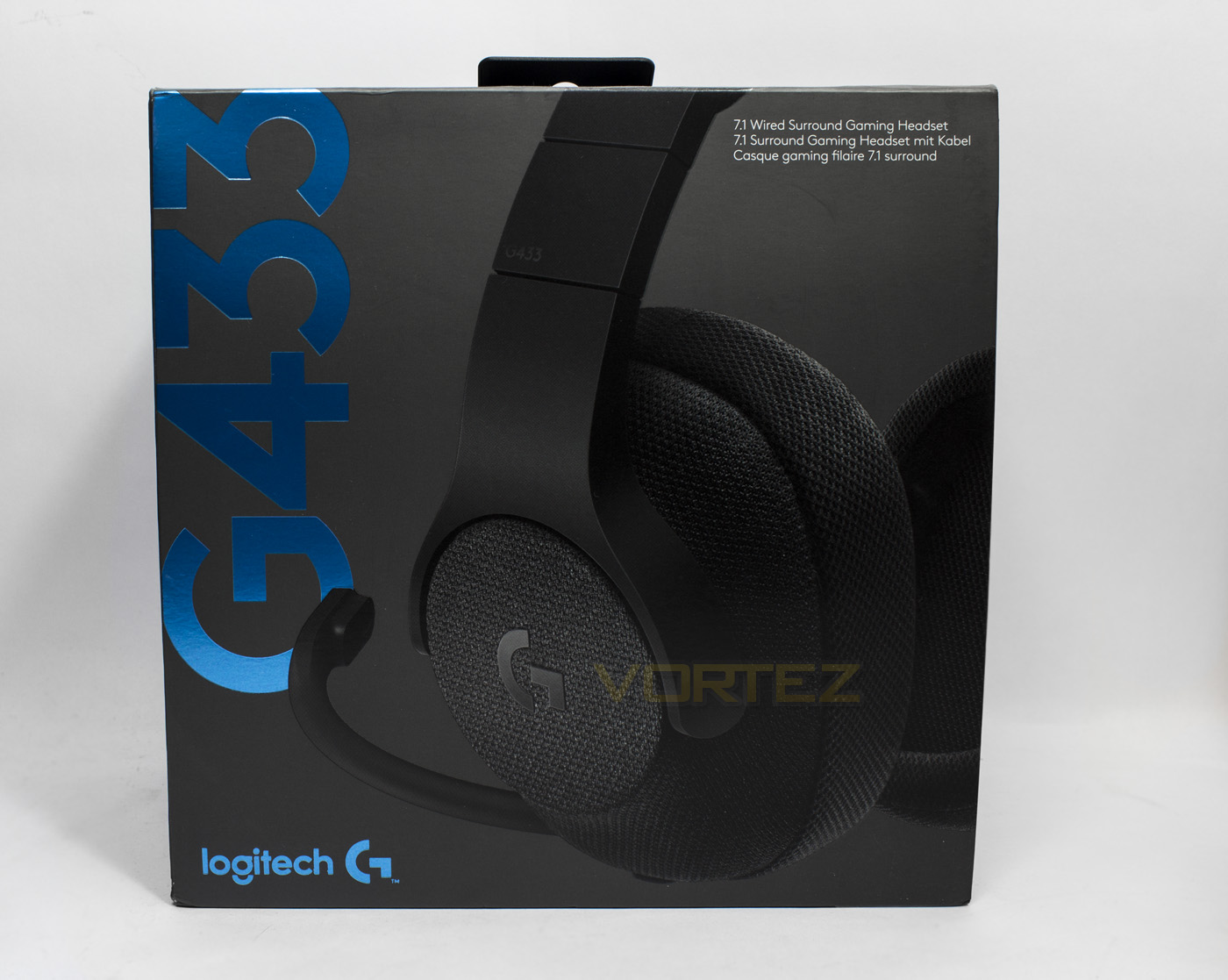
The packaging is elegant and high quality, really taking a step beyond the older black/blue design to a more grey/metallic blue. Information displayed is simply the model name, the Logitech branding, and what it is (7.1 wired surround gaming headset), along with a large close up of the product itself.
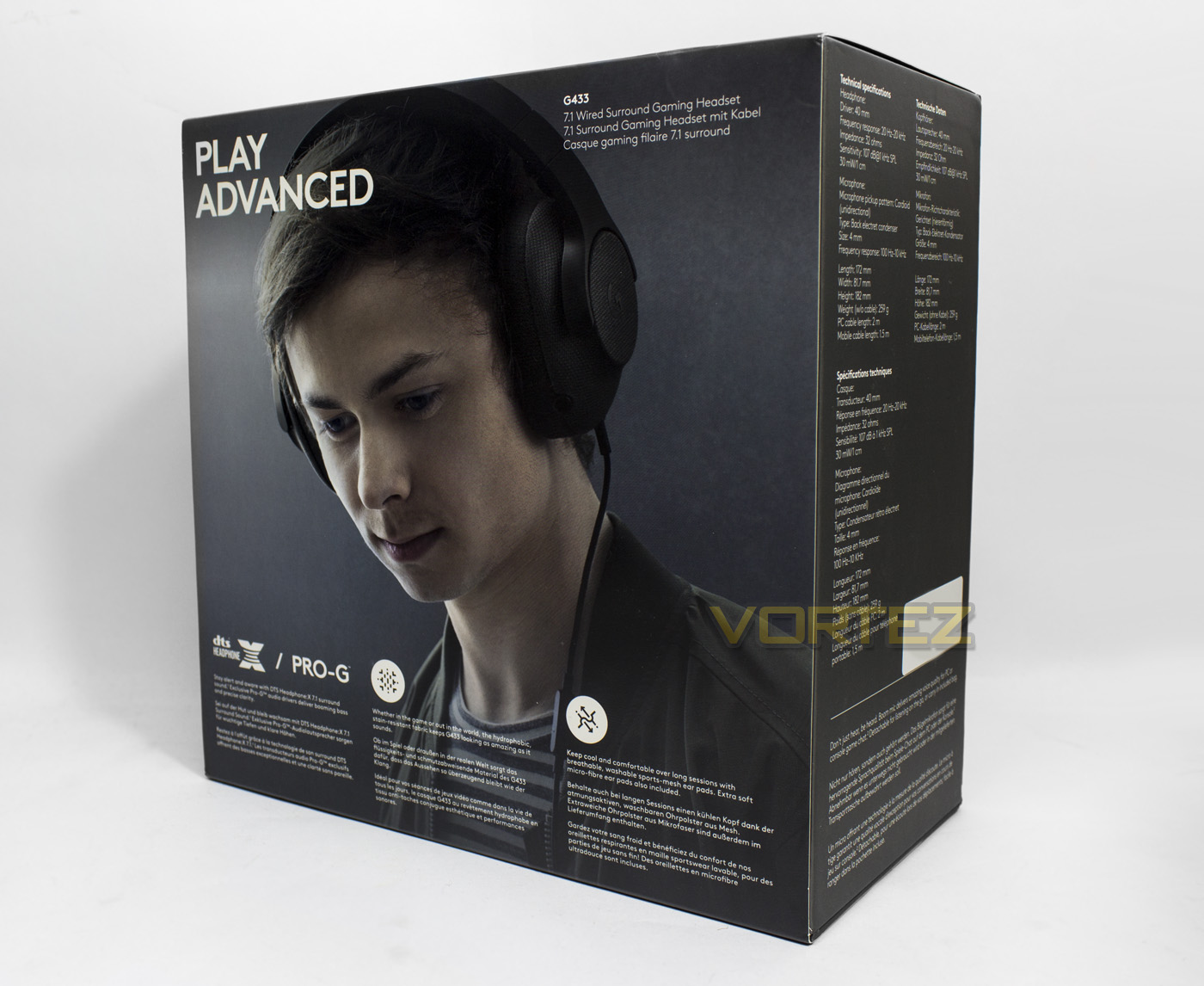
The reverse side gives some information about the surround feature of the headset, while the technical specifications are listed on the side in various languages.
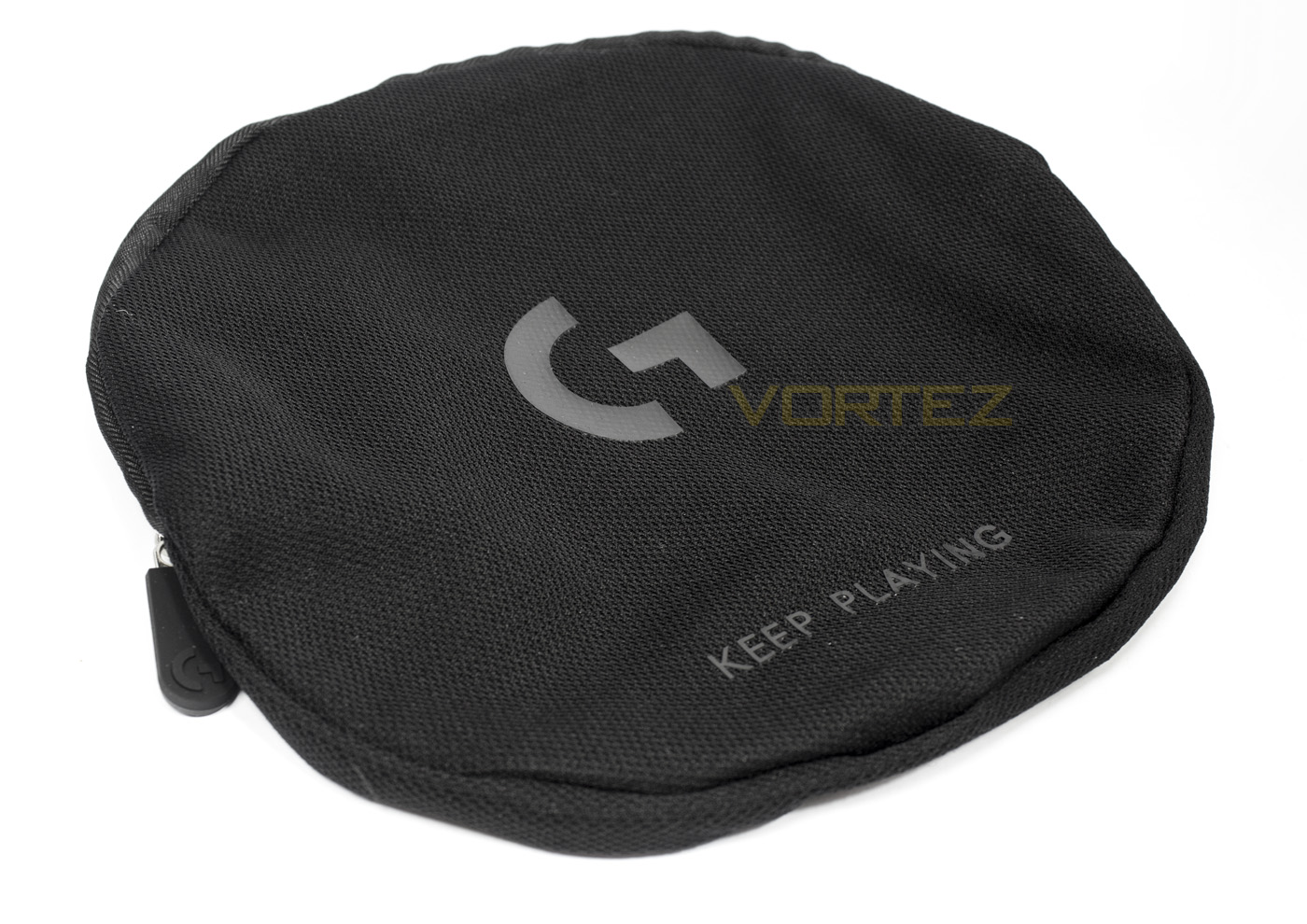
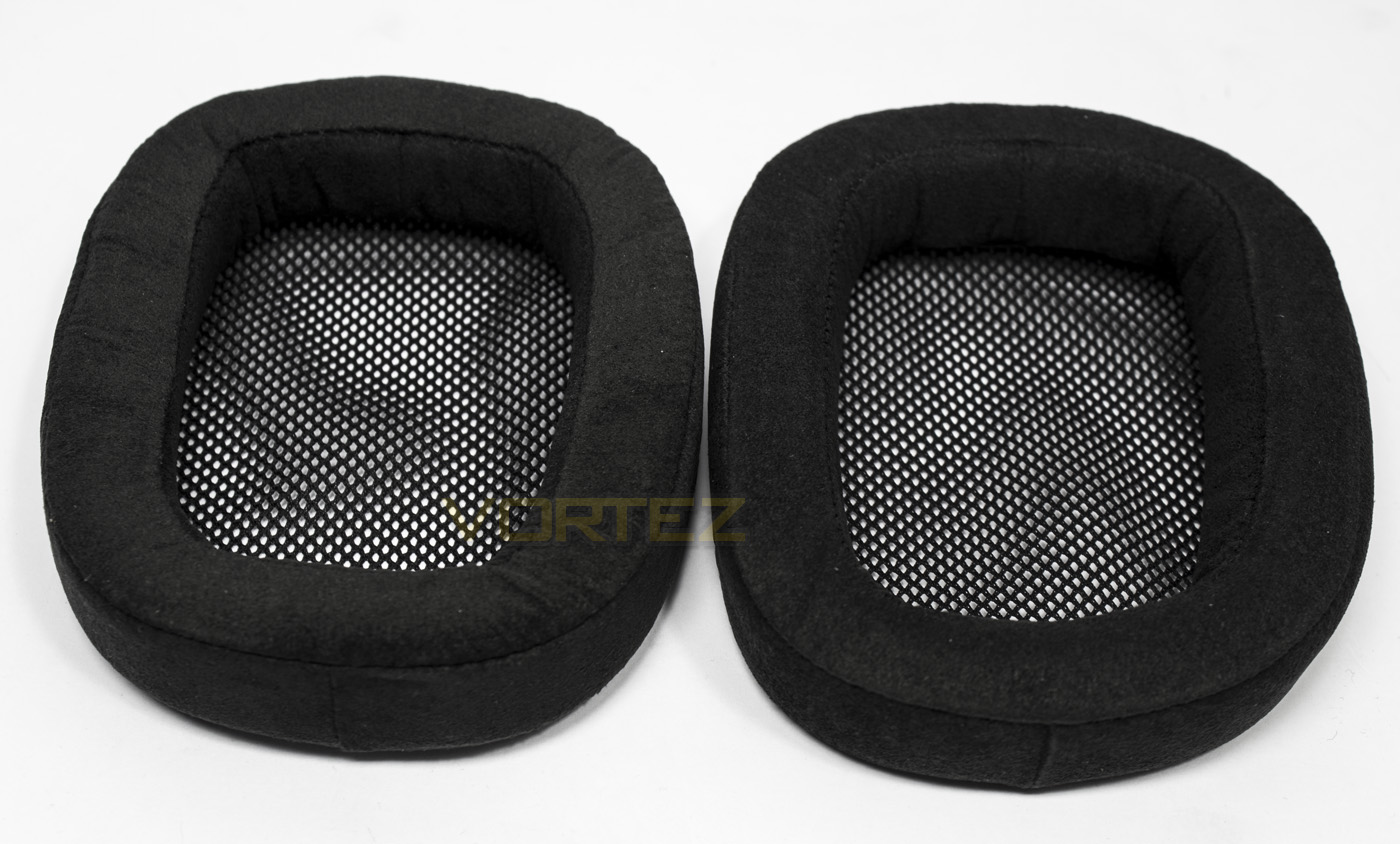
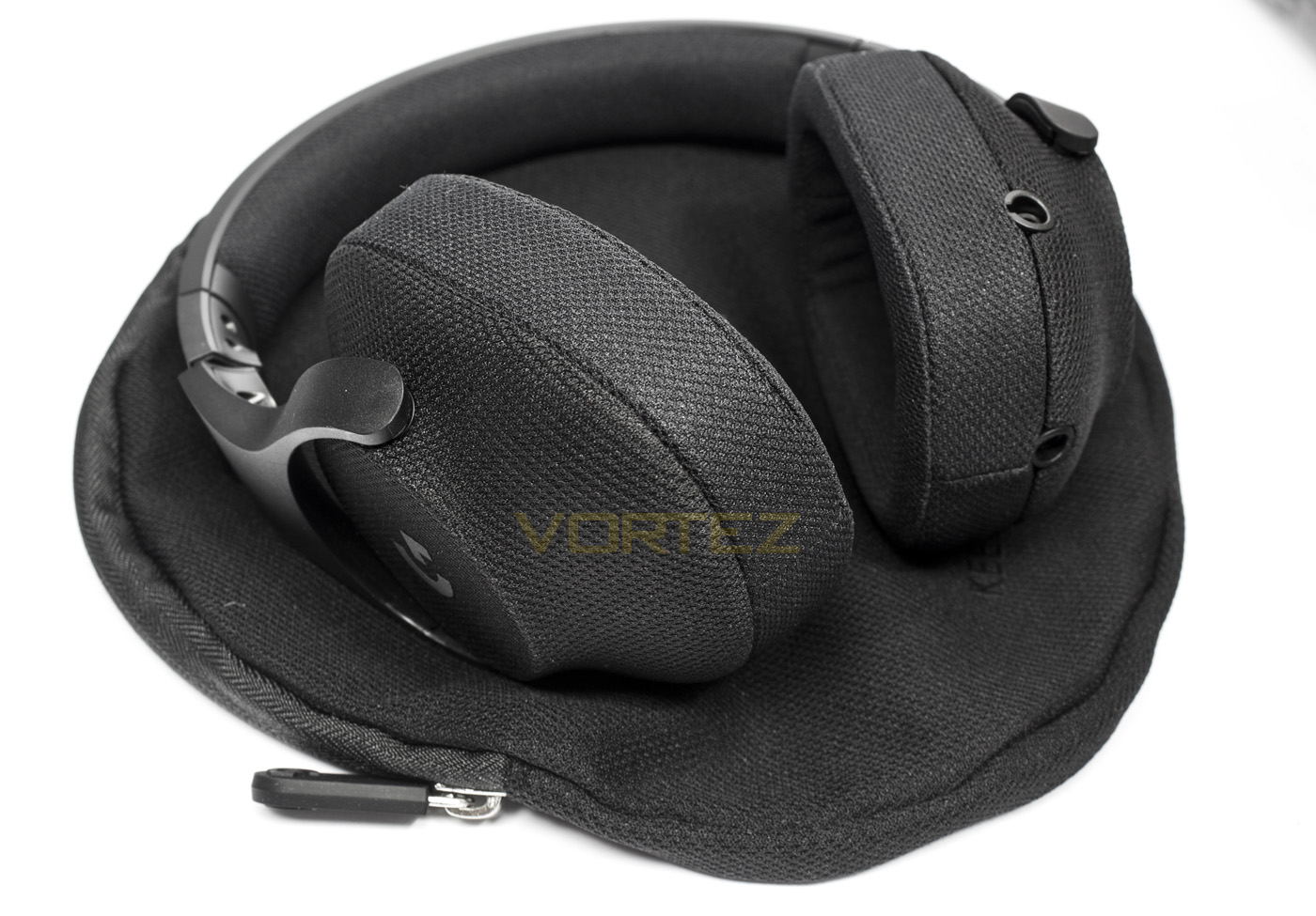
Inside the box, there is a protective carry case with a zipper, along with a pair of additional micro-fibre earpads to replace the default mesh ones should you wish to do so.
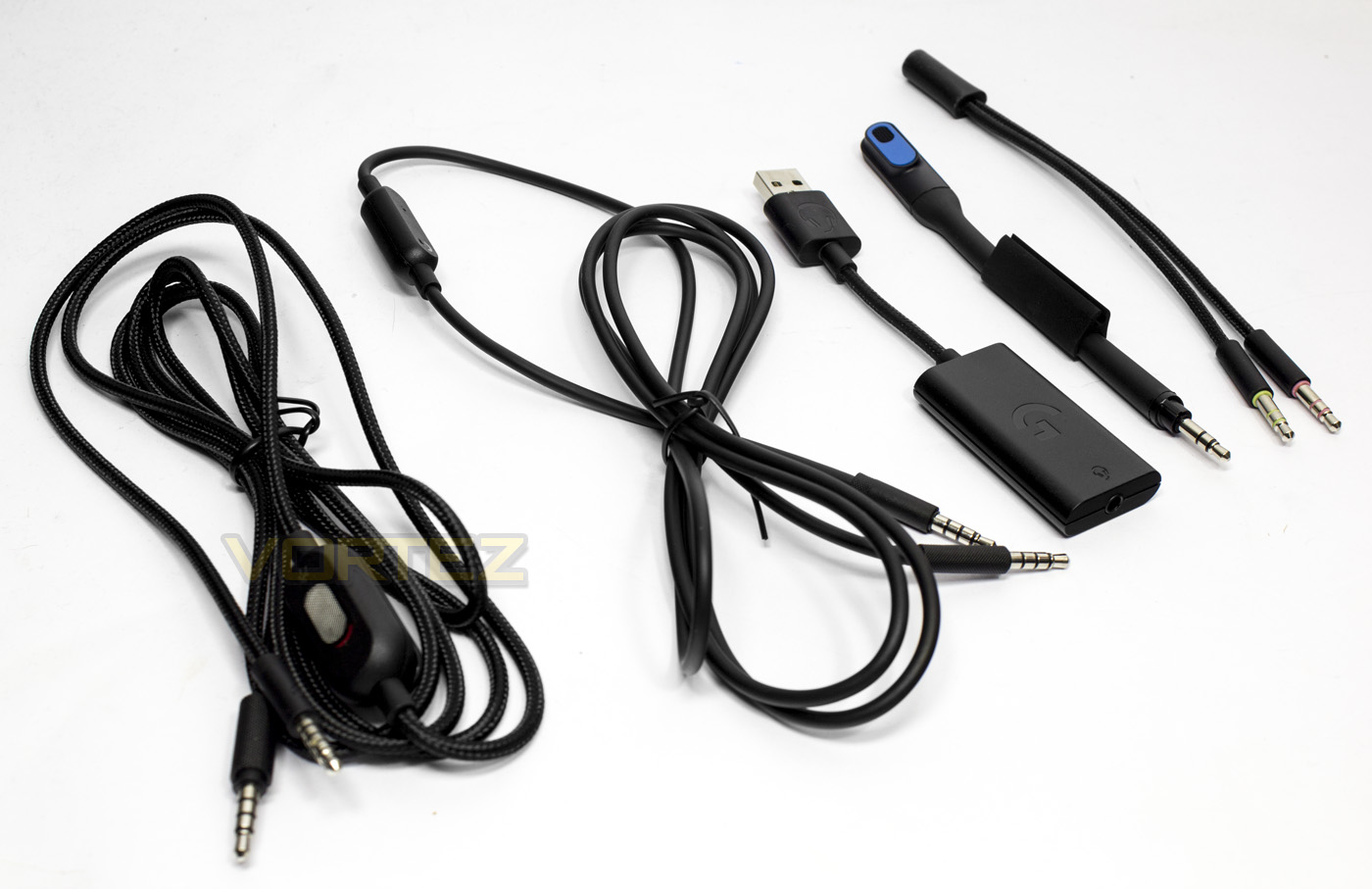
Also included is a 1.5m non-tangle mobile cable, which includes an in-line microphone for on the go use. A 2m long braided ‘gaming’ cable, which ends with a 4pole connector, along with a braided ‘y’ splitter for audio/microphone, the USB donble and the boom microphone (with built in pop-filter).
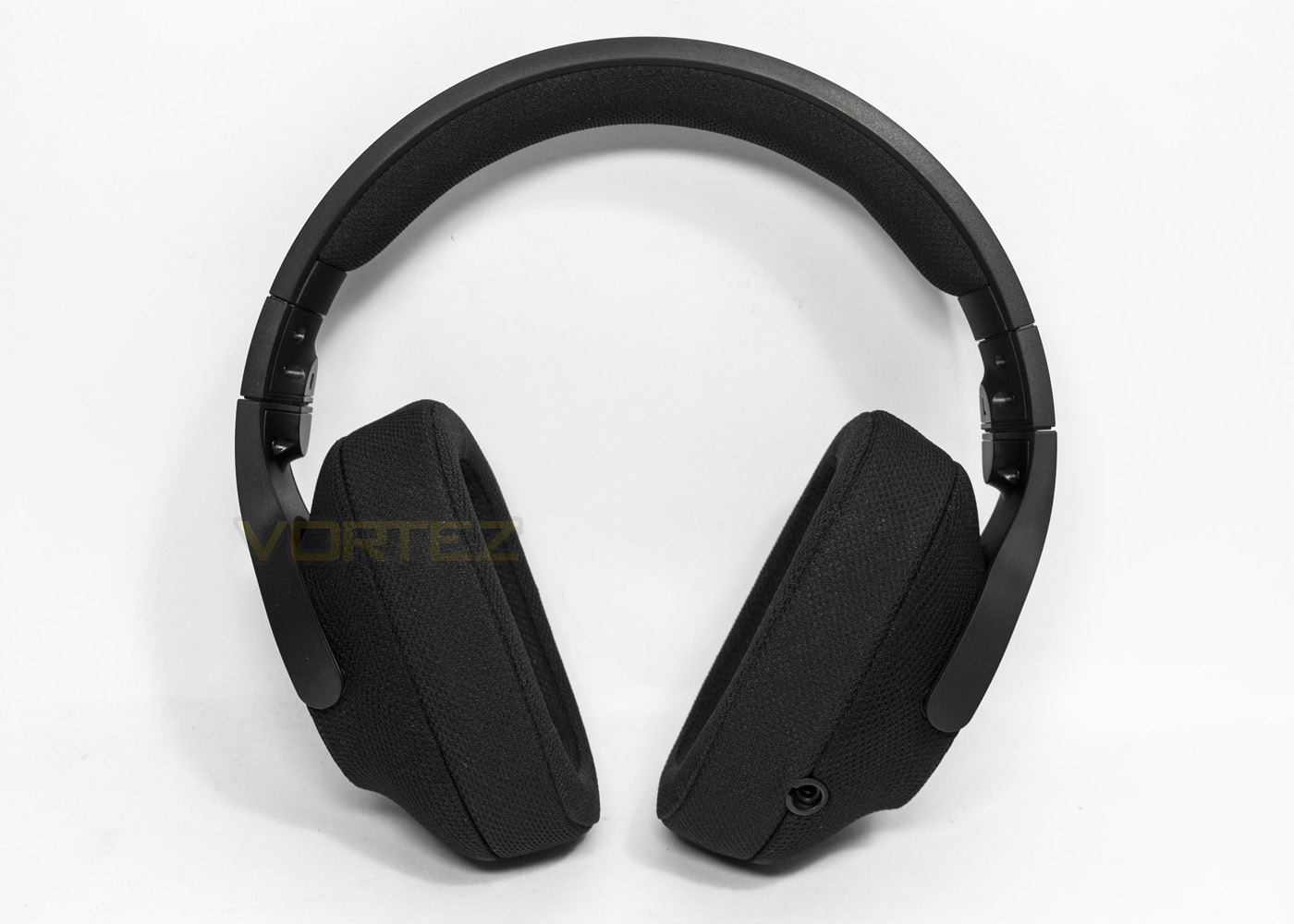
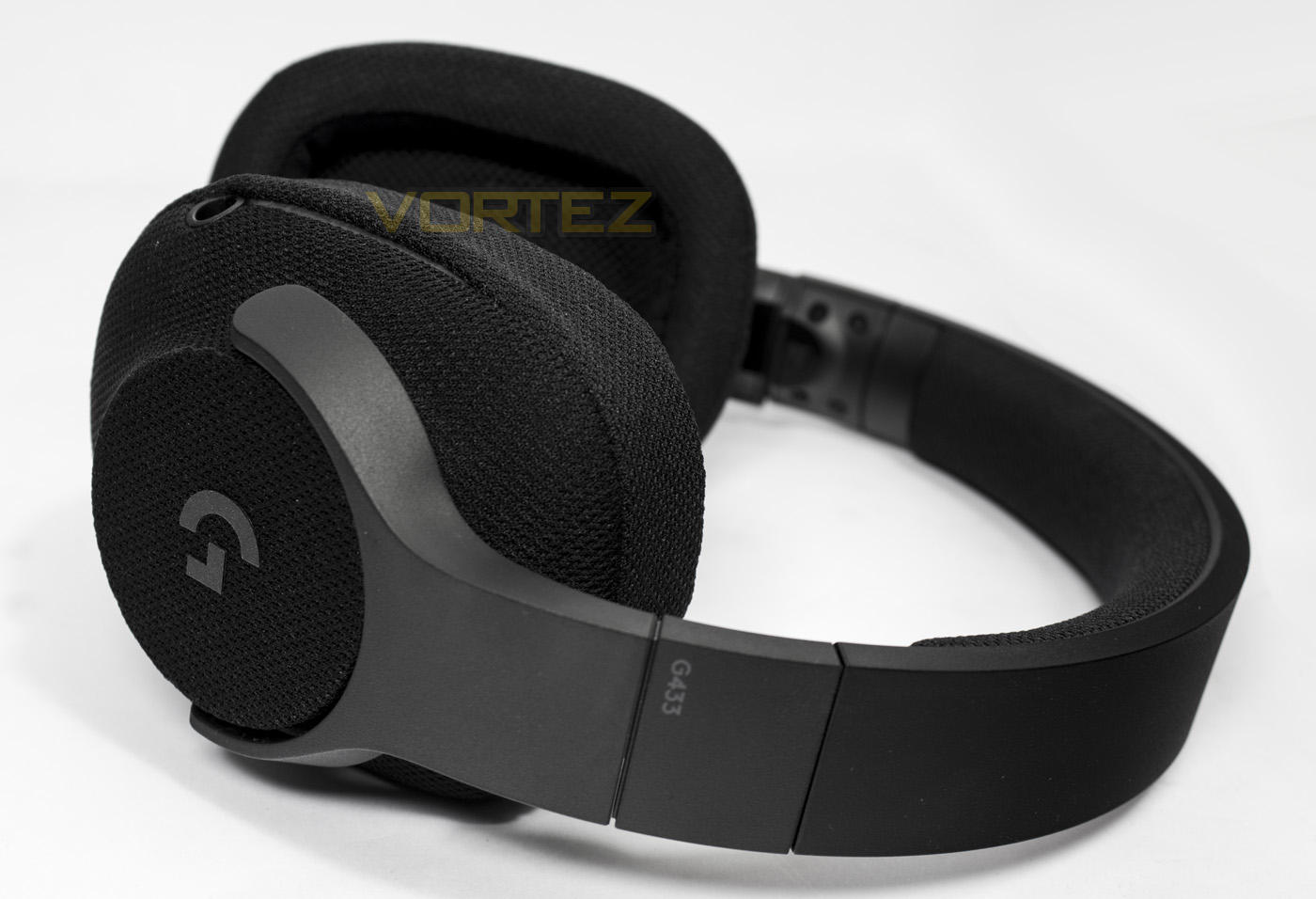
The headset itself is very sleek, completely covered in fabric mesh (except for the top part of the headband and the gimbel.
Closer Look
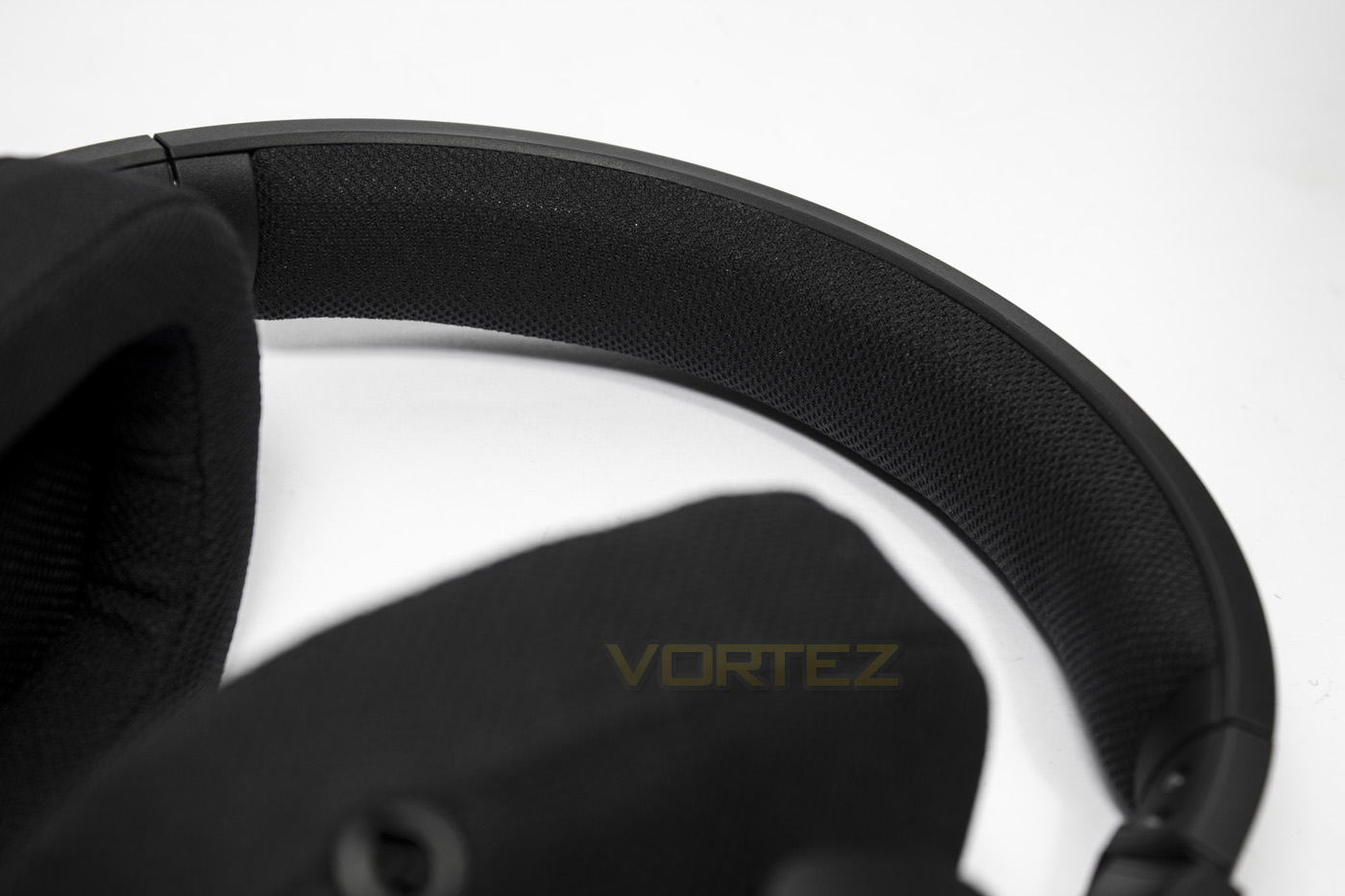
The headband cushioning is lined with the fabric mesh which is seen elsewhere, and covers the fully length of the frame.
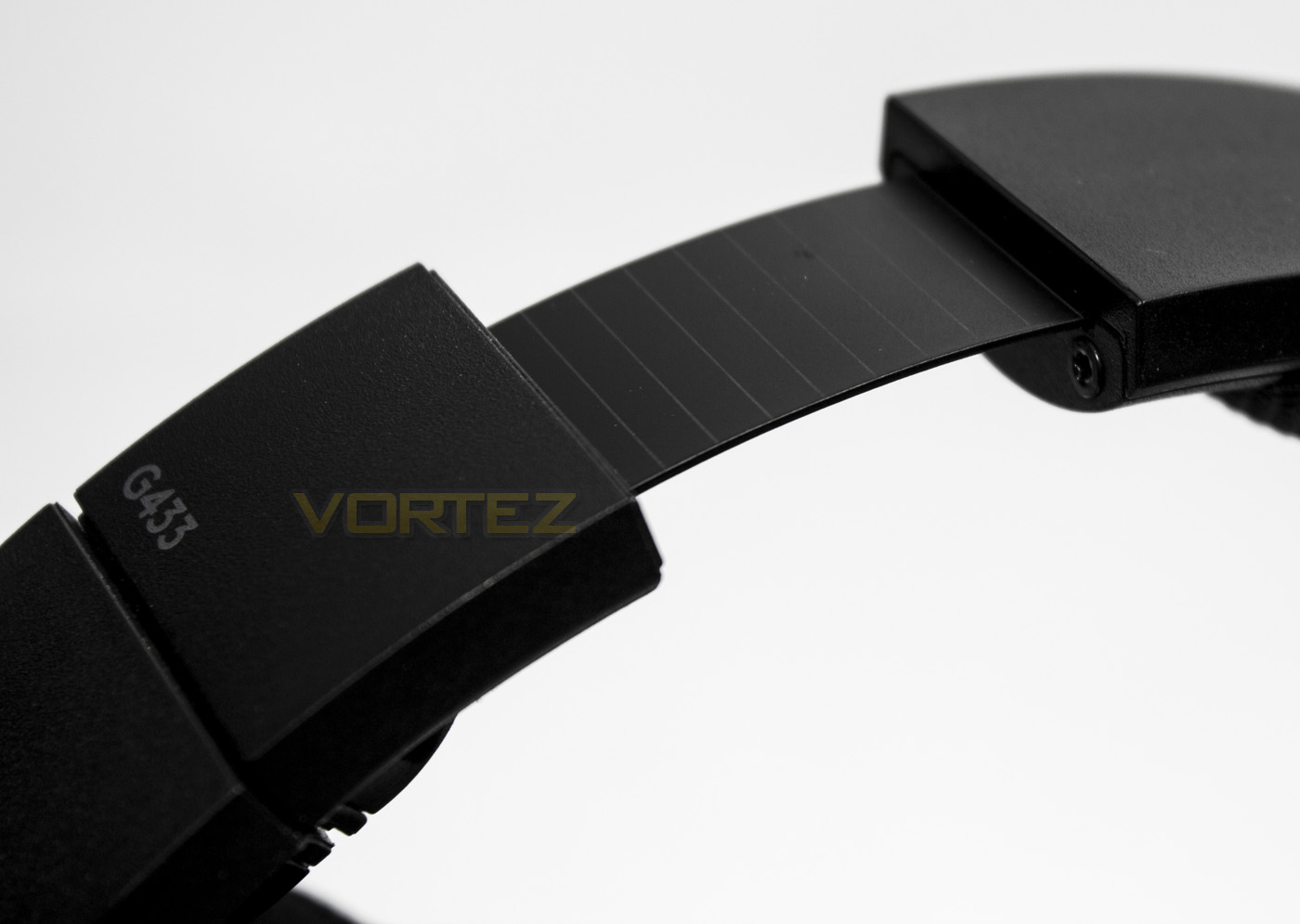
The headset is adjustable and firm clicky increments, the materials used feel like high-quality resins.
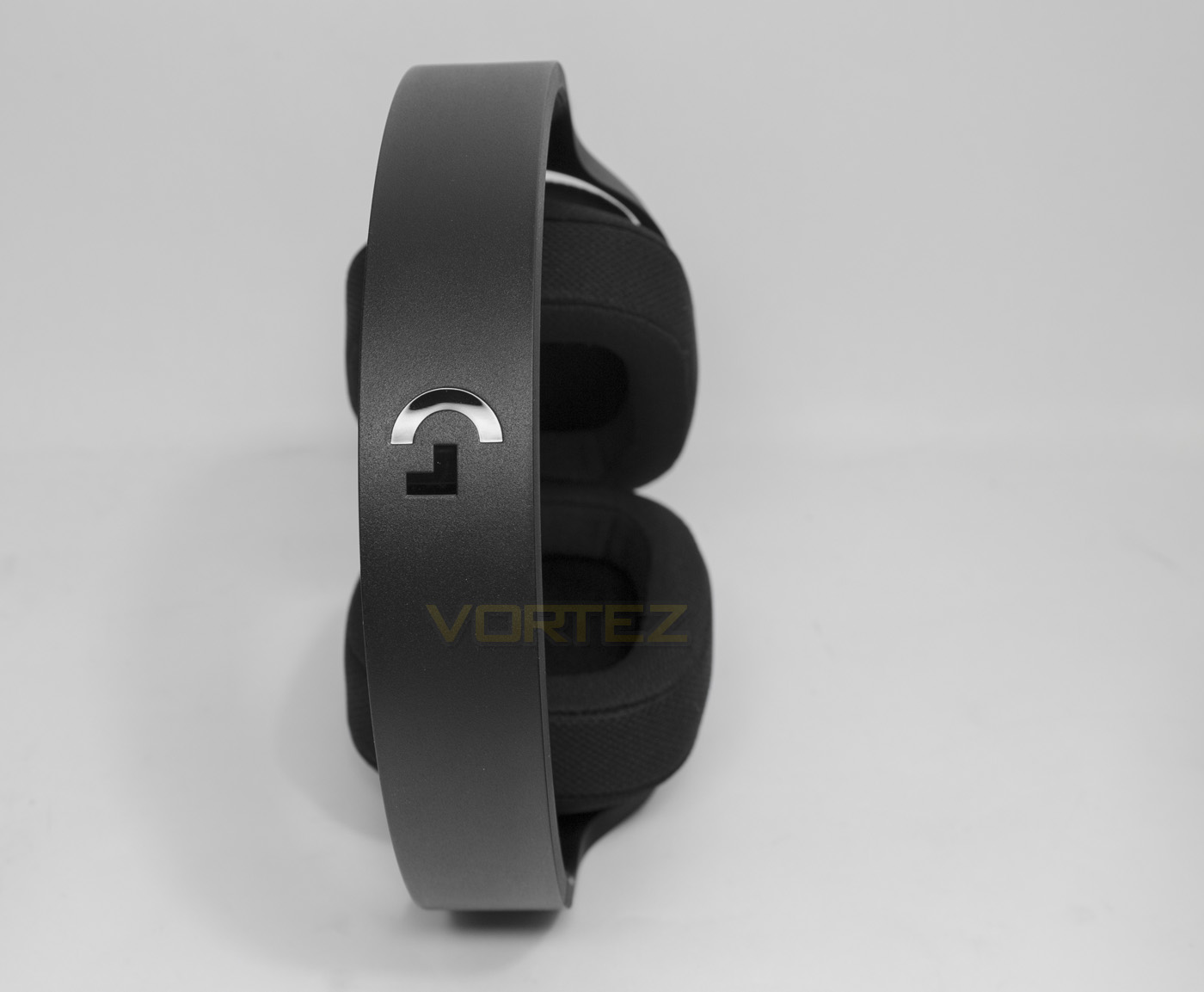
On top the frame is plastic and features the Logitech G logo embossed into it.
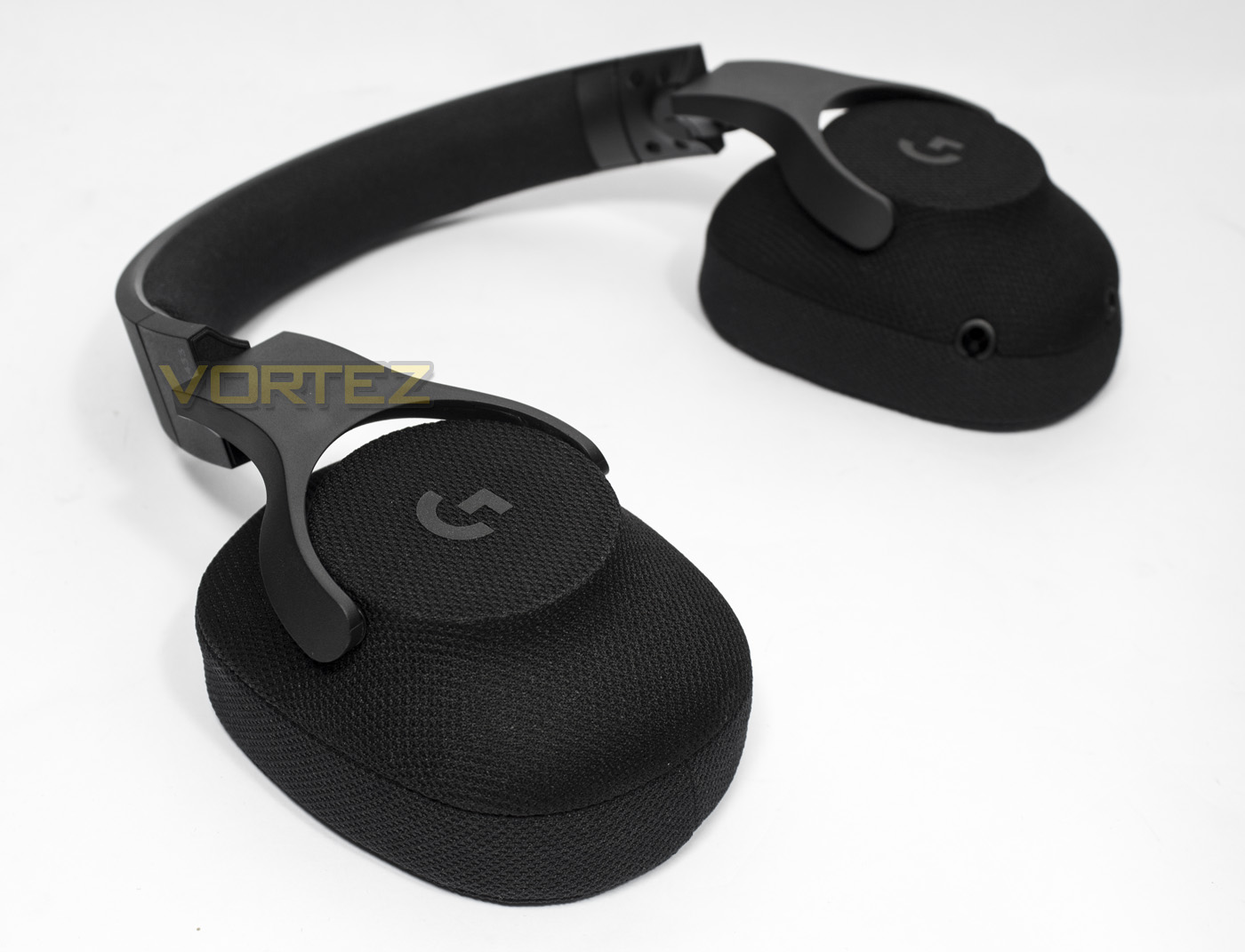
For maximum flexibility and comfort we see that the G433 can fold flat. By doing this the earcups can be certain to pivot to your head easily, and also allows users to rest the headset on their shoulders while earing it around their neck.
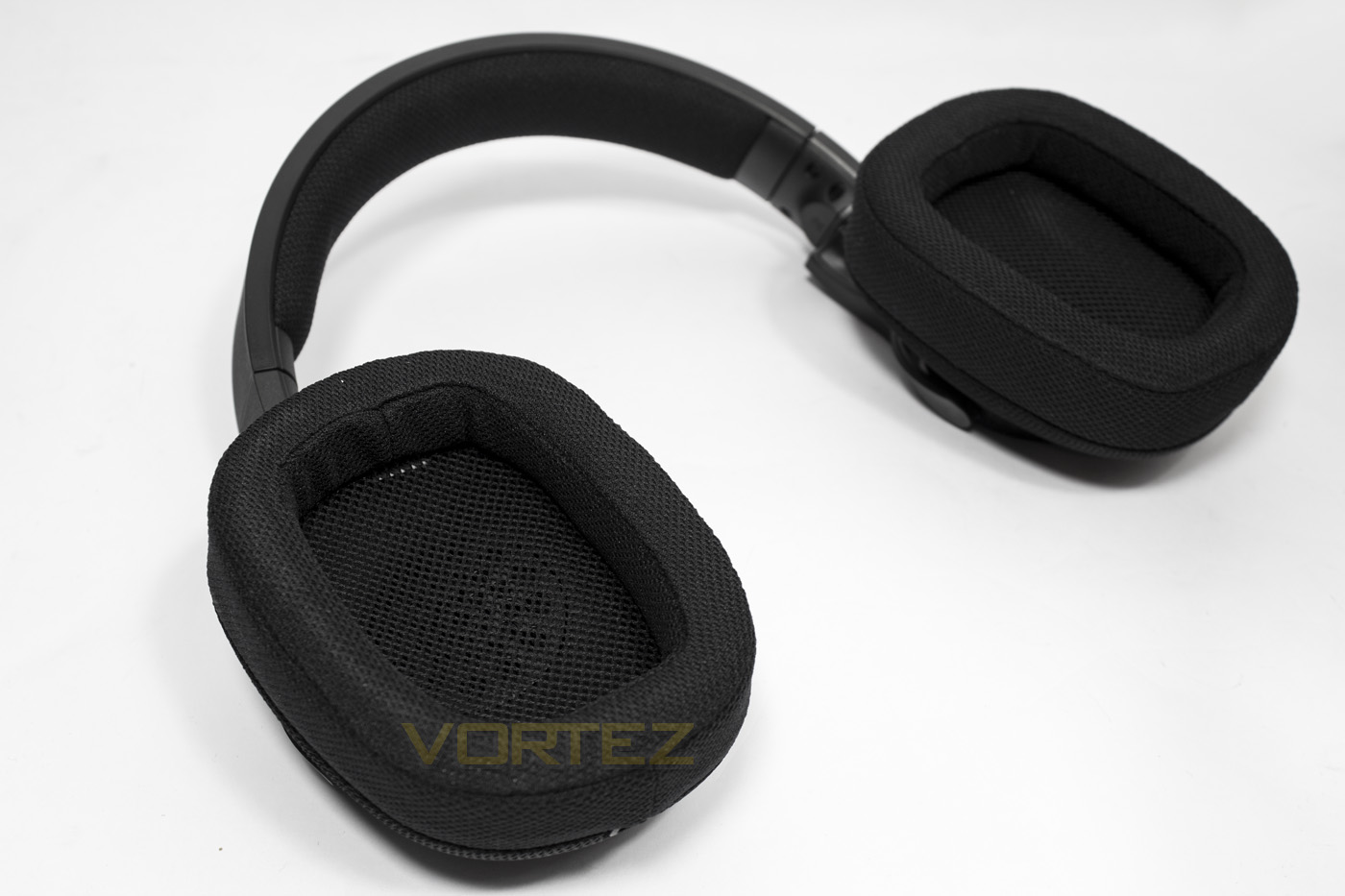
Here we see that Logitech has provided a huge area in the earcups to ensure a true circum-aural fit, it is unlikely anyone will have an issue fitting their ears inside this headset.
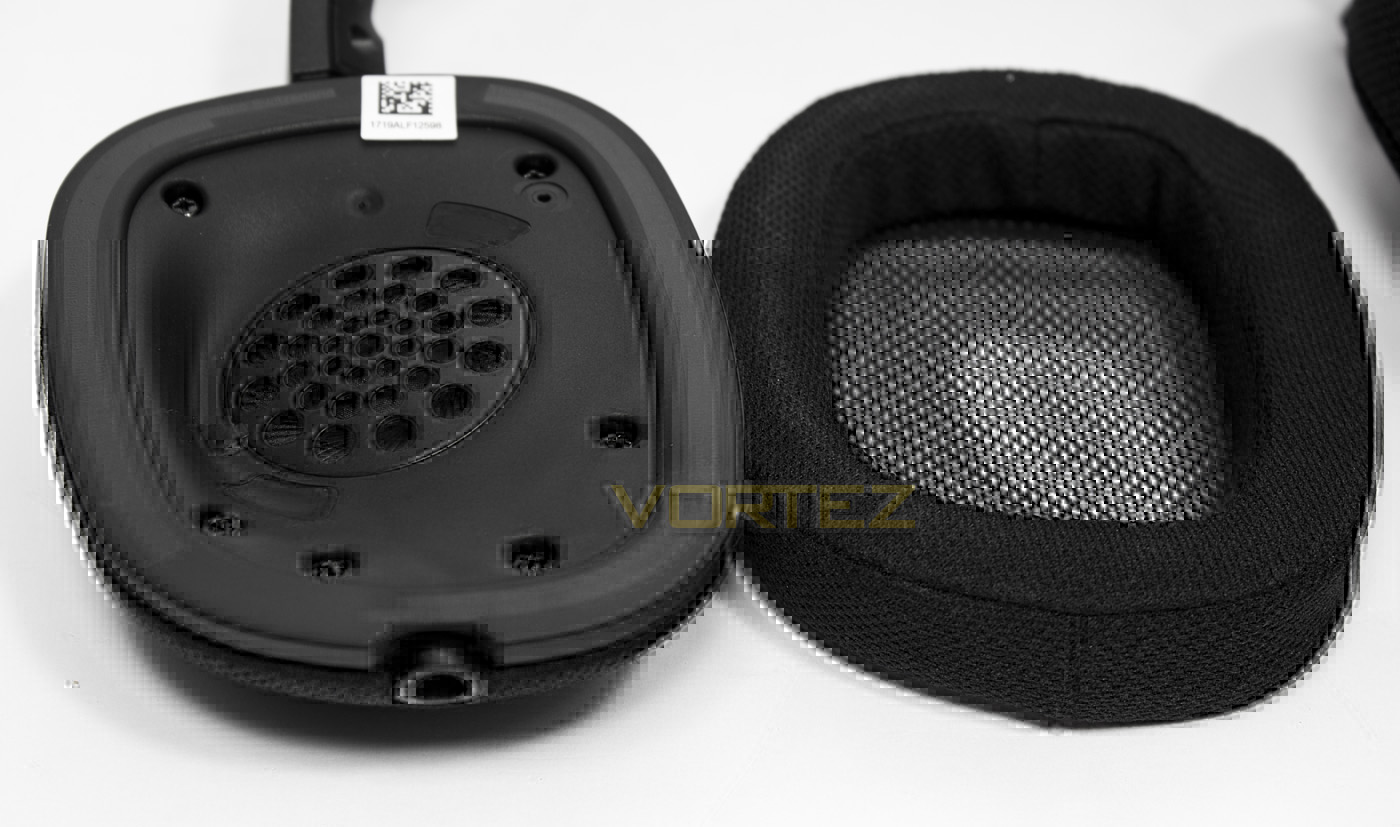
Removing the earcups we can see that the Pro-G drivers used are orientated at an angle to ensure that the audio is directed into your ears. There are various advantages to this design, but most noticeably is that it helps widen the soundstage and improve spatial awareness.
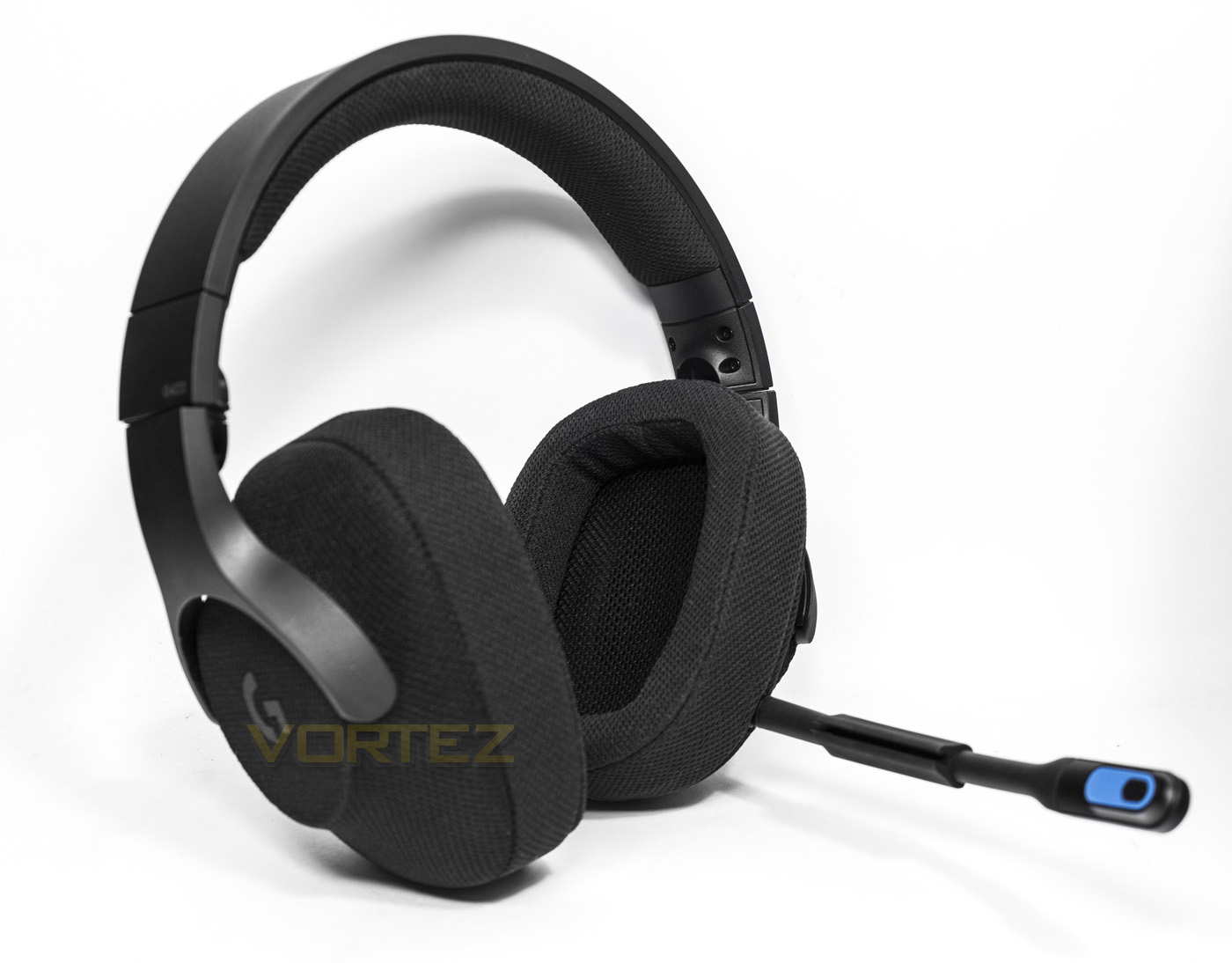
The headset with the microphone boom connected, inside the microphone tip is a micro-pop filter.
Software
The Logitech G Software has undergone various developments and has become a leading unified software platform with an easy to understand and use GUI. It has various features included that you may otherwise not know about, including RGB notifications (when used with a compatible device) with Discord.
The Logitech G software is for use with the included USB dongle you options to create a custom equaliser settings to suit your preference. Of course, the primary feature of the software and USB dongle is DTS Headphone: X. When enabled, DTS Headphone:X gives you a selection of v7.1 surround modes, and allows you to customise each channel to suit your surround preference. The presets include DTS 7.1, First person shooter optimised, and Logitech Studio calibration, as well as ‘front’ bias, and ‘wide’ bias for each option.
Performance Testing
Setup, Design & ObservationsAs the G433 is fairly universal in its use, setup will entirely depend on your intended use. If it is with mobile devices, connect with the mobile cable, for console gaming, use the longer braided cable and boom microphone, or with your PC system you can connect with either the ‘y’ splitter into your soundcard, or plug into the USB dongle, which would need to be plugged into a spare USB port. If you want to use the virtual surround technology you will want to use the USB dongle.
The build quality of the G433 is good, though some may want to see the use of more metals for this price, however, considering the lightweight nature of the G433, its difficult to see which parts could be changed without compromising the weight. There isn’t a huge amount of stretch available when opening it wide and there is a slight plasticky creak when doing so. Visually, the mesh material presents an attractive aesthetic, but it does feel a little rough at times, especially on the headband and earpads and so could be softer. However, after a while with use, we noticed that the material acts as a net that can catch hairs, dust and skin, thus making us wonder how long the sleek aesthetic will last without starting to look tired from use.
On wearing the headset, we noticed that the mesh fabric feels fairly neutral and cool without feeling itchy or irritating as some fabrics can, but those that are more sensitive to this kind of material may have a different experience. We swapped to the alternative micro-fibre earpads and decided that we preferred them more so. The earcups give an ample amount of space, easily encompassing our ears, while the earpads themselves give optimal amount of cushioning for long last comfort. The clamp force of the headset is ideal, though we would have liked the frame to be a little more springy/flexible, but is limited due to the plastic frame design.
The included in-line remotes are solid without feeling cheap or like they would break with continued use. The mute switch is easy to operate with one hand, while the volume dial rotates smoothly. The cables and microphone plug in neatly and feature little notches/keys guiding them into the correct position.
Multimedia
The low distortion design of the Pro-G drivers shined in our music listening via our soundcard, giving a fantastic balanced audio with crisp and precise separation for each frequency. Bass is deep, punchy and well accounted for while the mids are clearly defined adding structure, while the glittering highs make their presence known without being harsh or under-represented. When using the USB dongle included (virtual surround disabled), the audio signature is similar with slightly less precision across the board (to be expected when moving from 32-bit 384kHz playback to a 16-bit/48000Hz USB dongle), but remained at a decent level, which was enjoyable across the board. At maximum volume there is no distortion, and can be described as ‘loud’ almost bordering ‘very loud’, however the volume level via analogue connections will vary directly depending your amp/device.
To test out the virtual surround modes, (of which there are 6 profiles available + further customisation), we had several matches of CS:GO, DOTA 2 and Tekken 7, and we found that the G433 was more than capable of reproducing very good directional audio, however did come at the cost of detail and power when compared to stereo mode. This would come down to the preference of the gamer as to whether they prefer the mode wide/directional audio, or the crisp and powerful sound provided by the flat/stereo mode.
Microphone
There are two microphones available to the G433, though it is worth noting that the in-line microphone on the mobile cable should be used exclusively used with your smartphone/tablet, while the boom microphone should be using with your PC or games console. The microphone boom has a warm natural pick up which is static free and does well to mute background noises a bit. When used with the USB dongle, the microphone again sounds warm but slightly muted in the top end register, and sounds a little quieter, not bad overall but could be a little louder.
Conclusion
After spending a little while with the Logitech G433 headset, we came to realise that Logitech intended this to be a serious competitor to the audio market, not JUST something for gamers. Thinking of the G433 as a gaming headset, it is compatible with all major platforms, it has long lasting comfort, it has a decent noise reducing microphone, and it features good virtual 7.1 surround; perfect for complete immersion in games. Thinking outside that, the G433 is a genuine do-it-all headset that is sleek enough for external use and sounds awesome.
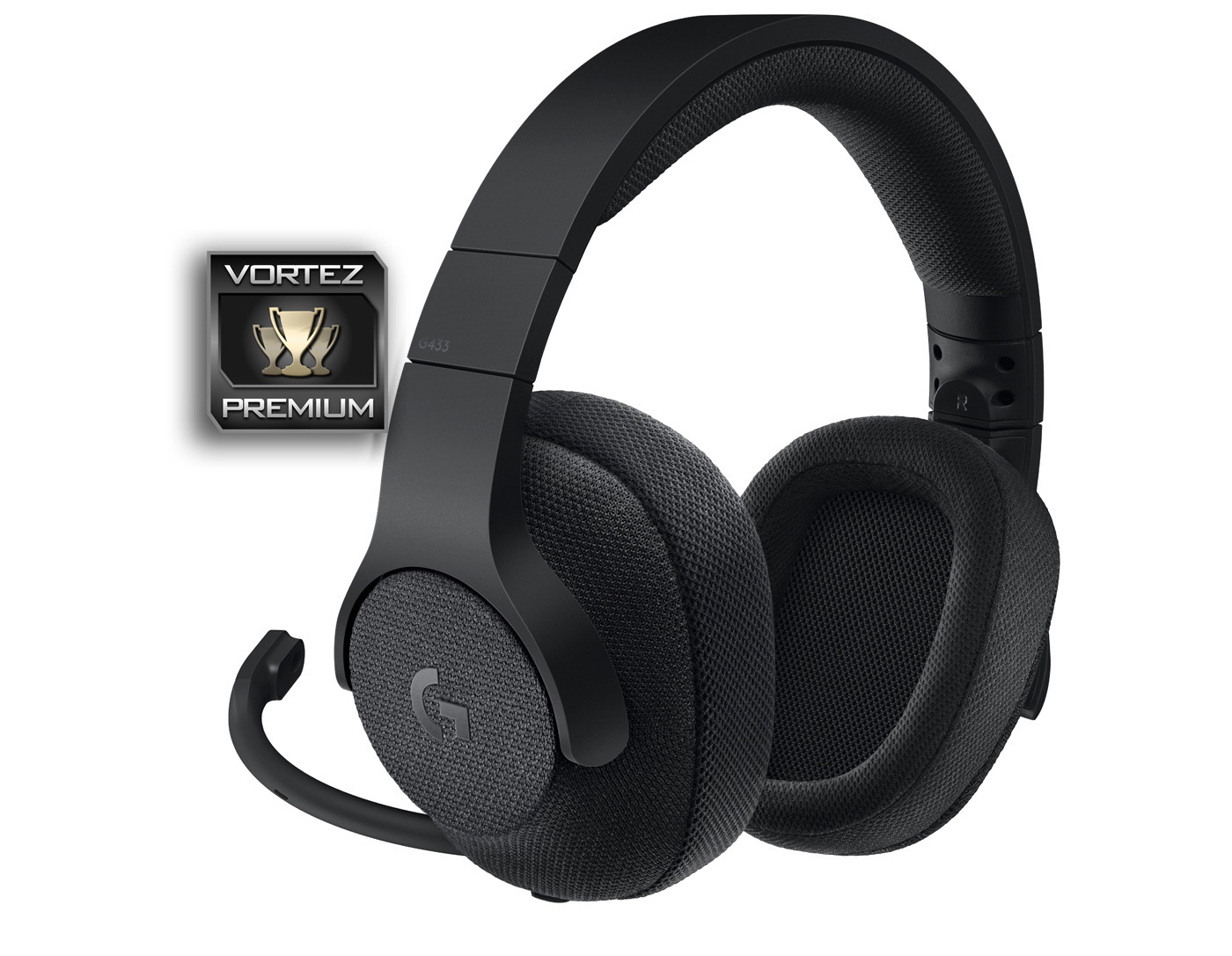
The actual hydrophobic mesh that is covering the headset itself and the default earpads could be softer and more plush, and though we didn’t find them irritating, those with a more sensitive skin may have a different experience. Over time, the mesh material may pick up hairs and dead skin flakes which may diminish the overall aesthetic quality of such a design also. On the note of materials, it is worth noting that we did prefer the micro-fibre material of the alternative earpads included with the G433.
Another thing we should mention is that if you are using the G433 via the USB dongle, the microphone may sound rather quiet, this is something that could be improved. Regarding the audio quality, the Logitech G433 falls marginally short of the HyperX Cloud Alpha, which sits behind the GSP 303, which in turn is shy of the audio fidelity of the HyperX Cloud Revolver. These are all headsets that sit around the £99 mark and so is fair to judge them against each other. This relative scale is subjective to our experiences and for most it will be incredibly close to call, meaning, they all sound fantastic. Considering that we test using a discrete sound-card, these differences may not even be discernable to the average gamer that may well be using their headset with a games console.
Unlike the competition mentioned above, the Logitech G433 does well to stand out considering:
1. The G433 includes a USB dongle with virtual 7.1 surround technology.
2. The G433 has the sleekest/most slimline design.
3. The G433 is fully modular, making it more convenient to swap between mobile/gaming uses.
4. The G433 includes a carry bag, to help protect your headset while travelling.
Point 1 is addressed by the Cloud Revolver S but at a fair mark-up in cost. So when we consider the pricing and market positioning, the G433 (which can currently be found for around £89) represents rather good value. So if you are considering this as a virtual surround headset you may by pleased to hear that we felt it is rather good. Although there is a noticeable improvement in spatial awareness and directionality, it isn’t quite perfect. On enabling virtual surround there is a drop in the overall definition and punch of the audio quality when compared to standard stereo mode. So it will be down to the individual to decide if that is worth the trade. To sum up the overall package, the G433 is balanced enough to be competitive and a genuine alternative at this price point, but it is likely that some would rather forego the niceties (USB dongle and added extras) in place of improvements in other areas.
Gamers looking for a do-it-all headset that has advanced features and a sleek design should have the Logitech G433 on their shortlist!
Pros.
+ Sleek aesthetics (available in 4 colours)
+ Lightweight
+ Quality construction (hydrophobic material finish)
+ Comfortable for long periods
+ Rich, detailed audio
+ Fully modular cables and boom microphone
+ Bundled accessories: Carry case, USB dongle, mobile cable, Braided PC cable and splitter, extra earpads)
+ Wide soundstage
+ Good virtual surround
Neutral.
+- The fabric aesthetic may tire over time
Cons.
– Boom microphone a little quiet via USB dongle
+ Sleek aesthetics (available in 4 colours)
+ Lightweight
+ Quality construction (hydrophobic material finish)
+ Comfortable for long periods
+ Rich, detailed audio
+ Fully modular cables and boom microphone
+ Bundled accessories: Carry case, USB dongle, mobile cable, Braided PC cable and splitter, extra earpads)
+ Wide soundstage
+ Good virtual surround
Neutral.
+- The fabric aesthetic may tire over time
Cons.
– Boom microphone a little quiet via USB dongle
Click here for an explanation of our awards at Vortez.net.