If you want a powerful GPU but size is an issue, then take a look at the GTX570 ‘Power Edition’ OC from MSI.
Product on Review: MSI GTX570 Twin Frozr III Power Edition OC
Manufacturer and Sponsor: MSI
Street Price: £265

Apart from the improved cooler (and as the name suggests), the Power Edition of the MSI GTX570 features an improved 6+1 Phase PWM design which should translate to increased stability under maximum load thereby improving the overclocks possible. Couple this with the improved cooling design, multiple voltage tweaks courtesy of MSI’s own fantastic Afterburner GPU overclocking utility and the MSI GTX570 Twin Frozr III Power Edition OC graphics card should turn it into an overclocking beast. Indeed MSI claim these improvements furnish the graphics card with up to a 22% overclock on a reference GTX570. Something we will be putting to the test later in the review.
About MSI
Since its founding in 1986, MSI has been demonstrating continued success in digital age. To achieve the best user experience, every component is essential. In the past 25 years, MSI always strives to provide digital products based on its core values –“Innovation” and “Style”. The results are products with superior performance, trusted reliability, excellent user experience and expressive style.
MSI has won the world-renowned product design awards and nearly 8,000 award recognitions from 350 media in 50 countries worldwide. With the brand slogan of “Innovation with Style”, MSI will continue to pioneer in global market as a principal brand in digital era, as well as lead the world in innovation in the field of global fashion technology with the needs of consumers at its core.
Since its founding in 1986, MSI has been demonstrating continued success in digital age. To achieve the best user experience, every component is essential. In the past 25 years, MSI always strives to provide digital products based on its core values –“Innovation” and “Style”. The results are products with superior performance, trusted reliability, excellent user experience and expressive style.
MSI has won the world-renowned product design awards and nearly 8,000 award recognitions from 350 media in 50 countries worldwide. With the brand slogan of “Innovation with Style”, MSI will continue to pioneer in global market as a principal brand in digital era, as well as lead the world in innovation in the field of global fashion technology with the needs of consumers at its core.
Let’s take a look at the specification…
Specification
The GF110 chip shares a lot of its roots with the GF100 core. The GPU still packs an impressive 3.2 billion transistors in a die seize 520mm squared. Its default internal configuration has been ported from GF100 in that the GPU features 512 CUDA cores or shader processors as we are more accustomed to. There are organised in a 4x16x32 block where 16 denotes the number of stream multi-processors (SM) and 32 being the number of cores on each SM. Each SM has its own L1 Cache and a common L2 Cache is shared by all 16. The GPU is still manufactured on the 40nm process.
The GTX570 has 15 out of the total 16 SM enabled for a final 480 CUDA core count. Similarly to the GTX480, it also shares the same number of texture units, which in this case is 60. These represent 32 fewer cores than the fully unlocked GTX580 and 4 texture units less. The size of the L2 Cache is reminiscent of the GTX470 coming at 640KB rather than 768KB as found on the flagship GTX580. Directly related to Cache is the number of ROPs which has been reduced from 48 to 40 on the GTX570. On the other hand, the GTX570 has been presented with a significant clock boost over both the GTX470 and the GTX480 in core and memory clock speeds to avoid “crippled” performance. Consequently, the ROPs are also clocked higher which should minimise the gap between the GTX480 and itself. Thanks to the GF110 GPU, the GTX570 also benefits from the GF104’s superior texture filtering capabilities and further enhancements have been made to the tessellation engine for improved performance in an area where Nvidia already reigns supreme.
The memory subsystem on the GTX570 is more akin to the GTX470 with its 5 memory controllers each sporting a 256MB GDDR5 framebuffer to give 1280MB of available memory. The memory interface is composed of ten 32-bit channels for a 320-bit interface.
GTX580: 16 SMs x 32 = 512 Core, 16 SMs x 4 = 64 texture units
32-bit channel x 12 = 384-bit interface, 256MB x 6 memory controllers = 1536MB memory
GTX570: 15 SMs x 32 = 480 Core, 15 SMs x 4 = 60 texture units
32-bit channel x 10 = 320-bit interface, 256MB x 5 memory controllers = 1280MB memory
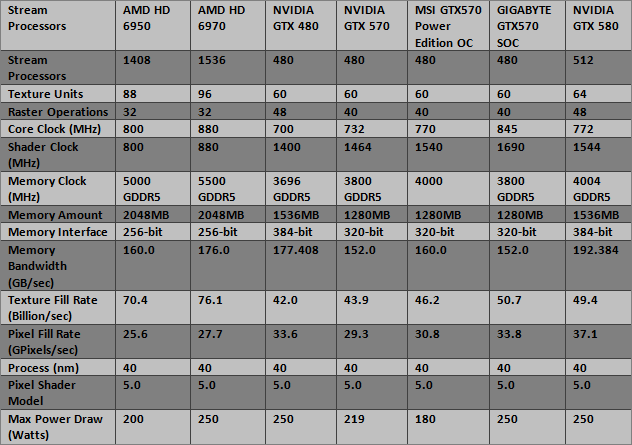
The GTX570 looks to be very competitive against the GTX480, with 8.7 billion GPixels filled and 6.8 billion faster than the stock. Interestingly, the MSI GTX570 Power Edition OC has a TDP of just 180W so theoretically it will consume much less power than the cards nearest competitor on our tests today by some 70W and 39W less than a standard GTX570 while maintaining a higher pixel fill rate than the reference card. Looking at the specification, the only problem I can foresee is the 1.25GB of GDDR5 which may cause some issues at the highest resolutions.
Product Specifications
Product Code: N570GTX Twin Frozr III Power Edition/OC
Cooler: Twin Frozr III
GPU: GTX570
Core Clock: 770MHz
Memory Clock: 4000MHz
Memory Size: 1280 MB
Memory Type: GDDR5
Memory Interface: 320 bit
Interface: PCI Express x16 (PCI Express 2.1)
Output: Dual DVI-I + mini HDMI
TDP: 180W
Dimensions:238 x 111 x 37mm
Product Code: N570GTX Twin Frozr III Power Edition/OC
Cooler: Twin Frozr III
GPU: GTX570
Core Clock: 770MHz
Memory Clock: 4000MHz
Memory Size: 1280 MB
Memory Type: GDDR5
Memory Interface: 320 bit
Interface: PCI Express x16 (PCI Express 2.1)
Output: Dual DVI-I + mini HDMI
TDP: 180W
Dimensions:238 x 111 x 37mm
Let’s take a look at the cards feature set…
Features
At Vortez we pride ourselves in bringing you a complete and thorough review of any product we assess. While other sites skim over this area we feel that reviewing a graphics card of this nature without giving you a complete run down of its feature set would be criminal.MSI Exclusive Innovations
Propeller Blade on Twin Frozr III
– Twin Frozr III Thermal Design which is 22c cooler & 7.7 dB quieter.
– Propeller Blade technology for 20% more airflow.
– Dual 8cm fans with dual 8mm SuperPipes for best heat dissipation
Power Edition Architecture
– Triple overvoltage function support by MSI Afterburner to raise overclock capability.
– 6+1 Phase PWM Design provides better overclock stability.
MSI Exclusive P/S Switch Function
– Dual fan speed profiles–Performance/Silent.
– Performance Mode provides best cooling demand; Silent Mode balances noise and GPU Temperature
Military Class II Components
– SFC (Super Ferrite Choke) has higher current for better overclocking ability.
– Hi-C CAP for GPU provides more precise voltage.
– All Solid CAPs have longer lifespan
Propeller Blade on Twin Frozr III
– Twin Frozr III Thermal Design which is 22c cooler & 7.7 dB quieter.
– Propeller Blade technology for 20% more airflow.
– Dual 8cm fans with dual 8mm SuperPipes for best heat dissipation
Power Edition Architecture
– Triple overvoltage function support by MSI Afterburner to raise overclock capability.
– 6+1 Phase PWM Design provides better overclock stability.
MSI Exclusive P/S Switch Function
– Dual fan speed profiles–Performance/Silent.
– Performance Mode provides best cooling demand; Silent Mode balances noise and GPU Temperature
Military Class II Components
– SFC (Super Ferrite Choke) has higher current for better overclocking ability.
– Hi-C CAP for GPU provides more precise voltage.
– All Solid CAPs have longer lifespan
If you have missed our previous reviews, here’s a brief rundown on what every NVIDIA GTX570 offers:
3D Graphics
•Full Microsoft® DirectX® 11 Shader Model 5.0 support: o NVIDIA PolyMorph Engine with distributed HW tessellation engines
•BC6H and BC7 texture compression formats
•Gather4 extensions
•OpenGL 4.1 support
•Advanced image quality features: o 32× coverage sample antialiasing
•Transparent multisampling and transparent supersampling
•16× angle independent anisotropic filtering
•128-bit floating point high dynamic-range (HDR) lighting with antialiasing; 32-bit per-component floating point texture filtering and blending
•Interactive ray tracing support
•Full-speed frame buffer blending
•Full-speed FP16 texture filtering
•Advanced lossless compression algorithms for color, texture, and zdata
•Support for normal map compression
•Adaptive z-cull
•Early-Z
GPU Computing
•NVIDIA CUDA™ technology—allows the GPU cores to provide performance improvements for applications such as video transcoding, gaming, ray tracing, and physics. API support includes: o CUDA C
•CUDA C++
•DirectCompute 5.0
•OpenCL
•Java, Python, and Fortran
•Third Generation Streaming Multiprocessor (SM) o 32 CUDA cores per SM
•Dual Warp Scheduler simultaneously schedules and dispatches instructions from two independent warps
•64 KB of RAM with a configurable partitioning of shared memory and L1 cache
•Second Generation Parallel Thread Execution ISA o Unified Address Space with Full C++ Support
•Optimized for OpenCL and DirectCompute
•Full IEEE 754-2008 32-bit and 64-bit precision
•Full 32-bit integer path with 64-bit extensions
•Memory access instructions to support transition to 64-bit addressing
•Improved Performance through Predication
•Improved Memory Subsystem o NVIDIA Parallel DataCacheTM hierarchy with Configurable L1 and Unified L2 Caches
•Greatly improved atomic memory operation performance
•NVIDIA GigaThreadTM Engine o 10x faster application context switching
•Concurrent kernel execution
•Out of order thread block execution
Nvidia Technology
•NVIDIA SLI® technology—patented hardware and software technology allows up to four NVIDIA GeForce GPUs to run in parallel to scale performance and enhance image quality on today’s top games.
•NVIDIA PhysX™ technology—allows advanced physics effects to be simulated and rendered on the GPU.
•NVIDIA 3D Vision™ Ready— GeForce GPU support for NVIDIA 3D Vision, bringing a fully immersive stereoscopic 3D experience to the PC.
•NVIDIA 3D Vision Surround™ Ready—scale games across 3 panels by leveraging the power of multiple GPUs in an NVIDIA SLI configuration. Combine with 3D Vision technology for the ultimate 3 panel stereoscopic 3D gaming experience.
Advanced Display Functionality
•Two pipelines for dual independent display
•Two dual-link DVI outputs for digital flat panel display resolutions up to 2560×1600
•Dual integrated 400 MHz RAMDACs for analog display resolutions up to and including 2048×1536 at 85 Hz
•HDMI 1.4a support including GPU accelerated Blu-ray 3D support, x.v.Color, HDMI Deep Color, and 7.1 digital surround sound. See www.nvidia.com/3dtv for more details.
•DisplayPort 1.1a support
•HDCP support up to 2560×1600 resolution on all digital outputs
•10-bit internal display processing, including support for 10-bit scan out
•Underscan/overscan compensation and hardware scaling
Video
• NVIDIA® Pure Video® HD technology with VP4 programmable video processor
•Decode acceleration for MPEG-2, MPEG-4 Part 2 Advanced Simple Profile, H.264, MVC, VC1, DivX (version 3.11 and later), and Flash (10.1 and later)
•Blu-ray dual-stream hardware acceleration (supporting HD picture-in-picture playback)
•Advanced spatial-temporal de-interlacing
•Noise reduction
•Edge enhancement
•Bad edit correction
•Inverse telecine (2:2 and 3:2 pull-down correction)
•High-quality scaling
•Motion Compensation
•Video color correction
•Dynamic contrast enhancement and color stretch
Digital Audio
•Support for the following audio modes: o Dolby Digital (AC3), DTS 5.1, Multi-channel (7.1) LPCM, Dolby Digital Plus (DD+), MPEG2/MPEG4 AAC
•Data rates of 44.1 KHz, 48 KHz, 88.2 KHz, 96 KHz, 176 KHz, and 192 KHz
•Word sizes of 16bit, 20bit, and 24bit
Power Management Technology
•Advanced power and thermal management for optimal acoustics, power, and performance based on usage:
•ASPM power management
•Adaptive Clocking
•Adaptive Power States
•Advanced fan control
•Power and temperature monitoring
Let’s take a look at the packaging and contents…
Packaging & Contents
Box Front
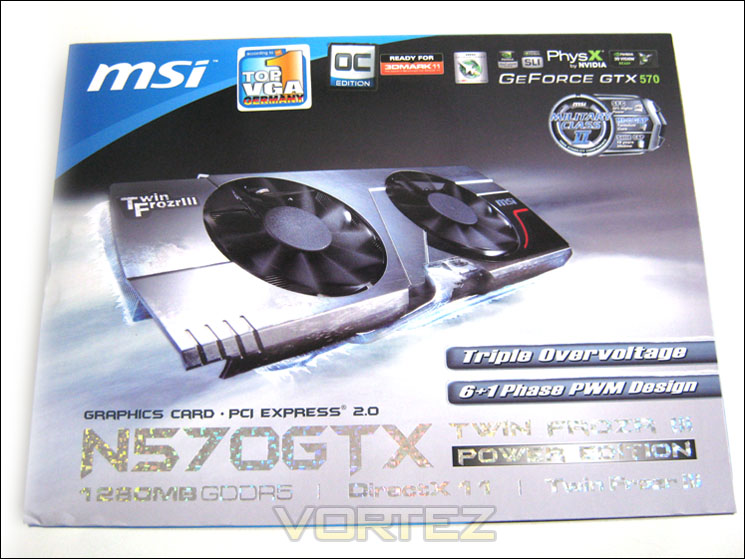
The MSI package is presented in neat yet compact box with the Twin Frozr III cooler dominating proceedings. Framing the iced up cooler are some of the features of the card such as Military Class II components, Triple Overvoltage and 6+1 Phase PWM design.
Box Rear
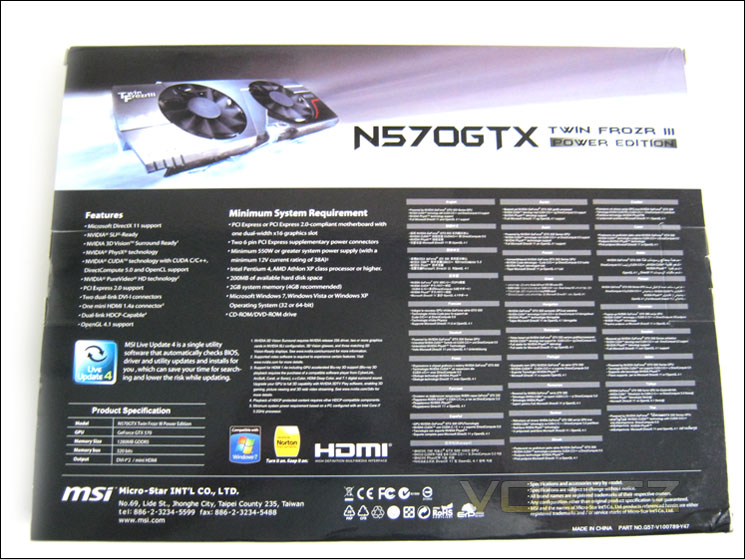
The rear of the box displays the standard features of the graphics card and also highlights the minimum system requirements such as twin 6-pin PCIe power cables and a 550w PSU with a 12v current rating of 38A.
Flip Lid
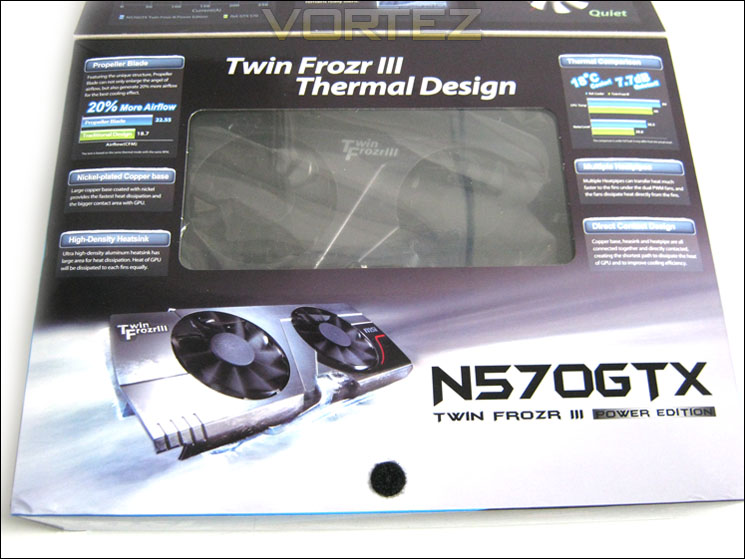
The MSI packaging also features a flip lid where they go into much greater details with regards to the graphics card feature set. Of particular note are the advantages the MSI GTX570 Power Edition OC holds over a reference GTX570. In particular the 40% better Phase PWM design (6+1 vs 4+1 on a reference card) and that the new cooler not only generates 20% more airflow but does so by being 7.7dB quieter and 18c cooler. Bold claims indeed! IF the features don’t interest you then you can always take a peek through the window where we get a first glimpse of the GPU itself.
Box Inner
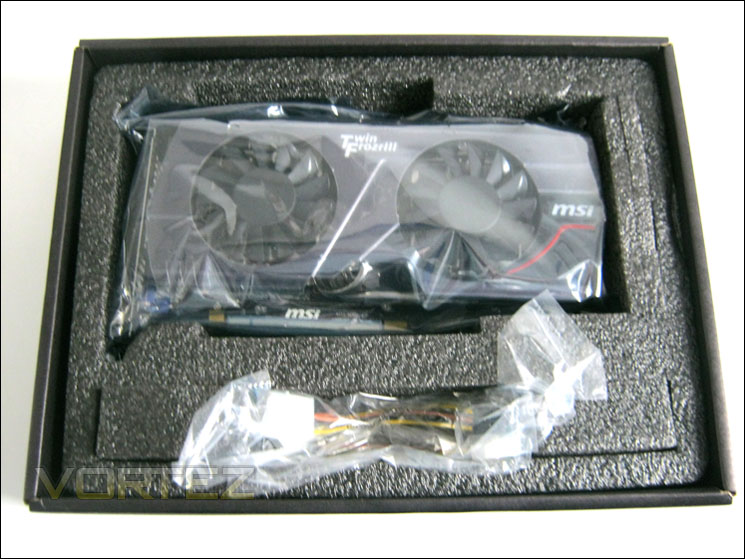
Removing the outer sleeve we are greeted by the inner box, itself having a plastic shield to protect the contents. The card is held in place by a stiff foam inlay which sits atop of a cardboard sleeve that holds the accessories.
Accessories
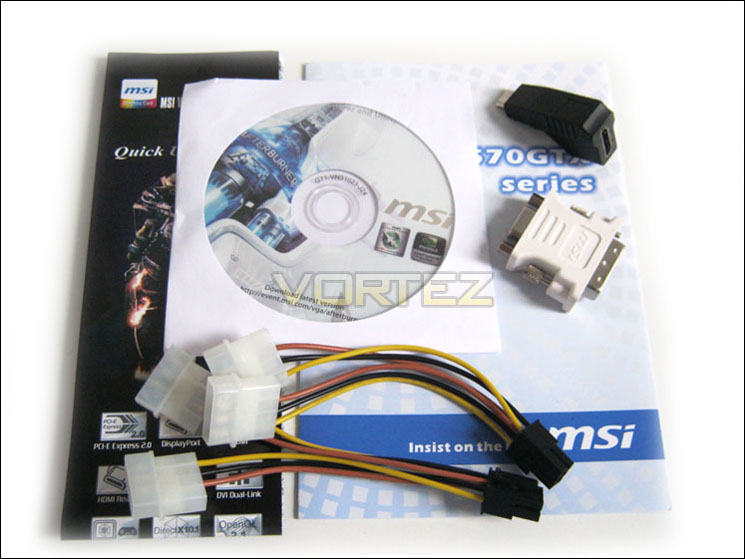
The accessory list includes: Driver and utility disc, 2x twin Molex to 6-pin PCIe adapters, mini-standard HDMI adapter, VGA-DVI adapter, Quick-Start guide and operations manual. Pretty much everything you need to get you started. Sadly, despite the packaging claiming the card is 3DMark 11 Ready, the benchmark is not included nor was there any game coupon.
All in all a nice package overall where I have no complaints other than I would have perhaps liked to have seen a game coupon or a copy of 3DMark 11 thrown in. The packaging itself is top notch and should ensure your product arrives home safely and with the comprehensive accessory list you should have no issues installing the product and getting it up and running in your chosen system.
Let’s take a look at the card itself…
Closer Look Pt.1
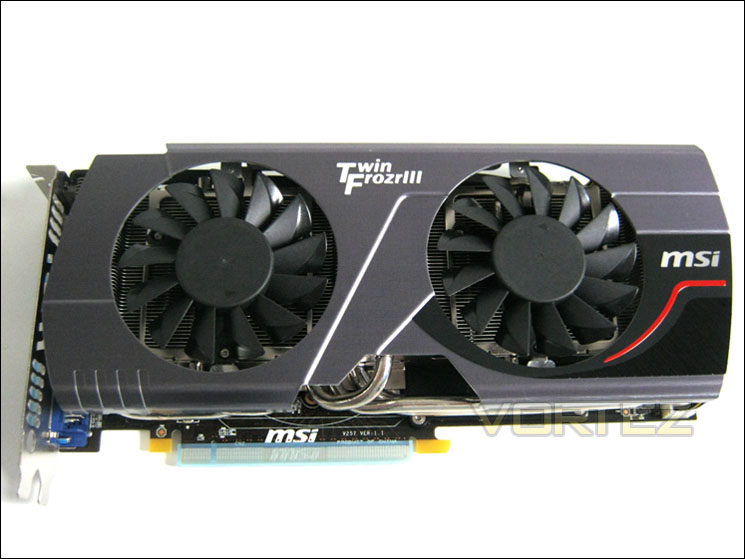
MSI GTX570 1280MB Power Edition OC
Other than the cooler which we will look at in closer detail overleaf, the first thing that struck us was the diminutive size. Measuring just 238mm it is almost 3cm shorter than a reference design! This is a great achievement from MSI and is sure to appeal to those who are short in space. At first glance the graphics card looks strikingly similar to any other card which uses the Twin Frozr design. We would have preferred to have seen a different colour scheme used on the latest design which would help differentiate the Twin Frozr III from the earlier version but that aside, we have no complaints on the cards aesthetic appeal.
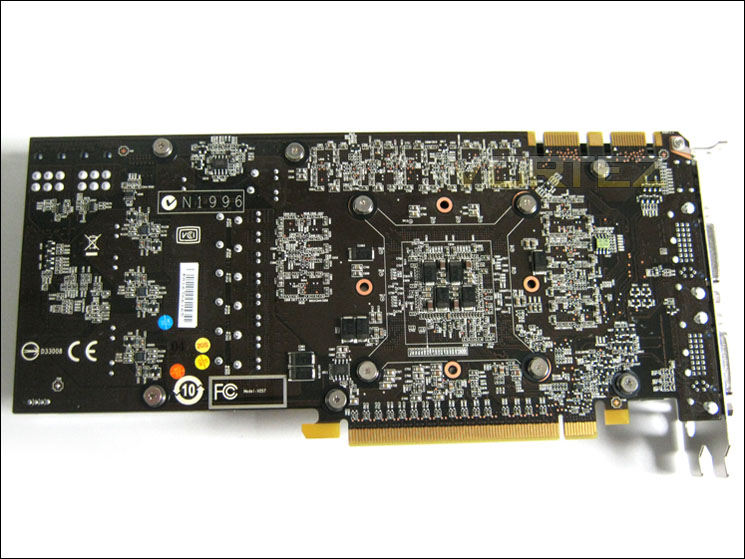
Card Rear
Being a 1280MB model, there are no memory modules found on the rear of the card. Like most GTX570 models there is also no protective backplate so extra care should be taken when installing the graphics card, especially metal clips from your CPU cooler which may catch one of the components on the rear of the card if you are careless.
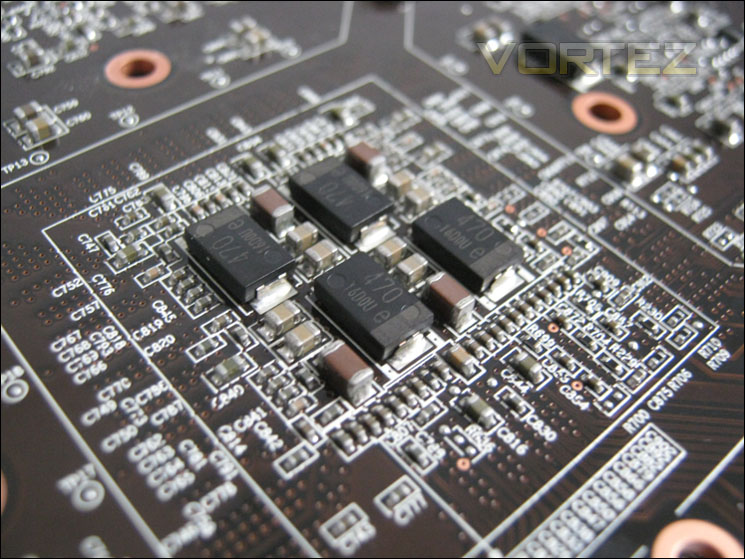
Tantalum Core Capacitors
Here we can see a close up of four of the Hi-c CAP Tantalum core capacitors on the rear of the GPU which offer upto 2,000,000 hours lifespan based upon an operating temperature of 65c. This is just one of the features MSI like to class as Military Grade II components. Although I cannot refute their claims of Military Grade II, they are certainly more robust (and more expensive) than the normal capacitors found on lower specification models.
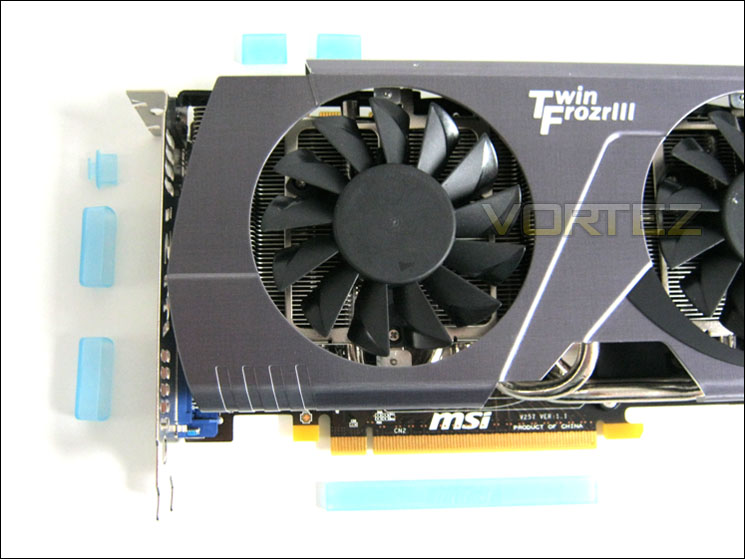
Card Protection
Although this is not the first time we have seen protective blocks for a graphics card it is still worthy of note as MSI have provided a full complement ensuring that all of the connection tabs are protected from damage due to mishandling. There are also two dust protectors for the twin DVI ports and a further protective stub from the mini HDMI port.
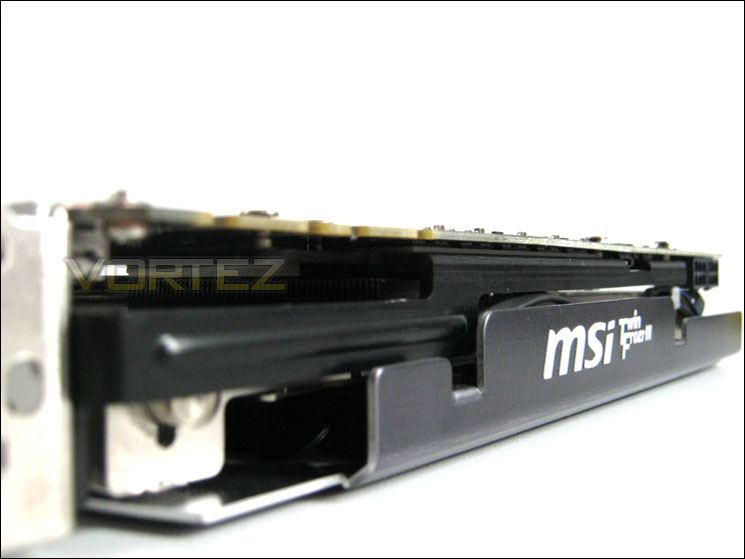
Graphics card brace
Hidden beneath the main cooler frame we see that this card has a brace that keeps the card rigid and straight rather than bowing. We’ll take a closer look at this during the dismantling procedure.
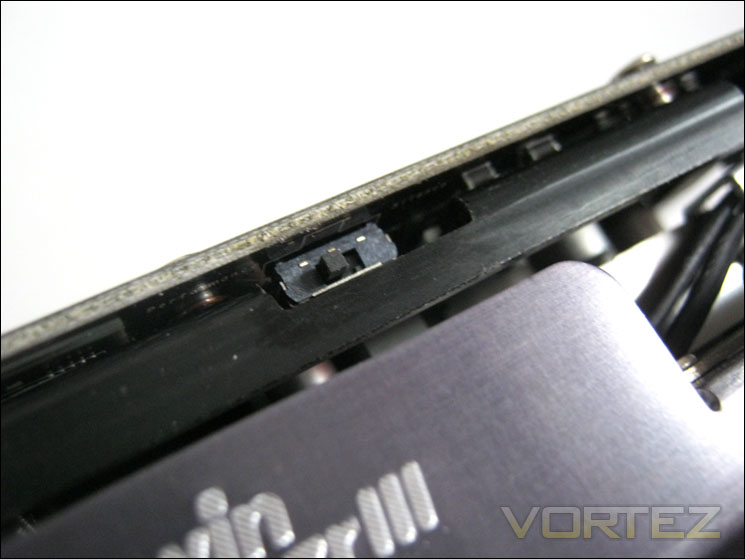
P/S Fan Profile Switch
Rather than make use of multiple BIOS’ the MSI GTX570 Power Edition has a switch on the side of the card that alters the fan profile to either Performance mode which gives the best cooling performance or Silent mode, balancing GPU temperature with noise. I’m not sure of the usefulness of this switch as most people who use the great MSI Afterburner tool will use the fan profiles within there so the card can be effectively placed in silence or performance mode without having to take the side panel from the case. What would have been better would have been a multi BIOS switch allowing users to switch between two different BIOS profiles say for benching or 24/7 use.
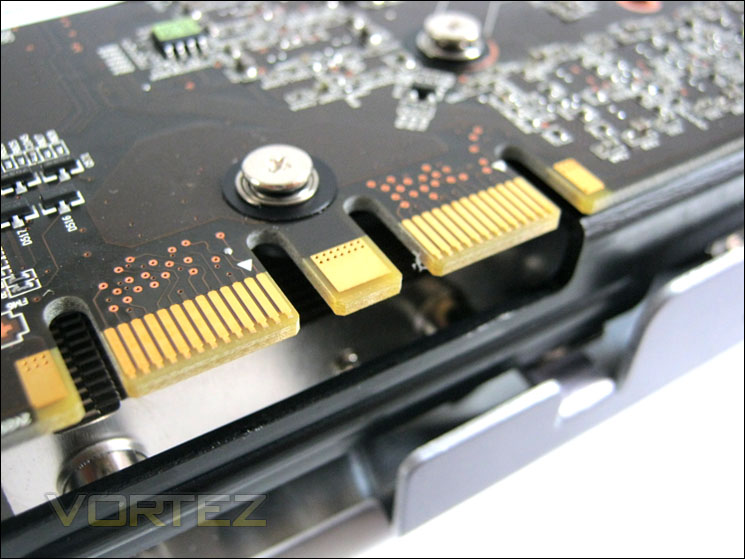
SLI Tabs
As with most NVIDIA graphics cards, and certainly the GTX570 family, the MSI GTX570 Twin Frozr III Power Edition has dual SLI tabs. Despite this card being ‘custom’ it can still be paired up with any other NVIDIA GTX570, be it from another GTX570 from MSI or indeed another manufacturer either in SLI or Tri/Quad-SLI configurations (motherboard permitting).
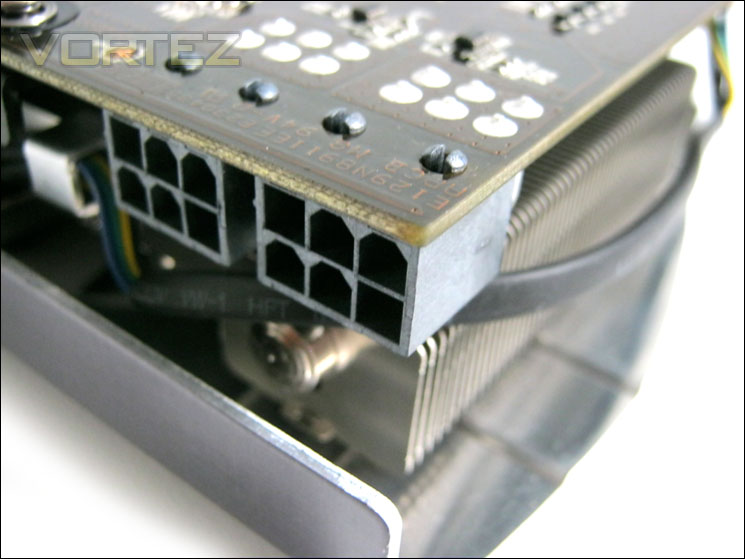
PCIe Power Ports
Unlike the GIGABYTE GTX570 SOC we reviewed previously, the MSI variant only requires 2x 6pin PCIe power ports. If your PSU does not have two PCIe power cables, MSI have thoughtfully included 2x twin Molex to 6pin PCIe power cables. A 550w PSU capable of delivering 38A on the 12V rail is however required.
I/O Backplate
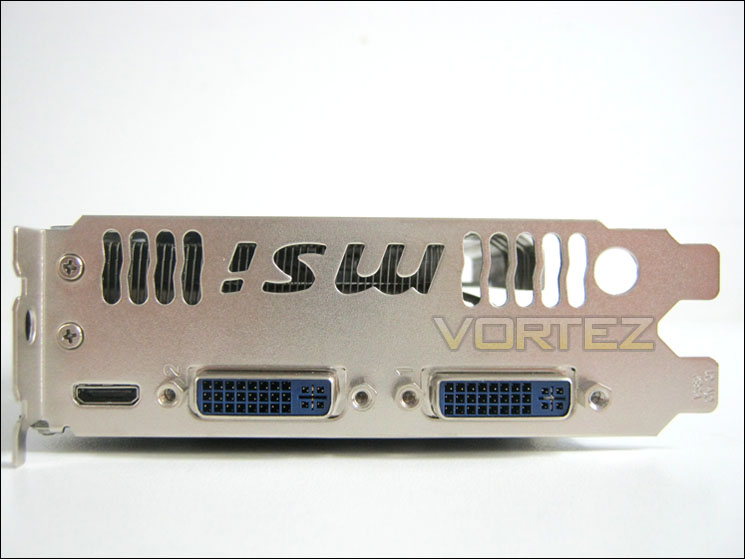
As the card is a custom affair, a none-reference backplate is in place with an MSI cut-out to aid ventilation. As we will see overleaf though, the amount of ventilation required here is minimal due to the cards cooler design. Twin DVI-I ports are available along with a single mini-HDMI port. A nice little touch was including blue DVI-I ports that match the blue of MSI, not that you will even see these of course after installing the card but it again lets you know that you have invested your hard earned cash into a custom, non-reference product.
Creased Paint
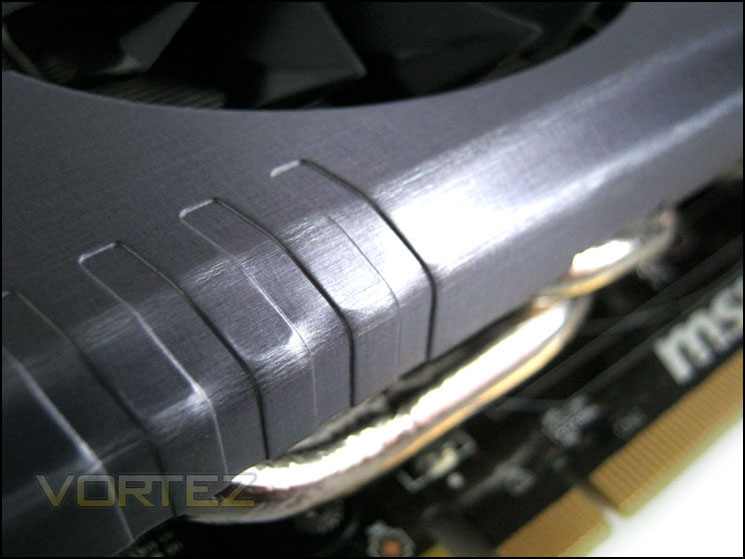
Although I was impressed overall with the MSI GTX570 Power Editions aesthetic value, I was disappointed to see that the cards frame had been folded after it had been painted rather than before. This has resulted in small fractures in the paint as the cooler was moulded into shape. While this may seem pedantic as it is in all honesty, barely noticeable, it does spoil what is overall a very attractive product.
Let’s take a closer look at the card and its revised cooler…
Closer Look Pt.2
Heatpipes
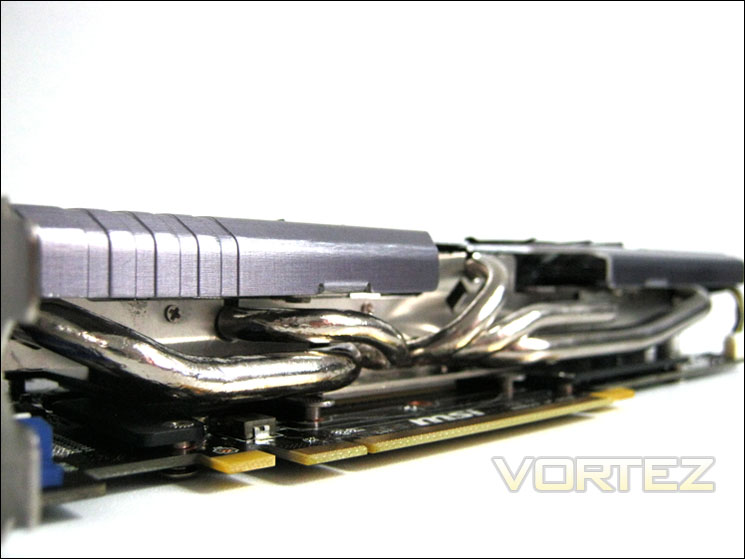
The Twin Frozr III cooler features 5 heatpipes of what MSI call their SuperPipe technology. Two of these heatpipes measure a huge 8mm which will wick heat away from the core much quicker than smaller pipes used on alternative custom coolers from other manufacturers. These large heatpipes are joined by a further three 6mm heatpipes which further help to spread the heat dump onto the aluminium finned cooler.
Cooler Array
Here we can see the heatpipe array itself. Unusually, MSI opted to have the heatpipes closest to the PCIe slot rather than on display. While this does make for a neater appearance, I’m sure most would agree that when they see heatpipes they think power and should you have a windowed case, a graphics card sprouting heatpipes galore is a wonder to behold. That said, the MSI design is meant to be compact and unlike the HIS HD6970 ICEQ cooler which was very over-the-top, the MSI is a much more refined, discreet design.
Solder
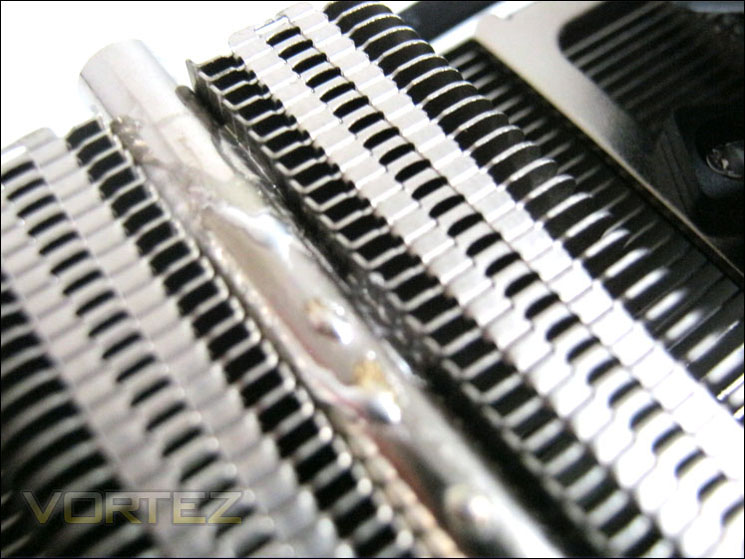
The solder that joins the heatpipes to the fin array appears to have been manually applied rather than using the dip method employed by many other manufacturers. This has the benefit of ensuring good contact is made and while it doesn’t look as pretty, it is not seen and the performance of the cooler should be near perfect thanks to this manual application/quality control process.
Dual 80mm Fans
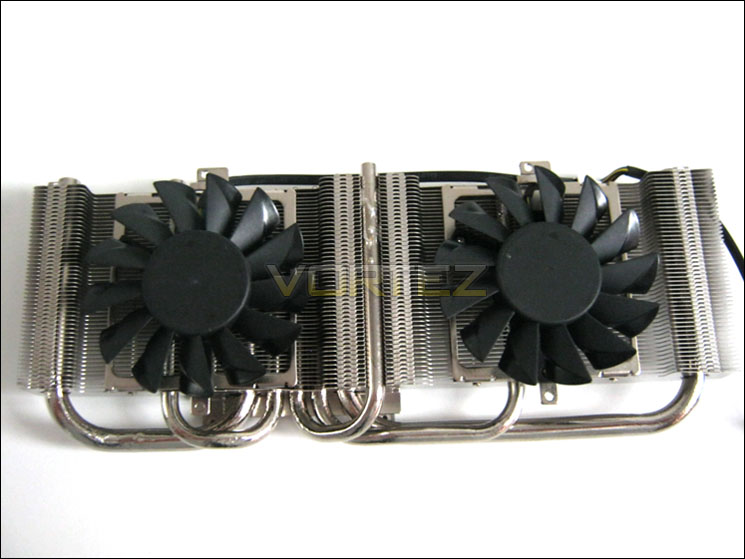
Flipping the cooler the correct way around and removing the frame gave us a better look at the new fan design. The cooler features two slim line 80mm fans which MSI claim deliver 22.7 CFM equates to 20% more airflow than a reference model.
Propeller Blades
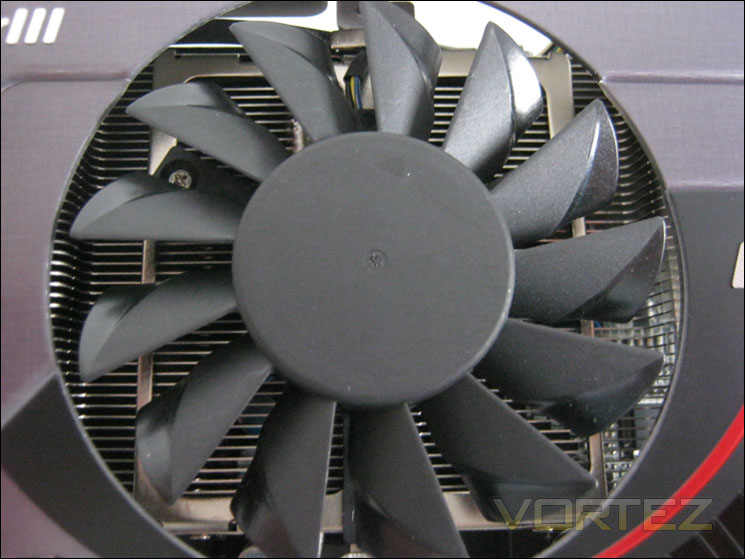
The fans have been redesigned and are aptly named ‘Propeller Blades’. This is an exclusive MSI innovation and ensures the widest possible area is cooled by the two fans allowing the GPU, memory and power module to run at the coolest temperatures possible.
Nickel Plated Copper Base
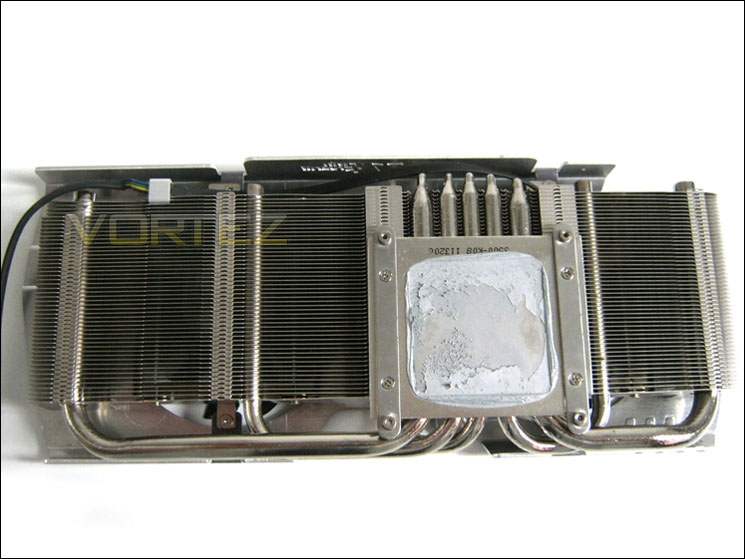
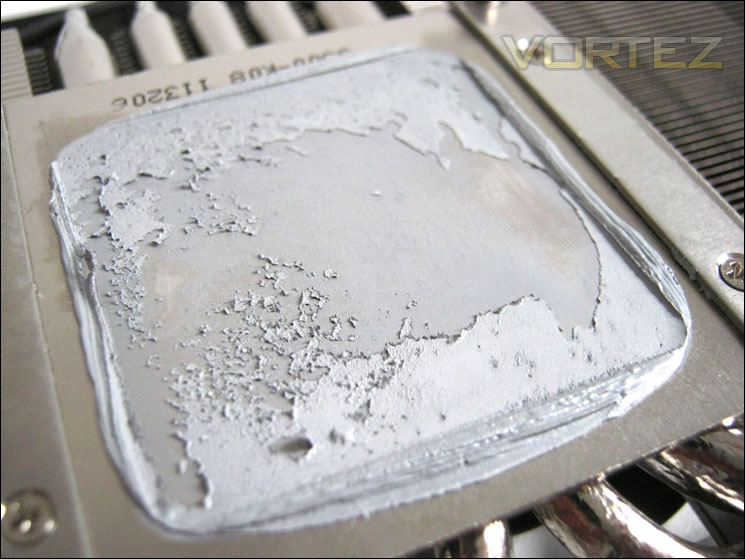
The cooler made perfect contact with the GPU with just the right amount of quality thermal interface material being applied. The cooler baseplate is nickel plated copper so while this is not a Direct CU type cooler where the heatpipes make direct contact with the GPU, the quality materials used should ensure very efficient heat transfer.
Cooling Bracket
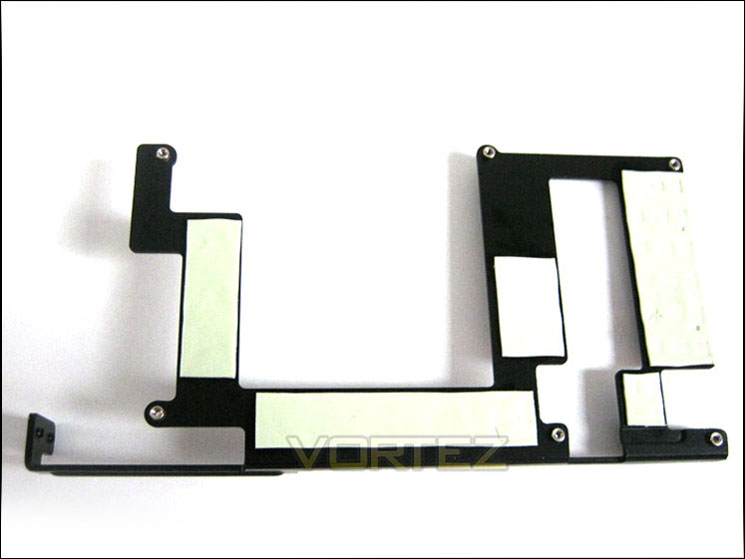
With the main cooler removed we see that MSI have also included an all-in-one cooling bracket. This has dual benefits in that it assists in keeping the VRM and memory cool but also strengthens the card, preventing it from warping which we have seen numerous times on graphics cards before with heavy coolers attached. The bracket has thermal pads beneath providing perfect contact to the uneven VRM module and the memory chips.
MSI GTX570 Power Edition Naked
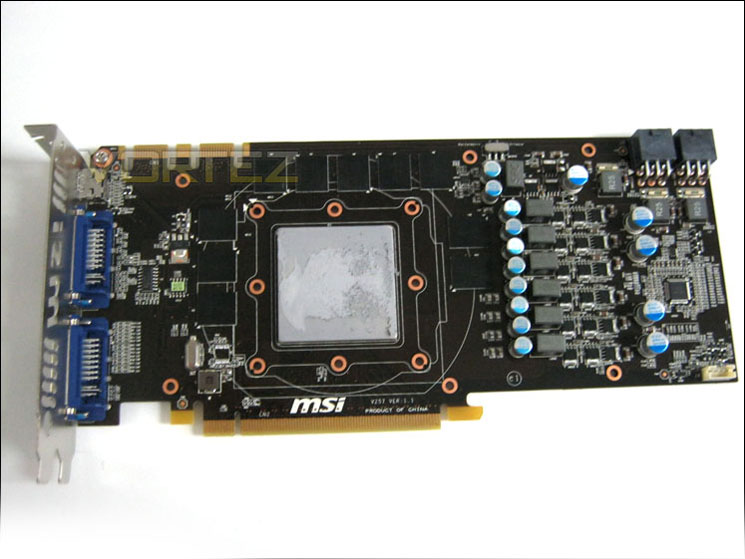
With all of the cooling removed, we finally get to see the heart of the graphics card. I didn’t notice when I first viewed the card that the PCB is actually a very dark brown rather than the black PCB’s we have become accustomed to here at Vortez. Personally, I prefer black but it is unlikely you would notice in all but the strongest light. The main GPU is framed by ten 128MB modules with the power regulation found towards the rear of the card as with most GPU designs of today.
Hynix Memory
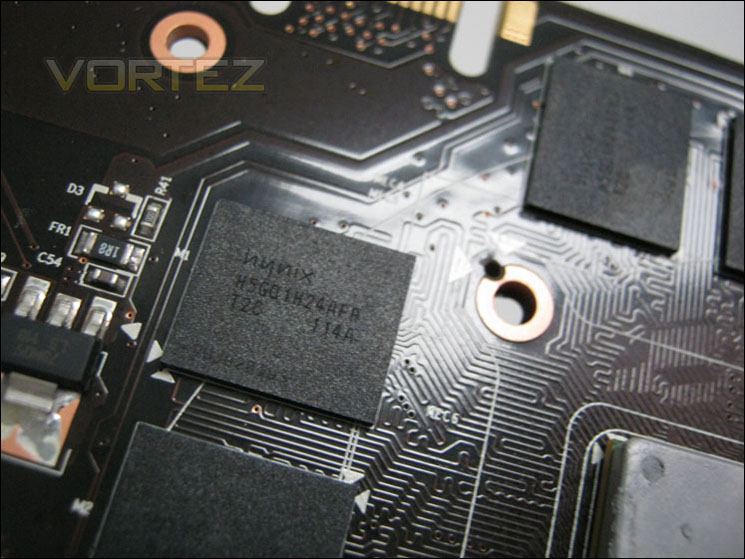
The memory used on today’s review sample is the H5GQ1H24AFR – T2C variant hailing from HYNIX. The memory is specified to run at 1.25GHz (5GHz effective) when set to 1.5v so we will see if we can reach this speed later in the review as the card’s memory is clocked as standard to 1GHz (4GHz effective).
Power Regulation Module
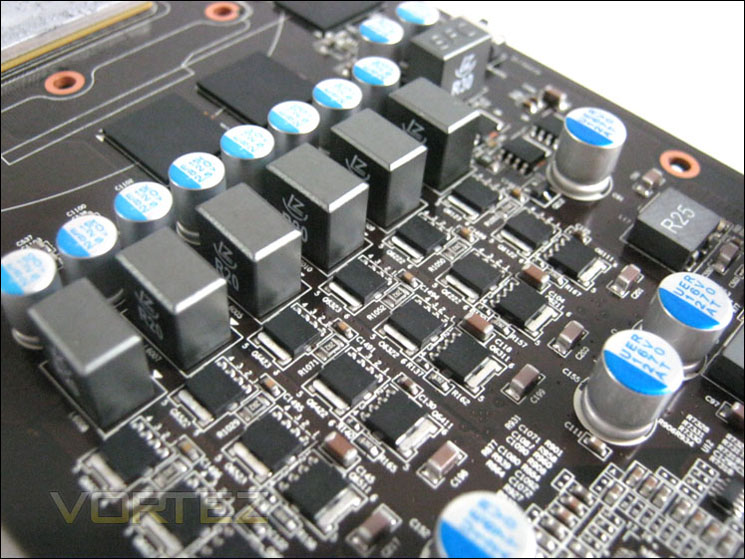
Unlike reference GTX570’s that make do with a 4+1 power phase array, the MSI GTX570 Power Edition utilises and additional two power phases. This setup provides an additional current to the GPU which in turn should ensure the card receives enough juice to combat stability problems at high, overclocked frequencies. Super Ferrite Chokes are coupled with Solid Capacitors and Hi-c Capacitors with tantalum cores which are 15% less prone to leakage and according to MSI, are the same used on the Space Shuttles hence the Military Class II insignia.
Let’s move on to today’s Test Setup…
Test Setup
We have recently made a slight amendment to our selection of hardware and our test setup. The reason for this is that we felt the current crop of resolutions were not stressing the latest generation of graphics cards enough. With this in mind, we have added a Dell 3007 WFP-HC to our system, allowing us to stress the cards by utilising a 2560×1600 resolution. We will however, still include 1920×1200 results as this is one of the most popular resolutions used by gamers.Display – Dell 3007 WFP-HC
Case – Corsair 650D
CPU Cooler – Corsair H100
CPU – Intel Core i7 920 @ 4GHz
RAM – 6GB (3x2GB) Kingston DDR3 1600mhz 8-8-8-20 C1
Motherboard – ASUS Rampage III Extreme
Power Supply –Antec High Current Pro 1200W
Hard Drive – GSkill Falcon 128GB & Hitachi 250GB
Please note: PSU requirements
While a 550w PSU is recommended by MSI for a single card configuration I feel it is important to stress the need to use a quality PSU. All to often we are contacted by people encountering difficulties in powering and overclocking high spec systems who insist they are using a high wattage PSU. Do not be fooled by inferior, poor quality power supply units that claim high wattage figures. At best a poor PSU will not be able to maintain those values and perhaps more importantly could potentially be a fire hazard! PSU rail stability can have a dramatic effect on overclocking too so while it may appear that the component is at fault, it could very easily be the PSU that has high amounts of ripple which is causing the hardware/overclocking errors.
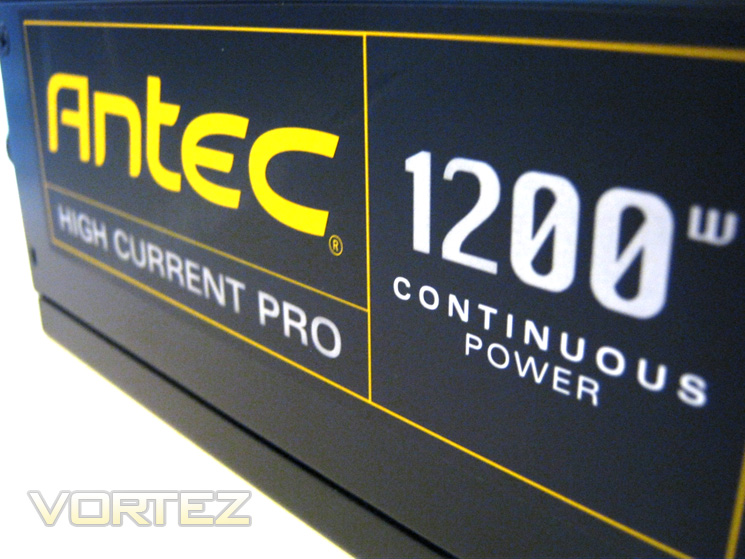
A PSU is the single most important component in a modern high powered PC. If you are going to spend money in any area of your PC, the PSU should be considered first as a quality sample will likely out last any other aspect of your PC and thus investment in a good example is a very wise decision. For this reason ANTEC have kindly sponsored our test bed by providing the immense, top quality High Current Pro 1200W PSU which will satisfy even the most power hungry of PC configurations! PSU’s of this calibre are at the very top of the performance hierachy and while they may seem expensive compared to inferior quality PSUs, they are worth their weight in gold as a PSU such as the ANTEC High Current Pro 1200W provides both future proofing and perhaps most importantly, piece of mind that your valuable PC components are in safe hands.
Graphics Cards:
MSI GTX570 1280MB Power Edition OC – Forceware 280.26
– **NOTE – New Driver Installed**ZOTAC GTX580 3GB AMP2! + SLI – Forceware 275.33
GIGABYTE GTX570 1280MB ‘SOC’ Edition – Forceware 275.33
ZOTAC GTX560 1GB AMP! Edition 950/4200MHz – Forceware 275.33
SLI NVIDIA GTX560 1GB 950/4200MHz – Forceware 275.33
HIS HD6970 2GB IceQ Mix@ 880/5500MHz – ATI Catalyst 11.5
Lucid HydraLogix = HIS HD6970 2GB IceQ Mix & MSI nGTX580 3072MB Lightning Xtreme Edition @ Factory clockspeeds
MSI nGTX580 3072MB Lightning Xtreme Edition @832/4200MHz & 975/4400MHz Overclocked – Forceware 275.33
ASUS HD6990 @830/5000MHz & AWSUM enabled (pre-overclocked) 880/5500MHz & Further Overclock of 930/6000MHz – ATI Catalyst 11.5
HIS HD6970 2048MB IceQ Turbo @ 900/5600MHz Pre-overclocked & 1000/6000MHz Overclocked – ATI Catalyst 11.5
Gigabyte GTX560 1024MB @ 830/4008MHz & 841/5016MHz Overclocked – Forceware 275.27
MSI R6970 2048MB Lightning @ 940/5500MHz Pre-overclocked & 1010/6000MHz Overclocked – ATI Catalyst 11.4 (8.840.3.0)
Inno3D GTX560Ti 1024MB @ 820/4008MHz & 950/4300MHz Pre-overclocked –Forceware 266.66
Inno3D GTX570 1280MB @ 732/3800MHz, 800/4000MHz Pre-overclocked & 901/4220MHz Overclocked – Forceware 263.09
ASUS GTX580 1536MB @ 782/4000MHz & 903/4220MHz Overclocked – Forceware 262.99
ASUS HD6970 2048MB @ 890/5500MHz & 949/5896MHz Overclocked – ATI Catalyst 11.4 (8.840.3.0)
Driver versions are extremely important when comparing a graphics card. It is however often important to update a driver version, especially when a new GPU is released and thus any change in driver will be clearly stated.
Overclocking
For today’s review we will use the Afterburner utility from the MSI to overclock the test subject.
Games:
Crysis Warhead
Metro 2033
Dirt 3
Mafia II
Battlefield: Bad Company 2
Far Cry 2
Alien vs. Predator
The games above represent equal bias toward both AMD and NVidia and are among the most demanding games available at present. Future releases will be evaluated for consistency and accuracy and then potentially added to the list when they become available
Synthetic benchmarks:
Futuremark 3DMark 11
Unigine Heaven 2.5
Tessmark 0.2.2
Furmark 1.9.0
Synthetic benchmarks are used to stress each feature of a GPU which may not be present in today’s games. While nothing is certain, the benchmarks above do at least give us an insight into the possible future performance of the graphics card on test, invaluable when evaluating the potential lifespan of a graphics card.
Temperature, power consumption and acoustics:
Furmark 1.9.0
The above application is feared by most manufacturers as it has been known to destroy GPU’s. While it is not indicative of ‘real world’ performance, it does represent the maximum possible stress your GPU could be placed under making it the hardest test to pass. For that reason alone, it is worthy of inclusion in our suite of benchmarks. Power consumption will be evaluated from the wall and will be a total system draw of the specification above.
Sound will be measured from a distance of 20 cm from the actual GPU with the case open. All system fans will be set to their lowest settings. Readings will be taken at both idle and 100% load.
Bundled Software
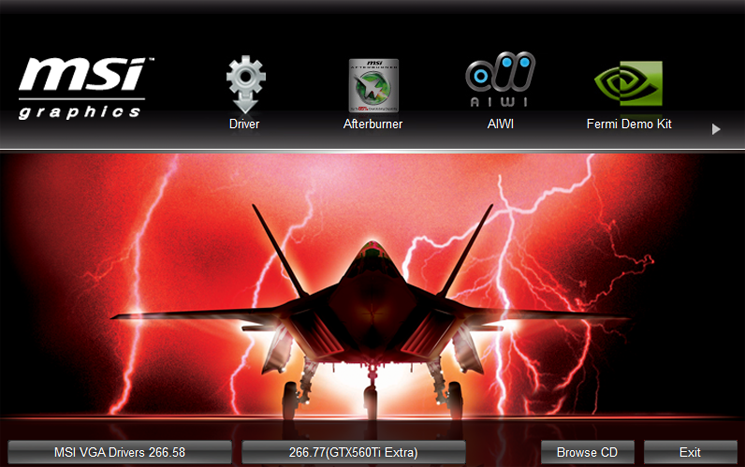
The bundled driver CD contains a wealth of utilities either directly contained on the CD or via download links. As with all driver CDs, it is certainly worthwhile using the most up-to-date driver obtained from the manufacturer website which will likely have more fixes and updated performance than the outdated (Forceware 266.58) ones found on the CD itself. For testing we used the latest official driver from NVIDA, Forceware 280.26.
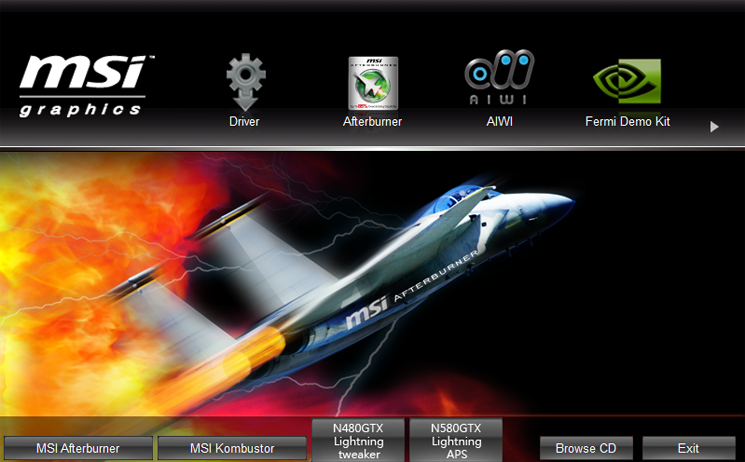
First up we see that MSI have included there very popular Afterburner Overclocking and monitoring software. I would however recommend downloading the latest Beta version, (beta 5 at the time of writing this review). Afterburner is perhaps the best overclocking tool on the market at present and the latest version available on the MSI website caters for most popular NVIDIA and AMD graphics cards.
Kombuster is also included which is a tool that will stress a GPU to its absolute limits. Based on FurMark technology and created by Ozone3D, this utility synthesizes the maximum stress a GPU will be placed under. While no games are currently able to put a GPU under so much pressure, utilities such as this are a good benchmark to assess a ‘worst case’ scenario and are therefore invaluable when overclocking to judge for stability as they will pick up artifects much quicker than a game, cutting the amount of time it takes to find a maximum, stable overclock.

AIWI is a unique software that connects your PC to your iPhone/iPod touch. Once they are connected, you can use your iPhone/iPod touch as a wireless keyboard or touchpad, assist you in a presentation or anytime you wish to remote control your PC.

Included in the bundle is a trial version of Cyberlinks DVD solution; an all-in-one package allowing the user to play back, edit, burn, store and copy DVD content.
There’s also a 60 day trial of the popular Norton Internet security software should you find your own Internet security not up to the task.
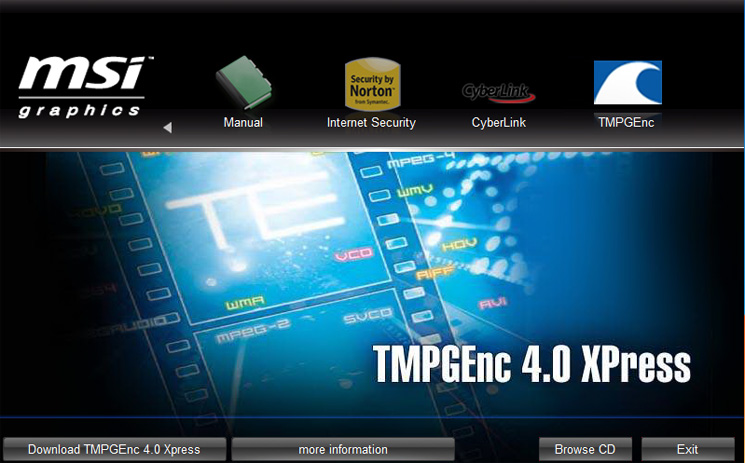
There’s a free copy of TMPGEnc included too which allows the user to encode and compress video files to your chosen file format.
Finally there is the MSI Live Update utility which can either manually or automatically search, download and update your graphics cards BIOS and drivers.
Overall the bundled software is of good quality. The Afterburner tool is essential in my opinion when overclocking, such is the polished operation of this utility. My one major gripe is that there is no headlining game included with the graphics card nor is there an copy of Futuremarks 3DMark 2011 benchmark despite the packaging saying it is 3DMark 11 ready which was a shame.
Enough of me talking, it’s time to put the card to the test…
Overclocking & Temperature Analysis
While the MSI GTX570 Power Edition OC arrives pre-overclocked from the factory, I wanted to see just how much further the graphics card could be pushed just by using the bundled software.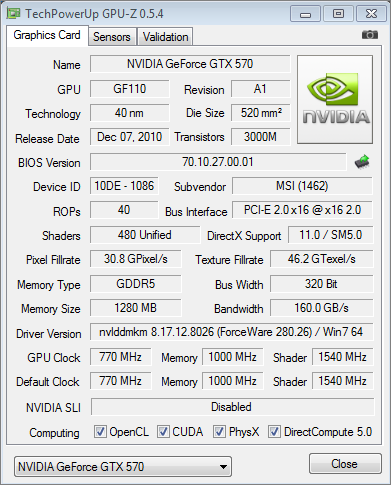
As you can see, the stock settings of the card are 770MHz on the core with an effective 4000MHz memory speed resulting in a shader speed of 1540MHz.
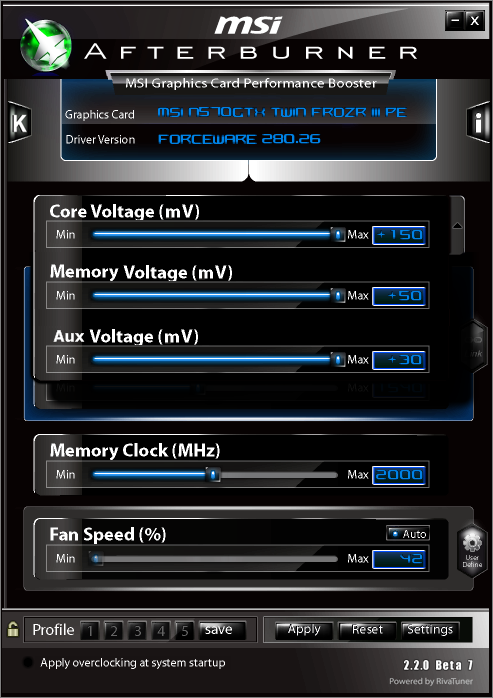
Using MSI’s own Afterburner tool (2.2.0 Beta 7), I maxed out all of the available voltages, Vcore (+150mV), Memory (+50mV) and Aux voltage (+30mV) to give us the freedom to push the graphics card as far as feasibly possible. To overclock the cards frequencies we again used Afterburner.
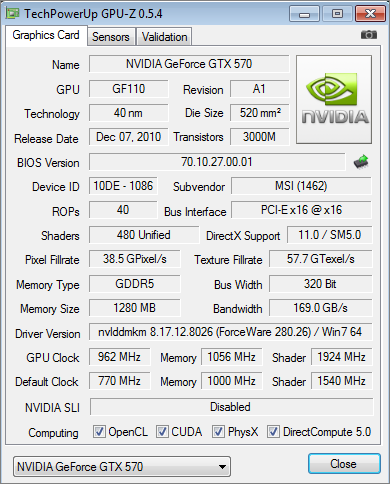
The maximum overclock I achieved was very good 962MHz on the core and 4224MHz on the memory. While I could get quite alot more on the memory with the core at stock speed, having both clocked up caused stability issues, I therefore opted to keep the core overclock and reduced to the memory overclock until stability was attained. The Core clock too would surpass the 980MHz mark which was a great acheievement but again, during testing this proved unstable under the most stressful conditions so I settled for the overclocks above and used these clockspeeds to assess the cards overclock capabilities compared to the stock values throughout our benchmark testing.
Core temperatures
To measure the temperature of the card we first measure the ambient temperature. Our review station resides in an air conditioned room with the temperature set to a comfortable 23c.
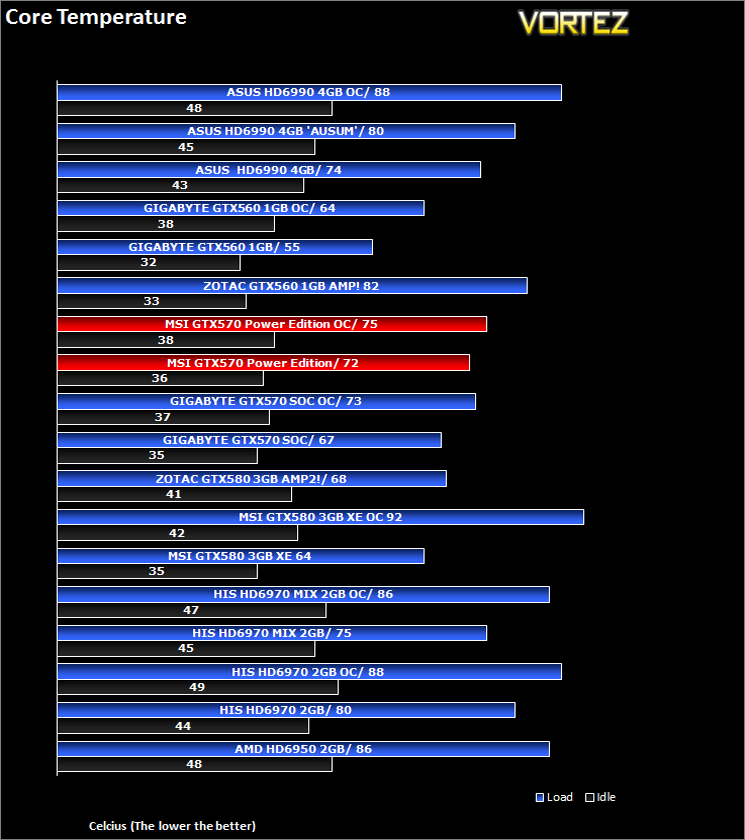
Under idle conditions, the card sat at cool 36c. When placed under load the card still performed extremely well at stock speeds maxing out at a cool 72c. This is a a little warmer than the GTX570 from GIGABYTE but still a very good effort. The tables however were turned when the card was placed under the highest load with the MSI card beating its GIGABYTE competitor by a single degree. This however could be due to the faxct the GIGABYTE was running slightly higher clockspeeds so all things considered I would place the MSI and GIGABYTE coolers neck and neck as far as cooling performance goes.
Let’s take a look at the accoustics and power consumption of the MSI GTX570 Twin Frozr III Power Edition OC…
Accoustics & Power Consumption
Acoustics
A feature often overlooked when purchasing a graphics card is the noise that it emits. We all hear (no pun intended) of graphics cards that run like a jet engine which can have a detrimental effect on a gaming session, regardless of the FPS it churns out. It is therefore extremely important that a graphics card should operate as quietly as possible.
To test for this we will be using a sound meter and microphone setup which will be placed 20cm away from the GPU. The test will take place in a quiet (not sound proof) room with the results for the GPU fan at low (30%) and highest (100%) settings.
Results
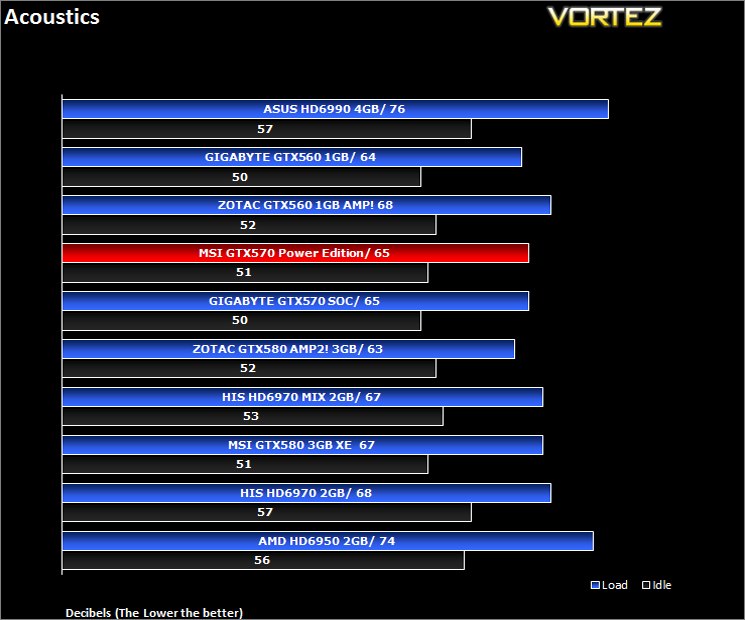
The MSI graphics card is inaudible over the case fans when idle. Even when the card was placed under the most extreme load it didn’t rise to uncomfortable levels. That’s where the good news ends though as when the fan is manually adjusted to run at 100% it emits a high pitched whine. I am however, pleased to report that during testing it did not require anywhere near this setting to maintain temperatures well below throttling point so it is extremely unlikely unless you have very poor case airflow that this high pitched noise would be witnessed with the fan on auto setting.
Power Consumption
For this test, we will be using a wall meter with the test setup plugged in minus the Monitor. Readings were taken at both stock and overclocked conditions each having readings also taken in idle and 100% load (Furmark). FurMark is perhaps not indicative of a true gaming environment and indeed is not recommended by NVIDIA or AMD to test stability of a card but in my view, much like Prime95 for CPU’s, it puts the graphics card under the highest possible stress and presents a good ‘worst case’ scenario. So while it is unlikely your card will ever be stressed as much under normal conditions, it is a good indicator of a theoretical maximum.
Results
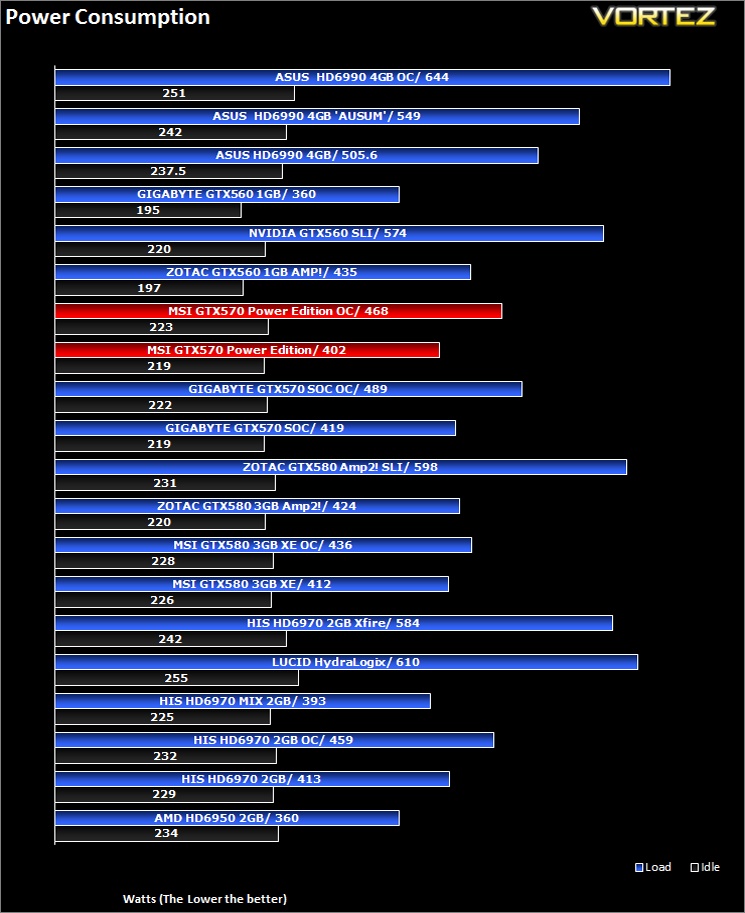
The power consumption of the GTX570 is par for the course in stock (factory-overclocked) format consuming just over 402W (system draw) from the wall. Even when maximum voltages and clockspeeds were dialled in, the system did not consume an excessive amount and comfortably ate less energy than the cards closest competitor in our test, the GIGABYTE GTX570 SOC.
Let’s see if the card can continue this excellent performance in our suite of benchmarks…
Crysis 2
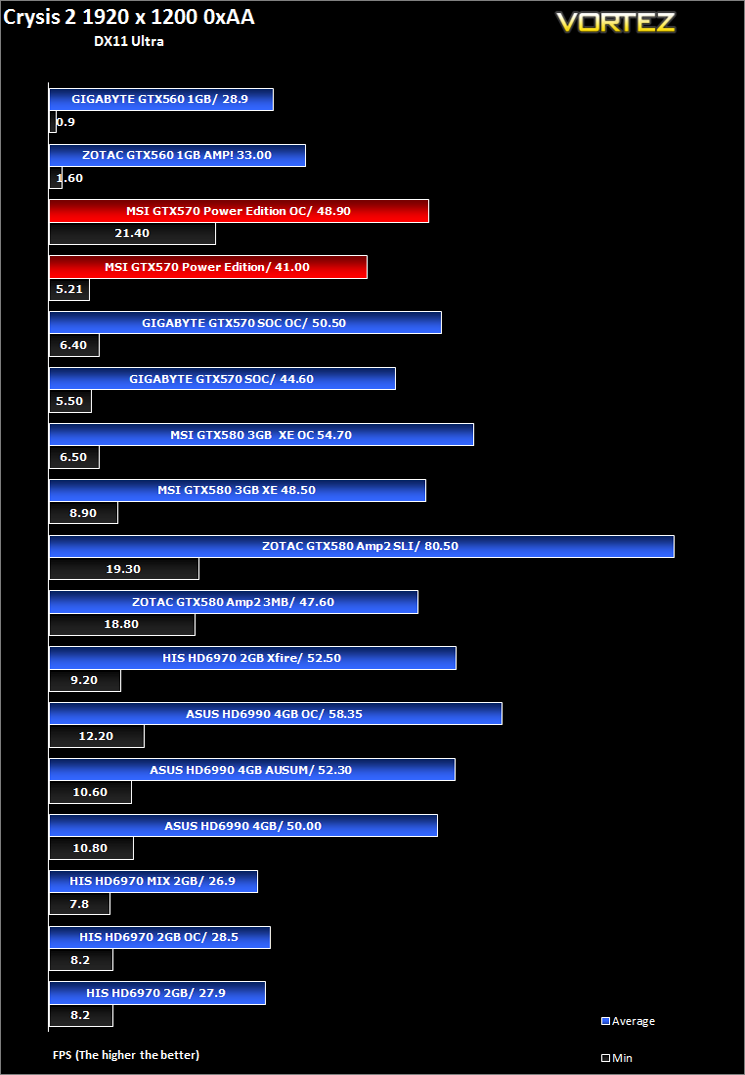
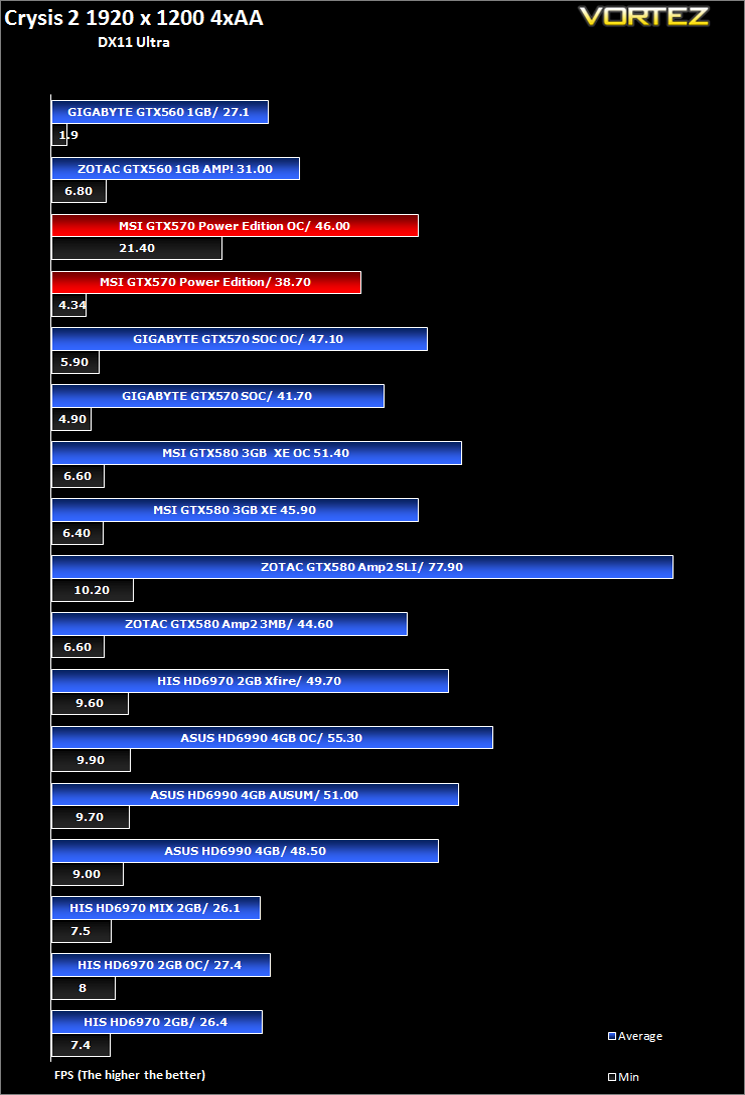
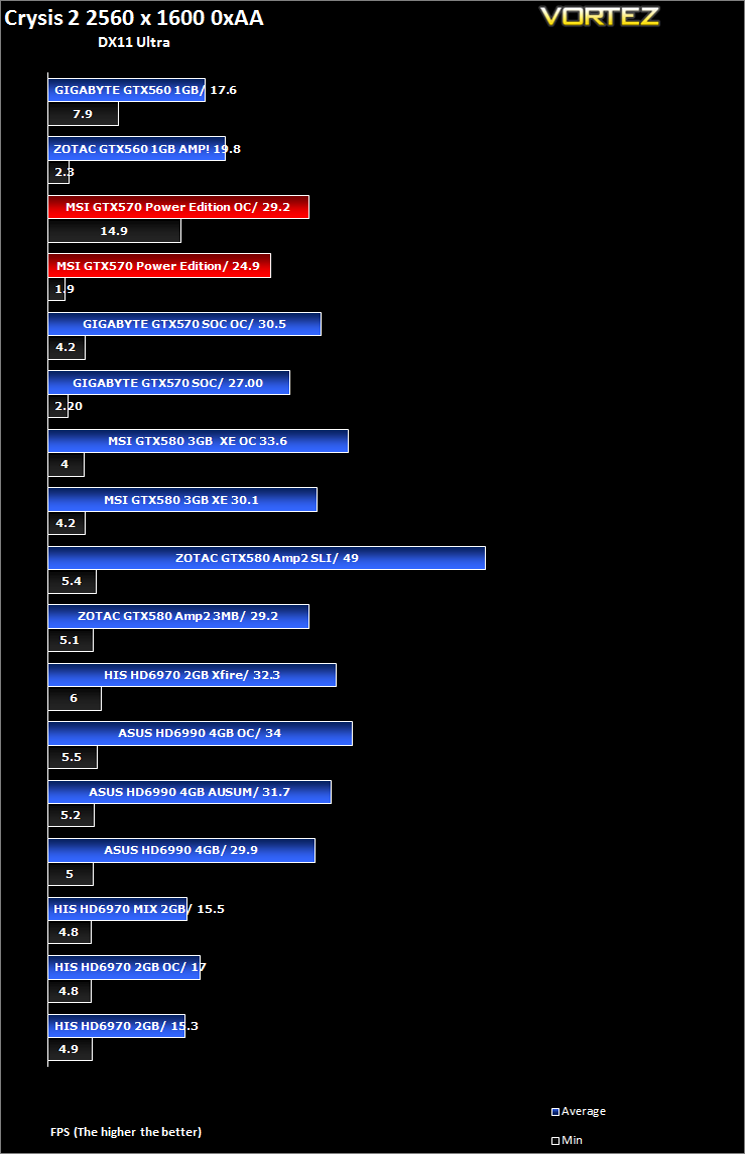
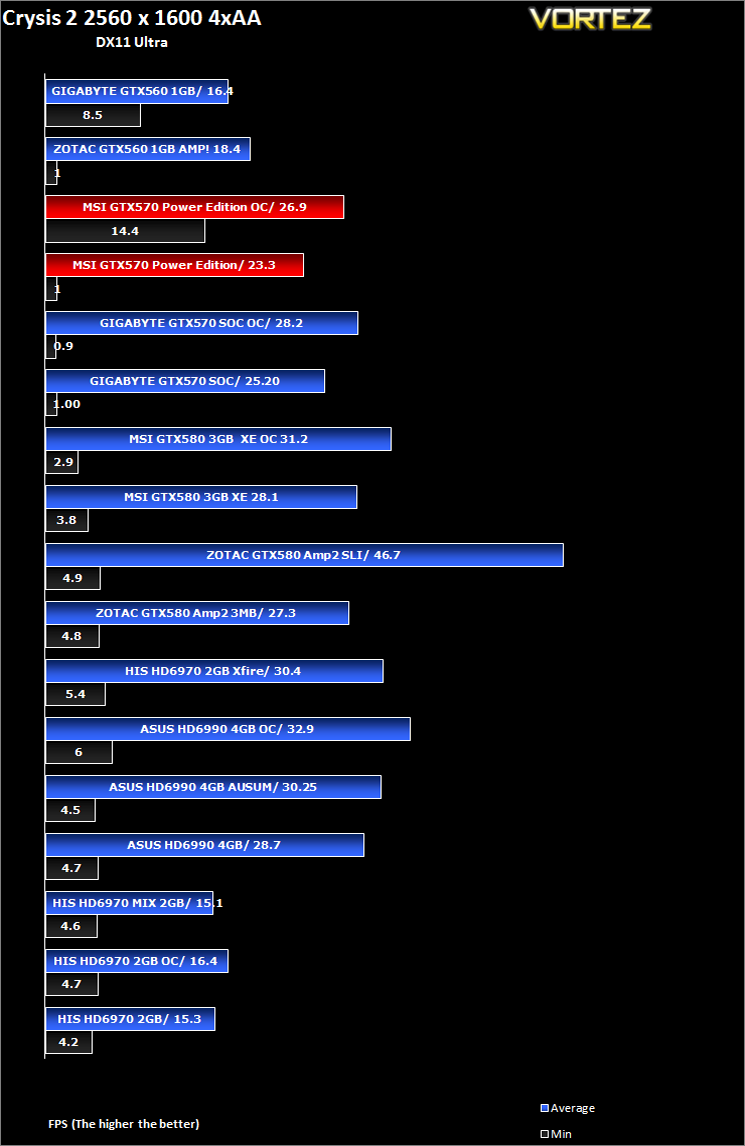
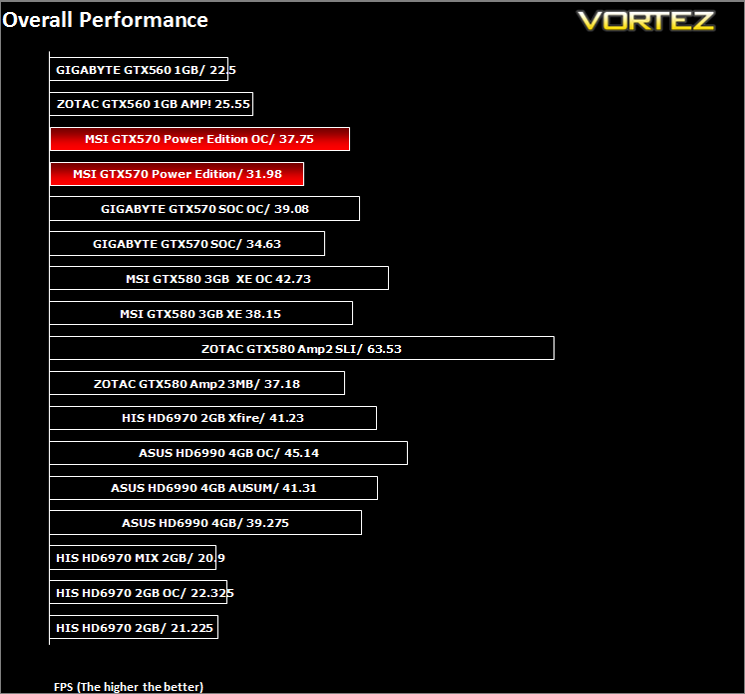
Crytek took an internet beating from its loyal fans due to the fact that they pandered to the console masses and dumbed down the graphics to DirectX 9. Fortunately, fans of the PC version of Crysis managed to force Cryteks hand and they have since developed a DX11 patch and have also enhanced the textures with added tesselation. It is for this reason that we have decided to include it in our suite of benchmarks.To test the cards we used the Crysis 2 benchmark courtesy of Adrenaline with both the 1.9 patch, DX11 update and Hi-res texture pack. Settings were manually placed to Ultra, DX11 and tessellation enabled with the Central Park map being run 3 times per resolution benchmark test.
Crysis Warhead
Following the success of Crysis, the stand alone expansion “Warhead” was hotly anticipated to bring more game play, more weapons, improved visuals whilst maintaining better performance, the latter being what gamers wanted most. After all how many people upgraded their rigs just to play this game… In the game, you play as the upbeat Brit Sergeant “Psycho” Sykes, chasing down a Korean nuclear warhead. Throw in some ice shooting aliens and we’re bound to have a great game. It sure delivered.Testing was done using Framebuffer’s Crysis Warhead benchmarking tool. The tests were configured to DirectX 10 at Enthusiast levels. Each test on the Ambush map was looped three times from which the average FPS was recorded.
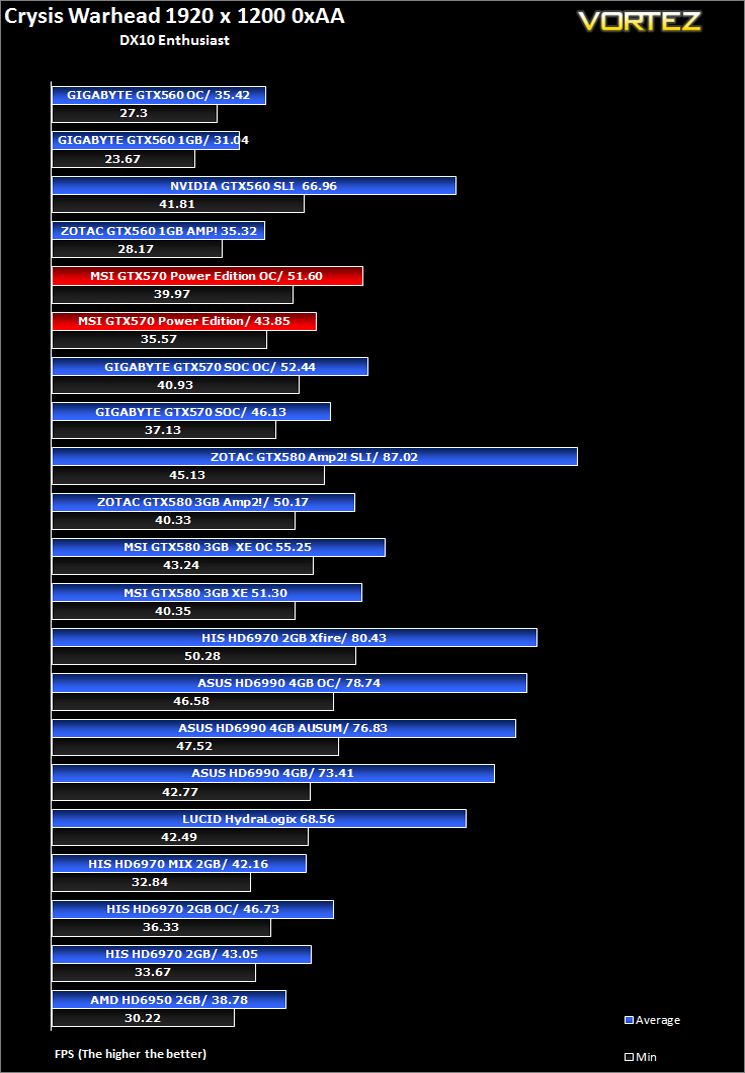
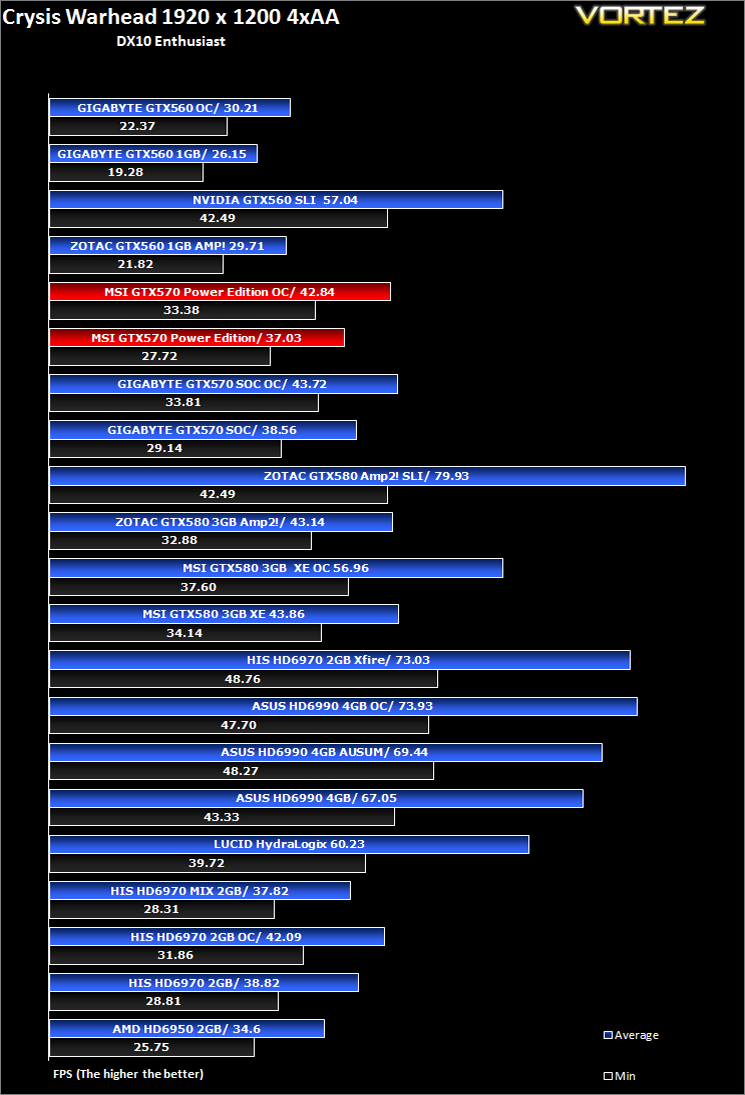
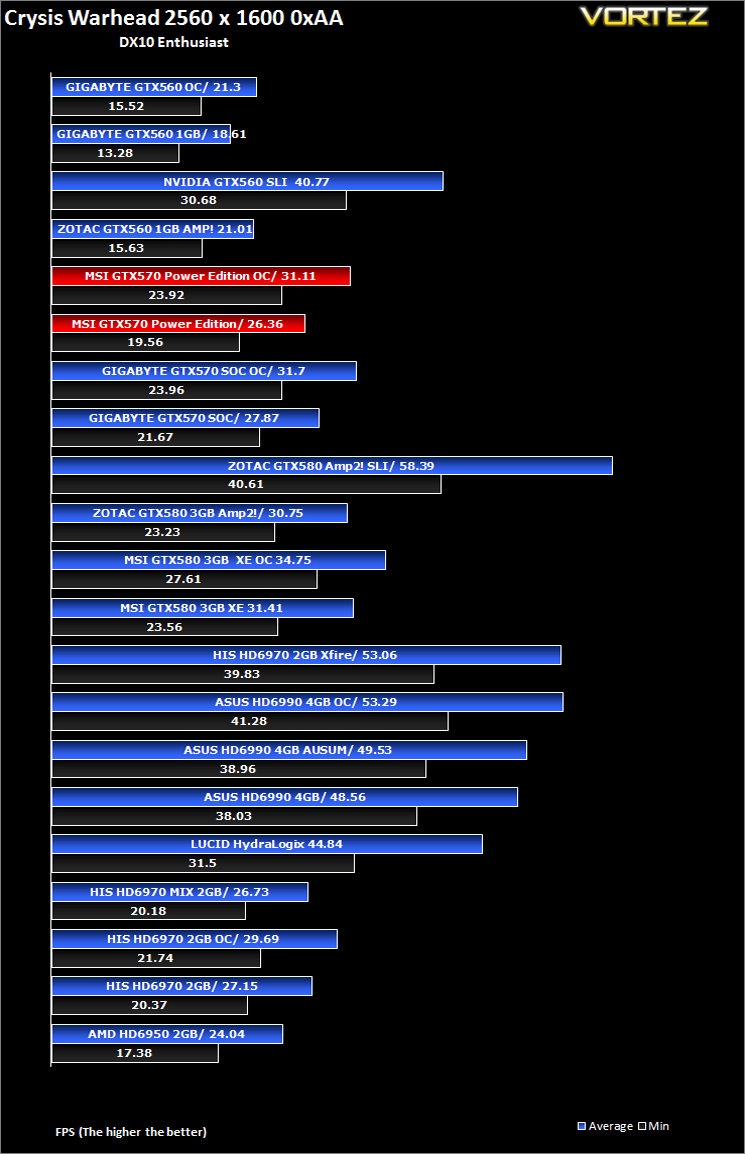
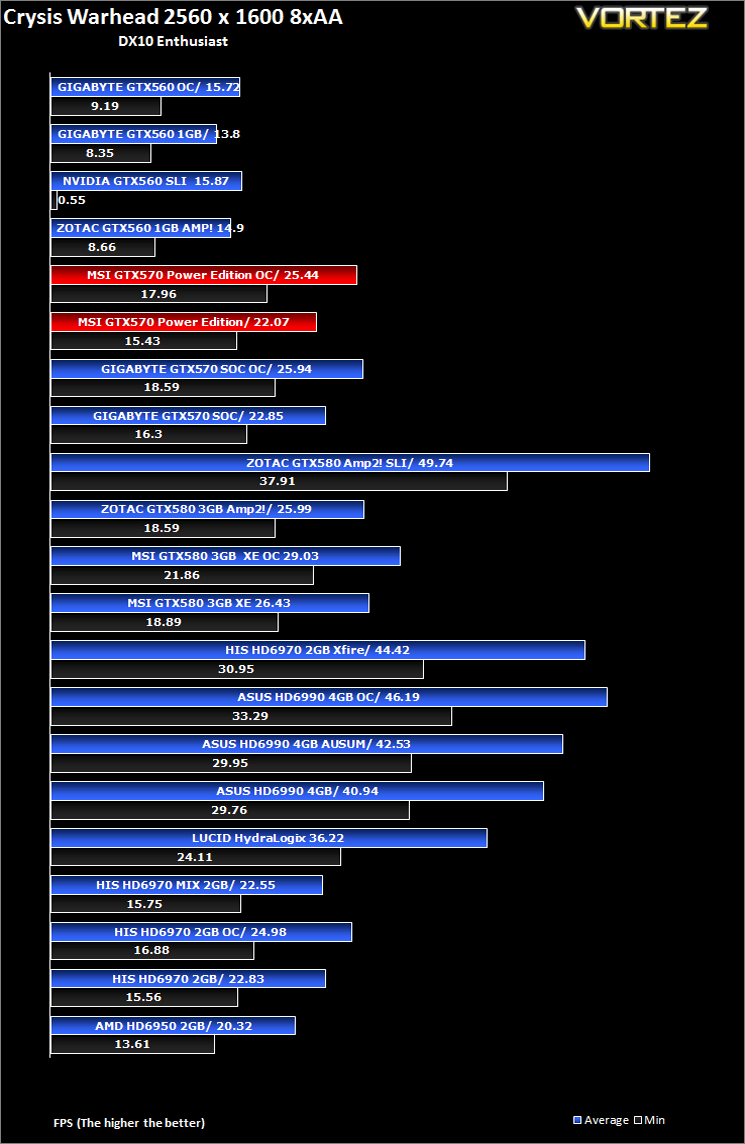
Far Cry 2
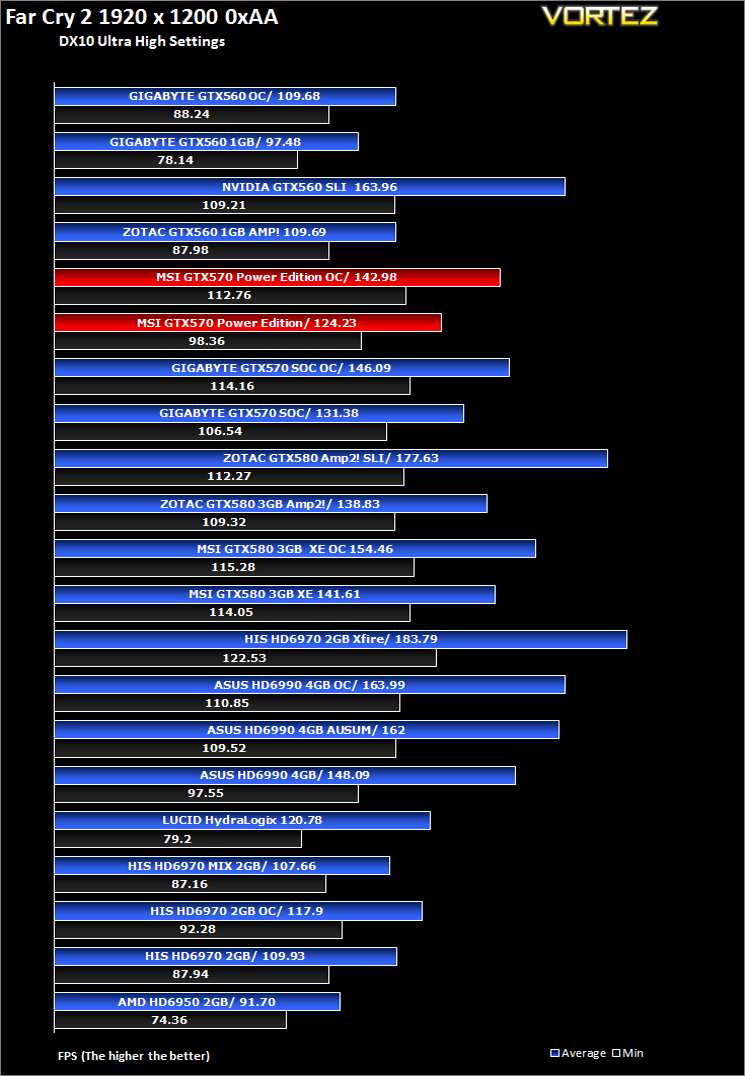
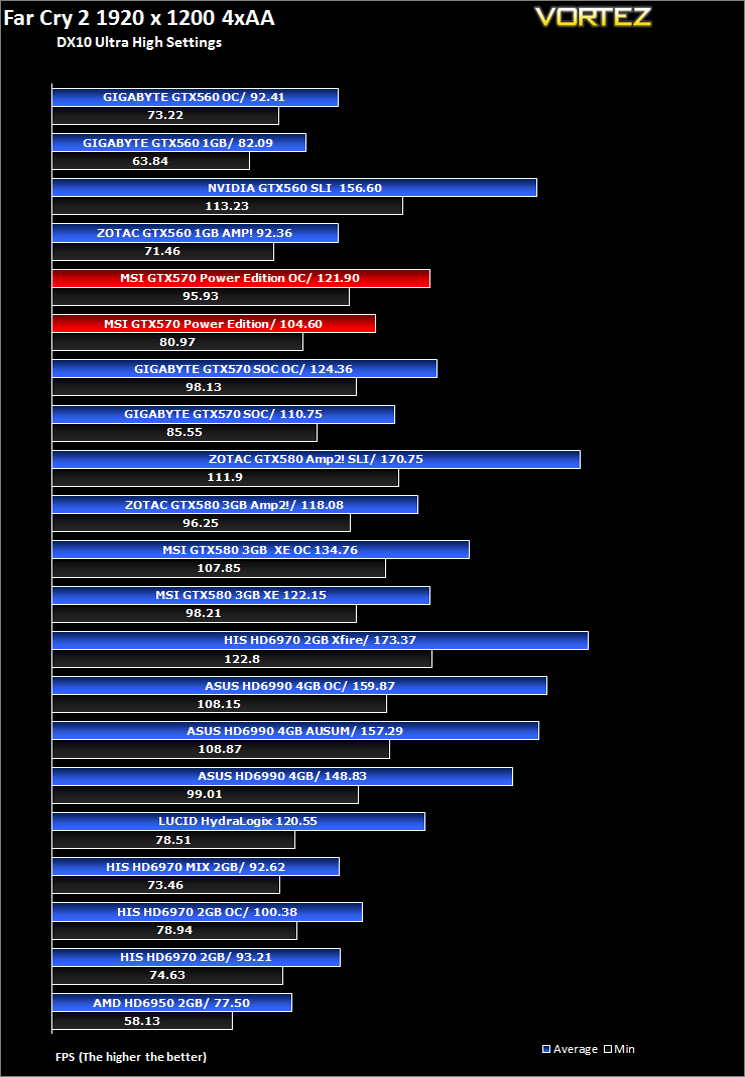
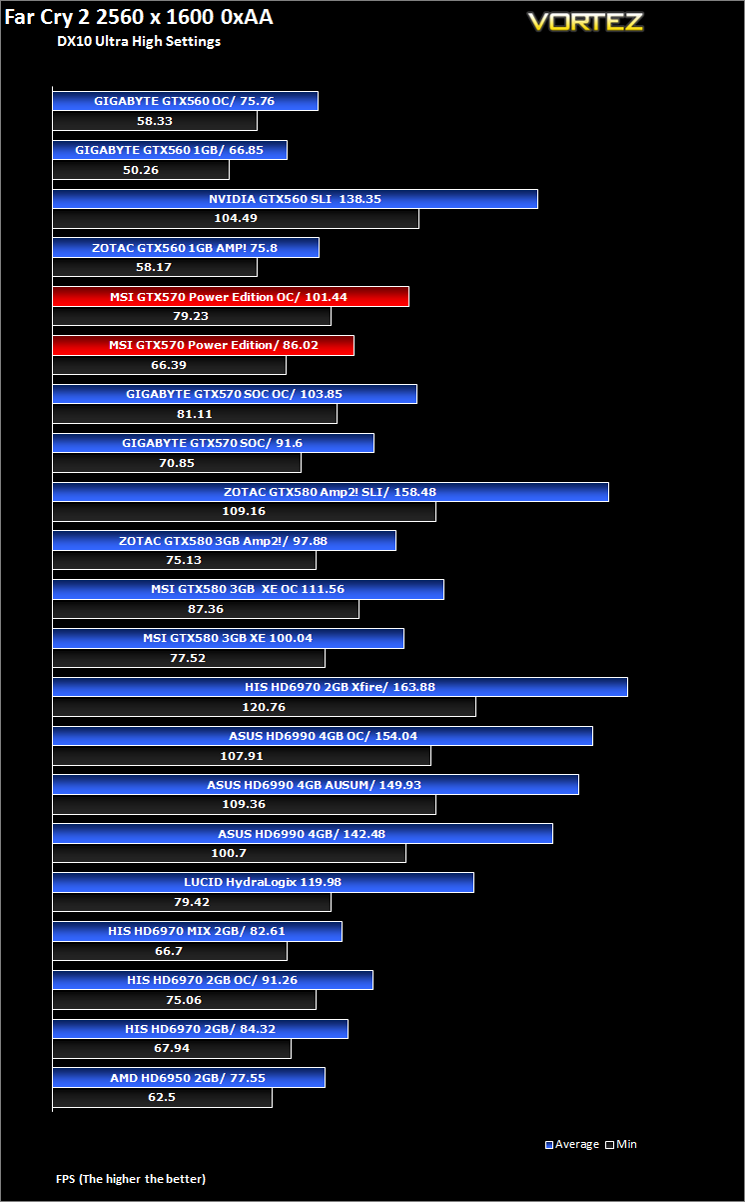
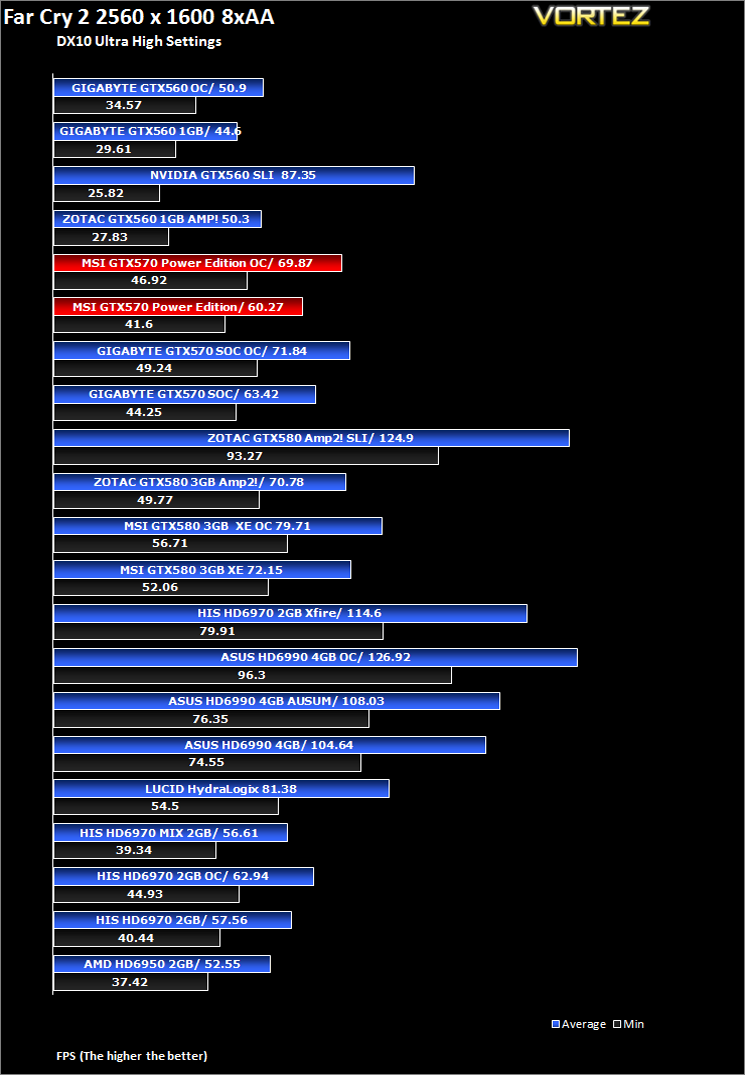
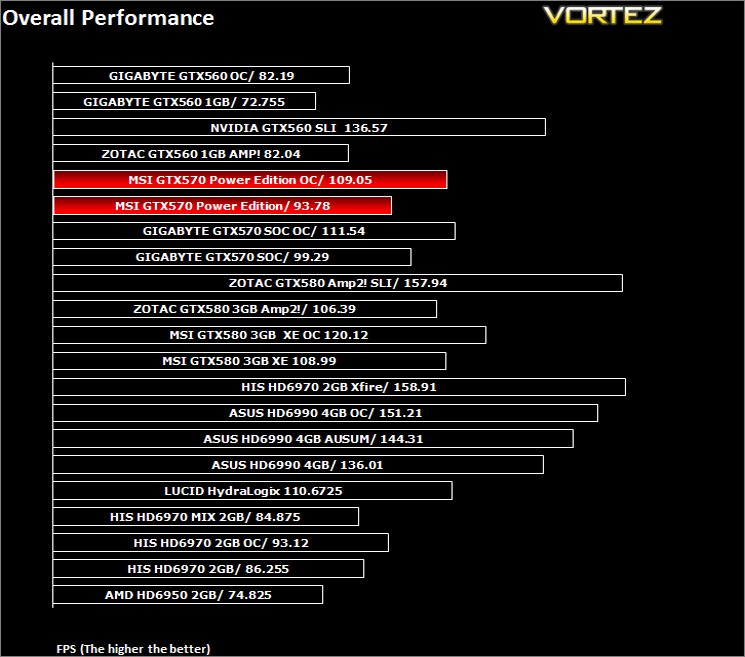
One of the most hyped games of 2008, Far Cry 2 had some big shoes to fill. It was built to be the next best thing since well… Far Cry I suppose. Combining an open-world game play with highly detailed graphics, physics and AI, what more could we possibly want? The game puts us in the body of a malaria inflicted mercenary hunting down the “Jackal” in the heart of Africa, in a bid to stop an on-going conflict between two rival factions. The storyline can be hard to follow sometimes but I’m no game reviewer, so let’s concentrate on the graphics and performance. After all, we all need to know if our hardware will be able to handle the scorching savannah burning at the hands of our flamethrowers.The bundled benchmarking tool was used on Far Cry 2, configuring the settings to Ultra and DX10. The small ranch level was chosen and each configuration was looped three times from which the average FPS was recorded.
Metro 2033
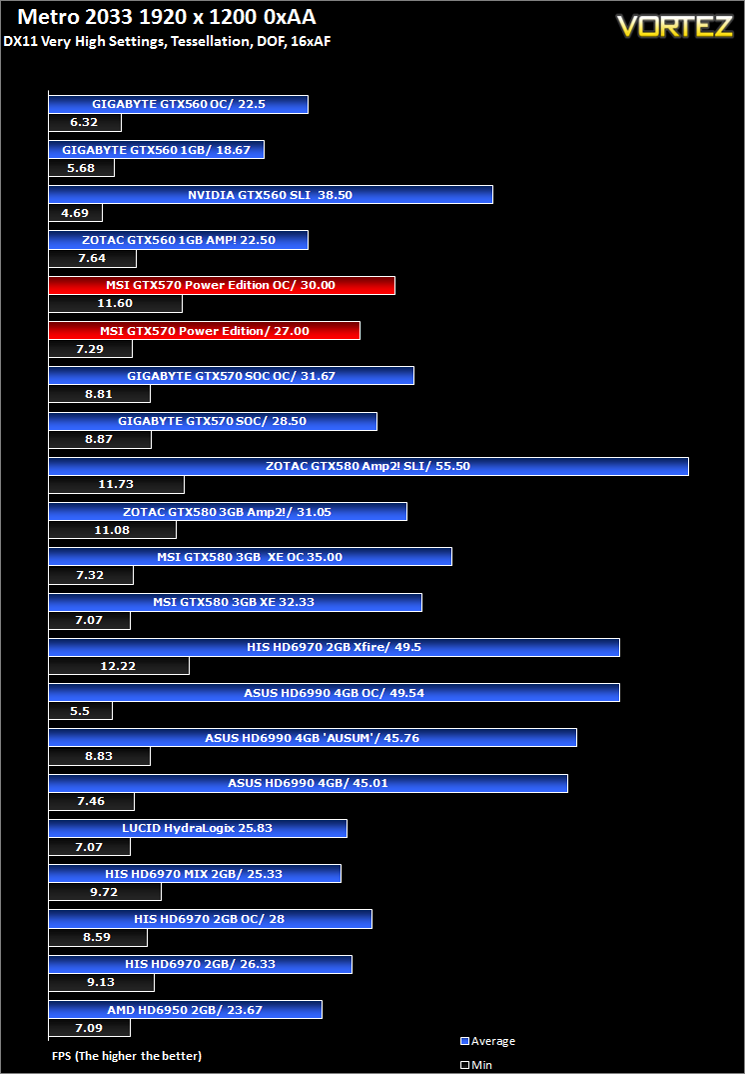
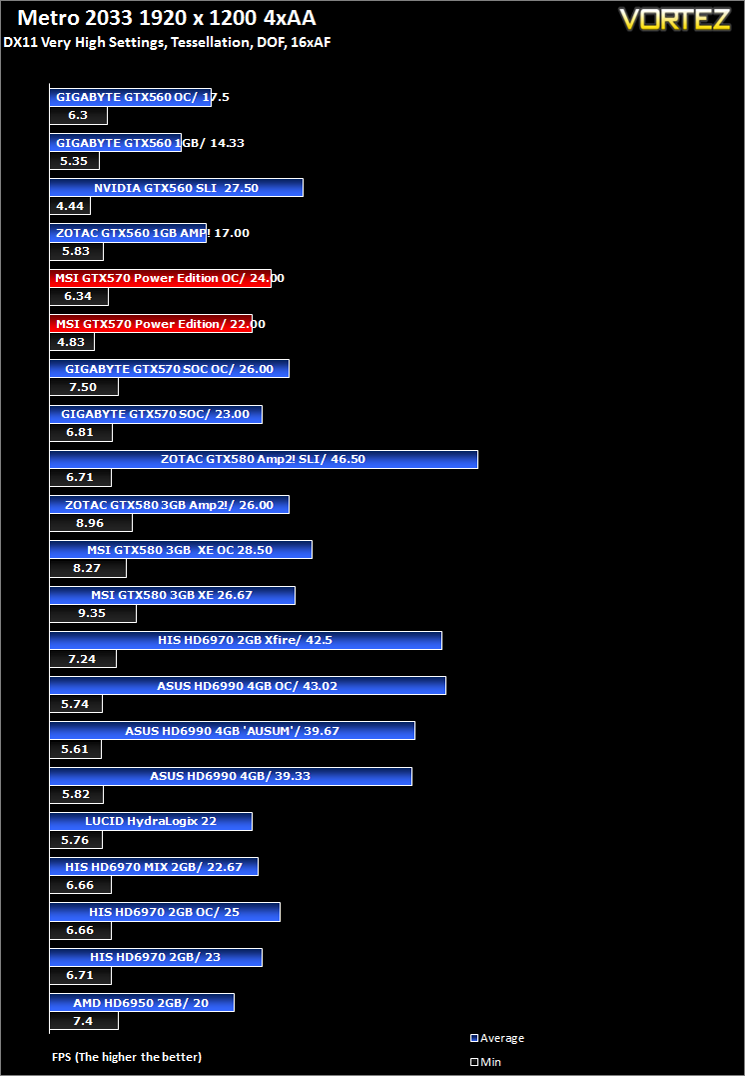
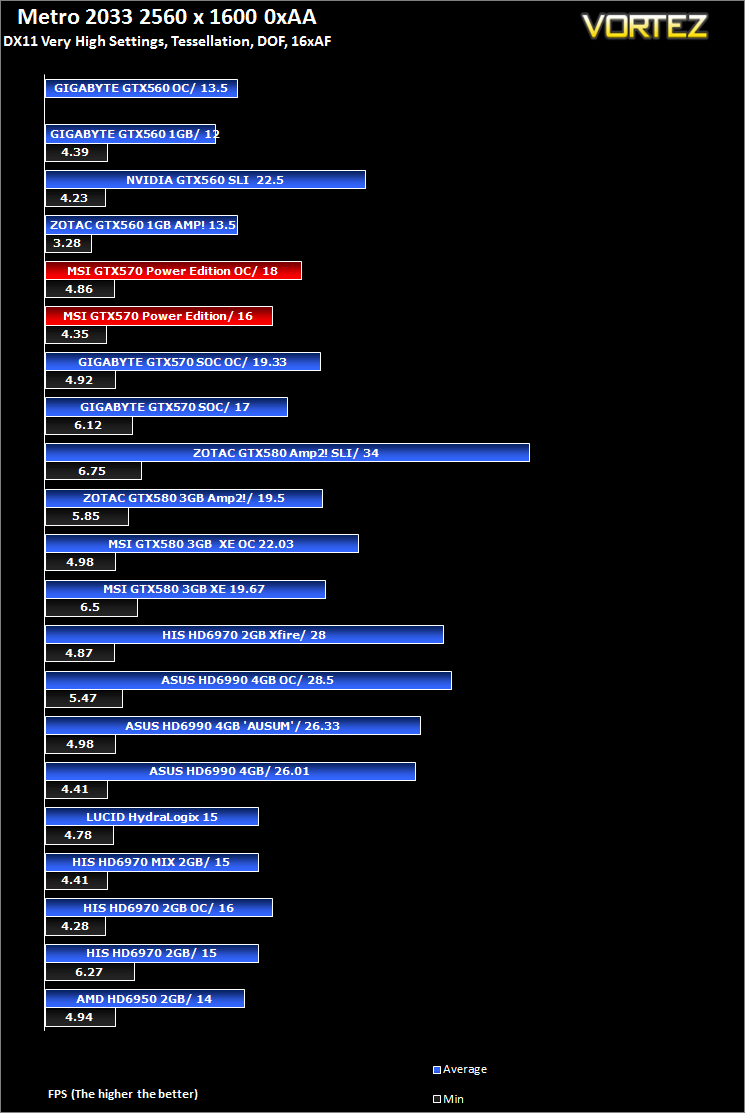
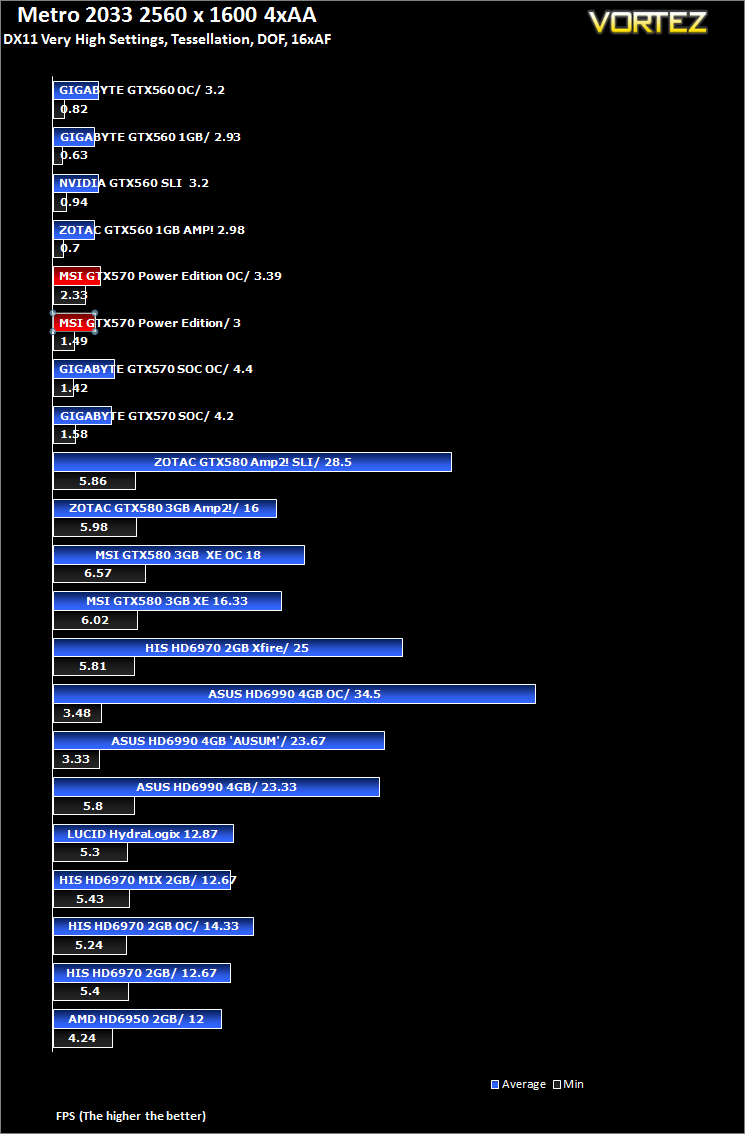
Based on the novel by the same name, Metro 2033 is a first person shooter with elements of survival horror. As Artyom, you trawl through the mutant infested metro systems of post-apocalyptic Moscow. The game delivers presents a grim ambience that reflects on the overall atmosphere of the underground setting. Metro 2033 uses the setting as a back drop to showcase some of the best visuals of any games out now, making it the ideal benchmark for those looking for the best graphics card.The bundled benchmarking tool was used on Metro 2033, configuring the settings to Very High and making use of DirectX 11. The frontline scene was looped 3 times for each configuration. The average FPS was recorded at the end.
 ]
]
Alien Vs. Predator
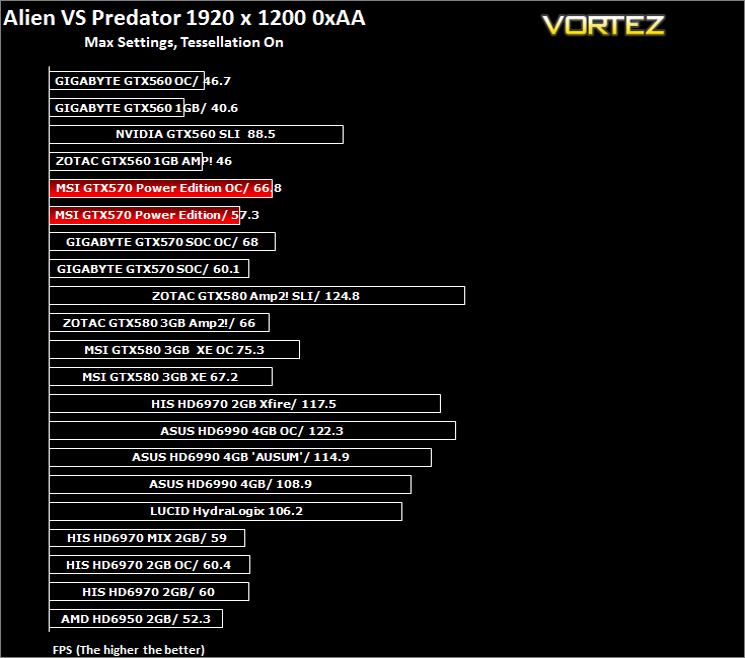
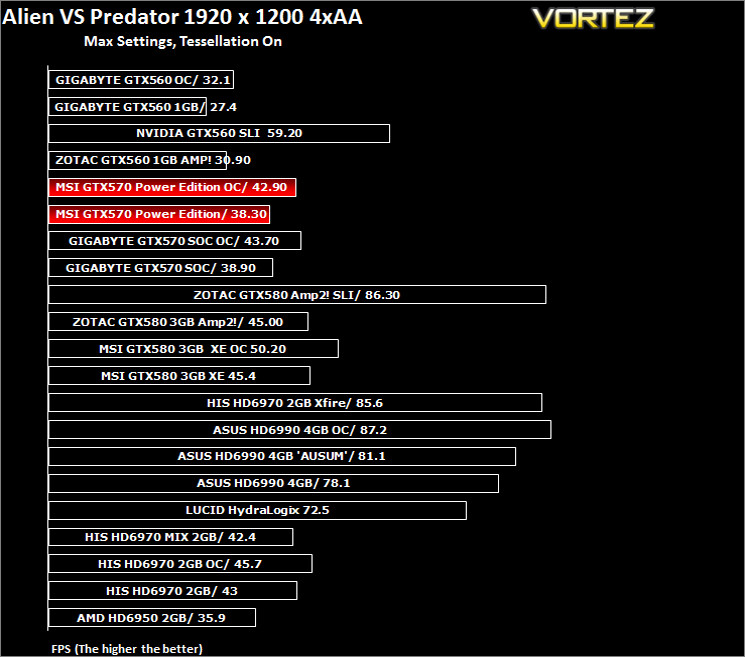
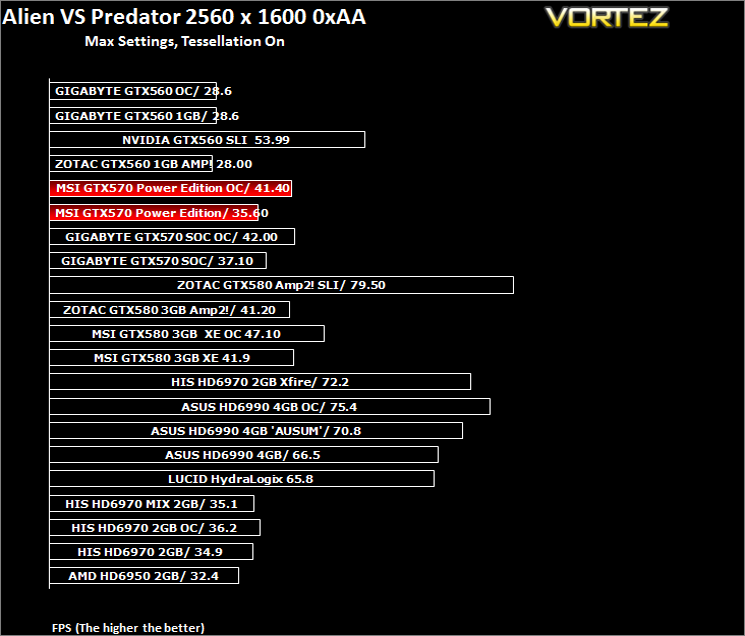
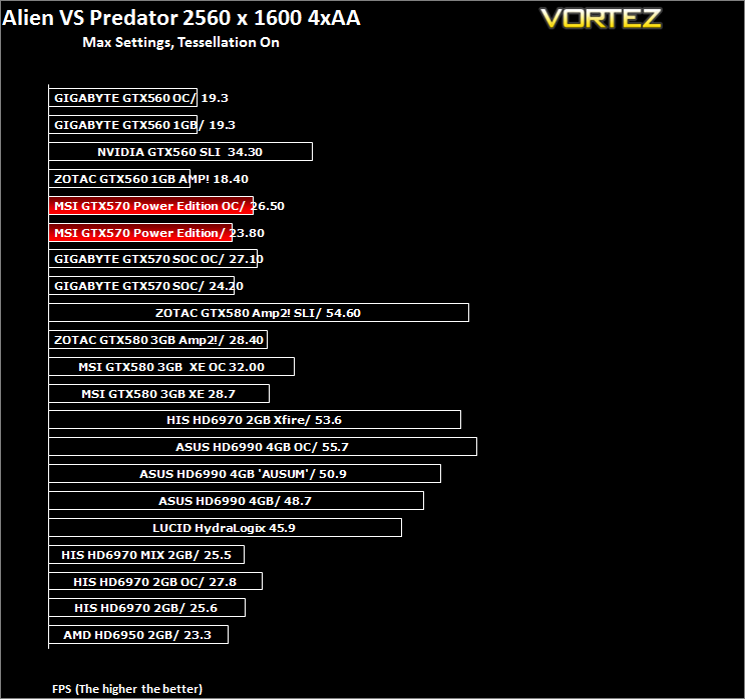
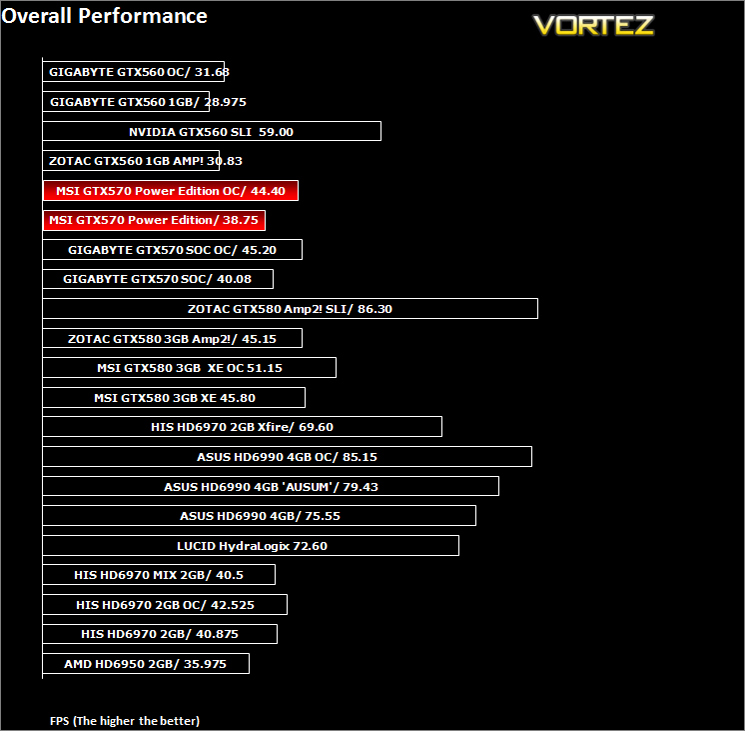
Spawned from the popular Alien and Predator franchises, Rebellion have collaborated to bring the legendary war to us through the medium of a first-person shooter. The game forces you to hunt, prey and most importantly survive in the swamp colony of Freya’s prospect as a Predator, Alien or Marine. The stunning visuals add to the sense of dread and terror that we have become so accustomed to seeing with the series.The stand-alone Alien VS Predator benchmark tool was used for testing here. All the settings were set to very high and Tessellation was applied. The average FPS was recorded at the end.
Battlefield: Bad Company 2
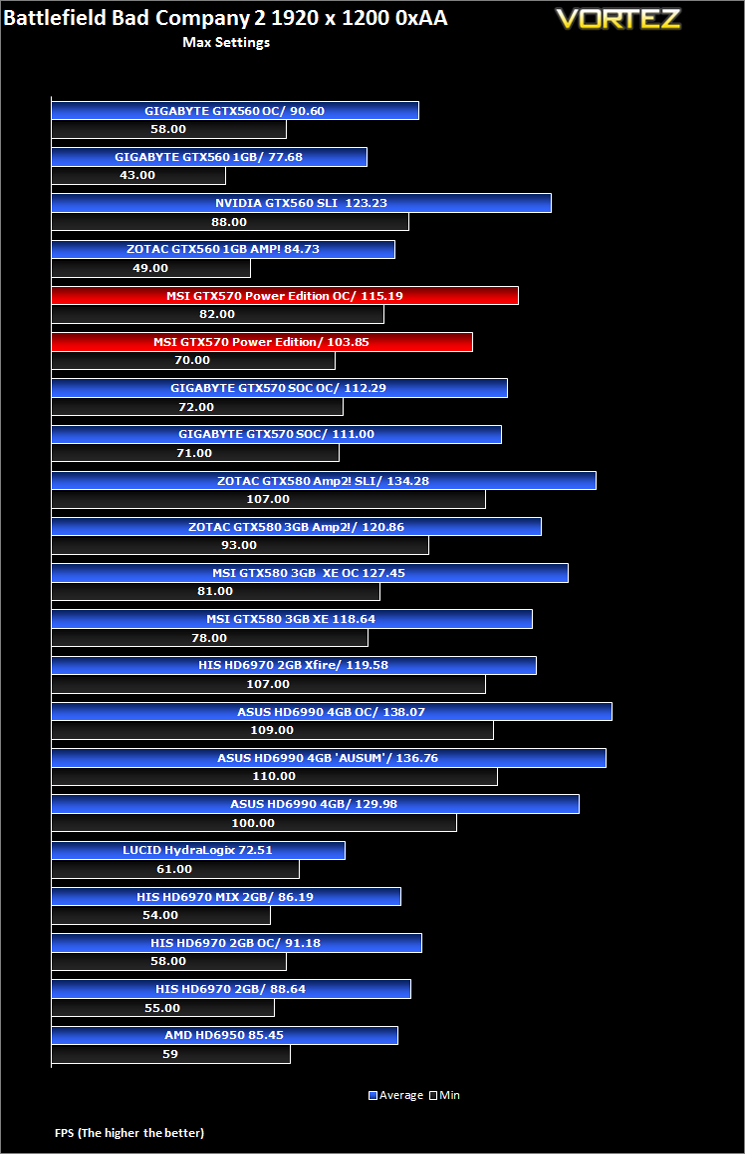
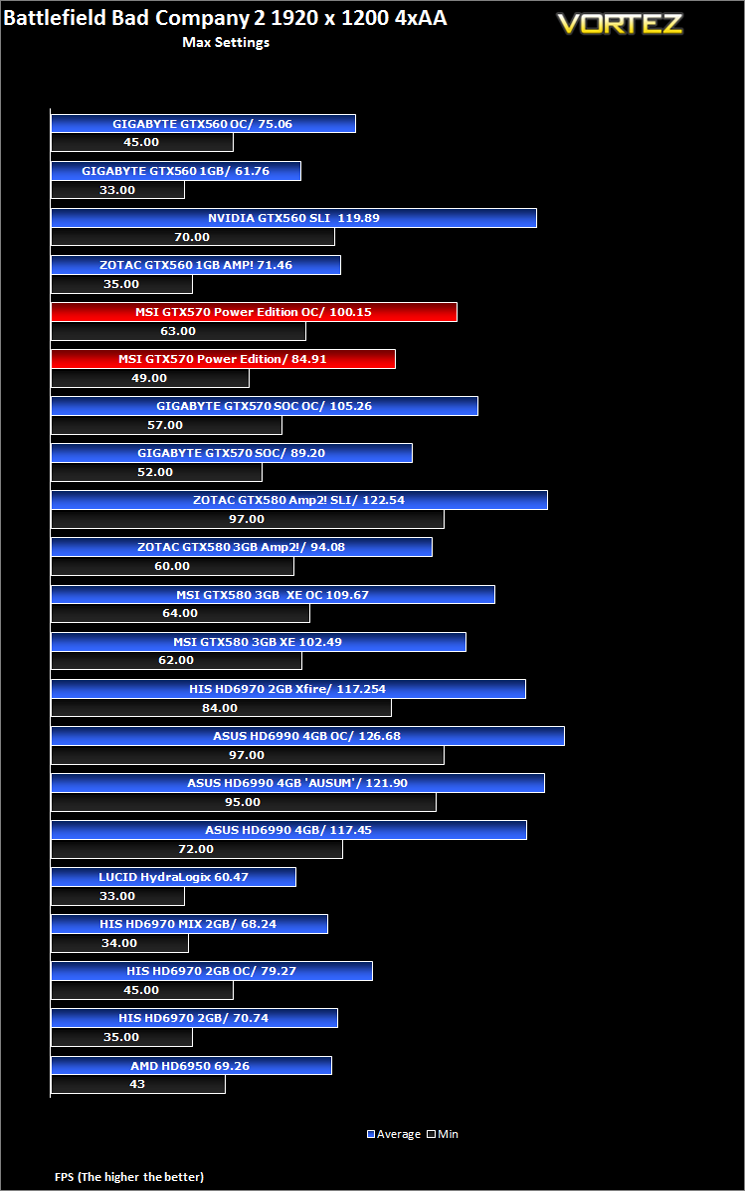
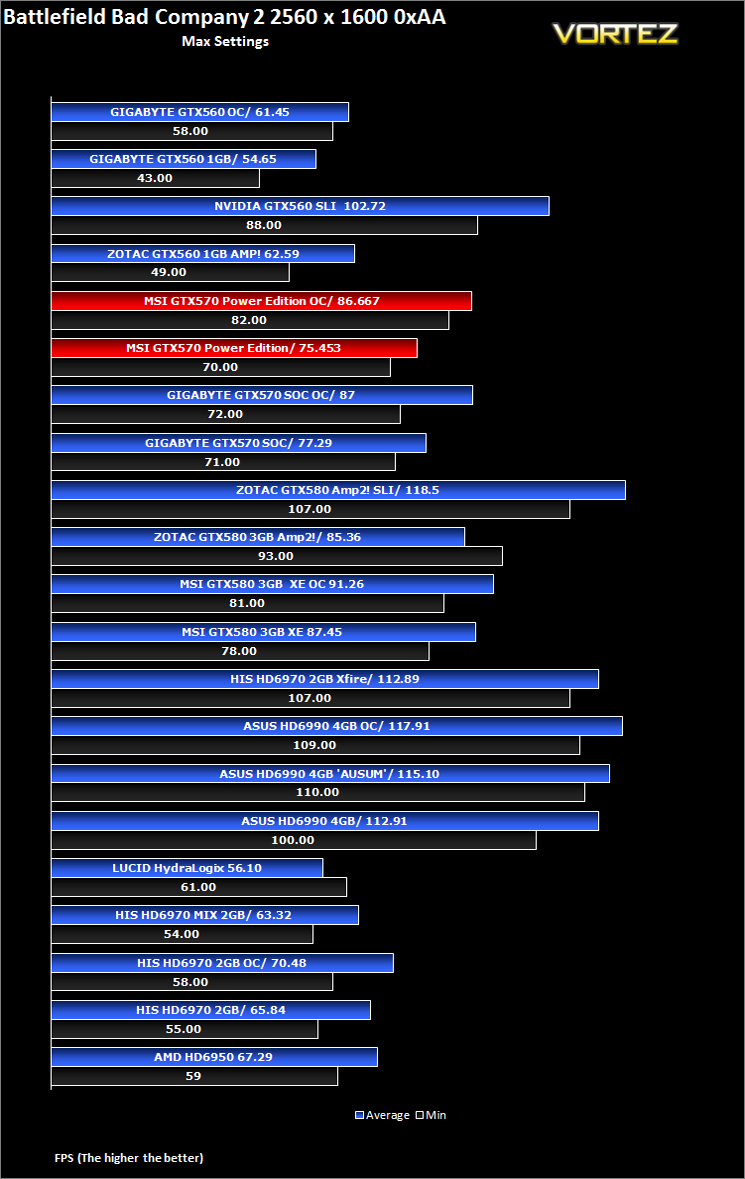
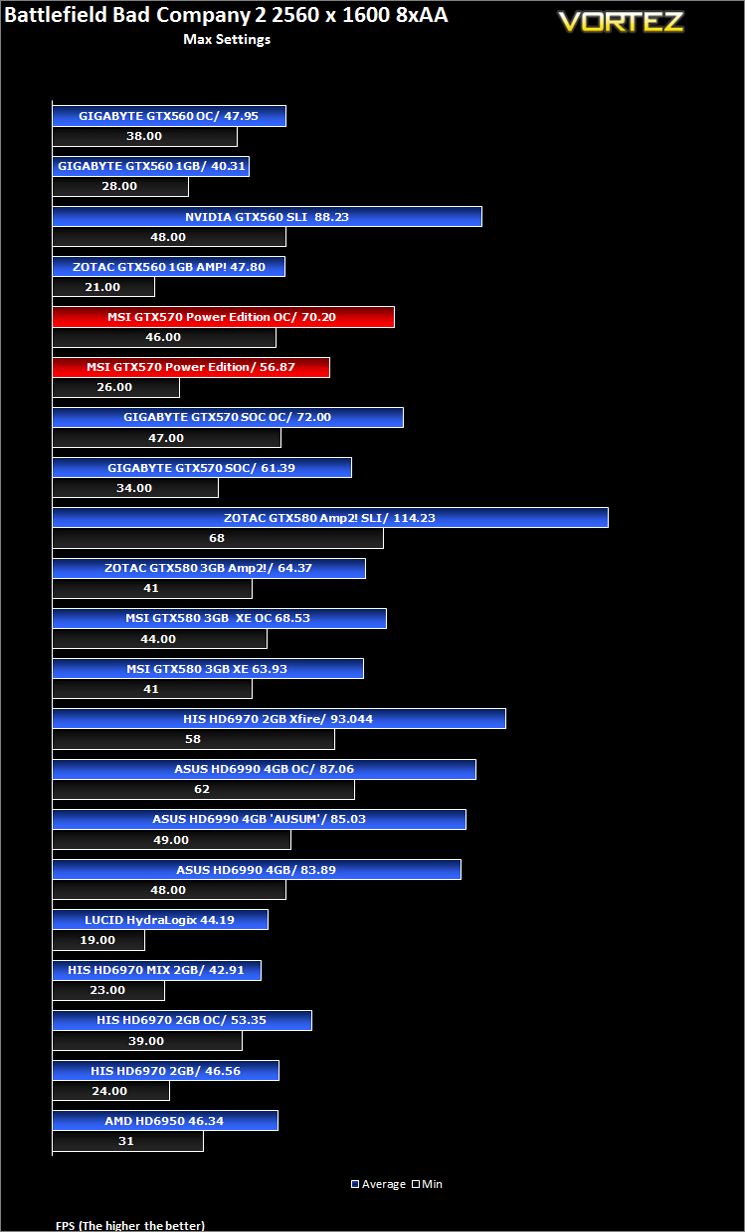
Battlefield Bad Company 2 is the new rendition of the widely successful Battlefield series of game. Having more in common with the console release of Bad Company, the sequel hopes to inject the DNA of the timeless Battlefield 2 online experience with the witty action packed single player shooting adventure of the original. As Private Preston Marlowe, your goal as a member of Bad Company is to once again save the world by securing a scalar weapon device.Fraps was used to test performance. Each test was conducted at the start of the ‘Cold War’ level ensuring that the same actions and paths were taken during the 2 minute sample. All settings were set to the highest available in game with AF set to 16x and HBAO turned on. The average FPS was recorded by FRAPS at the end of each walk through.
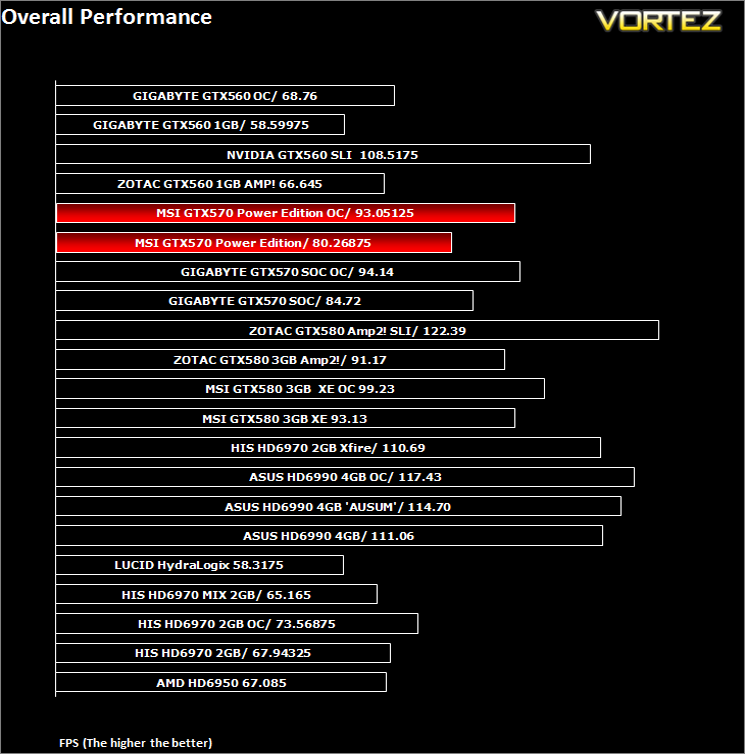
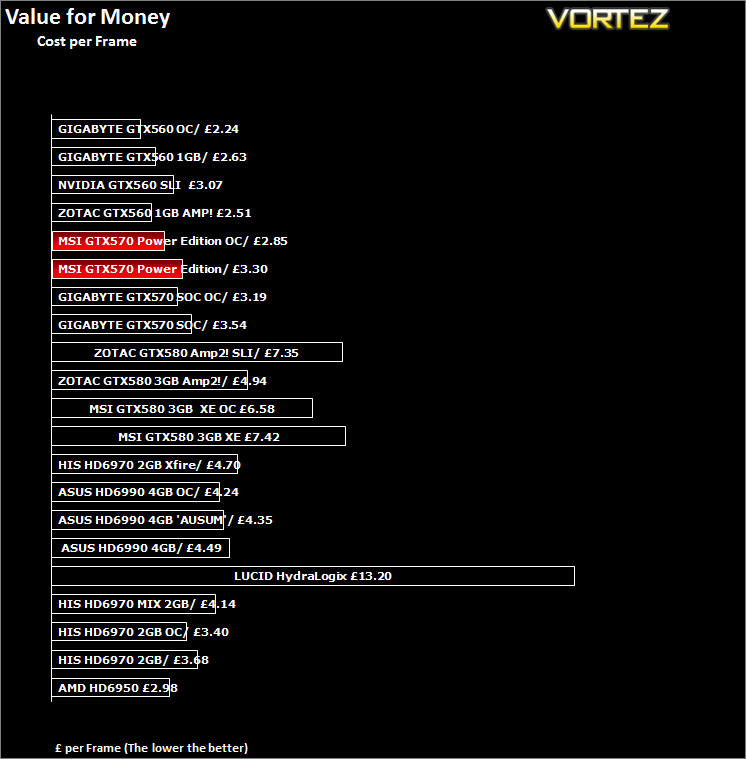
DiRT 3
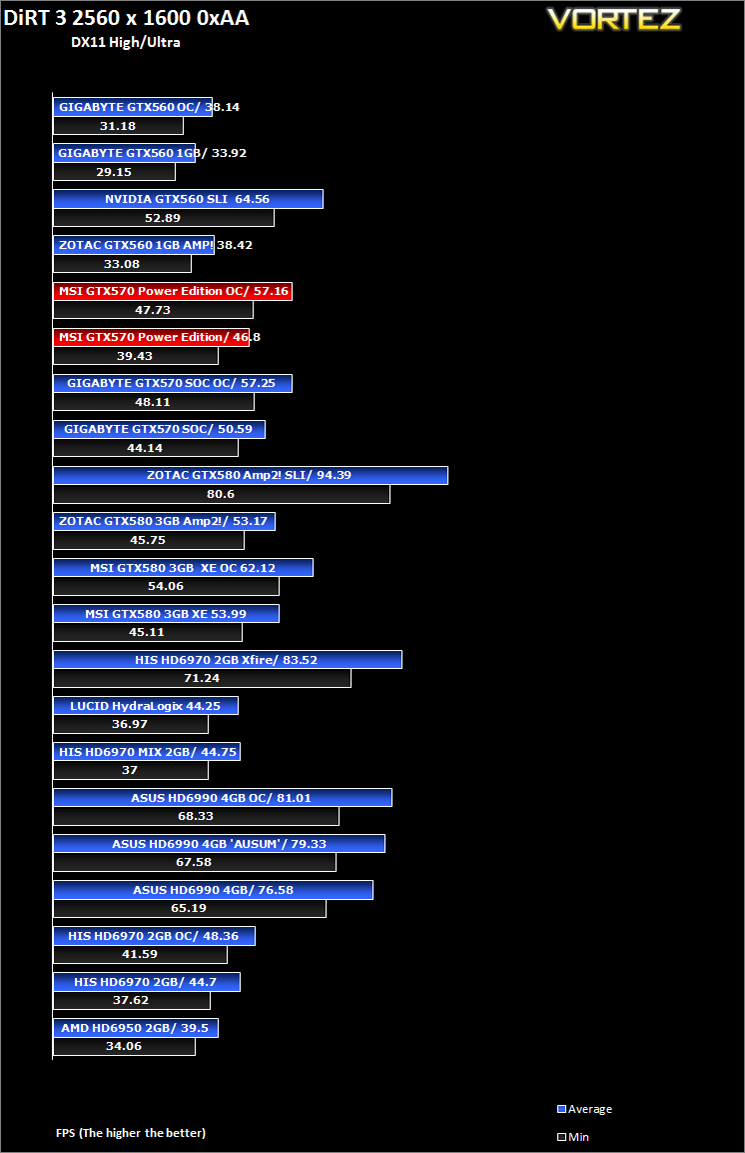
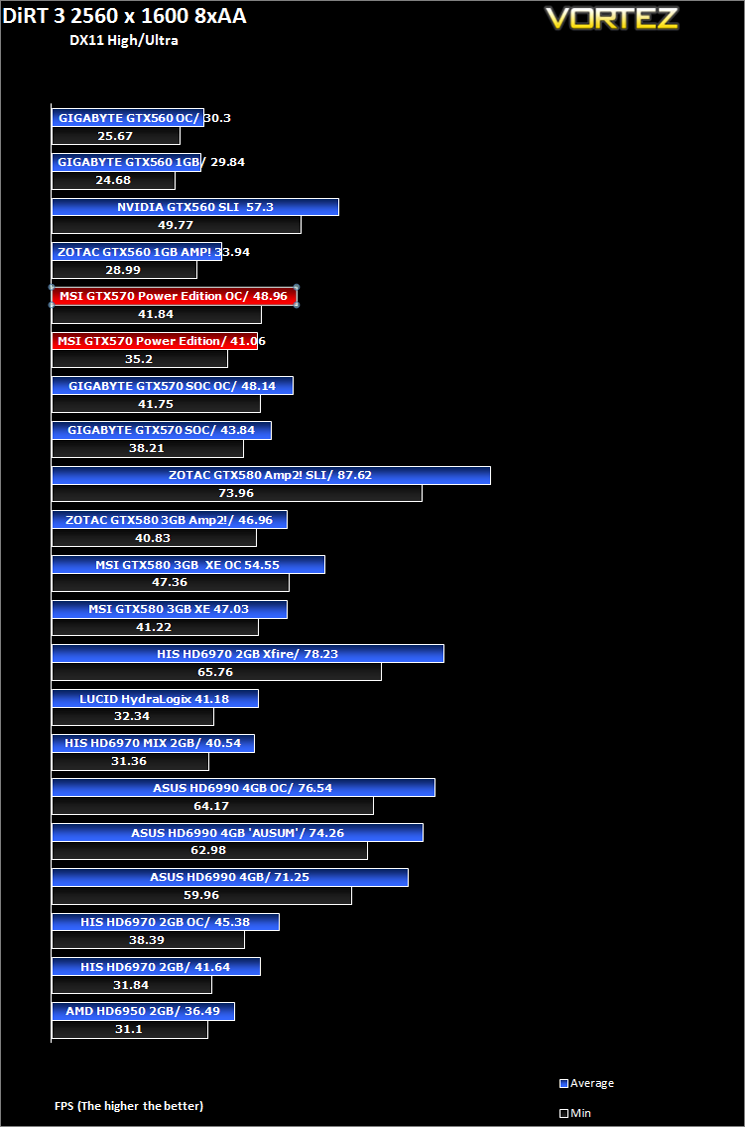
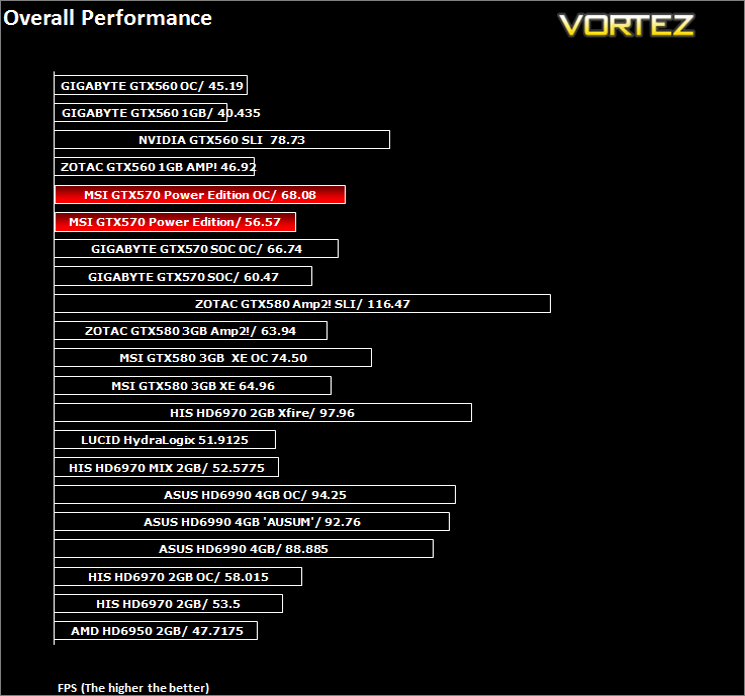
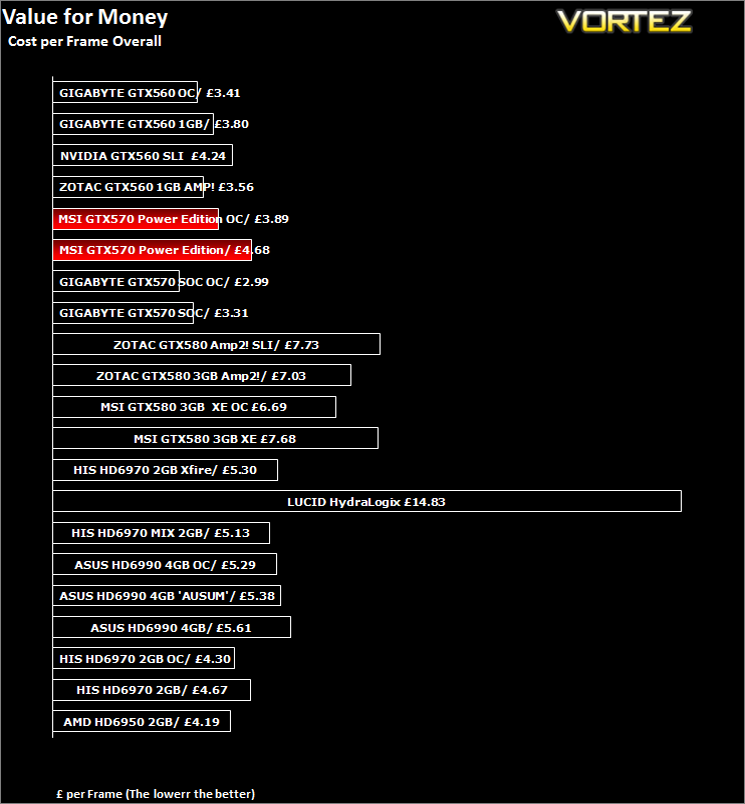
As players race to elevate their global standing, DiRT 3 is back delivering mud, sweat and gears world over: from the intense weather-beaten rally stages of Europe, Africa and the US, to executing performance driving showcases and career challenges where car control is pushed to spectacular limits.The in-game benchmarking tool was used to test performance. All the display settings were set to the maximum available and DirectX 11 was applied. The average FPS was recorded at the end.
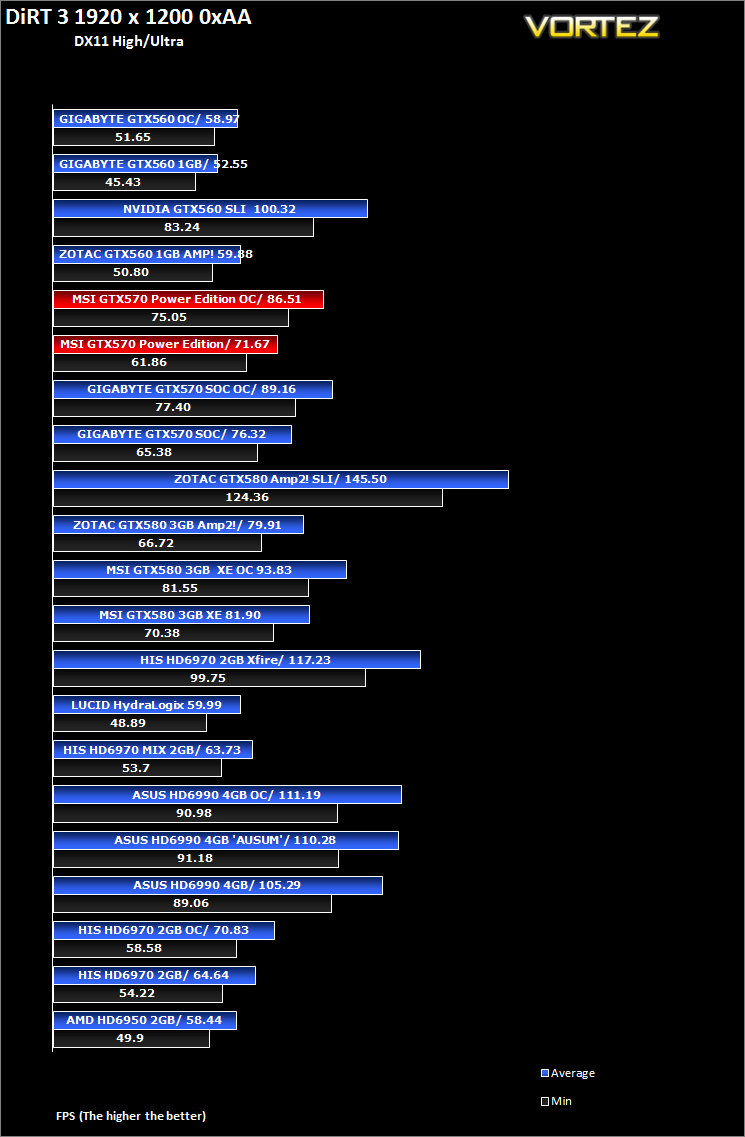
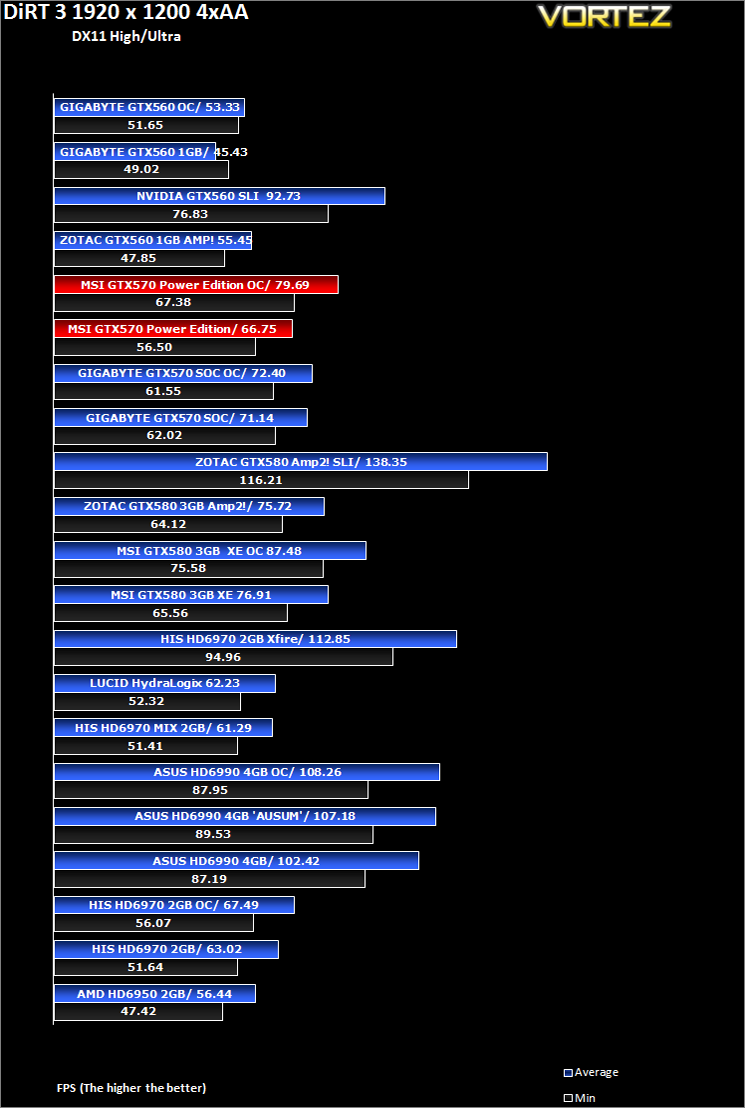
Mafia II
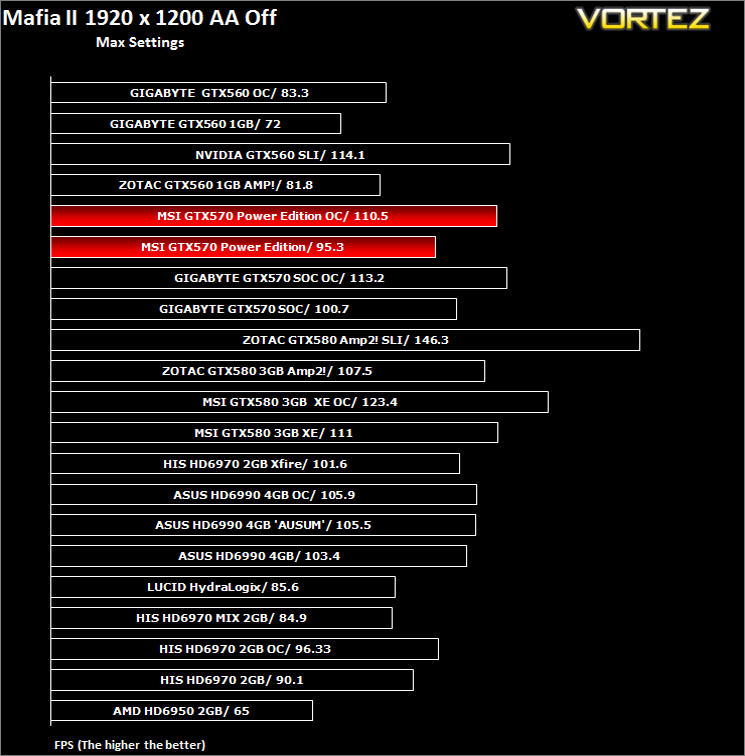
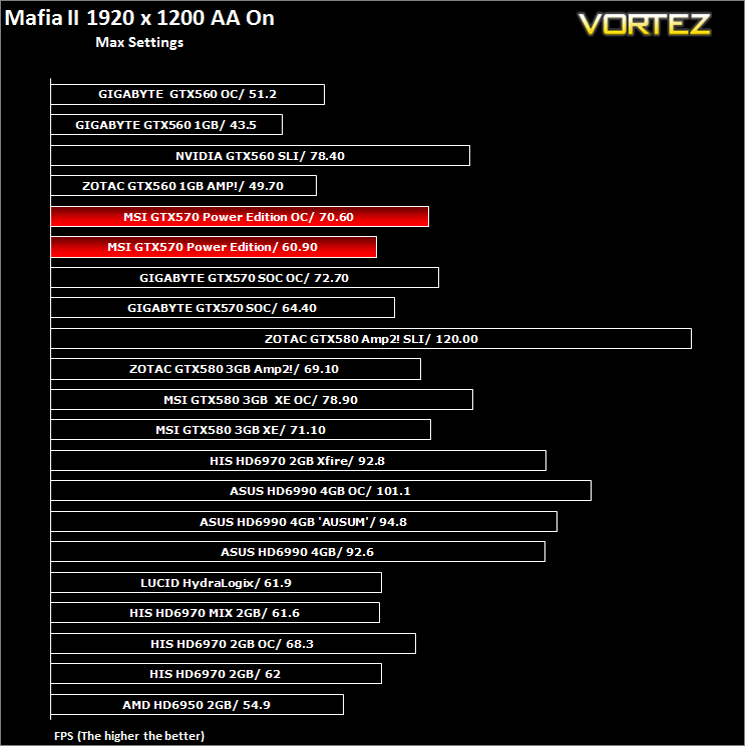
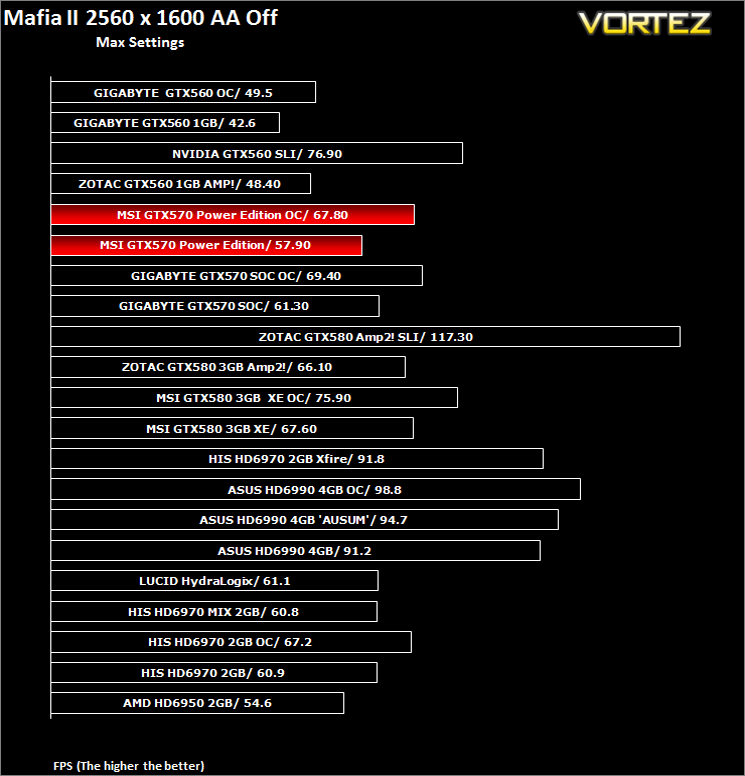
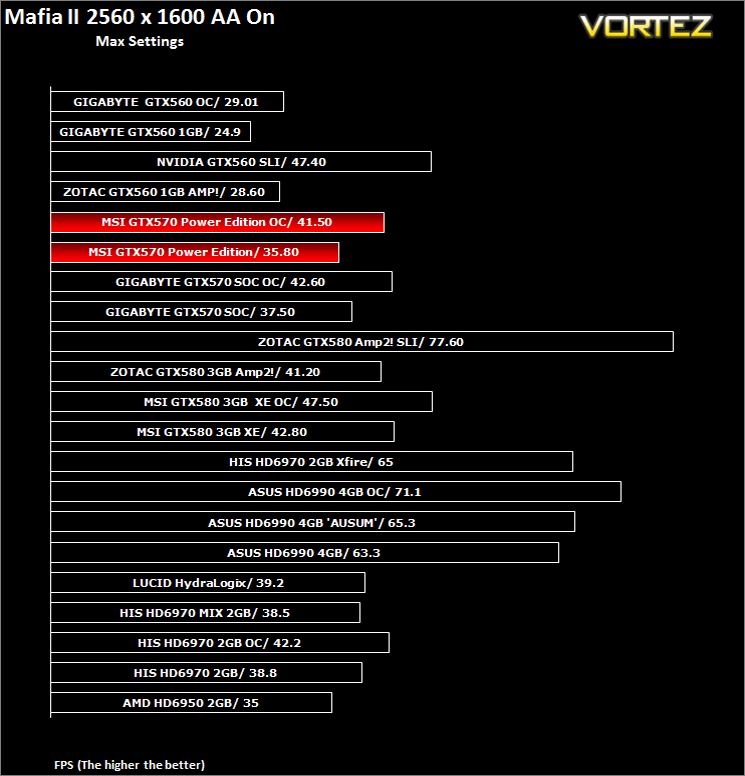
Following the success of Mafia back in 2002, the third person action adventure game is back with a new grittier and darker world. As Vito Scaletta, an aspiring made man, your job is to work through the twist and turns of Mafia lifestyle. The more blood spilt, the more you get in return but the lifestyle was never meant to be an ideal one. Set in the visually stunning Empire City, the wartime references provide the ever present back drop to a rife period in America’s history, in which potential for exploitation becomes Vito’s key focus.The in-game benchmarking tool was used to test performance. All the display settings were set to the maximum available in-game. PhsyX was only enabled if specified in the charts. The average FPS was recorded at the end.
TessMark 0.2.2
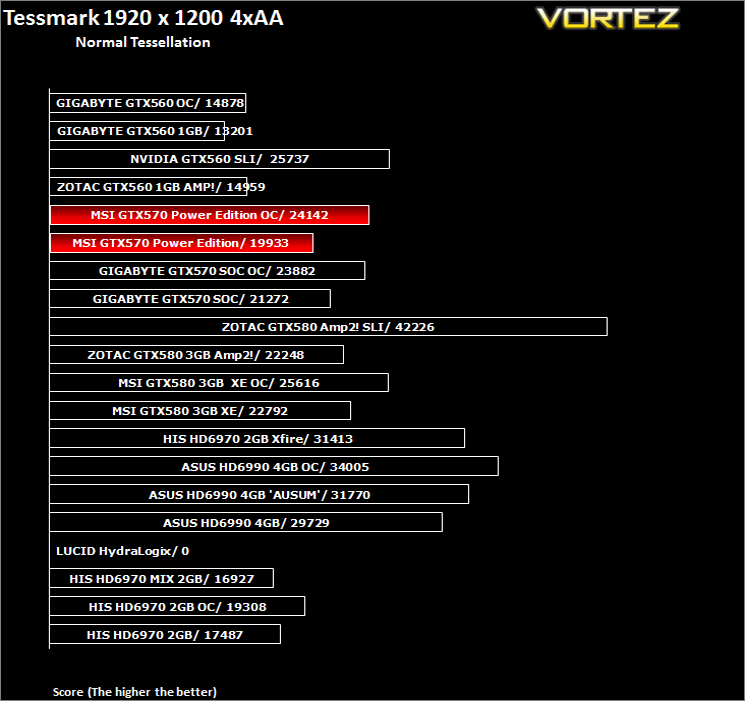
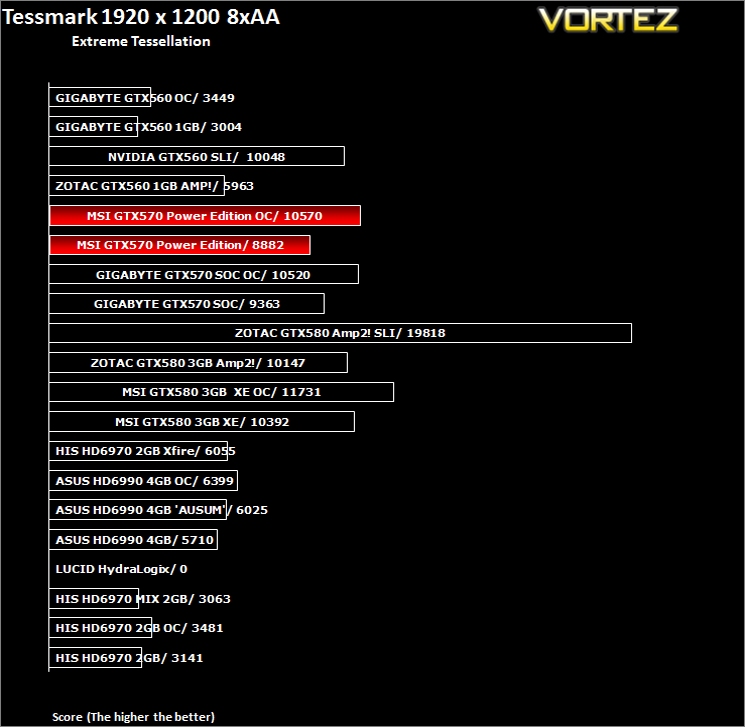
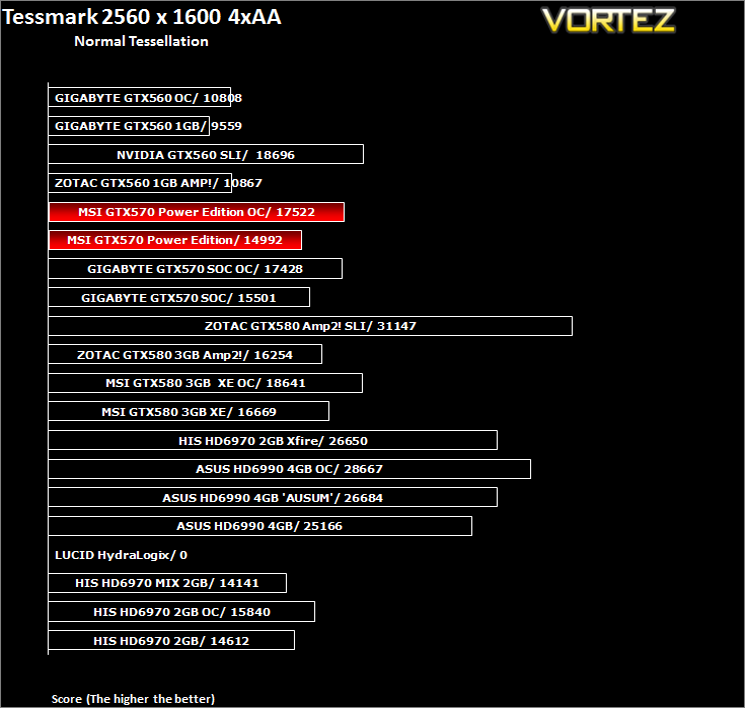
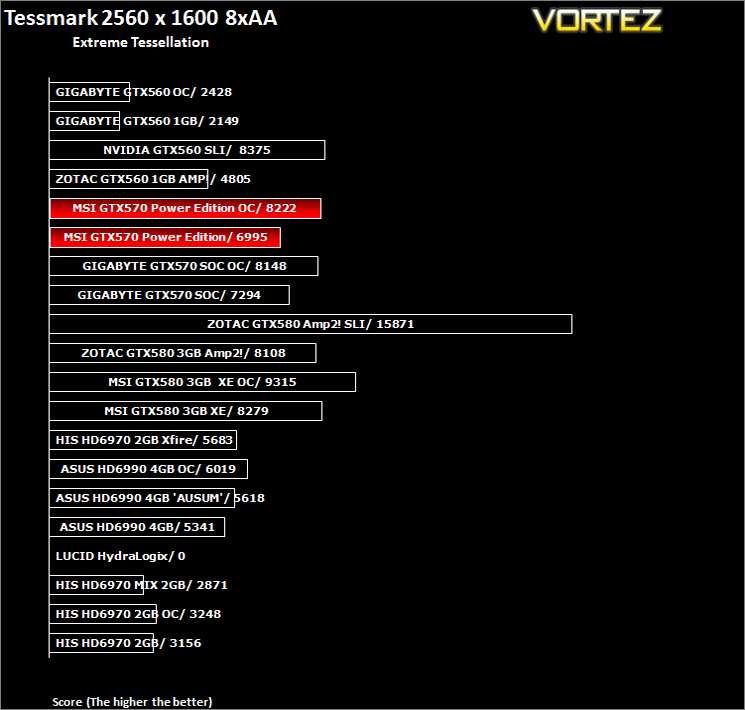
TessMark 0.2.2 is an OpenGL benchmark and tech demo that uses the new hardware tessellation (or GPU tessellation) features exposed by the OpenGL 4 API. Hardware tessellation makes it possible to divide a polygon into smaller ones (according to the tessellation level factor) in order to increase polygons density: the higher the tessellation level, the higher the polygon density. A high tessellation level requires much GPU processing power.TessMark was run in fullscreen, benchmark mode using map set 1 and configured to use OpenGL 4.
3DMark 11 & Unigine 2.5
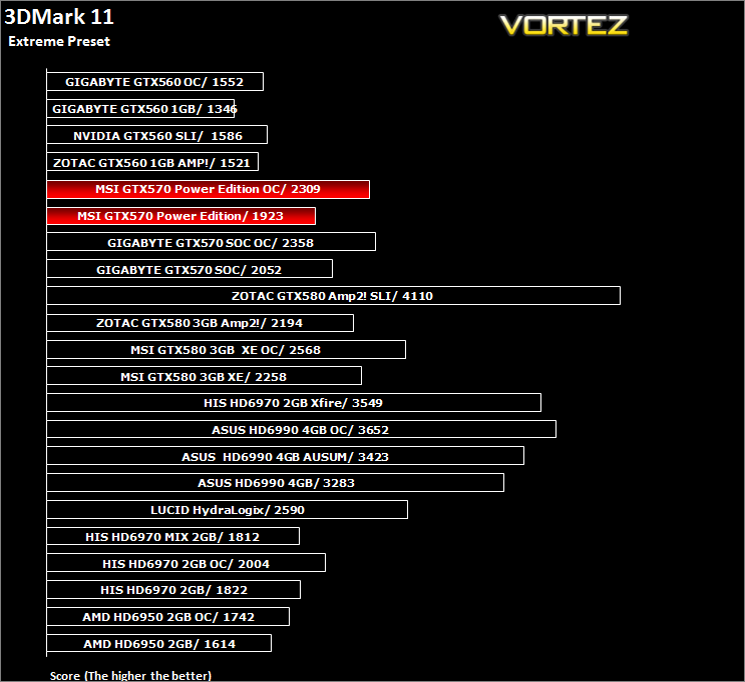
3DMark 11 is the latest version of the world’s most popular benchmark. Designed to measure your PC’s gaming performance 3DMark 11 makes extensive use of all the new features in DirectX 11 including tessellation, compute shaders and multi-threading.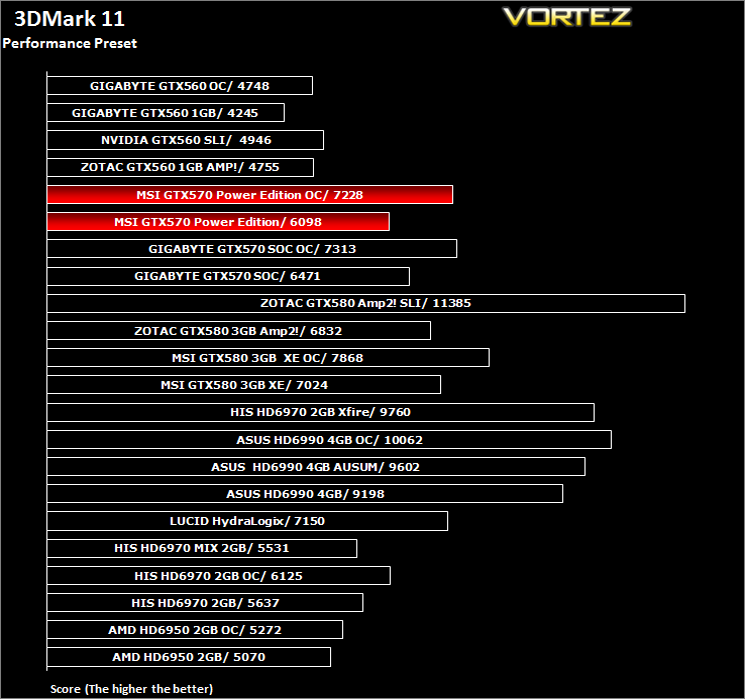
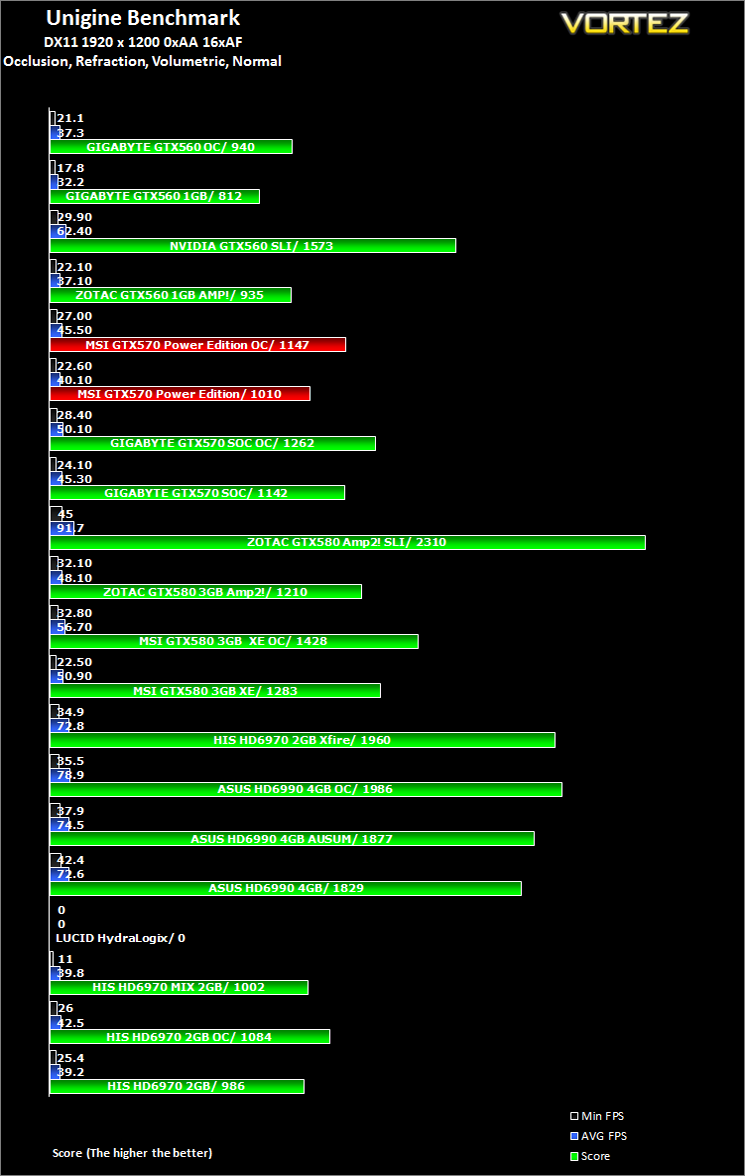
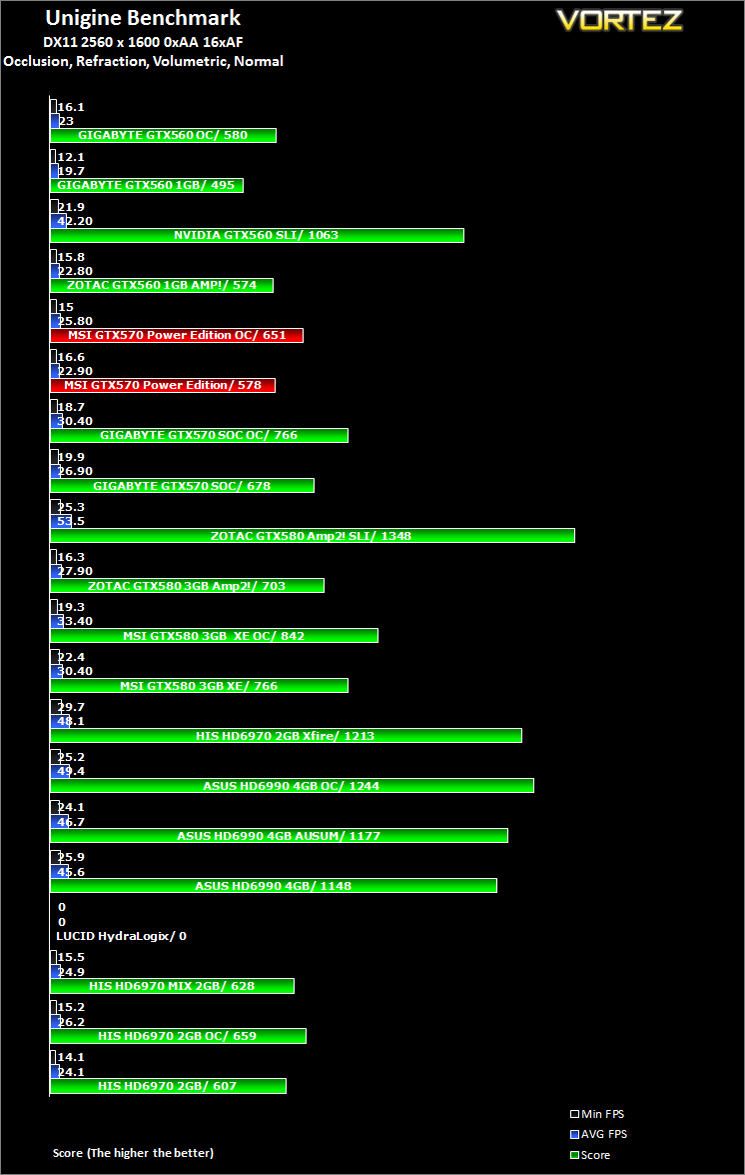
Unigine Heaven 2.5
Heaven Benchmark is a DirectX 11 GPU benchmark based on advanced Unigine™ engine from Unigine Corp. It reveals the enchanting magic of floating islands with a tiny village hidden in the cloudy skies. Interactive mode provides emerging experience of exploring the intricate world of steampunk.
Conclusion
Being a Mid/high end graphics card, the GTX570 has proven very popular with enthusiasts who are looking for solid performance without having to pay through the nose to get it. More often than not though, people who buy the GTX570 will be looking to overclock their card to compete with its GTX580 brethren. Users are also keen to reduce the noise emitted from their setups and thus MSI have acted upon this demand by producing a graphics card that is not only powerful but cool running and near silent.The Twin Frozr II is held in high regard by both overclockers and those who seek silence above all else so it was with trepidation that I began to review a card with the successor to this popular cooler, the Twin Frozr III. While it is not radically different from its former incarnation, it is an improvement; an evolution if you will that has enhanced all that was great about the previous version without adding noise or sacrificing the aesthetic value. IS it the best on the market at present though?
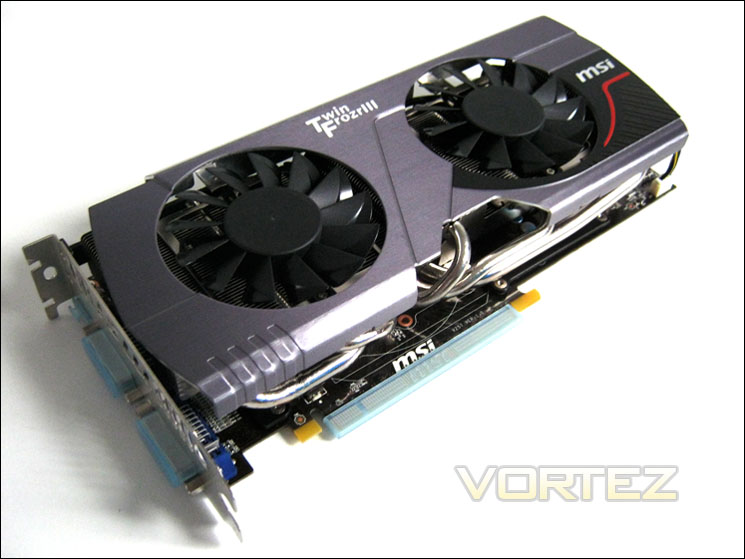
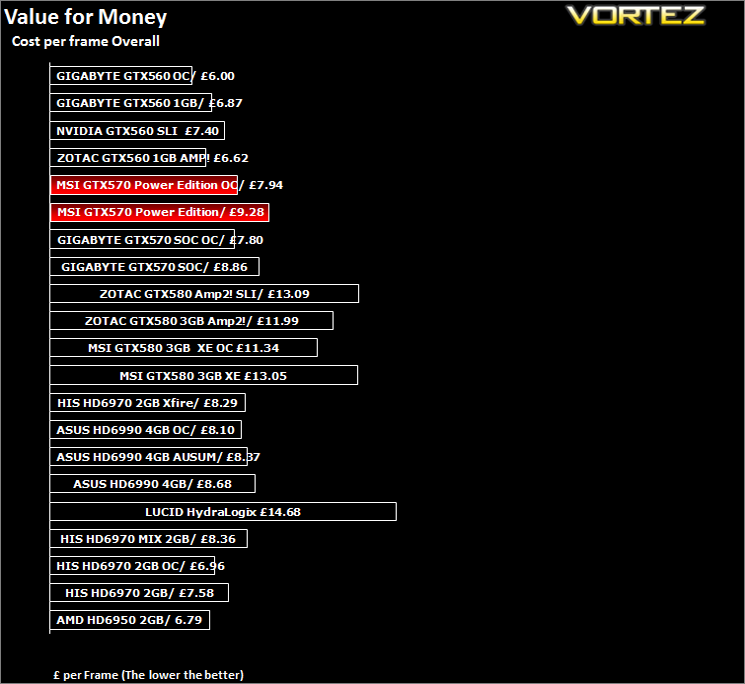
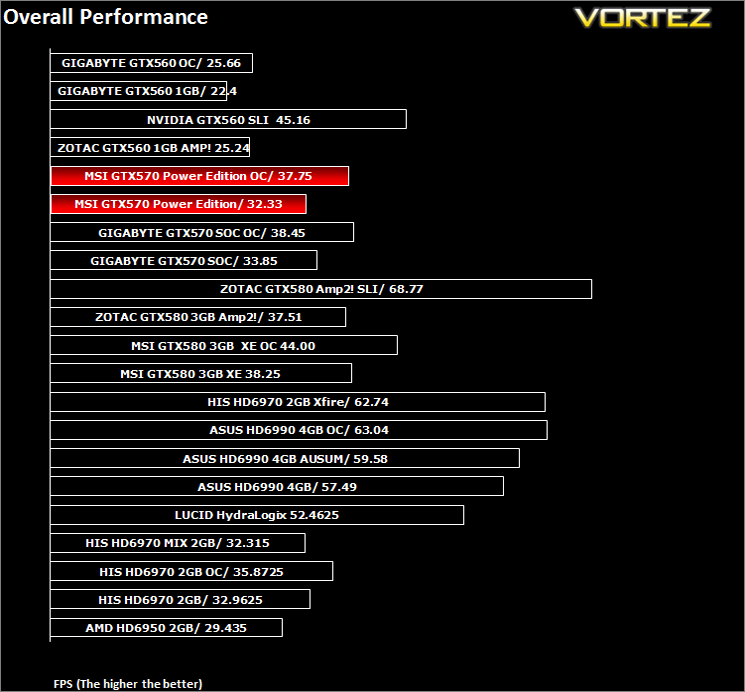
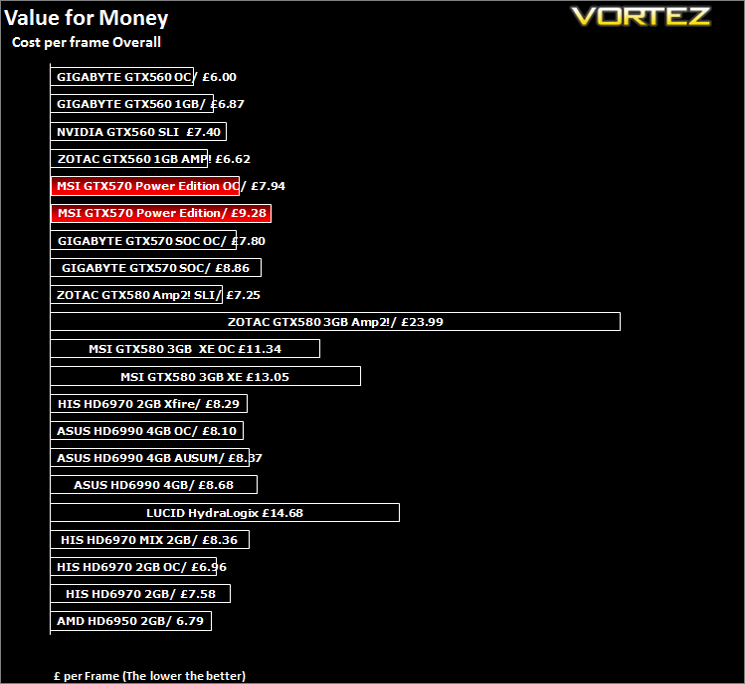
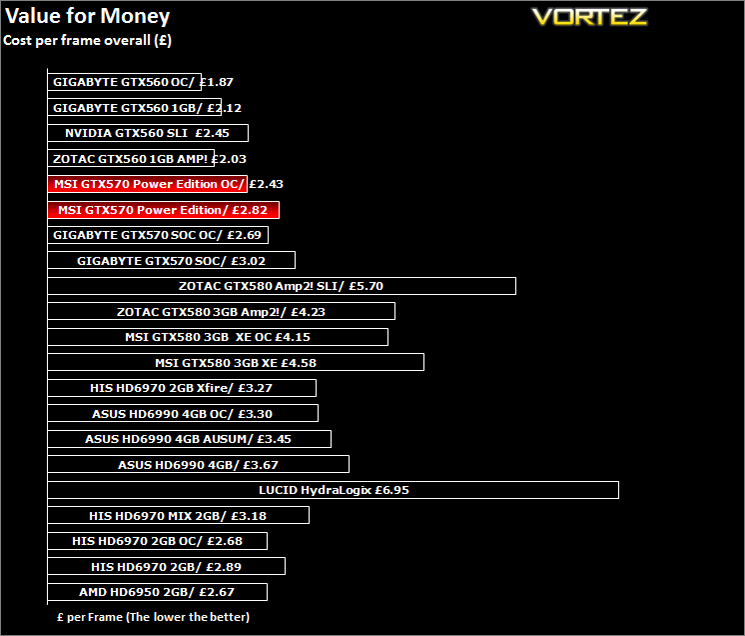
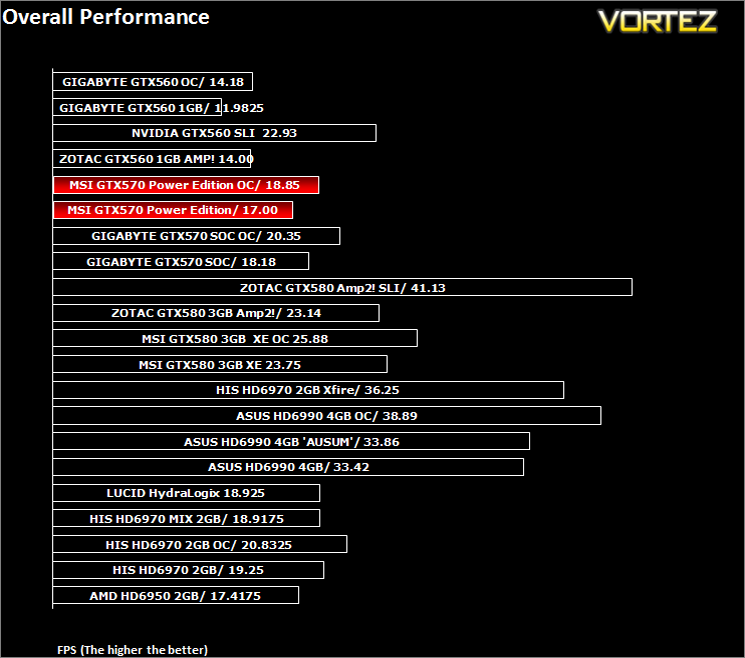
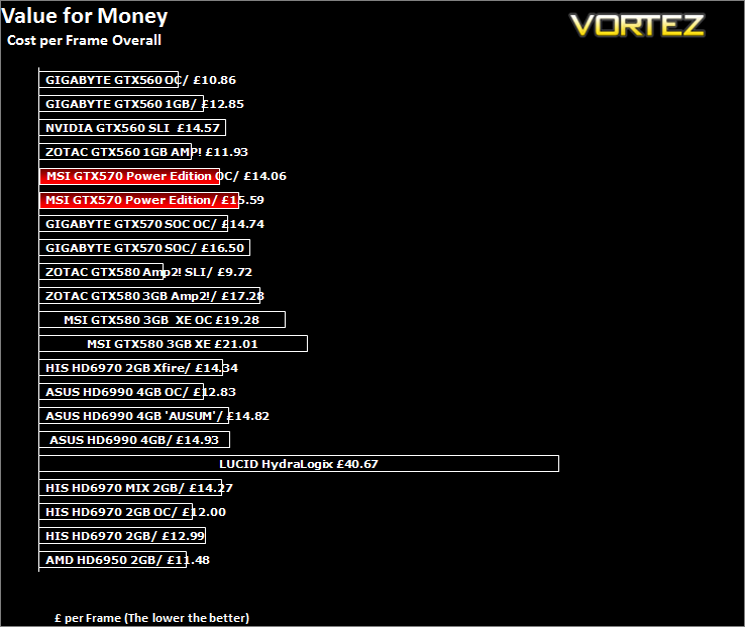
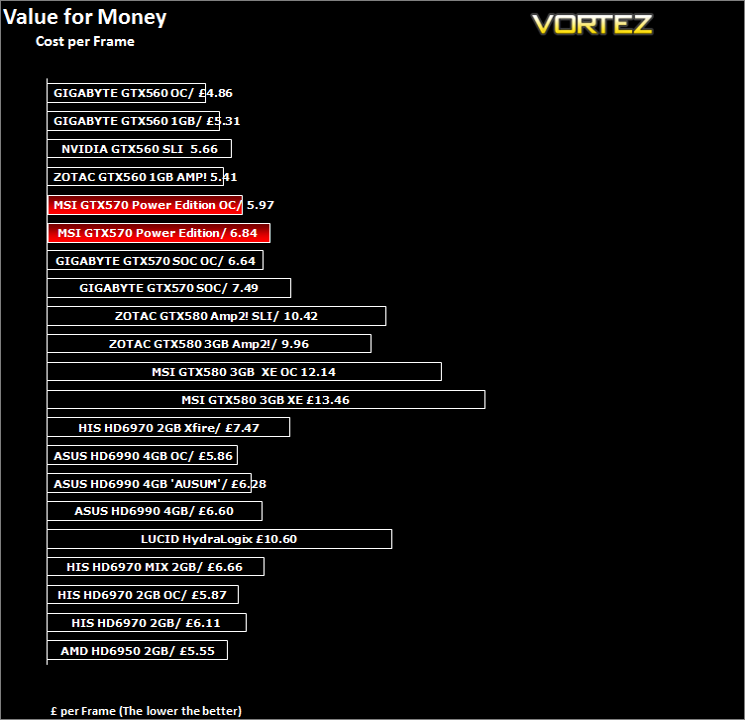
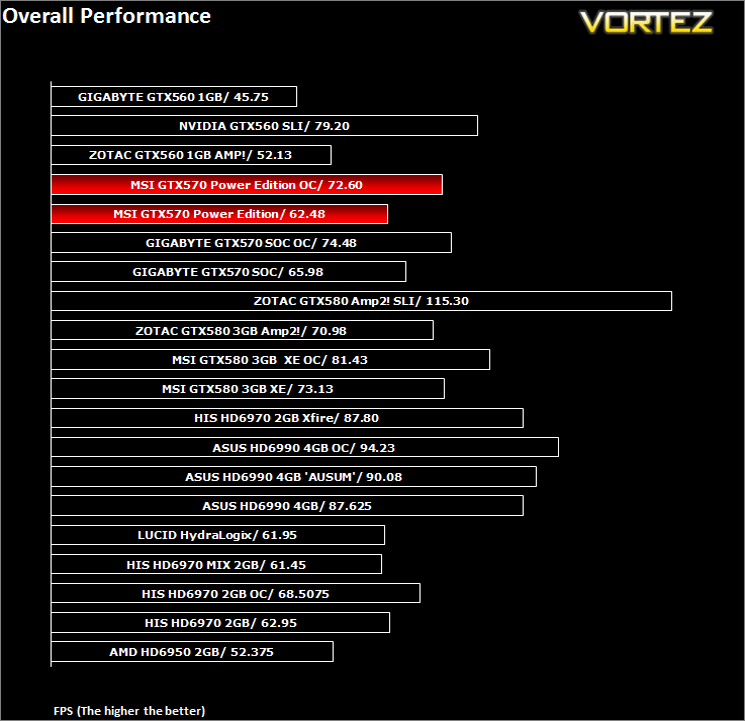
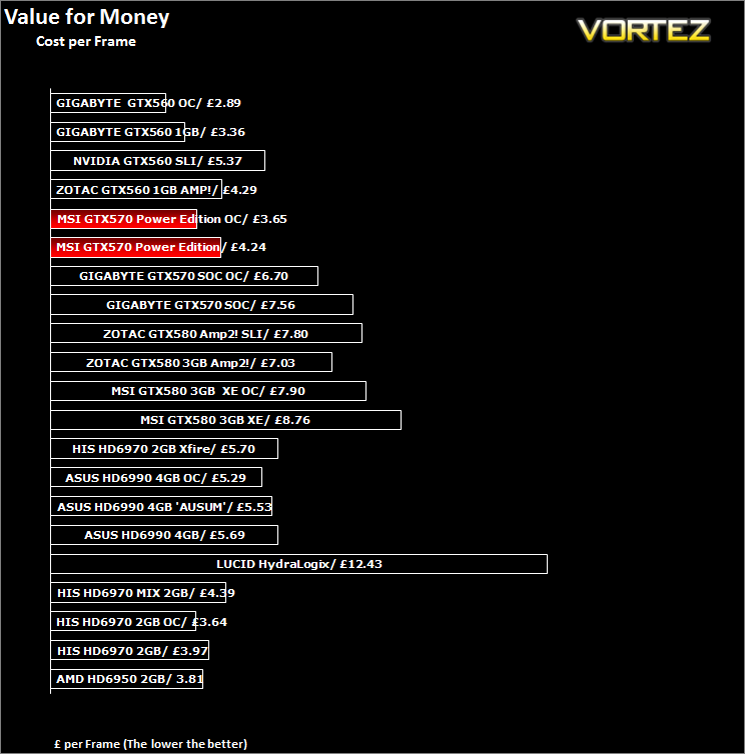
To answer that question I would need to know what your requirements were. If space were an issue then the MSI GTX570 1280MB Twin Frozr III Power Edition OC is the best GTX570 we have tested to date. In terms of performance it just falls short of the competition but only by a knats whisker. It does however weigh in a little cheaper and in this highly competitive segment of the market, price is key and I would say MSI are bang on the money here. Priced at around the £265 mark it is cheap enough to dissuade potential buyers of the top of the range GTX580s yet it still comes close in providing the performance, especially when overclocked further than the modest factory overclock already applied which itself demands a slight premium over reference cards. Couple this with a cooler that is both efficient and quiet and you have to ask yourself why bother with a GTX580?
For the most part I would agree. However when you look a little closer at the results, the lack of memory becomes apparent in high resolutions. VRAM limitation is a highly debated and contested subject but there can be no denying, especially with regard to Metro 2033 that in our testing, less than 2GB of memory is insufficient at high resolutions with all the trimmings applied. The game is simply unplayable. I will concede that this is only one game that suffered such dreadful results but with future games becoming more and more complex you have to wonder at the longevity a card with this amount of memory offers. Buyers of the GTX570 are looking for value for money and while today it certainly gives that, I would not place as much faith in tomorrow. I would however, have no concerns if I used a sub 24 inch monitor yet as with most components, resolutions have steadily risen over the years to a point where 1920×1080 is now the most common resolution in use today. The MSI GTX570 will easily deal with this resolution but what about next year, or the year after that? Will it still be able to reproduce the excellent results shown in the majority of benchmarks today? It is hard to tell but it wasn’t so long ago that people scoffed at having 512Mb of graphics memory. Today 1GB is pretty much the minimum!
I can however only base my findings on what I have seen today and although it just fell short of the GIGABYTE GTX570 SOC in terms of raw performance both in stock and overclocked settings, it matched its cooling and acoustics. It also costs slightly less and did it all in a smaller package. For that reason it deserves the very same awards as the GIGABYTE GTX . Each product scored its own victories and thus are very evenly matched depending on your ultimate requirements.
Pros:
-Solid Performer
-Very good cooling
-Very quiet operation
-Solid state capacitors, Hi-c Caps and super ferrite chokes for durable, efficient performance
-Small size
Cons:
-Lack of memory may be an issue for some
-Brown PCB
-Solid Performer
-Very good cooling
-Very quiet operation
-Solid state capacitors, Hi-c Caps and super ferrite chokes for durable, efficient performance
-Small size
Cons:
-Lack of memory may be an issue for some
-Brown PCB



Click here for an explanation of our awards at Vortez.net. Thanks to MSI for providing todays review sample.