







Now with black interior and better cable management the all new Tempest EVO. Let’s take a look
Product on Review: NZXT Tempest EVOManufacturer: NZXT
Street Price: £79

We’ve seen a real surge in enthusiast cases from NZXT over the past year. Our review today looks at the Tempest EVO, a gaming case taken from the Crafted Series and not all that dissimilar to the Antec 900 series. Not only does the airflow follow a similar design concept – the visual looks are quite comparable too. But the real questions on our minds is – is it a better offering?
NZXT’s take on the Tempest EVO
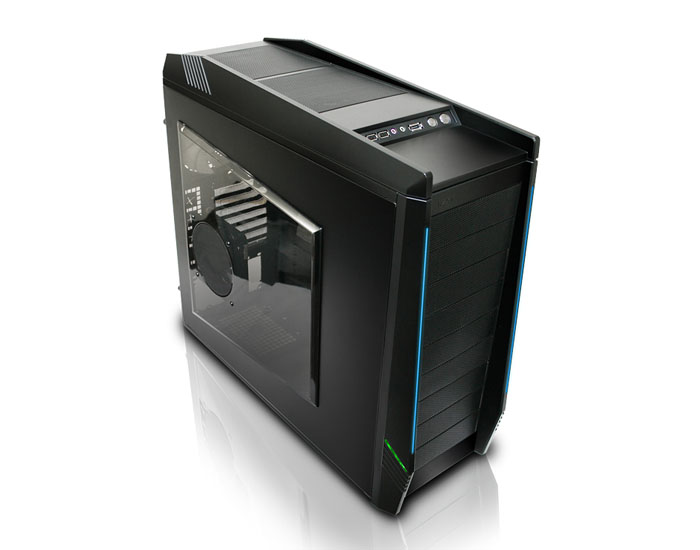
| Announcing the Tempest EVO, a sleek, all black, steel mid tower gaming chassis. Building off of the original Tempest’s award winning design, the EVO brings advanced cooling power, expandability, and cable management. The Tempest EVO maximizes airflow circulation with Dual 120mm intake, dual 140mm top exhaust, side 120mm, and a rear 120mm fan. NZXT even redesigned the fan blade design so they effectively deliver more air at lower noise levels. Additionally, the bottom mounted PSU provides better airflow and separation of heat from the CPU. The Tempest EVO puts a premium on expandability with E-ATX support allowing for compatibility with higher end graphics cards, power supplies and server boards while the server-like HDD space holds up to 8 HDDs ensuring that enthusiasts can make significant upgrades to their system without having to replace the chassis. Installation and upgrades are a breeze with pre-drilled cable routing on the motherboard allowing for a cleaner look and improved airflow. The case also features added space behind the motherboard panel from a punched side panel design that allows for easy heatsink removal. Tempest EVO is well equipped for overclocking and watercooling enthusiasts with predrilled watercooling tube access and support for a dual 120mm radiator at the top panel. |
FEATURES
MODEL Tempest SERIES
CASE TYPE MID TOWER Steel
FRONT PANEL MATERIAL PLASTIC
DIMENSIONS (W x H x D) 211.5 X 521.5 X 562 mm
COOLING SYSTEM FRONT, 2 X 120 mm Blue LED (included)
REAR, 1 X 120 mm (included)
SIDE PANEL, 1 X 120mm Blue LED (included)
TOP, 2 X 140mm Fan (included)
DRIVE BAYS 9 DRIVE BAYS
3 EXTERNAL 5.25″ DRIVE BAYS ( up to six 5.25″ )
1 3.5″ External bracket
8 INTERNAL 3.5″ DRIVE BAYS
Screwless Rail Design
MATERIAL(S) Steel Construction
EXPANSION SLOTS 7
POWER SUPPLY 500 WATT PS2 ATX 12V 2.0 ( OPTIONAL )
WEIGHT 11.2 KGS (W/O Power)
MOTHERBOARD SUPPORT MOTHERBOARDS: E-ATX ATX, MICRO-ATX, BABY AT
Packaging
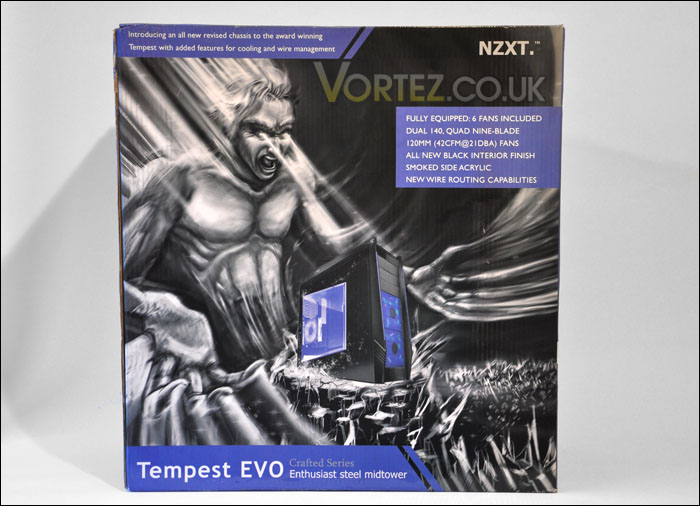
In similar fashion to other releases from NZXT, they have chosen to use some creativity and flare to capture the attention of the consumer. The cover art on the Tempest EVO packaging is impressive, I think it’s a good idea that NZXT choose to decorate their packaging in such a way.As with most case packaging images of the Tempest EVO can be seen and specifications/features detailing the technical factors of the case. Inside there is the obligatory polystyrene to preserve/protect the case in transit.
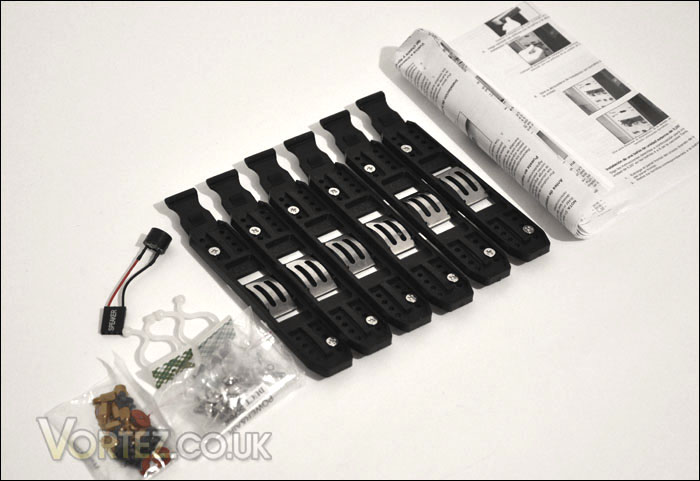
Before taking a look at the case, we will have a look at the accessories that come bundled with the Tempest EVO
You get a bag of screws, speaker connector, instructions manual, cable tidy and three sets of 3.5” installation brackets.
Outside
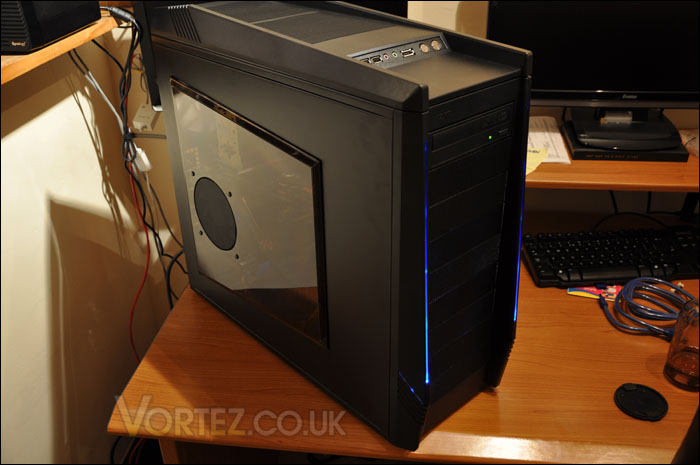
Removing the Tempest EVO from the packing we can see this case in all its glory. It does indeed look quite similar to the Antec 900 series, but there is no harm in this – this set of cases from Antec are very popular. If NZXT can offer something cheaper with better features then this is something they can monopolise with.The Tempest EVO looks sleek and stylish, there are two edges that protrude down the height of the case. Each edge has a blue LED the entire stretch, and when hooked up to the power illuminates a cool blue glow.
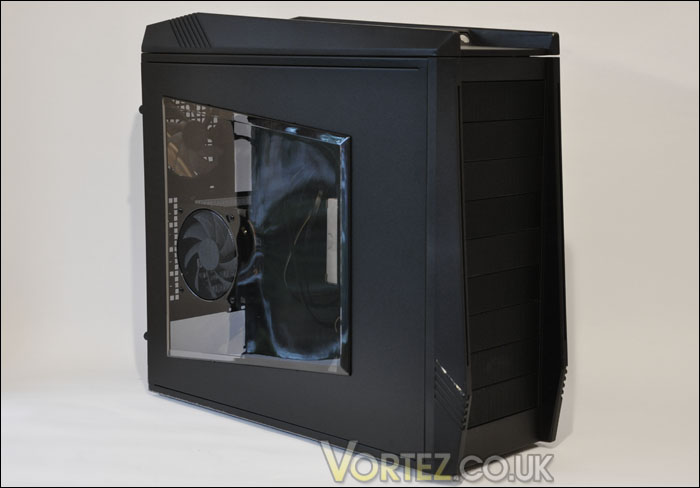
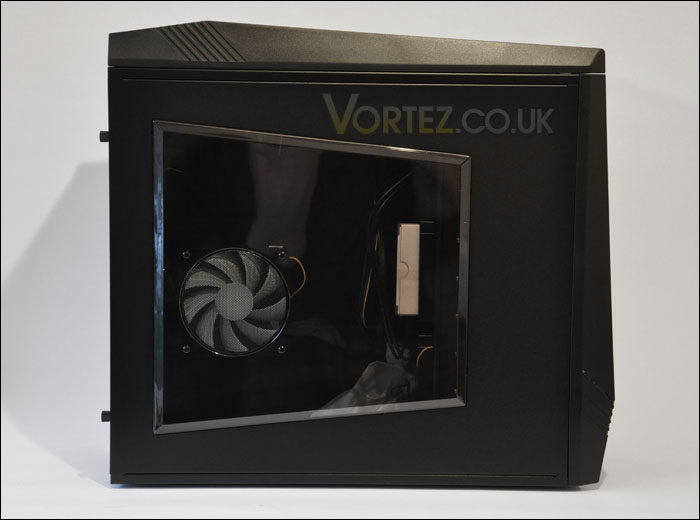
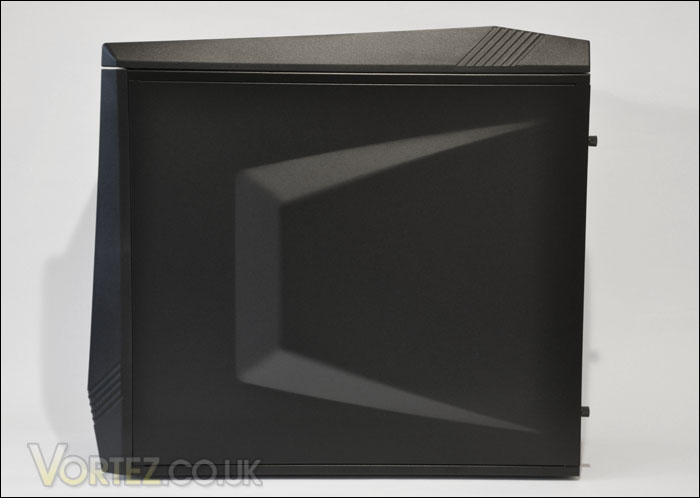
The featured side panel of the Tempest EVO incorporates a clear Perspex window – allowing you to see your hardware. Fixed onto this window is a 120mm fan that exhausts heat from the GPU/PCI-e region. The opposite side has a steel panel that has an interesting curvature – both of these panels are steel and are secured into place via thumbscrews.
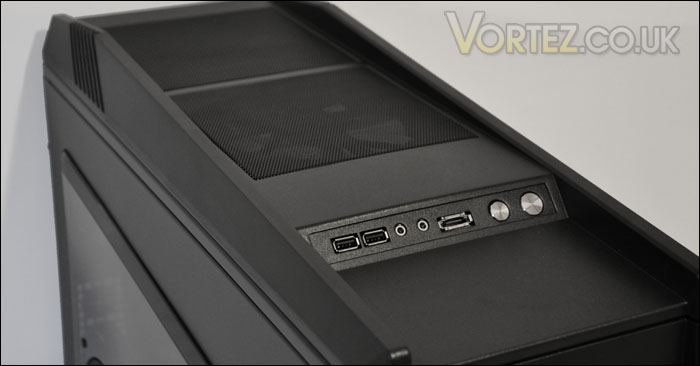
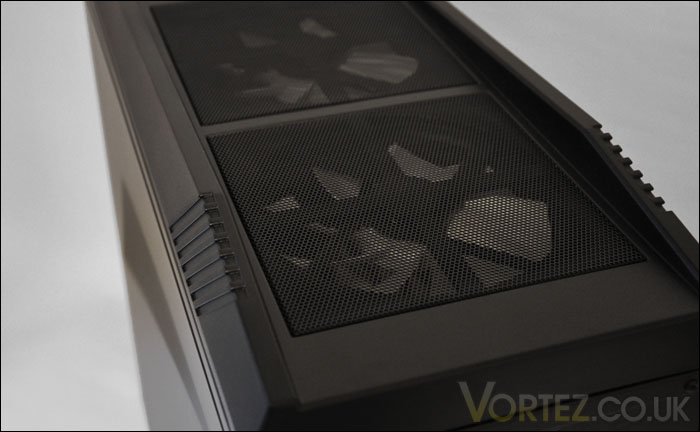
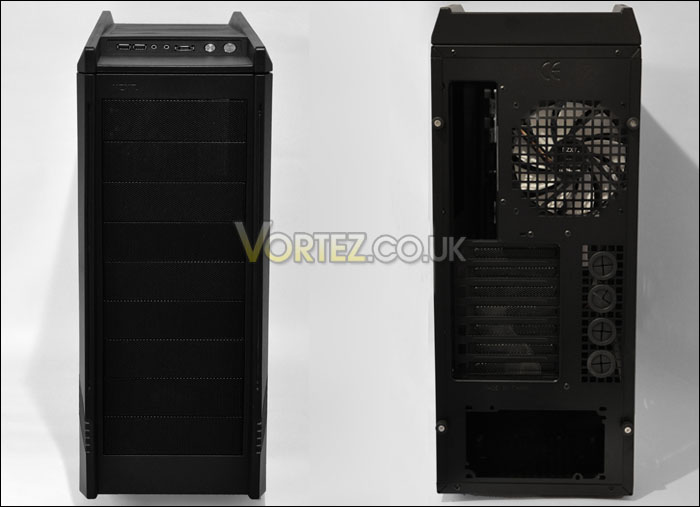
Moving to the top of the case, the front panel has the usual functionality a case comes with these days – two USB 2.0 ports, audio and microphone slots, an eSATA port and power/reset buttons. It’s good to see that NZXT have chosen to opt for the increasingly popular eSATA port rather than firewire which some have been known to integrate here. Firewire isn’t very widely used nowadays so replacing it with something new is a good decision. Over the other side of these controls is mesh panelling that covers two 140mm fans that dissipate unwanted air out through the top of the case.
Having the front and back of the Tempest EVO side by side we can see that the design here follows a fairly standard format. At the front, behind that mesh panelling is two 120mm fans and moving attention to the rear there is an outlet for a 120mm fan, four outlets for the ability to watercool and an opening at the bottom for mounting the PSU. If you have done your maths correct, that’s six fans in total included with this case. That’s an incredible amount of airflow, something that resembles being on a wind farm! A little later we will be looking at how the case operates with all six of these fans spinning. It will be interesting to see how they fare. NZXT do claim that these fans take advantage of a nine blade design able to deliver more air at low noise levels.
Inside
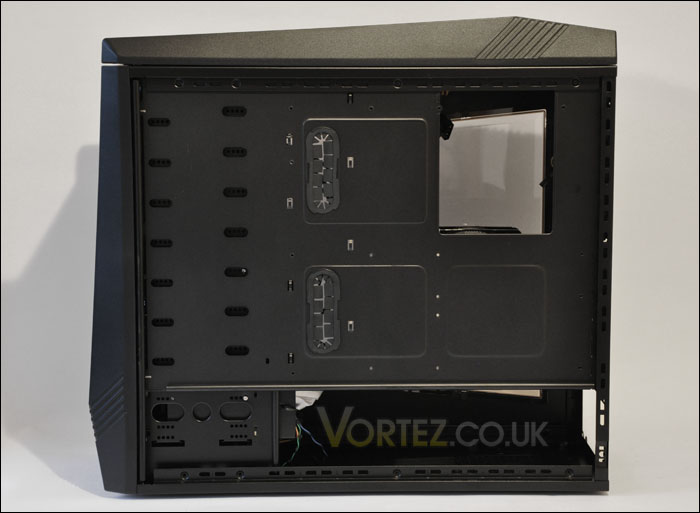
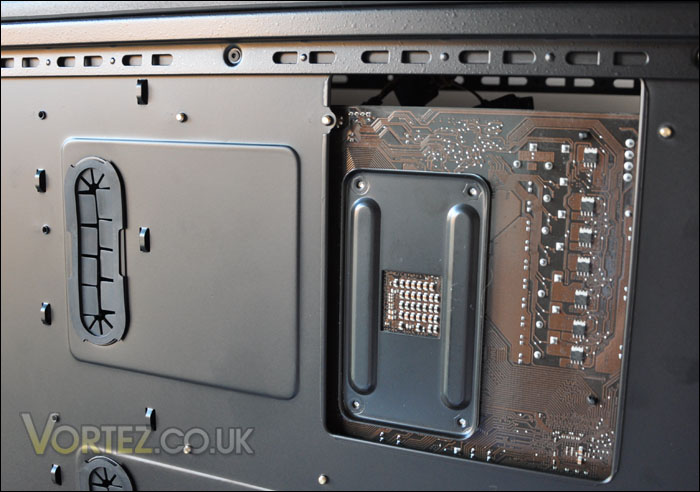
Taking our attention now to the inside of the case, the space inside our Tempest EVO is rather generous. This case caters for E-ATX form factor, so if you have ATX or even mATX board there will be a great deal of space for graphics cards. The motherboard may not be removable but it does include an extra-large cut out for accessing the motherboard back plate. NZXT have really thought about cable management with the Tempest EVO by giving the gaps for slipping your cables through a nice rubber sleeve. This keeps the cabled tight and concealed.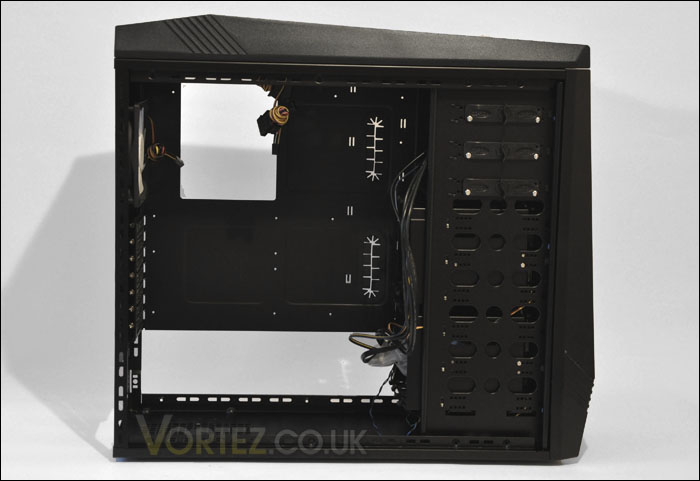
Case enthusiasts will be pleased to see that the interior is entirely black for a stealthy look – helping to make the insides look cleaner.
At the bottom of case is where the PSU will be mounted. There are 4 rubber plugs to seat the unit. Underneath is a filter that can be removed and cleaned.
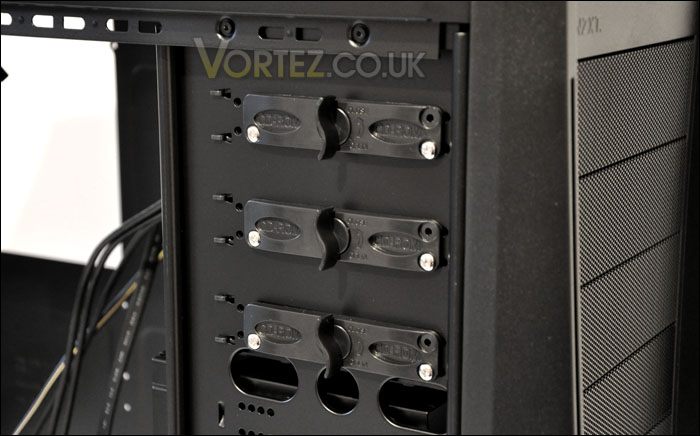
Mounting optical drives is quite simple. You should already be familiar with the mechanism that the Tempest EVO takes advantage of. Simply slide in the drive, turn the key and the device is locked into place.
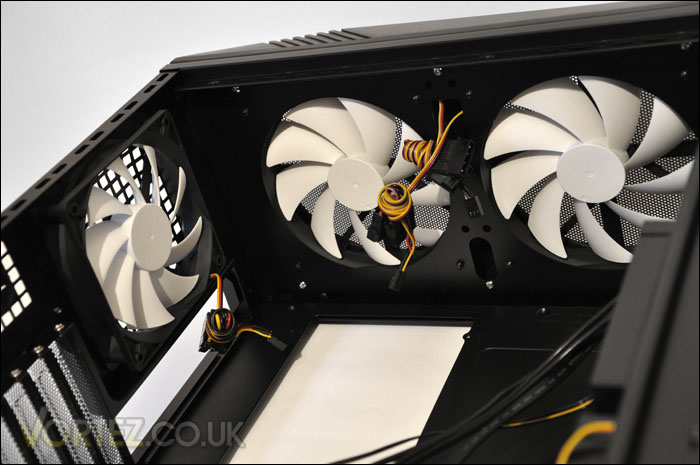
As I’ve already mentioned there are six fans within the Tempest EVO. Two 140mm at the top of the case, a 120mm rear exhaust fan, two 120mm fans at the front of the case. The top fans are mounted into cavities to keep them away from components which is a great idea.
Installation
As installs go, the Tempest EVO is a good case to work with. Everything fits neatly and cable management is very easy.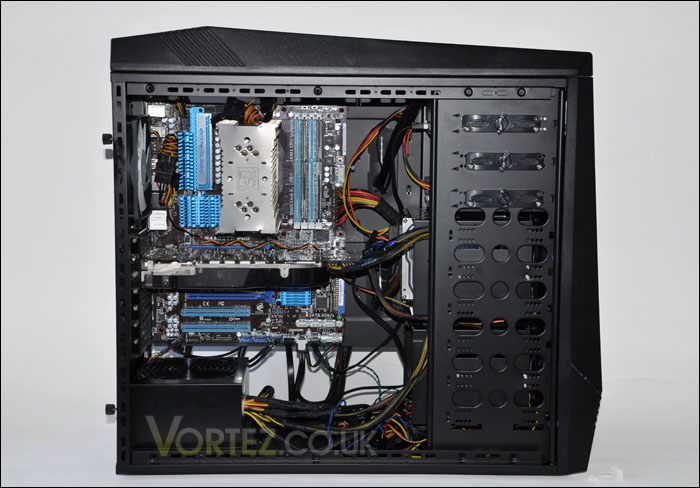
As you can see from the backplate cut out, the gap is more than generous and allows you plenty of space to play with.
In order to install an optical drive you have to unhinge the front of the case. This reveals the filters behind the 120mm fans also. Without removing the front of the case it isn’t possible to install any 5.25” drives which is a shame and a little bit of a hassle really.
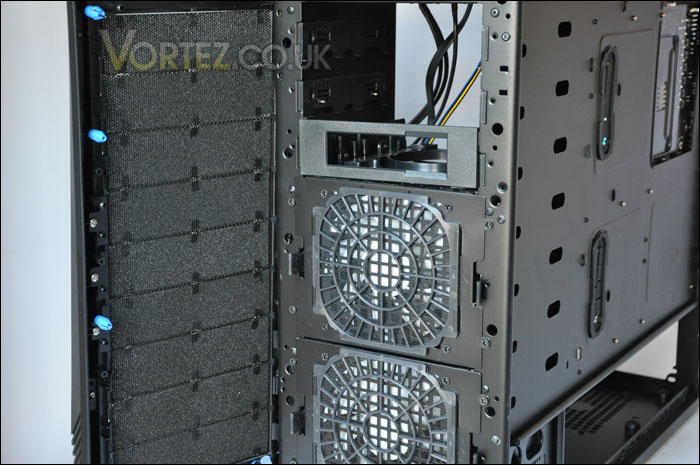
Any 3.5” device that you might have such as a SATA HDD secures into the section below the optical drive area really nicely. It’s surprisingly easy to install, hassle free and when the drive clicks into place it’s good to feel that the drive will not move and is secure. In order to install the drive all you have to do is attach two of the fitting clips to the sides and slide it into the mechanism inside the case. Simple.
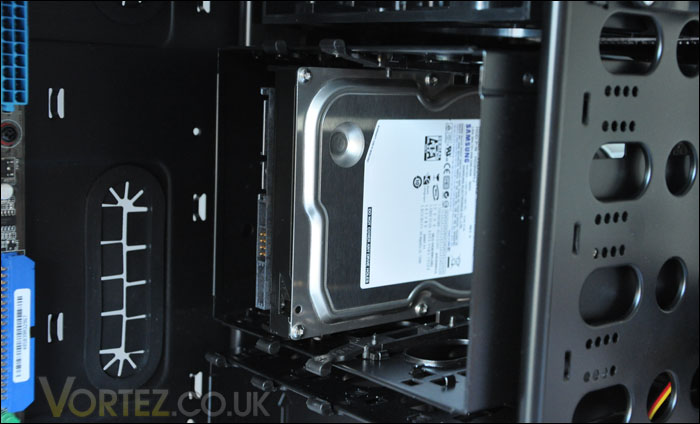
With all components now in, cable management taken care of the Tempest EVO certainly offers a straight forward install and I feel the build quality of various regions/devices within the case are sturdy. Overall a clean, tidy and pleasing impression so far.
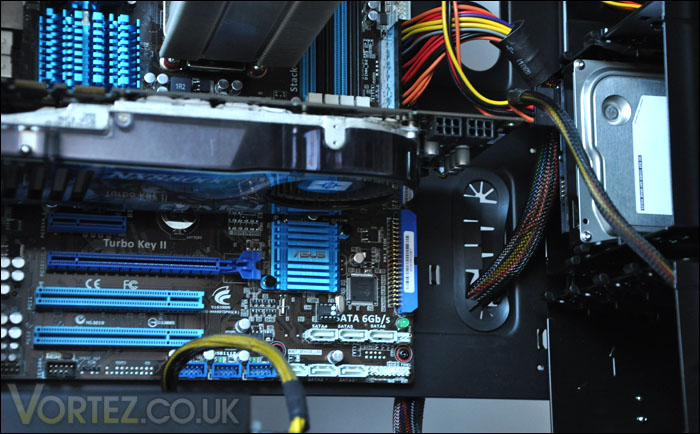
Performance
When it comes to testing with a case, the only results that we can look for is the thermal performance. With the NZXT Tempest EVO having a multitude fans, what we want to find out is how well do these fans cool our system and are they noisy? The components I have chosen to install inside the Tempest EVO are new, and because of this these parts have never been installed in another case so we aren’t able to compare any temperatures against other cases with the same components unfortunately. But still, the results will give you an indication of thermal performance.System Components
Processor AMD X6 1055T 2.8GHz
MotherboardASUS M4A89TD PRO AM3
Memory 4GB Mushkin 10666 9-9-9-24 DDR3
Graphics Card MSI 8800GTX 869MB
Hard Disk x2 Samsung SATA-II 300GB
The below temperatures were obtained by reporting thermal results at idle (20 minutes into Windows 7 from cold boot) and then loading the system with Battlefield Bad Company 2 for just over 30 minutes.
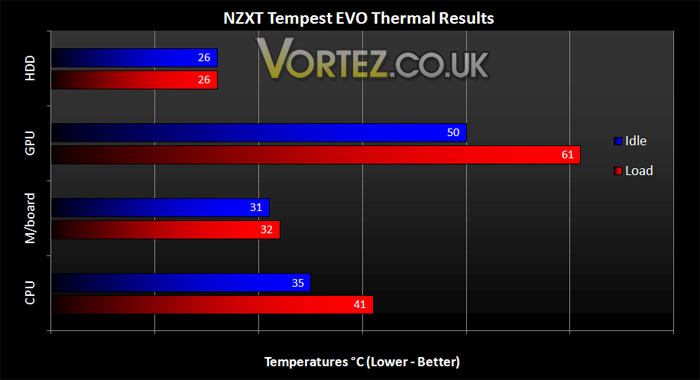
The above results are certainly encouraging. For a system of such calibre to remain comfortably low this is positive. Airflow inside a case is essential if you want to reduce system temperatures and with six case fans spinning the Tempest EVO is undoubtedly up to the challenge.
Sound
The noise from this case becomes a bit of an issue if you choose to use all six fans, what would be nice to see is some sort of fan control which I’m afraid to say is absent. With half of the fans switched off the noise levels are much better and funnily enough it doesn’t impede temperatures that much.
What I would suggest is turning off the side and top fans if the noise is particularly affecting things.
Conclusion
The cases I’ve tested recently have appeared to be mediocre and not without fault but the NZXT Tempest EVO stands out from the crowd and impresses.If you have read this review you will be aware that this case has loads of potential. It oozes style, delivers on cable management and comes equipped with six case fans. Not many cases will offer such lucrative features for the suggested RRP that the Tempest EVO comes in at so this makes it even better value for money.
Whilst the Tempest EVO has a catalogue of qualities it does have some small criticisms. Namely the cable management sleeves when pushing cables through, they fall off easily and you have to put them back into place again. This happened quite frequently when I was arranging the cables inside the case.
Based upon my findings and experience with the Tempest EVO it is a pleasure to award this case the Silver award
Pros
+ Great looks
+ Good build quality
+ Six fans to use
+ Excellent cable management
+ Good value for money
Cons
– Noise
– Rubber sleeves
We would like to thank NZXT for providing this sample. You can discuss this review on our forums
