Today, we will be looking at our first Bronze-rated ATX 3.1 power supply unit – the SAMA B850. We break down performance, voltage regulation, and real-world usability of the SAMA B850 to see if an affordable ATX 3.1 unit can truly deliver for modern PC builds.
Product Name: SAMA B850 ATX 3.1
Manufacturer: SAMA
MSRP: US$74.99
Today, we will be looking at our first Bronze-rated ATX 3.1 power supply unit – the SAMA B850. For builders on a budget seeking for an ATX 3.1 PSU with native 12V-2×6 connector, the SAMA B850 might be the one you are looking for.
Can a budget 80 PLUS Bronze ATX 3.1 PSU keep up with the Gold and Platinum units we’ve tested? In this review, we examine whether cutting costs on your power supply is a smart move or a risky compromise. We break down performance, voltage regulation, and real-world usability of the SAMA B850 to see if an affordable ATX 3.1 unit can truly deliver for modern PC builds.
SAMA’s ATX 3.1 PSU Lineup
SAMA’s ATX 3.1 power supply unit lineup consists of the P Series, G Series, GT Series and B Series. We have previously reviewed the SAMA G1000 under the Gold-rated G Series. Learn more about SAMA’s PSU lineup at the SAMA website.
Features and Specifications
Features
• 80 PLUS Bronze Certified: Certified for reliable efficiency under standard load conditions.
• Intel ATX 3.1 & PCIe 5.1 Ready: Designed to meet ATX 3.1 requirements with support for modern PCIe 5.1 graphics cards and updated power excursion standards.
• Native 12V-2×6 Connector: Equipped with a dedicated 12V-2×6 cable rated up to 450W for direct GPU compatibility without adapters.
• Enhanced Power Excursion Support: Rated for up to 200% total power excursion under ATX 3.1 standards to handle transient GPU spikes.
• Half-Bridge LLC + DC-DC Design: Utilizes a half-bridge LLC topology with DC-DC conversion for stable voltage output and reduced ripple.
• 120mm Temperature-Adaptive Fan: Features a 120mm silent fan with thermal control for balanced cooling and acoustics.
• Slim Flat Cables: Easy-to-bend flat cables reduce clutter and improve cable management.
• Comprehensive Protection Circuitry: Includes OCP, OTP, SCP, OVP, NLO, OPP, and UVP for system safety.
• Durability Tested: Rated for 100,000 hours MTBF and validated through corrosion resistance testing.
• Compact ATX Form Factor: Standard ATX size for broad case compatibility.
Specifications
• 80 PLUS Efficiency: Bronze
• Form Factor: ATX 3.1
• Total Power Output: 850W
• PCIe Support: PCIe 5.1 Ready
• Native GPU Connector: 12V-2×6 (450W rated)
• Cooling Fan: 120mm Temperature-Adaptive Fan
• MTBF: 100,000 hours
• Protection Features: OVP, UVP, OPP, OCP, SCP, OTP, NLO
Dimensions (L*W*H)
140 × 150 × 86 mm
Packaging, Bundle, and Cables
SAMA is also moving toward more sustainable packaging practices through the use of recycled materials, reducing environmental impact while maintaining product protection.
The packaging of the SAMA B850 closely resembles that of the SAMA G1000. The primary differences are the printed model designation and the efficiency badge, which in this case reflects its 80 PLUS Bronze certification.
Inside, the PSU is secured in protective bubble wrap and accompanied by a warranty guide, a multilingual user manual, a power cord, and a small accessory pack containing cable ties and mounting screws.
Cables
The SAMA B850 uses flat black cables in a non-modular cable design.
The SAMA B850 comes with a 450W 12V-2×6 connector that supports up to a NVIDIA RTX 5070 Ti graphics card.
The SAMA B850 PSU includes the following cables:
1x 8Pin (4+4Pin) + 8Pin EPS (750mm+150mm)
1x 16Pin PCIe 5.1 12V-2×6 (550mm)
1x 8Pin (6+2Pin) + 8Pin PCIe (550mm+150mm)
1x 8Pin (6+2Pin) PCIe (550mm)
2x 3xSATA +1xMOLEX (900mm)
The cables of the SAMA B850 should be long enough for most ATX PC builds.
Closer Look
External
The SAMA B850 PSU appears to be using the same housing as the SAMA H Series and K Series PSUs.
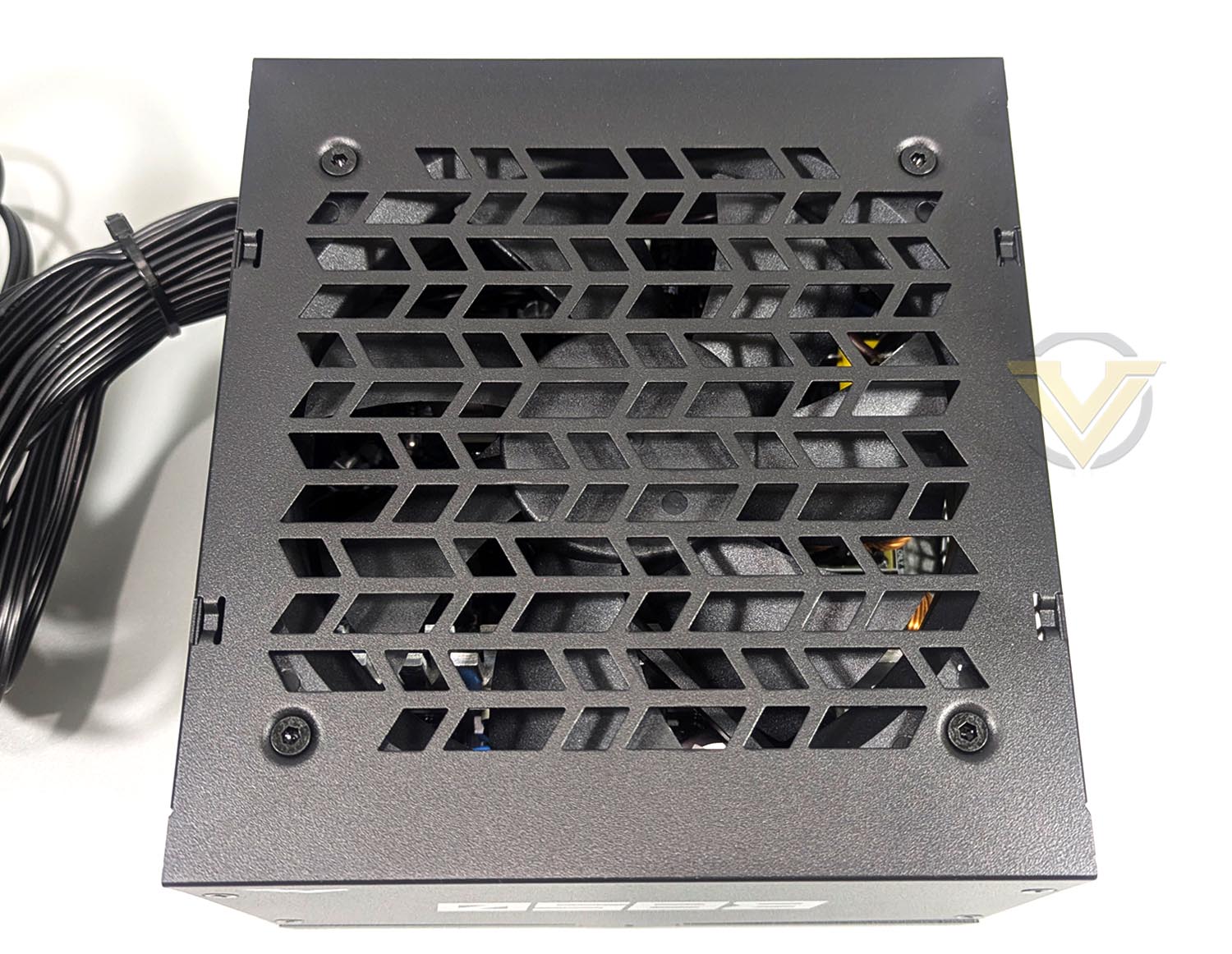
SAMA uses the same air vent design on all its ATX 3.1 PSUs including the P Series, G Series, B Series, H Series, and K Series.
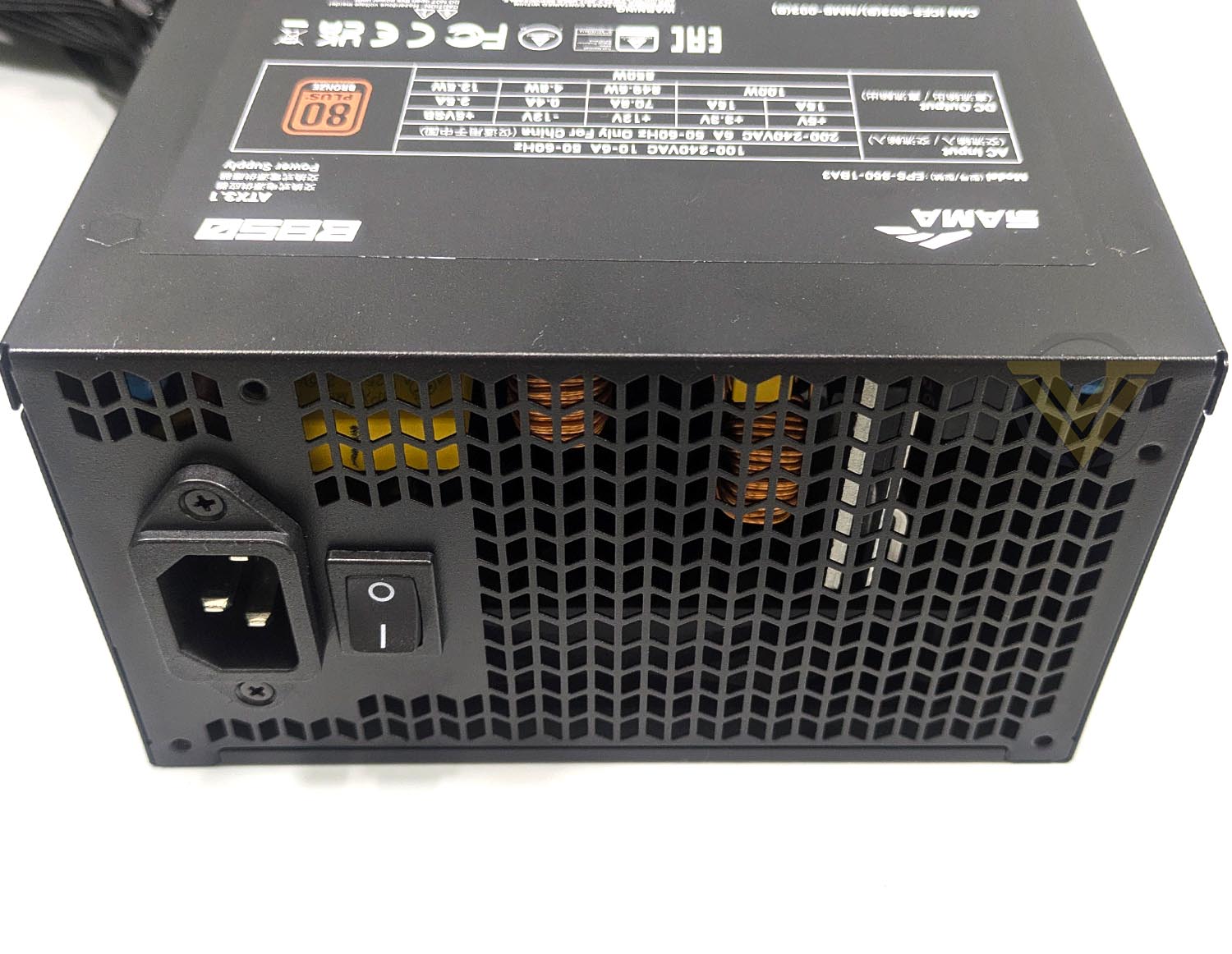
The rear of the PSU features the same ventilation grille design, allowing for adequate exhaust airflow. Also located at the rear are the AC input socket and the main power switch, positioned in the standard ATX layout.
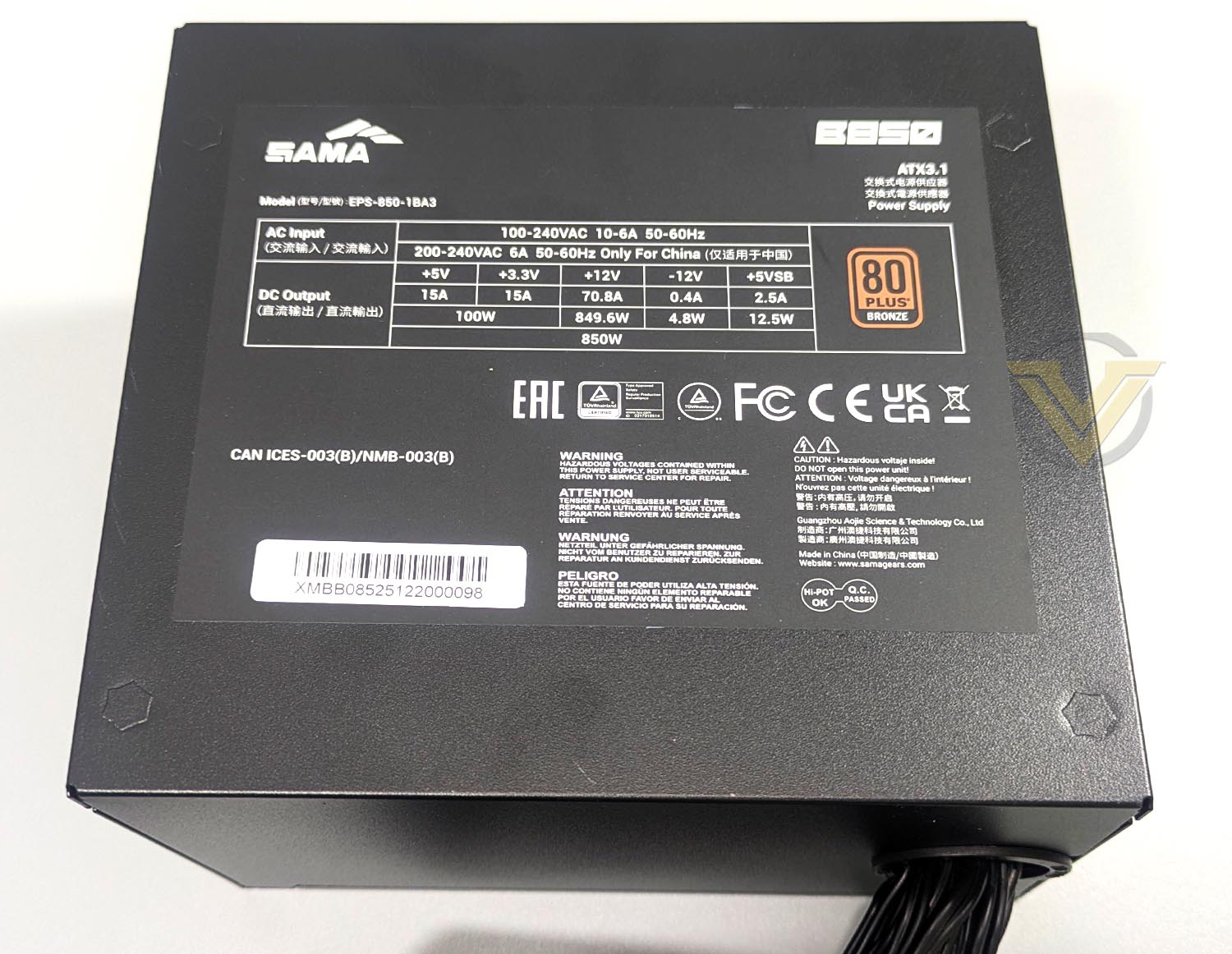
The top of the PSU features a specification label that outlines the unit’s key electrical ratings, certification markings, and serial number for identification and compliance reference.
Interior
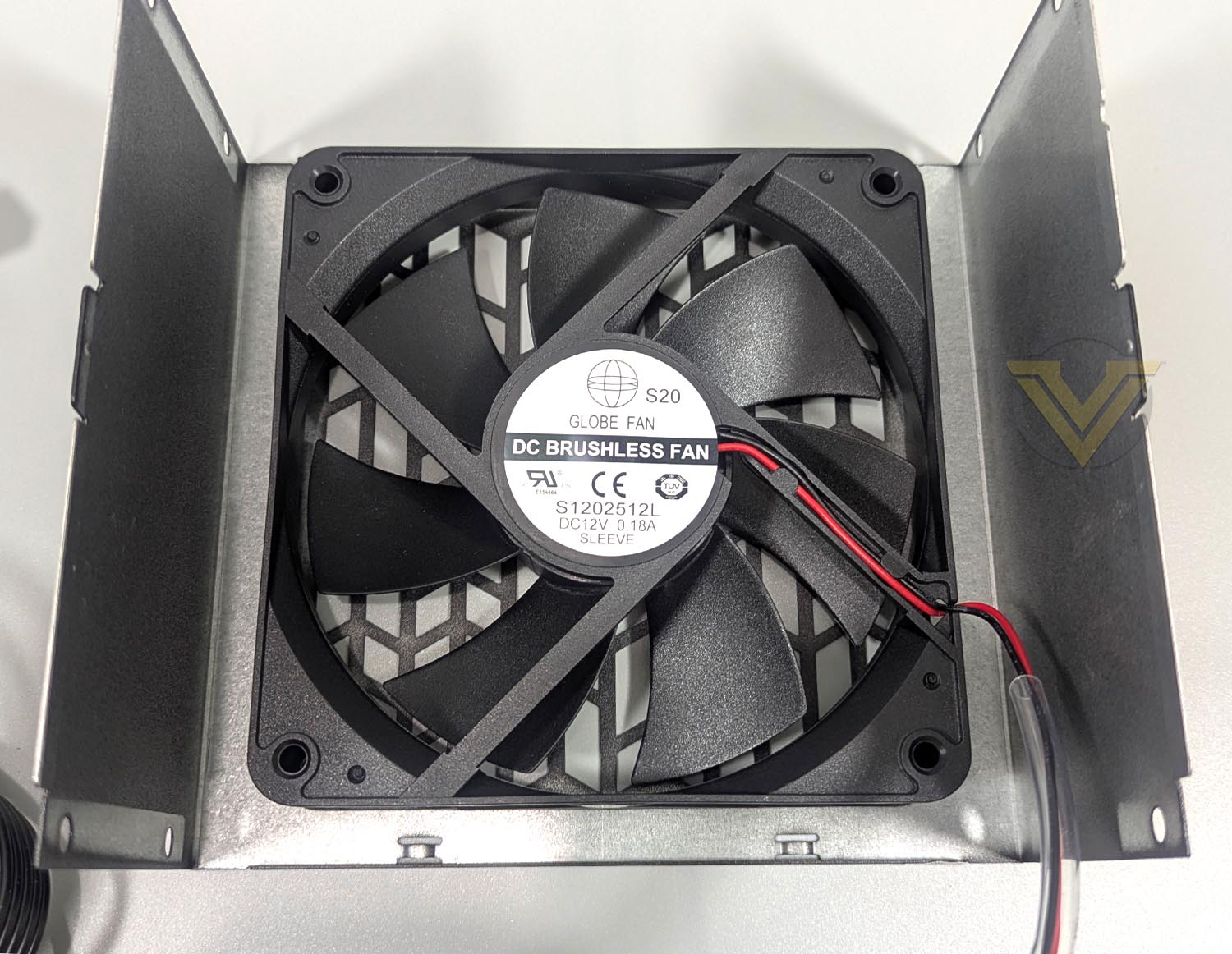
The SAMA B850 is equipped with a Globe Fan S1202512L S20 cooling fan. While the model designation is similar to the fan used in the ENERMAX REVOLUTION III S 1000W, the unit fitted to the SAMA B850 utilizes a sleeve bearing design rather than the fluid dynamic bearing (FDB) variant found in the ENERMAX model. Sleeve bearing fans are generally more cost-effective.
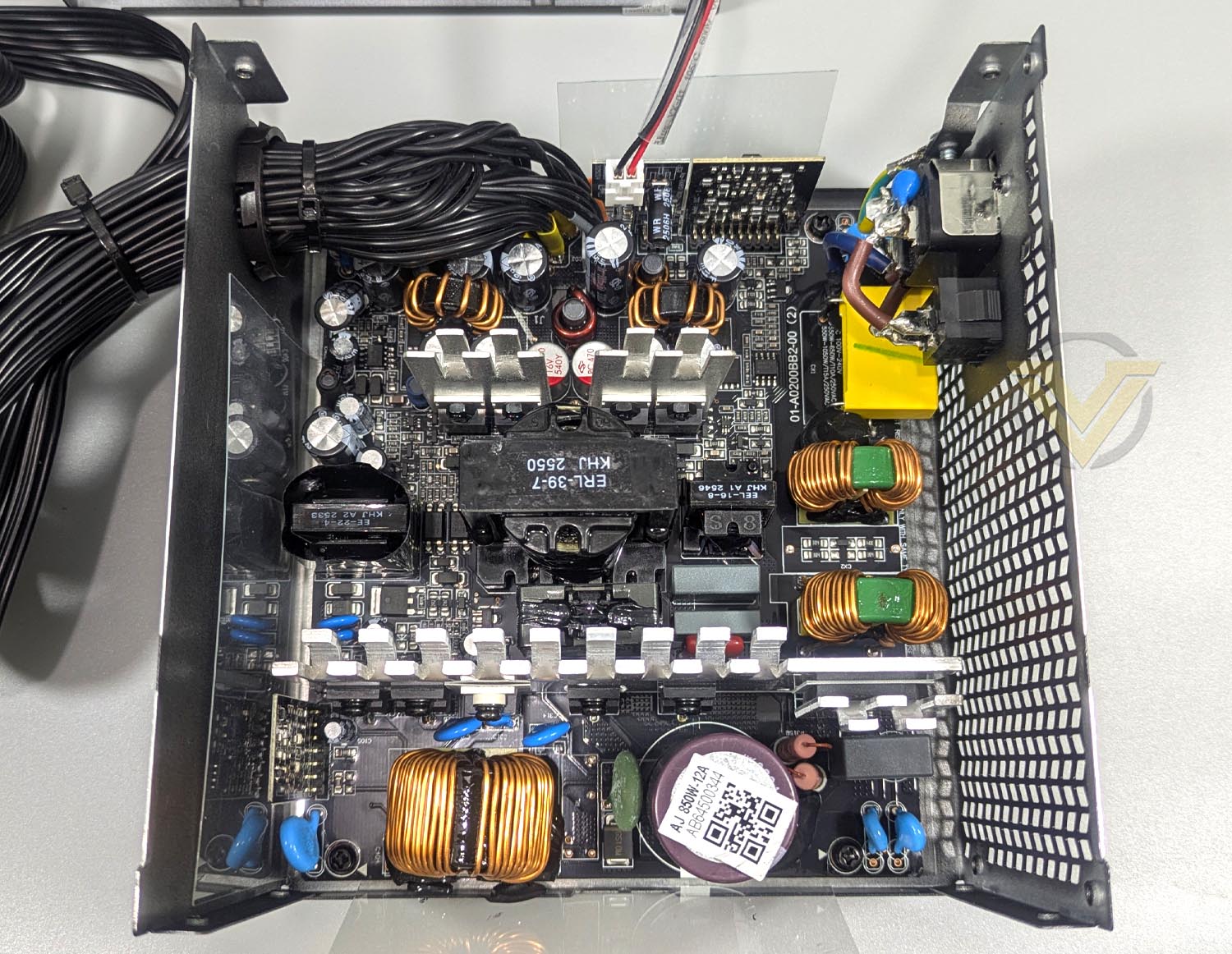
The SAMA B850 utilizes a single primary capacitor in its main stage design. Internally, it is fitted with multiple aluminium heatsinks to aid in thermal dissipation — a notable inclusion at this efficiency tier, where Bronze-rated units often minimize material usage and may feature the most basic cooling solutions.
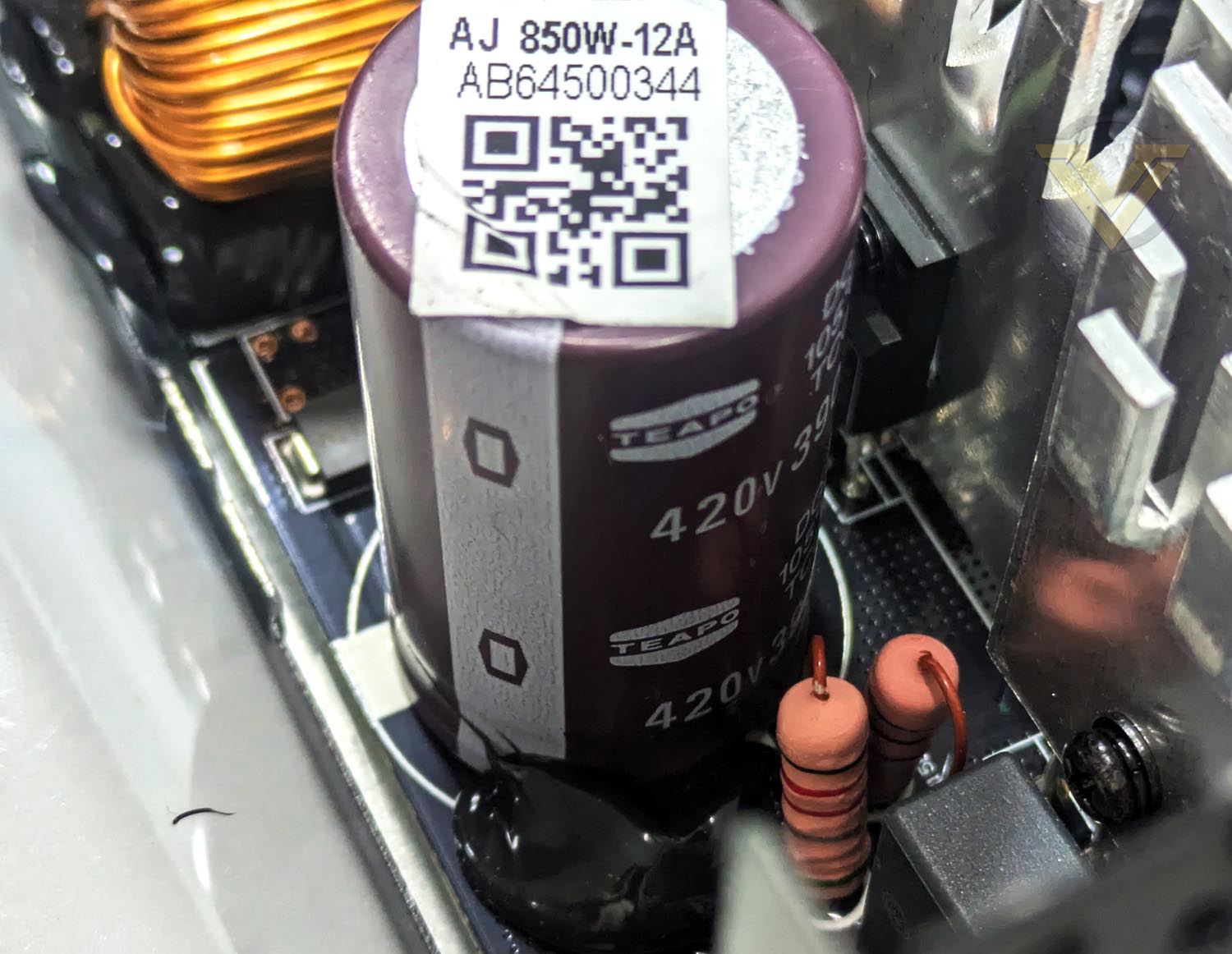
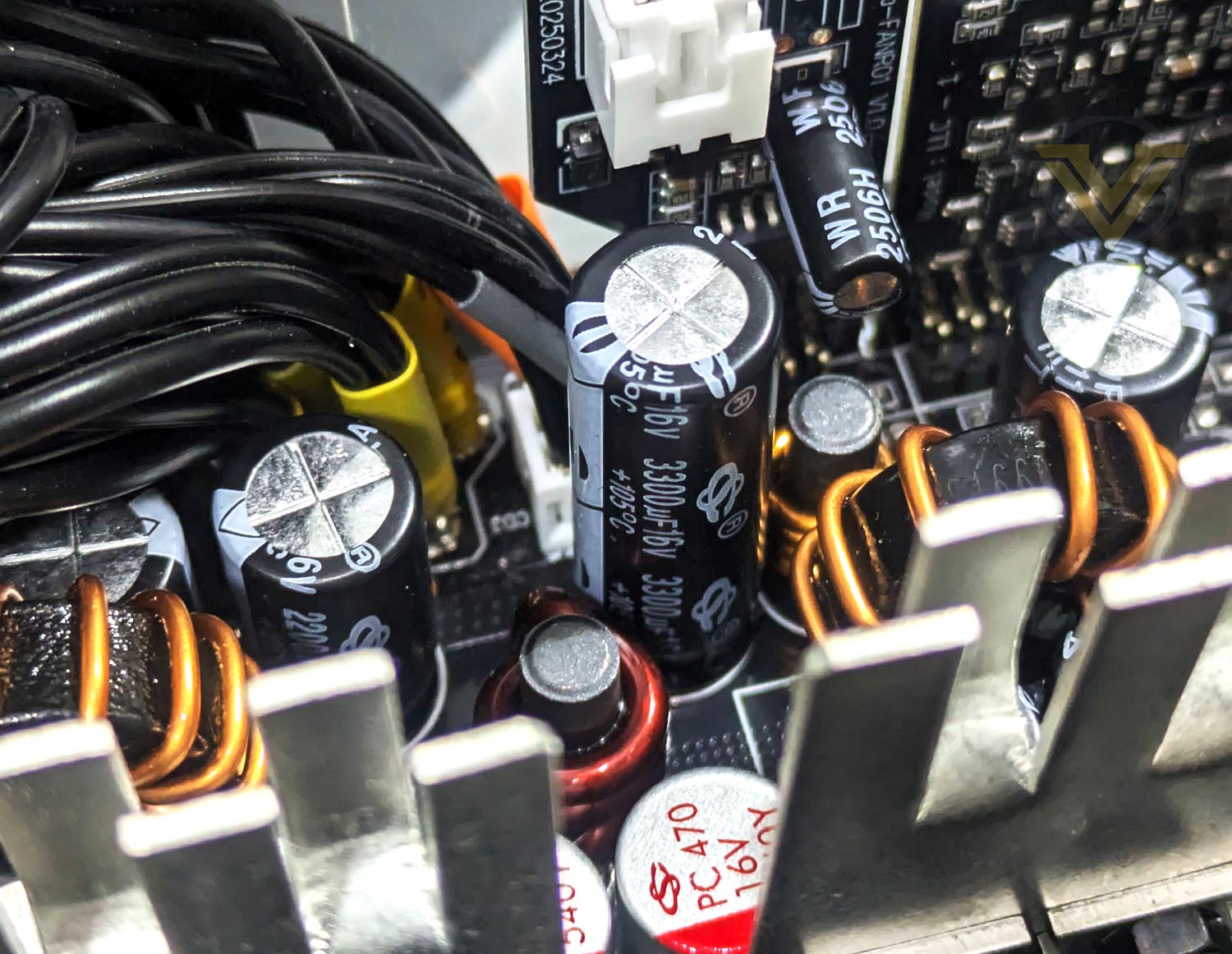
The PSU uses a Teapo 420V 390µF aluminium electrolytic capacitor on the primary side, with secondary capacitors sourced from 12 Kuang Jin (12KJ), both Taiwanese manufacturers. Teapo is commonly found in mainstream PSU platforms and is generally regarded as dependable when properly implemented, while 12KJ is more typical of value-oriented designs. Their inclusion reflects the SAMA B850’s positioning as a cost-conscious ATX 3.1 Bronze-rated power supply unit.
Testing Methodologies & Results
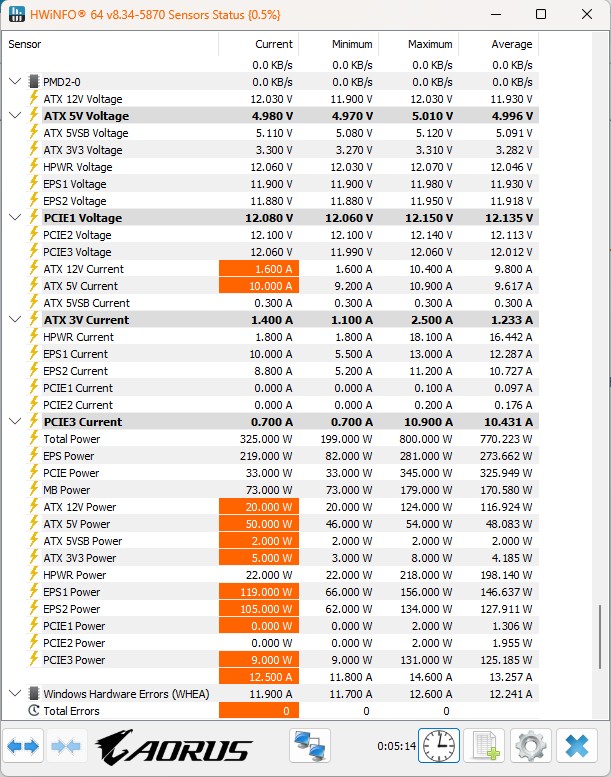
We will be using an ElmorLabs PMD2 that monitors and measures voltage, current, and power flowing through the CPU, GPU and motherboard power cables.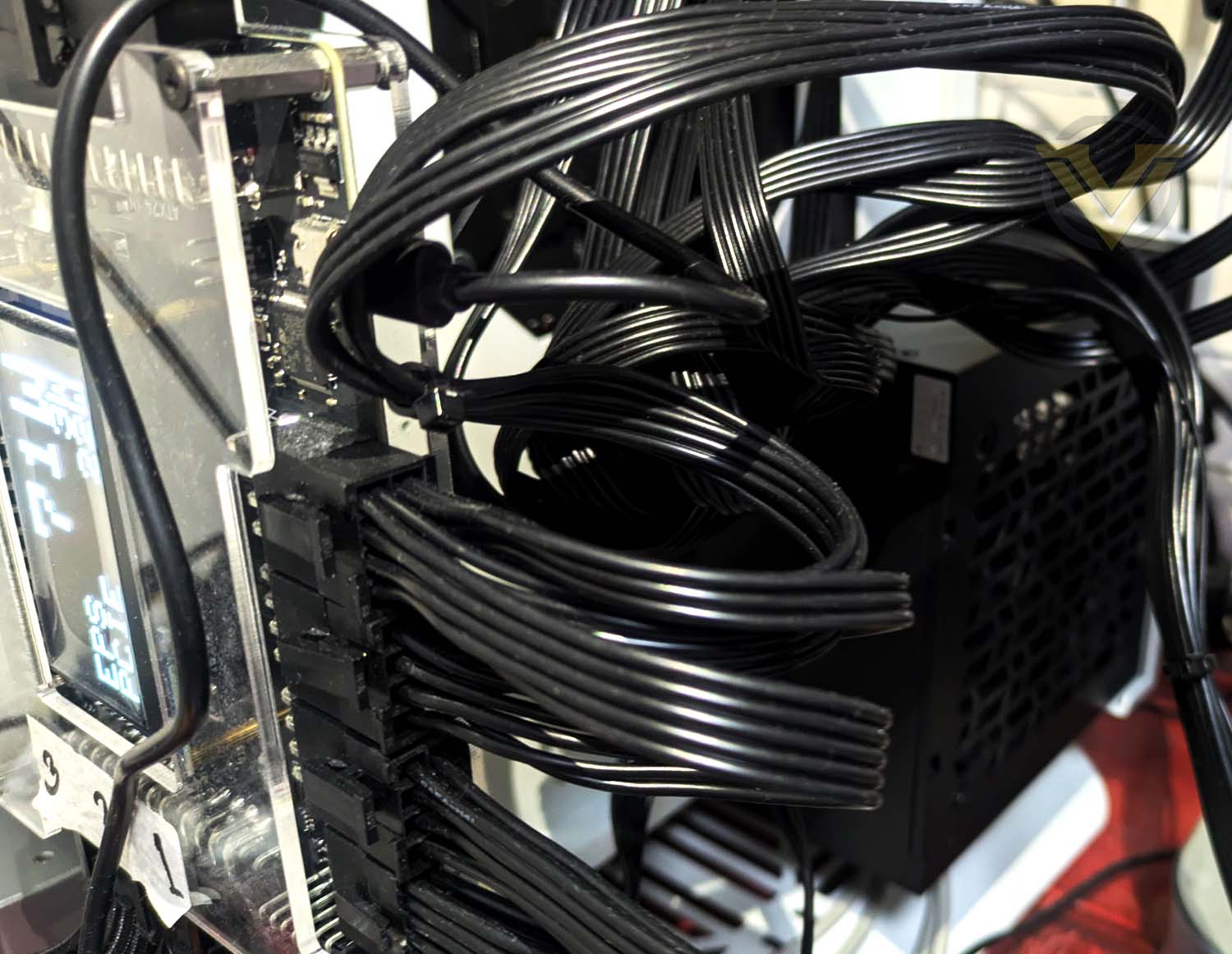
Our testing methodology will now be using OCBase’s OCCT Enterprise Edition software for power loading and monitoring. Tweaking the OCCT Stability Test, we can set different power loads for the PSU easier rather than playing around with various software to achieve set power loads. All testing is conducted using the 230V residential power standard.
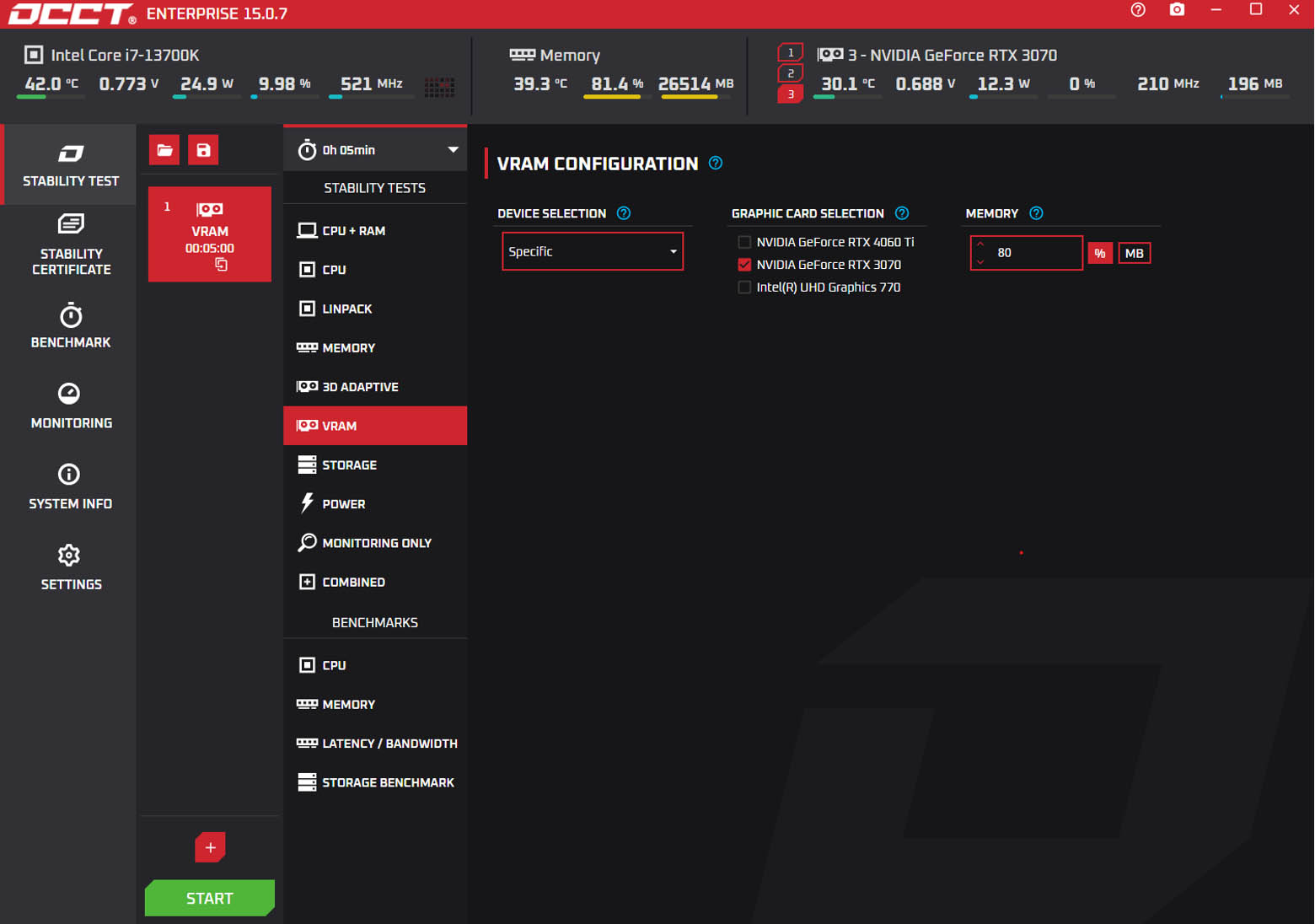
Methodology
The ElmorLabs PMD2 features several monitoring points which includes two 8-pin EPS connectors (EPS1 and EPS2), three +12V 8-pin PCIE (PCIE1, PCIE2, and PCI3), one 12V-2×6 connector (HPWR) and readings on the 24-pin which include +12V, +5, and +3.3. For the +12V output on the peripheral/molex cable, we will be using a multimeter.
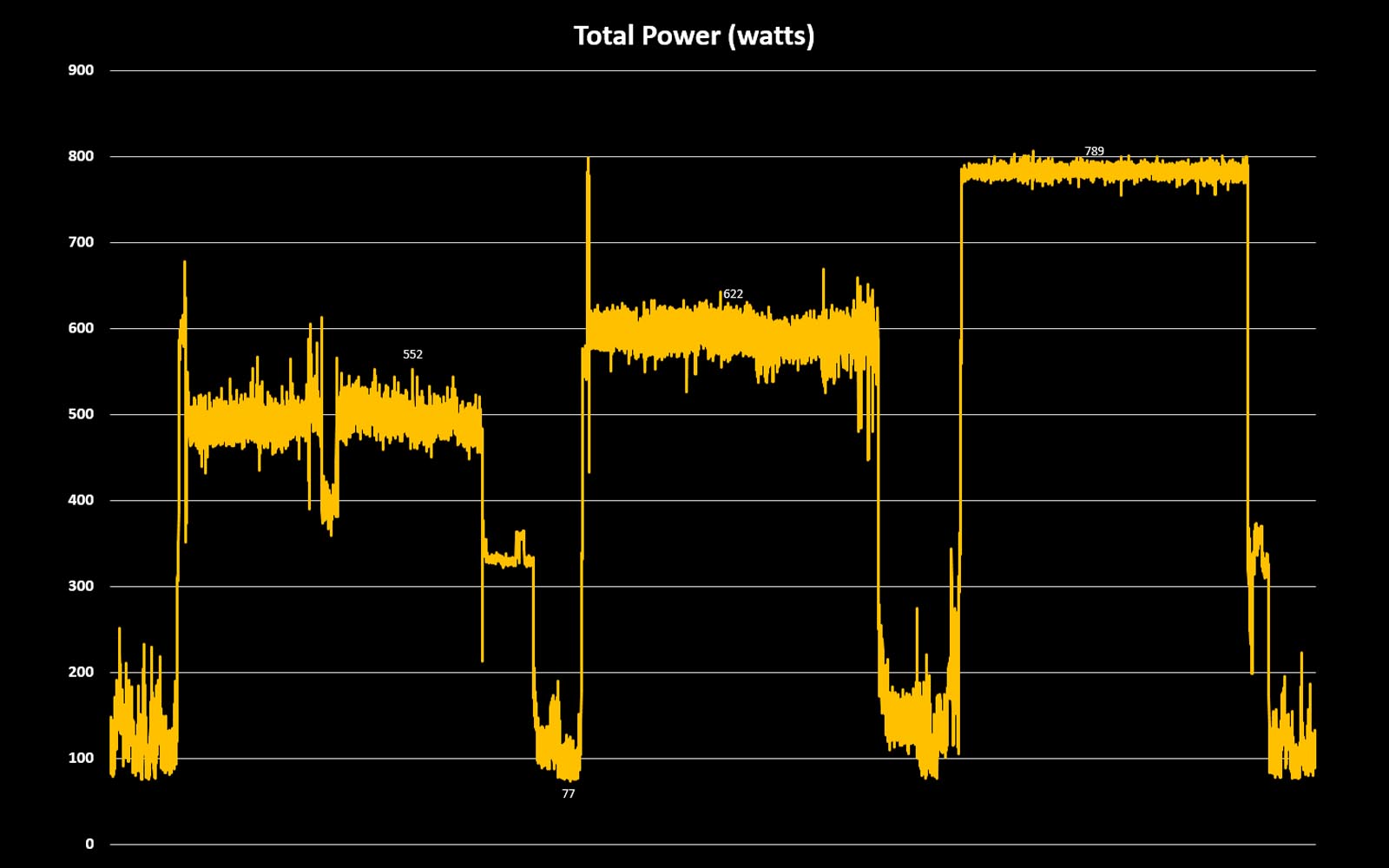
Power load will be at 10% increments using the OCCT Stability Test running for 5 minutes – as much as our current testing setup allows which is currently 750W~800W with the following testing configuration below:
Cooling: Noctua NH-D15 G2
Motherboard: GIGABYTE Z790 AORUS EXTREME X
Graphics Card: GIGABYTE GeForce RTX 3070 EAGLE OC / COLORFUL iGame GeForce RTX 4060 Ti
Memory: ADATA XPG Lancer DDR5-8000 32GB Kit
Storage: ADATA Legend 960 Max 1TB / 2TB Seagate SkyHawk 5900 RPM
Room Temperature: ~24°C
Average Room Noise Level: ~45 dBA (test PC off)
Results
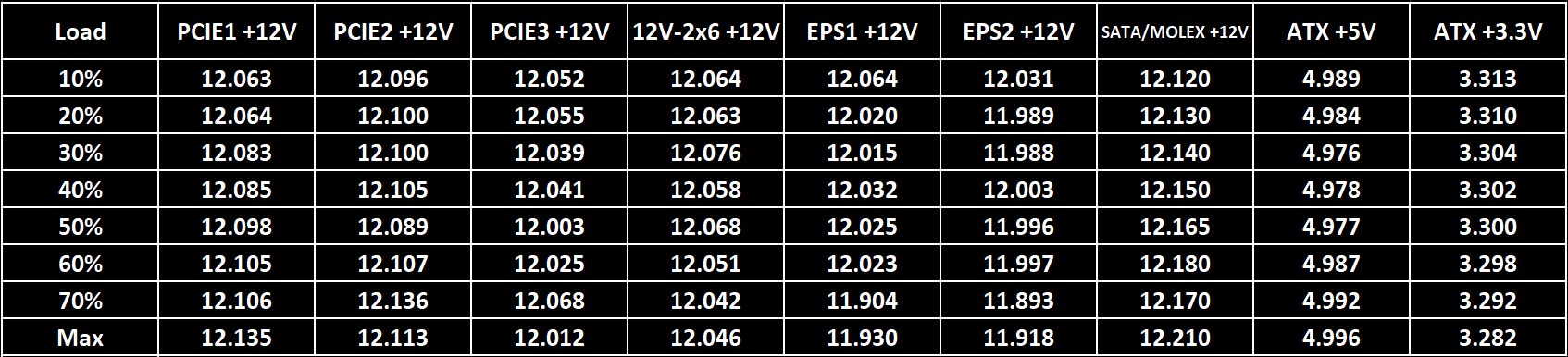
With our test configuration, system load peaked at 800W according to the PMD2 readings. By comparison, the recently reviewed ENERMAX REVOLUTION III S 1000W, which carries a higher Gold efficiency rating, reached a maximum of 778W under the same hardware and test conditions.
The difference highlights the impact of efficiency on overall power draw. A less efficient PSU must draw more power from the wall to deliver the same usable output to the components, as a greater portion of the incoming energy is lost as heat during conversion. Higher efficiency units waste less energy, resulting in lower input power requirements for the same system load.
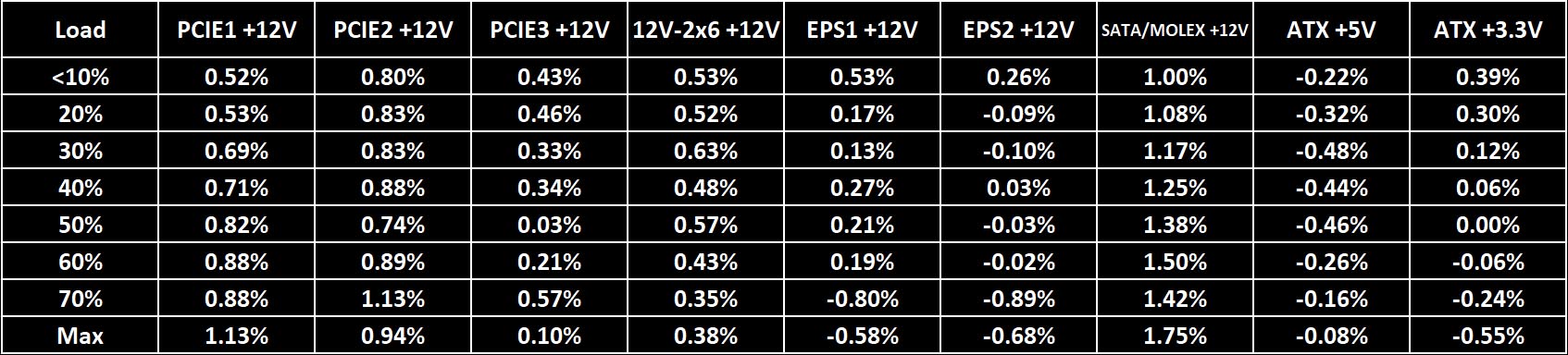
The ATX +5V rail remains below +5.0V across all load conditions, with deviations staying well within 0.5%, indicating stable regulation on the minor rail. Voltage regulation on the PCIe, EPS, and native 12V-2×6 connectors is generally solid, remaining under 1% across most of the load range. This is a respectable result for a Bronze-rated platform.
The +12V rail on the SATA/Molex harness shows slightly wider variance, exceeding 1% in all load scenarios and gradually increasing as overall PSU load rises, peaking at 1.75% at maximum load. While this is higher than the primary GPU and CPU rails, it remains comfortably within ATX 3.1 tolerances.
Looking specifically at the PCIe rails, regulation is consistent throughout testing. PCIe1 and PCIe2 remain under 1% deviation across the majority of loads, with PCIe2 briefly peaking at 1.13% at 70% load and PCIe1 reaching 1.13% at maximum load. PCIe3 and the 12V-2×6 connector show even tighter control, staying well below 1% across all scenarios. Overall, GPU rail stability appears well managed and comfortably within ATX 3.1 tolerance limits.
Focusing on the EPS connectors, which power the Intel Core i7-13700K drawing approximately 220W to 250W+ under heavy load, regulation remains controlled. However, EPS2 consistently exhibits greater voltage droop than EPS1, particularly at higher loads where it reaches -0.89% at 70% load and -0.68% at maximum load, compared to EPS1 at -0.80% and -0.58% respectively. Although both connectors originate from the same cable set with pigtail termination, the secondary connector in a pigtail arrangement typically experiences slightly higher resistance, which can explain the marginally greater droop observed on EPS2.
Importantly, neither EPS rail exceeds 1% deviation at any load point, keeping performance well within ATX 3.1 specifications. Overall, CPU rail regulation is stable under sustained high current draw, demonstrating that the B850 is capable of handling power-hungry processors without excessive voltage sag.
OCCT Stability Tests
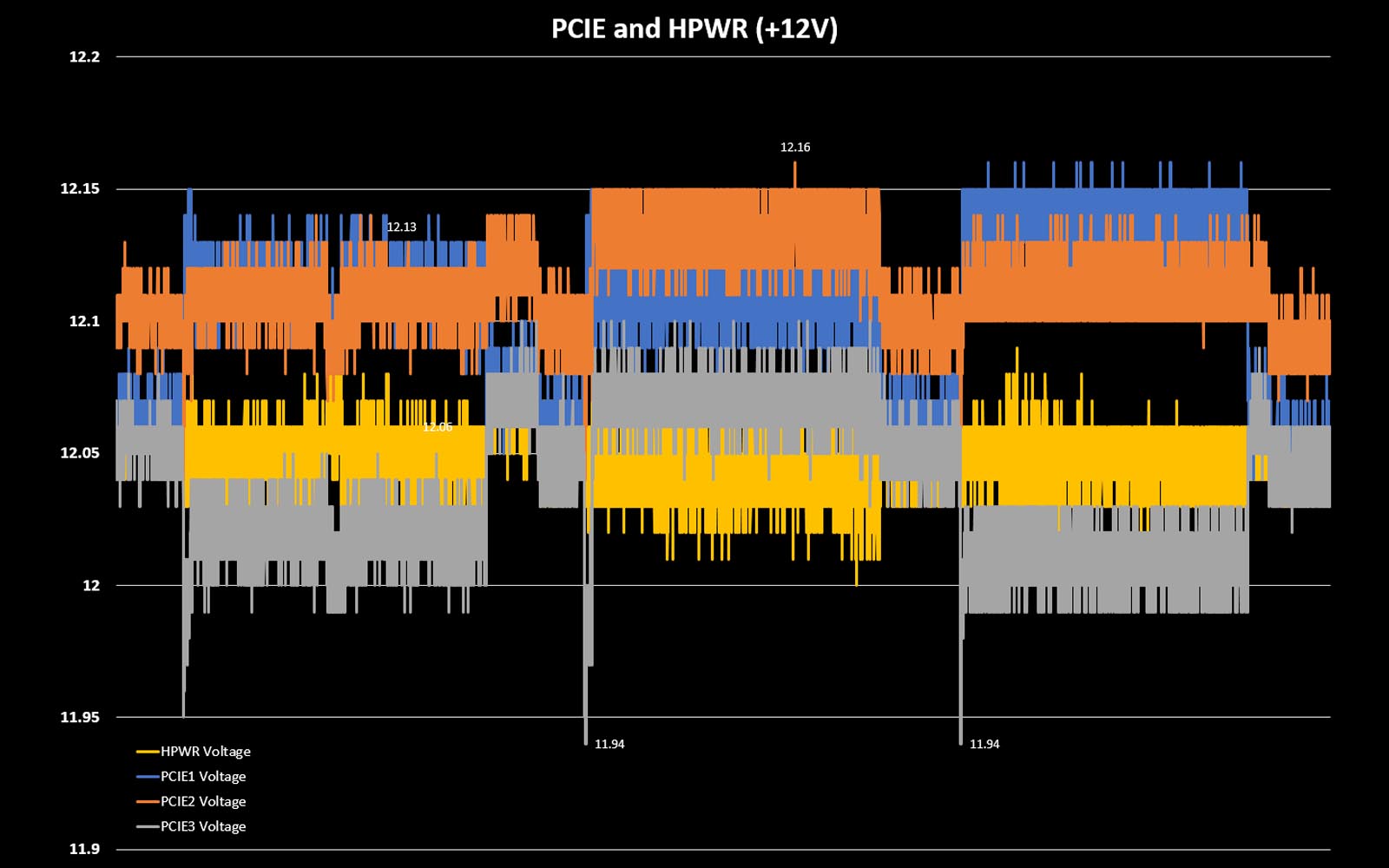
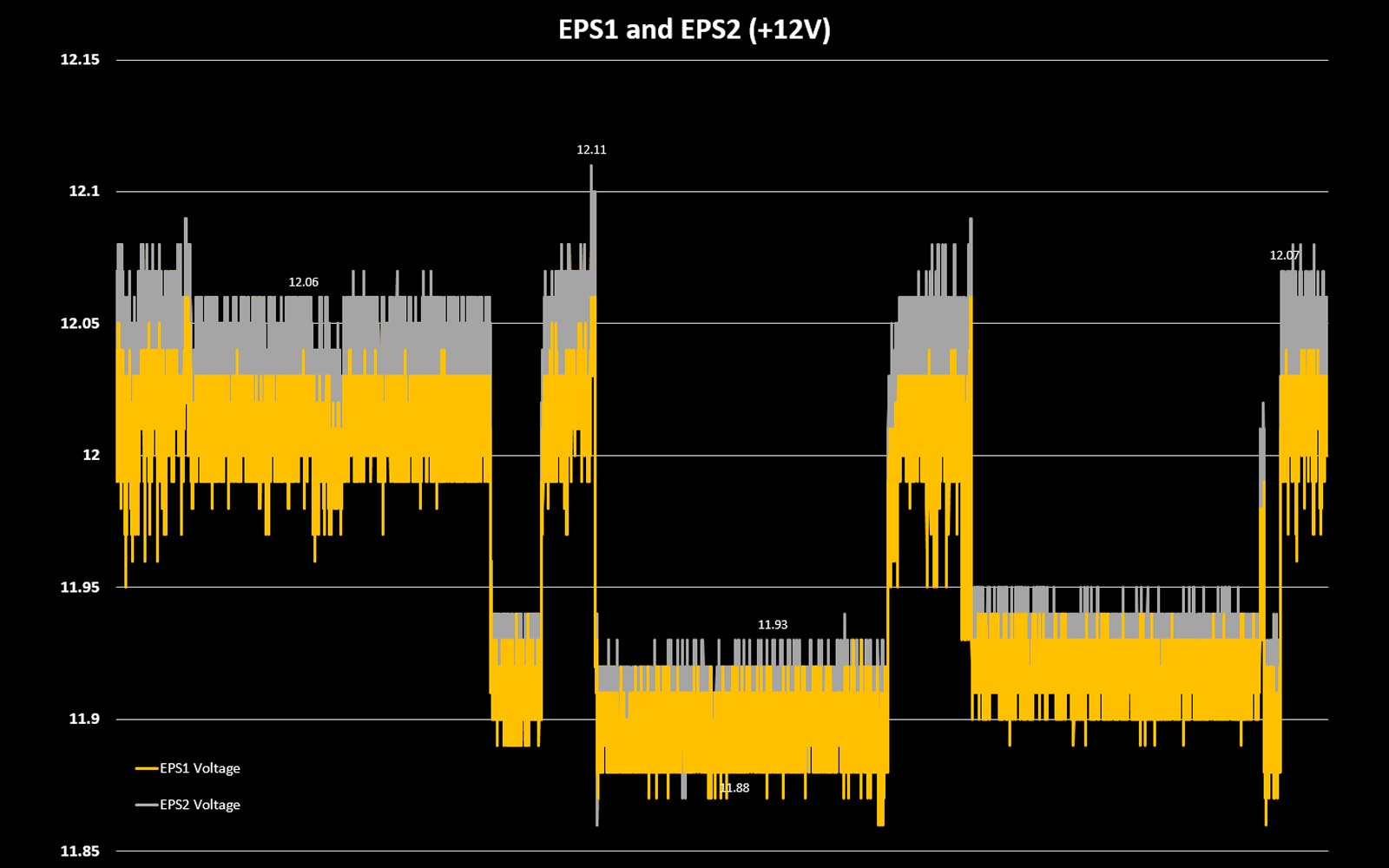
Based on our testing, the PCIe rails exhibit tighter voltage regulation compared to the EPS connectors. PCIe1 is delivered via a dedicated cable, while PCIe2 and PCIe3 share a cable with a pigtail connector. In contrast, EPS1 and EPS2 are supplied from a single cable that splits into two 8-pin connectors via a pigtail.
Motherboards requiring dual 8-pin EPS inputs ideally benefit from two separate EPS cables, as seen on more premium PSU designs. When a single cable with a pigtail is used, the full CPU load passes through the same upstream wire bundle before splitting at the connector. Under high CPU load — such as with the Intel Core i7-13700K drawing over 220W — this results in higher current flowing through the shared section of the cable, increasing resistive losses and contributing to greater voltage droop.
This helps explain why the EPS rails show slightly larger variance compared to the PCIe rails, where the graphics card in our setup is powered by separate cables. Although the droop on EPS2 is marginally higher due to its position on the pigtail, all readings remain within 1% deviation and well inside ATX 3.1 specifications. The behaviour observed is consistent with the electrical characteristics of shared cable designs rather than a flaw in the PSU’s regulation circuitry itself.
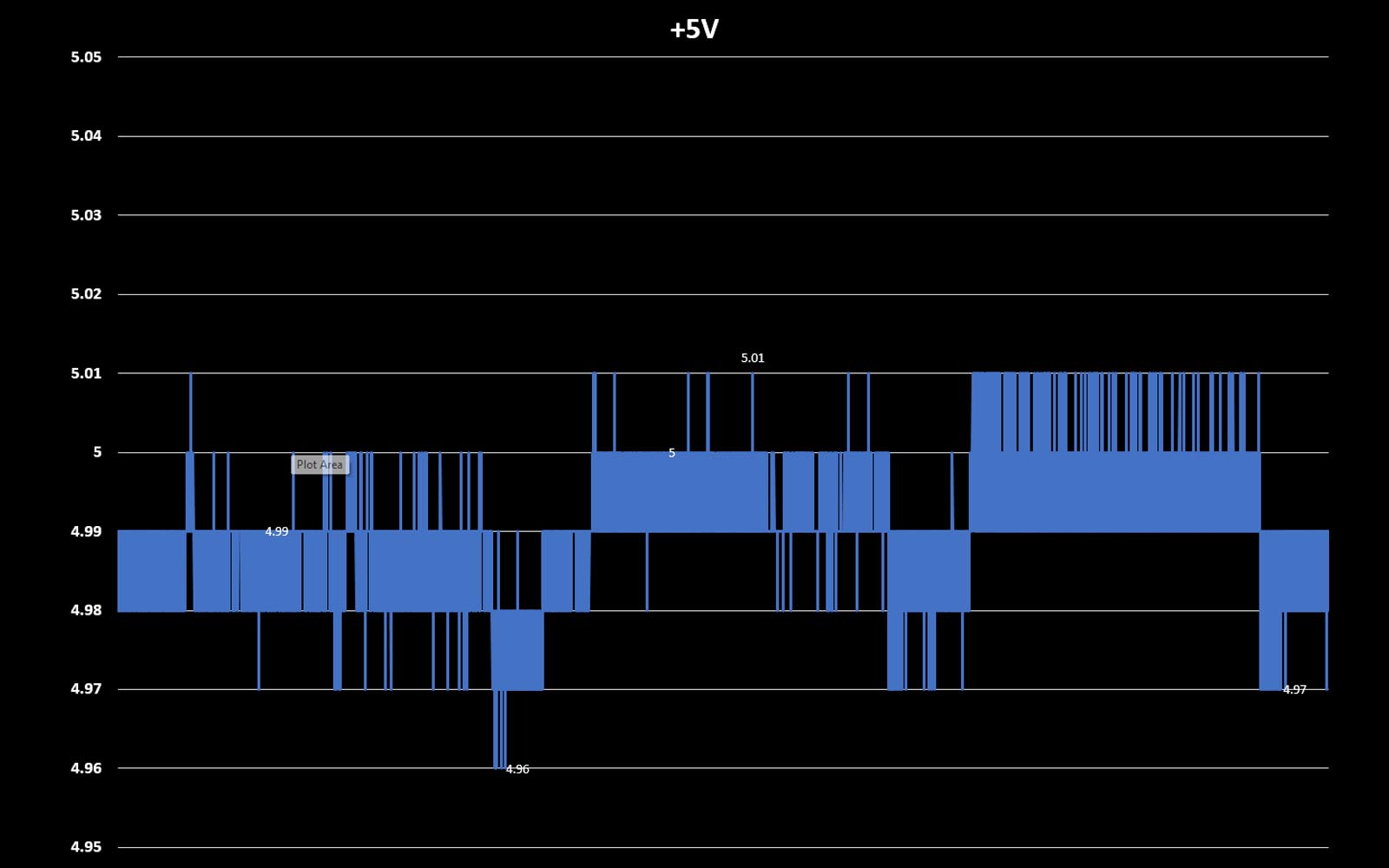
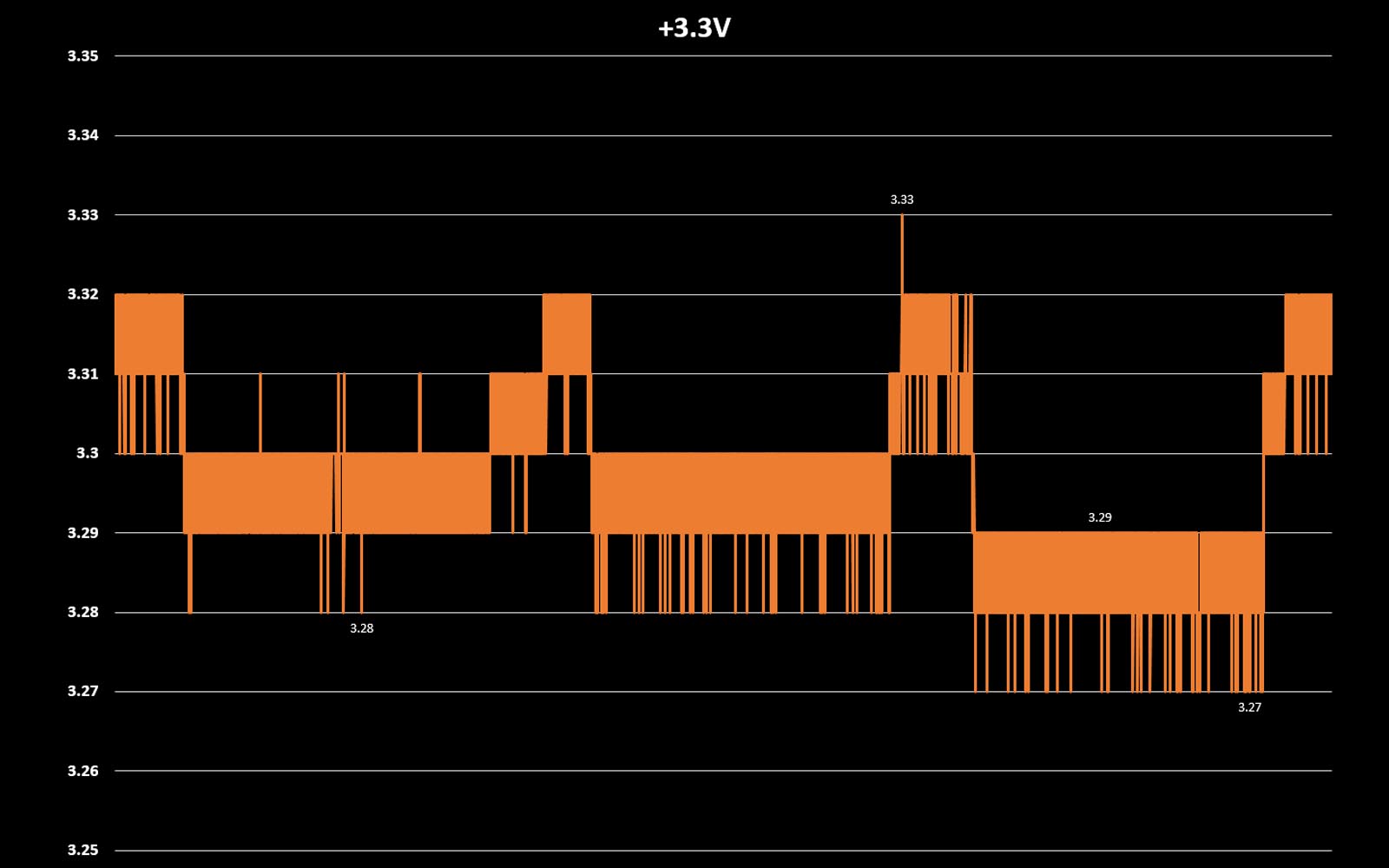
The +5V and +3.3V rails show slightly looser regulation compared to the more premium units we have tested over the past year, though both remain comfortably within 1% deviation. While not class-leading in tightness, the variance observed is minor and well within ATX specification limits.
Acoustics
The SAMA B850 does not have a semi-passive cooling function and the fan spins at all times during operation. At low loads, our sound meter records 45~46 dBA next to the cooling fan of the PSU.
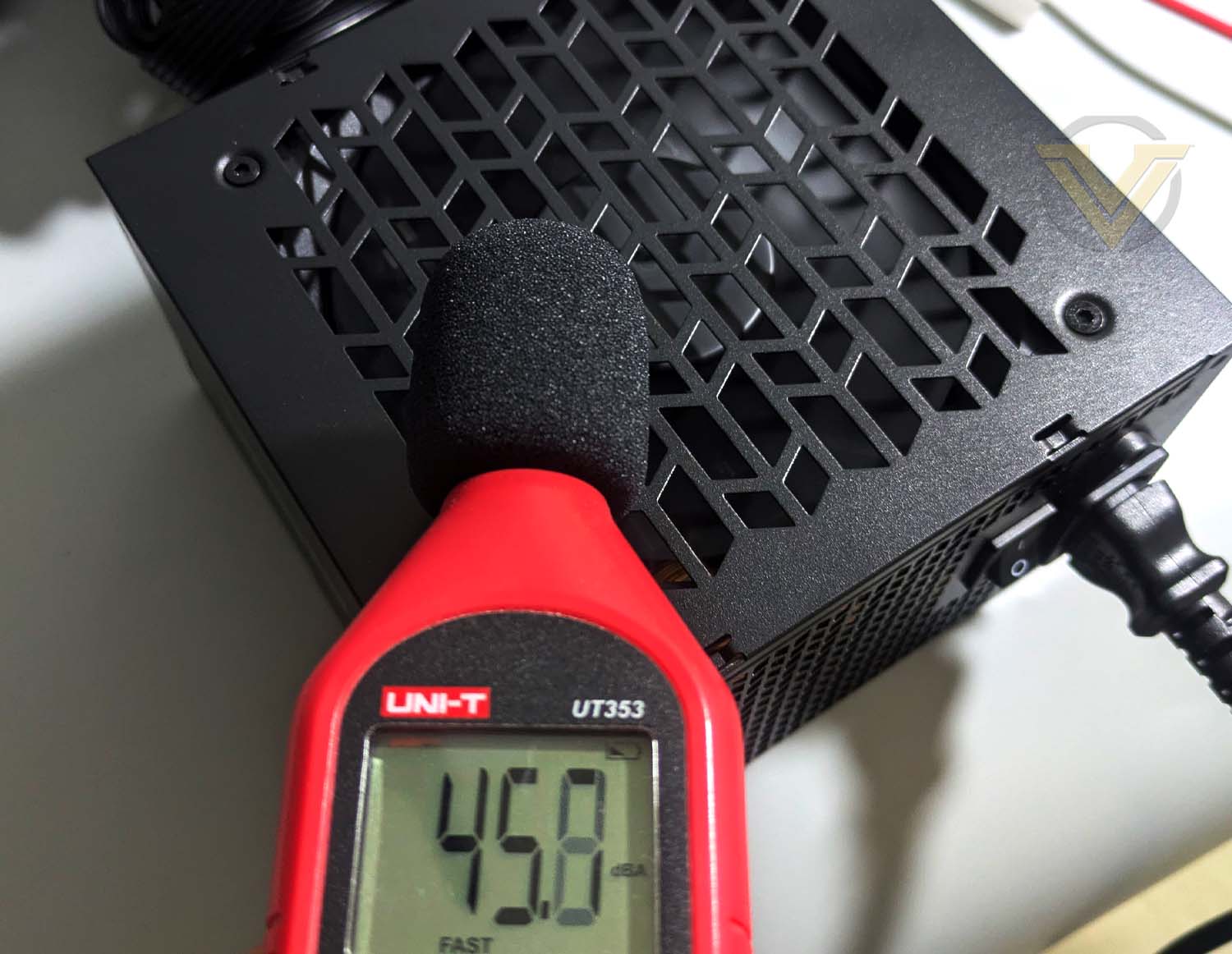
During the maximum load test (~800W), the sound meter registers 59 dBA near the B850 PSU, while readings exceed 65 dBA at the front of the system where the graphics card and NH-D15 G2 cooler are positioned. In practical terms, this indicates that the SAMA B850 is not the primary noise contributor in a typical gaming setup. With most mid- to high-end graphics cards relying on triple-fan cooling solutions, overall system acoustics are far more influenced by GPU and CPU cooling than by the PSU itself. There was no coil whine observed from the PSU as well.
Conclusion
The SAMA B850 ATX 3.1 power supply unit is an affordable solution for builders seeking a native 12V-2×6 connector. Priced at $74.99 MSRP – the SAMA B850 would one of the more affordable ATX 3.1 PSU that supports NVIDIA RTX graphics cards with 12V-2×6 connectors without using an adapter.Performance
The SAMA B850 only offers bronze-level efficiency which is around 85% at 50% load. Voltage regulation is surprisingly good, better than some of the Gold-rated 850W PSUs I’ve reviewed in the past year. Voltage regulation remains within 1% across key rails, with PCIe outputs particularly stable and only minor additional droop observed on the EPS connectors due to the shared pigtail design. Even under heavy CPU load, the unit stays comfortably within ATX specifications.
Value
Currently, Bronze-rated 850W ATX 3.1 PSUs in the US market sit in a similar price bracket. In the UK market, however, comparable Bronze-rated ATX 3.1 units appear less common, with Gold-rated models often representing the most accessible choices at prices starting around £79.99 and above. If you are not planning to pair the unit with a higher-end NVIDIA RTX graphics card, the SAMA B850 stands out as a practical and cost-effective ATX 3.1 option for budget-conscious builders. It comes with a 3-year warranty which appear to be the standard for affordable Bronze-rated PSUs.
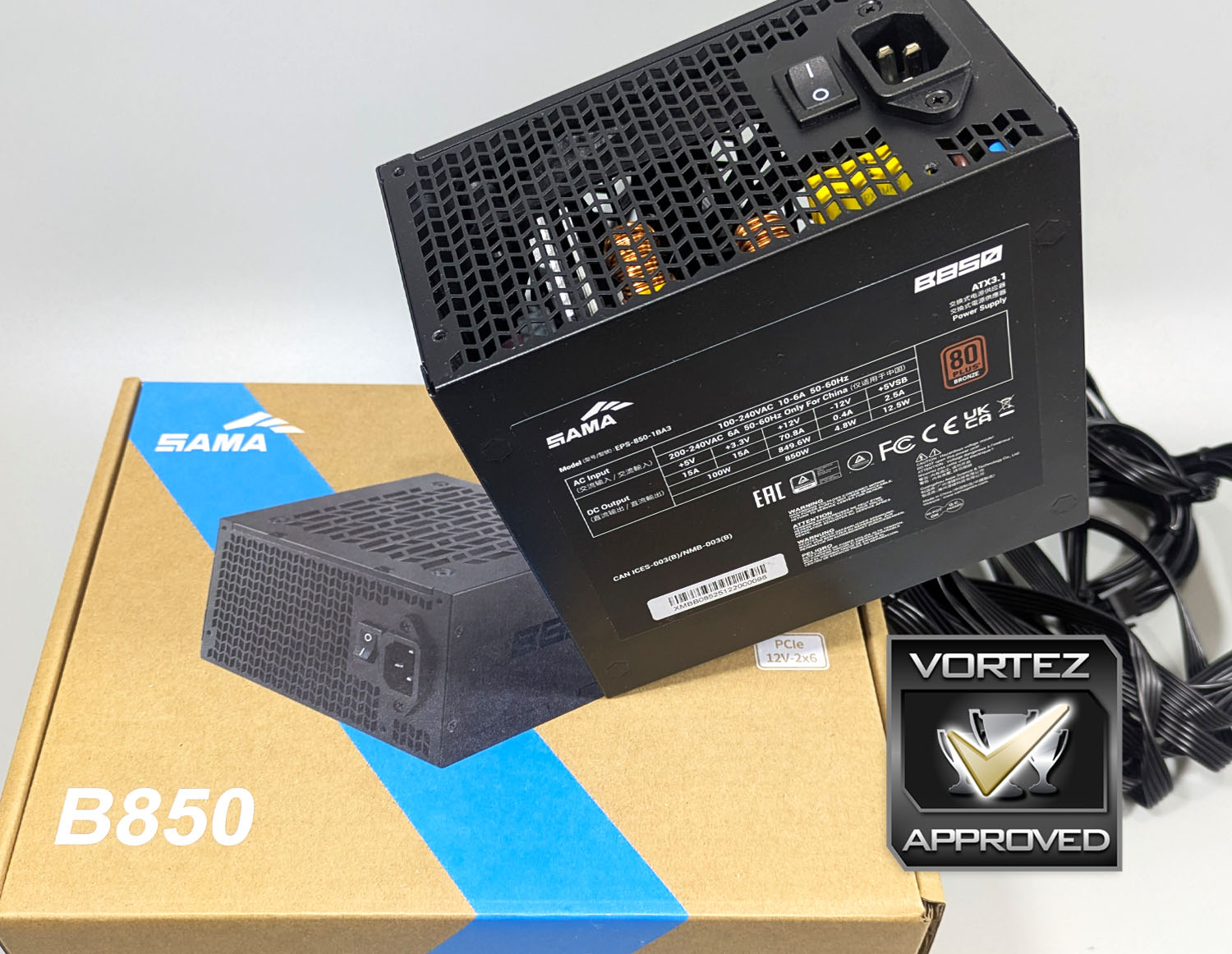
The SAMA B850 demonstrates that an affordable ATX 3.1 PSU can competently power mid- to high-end systems, including those equipped with the latest NVIDIA RTX graphics cards. At a time when rising DRAM and SSD prices — driven in part by AI-related demand and tighter supply — are putting additional pressure on overall build budgets, value-oriented components matter more than ever. In that context, the SAMA B850 offers welcome relief for cost-conscious builders trying to maximize performance per dollar without compromising on modern standards compliance.
The SAMA B850 ATX 3.1 power supply will be available starting this March via the SAMA Amazon US store with an MSRP of $74.99. UK availability is expected soon through the SAMA Amazon UK store, with regional pricing to be announced closer to launch.
+ Mostly tight voltage regulation of 1.0% for +12V
+ Native 12V-2×6 connector for NVIDIA RTX graphics cards
Cons
– Limited availability as of this writing
– Pigtail connectors for EPS
– Non-modular cable design
Stay connected with the Vortez Social Media pages:
Join in with the discussions on Discord