Armed with Samsung’s 64-layer 3D NAND, their MJX controller and tempting pricing, Samsung will yet again aim to set the bar within the SSD sector.

Product on Review: Samsung 860 Evo
Manufacturer: Samsung
Street Price: 250GB – £88.99/$94.99 / 500GB – £162.49/$169.99 / 1TB – £314.99/$329.99 / 2TB – £623.48/$759.95 / 4TB – £1,324.49/$1,399.99
Samsung is, without doubt, one of the largest figures in the ever-growing SSD scene, offering some of the fastest and most reliable solutions currently available to the average consumer; that dominance doesn’t prevent them from pushing the envelope, however. Today we look at the latest Samsung 860 Evo, a drive designed for mainstream users within a PC or laptop.
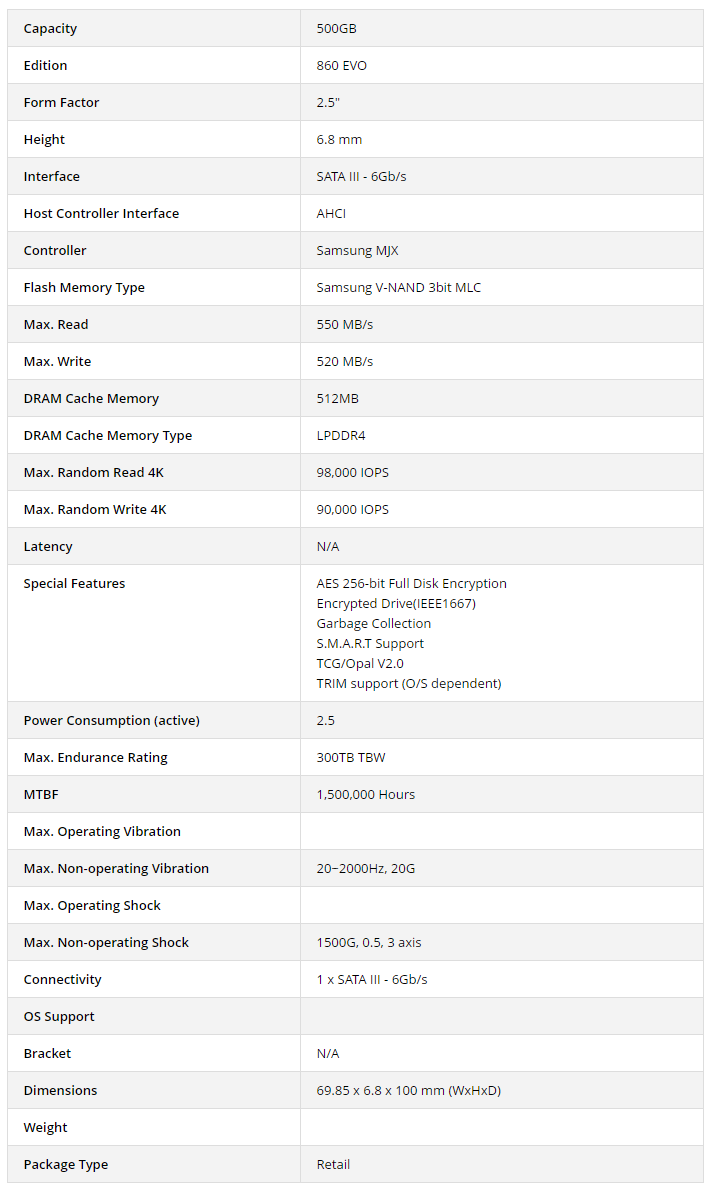
The 860 Evo is available in capacities ranging from 250GB all the way to 4TB and arrives within 3 distinct form factors: 2.5” SATA, mSATA and M.2. Packing Samsung’s latest storage technology, the 860 Evo uses 3bit MLC V-NAND chips paired with the Samsung MJX controller.
We’re promised read and write speeds up to 550/520MB/s and IOPS around 98K read and 90K write. If those figures ring true, we’re sure of some incredible performance. Speed may not be everything a user is looking for, however, at which point the endurance of the drive steps to the plate, offering up to 2,400 TBW.
Pricing is also much more palatable for the average user, with the 250GB model arriving under £90 and 500GB, which we have for review today, at only £162.49. Read on to find our verdict on Samsung’s latest and greatest.
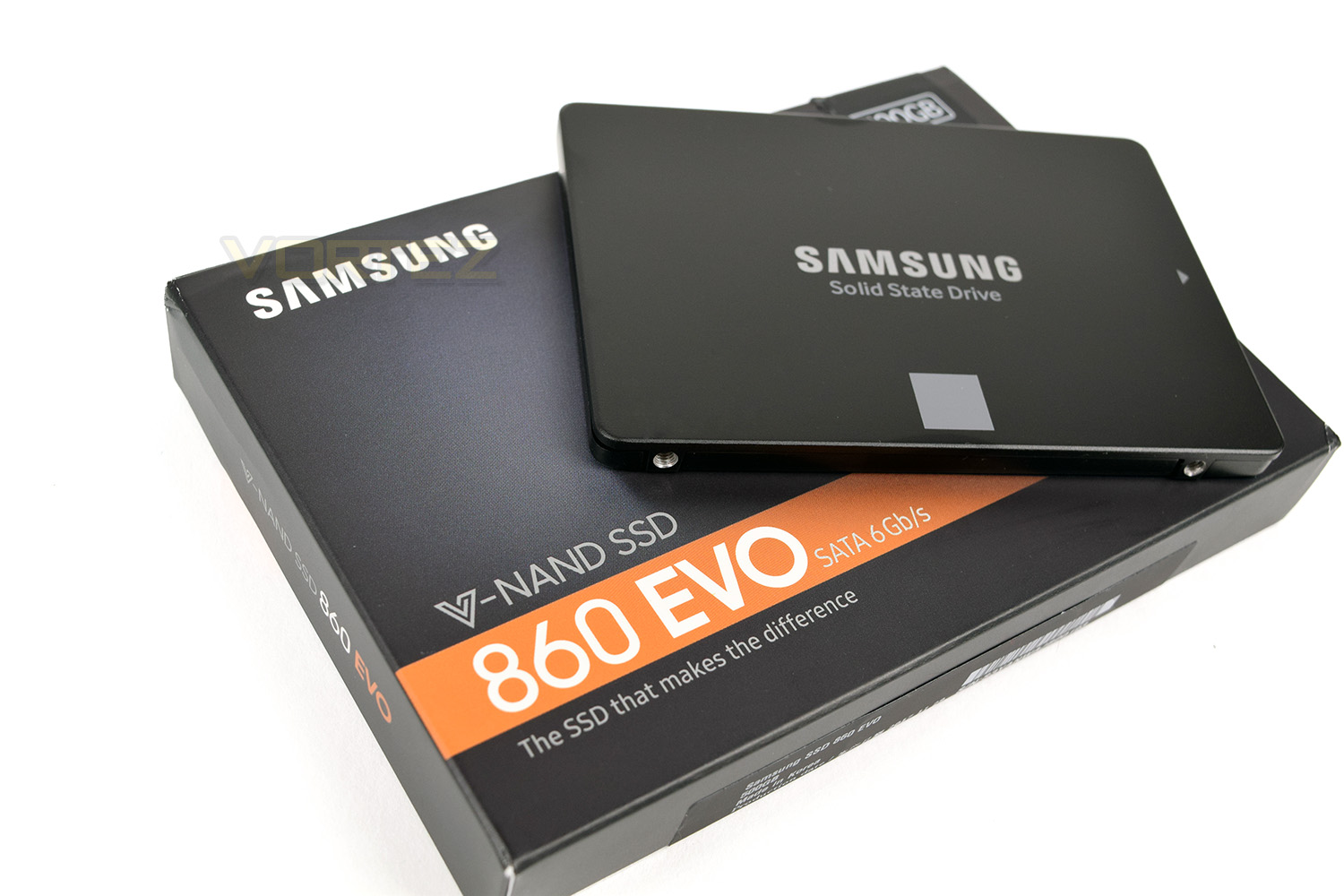
Samsung on the 860 Evo:
The newest edition to the world’s best-selling SATA SSD series, the Samsung 860 EVO. Specially designed for mainstream PCs and laptops, with the latest V-NAND and a robust algorithm-based controller, this fast and reliable SSD comes in a wide range of compatible form factors and capacities.
Technical Specifications
Packaging, Bundle & Closer Look
The Samsung 860 Evo arrives in a small box, plastered with a large image of the device and some very brief details on the front, including capacity and the SATA 6Gb/s interface used. The orange strip on the front signifies the Evo range.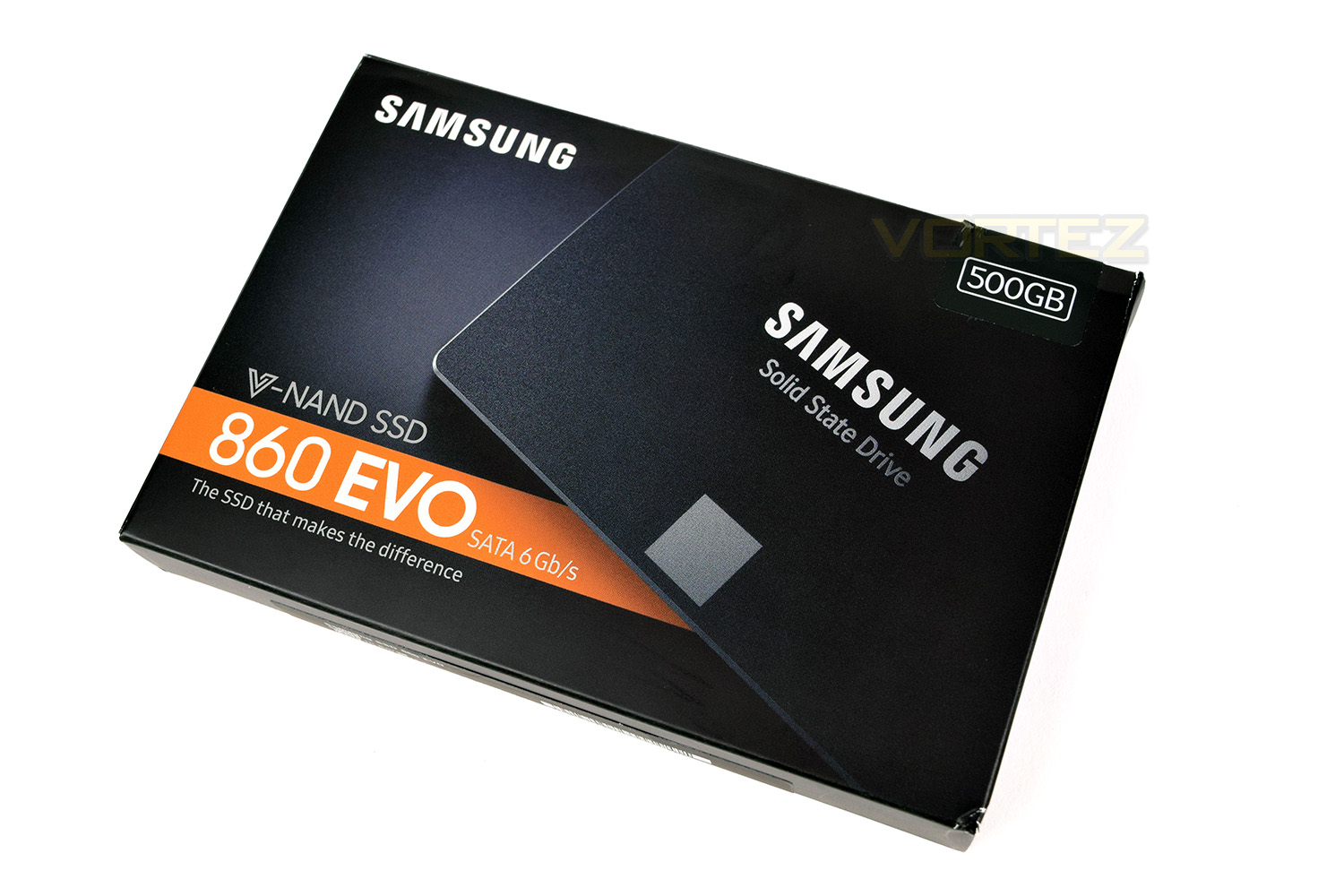
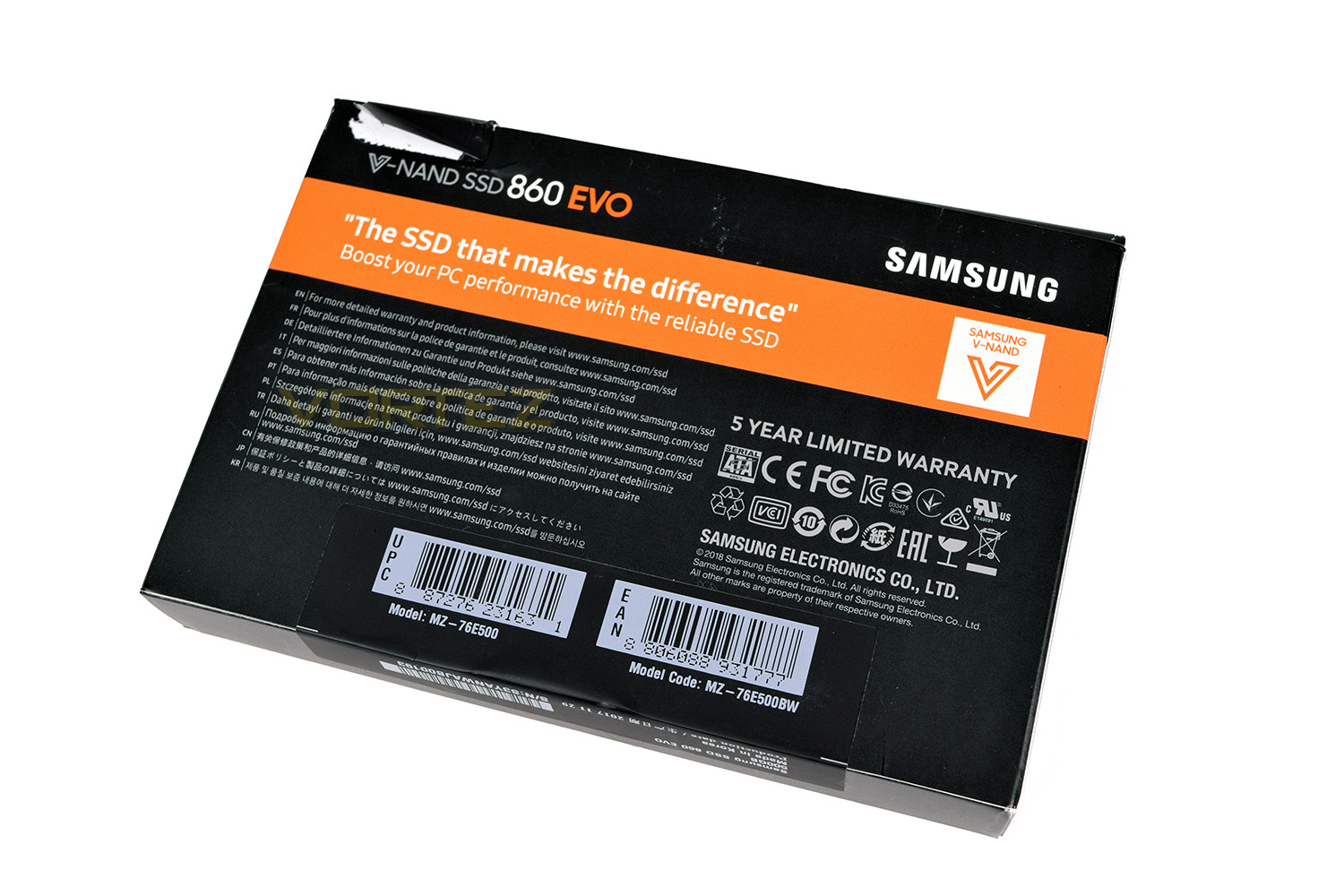
The rear of the box unfortunately doesn’t provide a great deal more information, either; instead asking users to visit their website for a full breakdown of the features and technologies used inside their latest Evo drive. Samsung claim that this is “The SSD that makes the difference”.
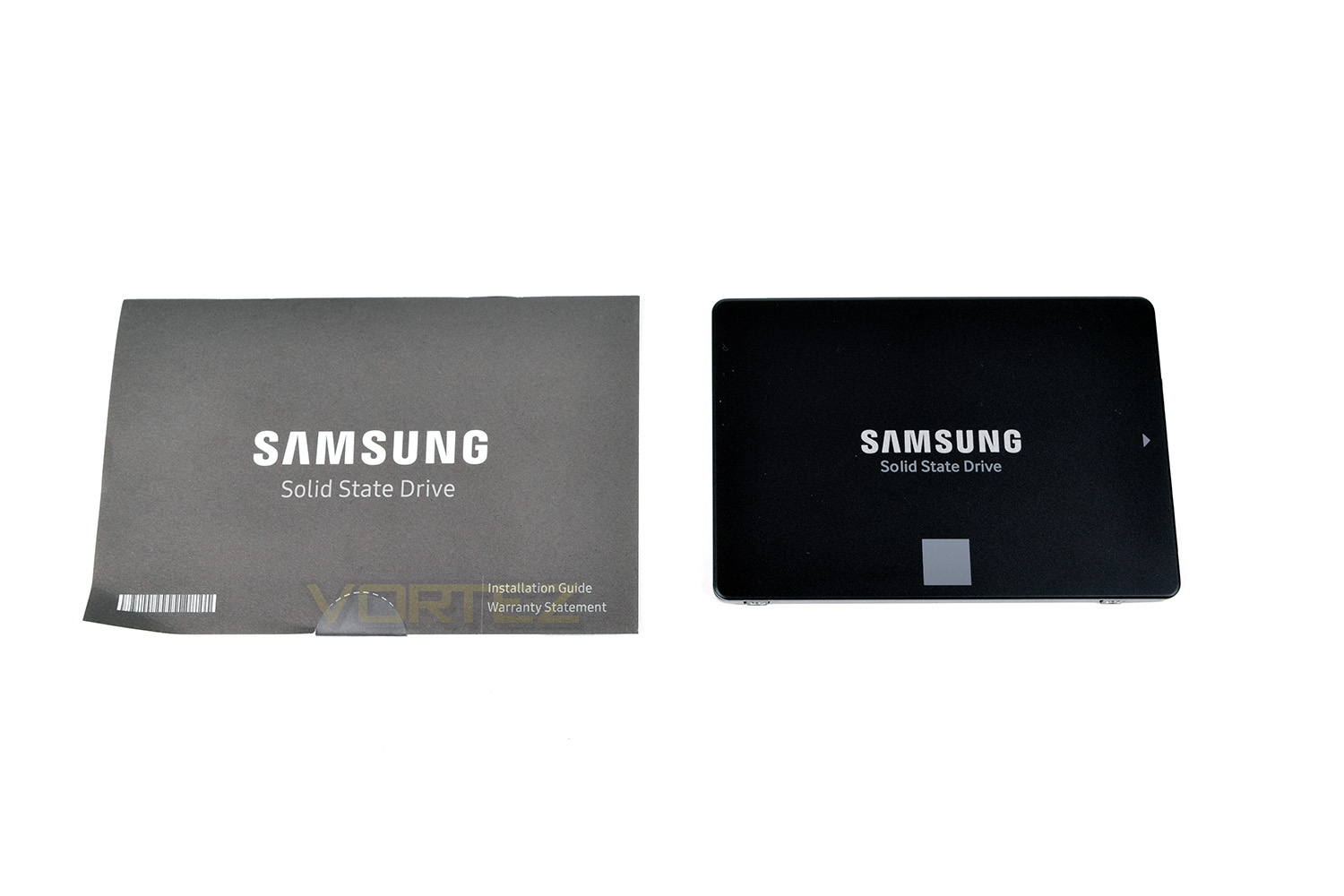
The SSD bundle is very much a barebones affair, coming with a small instruction guide and warranty statement – reducing costs by removing unnecessary pieces.
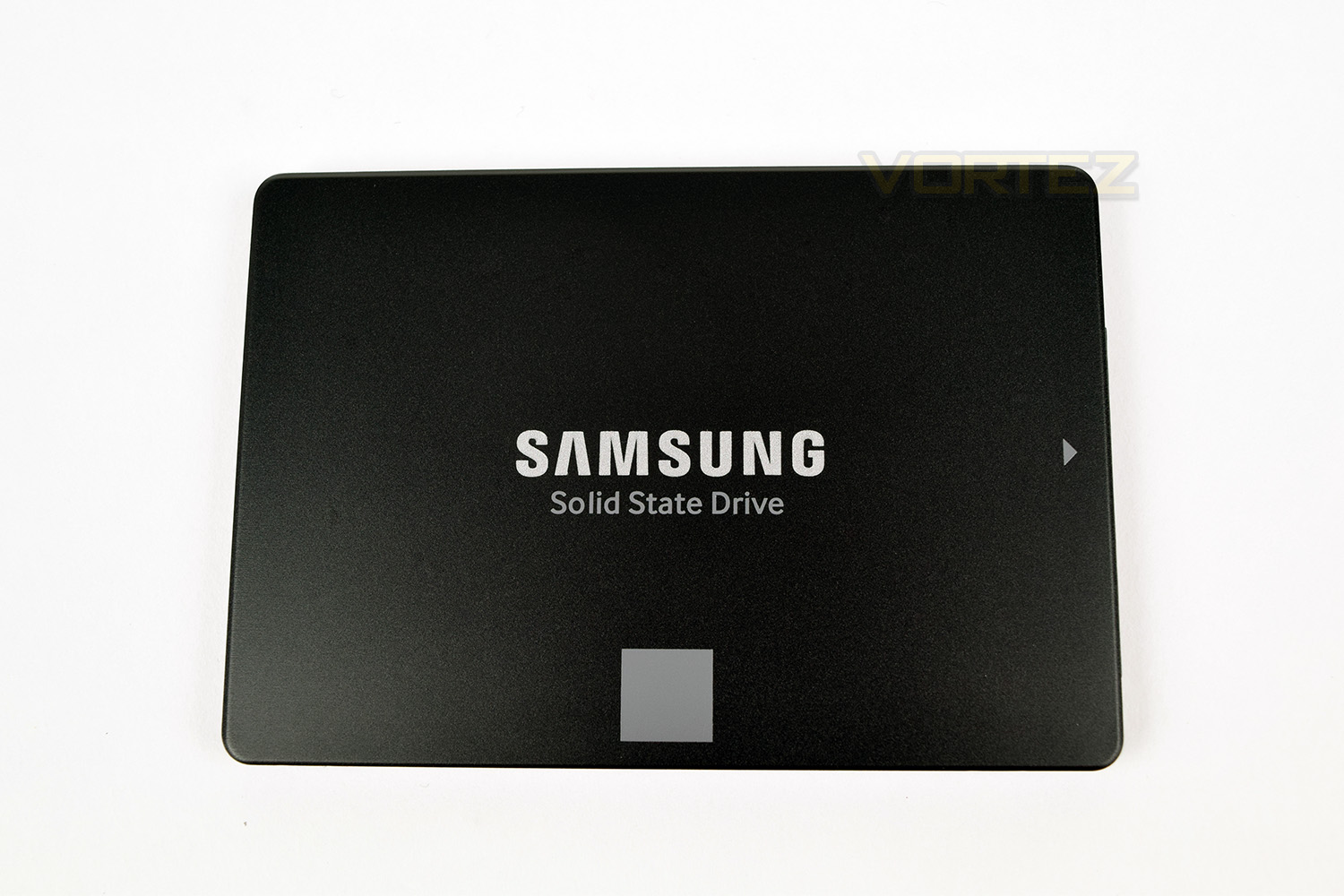
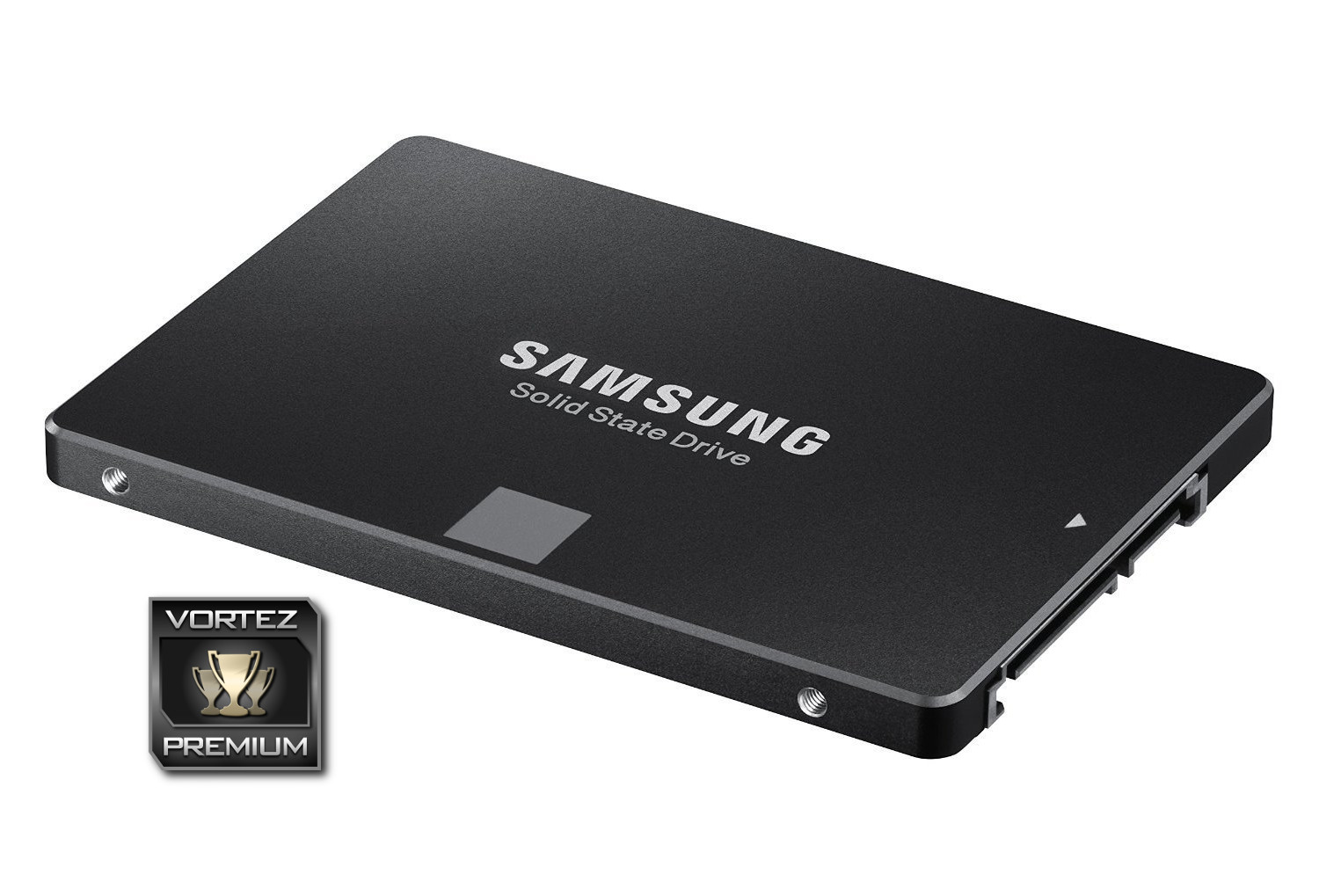
Looking at the front, there’s very little going on, which users building a PC with a tempered glass panel will be able to appreciate. It’s a clean and simple. The silver square is the only unique aspect of this drive, from this angle, showing that it’s from the Evo family.
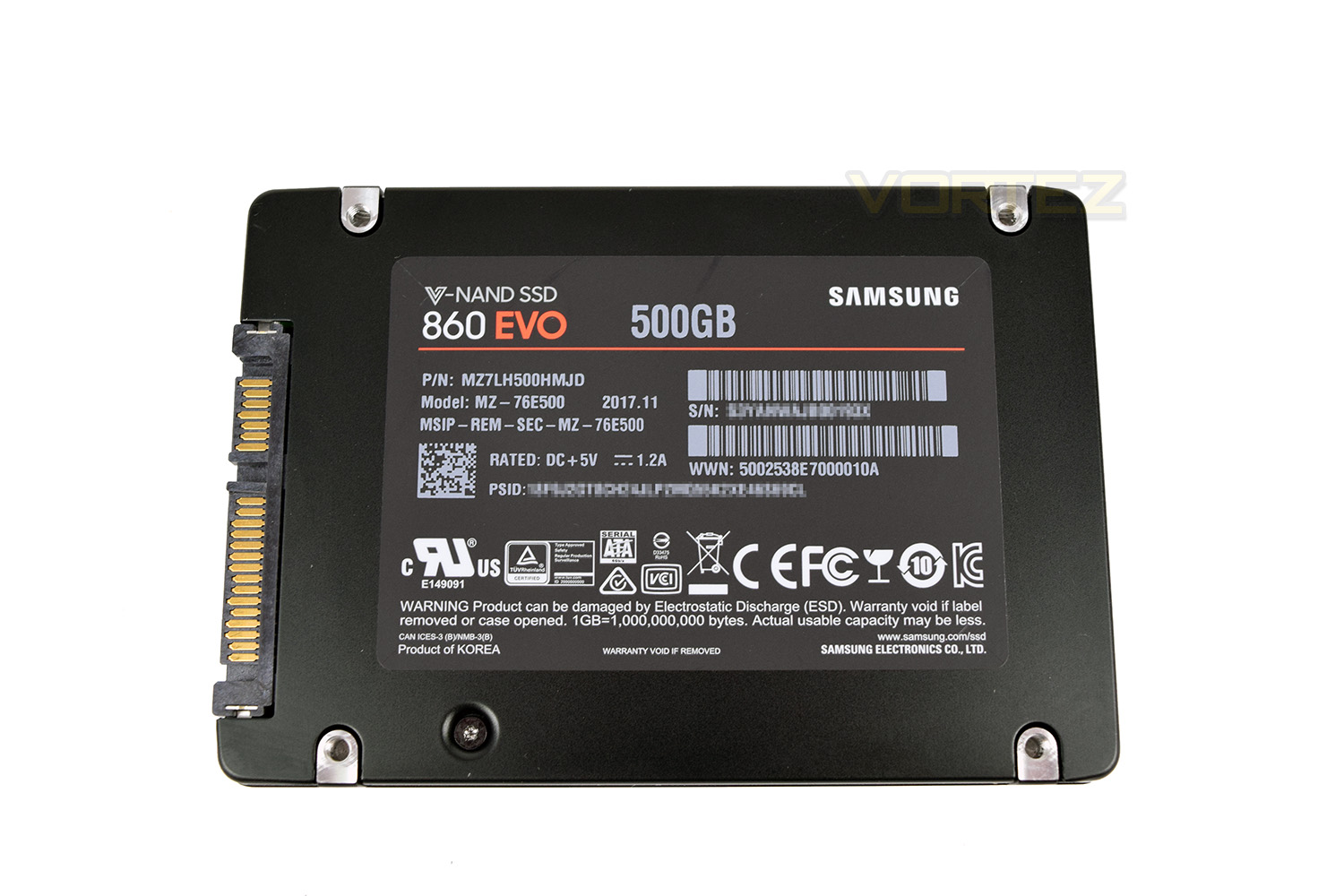
Serial numbers, capacity and other identifying factors are included on the label on the rear of the drive.
Test Setup & Methodology
Our test system is formatted and a fresh version of Windows is installed with just drives in place – no additional applications. Windows is then updated to the latest release and the drivers are installed.Included in the list of benchmarks are the following applications:
Benchmarks
Anvil Pro
AS SSD
ATTO Disk Benchmark v2.46
Futuremark PCMark 8
AIDA64
AS SSD
ATTO Disk Benchmark v2.46
Futuremark PCMark 8
AIDA64
Test system
CPU: Intel Core i7 7700K
Motherboard: MSI Z270 Gaming M7
Graphics: EVGA GTX 1070 SC
Memory: 16GB CORSAIR Vengeance LPX 3200MHz DDR4
SAMSUNG SM961 256GB NVMe
Samsung 860 Pro 256GB SSD
PSU: BeQuiet Straight Power 11 650W
OS: Microsoft Windows 10 Pro 64-Bit
Monitor: ASUS ROG PG279Q
Motherboard: MSI Z270 Gaming M7
Graphics: EVGA GTX 1070 SC
Memory: 16GB CORSAIR Vengeance LPX 3200MHz DDR4
SAMSUNG SM961 256GB NVMe
Samsung 860 Pro 256GB SSD
PSU: BeQuiet Straight Power 11 650W
OS: Microsoft Windows 10 Pro 64-Bit
Monitor: ASUS ROG PG279Q
Benchmarks: Anvil Pro
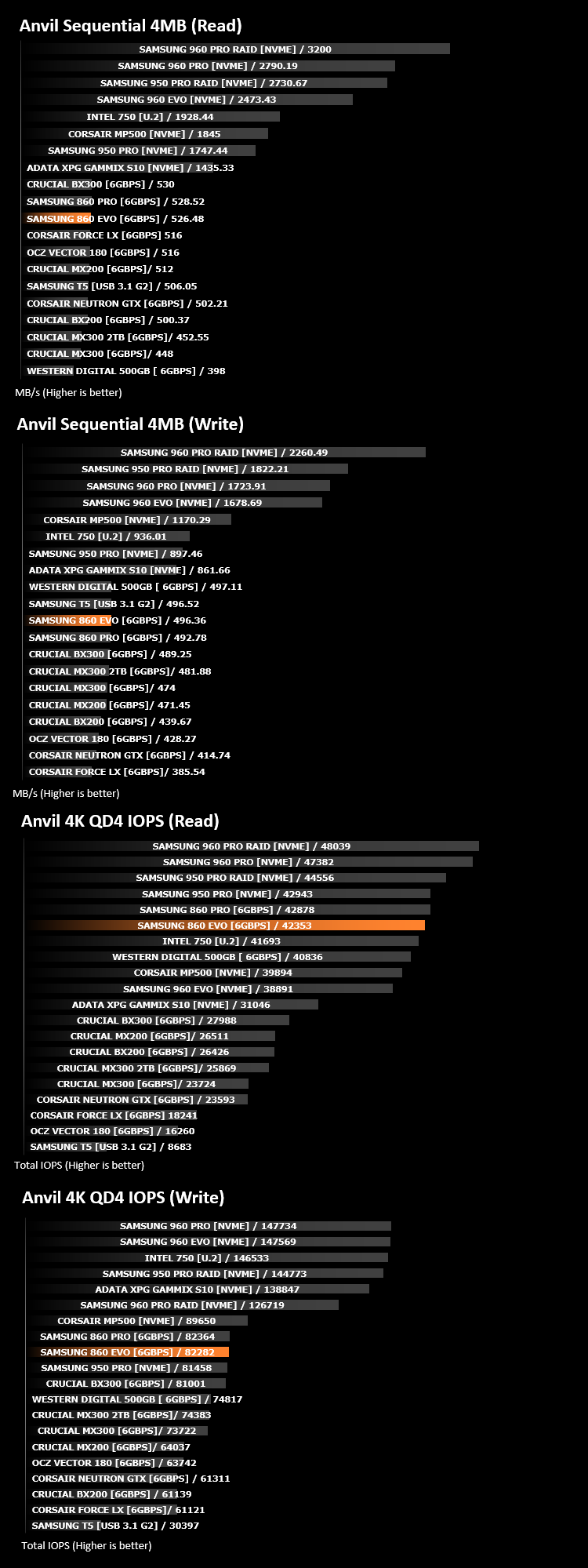
Anvil Pro from Anvil Storage utilities is one of the most popular storage benchmarking utilities today thanks to the large suit of tests available. You can test pretty much anything from Read/write Speed to IOPs with many variables to tweak allowing you to get either a single or host of results to compare with other likeminded enthusiasts. In our test we ran the standard suite 5 times, subtracting both the highest and lowest scores and determined the final result from the average of the remaining three results.
Benchmarks: AS SSD
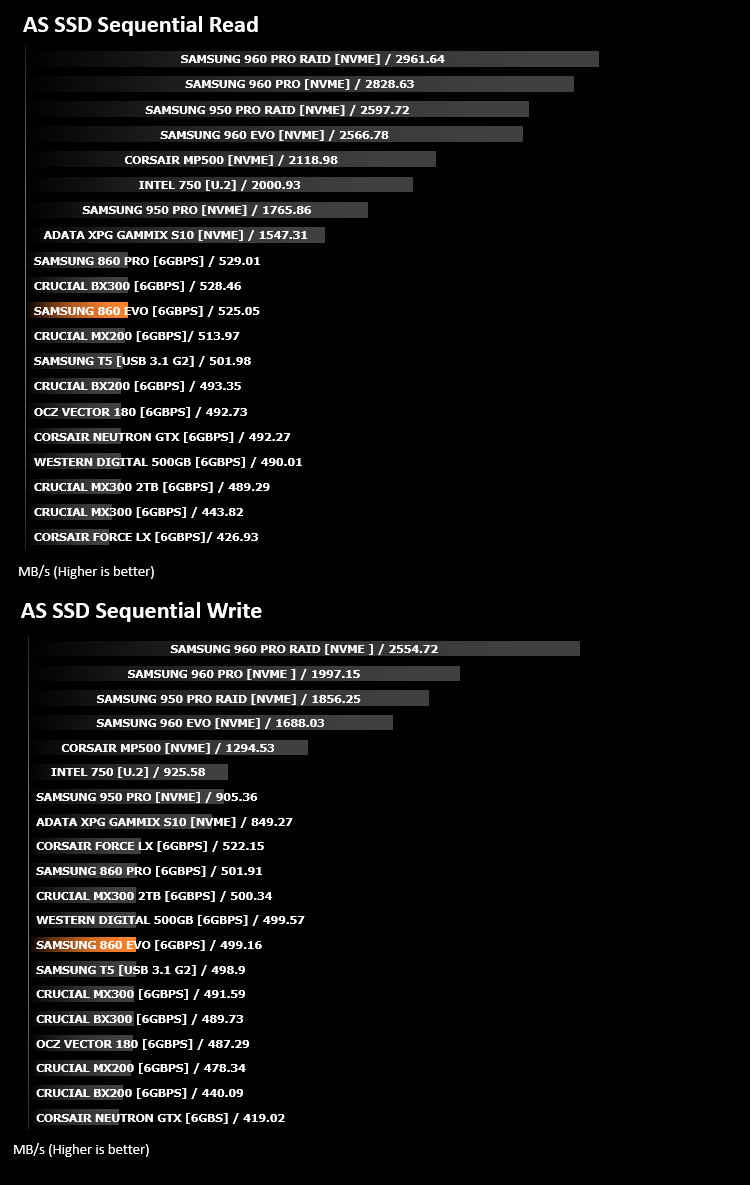
AS SSD Benchmark is a straightforward tool for measuring the speed of your SSD drive.
Simply launch the program, choose your drive, click Start, and it’ll test your SSD’s read and write speed in a variety of ways, delivering a score for each when it’s done. And if that’s not enough, there are also additional file copy and compression-related benchmarks available from the Tools menu. (The author’s support page is German only, but if you need further English explanations then there’s a thread on the program at the OCZ Technology forum.).
Simply launch the program, choose your drive, click Start, and it’ll test your SSD’s read and write speed in a variety of ways, delivering a score for each when it’s done. And if that’s not enough, there are also additional file copy and compression-related benchmarks available from the Tools menu. (The author’s support page is German only, but if you need further English explanations then there’s a thread on the program at the OCZ Technology forum.).
Benchmarks: ATTO
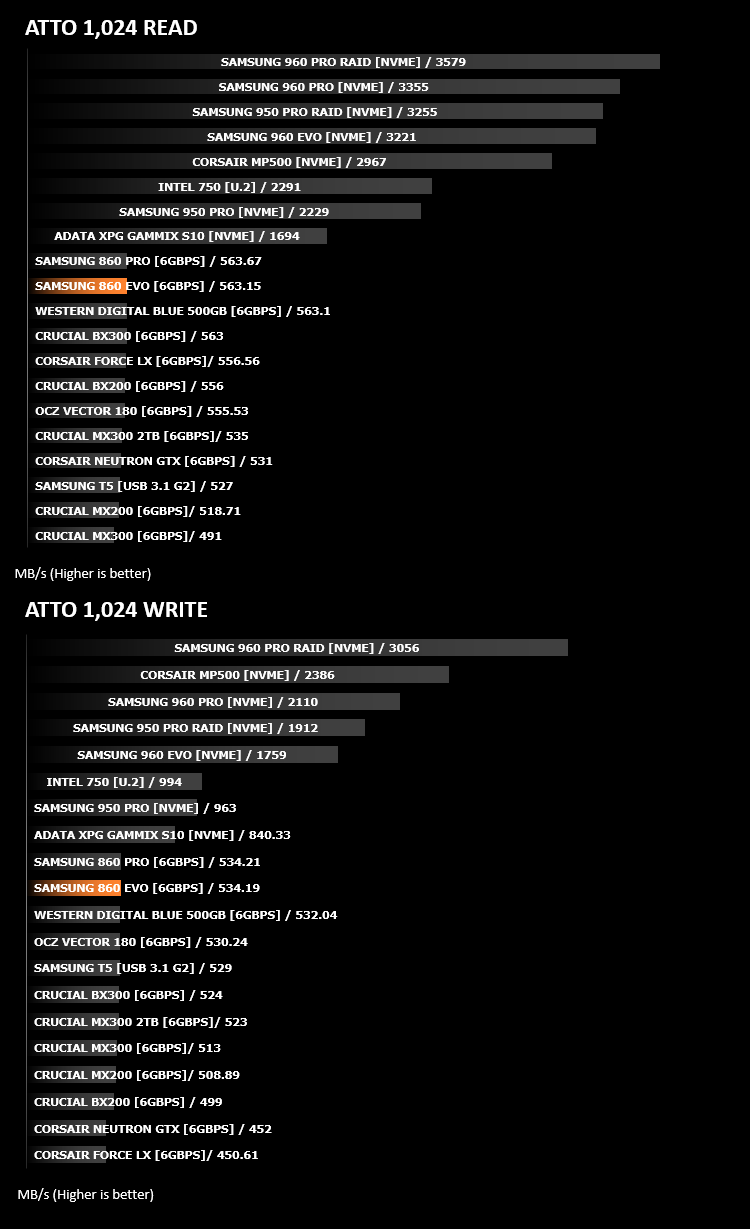
The ATTO Disk Benchmark performance measurement tool is compatible with Microsoft Windows. Measure your storage systems performance with various transfer sizes and test lengths for reads and writes. Several options are available to customize your performance measurement including queue depth, overlapped I/O and even a comparison mode with the option to run continuously. Use ATTO Disk Benchmark to test any manufacturers RAID controllers, storage controllers, host adapters, hard drives and SSD drives and notice that ATTO products will consistently provide the highest level of performance to your storage.
Benchmarks: AIDA64
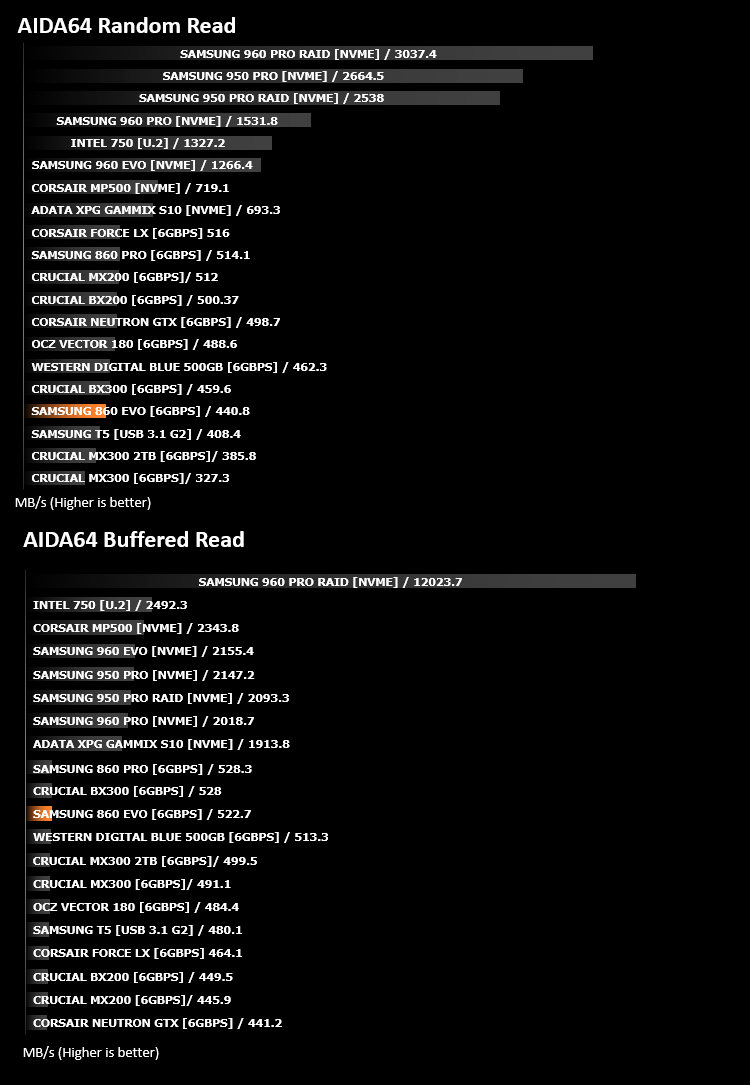
With this module, we can measure the performance of the PC’s storage devices, including (S)ATA or SCSI hard disk drives, RAID arrays, optical drives, solid-state drives (SSD), USB drives and memory cards. It also allows us to perform write tests, which helps us detect fake products and errors on the devices. In order to attain reliable benchmark results we have to make sure to close all background applications.
Benchmarks: PCMark 8
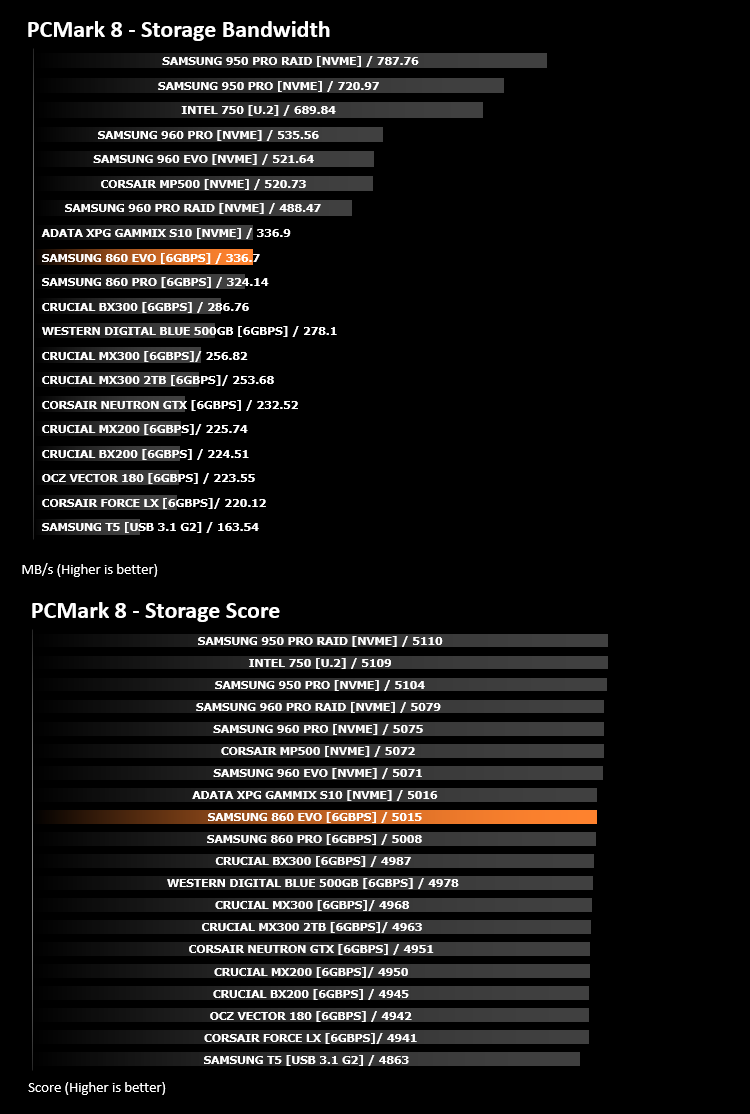
We use the Futuremark PCMark 8 utility to measure storage via Photoshop performance under both light and heavy loading conditions. Accelerated (open CL) is used to perform this test. The test is measured in seconds to complete.
Conclusion
After putting the 860 Evo through our test suite, the results are great. We saw it struggle in the random read test in AIDA64, but other than that, everything was way up there, even sometimes beating its more expensive brother, the 860 Pro; let it be noted that our 860 Pro was 256GB whereas the 860 Evo is 500GB, which can account for faster read and write speeds when the controller and interface allows.Samsung themselves claim read and write speed of up to 550MB/s and 520MB/s respectively; perhaps these figures are conservatively reported to make the Pro appear the faster choice, but whatever the reasoning, we managed repeatable results of 563.15MB/s and 534.19MB/s in our ATTO test, only a fraction behind the 860 Pro drive tested earlier in the week.
It’s certainly worth mentioning the endurance of the 860 Evo, which is half that of the 860 Pro. Our 500GB drive, for example, is capable of 300TBW over the life of the drive. To put that into perspective, that is equal to writing 116MB of information to the drive, every minute, for 5 years. Far beyond what any consumer will ever be likely to achieve.
As is usually the case from Samsung’s nomenclature, the Pro offers outright speed and endurance, at a substantial price, whereas the Evo follows closely behind, with ever-so-slightly more conservative figures, at a reduced cost to the buyer.
We have no qualms about recommending this drive to anyone hoping to improve overall system performance, however, if price is the deciding factor, other manufacturers offer drives of similar performance for less money.
Pros
+ Stylish and simple design
+ 4TB capacity available
+ Great performance (even faster than claimed)
+ 5 Year warranty
+ Good endurance
Neutral
+- Still pricey when compared to similar drives
Cons
– None
+ Stylish and simple design
+ 4TB capacity available
+ Great performance (even faster than claimed)
+ 5 Year warranty
+ Good endurance
Neutral
+- Still pricey when compared to similar drives
Cons
– None
Click here for an explanation of our awards at Vortez.net.
Stay connected with the Vortez Social Media pages:
Join in with the discussions on Discord