


AMD Fiji is finally here, bringing with it the innovative High Bandwidth Memory (HBM). Can this new graphics card triumph over NVIDIA’s flagship GPU; GTX 980Ti?

Product On Review: Radeon R9 Fury X
Manufacturer: SAPPHIRE
MSRP: £550 GBP / $850 USD
This summer is especially significant for AMD. You’d be forgiven for thinking that the launch of Fury X is just another flagship release to counter the forces of NVIDIA – but this Fiji-based GPU brings with it 10 years of innovation and engineering with a shift away from GDDR5 and into the foray of HBM.
AMD’s new flagship is designed primarily for high-resolution gaming. Whether it be 4K, multi-panel Eyefinity, or a VR headset, AMD want gaming on Fury X to be the best possible experience and have extended that to the quality of the cooler, enclosure, and assuaging concerns over heat.
SAPPHIRE on their Fury X
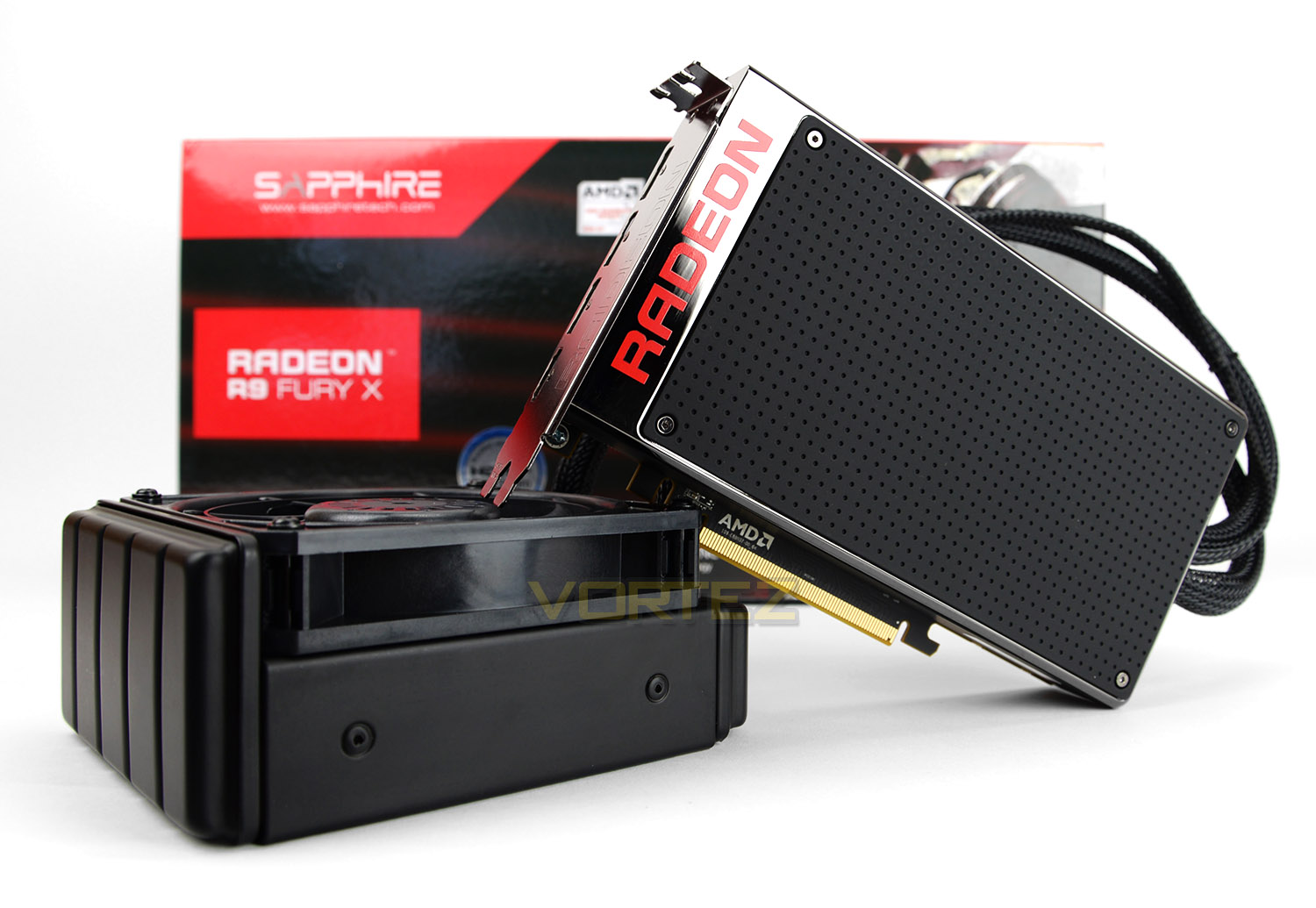
The AMD Radeon™ R9 Fury X graphics card is the world’s first total solution GPU with AMD-pioneered High-Bandwidth Memory (HBM) on-chip delivering extreme performance for unbelievably “real” 4K and VR experiences.
Technical Specifications
GPU
4096 Stream Processors
28 nm
Graphics Core Next (GCN)
1050 MHz Engine Clock
Interface
PCI-Express 3.0
Memory
4096 bit Memory Bus
HBM Memory Type
1000 MHz Effective Memory Clock
4096 MB Size
Displays
4 Outputs
Output 1 x HDMI
3 x DisplayPort
Resolution
4096X2160 Pixel DisplayPort Resolution
API
OpenGL® 4.5
OpenCL 2.0
DirectX® 12
Shader Model 5.0
Feature
AMD CrossFire
AMD PowerTune
AMD ZeroCore Power Technology
FreeSync Technology
AMD Eyefinity
Quad HD Display (4K*2K Support)
Video Codec Engine (VCE)
AMD HD3D Technology
AMD Liquid VR technology
AMD Virtual Super Resolution(VSR)
AMD TrueAudio technology
Cooling
Water cooling
Form Factor
2 Part Slot Occupied
4096 Stream Processors
28 nm
Graphics Core Next (GCN)
1050 MHz Engine Clock
Interface
PCI-Express 3.0
Memory
4096 bit Memory Bus
HBM Memory Type
1000 MHz Effective Memory Clock
4096 MB Size
Displays
4 Outputs
Output 1 x HDMI
3 x DisplayPort
Resolution
4096X2160 Pixel DisplayPort Resolution
API
OpenGL® 4.5
OpenCL 2.0
DirectX® 12
Shader Model 5.0
Feature
AMD CrossFire
AMD PowerTune
AMD ZeroCore Power Technology
FreeSync Technology
AMD Eyefinity
Quad HD Display (4K*2K Support)
Video Codec Engine (VCE)
AMD HD3D Technology
AMD Liquid VR technology
AMD Virtual Super Resolution(VSR)
AMD TrueAudio technology
Cooling
Water cooling
Form Factor
2 Part Slot Occupied
HBM Technology
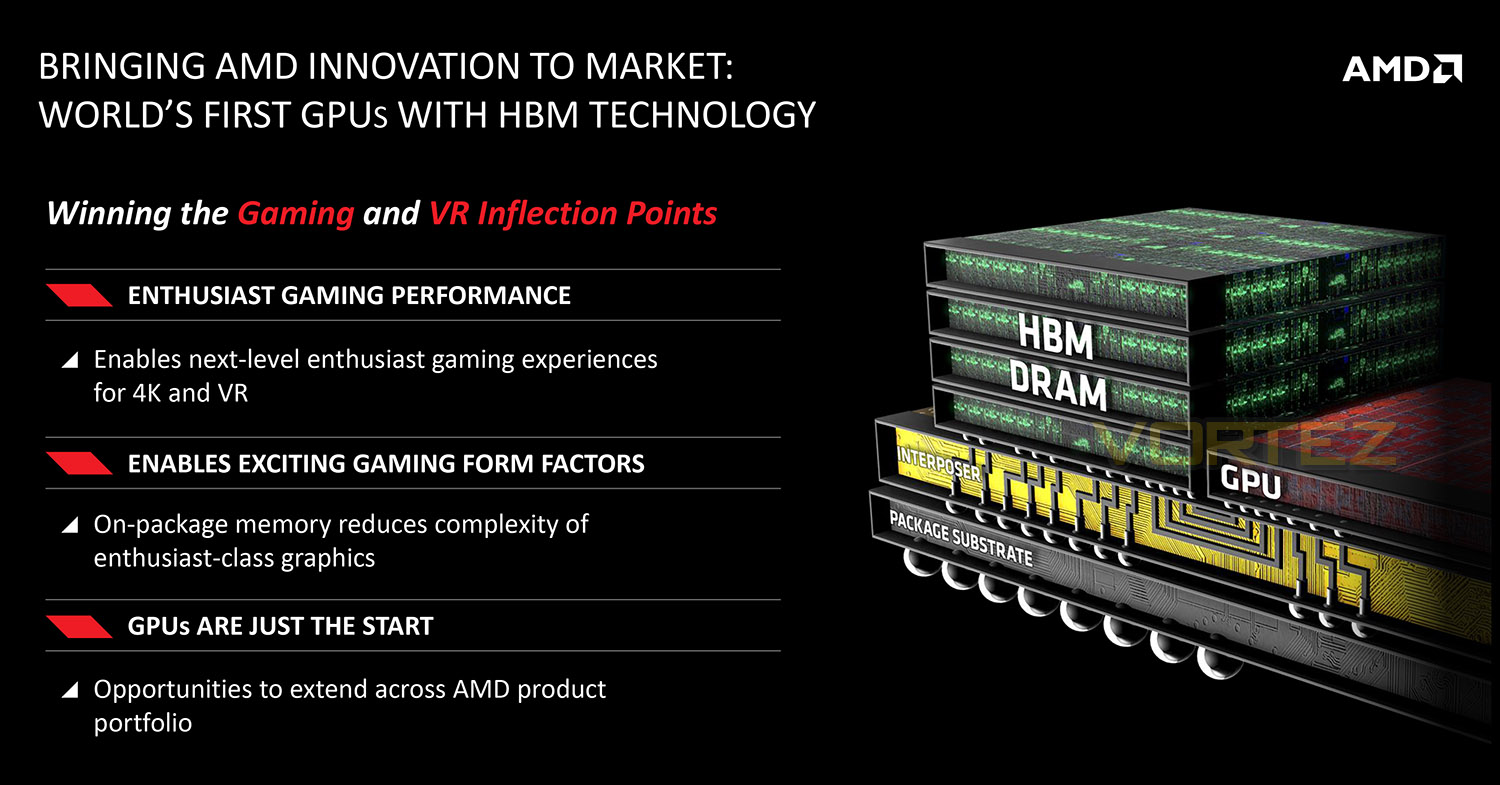
Arriving with the new Fiji GPU, Fury X brings with it some new architecture, including High Bandwidth Memory.
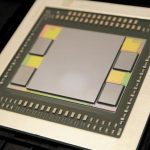
Manufactured with perhaps the final high-end outing for TSMC’s 28nm process, the Fiji is an 8.9m transistor monster measuring 596 square mm. However as the first GPU of any stripe to make the use of High Bandwidth Memory the overall package size is tiny, measuring just 1011 sq. mm when including the area of the memory chips and substrate rather than roughly 3x that. AMD believe that this will truly unlock new form factors, over and above what was possible when more bulky GDDR5 chips are arrayed around a high-performance GPU.
Fiji itself is a 4096-shader part, a little under 50% more shaders than the Hawaii-based R9 290X/390X; if you’re counting in Compute Units it puts the Fiji at 64. This gives Fiji unprecedented processing power for an AMD GPU, especially considering the commensurately large number of Texture Mapping Units (256) and ROPs (64). It’s built on a next-generation GCN architecture which will also make it marginally more efficient than Hawaii’s older GCN 1.1 design, and naturally efficiency will be key in leveraging the best possible performance without blowing through power allowances.
Four HBM stacks are arrayed around the Fiji GPU, and with this first version of HBM you’re currently limited to 1GB VRAM per stack, 4GB in total. Compared to other modern GPUs that doesn’t seem like much – NVIDIA’s TITAN X has a 12GB frame buffer, whilst AMD’s only R9 390X will be shipped with 8GB GDDR5 – but it’s worth noting that the performance of HBM is on a different level.
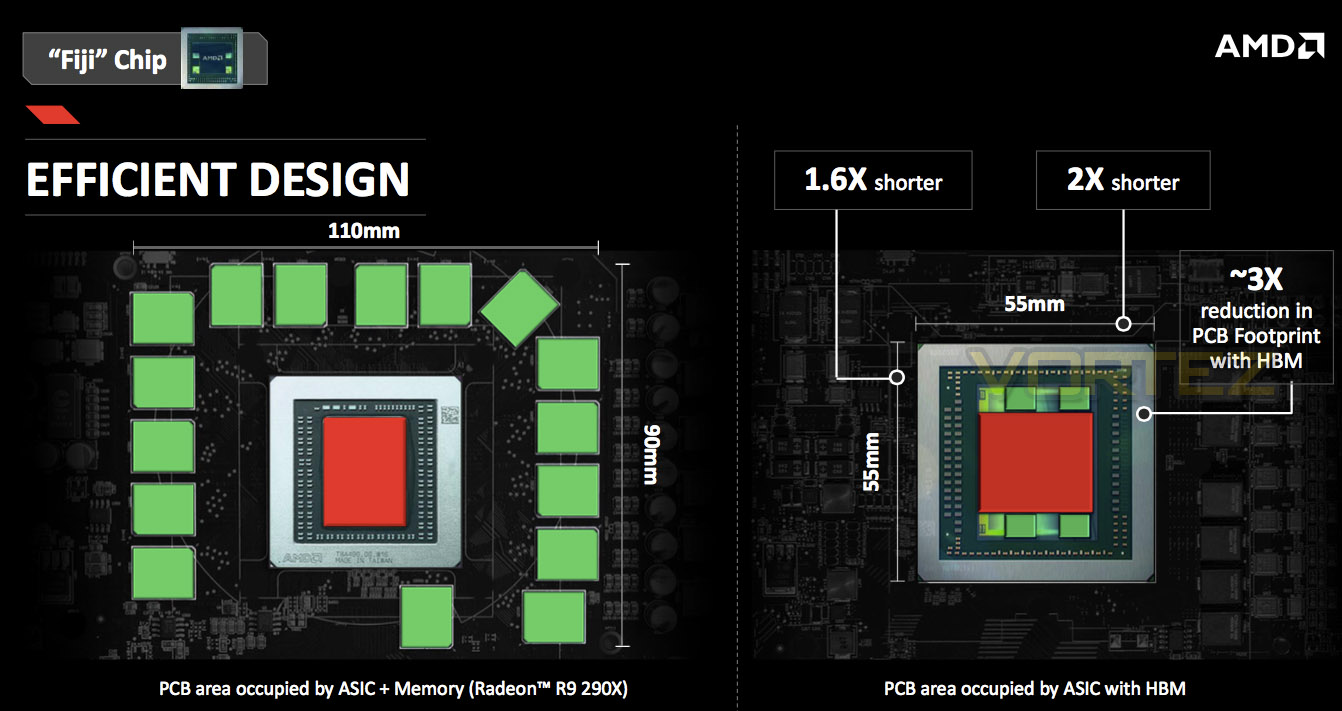
In total the memory bus width is 4096-bits wide, massive when compared to any GPU in its class. AMD are targeting a 512Gb/s Memory Bandwidth – 130GB/s more than the R9 390X, and almost 200Gb/s greater than that available to NVIDIA’s Titan X – and that really changes the dynamic of high resolution gaming. Frame buffer will still be a factor, but presupposing the GPU can process the data quickly enough it may just be that the 4GB limitation will not be nearly as problematic at 4K as everyone is currently expecting.
Furthermore Fiji has a 4x memory bandwidth/watt improvement over the R9 290X, which allows more power to be funneled to the GPU when operating within a TDP envelope. That’s critically important as GDDR5 hits diminishing returns at a certain performance level, costing ever more power to push frequencies ever higher, whilst the depths of HBM have yet to be plumbed. By being ahead of the curve AMD have the opportunity to steal a march in GPU efficiency, the first time they will have done so since the release of the HD 7970.
Packaging & Bundle
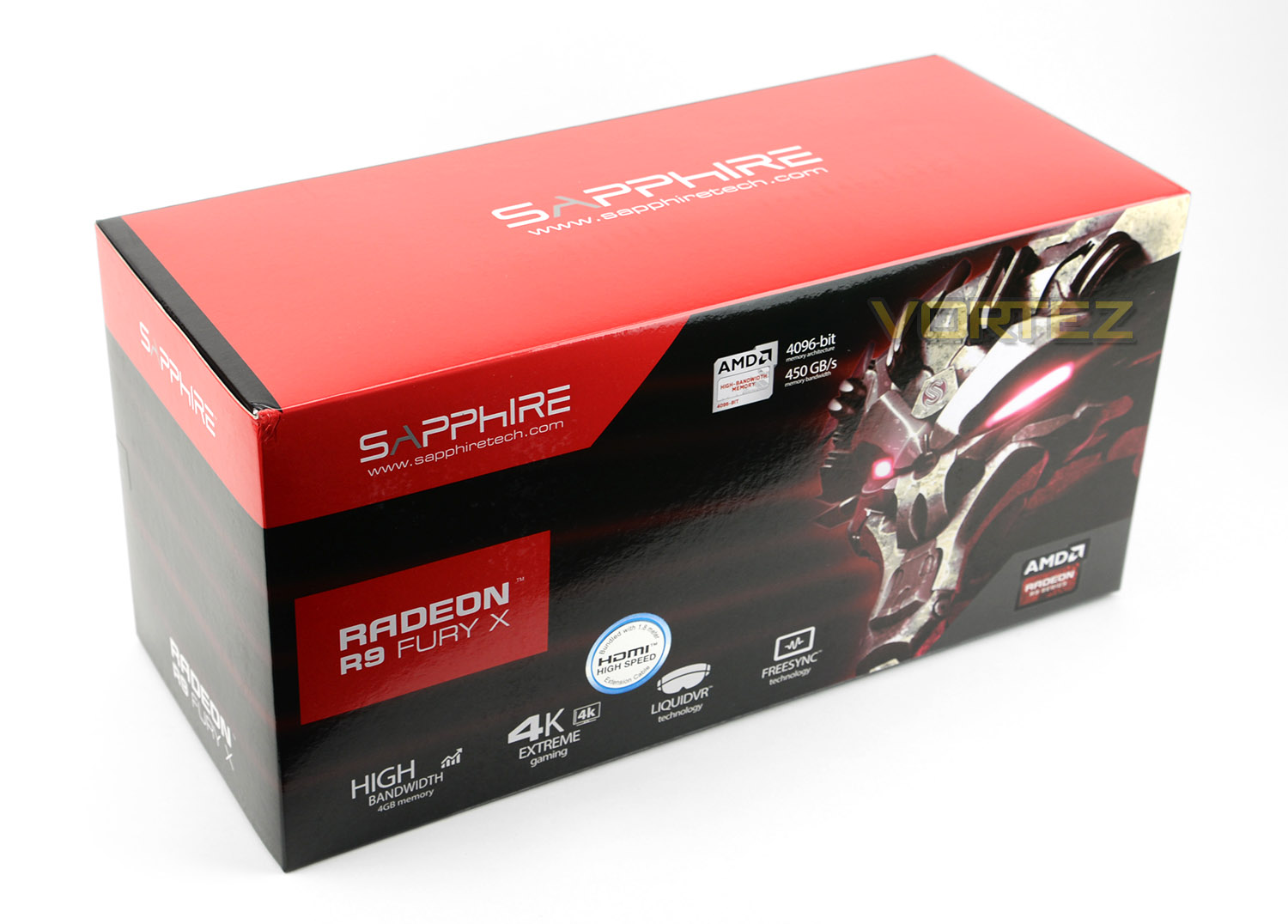
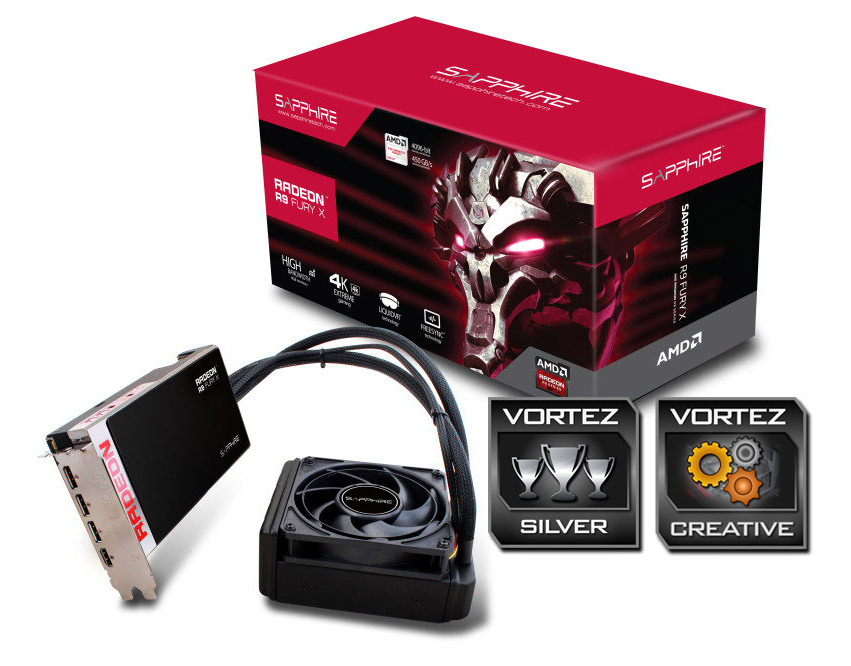
The Fury X arrives in a substantial box – far bigger than any we’ve seen for a graphics card before. SAPPHIRE has added their touch of branding with the front showing key technologies and characteristics this card brings. HBM and 4K are particular features which AMD (and SAPPHIRE) are keen to market. Over on the reverse there is a bit more detail on the fundamental features.
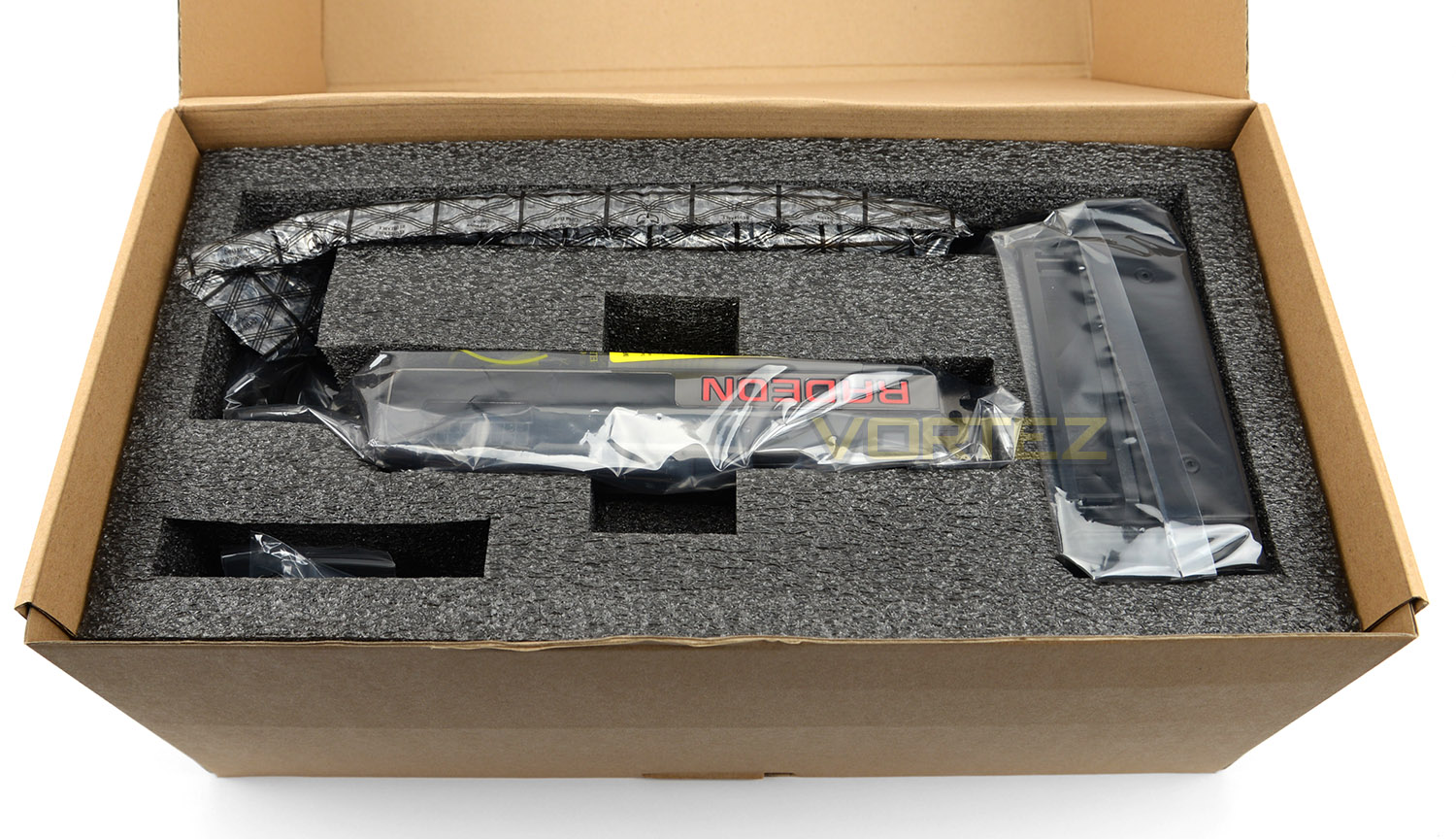
Opening the box up, there is plenty of foam to provide protection for the items inside. In fact, the packaging resembles something you’d expect from an all-in-one liquid CPU cooler product – afterall Fury X does arrive with a liquid cooling solution so this is understandable.
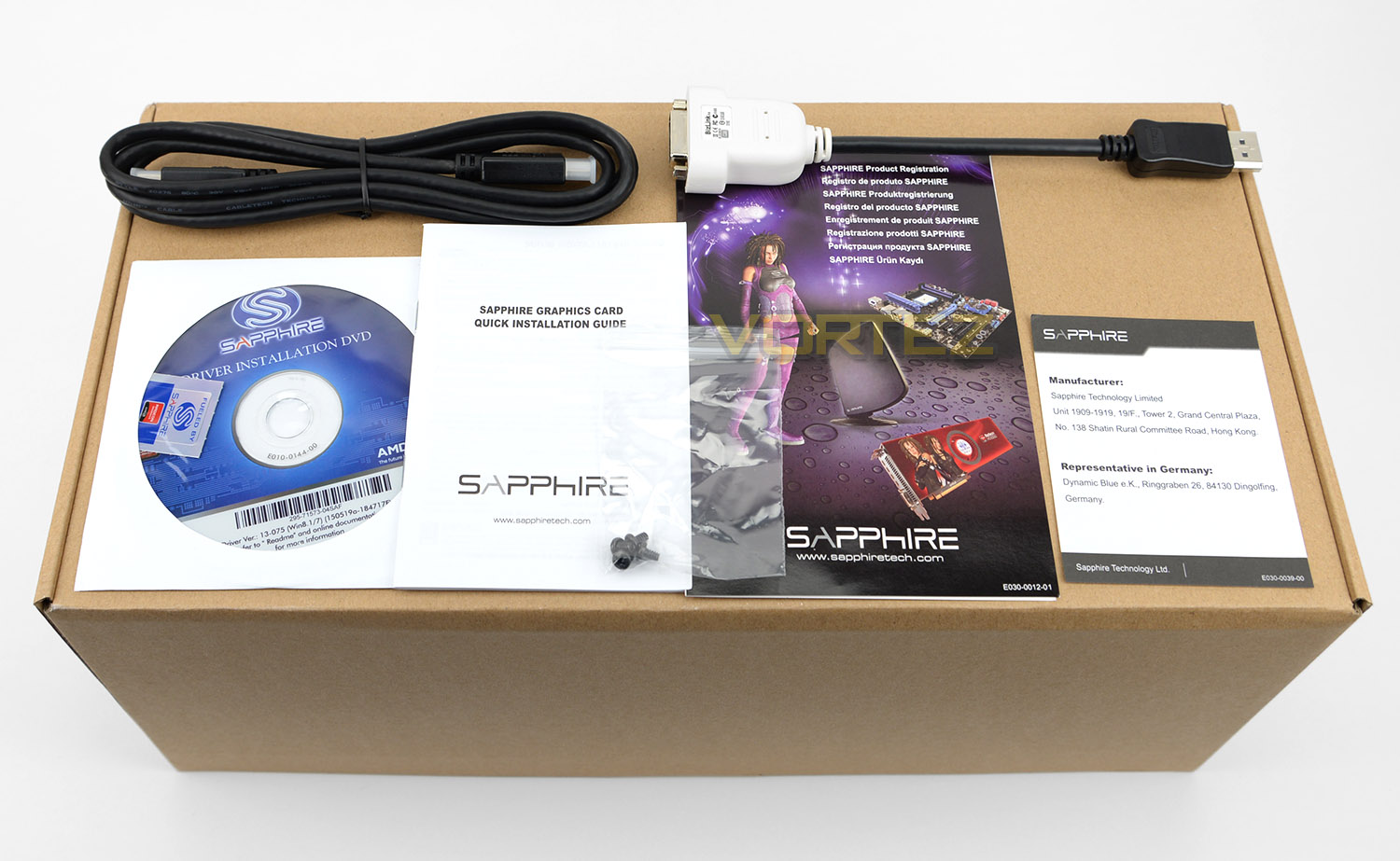
Opening the box up, there are a number of included items within the bundle. These items are as follows:
• Documentation – Quick start guide
• Driver CD
• Cables – DVI to DP, DP cable
Closer Look (With Cooler)
Core Clock: 1050MHz
Memory Clock: 1000 MHz
Memory Size: 4GB HBM
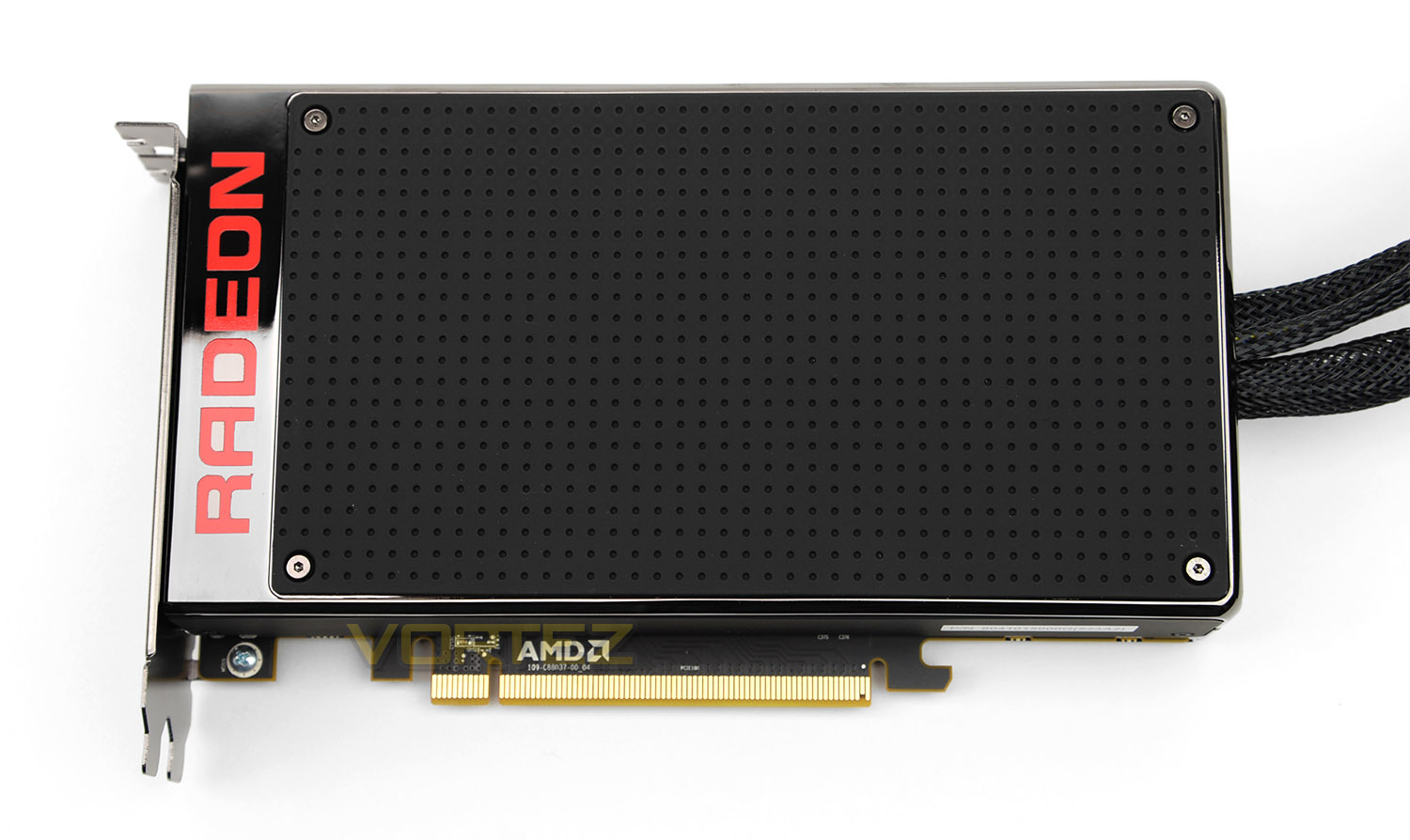
Fury X is available exclusively as a water-cooled reference model and is astonishingly compact thanks to Fiji GPU+Memory package being so small. The PCB is just 7.5” in length which is significantly smaller than both the R9 290X and R9 390X reference design, and still only occupies two PCI-E slots thanks to a dual-slot cooler design. However it still needs to dissipate an immense amount of heat – the card is rated at a typical TDP of 275W, which would be extremely difficult with a standard air cooler. Enter the Fury X’s party piece, a reference closed loop liquid cooler.
The Fury X’s heat shroud doesn’t escape a distinctly premium feel. Black soft-touch side-plates complement a black mirror-gloss aluminium supporting skeleton, making it the best-looking AMD reference card in, well, ever. Fan and cooler cables are braided for greater durability too; always a nice touch.
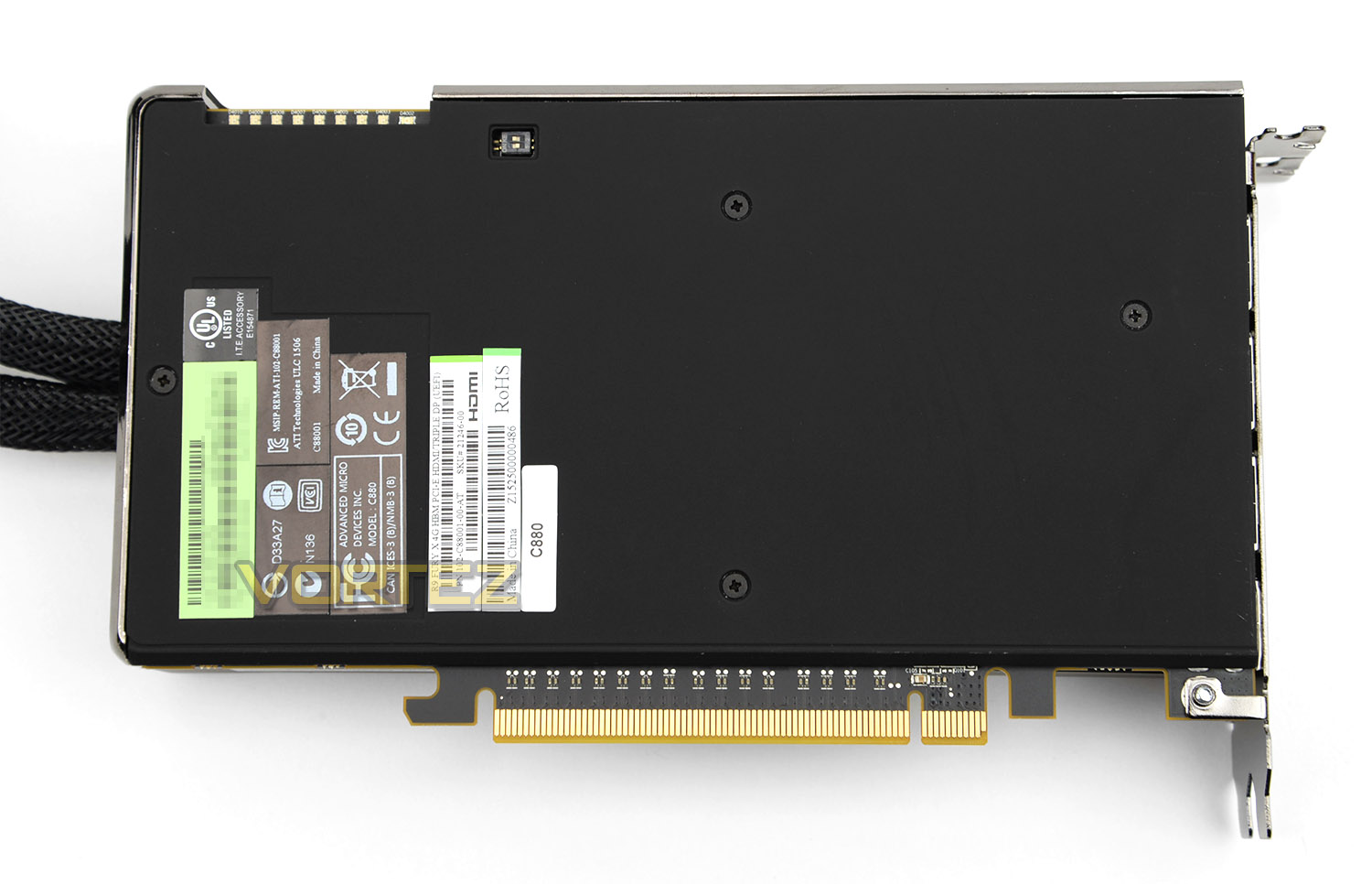
This is not the first time AMD have dabbled with a liquid cooler on their reference models; the R9 295X2 also included a hybrid liquid and air model, a necessity due to the cards two toasty Hawaii GPUs and the difficulty in dealing with this much heat solely through an air cooler. Moving to a liquid cooler on Fury X keeps the design compact – a major selling point of the card, as well as avoiding some of the pitfalls AMD encountered last time they released a reference air cooler.
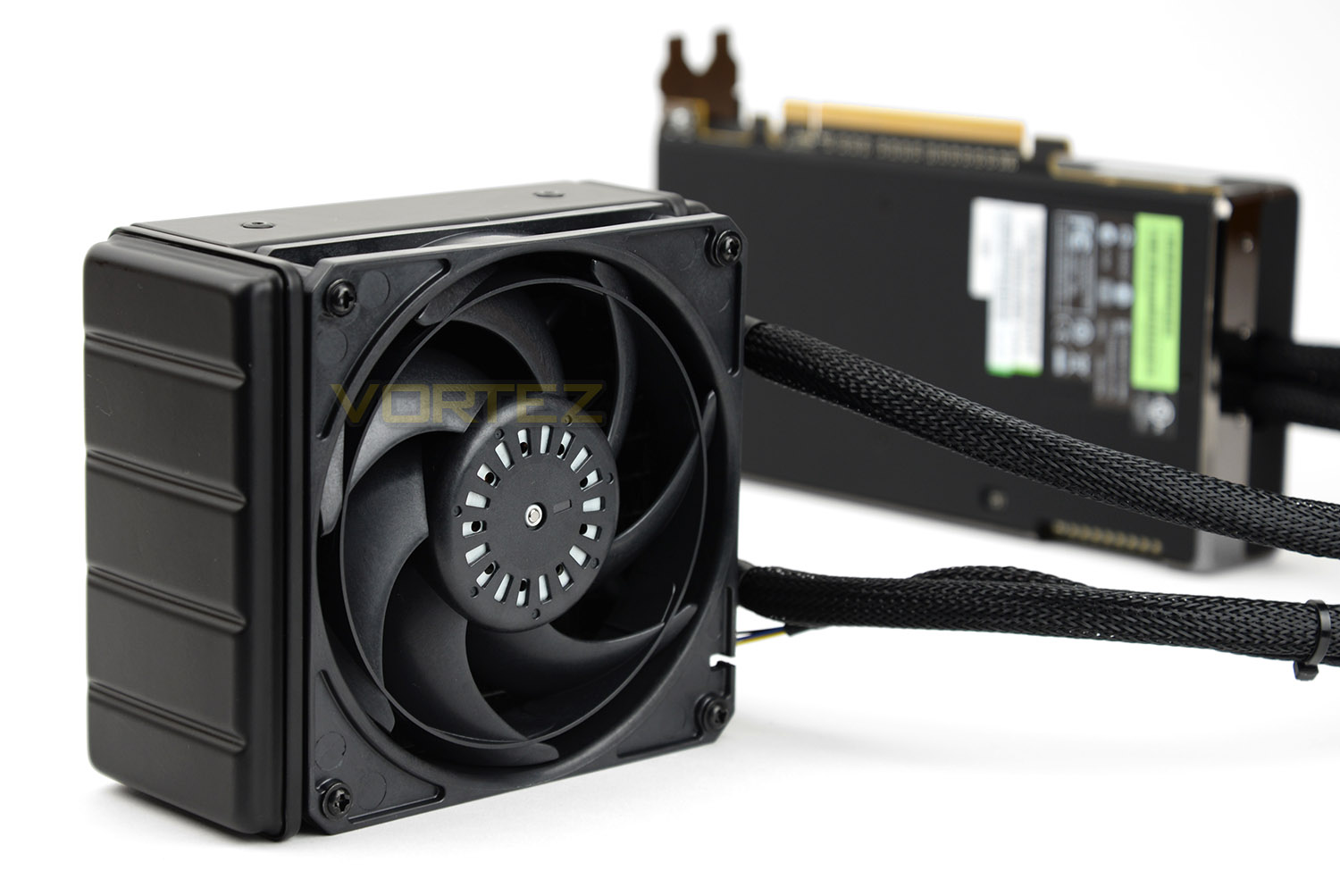
Since the cooling solution relies upon liquid there is a 120mm radiator which also uses a 120mm cooling fan. This radiator/fan combo will populate the rear exhaust within the computer chassis. Also, due to its wider than normal diameter, the lower pitch of the fan noise compared to typical 72/80/92mm GPU fans will be more pleasant to most ears, even at the same RPM.
Taking a leaf out of the R9 295X2 is the inclusion of customisable LEDs. Not limited to simply a red LED ‘Radeon’ logo on the side, the card also adds eight configurable Red/Blue LEDs for the GPU Tach, and a single green LED to indicate when the card is in the low power ‘AMD Zero Core’ mode. Overclockers will welcome news that, as well as the immense potential power supplied the Fury X utilises 6-phase power and AMD’s own SVI2 voltage regulators with full telemetry read back for core control.
If you’re in the market for two R9 Fury X GPUs you’ll be pleased to know that the card also supports XDMA (i.e. Crossfire over PCI-Express). That said, we should suggest waiting on stability information regarding this configuration before investing; multi-GPU setups are troublesome at the best of times, and jumping on it with brand new silicon feels like too much of a gamble.
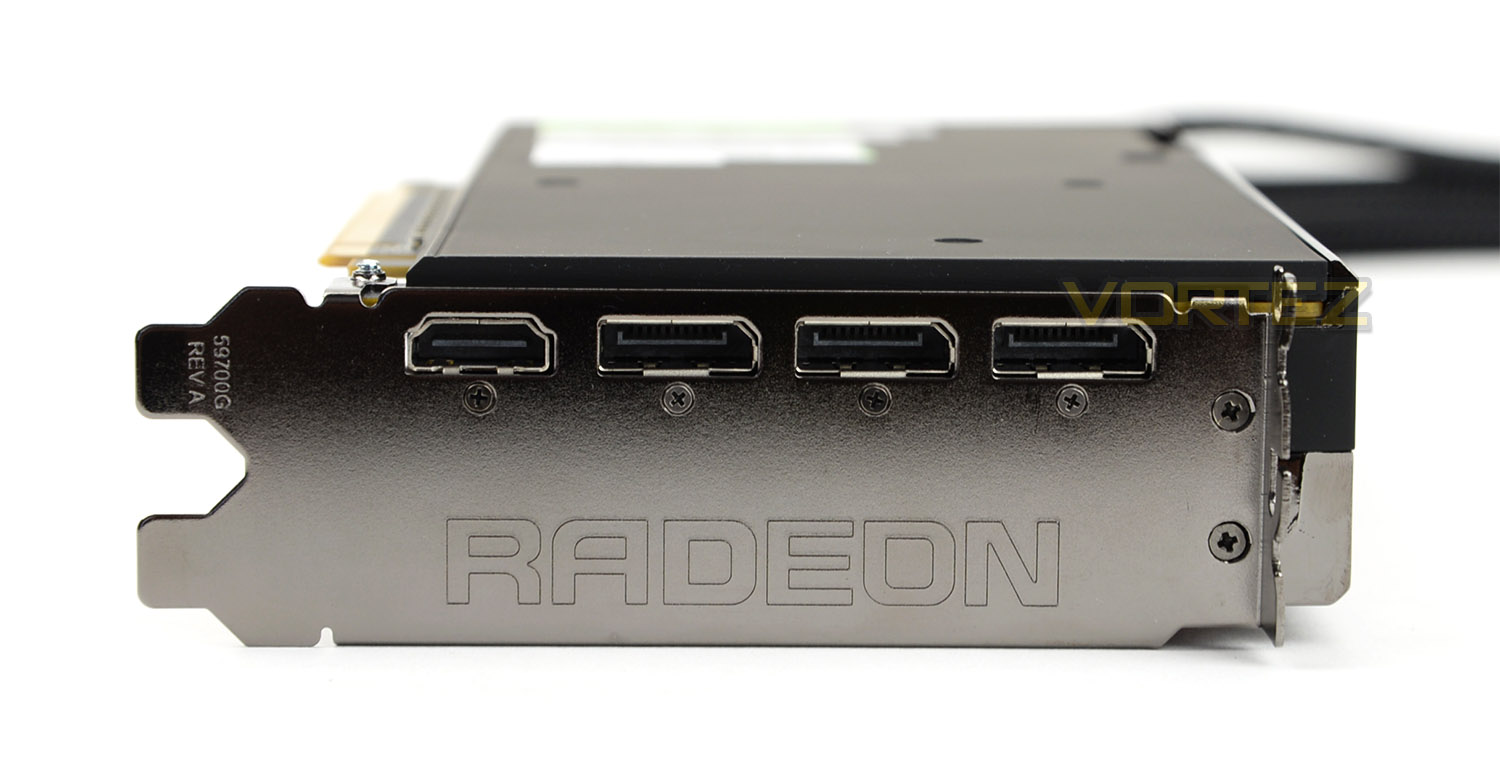
Focusing our attention on the IO area there are an assortment of ports available, they are as follows:
• 1x HDMI 1.4a (Up to 4K @ 24Hz)
• 3x DisplayPort 1.2 (Up to 4K @ 60Hz)
Fury X features three DisplayPorts supporting FreeSync and MST hubs for up to 6 simultaneous displays. In practise this means that Fury X is compatible with an immense range of modern and legacy high resolution displays, including 4K@60Hz where necessary.
To get the most out of this card, if you’re using a 4K monitor it’s better to use a DP cable as 60Hz is an option – unlike HDMI which only supports lower refresh rates.
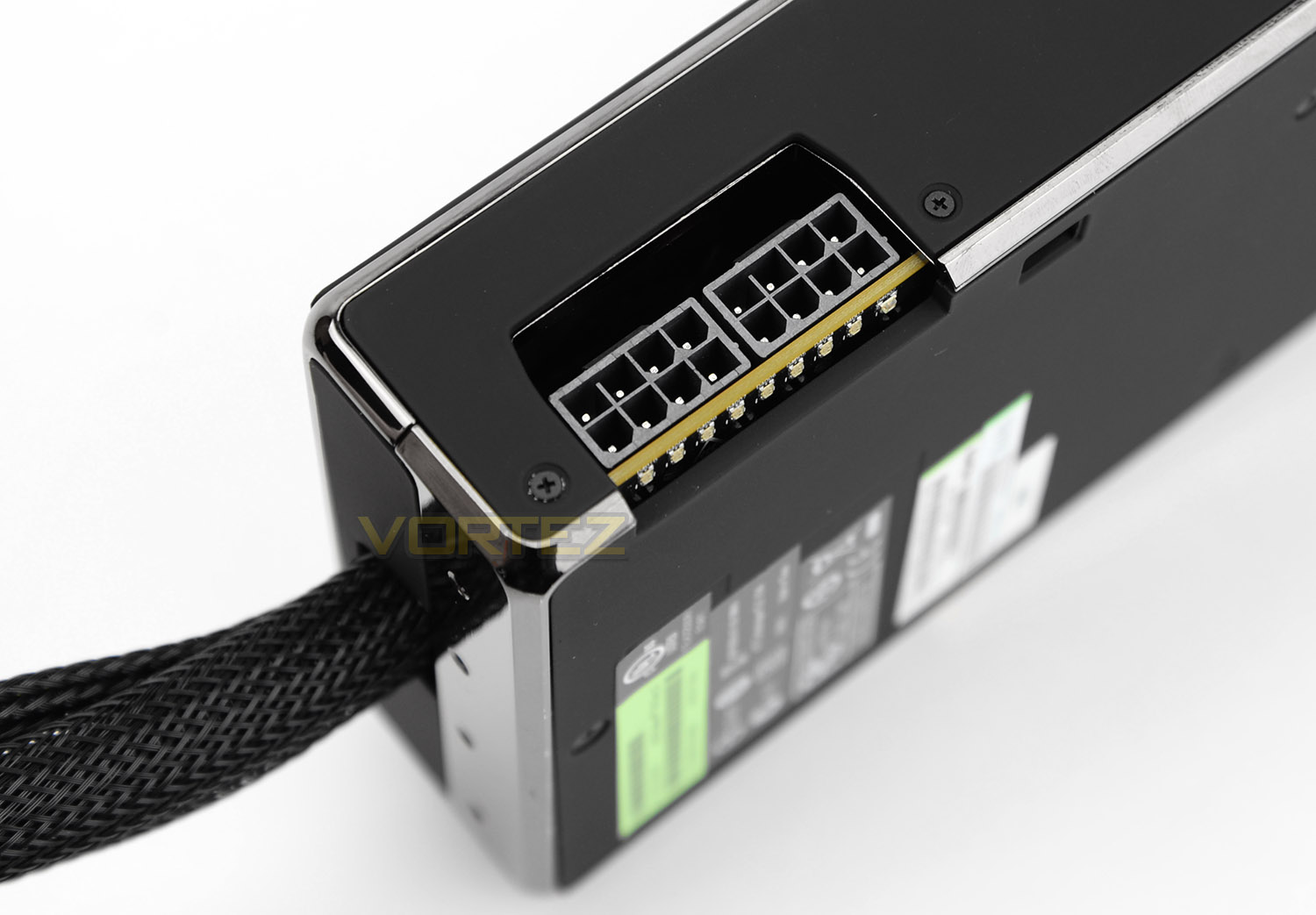
On the back edge of the card we have 8+8-pin PCI Express ports. To ensure proper stability, AMD recommend 750W power supply with 50A on the +12v rail.
This side of Fury X also features a dual-BIOS switch as a fail-safe technique should anything go pear-shaped.
Closer Look (Without Cooler)
Cast your minds back to October 2013, and recall the launch of the AMD’s previous flagship GPU. Hawaii was, and indeed still is, an excellent piece of technology which now sees service in derivative form in the R9 390-series, but on launch it suffered from being paired with a frankly substandard reference cooling solution. The blower design, sadly inferior to NVIDIA’s own ‘vapour-chamber’ cooler on the GTX 780, was both loud and still allowed the GPU to run at a suggested 90C (a temperature which, although safe, didn’t inspire users with confidence). It wasn’t until partners were able to implement their own cooling solution, such as ASUS’s DirectCU II or MSI’s Twin Frozr IV, four months later that Hawaii was able to really show its class.
It’s obvious that with the Radeon R9 Fury X AMD are seeking to put the ghosts of Hawaii’s launch to bed, and they’ve taken a novel means of doing just that. Dispensing with a reference ‘blower’ design, AMD have equipped with Fury X with a closed loop liquid cooler that channels the immense heat from the card to a 120mm radiator and fan. The pump and pipe assembly is hidden within a polished aluminium shroud, and can be revealed on the removal of the aluminium faceplate. Use of a closed loop cooler means that only the 120mm fan attached to the radiator is required, rather than one or more smaller fans on the cooler itself.
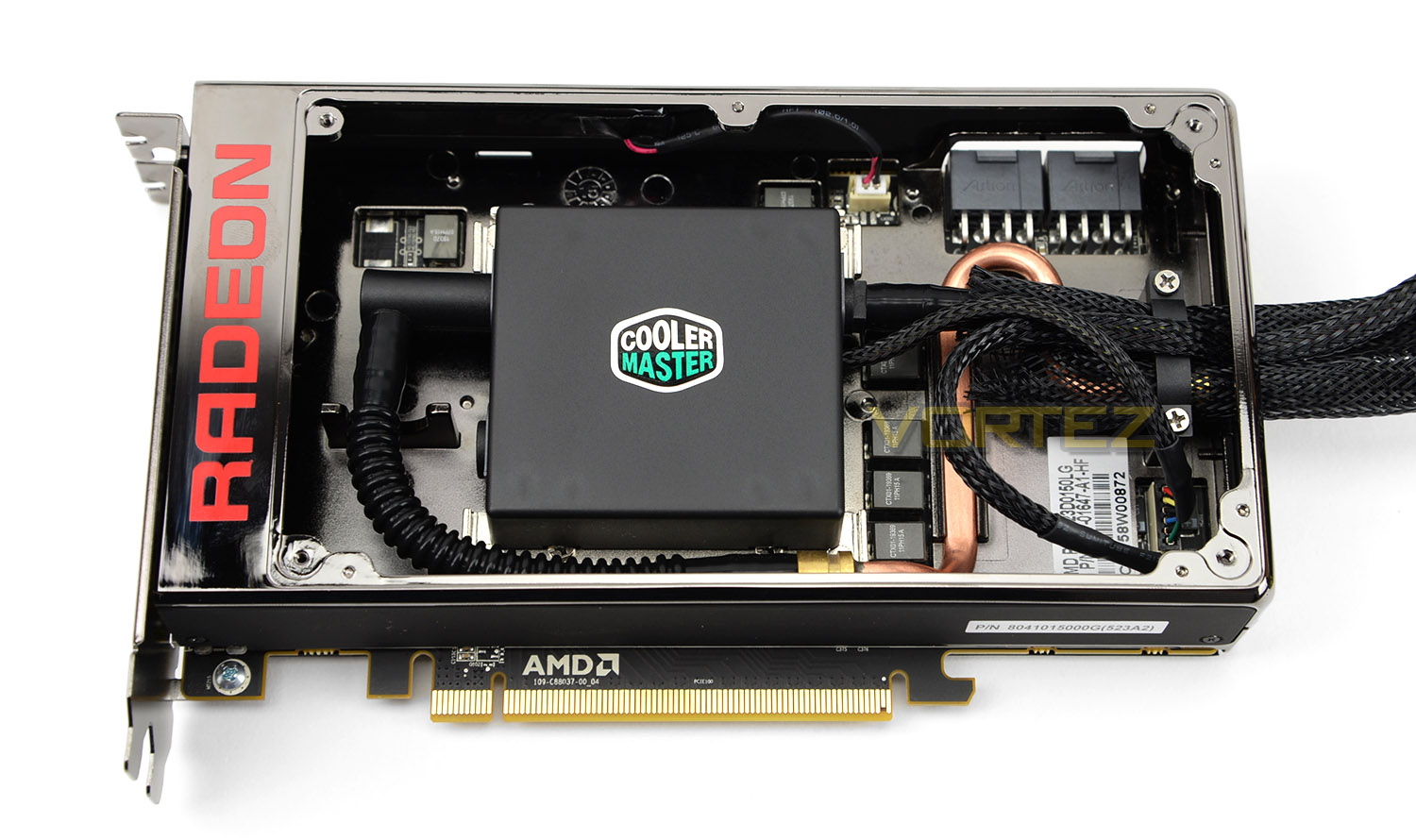
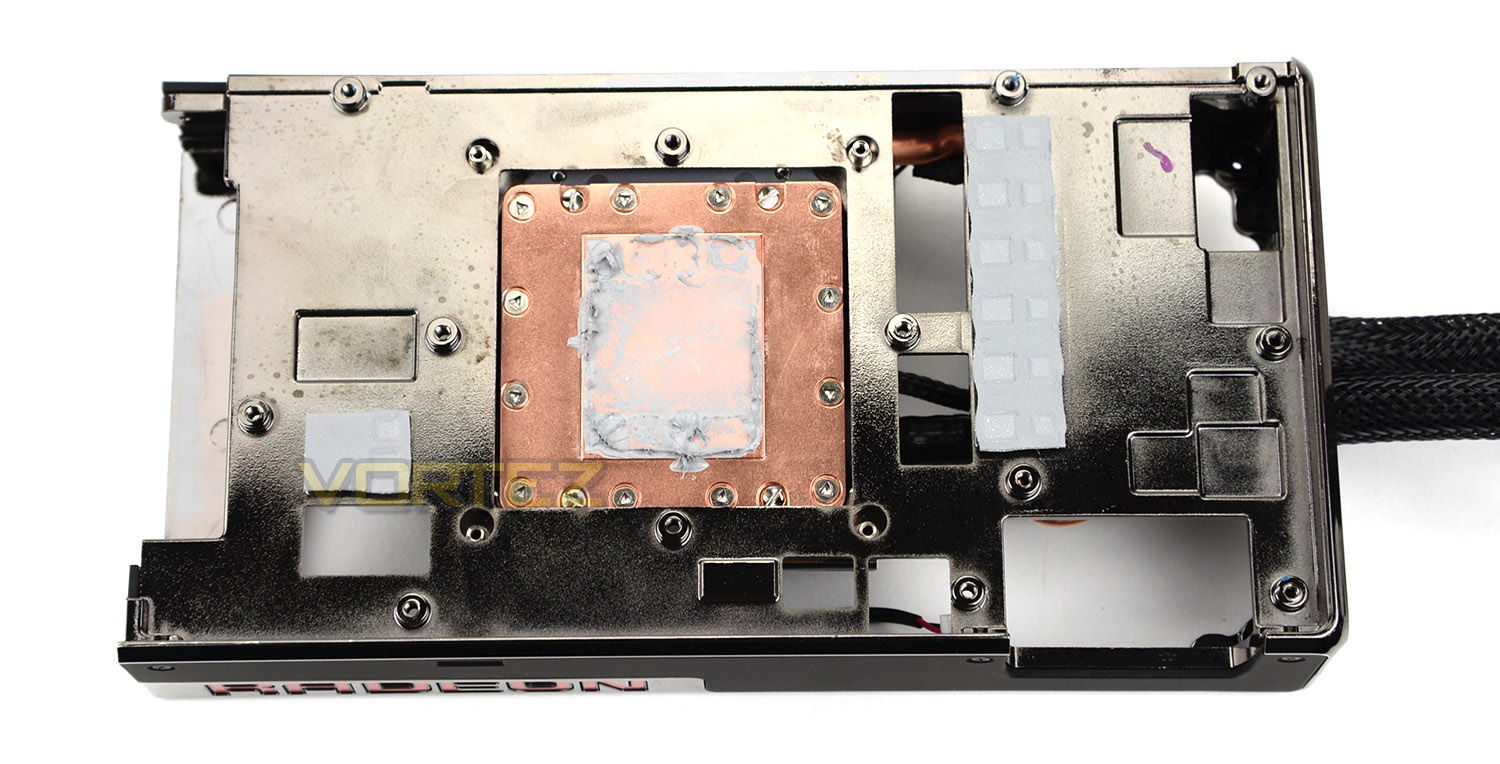
The pump in question is manufactured by Cooler Master and doesn’t outwardly resemble any of their current CPU block/pump designs; in all likelihood it is bespoke to the Fury X. We can however ascertain from the ‘non-shiny’ CM sticker that it’s one of the first generation Fury X pump – launch reviews and end-users have complained about high pump noise potentially caused by the pump continuously running at 100%. Obviously we’ll keep an eye (and ear) on the noise it generates, including the pitch of the noise (which often determines just how annoying it is).
Block inlet and outlet are on opposite sides of the GPU block. One cooling tube has a copper section specifically for cooling power components through the plate on top of the card, acting as a mini-waterblock. That’s quite a neat means to provide some active cooling to parts not under the main block, and likely critical given these parts would otherwise be starved of active cooling. However it’s not clear just how much cooling this will afford those parts, nor indeed if the obvious narrowing of the tubing will impede coolant flow.
Both the cooling tubes and the fan cable are braided, which is a nice quality feature we wouldn’t normally expect but are grateful to see. The braiding obscures an accurate measurement but we estimate the cooling tubes to be a modest 1cm diameter. Both tubes have plenty of flex and an ample 40cm length, facilitating radiator installation in whatever location inside your system you desire (including the front as an intake). If you’re using an AIO cooler on your GPU you may find installing a 120mm at the rear and 120mm/240mm in the top difficult, check your internal case dimensions rather than assuming all will be well.
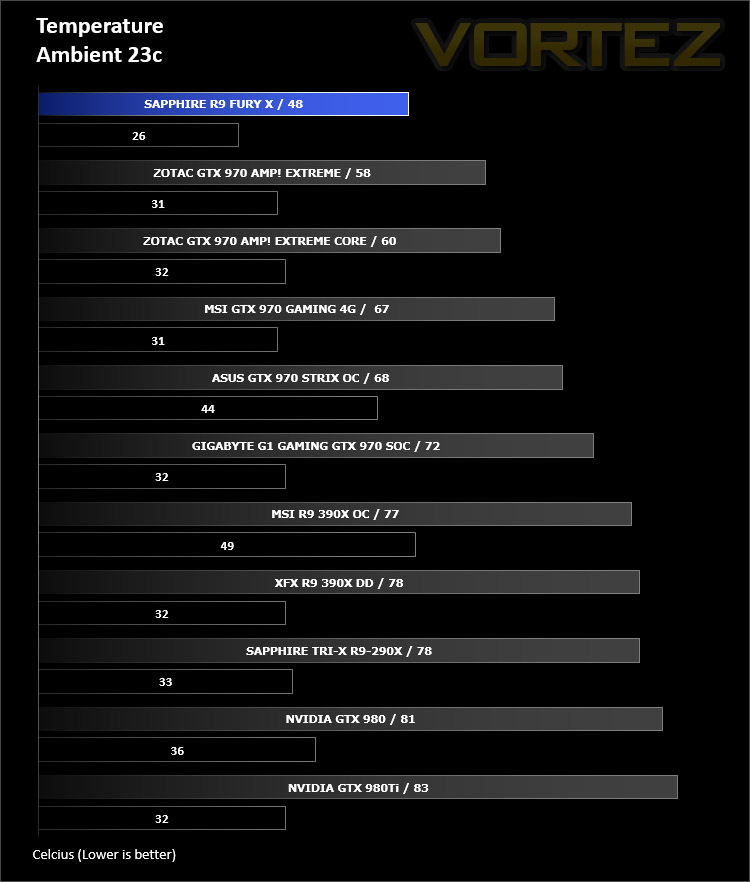
In theory this redesign will allow the R9 Fury X to run both cooler and more quietly than any previous reference design and most third party models. AMD are targeting a typical operational temperature of 50C for the GPU, considerably lower than the 90C target temperature on the Hawaii models; if the Fury X is able to perform at a higher level than Hawaii, whilst also being cooler and quieter, it’s done an extremely good job.
The concept of using a closed loop liquid cooler in a GPU isn’t new. Both Corsair and NZXT sell GPU adapter brackets for their AIO coolers, and AMD themselves utilised an AIO cooler for the dual-GPU Radeon R9 295X2 (even if it was aided by a small low RPM radial fan). As the overall card gets smaller the amount of space available traditional heatsinks will diminish, and so compact AIO solutions which can mount a radiator directly to the chassis could become more commonplace, especially if neither NVIDIA nor AMD clamp down on TDP.
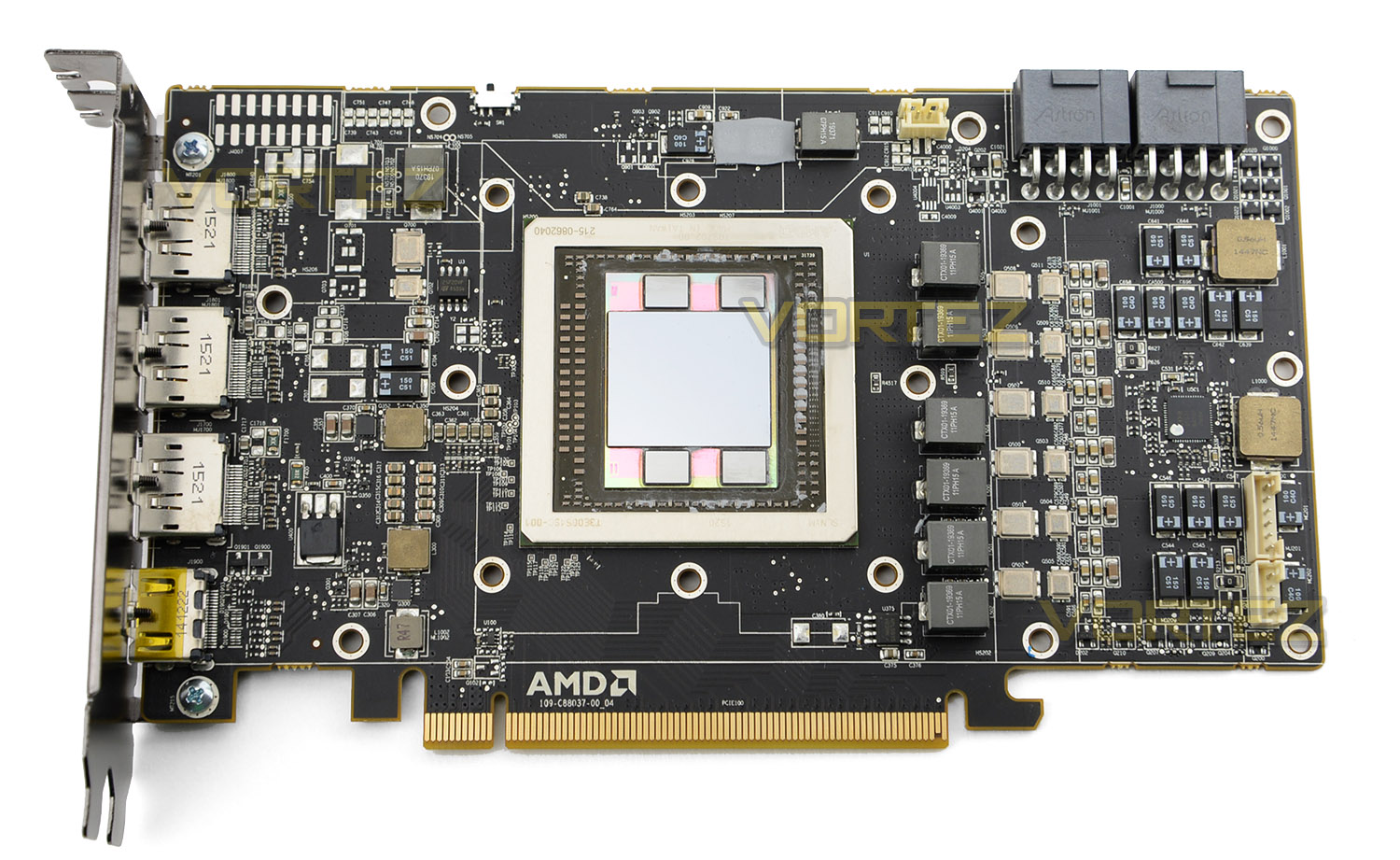
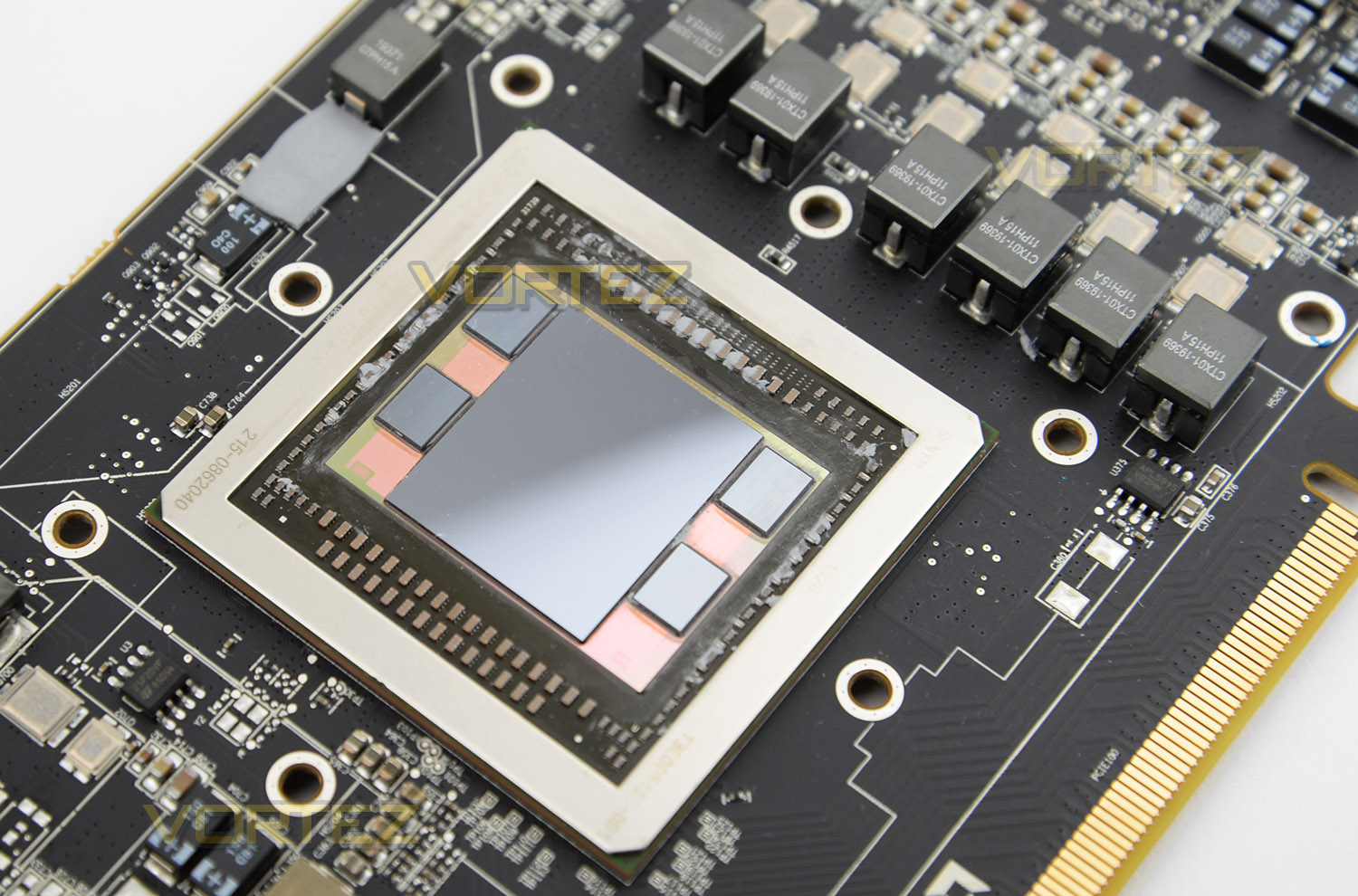
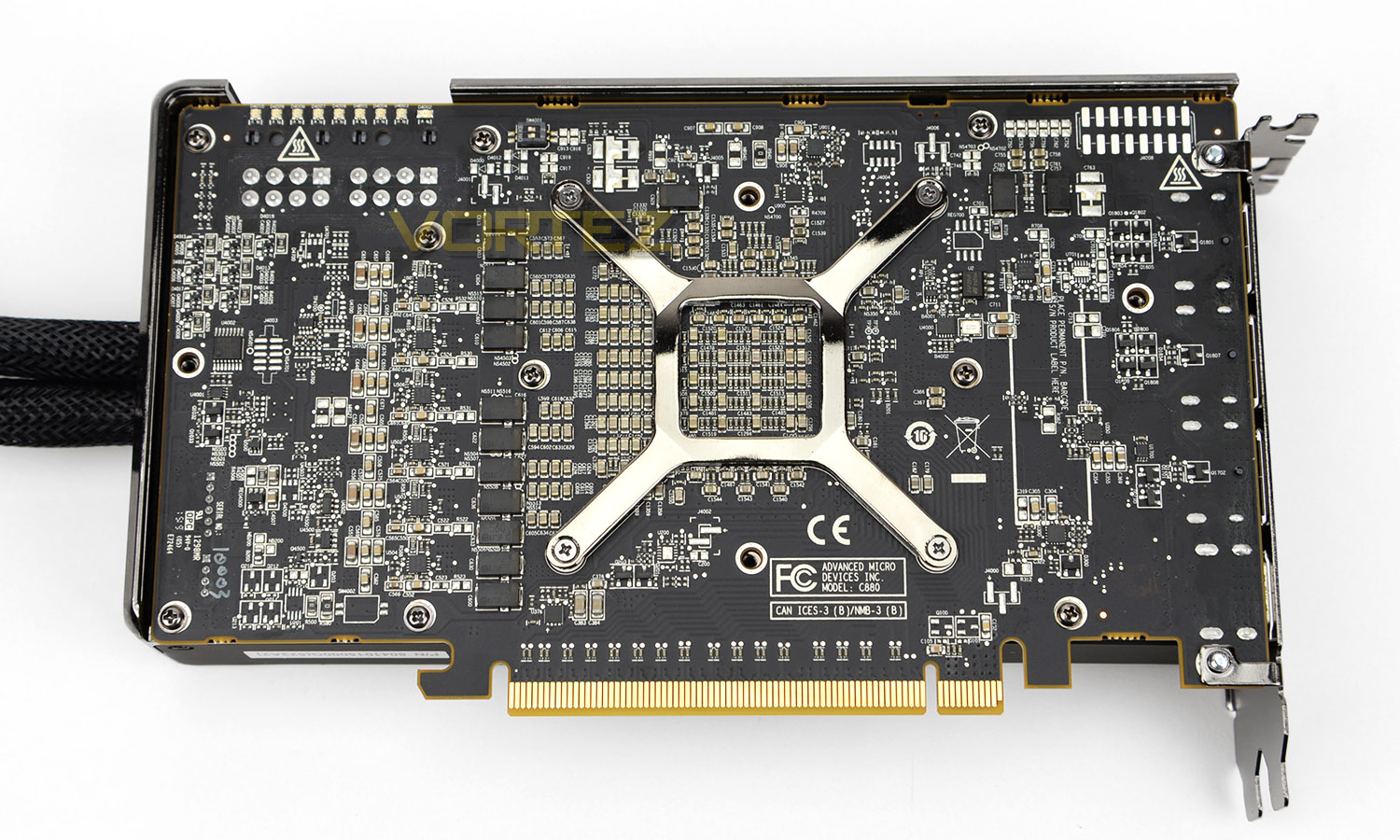
After taking the cooler off the PCB we can clearly see the implementation of the Fiji GPU and HBM. Fiji is based on 28nm fabrication node and makes use of 4096-bit memory interface courtesy of HBM which arrives in the form of just 4GB.
Test Setup & Methodology
How we test graphics cards
Testing a graphics card is an extremely lengthy process. We sometimes see reviews where a graphics card has been tested using out of date equipment, out of date games and even out of date drivers. While the latter can be excused due to the sheer amount of driver updates making a thorough review impossible we will however notify the reader when we have used a different driver to the normal for example a pre-release driver. For the most part however we will always use the same hardware and latest drivers so this does certainly need to be taken into consideration when viewing our testing results. Each game and benchmark is tested times with the lowest and highest scores omitted out of the 5 results and the average then taken from the three remaining to give us our final result for each resolution and setting used.
Hardware
With the latest Intel chipset release we decided to update our ageing X79 setup to the very latest X99 chipset. Not only that but we will be using the flagship Core i7-5960X Extreme Edition processor clocked to a realistic, achievable 4GHz to ensure we have no CPU bottlenecks. With 16GB (4x4GB) of GDDR4 at 2666MHz and a 500GB SSD there should be minimal paging so the benchmarks we run today will hopefully give a true reflection of the graphics card’s performance.
High End Graphics Cards on test:
SAPPHIRE R9 Fury X (Catalyst 15.15)
XFX R9 390X Double Dissipation (Catalyst 15.15)
MSI R9 390X GAMING 8G (Catalyst 15.15)
NVIDIA GTX 980 Ti 6GB (Forceware 352.90)
ZOTAC GTX 970 AMP! EXTREME CORE(Forceware 344.75)
ZOTAC GTX 970 AMP! EXTREME(Forceware 344.75)
MSI GTX 970 GAMING 4G(Forceware 344.75)
GIGABYTE G1 GAMING SOC GTX 970(Forceware 344.75)
ASUS STRIX GTX 970 4GB GDDR5(Forceware 340.60)
NVIDIA GTX 980 4GB GDDR5(Forceware 340.52)
SAPPHIRE TRI-X R9-290X 4GB GDDR5(Catalyst 14.3)
Special thanks go to Intel, Corsair, MSI and AOC for providing the extreme spec components used for our test bench:
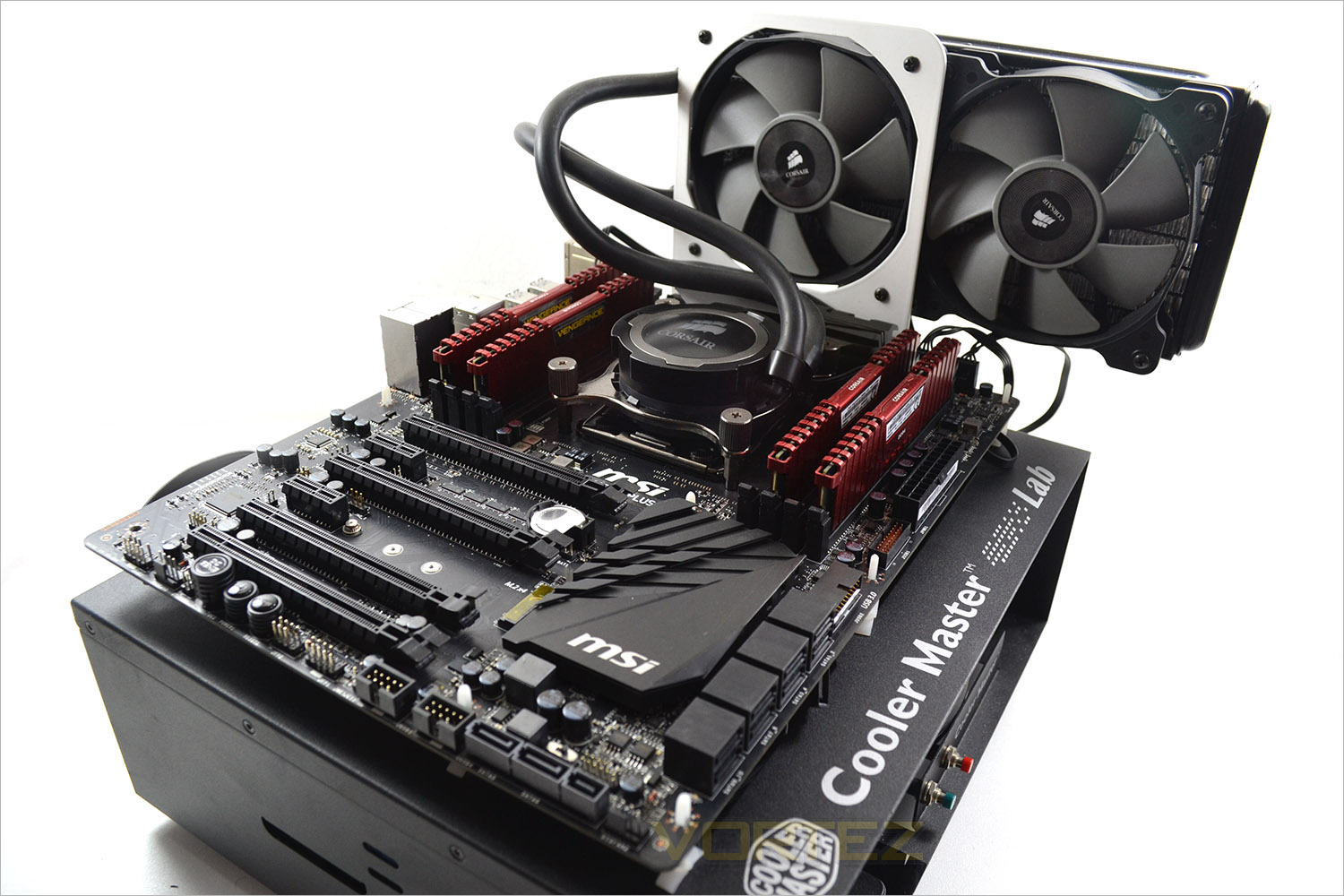
Motherboard: MSI X99S GAMING 9 AC
CPU: Intel Core i7-5960X Extreme Edition @ 4GHz
RAM – 16GB (4x4GB) Corsair LPX Vengeance (Red) DDR3 @ 2666MHz 16-17-17-35 C1
Power Supply – CORSAIR RM Series™ RM1000
Hard Drive – CORSAIR Force Series™ LX 512GB SATA 3 6Gb/s SSD
Cooler – CORSAIR Hydro Series™ H105 240mm Extreme Performance Liquid CPU Cooler
Monitor – AOC 28″ 4K U2868 PQU
Cables – Startech DP 1.2 Cable
CPU: Intel Core i7-5960X Extreme Edition @ 4GHz
RAM – 16GB (4x4GB) Corsair LPX Vengeance (Red) DDR3 @ 2666MHz 16-17-17-35 C1
Power Supply – CORSAIR RM Series™ RM1000
Hard Drive – CORSAIR Force Series™ LX 512GB SATA 3 6Gb/s SSD
Cooler – CORSAIR Hydro Series™ H105 240mm Extreme Performance Liquid CPU Cooler
Monitor – AOC 28″ 4K U2868 PQU
Cables – Startech DP 1.2 Cable
Benchmarks
If you are a regular reader of our reviews you will know we like to test the latest hardware with the latest games and benchmarks on the market. Here are the games we have chosen:
Battlefield 4
Watchdogs
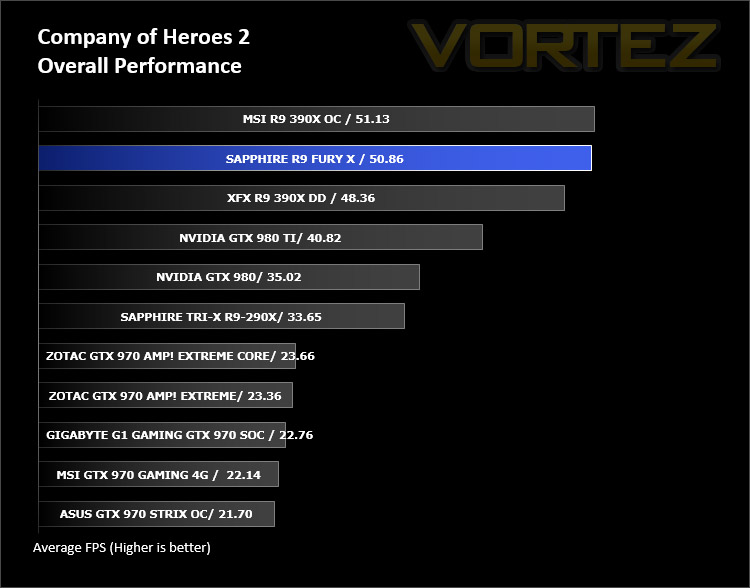
Company of Heroes 2
Thief
GRID: 2
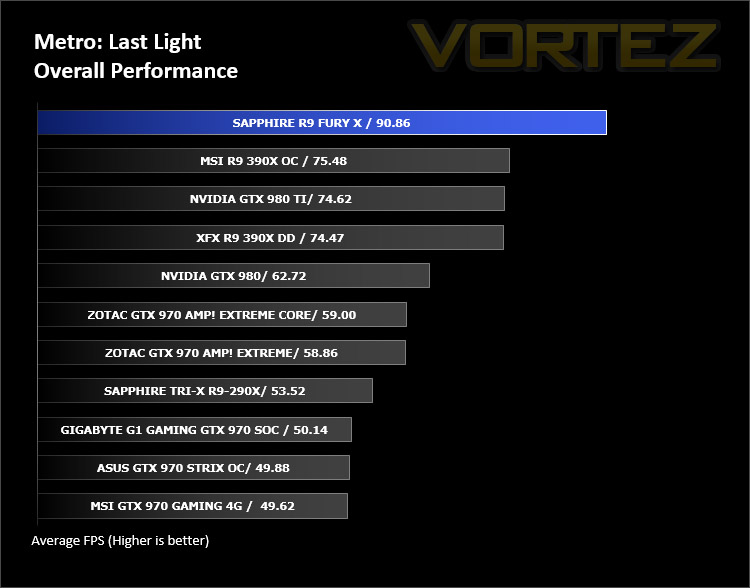
Metro: Last Light
Watchdogs
Company of Heroes 2
Thief
GRID: 2
Metro: Last Light
We also take into consideration the benchmarkers out there so have included three of the more popular synthetic benchmarks available:
Unigine: Valley
Unigine: Heaven 4
Futuremark 3DMark Firestrike
Unigine: Heaven 4
Futuremark 3DMark Firestrike
Let’s see how today’s graphics card performed…
Power, Temperatures, Acoustics
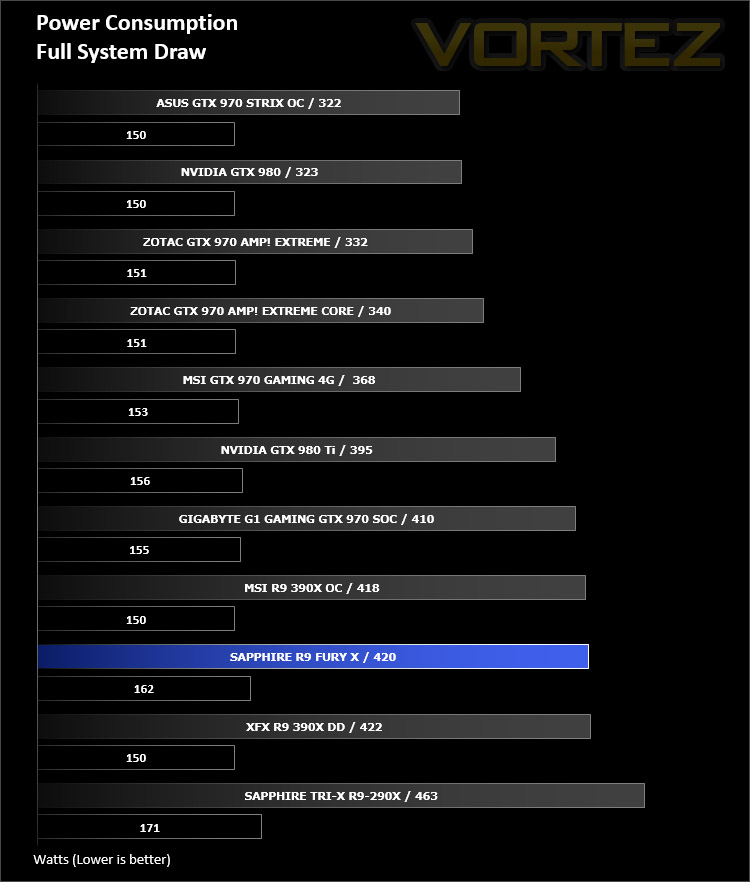
To test for power consumption we take a measurement from the plug socket. It is important to note that the figures below represent total system power use and not just the GPU. The CPU was always in a fixed state (4GHz overclock) so did not affect the additional power load when the GPU was placed under 100% load using Furmark which was ran for 15 minutes at which point a load reading was taken. Idle readings were taken 5 minutes after system boot to ensure any background services and applications had loaded.
Temperature
To test temperatures we measured idle temperatures after booting windows, letting all applications finish loading and ran a few benchmarks. Once the benchmarks were complete we left the card to reach a cooling plateau where we then took the idle temperatures. For the load tests, we would normally run Furmark for 20 minutes, taking the absolute maximum temperature attained however we found that this throttled the card and resulted in spurious results. So we set Heaven running continuously for 20 minutes and used this as a temperature result.
Acoustics
Noise from the cooling fan isn’t disruptive by any means and it operates smoothly. However, our sample unfortunately has the
first-generation pump which is prone to noise issues. Throughout testing we experienced the excruciating high-pitched noises to which many have already reported – this noise is quite unbearable. If you have bought this card and it’s emitting such noises, we urge you to contact support to have the pump/card replaced.
3DMark FireStrike
Fire Strike is the new showcase DirectX 11 benchmark designed for high-performance gaming PCs. It is Futuremark’s most ambitious and technical benchmark ever, featuring real-time graphics rendered with detail and complexity far beyond what is found in other benchmarks and games today.
Unigine Heaven 4.0
Heaven Benchmark with its current version 4.0 is a GPU-intensive benchmark that hammers graphics cards to the limits. This powerful tool can be effectively used to determine the stability of a GPU under extremely stressful conditions, as well as check the cooling system’s potential under maximum heat output. It provides completely unbiased results and generates true in-game rendering workloads across all platforms.
Unigine Valley
Valley Benchmark is a new GPU stress-testing tool from the developers of the very popular and highly acclaimed Heaven Benchmark. The forest-covered valley surrounded by vast mountains amazes with its scale from a bird’s-eye view and is extremely detailed down to every leaf and flower petal. This non-synthetic benchmark powered by the state-of-the art UNIGINE Engine showcases a comprehensive set of cutting-edge graphics technologies with a dynamic environment and fully interactive modes available to the end user.
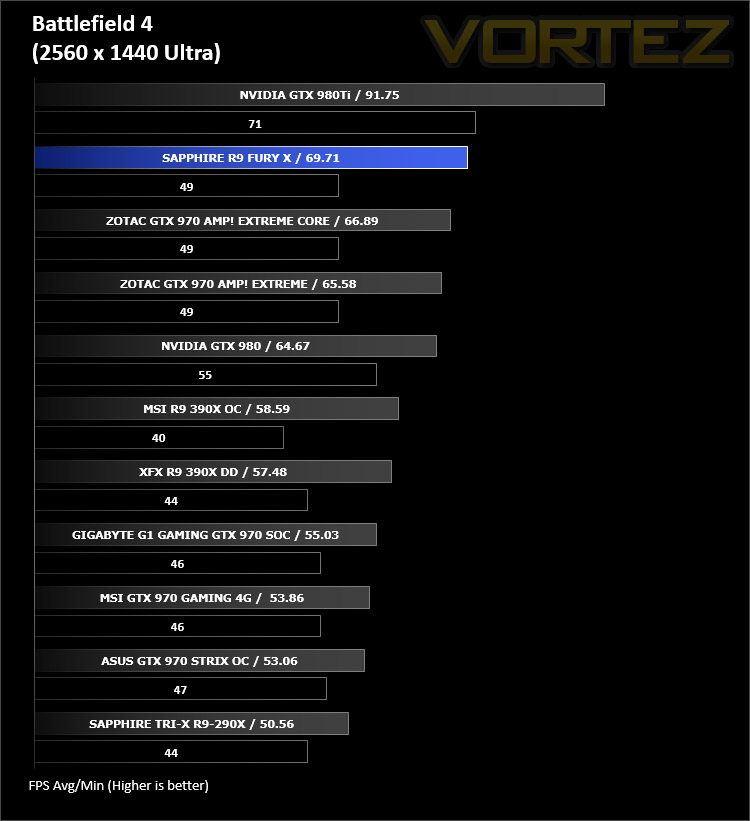
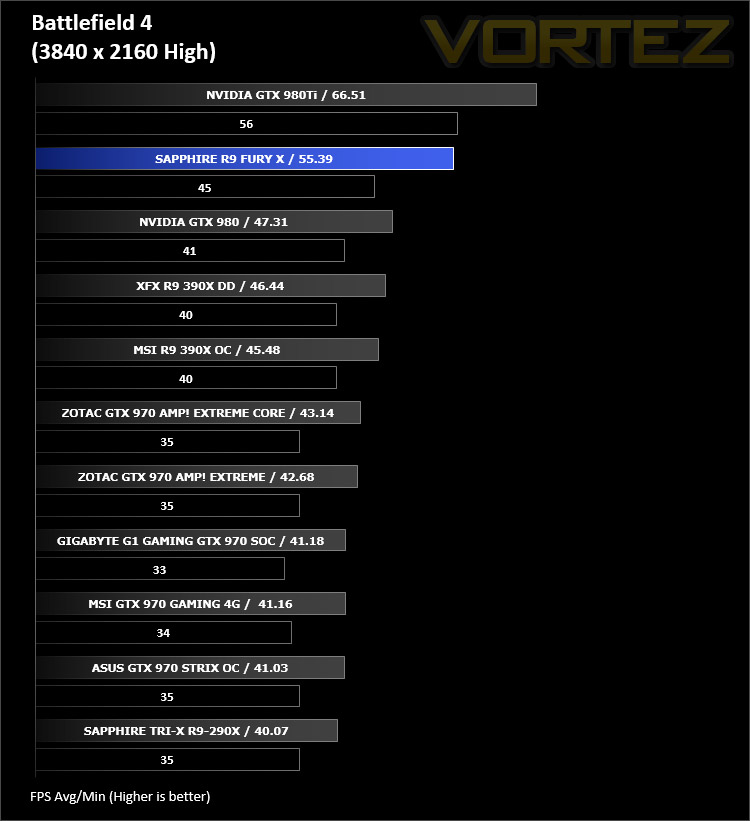
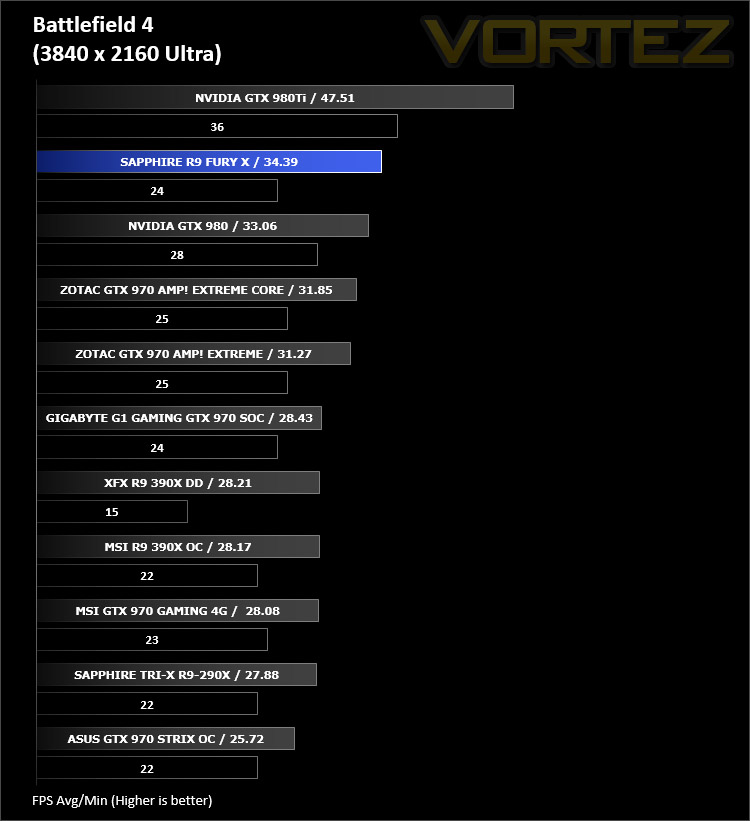
Battlefield 4
Battlefield 4 is a 2013 first-person shooter video game developed by Swedish video game developer EA Digital Illusions CE (DICE) and published by Electronic Arts. It is a sequel to 2011’s Battlefield 3 and is perhaps currently the most popular online First Person Shooter for PC gamers. It has an extremely powerful gaming engine that will stress components more than most FPS titles available.
Watchdogs
Watch Dogs is a 2014 open world action-adventure video game developed by Ubisoft Montreal and published by Ubisoft. Set within a fictionalized version of Chicago, Illinois, the single-player story follows a hacker and his efforts to seek revenge after the accidental death of his niece. The open world design lets players freely roam Chicago, which includes the urban city, open countryside, and slums. The game is played from a third-person perspective and its world is navigated on-foot or by vehicle. As such this is a very demanding game, especially when graphical options are turned up.
Thief
Thief is a stealth video game developed by the Canadian video game developer Eidos Montreal, and published by Square Enix. It is a revival of the cult classic Thief series of stealth games, of which it is the fourth game. Thief is set in a dark fantasy world inspired by Victorian, gothic, and steampunk aesthetics. Using a modified version of the Unreal Engine 3 it makes for a challenging game to pitch against our range of components.
Company of Heroes 2
Company of Heroes 2 is a real-time strategy video game developed by Relic Entertainment. It is the sequel to the critically acclaimed 2006 game Company of Heroes.As with the original Company of Heroes, the game is set in World War II but with the focus on the Eastern Front, with players primarily controlling the side of the Soviet Red Army during various stages of the Eastern Front, from Operation Barbarossa to the Battle of Berlin. Company of Heroes 2 runs on Relic Entertainment’s proprietary Essence 3.0 game engine and is extremely demanding of both CPU and GPU.
Metro Last Light
Metro: Last Light is a single-player post-apocalyptic-themed first-person shooter video game with stealth and survival horror elements, developed by Ukrainian studio 4A Games and published by Deep Silver. The game is set in a post-apocalyptic Moscow, part of the universe of the novel Metro 2033 and its sequels, written by Russian author Dmitry Glukhovsky. The second of our FPS titles, it runs on the 4A gaming engine which again, has the capability to stress even the best GPU components.
GRID 2
Grid 2 (stylised as GRID 2 and known as Race Driver Grid 2 in Japan) is a racing video game developed and published by Codemasters and is the sequel to 2008’s Race Driver: Grid. The game includes numerous real world locations and cities such as Paris. It also includes motor vehicles spanning four decades. In addition, it includes a new handling system that developer Codemasters has dubbed ‘TrueFeel’, which aims to hit a sweet spot between realism and accessibility. It uses the EGO 3.0 engine which while not overly challenging, is representative of games of this genre.
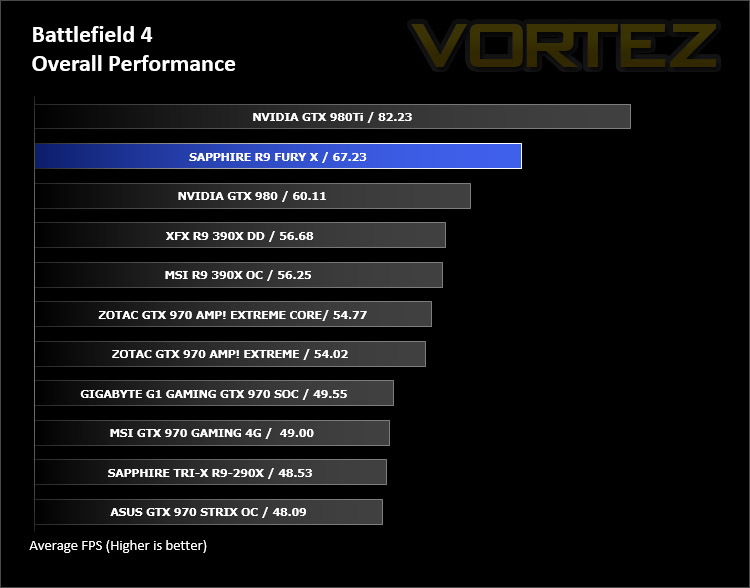
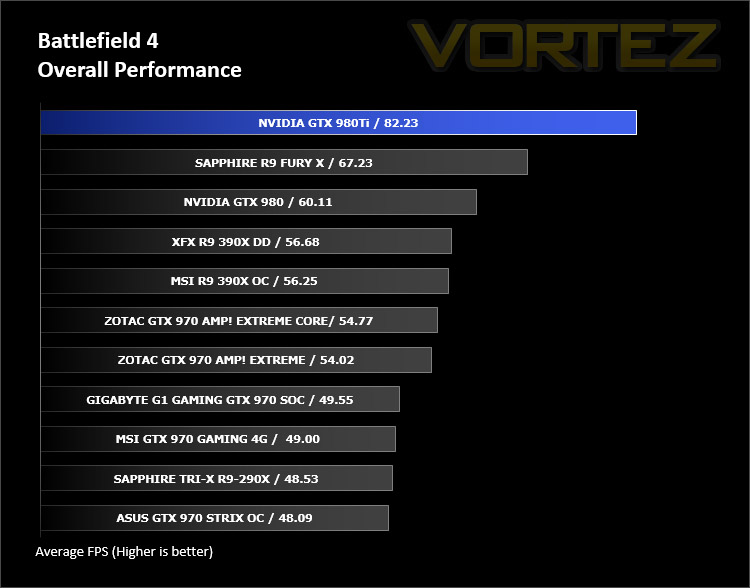
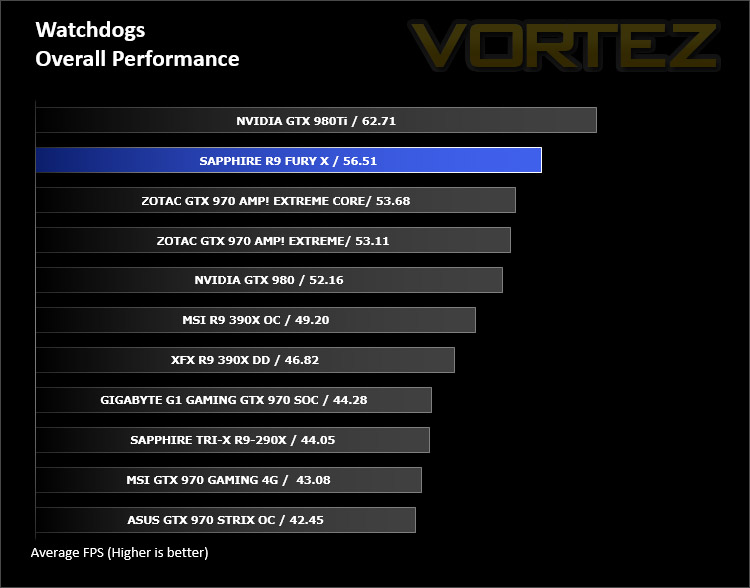
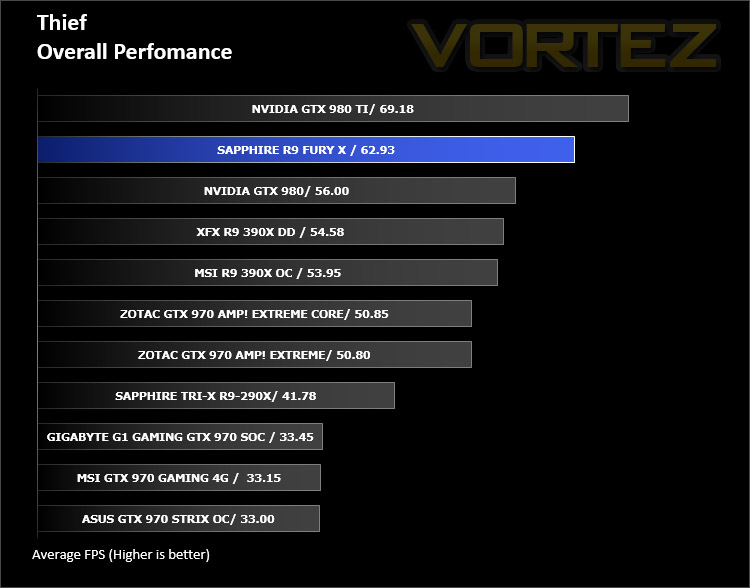
Overall Performance
Here we take a look at the overall performance of the graphics card. This figure is determined by finding the average FPS across all of the settings used in a particular benchmark(game) to give us an overall value.
Value For Money
We make a simple calculation for this set of results. For each game we add all of the resulting FPS totals together and then divide by the four sets to give us an overall performance figure. While the figures alone do not give you an accurate picture of how the card will perform in any given scenario, they do tell you, when averaged, which GPU is the more capable across all of the benchmarks and settings tested.
Conclusion
Without doubt the Radeon Fury X is AMD’s most powerful single-GPU graphics card to date, over and above the recently released R9 390X ‘Grenada’, and this has been accomplished whilst also introducing a fundamentally new memory architecture. Its very design, characteristics and pricing make it a direct rival to NVIDIA’s GTX 980Ti, yet establishing a clear winner isn’t immediately possible.
You certainly get the impression that the Fury X was scheduled for release in a world where its chief competitor was NVIDIA’s Titan X, and viewed through that lens the card makes a whole lot of sense. It would have been priced aggressively, feature innovative new technologies, have a build quality a cut above AMD’s previous reference designs, and shown that AMD was back in the game with a clear price/performance winner at the very top. Unfortunately for AMD NVIDIA released the GTX 980Ti in May, knocking everything into a cocked hat.
The actual card is a breath of fresh air in a market known for somewhat staid design. Even setting aside performance figures the Fiji package, composed of GPU and 4GB of stacked memory, has a tiny footprint which steps away from big, cumbersome graphics cards and settles on a 7-inch wonder. However such a GPU is nothing without adequate cooling, and the inclusion of an all-in-one liquid cooler will either be a fantastic boon or an utter nuisance to deal with.
Without doubt AMD needed to take measured steps to improve their reference cooling, but the Fury X goes way beyond mere measured steps. This cooler transforms the shape and size of the card and delivers astounding thermal results, but will require a 120mm mounting spot within the chassis. Whilst the Fiji package will unlock new tiny form factors in the fullness of time, Fury X perhaps requires more consideration before installing than a typical GPU; if you’re already cooling your CPU by a similar method this will need to be factored in, and mITX chassis installation isn’t quite the doddle you might hope for.
Regrettably, our sample wasn’t immune to the widely reported pitfall of a faulty pump. The first-generation solution meant that we experienced a moderately horrendous noise profile that simply can’t be lived with; thankfully AMD is addressing the issue and the unit can be RMA’d if found to be unacceptable, and it supposedly is only cropping up on some – rather than all – retail models. We’re at a loss to explain how these units got past quality control, but what should have been a slam-dunk solution (especially compared to the Hawaii launch) has the potential to turn into an embarrassment.
Turning our attention to the performance, the R9 Fury X is clearly designed for ultra-high resolutions and image quality settings, and in isolation does a serviceable job in this arena. High Bandwidth Memory, as we outlined in our primer on the subject is a game changer when it comes to absolute memory bandwidth, and we never felt that the somewhat limited 4GB frame buffer held the card back. Looking across a wide selection of different benchmarks however reveals that it’s a bit of a mixed bag.
Certain benchmarks have the R9 Fury X equaling or even surpassing the performance of the rival GTX 980Ti, but in others it falls far short. Indeed at relatively low resolutions (for instance 1080p) the Fury X has trouble keeping up with cards in previous generations, indicating issues either with memory latency or immature drivers. Both the Fury X and 980Ti are flagships in this segment, yet it’s still evident that using high detail settings as well as high anti-aliasing at 4K resolution often yield unacceptable frame rates. We are yet to see a single-GPU configuration comfortably allow truly impressive experiences with 4K gaming, although both AMD and NVIDIA flagships excel at 2K/1440p.
The SAPPHIRE R9 Fury X and other cards just like it are priced at £550 GBP (inc. V.A.T.} / $649 USD (MSRP), placing Fury X at the same price-point as the arch rival GTX 980Ti. The nature of reference designs indicates that the Fury X will be identical across AMD’s partner SKUs, using the same PCB, components and reference cooler; however differences emerge in bundled items and after-sales support – with SAPPHIRE we get a 3-year warranty and some handy cables/adapters which is great to see.
Even if AMD haven’t staked a claim to an uncontested performance crown they’ve shown that they’re back in the game with the Fury X. Priced to compete with NVIDIA’s GTX 980Ti, the Fury X outshines NVIDIA’s card in the thermal solution concept, overall size and gaming titles which favour AMD architecture. Lingering launch issues need to be resolved before the card can be recommended, but it’s an excellent launching board into a new graphics era for AMD. We look forward to the air-cooled Fury and Fury Nano designs to be revealed later this year.
VIDEO REVIEW – VORTEZ TV
Pros
+ Small footprint
+ Excellent build-quality
+ Low-noise operation
+ Great thermal results
+ DirectX 12 ready
+ Dual BIOS
+ 3 years warranty
Cons
– First batch suffer with pump faults
– Falls behind the GTX 980Ti
– Games still struggle with max. detail at 4K
+ Small footprint
+ Excellent build-quality
+ Low-noise operation
+ Great thermal results
+ DirectX 12 ready
+ Dual BIOS
+ 3 years warranty
Cons
– First batch suffer with pump faults
– Falls behind the GTX 980Ti
– Games still struggle with max. detail at 4K