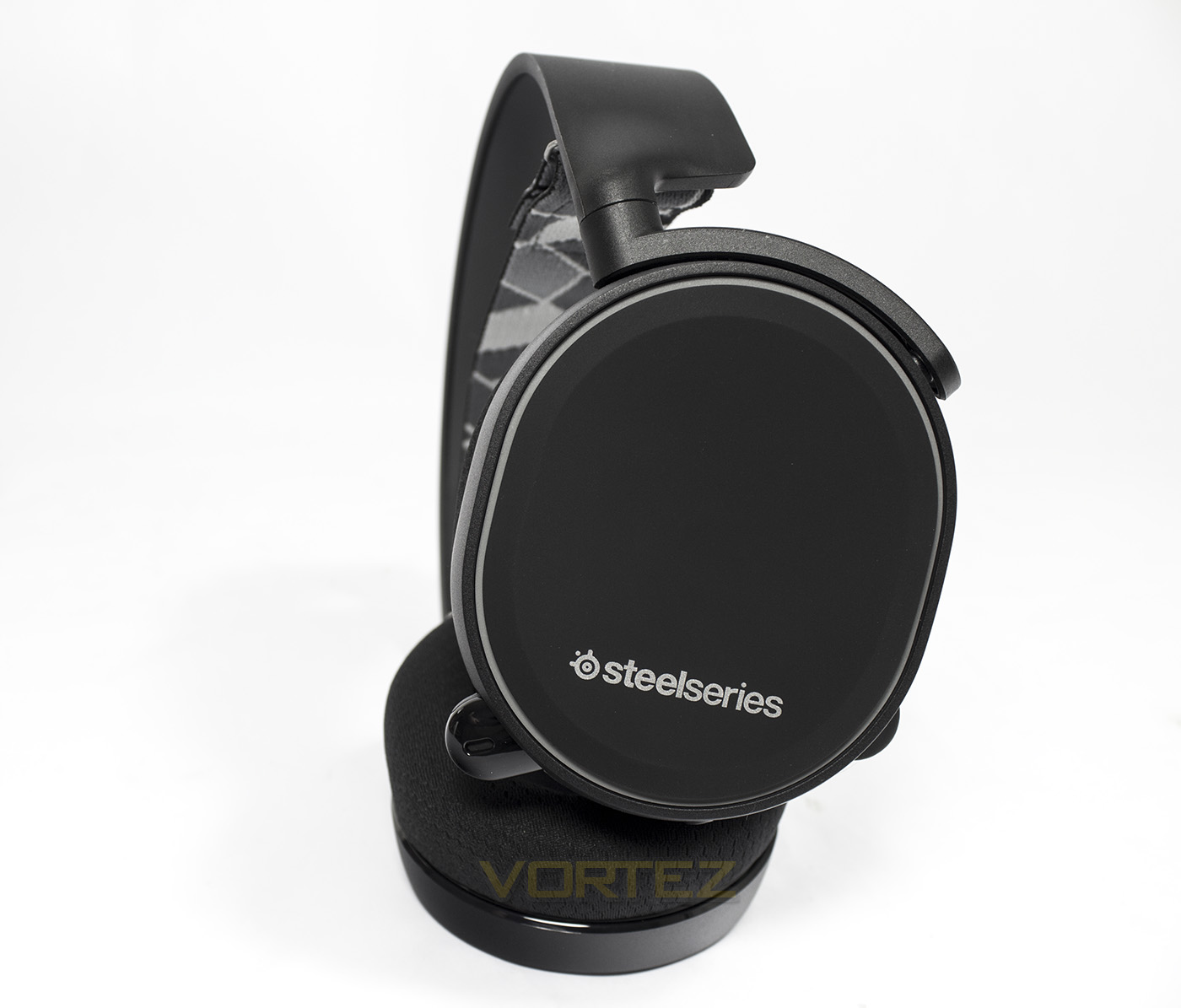
Featuring high quality audio drivers, a re-engineered microphone, and some of the most comfortable materials around, SteelSeries challenged every aspect of the gaming headset; the result is the Arctis.

Product on Review: SteelSeries Arctis 3
Manufacturer: SteelSeries
Street Price: UK: £89.99, EU: €99.99, US: $99.99
The SteelSeries Siberia range needs little introduction, but having such a legendary headset under the belt presents high expectations for anything to follow. So, SteelSeries endeavoured to challenge every aspect of what a gaming headset is, and the result? The Arctis line of headsets.
To ensure excellent sound, SteelSeries have used their high-end custom drivers from their flagship headset in all of the Arctis headsets. To provide high levels of comfort, they kitted out the lightweight frame with innovative materials including a ‘ski goggle’ inspired suspension headband. The airweave earpads were inspired by materials used by athletes to ensure breathability, strength and comfort. There is also a focus on the re-engineered microphone they have named ‘Clearcast’, presenting itself as unrivalled in voice transmission and noise cancelling. The design itself is mature, understated, elegant, and most importantly, lightweight. The finishing touches are the easy to access integrated volume dial, microphone mute button and a audio share jack, enabling you to share your music with a nearby friend.
Focusing more on the Arctis 3 specifics, it is the analogue, stereo version of the line. It features fully modular cables that uses a proprietary USB joint to ensure fluid movement between various devices. It also offers 7.1 surround via software emulation in the SteelSeries Engine 3.
Overview by SteelSeries
Arctis is not a gaming headset. It is a headset line for gamers,” said Ehtisham Rabbani, SteelSeries CEO. “That is how we approached the new audio line-up – with a fresh perspective as to who our customers really are and what they want. Brands have been distracting gamers for far too long with meaningless specification races and options that encourage spending more in order to get gaming-level quality. Arctis changes that.
Technical Specifications
Speaker Drivers
Neodymium Drivers: 40mm
Headphone Frequency Response: 20-22000 Hz
Headphone Sensitivity: 98db
Headphone Impedance: 32 Ohm
Headphone Total Harmonic Distortion: < 3%
Headphone Volume Control: On Ear Cup
Microphone
Microphone Frequency Response: 100Hz – 10000Hz
Microphone Pattern: Bidirectional
Microphone Sensitivity: -48 db
Microphone Impedance: 2200 Ohm
Microphone Noise Cancellation: Yes
Microphone Location: Retractable
Microphone Mute Toggle: On Ear Cup
Connection
Connector Type: Dual 3.5mm, 3-Pole Plug or Single 3.5mm, 4-Pole Plug via included adapter
Cable Length: 3m, 10ft
Cable Material: Rubber
Adapter: Single 3.5mm, 4-Pole Plug
Share Jack: Yes
Detachable Cable: Yes
Box Content
Product Information Guide
Arctis 3
Main Cable
Dual 3.5mm Extension Cable
3.5mm 4-Pole Adapter
Neodymium Drivers: 40mm
Headphone Frequency Response: 20-22000 Hz
Headphone Sensitivity: 98db
Headphone Impedance: 32 Ohm
Headphone Total Harmonic Distortion: < 3%
Headphone Volume Control: On Ear Cup
Microphone
Microphone Frequency Response: 100Hz – 10000Hz
Microphone Pattern: Bidirectional
Microphone Sensitivity: -48 db
Microphone Impedance: 2200 Ohm
Microphone Noise Cancellation: Yes
Microphone Location: Retractable
Microphone Mute Toggle: On Ear Cup
Connection
Connector Type: Dual 3.5mm, 3-Pole Plug or Single 3.5mm, 4-Pole Plug via included adapter
Cable Length: 3m, 10ft
Cable Material: Rubber
Adapter: Single 3.5mm, 4-Pole Plug
Share Jack: Yes
Detachable Cable: Yes
Box Content
Product Information Guide
Arctis 3
Main Cable
Dual 3.5mm Extension Cable
3.5mm 4-Pole Adapter
Packaging & First Look
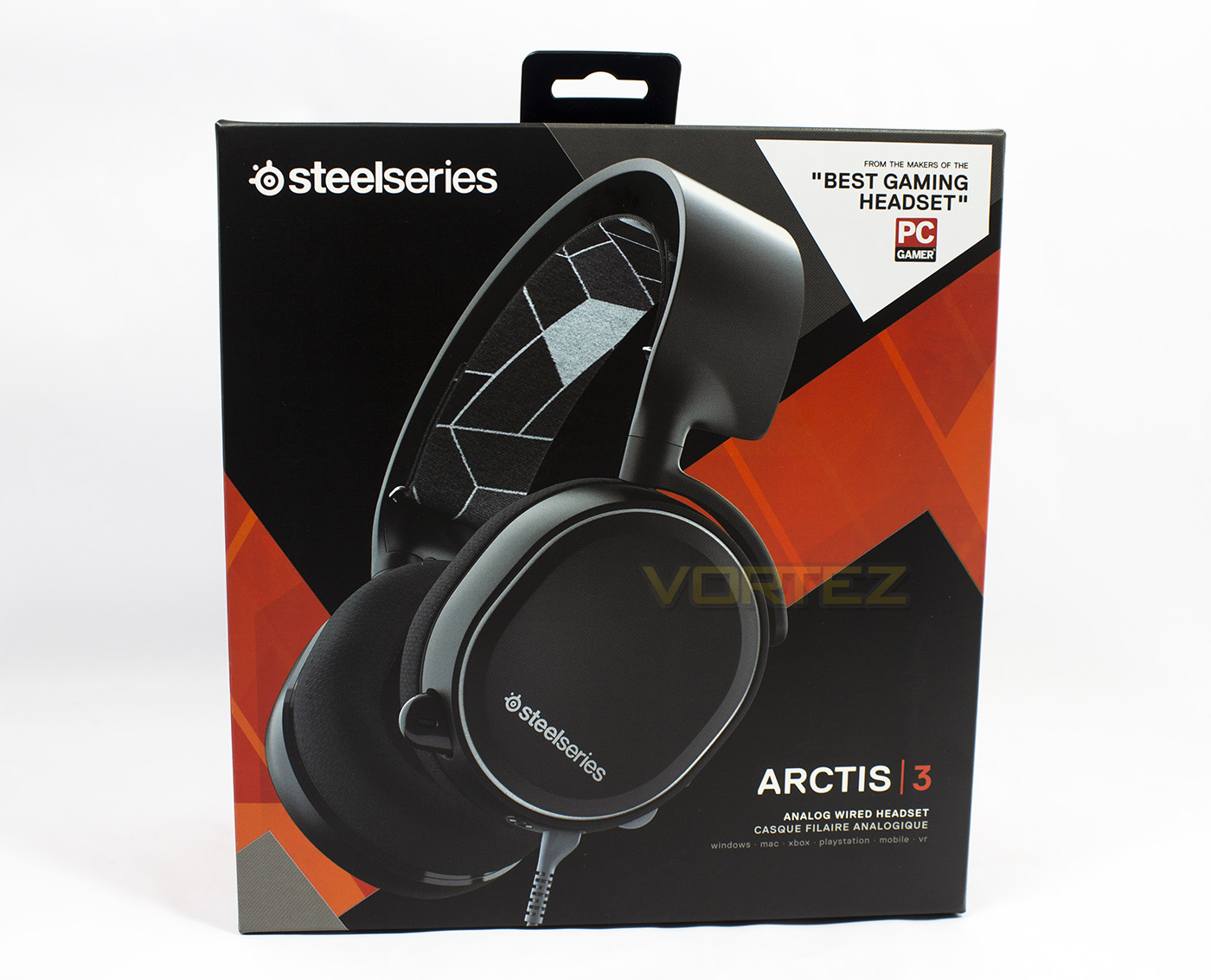
The packaging is high quality, and uses the SteelSeries colours of burning orange against grey/black. There is a large image of the product with just its name and compatibility list.
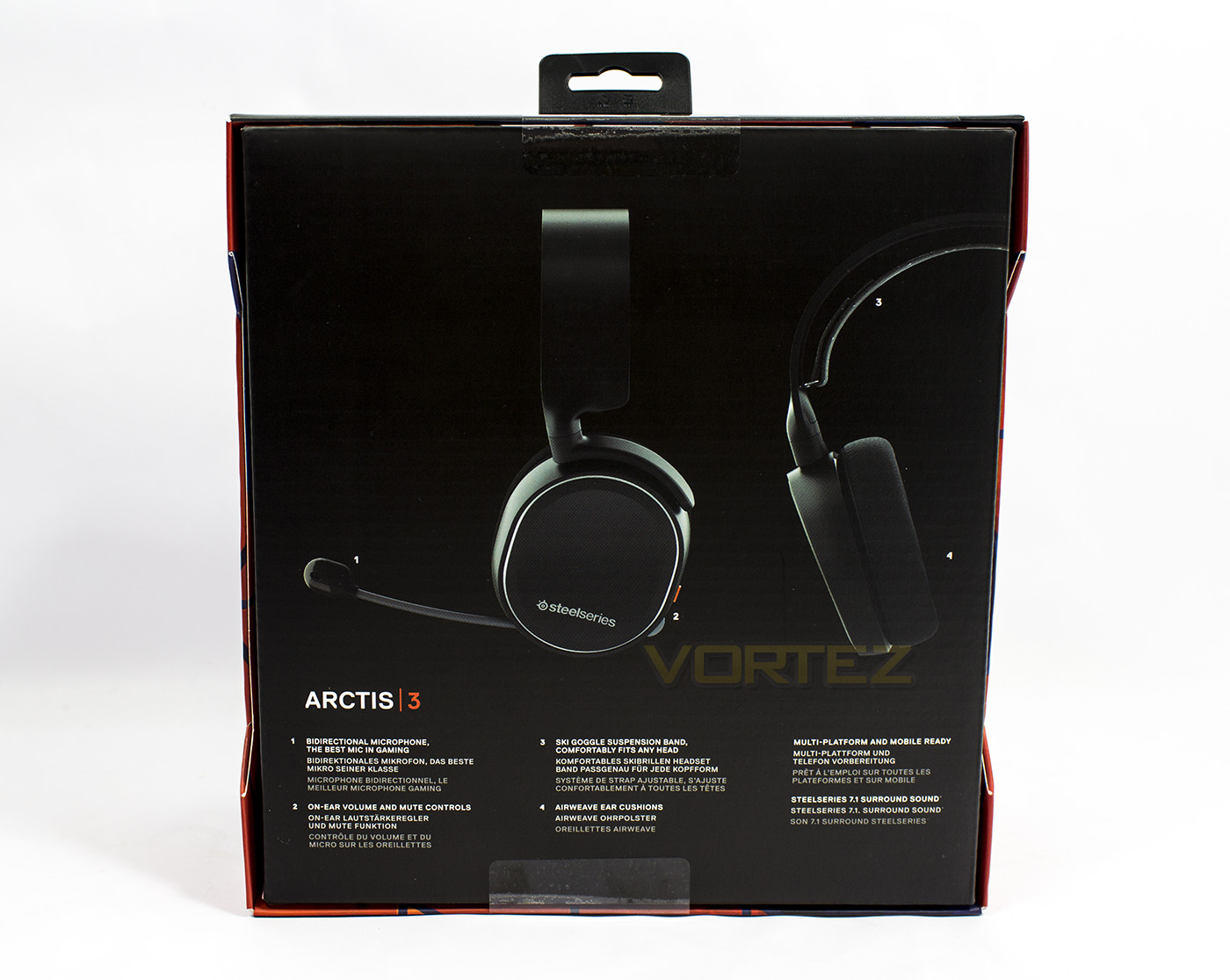
AT the back, there is a minimalistic diagram showing of each of the new features in various languages.

On opening the box we are greeted with a white card saying ‘Arctis 3’, turning it over we find that it is covered with novelty gaming stickers.
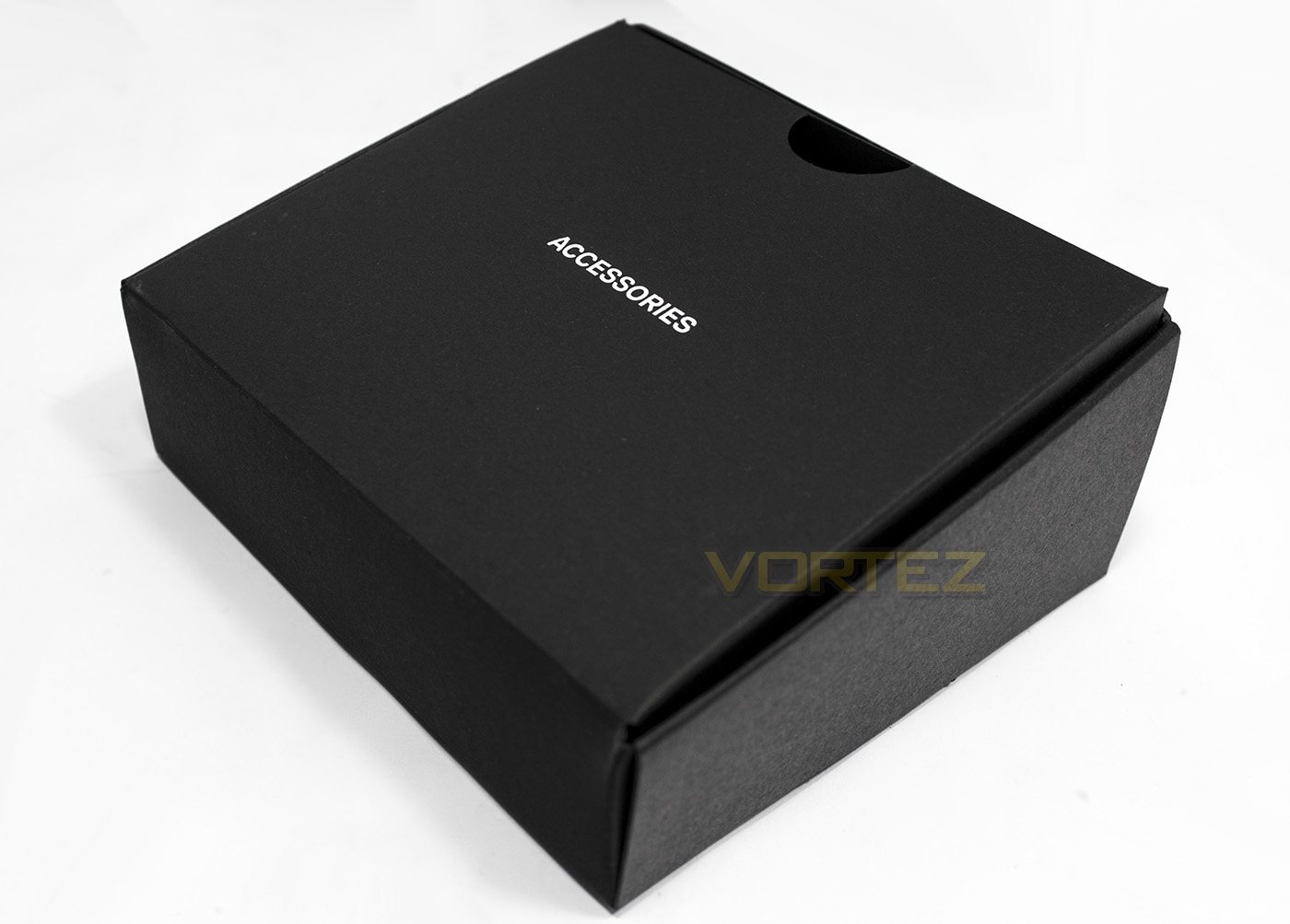
Inside there is an angled box that contains the paperwork and cables.
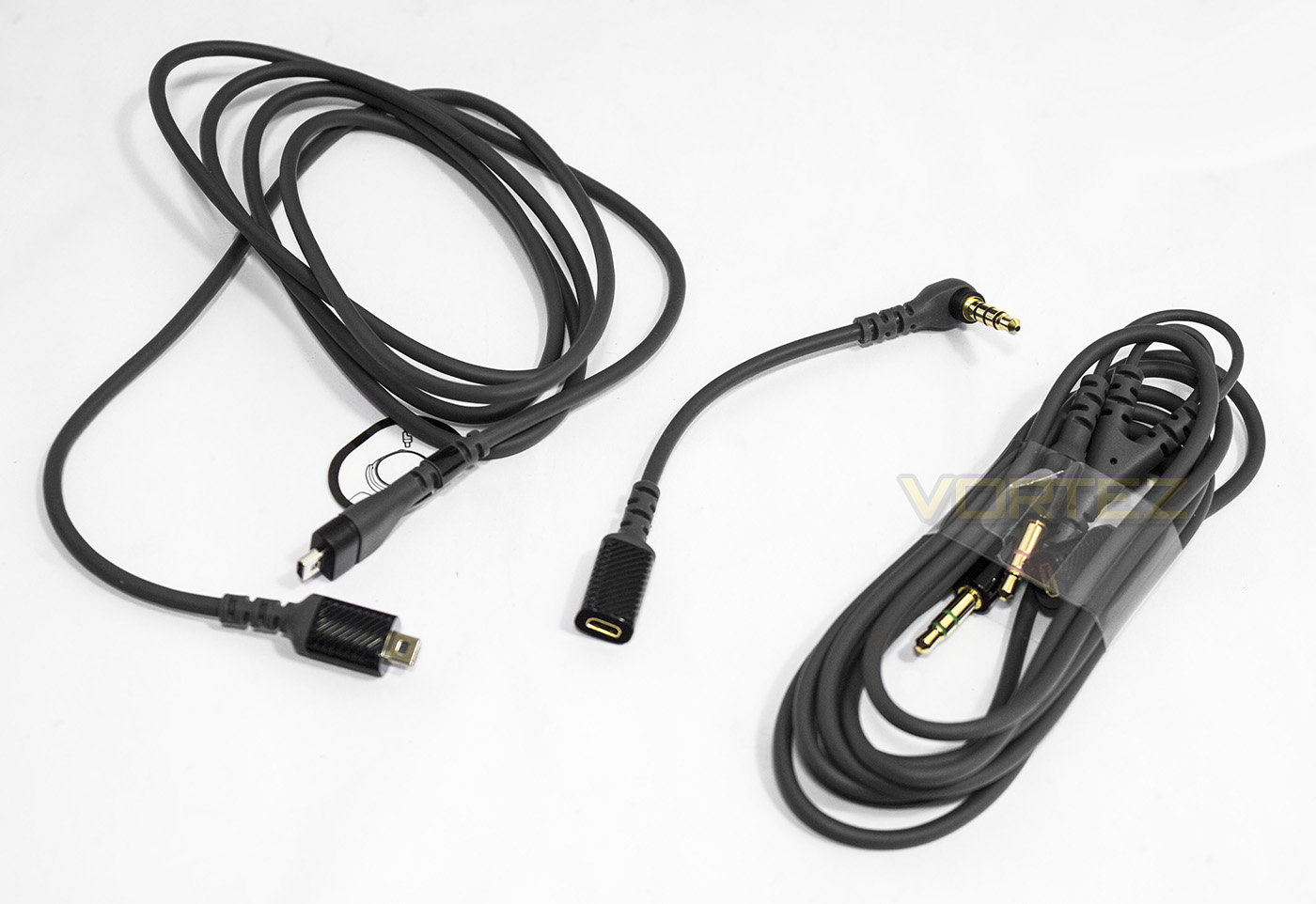
There are three attachments included, and we can see that the Arctis headsets use a proprietary USB connector that then can attach to a 4pole jack, or a 3.5mm headphone and microphone extension.
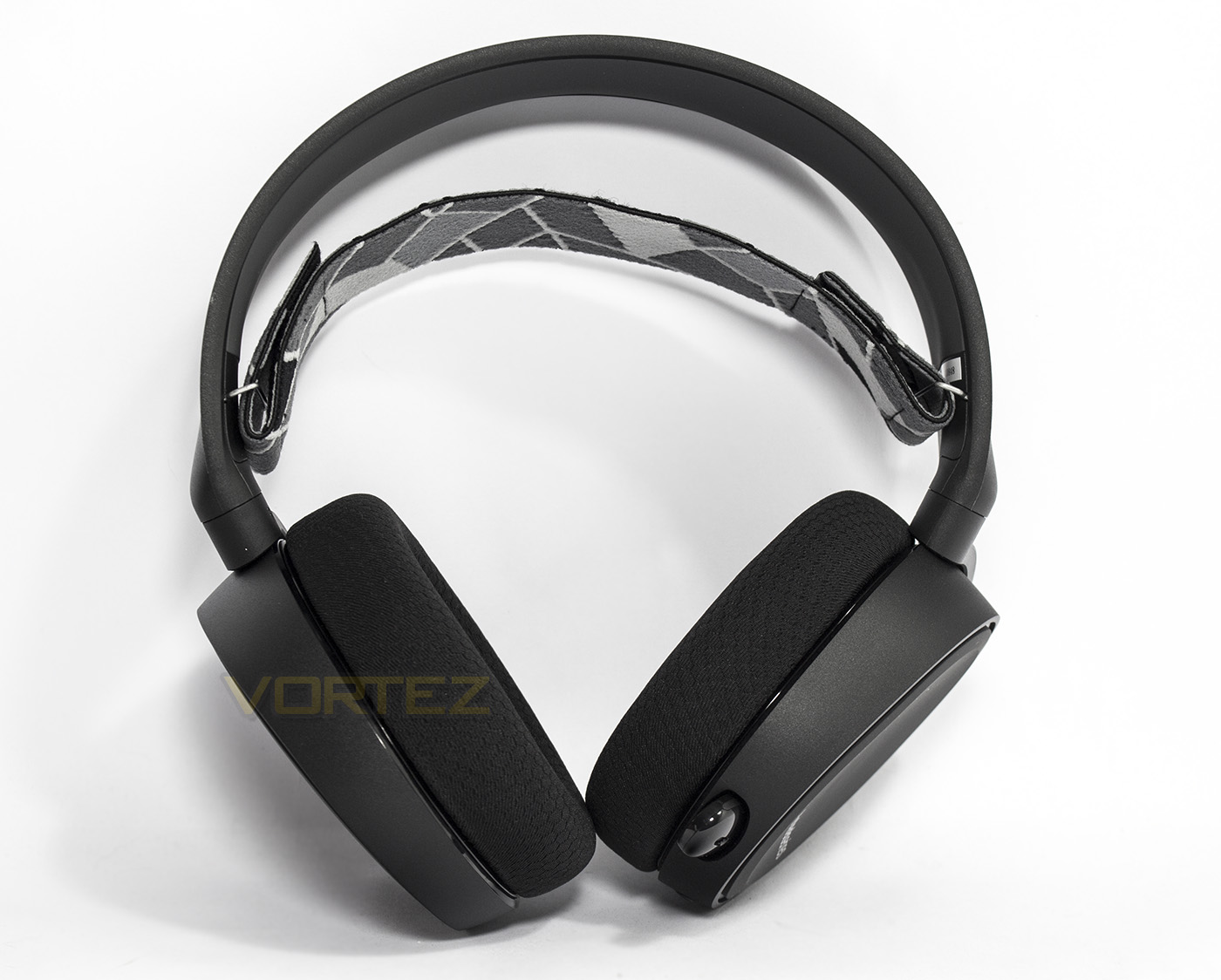
The Arctis 3 is all black, with black rubberised surfaces, and has a soft rubberised underside of the main headband frame. The earcups are large, but have an attractive, neutral shape.
Closer Look
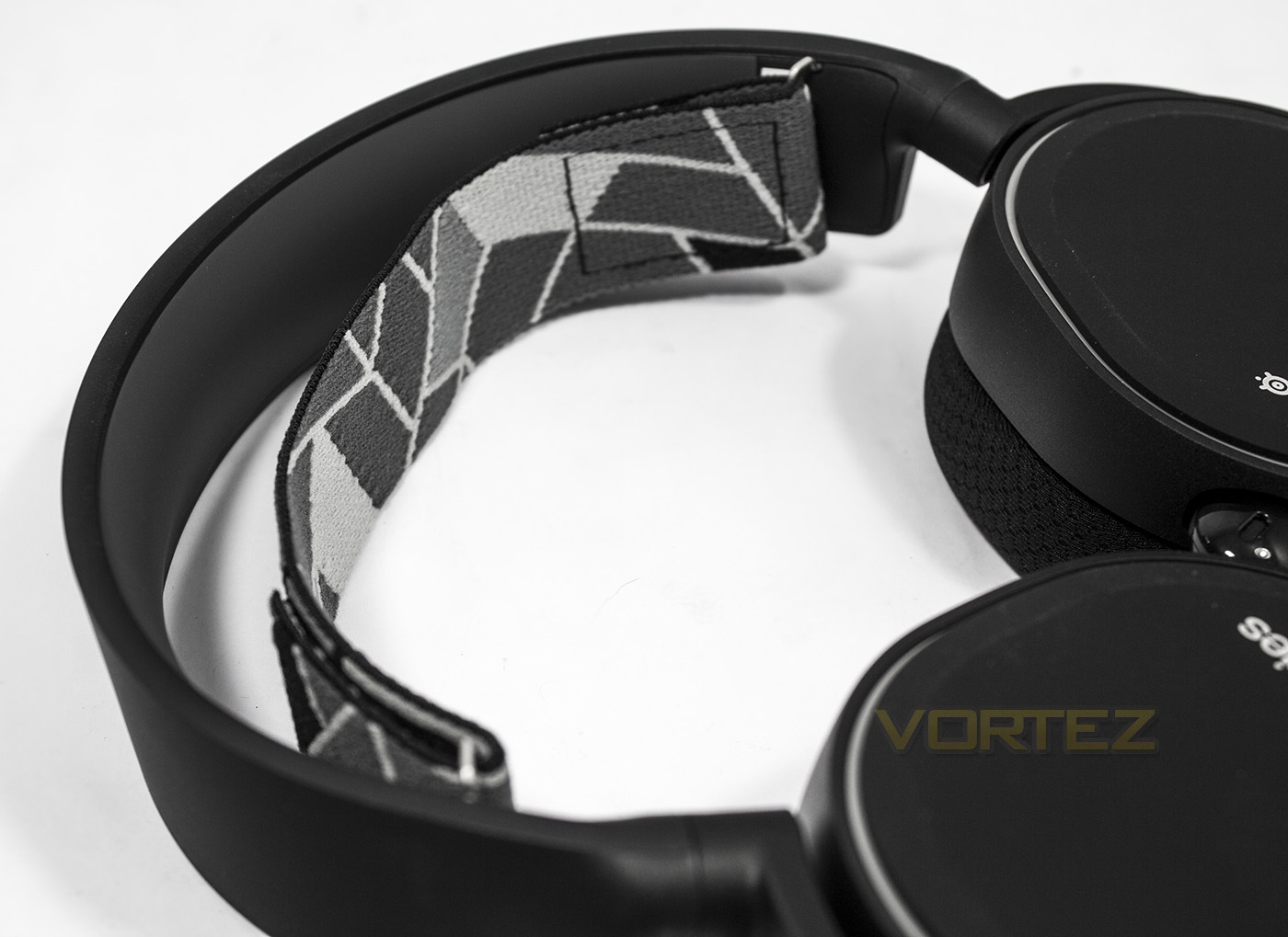
The headband itself is a soft, stretchy material that was inspired by that used with ski goggles. It is attached to the headset via small metal loops and it holds itself on via velcro.
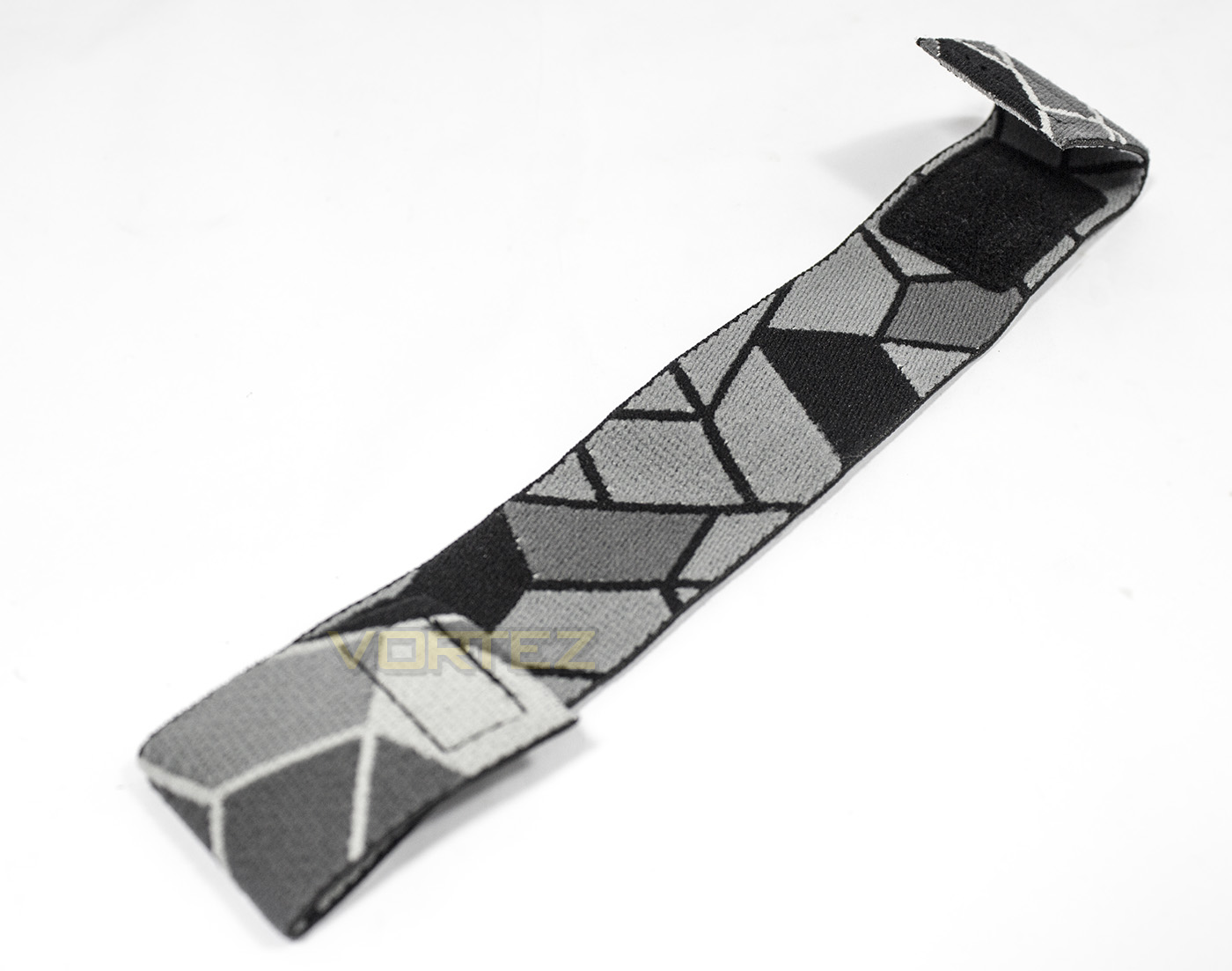
The headband has an attractive design on it, but can be removed, machine washed and replaced if desired with either a custom headband, or any of the additional designs available from SteelSeries.
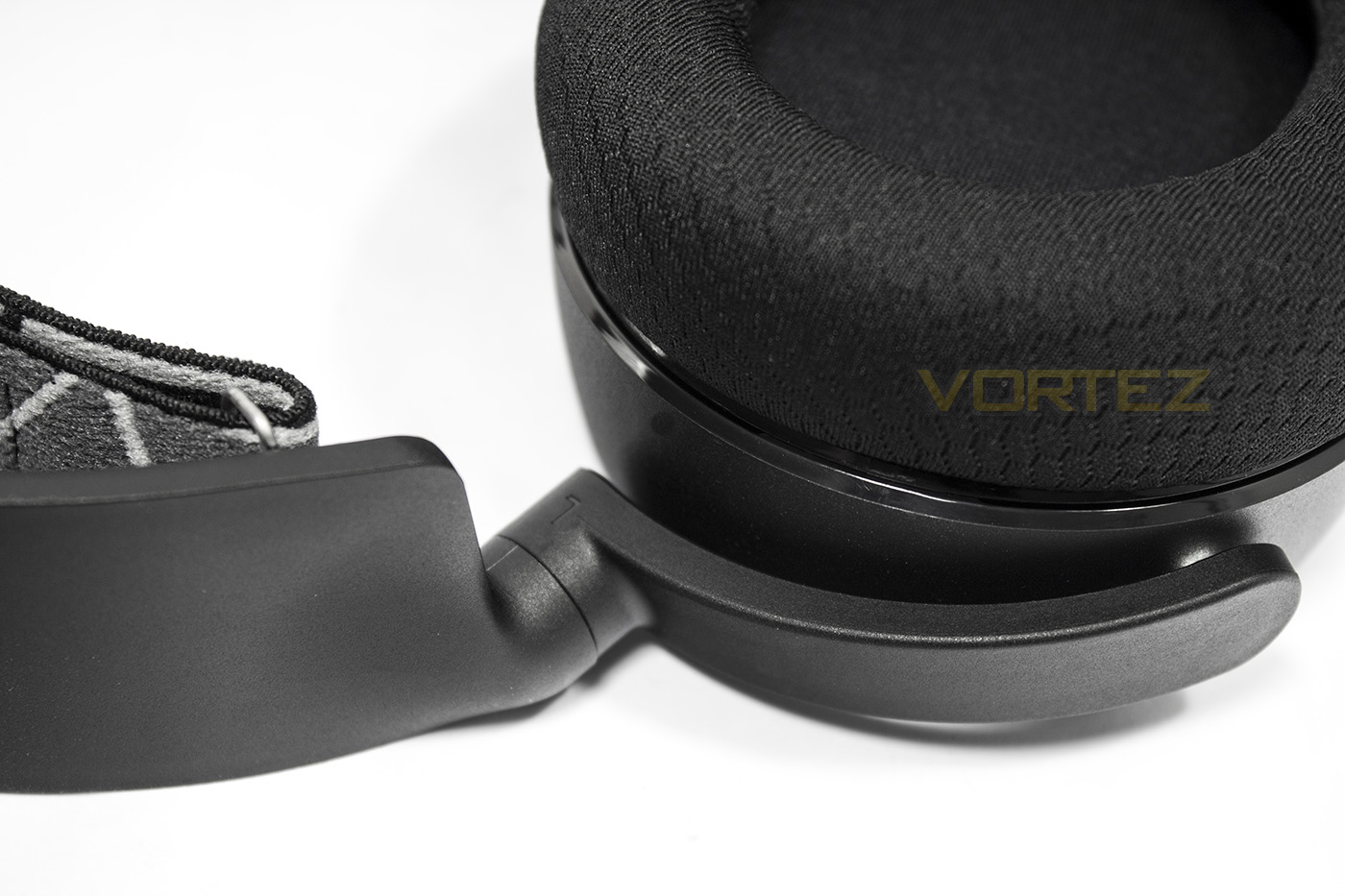
The earcups are attached using an angled and rotatable arm that also allows the earcup to pivot backand forth a little.
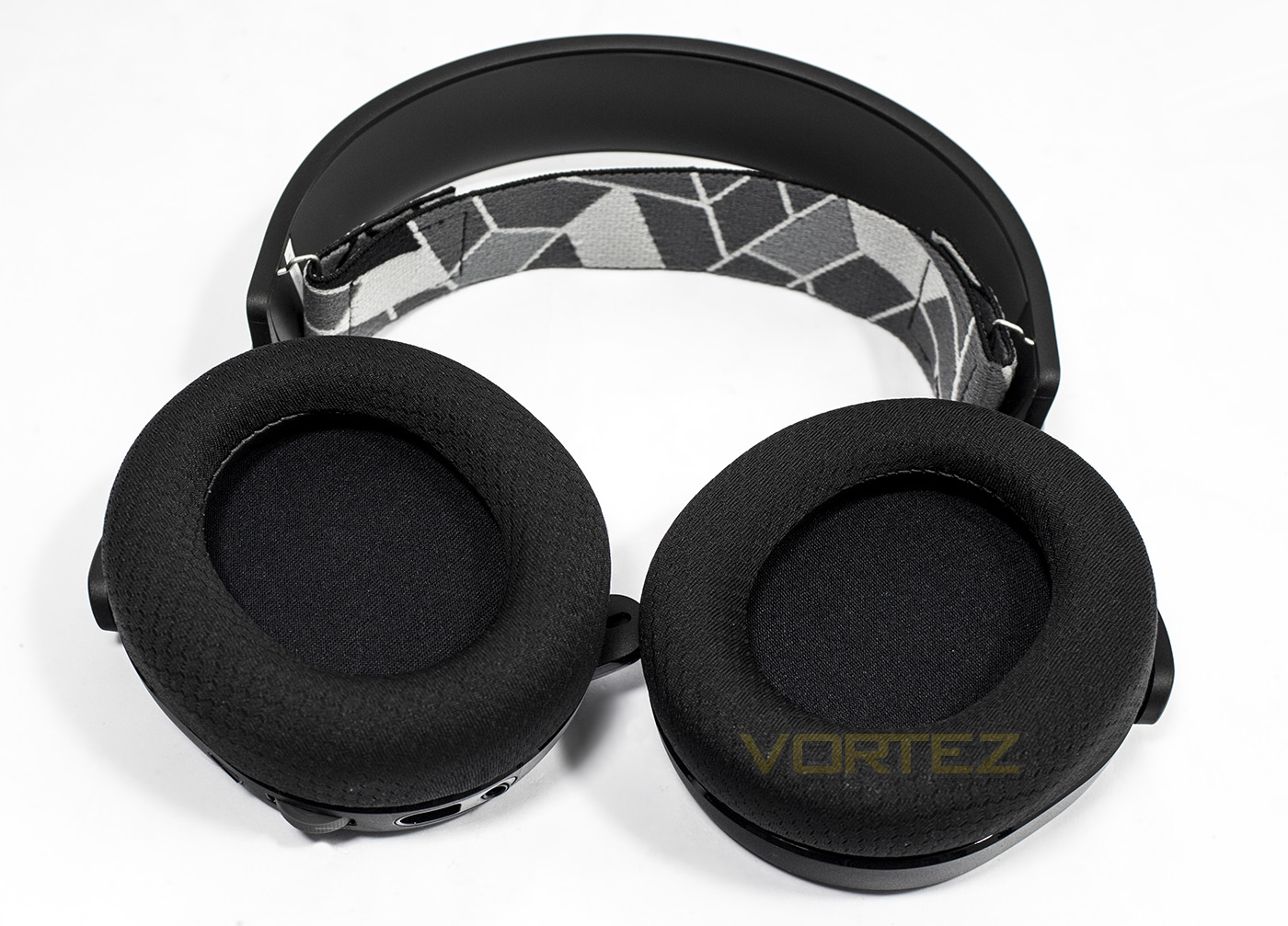
Showing of its flexibility, we found that the Arctis headset can rotate and open up completely flat, showing off the large earcups and padding. The airweave cushions have a hex pattern design on them.
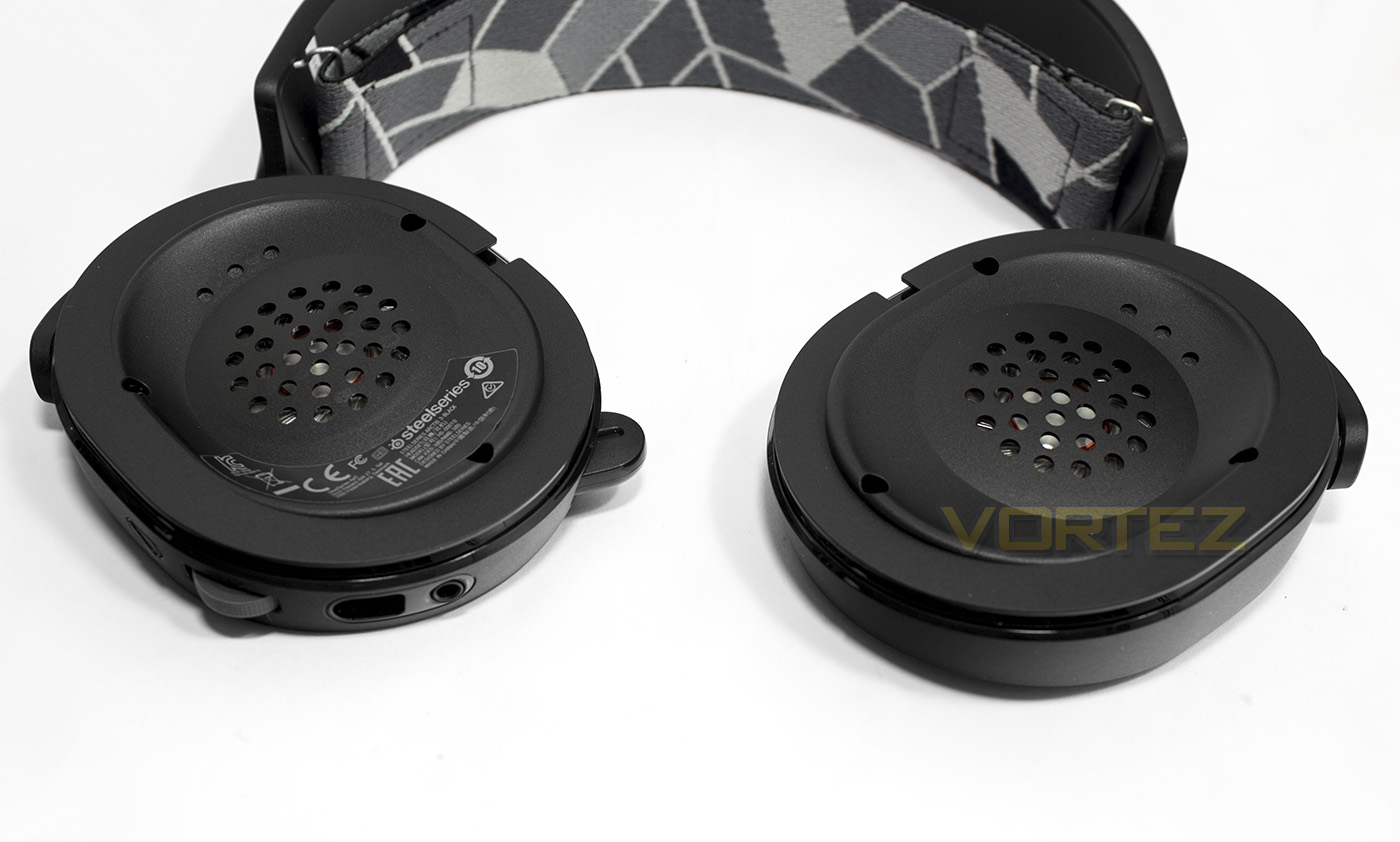
The earpads are also removable and replaceable, SteelSeries have leatherette, velour and airweave flavours available. On removing the earpads we can see the exposed S1 drivers.
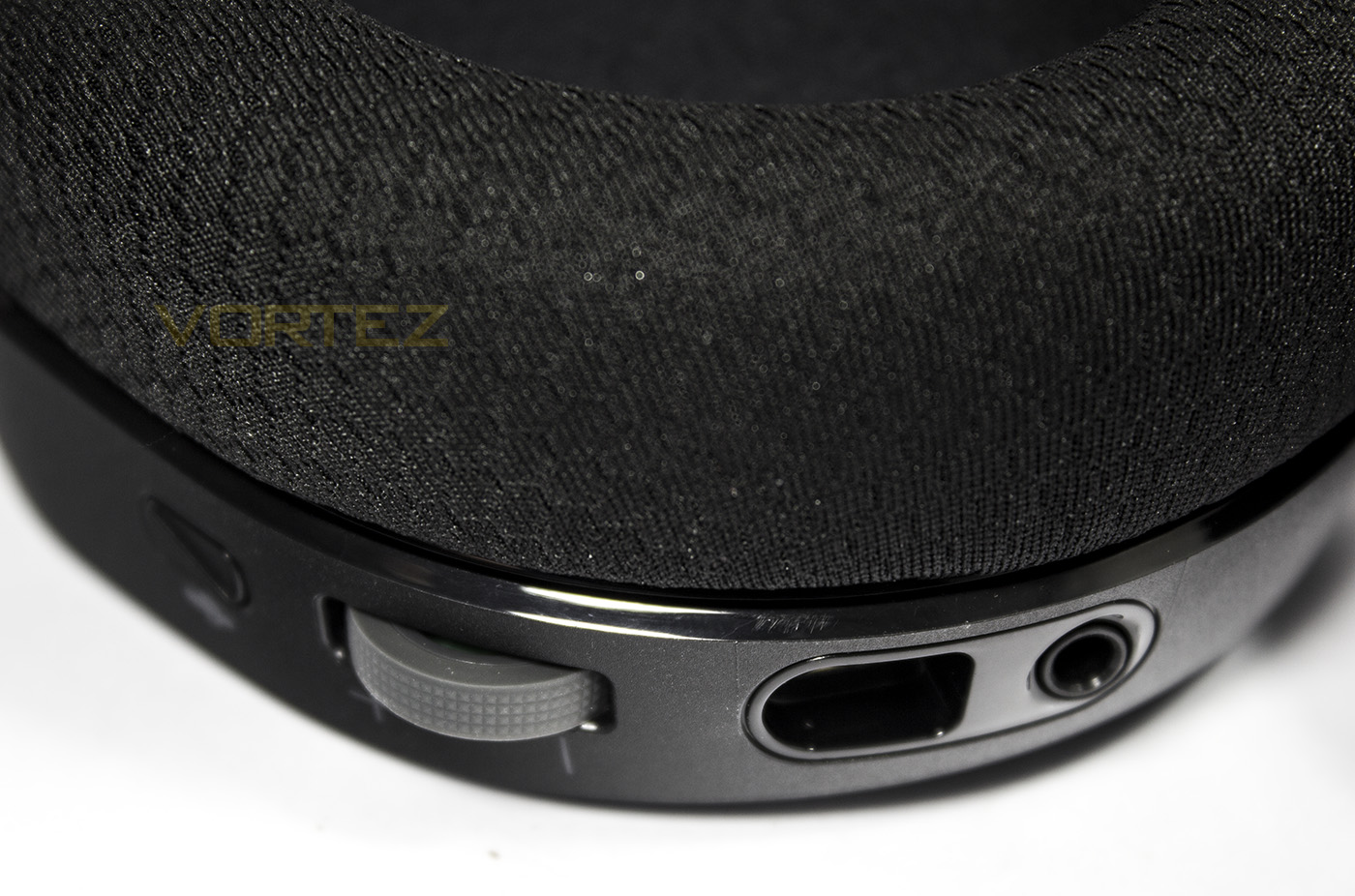
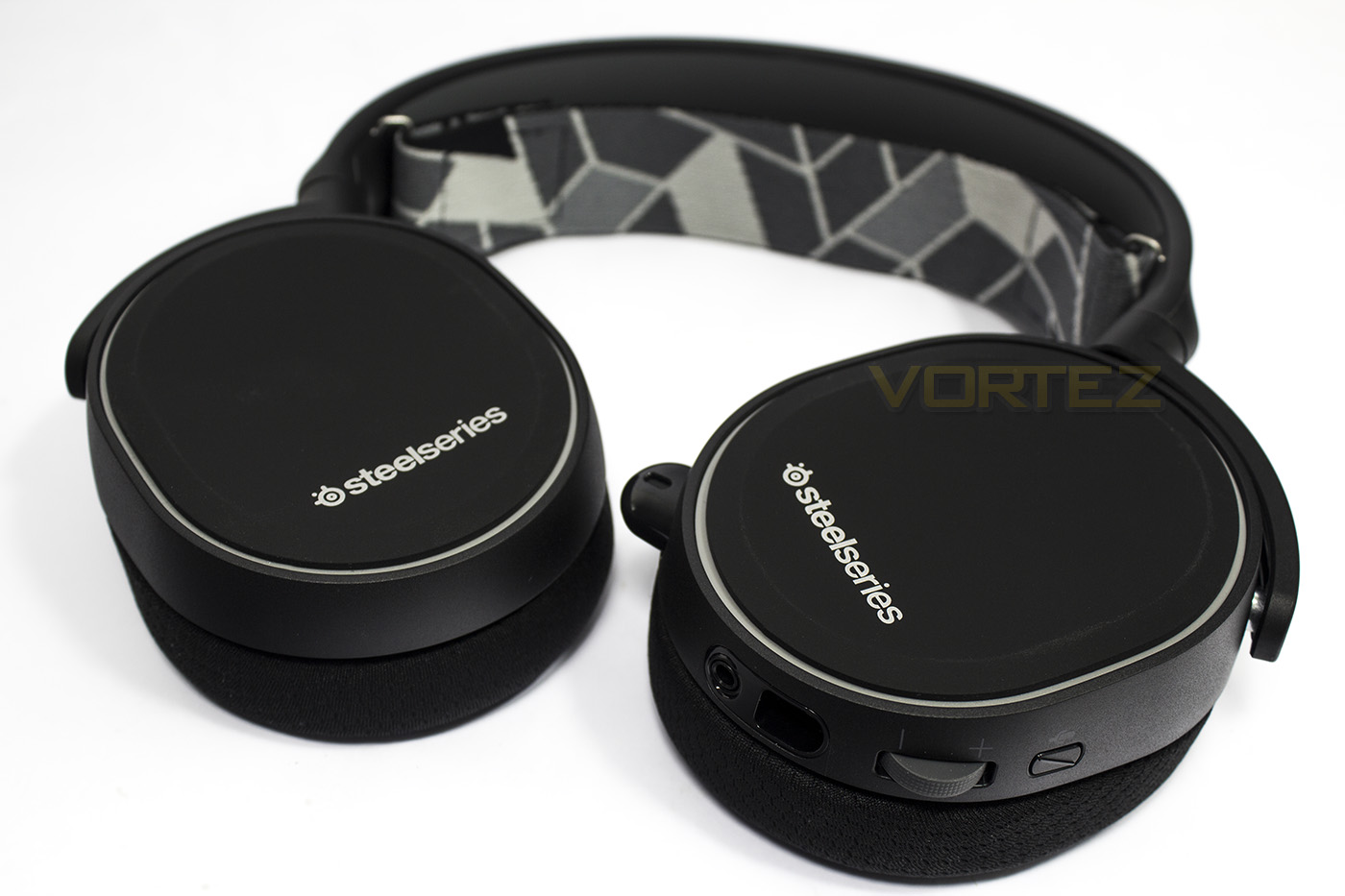
The base of the left side earcup features the various IO and controls including a small microphone mute button, volume dial, the audio input port and finally the audio share port. Remember, that the 3.5mm port is for output only, not to be confused with the main connection cable.
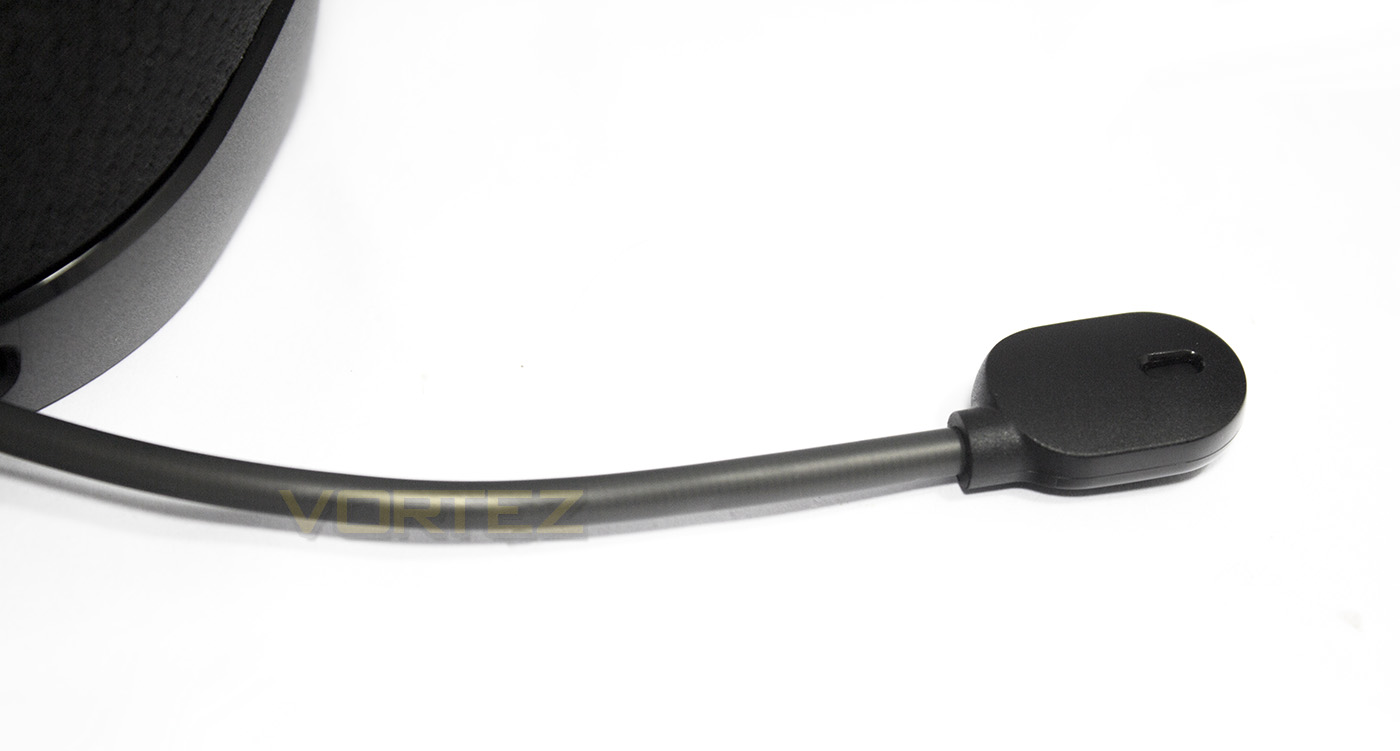
The Clearcast microphone retains the retractable design found on many other SteelSeries headsets. It has a wide oval shape that is narrow on edge and is easy to pull out and to push back in.
Software
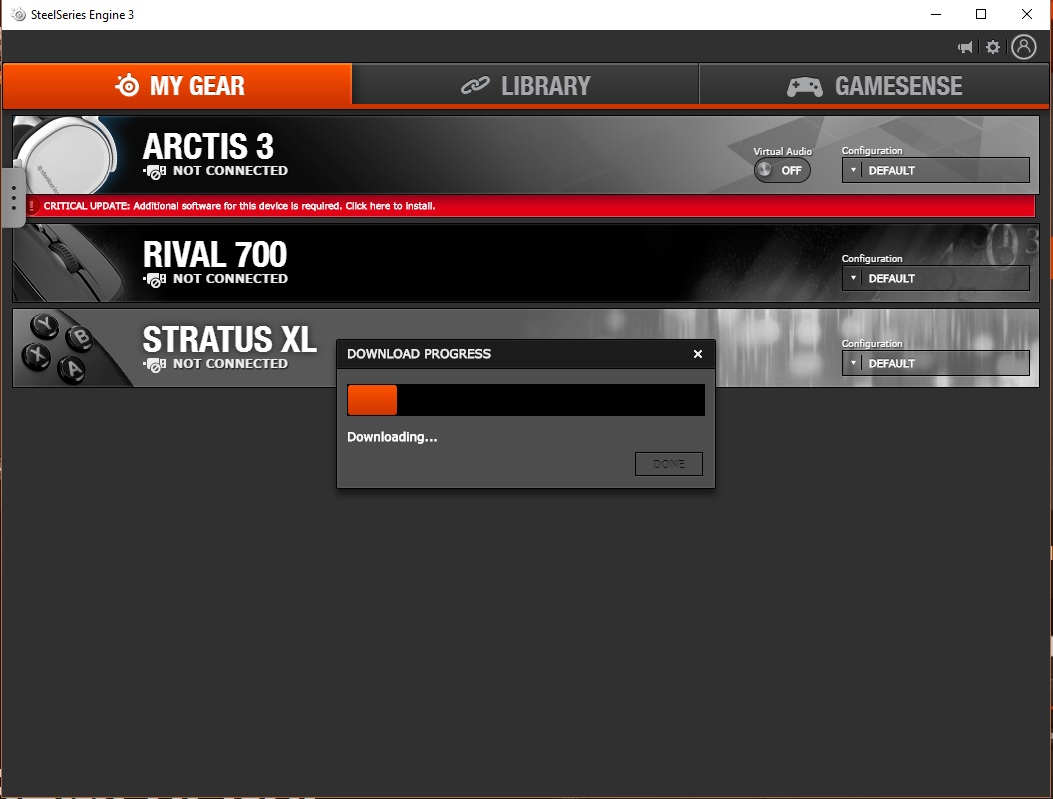
The way to go about installing the software for the Arctis 3 is a bit more of a pain than usual. Sign up to the SteelSeries website and create an account> register the code given in the packaging under my products on your account page> Download SSE3> Sign into SSE3> Download the update. It is worth making sure that your SteelSeries Engine 3 software it updated to latest 3.9.6(at time of writing). When the update downloaded, I had issues with getting the software to work correctly, it turns out there were some files that were reported as a false negative by my anti-virus, so keep a look out!
The SteelSeries software is normally painless and enjoyable to use, but this method was painful. I also wonder if the software code can only be used once also, I mean, if you choose to sell your headset, the software part may become inaccessible. In that event I guess you could always use the Razer Surround software available for free. It is understandable that SteelSeries do not want to give out the software willy-nilly as it could be used with any analogue audio device.
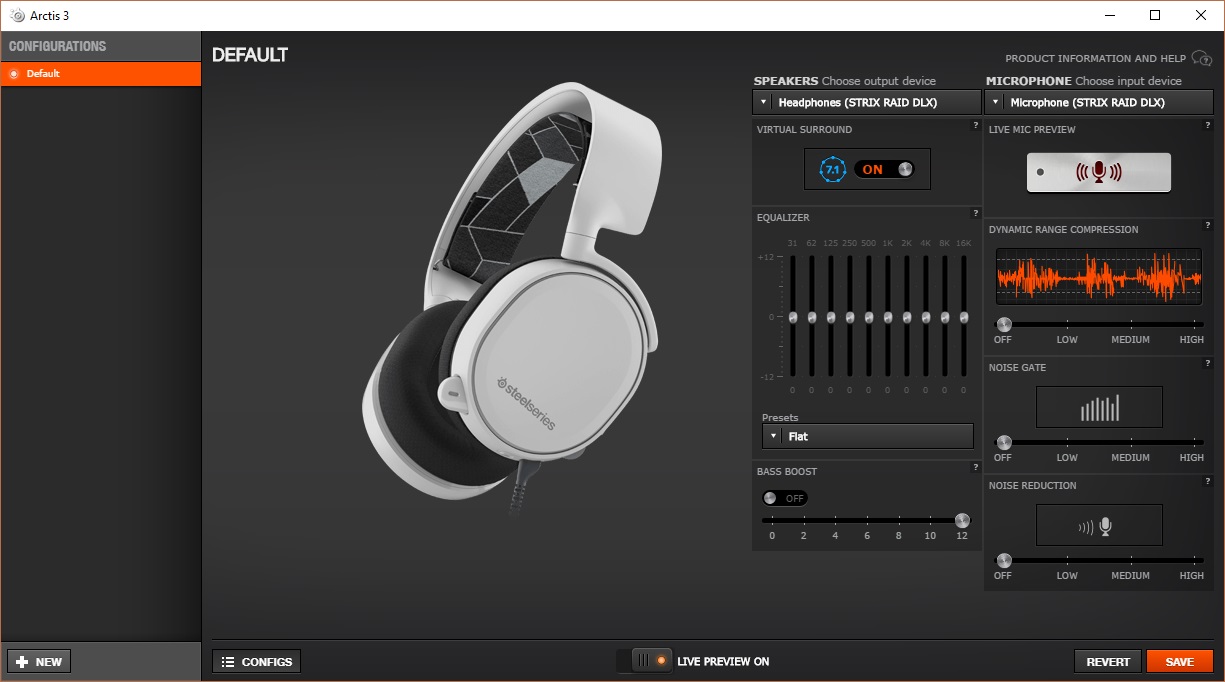
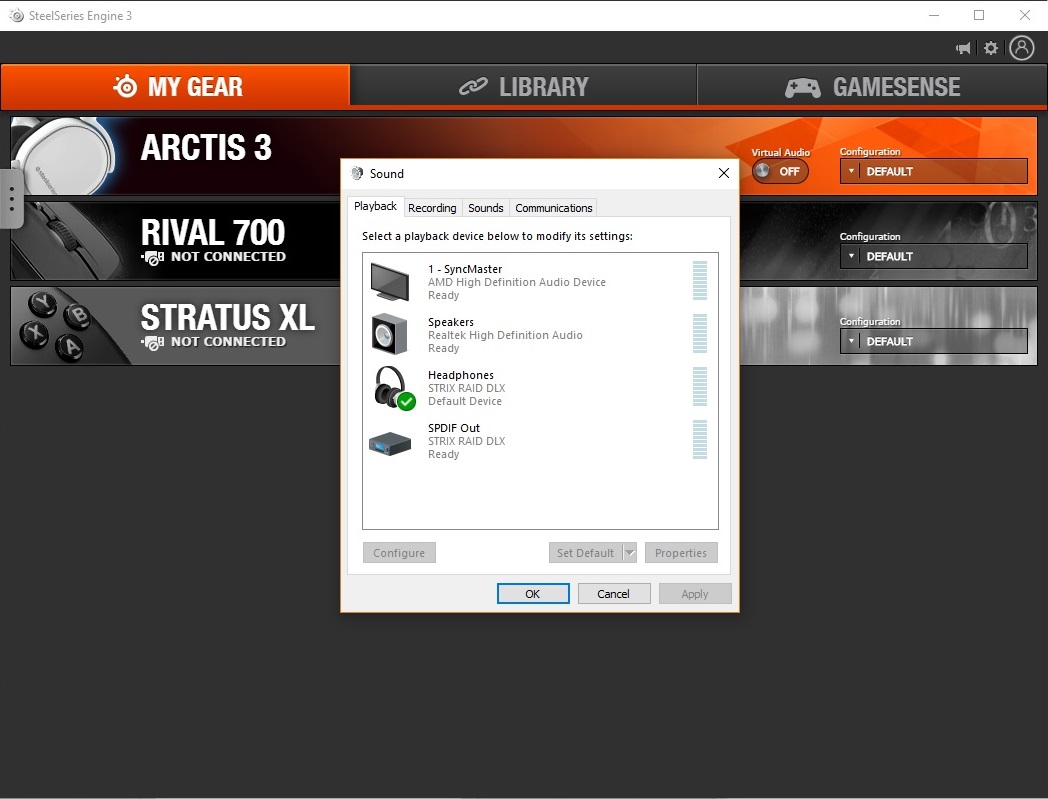
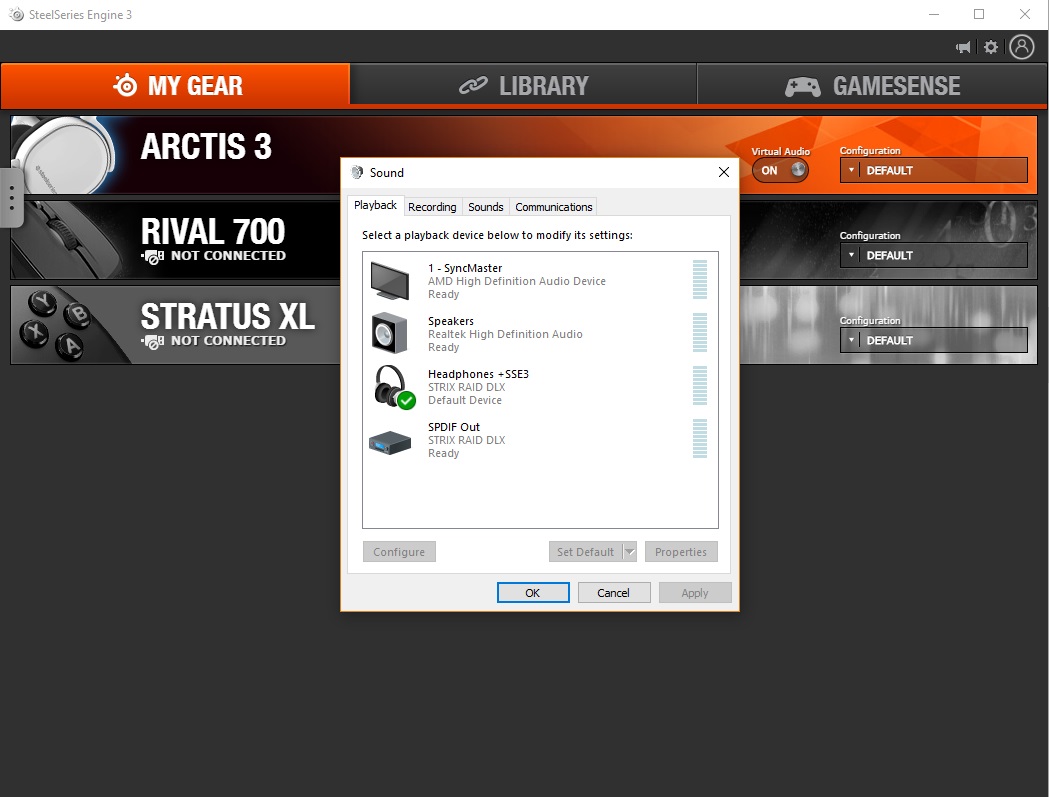
Inside the software there is a 7.1 mode toggle, an audio EQ, and various microphone noise filters. Remember to ensure you have enabled the audio filtering via the switch on the main page, when activated it will show in your audio settings.
Performance Testing
Setup, Design & Observations
The modular cables are rubbery and flexible and the use of a proprietary USB connector gives a robust yet easy to use connection between each of the cables. The included cables ensure cross-platform connectivity across consoles, mobile devices and PC systems. VR is also included in that now, and I guess it will become a more common mention, (despite logic dictating that this is obvious, people do seem to prefer having things pointed out clearly).
The build quality is fantastic, and the overall aesthetics are sleek and attractive. It features a rubberised texture on most large surfaces including the earcup sides and the frame, while the pattern on the headband is enough contrast to the relatively modest style to stand out. The headband is super stretchy, soft, and easy to remove. Upon wearing the Arctis 3, you immediately recognise that this will be comfortable for a long time, you can barely feel any pressure at all on your head. The large earcups completely surround your ears and the earpads are very soft and noticeably breathable.
The volume dial and mute button are easy to access at the rear of the right side earcup and are tactile enough to locate quickly. The volume dial felt like it was meant to have a click to it, but would only click in certain places, I can’t tell if this is intentional or a flaw, but it was working regardless and it felt nice.
The microphone is a retractable design, but its location is a little strange because once you pull it out, it seems to want to go into your eye rather than your mouth, though it is flexible enough to move into the desired position.
Multimedia
Listening through various audio tracks the sound signature is good quality, providing rich bass, but not overbearing. The mid tones sound a little flat, but are present, and the treble sounds a little too bright but arguably a little less than the HyperX Cloud headsets. Considering the drivers used in the Arctis 3, I would assume that they respond well to equalisation, and I was correct, Improving the lows, the upper-mids while leaving the treble in its neutral position worked wonders. Comparatively, the Arctis 3 has a much more balanced audio signature than the stereotypical norm for a gaming headset, and the fact it is highly tweakable, will ensure that you can obtain a sound profile that can suit anyone.
The maximum volume is moderately-high, and I couldn’t recognise any clipping or distortion in our testing. Though I did observe that there is a fair amount of sound leakage, so for those that will intend on using this headset out and about, pay attention to the volume level, or alternatively, purchase some leatherette earpads that should contain the noise better.
Testing out the virtual 7.1 in-game seemed to do little to really open up the sound, though spatial awareness was fairly decent as the Arctis 3 naturally has a moderately wide soundstage for a closed back headset. Games were immersive, enjoyable and fun, and there is enough separation and precision to help distinguish between each timbre, footstep, and sound being made.
Microphone
The microphone sounds fantastic and it is hard to fault. With no filtering it has decent noise cancelling by default, but it has a fairly good pick up of any mouthy noises one makes. The noise filtering helps a little, though the noise gate is a little too strong at high to be useful. The additional noise cancelling is fairly decent, but considering it is software emulated, it adds a fair bit of lag in communication.
There is another critical problem though, the microphone picks up sound from the drivers quite readily, so if you are listening to music, or watching a video rather loudly while in conversation, people may hear everything you do. There were also some complaints in an Xbox live party while playing Gears of War 4 that they could hear an echo of themselves, causing me to have to resort to muting the microphone frequently.
Conclusion
SteelSeries are almost legendary for putting ‘gaming headsets’ on the market with the Siberia line, and thus there is a lot of pressure to deliver in a field that is not only important to gaming, but to every aspect of our technological lives. SteelSeries understand this, that is why they have implemented their high grade S1 drivers from the Siberia 800 series headset in each of the Arctis headsets. The default audio signature is enjoyable, despite the mids feeling a little washed out. This is easily fixed via the equaliser due to how well the drivers respond to tuning.
Versatility has become incredibly important regarding audio peripherals due to the many electronic devices that have invaded our lives. People do not want to fork out money for multiple headsets/headphones for their daily needs. The Arctis’ design is more neutral, sleek, and attractive enough to be used outside (despite the sound leakage). To facilitate this, SteelSeries have implemented fully modular cables that will allow people to quickly move from device to device with very little hassle.
Not only does it look great, but it is evident that it is beautifully crafted, as displayed by the quality construction, materials. The comfort matches that which we previously considered one of the most comfortable headsets around, the Siberia V3/350. It is lightweight, and unlike the Siberia 350, it is strong. The ski-google headband is a stroke of genius as its soft, stretchy nature barely puts any noticeable pressure on your head at all. It also enables people to add a bit of flair with custom headbands. Finally, despite not being a ground breaking feature, the earpads are easily removed and replaced, with the SteelSeries Airweave material being a surprisingly effective solution that surprisingly soft, airy and light, ensuring optimal temperature and reducing any sweaty buildup. If you wish to reduce sound leakage/improve sound isolation, swapping the earpads for leatherette ones may be worth while.
It is a shame that we found that the Arctis 3 leaks noise to the microphone, a problem we have observed with the Siberia headsets too. Though not exclusive to retractable microphone designs, it does appear to be connected. It could be down to the soundcard I use driving the headset to high volumes, and thus the retracted microphone picks up the vibrations, the maximum volume was a little lower via the Xbox One controller, and was less noticeable, but still rendered certain in-game noises such as explosions, gunshots, as well as a voice echo of the people I was talking to.
The software was an interesting adventure, and you have to jump through hoops to access it, more so than the relatively painless sign in of the Razer synapse. I am also wondering if the code given is a single use code, meaning that should you lend someone your headset, or even sell it in future, others will not have access to the software. As it is supporting software, it is slightly annoying that SteelSeries didn’t incorporate the basic audio functions into the SteelSeries engine and allow people free access to that, such as the Razer Surround software (free access to full feature set if you register a Razer device), or even some of the Creative SoundBlaster software can also be used with any Analogue headset. It would also be nice if SteelSeries released a supporting mobile app for audio controls via mobile device. Again, there are existing apps that can do this, but such things are all about Brand awareness. The software is certainly a good touch, and essential to access certain features, especially if you do not have a discrete soundcard. Though the virtual 7.1 rendering felt like it didn’t add too much into the mix and could have been stronger.
The Arctis 3 really does show off the expert craftsmanship by SteelSeries and it does reach beyond beyond the standard of ‘just a gaming headset’. The paradigm shift of ‘great gaming audio is great audio’, is something many have been pandering for a while, and the exaggerated, muddy bass headsets of yesteryear should be left in the past. Though comparing the Arctis 3 against some competitors, it feels a little pricy. It has escaped the ‘gamer headset’ category, but it costs £15 more than the HyperX Cloud II, and costs the same as the HyperX Cloud Revolver (£89-99), or even at time of speaking, the BlasterX H5 by creative is available for just £69 (at time of writing), sandwiching the Arctis 3 between a rock and a hard place. Personally I feel that the Arctis should have been a stand alone headset with all the features of the 3, 5, and 7, available for £99-119. I say this because it seems like that this would be the huge step that the technology market needs to be ground breaking. As it stands, The Arctis 3 is a high quality headset that is versatile, and totally comfortable.
The Arctis 3 reaches beyond the gaming norm in its beautiful craftsmanship and fine materials that afford a high level of comfort and enjoyable sound quality.
Pros.
+ Lightweight
+ Very comfortable
+ Sleek aesthetics
+ Quality construction
+ The S1 Drivers respond well to equalising
+ Enjoyable audio
+ Removable/replaceable earpads and headband
+ Fully modular/ versatile
+ Integrated volume dial and microphone mute
+ Audio-share jack
Mediocre
+- Price
+- Software is a hassle to obtain
+- Virtual 7.1 has little effect
+- Not wireless
Cons.
– Audio leakage to microphone
+ Lightweight
+ Very comfortable
+ Sleek aesthetics
+ Quality construction
+ The S1 Drivers respond well to equalising
+ Enjoyable audio
+ Removable/replaceable earpads and headband
+ Fully modular/ versatile
+ Integrated volume dial and microphone mute
+ Audio-share jack
Mediocre
+- Price
+- Software is a hassle to obtain
+- Virtual 7.1 has little effect
+- Not wireless
Cons.
– Audio leakage to microphone
Click here for an explanation of our awards at Vortez.net.