One of the fastest DDR5 kits we’ve encountered. XTREEM CKD boasts speeds of 8400MHz and comes in 2x 24GB but is only currently available for the Intel 800 Series.

Product on Review: XTREEM CKD 8400MHz DDR5
Manufacturer: TEAM GROUP
Street Price: $329 USD | $429 AUD
TeamGroup’s T-FORCE XTREEM CKD DDR5 8400MHz 48GB kit (model FFXD548G8400HC42BDC-CU01) is a cutting-edge memory solution designed specifically for the next generation of high-performance computing. Operating at a blistering 8400MHz with tight CL42-54-54-84 timings at 1.4V, this dual-channel kit delivers a combined 48GB via two 24GB modules, targeting users who need extreme bandwidth without compromising capacity. With a peak theoretical bandwidth of 67,200 MB/s (PC5-67200), it stands out as one of the highest frequency DDR5 kits currently available to consumers.
What sets the XTREEM CKD apart is its use of CUDIMM (Client Unbuffered DIMM) architecture, which incorporates an onboard Clock Driver (CKD) to improve signal integrity and timing accuracy at ultra-high frequencies. This design change departs from traditional unbuffered DDR5 modules and allows for better electrical stability—essential when pushing past 8000MHz. However, this also means platform compatibility is limited: the kit is only supported on Intel Core Ultra processors (formerly codenamed Meteor Lake) and motherboards based on Intel 800-series chipsets that support CUDIMM memory. Users on AMD or earlier Intel platforms will not be able to leverage this memory, regardless of board firmware updates.
In this review, we will evaluate the T-FORCE XTREEM CKD DDR5 8400MHz 48GB kit across a series of synthetic and real-world tests to assess performance scaling. With CUDIMM memory poised to play a larger role in the evolution of DDR5, this review will determine if the XTREEM CKD lives up to its elite specifications and justifies its place in high-end builds.
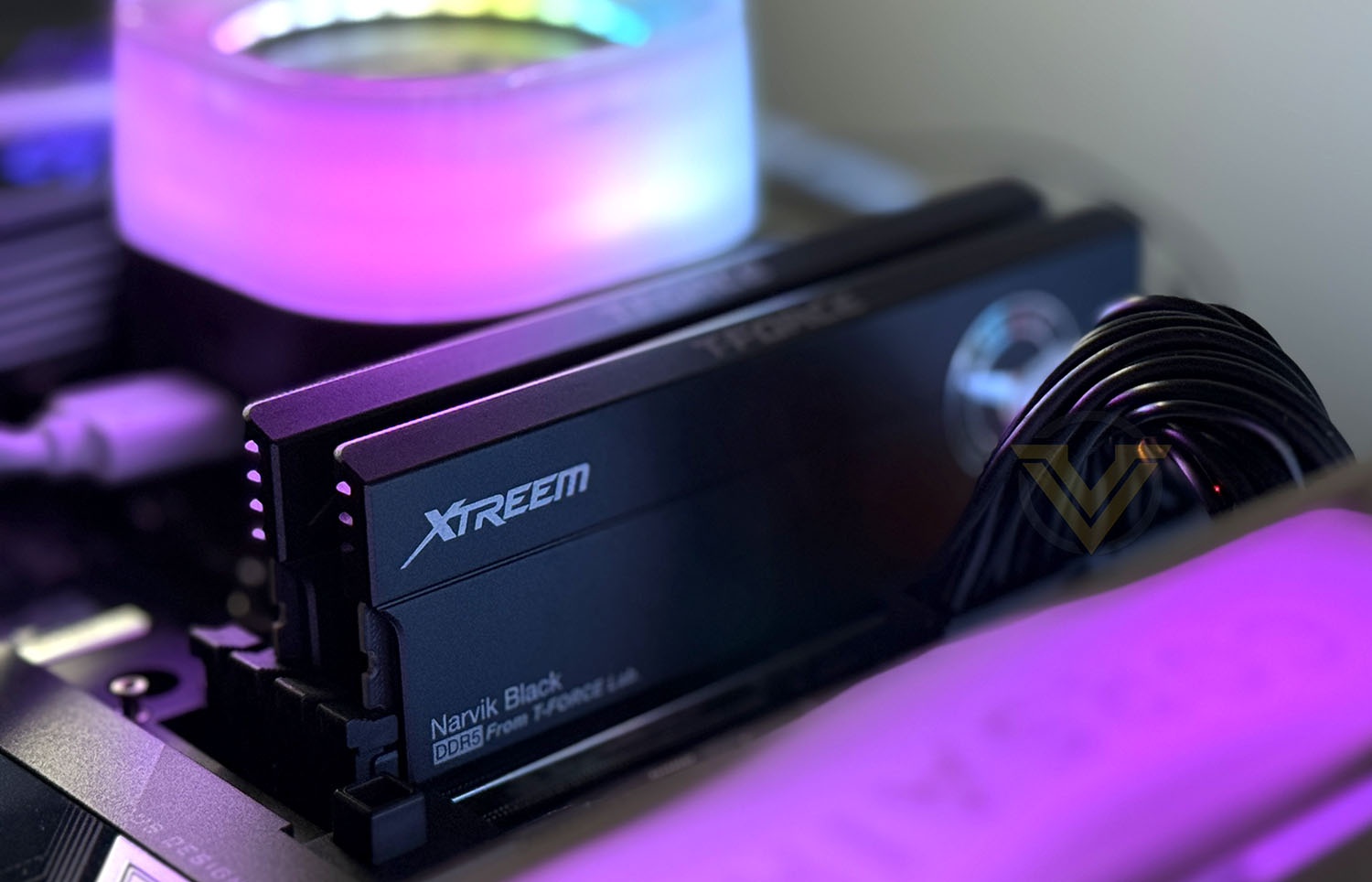
T-FORCE on their CKD DDR5:
Through the CKD chip, the overall performance and stability could be leveled up, to break new level of overclocking performance of traditional U-DIMMs, securing the smooth system operation under high loading.
Closer Look
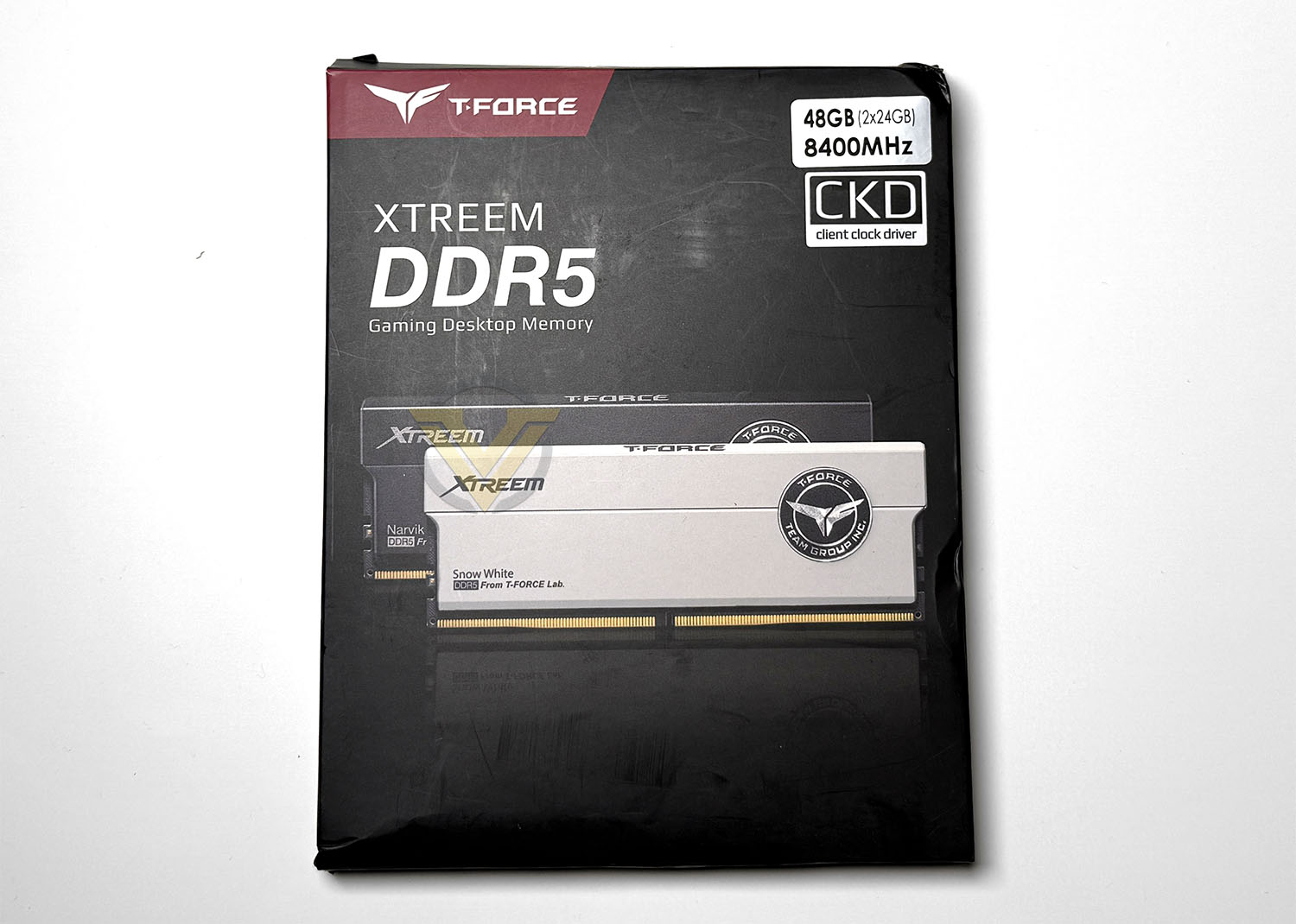
Our XTREEM kit arrives in a typically adorned T-FORCE packet. The front shows the two options that this kit is available in.
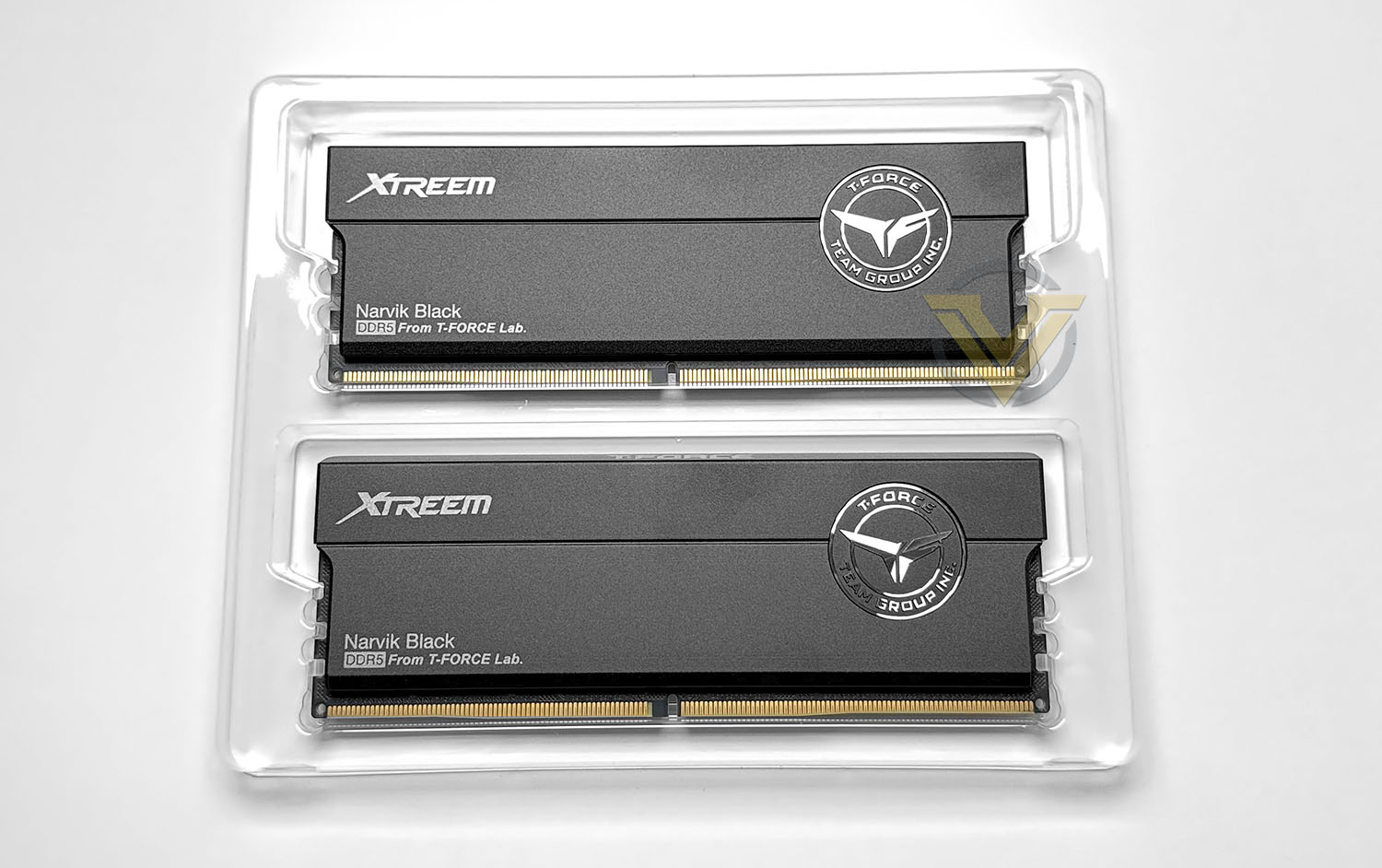
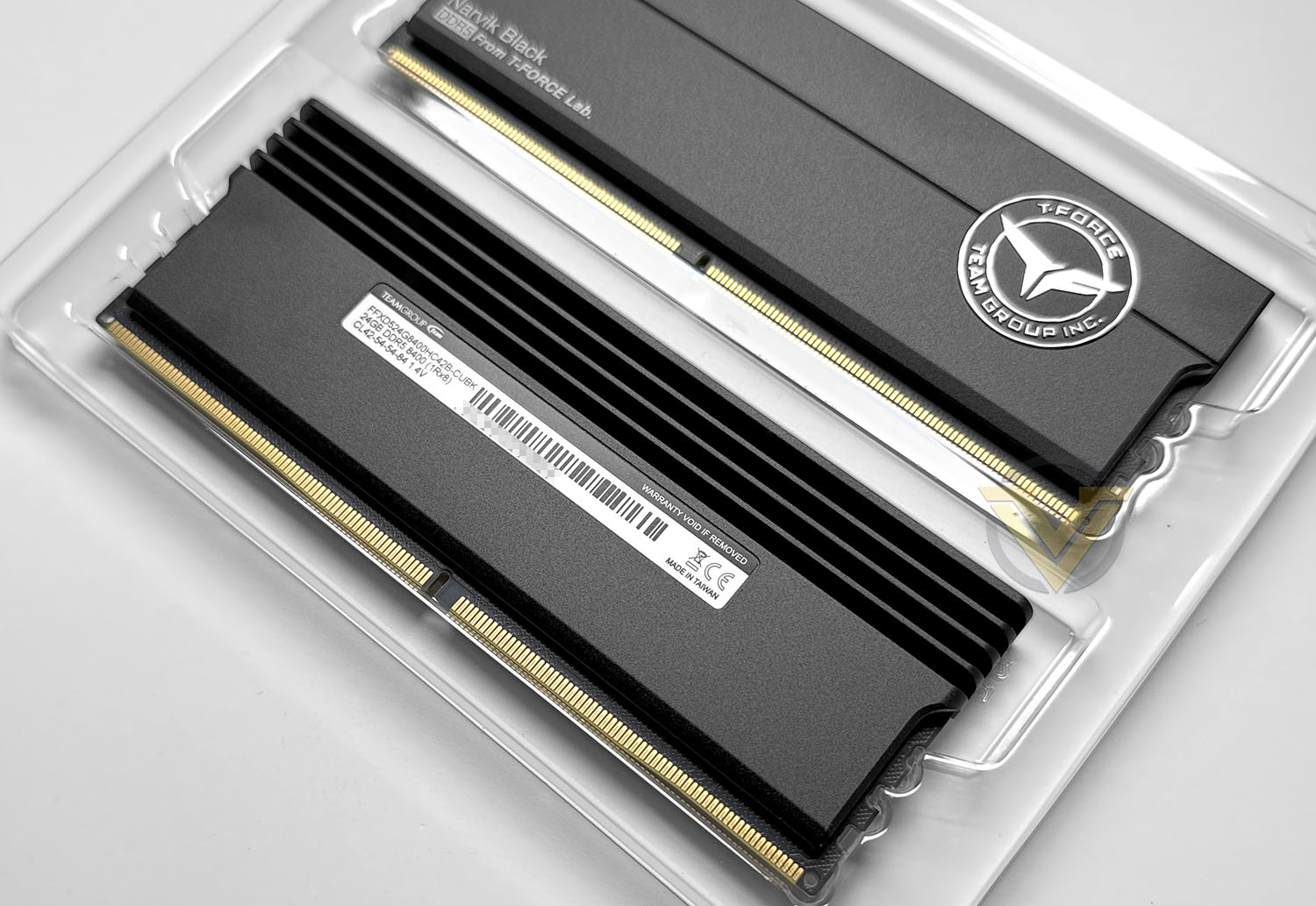
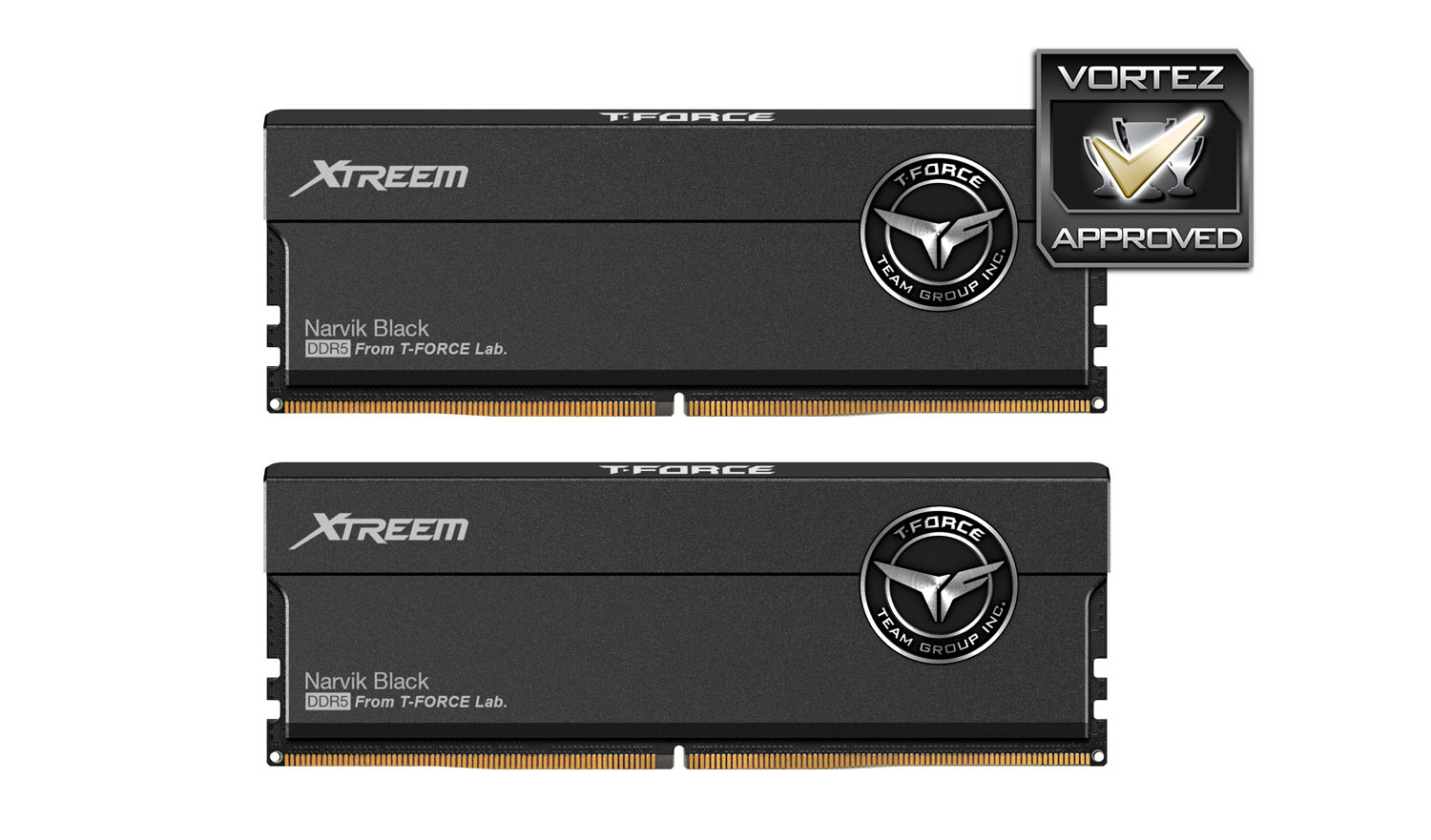
We have the Narvik Black version of this kit which arrive in a very sleek design with dark heatspreaders and extended fin stack.. The actual dimensions of each stick are as follows: 48.8(H) x 134.5(L) x 8.2(W)mm.
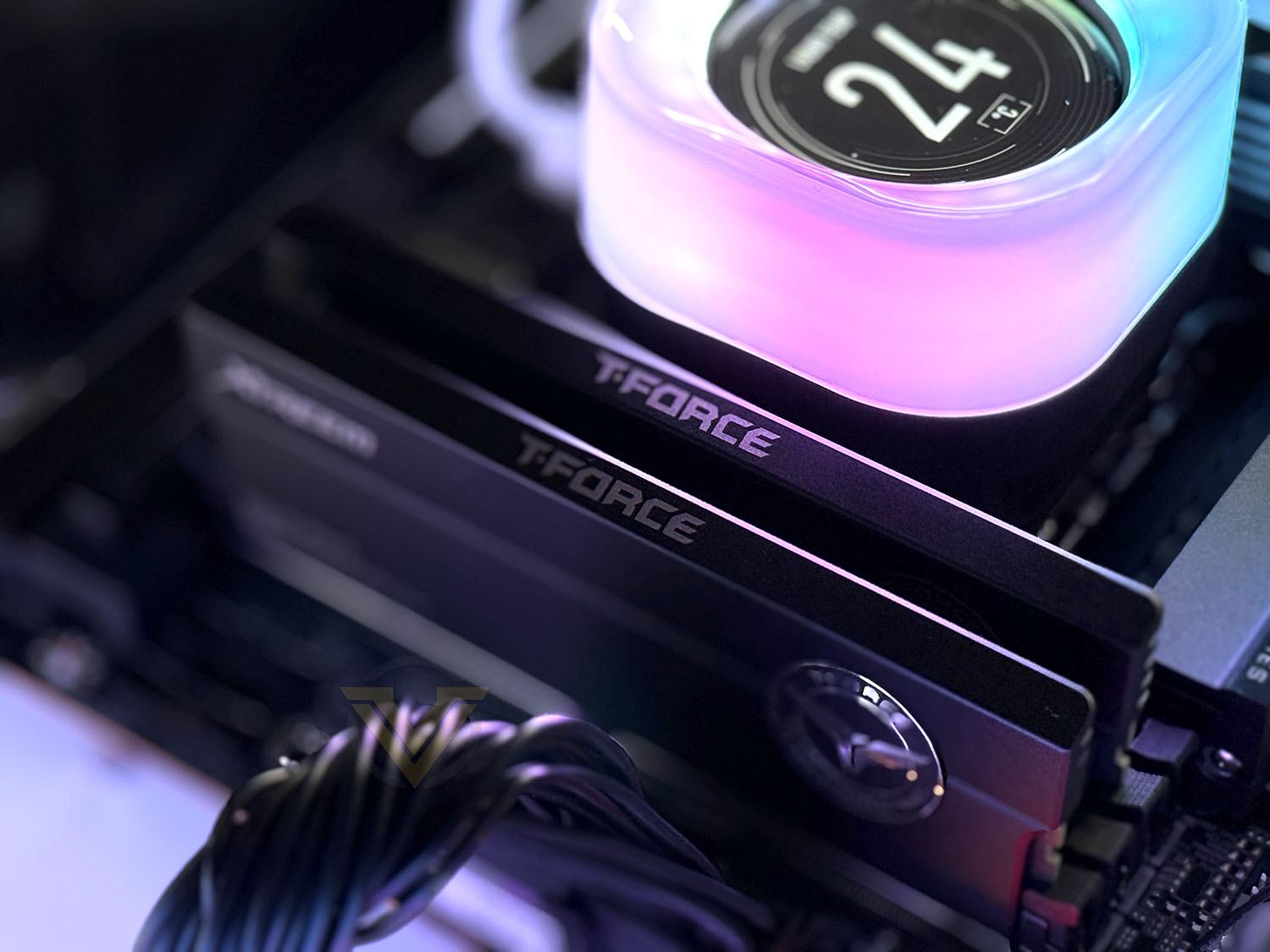
Unlike other kits we’ve seen, this one lacks any RGB lighting and is for the purist. Those seeking something sleek, which offers a minimalist approach will appreciate XTREEM CKD.
Test Setup & Methodology
Our test system is formatted and a fresh version of Windows is installed with just drives in place – no additional applications. Windows is then updated to the latest release and the drivers are installed.
Included in the list of benchmarks are the following applications:
BENCHMARKS
UL Procyon
Puget Systems – Davinci Resolve Benchmarks
AIDA64 Memory
Gaming – Black Myth: Wukong + Horizon Forbidden West
Puget Systems – Davinci Resolve Benchmarks
AIDA64 Memory
Gaming – Black Myth: Wukong + Horizon Forbidden West
TEST CONFIG
CPU Intel Core Ultra 285K
Motherboard GIGABYTE Z890 AORUS MASTER
Cooler Corsair iCue Link Titan 360 RX LCD
Graphics GIGABYTE RTX 5070 TI EAGLE
Memory 32GB HyperX FURY Renegade 7600MHz
Storage OCZ Vector SSD 512GB
PSU Corsair RM1000X
OS Microsoft Windows 11 Professional 64-Bit
Motherboard GIGABYTE Z890 AORUS MASTER
Cooler Corsair iCue Link Titan 360 RX LCD
Graphics GIGABYTE RTX 5070 TI EAGLE
Memory 32GB HyperX FURY Renegade 7600MHz
Storage OCZ Vector SSD 512GB
PSU Corsair RM1000X
OS Microsoft Windows 11 Professional 64-Bit
Benchmarks: Procyon Video Editing
Procyon benchmarks use real applications to test performance whenever possible. The Procyon Video Editing Benchmark uses Adobe Premiere Pro in a typical video editing workflow.
Benchmarks: Puget Systems Davinci Resolve
DaVinci Resolve is not only an industry-standard coloring tool, but also includes features for video editing, VFX, and more. While we also have benchmarks for Premiere Pro, After Effects, and other creative applications, every application will utilize the hardware in a computer in very different and unique ways which can make it extremely difficult to determine exactly what hardware will give the end user the best possible performance.
Benchmarks: AIDA64 Memory Benchmarks
The memory bandwidth, CPU, and FPU benchmarks of AIDA64 are built on the multi-threaded AIDA64 benchmark engine, which now supports up to 2048 simultaneous processing threads and 32 processor groups for Engineer and Business variants. For AIDA64 Extreme, it supports up to 256 threads and 4 processor groups.
Gaming: Black Myth: Wukong + Horizon Forbidden West
It’s important for us to perform a number of game benchmarks as well as the synthetic tests because gamers will want to know if there are any significant benefits. So here we have two recent gaming titles benchmarked with the RTX 5070 Ti.
Conclusion
In closing, the T-FORCE XTREEM CKD DDR5 8400MHz 48GB kit proves to be a technically impressive offering that delivers on its promise of ultra-high-frequency performance. Out of the box, the primary XMP profile provides a stable 8400MT/s operation at CL42, and the presence of a secondary XMP profile offering speeds beyond 9000MT/s highlights its overclocking potential—even if we did not validate those higher frequencies in our testing. In synthetic workloads, the XTREEM CKD consistently outperformed the Kingston Fury Renegade DDR5 7600MHz kit, demonstrating superior bandwidth and latency performance in memory-heavy tasks such as content creation, code compilation, and file compression. For scenarios that benefit from raw memory speed, this kit offers meaningful gains.
However, higher memory frequency doesn’t always translate into significantly better real-world results, particularly in gaming. In side-by-side comparisons with the Fury Renegade 7600MHz kit, we found that improvements in frame rates were minimal, if present at all. This reinforces the idea that while memory bandwidth is important, gaming performance tends to rely more heavily on GPU and CPU capabilities once a certain memory threshold is met. As such, the XTREEM CKD DDR5 is best suited to power users and overclocking enthusiasts who can fully utilize its high-frequency profile in non-gaming scenarios.
In terms of platform support, the XTREEM CKD is officially optimized for Intel’s 800-series chipset and Core Ultra processors, leveraging CUDIMM (Client Unbuffered DIMM) technology to achieve its high-speed stability. While the kit may physically operate on other Intel or AMD platforms that accept DDR5, our testing found that it does not perform correctly outside of its intended environment—frequencies are reduced, timings may not apply correctly, and stability becomes inconsistent. This effectively limits the kit’s practical use to the newest Intel platforms, narrowing its market to early adopters and enthusiasts already on compatible hardware.
With a price tag of $329 USD or $429 AUD, the XTREEM CKD 8400MHz kit sits at the upper end of the market. That premium is partly justified by the inclusion of a lifetime warranty, a high-grade 10-layer PCB, and industry-leading frequencies. Still, for the average user or gamer, the cost-to-benefit ratio may not be favourable—especially given the limited gains in gaming and compatibility constraints. However, for those seeking bleeding-edge DDR5 speeds to complement a top-tier Intel build, the XTREEM CKD remains one of the most capable memory kits available today.
Pros
+ Solid performance
+ Lifetime warranty
+ Faster XMP profile included
Cons
– Designed only for Intel 800 Series
+ Solid performance
+ Lifetime warranty
+ Faster XMP profile included
Cons
– Designed only for Intel 800 Series
Click here for an explanation of our awards at Vortez.net.
Stay connected with the Vortez Social Media pages: