The 120° wide angle RGB lighting could be just what you need to complete your RGB setup, or if you want more advanced effects, the Delta RGB memory also supports ASUS Aura Sync.

Product on Review: T-Force Delta RGB
Manufacturer: Team Group
Street Price:
For 8GB kit: US: $87 – 92
For 16GB kit: US: $141 – 149 (Further availability to follow)
Memory modules with LED lighting is nothing new, but now the RGB craze is in full swing, some users may want something that little extra special, and the T-Force Delta RGB may be exactly that. The cubist inspired, minimalistic design is slightly reminiscent of wings, and is wrapped in 120° full frame LED lighting. By default, the lighting displays a Force-Flow effect, which is essentially a rainbow wave, but when paired with a compatible ASUS motherboard that supports ASUS Aura Sync, you can customise the lighting effects, and Sync them up with your motherboard.
The Delta RGB memory modules are based on a customized JEDEC RC 2.0 circuit board which gives greater insulation between the power and signal layers in the PCB, ensuring efficient, interference free performance. Available with black or white heat spreaders, 8 and 16GB capacities, and in 2400MHz, 2666MHz and 3000MHz frequencies, there is enough choice to satisfy gamers and mainstream users. Today we are looking at the 16GB kit which comes with an XMP 2.0 setting of 3000MHz @ CL16-18-18-38.
Overview by Team Group
Team Group T-Force gaming series once again released the all new luminous memory module – DELTA RGB. The R on the heat spreader represents Revolution, and also stands for creative concept with an uncompromised spirit. The heat spreader is built with lighter, thinner and high quality metal material. The colorful light changes make the hollow “R” on the front even more stereoscopic, and echo the ultra wide angle luminous area. The extraordinary Revolution will provide players a new experience never seen before.
Technical Specifications
Series: DELTA RGB
Module Type: 288 Pin Unbuffered DIMM Non ECC
Capacity: 4GBx2 / 8GBx2
Frequency: 2400 / 2666 / 3000
Data transfer bandwidth: 19,200 MB/s (PC4 19200)/ 21,300 MB/s (PC4 26600) / 24,000 MB/s (PC4 30000)
CAS Latency: CL15-17-17-35 / CL16-18-18-38
Tested Voltage: 1.2V / 1.35V
Dimensions (mm): 146.8(L)x7(W)x49(H)
Warranty: Lifetime Warranty
Module Type: 288 Pin Unbuffered DIMM Non ECC
Capacity: 4GBx2 / 8GBx2
Frequency: 2400 / 2666 / 3000
Data transfer bandwidth: 19,200 MB/s (PC4 19200)/ 21,300 MB/s (PC4 26600) / 24,000 MB/s (PC4 30000)
CAS Latency: CL15-17-17-35 / CL16-18-18-38
Tested Voltage: 1.2V / 1.35V
Dimensions (mm): 146.8(L)x7(W)x49(H)
Warranty: Lifetime Warranty
Packaging & Product
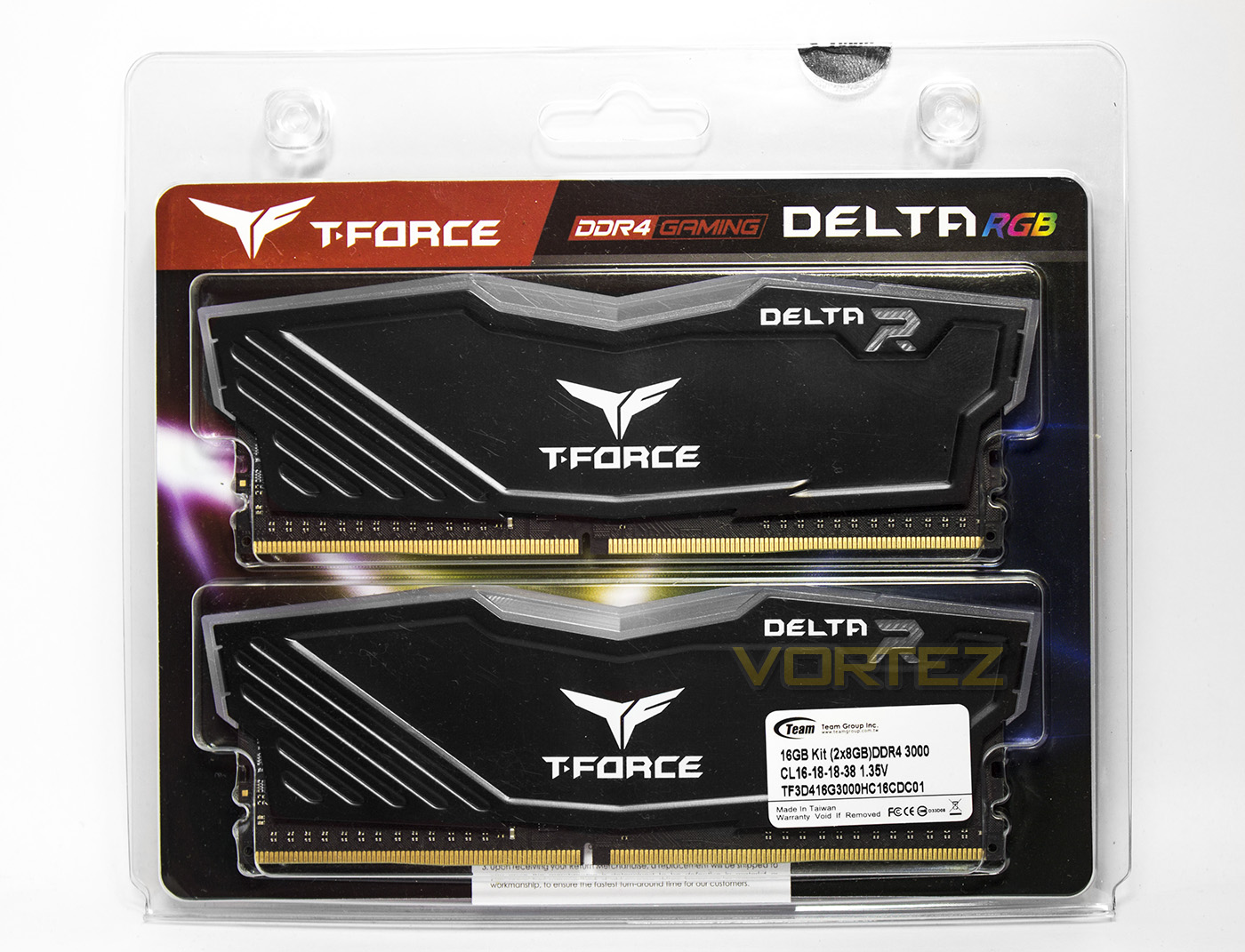
Packed in a protective blister, the T-Force Delta RGB speaks for itself in full view. At the bottom there is indication of its specification, allowing users to clearly identify its frequency and capacity.
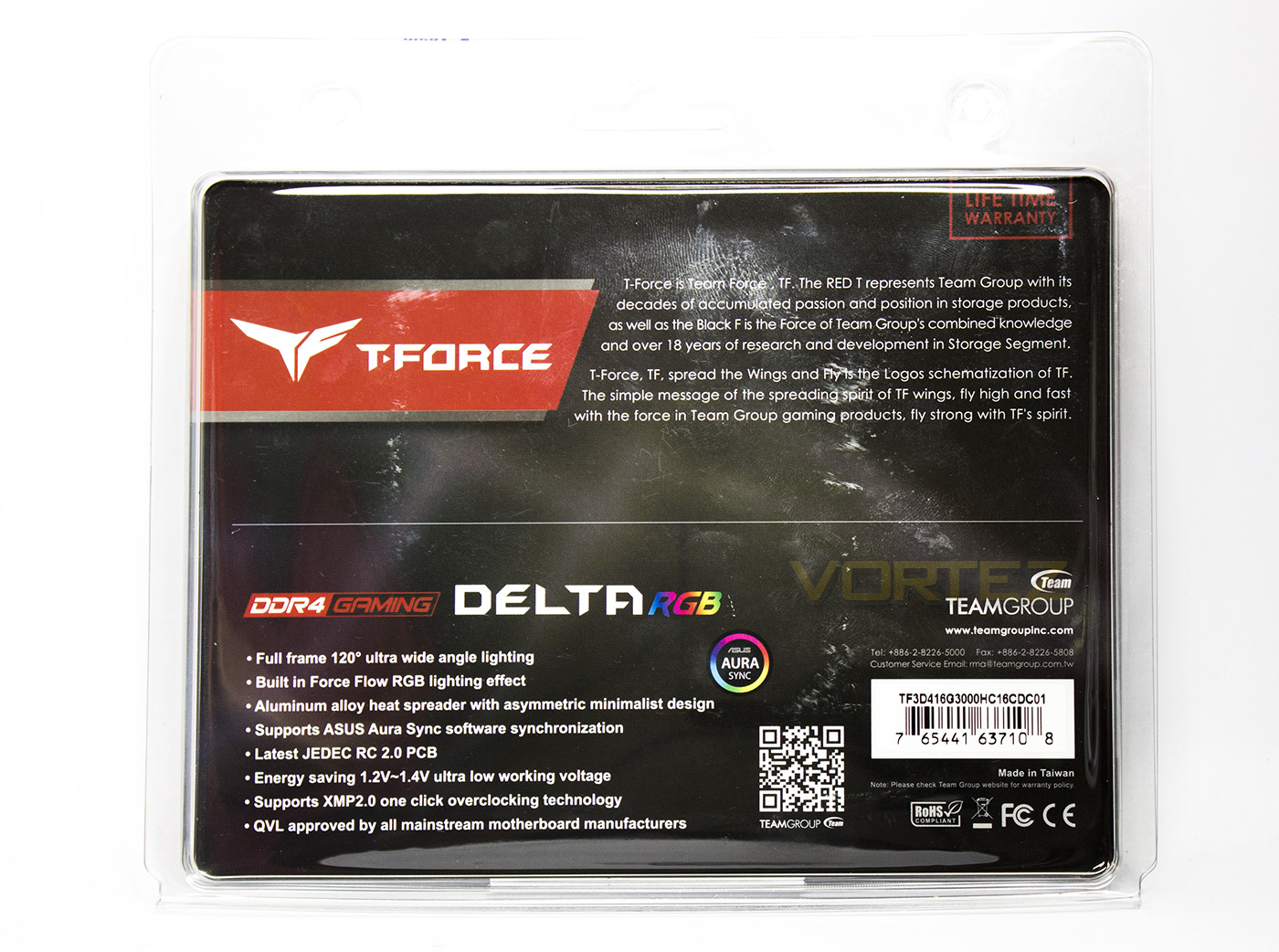
At the back there is a brief description of the T-Force concept, followed by a list of features of the memory.
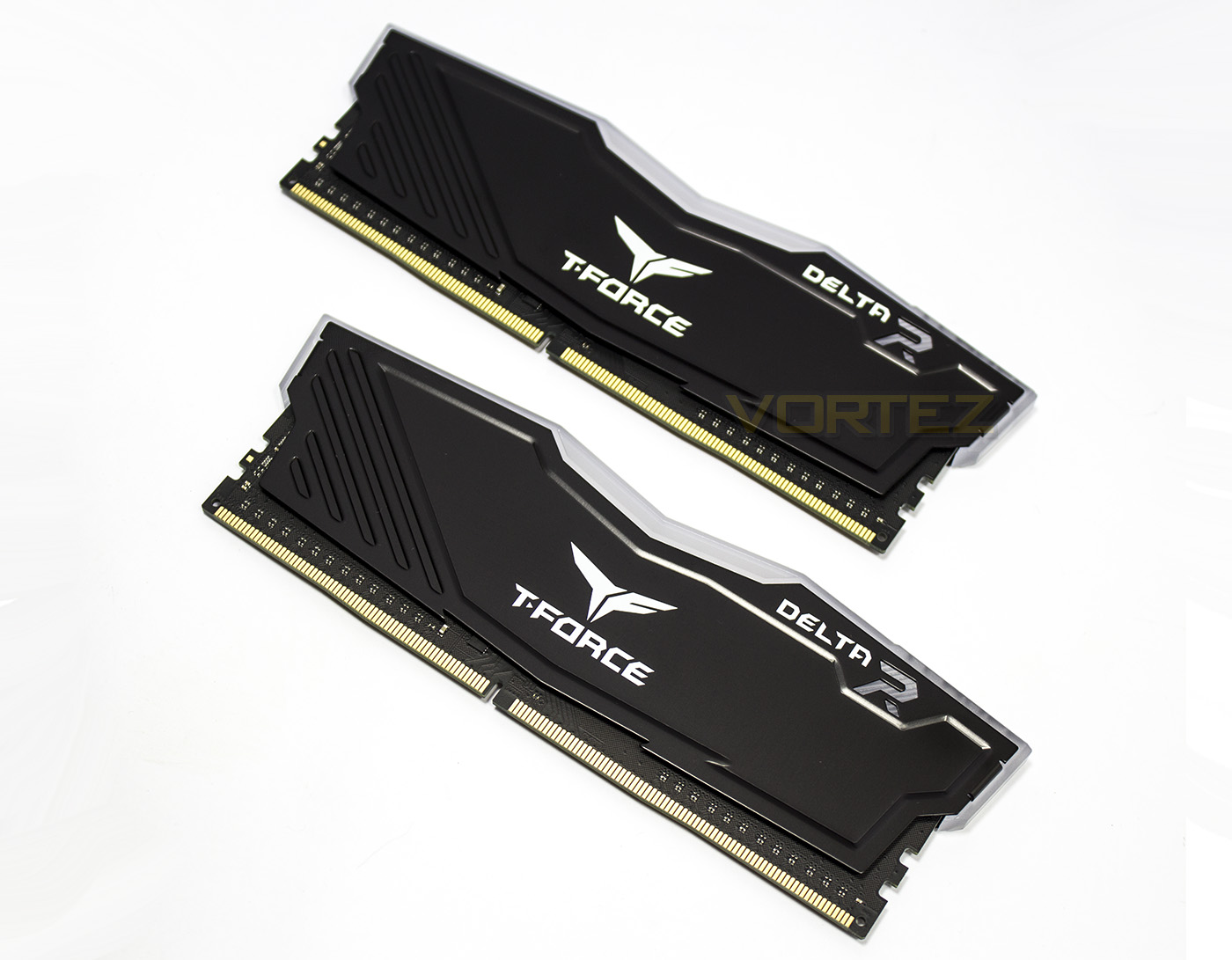
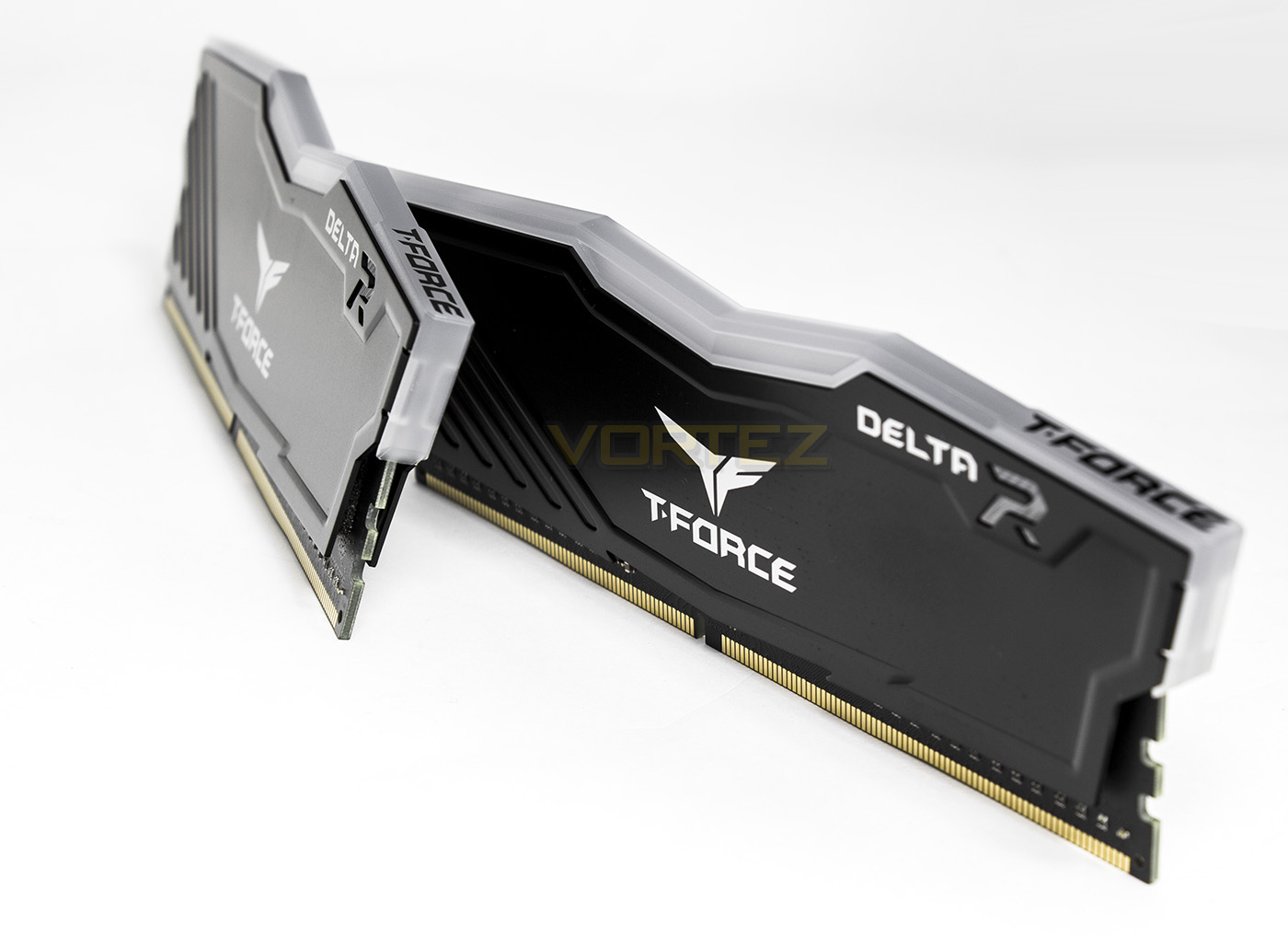
The memory itself looks stylish, and shares similar distinguishing features to other models in the T-Force range. The R part is hollowed out allowing it to light up, which creates an interesting aesthetic.
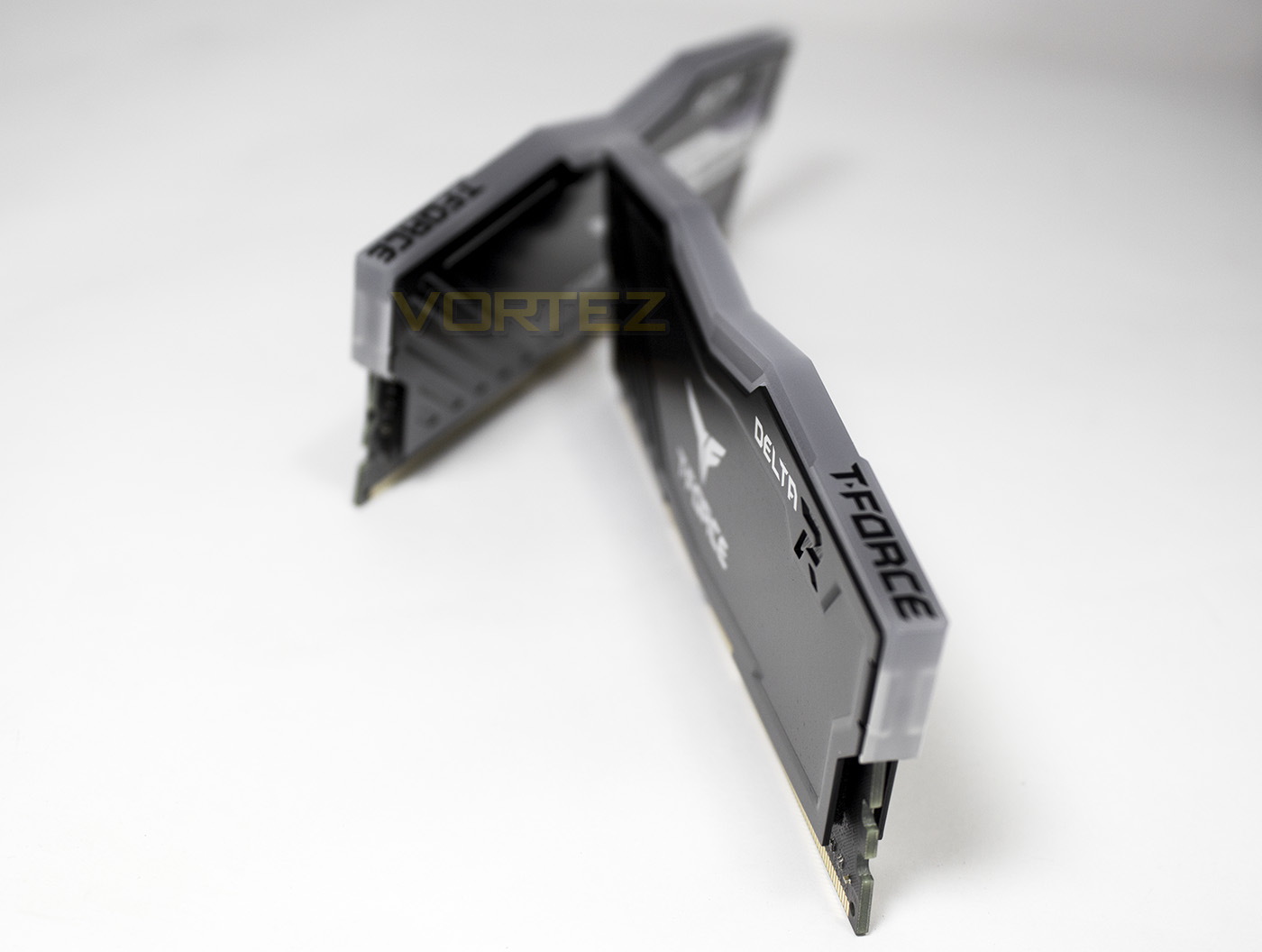
The heat-spreaders appear to be held on with thermal adhesive, which is very strong, and so we did not remove them to see the IC underneath as we do not have an adequate replacement. The light diffuser features the T-Force logo, and surrounds the frame of the memory, expanding the RGB lighting farther than most competitors RGB LED memory modules.
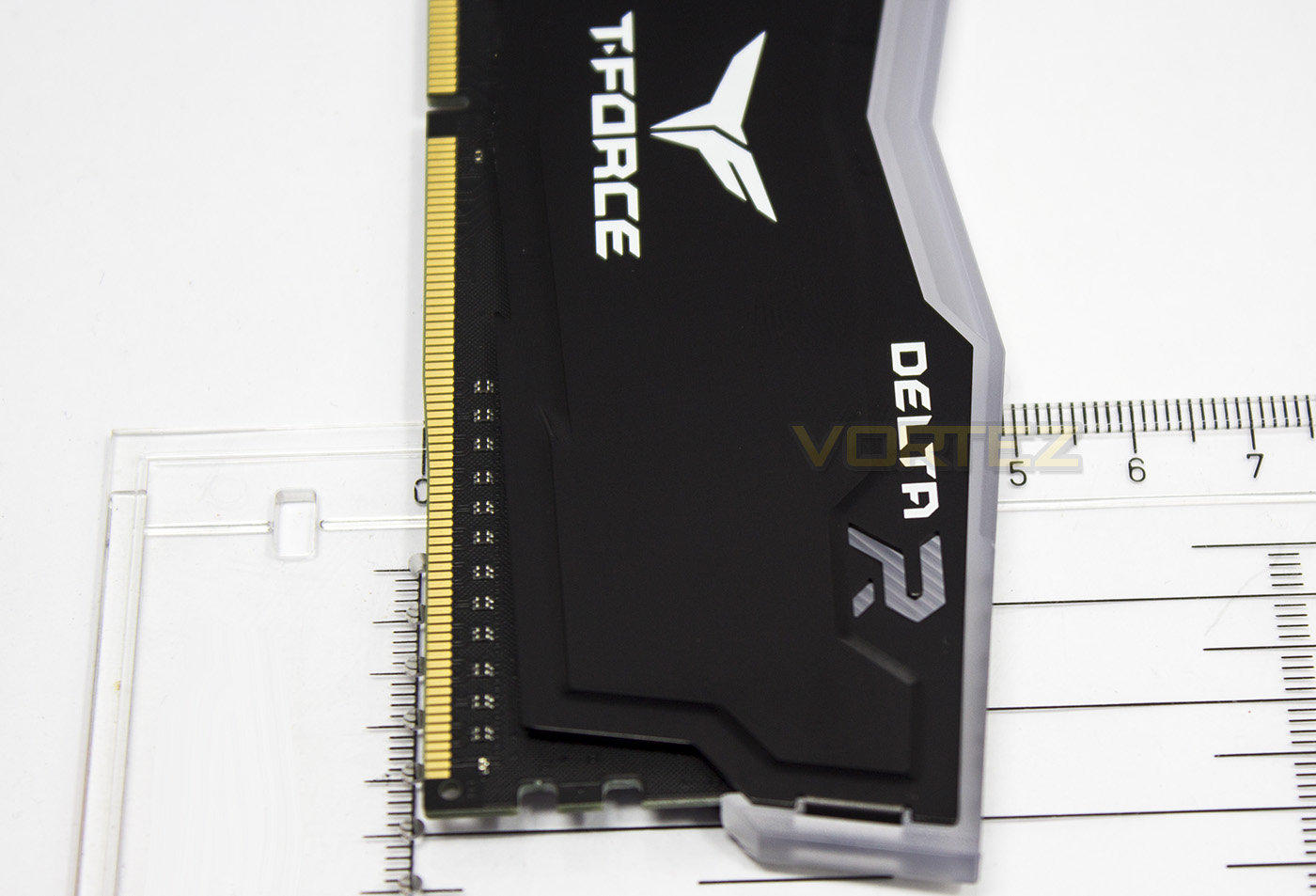
Standard height for memory modules is around 30-33mm tall, the total height of the Delta RGB is 49mm at its tallest point. This is a fairly reasonable height, but some heatsinks may struggle with clearance.
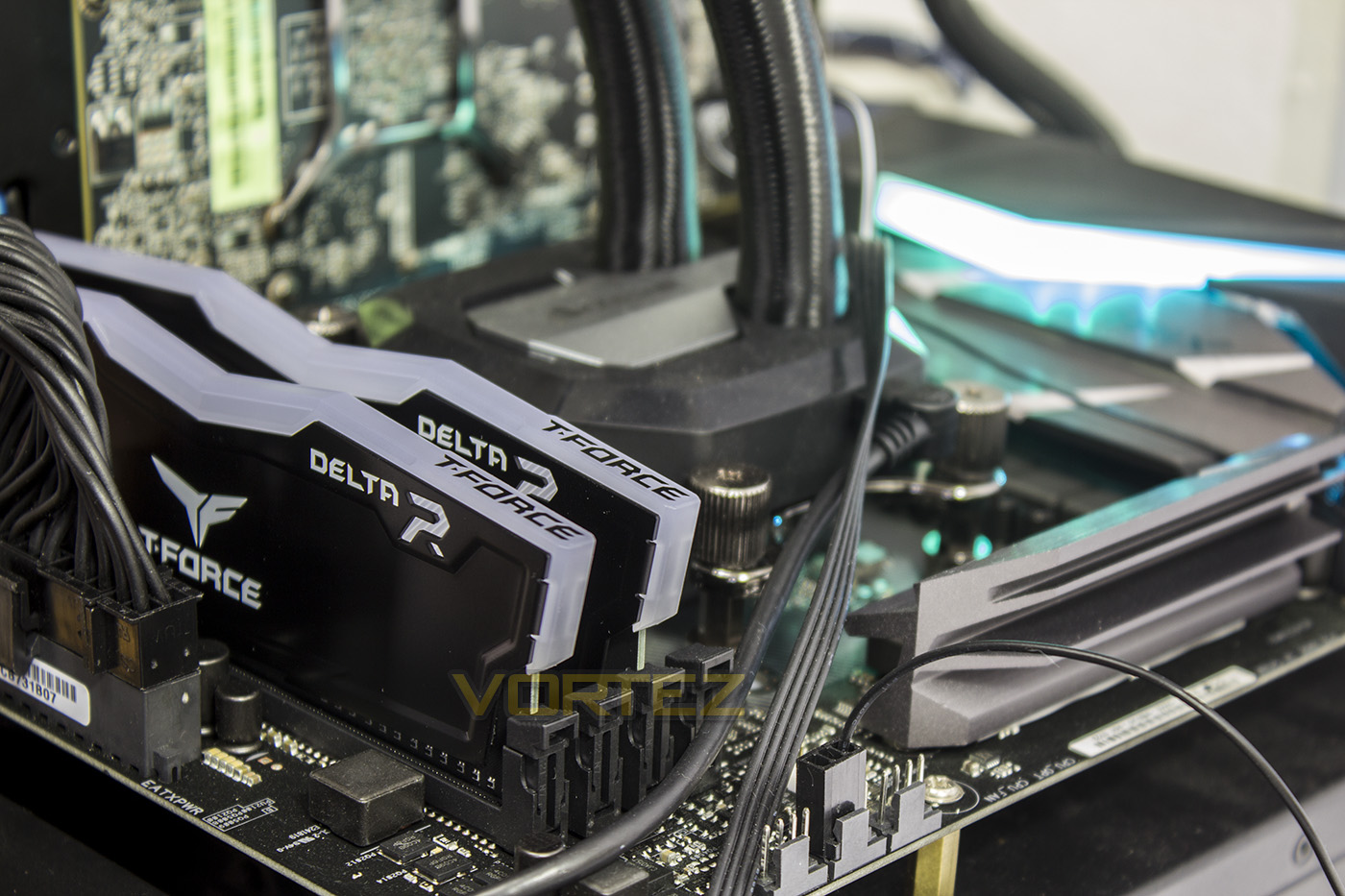
Installed into our ASUS Crosshair VI Hero, the design fits in neatly, showing itself off clearly, without breaking from the overall aesthetic.
Software & Lighting
If you do not have an ASUS Aura Sync motherboard, the Delta RGB with display the Force-Flow effect (rainbow wave), which will be very colourful. Though if you do have an ASUS Aura Sync enabled motherboard, you will want to update the software to the latest to ensure compatibility. The ASUS Aura Sync software is fairly easy to understand and does allow customisation of individual components attached to the motherboard, however, when sync’d up, there are some impressive effects that are available. This includes the Comet effect, starry night, and temperature effects. Though it is worth noting that not all effects are supported, in such cases the software will prompt you to unsync the memory modules.
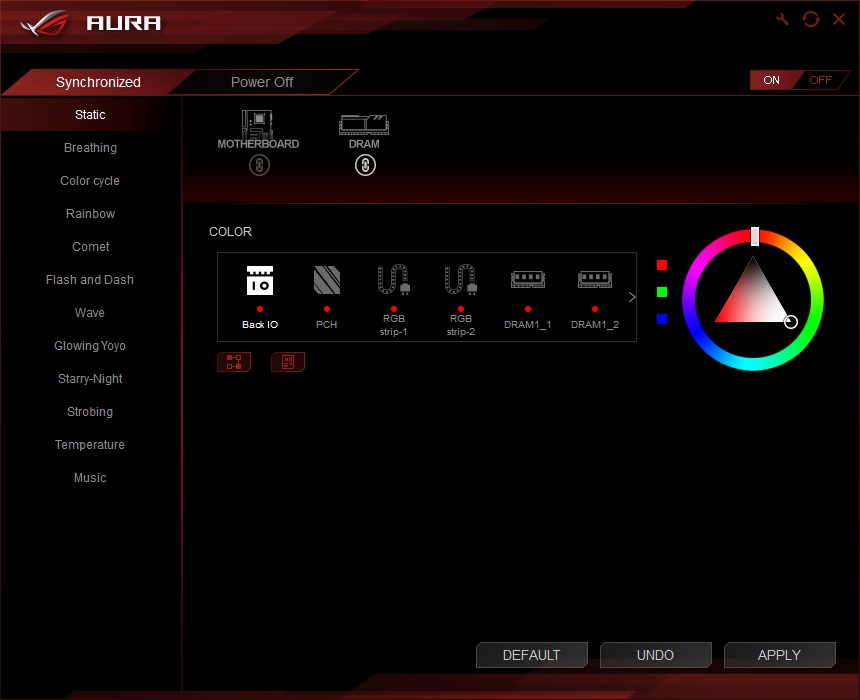
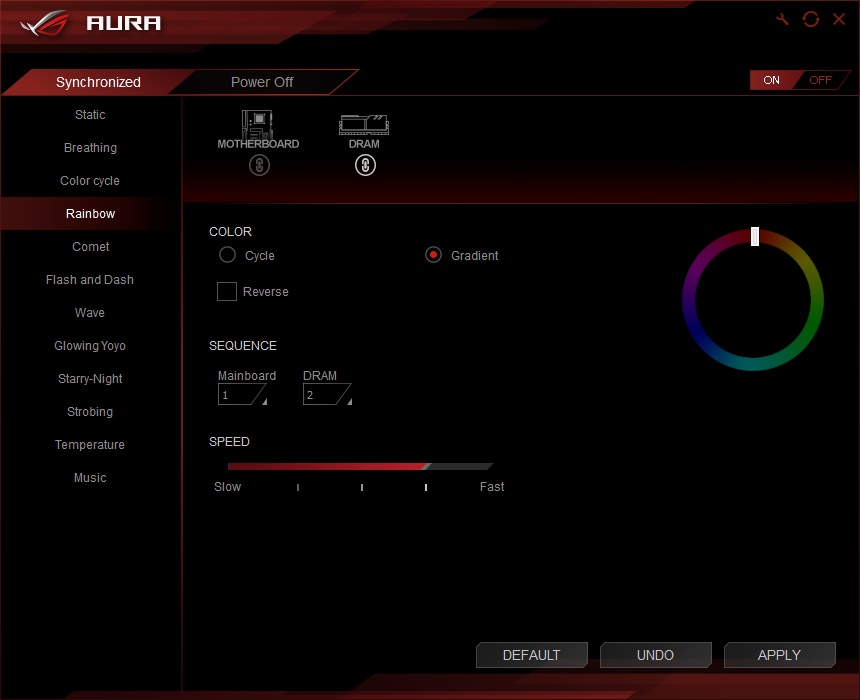
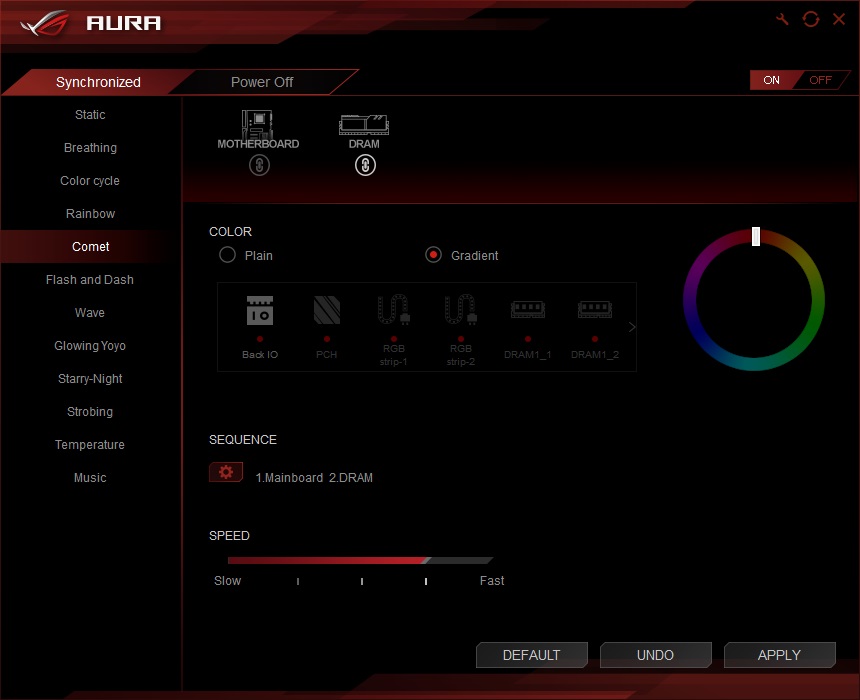
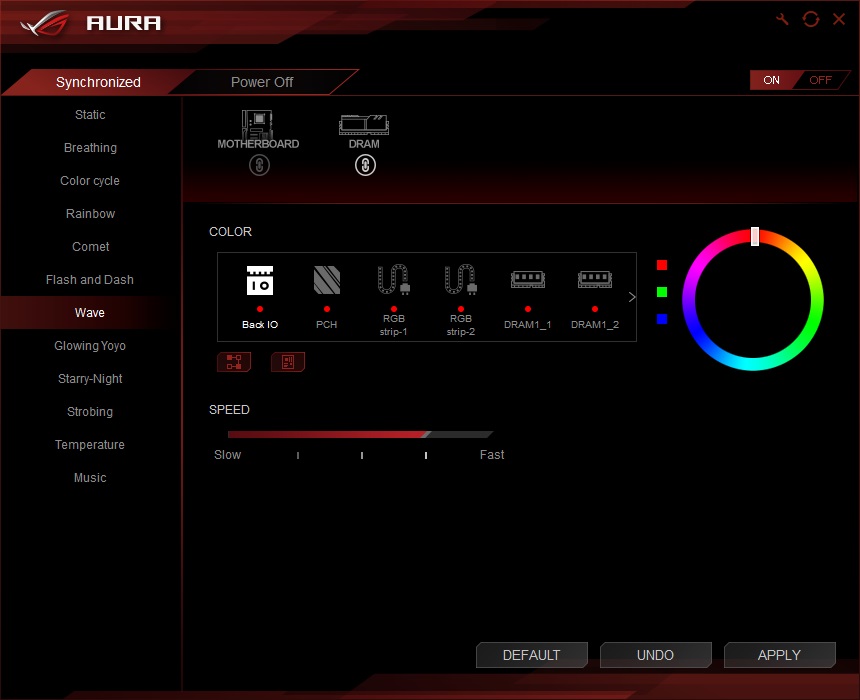
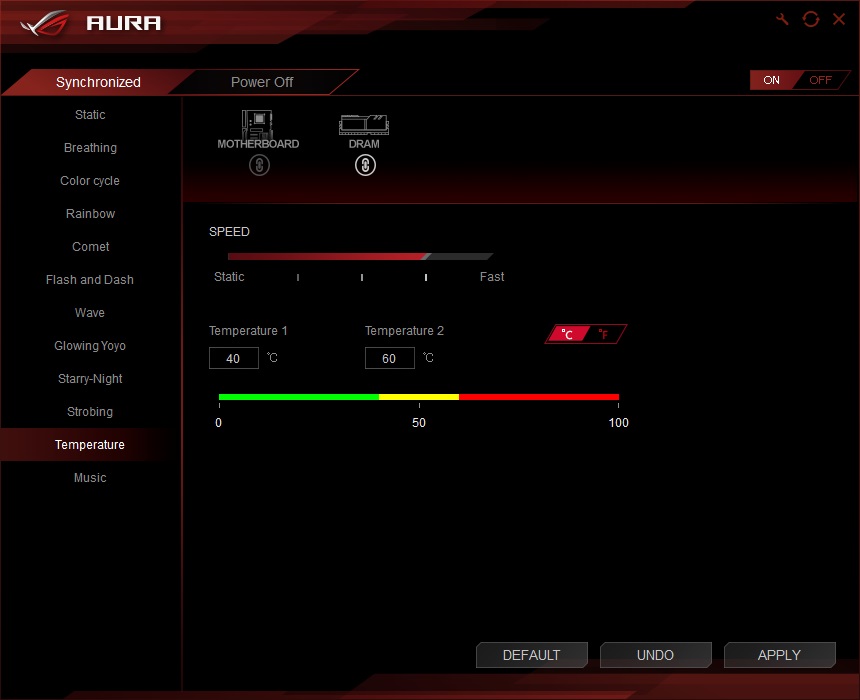
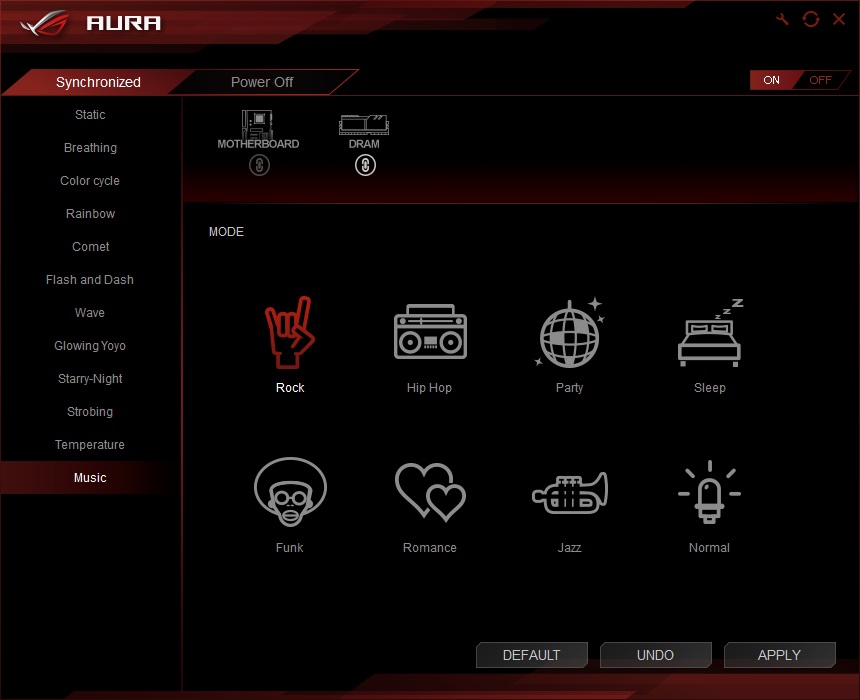
The RGB lighting is very bright and vibrant, and renders the RGB colours very well, matching the colours both on the ROG STRIX X370-F and the Crosshair VI Hero.
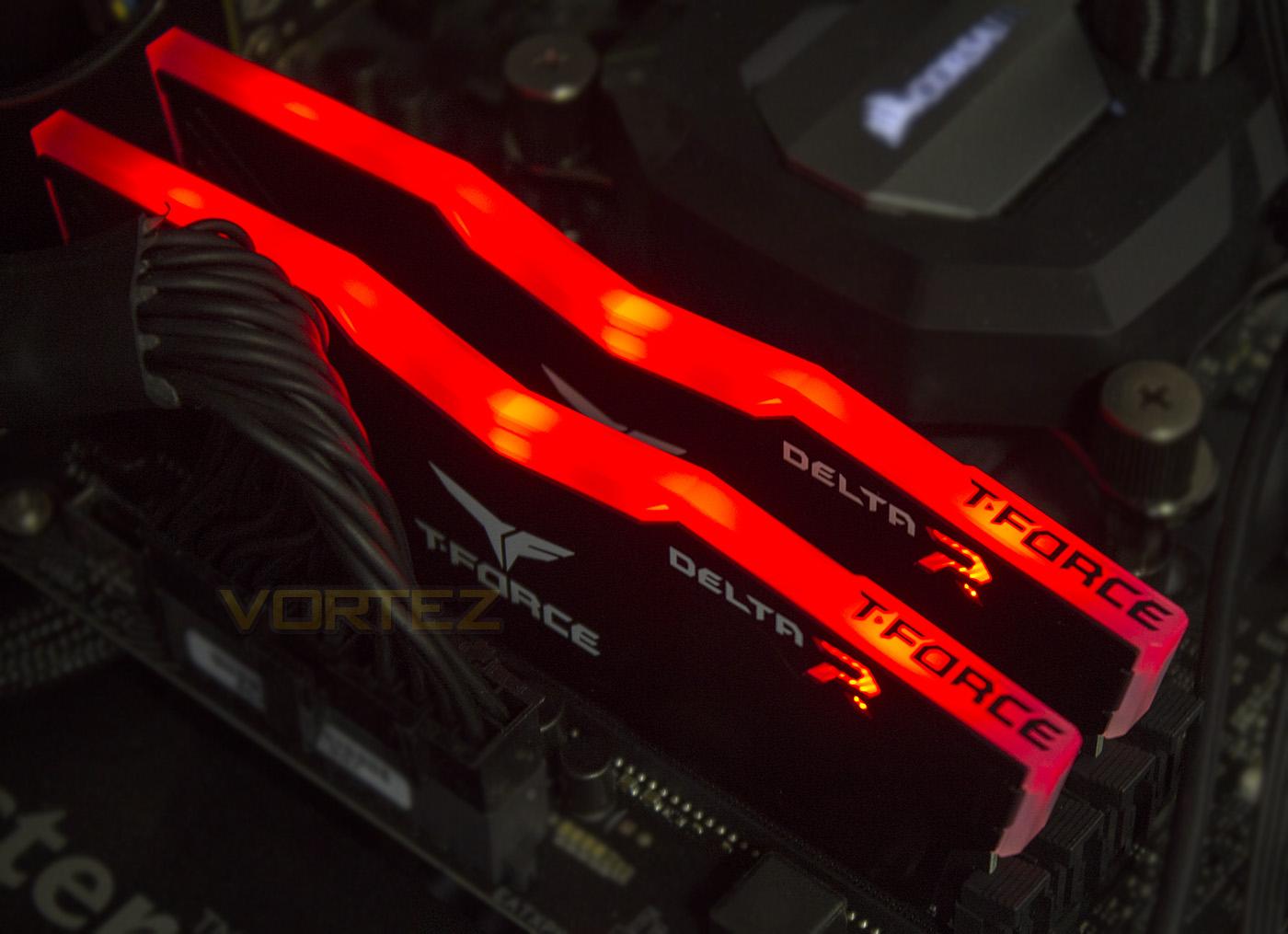
Static Red lighting.
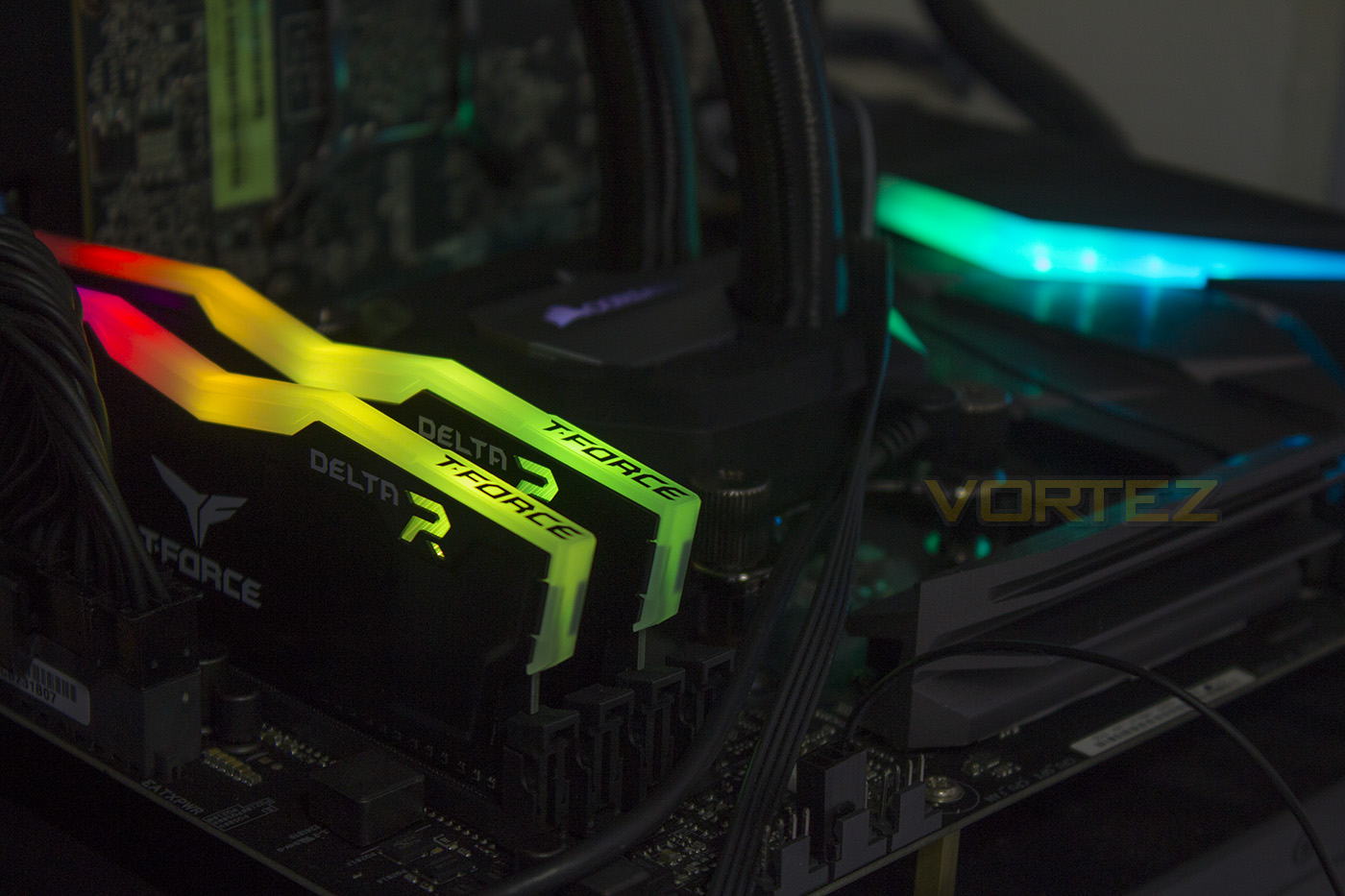
Rainbow wave (Gradient)
Test Setup
Memory Configurations
‘Team T-Force Delta RGB’
2666MHz @ 14-14-14-14-32-58-1T – Highest C14 Frequency
2666MHz @ 16-16-16-16-36-62-1T
2933MHz @ 16-16-16-16-36-62-1T
2933MHz @ 16-18-18-18-38-69-1T – XMP 2.0
3200MHz @ 16-16-16-16-36-62-1T – Unstable
3200MHz @ 16-18-18-18-38-69-1T – XMP Timings
3333MHz @ 16-18-18-18-38-69-1T – Highest Frequency obtained / XMP Timings
Test Setup
Cooling Corsair Hydro H115i
MotherboardASUS ROG Crosshair VI Hero
Graphics Radeon RX 480 8GB
Storage Corsair Force LE 480GB
PSU Corsair RM 750X 80 Plus Gold Certified PSU
Compared against
HyperX Predator 3200MHz
Corsair Vengeance LPX 3200MHz
‘Team T-Force Delta RGB’
2666MHz @ 14-14-14-14-32-58-1T – Highest C14 Frequency
2666MHz @ 16-16-16-16-36-62-1T
2933MHz @ 16-16-16-16-36-62-1T
2933MHz @ 16-18-18-18-38-69-1T – XMP 2.0
3200MHz @ 16-16-16-16-36-62-1T – Unstable
3200MHz @ 16-18-18-18-38-69-1T – XMP Timings
3333MHz @ 16-18-18-18-38-69-1T – Highest Frequency obtained / XMP Timings
Test Setup
Cooling Corsair Hydro H115i
MotherboardASUS ROG Crosshair VI Hero
Graphics Radeon RX 480 8GB
Storage Corsair Force LE 480GB
PSU Corsair RM 750X 80 Plus Gold Certified PSU
Compared against
HyperX Predator 3200MHz
Corsair Vengeance LPX 3200MHz
Benchmarks
Cinebench R15 – CPU
SiSoftware SANDRA – Memory bandwidth
AIDA64 – Memory Benchmarks
PCMark 8 – Photoshop
Games – Dawn of War III
SiSoftware SANDRA – Memory bandwidth
AIDA64 – Memory Benchmarks
PCMark 8 – Photoshop
Games – Dawn of War III
Other Software
Temperature Analysis: Aida64/Ryzen Master
System Monitoring and Stress Testing: AIDA64 Stability Test
CPU Specification Monitoring: CPU-Z
System Monitoring and Stress Testing: AIDA64 Stability Test
CPU Specification Monitoring: CPU-Z
Overclocking
One of the biggest concerns with the Ryzen platform is memory compatibility and stability, this is one of the primary reasons why we are testing these memory kits on the Crosshair VI Hero. If you are looking to buy into the AM4 platform, we would advise you to ensure that the motherboard has been updated to the latest BIOS, of which, we have found significantly greater stability and compatibility. Team Group have ensured that the Delta RGB has been tested by all the major board partners and will be featured on the latest QVL for all the current platforms.
Enabling the XMP profile is a quick and easy way to ensure that your memory will be running at its rated performance, however, Ryzen itself can be rather finicky in regards to timings. The 3000MHz model, works seamlessly with timings of CL16-18-18-38, but the 2400/2666MHz version using CL 15-17-17-35 may be a different matter, and in this situation we would recommend using CL 16-16-16-36. The Delta RGB kit we were using was capable of 2666MHz CL14-14-14-32, which is great should you want tighter timings. This, sadly was the limit for CL14, while 3000MHz was the limit for stable CL16-16-16-32. We were happy to have found that the XMP timings (Cl16-18-18-18-38) was stable at both 3200MHz, and 3333MHz, giving decent headroom over the rated 3000MHz. All settings were achieved with 1.35V, and though the Delta RGB memory modules are rated for 1.2-1.4V, we would recommend not going above 1.35V on a Ryzen system.
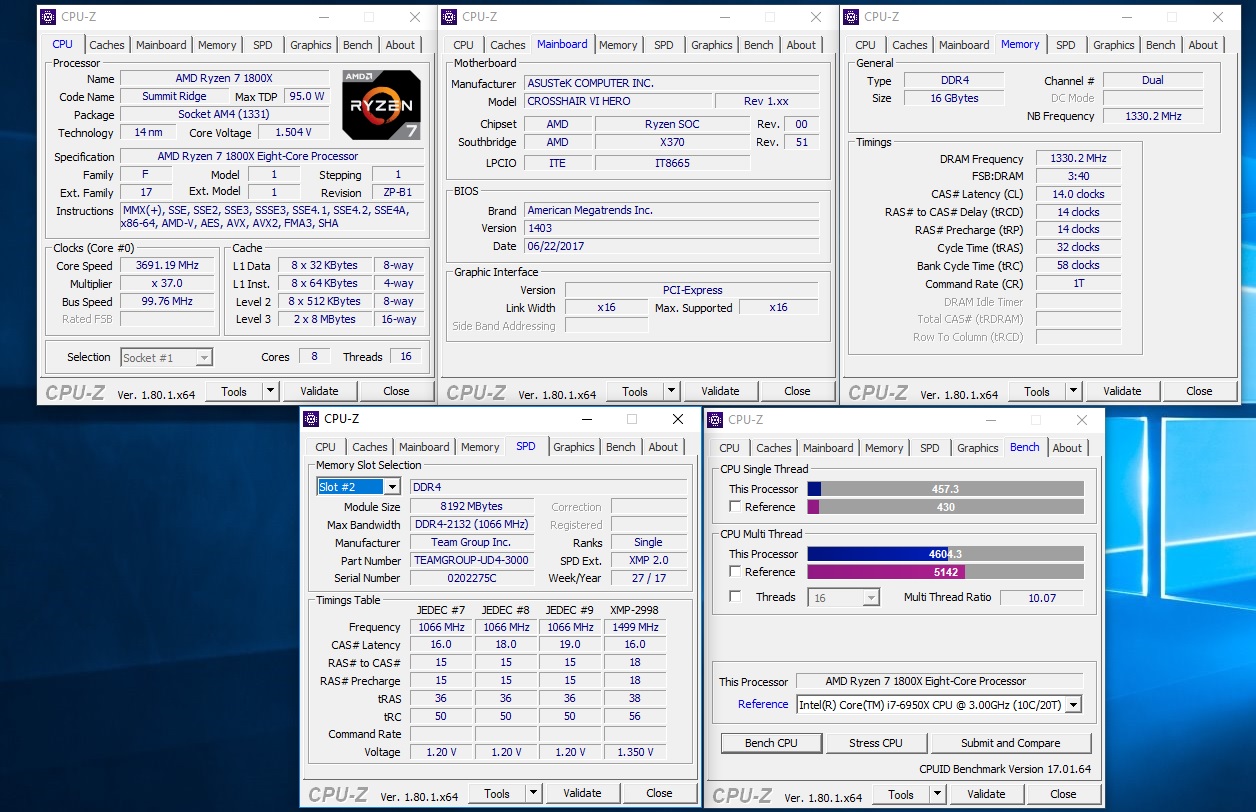
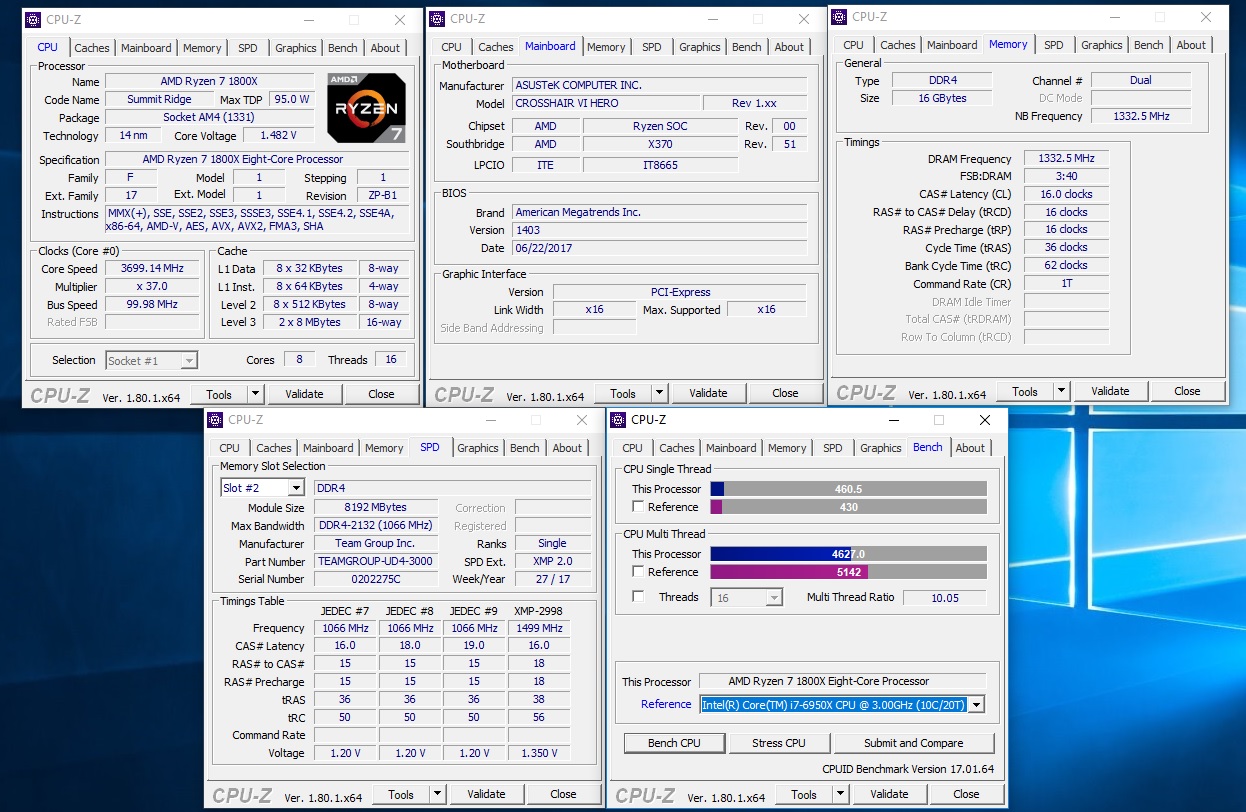
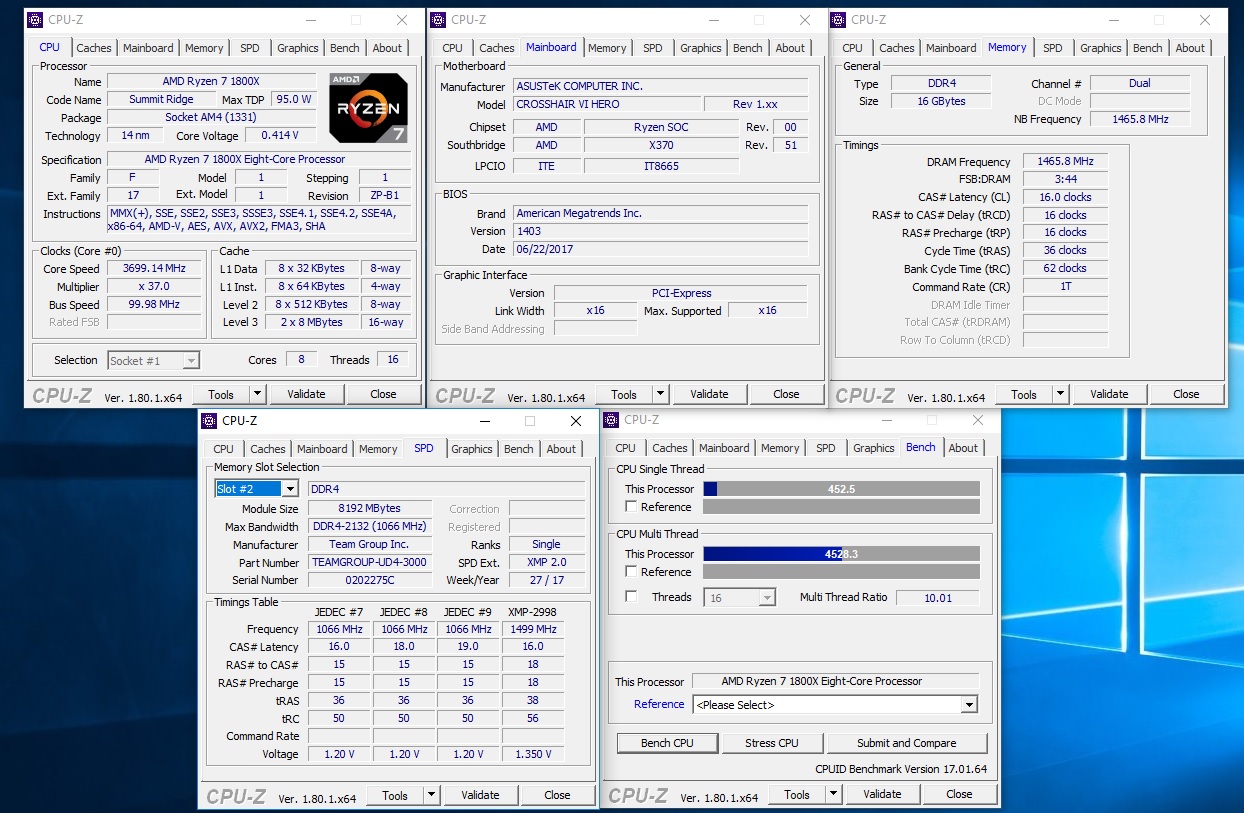
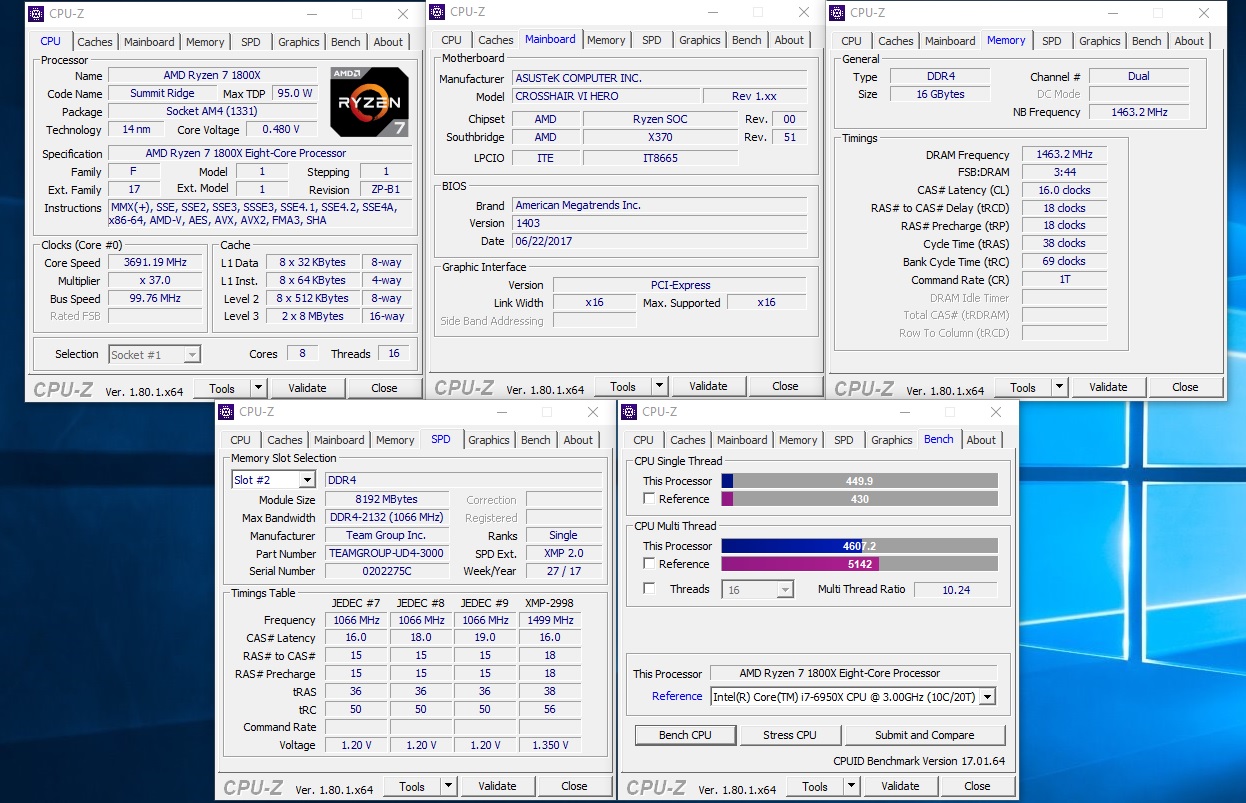
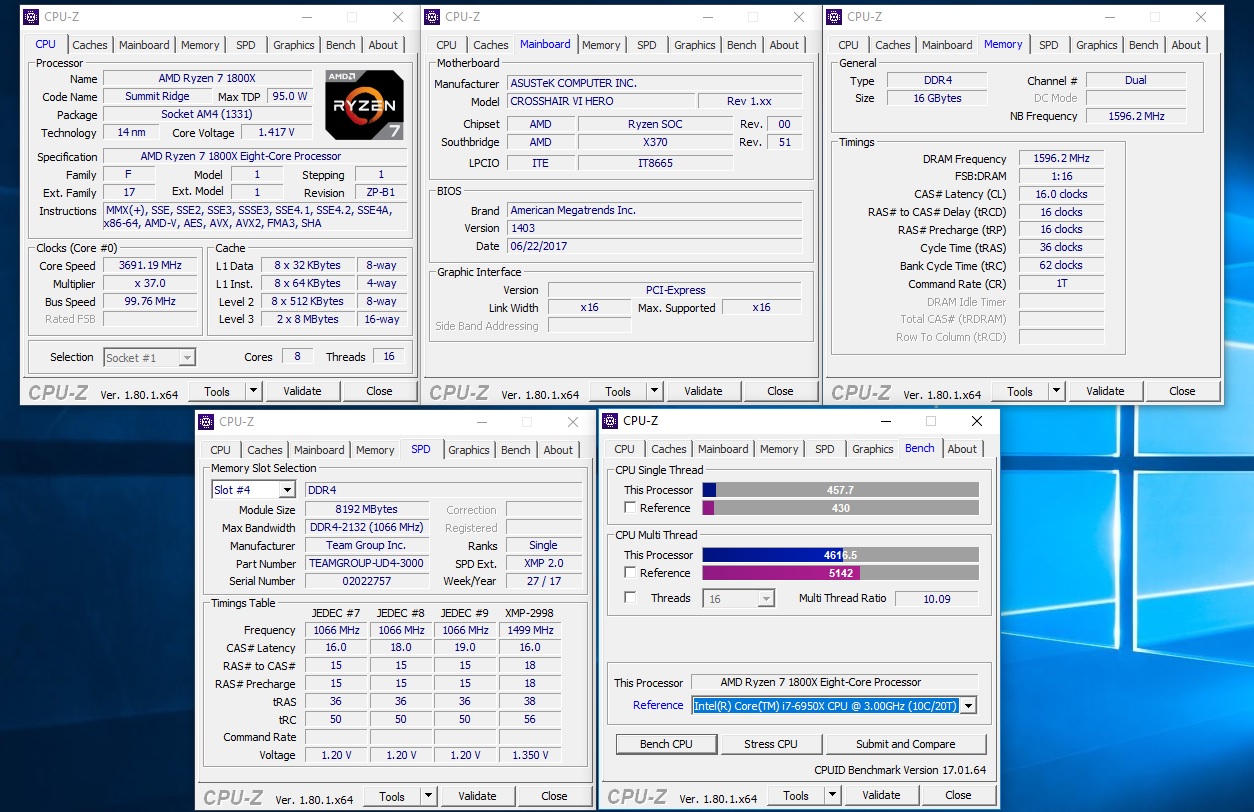
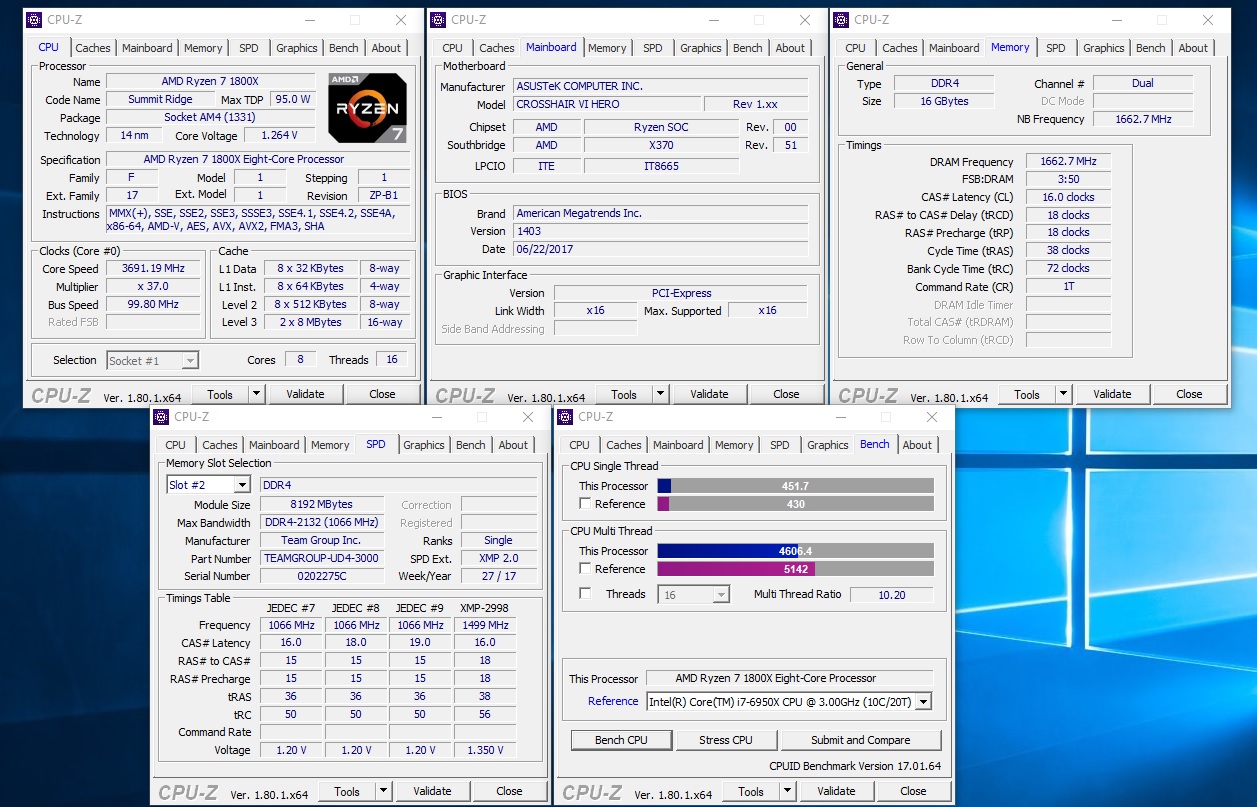
Memory Transfer Performance – AIDA64
AIDA64 Product PageMemory bandwidth benchmarks (Memory Read, Memory Write, Memory Copy) measure the maximum achiveable memory data transfer bandwidth. The code behind these benchmark methods are written in Assembly and they are extremely optimized for every popular AMD, Intel and VIA processor core variants by utilizing the appropriate x86/x64, x87, MMX, MMX+, 3DNow!, SSE, SSE2, SSE4.1, AVX, and AVX2 instruction set extension.
The Memory Latency benchmark measures the typical delay when the CPU reads data from system memory. Memory latency time means the penalty measured from the issuing of the read command until the data arrives to the integer registers of the CPU.
The Memory Latency benchmark measures the typical delay when the CPU reads data from system memory. Memory latency time means the penalty measured from the issuing of the read command until the data arrives to the integer registers of the CPU.
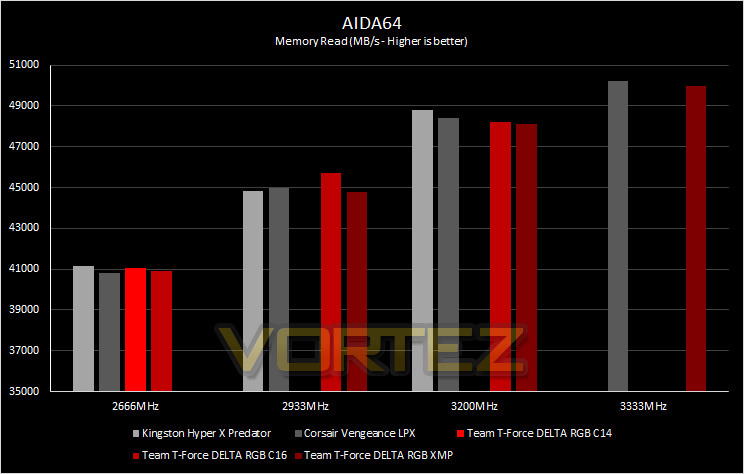
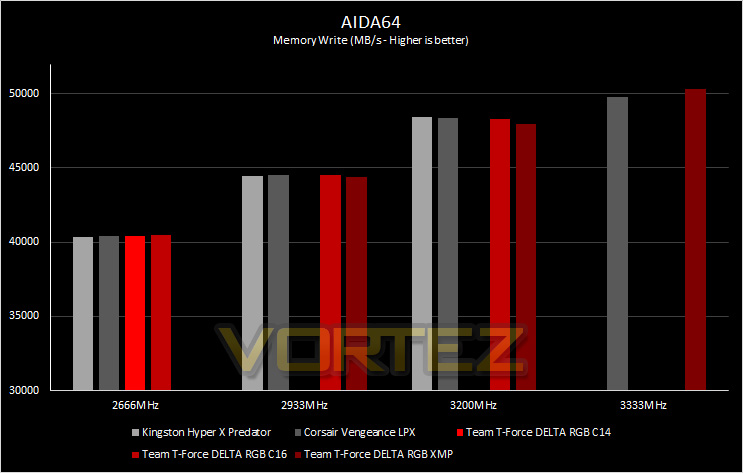
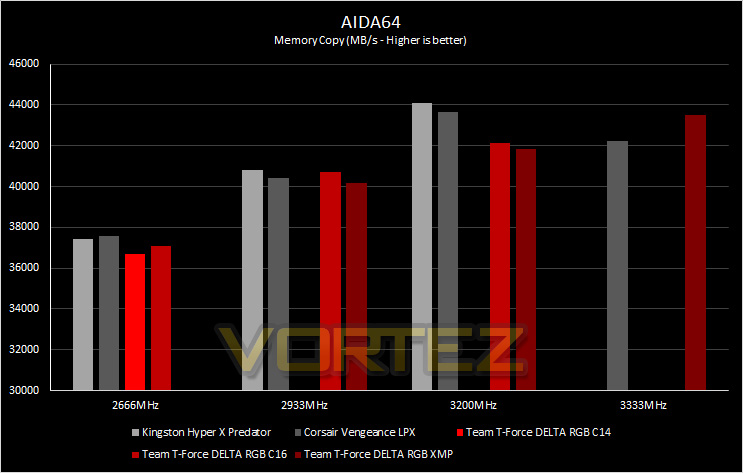
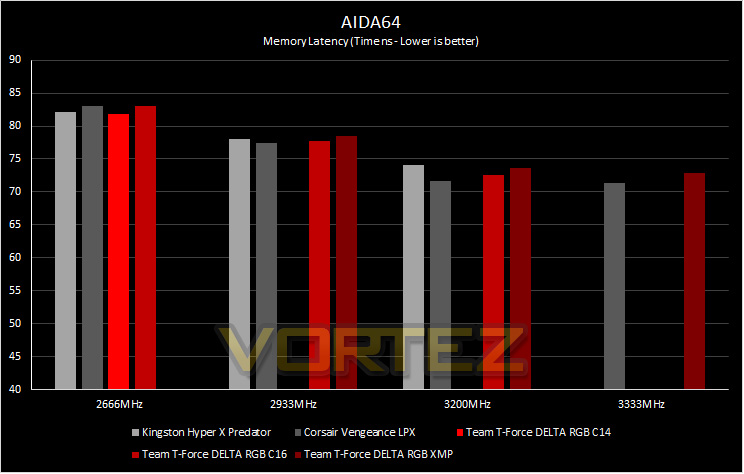
Bandwidth Performance – SiSoftware SANDRA
SANDRA isn’t always a benchmark that is included in hardware reviews but I believe it shouldn’t be ignored. SANDRA provides a vigorous package that tests your system in a rather large array of benchmarks. There are many aspects of benchmark that can be executed.
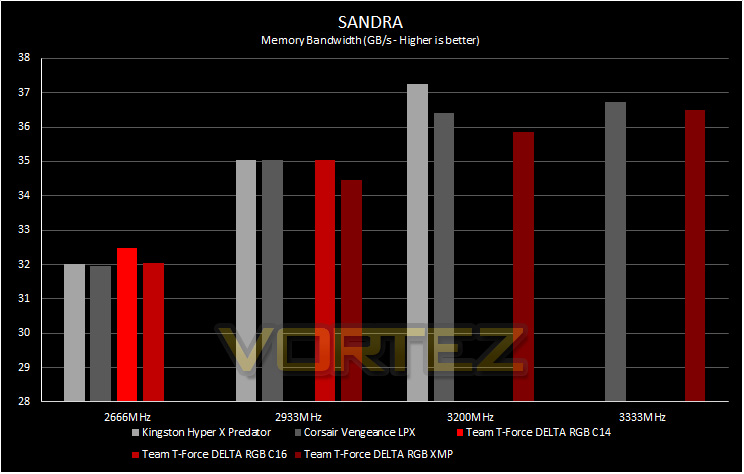
Processing Power Performance – Cinebench R15
CINEBENCH can measure systems with up to 64 processor threads. This test scene contains approximately 2,000 objects which in turn contain more than 300,000 polygons in total, and uses sharp and blurred reflections, area lights, shadows, procedural shaders, antialiasing, and much more. The result is displayed in points (pts). The higher the number, the faster your processor.
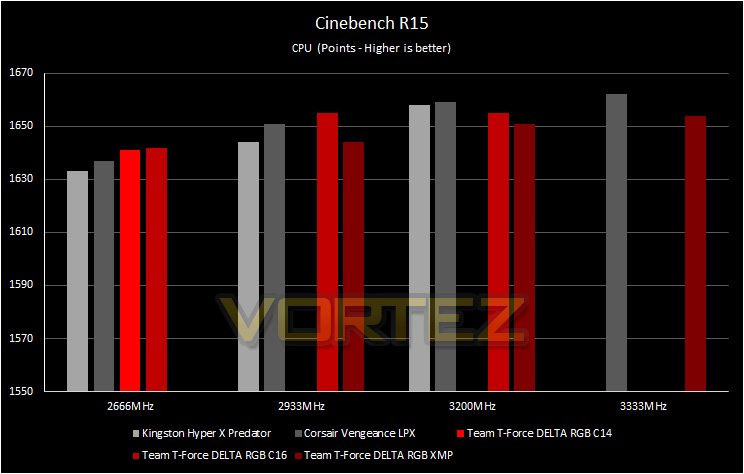
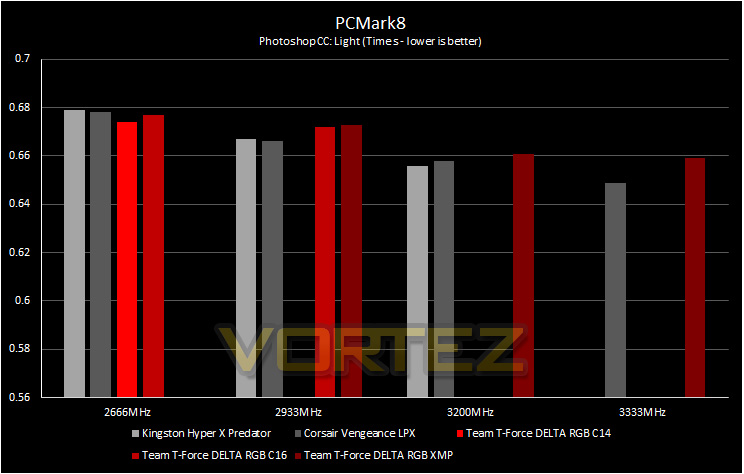
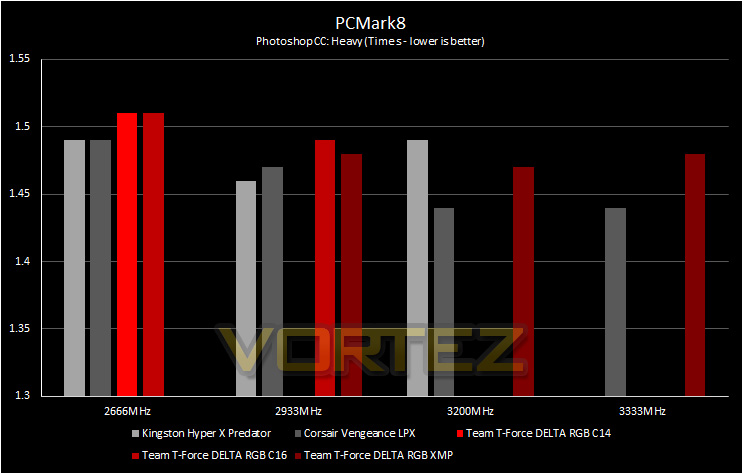
Image Editing Performance – PCMark 8 Photoshop
PCMark 8 Product Page Developed in partnership with Benchmark Development Program members Acer, AMD, Condusiv Technologies, Dell, HGST, HP, Intel, Microsoft, NVIDIA, Samsung, SanDisk, Seagate and Western Digital, PCMark 8 is the latest version in FutureMark’s popular series of PC benchmarking tools. Improving on previous releases, PCMark 8 includes new tests using popular applications from Adobe and Microsoft.
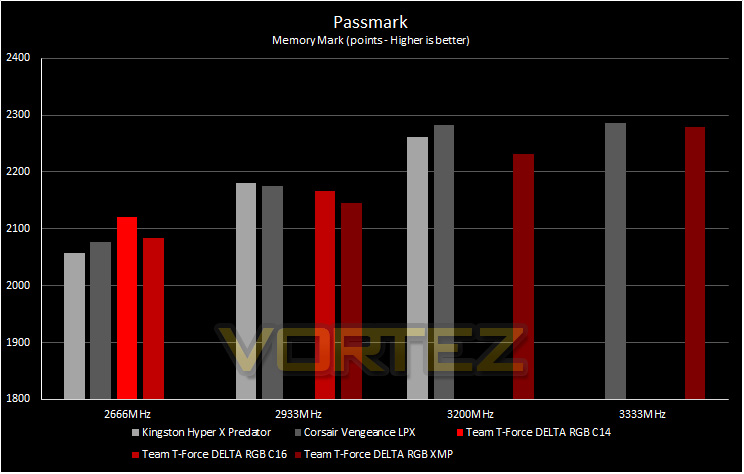
PassMark – Memory Mark
PassMark Performance Test. Fast, easy to use, PC speed testing and benchmarking. PassMark PerformanceTest allows you to objectively benchmark a PC using a variety of different speed tests and compare the results to other computers.
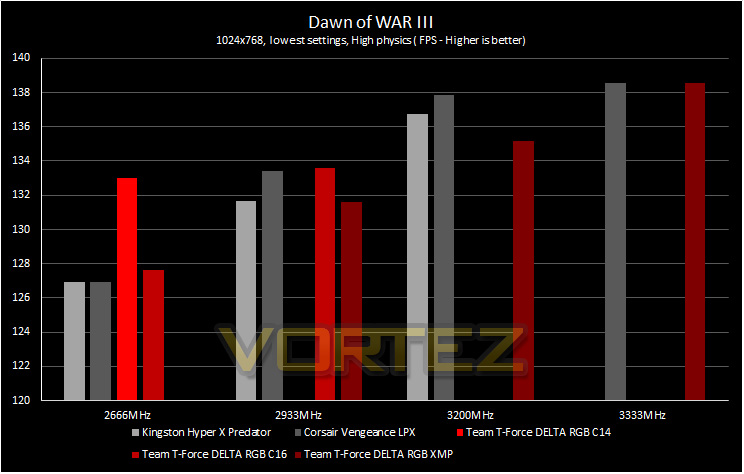
Gaming Performance – Dawn of War III
To test out the benefit of faster memory in a real world scenario, we have taken a recent game and created a CPU limited scenario by reducing the resolution and graphics settings to minimum, while setting the CPU dependent settings at their highest.
Conclusion
Team Group have done a brilliant job of presenting the market with an attractive memory kit with RGB lighting. The T-Force Delta RGB is available in both black/white at frequencies ranging from 2400MHz to 3000MHz. This range will satisfy the mainstream users and gamers looking to create an attractive, high-performance system. In our testing, we were happy to discover that there was even some overclock headroom over the XMP rating, so if you are confident enough to do so, you may be able to squeeze out that little extra.
The most appealing aspect of the T-Force Delta RGB is that it competitively priced, sitting amongst similar specified non-RGB LED memory kits. This will make it a prime choice for those looking to make a custom RGB system, without paying a harsh premium for those RGB LEDs. You also get the peace of mind knowing that this kit features the latest advancements in circuitry standards, along with the Lifetime warranty you would expect from a trusted manufacturer. The only real downside is that to access the advanced lighting effects, you will have to pair the memory with an ASUS Aura enabled motherboard, otherwise you will be stuck with a ceaseless rainbow of colour.
If you aren’t a fan of RGB lighting you will likely consider the non-RGB alternatives, but if RGB lighting is totally your thing, then, the T-Force Delta RGB is a high quality memory kit with advanced RGB lighting effects at a price point that is hard to ignore.
Pros
+ Efficient custom JEDEC RC 2.0 circuit
+ Vibrant ‘wide angle’ RGB lighting (with support for ASUS Aura Sync)
+ Overclock headroom
+ Tested and compatible with all current platforms
+ Available in Black/White
+ Available as 2400MHz/2666MHz/3000MHz, in 8/16 GB capacities
+ Interesting heat-spreader design
+ Price
Cons
– Requires an ASUS Aura motherboard for customisation
+ Efficient custom JEDEC RC 2.0 circuit
+ Vibrant ‘wide angle’ RGB lighting (with support for ASUS Aura Sync)
+ Overclock headroom
+ Tested and compatible with all current platforms
+ Available in Black/White
+ Available as 2400MHz/2666MHz/3000MHz, in 8/16 GB capacities
+ Interesting heat-spreader design
+ Price
Cons
– Requires an ASUS Aura motherboard for customisation
Click here for an explanation of our awards at Vortez.net.