The Shock PRO RGB features several upgrades, 7 preset RGB colours, an auto-adjusting headband, onboard controls, and powerful 40mm neodymium drivers.

Product on Review: Tt eSports Shock Pro RGB
Manufacturer: Tt eSports
Street Price: £39.99 / $39.99
The Shock gaming headset from Tt eSports has been their entry level model for some time now, and there has been several occasions where Tt eSports have proven that they aren’t afraid to change and improve things, as seen with the Shock 3D.
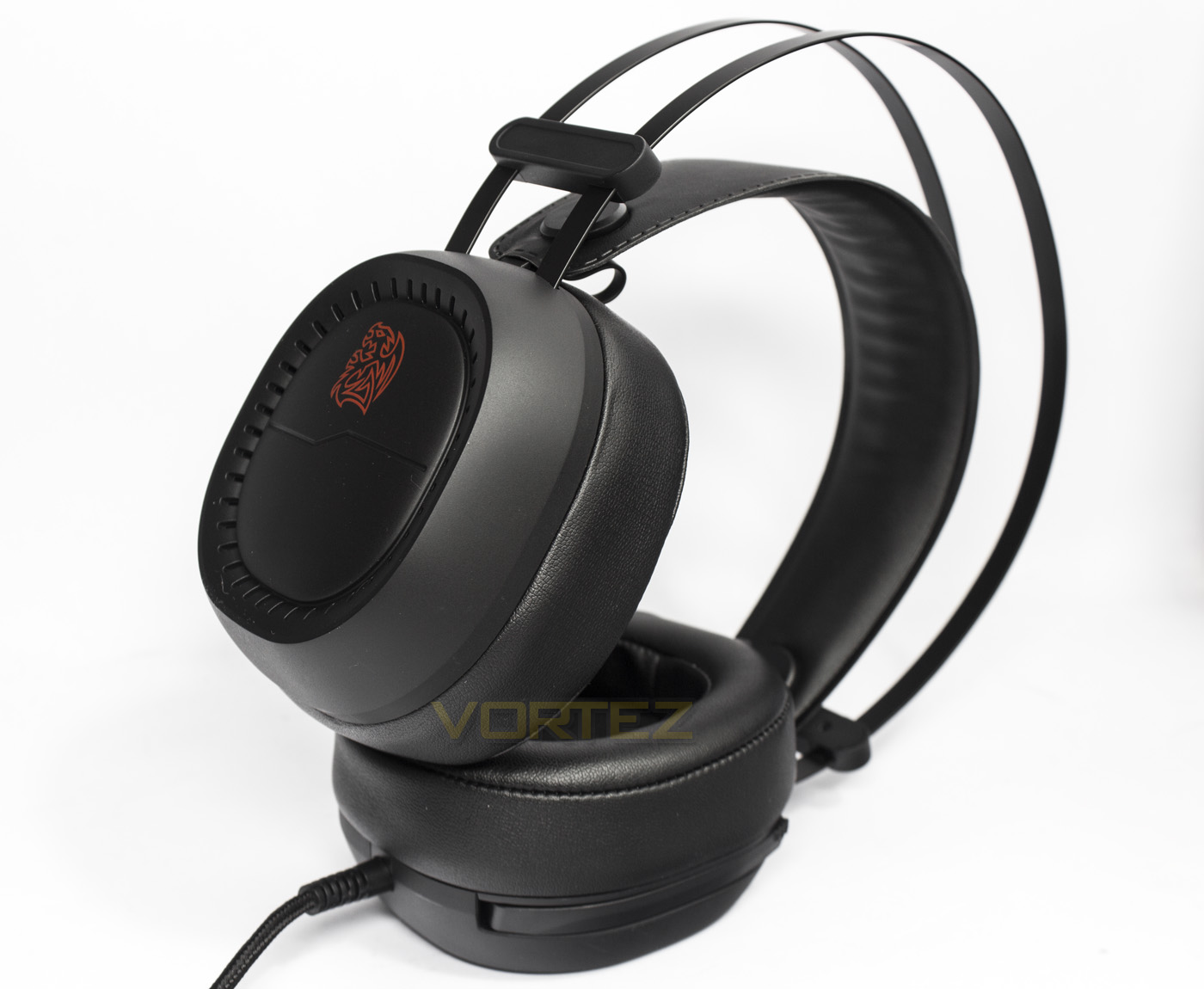
Late 2017, now 2018, the Shock PRO RGB is available, and aside from the title feature (RGB LED lighting), there are some substantial changes to be seen. It features a low profile suspension headband, 25mm thick, earpad, onboard controls, and a discrete fold-down microphone. The aesthetics themselves are fairly subtle, elegant and more mature. Promising ‘stunning sound’ and long lasting comfort, what more could a gamer want from a £40 headset?
Overview by Tt eSports
The SHOCK PRO RGB gaming headset comes in a sleek lightweight minimalistic design that features stunning sound and comfort for long gaming sessions. The design features include: a 40mm neodymium driver for rich audio clarity, 256 color illumination with 7 preset colors and 2 lighting effect modes: pulse jumping and single color pulse mode, auto-adjusting headband design, retractable microphone, built-in physical controls for easy access to volume, microphone and lighting controls, and thick ear cushion construction for optimal ergonomic comfort.
Technical Specifications
Driver Unit (mm): 40mm Neodymium Magnet
Channel: Stereo
Frequency Response: 20 Hz ~ 20 KHz
Impedance: 32 ohm
SENSITIVITY: 97 +/-3dB
Mic Directivity: OMNI-DIRECTIONAL
Mic Noise Cancelling: N/A
Mic Frequency: 100Hz ~ 10 KHz
Mic Impedance: < 2.2k ohm
Mic Sensitivity: -38 +/- 3DB
Channel: Stereo
Frequency Response: 20 Hz ~ 20 KHz
Impedance: 32 ohm
SENSITIVITY: 97 +/-3dB
Mic Directivity: OMNI-DIRECTIONAL
Mic Noise Cancelling: N/A
Mic Frequency: 100Hz ~ 10 KHz
Mic Impedance: < 2.2k ohm
Mic Sensitivity: -38 +/- 3DB
Packaging & First Look
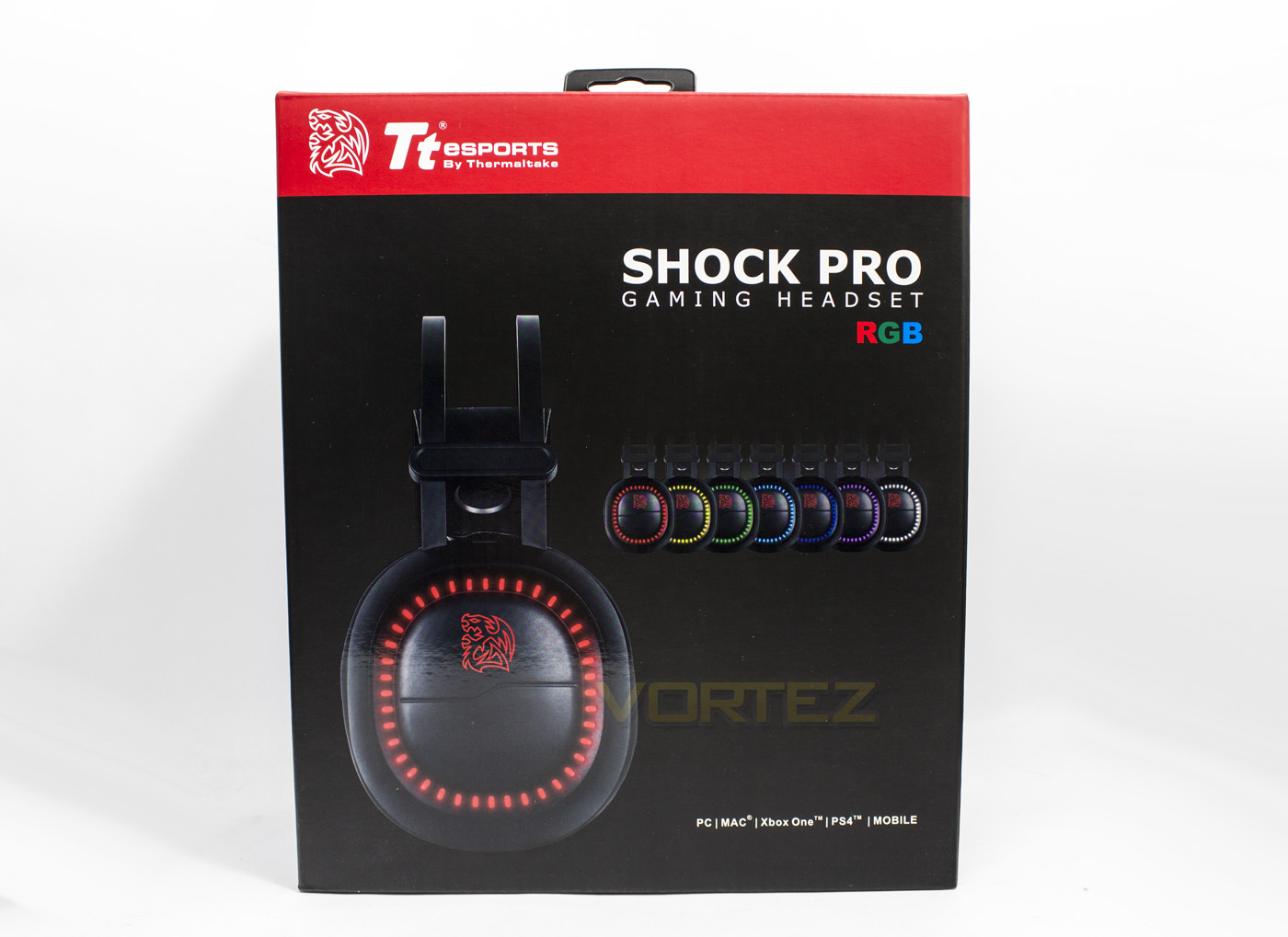
The packaging is self explanatory, and is easily identifiable as a Tt eSports product. The image features the side of the earcup showing the 7 preset colours available to select from.
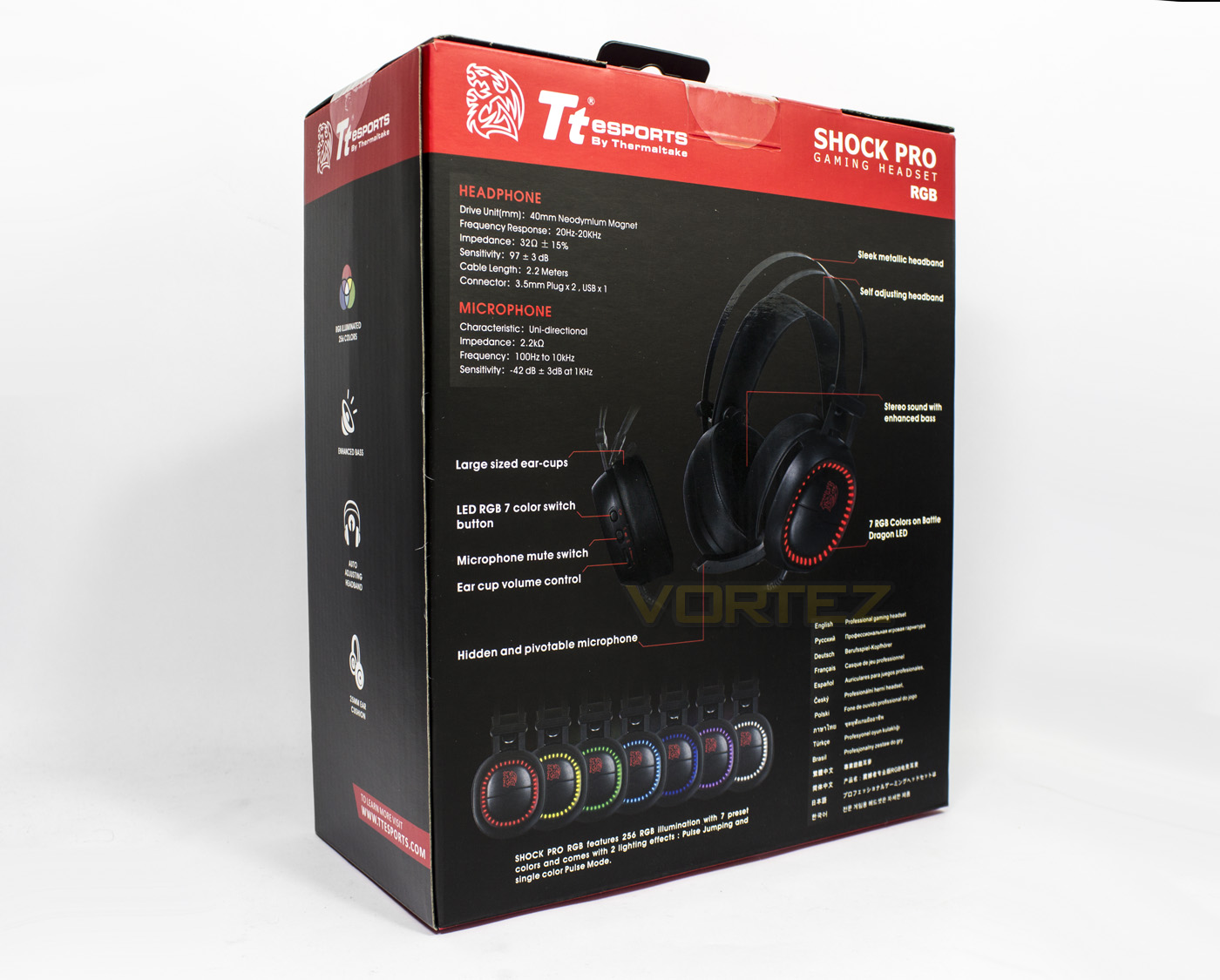
At the back we find the technical specifications alongside a diagram pointing out each of the key features, we aren’t entirely sure it was necessary to list the words ‘professional gaming headset’ in various languages, but at least it will confirm the obvious for those a little unsure of what they are looking at.
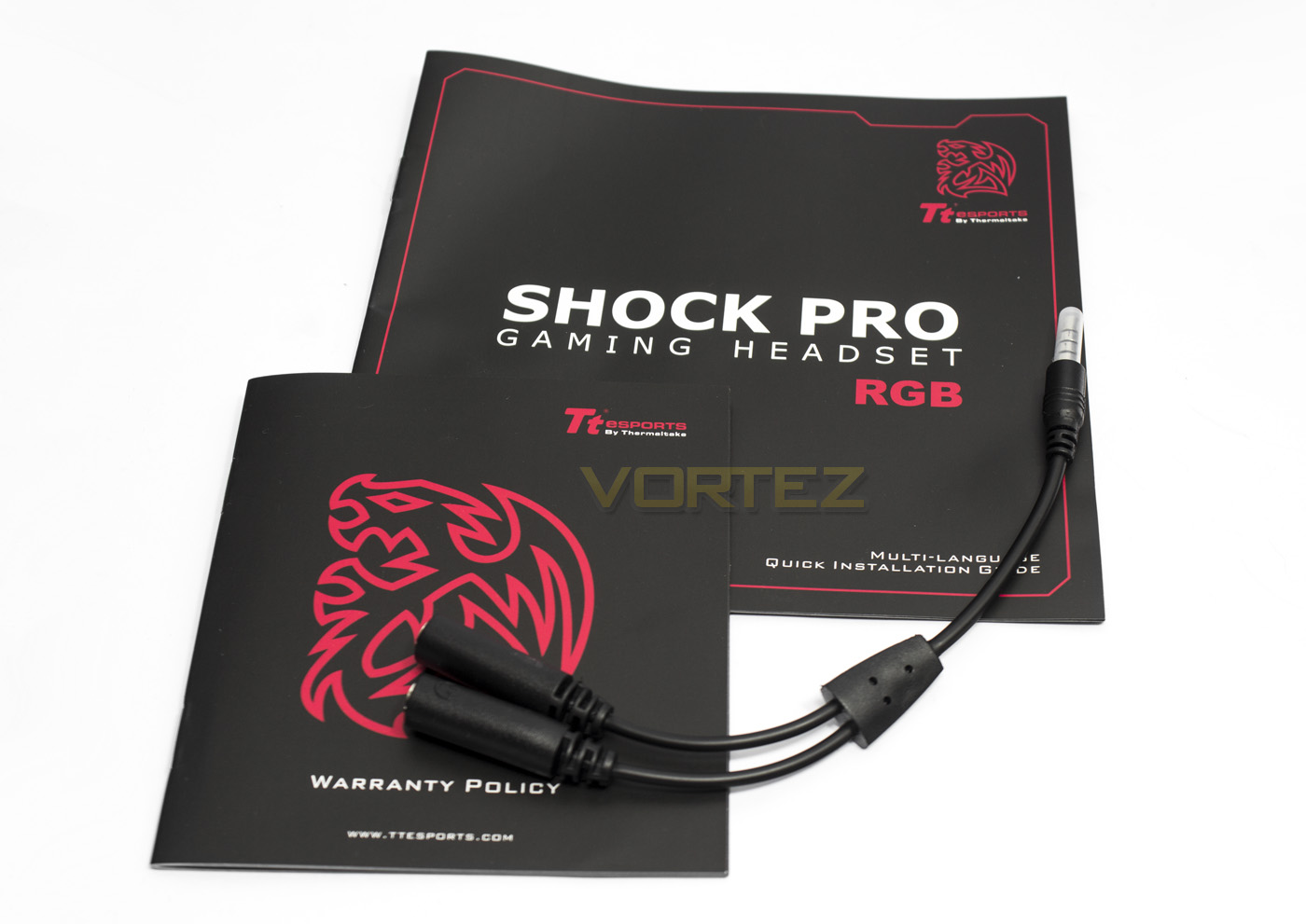
Inside we get a manual, warranty card and a braided 4pole adaptor for use with consoles, laptops, and mobile devices.
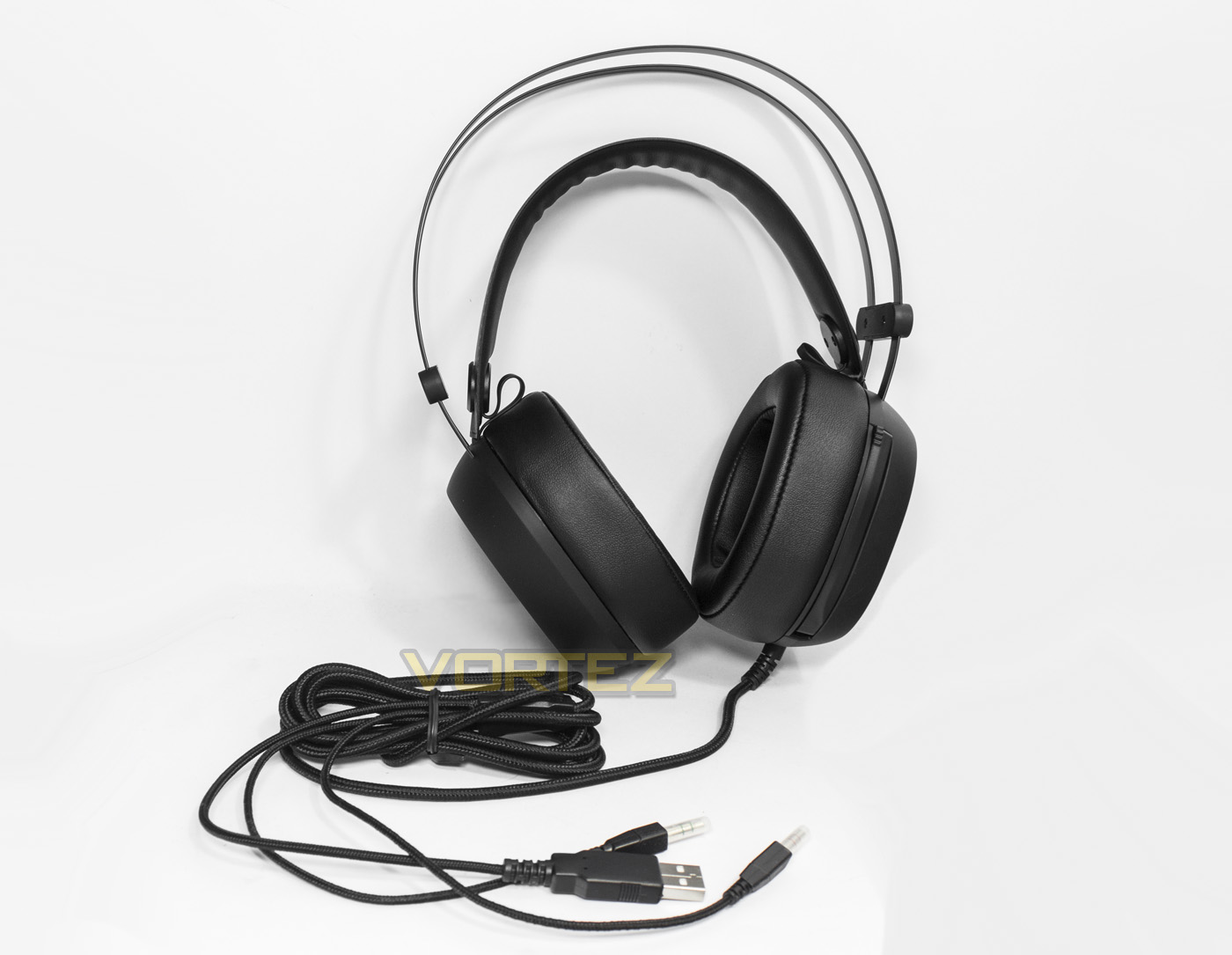
Comparatively, the earpads look huge when compared to the low profile frame, and the headset has a 2.2m long black braided cable.
Closer Look
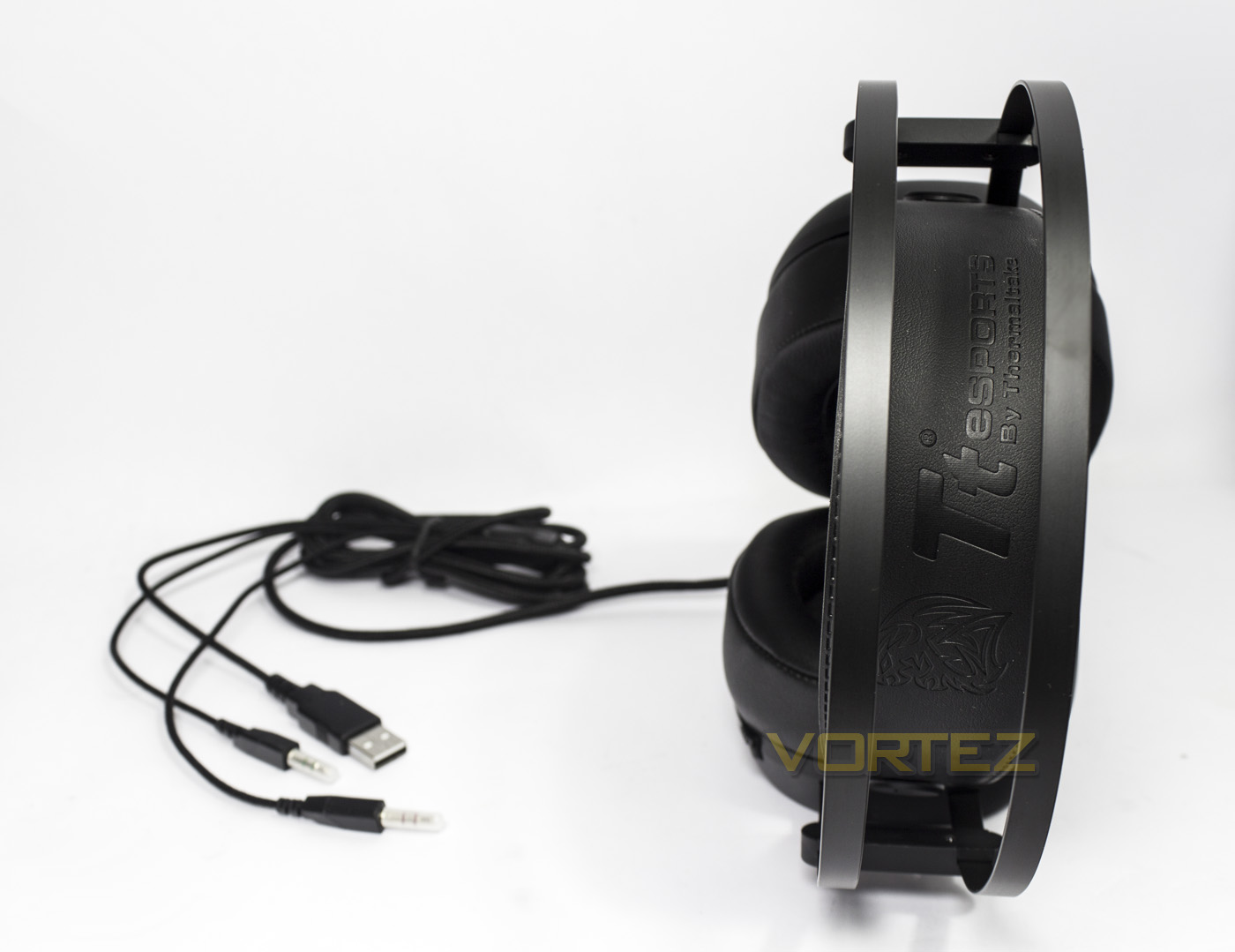
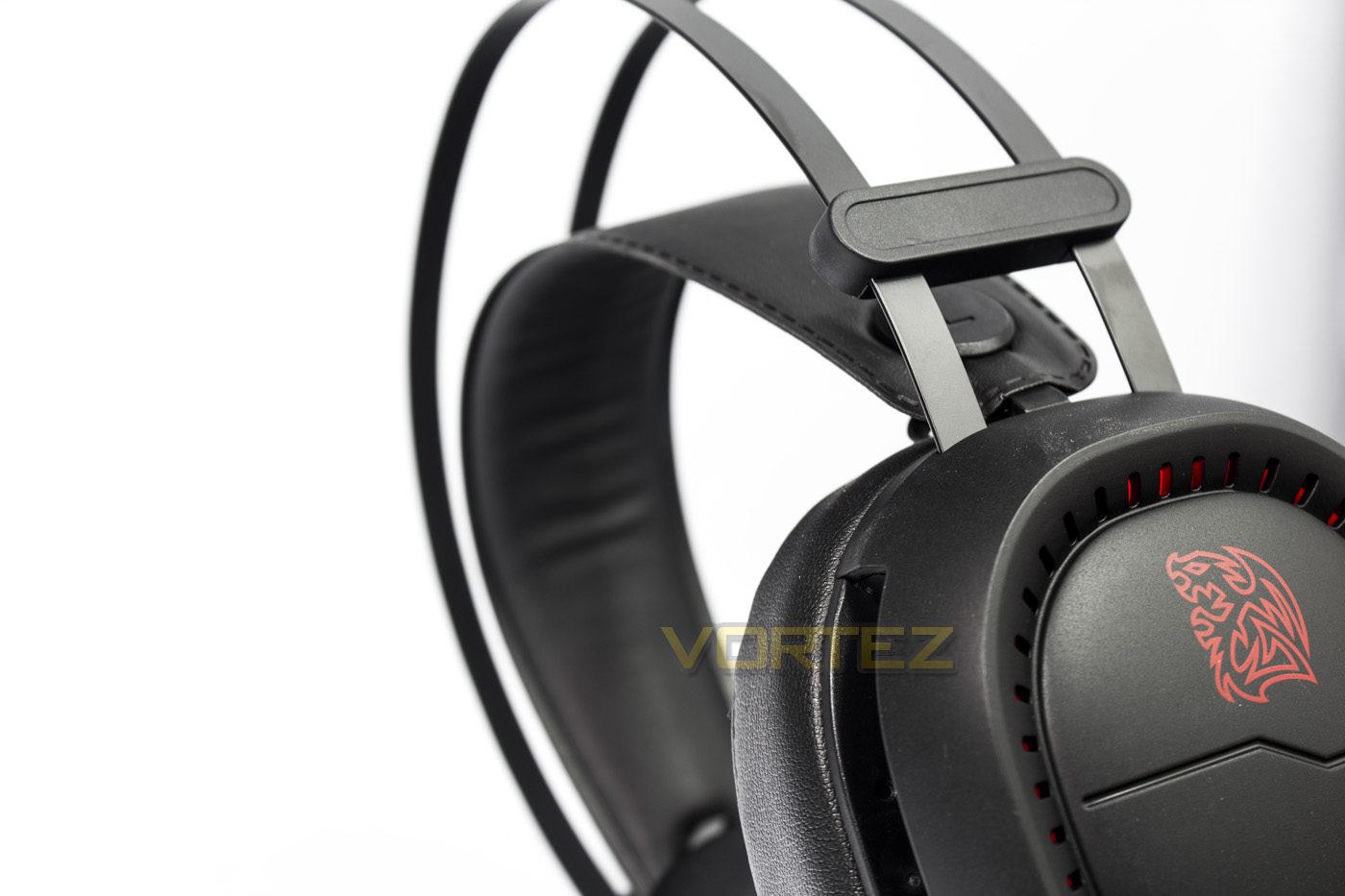
Here we can see that the Tt eSports logo has been embossed into the top of the headband.
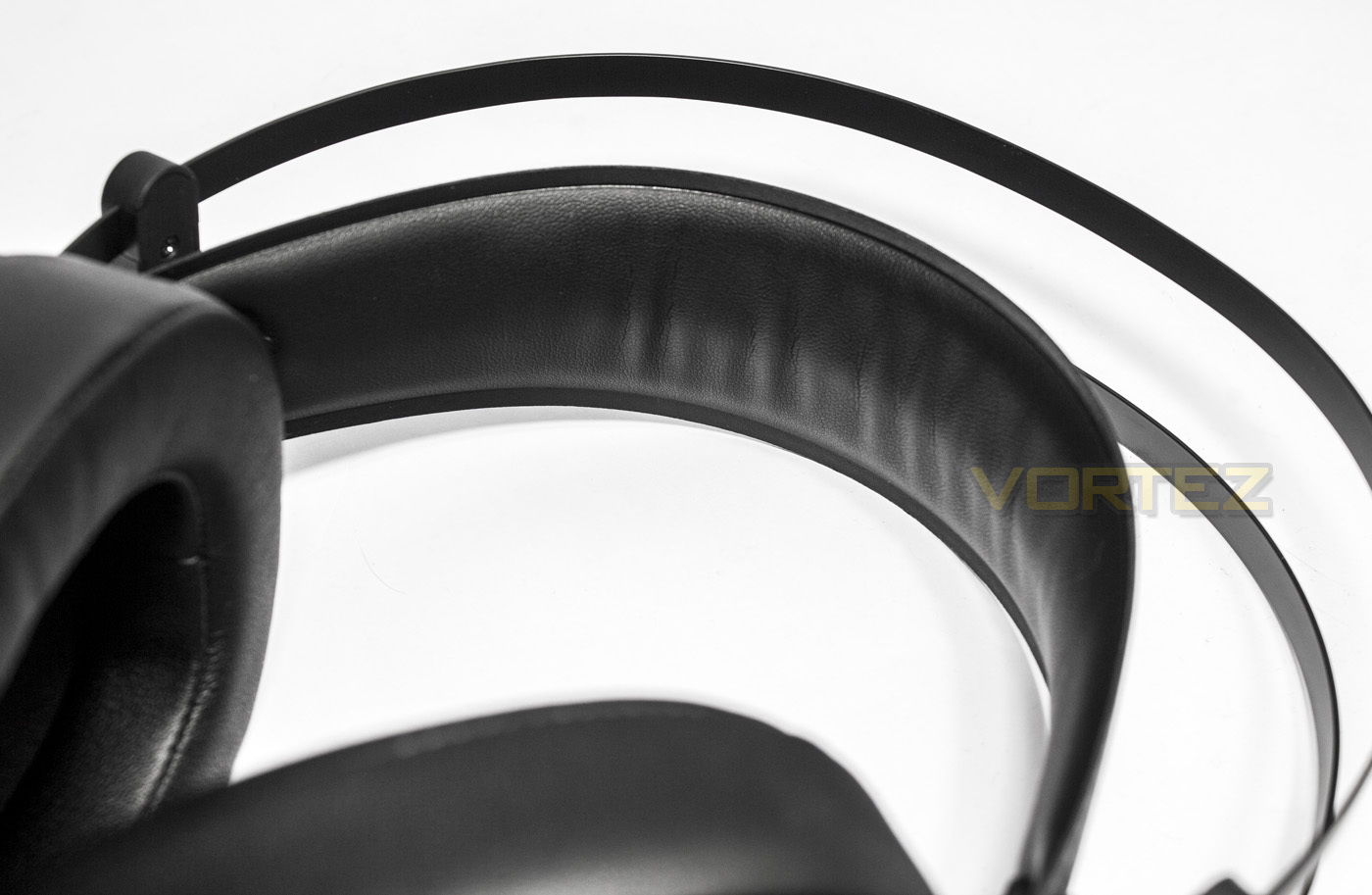
The headband itself looks like it is made from a soft, flexible plastic, and features a thin layer of foam sandwiched inside.
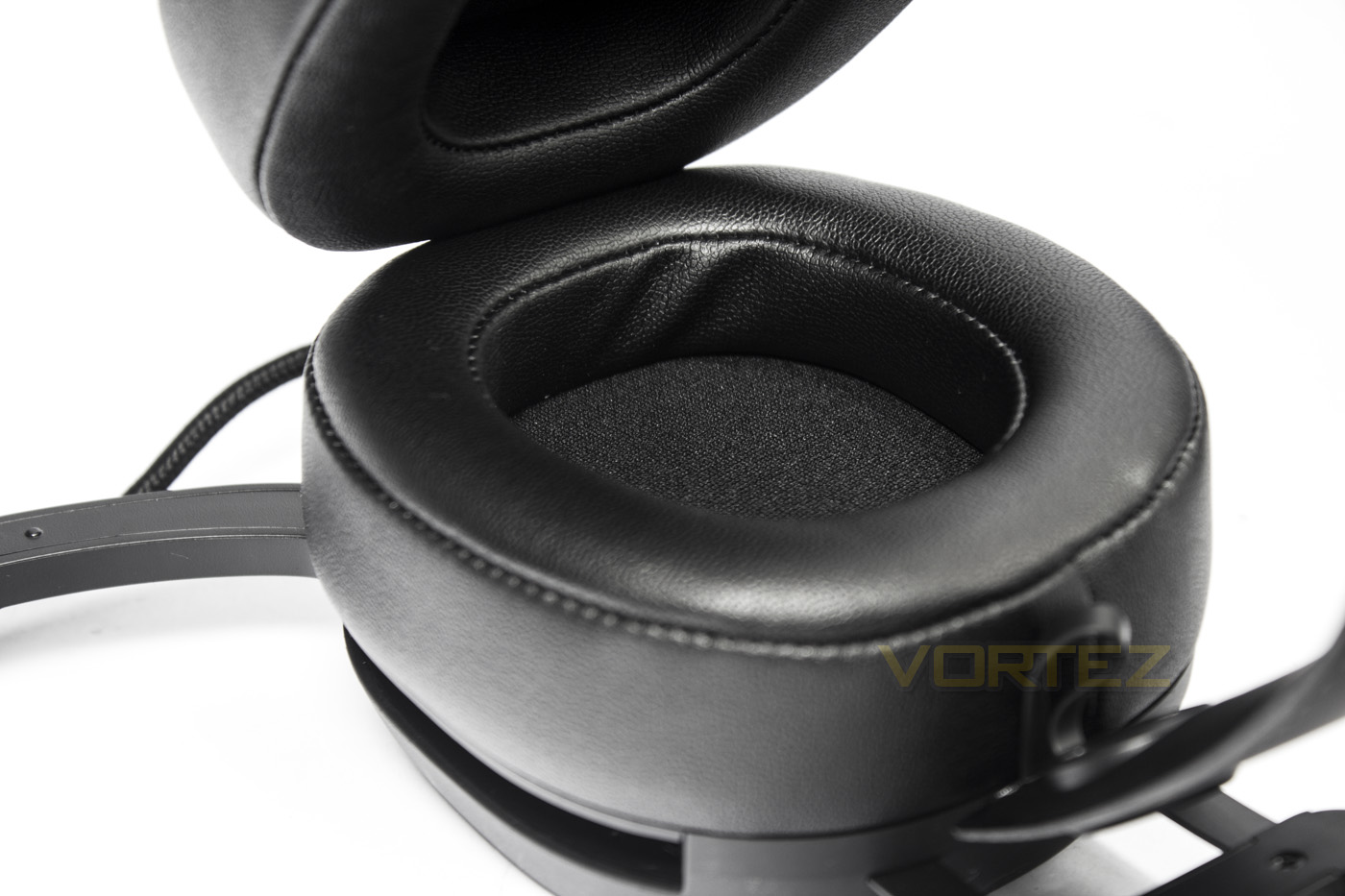
Tt eSports have provided plenty of space for your ears inside the earcups, and the 25mm thick foam is very soft and squishy and has been coated in a leatherette material.
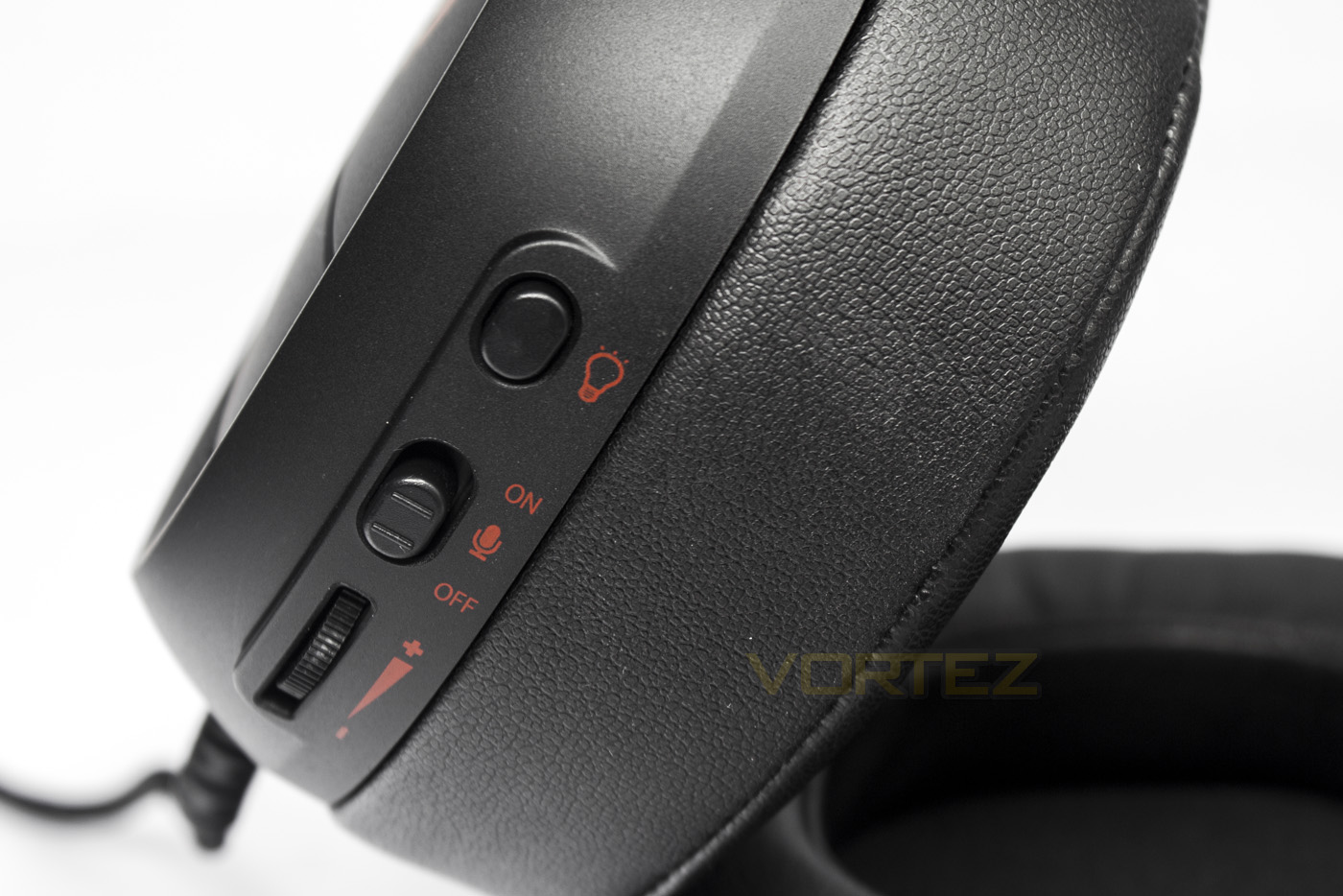
At the back of the left earcup, we find an LED button, microphone mute switch, and a volume dial.
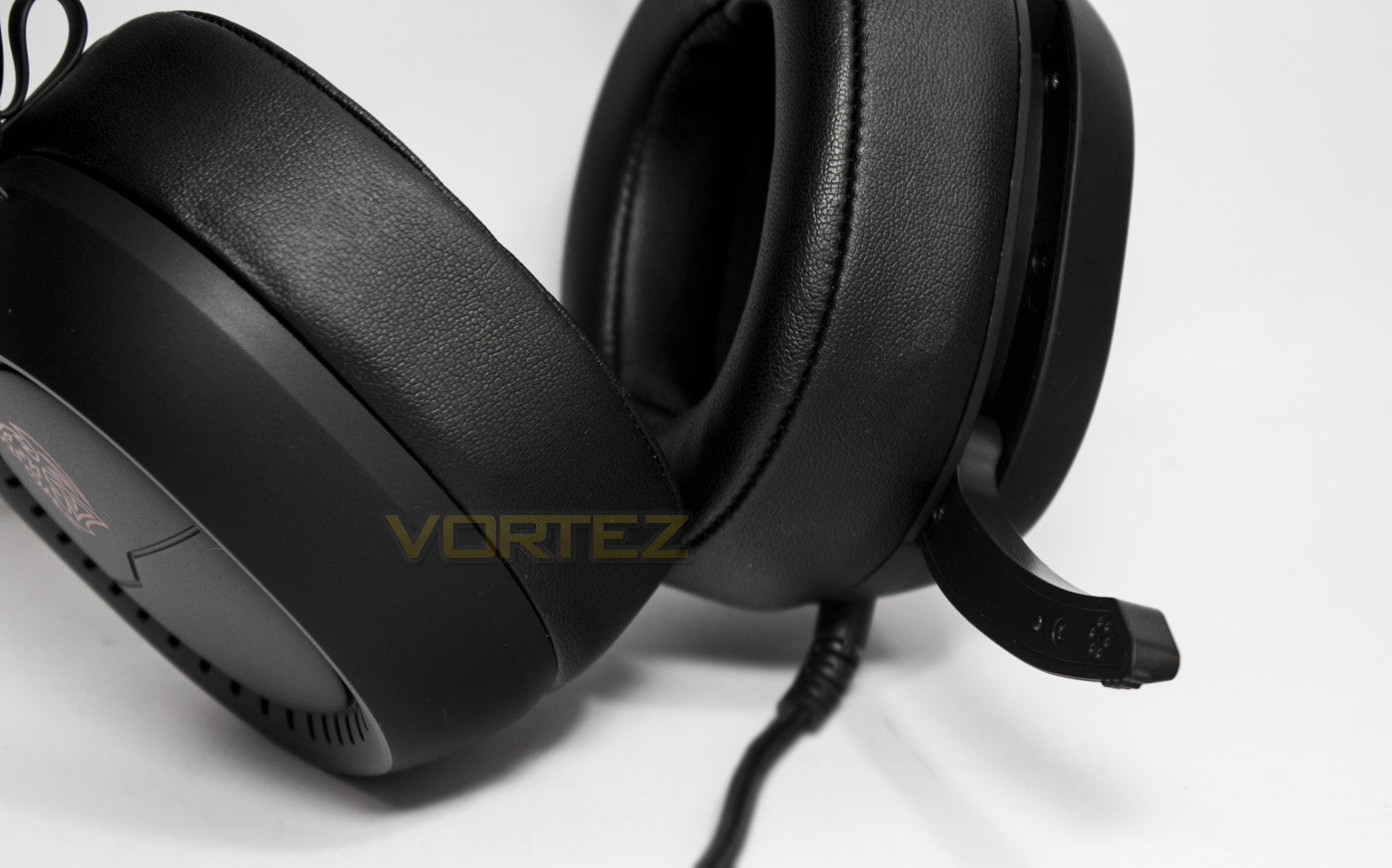
The microphone is tucked away inside the earcup, and features little plastic grips that help make it easy to pull the microphone down, it is however a little short, and is not flexible.
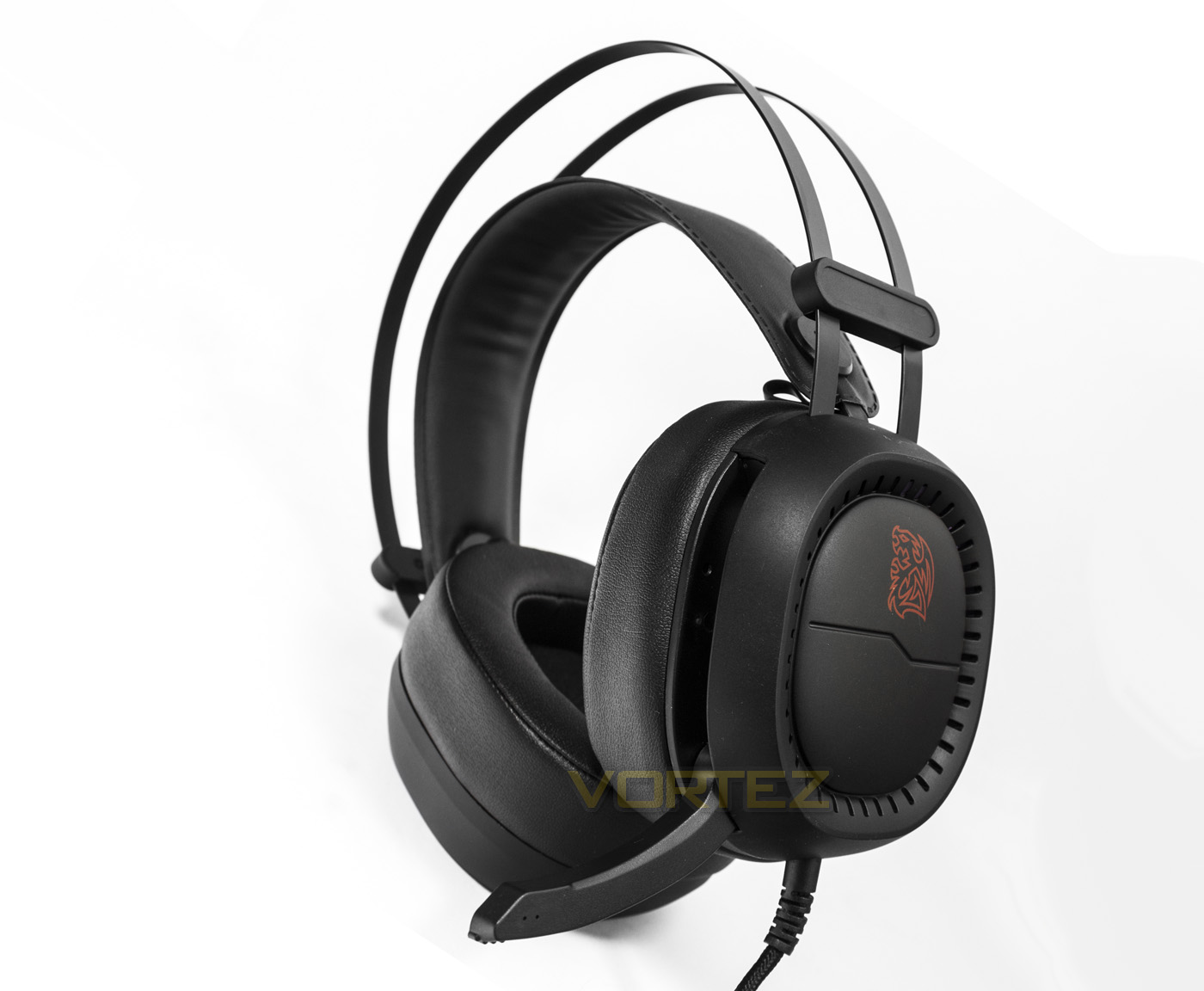
Overall we are pleased with the construction and design of the Shock PRO RGB, displaying a great level of progression from the Tt eSports team.
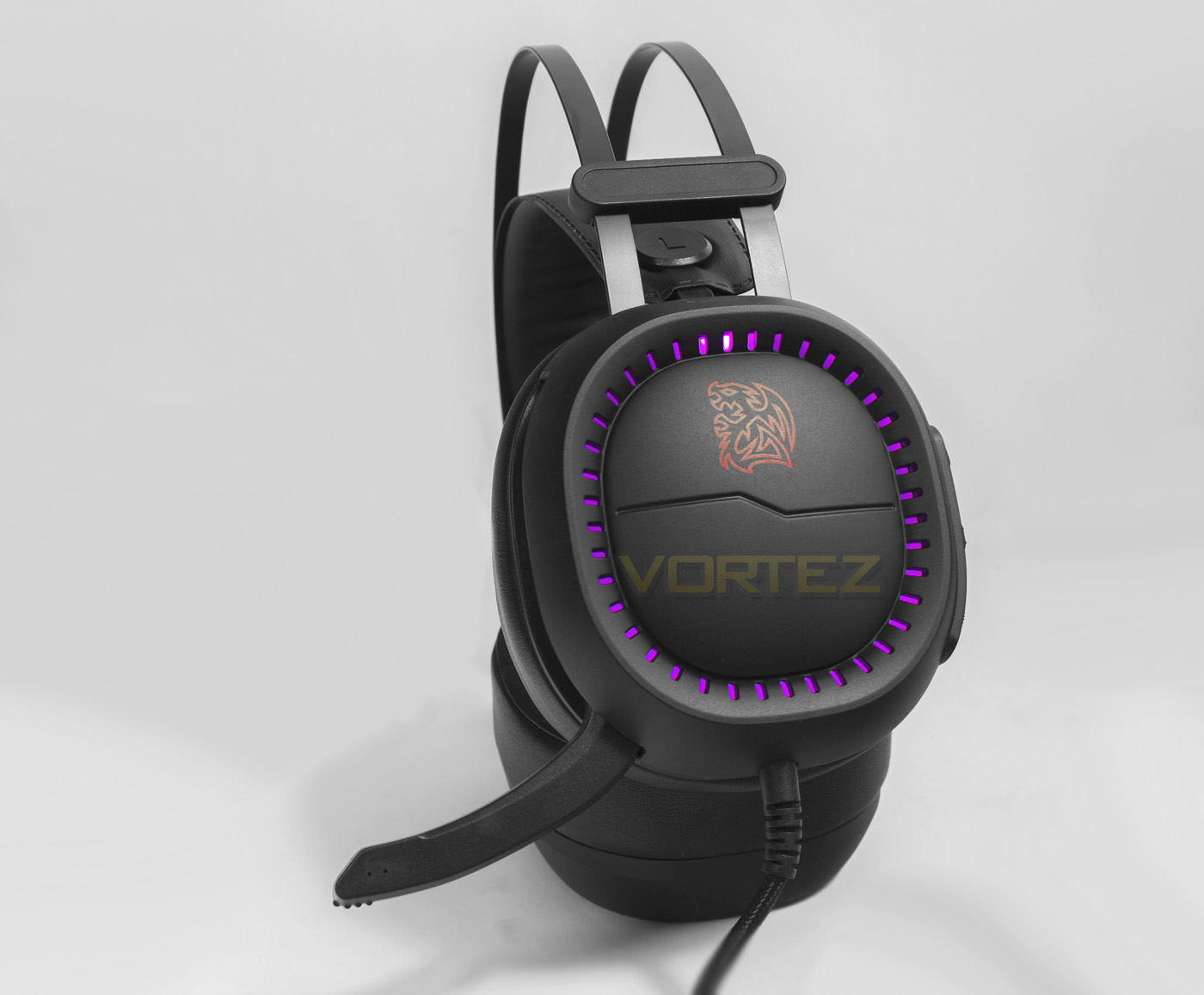
It’s a shame that the Battle Dragon was printed on in red, and didn’t take advantage of the LED lighting. Some images used online of the Shock PRO RGB suggests a sort of animated LED effects, however the colours are static. By default the headset slowly pulses between the 7 colours, to stop it cycling through the colours, press the LED button for 1s, to return to cycle, press again for 1s, to turn off the LEDs, hold the LED button, or press twice (we found the latter works best for turning off the LEDs).
Performance Testing
Setup, Design & Observations
The Shock PRO RGB is an analogue headset and so you will need a free headphone/microphone port on your system, or use the included adaptor to for use with the relevant audio port on your mobile device or console. It does however have an additional USB connector, which is purely for powering the LED lighting, this may cause some annoyance for those using the headset with a console, and of course, if your USB ports are rather scarce, you may not wish to waste one on lighting up the headset.
The headset itself feels well made, and sturdy, and while there is a lot of flexibility afforded by the headband, the earpads are static and do not rotate. On wearing the headset, we were found it very light, pleasant, and very comfortable for our long gaming sessions, and we didn’t notice any discomfort even while wearing glasses.
Locating the rear onboard controls was easy to do, and there was no real issue with muting the microphone, adjusting the volume, or changing the lighting (aside from the fact you can’t see the lighting while wearing it). The microphone too is very easy to pull down and push back up into its little slot.
Multimedia
To test out headsets, we use a flat/neutral/default settings (with no audio enhancement enabled) and listen through a mix selection of music tracks of various genres that are well known to us, and do a subjective comparison, along with a 10Hz-22KHz frequency sweep, we then take note of any additional features (such as virtual 7.1 for example), any required adjustments, then finally put it through several gaming sessions to see how well it performs regarding immersion, and spatial awareness.
We don’t normally feel the need to list our exact testing method for gaming headsets, but we felt that it would actually benefit the Shock PRO RGB to do so. Firstly, because in our music listening tests, the audio sounds very rich and warm, but missed some details in the middle to upper-mid tones as there seems to be a strong emphasis on the upper bass tones. We also noted that there was a surprisingly wide soundstage, noted not just while listening to music, but also watching videos, and in game. After going through these processes, we played around with the EQ settings, and found that using the below settings dramatically improved the audio quality, reclaiming many of the lost details while retaining a deep and rich bass.
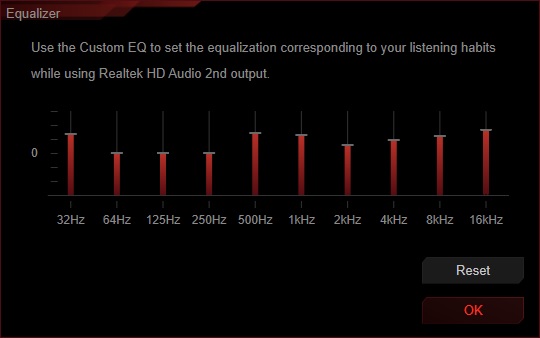
After changing the EQ settings, we went back and listening to various audio tracks, then played some Tom Clancy’s: The Siege, the Shock PRO RGB was performing excellently in regards to clarity and spatial awareness. Though, comparatively, the default audio signature is rather thick, and a little too biased towards the low tones.
Microphone
As the microphone is rather short, it didn’t reach anywhere near our mouth, ultimately effecting the volume of the voice pickup. Though, it remained audible and done a reasonable job at reducing background sounds. As a test, we moved the microphone slightly closer to our mouth, and fortunately, unlike another headset we viewed recently, the microphone sounds clear, albeit, a slight bias towards the higher tones. Though usable, your team-mates may have difficulty hearing you without adjusting the in-game volumes.
Conclusion
If you are looking for a great value gaming headset with RGB lighting, the Shock PRO RGB is certainly one to look out for. It looks great, and is very well made when considering the price tag! The biggest win of this headset is in its long lasting comfort, something that is an absolute necessity for gamers. The default audio signature of the Shock PRO RGB is a fairly generic, bass rich affair, however, with a little EQ tweak, it can sound great. Once you have that audio setup, we also appreciated the immersion provided by the super-wide soundstage (several times I removed the headset believing I had heard an external noise), quite possibly the best we have experienced in a sub £40 headset.
There are some points we wish to discuss, but to get the only real negative out the way; the microphone is too short causing poor pickup.
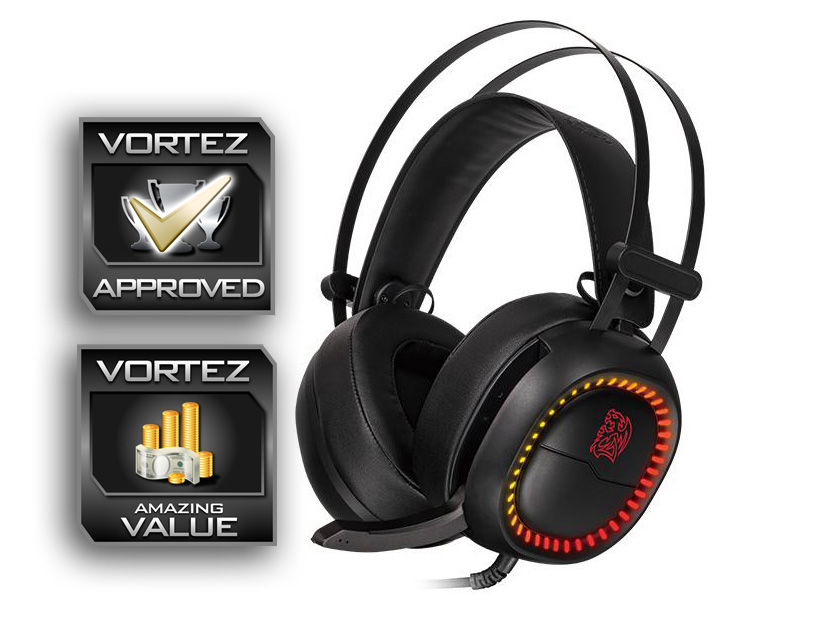
Aside from that, we felt that an auto-muting microphone would have been better than having a switch, due to the lack of an indicator, making it fairly easy to forget when your microphone is muted. Also, considering the lighting requires the use of a whole USB port, it would have been cool to have seen some more advanced lighting effects, especially when images (such as the one used for the award) are a little misleading, just to reiterate, this headset only displays single colours.
Overall, Tt eSports have created a good quality, affordable RGB headset that should certainly make your shortlist.
Once given a little tweak the EQ, the Shock PRO RGB sounded surprisingly good, while its long lasting comfort means you can focus more on your gaming session.
Pros.
+ Long lasting comfort
+ Attractive design + RGB lighting
+ Bass rich audio
+ Wide soundstage
+ Competitive pricing
Neutral.
+- Needs EQ tweaking to balance audio
+- No microphone mute indication
+- Earpads not removable
+- Basic lighting effects
Cons.
– Poor microphone pick up/microphone too far away from mouth (TFAFM)
+ Long lasting comfort
+ Attractive design + RGB lighting
+ Bass rich audio
+ Wide soundstage
+ Competitive pricing
Neutral.
+- Needs EQ tweaking to balance audio
+- No microphone mute indication
+- Earpads not removable
+- Basic lighting effects
Cons.
– Poor microphone pick up/microphone too far away from mouth (TFAFM)
Click here for an explanation of our awards at Vortez.net.