ZADAK might be relatively new to the PC components market but that hasn’t stopped them from putting out an appealing DDR4 memory kit. Read on for more about the ZADAK Spark RGB DDR4.

Product on Review: ZADAK Spark RGB
Manufacturer: ZADAK
Street Price: USD $249.99 (4133MHz – 16GB)
ZADAK are, in the grand-scheme of things, brand new to the PC industry, being founded in the latter half of 2015, so you’d be forgiven if you hadn’t heard of them until now. ZADAK produce some of the wackiest and coolest computer cases we’ve ever seen and have since moved into producing memory modules and AIO cooling loops.
Sent over to us for evaluation is their latest DRAM modules, the Spark RGB DDR4, which is aimed firmly towards enthusiasts and competitive gamers thanks to its overclocking ability and attractive design. Available in speeds ranging from 2666MHz through to 4133MHz and capacities of 8GB to 64GB, ZADAK offer their Spark RGB kits for a variety of budgets. Today we’re examining their fastest kit, the 16GB 4133MHz with latency ratings of 19-21-21-42 at 1.4V.
ZADAK’s Spark RGB supports ASUS Aura Sync, MSI Mystic Light Sync, GIGABYTE RGB Fusion 2.0, ASRock Polychrome Sync and Razer Chroma RGB to enable system-wide lighting effects and have verified performance with ASUS, MSI, GIGABYTE and ASRock on their Z390 and Ryzen platforms.
ZADAK are currently emerging into new markets so aren’t yet available in the UK but US pricing is currently $249.99. Let’s see how the high frequency kit fairs with our 3800X and if it offers a speed improvement.
ZADAK on the Spark RGB:
Firmly aimed at the high-end PC enthusiasts and gamers market, the SPARK RGB DDR4 brings together powerful memory module, overclocking capability and top-notch design elements to form a valuable addition to the ZADAK DDR4 family that is compatible with high-end motherboards. Overclocking is made simple with XMP 2.0 support allowing users to select their preferred profile for stable and reliable overclocking.
Technical Specifications
Type: 288-Pin DDR4 UDIMM
Series: SPARK MEMORY
Speed:
DDR4 2666 C16-18-18-38 1.2V
DDR4 3000 C16-18-18-38 1.35V
DDR4 3200 C16-18-18-38 1.35V
DDR4 3600 C17-19-19-39 1.35V
DDR4 4133 C19-21-21-42 1.4V
Capacity:
8GB Single
16GB Single
16GB(8GBX2)Kit
32GB(16GBX2)Kit
32GB(8GBX4)Kit
64GB(16GBX4)Kit
Color: Black & Silver
Heat Spreader: Anodized Aluminum
LED Color: RGB
Warranty: Limited lifetime warranty
Series: SPARK MEMORY
Speed:
DDR4 2666 C16-18-18-38 1.2V
DDR4 3000 C16-18-18-38 1.35V
DDR4 3200 C16-18-18-38 1.35V
DDR4 3600 C17-19-19-39 1.35V
DDR4 4133 C19-21-21-42 1.4V
Capacity:
8GB Single
16GB Single
16GB(8GBX2)Kit
32GB(16GBX2)Kit
32GB(8GBX4)Kit
64GB(16GBX4)Kit
Color: Black & Silver
Heat Spreader: Anodized Aluminum
LED Color: RGB
Warranty: Limited lifetime warranty
Packaging & Product
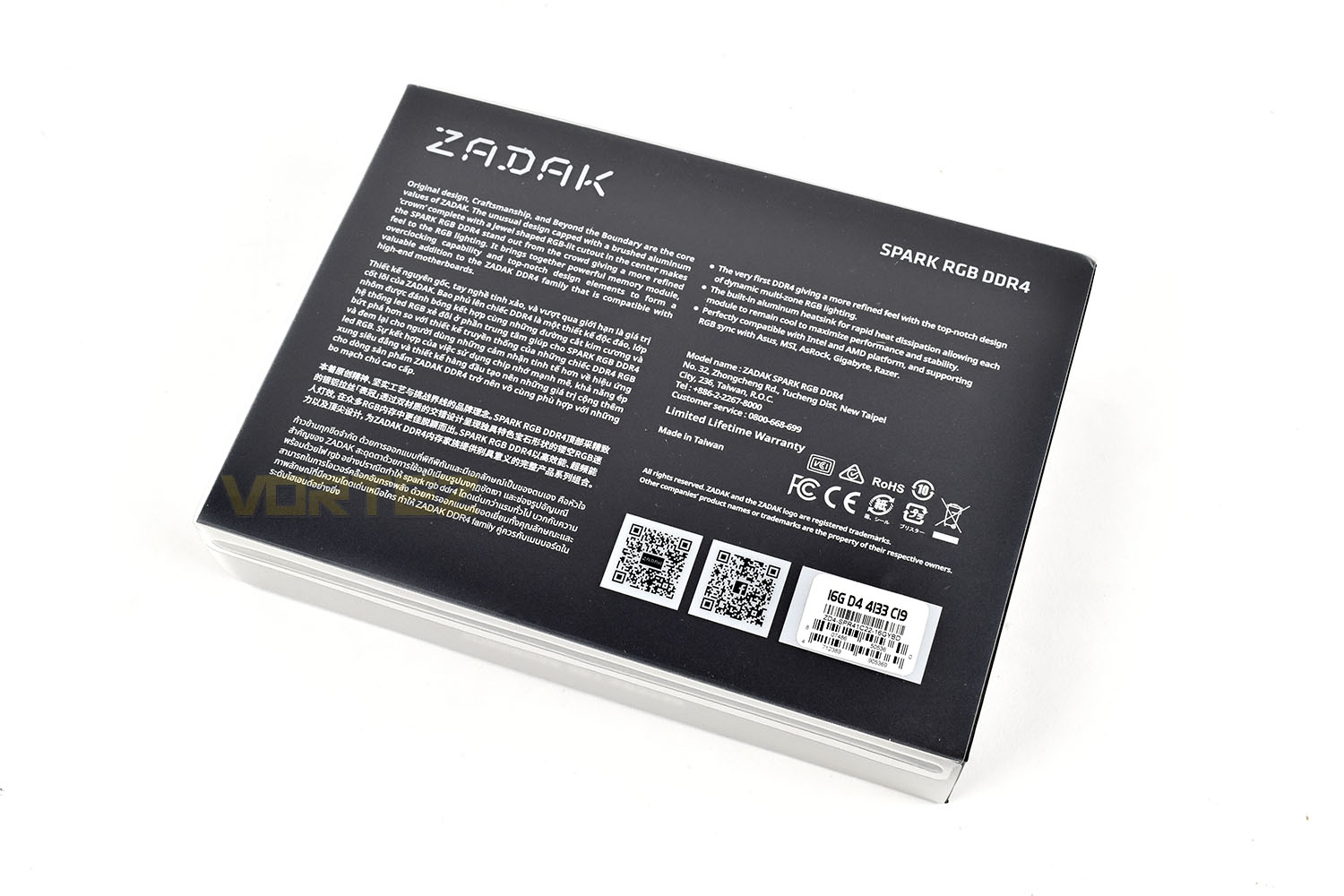
The packaging shows a teaser image of the DRAM modules and the name of the product but it’s pretty basic apart from that.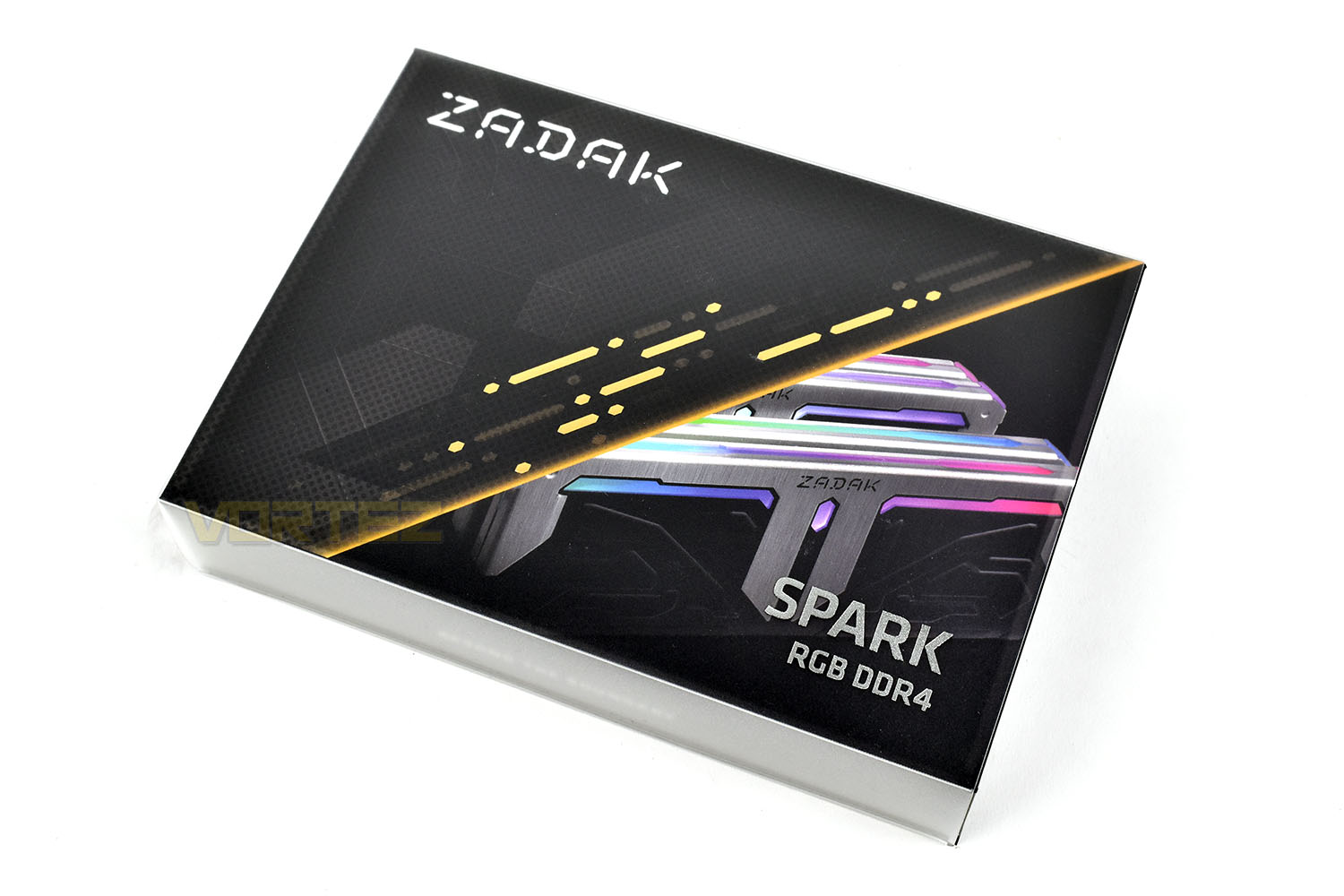
On the reverse is a brief description of the product and a few bullet points. The exact specifications are listed on the product sticker in the bottom-right.
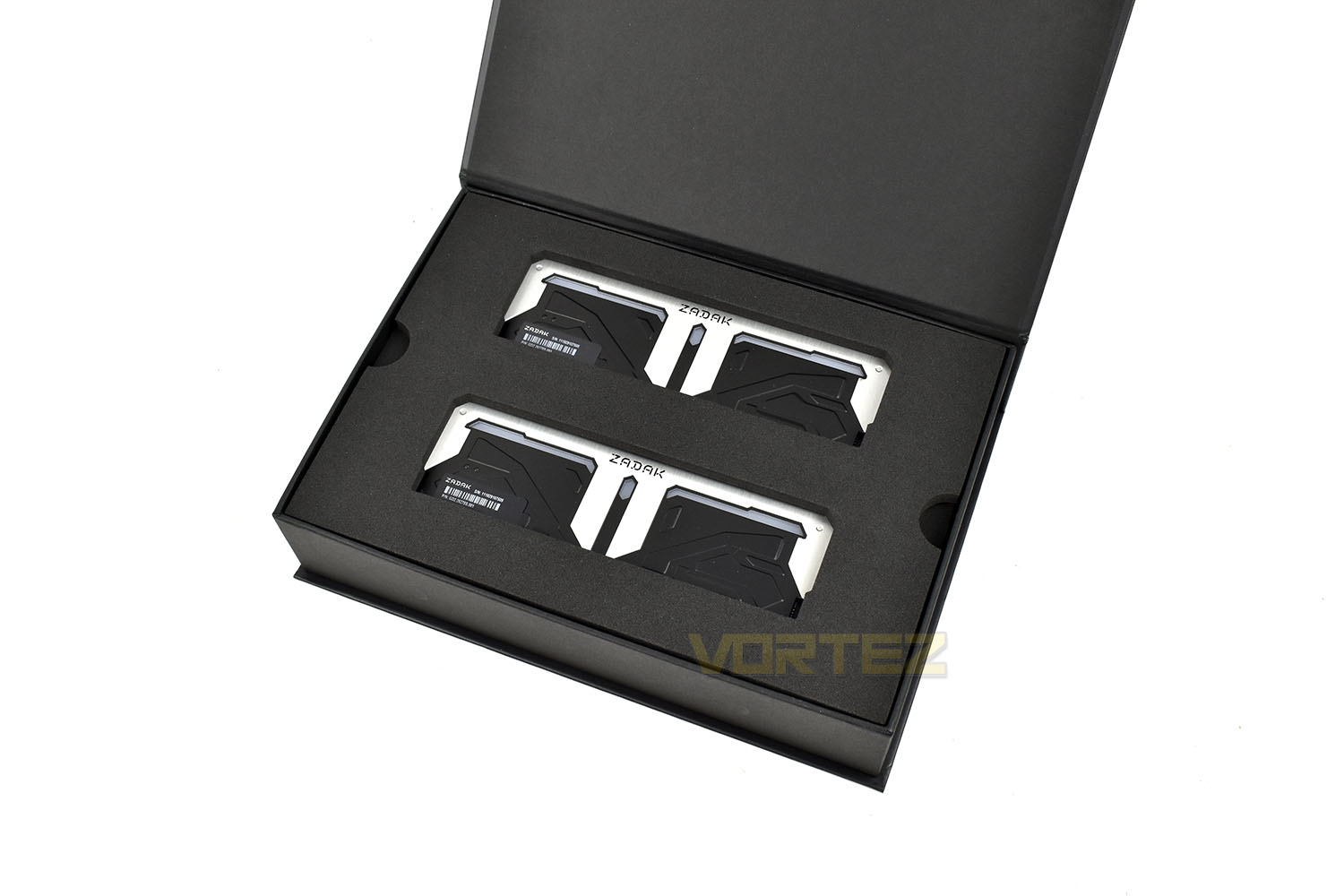
Inside the box is a dense foam insert ensuring the contents get to you in perfect condition. There’s no chance they’d become damaged in transit.
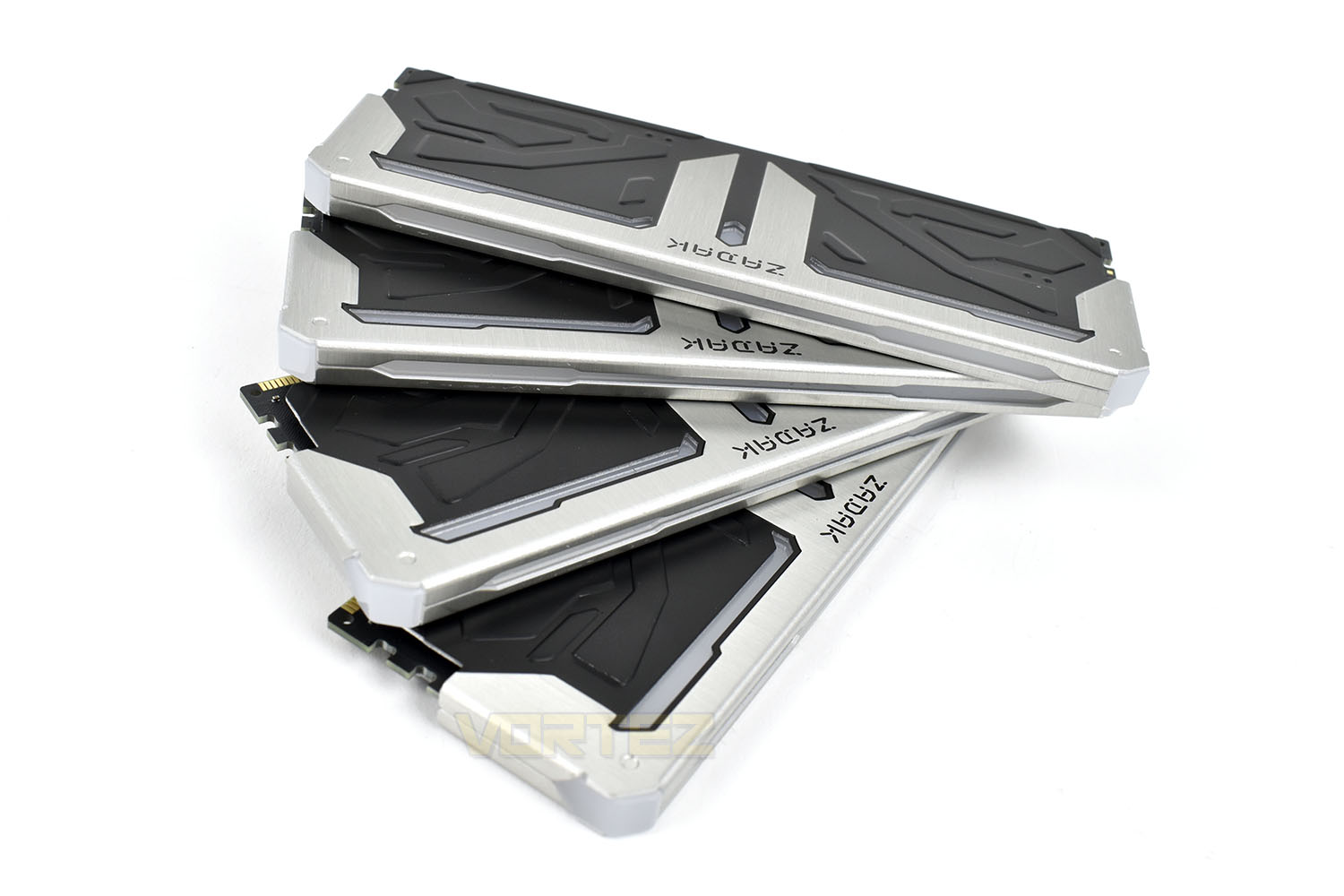
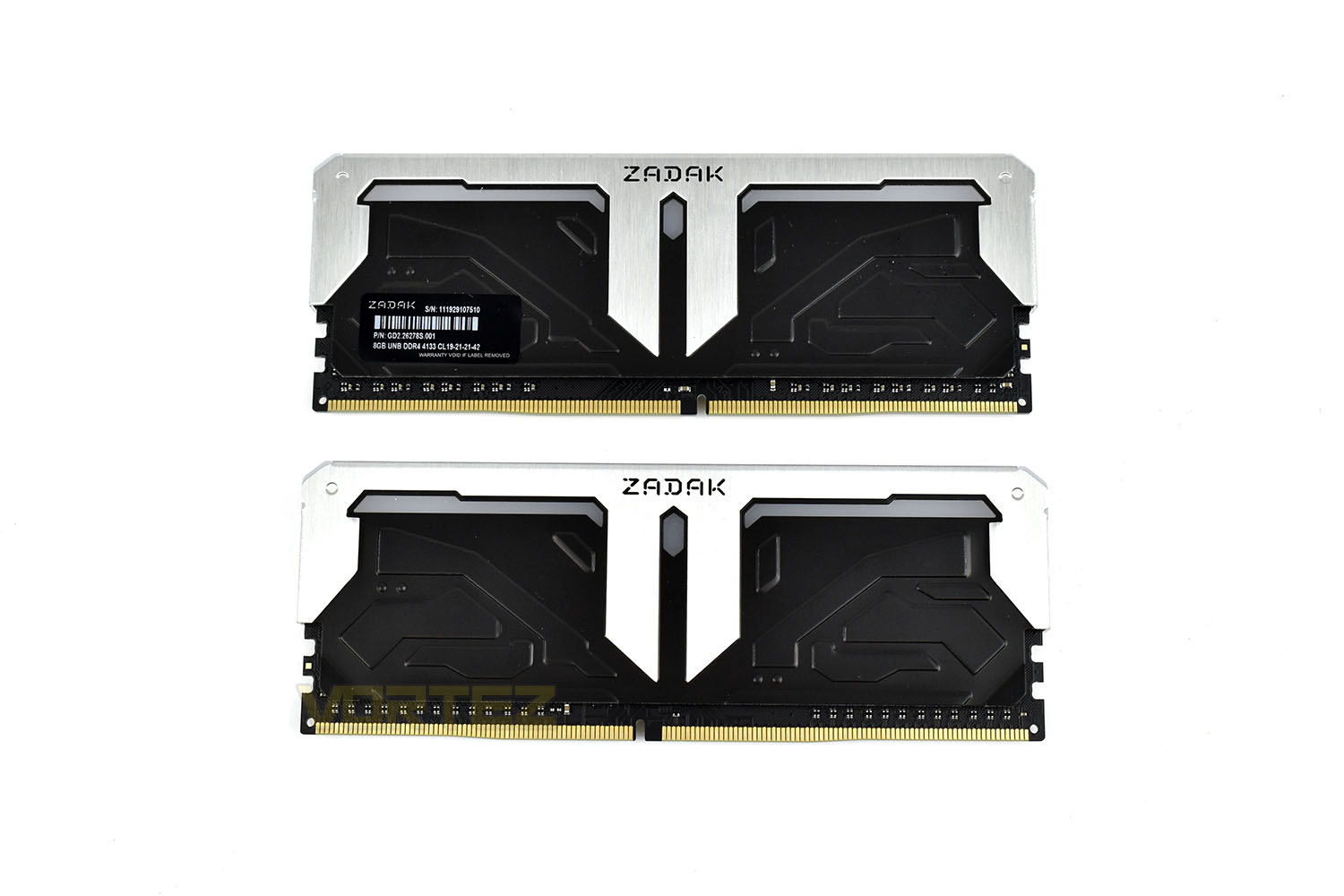
The brushed aluminium toppers, which we think look a little like Thanos’ helmet, contrast against the matte black heatspreaders really nicely. The translucent sections emit RGB lighting from the sides instead of focussing on the top of the modules. One feature that particularly stands out is the black product sticker, which ironically, doesn’t stand out at all. Other manufacturers could definitely learn a thing or two here; these stickers often ruin the appearance of other modules.
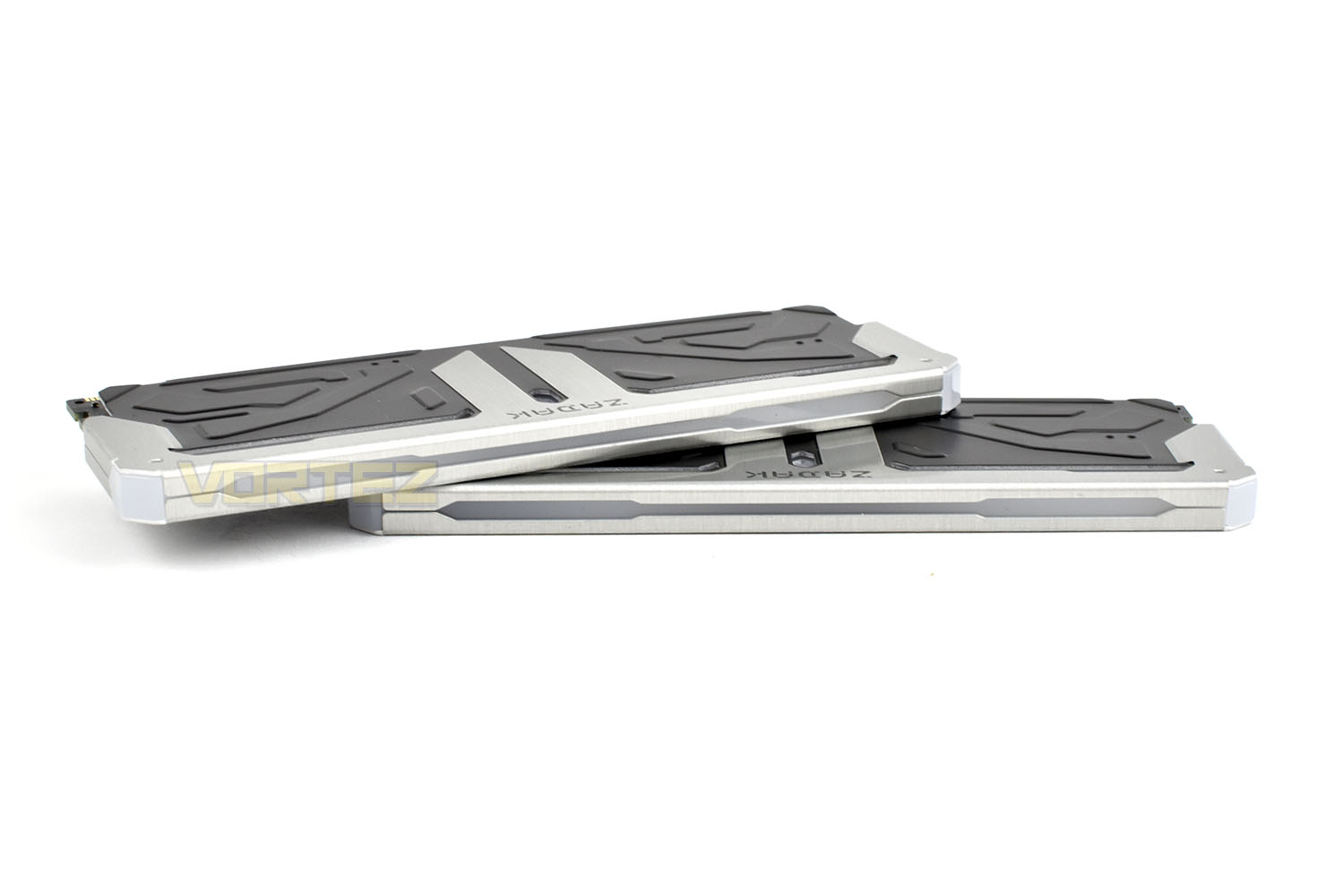
Along the top, cut through the aluminium piece, is a translucent strip that further helps with RGB lighting, the ends are also fully exposed to help illuminate nearby components with those shiny RGBs.
RGB Lighting
Test Setup & Software
Our test system is formatted and a fresh version of Windows is installed with just drives in place – no additional applications. Windows is then updated to the latest release and the drivers are installed.Included in the list of benchmarks are the following applications:
Benchmarks:
AIDA64
SiSoftware SANDRA
Cinebench R20
PCMark 8 Photoshop
Rise of the Tomb Raider
War Thunder
SiSoftware SANDRA
Cinebench R20
PCMark 8 Photoshop
Rise of the Tomb Raider
War Thunder
Test system:
CPU: AMD Ryzen 7 3800X
Motherboard: MSI Prestige X570 Creation
Graphics: AMD Radeon RX480
Memory:
PSU: Corsair RM750x
OS: Microsoft Windows 10 Pro 64-Bit
Monitor: ASUS ROG PG279Q
Motherboard: MSI Prestige X570 Creation
Graphics: AMD Radeon RX480
Memory:
PSU: Corsair RM750x
OS: Microsoft Windows 10 Pro 64-Bit
Monitor: ASUS ROG PG279Q
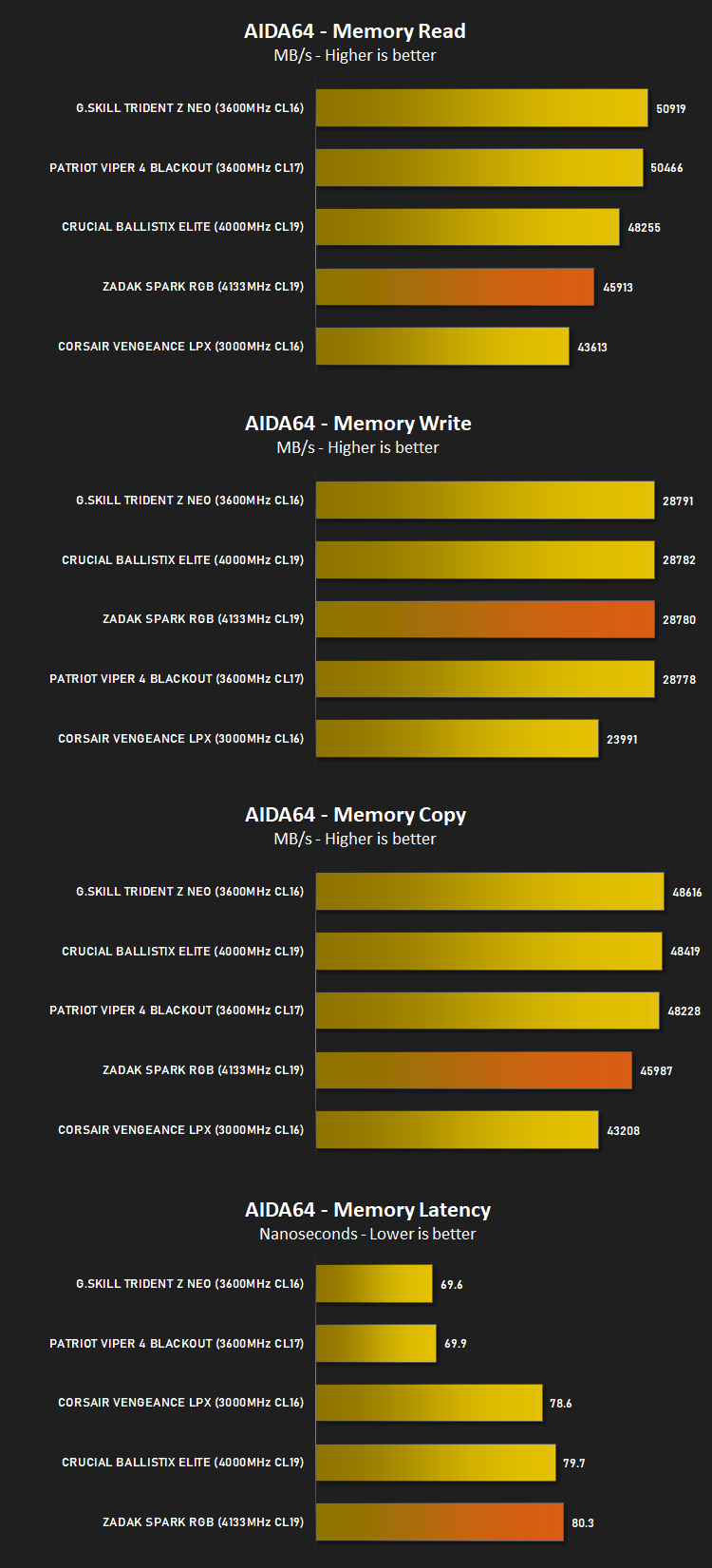
Memory Transfer Performance – AIDA64
AIDA64 Product PageMemory bandwidth benchmarks (Memory Read, Memory Write, Memory Copy) measure the maximum achiveable memory data transfer bandwidth. The code behind these benchmark methods are written in Assembly and they are extremely optimized for every popular AMD, Intel and VIA processor core variants by utilizing the appropriate x86/x64, x87, MMX, MMX+, 3DNow!, SSE, SSE2, SSE4.1, AVX, and AVX2 instruction set extension.
The Memory Latency benchmark measures the typical delay when the CPU reads data from system memory. Memory latency time means the penalty measured from the issuing of the read command until the data arrives to the integer registers of the CPU.
The Memory Latency benchmark measures the typical delay when the CPU reads data from system memory. Memory latency time means the penalty measured from the issuing of the read command until the data arrives to the integer registers of the CPU.
Bandwidth Performance – SiSoftware SANDRA
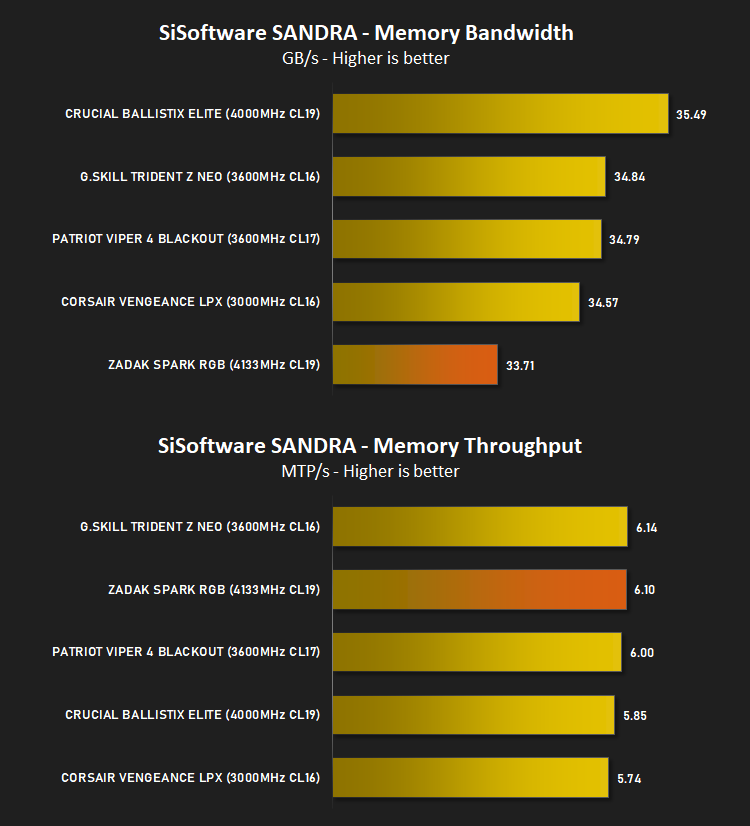
SANDRA isn’t always a benchmark that is included in hardware reviews but I believe it shouldn’t be ignored. SANDRA provides a vigorous package that tests your system in a rather large array of benchmarks. There are many aspects of benchmark that can be executed.
Processing Power Performance – Cinebench R20
Cinebench is a real-world cross-platform test suite that evaluates your computer’s hardware capabilities. Improvements to Cinebench Release 20 reflect the overall advancements to CPU and rendering technology in recent years, providing a more accurate measurement of Cinema 4D’s ability to take advantage of multiple CPU cores and modern processor features available to the average user.
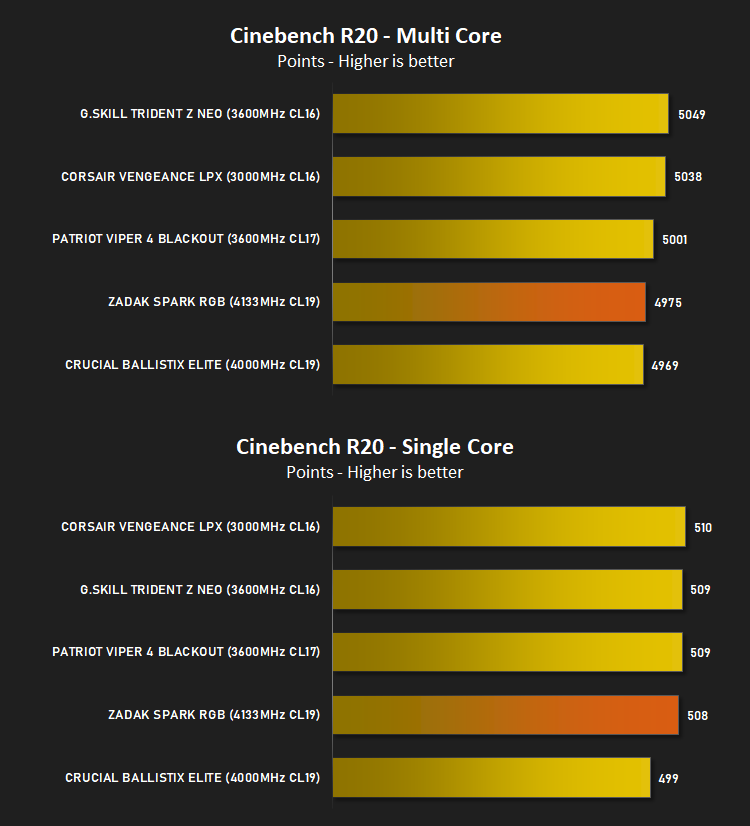
Image Editing Performance – PC Mark 8 Photoshop
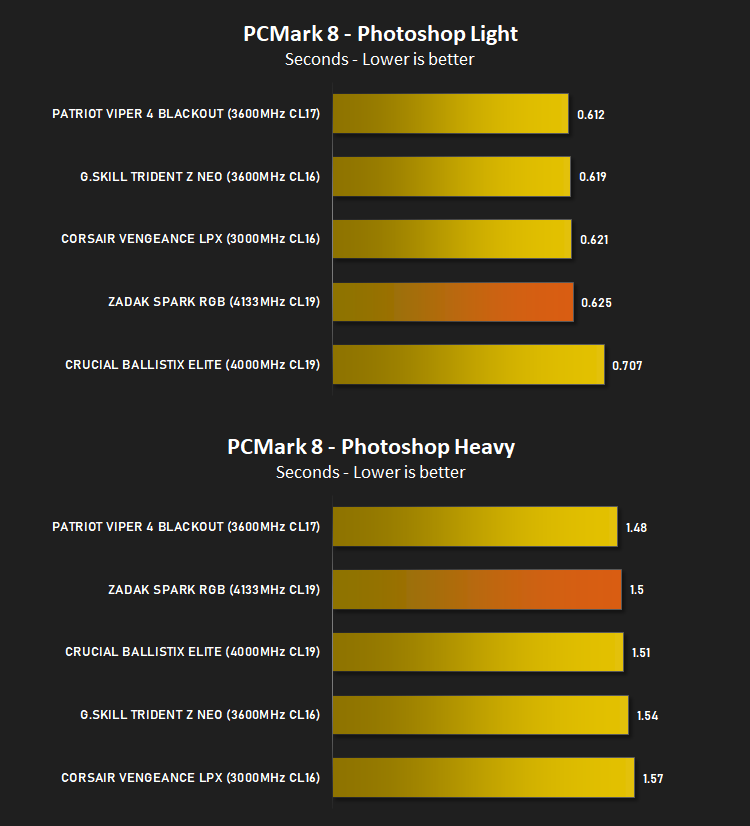
PCMark 8 Product Page Developed in partnership with Benchmark Development Program members Acer, AMD, Condusiv Technologies, Dell, HGST, HP, Intel, Microsoft, NVIDIA, Samsung, SanDisk, Seagate and Western Digital, PCMark 8 is the latest version in FutureMark’s popular series of PC benchmarking tools. Improving on previous releases, PCMark 8 includes new tests using popular applications from Adobe and Microsoft.
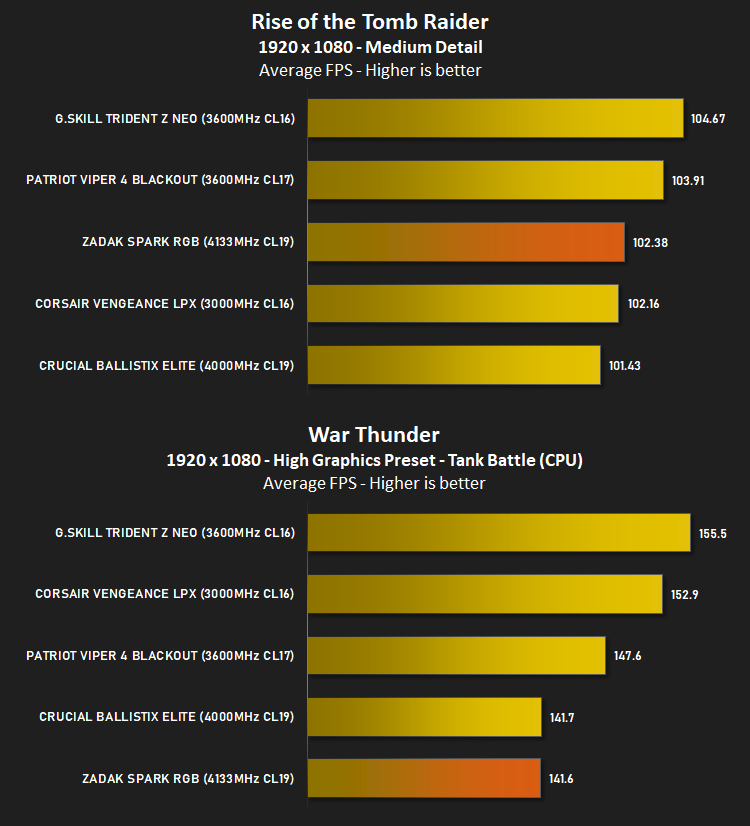
Gaming Performance – Rise of the Tomb Raider & War Thunder
To test out the benefit of faster memory in a real world scenario, we have taken a recent game and created a CPU limited scenario by reducing the resolution and graphics settings to minimum, while setting the CPU dependent settings at their highest.
Conclusion
As our first venture into ZADAK’s equipment we aren’t overly impressed by the ZADAK Spark RGB’s out of the box experience.Starting off with the appearance of the modules, the heatspreaders look good but the overall build quality left a bit, cheap, for lack of a better word. The RGB was also lacklustre, largely due to the omission of developing their own software suite to control the lighting, instead relying on your motherboard manufacturer to provide decent control.
While the flashy 4133MHz frequency might draw you in, the timings aren’t anywhere near as tight as we would’ve hoped. G.SKILL offer a 4133MHz Trident Z RGB kit, priced almost identically, sporting RGB lighting, with timings of 19-19-19-39, compared to the 19-21-21-42 of the ZADAK. This surprised us all the more when we delved into the modules and found they’re using Samsung B-Die ICs. We managed to drop the timings down to 18-19-19-40 at 1.40v, much more impressive than the XMP profile loaded onto the modules.
If you’re happy to tinker about with overclocking then the ZADAK Spark RGB offers a compelling purchase choice but we can’t see why you’d buy this over something from a more established brand such as Corsair or G.SKILL.
The biggest issue we face at present is a lack of market penetration globally, they’re working on entering new countries but until then, we can’t recommend the kit at all.
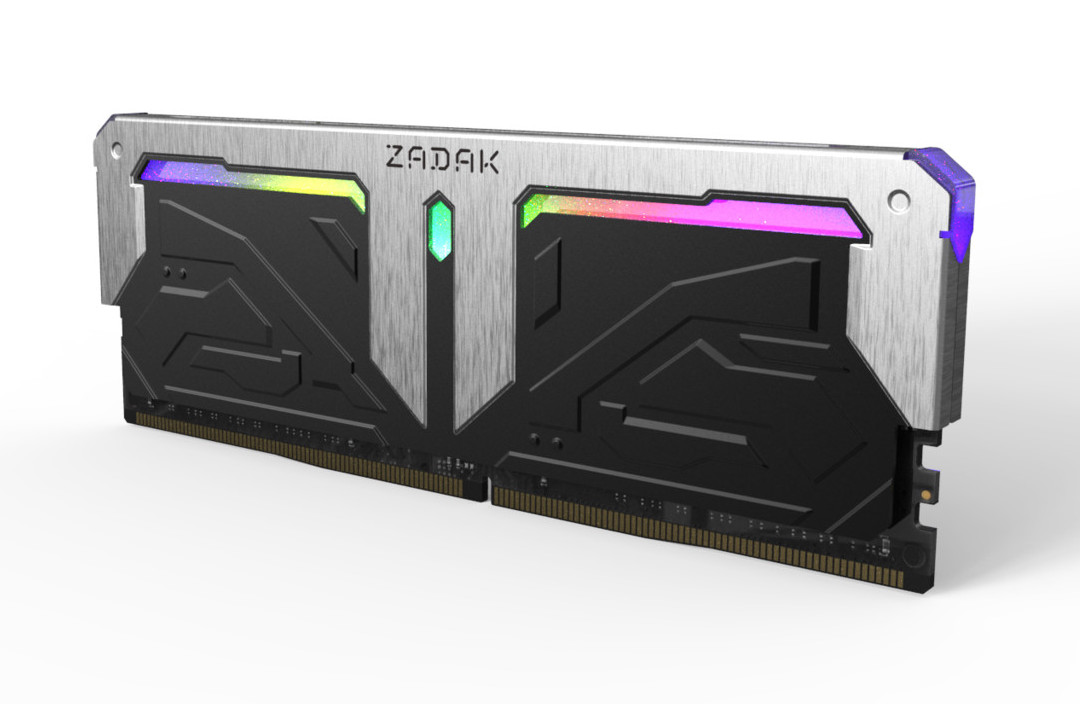
Despite using the crème-de-la-crème of memory modules, the Samsung B-Die, ZADAK appear to have set their bar a little low with the Spark RGB, not fully utilising what they’ve got.
Pros
+ Lovely packaging
+ Bright RGB lighting
+ Samsung B-Die ICs
Cons
– Not available in UK, US or Australia
– Not making full use of the Samsung B-Die ICs
– No RGB control software
– Cheap feeling heatspreaders
+ Lovely packaging
+ Bright RGB lighting
+ Samsung B-Die ICs
Cons
– Not available in UK, US or Australia
– Not making full use of the Samsung B-Die ICs
– No RGB control software
– Cheap feeling heatspreaders
Click here for an explanation of our awards at Vortez.net.
Stay connected with the Vortez Social Media pages:
Join in with the discussions on Discord