







Up today is Zotac’s flagship graphics card – the GeForce GTX 295
Zotac recently provided their flagship single cored GPU the GTX 285 AMP! Edition. I was very impressed with it but for those that want/need more there is another alternative.
Zotac have sent us the top of NVidia’s GPU range… the GTX 295. This is a dual core and dual PCB monster in a single form factor almost identical in size to the GTX 285.
Before we see how that 295 performs here’s a little about Zotac themselves:

ZOTAC International (MCO) Limited was established in 2006 with a mission to deliver superb quality of NVIDIA graphic solutions to the industry. It has strong backup from parent group, PC Partner Ltd. Headquartered in Hong Kong, factory in Mainland China and regional sales offices in Europe, Asia Pacific and North America. The support ZOTAC provides is currently the largest of its kind around the world.
With 40 SMT lines, 6,000 workers and 100,000 square-feet meter, ZOTAC features a full array of state-of-the-art facilities and machineries. In addition, ZOTAC has over 130 R&D professionals in Hong Kong, China and warranty and service center in strategic countries to enable effective and efficient worldwide as well as localized sales and marketing supports.
As i’ve said before, Zotac are a fairly young company in comparison with many of the other graphic card manufacturers out there. Lets see how the GTX 295 does.
Packaging
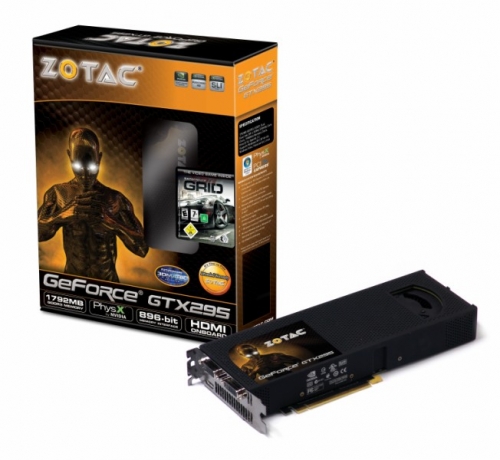
The GTX 295 comes securely packaged in a typically ’Zotac’ box.


The card itself is protected by a plastic cover and a foam cut out with a separate compartment for the additional cables and adapters.


Specifically these are a DVI to VGA adapter, a dual molex to 6-pin PCI –E adapter, a dual 6-pin PCI-E to 8-pin PCI-E adapter, a passthrough audio connector and an HDMI cable.

Additionally you get a warranty card, instruction/installation manual, a few CD’s including drivers, a copy of the top selling game ‘Race Driver GRID’ and the benchmarking software ‘3DMark Vantage Advanced’.

Unlike the 285 i reviewed previously the box didn’t contain a Zotac case sticker. Since this card is a review sample that has done the rounds i would expect that the sticker has been misplaced during it travels… panic over!
Features
The GTX 295’s specifications are very impressive. Compared to any other card in NVidia range it offers a considerable upgrade in terms of raw numbers.
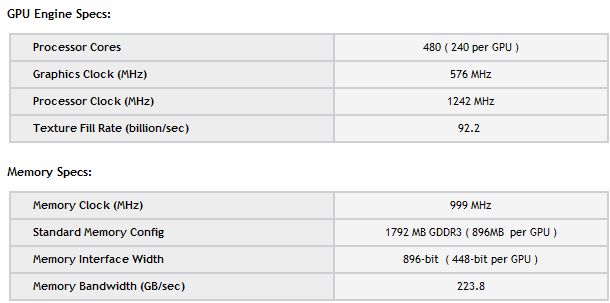
It’s actual number crunching is done by the two cores. As you can see the GTX 295 has 240 stream processors per core which makes a total of 480 – double that of the mighty GTX 285. In terms of raw data processing the GTX 295 has the edge – it’s texture fill rate is 92.2 billion vs the 285’s 51.8 billion and it’s memory bandwidth is 223.8gb vs the 285’s 159gb.

It’s default core, memory and shader speeds are 576mhz, 999mhz and 1242mhz respectively. Pretty standard speeds you’ll agree but combined with the fact the card is in fact 2 units with 240 stream processors a piece it should still do well.
It’s dual card in one form factor design dictates that it has a lot of horsepower under the hood.
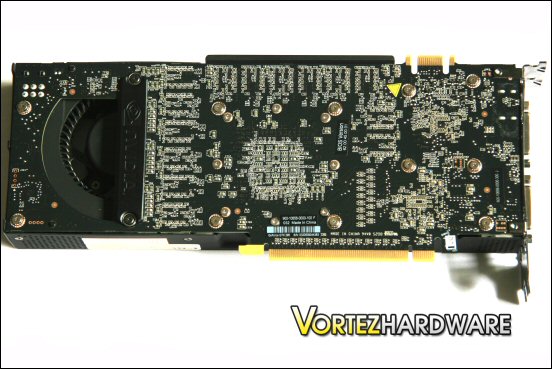
The card is technically two GTX275’s sandwiched together which means it has slightly less onboard memory per core than the 285 with only 896mb. Its clock speed is also a little reduced due to the thermal limitations of the design and the high output of the G200 core (despite the fact it’s the newer 55nm process).
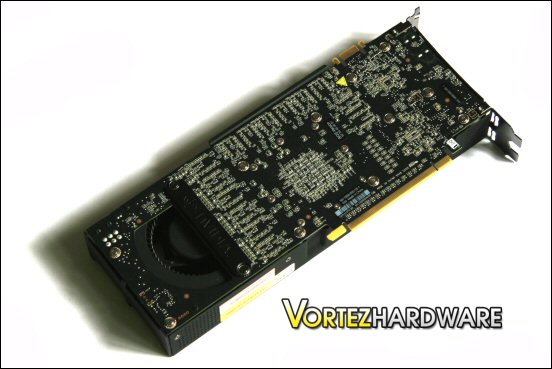
Features continued
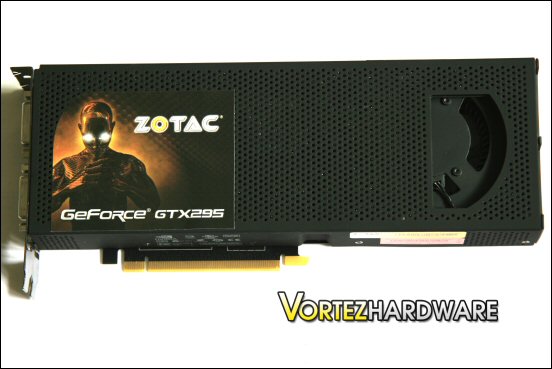
The connections on the backplate consists of the standard dual DVI layout but also adds an HDMI adapter. This should provide a convenient connection solution for users of larger high definition TV’s.

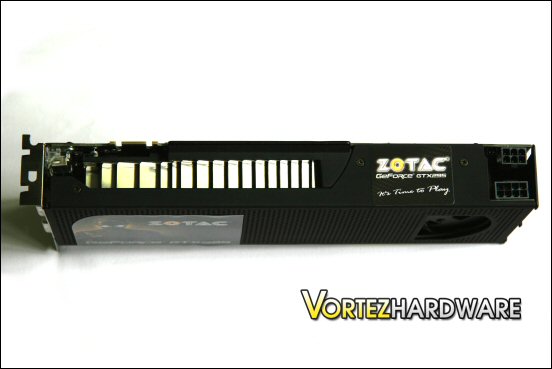
The cooling solution is reminiscent of a beefed up version of the 9800GX2. A large fan with openings at the top and bottom of the card supplies airflow to the aggressive looking finned array seen on the side profile of the card. It looks impressive, indeed i have absolutely no doubt that the GTX 295 will warm my case up nicely.

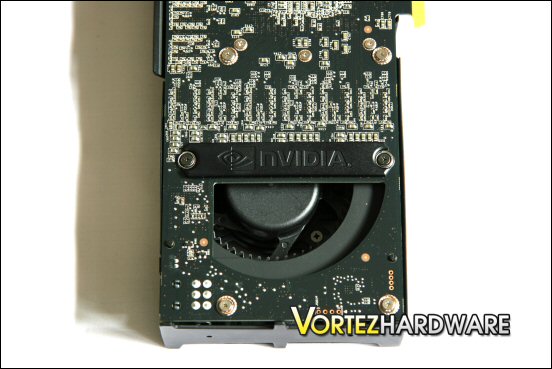
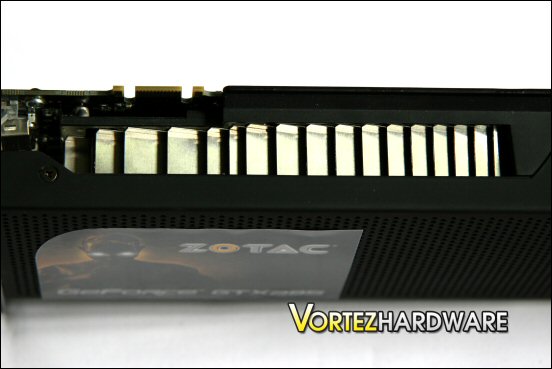
Supplying power to a card like this will be paramount and consequently the design incorporates both a 6-pin PCI-E connector and the larger 8-pin design. For those that use older PSU’s lacking in these more modern connectors Zotac provide suitable adapters.

I know i’ve said this before but the size of a high end card like this could cause problems if the space in your case is limited. First of all the card is a considerable length so the depth of the case will be a factor. Also, consider airflow for the card. Although the heatsink on this model does a good job it can’t work miracles – decent cable tidying skills and some degree of cool air flowing towards it would definitely be a good thing.
Testing
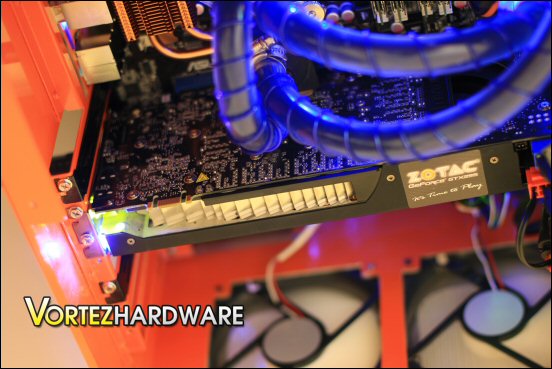
The GTX 295 will be compared alongside the test results collected during the ‘GTX 285 AMP! Edition’ Review. This comprised of a pair of standard GTX 260’s (65nm – 192 stream processor model) run both individually and in dual card SLi (both cards are identical to the reference NVidia design running at standard clocks) and the Zotac GTX 285 AMP! Edition.
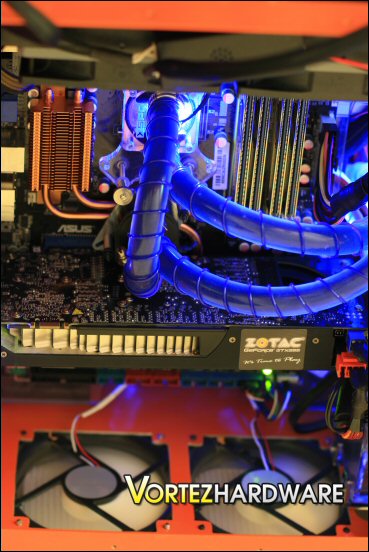
Full spec of the test PC is:
CPU: AMD Phenom II 720 Tri-core @ 3.4ghz
Motherboard: ASUS M3N-HT Deluxe Heatpipe
Memory: 8gb (4x 2gb) OCZ Platinum PC8000 DDR2
HDD: 320gb Samsung Spinpoint F1
Operating system: Vista 64 Business
GPU: 2x GTX 260’s, Zotac GTX 285 AMP! Edition and Zotac GTX 295
PSU: Tagan Piperock 1100w (modular)
Cooling: Custom watercooling for CPU and motherboard chipset – GPU’s all use their original stock cooling
Case: Mountain Mods – H2g0 enclosure
Initial testing was compiled using Futuremark’s two most recent GPU benchmarking programs – the older 3DMark06 and their newest 3DMark Vantage. These were the newest patched versions at the time of the review.
(Note: In the case of 3DMark Vantage PhysX was enabled in the ‘Nvidia Control Panel’ since it was utilised in the test.)
The GTX 260 and GTX 285 GPU’s were tested using NVidia’s GeForce driver set – 182.50. The GTX 295 was tested using the newest GeForce 186.16 driver set.
Note: I did try both the 182.50 and 186.18 driver sets with the GTX 295 to test for any performance changes. I noticed a mix of marginally better and slightly worse performance between games which was interesting. I would say that the performance change wasn’t large enough to be considered important though.
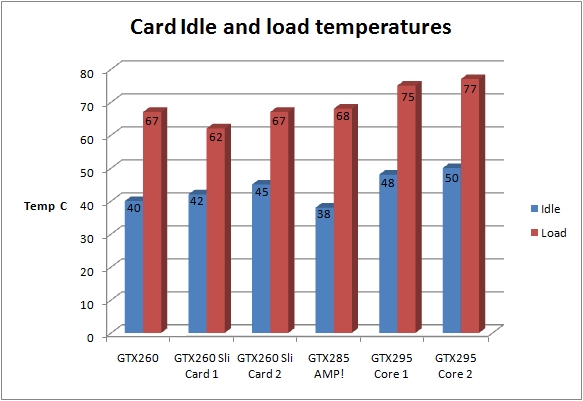
I also considered the operating temperature of the cards – in use the GTX 295 idled warmer than the other cards and when fully loaded produced quite a bit more heat. To achieve full load temps i looped the Far Cry 2 long Ranch demo.
3DMark06 and Vantage
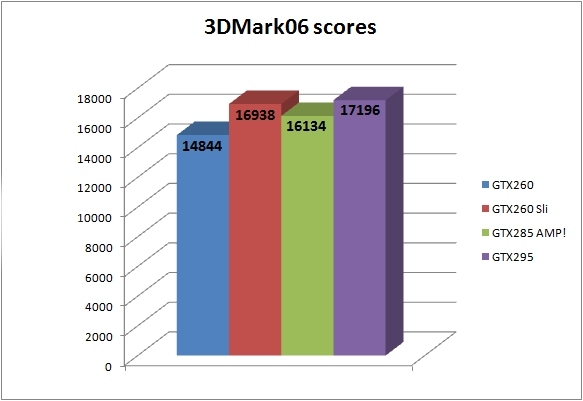
Firstly we look at the 3DMark06 results. The GTX 295 does return the best 06 score but only just.
Lets see if this performance is carried through to Vantage.
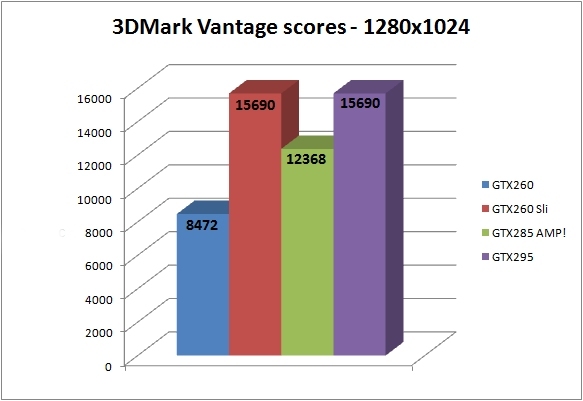
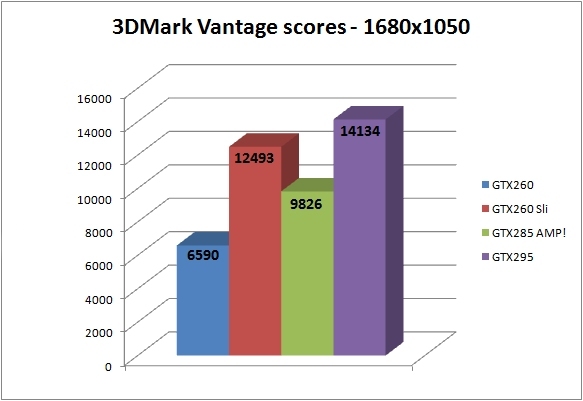
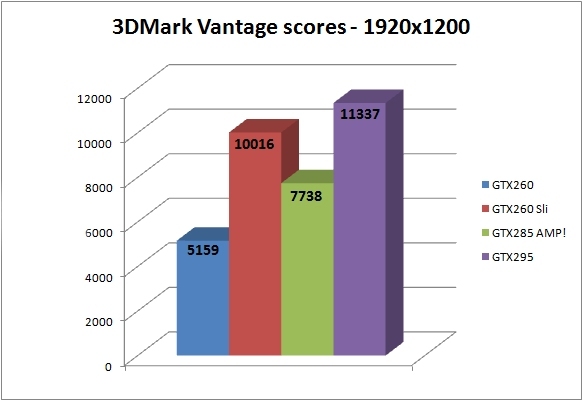
Unlike 3DMark06 Vantage shows GPU specific scores which helps identify performance increase. By looking at the graphs i’ve provided you can see a more clear indication of performance increases per card.
You can see that the GTX 295 likes Vantage. It matches the SLi’d 260’s at 1280×1024 and soundly beats everything else at the other resolutions.
Next up is game testing.
All the games (besides one) were run at the highest settings with all available AA and AF settings set to full – only Far Cry was run @ 2xAA to allow playability on the single GTX 260 @ 1920×1200. These cards are designed for top flight gaming so on the whole there’s little point in running lower settings.
Bioshock
First up is Bioshock – a nice little game that’s been coded well and looks great.
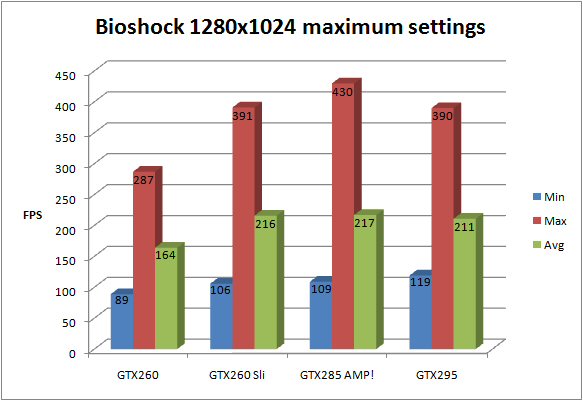
At the lowest 1280×1024 resolution the GTX 295 is ticking along nicely. It has the best minimum framerate score of the cards tested and is matching the SLi’d 260’s maximum and average scores.
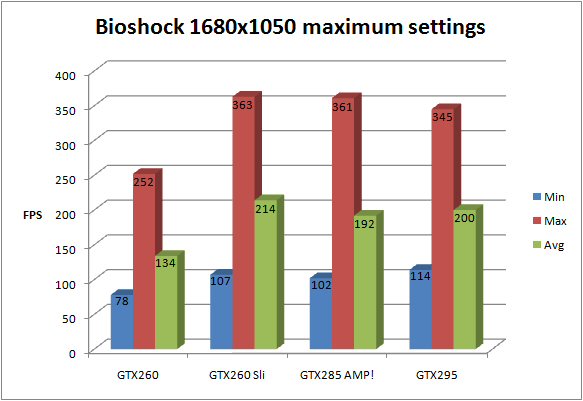
Up at 1680×1050 the GTX 295 continues to do well with great minimum frames once again. It’s max is lower than the SLi setup and the GTX 285 AMP! But at these framerates who would notice!
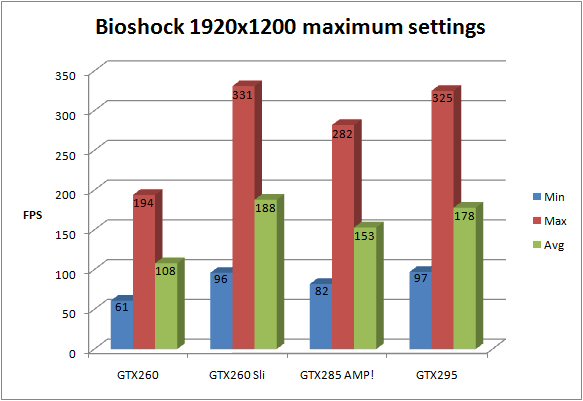
At 1920×1200 the GTX 295 really shows its muscle – the same can be said of the SLi’d 260’s which also provide similar great performance. Very impressive when you consider that’s just a single card form factor returning identical numbers to a bulky power hungry dual card set up.
Blacksite
Blacksite is up next. This is one of my favourite titles of recent times. It seems to push graphics hardware quite nicely while offering good old fashioned FPS gaming at the same time.
The GTX 295 seems to like this game just as much as i do.
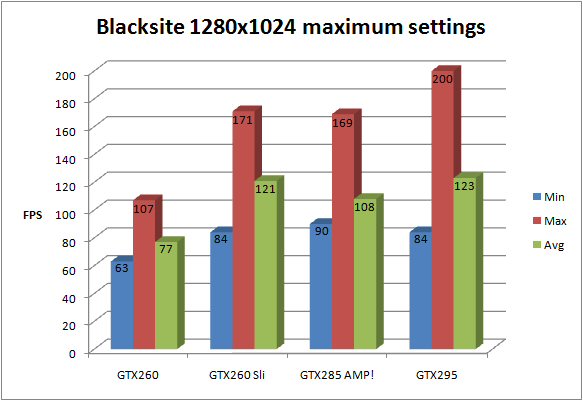
At 1280×1024 it gives decent minimum framerates whilst also providing the best maximum and average scores too.
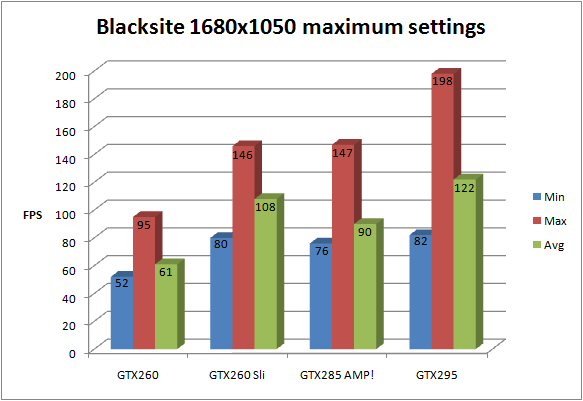
1680×1050 is dispatched with the same conviction. It produces framerate score that are virtually double that of the single GTX 260 i was running.
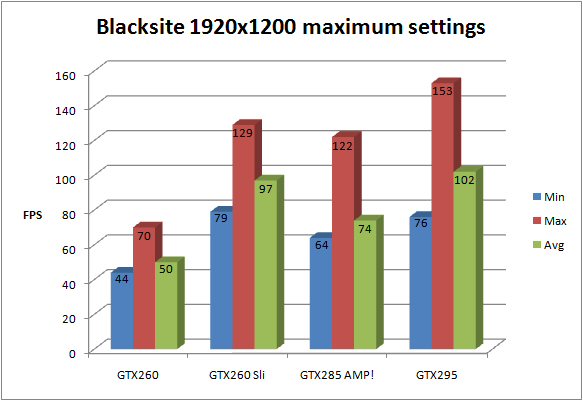
Lastly we see performance @ 1920×1200 – the GTX 295 virtually doubles up on the GTX 260 score and beats the SLi’d 260’s by a margin too. Indeed, even the mighty GTX 285 AMP! Edition sees the GTX 295 10fps ahead on minimum framerates and around 30fps against it’s maximum and average scores. Very impressive!
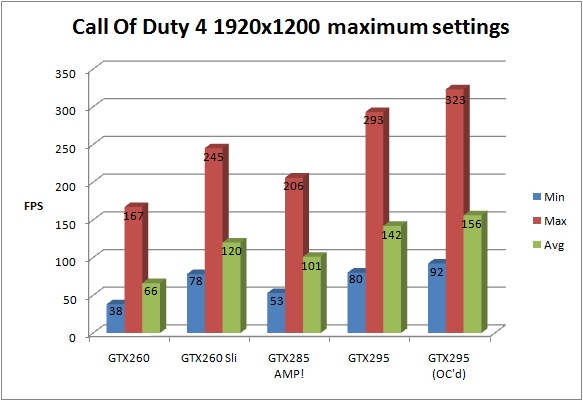
Call Of Duty 4
Call Of Duty 4. A legendary game and another favourite. Yes it runs wonderfully well on mid and even lower end hardware but at full settings should still provide a decent test for the cards.
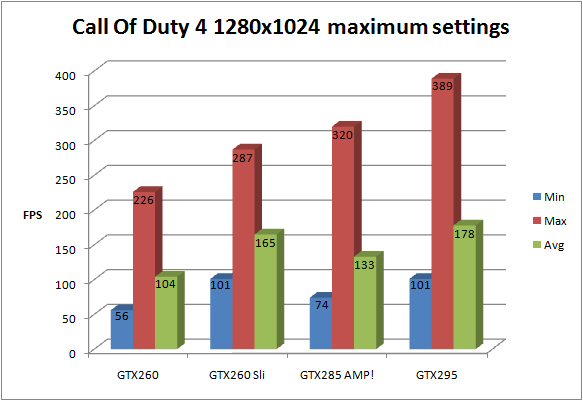
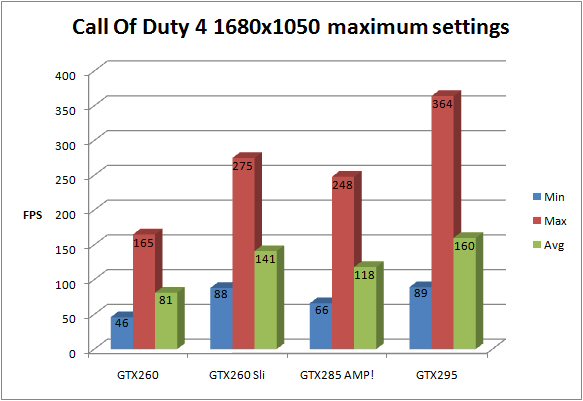
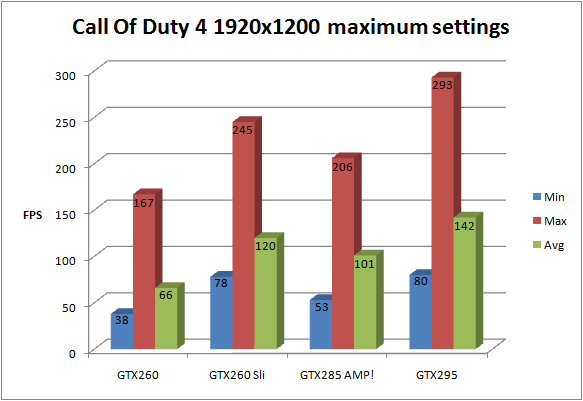
The GTX 295 looks to like this game too. Big results at each tested resolution.
It betters every other card – especially when it comes to the maximum framerates. Only the SLi’d 260’s offer performance that is close.
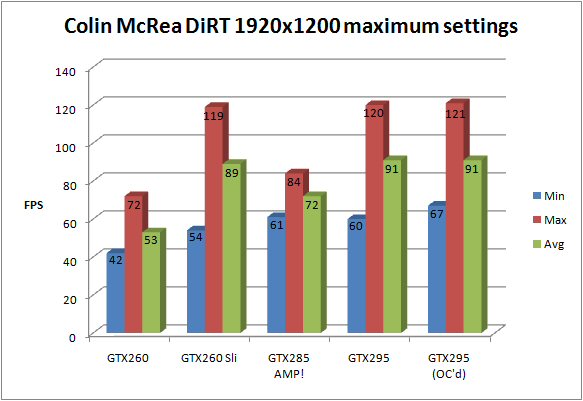
Colin McRae DiRT
Next is Colin McRae DiRT.
A slightly older but no less impressive game. It pushes hardware well enough and i think it looks great too.
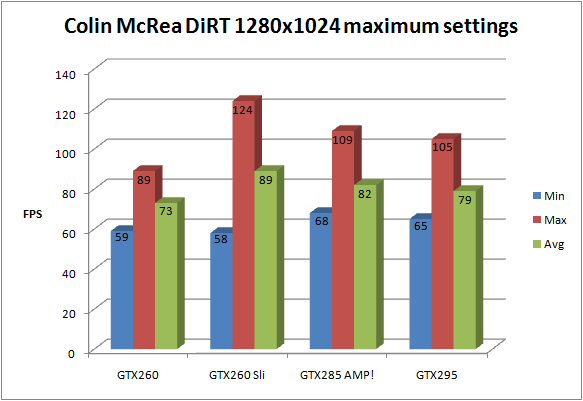
At the lower 1280×1024 resolution the GTX 295 seems crippled – the GTX 285 AMP! betters it on all fronts and the SLi’d 260’s just make it look plain slow.
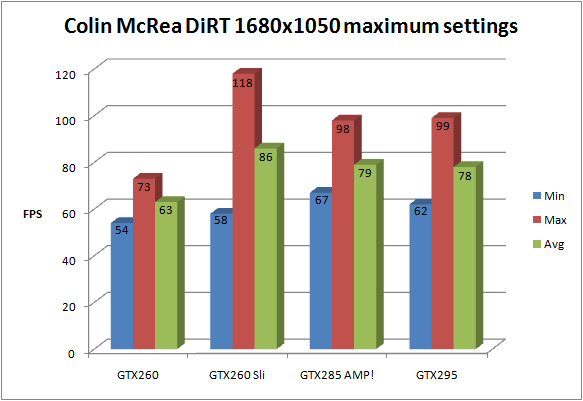
As the resolution climbs to 1680×1050 the performance ratio between the GTX 295 and GTX 285 equalises. Apart from the lower minimum framerate the SLi’d 260’s are still beating the other cards.
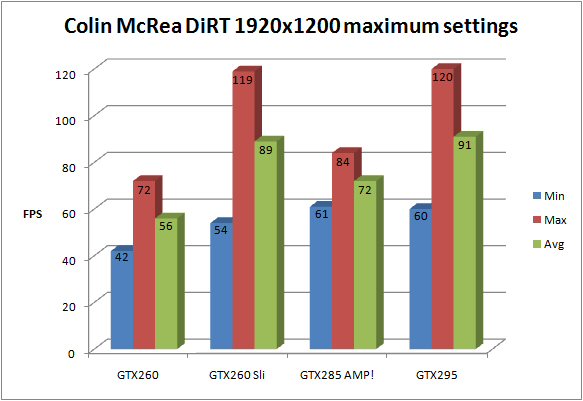
1920×1200 sees the GTX 295 come into its own. The card eases past the GTX 285 and actually betters the dual 260’s in SLi too. Although i can’t personally go to 2560×1600 (i wish) i would say the GTX 295 would pull well ahead in this scenario. It just eats up resolution.
Dead Space
Up next is Deadspace. It is one of the newer games in the line up and is a third person shooter based on a Alien style horror pretense.
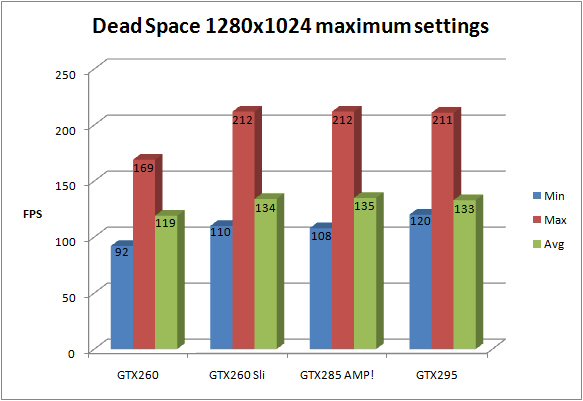
At 1280×1024 all three of the big guns are pretty matched blow for blow. The GTX 295 does have the edge on minimum framerate scores but only by a smidge.
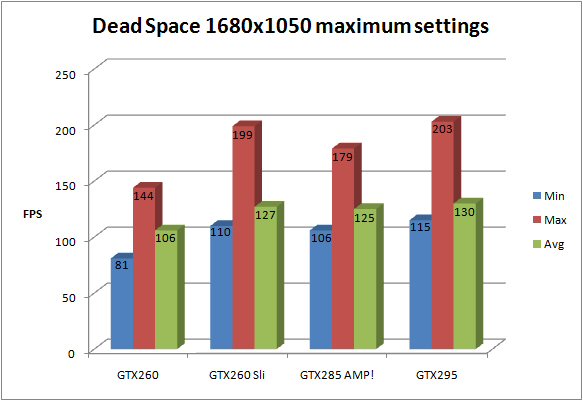
1680×1050 sees the GTX 295 and SLi’d 260’s pulling away from the GTX 285.
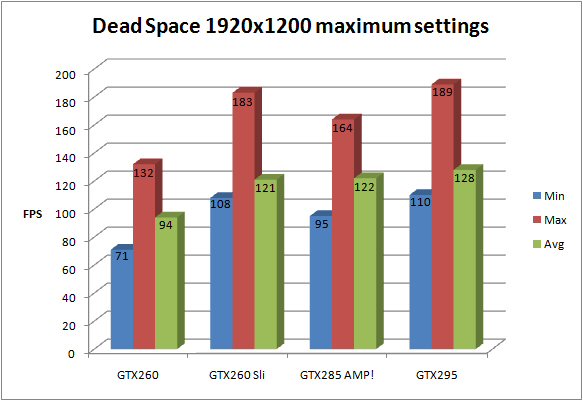
At 1920×1200 it’s the same story. Very impressive!
Fallout 3
Fallout 3 is from the same Bathesda Softworks studio who brought you Oblivion. A very popular game and a worthy sequel to he previous two classics. It’s free roaming 1st (and 3rd if you choose) person shooter/adventurer.
Large draw distances and populated landscapes mean this could turn out to be taxing for PC hardware.
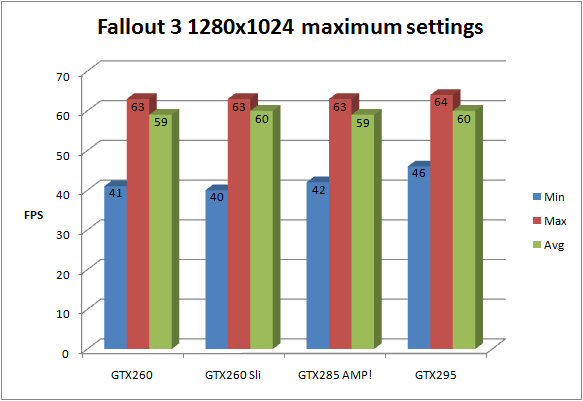
As in the GTX 285 review there seems to be a framerate cap in the early 60’s. This makes the results look incredibly similar (identical actually) @ 1280×1024.
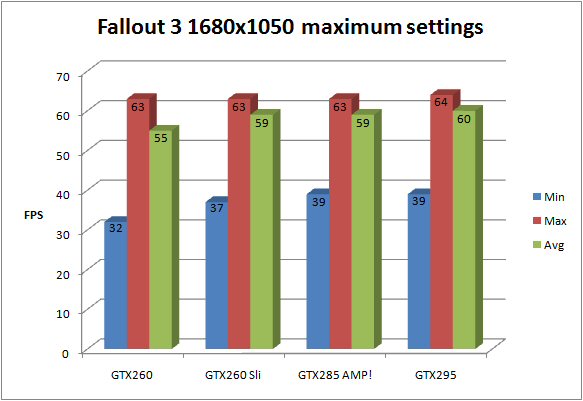
Again, on upping the resolution to 1680×1050 you see the single 260 has taken a slight performance hit but the GTX 295 has barely moved.
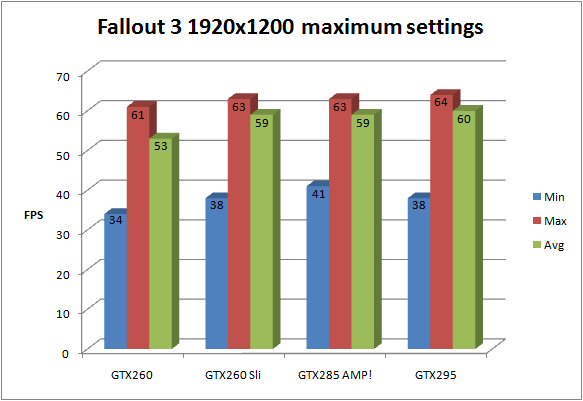
At 1920×1200 it was the same story. No movement. Good for all those that want to play @ high resolution though!
Also note that all settings were maxed with full AA and AF too!
To summarise the GTX 295 seems to offer a VERY slight advantage – but nothing that you would notice in normal use.
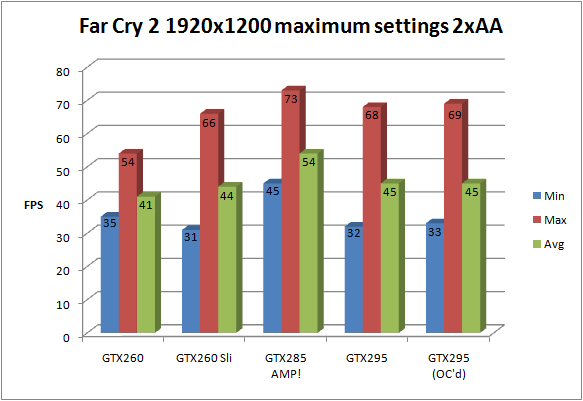
Far Cry 2
Next up is the Far Cry 2 – some consider it disappointing as a game (i know i do!) it is never the less a decent tool for benchmarking GPU’s.
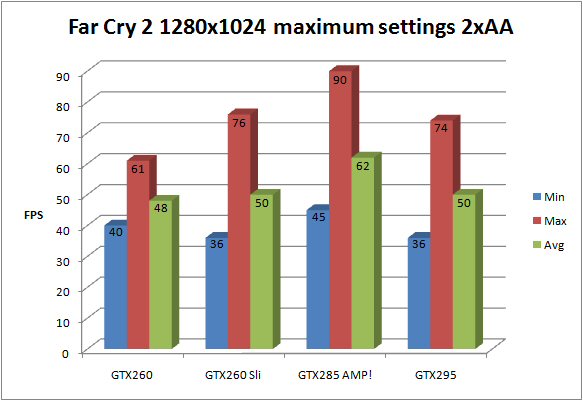
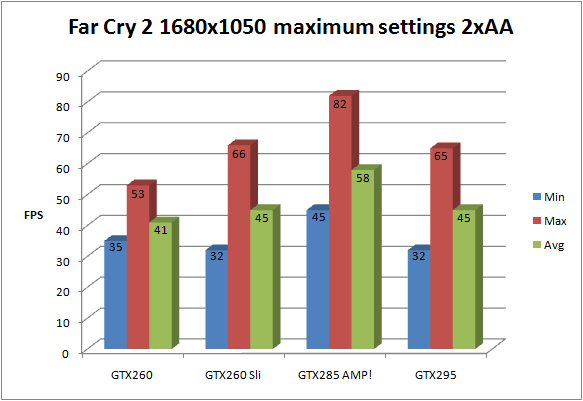
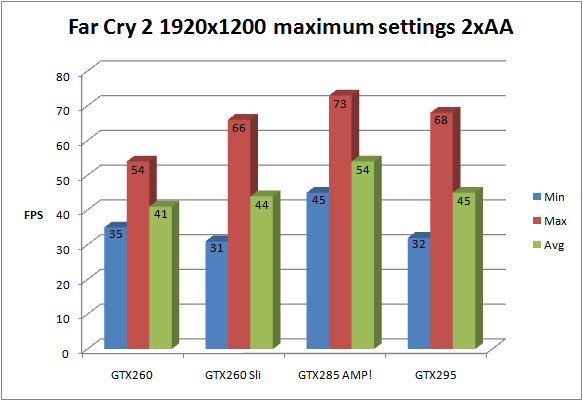
Regardless of resolution you can see that the GTX 295 returns results almost identical to the SLi’d 260 setup. You can also see that the GTX 285 AMP! likes this game a lot.
Once again – another thing to note is that although the GTX 295 and SLi’d 260’s returned better average and max framerates than the single 260 their minimum framerates were in fact smaller at every resolution. This could be an incompatibility between the game and hardware but since the gaming experience was smooth and trouble free with all the hardware tested i’d be inclined to think it was possibly just a limitation of SLi in both these cases.
Race Driver GRID
Up next is Race Driver GRID. It’s the game bundled with the GTX 295. It’s a newer game so should push the hardware that bit more.
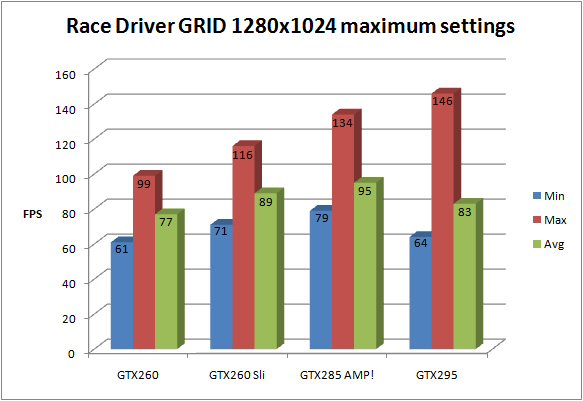
At the lowest resolution the GTX 295 does well. It’s Max framerate is streets ahead of the competition but its minimum and average scores aren’t much more than the far less powerful GTX 260.
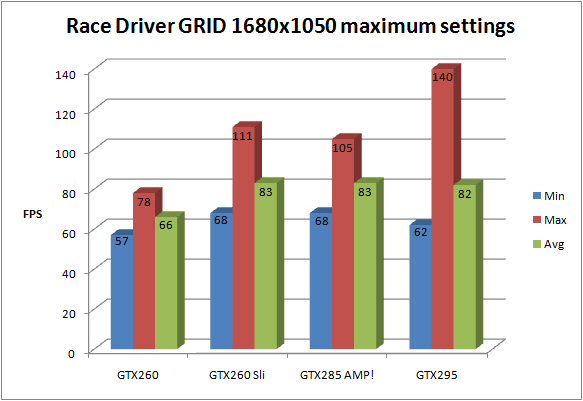
An increase to 1680×1050 shows the GTX 295 is continuing the trait of leading the maximum frame score but trailing (slightly) behind the GTX 285 AMP! and the SLi’d 260’s when it comes to average and minimum framerates. The single 260 is beginning to be left behind.
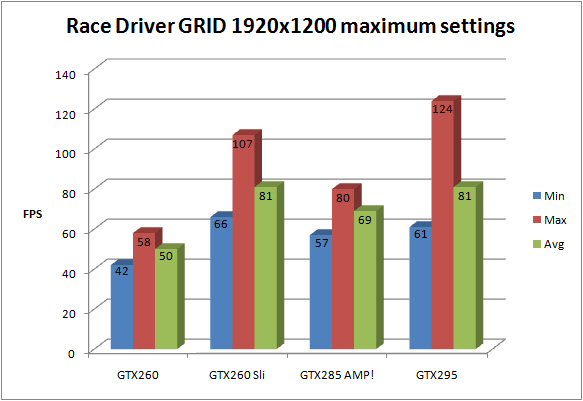
Increasing the resolution to 1920×1200 once again shows the GTX 295 in its comfort zone. It matches the SLi’d 260’s on average framerates and eclipses its maximum score. Meanwhile the single 260 and GTX 285 AMP! are showing signs of slowing.
Note: Of course remember that these two cards are still providing great framerates though so the game would still be very playable at this point.
Test Drive Unlimited
Bringing up the rear is the game Test Drive Unlimited. Unlike the other circuit racing games Test Drive takes place on a free roaming Hawaiian island (Oahu) with over 1000 miles of open road – lets have a play.
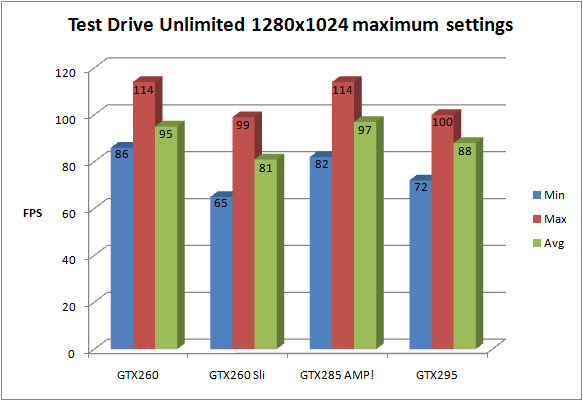
As you can see the same SLi related issues seem to be at work here at 1280×1024. At this lowest resolution the GTX 295 is just as unimpressive as the SLi’d 260’s. Meanwhile the 260 GTX and GTX 285 pull ahead.
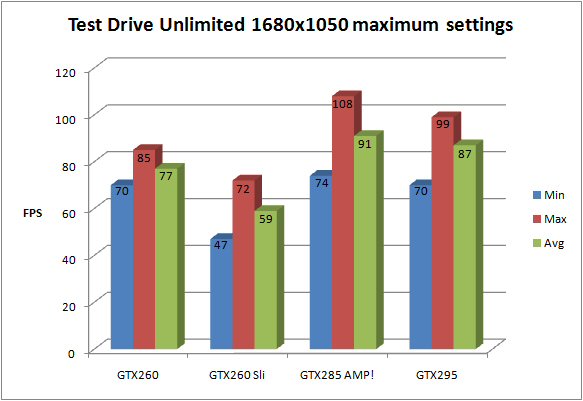
1680×1050 shows a surprising improvement. The GTX 295 pulls slightly ahead of the GTX 260.
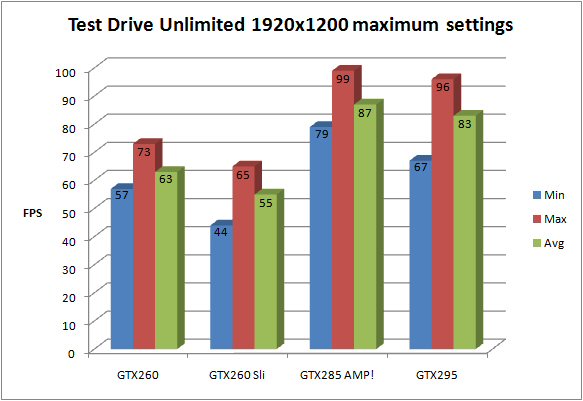
Last chance to shine at 1920×1200. The GTX 295 does better still. It’s average and maximum framerates almost match Test Drive Unlimited’s favourite card the mighty GTX 285 AMP!
Overclocking
Of course, judging by the temps, this GTX 295 is already pretty hot and bothered – that being said, i suppose it would be rude not to try and overclock it.
I used NVidia’s own onboard control panel to adjust the GPU clocks – it managed the following clocks:
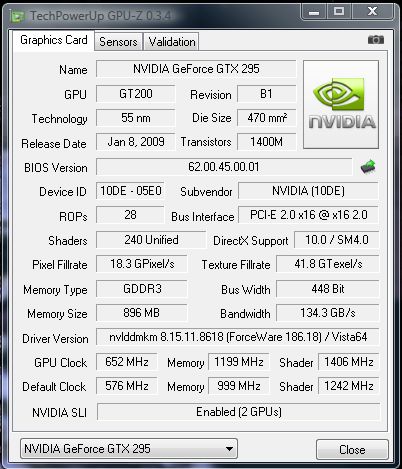
Core Clock – 576MHz to 652MHz
Memory Clock – 999MHz to 1199MHz
Shader Clock – 1242MHz to 1406MHz
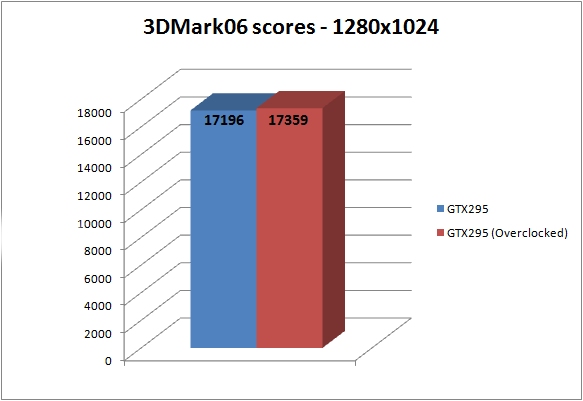
I then tested the performance increase in 3DMark:
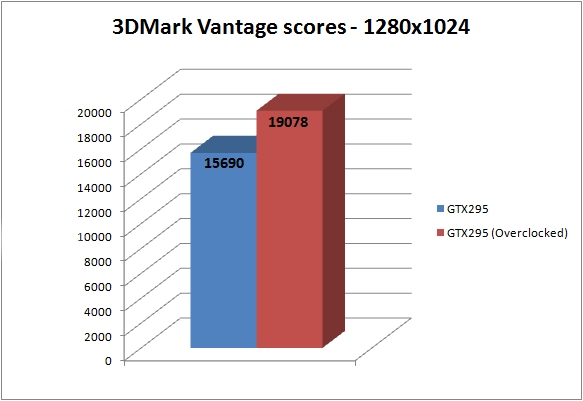
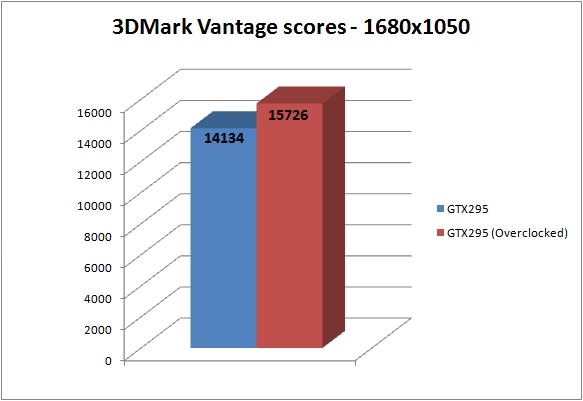
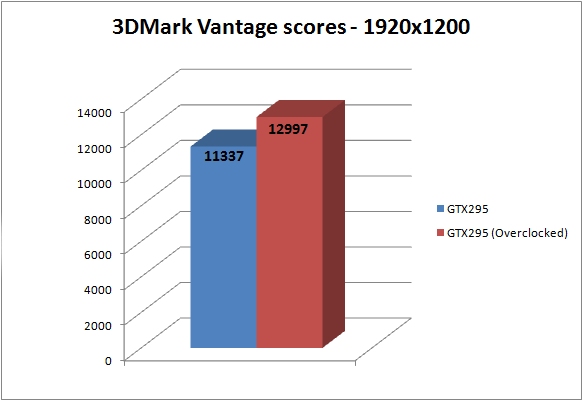
Then i looked at some of the games already benched.
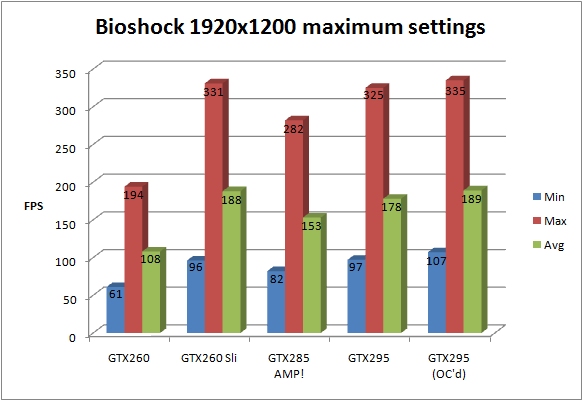
As you can see there’s a fairly healthy increase across the board. If you ever need the extra performance it’s nice to have it available.
Conclusion
If you can afford it the GTX 295 is a very, very fast card. It comes with a fully loaded bundle, packs a lot of power into a relatively compact space and overclocks fairly nicely.
Understandably for epic performance like this there is a cost – at around £355 it represents a significant outlay. If you considered power like this you may also be looking into multi GPU solutions too. This is the trick with the GTX 295 – it may cost but you\\\’d only need a relatively modest PSU and a motherboard with a single 16x PCI-E slot to use it. In stark contrast a user considering using two NVidia cards in SLi would need a very capable (and expensive) PSU, an expensive SLi capable motherboard, a large case with adequate cooling for the multi GPU solution and an understanding that their electricity bill would be slightly higher as a result.
In conclusion i would have to admit that the GTX 295 is not the best value – although it does have one of the most competitive bundles compared to similar rivals.
Yes, its price vs performance ratio won\\\’t be that impressive but that\\\’s not really the point of the card! It offers an incredibly convenient solution with shattering performance for a fairly considerable cost. If you can afford it, appreciate its straight forward no nonsense approach and want the fastest card available then the Zotac GTX 295 is just what you\\\’ve been looking for.
Vortez Hardware would like to thank Zotac for providing us with the GTX 295. To Discuss this review please visit our forum.
