Cooler manufacturer Alpenföhn have sent us their new Föhn 120 Wing Boost case fan. Take a look at how it does!
Product on Review: Föhn 120 Wing Boost
Manufacturer: Alpenföhn
Street Price: £12-£15
Today we are looking at the Föhn 120 Wing Boost fan from Alpenföhn. The company name “Alpenfoehn” is a specific wind in the Alps. Alpenföhn are actually part of the EKL group who have been producing OEM cooling solutions in the European market since 1995. The Föhn name given to the fan is actually a dry down-slope wind that occurs in the lee (downwind side) of a mountain range.

The Alpenföhn brand focuses on enthusiast and consumer level products. Most recent press coverage has focussed on their excellent range of heatsinks – indeed here at Vortez we have already had their excellent Nordwand in for testing.
| Alpenföhn has the following to say about their Föhn 120 Wing Boost fan: Alpenföhn Föhn120 Wing Boost, welcome to the champions league! With the Föhn120 WB Alpenföhn presents an absolutely unique design in 120mm fan class. There is no compromise between functionality and design. The fan is equipped with injected anti-vibration elements, WB technology and HDS bearing. This fan is the basis of your high end system. |
Specifications
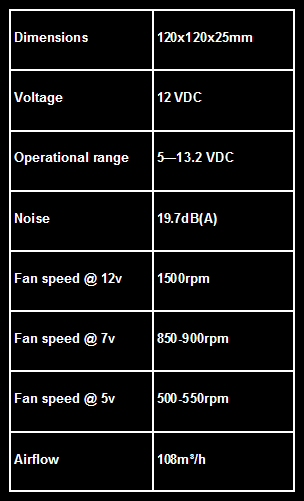
The Alpenföhn Föhn 120 Wing Boost is impressively specified and contains a few innovations that should hopefully translate into a good performance.
| Anti-Vibration: a.) Anti-vibration elements: Using the injected anti-vibration element noise generated by vibrations is reduced to a minimum. b.) Soft-Frame: The fan frame is covered with a thin rubber layer to additionally reduce vibrations. WB-Technology: By using the aerodynamically optimized WB-technology (wing boost technology) the Föhn120 WB operates at lowest noise even running at 1500 rpm. HD-Bearing: The new developed HD bearing (hydraulic bearing) reduces the friction noise to a minimum. Guaranteed operating range: With the guaranteed operating range from 5 – 12 VDC the new Föhn120 WB can be ideally used as a case fan. |
Packaging and fan
The Föhn 120 Wing Boost comes in an attractively designed box showing a crystal blue sky and alpine mountain scene. There’s also a windowed panel allowing you to see the fan itself.
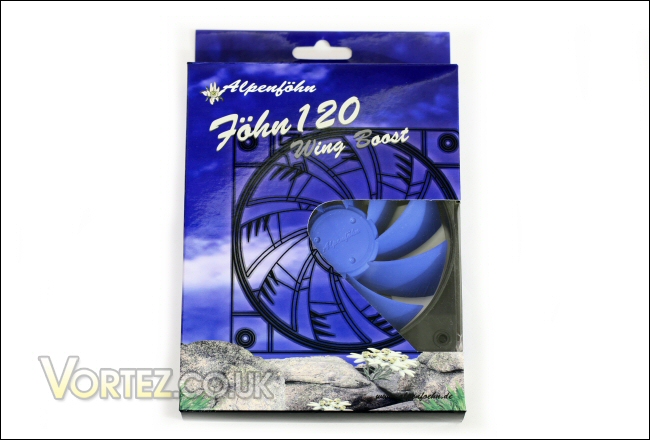
Box front.
The rear of the box contains the standard specification info seen on table on the previous page and also lists some of the more specific features offered by the Föhn 120 Wing Boost.
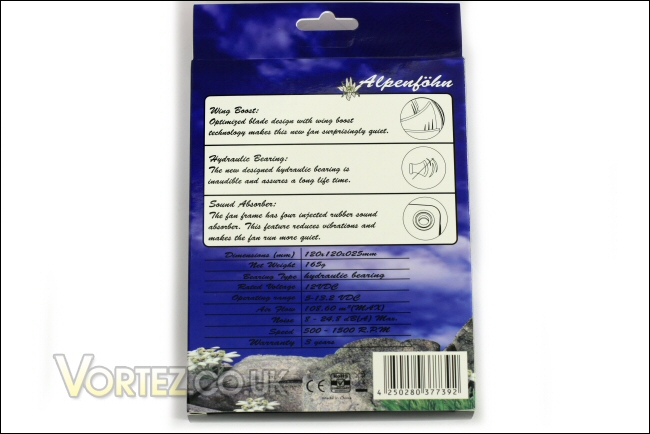
Box rear.
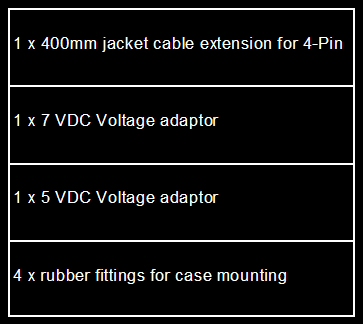
Upon opening the packaging we find a couple more accessories than you’d usually expect for a fan purchase. You get some rubber fan mounts, a 40cm extension cable and both a 7V and 5V voltage adaptor. It’s a useful selection and should offer a decent amount of flexibility for potential users.
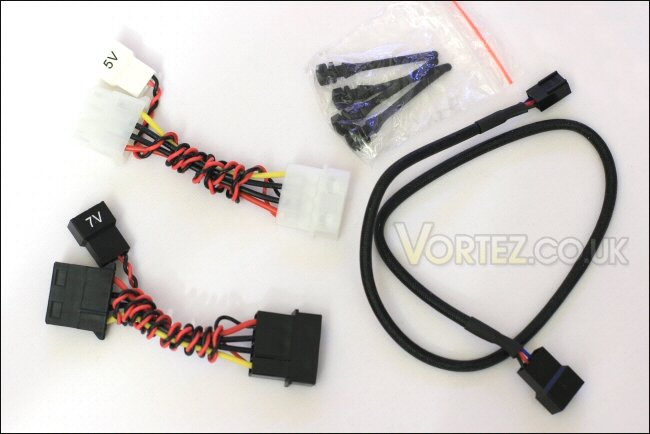
Extras.
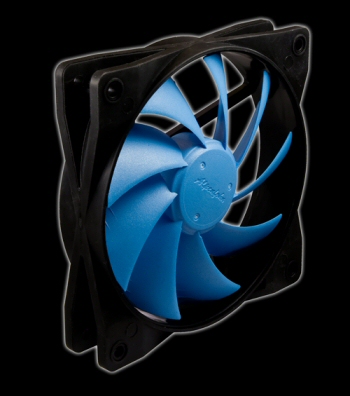
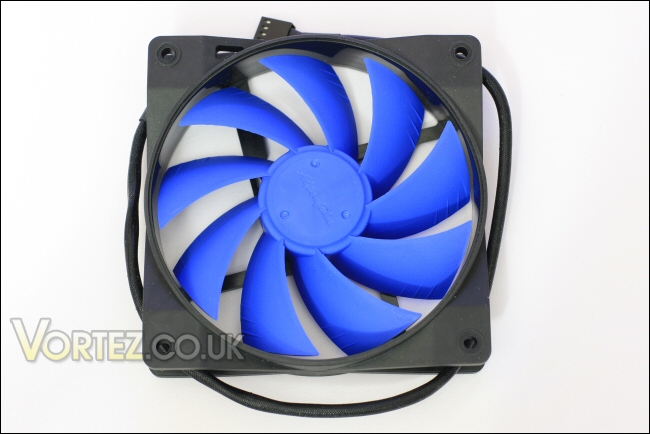
It’s an attractive fan – the simple black frame and blue blade design should appeal to a great many people. Its braided cable finishes the look off nicely and keeps it looking tidy.
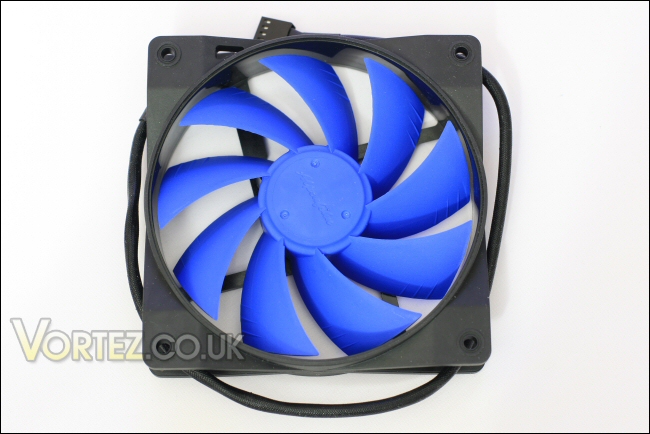
The fan itself.
The centre of the fan is also Alpenföhn branded with the name moulded into the face.
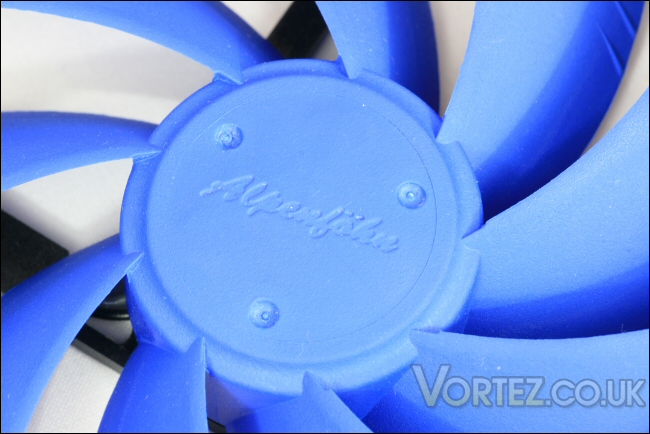
Company branding – no sticker!
One special feature of the Föhn 120 Wing Boost gives it it’s ‘Wing Boost’ name. As you can see from this close up shot the fan blades have special aerodynamically optimised tips. This the company says will help reduce noise.
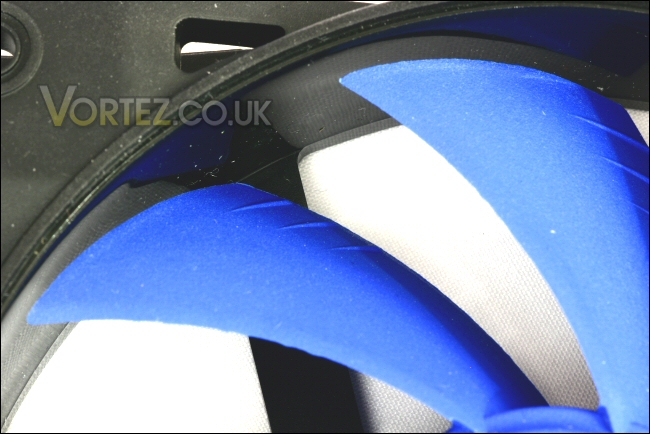
The Wing Boost blades.
The fan continued
Around the back we can see that the fan simply states the model and manufacturer name. You can see the continuing alpine theme with the presence of the companies ‘mountain peak’ logo!
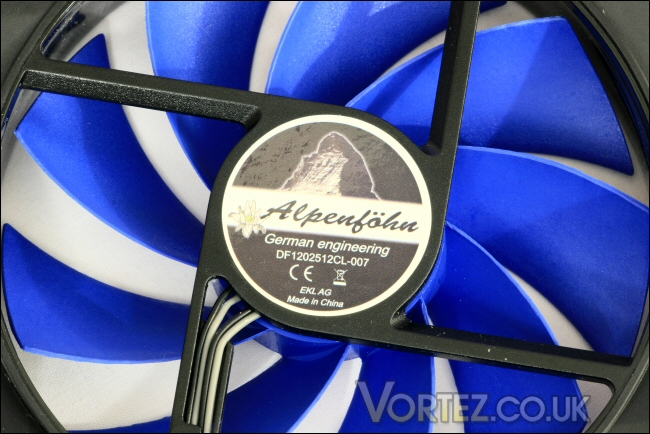
Rear of the fan.
The moulded frame is a slightly unusual design in that it is covered with a thin layer of rubber – this should further help the Föhn 120 Wing Boost to deal with vibration noises.
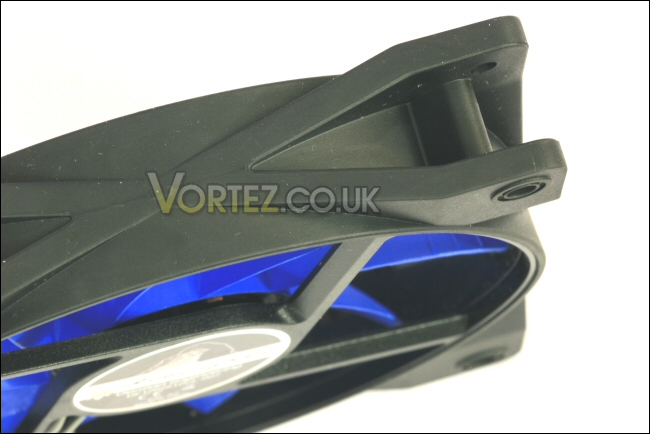
Moulded frame with rubber coating.
It also has additional rubber mount holes to further aid with deadening the fan. No need for a silicone gasket with the Föhn 120 Wing Boost then. Vibration deadening and quietening features seem to be the name of the game with this fan.
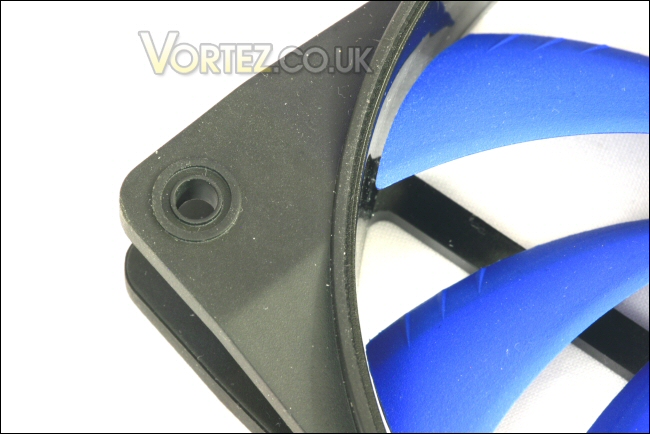
Fan mount points.
The fan comes with a 4-pin PWM connection so it should function well with the vast majority of PWM capable motherboards out there.
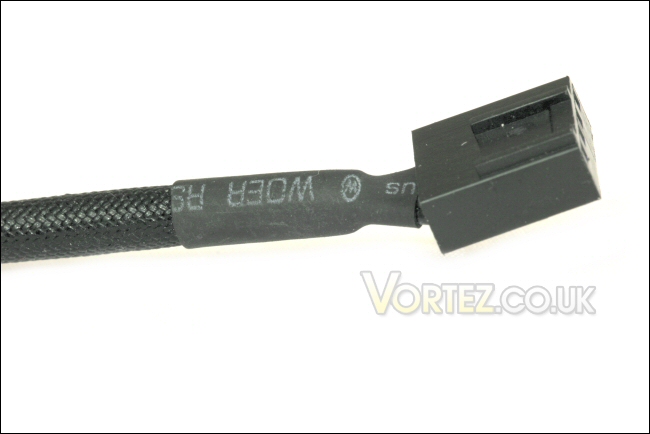
4-pin PWM plug.
The cable braiding has a slightly rubbery texture and should be fairly hard wearing.
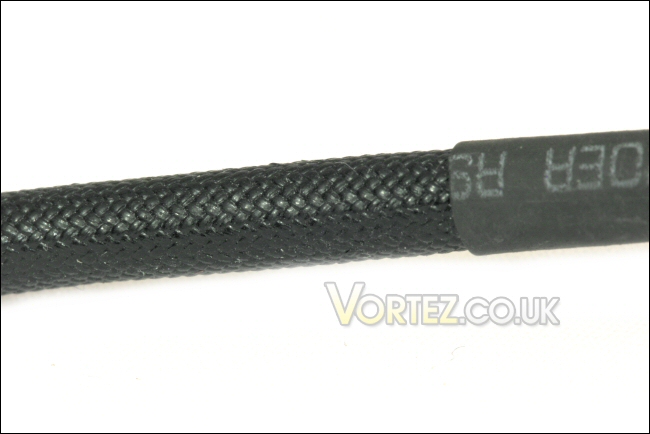
The rubbery cable braid.
Let’s see how the Föhn 120 Wing Boost does in testing…
Testing
We will be comparing the Föhn 120 Wing Boost to a selection of the other fans we’ve tested.
I used the sound pressure level meter below to test the dB rating of the fans at 12V, 7V and 5V.
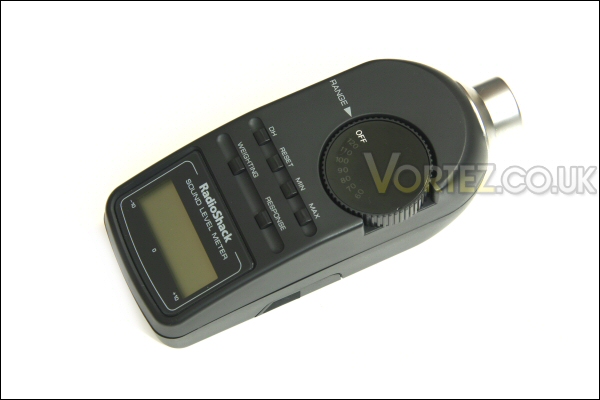
The sound meter used for testing.
Due to the sound level meter only registering a dB rating of 50dB+ I will have to adjust the sampling distance to allow the fan to register on the meter.
I decided to test the fan at each rated voltage at a distance of 2.5cm. Since this can introduce some proximity based noise issues I positioned the meter off centre and as far away from turbulence as I could manage.
When the data is complete I will use a ‘damping of sound level with distance’ calculator to work out the dB rating for a greater listening distance. This will give a clearer understanding of the actual volume of the fans we have here.
For testing I used a hotwired ITX PSU which is a fanless silent model. This will provide power for the fans without producing any noise interference itself.
Results
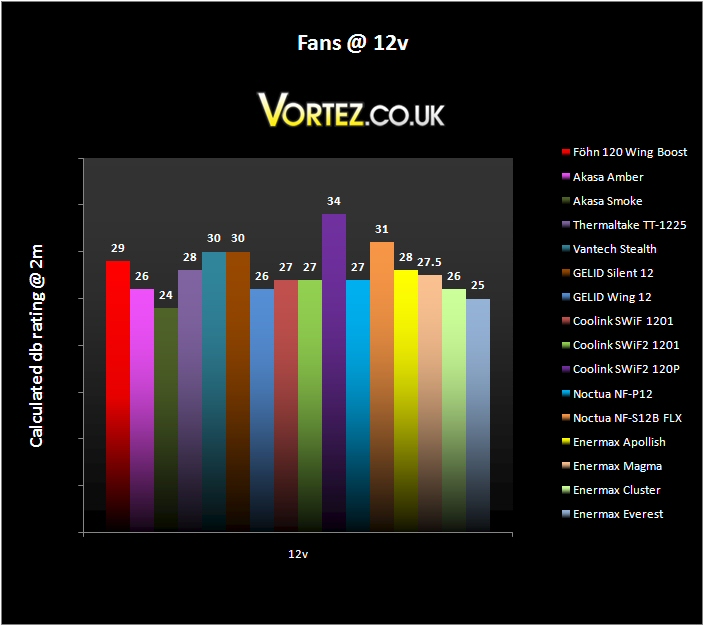
Running @ 12V and recorded @ 2.5cm
67 dB
After conversion the results @ 2m are as follows
29 dB
12V testing.
Pretty decent result here. A mid table position against some of this competition is more than acceptable.
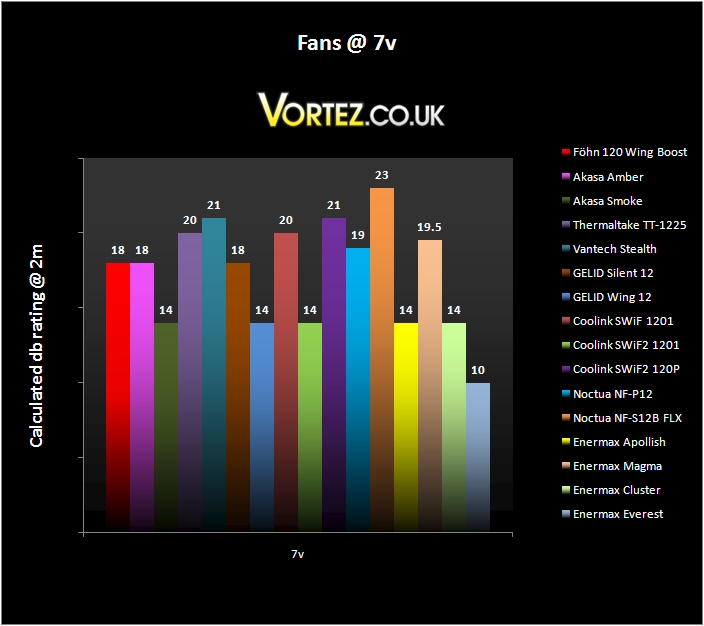
Running @ 7V and recorded @ 2.5cm
56dB
After conversion the results @ 2m are as follows
18 dB
7V testing.
The Föhn 120 Wing Boost is occupying the middle ground here much like the result @ 12V.
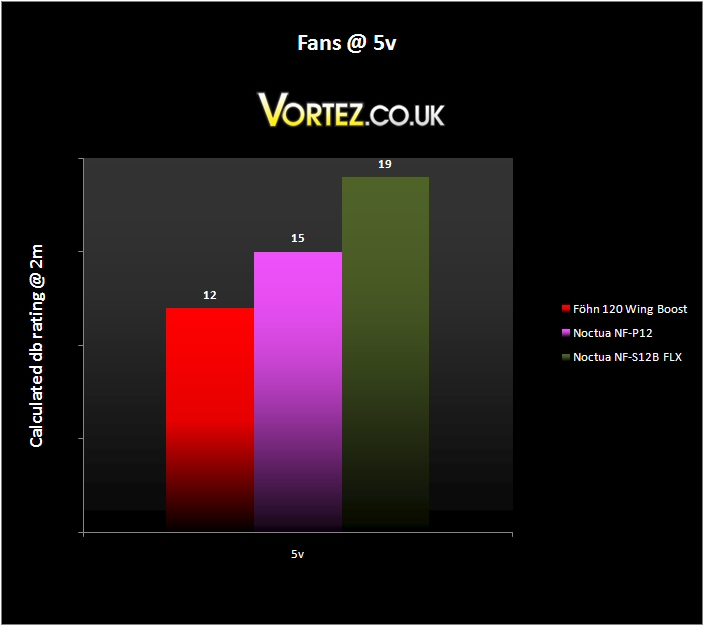
Running @ 5V and recorded @ 2.5cm
50dB
After conversion the results @ 2m are as follows
12 dB
5V testing.
Not many ultra low voltage results here but it’s the quietest of the bunch.
Summary of fan performance
As with all my previous reviews the first thing to consider is that the dB rating doesn’t tell the whole story. Tone, resonance and other factors can be more important than pure sound levels.
Motor wine and rhythmic speed related clicking may not show up on the sound meter but when present I can confirm that they are very apparent and can be annoyingly intrusive. On the flip side you could have a fan that made no discernible whining or clicking but was ‘showing’ as rating high on decibels!
The Föhn 120 Wing Boost.
The Föhn 120 Wing Boost presented a very quiet presentation at all voltages however there was slight clicking noise present that became a little more intrusive as the voltage was lowered and the fan noise itself lessened. It wasn’t all that intrusive but for diehard fans of silent (or at least very quiet) computing it might be enough to sway their decision to buy.
I can confirm that the rubber material used in the construction of the frame and the mounting points for the fan worked well at reducing the transfer of any fan related vibrations. Once installed it was secure and very quiet albeit with that very slight clicking noise.
Conclusion
The Föhn 120 Wing Boost is a fairly affordable and quiet running design. It doesn\’t offer the ultimate static pressure performance that some users may be looking for but it must be remembered that this is only sold as a case fan rather than a heatsink or watercooling fan.
Within its operational comfort zone as a case fan the Alpenföhn makes a strong case for itself.
The Alpenföhn Föhn 120 Wing Boost.
My only slight reservation is the low level clicking. In the very quietest machines it would more than likely be an issue but in the vast majority of systems I couldn\’t see it being particularly bothersome.
Pros
+ Nice looking
+ Competitively priced
+ Very quiet
+ Great set of accessories
+ Sound deadening rubber coating is effective
+ Integrated rubber fan mount holes are a great idea
Cons
– Clicking becomes evident at lower voltages
– Static pressure seems quite low
+ Nice looking
+ Competitively priced
+ Very quiet
+ Great set of accessories
+ Sound deadening rubber coating is effective
+ Integrated rubber fan mount holes are a great idea
Cons
– Clicking becomes evident at lower voltages
– Static pressure seems quite low
To conclude I\’m happy to report that the Alpenföhn Föhn 120 Wing Boost is a very competent quiet fan. The slight lack of static pressure and the very slightly intrusive clicking at very low voltages do effect it\’s score a little… however, I\’d still give it our Silver award.
We would like to thank Alpenföhn for supplying the Föhn 120 Wing Boost. Discuss this revie won our forums.