







What’s the fastest single GPU available? Is the HD7970 worth it? Can the GTX580 still hold it’s own? We answer these questions and more in our head to head article…
Product on Review: XFX Black Edition R7970
Manufacturer and Sponsor: XFX
Street Price: £455.99
Product on Review: ZOTAC GTX580 3GB AMP2! Edition
Manufacturer and Sponsor: ZOTAC
Street Price: £450
We’ve reviewed a few HD7970’s now yet some people are not convinced it is worth the outlay over NVIDIA’s finest – the GTX580. Some even say that there is simply no need for the HD7970 in that there are few games that require the awesome power AMD’s latest graphics card bestows upon us. This may well be the case as the GTX580 is still a very fast graphics card and up until the HD7970’s release, the fastest single core GPU available. Released on November 10th 2010, the GTX580 was the successor to the GTX480, itself a very powerful graphics card. The GTX480 however was a power hungry beast with much of that power being released as heat. The GTX580 was an evolution of the GTX480, solving both the power and heat issues that prevented the GTX480 from becomming a ‘classic’ amongst graphics card folklore. The GTX580 also ‘unlocked’ the 16th streaming multiprocessor thereby improving performance significantly over the GTX480. This allowed the GTX580 to claim the performance crown yet again from AMD. For 12 months, the GTX580 revelled in it’s success and became the graphics card the GTX480 should have been from the very beginning.
AMD’s HD6970 simply did not have the power to compete with the GTX580, despite having more on board memory (2GB vs 1.5GB). To make matters worse, NVIDIA released 3GB models of the GTX580, one of which we will be using in today’s review, to enable the GTX580 to concrete it’s position as the single fastest graphics card available. Only the dual cored HD6990 and GTX590 managed to better the GTX580’s performance. Couple this with the success of the GTX570 and 560 models, Bulldozers failure to ignite the imagination of the processor world and 2011 was perhaps a grim year for AMD. This of course isn’t to say their own GPU solutions were poor, far from it but they had to be very aggressively priced to steal sales from NVIDIA who had the upper hand in performance.
Fast-forward a year and we see the introduction of the HD7000 series, particularly the Tahiti core HD7970. With a 28nm manufacturing process, GCN architecture, and 3GB of GDDR5 along with an improved memory buffer, the HD7970 is a card to be reckoned with. Because the HD7970 has 3GB of GDDR5 yand the reference GTX580 makes do with only half that amount we decided to even up the playing field by using a ZOTAC GTX580 3GB AMP2! Edition card, one the most powerful GTX580’s available and will compare the results of this card against both reference and overclocked versions of the HD7970. Cost does’t really come into it as prices are evenly matched, give or take £10, with both cards costing around the £450 mark. So all things being equal as far as possible, we will see which GPU is fastest at both common and maximum resolutions in today’s most popular gaming titles and benchmarks and hopefully answer the question: Is the upgrade worth it?
Lets see how each card measures up against one another…
Specifications
The specifications of the cards are similar in some areas yet wildly different in others.
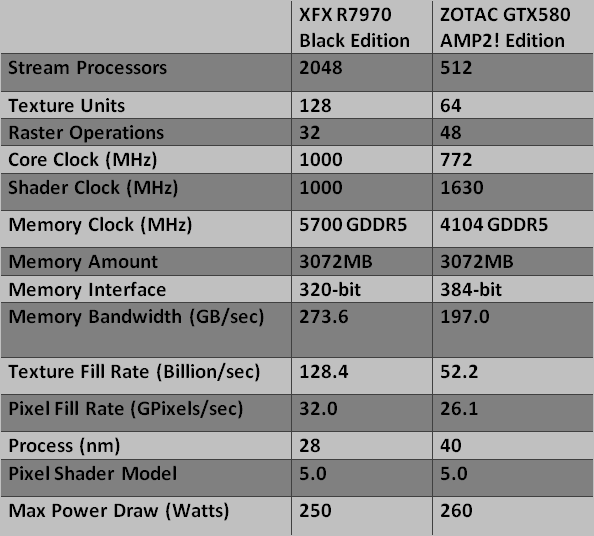
The GTX580 uses the older 40nm manufacturing process while the HD7970 uses 28nm. The R7970 has 4x the amount of processors while the NVIDIA counterpart has 512 (unified). Advantage also goes to the AMD card in texture processing as it has double the texture units allowing the R7970 to draw 128.4 GPixels/s compared to the 52.2 of the Zotac card. The GTX580 however has 25% more ROPs and a larger memory interface however it still lags behind in the memory bandwidth area with 197 GB/s compared to the 128.4 GB/s of the AMD card.
Power draw is fairly similar with the NVIDIA card having a higher TDP by 10W. I would expect the AMD card to draw less power when idle too thanks to the AMD ZeroCore power saving feature. AMD retain the clockspeed crown but as we have seen in the past, clockspeed does not always equate to out right power, especially when comparing one manufacturer to another as AMD had faster clockspeeds in the previous gen but the GF110 was still faster overall.
All things considered, the AMD card looks to have the upper hand in most quadrants but before we move on to the performance of the two cards, lets take a brief look back at each card individually…
ZOTAC GTX580 AMP2!
Card Front
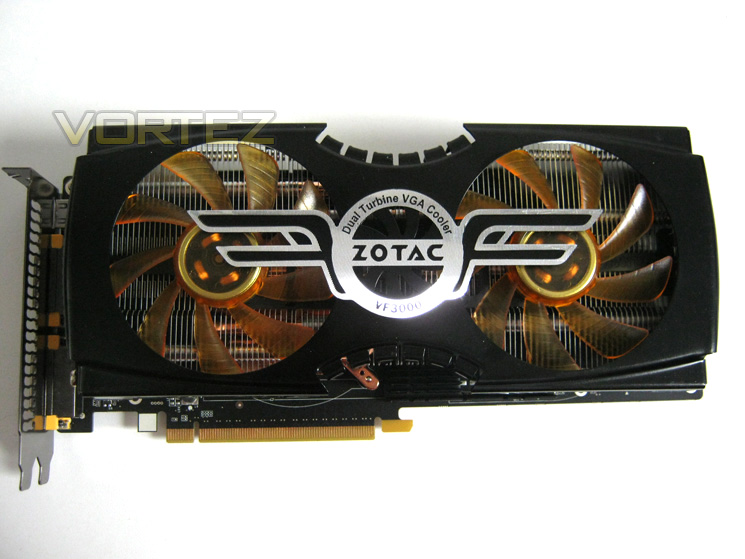
The first thing that strikes you when you first see the card is the huge cooler ZOTAC have employed. The card looks like a performance monster with this attached but is only 265MM long. As previously stated though, this beast is 55MM high, taking up three slot spaces on a motherboard. Rather than employing a plastic shroud as with the GTX560 AMP! we reviewed previously, ZOTAC have instead opted for a black aluminium version which is much more sturdy and should last a fair while longer than plastic. The fans are however a little less bright than the ones found on the GTX560 AMP! which is a shame.
Card Rear
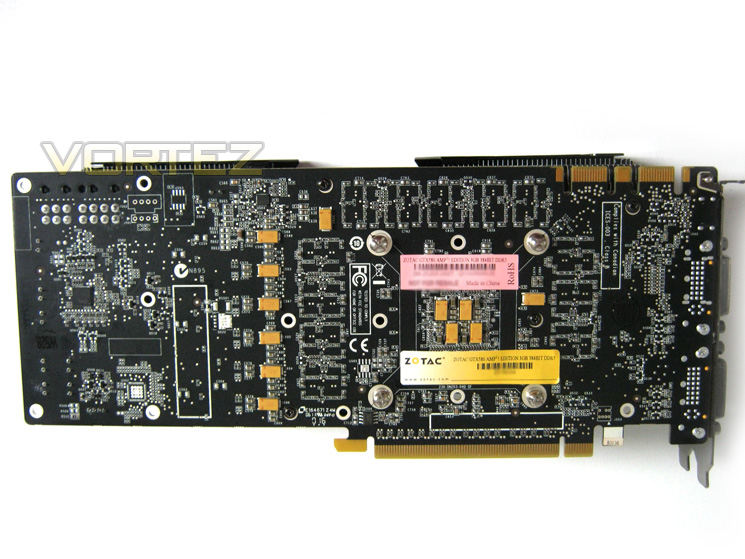
The rear of the card reveals the black PCB favoured by ZOTAC. There is no backplate fitted to the card to protect the delicate components or to help disipate the heat of the VRM circuitry. One point worthy of note are the four spring loaded screws which attach the card to the heatsink. These screws stand proud of the backplane by 4mm which is a significant amount should you wish to place two of these cards directly together.
I/O Area
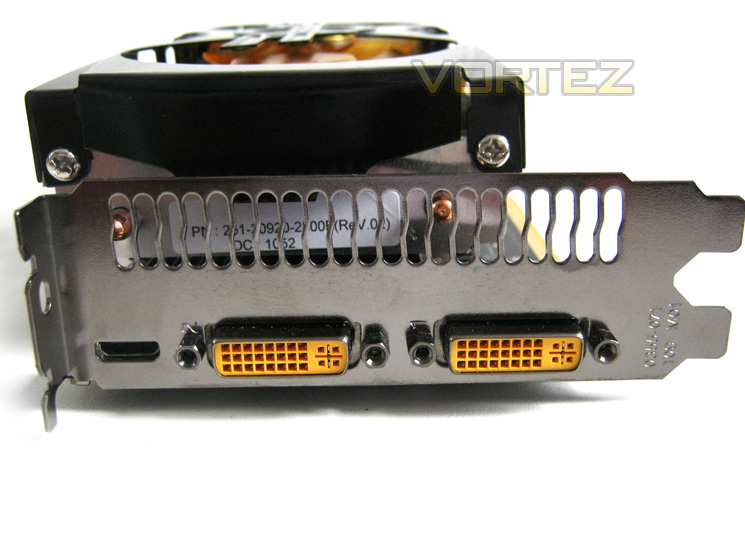
The I/O area is par forthe course and much the same as a reference GTX580 save for the colour co-ordinated DVI twin ports which support a maximum resolution of 2560×1600. Adjacent to the DVI ports is a single HDMI port sporting the latest 1.4a standard. It is worth mentioning that the ports support NVIDIA Surround Technology without requiring DisplayPort as the card is used in SLI configuration.
Card Profile
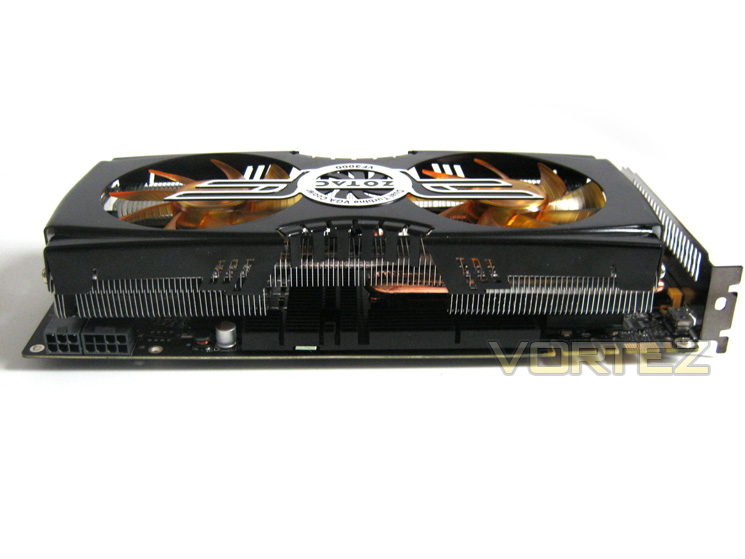
Here you can see the card from a side view. The main cooler stands proud of the I/O plate by a further 17mm and while the I/O plate is vented, an hot air will be exhausted directly into the case as you can see which means you will need good case fan orientation to get the very best from this cooling design.
PCIe Power
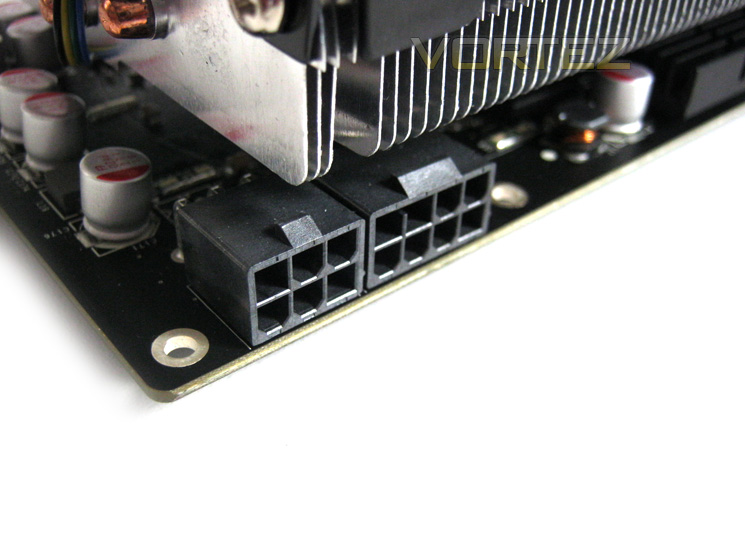
Like all GTX580’s, the ZOTAC GTX580 3GB AMP2! requires both 8pin and 6pin PCIe power cables used in tandem. These ports are placed toward the rear end of the card but still situated on the side so will not interfere with other pc components such as hard drives. Unfortunately, out samples did not equip the package with an 6pin adapter so you will need to ensure your PSU has one of these connectors spare to power the card along with an 8pin adapater (included). ZOTAC recommend a 600w PSU as a minimum to power the GPU which in our view should be more than enough if you intend to run the card in single card configuration.
SLI tabs
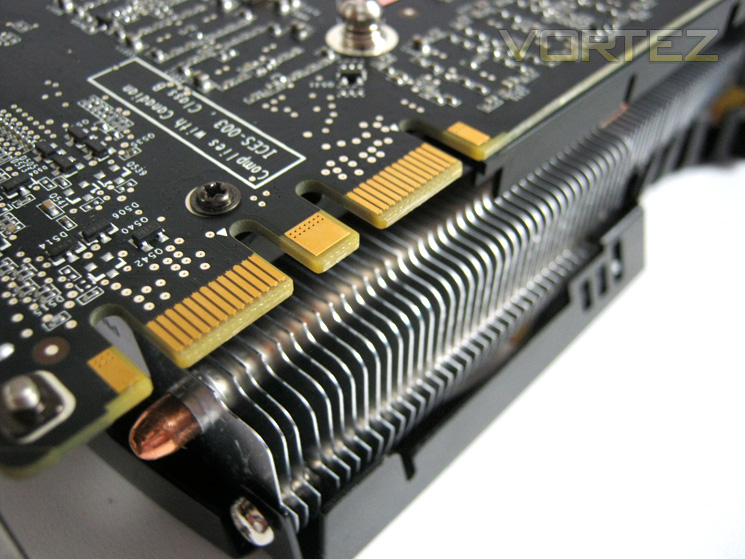
Dual SLI tabs are provided should you wish to run multiple card configurations. SLI, TRI-SLI and QUAD SLI (Nf200 required) configurations are feasable should your motherboard support this feature.
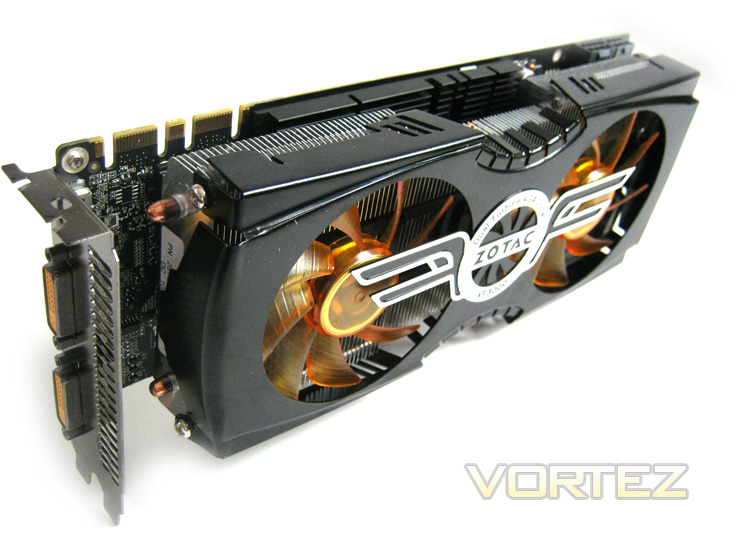
ZOTAC GTX580 3GB AMP2!
Overall, the ZOTAC GTX580 3GB AMP2! is a stunning looking peice of kit. The packaging is very good and should ensure your card arrives in A1 condition. I would have liked to see anti-static packaging used but this would perhaps ruin the point of the window but in all honesty, what use is the graphics card looking pretty if it doesn’t arrive in working order? That said, the packaging is substantial enough that there should be no physical damage and you take adequate precautions before handling the card.
Full Review HERE
XFX R7970 Black Edition
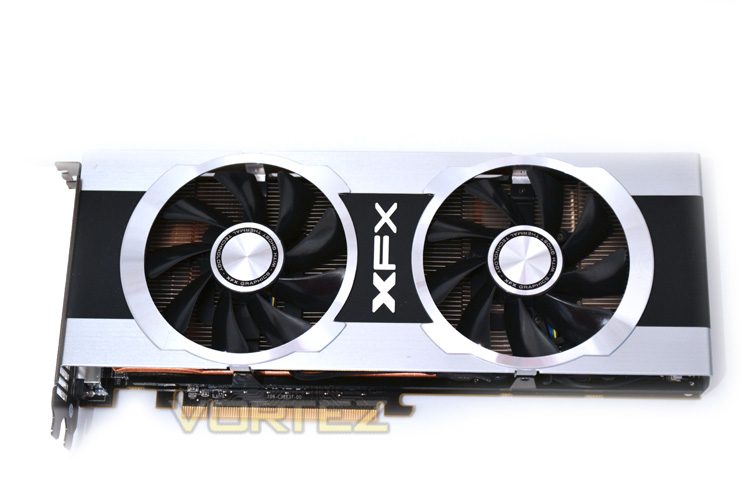
Card Top
From a birds-eye perspective you would be hard pushed to distinguish whether this was an AMD or NVIDIA GPU. I have said it before but I do like the brushed aluminium shroud which gives off an air of quality to the overall product. The black contrasting centre and satin black fans contrast very well with the aluminium which overall, in my opinion at least has to be one of the best looking GPUs currently on the market.
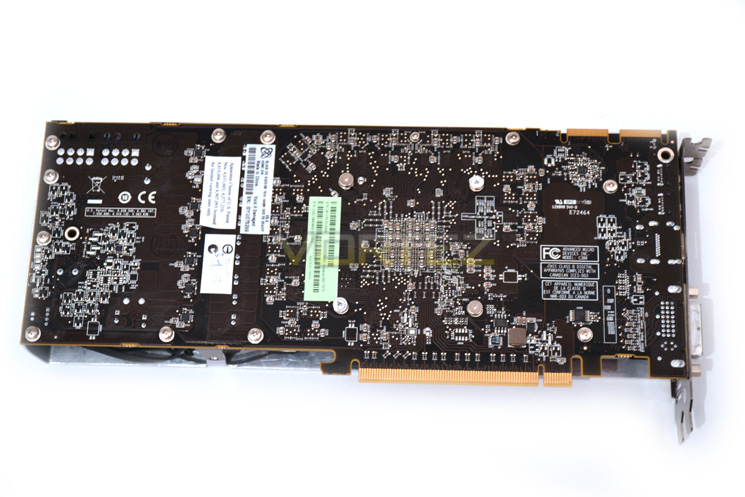
Card Bottom
Looking at the rear we find an abundance of spring loaded screws holding the PCB to the Double Dissipation cooler. Interestingly, like the reference design, the PCIe power area has dual 8 pins solder points while the card is an 8pin+6pin design signifying that the card originally may have need dual 8pins but has had the power requirements cut back to a 6+8pin configuration. While the PCB is black, the screen printing process over the copper traces makes the PCB look more like very dark brown which is a shame but when installed in a case with anything other than white light you certainly would not be able to tell.
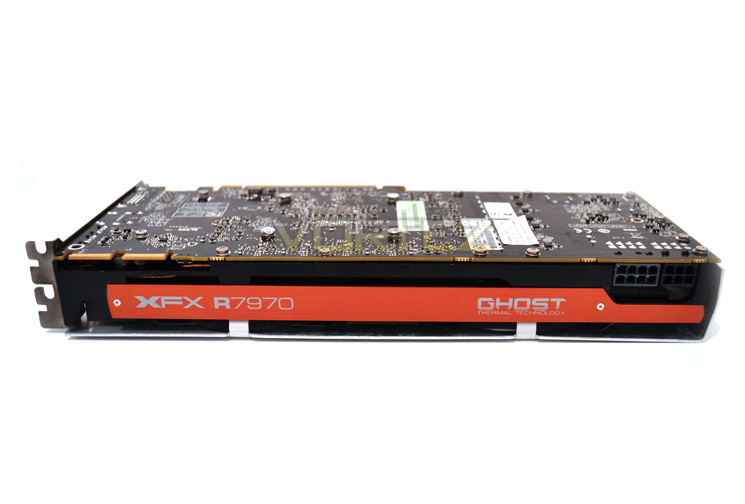
Card Profile
Looking at the card side on, the card again impresses aesthetically. The red aluminium insert with the product title (R7970) and GHOST markings looks great and will happily be shown off through a windowed case.
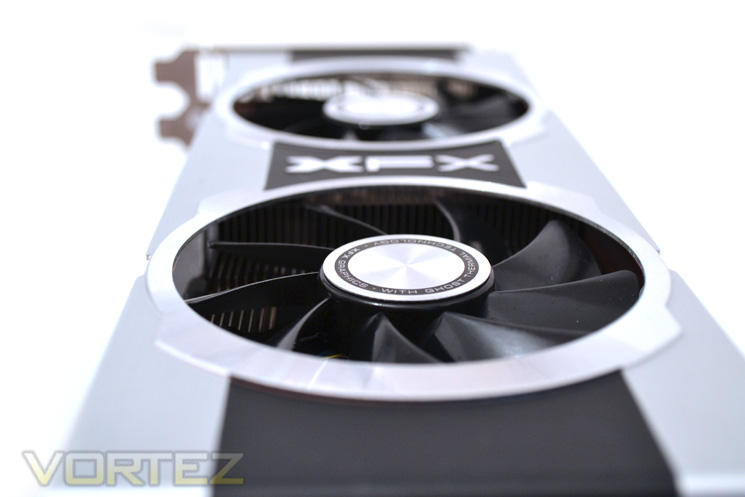
Twin Fans
Rather than using a high rpm single fan, XFX have ‘doubled’ the cooling power by having twin 90mm fans. This design is not a new concept but it does reduce noise compared the the full shroud of the reference models. The trade off is of course that being an open-air design, hot air is partially exhausted back into the PC enclosure.
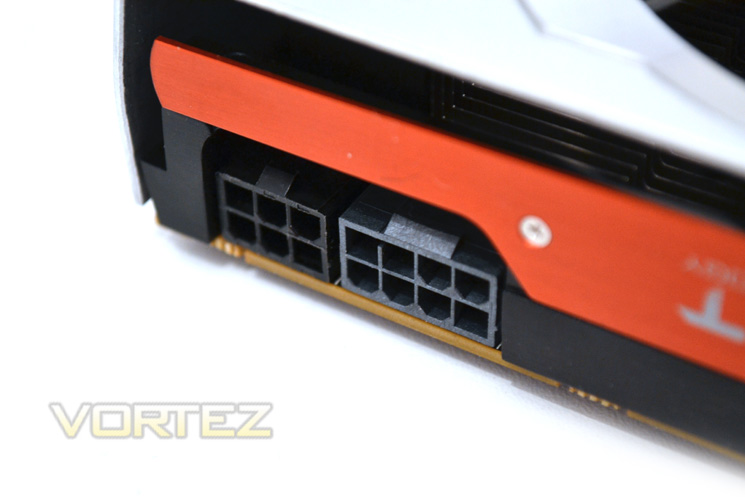
PCIe Power
Like the reference designs, the Black Edition of the AMD HD7970 has a 250W maximum power requirement and to supply this power, along with PCI 3.0, the card has both 8pin and 6pin PCIe power ports. Also present is the dual BIOS switch allowing the card to receive BIOS updates with a safety back-up or indeed allowing the user to modify one BIOS while having the peace of mind that there is a back-up present should things go awry.
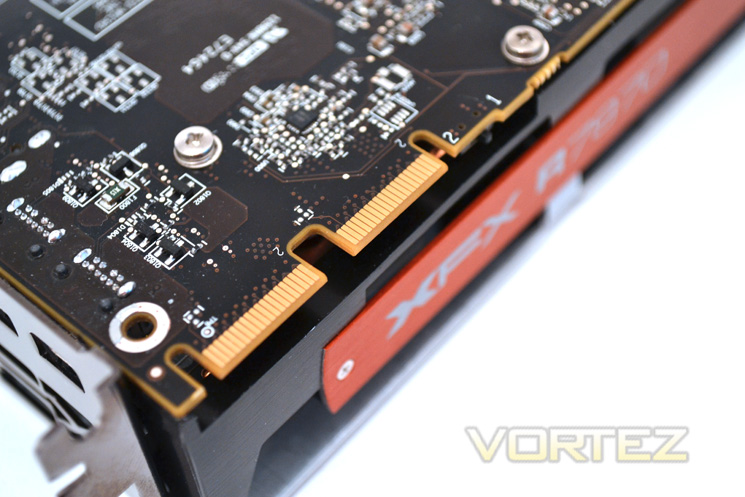
CrossfireX Capability
Twin Crossfire tabs are present allowing the user to add this card to a multiple GPU setup in CrossfireX configuration.
Full review HERE
Test Setup
With the latest Intel chipset release we decided to update our ageing X58 setup to the new X79 chipset. Not only that but we will be using the flagship Core i7-3960X Extreme Edition processor clocked to 4.5GHz to ensure we have no CPU bottlenecks. With 16GB of ram on board there should be minimal paging so the benchmarks we run today will hopefully give a true reflection of the graphics card’s performance.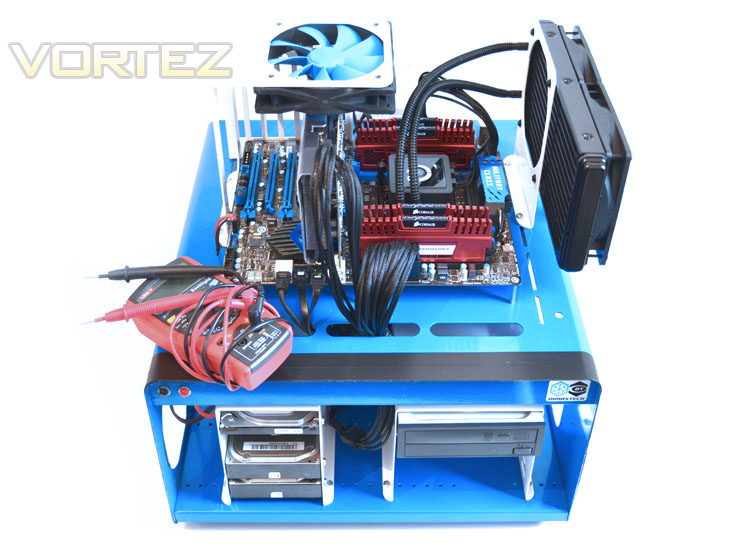
Some of the components for our test bench were kindly donated by CORSAIR who provided the majority of components without whom we would not have been able to bring you this review so a big thanks to them.
Graphics cards on test:
Zotac GTX580 AMP2! 3GB GDDR5
XFX R7970 Black Edition 3GB GDDR5
XFX R7770 Black Edition ‘S’ 1GB GDDR5
AMD HD7750 1GB GDDR5
AMD HD7770 1GB GDDR5
HIS HD7970 3GB GDDR5
XFX DD Radeon R7950 3072MB GDDR5
PowerColor PCS+ Radeon HD7950 3072MB GDDR5
AMD Radeon HD7950 3072MB GDDR5
AMD Radeon HD7970 3072MB GDDR5
ZOTAC GTX570 AMP! 1280MB GDDR5
NVIDIA GTX570 1280MB GDDR5
MSI GTX560Ti-448 Twin Frozr III 1280MB GDDR5
MSI GTX560Ti-384 Twin Frozr III 2GB GDDR5
AMD HD6990 4GB GDDR5
For this review we will be using the very latest CAT 11.12 drivers.
Motherboard: ASRock X79 Extreme4-M
CPU: Intel Core i7-3960X Extreme Edition @ 4.5GHz
RAM – 16GB (4x4GB) Corsair Vengeance (Red) DDR3 @ 1866MHz 9-10-9-27
Power Supply – ANTEC High Current Pro 1200W
Hard Drive – Hitachi SATA II 250GB
Samsung F3 1TB
Cooler – Corsair H100
Benchmarks
We have also updated our range of benchmarks to include the following games which will give the graphics cards a challenge and sort the wheat from the chaff. Each benchmark will be run at both stock and maximum overclock settings and utilise 1920×1080 and 2560×1600 resolutions along with AA at various levels (application dependent):
Battlefield 3
Crysis 2
Crysis Warhead
Metro 2033
Batman: Arkham City
Elder Scrolls: Skyrim
DiRT 3
Futuremark 3DMark 2011
Unigine: Heaven 2.5
Crysis 2
Crysis Warhead
Metro 2033
Batman: Arkham City
Elder Scrolls: Skyrim
DiRT 3
Futuremark 3DMark 2011
Unigine: Heaven 2.5
Let’s see how today’s cards performed…
Overclocking
We will be testing both cards at there reference clockspeeds today along with the maximum stable overclocked speeds.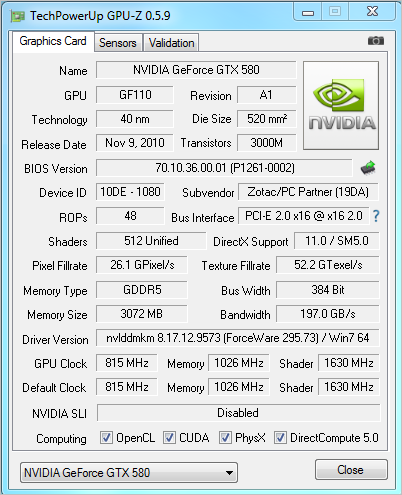
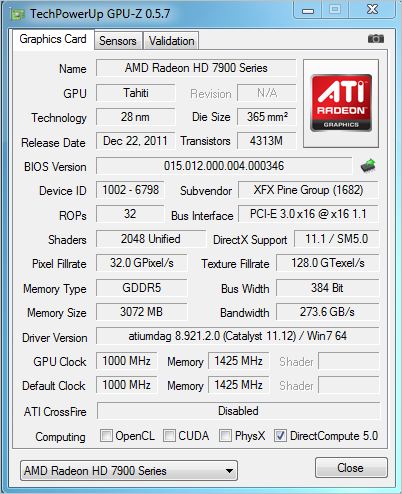
AMD usually have the advantage in clockspeeds and so it came as no surprise that the R7970 was the higher clocked of the two graphics cards at 1000MHz against the GTX580’s 815MHz. Memory speed also favoured the XFX card with an effective speed of 5700 vs the 4104MHz of the ZOTAC card.
Overclocking
We used MSI’s Afterburner tool to overclock the ZOTAC card while for the XFX R7970 we used Sapphire TRIXX utility.
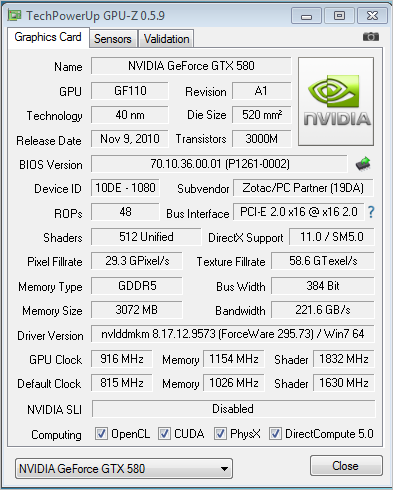
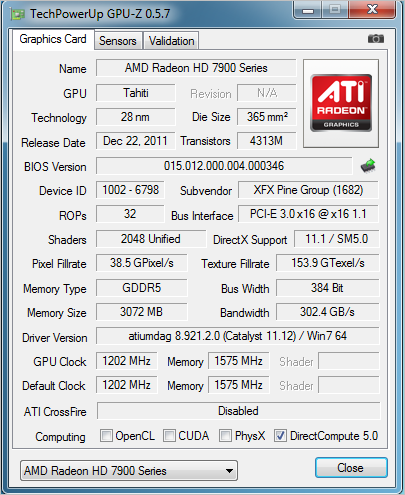
Both cards overclocked well but the XFX card had much more overclocking headroom despite it already being heavily clocked. These clockspeeds were rock solid stable throughout our testing but also under went and hour of MSI’s Kombuster stressing programme to ensure the overclocks were thoroughly stable.
Enough of the talk now, let’s see how both cards, at both sets of closkpeeds performed during testing…
Temperature & Power Consumption Analysis
Power ConsumptionTo test for power consumption we do not use anything to technical, just a wall meter which measures the total system power draw minus the monitor.
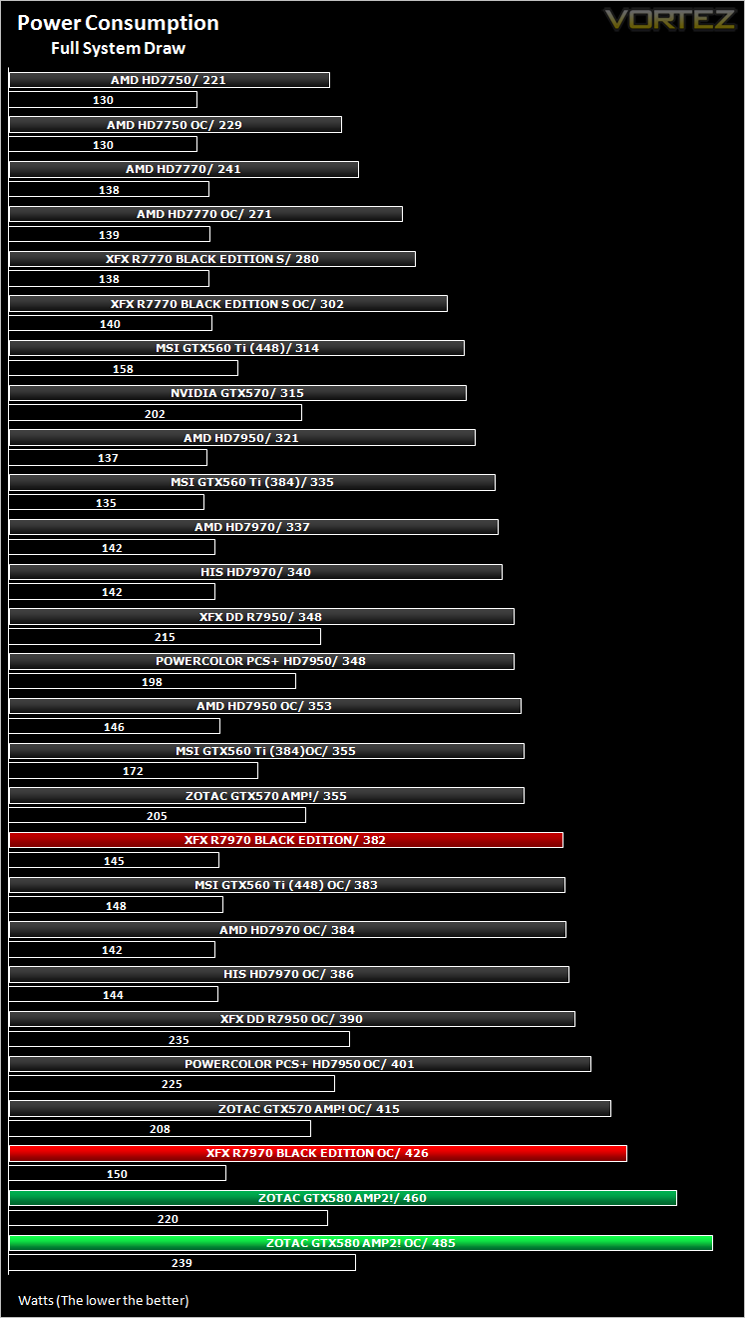
Being flagship cards it came as little surprise that the cards were towards the bottom of the pile in power consumption. The R7970 did however fair a little better than the GTX580 consuming significantly less than the GTX580, especially at reference clockspeeds with no voltage adjustments. The GTX580 however, especially when overclocked was far and away the most power hungry single GPU card we have tested to date.
Temperature
To test temperatures we measured idle temperatures after booting windows, letting all applications finish loading and ran a few benchmarks. Once the benchmarks were complete we left the card to reach a cooling plateau where we then took the idle temperatures. For the load tests, we ran Furmark for 20 minutes, taking the absolute maximum temperature attained.
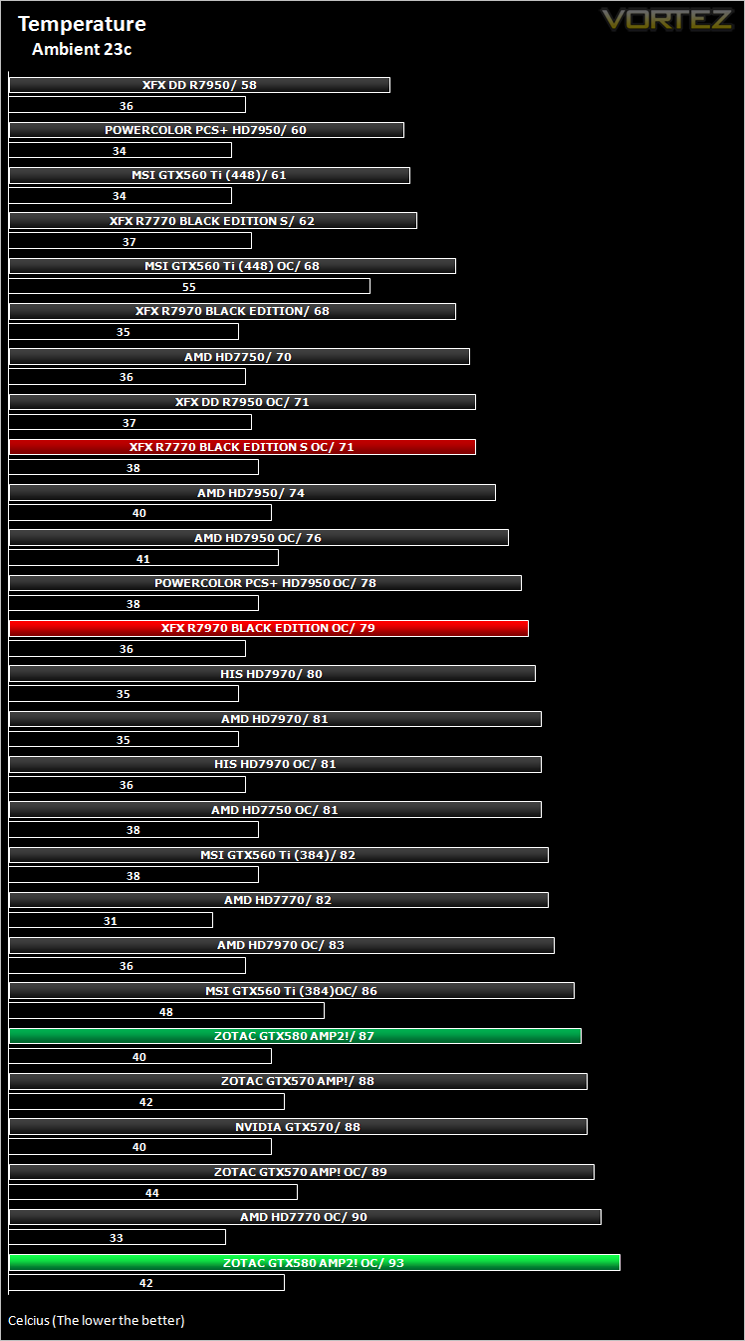
I was surprised to see the GTX580 being such a poor performer in this area given that the card has a massive 3 slot heatsink. At 93c when overclocked the card was extremely toasty and because of this the cards fans span up to audible levels giving off a slight whine. Even at reference speeds the card was hot measuring 87c. In contrast, the R7970 was a good deal cooler at both overclocked and reference clockspeeds.
Let’s move on to our suite of benchmarks…
Battlefield 3
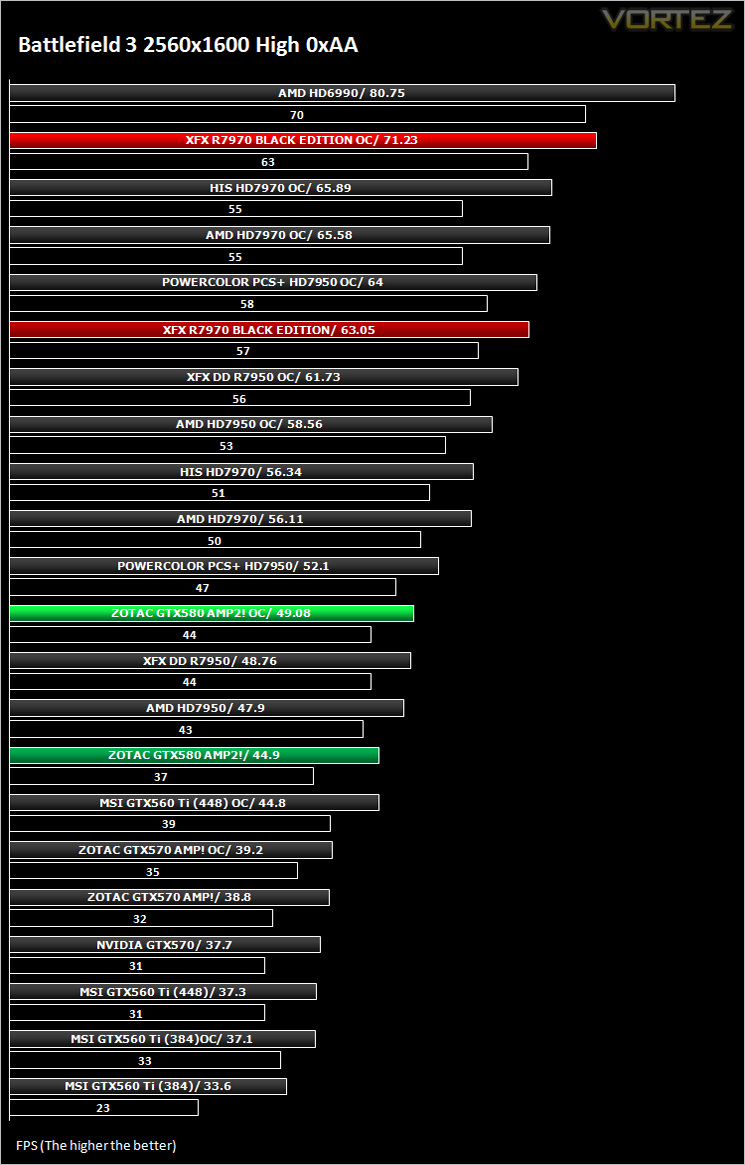
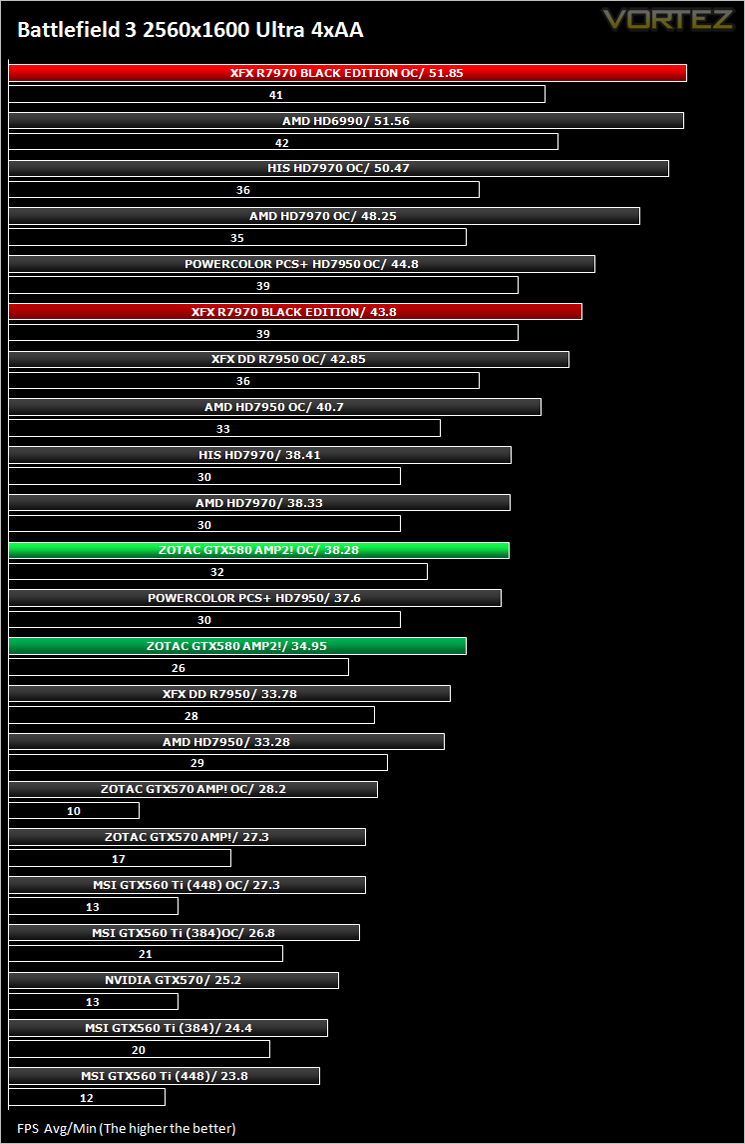
Battlefield 3 leaps ahead of its time with the power of Frostbite™ 2, the next instalment of DICE’s cutting-edge game engine. This state-of-the-art technology is the foundation on which Battlefield 3 is built, delivering enhanced visual quality, a grand sense of scale, massive destruction, dynamic audio and incredibly lifelike character animations. As bullets whiz by, walls crumble, and explosions throw you to the ground, the battlefield feels more alive and interactive than ever before. In Battlefield 3, players step into the role of the elite U.S. Marines where they will experience heart-pounding missions across diverse locations including Paris, Tehran and New York.
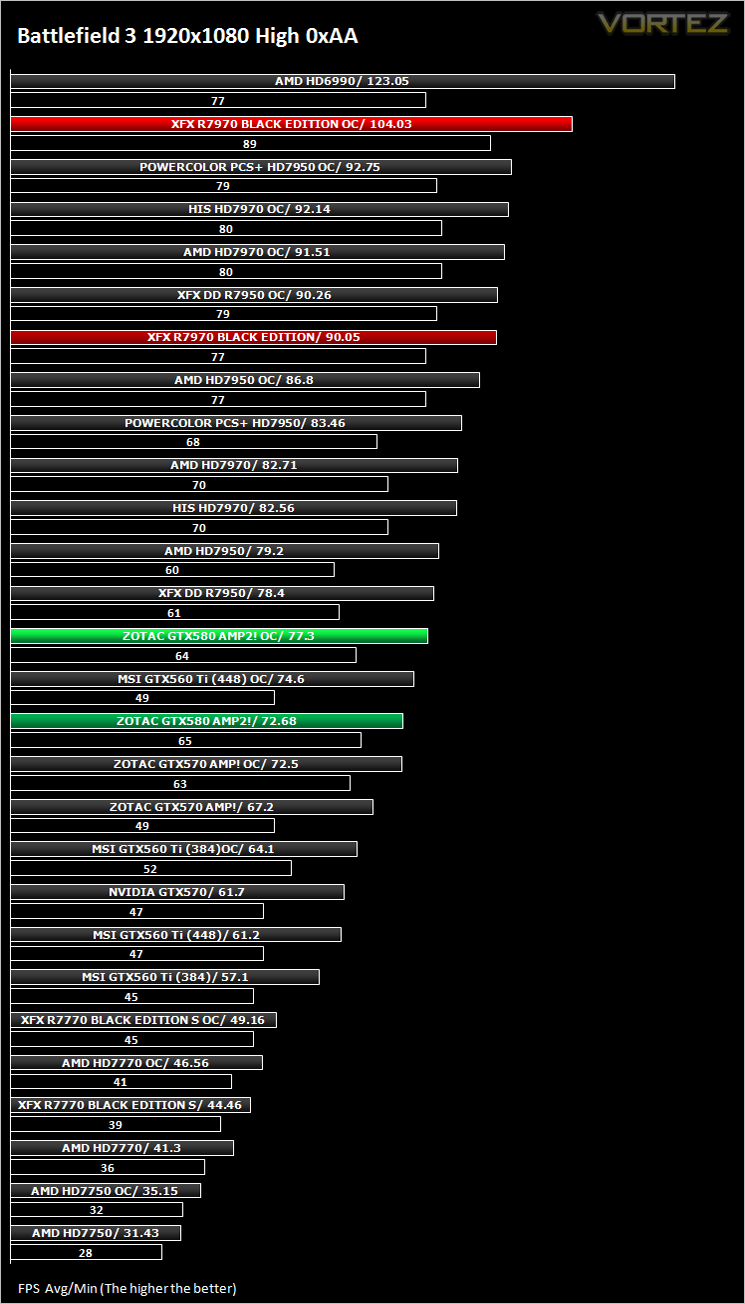
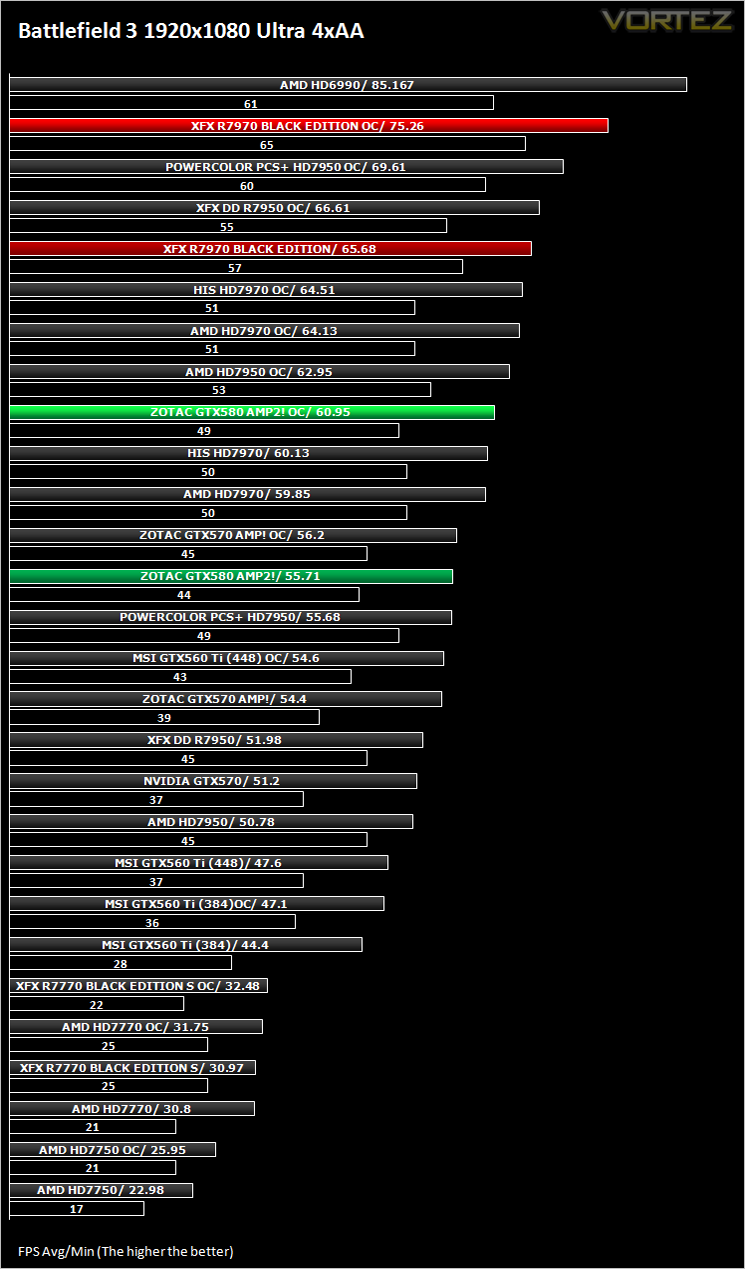
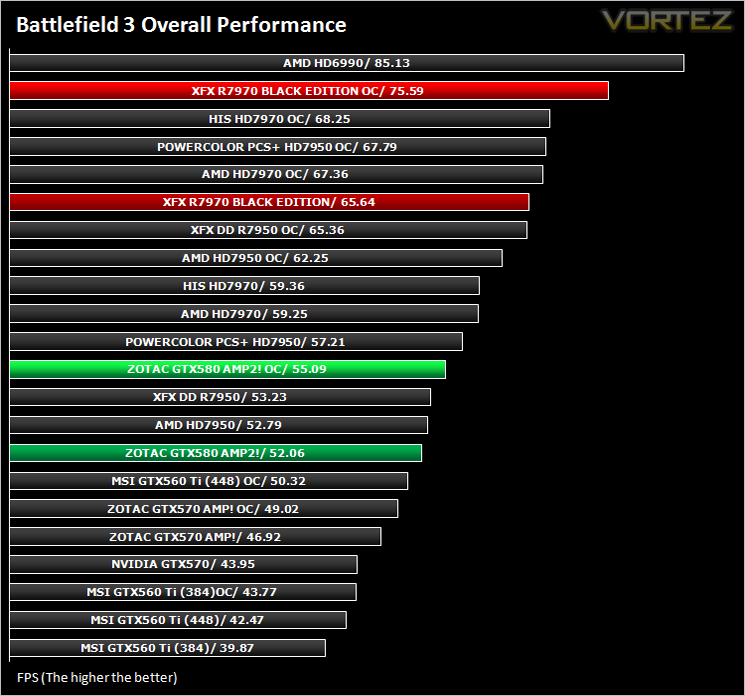
Average and minimum frames per second were measured using Fraps during the parking lot scene on Operation Sword Breaker. High and Ultra presets were loaded at both resolutions.
Crysis 2
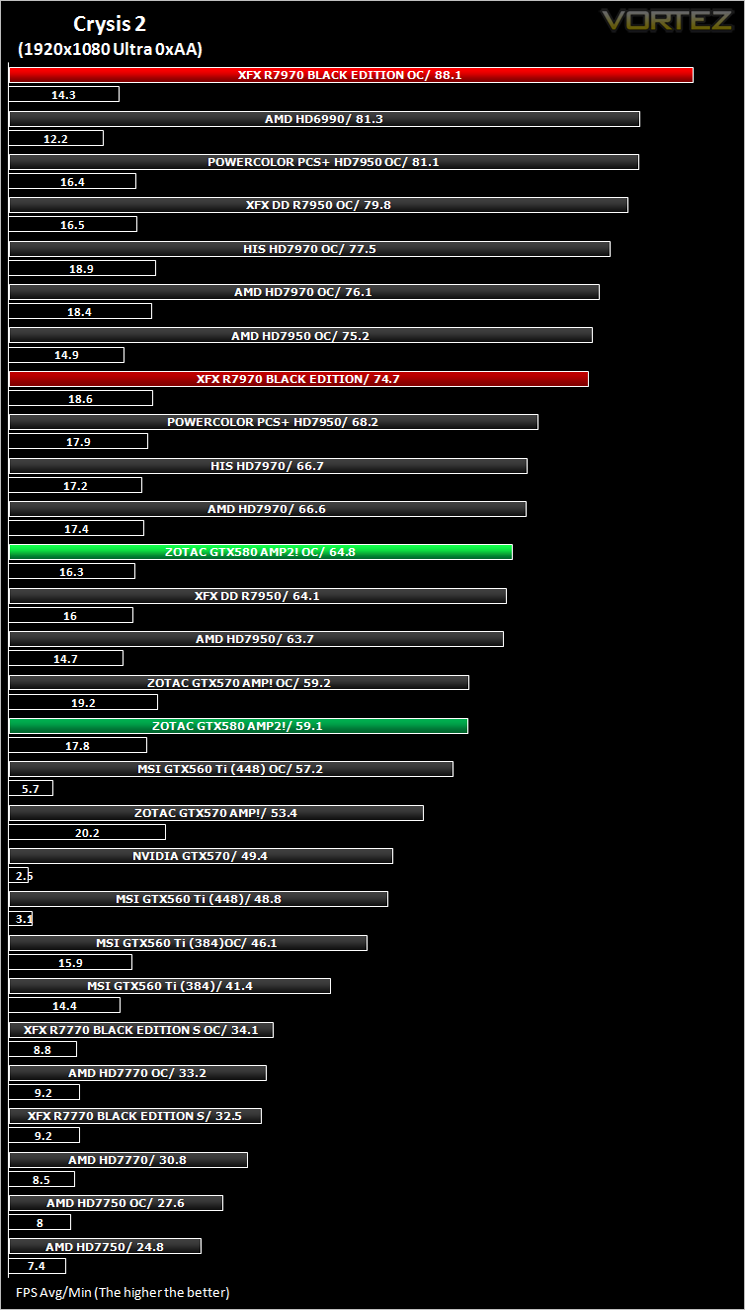
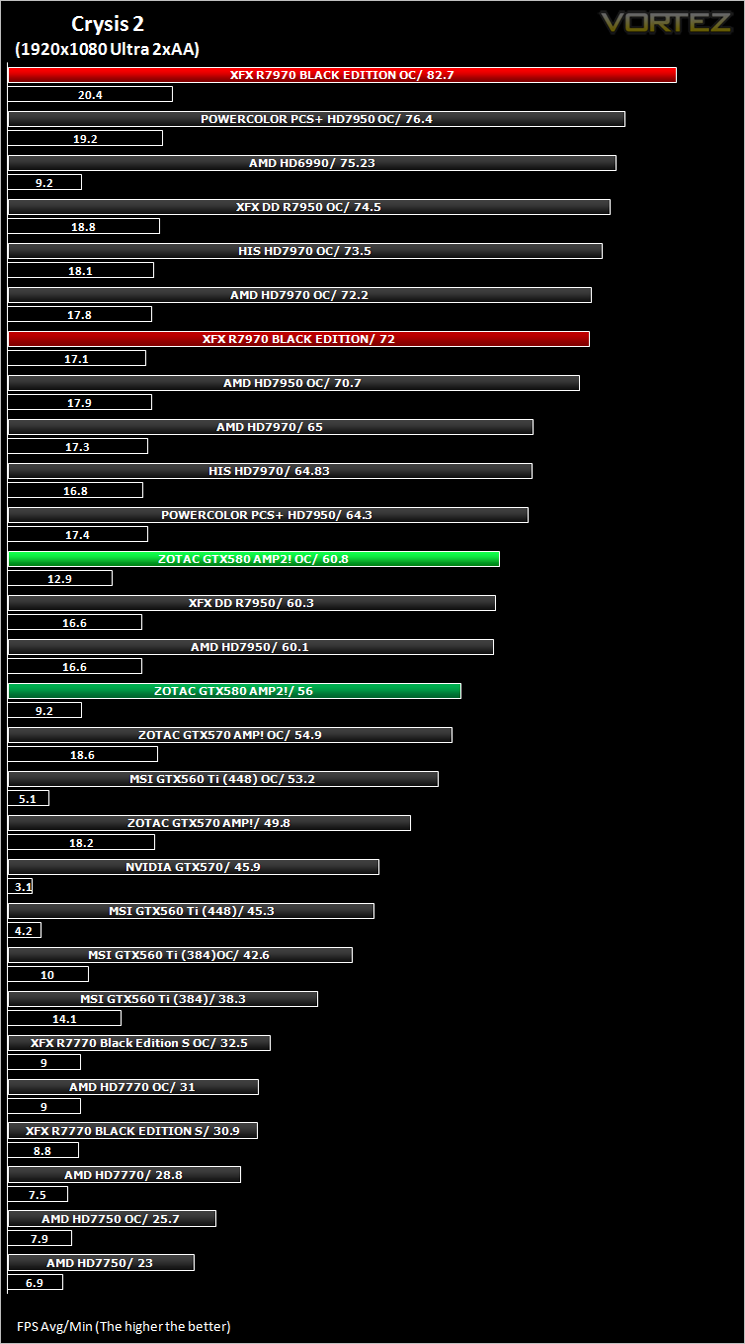
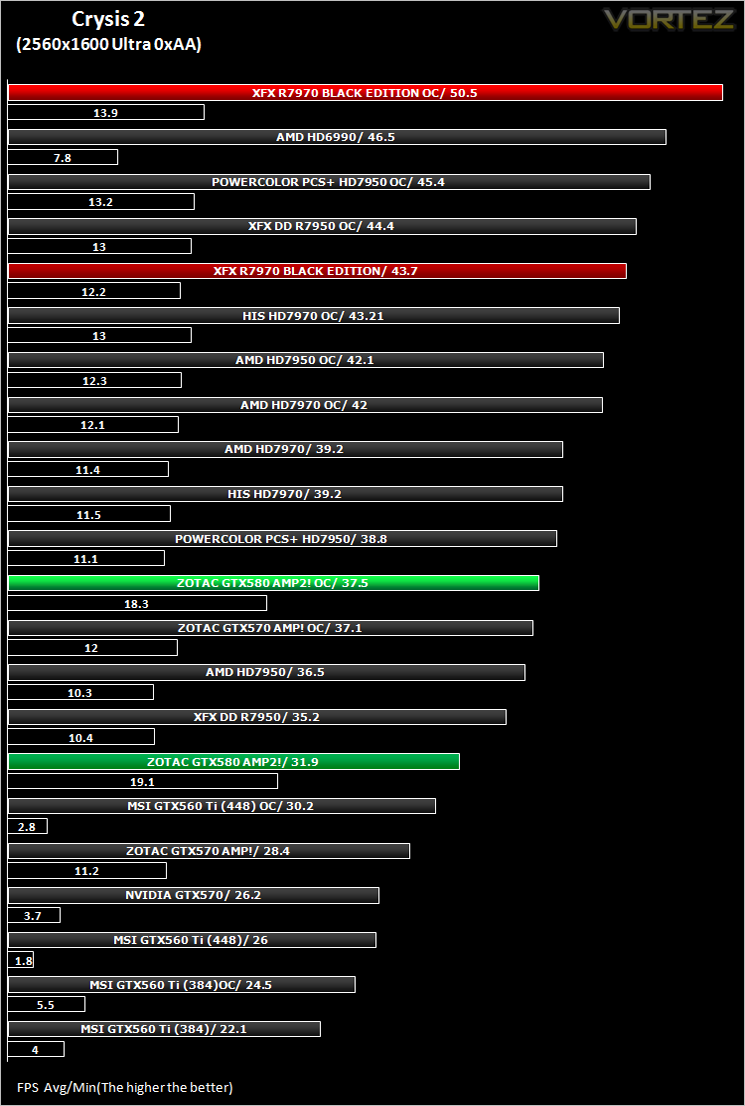
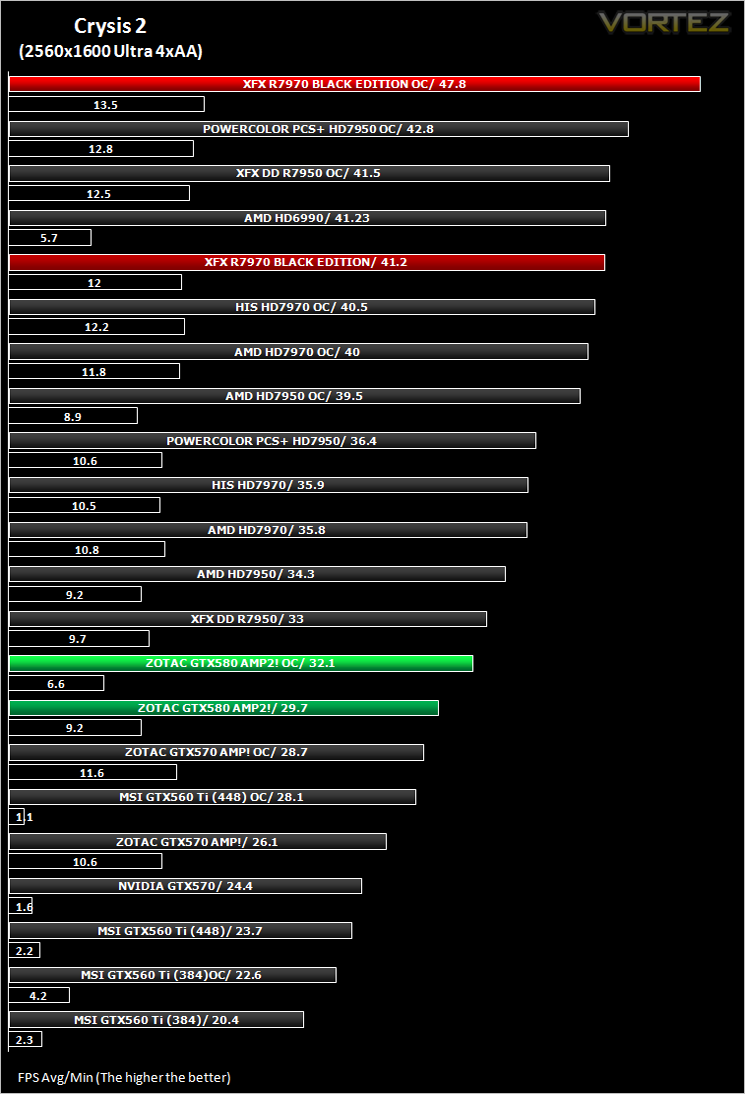
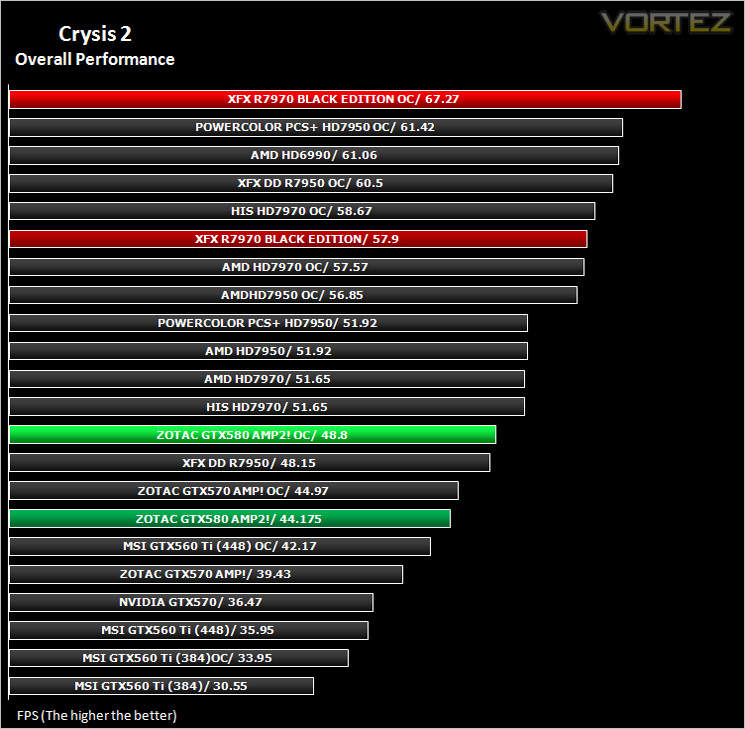
Crytek took an internet beating from its loyal fans due to the fact that they pandered to the console masses and dumbed down the graphics to DirectX 9. Fortunately, fans of the PC version of Crysis managed to force Cryteks hand and they have since developed a DX11 patch and have also enhanced the textures with added tesselation. It is for this reason that we have decided to include it in our suite of benchmarks.
To test the cards we used the Crysis 2 benchmark courtesy of Adrenaline with both the 1.9 patch, DX11 update and Hi-res texture pack. Settings were manually placed to Ultra, DX11 and tessellation enabled with the Central Park map being run 3 times per resolution benchmark test.
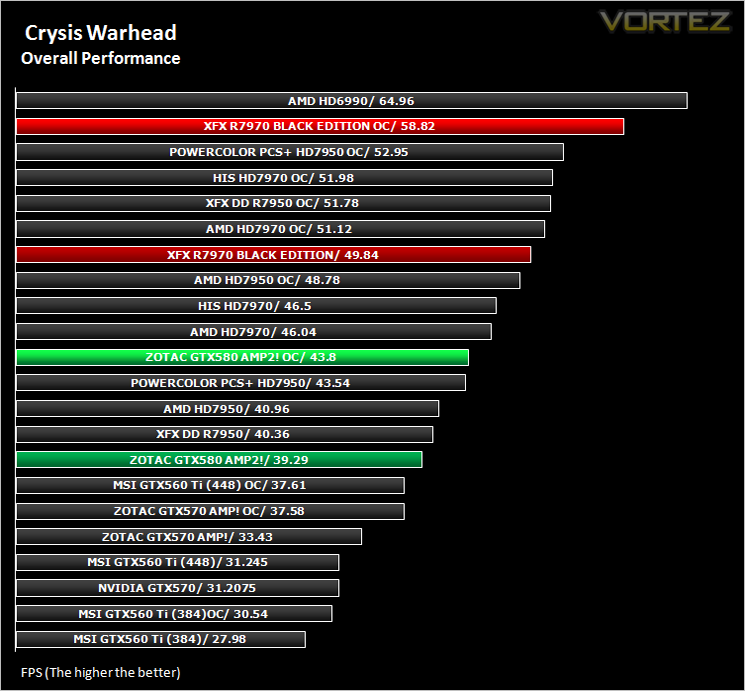
Crysis Warhead
Following the success of Crysis, the stand alone expansion “Warhead” was hotly anticipated to bring more game play, more weapons, improved visuals whilst maintaining better performance, the latter being what gamers wanted most. After all how many people upgraded their rigs just to play this game… In the game, you play as the upbeat Brit Sergeant “Psycho” Sykes, chasing down a Korean nuclear warhead. Throw in some ice shooting aliens and we’re bound to have a great game. It sure delivered.
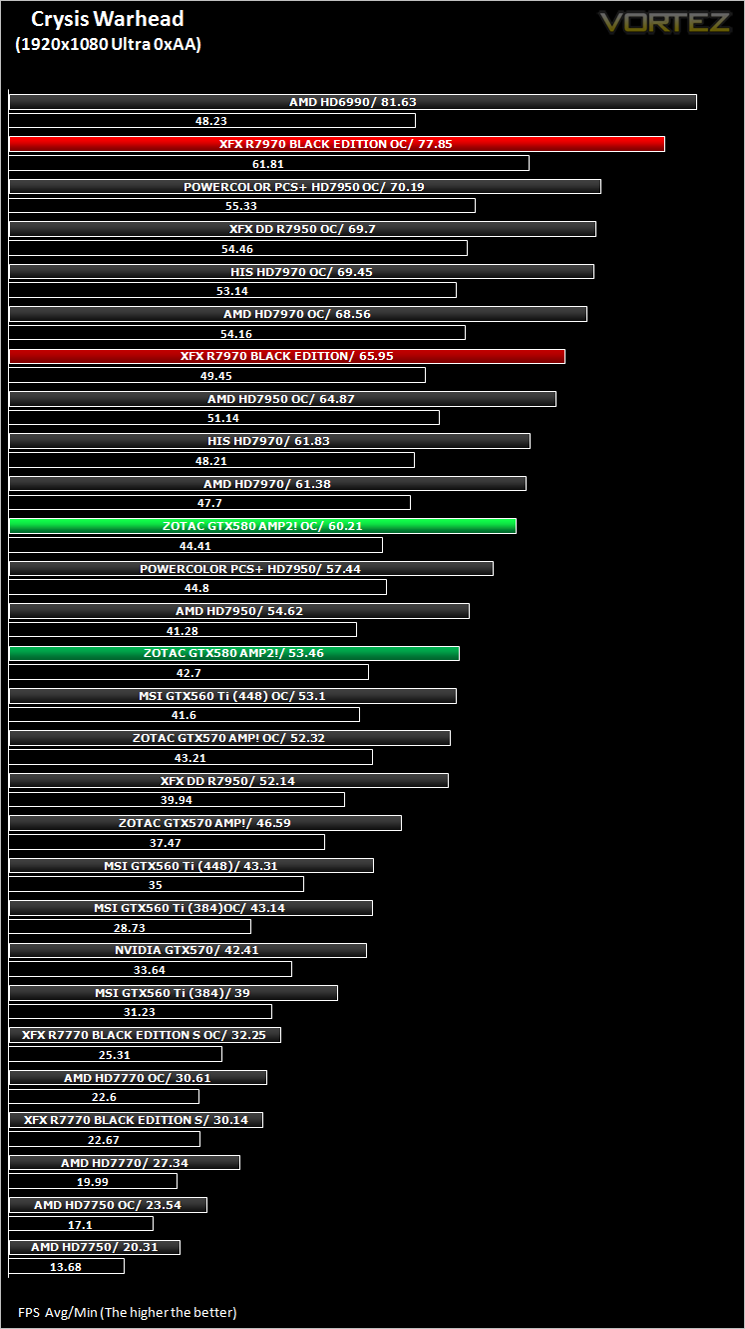
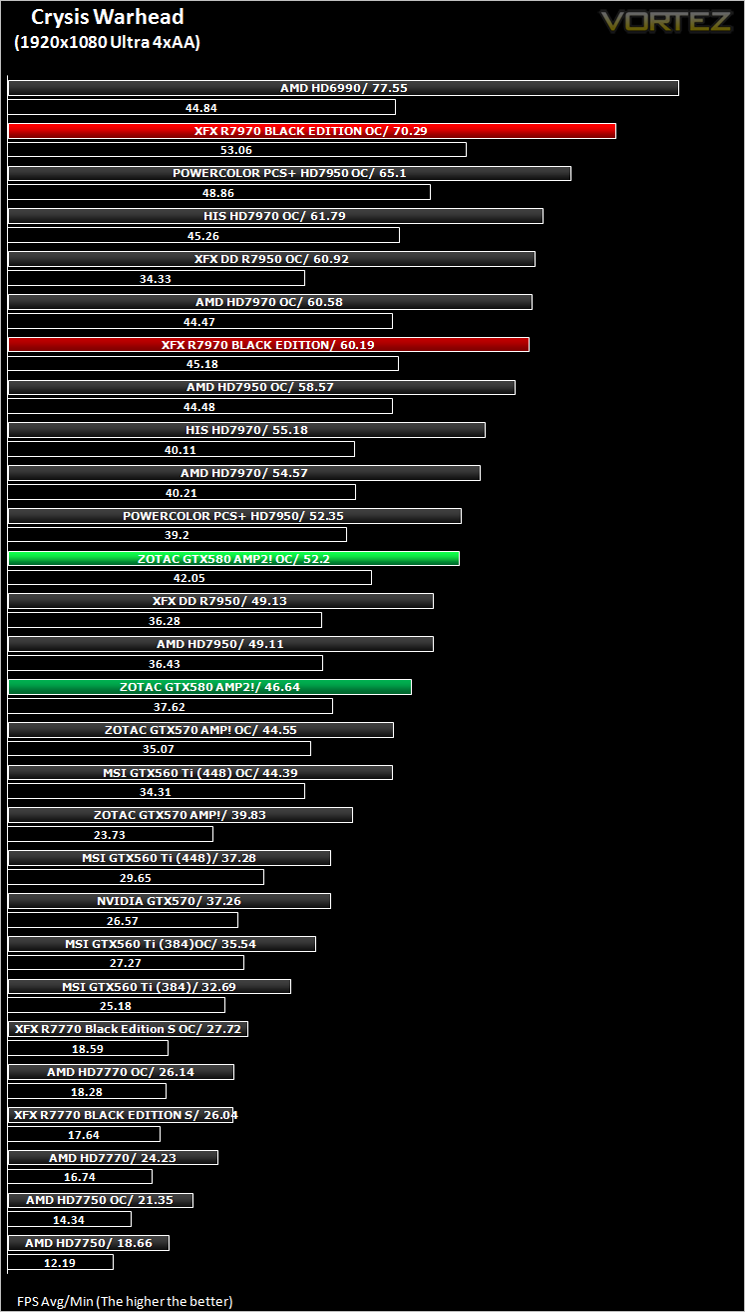
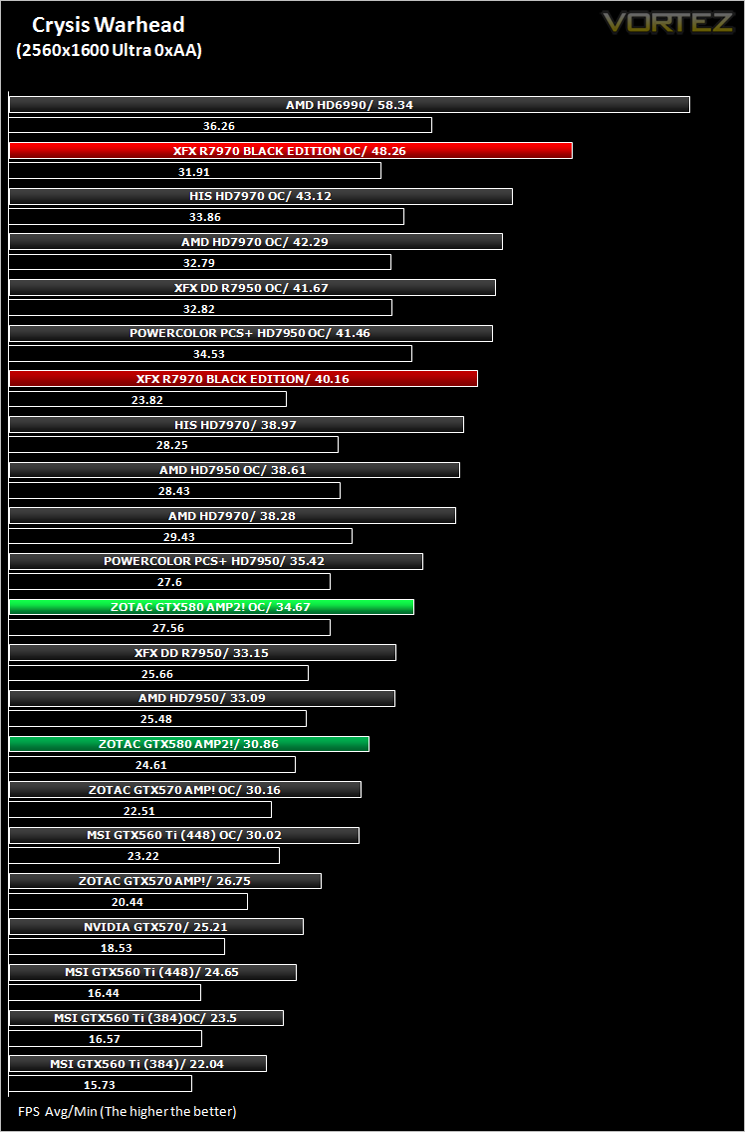
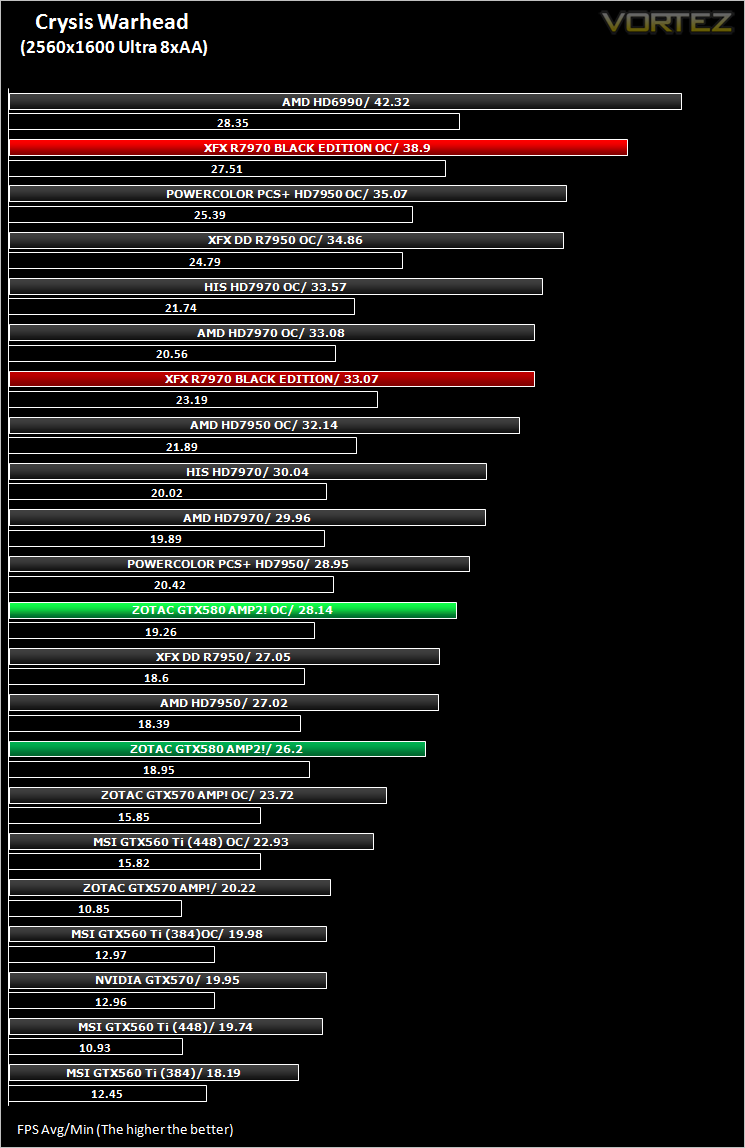
Testing was done using Framebuffer’s Crysis Warhead benchmarking tool. The tests were configured to DirectX 10 at Enthusiast levels. Each test on the Ambush map was looped three times from which the average FPS was recorded.
Metro 2033
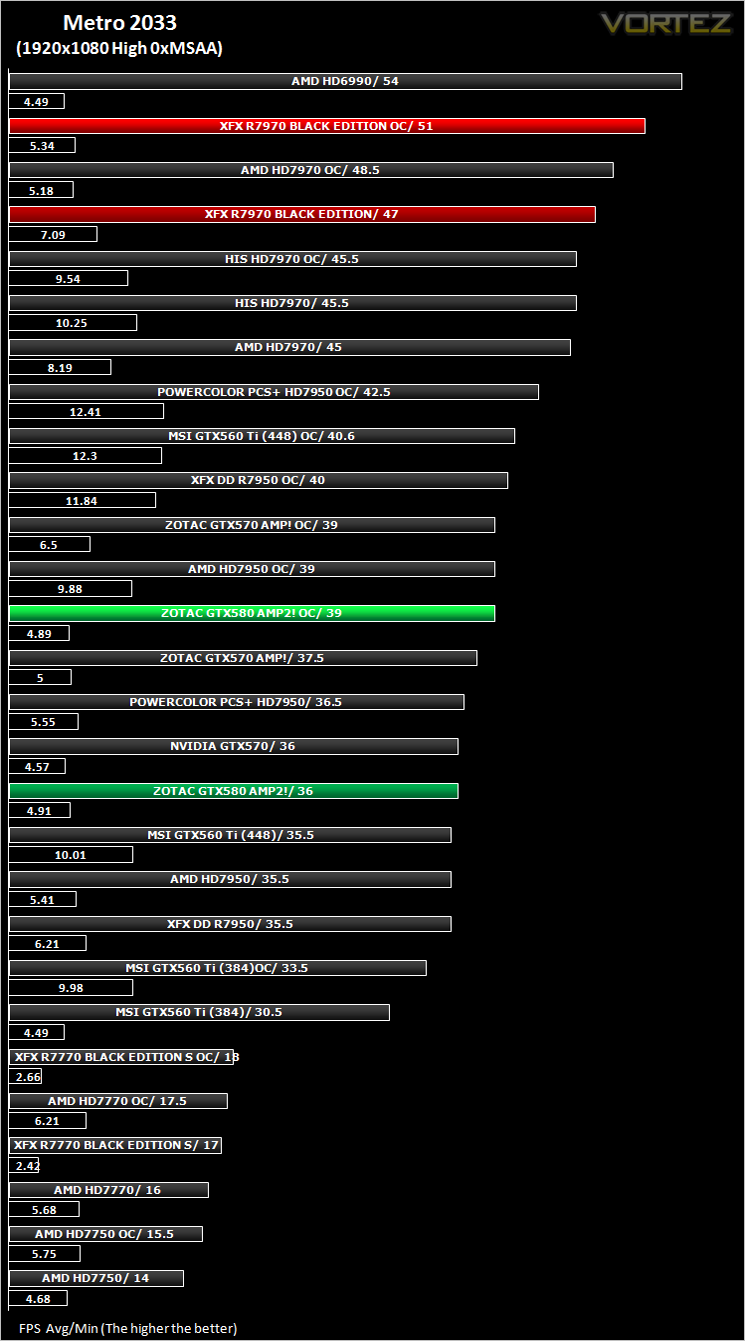
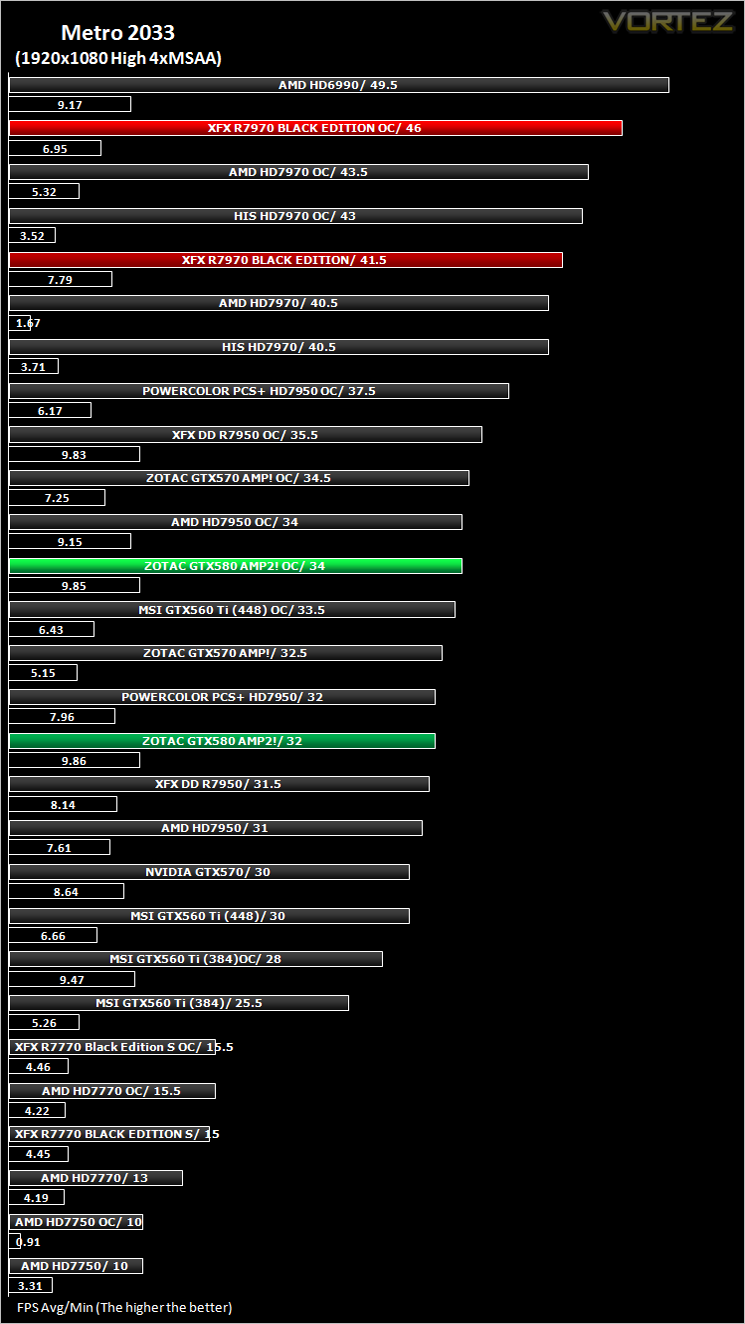
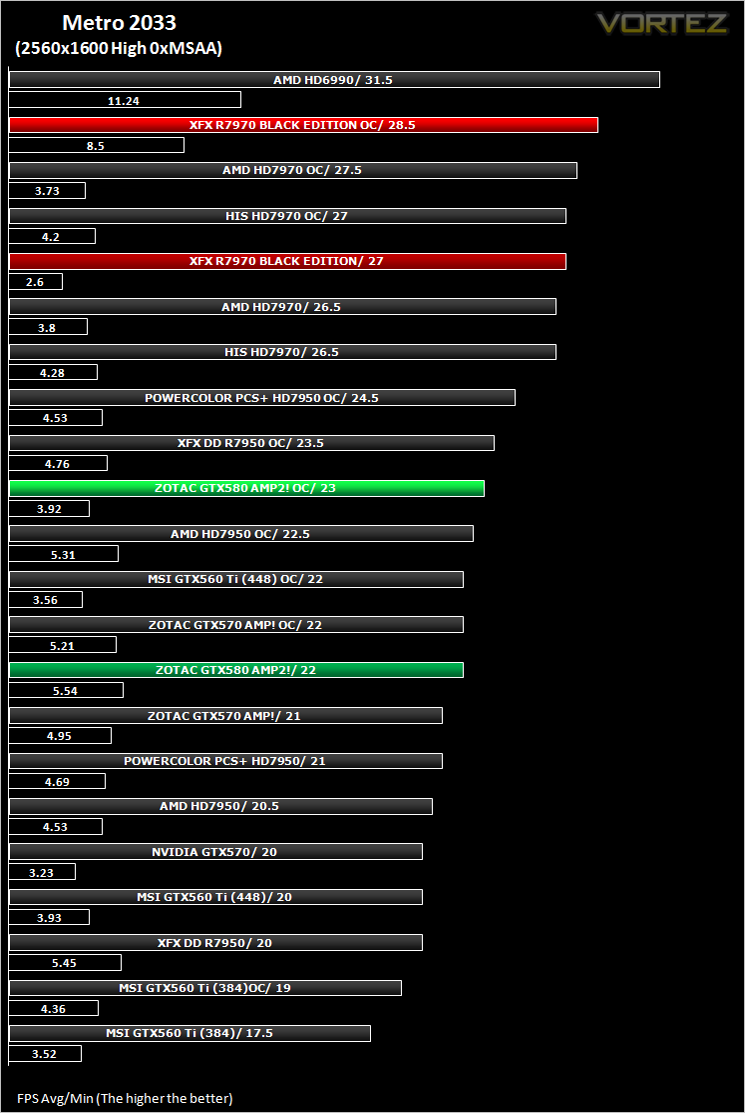
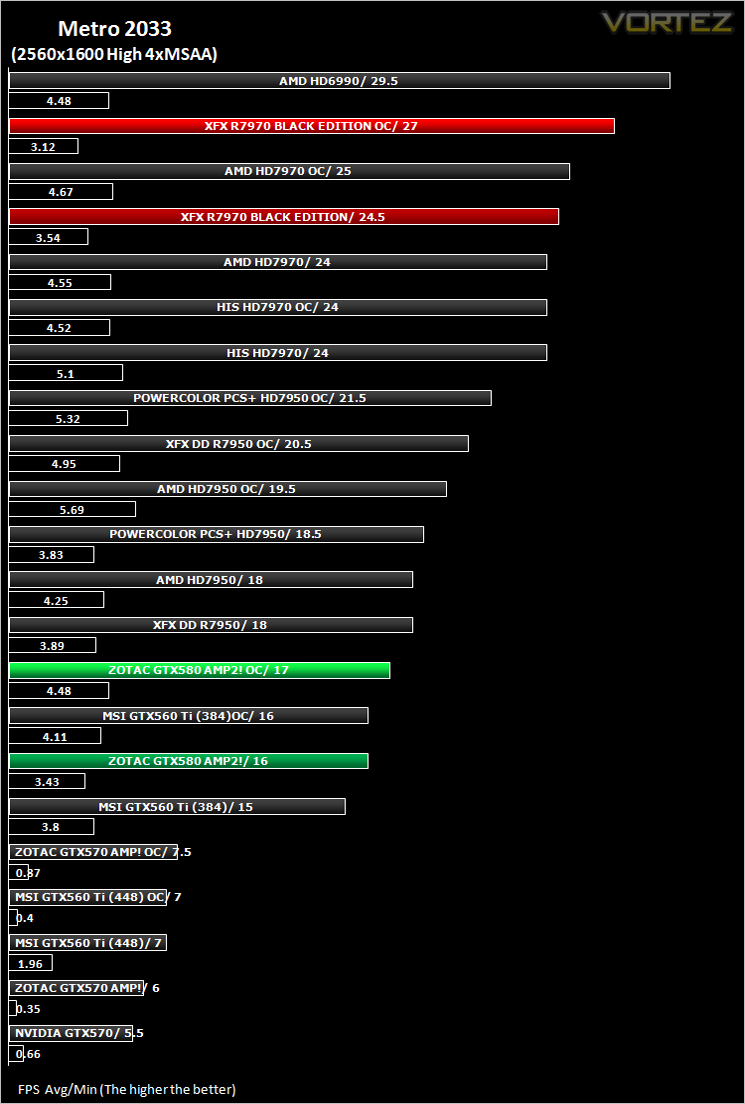
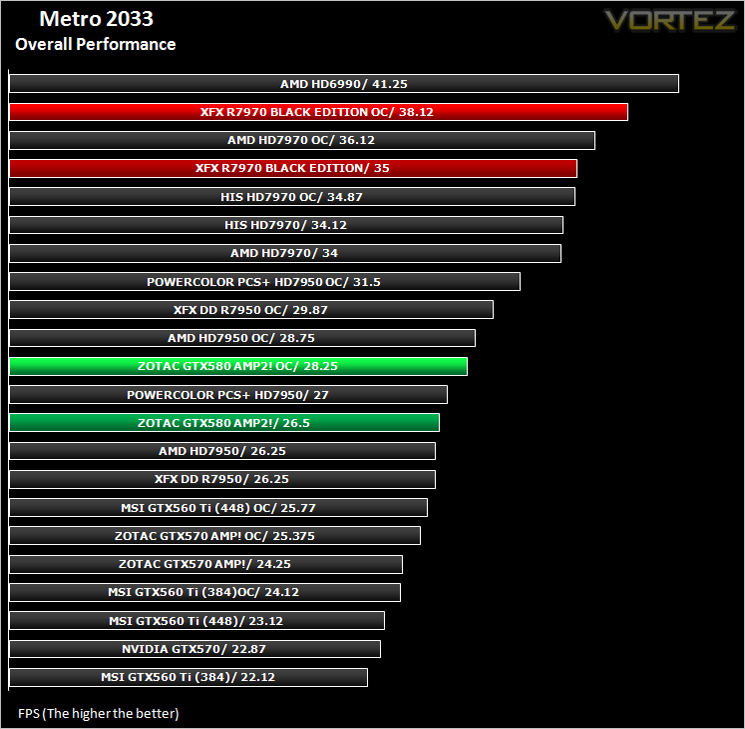
Based on the novel by the same name, Metro 2033 is a first person shooter with elements of survival horror. As Artyom, you trawl through the mutant infested metro systems of post-apocalyptic Moscow. The game delivers presents a grim ambience that reflects on the overall atmosphere of the underground setting. Metro 2033 uses the setting as a back drop to showcase some of the best visuals of any games out now, making it the ideal benchmark for those looking for the best graphics card.
The bundled benchmarking tool was used on Metro 2033, configuring the settings to High and making use of DirectX 11. The frontline scene was looped 3 times for each configuration. The average FPS was recorded at the end.
The Elder Scrolls V: Skyrim
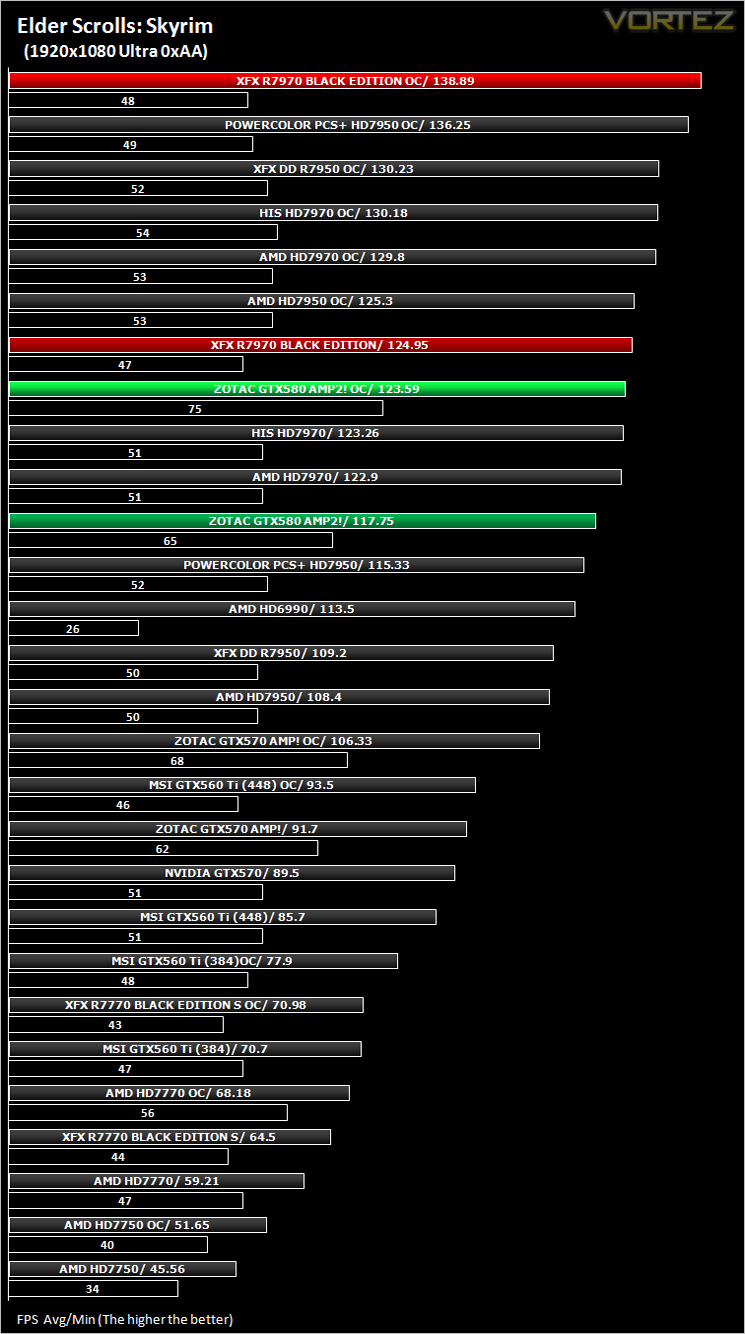
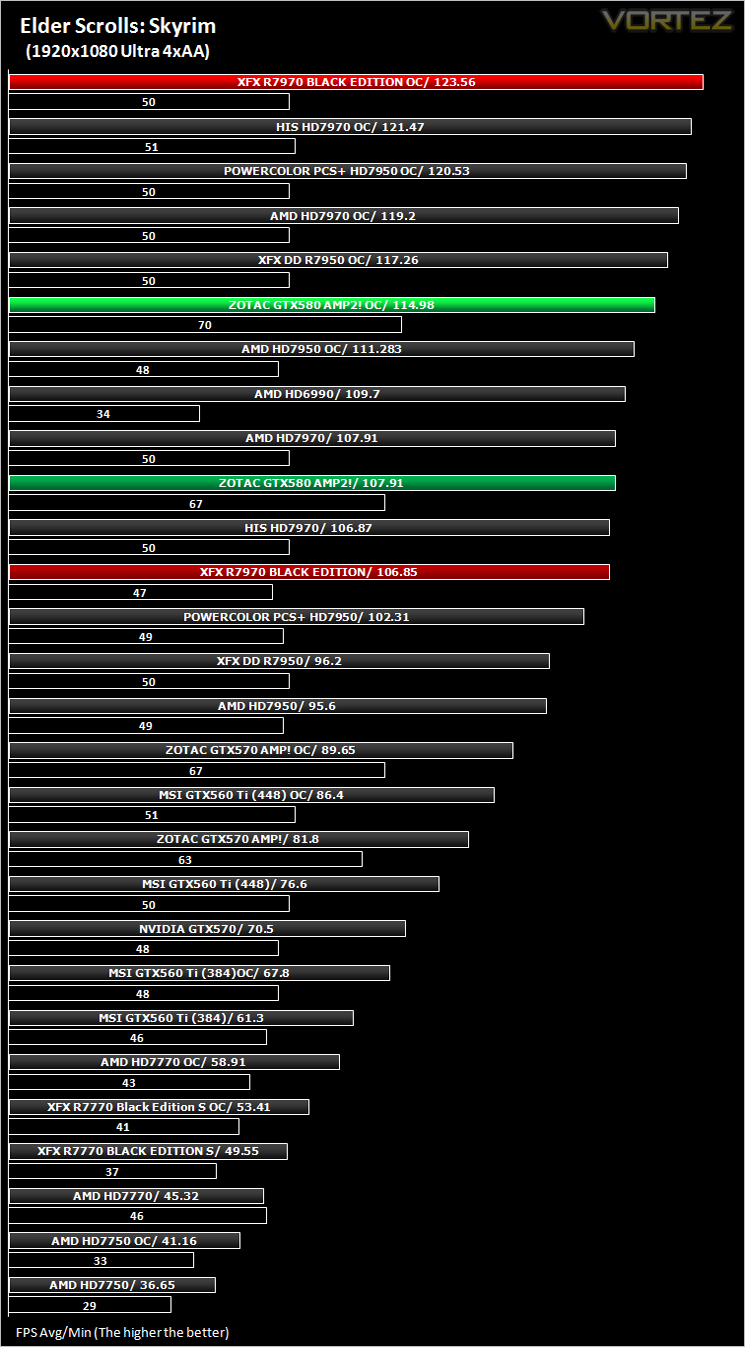
Skyrim is not a direct successor to the very popular Oblivion. Instead it takes place 200 years after the events of Oblivion. The non-linear playing that made the Elder Scrolls such a popular series does however make a return along with the beautiful scenery the encompasses the world of Skyrim.
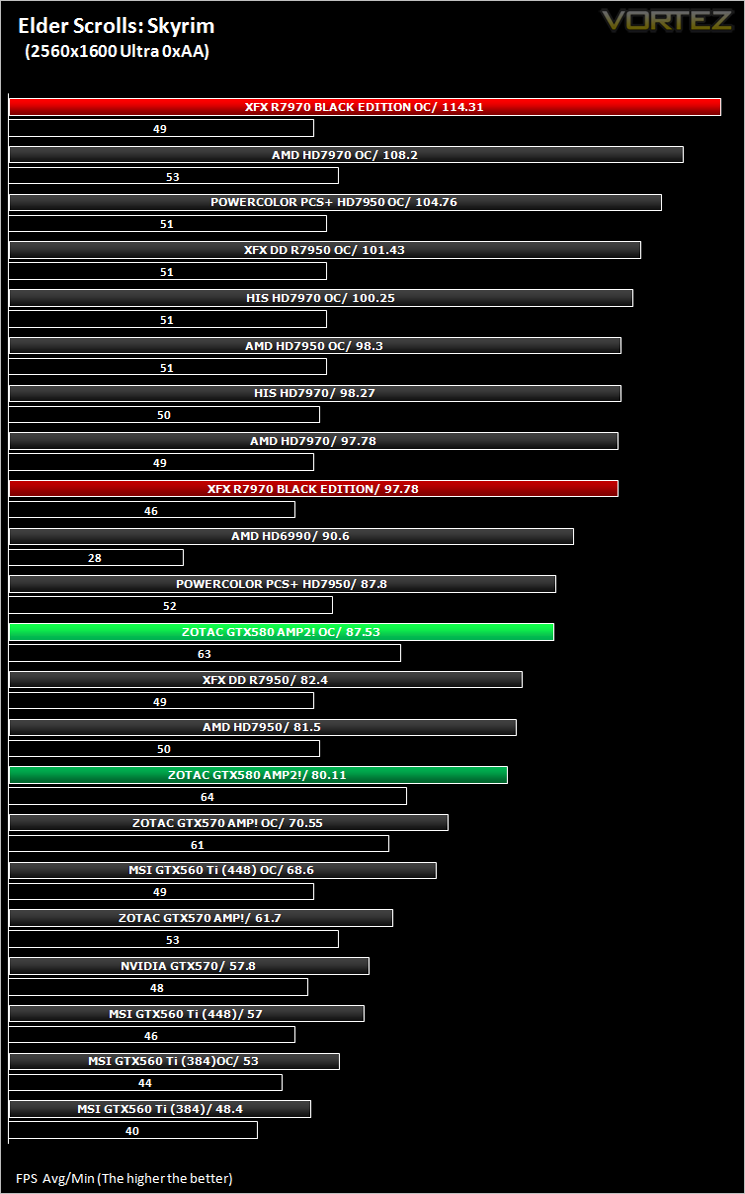
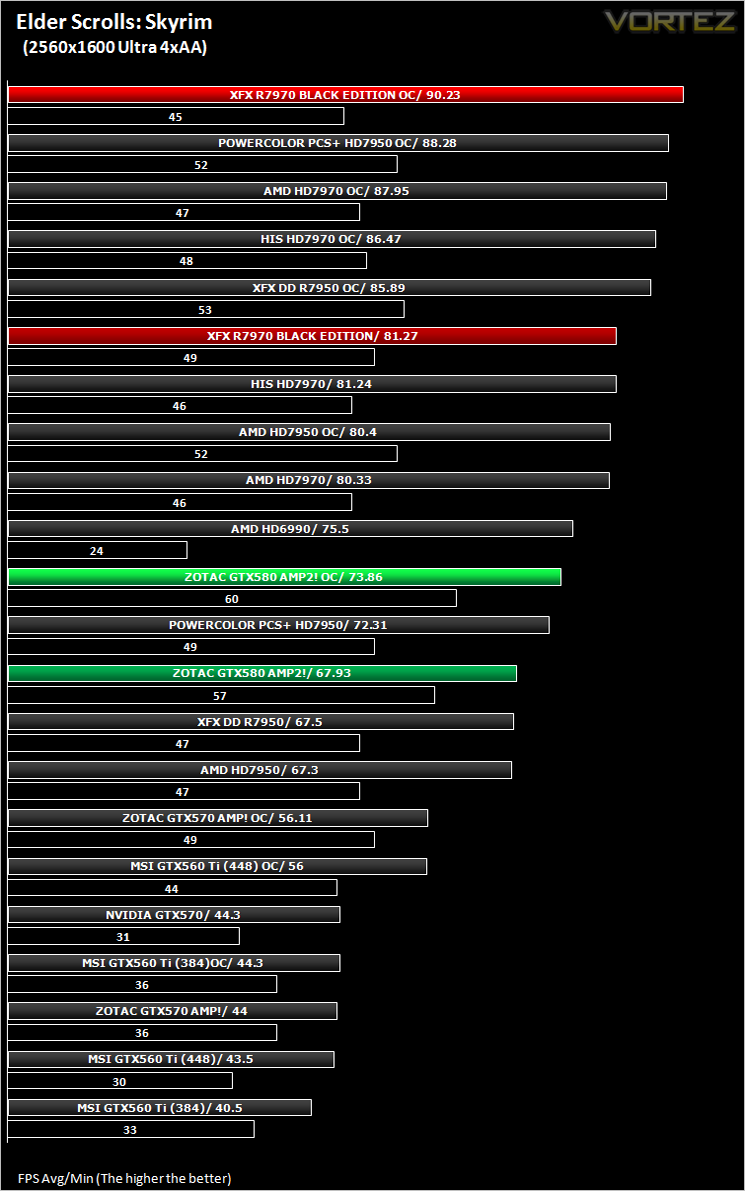
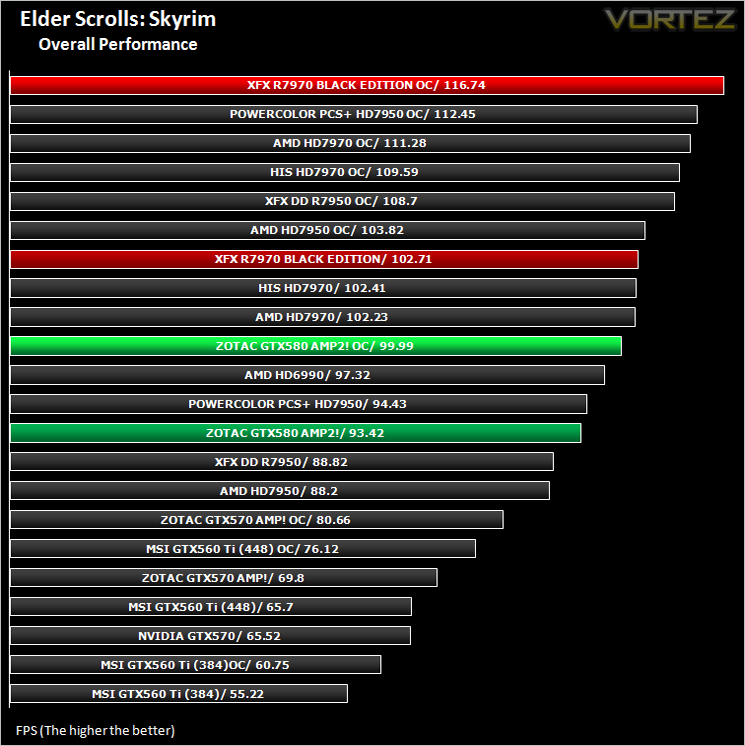
Average and minimum frames per second were measured using Fraps during the drop down passage to Riverwood. V-sync was disabled to allow fluctuating (higher the 60) FPS for these runs. It is however recommended that v-sync is left enabled during normal gameplay due to the games dynamics.
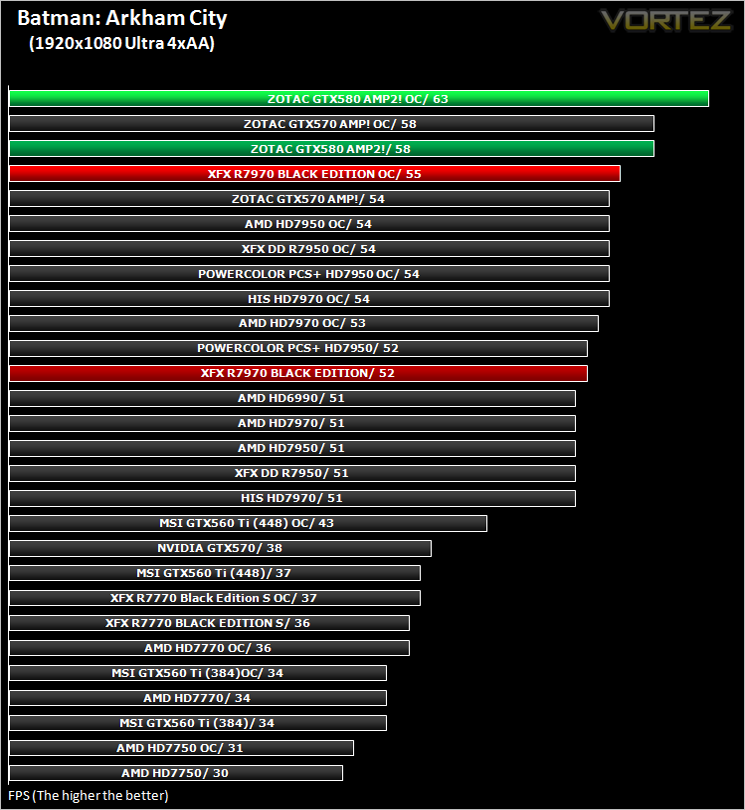
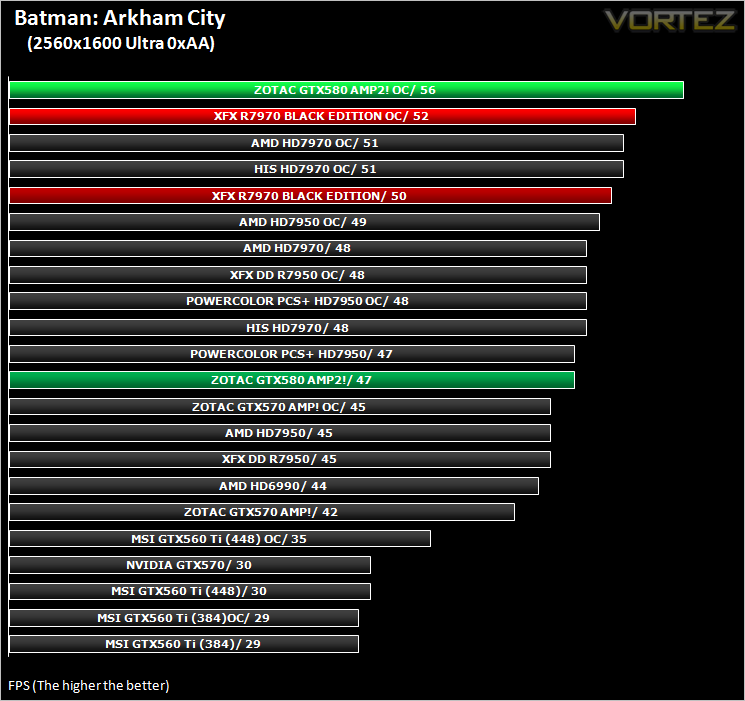
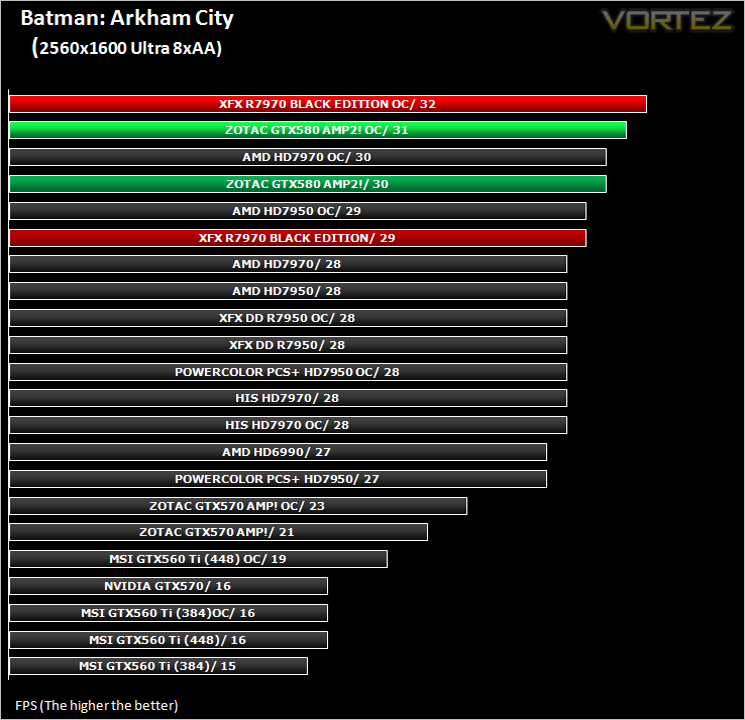
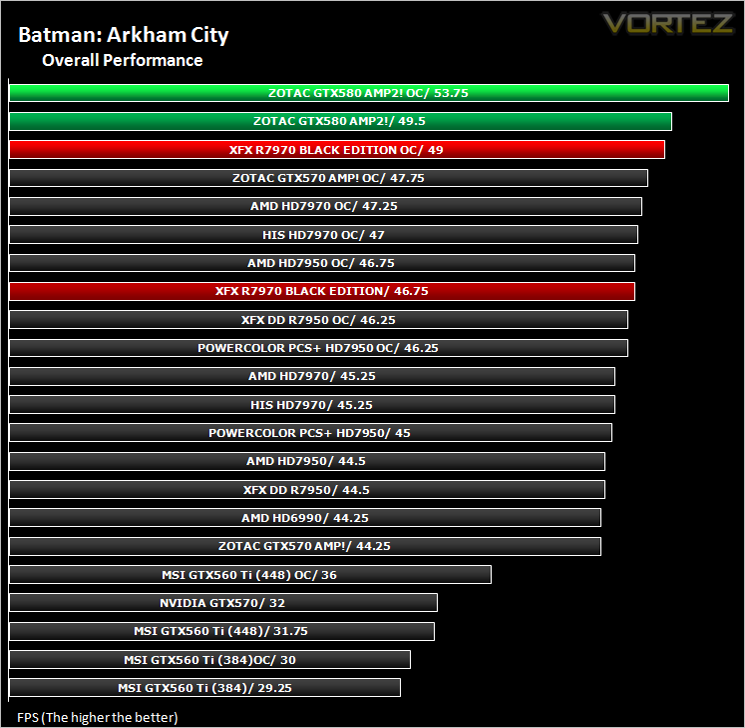
Batman: Arkham City
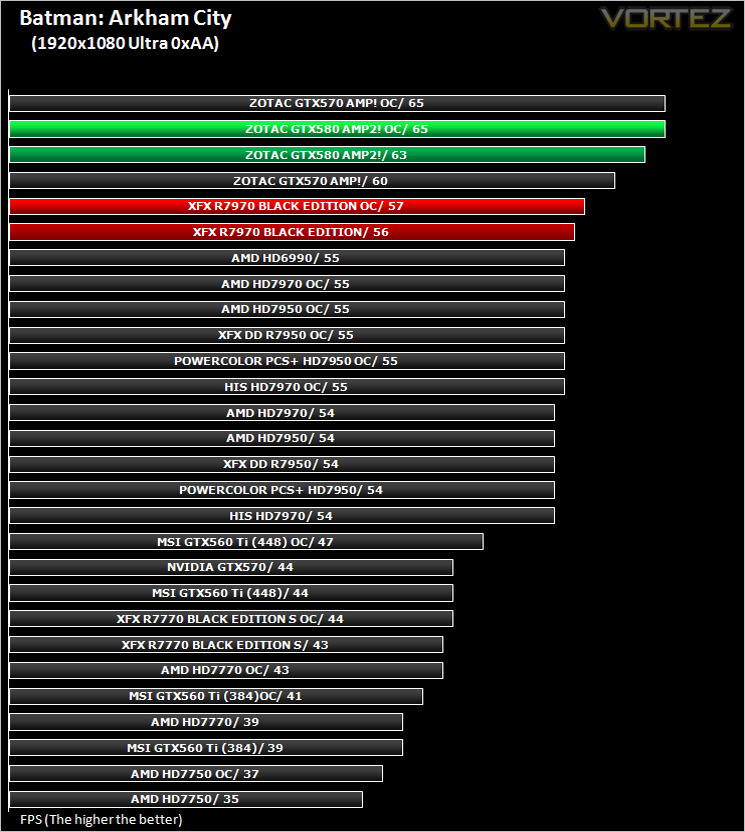
Batman: Arkham City builds upon the intense, atmospheric foundation of Batman: Arkham Asylum, sending players soaring into Arkham City, the new maximum security “home” for all of Gotham City’s thugs, gangsters and insane criminal masterminds. Set inside the heavily fortified walls of a sprawling district in the heart of Gotham City, this highly anticipated sequel introduces a brand-new story that draws together a new all-star cast of classic characters and murderous villains from the Batman universe, as well as a vast range of new and enhanced gameplay features to deliver the ultimate experience as the Dark Knight.
The results below were obtained from the builtin benchmark utility from the game. All the settings were set to
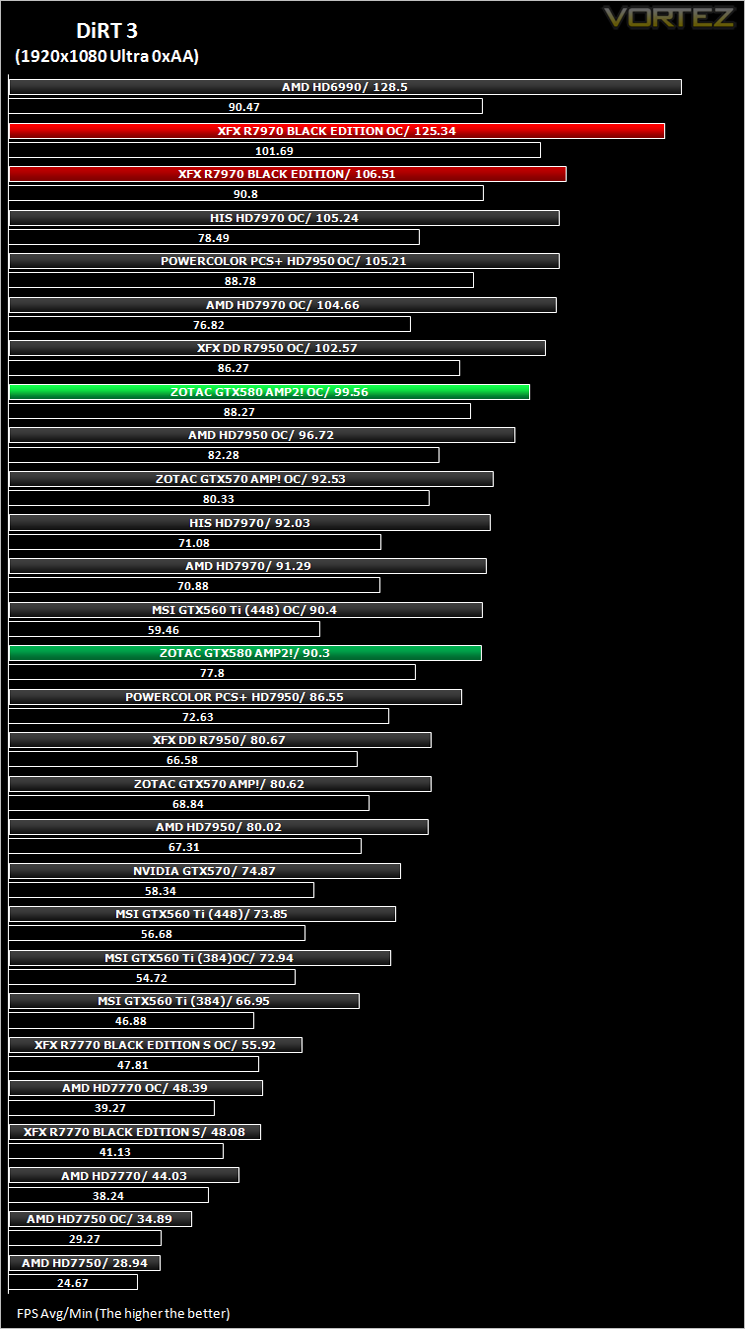
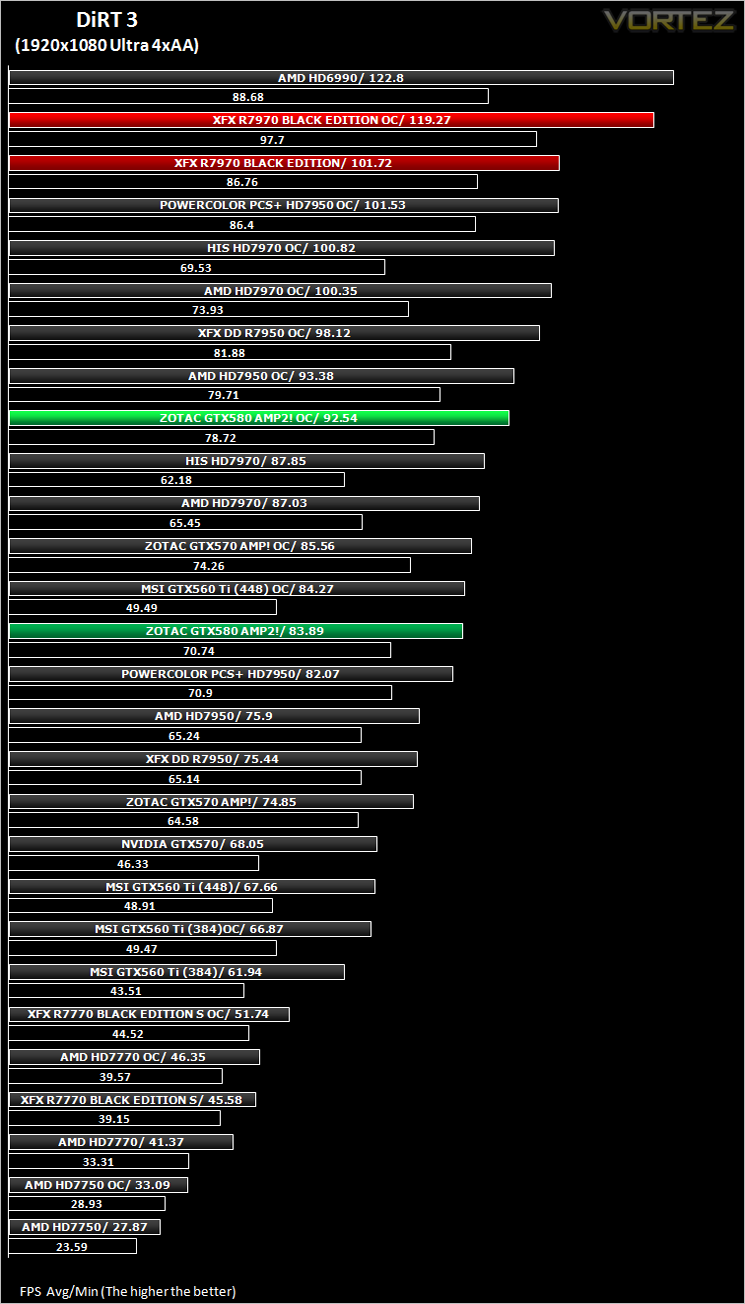
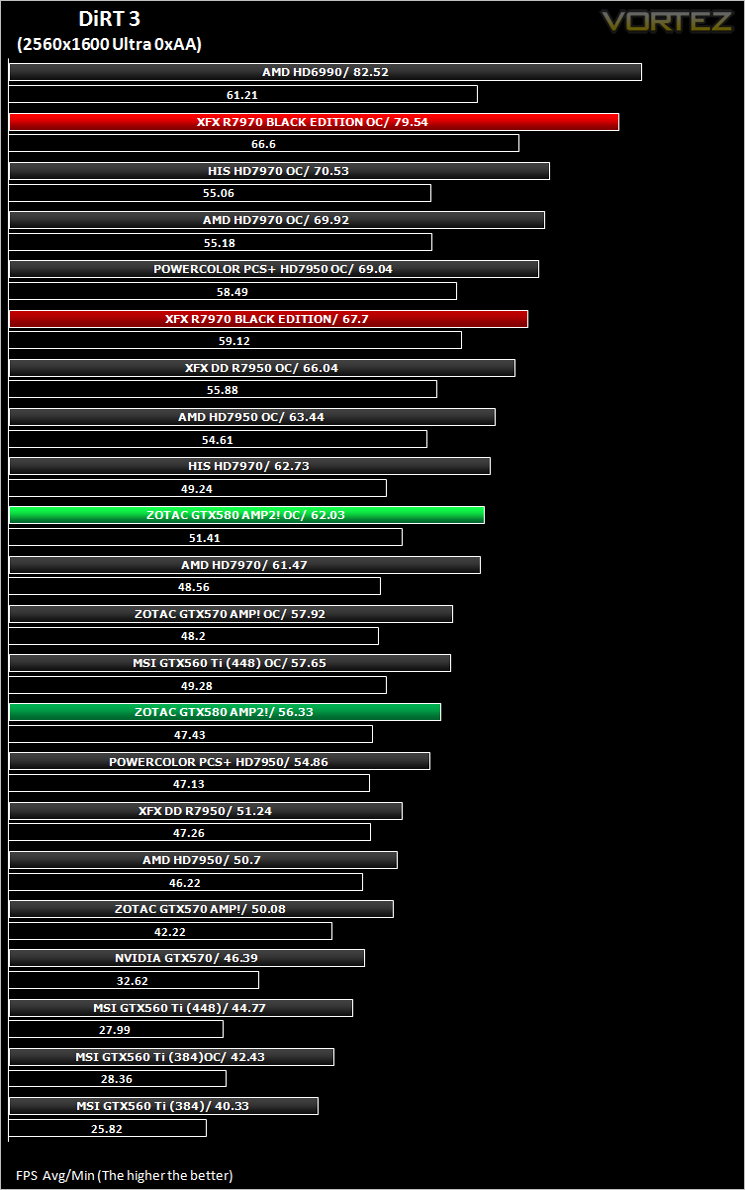
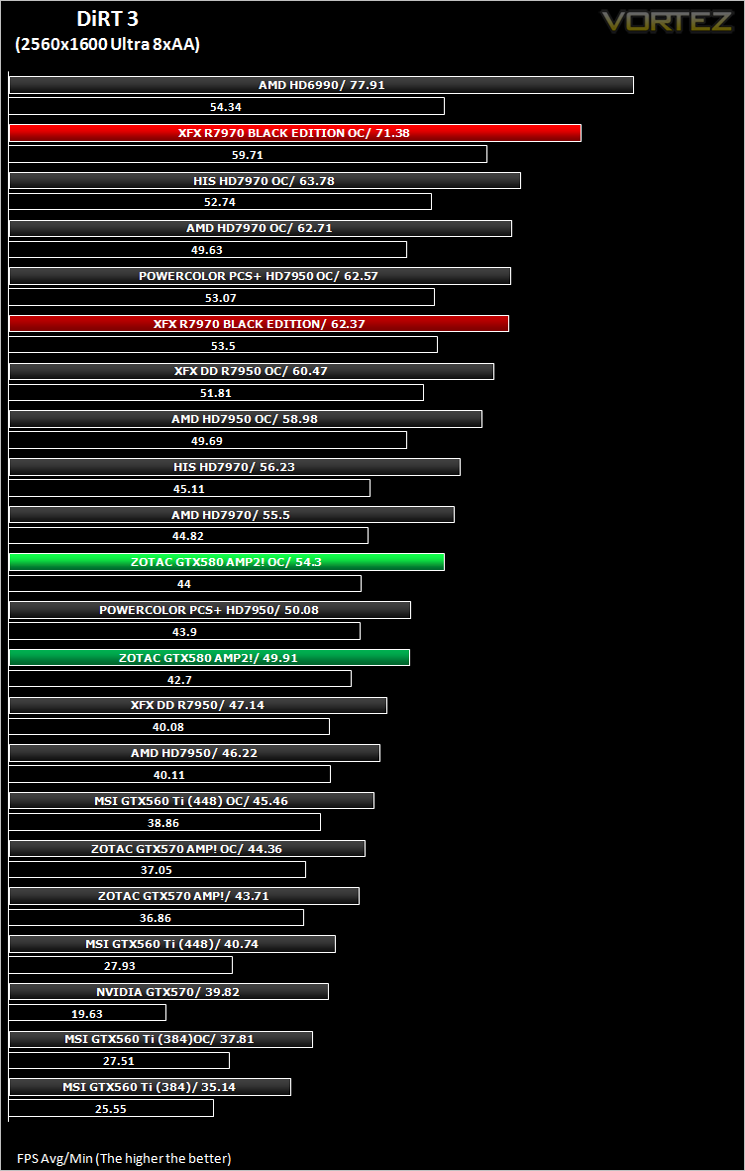
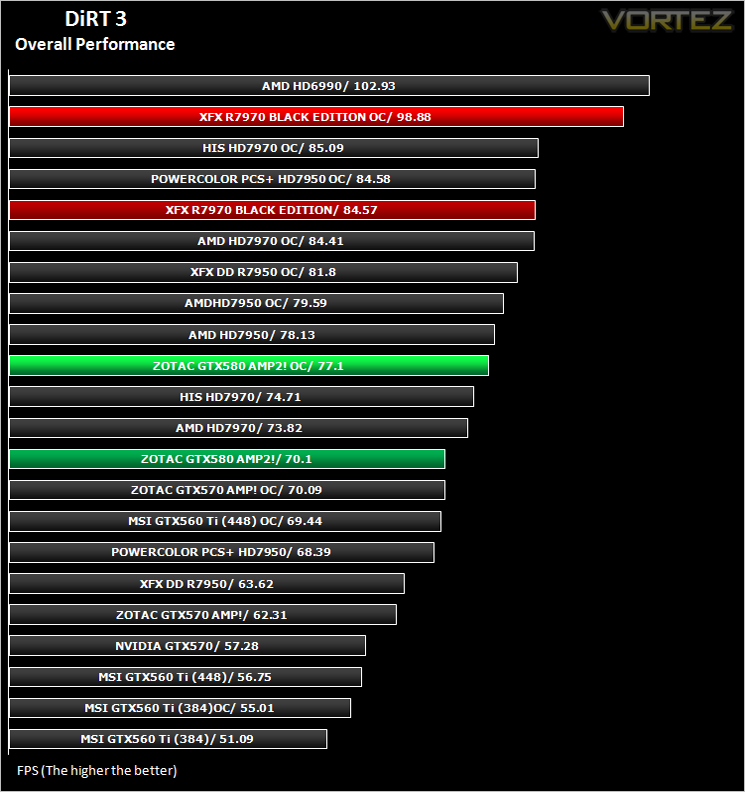
DiRT 3
As players race to elevate their global standing, DiRT 3 is back delivering mud, sweat and gears world over: from the intense weather-beaten rally stages of Europe, Africa and the US, to executing performance driving showcases and career challenges where car control is pushed to spectacular limits.
The in-game benchmarking tool was used to test performance. All the display settings were set to the maximum available and DirectX 11 was applied. The average FPS was recorded at the end.
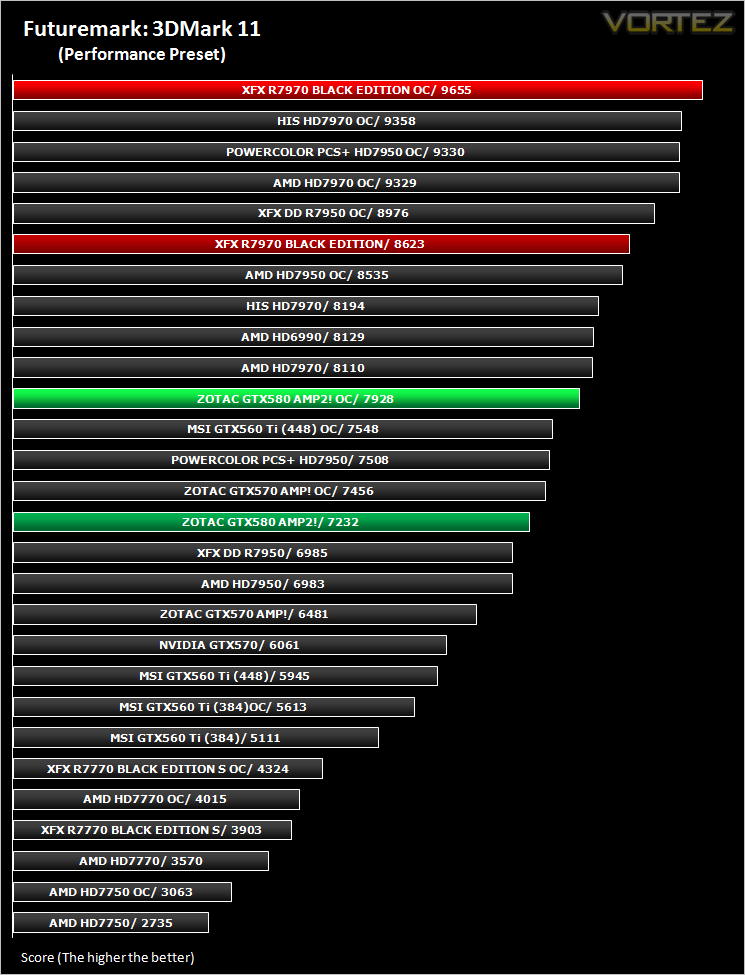
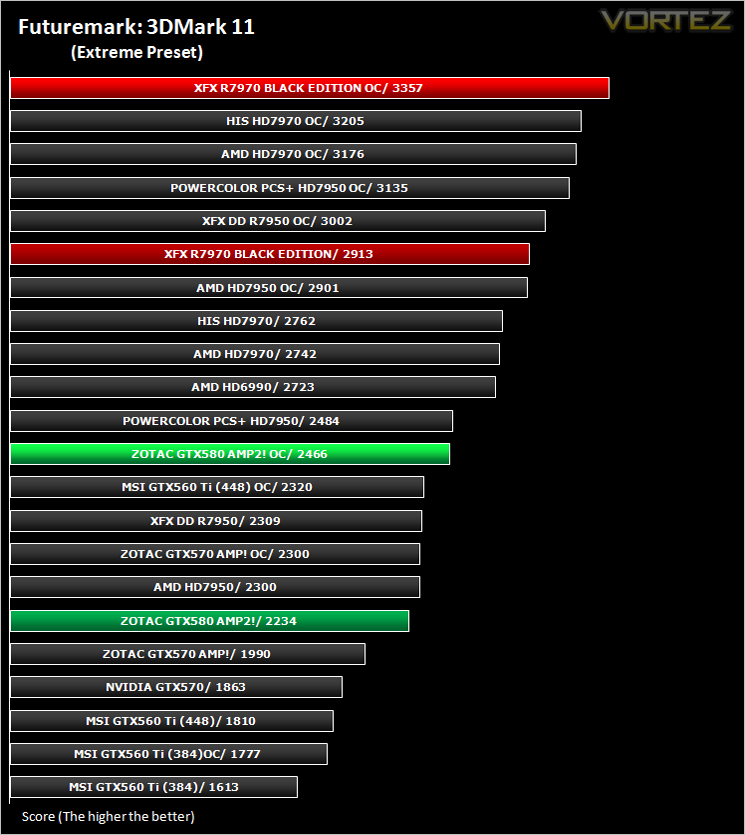
Futuremark: 3DMark 2011
3DMark 11 is the latest version of the world’s most popular benchmark. Designed to measure your PC’s gaming performance 3DMark 11 makes extensive use of all the new features in DirectX 11 including tessellation, compute shaders and multi-threading. The benchmark was run in both Performance and Extreme presets.
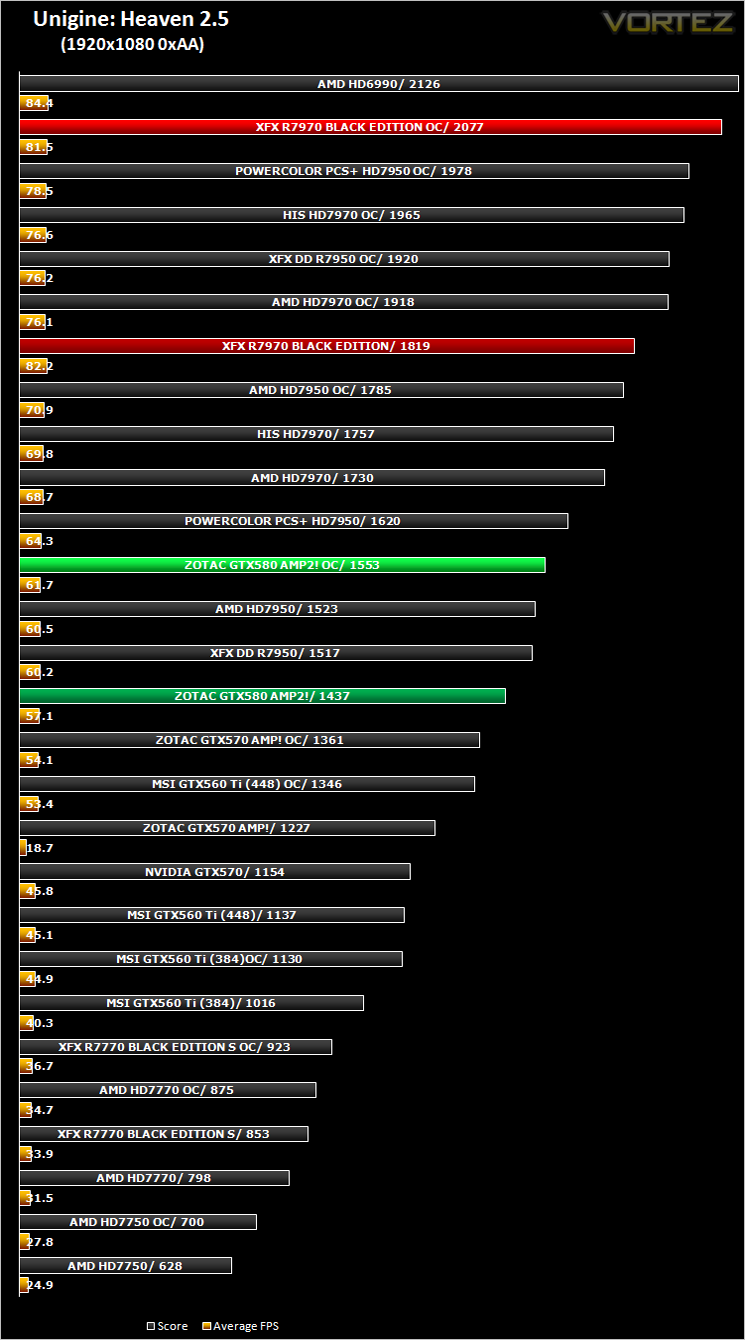
Unigine: Heaven 2.5
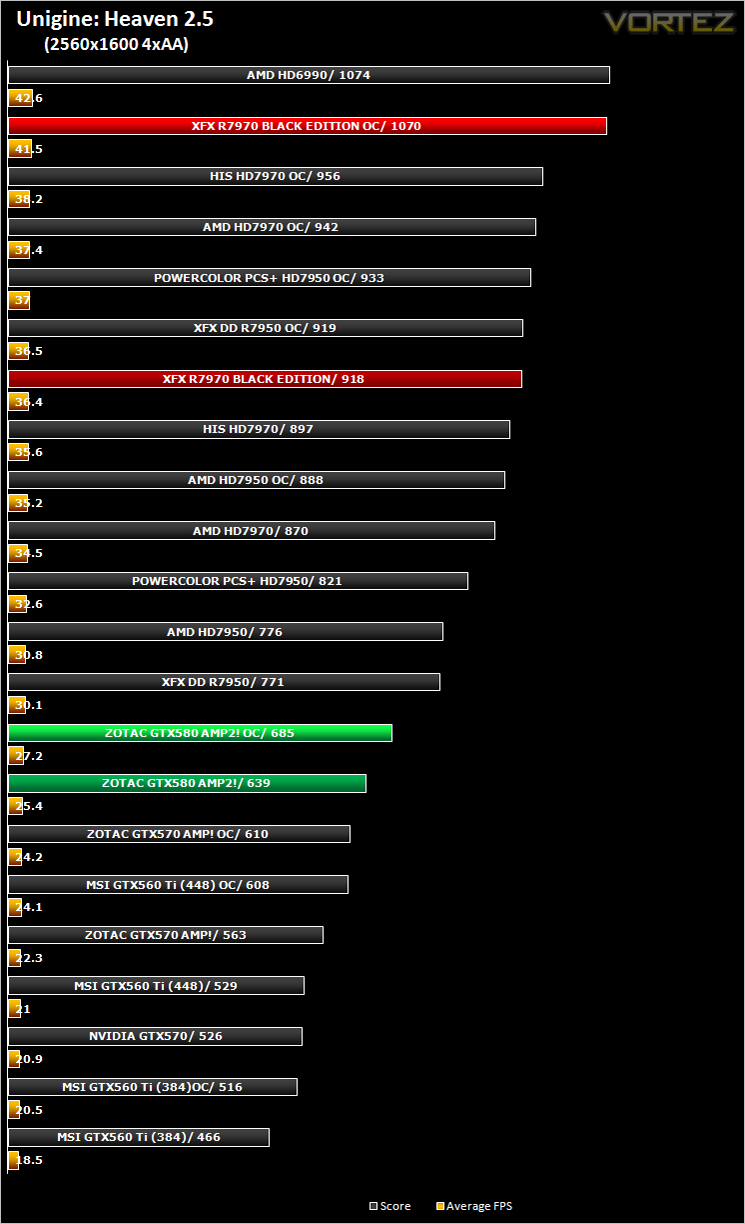
Heaven Benchmark is a DirectX 11 GPU benchmark based on advanced Unigine™ engine from Unigine Corp. It reveals the enchanting magic of floating islands with a tiny village hidden in the cloudy skies. Interactive mode provides emerging experience of exploring the intricate world of steampunk.
Conclusion
Well there you have it. The benchmarks pretty much speak for themselves with the AMD HD7970 leading in all but one game, Batman: Arkham City, itself a TWIMTBP game, heavily optimised for NVIDIA graphics cards. To make matters worse for the GTX580, the lower specced HD7950 also bettered the NVIDIA card consistently so not only is it much slower than the HD7970 it also struggles against the HD7950.In Battlefield 3, we regularly saw 2GB+ usage at high resolutions with filters applied so it goes without saying, had a 1.5GB GTX580 would have suffered even more. The gap between the two cards was 13FPS at reference clockspeeds a gap which only widened to 20FPS overall when the cards were overclocked – quite significant I’m sure you will agree. This result was echoed in both Crysis games, usually a safe heaven for NVIDIA. Skyrim and Metro 2033 showed closer results but there was still clearly a margin separating the performance of the two card by a minimum 10FPS. While the GTX580 was fast in DiRT3, yet again the AMD card showed it’s metal by restoring the 20FPS gap. 3DMark 2011 only served to reinforce the results by again, giving the thumbs up to AMD while Heaven 2.5 showed the superior tessellation performance of the AMD cards.
The R7970 again took the advantage in overclocking. While the two cards cannot be compared for out and out overclocking MHz vs MHz, the R7970 had more headroom allowing greater increases. Both cards however overclocked well giving a significant increase on both memory and core clockspeeds.
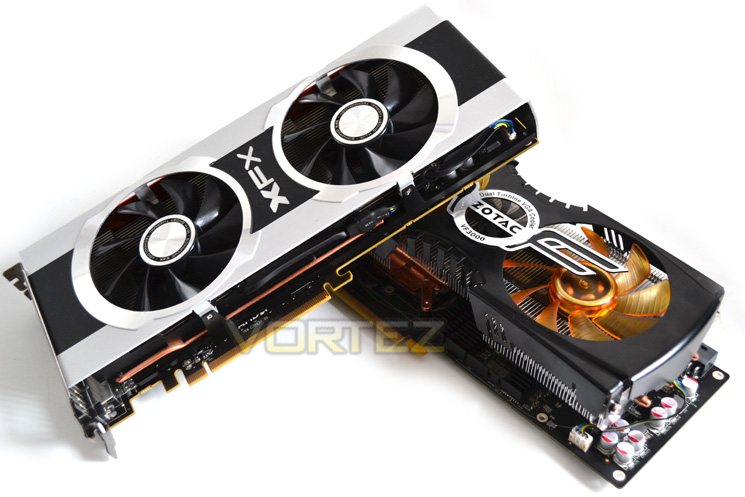
In the power consumption and temperature results, the XFX R7970 pretty much destroyed the ZOTAC GTX580. IT consumed significantly less power and also ran cooler that the NVIDIA card. Both cards do however have custom coolers so in fairness this is perhaps not an accurate description of how each card would perform with reference coolers attached. It is however widely acknowledged that the reference cooler of the AMD is now much improved over the previous design cooling more efficiently and with less noise than before.
There are other areas to consider when choosing which graphics card is best for you of course. Folding@home, multiple monitor setups, bitcoin mining to name a few with each card having an advantage in different areas. Today’s article however was regarding the raw performance of the two flagship cards.
Overall then, we have shown the HD7970 to be not only the faster card but pound ofr pound a far better proposition than a GTX580. While this isn’t so much of a surprise, what is interesting to see is the gap between the two cards. Perhaps most significantly is the fact the GTX580 is also slower than a HD7950 overall! This fact is only compounded when you also consider that the GTX580 we used today was a 3GB edition. It must however be stressed though that we are comparing apples to oranges here as the 7000 series is AMD’s latest family of processors while the GTX580, for all intents and purposes, is NVIDIA’s older generation. We all wait with baited breathe over the hugely anticipated Kepler range from NVIDIA which if history repeats itself, will see the green team regain the performance crown but for now, after sampling the best both parties have to offer, the undisputed King of graphics cards is the AMD HD7970.

Thanks to XFX and ZOTAC for providing today’s review samples.


