







Water cooling is no longer just used for extreme circumstances and today we turn to Alphacool for a kit designed for novice and advanced cooling enthusiasts.
Product on Review: Alphacool NexXxoS Cool Answer 360 DDC/XT
Manufacturer and Sponsor: Alphacool
Street Price: £176.06 (at time of review)

While there are many pre-built, sealed watercooling kits on the market today, these kits are little better than a top end air cooler. If space is at a premium these sealed units can be a great alternative to the bulky air cooler however, if you are looking for the best cooling performance this side of extreme cooling (LN2, TECs etc) then a custom built watercooling setup is the best choice.
However, watercooling a PC using custom bespoke components can be a daunting task for the uninitiated. What size tubing go with what size fittings, compression or barbs, bay-res or tube, what pump size, what rad size? these are all choices you would have to make which require a fair bit of research to get the right balance. Thankfully, some companies who make these components separately also bundle them together in a kit and because they are sold in kit form, they cost less than buying separately.
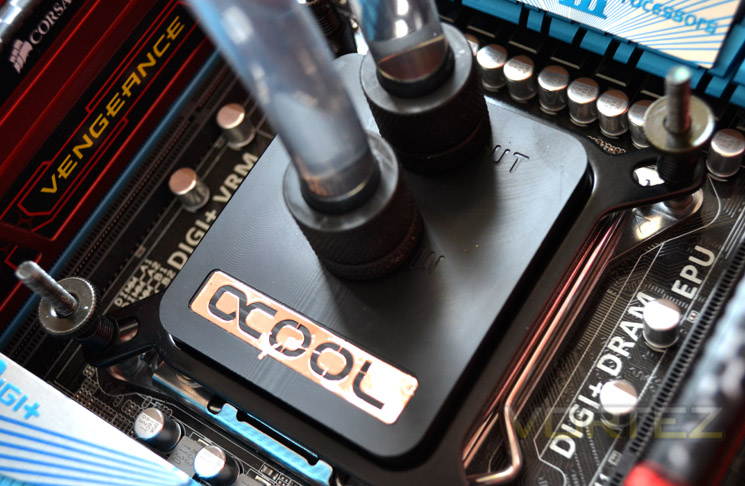
The Alphacool NexXxoS Cool Answer 360 DDC/XT watercooling kit is once such bundle that includes everything you need to get your PC watercooled and because it is in a kit form, you can be assured that everything works together. This takes much of the worry out of watercooling, especially if it is your first time because what you don’t want is to buy separate components that are mis-matched, only to realise this halfway through building your PC.
Today we will take you through each component included in the kit and compare it against both an alternative custom kit, sealed unit and top-end air cooler.
About Alphacool
Alphacool are based in Germany and are one of the biggest producers of watercooling components for the PC market. Their products are sold worldwide which is testament to the quality of products they sell and are renown for being very high performing.
Specification
Pump: Laing DDC-1T/12V Pump
Dimensions: (WxLxH) 62x62x38mm (without connections)
Motor construction type: electronically commuted ball-motor
Working voltage: 12 V DC Voltage
Power input: 11W
Admissible voltage area: 6 to 13,2 V
Delivery height: at 12V: 3,7m
Max. delivery rate: 420L/h
Delivery media: water, water-/glycol compounds
Max. system temperature: 60°C
Medium-affecting parts: stainless steel 1.4571, PPS-GF40, EPDM O-sealing rings, alumina, hard carbon
Connections: 2x 3/8″ hose connection
Radiator: Alphacool NexXxoS XT45 Full Copper 360mm
Material internal: Mostly copper
Material casing: Side panels steel, threads brass, copper chambers
Colour: Black
Dimensions (LxWxH):400x124x46mm
Connection threads: 6×1/4“
Mounting thread size: M3
Pressure tested: 1.5bar
Weight:1515g
Extent of delivery:
1x Radiator
4x Copper-plated screw plug
12x Copper-plated M3x30mm hexagon socket screw
12x Copper-plated M3x35mm hexagon socket screw
Fans x3: Yate Loon D12SL-12
Dimensions 120 x 120 x 25 mm
Air Flow 47.0 CFM
Noise 28.0 dBA
Speed 1350 RPM
Connector Type 3 pin
Open or Closed Corners Closed
Bearing Type SLEEVE
Waterblock: Alphacool NexXxoS XP³ Light – Acetal Edition
1x Assembled CPU water block
1x Mount for Intel Mainboards sockets 775,1155,1156,1366,2011,1150
1x Mount for AMD Mainboards AM2 and AM3
1x Thermal compound and mounting material
Weight: 0,279 kg
Dimensions CPU water block: 57x67x14mm respectively. 63x73x14mm at the mounting strip
Compatible with: Intel sockets 775,1155,1156,1366,2011 and AMD AM2 and AM3
Connection threads: 2x G1/4”
Tubing: High Quality Transparent Tube 10mm OD – 8mm ID
High-quality tube from Polyurethan (PUR) matching to all systems.
10mm outside diameter and 8mm inside-diameter.
Allows narrow Bending radiuses.
Packaging & Accessories
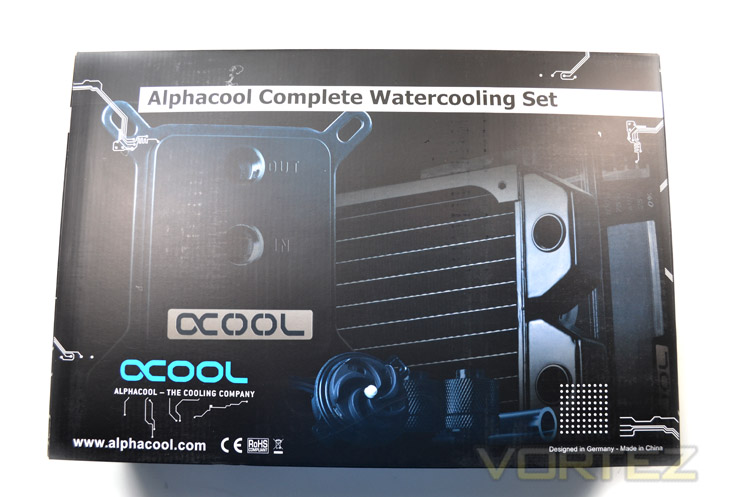
The Alphacool NexXxoS Cool Answer 360 DDC/XT kit arrives in a sizeable, heavy box, similar in size and girth to a brief case. The box has a plastic carry handle which is good because we doubt a carrier bag would be able to handle the weight of this product.
The packaging has a very nice, attractive design in a matt finish and displays some of the products contained within. The rear of the box is a mirror of the front with only the sides telling us what is in the box specifically.
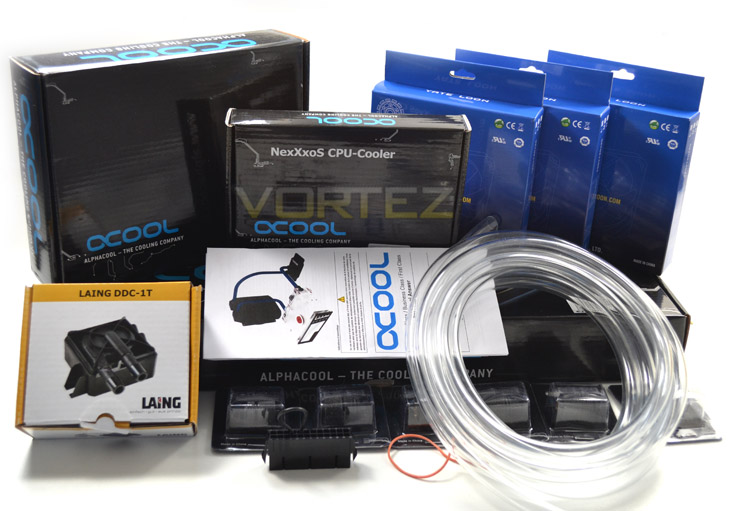
The products were packaged quite well. While the box was not compartmentalised, each product save the tubing, has its own box esuring that all the small fittings were packaged with the appropriate component and would not be lost in the excess packaging.
Included in the package are the following components:
1x Alphacool NexXxoS XP³ Light – Acetal Edition – Intel/AMD
1x Alphacool Repack – Laing DDC – 5,25 Single Bay Station
1x Alphacool DDc pump 12V DDC-1T
1x Alphacool NexXxoS XT45 Full Copper 360mm
3x Alphacool tubing AlphaTube HF 13/10 (3/8″ID) – clear
6x 13/10 (10×1,5mm) compression fitting G1/4” – matte black
3x 120mm fan approx. 1300rpm ( 120x120x25mm )
1x Coolant Clear 1000ml
1x ATX bridging plug (24 Pin)
1x Alphacool Repack – Laing DDC – 5,25 Single Bay Station
1x Alphacool DDc pump 12V DDC-1T
1x Alphacool NexXxoS XT45 Full Copper 360mm
3x Alphacool tubing AlphaTube HF 13/10 (3/8″ID) – clear
6x 13/10 (10×1,5mm) compression fitting G1/4” – matte black
3x 120mm fan approx. 1300rpm ( 120x120x25mm )
1x Coolant Clear 1000ml
1x ATX bridging plug (24 Pin)
CPU Block – Alphacool NexXxoS XP³ Light – Acetal Edition
The CPU block, like most of the internal packaing arrives in a fairly nondescript box labled ‘NexXxos CPU-Cooler when in actual fact what you are getting is the Alphacool NexXxoS XP³ Light – Acetal Edition.
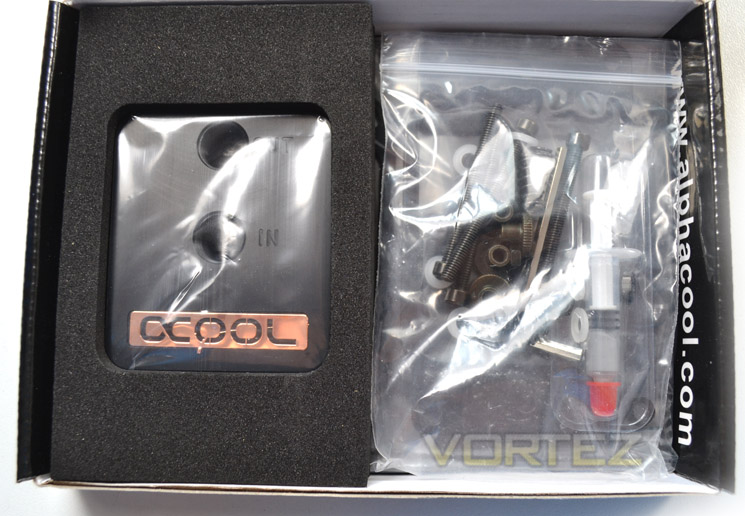
Opening the box up we find the components are very neatly organised with the CPU block protected by both a foam surround insert and the brackets (AMD and Intel), screws, fittings and paste all packaged separately in little baggies.
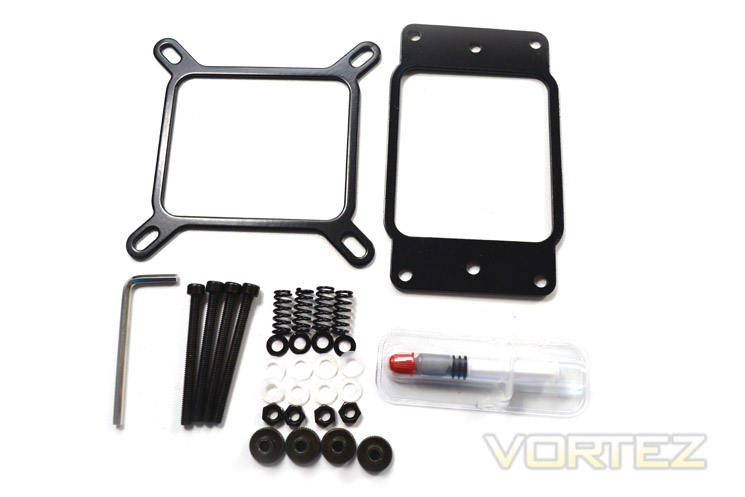
Alphacool have included a small Allen key to allow ease of fitment of the block however as we will see in the fitting section, the instructions left a lot to be desired.
The CPU paste included should be enough for a couple of applications however, with no recognisable labels, we could not discern which type of paste this was.
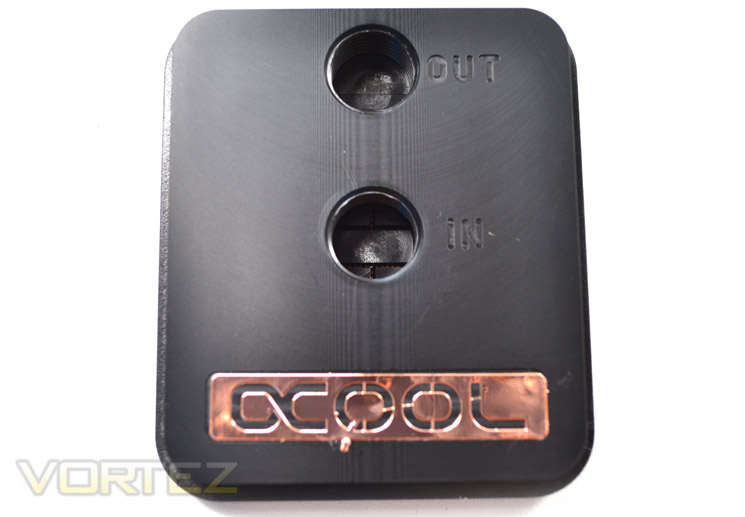
The block top is full Acetel (Delrin) material which is perfect for a CPU waterblock as it is rigid, very strong yet lightweight.
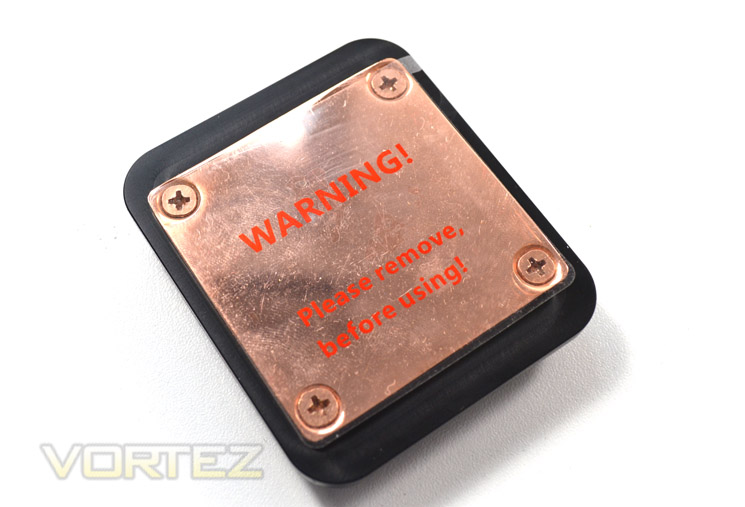
The base of the CPU cooler has a protective strip which must be removed before installation. The plastic strips serves to protect the CPU base during transit to ensure it reaches you in perfect condition.
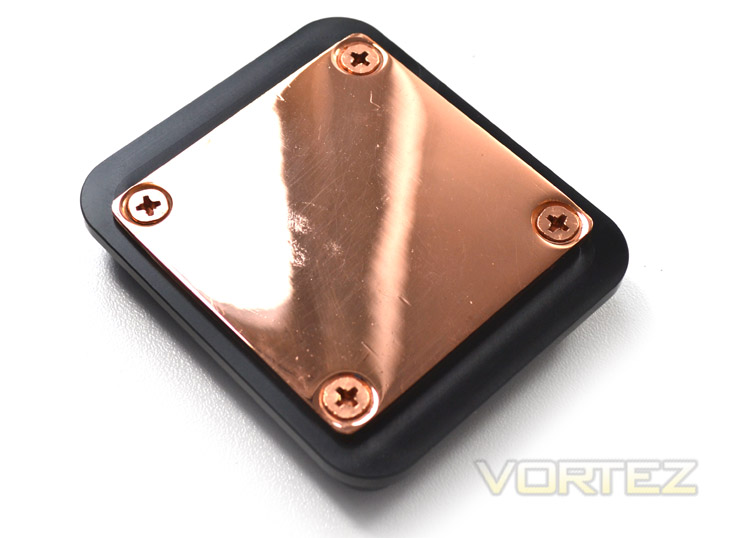
As you can see, the mirrored finish of the block is extremely shiny however, not perfect as even with the protective back, we found a few tiny scratches which was a shame but unlikely to affect performance.
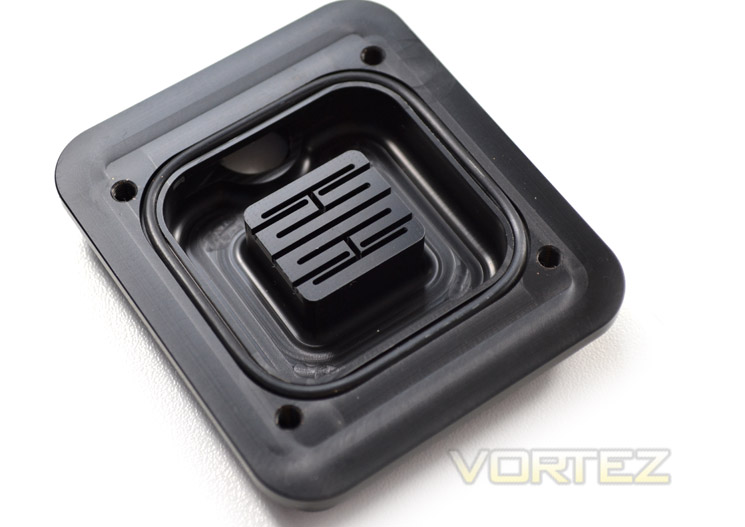
Opening the block up we find the impingement section forms part of the Acetel and cannot be modified. The water will be pumped through the impingement section directly onto the centre of the baseplate with heated water escaping towards the edge of the block through the outlet.
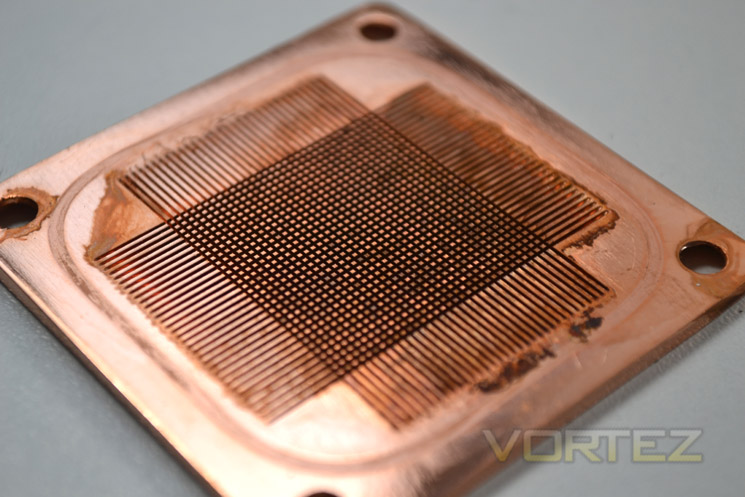
The copper base is very similar to many other waterblock designs on the market having a mass of 1024 fins. This makes for an increased surface area to effectively dissipate heat from the CPU. The finish of the internals is less than perfect with a great deal of staining.
Let’s move onto the radiator…
Radiator: Alphacool NexXxoS XT45 Full Copper 360mm
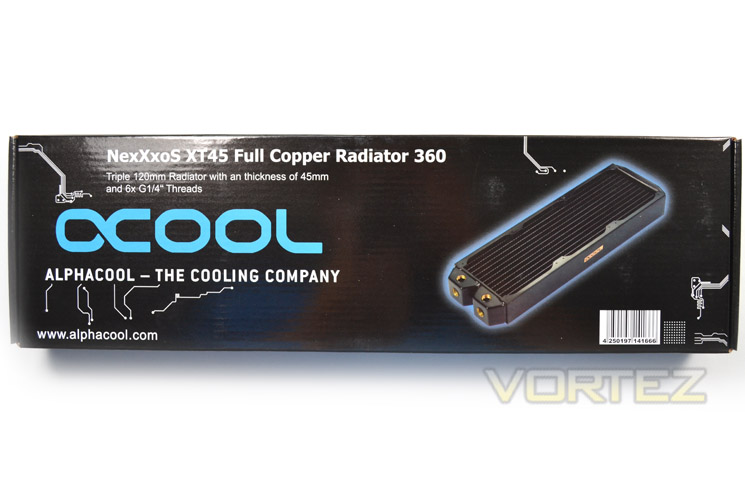
Like the other major components of this watercooling kit, the radiator comes packed in a glossy cardboard box. Inside, the radiator is protected by a bubble-wrap sleeve which, along with the exterior packaging should ensure none of the paintwork, and more importantly, the fins are damaged.
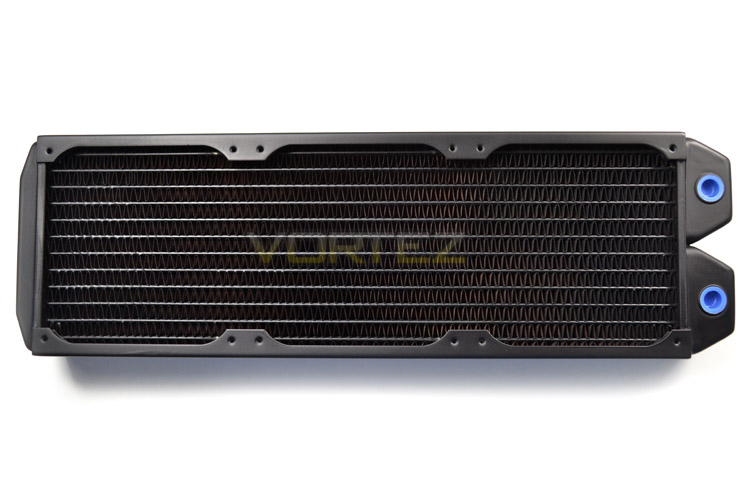
The radiator is a complete welded unit made from 100% copper. In this kit you will receive a 360 XT45 model meaning the radiator is capable of taking 3x120MM fans and is 45mm deep. The radiator itself is however available separately in a variety of different widths and lengths.
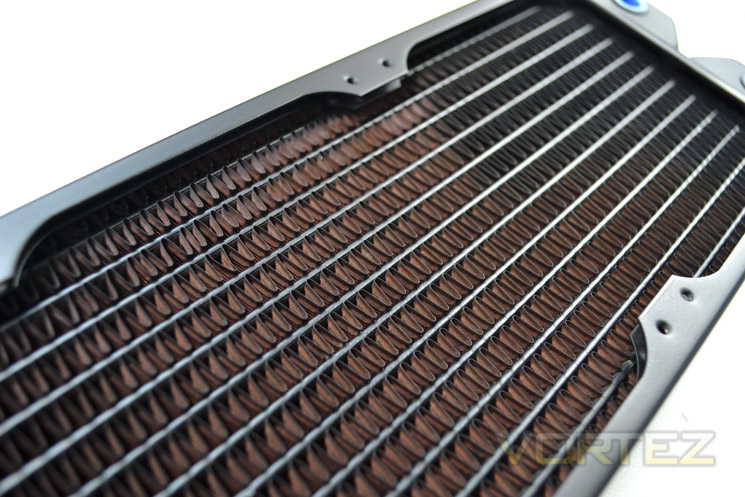
The fin shroud has a relatively heavy coating of matt black paint with the fins and chambers receiving the lightest of coats which is ideal.
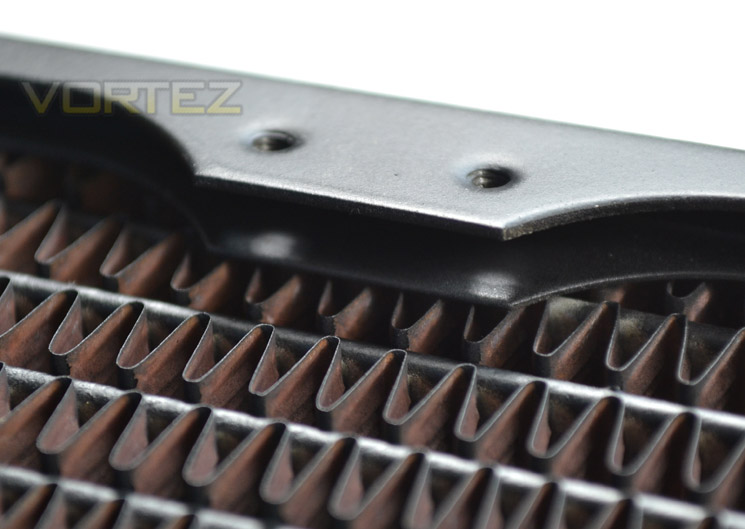
Having been victom of puncturing a radiator by screws that were too long before, we were pleased to see the NexXxos XT45 comes with protective tabs beneath the screw holes to prevent this from happening.
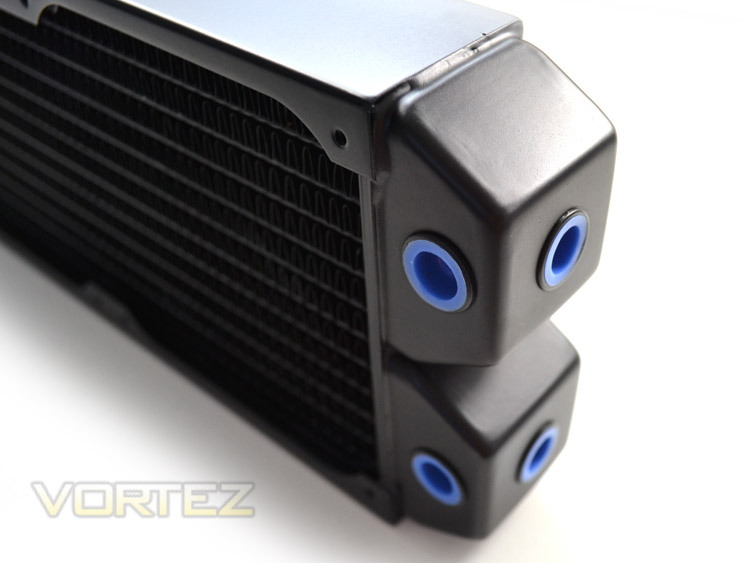
The Plenum chamber is a good design as it features not two but 6 options where you can place your fittings. This should cut down on the bends in tubing once installed. While the majority of users will be using just once side of the radiator, it is good to see the option available.
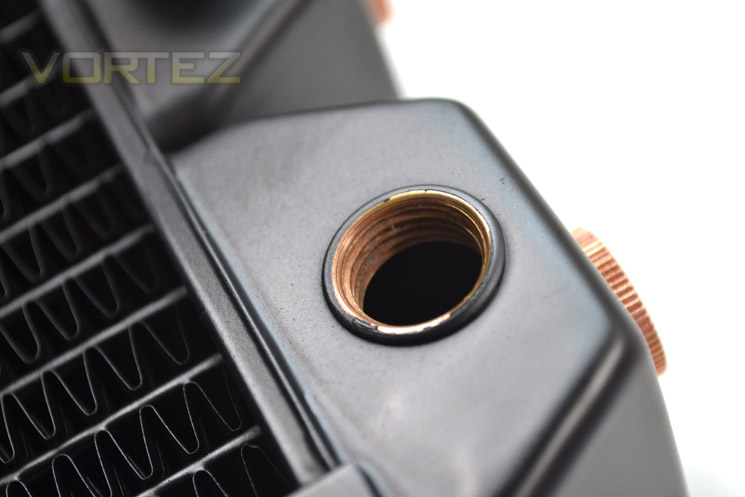
Normally we would see brass inserts here however with this rad, the inserts appear to be copper. We’re not sure of the benefits of this other than to keep all metals as close in the metallurgy table as possible but with brass being very close to copper anyway, the possibilities of galvanic corrosion were very small.
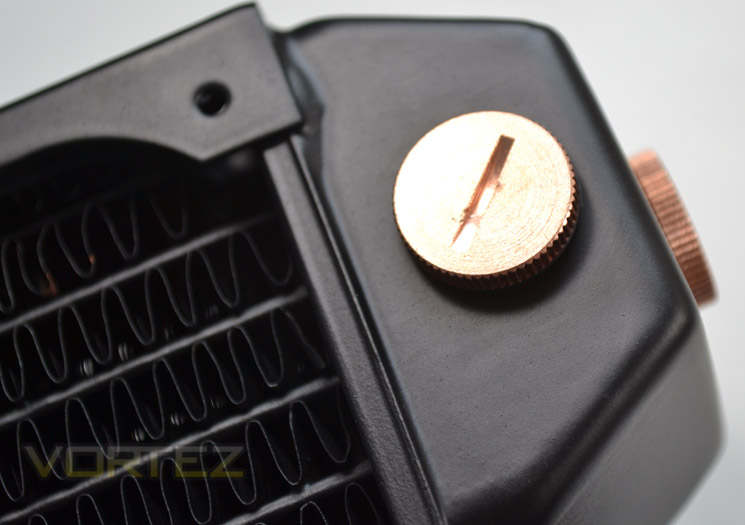
We do like how Alphacool have included copper plugs to fill the unneeded recesses. While this may add to the expense of the product (copper being a resource which currently holds a premium), it is a nice yet simple innovation we have not seen other manufacturers do.
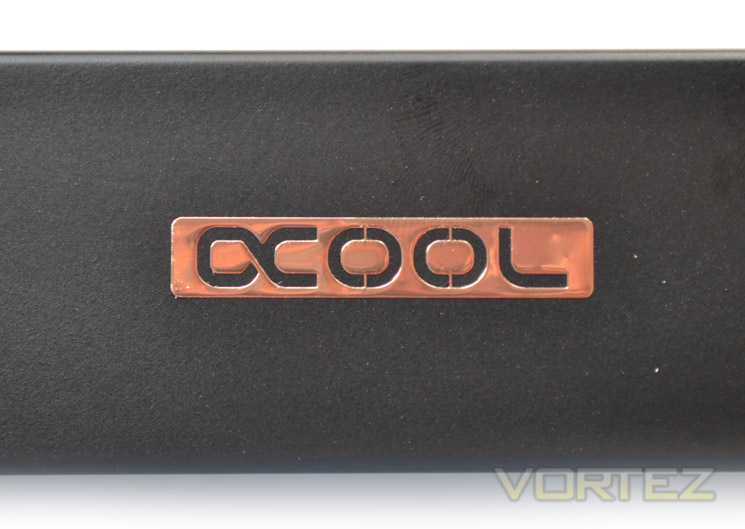
Finishing off the product nicely is a small tag on the side of the radiator with the company logo embossed on a copper plate.
Pump: Laing DDC-1T/12V Pump
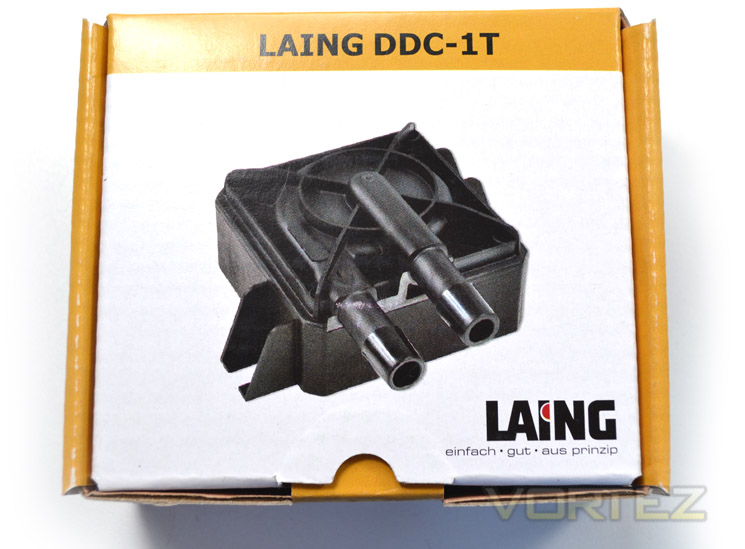
Any watercooler worth his salt will tell you that there are just two pumps that are usually recommended for a custom watercooling setup. One of those is the pump included in this kit, the Laing DDC 1T. The DDC 1T comes in two varieties, the DDC 1T we have in this kit and the plus version, being slightly more powerful and recommended for multiple block systems where restriction is higher. The DDC 1T is however more than adequate for this system and is an excellent choice.
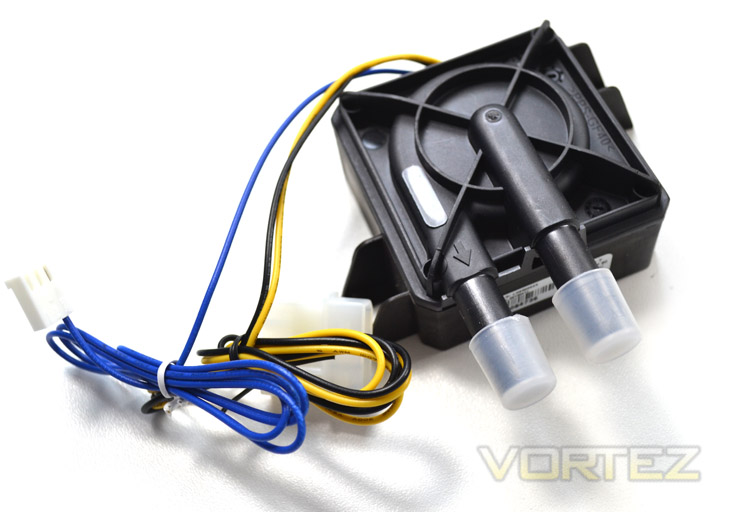
Our only issue was the fact that this pump does not come with an option top and as we will see later, there is reason for this but it will cut down on the amount of freedom you have when expanding your watercooling components to perhaps include GPU and motherboard cooling.
the pumps is a 12V unit which is connected via a spare MOLEX connection from your PSU. There is also a sensor attached which can be added to an optional monitoring device or simply attached to the CPU header of your motherboard which will then read the pump as a fan and will monitor the pump speed accordingly. This is an invaluable device as should the pump fail, you will either get a warning or the PC will shut down to protect itself depending on your BIOS settings.
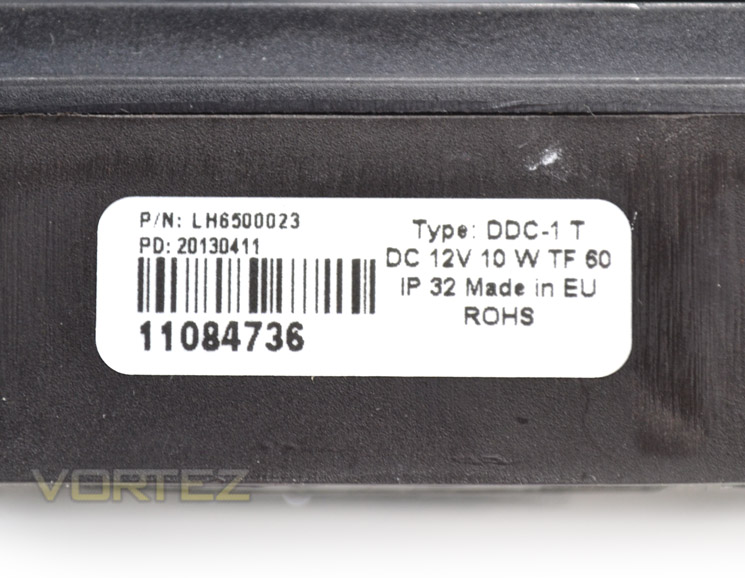
Both the DDC 1T and DDC 1T+ look identical but as you can see above, the label on the side of the pump casing tells us that this is indeed a DDC-1T, consuming 10W instead of the higher performing 18W DDC 1T+.
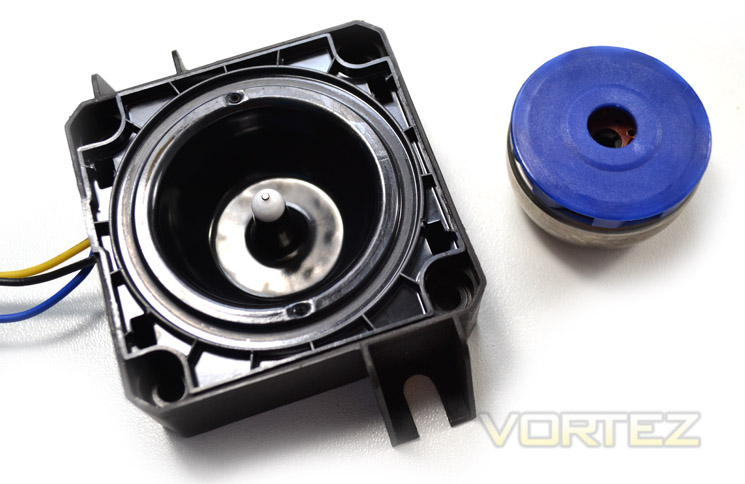
The pump is very easily serviced by removing the four screws at it’s base. This allows access to the internals which is simply an egg shaped magnet with no moving parts. Removing this is easy and thus along with the cradle, can be cleaned thoroughly should you wish to strip down the watercooling loop to clear contaminates at a later date.
Fans: Yate Loon D12SL-12
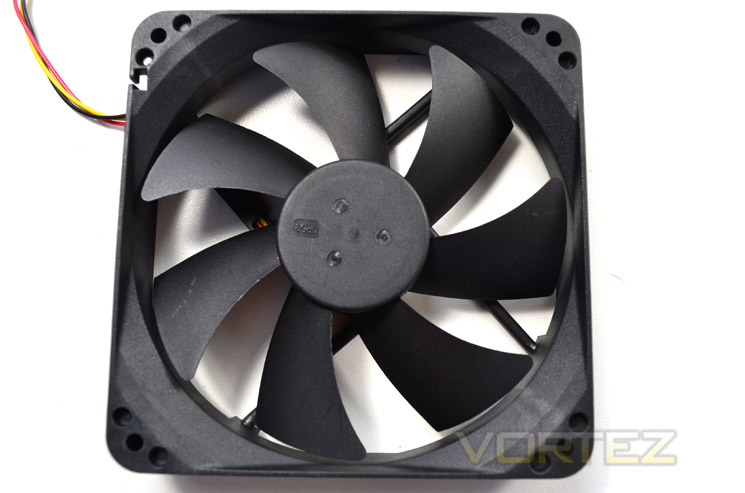
The included fans are a sleeve bearing design which watercoolers will be very familiar with – the Yate Loon D12SL-12. These fans, while basic, are a good choice for a watercooling kit because while they look quite generic and low cost (they are quite cheap) plus they produce good static pressure for the price.
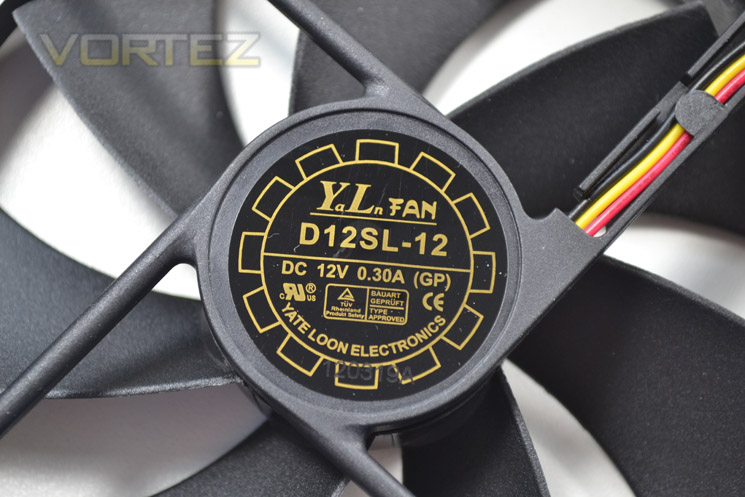
Of course, they are not in quite the same league as some fans available but then at around £4 each, they are easily the best choice of performance vs. price. They can be adjusted via voltage from 5v up to 12v which most fan controllers are capable of and have a speed rating of 1350 +/- 10% RPM / 47CFM with a static head pressure rating of 0.8mm H2O (1.1mm H2O Max). They are also quite quiet producing just 28 dbA (manufacturer claimed).
One negative of using these fans is that because of the price, they cables are not sleeved and can easily become a rats nest if you don’t take care of them yourself.
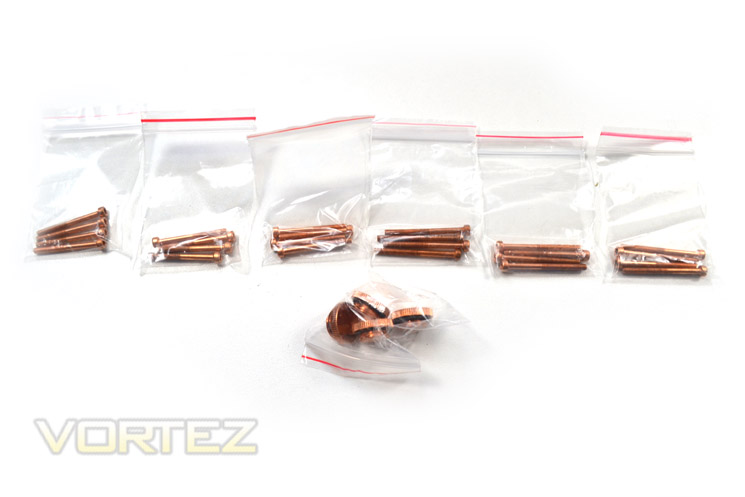
To attach the fans to the radiator, Alphacool have included more than enough screws (enough for 6 fans) which like the radiator plugs are full copper which is a nice, unique touch.
Note: Since receiving our sample, Alphacool have suggested they are in the process of changes the fans with this unit however current stocks are still likely to contain the above fans.
Reservoir: Alphacool Repack – Laing DDC – 5,25 Single Bay Station
Again we see the reservoir has been packaged in an identical box to the other components of the Alphacool NexXxoS Cool Answer 360 DDC/XT.
In this reservoir package we find a Laing DDC – 5,25 Single Bay Station, rubber pad along with nuts and screws to attach the Laing DDC-1T pump.
The reservoir is made from Acrylic with each section glued together to forum the main water holding area. To the rear of the reservoir are two further acrylic plates, one with a separate chamber and the last to allow fitment of the pump.
The front of the reservoir has a steel plate which is coated in black paint. This plate allows the user to judge how much coolant is in the reservoir and is attached via Allen screws. The finish of the pate, as you can see is not brilliant with the etching slightly chipped away. As this will likely be the most prominent visual part of the watercooling kit, we would have liked the finish to have been much better.
An area we did like was that the fill port area had a metal screw-plug. This is much better than some plastic plugs we have seen used in other kits as it is less likely to become chewed by repeated use. The recess of the plug however prevents 100% filling of the reservoir.
Inside the reservoir there are two sections covering both inlet and outlet areas. These are to prevent excess bubbles from re-entering the loop which is a good design.
Alphacool chose a strange method of inlet/outlet areas. Instead of having a direct outlet into the pump, acting as a header tank, the coolant is sucked into the pump and then ejected back into a recess of the reservoir. While this method works fine (once the pumps is primed), it does introduce extra angles which will add restriction to a watercooling loop however because of the pump/reservoir combination, designing it any other way would be troublesome.
It is also worth noting, as you can see from the picture above, there was some ‘flash’ particles from the Acrylic so the unit would benefit from flushing before use.
Installation Part.1
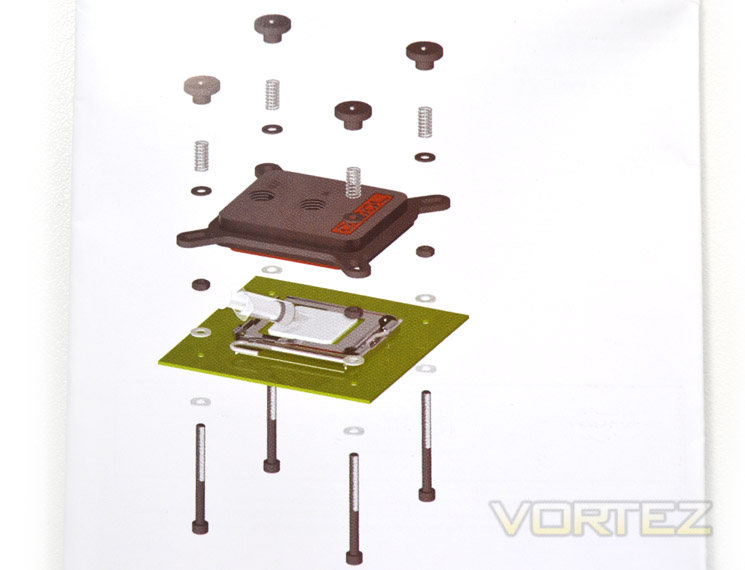
Sadly the kit came with no instructions as a whole. While this would be forgiveable, each component had little advice to give regarding how it all fits together. For someone who is experienced in watercooling this would be so much of an issue, however for a novice, not including instructions is a huge oversight by Alphacool.
The CPU block did however come with (very) basic instructions in the forum of a diagram which only showed a basic Intel socket. The instruction pamphlet is available at Alphacool’s website but it is simply a mirror of the included instructions what are generic. Skt2011 and AMD users will have to work things out for themselves here I’m afraid.
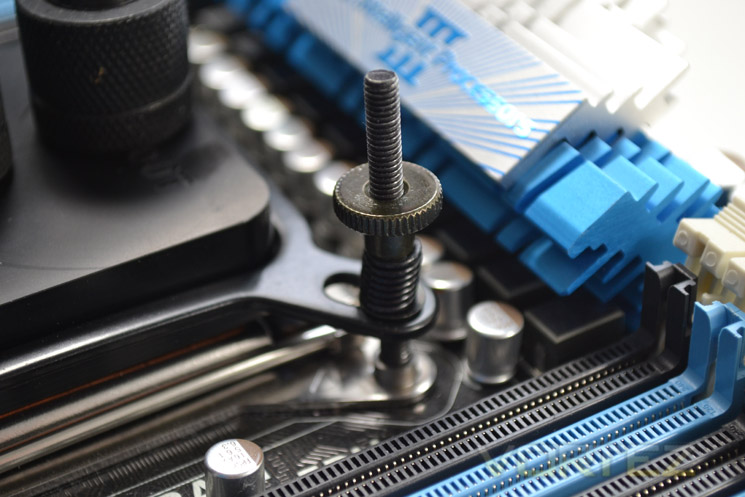
As we use Skt 2011 for our test system we did manage to fit the block quite easily however the fittings included were not specifically designed for Skt 2011 like some other CPU waterblocks and thus could have been much more user friendly. To fit this block you will have to remove the motherboard and snd screw the long screws through the back of the motherboard – a method which is not needed thanks to Skt 2011 CPU retention plate already being pre-drilled.
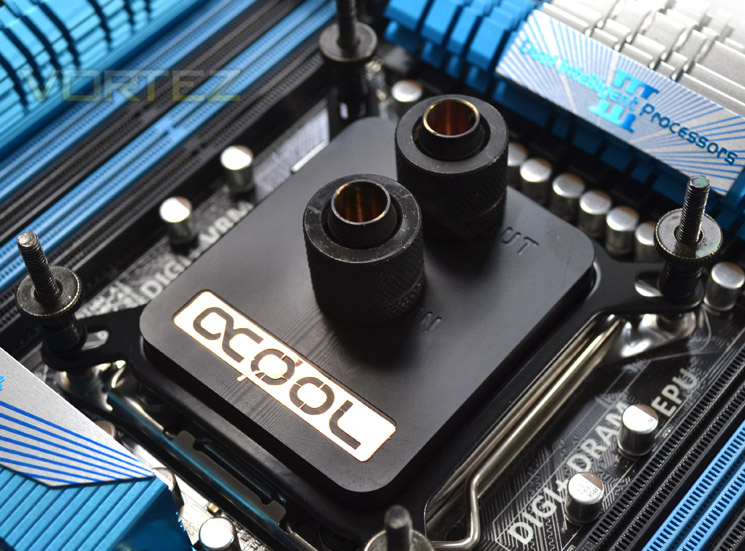
With the block fitted we added the compression fittings ready to accept the tubing.
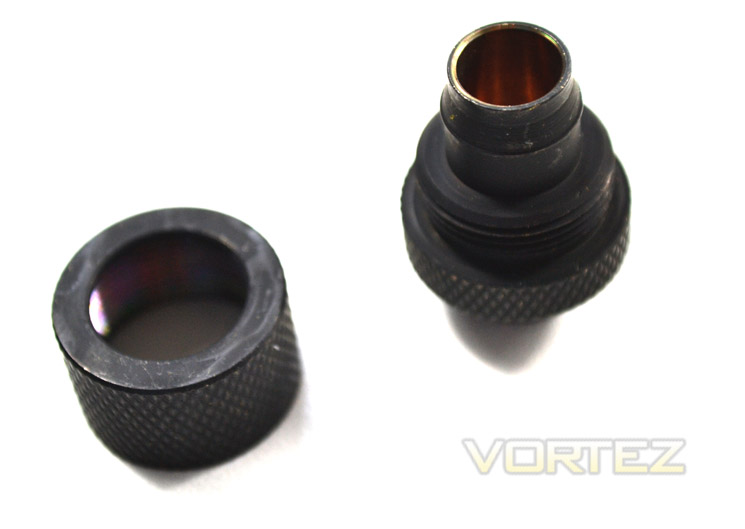
Speaking of the compression fittings, the ones included with this kit are quite good but could be better. The are once again full copper units but the finish is less than desirable with the copper only receiving a light coating of paint which has already begun to chip away making the new watercooling kit looking decidedly 2nd rate.
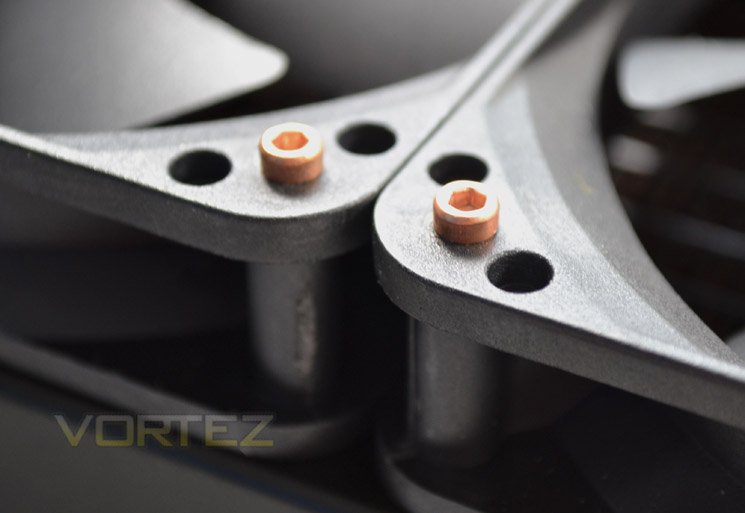
Fitting the fans to the rad was easy enough however the included Allen key did begin to show signs of stripping after 12 of the screws have been used. As the fans are closed units for the screws, only the included lengthy screws can be used unless you have your own of a similar size.
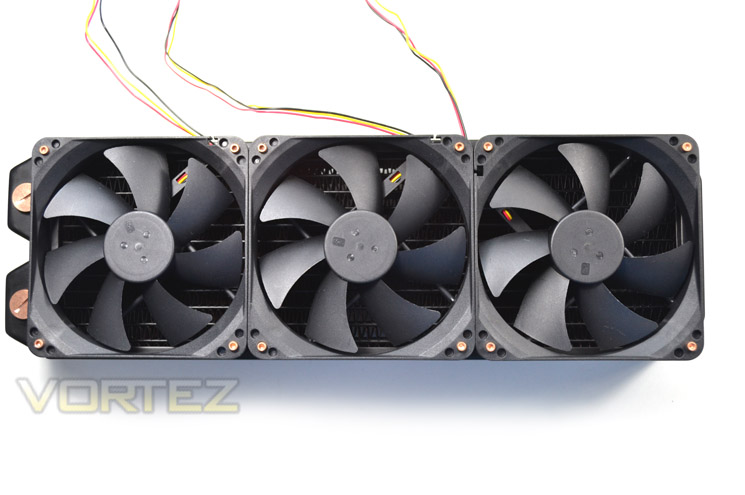
Once fitted, the fan/radiator/screwhead assembly measures 73mm in depth which is quite a chunk to sacrifice from your PC case.
Installation Part.2
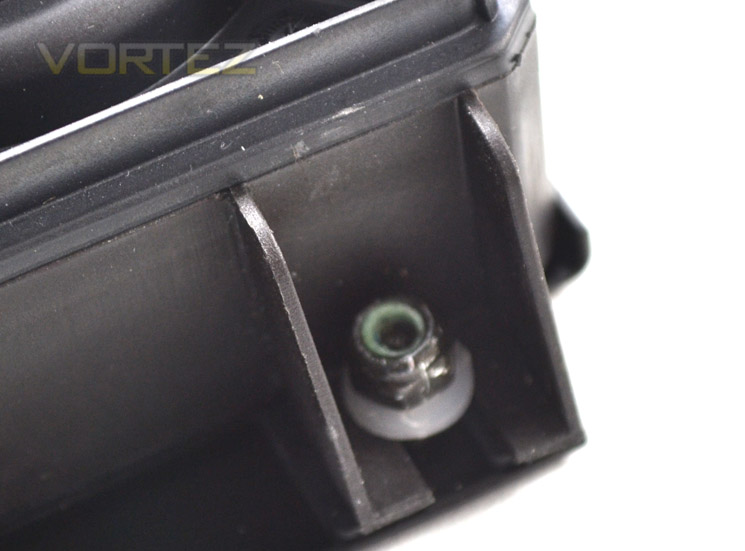
Fitting the pump to the reservoir was a bit of a challenge thanks to the included bolt/nuts. For someone who has fingers resembling Wall’s finest sausages, this is nigh on impossible to do. While it could be easily done with the correct smaller spanner, none was included in the kit and as we didn’t have the right size we had to resort to using nose pliers which damaged the coating of the nuts sadly.
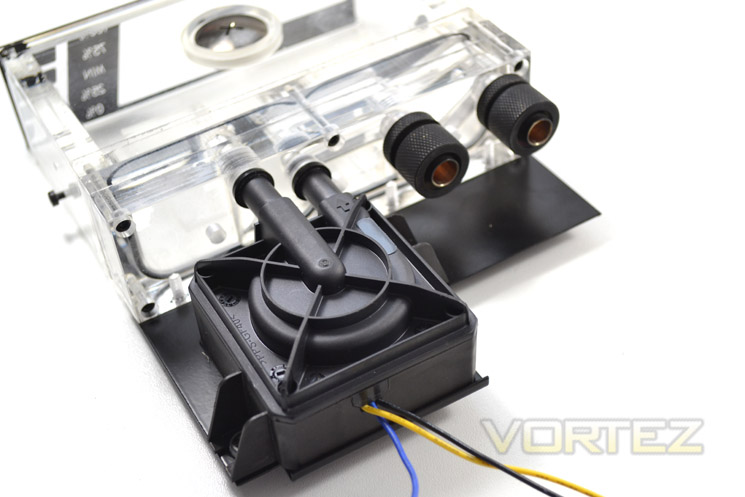
The pump marries up to the holes in the reservoir perfectly. Each hole has a rubber grommet to ensure a snug, watertight fit but it is recommended to give this grommets a drop of water each to ensure a watertight seal. With the pumps rubber mat hidden beneath we hope for minimal vibration from the pump/reservoir setup which was a major negative on the XSPC watercooling kit we reviewed last.
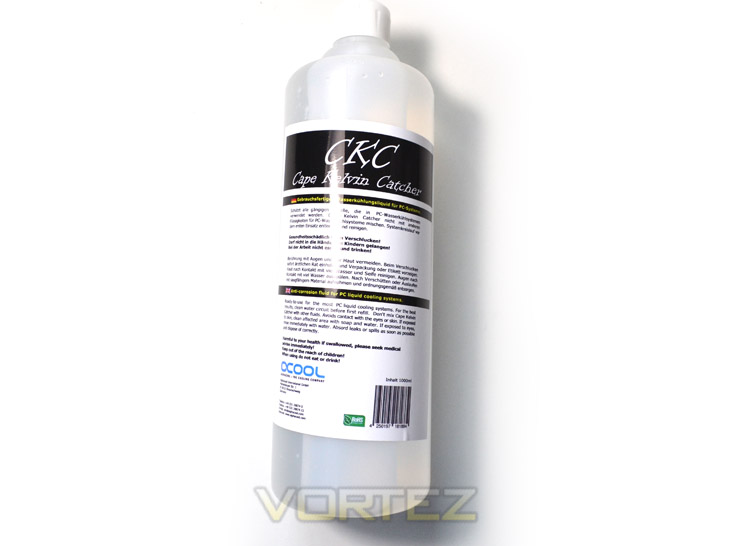
A great addition to the Alphacool kit is the inclusion of a litre of coolant. This coolant is labelled CKC ‘Cape Kelvin Catcher’. This coolant is not Ethylene glycol based like most pre-mixed coolants which Alphacool claim lowers the cooling capability of liquids. They do however say that this coolant is effective as an anti-corrosive and while they warn that it should not be swallowed, there are no EU warnings on the bottle itself due to it being exempt from labelling regulations according to EG regulations/ GefStoffV.
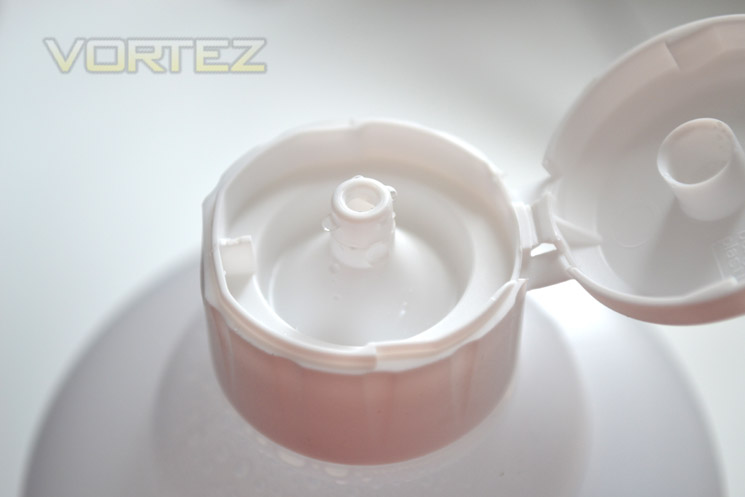
HArdly worth mentioning until you come to realise you do not have a funnel is the lid of the bottle. It is not simply a screw cap design (spills ahoy!), rather it has a small opening allowing the user to control exactly how much coolant is added. In our test system we estimate that we used 800ml so the 1 litre bottle should be plenty for that vast majority of systems.
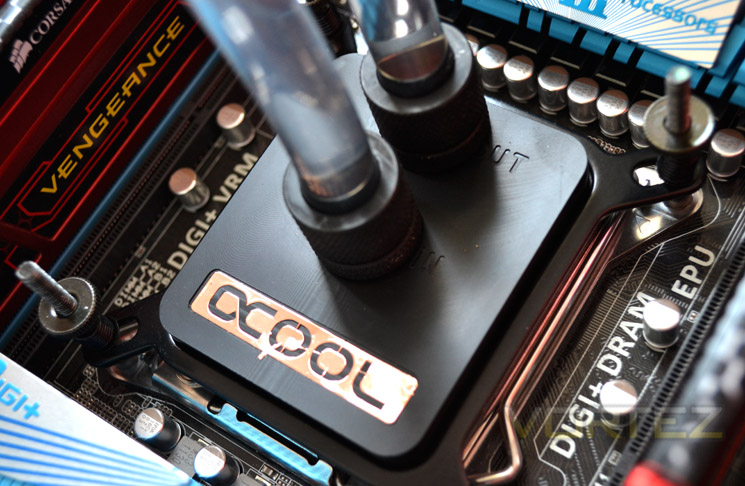
Perhaps the most difficult aspect of bleeding the system was the initial priming of the DDC-1T pump. Because of the unique way in which the reservoir works, water is not directly fed into the pump, rather it need water in the pump to create a vacuum. Although we could not find any warning, the pump should NEVER be run dry as this could easily damage it.
We therefore had to prime the pump. This was done by tilting the whole PC and letting gravity feed the pump with a few drops of water. Once we were confident the pump was primed, we used the included PSU bridge adaptor to run the pump on. The PSU bridge adaptor, while simple, can save you from frying your valuable components so it is highly recommended to use. This basically creates a bridge between the Green ‘signal’ and Black ‘ground’ cables of the PSU to fool it into thinking it has been switched on.
The reservoir needed -re-filling within seconds as coolant was pumped around the system and after three or four re-fills, the system was full. We then left the setup for 24 hours to leak test and fully bleed itself before commencing testing.
Test Setup & Methodology
There are many opinions on how air/watercooling should be tested. The huge variations in components used can have a beneficial or detrimental effect on the results, not least a case and its airflow properties. It is also reasonable to believe many cases will not afford the space required to fit large radiators, particularly 360 and 480 size without modification so testing a 120 size radiator inside a case against a 480 in a different environment would not produce consistent or more importantly, reliable results. Therefore, I believe the best form of testing is by using an open ‘test bed’ rather than an enclosed case.
A test bed offers identical cooling regardless of the object being tested. It neither relies upon case airflow to feed the heatsink and will not be affected by rising case temperatures. Ambient ‘environment’ temperatures can be measured accurately as case temperatures rise and fall more dramatically making delta temperature readouts inaccurate as this is dependent on both airflow, case temperature and environment temperature. As time goes on the case temperature will inevitably rise so a case temp taken at the beginning of the test to calculate delta will not be the same as in the middle or the end of the test. So, more items taken out of the equation, the more consistent (and accurate) the review will be.
Another area which I do not fully agree with when reviewing a product is the use of different fans. While I will concede this can give a very thorough examination of a cooling product, it detracts from what the product is sold as and instead of reviewing a product in the manner you receive it and giving your opinion on that basis, reviewing a product that has been modified is not objective and can add bias to a review which then diminishes the usefulness of the review of a product ‘as it is sold’. The caveat to this of course is repeated use. The Corsair H100 used in today’s cooling round up uses a thermal paste that is a one time only application. Any repeated applications mean you will have to buy your own TIM. It is also fair to assume most enthusiasts will have their preference of TIM and thus have a supply which will be re-applied. For this reason we will be using the same TIM (Arctic Cooling MX4) on all products tested to ensure consistency as far as possible. We do however like to test the effect of the change of TIM from that included in a product (if any) to that of our ‘control’ paste.
The crux of the matter when reviewing modular items is where to begin and where to stop. There are 100’s of fans on the market, 100’s of cases and a wide variety of TIMs, all of which can have an impact on performance. I therefore review products, where possible, ‘as is’; how you will receive it and compare it like for like with other products on the market ‘as is’. So, if a product is supplied with fans, I will use those that come packaged with it. Of course fans can have a great effect on the efficiency of a heatsink but that is a worry for the manufacturer and this should therefore be solved before the kit arrives to you. Most kits are after all ‘kits’, not custom components so there is little point in buying a kit if you intend to modify it, especially a watercooling kit as the foundation for such a product is to take the hassle out of specifying a lengthy component list, most of all which fan suits the product best!
We appreciate that there are many opinions on the right and the wrong way to test products. Some are overcomplicated, others are too basic while others are wildly inaccurate. We believe that with the testing methodology above, our results are consistent, accurate and most importantly, allow the user to make an informed choice on whether this product is right for them based on our own findings of how they will receive the product they pay for.
Mounting
Any product cooler is only as good as the mount. Without good contact area or an uneven mount, heat transfer from the CPU will be diminished so it is therefore important to test numerous times with different mounts.
To combat this we mount the cooler 5 times, removing the poorest result and dismissing this as a ‘bad mount’. An average is then taken from the remaining four results to give a final reading.
Temperature Test
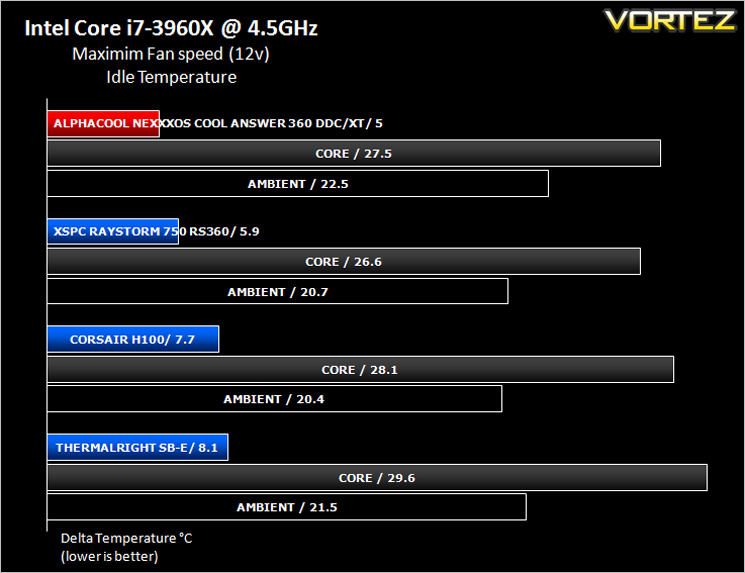
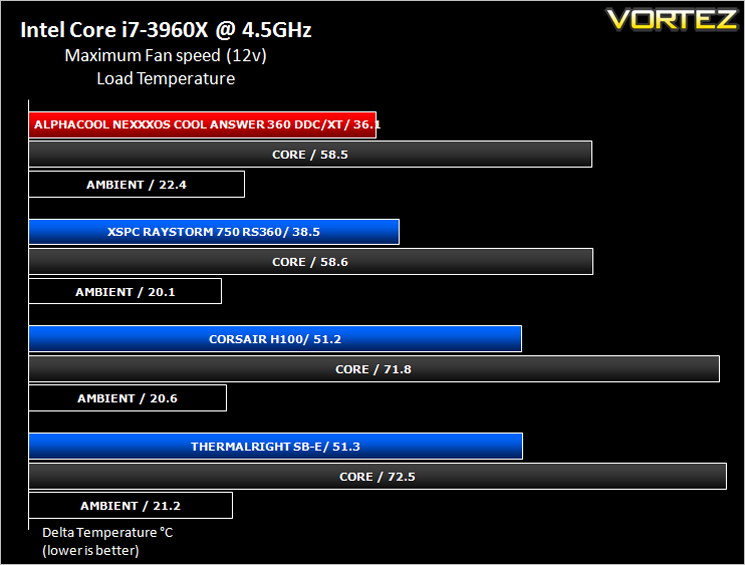
To accurately measure a coolers’ performance we use the ‘delta’ temperature. This is worked out by taking the ambient temperature away from the resultant temperature. So for example if a core temperature reading was 80c and the ambient temperature is 22c, the delta temp would be 80-22 = 58c. Delta temperature readings are used as this will eradicate (for the most part) the impact of ambient temperatures. An accurate thermometer is required to measure ambient (room) temp by which delta temperatures are calculated. The test room is cooled by air conditioning set to 20c however, room temperatures can still vary by upto a couple of degrees so a recording is taken at the beginning, middle and end of testing with an average reading calculated.
Idle temperatures are recorded with the system fully booted after a 20 minute idle time (no programs running save for identical background programs and processes). The max recorded temperature is then recorded using Real Temp for each core. An average of the 6 cores is then used to calculate the final temperature reading minus the ambient temperature to give us the delta temperature.
Load temperatures are recorded by using the latest LinX program. 20 runs with full memory usage. The max recorded temperature is then recorded using Real Temp for each core. An average of the 6 cores is then used to calculate the final temperature reading minus the ambient temperature to give us the delta temperature.
Test Bench
Motherboard: ASUS P9X79 Pro
CPU: Intel Core i7-3960X Extreme Edition
RAM – 16GB (4x4GB) Corsair Vengeance (Red) DDR3 @ 1866MHz 9-10-9-27
Power Supply – Thortech Thunderbolt Plus 1200W
Hard Drive – Kingston HyperX 240GB SSD
Thermal Interface Material (TIM) comparison
Most CPU coolers come accompanied with thermal paste provided by the manufacturer. For our CPU cooling tests we use the paste that was provided with the kit. If there was none provided then it will be substituted with our favoured paste, Arctic Cooling MX-4.
This test was run at maximum fan speed with the CPU overclocked to 4.5GHz.
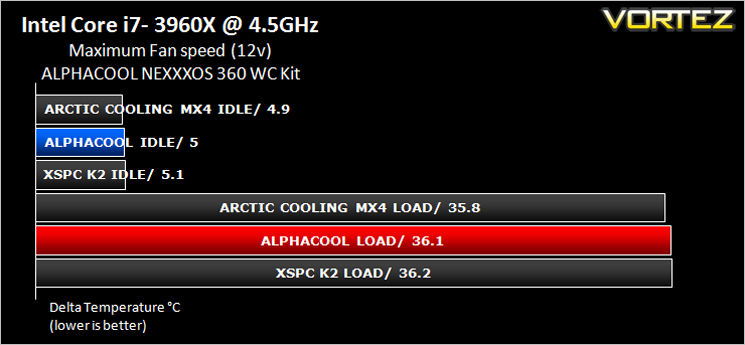
The paste included with the kit is not a bad paste. It smoothed out quite well but as the test results show, is not quite as good as other TIM on the market.
Performance: Low Fan Speeds
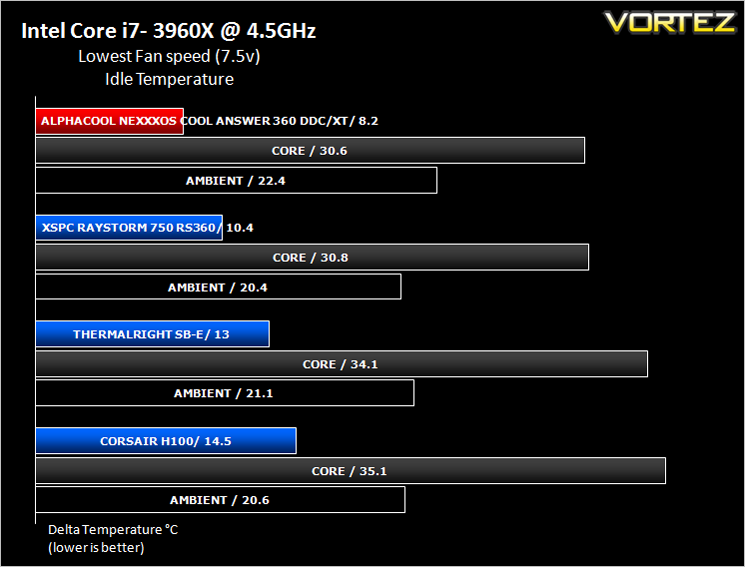
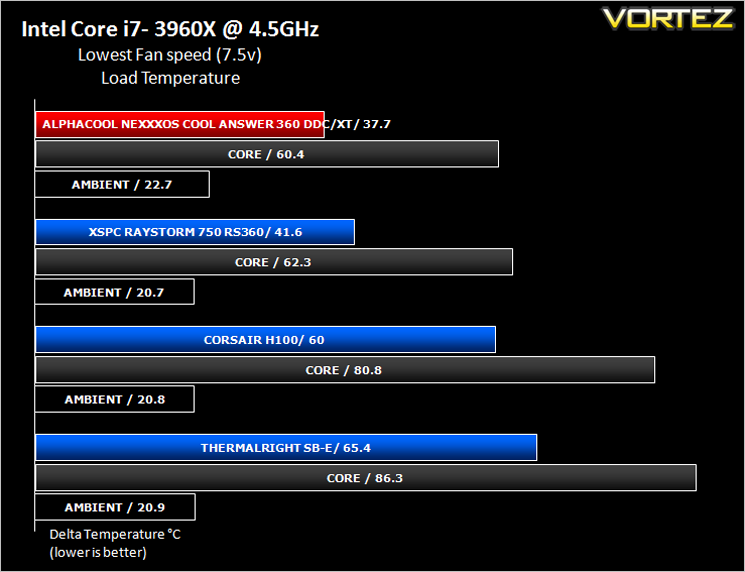
Performance: High Fan Speeds
Conclusion
The Alphacool NexXxoS Cool Answer 360 DDC/XT is a very good watercooling kit but it does have some issues.
Firstly, the major oversight of not including a set of comprehensive instructions is unforgivable. Experienced watercoolers are unlikely to opt for a pre-prescribed watercooling kit such as this, instead specifying components of their own. Instead a watercooling kit such as this, despite its high end aspirations, is aimed squarely at the enthusiast who perhaps does not have the benefit of experience. To this end, not including a set of quality instructions is less than ideal because if there is one thing a ‘kit’ should provide, is confidence to the novice installer. In fairness, it does not take a rocket scientist to figure it out but is it too much to ask for an easy to follow step-by-step guide?
Secondly, the finish on some of the products is a little shabby. While the occasional viewer may not see the minor flaws, someone who looks closely at the components included will be left less than impressed with the finish. The compression fittings are very thinly coated, the reservoir has some rough edges and overlapped glue along with some acrylic dust left in the reservoir which will need flushing. The Yate Loon fans were not sleeved which make them look unsightly. The CPU block while on the outside looks great, has residue remains on the internals. While none of these negatives would affect the performance assuming adequate precautions are made such as pre-flushing the components before installation, at £176 available from Aqua-Tuning, we expected better, especially from a German company which stereotypically are leaders in precision engineering.
The reservoir design, while odd, worked fine and while 3/8″ tubing may not suit most due to the skinny looks, it does have a higher bend radius than 7/16″ or 1/2″ tubing which will make matters easier for the novice builder.
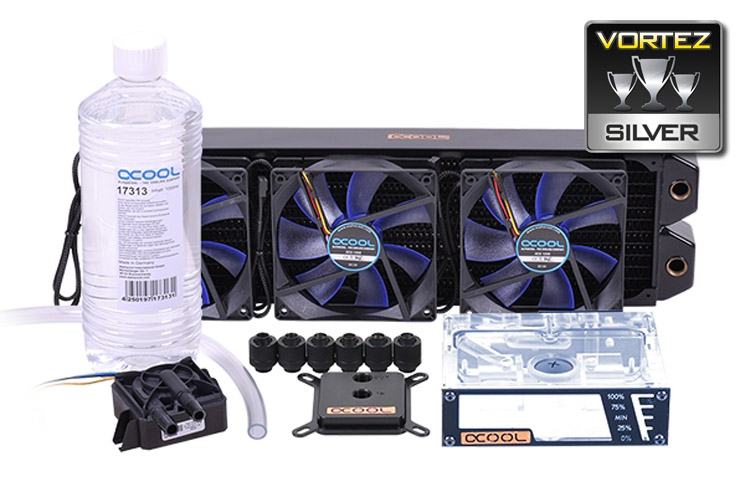
Negatives aside, it was the best performing kit thanks to the excellent radiator, pump and CPU blocks which would easily find themselves at home in a custom watercooled setup of any proud enthusiast. The inclusion of coolant was also a nice touch and rarely seen in pre-built watercooling kits. We liked the copper highlights of the screws and plugs which matched the ‘acool’ logos perfectly.
To Summarise, the Alphacool NexXxoS Cool Answer 360 DDC/XT kit is a high performing kit with some excellent components but it is let down by the lack of an instruction manual and the fit and finish of the reservoir and compression fittings. With a few small improvements, it could be an awesome kit for both beginners and experienced alike. As it stands though while we would recommend it, it is not a perfect product for either party. For this reason it is given our Silver award but it could have so easily been Gold.
Pros:
+ Excellent cooling performance
+ Very Quiet
+ Well specified components
Cons:
– Little/no instructions
– Fit and finish of some components could be better
+ Excellent cooling performance
+ Very Quiet
+ Well specified components
Cons:
– Little/no instructions
– Fit and finish of some components could be better
*NOTE*
Feedback from Alphacool:
“Alphacool are currently working on a new professional set of instructions that will be sent out with the next batch of kits and will also make these instructions available to download.”

Click here for an explanation of our awards at Vortez.net. Thanks to Aqua-Tuning for providing today’s review sample.

