New behemoth for the High End Desktop market could be coming as soon as Q2 2016, potentially supporting up to 20 simultaneous threads via Hyperthreading.
New behemoth for the High End Desktop market could be coming as soon as Q2 2016, potentially supporting up to 20 simultaneous threads via Hyperthreading.
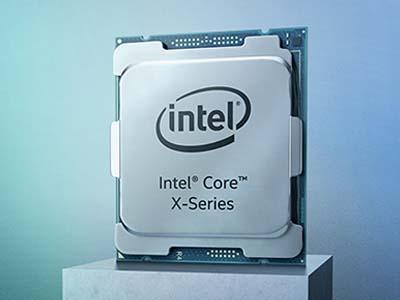
According to a leaked roadmap coming from Benchlife.info (via WCCFTech) Intel are planning their biggest enthusiast-level desktop CPU to date in 2016. Broadwell-E, the follow-up to 2014’s Haswell-E High End Desktop platform, looks set to feature a flagship SKU with as many as ten physical cores, supporting up to twenty threads via Hyperthreading.
The roadmap (shown above) indicates that Broadwell-E will be released in Q2-2016, replacing the Haswell-E platform through a mix of 6, 8 and 10-core SKUs within the same 140W TDP envelope. It’s likely that this is in part possible due to a process skrink to 14nm from 22nm, although the operating frequencies of the new CPUs aren’t currently known. Xeon-class CPUs with high core counts are nothing new, but this will be the first time that 10-core designs will make it into the hands of the High-End Desktop sector.
Continued used of the LGA2011-v3 socket indicates that the CPUs will be backwards compatible with X99 in much the same way that Ivybridge-E continued to operate on X79, although updates to the platform to build in new features aren’t off the cards. It’s also possible that Broadwell-E will modify support for motherboard-level control of CPU voltages, unlocked first by ASUS in X99 through their patented OC-Socket.
The leaked roadmap also reveals the anticipated release of two new desktop platforms in 2016 – Kaby Lake and Apollo Lake.
Kaby Lake is broadly a replacement for Skylake, starting with the low-power Kaby Lake-U at the end of Q2-2016 and continuing with the mainstream Kaby Lake-S in Q4-2016. 200-series motherboards will continue to support LGA 1151 and Skylake CPUs, whilst Kaby Lake CPUs should also be supported by 100-series designs (perhaps in a manner which limits the overall featureset). The 200-Series update is billed as a means for Intel to introduce mainstream support for Optane high-speed storage technology (i.e. 3D XPoint Memory) in addition to Thunderbolt 3. The period will also see the introduction of a Skylake-S CPU that supports GT4e graphics.
Apollo Lake by contrast replaces the Braswell SoC platform. Dual and Quad-Core Braswell SoC solutions are used in a range of products including NAS and NUC designs, a quiet an unassuming workhorse. Apollo Lake, also due Q2-2016, is likely to incorporate an LPDDR4 memory controller, more meaty graphics hardware and expanded I/O.
As usual, take all the information presented with a pinch of salt; even if the leak is accurate roadmaps can change (often without warning).
SOURCE: Benchlife.info via WCCFTech