







With a speed increase and a better stock cooler, are AMD on to a winner within the budget segment of computing?

Product on Review: AMD Bulldozer FX-4130
Manufacturer and Sponsor: AMD
Street price: ~£85 inc. VAT (At time of review)
AMD are giving their budget end of the FX CPUs a bit of a bump in performance and today, we are going to be examining what the differences are. There is an obvious increase in clock speed from 3.8GHz to 3.9GHz which is always a good thing, and AMD have a trick up their sleeve to make it more attractive to the budget builders. It is a completely unlocked chip, just like any other Black Edition CPU which AMD produce, but when compared to the older brother, the FX-4100, it comes with a much better stock cooler which AMD claim to make it overclock that much further on the stock cooler.
We are going to be putting the FX-4130 up against the FX-4100 to show the difference in performance which this CPU is said to have at stock speeds. This will be down to small tweaks which AMD have made to the processor as well as the faster clock speed at which it runs. AMD say that there is a 3% to 9% increase in various aspects of computing and we want to find out for ourselves whether this is indeed the case.
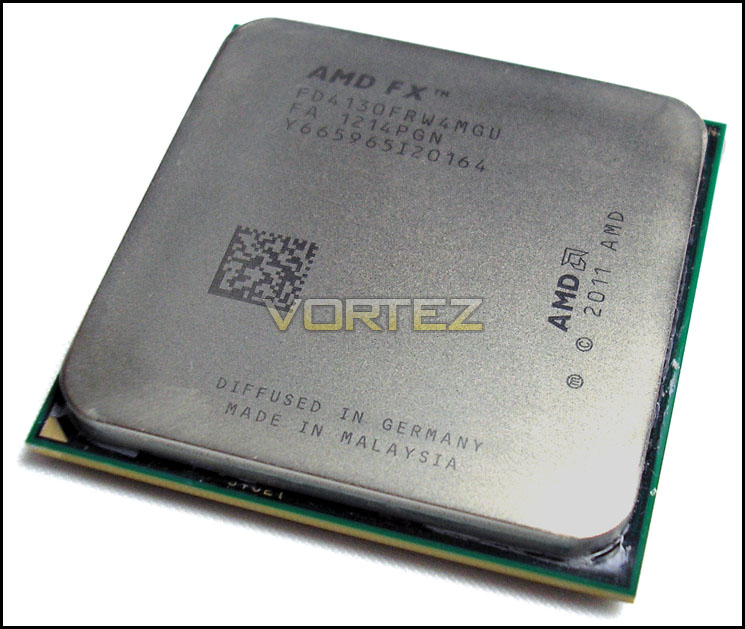
The FX-4130 is said to take the position of the FX-4100 as that has now become an EOL product. It is meant to hold the same price point of roughly £85. Whether it will remain like this is really down to the retailers but that is where AMD are aiming at with this chip.
AMDs Overview Of The FX-4130
Blow away the competition with the unrestrained power of an AMD FX Processor. Unlocked out of the box, and competitively-priced, AMD FX processors give you more bang for your buck with aggressive performance and lightning-fast responsiveness.
Specifications
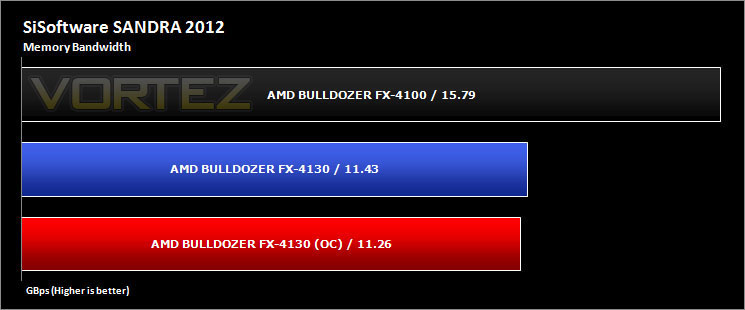
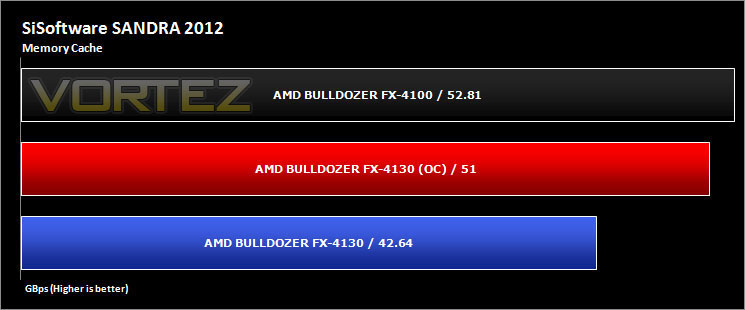
The differences between the two CPUs are apparent when you look at their specifications. The differences are the hike in speed, and the cache having been halved. We will see how this affects performance in our testing further on in this review.
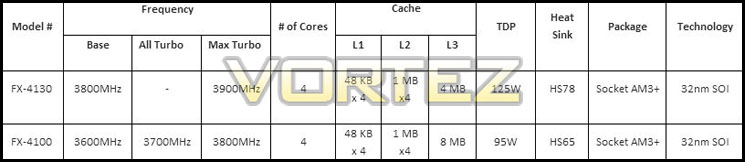
For the rest of the specifications, they remain unchanged.
AMD64 Technology
Yes
Simultaneous 32- & 64-bit computing
Yes
L1 Cache (Instruction + Data) per core
128KB (64KB + 64KB)
L2 Cache (1MB per core)
8MB or 6MB or 4MB
L3 Cache
8MB (shared L3)
HyperTransport™ Technology
HyperTransport™ Technology up to 4000MT/s full duplex, or up to 16.0GB/s I/O Bandwidth
Integrated DDR3 Memory Controller
Yes
Memory Controller Width
128-bit
Type of Memory Supported
Up to DDR3 1866
Memory Bandwidth
Up to 21 GB/s dual channel memory bandwidth
Total Processor-to-system Bandwidth (HyperTransport plus memory bandwidth)
Up to 37 GB/s
Process Technology
32 nanometer, SOI (silicon-on-insulator) Technology
Packaging
AM3+
Thermal Design Power
125W, & 95W
Yes
Simultaneous 32- & 64-bit computing
Yes
L1 Cache (Instruction + Data) per core
128KB (64KB + 64KB)
L2 Cache (1MB per core)
8MB or 6MB or 4MB
L3 Cache
8MB (shared L3)
HyperTransport™ Technology
HyperTransport™ Technology up to 4000MT/s full duplex, or up to 16.0GB/s I/O Bandwidth
Integrated DDR3 Memory Controller
Yes
Memory Controller Width
128-bit
Type of Memory Supported
Up to DDR3 1866
Memory Bandwidth
Up to 21 GB/s dual channel memory bandwidth
Total Processor-to-system Bandwidth (HyperTransport plus memory bandwidth)
Up to 37 GB/s
Process Technology
32 nanometer, SOI (silicon-on-insulator) Technology
Packaging
AM3+
Thermal Design Power
125W, & 95W
Packaging & The CPUs
For both processors, the external packaging is the same. It has a red cross on the front with the FX logo in the bottom left portion of the cross and on the back it is filled with what the box contains in many different languages.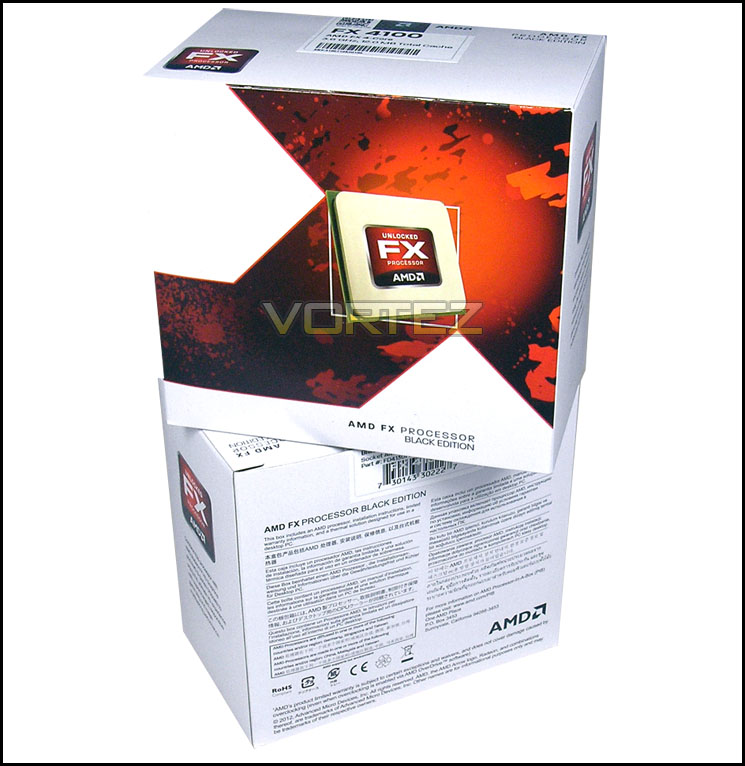
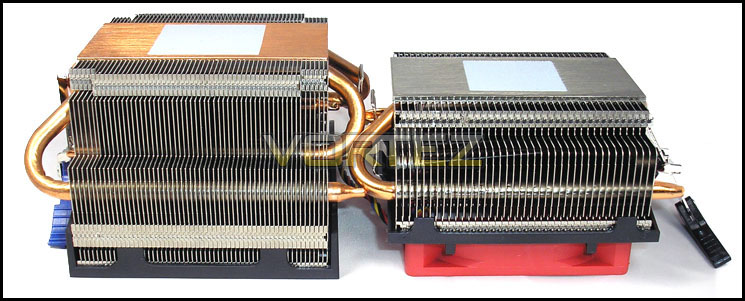
AMD told us that the FX-4130 overclocks further on the stock cooler when compared to the FX-4100 and its stock cooler, and when you open up the box, it immediately becomes apparent as to why that is the case. The cooler is a real monster for a stock cooler. In fact, it is bigger than those found on its bigger sibling – FX-8350 (eight cores). On the left-hand-side is the stock cooler of the FX-4100 and on the right is that of the FX-4130. You can clearly see the difference in FPI (fins per inch). As well as being a lot bigger overall, it also features twice the number of heat pipes to draw heat away from the CPU and into the fins.
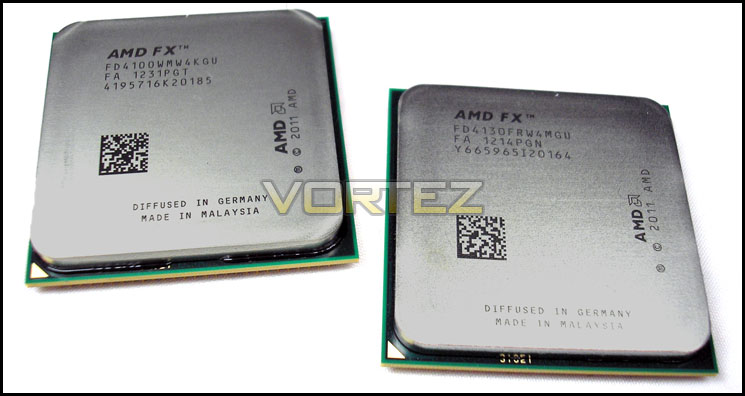
There will not be any differences in the aesthetics of the CPUs as they are identical in terms of their looks. The only thing that separates them apart is their writing on the front which dictates their model numbers and serial numbers.
Test Setup & Benchmarks
Test Bench
CPUs – AMD Bulldozer FX-4100 & FX-4130 Quad Core Processors
Cooling – Noctua NH-D14 & Stock Coolers
Motherboard – ASUS M5A99X EVO (BIOS 1604)
Memory – G.SKILL RipJawX DDR3-1866MHz CL9
Graphics – ZOTAC GTX 570 1280MB
Storage – Corsair Force F120
PSU – FSP Aurum CM Series 750W 80PLUS Gold
Operating System – Windows 7 Home Premium 64 bit
CPUs – AMD Bulldozer FX-4100 & FX-4130 Quad Core Processors
Cooling – Noctua NH-D14 & Stock Coolers
Motherboard – ASUS M5A99X EVO (BIOS 1604)
Memory – G.SKILL RipJawX DDR3-1866MHz CL9
Graphics – ZOTAC GTX 570 1280MB
Storage – Corsair Force F120
PSU – FSP Aurum CM Series 750W 80PLUS Gold
Operating System – Windows 7 Home Premium 64 bit
We will be running the following tests to give you an idea of the performance these processors bring to the table:
AIDA64 – CPU benchmarks
CineBench 11.5 – CPU score
SiSoftware Sandra 2012 – CPU and Memory benchmarks
x264 Version 4 – 1st and 2nd pass encoding
3DMark 11 – DX11 3D Performance and Extreme preset
Unigine Heaven 3.0 – FPS and Scores
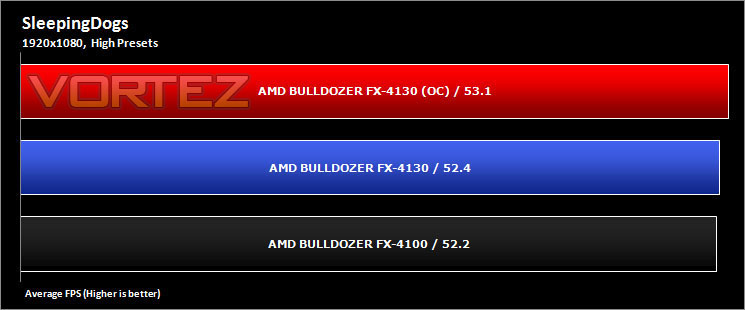
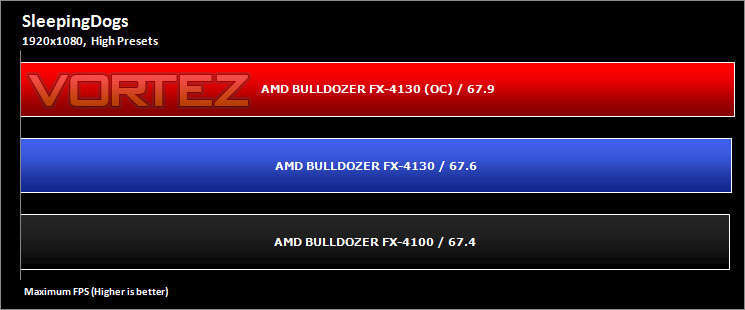
Games – Crysis 2, DiRT Showdown, Far Cry 3 and Sleeping Dogs
Overclocking
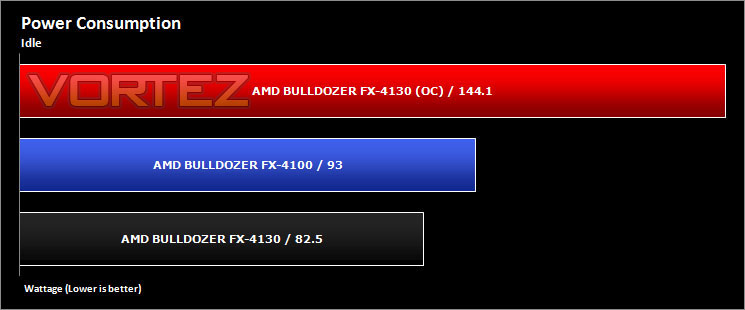
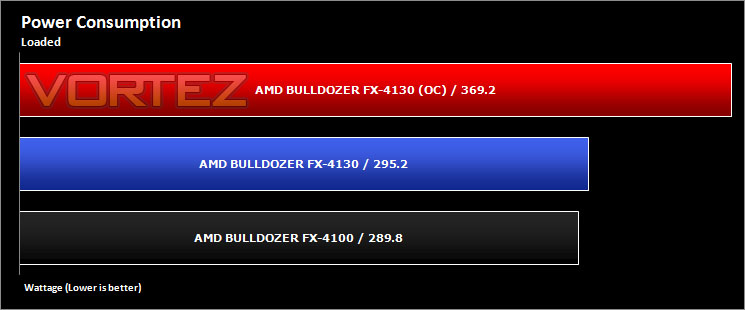
The FX-4130 may be clocked higher at stock but that does not necessarily translate into a better, higher overclock. Time will tell, though. AMD have actually raised the TDP of the processor from 95w (FX-4100) to 125w (FX-4130) which means it may not overclock as far due to thermal limitations. However, whilst the performance is increased, the amount of power that the CPU draws is also increased which does seem a little counterproductive in our eyes – but CPUs rarely run at absolute maximum load so this should not be too much of an issue. Even though it does use more power under load (according to the specification sheets), AMD say that it actually uses less power in an idle state. Anyway, lets push this budget chip and see how far it will go with our cooling.
We will be using a maximum of 1.5 volts for our testing. The reason for this is that the AMD CPUs cannot take much more than 62°c before they start to become unstable and therefore we want to stay below that temperature whenever possible. AMD recommend that you use a maximum of 1.55v on these CPUs for 24/7 usage, provided that your cooling can cope. Therefore, we want to stay on the safe side and not push this boundary too much.
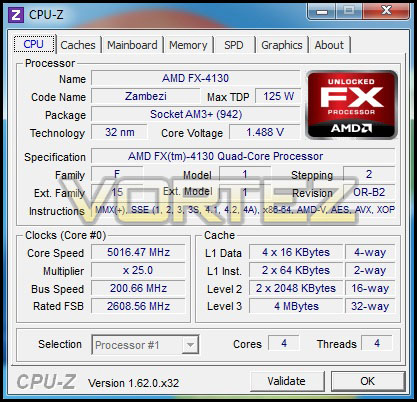
We were impressed to see that this budget CPU could hit the 5GHz marker on just 1.5 volts, and pass our entire benchmarking suite without hesitation. However, as you will see in the results, the lack of L3 cache has crippled this CPU in some ways. We did give our FX-4100 a quick blast to see what it could achieve and sadly, it struggled to hit 4.5GHz with the 1.5 volts limitation in place. This may be down to a poor sample which we received but of that we cannot be certain.
Overclocking On The Stock Coolers (Comparison)
The reason for us testing the stock coolers and putting them against each other is because AMD told us that the new and improved FX-4130 cooler is supposed to make the CPU overclock that much further and with that in mind, we had to find out for ourselves.
AMD told us that they were able to get top frequencies that were several hundred MHz higher and that it was still stable. We were able to get an extra 200MHz out of the CPU before it hit thermal limits. Both of the coolers were tested with the standard thermal paste which comes pre-applied on the cooler and then they were tested again using Noctua’s NT-H1 thermal compound to find the best results. There was not much of a difference in temperatures, and it did not allow us to overclock any further.
For our testing, we used all BIOS defaults bar the memory which ran at 1866MHz as with the rest of our review. The voltage was left on auto for the stock tests to compare the maximum temperatures. For the maximum overclock, we applied 1.4v to the CPU during both runs and found our maximum clock speed at which our CPU would not go above the 62°c area. The CPU fan was set to run at 100% on both occasions to give a level playing field.
We used wPrime to stress the CPU for an extended period of time. It took roughly 550 seconds to complete (just over nine minutes) which gave the CPU a good burning. We used HWMonitor to record the highest temperatures. The final results are as follows:
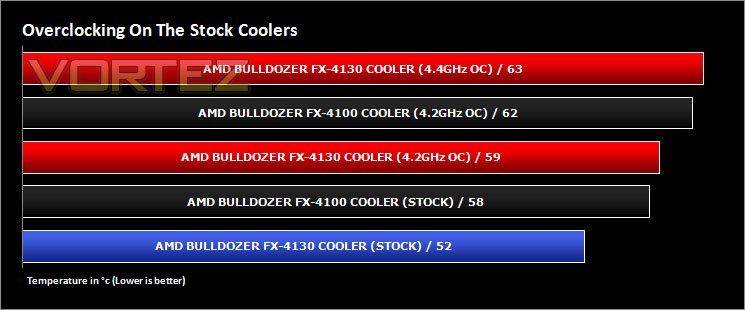
As you can see from the results above, the new and improved stock cooler does allow for an extra 200MHz overclock. That is nothing to complain about, especially as the CPU comes in at the same price as the older FX-4100 which has a much less beefy cooler. Free performance is always a win in our books and AMD certainly delivered on their promise.
Power Consumption
First of all, for the idle tests the system is cold booted into Windows and no additional applications are executed – the watts are noted on the external energy monitor we use. Then the system is loaded with 3DMark 11 to stress the system – watts are again monitored throughout the period of testing and the highest and lowest rated watts are then noted down. Below are the results of this energy test.
Benchmarks: AIDA64
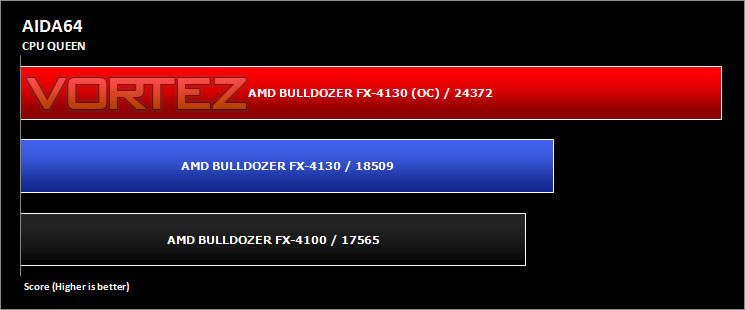
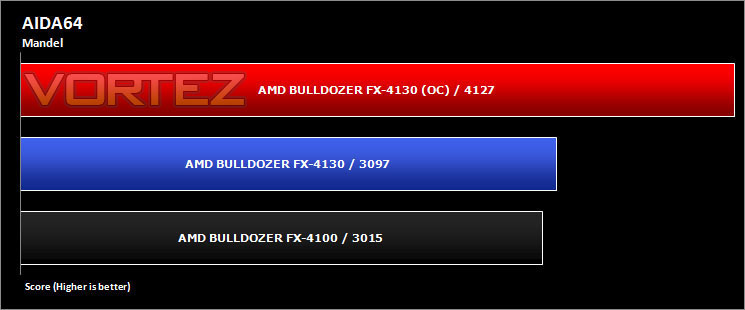
This simple integer benchmark focuses on the branch prediction capabilities and the misprediction penalties of the CPU. It finds the solutions for the classic “Queens problem” on a 10 by 10 sized chessboard. At the same clock speed theoretically the processor with the shorter pipeline and smaller misprediction penalties will attain higher benchmark scores. For example – with HyperThreading disabled – the Intel Northwood core processors get higher scores than the Intel Prescott core based ones due to the 20-step vs. 31-step long pipeline. The CPU Queen test uses integer MMX, SSE2 and SSSE3 optimizations.
Benchmarks: Cinebench 11.5
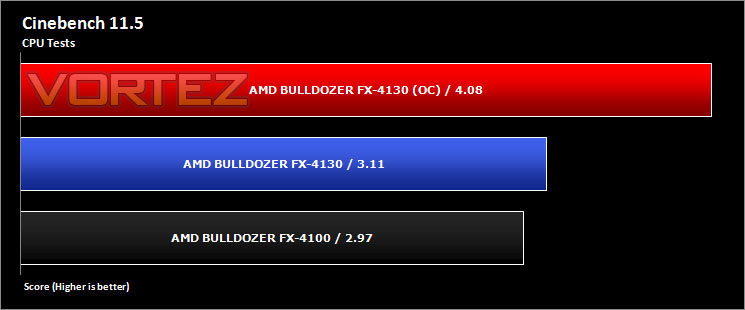
CINEBENCH can measure systems with up to 64 processor threads. This test scene contains approximately 2,000 objects which in turn contain more than 300,000 polygons in total, and uses sharp and blurred reflections, area lights, shadows, procedural shaders, antialiasing, and much more. The result is displayed in points (pts). The higher the number, the faster your processor is.
Benchmarks: SiSoftware SANDRA 2012
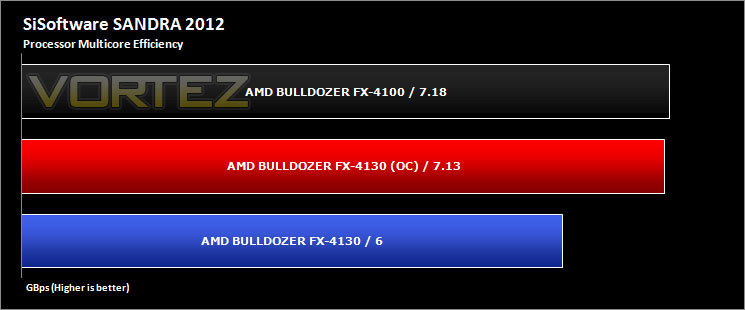
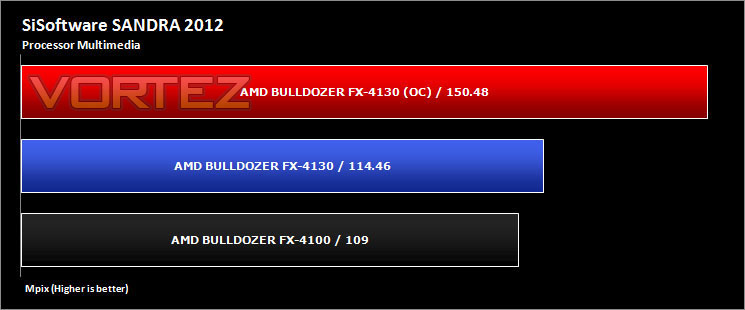
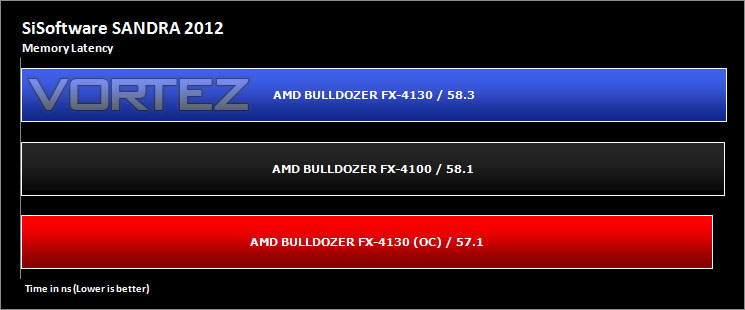
SANDRA isn’t always a benchmark that is included in hardware reviews but we believe it shouldn’t be ignored. SANDRA provides a vigorous package that tests your system in a rather large array of benchmarks. There are many aspects of benchmark that can be executed. We will be considering the CPU and memory tests.

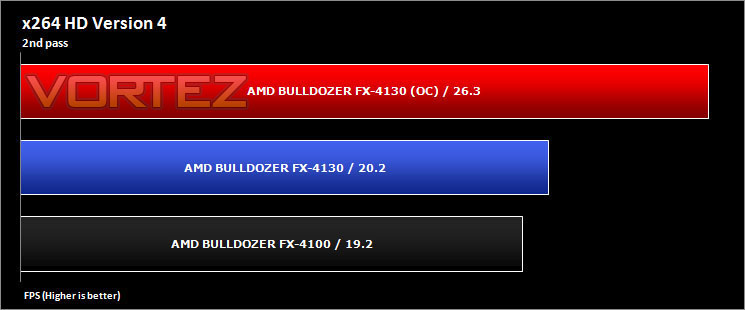
Benchmarks: X264HD Version 4
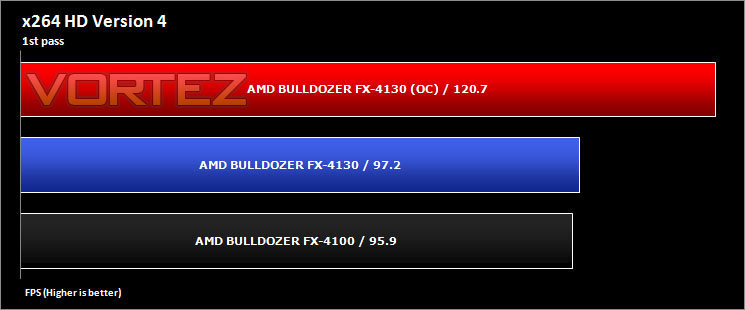
Simply put, this test measures how fast your machine can encode a short, DVD quality MPEG-2 video clip into a high-quality x264 video clip. What’s x264, you ask? It’s more or less the next-generation Xvid/DivX codec. We think it’s ideal for a benchmark because the application (x264.exe) reports fairly accurate compression results (in frames per second) for each pass of the video encoding process and it uses multi-core processors very efficiently
3D Benchmarks: 3DMark 11
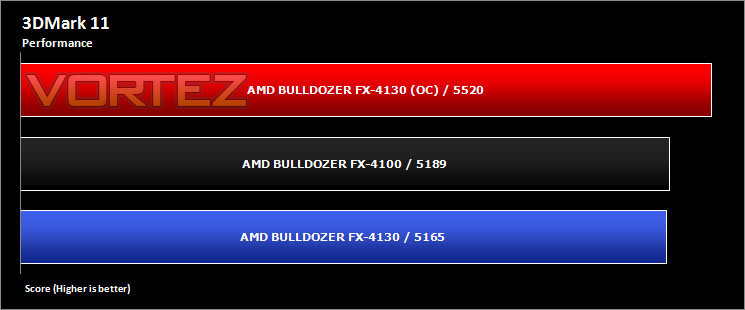
Designed to measure your PC’s gaming performance, 3DMark 11 makes extensive use of all the new features in DirectX 11 including tessellation, compute shaders and multi-threading. Trusted by gamers worldwide to give accurate and unbiased results, 3DMark 11 is the best way to consistently and reliably test DirectX 11 under game-like loads.

3D Benchmarks: Unigine Heaven 3.0
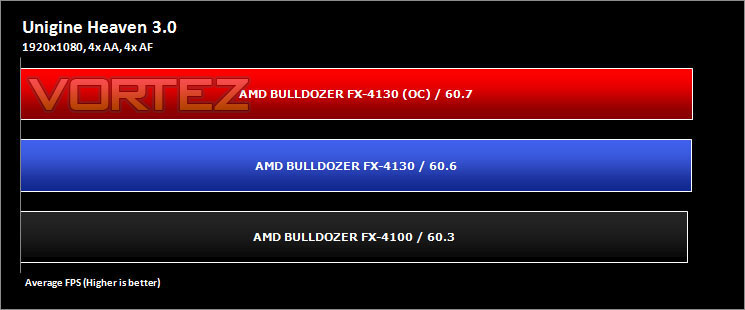
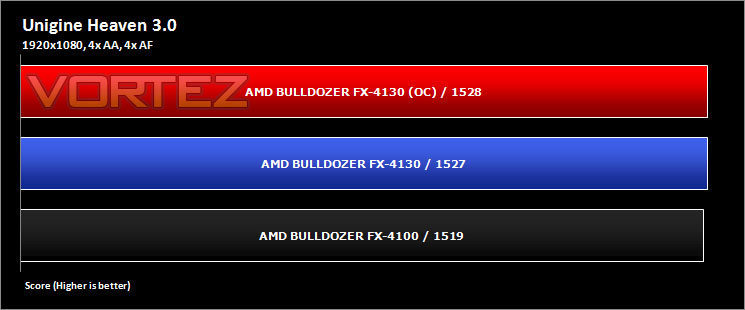
Unigine’s benchmark is to showcase the benefits of DX 11 and the use of tessellation as opposed to normal rendering techniques. The demo has impressive visuals that give an insight into what we can expect from gaming in the future.
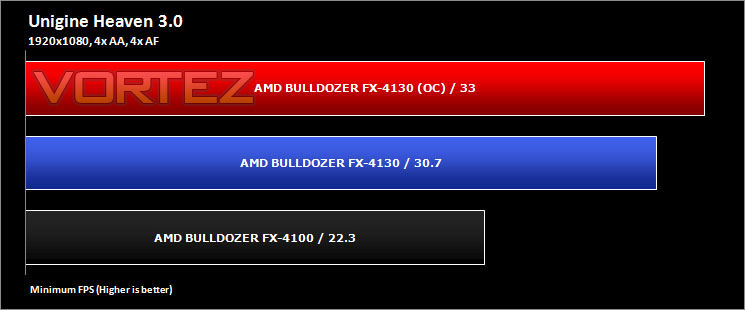
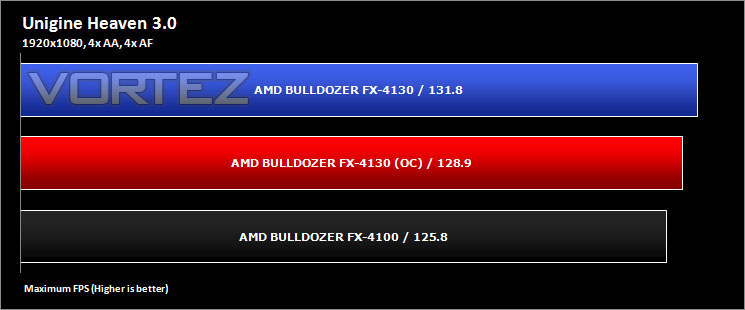
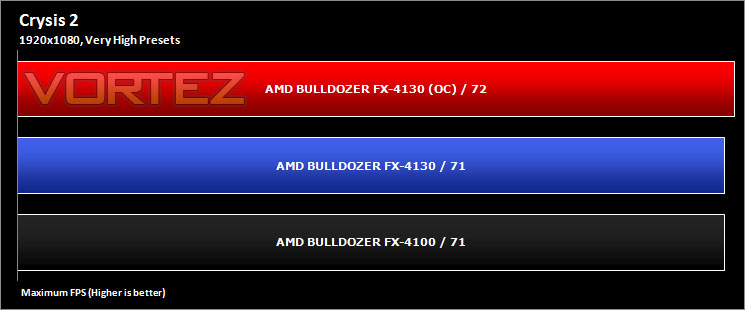
Gaming Benchmarks: Crysis 2 & DiRT Showdown
Whether played in 3D or standard 2D, Crysis 2 drops players into a devastated New York in the midst of an attack by a frightening alien species. The alien enemies are armed with deadly weaponry and exceptional sensory abilities that test players’ skill and push them to the limit. These terrifying invaders stalk the streets of New York, leaving the streets in chaos and the skyline in flaming ruin.
Surrounded by catastrophic destruction, players harness the superhuman abilities of the Nanosuit to level the playing field, becoming the ultimate weapon on a mission to save New York.
Surrounded by catastrophic destruction, players harness the superhuman abilities of the Nanosuit to level the playing field, becoming the ultimate weapon on a mission to save New York.
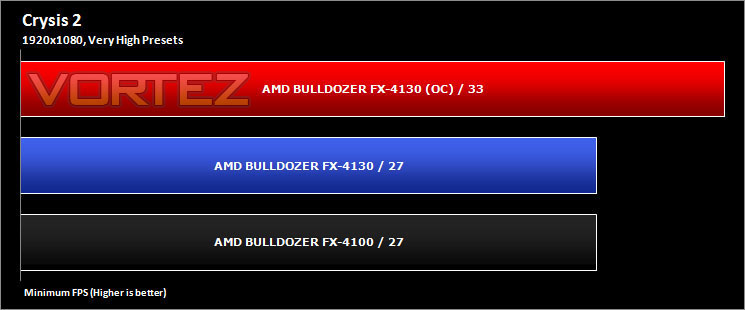
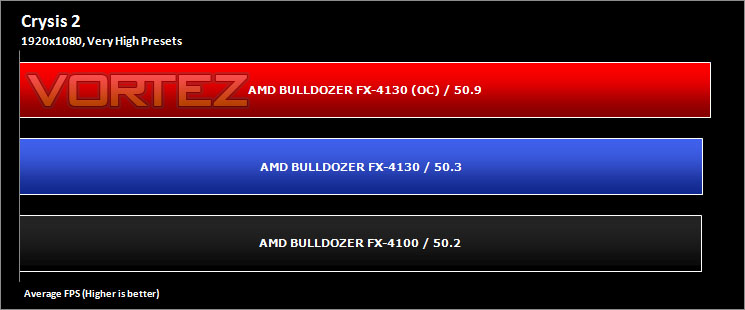
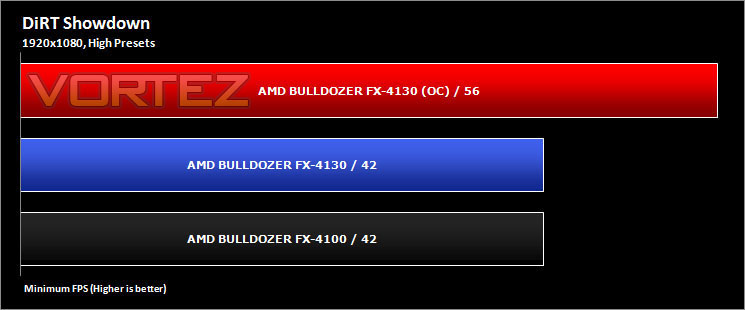
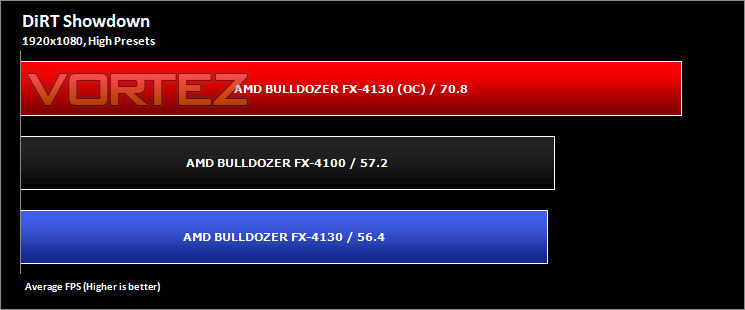
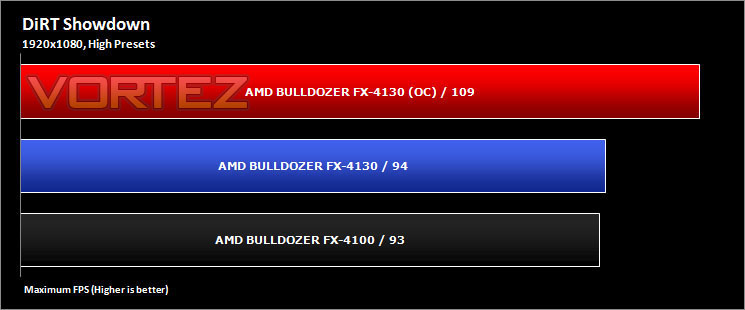
An expansion on the rough-riding racing action of Dirt 3’s gymkhana competition, Dirt Showdown offers three modes focused on the wilder aspects of off-road driving: Race, Showdown and Demolition!
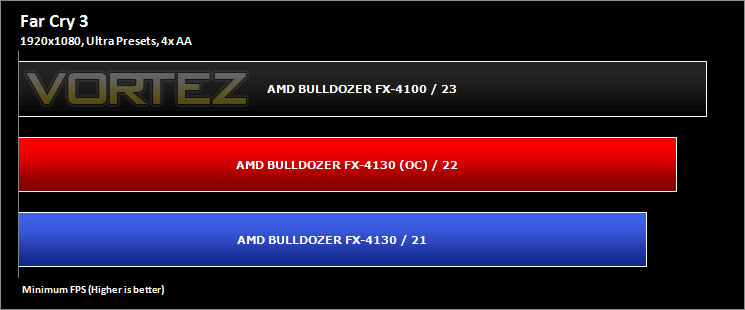
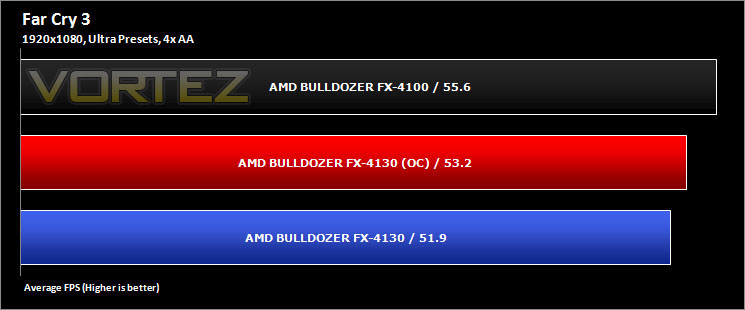
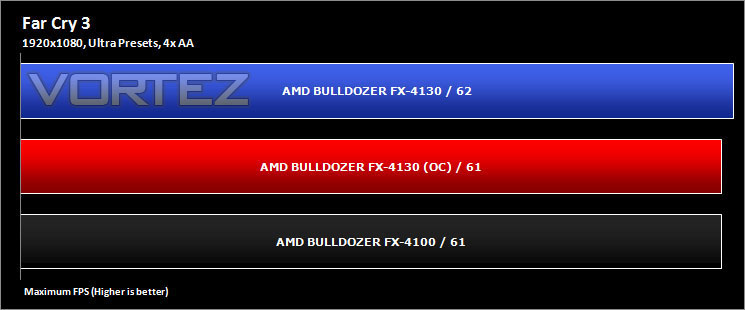
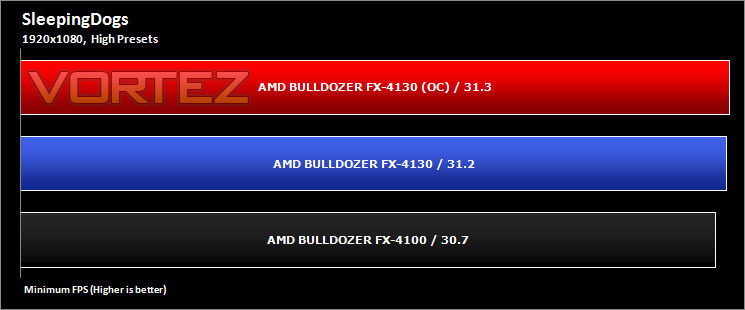
Gaming Benchmarks: Far Cry 3 & SleepingDogs
Beyond the limits of civilization lies an island, a lawless place ruled by piracy and human misery, where your only escapes are drugs or the muzzle of a gun. This is where you find yourself, trapped in a place that’s forgotten right from wrong, a place that lives by the principles of violence.
In Far Cry 3, players step into the shoes of Jason Brody, stranded on this mysterious tropical island. You dictate how the story unfolds, from the battles you choose to fight down to the allies or enemies you make along the way. Slash, sneak, detonate and shoot your way across the island in a world that has lost all sense of right and wrong. Beware the beauty and mystery of this unexplored paradise and live to outwit its roster of ruthless, desperate characters. You’ll need more than luck to survive.
In Far Cry 3, players step into the shoes of Jason Brody, stranded on this mysterious tropical island. You dictate how the story unfolds, from the battles you choose to fight down to the allies or enemies you make along the way. Slash, sneak, detonate and shoot your way across the island in a world that has lost all sense of right and wrong. Beware the beauty and mystery of this unexplored paradise and live to outwit its roster of ruthless, desperate characters. You’ll need more than luck to survive.
Inspired by classic Hollywood and Asian cinema style action thrillers, Sleeping Dogs is a gritty open-world cop drama set in the vibrant city of Hong Kong. Sleeping Dogs catapults players into the role of undercover cop Wei Shen, tasked with taking down one of the world’s most fearsome criminal organizations from the inside… the Hong Kong Triads. As players explore the bustling and crowded Hong Kong Island, through its neon-lit side streets and sprawling street markets, an incredible story unfolds of loyalty and betrayal where Wei begins to question his own motives as he is sucked in deeper than he could ever imagine.
Offering players an island packed with action, every street corner, market stall, harbour dock or city skyscraper can become an opportunity for intense shoot-outs, adrenaline-fuelled street races and intense, brutal martial arts combat. Featuring one of the most intuitive and imaginative combat systems, Sleeping Dogs empowers players to perform an extensive set of martial arts moves, singlehandedly taking on numerous opponents. Players perform bone-crunching kicks and combos, vicious counters and a cinematic set of environmental takedowns making use of countless real-world items from circular saws to phone booths, incinerators to refrigerator doors.
Offering players an island packed with action, every street corner, market stall, harbour dock or city skyscraper can become an opportunity for intense shoot-outs, adrenaline-fuelled street races and intense, brutal martial arts combat. Featuring one of the most intuitive and imaginative combat systems, Sleeping Dogs empowers players to perform an extensive set of martial arts moves, singlehandedly taking on numerous opponents. Players perform bone-crunching kicks and combos, vicious counters and a cinematic set of environmental takedowns making use of countless real-world items from circular saws to phone booths, incinerators to refrigerator doors.
Conclusion
AMD have increased the speed of their CPUs and they have added a better stock cooler, but does the lack of L3 cache affect this CPU in a negative way?
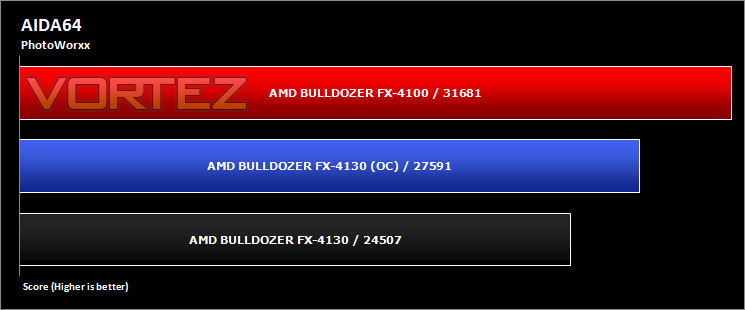
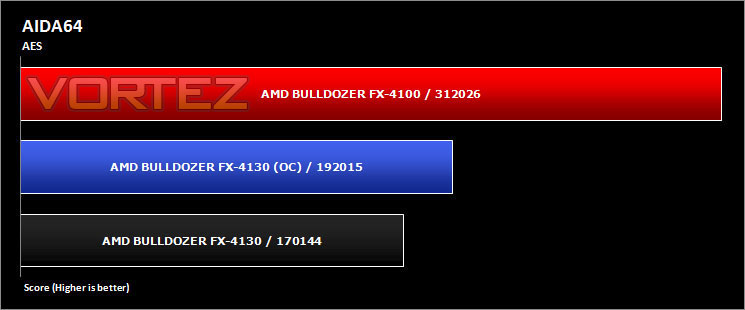
In the vast majority of benchmarks which we ran, the cache certainly did not impact our results too much. Some of the games and benchmarks however clearly show that the FX-4100 had its advantages with double the cache. If you are wondering why our overclocked results are sometimes worse than the stock speeds, we are just as mystified as you. The only thing we can put it down to is the CPU needing more cache, but this may not be the issue and it may be something else.
The FX-4130 comes in at the same price point as the FX-4100 did which makes it a more attractive option due to it coming with a faster clock speed and with it being better equipped in the cooling department. Due to the performance tweaks AMD have made, and from what our testing shows, the chip is quicker at stock speeds but not only due to the extra clock speed at which it runs. AMD made some small tweaks to the architecture which improved its efficiency.
From our testing, the FX-4130 does overclock better but as we mentioned previously in the review, it may be down to luck – the silicone lottery. Many of the FX-4130 CPUs are rumoured to hit 5GHz with relative ease though which is a good sign as our testing reflects this.
The stock cooler helped us achieve an extra 200MHz on top of what was previously possible on the old FX-4100 stock cooler which we were both surprised and impressed by. It is not every day you see such an improvement, especially when it does not cost you anything extra. We were able to run at 4.2GHz (a 400MHz overclock) on the FX-4130 cooler with nearly the same temperatures as the FX-4100 cooler running at stock speeds. This shows you how much more efficient the cooler is.
Due to the way that this processor performs and the overclocking ability it has right out of the box, we feel that it is worth a solid silver in our books. If it had the extra cache and all benchmarks had improved results, it would definitely have been a golden one but the lack of cache sadly holds it back a little. Nevertheless, a great budget CPU and well worth looking into if you need a quad core on a budget.
Overall, we are impressed with the changes that AMD have made to this CPU. If it still had its full 8MB of L3 cache then it would be a more powerful CPU. Even though the specifications state that the TDP has risen to 125w, in real terms, it really does not increase all that much. To sum it all up, this is a great budget CPU for those who want to play the latest games but cannot afford the more expensive counterparts.
Pros
+ Better stock heatsink
+ Better idle power consumption
+ Overclocks better than its predecessor – FX-4100
Cons
– Higher power consumption under load
– Lack of L3 cache
+ Better stock heatsink
+ Better idle power consumption
+ Overclocks better than its predecessor – FX-4100
Cons
– Higher power consumption under load
– Lack of L3 cache


