AMD NAVI is finally here, was it worth the wait? We take a look at the new Radeon RX 5700 and RX 5700 XT graphics cards with new featured like PCIe 4.0 and RDNA architecture.

Product on Review: Radeon RX 5700 & 5700 XT
Manufacturer: AMD
Street Price:
5700: £339 GBP – $349 USD – $549 AUD
5700 XT: £379 GBP – $399 USD – $629 AUD
While AMD has taken a stronghold in the CPU marketspace, there is plenty of work to be done in the GPU department. For almost a decade NVIDIA has arguably lead the race, but the tide is beginning to change.
This week has been a clear indicator that NVIDIA are possibly threatened by AMD. In a move which intended to steal the thunder from the AMD Radeon RX 5700 series, NVIDIA pipped AMD to the post and released faster variants of their RTX GPUs by way of the new SUPER range. It’s telling that NVIDIA only released two SKUs pre-5700 launch – perhaps due to AMD listing that the 5700 XT could beat the 2070. But, regardless of the ethics of such tactics, things are hotting up and for consumers that can only be a good thing. When competition is thriving, companies push innovation and it can also have economic benefits too.
So, today we have in the spotlight the much anticipated AMD Radeon RX 5700 Series which introduces a plethora of new and exciting standards and tech. We have the new Navi GPU, RDNA architecture, PCIe 4.0 and more.
From the pricing above its apparent that we’re not dealing with the competing graphics cards at the ultra-high end but do AMD now have what it takes to dethrone NVIDIA in the mid-high tier?
AMD on their Radeon RX 5700 Series
The all new Radeon™ RX 5700 Series graphics cards are powered by the RDNA architecture, designed from the ground up for superior performance and power efficiency using AMD’s advanced 7nm process technology. Radeon™ RX 5700 Series GPUs feature redesigned Compute Units delivering incredible performance and up to 1.25X higher performance-per-clock and up to 1.5X higher performance-per-watt, a new instructions better suited for visual effects such as volumetric lighting, blur effects, and depth of field, and multi-level cache hierarchy for greatly reduced latency and highly responsive gaming.
Technical Specifications
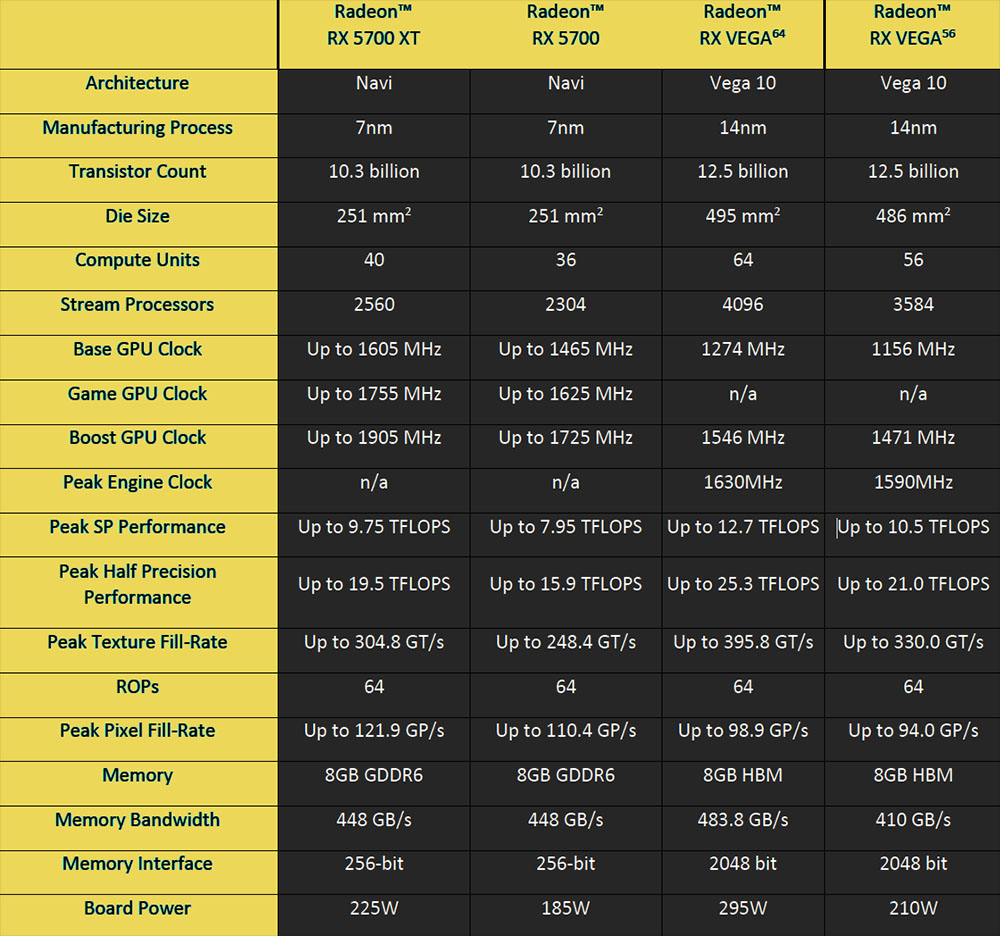
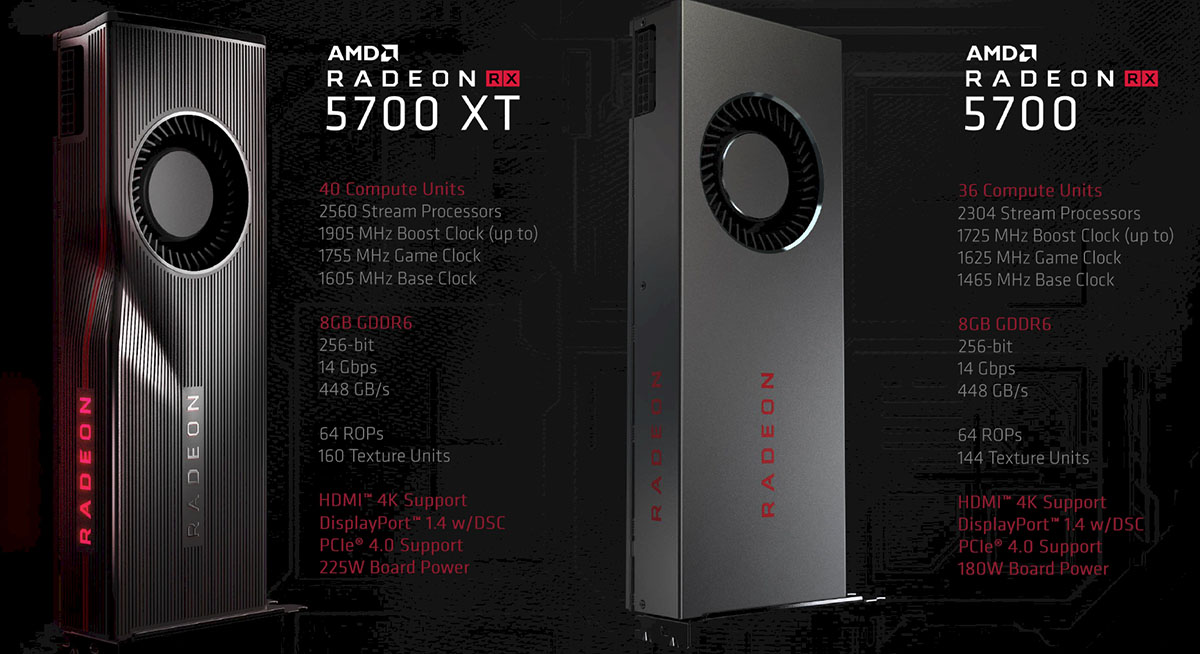
Below are the technical specifications surrounding the Radeon RX 5700 series compared to RX VEGA. Additional to these specifications, RX 5700 also benefits from a 7-phase digital VRM design and introduces us to PCIe 4.0 – offering 22 Gbps over PCIe 3.0 at just 13 Gbps.
RDNA Architecture
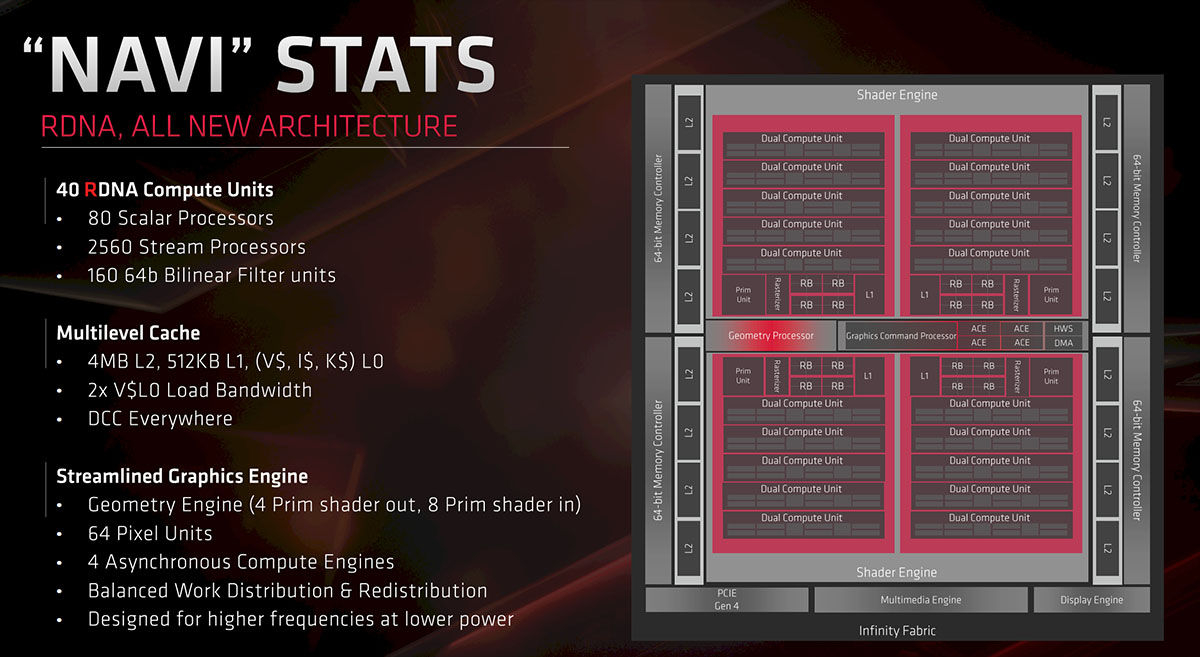
Succeeding AMD’s Graphics Core Next (GCN) is RDNA, AMD’s new architecture for 7nm. GCN was first introduced back in 2012 and so this comes as a rather significant step for the company and one which will hopefully see them advance within the GPU market.
Navi is the first GPU to take advantage of this new architecture with the focus fixing on three elements – a new compute unit design, multilevel cache hierarchy and streamlined graphics pipeline. One other fundamental change from GCN to RDNA is the move to 32 block execution of waveforms. This was previously at 64 under GCN.
More to come…
Closer Look
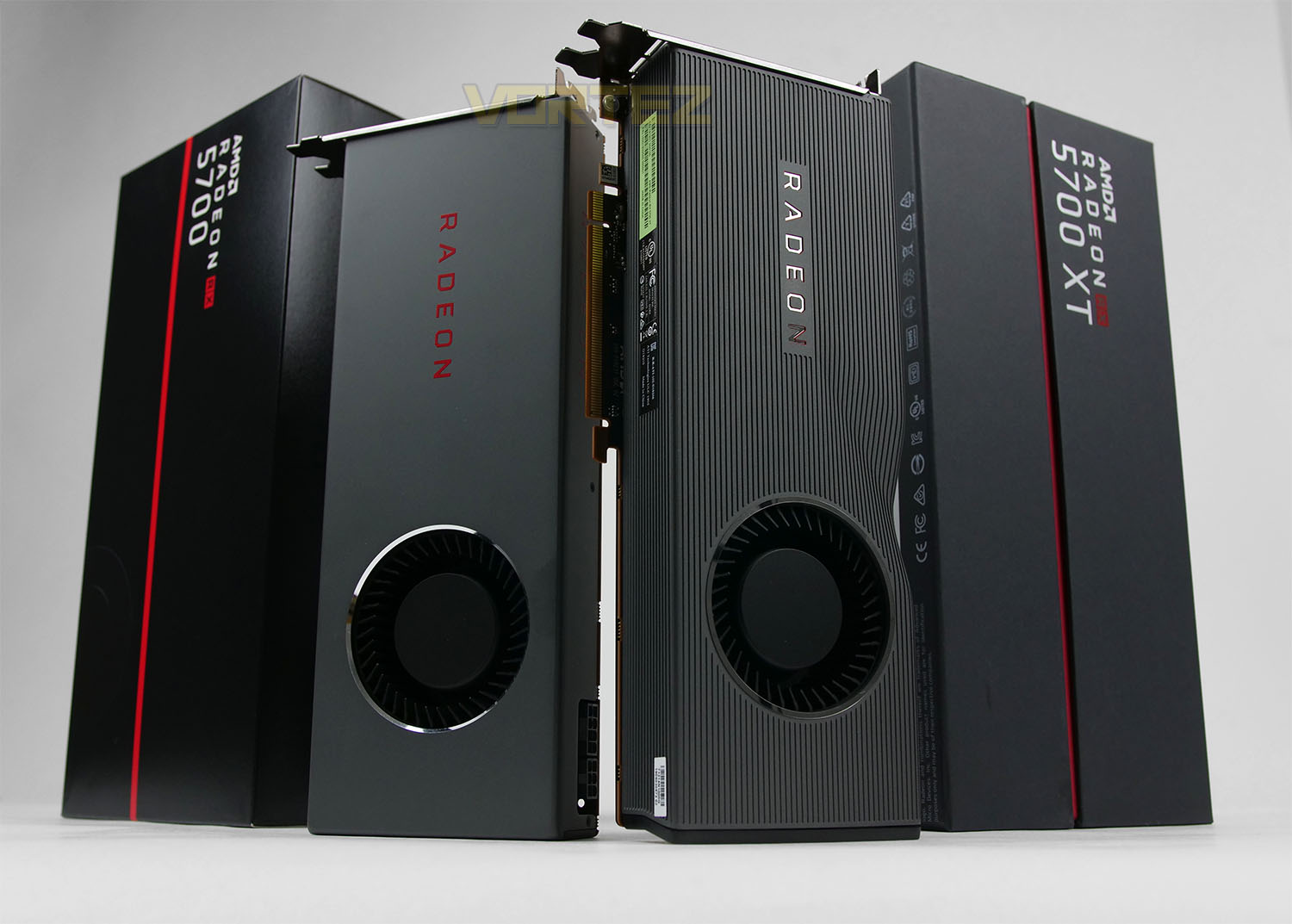
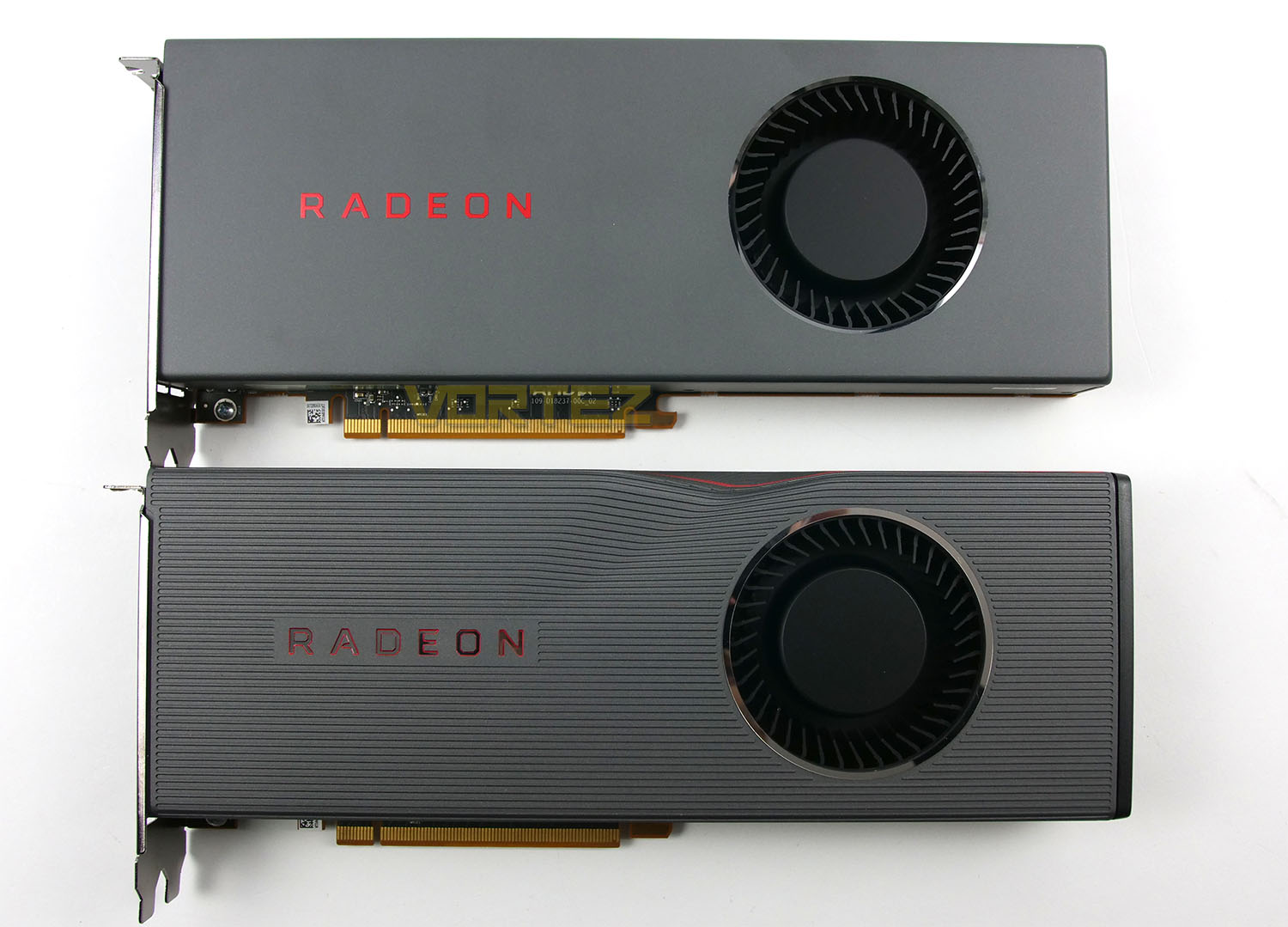
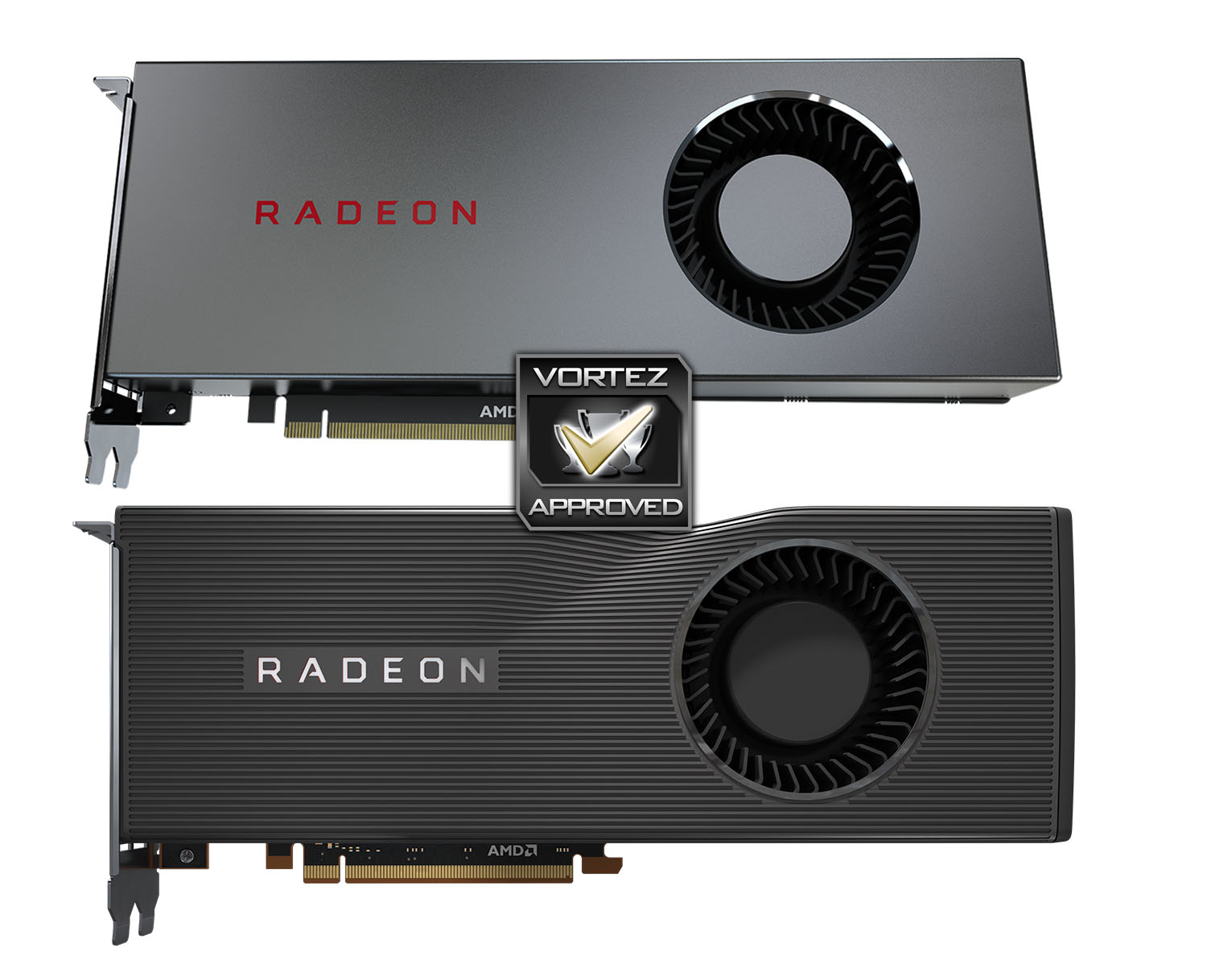
Both the RX 5700 and 5700 XT are very similar in their physical dimensions – measuring in at 265x95x33mm. The XT is 5-10mm longer due to the design.
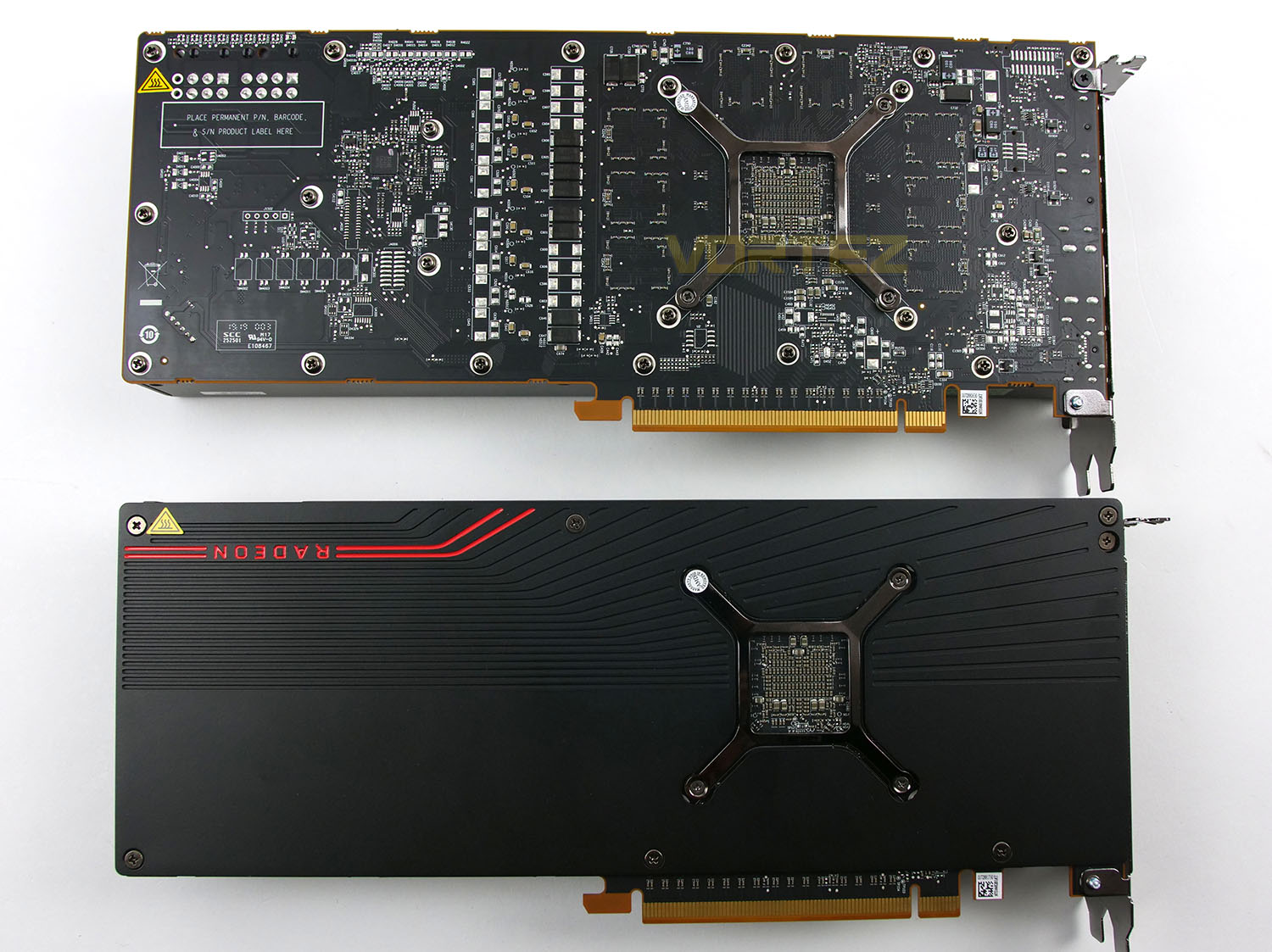
As you can see, a single fan is used within a Vapor Chamber cooling solution. The 5700 is rather plain, donning a smooth, gun metal finish and the Radeon insignia. While the XT features a ridged design which adds a bit more style and depth to the unit. Both cards benefit from an aluminium shroud. The XT includes a backplate wrap around, but the standard 5700 does not.
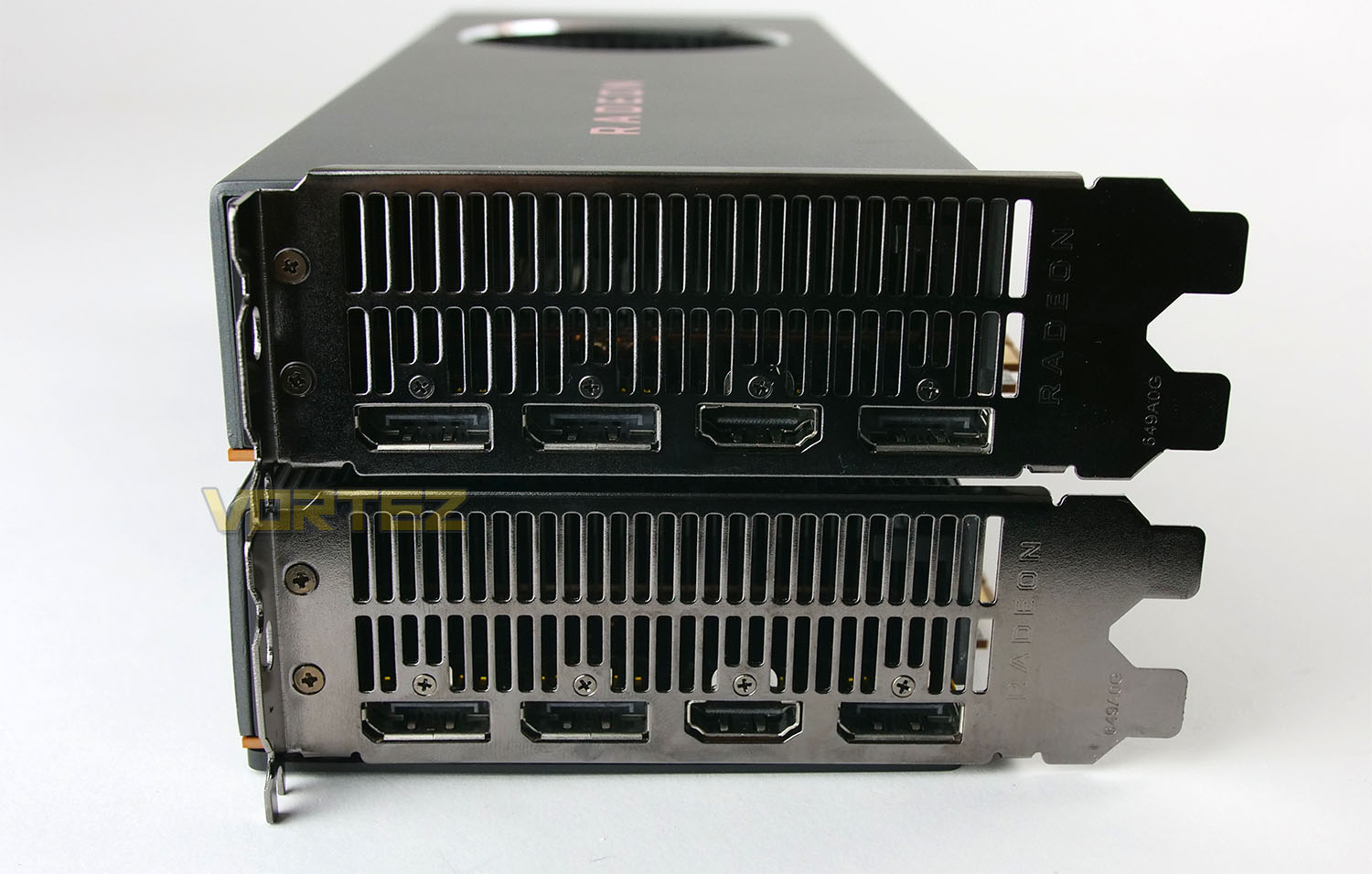
Both 5700 and 5700 XT utilise the same rear IO ports – bringing AMD Radeon FreeSync 2 HDR support. We have triple DP 1.4 and single HDMI 2.0b, which should provide flexibility for multi-screen use. The ventilation is also on this side – the vapour chamber solution pushes heat out of this section.
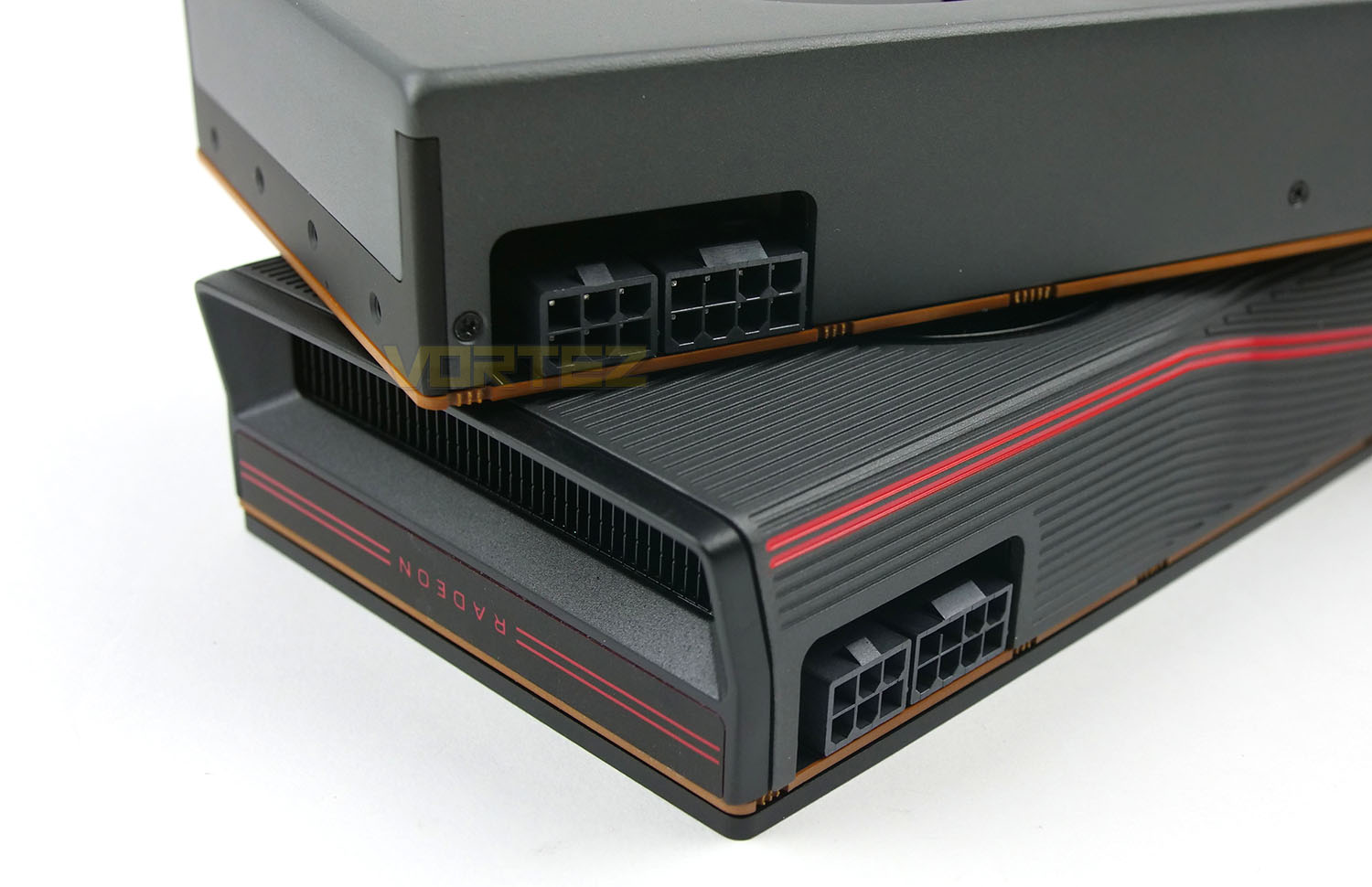
Again, in a similar vein, both models require a 8+6-pin connection from the PSU for power delivery.
Test Setup & Methodology
HOW WE TEST GRAPHICS CARDS
Testing a graphics card is an extremely lengthy process. We sometimes see reviews where a graphics card has been tested using out of date equipment, out of date games and even out of date drivers. While the latter can be excused due to the sheer amount of driver updates making a thorough review impossible we will however notify the reader when we have used a different driver to the normal for example a pre-release driver. For the most part however we will always use the same hardware and latest drivers so this does certainly need to be taken into consideration when viewing our testing results. Each game and benchmark is tested times with the lowest and highest scores omitted out of the 5 results and the average then taken from the three remaining to give us our final result for each resolution and setting used.HARDWARE
Taking Intel’s High-End Desktop platform, our hardware utilises the Intel X99 chipset. Combined with this we use the Intel Core i7-5960X Extreme Edition processor clocked to a realistic and achievable 4GHz to ensure we have no CPU bottlenecks. With 16GB (4x4GB) of DDR4 at 2666MHz and a 750GB SSD there should be minimal paging so the benchmarks we run today will hopefully give a true reflection of the graphics card’s performance.Graphics Cards on test:
NVIDIA RTX 2080 Ti
NVIDIA RTX 2080
NVIDIA RTX 2070 SUPER
NVIDIA RTX 2070
NVIDIA RTX 2060 SUPER
NVIDIA RTX 2060
NVIDIA GTX 1080 Ti
NVIDIA GTX 1080
NVIDIA GTX 1070
NVIDIA GTX 1060
AMD Radeon Vega 56
AMD Radeon RX 5700
AMD Radeon RX 5700 XT
Special thanks go to Avermedia, Intel, Corsair, MSI and AOC for providing the extreme spec components used for our test bench:
Motherboard: MSI X99A Workstation
CPU: Intel Core i7-5960X Extreme Edition @ 4GHz
RAM – 16GB (4x4GB) Corsair LPX Vengeance (Red) DDR3 @ 2666MHz 16-17-17-35 C1
Power Supply – CORSAIR HX1050
Hard Drive – Samsung 840 EVO 750GB
Cooler – CORSAIR Hydro Series™ H150i Pro 360mm Extreme Performance Liquid CPU Cooler
Monitor – AOC 28″ 4K U2879VF
Capture Card – Avermedia Live Gamer Extreme 2
CPU: Intel Core i7-5960X Extreme Edition @ 4GHz
RAM – 16GB (4x4GB) Corsair LPX Vengeance (Red) DDR3 @ 2666MHz 16-17-17-35 C1
Power Supply – CORSAIR HX1050
Hard Drive – Samsung 840 EVO 750GB
Cooler – CORSAIR Hydro Series™ H150i Pro 360mm Extreme Performance Liquid CPU Cooler
Monitor – AOC 28″ 4K U2879VF
Capture Card – Avermedia Live Gamer Extreme 2
BENCHMARKS
If you are a regular reader of our reviews you will know we like to test the latest hardware with the latest games and benchmarks on the market. Here are the games we’ve chosen:Fortnite
Middle Earth: Shadow of War
Apex Legends
Shadow of the Tomb Raider
F1 2018
Middle Earth: Shadow of War
Apex Legends
Shadow of the Tomb Raider
F1 2018
To capture framerates we use a combination of in-game benchmark tools and FRAPS.
We also take into consideration the benchmarkers out there so have included three of the more popular synthetic benchmarks available:
Let’s see how today’s graphics card performed…
Power, Temperatures, Acoustics
To test for power consumption, we take a measurement from the plug socket. It is important to note that the figures below represent total system power use and not just the GPU. The CPU was always in a fixed state (4GHz overclock) so did not affect the additional power load when the GPU was placed under 100% load using Heaven 4.0 which was ran for 20 minutes at which point a load reading was taken. Idle readings were taken 5 minutes after system boot to ensure any background services and applications had loaded.
TEMPERATURE
To test temperatures we measured idle temperatures after booting windows, letting all applications finish loading and ran a few benchmarks. Once the benchmarks were complete we left the card to reach a cooling plateau where we then took the idle temperatures. For the load tests we set Heaven 4.0 running continuously for ~30 minutes recorded the peak/maximum GPU temperature.ACOUSTICS
Operating noise is definitely noticeable when both cards are loaded. Noise is notably higher than other GPUs we’ve tested.DX12: 3DMark Time Spy
Download your copy nowWith its pure DirectX 12 engine, which supports new API features like asynchronous compute, explicit multi-adapter, and multi-threading, 3DMark Time Spy is the ideal benchmark for testing the DirectX 12 performance of the latest graphics cards.
DX11: 3DMark FireStrike
Download your copy nowFire Strike is the new showcase DirectX 11 benchmark designed for high-performance gaming PCs. It is UL’s most ambitious and technical benchmark ever, featuring real-time graphics rendered with detail and complexity far beyond what is found in other benchmarks and games today.
DX11: Unigine Heaven 4.0
Heaven Benchmark with its current version 4.0 is a GPU-intensive benchmark that hammers graphics cards to the limits. This powerful tool can be effectively used to determine the stability of a GPU under extremely stressful conditions, as well as check the cooling system’s potential under maximum heat output. It provides completely unbiased results and generates true in-game rendering workloads across all platforms.
DX11: Unigine SuperPosition
Superposition is a new-generation benchmark tailored for testing reliability and performance of the latest GPUs. Top-notch visuals, support for VR-devices and an interactive mode with mini-games — the list of features built into Superposition could go on and on.
DX11: Fortnite
Fortnite Battle Royale is the FREE 100-player PvP mode in Fortnite. One giant map. A battle bus. Fortnite building skills and destructible environments combined with intense PvP combat. The last one standing wins.
DX11: Middle Earth: Shadow of War
Middle-earth: Shadow of War is an action role-playing video game developed by Monolith Productions and published by Warner Bros. Interactive Entertainment. It is the sequel to 2014’s Middle-earth: Shadow of Mordor.
DX11: Kingdom Come: Deliverance
Kingdom Come: Deliverance is a story-driven open-world RPG that immerses you in an epic adventure in the Holy Roman Empire. Avenge your parents’ death as you battle invading forces, go on game-changing quests, and make influential choices.
DX12: Shadow of the Tomb Raider
Shadow of the Tomb Raider is an action-adventure video game developed by Eidos Montréal in conjunction with Crystal Dynamics and published by Square Enix. It continues the narrative from the 2013 game Tomb Raider and its sequel Rise of the Tomb Raider, and is the twelfth mainline entry in the Tomb Raider series.
DX11: F1 2018
F1 2018 is a racing video game and the tenth instalment in the Formula One video game franchise developed and published by Codemasters. The game is based on the 2018 Formula One World Championship and includes all twenty-one circuits from the calendar and all twenty drivers and ten teams competing in the season.
Overall Performance
Here we take a look at the overall performance of the graphics card. This figure is determined by finding the average FPS across all of the settings used in a particular benchmark(game) to give us an overall value.
Value For Money
We make a simple calculation for this set of results. For each game we add all of the resulting FPS totals together and then divide by the four sets to give us an overall performance figure. While the figures alone do not give you an accurate picture of how the card will perform in any given scenario, they do tell you, when averaged, which GPU is the more capable across all of the benchmarks and settings tested.
Please note: we’ve used GBP for currency but since this is relative – regardless of which currency you use, this will give you a good indication of value for money.
Conclusion
So, where do we stand in this week’s GPU battle?
First of all, it’s great to see AMD back with a new approach to their GPU game. In the RX 5700 Series, they’ve introduced brand new architecture to replace GCN, utilised PCIe 4.0, and they’ve opted for GDDR6 – what a great foundation for their next-gen graphics movement.
The most immediate question that needs answering is – have they done enough to assert themselves as a worthy rival in the high-end space? Looking across the different games we tested, it’s clear to see that performance can vary but the 5700 XT tends to go neck-and-neck with the RTX 2060 and at times the SUPER variant.
The RX 5700 Series has no problems in dealing with 1440p with the detail settings maxed out, but these cards perform exceptionally well in 1080p, so if the latter is your intended resolution and you’d like to tap into higher framerate performance then you won’t be disappointed with either card.
Launching along-side the Radeon RX 5700 Series today is the Ryzen 3rd Gen. CPUs. The Ryzen 3000 and X570 chipset is the first platform to introduce PCIe 4.0 and so, both products work hand in hand. This is bound to solidify both launches today and giving the tech giant current exclusivity on the new standard.
Both the RX 5700 and 5700 XT incorporate a vapor chamber design (similar to that of NVIDIA’s GTX 10 Series FE). This cooler nails it on visuals but falls by the wayside when noise/thermals come into the equation. We saw the thermals reach around 80C under load and the noise, while not deafening is noticeably louder than other graphics cards. With custom partner cards on the horizon it’ll be intriguing to see whether aftermarket designs can improve on the noise and temperatures we’ve encountered and along with that – factory overclocked versions of RX 5700 will definitely make this series even more appealing than it already is.
In terms of pricing, the 5700 is: £339 GBP – $349 USD – $549 AUD and the 5700 XT: £379 GBP – $399 USD – $629 AUD. We believe this to be decent value for money against the competition and look forward to seeing custom partner cards keep close to this price but offering improved thermal design and factory overclocks.
The Radeon RX 5700 Series is a statement by AMD that they should be taken seriously for the mid-high tier. The new tech, features and performance show an advancement and the pricing is reasonable.
Pros
+ Aluminium design (w/backplate on RX 5700 XT)
+ Stylish and easy to pair with other hardware
+ Good performing cards
+ PCIe 4.0 ready
+ Decent value for money
Mediocre
+- Thermals push towards 80C
Cons
– No real-time ray tracing capabilities
– Coolers are audible during full load
+ Aluminium design (w/backplate on RX 5700 XT)
+ Stylish and easy to pair with other hardware
+ Good performing cards
+ PCIe 4.0 ready
+ Decent value for money
Mediocre
+- Thermals push towards 80C
Cons
– No real-time ray tracing capabilities
– Coolers are audible during full load
Click here for an explanation of our awards at Vortez.net.
Stay connected with the Vortez Social Media pages:
Join in with the discussions on Discord