



Armed with a triple fan cooler and factory overclock, the ROG team presents their new STRIX RTX 2070 OC graphics card. Is this next-gen GPU from NVIDIA worth an upgrade?

Product on Review: STRIX RTX 2070 OC Edition
Manufacturer: ASUS Republic of Gamers
Street Price: £669 GBP – $629 USD – $1249 AUD
NVIDIA’s GeForce RTX 20-Series has hit the GPU market like no other in recent years, generating plenty of discussion and debate due to performance, features and… you guessed it… price. It’s been difficult to get away from that particular spectre at this feast, and so it’s something of a relief to finally come to the more affordable end of the GeForce RTX 20-Series spectrum: the RTX 2070.
However on the test bench today isn’t just any old RTX 2070. No, we’re taking a look at the Republic of Gamers GeForce Strix RTX 2070 OC from ASUS, a premium design with top-end cooling, maximum factory overclock, and plenty more besides. As part of NVIDIA’s RTX 20-Series it also supports their proprietary GeForce RTX features, features such as Real-Time Raytracing and Deep Learning Super Sampling as well as those developed and released in the future.
While the ROG Strix OC models sit at the top of the available models from ASUS, there are nonetheless plenty of card options to choose from if ASUS are your manufacturer of choice. As well as a trio of ROG Strix variants, three more are branded with their mainstream DUAL moniker, while a further card is an entry-level TURBO variant. Each offer different out-the-box cooling and OC options while sitting at divergent price point at or above NVIDIA’s $499 MSRP.
While the RTX 2070 may have an MSRP of $499, that figure is perhaps a little disingenuous when looking at the range as a whole. Indeed at $599 the NVIDIA Founders Edition has the benchmark price point many will approach the series from. However you look at it, the card will be compared closely with the options from previous generations currently sitting at around the same street price, namely the GTX 1080 and GTX 1080 Ti. That puts it in a tough position; by rights drawing a generational distinction between the RTX 2070 and GTX 1070 and assessing performance accordingly is fair, or at least it would be if it could match the GTX 1070’s $379 launch MSRP.
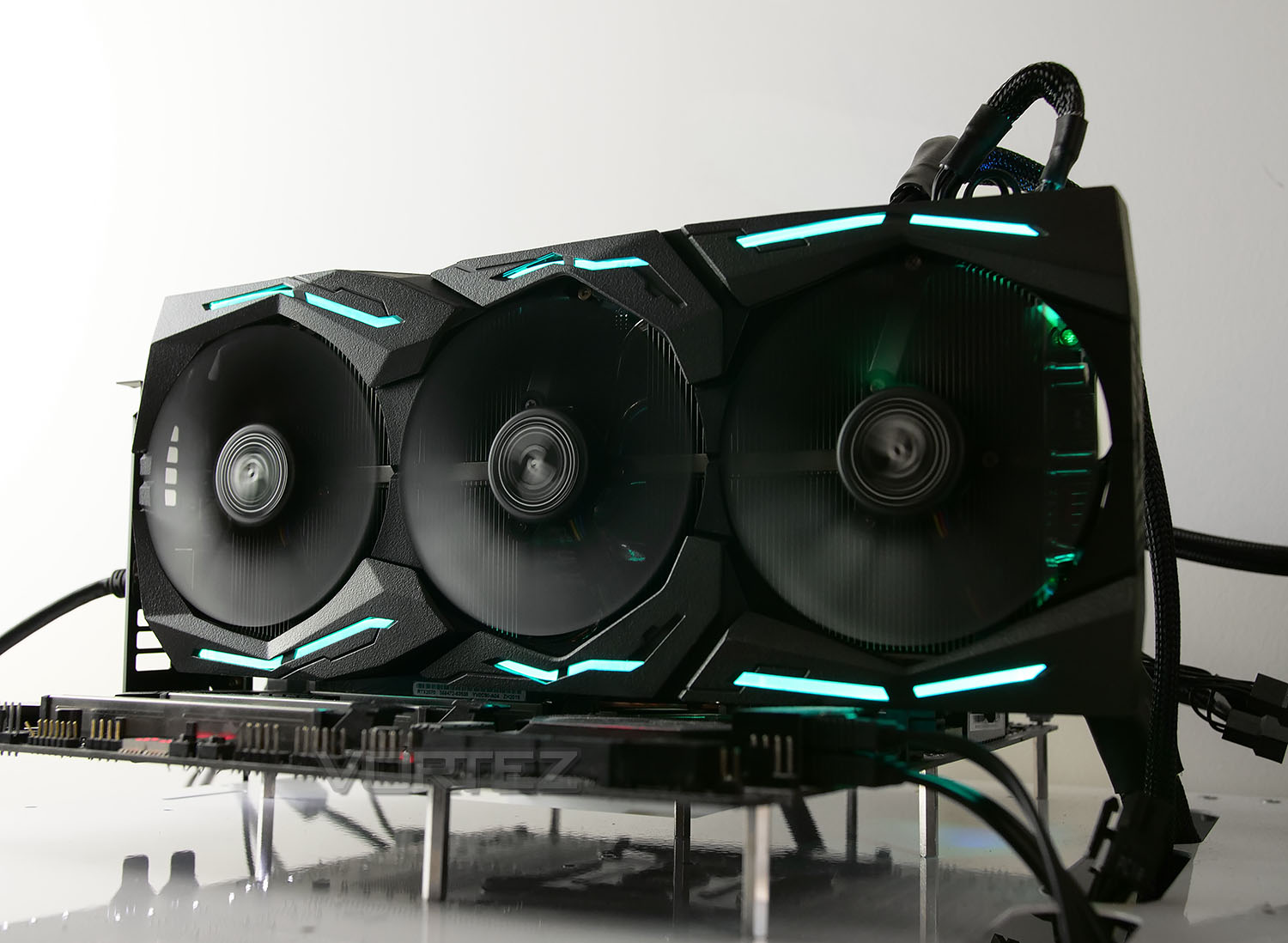
Nevertheless, ROG’s Strix RTX 2070 OC variant is a considerable step up in specifications, expected performance and price over even NVIDIA’s Founders Edition. Most obvious is the now familiar Triple-Fan cooler with RGB LED lighting, a hallmark of Strix GPUs for a couple of generations now, but with a maximum boost clock of 1845MHz it will (on paper) wipe the floor with the vast majority of its rivals.
You might be expecting an outlandish price alongside cutting-edge performance, but in this instance the premium isn’t quite so eye-watering. The ROG GeForce Strix RTX 2070 OC is currently available in the US for $629, only $30 more than the less well-appointed Founders Edition. However UK pricing is far less comfortable as the card sits at £669 inc. V.A.T.. Despite this, a multitude of aggressive launch deals being available mean you certainly shouldn’t discount ROG’s top-end RTX 2070 out of hand.
And now, without further ado, it’s time to take a deeper look at this card’s technical specifications and features.
ASUS ROG on STRIX RTX 2070 OC
The ROG Strix GeForce RTX™ 2070 teams up NVIDIA®’s A-list GPU with an elite cast of specialists, setting the stage for epic gaming action. Gargantuan power delivery provides the muscle to push overclocking boundaries, while cooling that’s honed to perfection keeps the spotlight squarely on Turing™’s performance. And with an arsenal of utilities that allow you to customize and tweak this extreme hardware, you call the shots.
Technical Specifications
Below are the technical specifications surrounding RTX 2070 OC supplied directly by ASUS:GPU
RTX 2070 (TU106)
Stream Processor
2304
Video Memory
8GB GDDR6
Memory Bus
256-bit
Engine Clock
1410MHz
Engine Clock Boost
Gaming Mode: 1815MHz
OC Mode: 1845MHz
Memory Clock
1750MHz – 14000MHz Effective
PCI Express
3.0
Display Outputs
2x DisplayPort 1.4
2x HDMI 2.0b
1x USB 3.1 Type-C
Recommended Power Supply
550W
DirectX
12 API feature level 12_1
OpenGL
4.6
Cooling
Triple-fan solution
Slot Size
2.5
Supported OS
Windows 10
Card Length
305 x 130 x 49 mm
RTX 2070 (TU106)
Stream Processor
2304
Video Memory
8GB GDDR6
Memory Bus
256-bit
Engine Clock
1410MHz
Engine Clock Boost
Gaming Mode: 1815MHz
OC Mode: 1845MHz
Memory Clock
1750MHz – 14000MHz Effective
PCI Express
3.0
Display Outputs
2x DisplayPort 1.4
2x HDMI 2.0b
1x USB 3.1 Type-C
Recommended Power Supply
550W
DirectX
12 API feature level 12_1
OpenGL
4.6
Cooling
Triple-fan solution
Slot Size
2.5
Supported OS
Windows 10
Card Length
305 x 130 x 49 mm
The Turing TU106 GPU
At the heart of each GeForce RTX 2070 is a full-fat TU106 GPU, designed according to NVIDIA’s Turing microarchitecture. NVIDIA have opted to manufacture the GPU with TSMC’s 12nm “FFN” lithographic process, an optimisation of the 16nm process used to such great effect by the GTX 10-series in 2016/17.
Turing’s relative complexity has made it a large, power-hungry GPU compared with the previous generation. Keeping temperatures and voltages under control is a far more difficult task, but the adoption of the optimised process, more rugged power delivery and comprehensive twin-axial-fan cooling system on the Founders Edition has thus far kept other members of this generation within sensible bounds. It’s hoped that the RTX 2070 in particular may have plenty of overclocking headroom to satisfy enthusiasts.
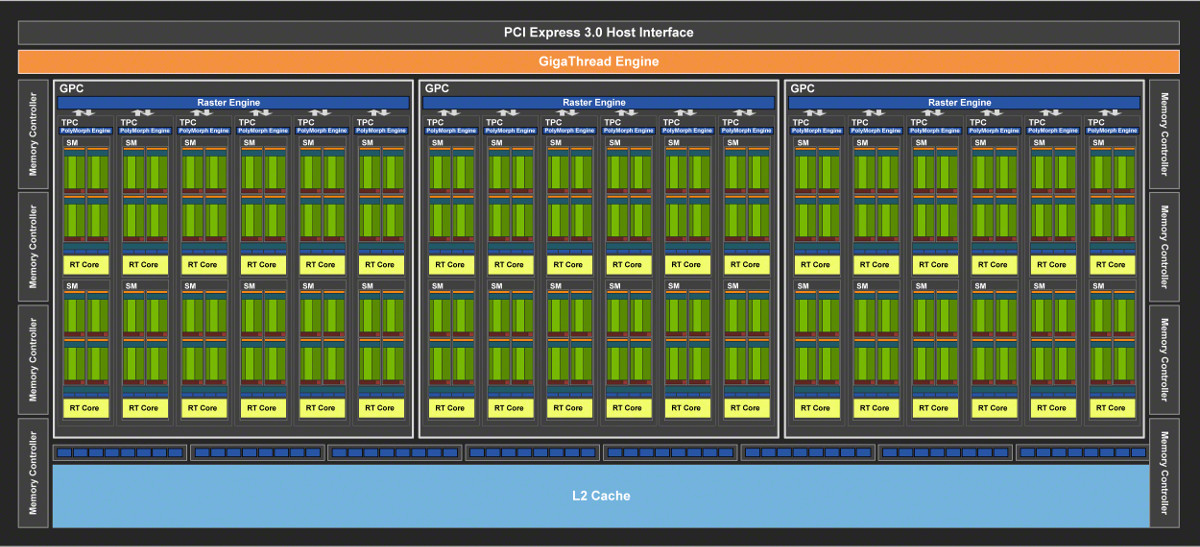
TU106 Block Diagram
Like the TU102 and TU104, the TU106 is currently exclusive to just one graphics card model: the RTX 2070. Notably, NVIDIA’s *70 lineup has typically been the entry point into enthusiast gaming – catering to resolutions 1440p and above as well as offering 2-way SLI. The GTX 970 and 1070 before it have been star performers in their class, once or twice gaining recognition as the ‘gaming sweet-spot’ in NVIDIA’s often rather expansive range. Nonetheless the use of the Turing TU106 represents a slight re-alignment of NVIDIA’s production strategy: in the previous generation the *106 model catered to the mid-range, i.e. the GTX 1060 and below; this is the first time a *106 part has been present in the upper-midrange of NVIDIA’s GPU lineup.
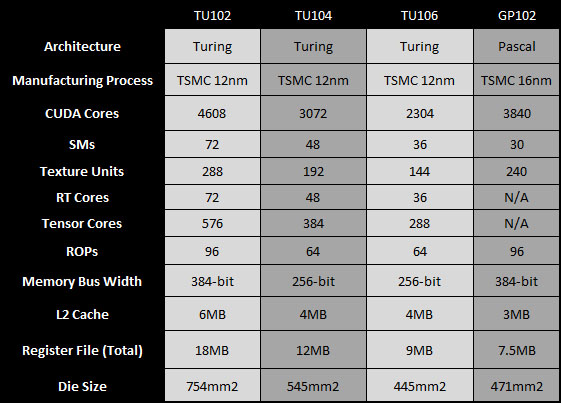
The TU106 is markedly smaller than both the flagship TU102 and TU104. It’s equipped with 36 shader modules, i.e. 2304 CUDA cores, 64 ROPs and 144 Texture Units, which all told is 50% of the TU106 and 75% of the TU104. However it does compare favourably with the GTX 1070, which was decked out in the only 1920 CUDA Cores, and is almost on par with the GTX 1070 Ti’s 2432 CUDA cores.
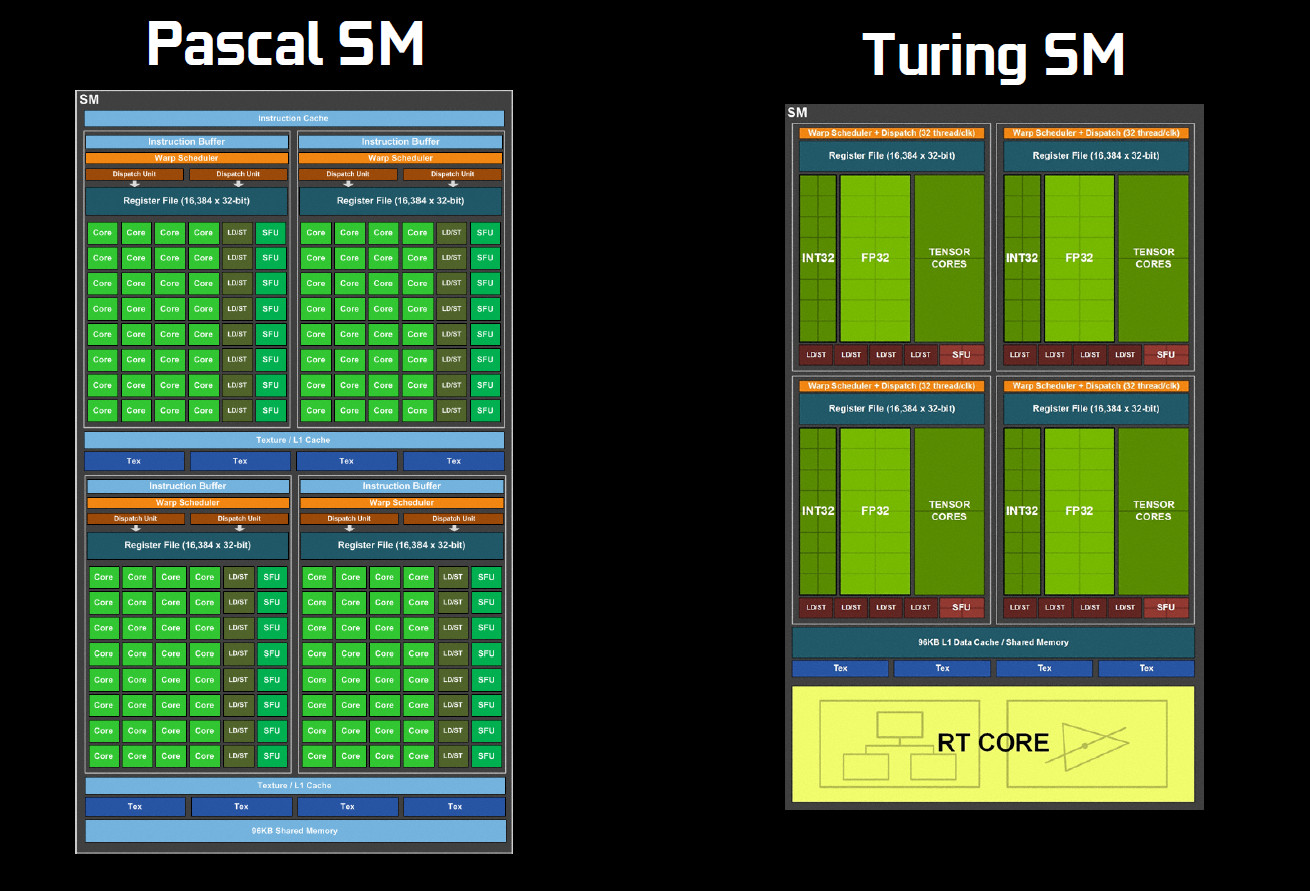
As you can see, the Pascal Shader Module is very different to the Turing SM. The primary differences are the introduction of Tensor and RT cores, greatly increasing the size and complexity of each SM, but each individual SM has fewer CUDA cores as well. Turing Tensor Cores are extremely capable at mixed precision workloads, and by natively supporting INT4 operations are well suited to the task of inferencing. The RT Core by comparison is dedicated to optimizing the process of raytracing, and thanks to this dedicated hardware accelerates the process tenfold over the previous generation on a like-for-like basis.
NVIDIA’s RTX 2070 has a full-fat TU106 at its heart, and there is one aspect in which the TU106 clearly surpasses the previous generation: memory. With 8GB of GDDR6 memory running at 14Gbps through a 256-bit bus, the card has a memory bandwidth of 448GB/s compared to 244GB/s on the GTX 1070 with GDDR5. In theory, that will help keep frame rates high when running with high resolutions (above 1440p) and image quality settings.
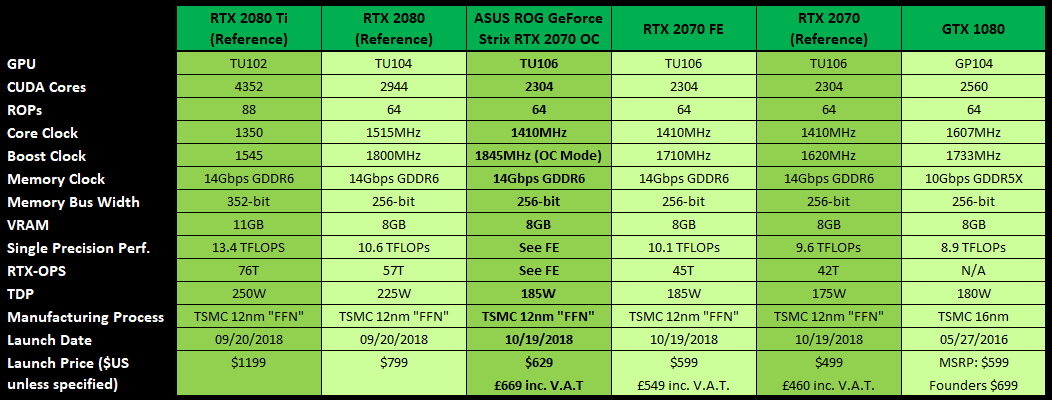
GeForce RTX 20-Series Comparison
Despite the mainstream specifications of the TU106, the GPU is still a large one when viewed through the lens of the previous generation. At 445mm^2 it’s only 26mm^2 smaller than the GP102, the GPU used in the flagship GTX 1080 Ti. Its size is due to the additional new components present on the GPU die (as well as more L2 cache) which enable NVIDIA-exclusive features such as RTX raytracing and the exploitation of deep learning inferencing techniques through DLSS.
For all the new technology on display, the jury is still when it comes to NVIDIA RTX features. At present the RTX 2070 is the cheapest buy-in point for features such as realtime raytracing and Deep Learning Super Sampling support, but so far no games with them enabled have been released. Furthermore the RTX 2070 reference spec is capable of only 42 RTX-OPS compared to 72 RTX-OPS on the 2080 Ti, a considerable step-down in theoretical performance even when measured using NVIDIA’s own metrics.
Additional Improvements
UPDATED CACHE & SHARED MEMORY ARCHITECTURE
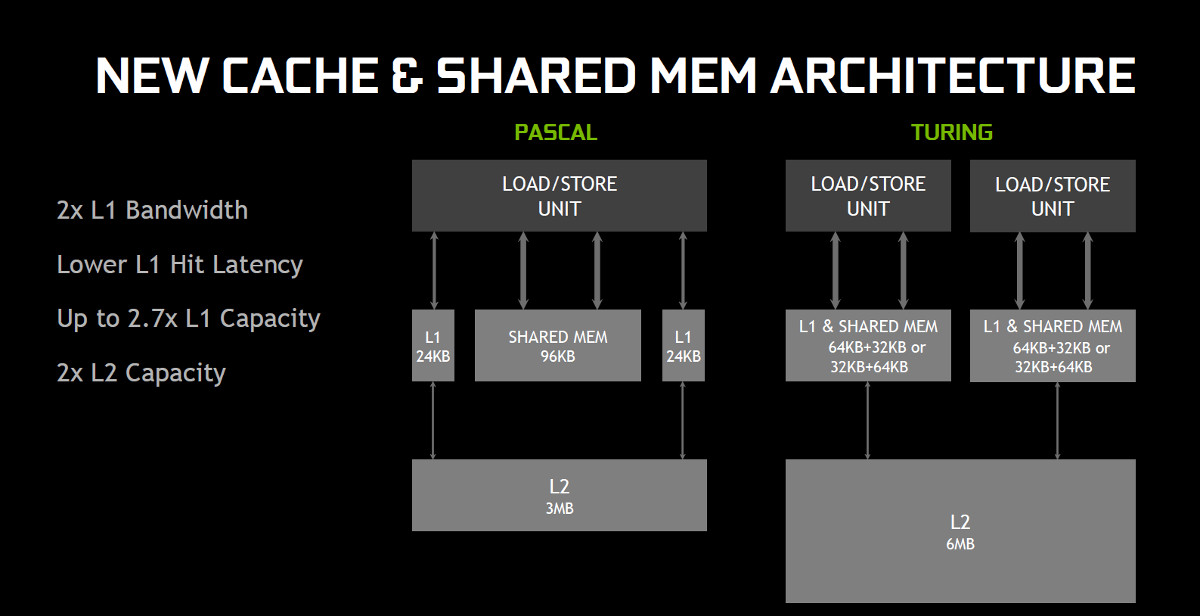
Turing implements further optimisations to the cache and share memory system, probably partly as a consequence of making more data available to these new processor components.
Due in part to this NVIDIA claim ~50% improved performance per core when shading, although not all that improvement will be immediately reflected in final frame rates.
NEXT-GEN MEMORY
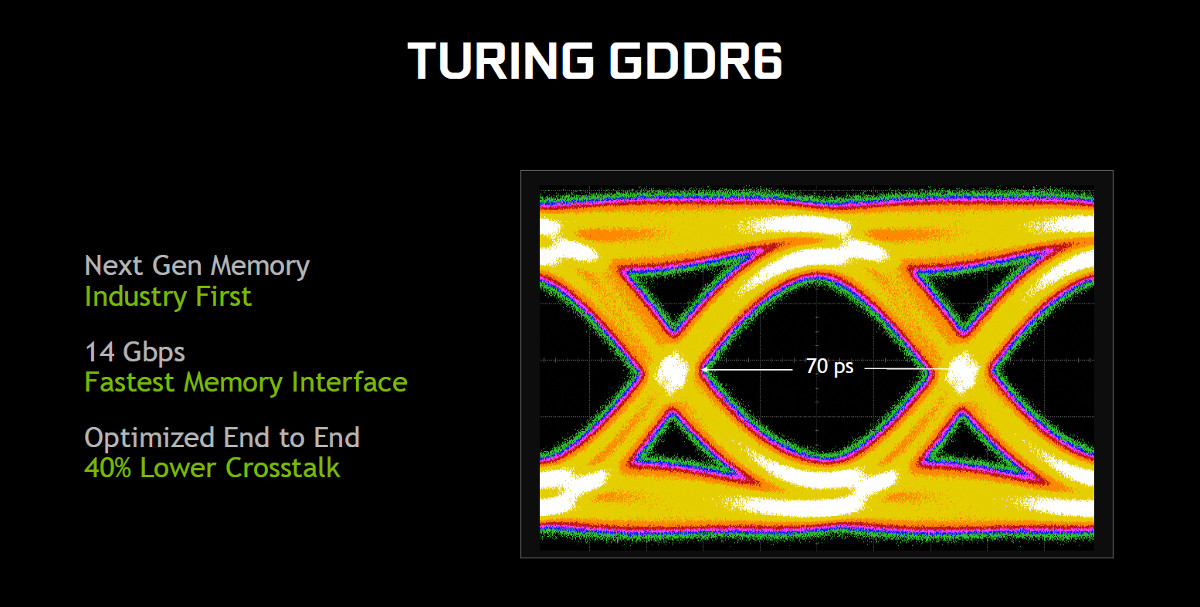
In another industry first Turing debuts GDDR6 support, replacing GDDR5X VRAM seen on the high-end Pascal cards. This memory interface is considerably faster than GDDR5 and GDDR5X, rivalling HBM memory in the amount of bandwidth is supplies to the GPU. End-to-end optimization also lowers crosstalk, improving stability.
The higher effective memory bandwidth available to Turing GPUs – measured by NVIDIA to be on the order of 50% – will be particularly useful at higher resolutions and image quality settings. The GTX 1080 Ti was always a solid 4K gaming GPU with moderate image quality settings; just how far can the RTX 2080 Ti go?
VIRTUALLINK
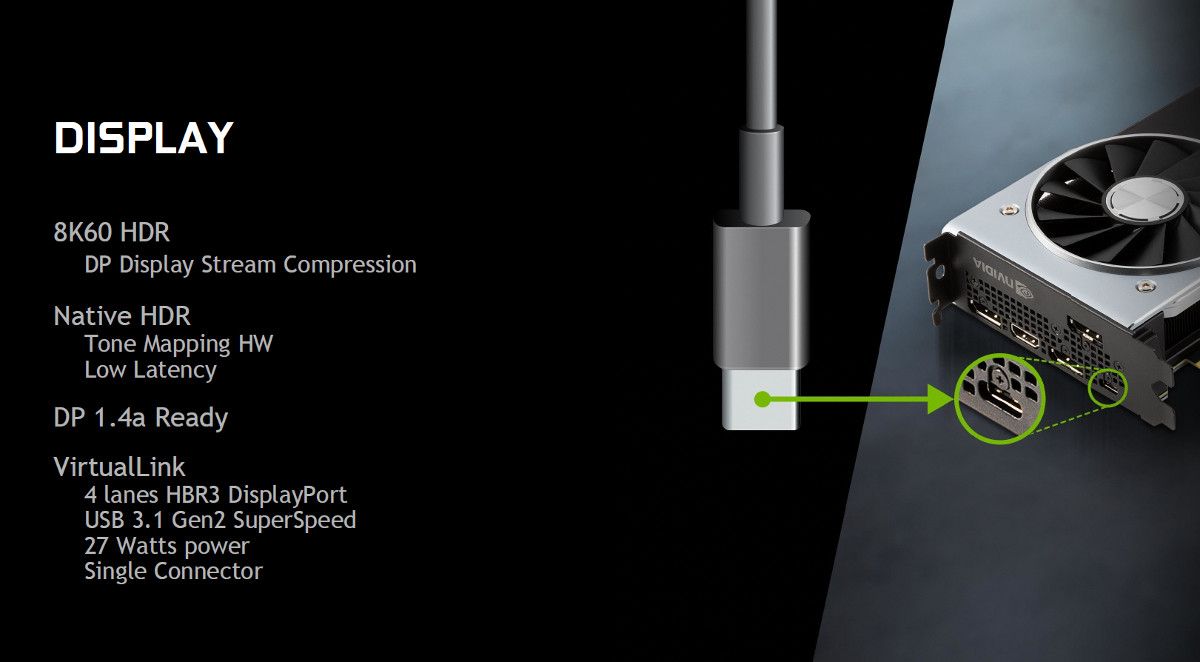
Unveiled earlier this year by a consortium of stakeholders in the VR industry, VirtualLink is a new standard for single-cable connections to VR Head-Mounted Displays. In incorporates data, power and display lines into a single compact connector that’s a slight twist on the USB Type-C specification.
As well as USB 3.1 Gen2 data lines, the VirtualLink standard supports four lanes of HBR3 DisplayPort and can supply up to 27 Watts of power. It will reduce the number of trailing cables between PC and HMD to one, and should also reduce cost over time.
The GeForce RTX 20-Series graphics cards are the first in the market to support the VirtualLink standard, well ahead of HMDs that are compliant with it. That’s certainly going above and beyond to future-proof the card, but we wonder if a header and front-panel-connector approach may not be the final iteration of this emerging standard.
You can read more about VirtualLink at https://sites.google.com/view/virtuallink-consortium/home
Features – DLSS
WHAT IS RTX?
Let’s be clear: RTX does not mean ‘Real-time Raytracing’. This misunderstanding has been bubbling underneath the surface since Jensen’s original reveal of the new GPU architecture at Gamescom, and needs to be dispelled. RTX is in fact an umbrella term of a raft of new rendering techniques – some announced, some still in the pipeline – which rely on NVIDIA RTX-class hardware to execute. Think of it as being a bit like GameWorks, only the hardware it can be run on is even more restrictive.To their credit, by making RTX part of the graphics card branding the end-user should be in an excellent position to know whether a particular feature will run on their hardware. At a time when we’re often critical of hardware manufacturers using opaque terminology and naming schema that can potentially confuse consumers, it’s really a breath of fresh air to see NVIDIA take this step.
NVIDIA’s Raytracing and Deep Learning Super-Sampling (DLSS) are two of the techniques that sit under the RTX umbrella. These leverage RT Cores and Tensor Cores which together are hardware components currently unique to the Turing architecture.
DEEP LEARNING SUPER-SAMPLING
In today’s games a rendered frame usually isn’t the final image that you see on screen. This frame also undergoes post-processing to remove artefacts generated by the rendering process, the most well-understood of which is the jagged edges brought about by aliasing. These post-processing techniques, including anti-aliasing, are quite expensive computationally but cheaper than rendering at a higher than needed higher resolution and averaging the pixels down.But how about instead leveraging the enormous power of Neural Networks to sharpen the image, perhaps even side-stepping many of the known weaknesses of traditional anti-aliasing techniques? Deep Learning Super-Sampling is just such a technique.
As it turns out image processing has been one of the early success stories for Neural Network development, a field that NVIDIA has lead with continued improvements to their hardware architecture and developer tools. Deep Learning Super-Sampling, or DLSS for short, begins before players even load up the game. The game developer supplies NVIDIA with a beta build of the game – it doesn’t need to be 100% bug-free, but should be able to render frames representative of the final in-game experience. NVIDIA use this to generate thousands of reference images, rendered at the ‘gold standard’ image quality of 64x supersampling.
“64x supersampling means that instead of shading each pixel once, we shade at 64 different offsets within the pixel, and then combine the outputs, producing a resulting image with ideal detail and anti-aliasing quality.”
These reference frames are used alongside raw captured images rendered at the same time to train a DLSS neural network which, when presented with a raw captured image, can generate an output that matches the 64x supersampled reference. The process of training the neural network is iterative, and utilises a technique known as back-propagation to adjust weights in the network with each iteration.
The final DLSS network is one that has learned to produce images which closely approximate the 64x supersampled reference, which is good. However it also sidesteps the problems of traditional anti-aliasing such as issues with transparencies and blurring, which is even better.
So that’s the hard part done, and it has only required the power of super-computer to do it. If you think super-sampling is hard, it’s got nothing on training a neural network. But the powerful aspect of DLSS is that this trained neural network can be shared and run on inferencing hardware, i.e. a GPU. You’re not training any more, and inferencing is much quicker.
So the DLSS network, trained for scenes in one or a narrow selection of games, is supplied to GPUs via the driver download system. When running the game the GPU takes each rendered frame and runs it through the DLSS network with a single input image as reference, outputting a finished image that’s far higher quality than the rendered frame. Plus, with NVIDIA RTX inferencing with the network is actually exceptionally fast as it leverages the Tensor cores of the Turing GPU.
Unlike some post-processing techniques DLSS needs a few tweaks to the game prior to implementation, and of course the DLSS neural network needs to have been generated by NVIDIA. At present there are two means to see it in action – the Epic Infiltrator demo, and a Final Fantasy DLSS demo. So far it’s been announced that developers from a multitude of studios are working to integrate it into 25 games:
– Ark: Survival Evolved from Studio Wildcard
– Atomic Heart from Mundfish
– Dauntless from Phoenix Labs
– Fractured Lands from Unbroken Studios
– Final Fantasy XV from Square Enix
– Hitman 2 from IO Interactive / Warner Bros.
– Islands of Nyne from Define Human Studios
– Justice from NetEase
– JX3 from Kingsoft
– MechWarrior 5: Mercenaries from Piranha Games
– PlayerUnknown’s Battlegrounds from PUBG Corp.
– Remnant: From the Ashes from Arc Games
– Serious Sam 4: Planet Badass from Croteam / Devolver Digital
– Shadow of the Tomb Raider from Square Enix/Eidos-Montréal/Crystal Dynamics/Nixxes
– The Forge Arena from Freezing Raccoon Studios
– We Happy Few from Compulsion Games / Gearbox
– Darksiders 3 by Gunfire Games / THQ Nordic
– Deliver Us The Moon: Fortuna by KeokeN Interactive
– Fear the Wolves by Vostok Games / Focus Home Interactive
– Hellblade: Senua’s Sacrifice by Ninja Theory
– KINETIK by Hero Machine Studios
– Outpost Zero by Symmetric Games / tinyBuild Games
– Overkill’s The Walking Dead by Overkill Software / Starbreeze Studios
– SCUM by Gamepires / Devolver Digital
– Stormdivers by Housemarque
– Atomic Heart from Mundfish
– Dauntless from Phoenix Labs
– Fractured Lands from Unbroken Studios
– Final Fantasy XV from Square Enix
– Hitman 2 from IO Interactive / Warner Bros.
– Islands of Nyne from Define Human Studios
– Justice from NetEase
– JX3 from Kingsoft
– MechWarrior 5: Mercenaries from Piranha Games
– PlayerUnknown’s Battlegrounds from PUBG Corp.
– Remnant: From the Ashes from Arc Games
– Serious Sam 4: Planet Badass from Croteam / Devolver Digital
– Shadow of the Tomb Raider from Square Enix/Eidos-Montréal/Crystal Dynamics/Nixxes
– The Forge Arena from Freezing Raccoon Studios
– We Happy Few from Compulsion Games / Gearbox
– Darksiders 3 by Gunfire Games / THQ Nordic
– Deliver Us The Moon: Fortuna by KeokeN Interactive
– Fear the Wolves by Vostok Games / Focus Home Interactive
– Hellblade: Senua’s Sacrifice by Ninja Theory
– KINETIK by Hero Machine Studios
– Outpost Zero by Symmetric Games / tinyBuild Games
– Overkill’s The Walking Dead by Overkill Software / Starbreeze Studios
– SCUM by Gamepires / Devolver Digital
– Stormdivers by Housemarque
Features – Real-Time Raytracing
It’s no exaggeration to say that real-time raytracing is the holy grail of graphics rendering, but has been considered to be years, perhaps decades away from being realised. The issue is that it’s inordinately complicated and computationally expensive, to the extent that movie and animation studios dedicate years and whole supercomputers to just rendering high-fidelity raytraced images. Games instead rely on rasterization and post-processing techniques to do their best approximation of a raytraced scene simply in order to generate frames in real-time.
“Reflections”, A Star Wars UE4 Demo Featuring Real-time Raytracing
For all its speed, rasterization has a number of weaknesses. Chief among these are dynamic reflections and shadows, both of which require simplifications and algorithmic tweaks to look anything like realistic, and only tend to incorporate objects within the scene. And as you’ve probably noticed, improving the rendered quality of these aspects of a scene still tends to tank frame rates. If only ray-tracing could be performed at real-time, even operating on only a few elements of a scene, realism could be improved substantially.
NVIDIA have plenty of background in GPU-accelerated raytracing, and through NVIDIA Iray plugins and the Optix engine have for years been providing tools to industries that aid in the swift generation of realistic imagery. A breakthrough allowed Volta hardware to process a realistic raytraced scene in real-time, culminating in the first public debut of the now-famous Star Wars Reflections demo running on four Volta GPUs. But even this is a far cry from operating at 60+fps on a single GPU, as expected in modern gaming applications.
NVIDIA’s Turing architecture, as it happens, advances development further through the incorporation of new many hardware-based raytracing acceleration engines known as RT Cores. An RT core is present in each Turing Shader Module module, implicitly making it a scalable technology as the GPU increases in size from the TU106 to the huge 775mm^2 TU102. But the real trick is the use of Hybrid Rendering.
” RT Cores work together with advanced denoising filtering, a highly-efficient Bounding Volume Hierarchy (BVH) acceleration structure developed by NVIDIA Research, and RTX compatible APIs to achieve real time ray tracing on single Turing GPU. RT Cores traverse the BVH autonomously, and by accelerating traversal and ray/triangle intersection tests, they offload the SM, allowing it to handle other vertex, pixel, and compute shading work. Functions such as BVH building and refitting are handled by the driver, and ray generation and shading is managed by the application through new types of shaders.”
Hybrid Rendering is a combination of both rasterization and real-time raytracing, the former used where it is optimal while the latter is used selectively where it would make the most visual impact. These could be reflections, shadows, refractions or other core elements that game developers feel is important to their game world; Battlefield 5 for instance utilises real-time raytracing to process reflections, while Shadow of the Tomb Raider apply the technology to shadows.
A critical aspect of Hybrid Rendering is that both rasterization and real-time raytracing pipelines operate in parallel rather than sequentially. Furthermore raytracing, just like rasterization, can have its complexity dialled back based on utilisation and available GPU horsepower. NVIDIA have developed de-noising filters (known as the NVIDIA Real-Time Ray Tracing Denoiser modules) which can greatly reduce the number of rays required per pixel to generate the desired visual impact, thus improving computational efficiency.
Microsoft have built raytracing into their DirectX Raytracing (DXR) extension of the DX12 API, and game engines will use these hooks to tap into NVIDIA’s hardware acceleration for raytracing. In theory it’s possible to use older GPUs for this application, but without RT cores rendering each frame would take an age; the RTX 2080 Ti is capable of processing rays 10 times faster than an GTX 1080 Ti. DXR is scheduled to roll out with the Windows Fall 2018 Update, after which games can implement the technology and NVIDIA can begin to unlock the functionality at the driver level.
So far eleven games have been announced to be incorporating elements of raytracing through DXR and NVIDIA RTX technologies:
– Assetto Corsa Competizione from Kunos Simulazioni / 505 Games
– Atomic Heart by Mundfish
– Battlefield V from DICE
– Control from Remedy Entertainment / 505 Games
– Enlisted by Gaijin Entertainment/Darkflow Software
– Justice from NetEase
– JX3 from Kingsoft
– MechWarrior 5: Mercenaries from Piranha Games
– Metro Exodus from 4A Games
– ProjectDH from Nexon’s devCAT Studio.
– Shadow of the Tomb Raider from Square Enix/Eidos-Montréal/Crystal Dynamics/Nixxes
– Atomic Heart by Mundfish
– Battlefield V from DICE
– Control from Remedy Entertainment / 505 Games
– Enlisted by Gaijin Entertainment/Darkflow Software
– Justice from NetEase
– JX3 from Kingsoft
– MechWarrior 5: Mercenaries from Piranha Games
– Metro Exodus from 4A Games
– ProjectDH from Nexon’s devCAT Studio.
– Shadow of the Tomb Raider from Square Enix/Eidos-Montréal/Crystal Dynamics/Nixxes
Actual implementation into the finished game may not be immediate or on launch, but NVIDIA have been forthright in the opinion that developers are extremely excited by the scope of the technology. Also, implementation might be relatively straightforward in the grand scheme of things; the Shadow of the Tomb Raider developers apparently had only a few weeks to prepare their demo for Gamescom.
Of course, this only just skims the surface of NVIDIA’s new real-time raytracing technologies. NVIDIA have additional resources available if you’re keen on delving deeper.
Closer Look (Overview)
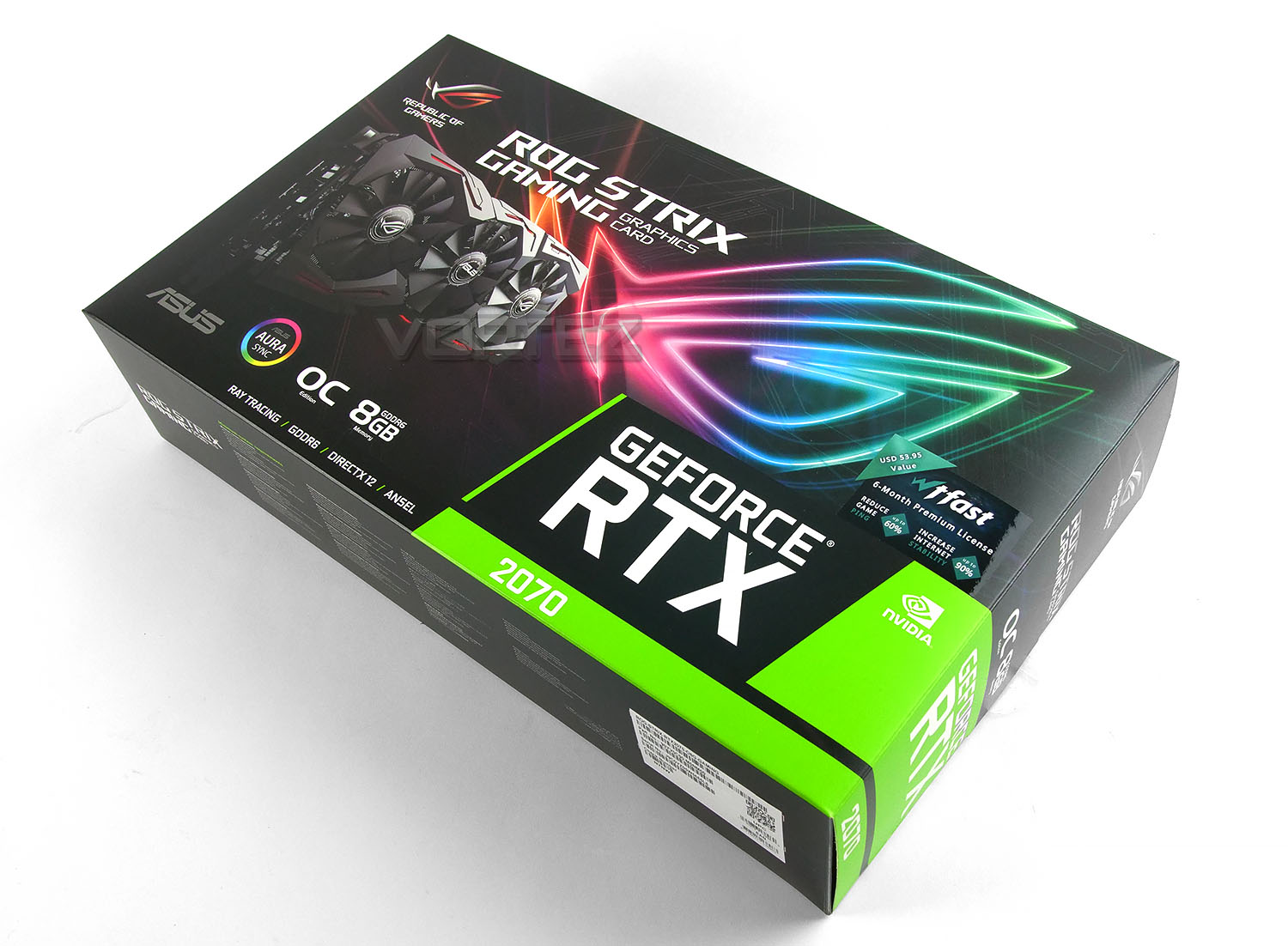
We’ve seen the packaging on numerous ROG graphics cards and the STRIX OC complies with the same regime. The box features a depiction of the card in question, ROG insignias and NVIDIA branding. Over on the reverse a deep dive into the features can be seen and within, the card is well-protected with an anti-static bag and foam padding. There are very few bundled accessories with this graphics card, in fact just an envelope and some documentation surrounding quick start/warranty.
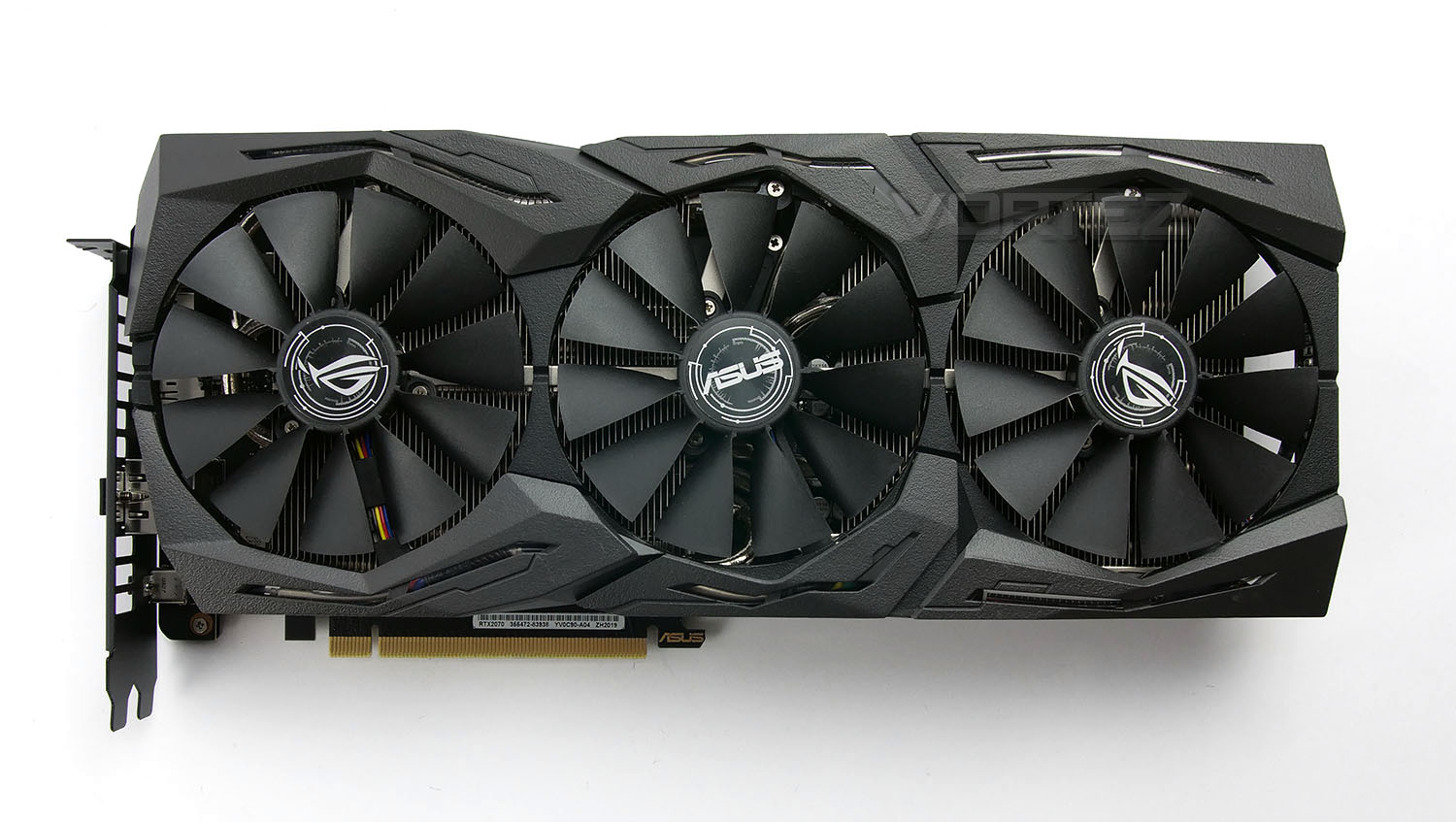
Compared with the RTX 2080 Ti, ROG has given the RTX 2070 a differing design – albeit with only minor adjustments. This graphics card is more in keeping with what we’ve already seen from the GTX 10-series – many will wonder what has actually been altered.
With the 2080 Ti the cooler makes use of Axial-tech Fans but with the 2070 we’re using the renowned Wing-blade Fans. These fans use an 11-blade design and have produced good results in the past. As we come to expect, 0db technology is implemented here, meaning the fans will stop spinning during idle state (as long as the GPU core temperature is below a specific threshold). Within the ASUS GPU Tweak II utility application, each fan can have its RPM adjusted independently rather than a blanket approach of all three. Later in the review we’ll detach the cooler for a look at its design.
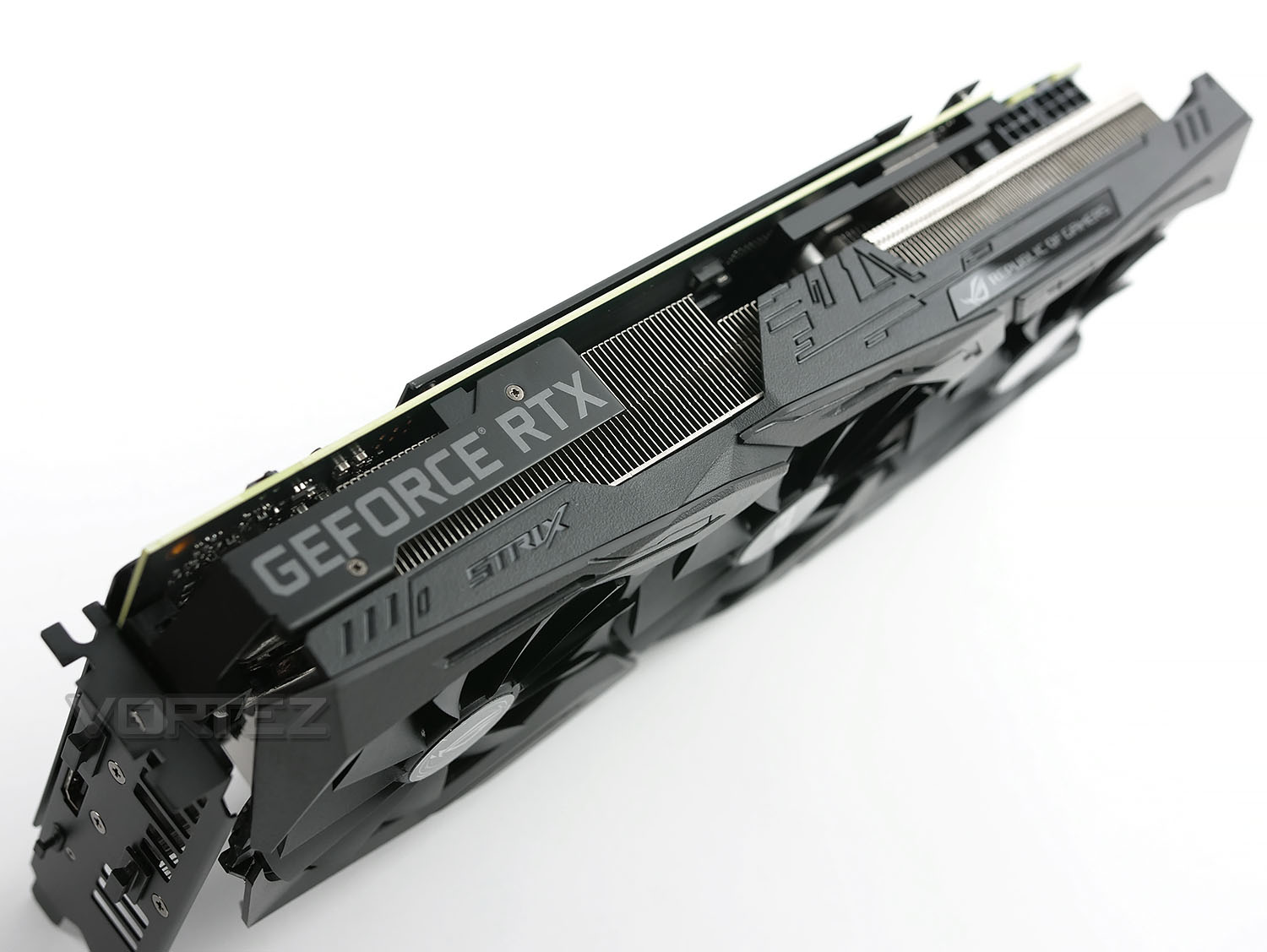
Turning the card on its side – along the edge which will be visible inside the typical system configuration, we have the ROG/STRIX motifs and the RTX lettering sits on a metal brace. This helps to keep the PCB rigid, protected and also covers internal componentry in a bid to control temperatures. We’ll see this in more detail later when we detach the cooler.
You’ll identify that there are no SLI ports on this graphics card – such a feature/technology is reserved for the RTX 2080 and RTX 2080 Ti.
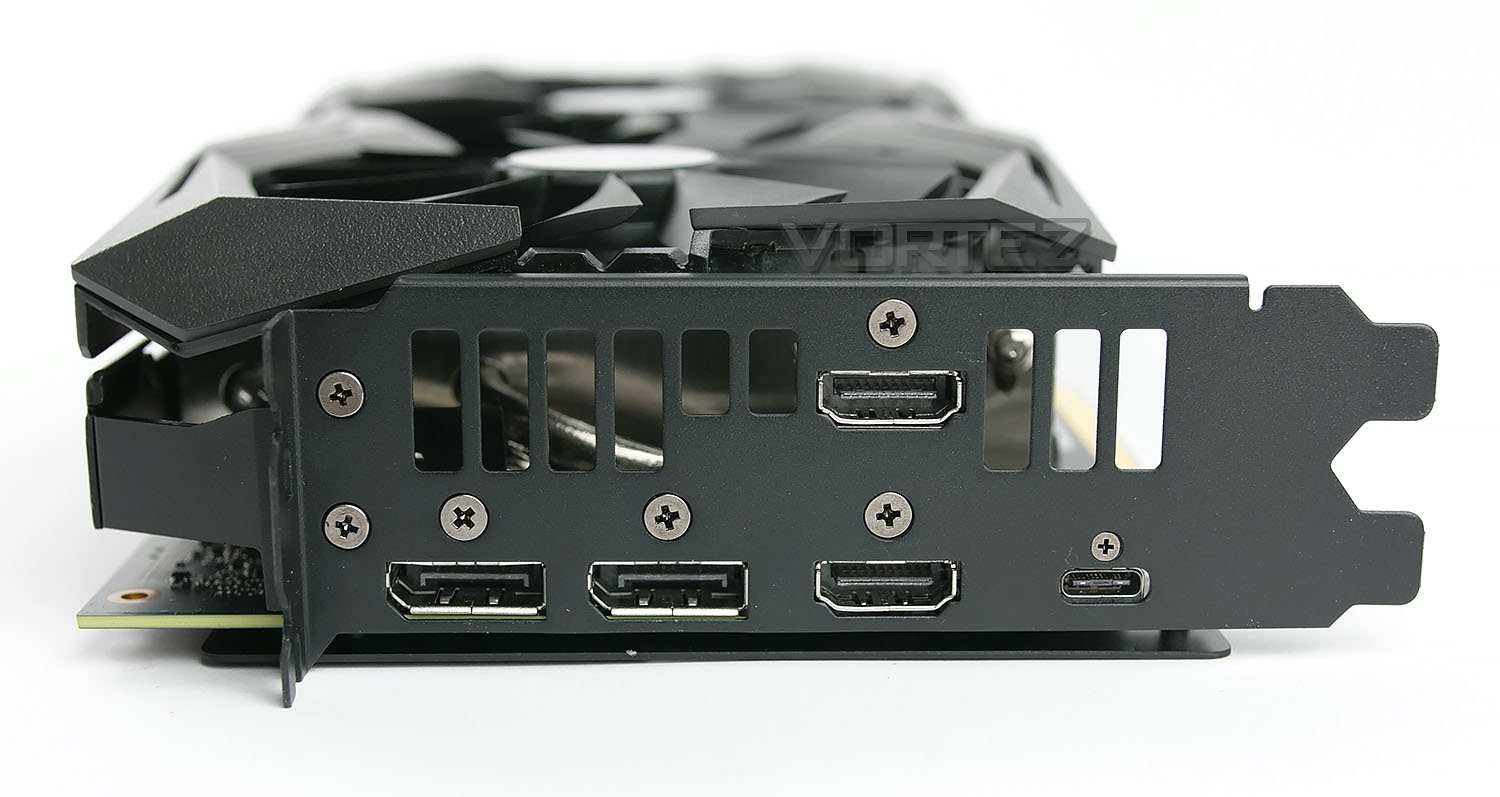
STRIX OC consumes two spaces on the computer chassis and will overhang into a third slot due to the cooler. On the Rear IO we have a selection of ports to take advantage of and these include:
2x DP 1.4
2x HDMI 2.0
1x USB 3.1 Gen 2 Type-C
On the next page we’ll continue our look at the STRIX OC.
Closer Look (Overview Cont.)
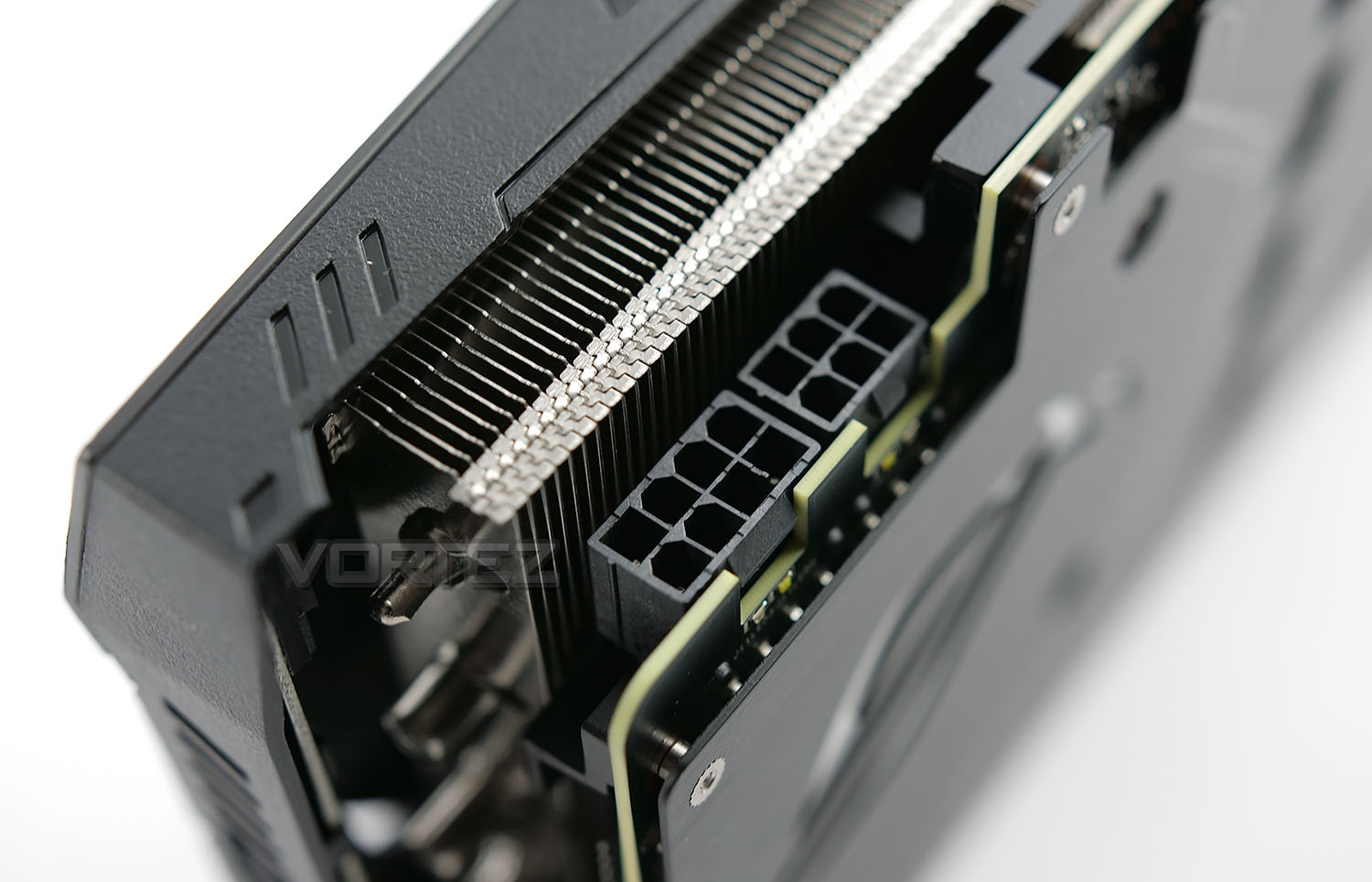
ROG recommends a 550W PSU to have this graphics card operating appropriately. Tucked away beneath the heatsink there is an 8+6-pin connector – along with some LED indicators which help to inform you if the cable from the PSU isn’t properly connected.
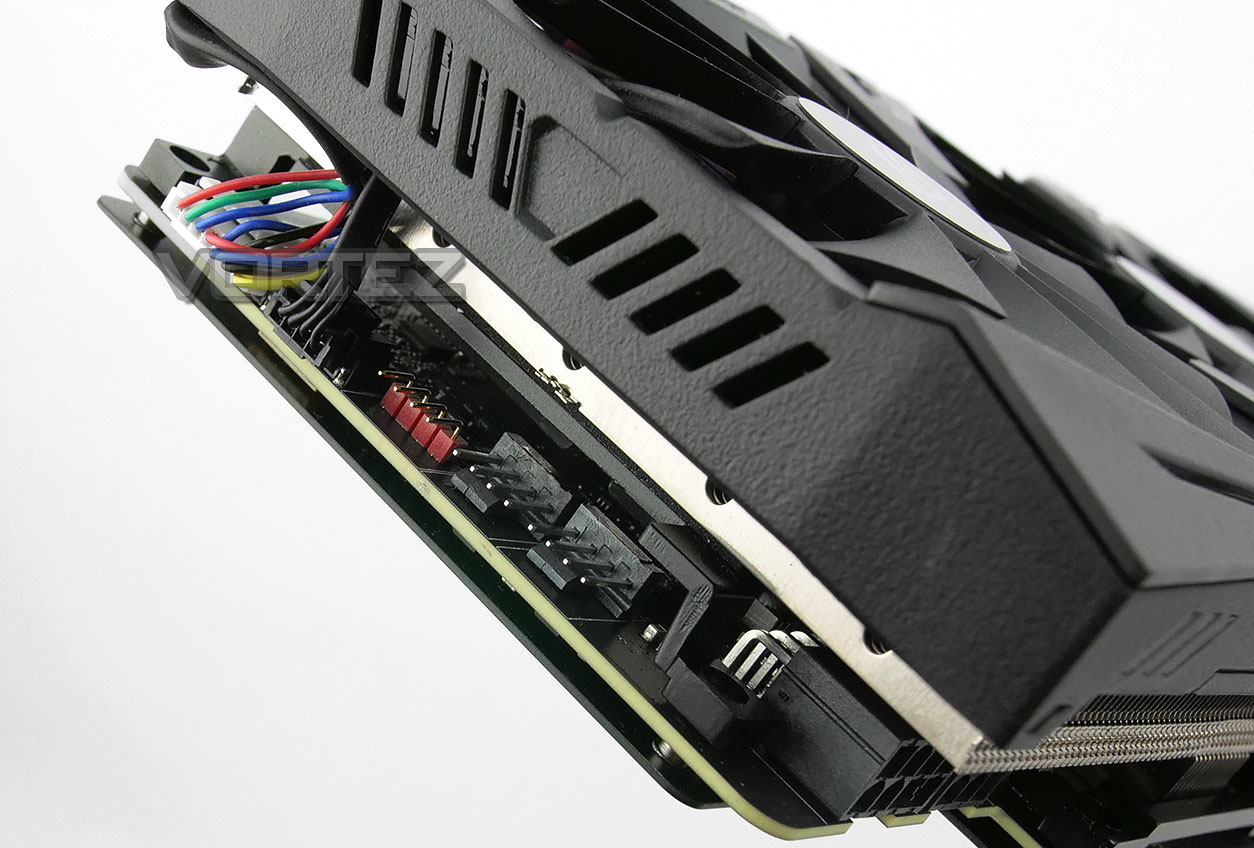
STRIX OC benefits from having three fan headers at the tail-end of the card. Two of these (black) are Hybrid-controllers headers – allowing control of PWM and DC fans. This is especially useful if you have a cooling fan blowing into the pathway of the graphics card. If the temperatures on the graphics card increase significantly, the cooling fan attached to one of these headers can spin faster to flush out unwanted heat.
The red 4-pin 12V RGB connection at the end of the PCB is an Aura RGB header and works in conjunction with ASUS software for RGB implementation.
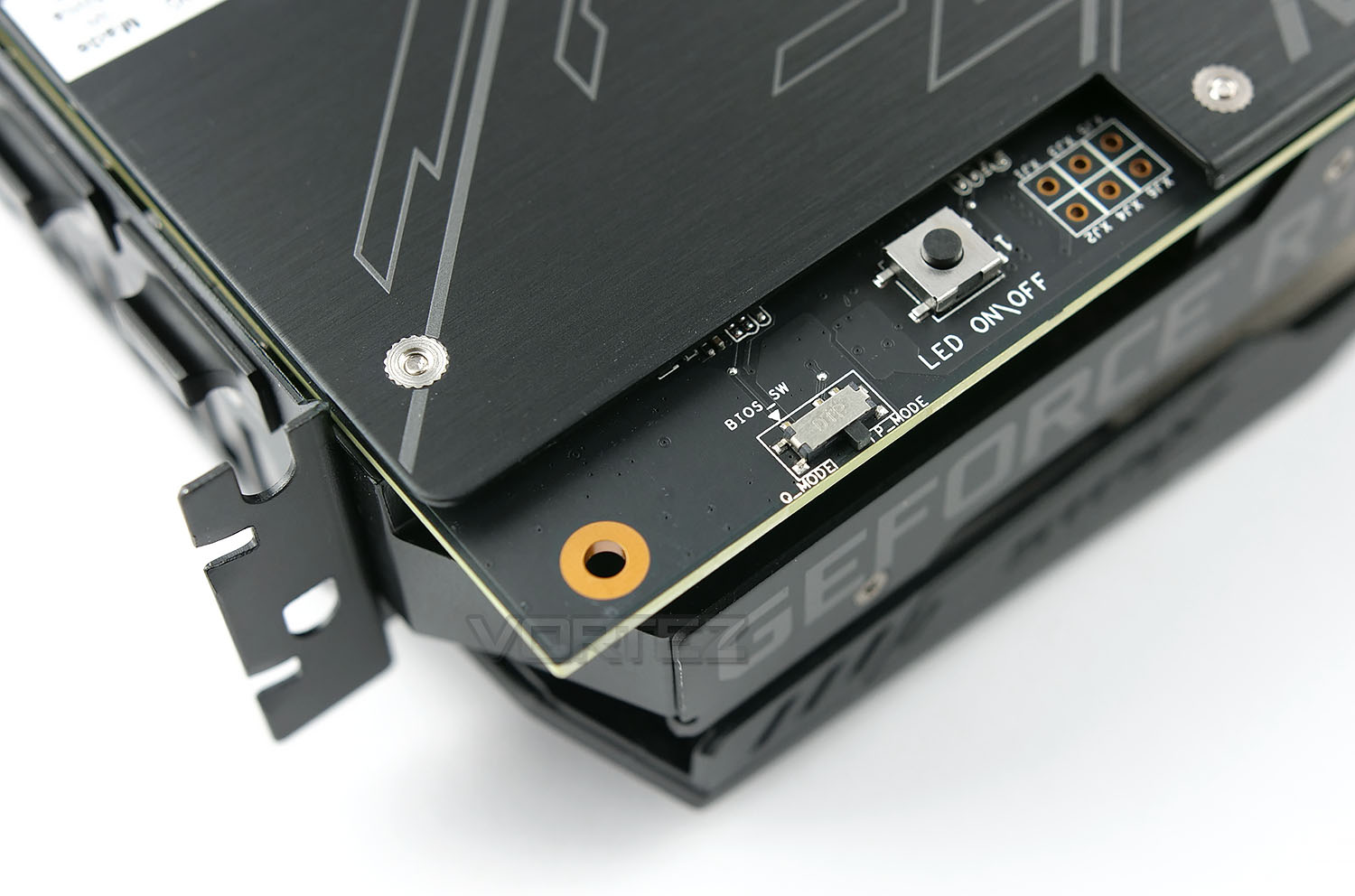
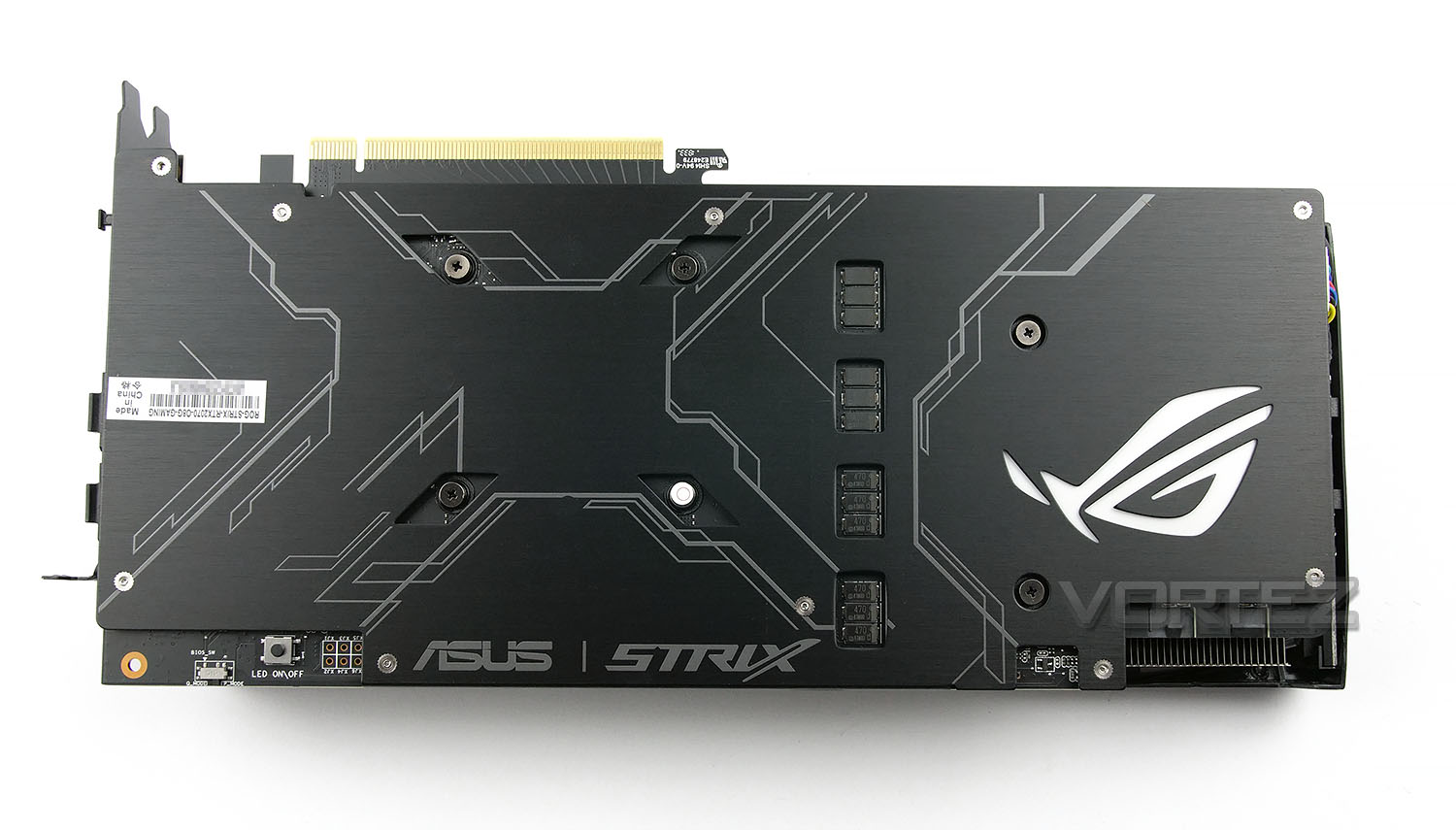
To aid accessibility, ROG has included two button/switches. The BIOS switch allows the user to shift to quiet mode or performance mode on-the-fly – without the need for software. Typically, ASUS Tweak II software would be required to shift between different modes. Performance switches off the 0db feature and has fans always spinning. Quiet Mode has fans stop under 55C.
The LED on/off button is fairly self-explanatory – users can choose to enable or disable LED lighting on the card with the touch of this button.
On the reverse of the card we have a large metal backplate which covers the entire backside of the PCB. This backplate features some RGB LED lighting (the ROG logo) which is Aura ready.
On the next page we’ll detach the cooling solution and look more closely at the internal components.
Closer Look (Detaching Cooler/Internals)
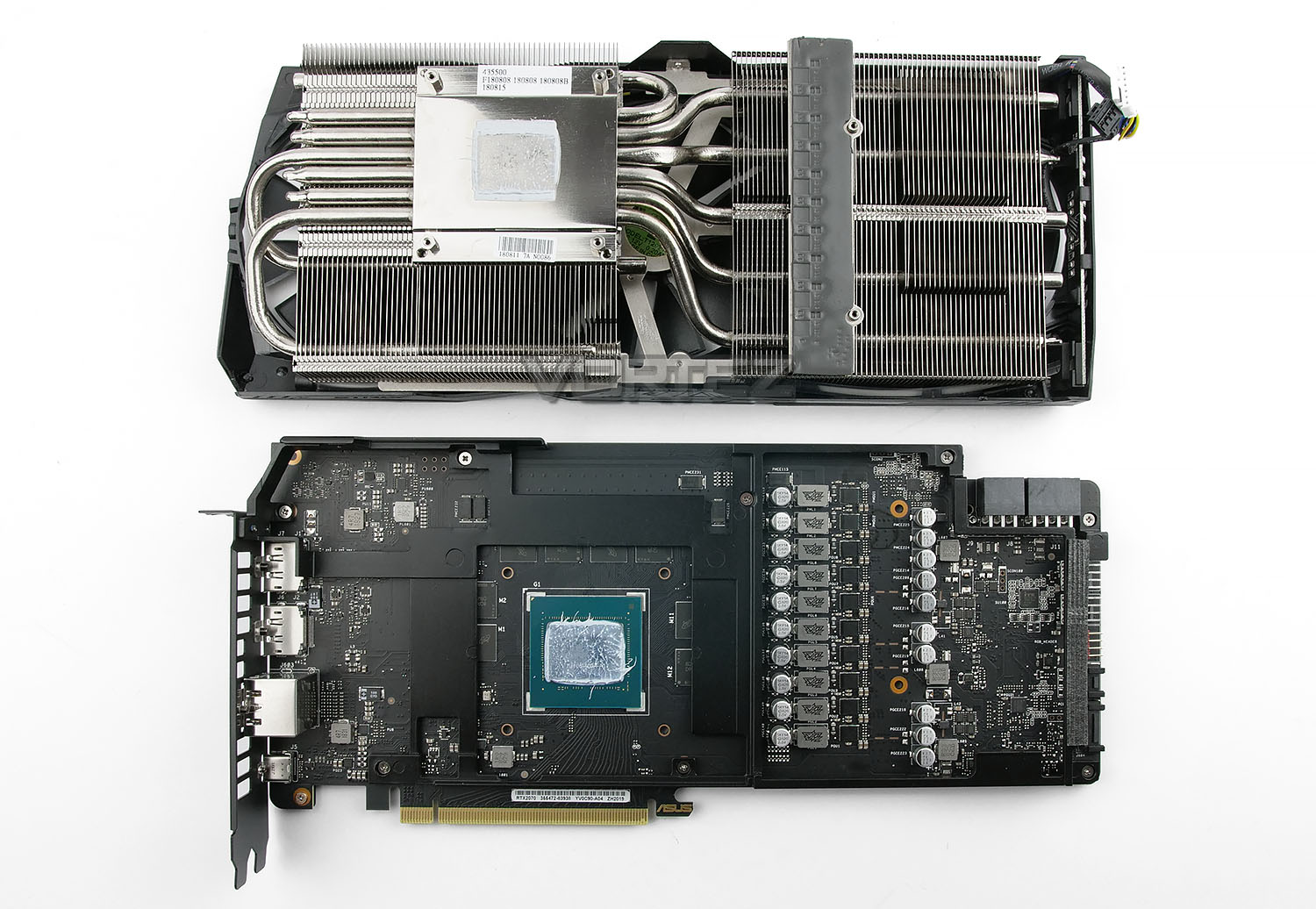
Removing the cooler from the graphics card is very simple. Just six screws hold fix the heatsink over the PCB/components. (Removing a cooler should be done at your own risk and may void warranty).
ROG is using a gigantic heatsink for this model – one which features six copper heatpipes and a dual heatsink configuration. This implementations claims that there is 2x more contact with the GPU by way of ‘MaxContact Technology’.
After initialling removing the cooler from the graphics card we can clearly see the metal brace/plate which sits over memory and other components.
The PCB ROG are using is a custom design and has been engineered using their Auto-Extreme Technology – all of the components and general construction is fulfilled via robots for tighter quality control and better precision.
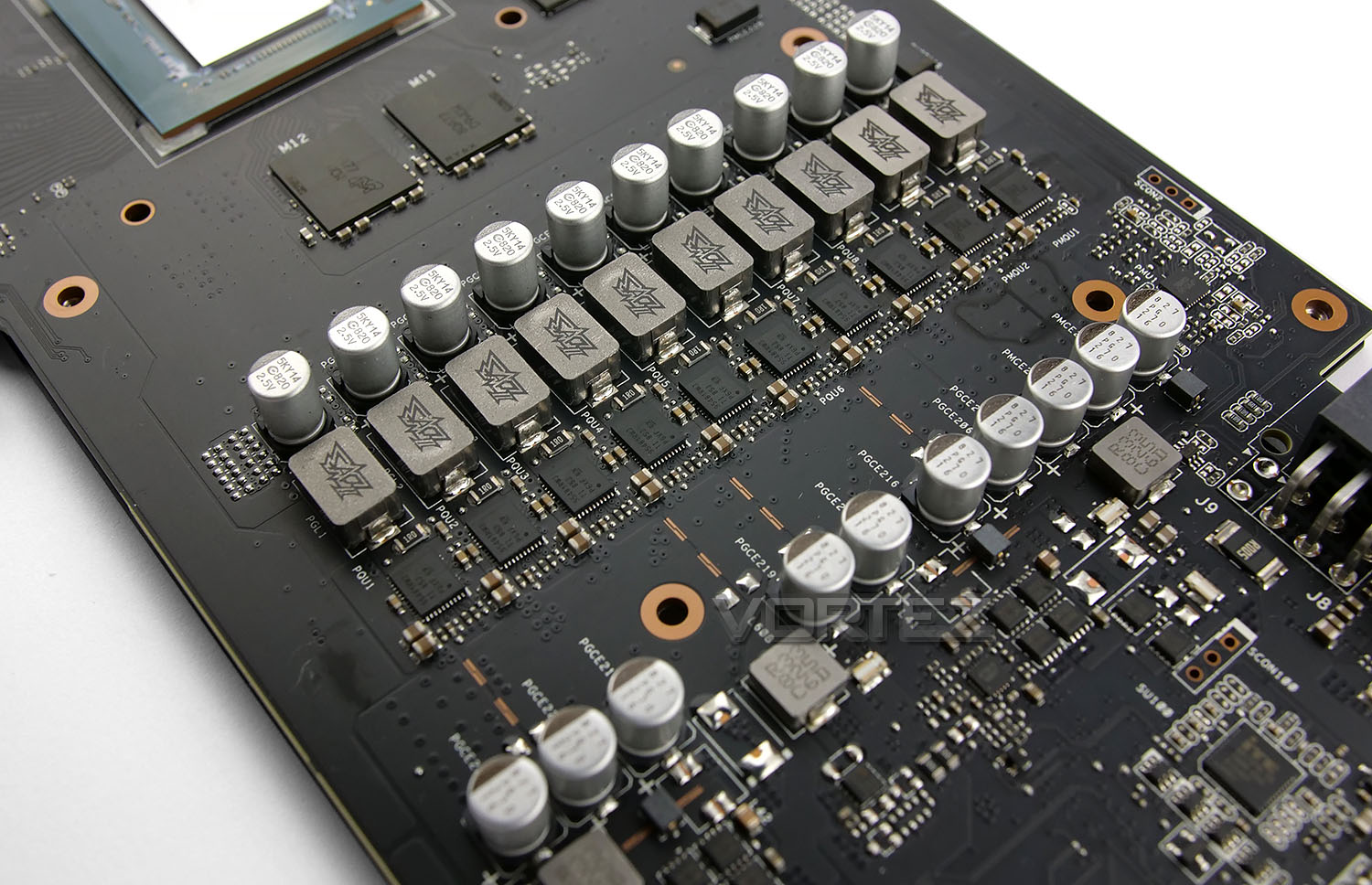
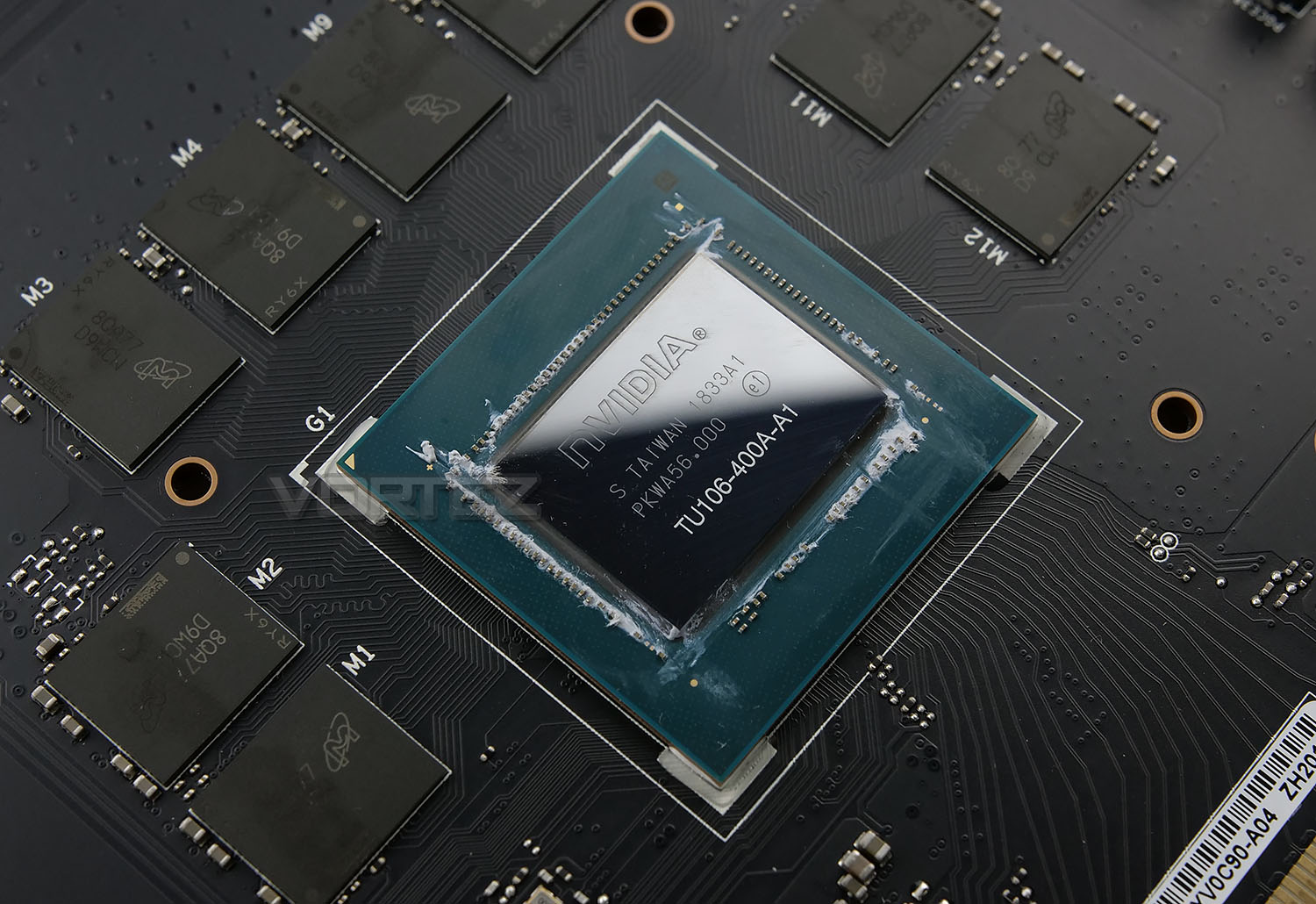
The STRIX OC features 10-phase digital design all via Super Alloy II components – Chokes, CAPs, DRMos and POSCAPs. All of which reduce noise, improve efficiency and help bring in more headroom for bigger manual overclocks.
The GPU which is effectively the beating heart of the RTX 2070 is NVIDIA’s TU106. While faster in frequency than the flagship RTX 2080 Ti (TU102) the RTX 2070 features considerably less cuda cores at 2304. The base clock sits at its default 1410MHz and can boost up to 1815MHz in ‘Gaming Mode’ or 1845MHz in ‘OC Mode’. Either of these options can be chosen in the ASUS Tweak II software. This provide a decent factory overclock from the reference boost of 1710MHz. The memory clock remains at 14Gbps.
Next we’ll be testing out the STRIX RTX 2070 OC to see how it performs!
Test Setup & Methodology
HOW WE TEST GRAPHICS CARDS
Testing a graphics card is an extremely lengthy process. We sometimes see reviews where a graphics card has been tested using out of date equipment, out of date games and even out of date drivers. While the latter can be excused due to the sheer amount of driver updates making a thorough review impossible we will however notify the reader when we have used a different driver to the normal for example a pre-release driver. For the most part however we will always use the same hardware and latest drivers so this does certainly need to be taken into consideration when viewing our testing results. Each game and benchmark is tested times with the lowest and highest scores omitted out of the 5 results and the average then taken from the three remaining to give us our final result for each resolution and setting used.HARDWARE
Taking Intel’s High-End Desktop platform, our hardware utilises the Intel X99 chipset. Combined with this we use the Intel Core i7-5960X Extreme Edition processor clocked to a realistic and achievable 4GHz to ensure we have no CPU bottlenecks. With 16GB (4x4GB) of DDR4 at 2666MHz and a 750GB SSD there should be minimal paging so the benchmarks we run today will hopefully give a true reflection of the graphics card’s performance.Graphics Cards on test:
ASUS ROG STRIX RTX 2070 OC
MSI RTX 2080 Ti Gaming X Trio
ASUS ROG STRIX RTX 2080 Ti OC
ZOTAC GAMING RTX 2080 Ti AMP
NVIDIA GTX 1080 Ti
NVIDIA GTX 1080
NVIDIA GTX 1070
AMD Radeon RX Vega 56
Special thanks go to Acermedia, Intel, Corsair, MSI and AOC for providing the extreme spec components used for our test bench:
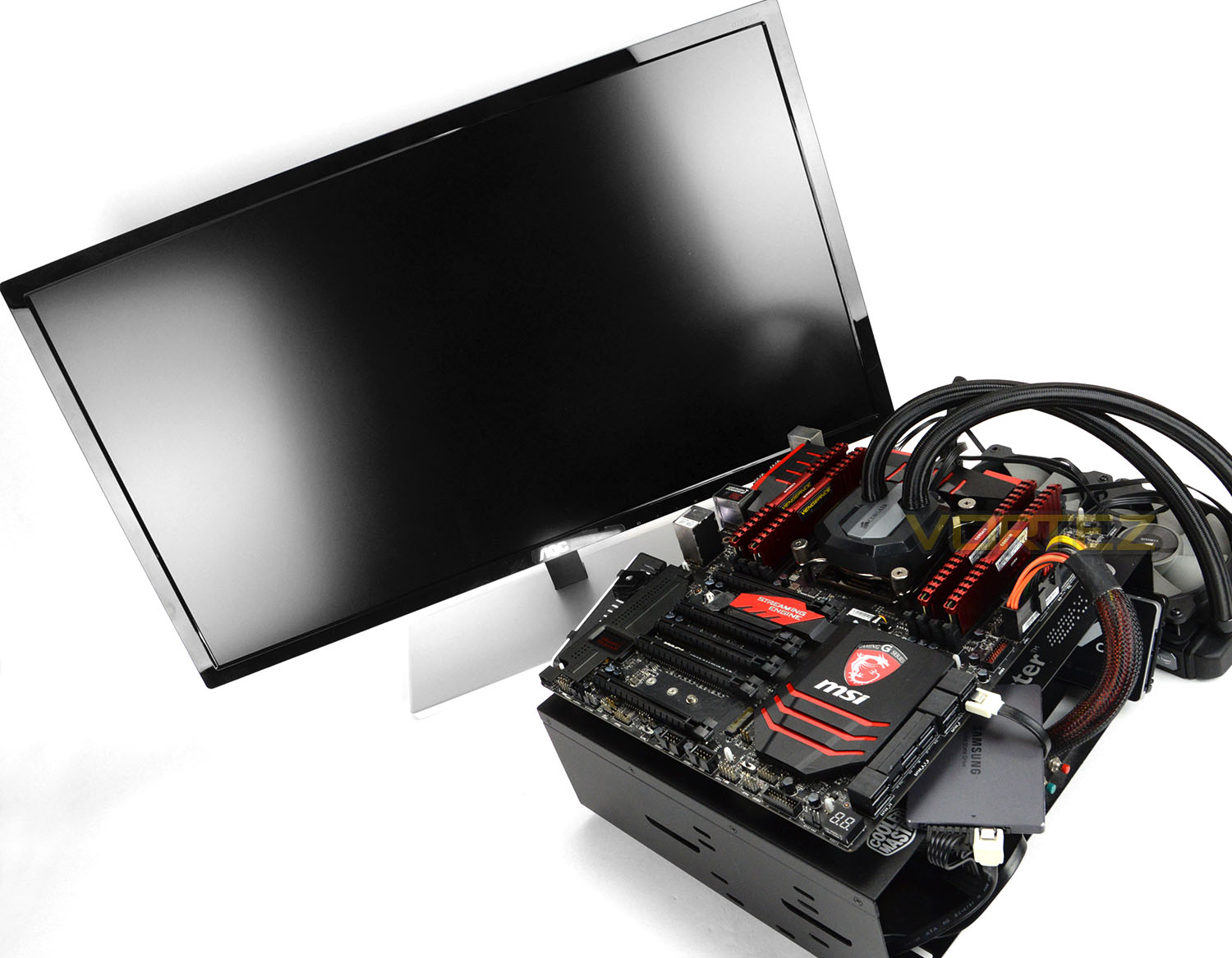
Motherboard: MSI X99A Workstation
CPU: Intel Core i7-5960X Extreme Edition @ 4GHz
RAM – 16GB (4x4GB) Corsair LPX Vengeance (Red) DDR3 @ 2666MHz 16-17-17-35 C1
Power Supply – CORSAIR HX1050
Hard Drive – Samsung 840 EVO 750GB
Cooler – CORSAIR Hydro Series™ H150i Pro 360mm Extreme Performance Liquid CPU Cooler
Monitor – AOC 28″ 4K U2879VF
Capture Card – Avermedia Live Gamer Extreme 2
CPU: Intel Core i7-5960X Extreme Edition @ 4GHz
RAM – 16GB (4x4GB) Corsair LPX Vengeance (Red) DDR3 @ 2666MHz 16-17-17-35 C1
Power Supply – CORSAIR HX1050
Hard Drive – Samsung 840 EVO 750GB
Cooler – CORSAIR Hydro Series™ H150i Pro 360mm Extreme Performance Liquid CPU Cooler
Monitor – AOC 28″ 4K U2879VF
Capture Card – Avermedia Live Gamer Extreme 2
BENCHMARKS
If you are a regular reader of our reviews you will know we like to test the latest hardware with the latest games and benchmarks on the market. Here are the games we’ve chosen:Fortnite
Middle Earth: Shadow of War
Kingdom Come: Deliverance
Shadow of the Tomb Raider
F1 2018
Middle Earth: Shadow of War
Kingdom Come: Deliverance
Shadow of the Tomb Raider
F1 2018
To capture framerates we use a combination of in-game benchmark tools and FRAPS.
We also take into consideration the benchmarkers out there so have included three of the more popular synthetic benchmarks available:
Let’s see how today’s graphics card performed…
Power, Temperatures, Acoustics
To test for power consumption, we take a measurement from the plug socket. It is important to note that the figures below represent total system power use and not just the GPU. The CPU was always in a fixed state (4GHz overclock) so did not affect the additional power load when the GPU was placed under 100% load using Heaven 4.0 which was ran for 20 minutes at which point a load reading was taken. Idle readings were taken 5 minutes after system boot to ensure any background services and applications had loaded.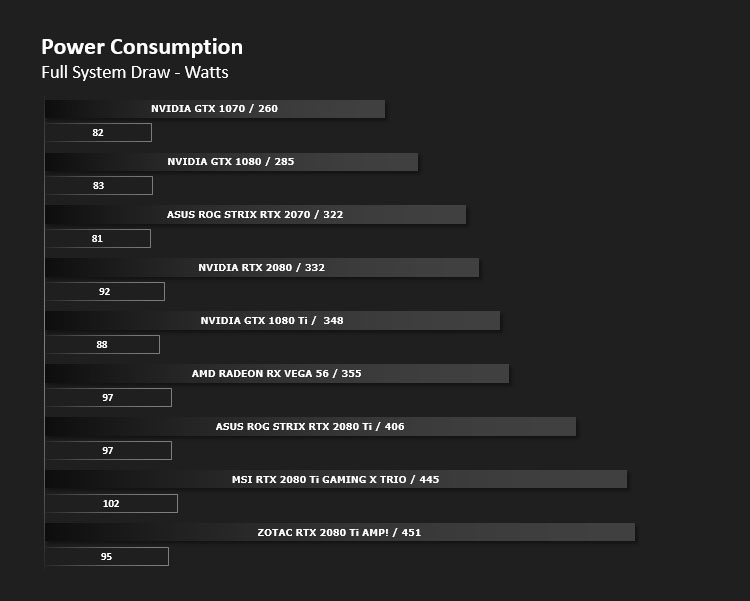
TEMPERATURE
To test temperatures we measured idle temperatures after booting windows, letting all applications finish loading and ran a few benchmarks. Once the benchmarks were complete we left the card to reach a cooling plateau where we then took the idle temperatures. For the load tests we set Heaven 4.0 running continuously for ~30 minutes recorded the peak/maximum GPU temperature.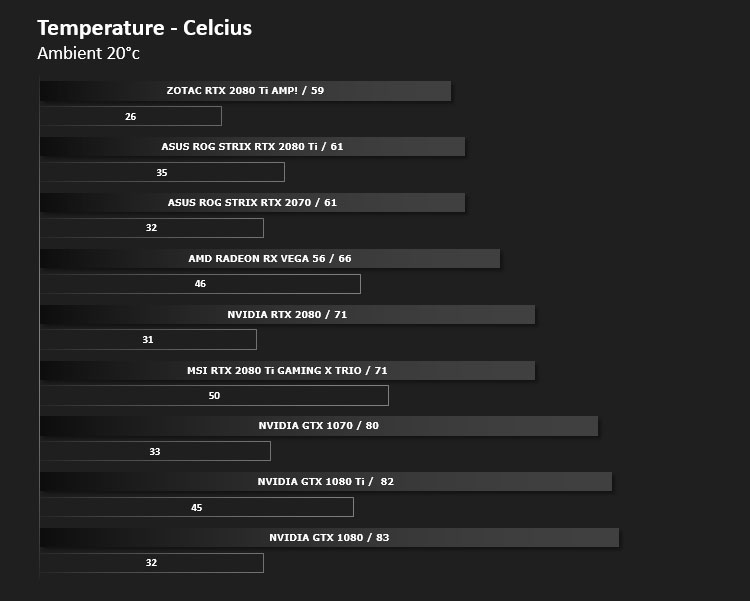
ACOUSTICS
STRIX OC is quiet during full load. On auto we experienced just minor noise which is what you would expect – however, having the ability to modify each individual fan’s speed and utilise quiet mode further bolsters this cards ability to remain a low-noise solution.Overclocking
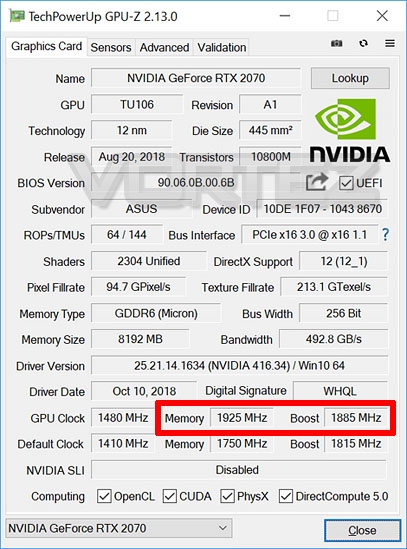
To overclock our STRIX OC we used ASUS ROG’s very own Tweak II software.
We discovered that there wasn’t a great deal of headroom in the GPU clock for overclocking – even with power limits and voltage increased. The real bonus lies in the memory clock, which we were able to increase significantly.
For GPU clock boost we managed to increase from 1845 up to 1885MHz. (2% OC)
For the memory clock we managed to increase from 1750MHz up to 1925MHz. (10% OC)
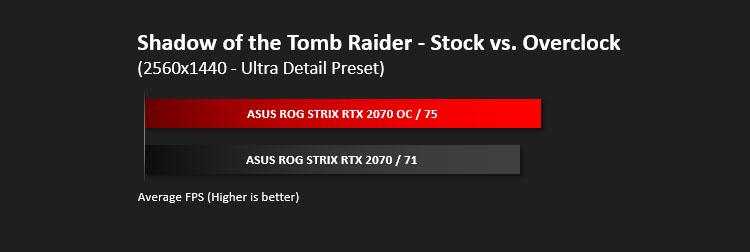
In the real world, increasing the GPU clock boost allows for more fps in-game, as such with this manual overclock we were only able to gain an extra 3fps.
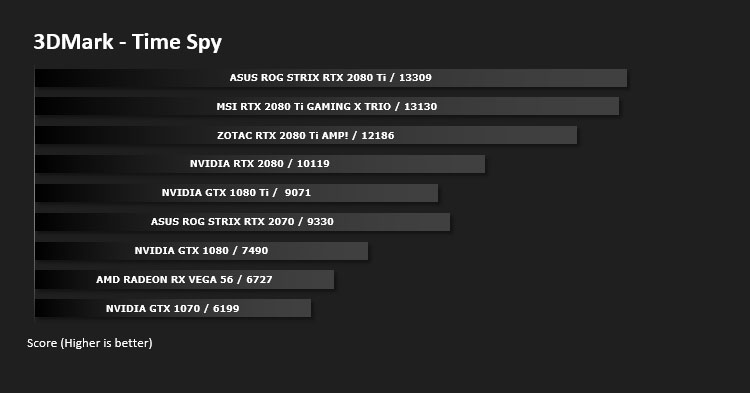
DX12: 3DMark Time Spy
Download your copy nowWith its pure DirectX 12 engine, which supports new API features like asynchronous compute, explicit multi-adapter, and multi-threading, 3DMark Time Spy is the ideal benchmark for testing the DirectX 12 performance of the latest graphics cards.
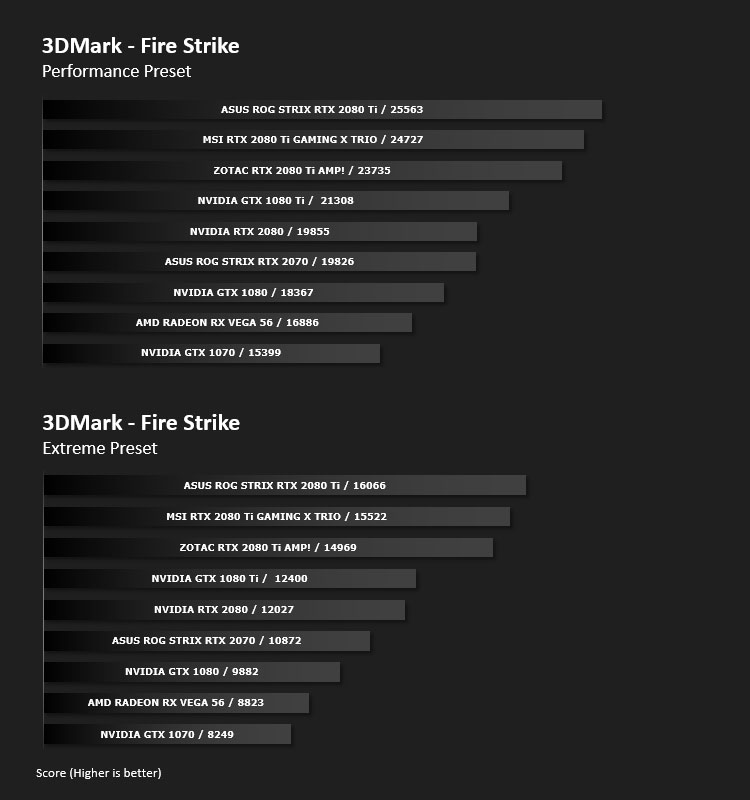
DX11: 3DMark FireStrike
Download your copy nowFire Strike is the new showcase DirectX 11 benchmark designed for high-performance gaming PCs. It is UL’s most ambitious and technical benchmark ever, featuring real-time graphics rendered with detail and complexity far beyond what is found in other benchmarks and games today.
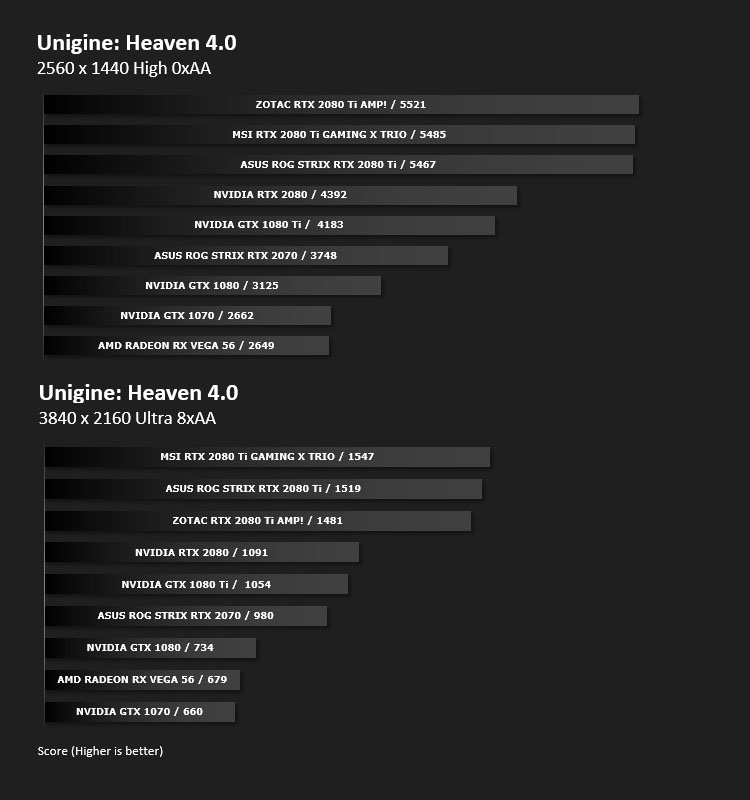
DX11: Unigine Heaven 4.0
Heaven Benchmark with its current version 4.0 is a GPU-intensive benchmark that hammers graphics cards to the limits. This powerful tool can be effectively used to determine the stability of a GPU under extremely stressful conditions, as well as check the cooling system’s potential under maximum heat output. It provides completely unbiased results and generates true in-game rendering workloads across all platforms.
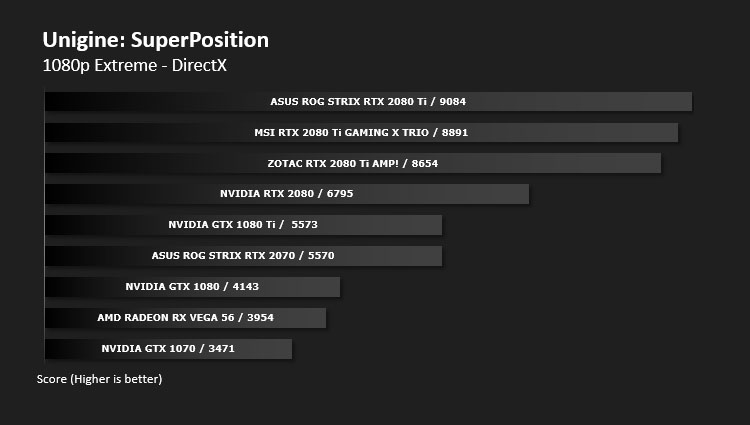
DX11: Unigine SuperPosition
Superposition is a new-generation benchmark tailored for testing reliability and performance of the latest GPUs. Top-notch visuals, support for VR-devices and an interactive mode with mini-games — the list of features built into Superposition could go on and on.
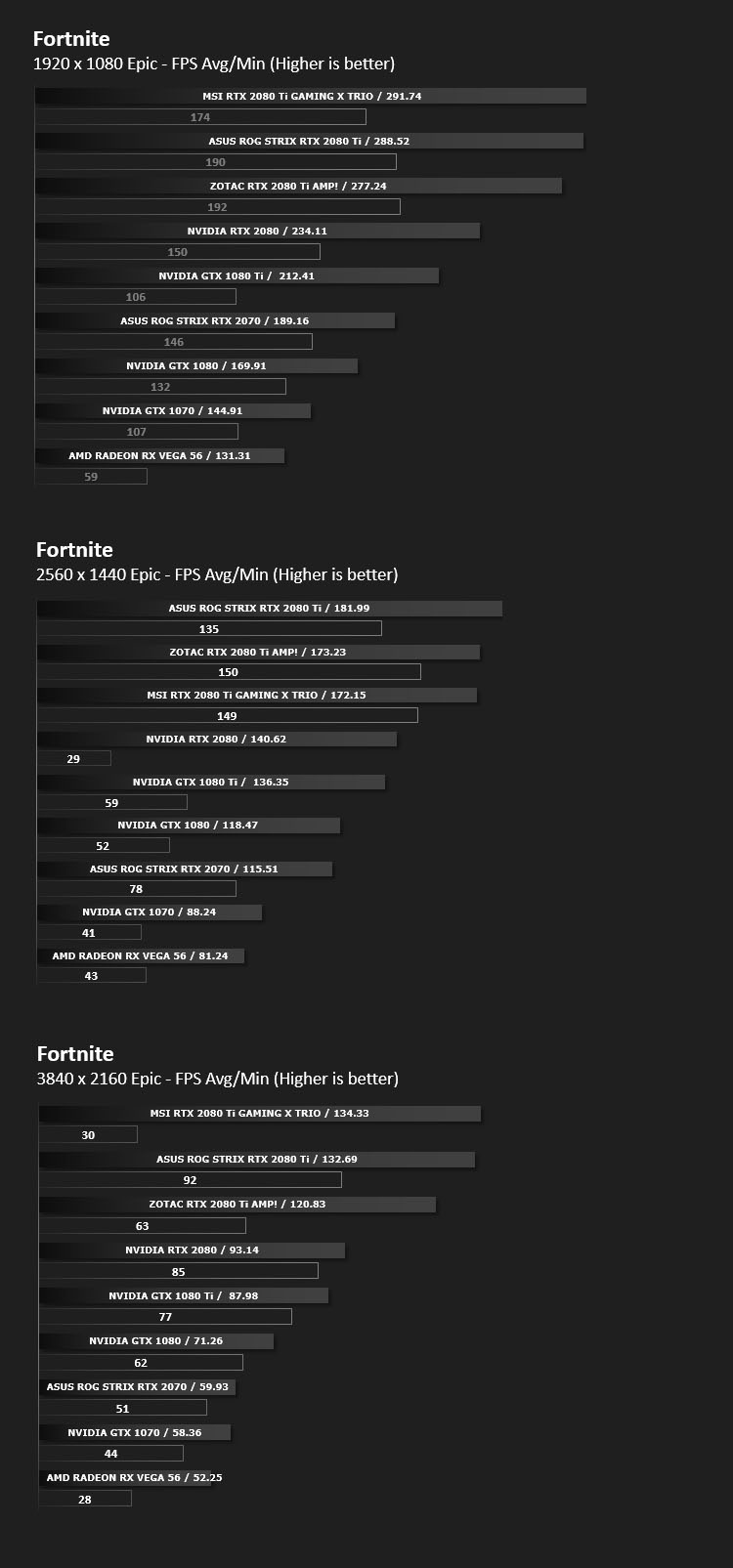
DX11: Fortnite
Fortnite Battle Royale is the FREE 100-player PvP mode in Fortnite. One giant map. A battle bus. Fortnite building skills and destructible environments combined with intense PvP combat. The last one standing wins.
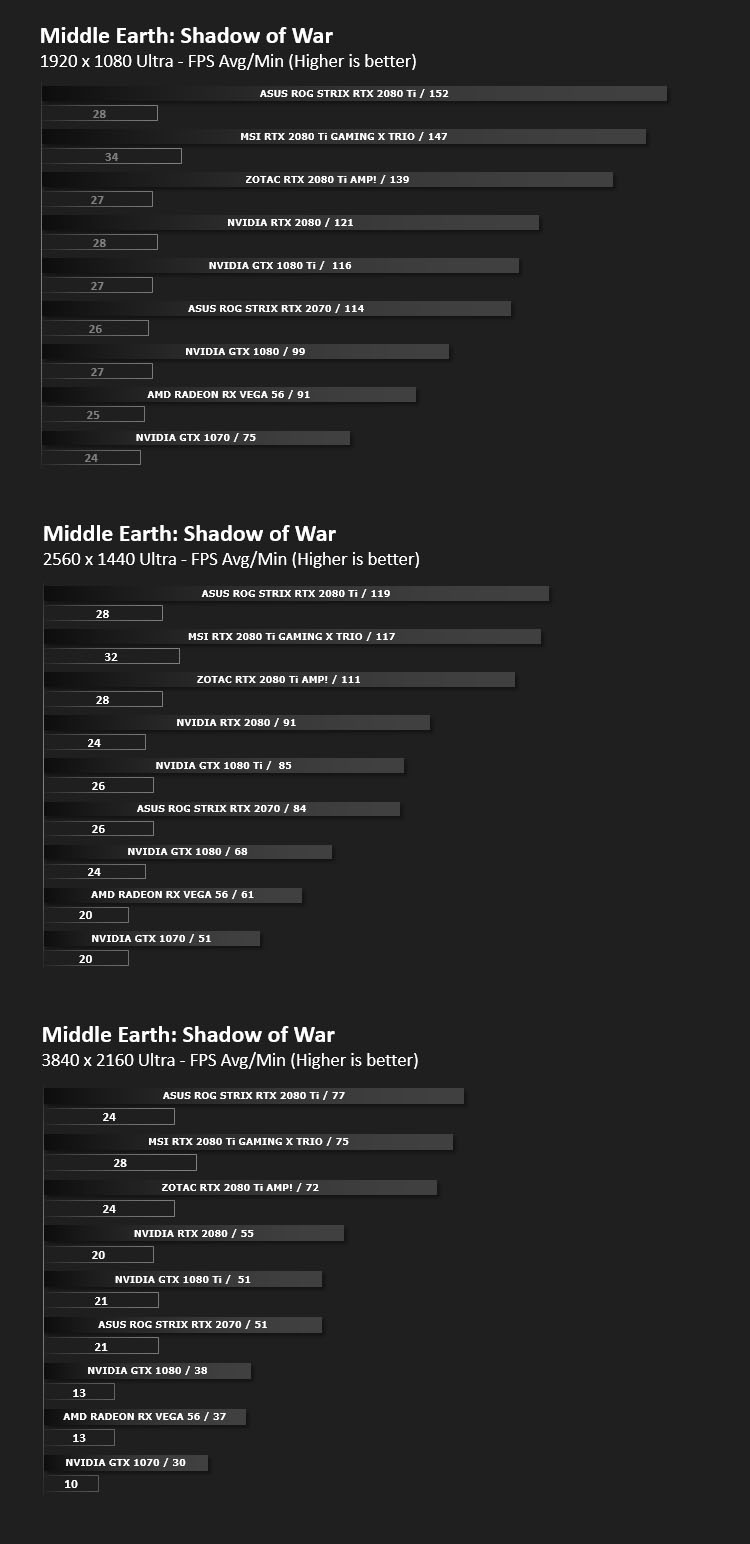
DX11: Middle Earth: Shadow of War
Middle-earth: Shadow of War is an action role-playing video game developed by Monolith Productions and published by Warner Bros. Interactive Entertainment. It is the sequel to 2014’s Middle-earth: Shadow of Mordor.
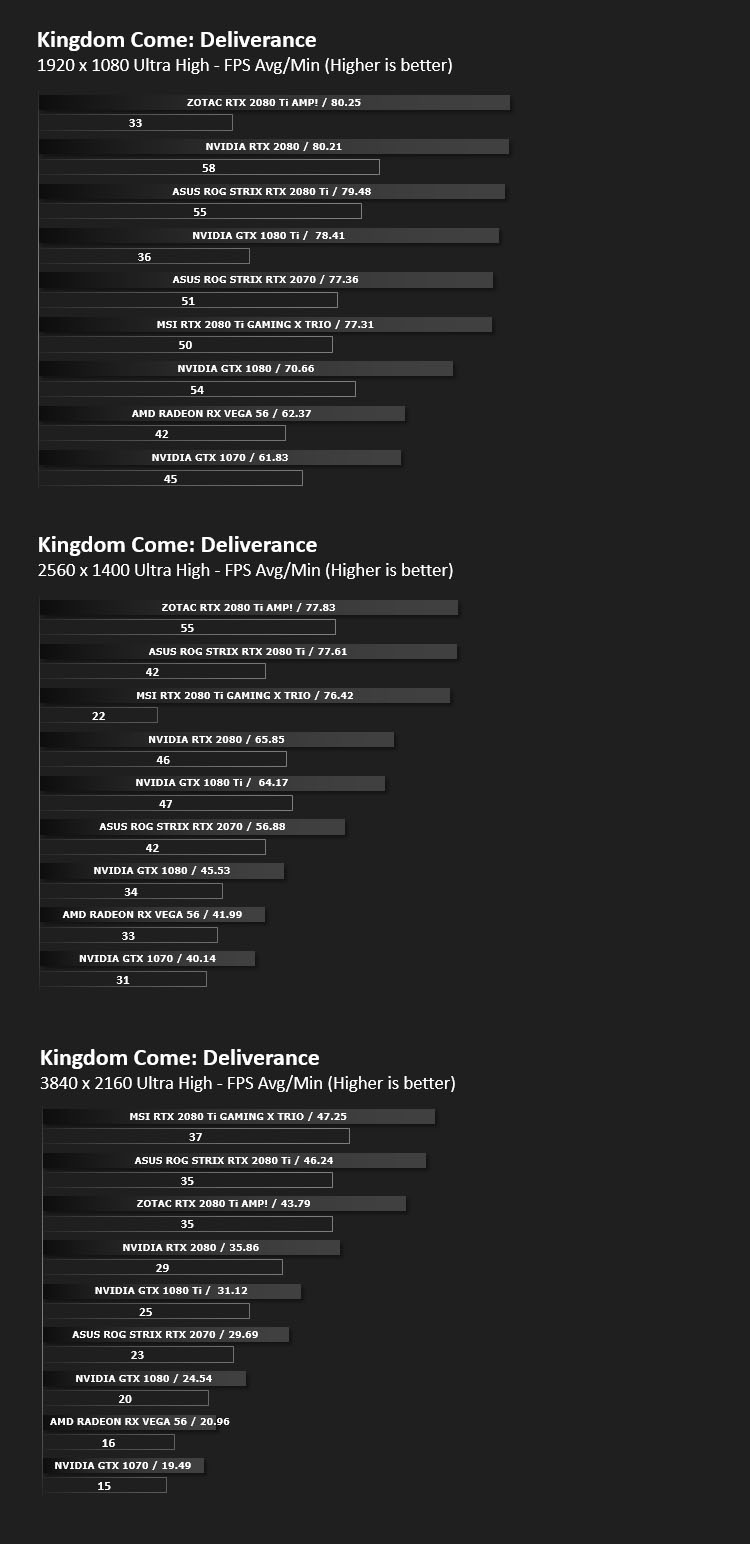
DX11: Kingdom Come: Deliverance
Kingdom Come: Deliverance is a story-driven open-world RPG that immerses you in an epic adventure in the Holy Roman Empire. Avenge your parents’ death as you battle invading forces, go on game-changing quests, and make influential choices.

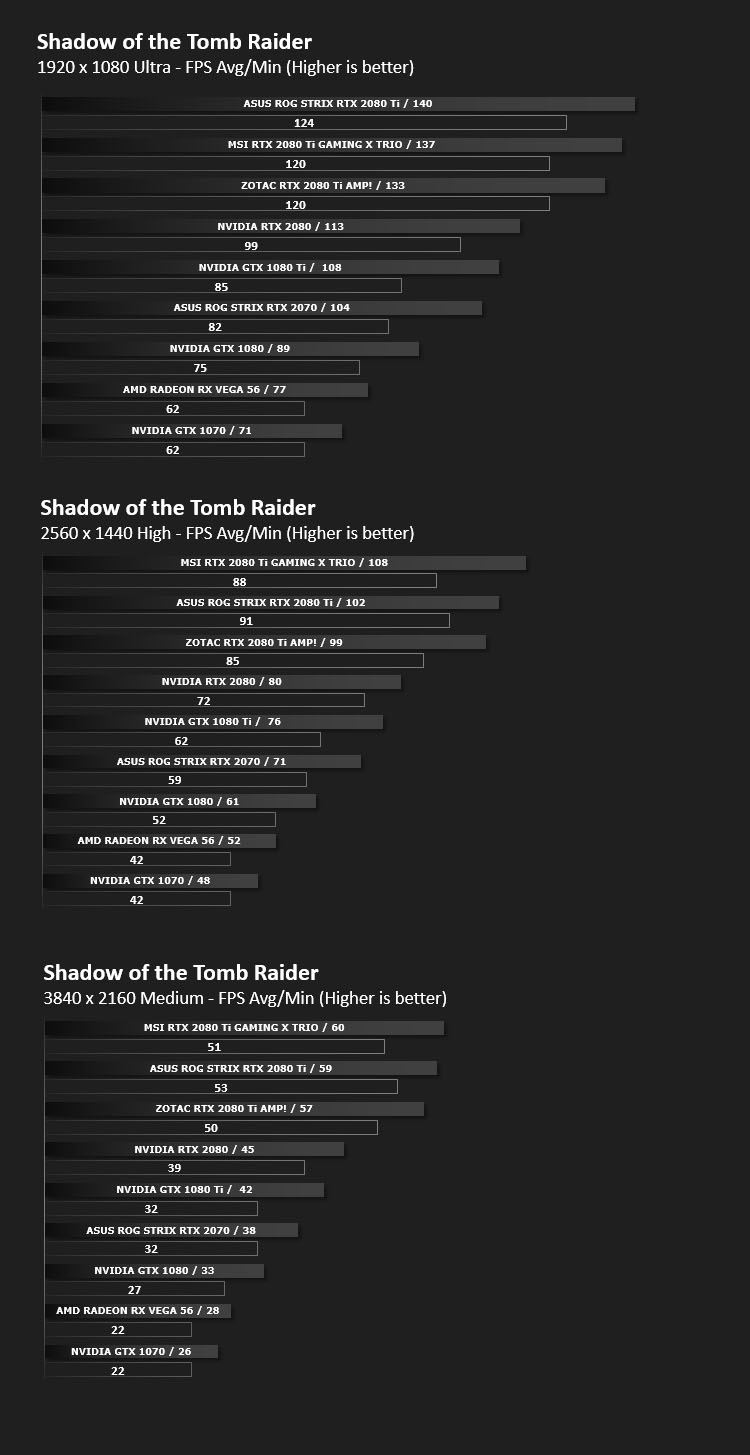
DX12: Shadow of the Tomb Raider
Shadow of the Tomb Raider is an action-adventure video game developed by Eidos Montréal in conjunction with Crystal Dynamics and published by Square Enix. It continues the narrative from the 2013 game Tomb Raider and its sequel Rise of the Tomb Raider, and is the twelfth mainline entry in the Tomb Raider series.

DX11: F1 2018
F1 2018 is a racing video game and the tenth instalment in the Formula One video game franchise developed and published by Codemasters. The game is based on the 2018 Formula One World Championship and includes all twenty-one circuits from the calendar and all twenty drivers and ten teams competing in the season.

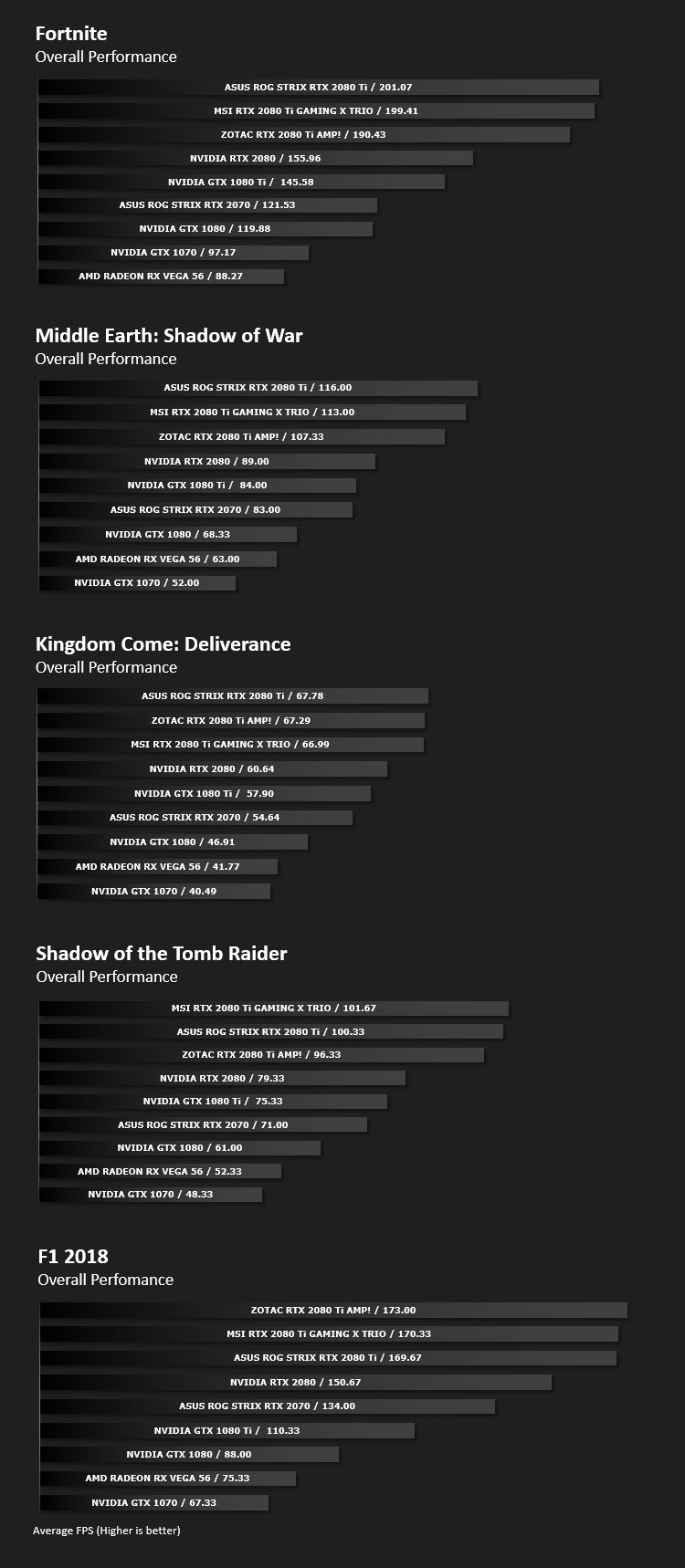
Overall Performance
Here we take a look at the overall performance of the graphics card. This figure is determined by finding the average FPS across all of the settings used in a particular benchmark(game) to give us an overall value.
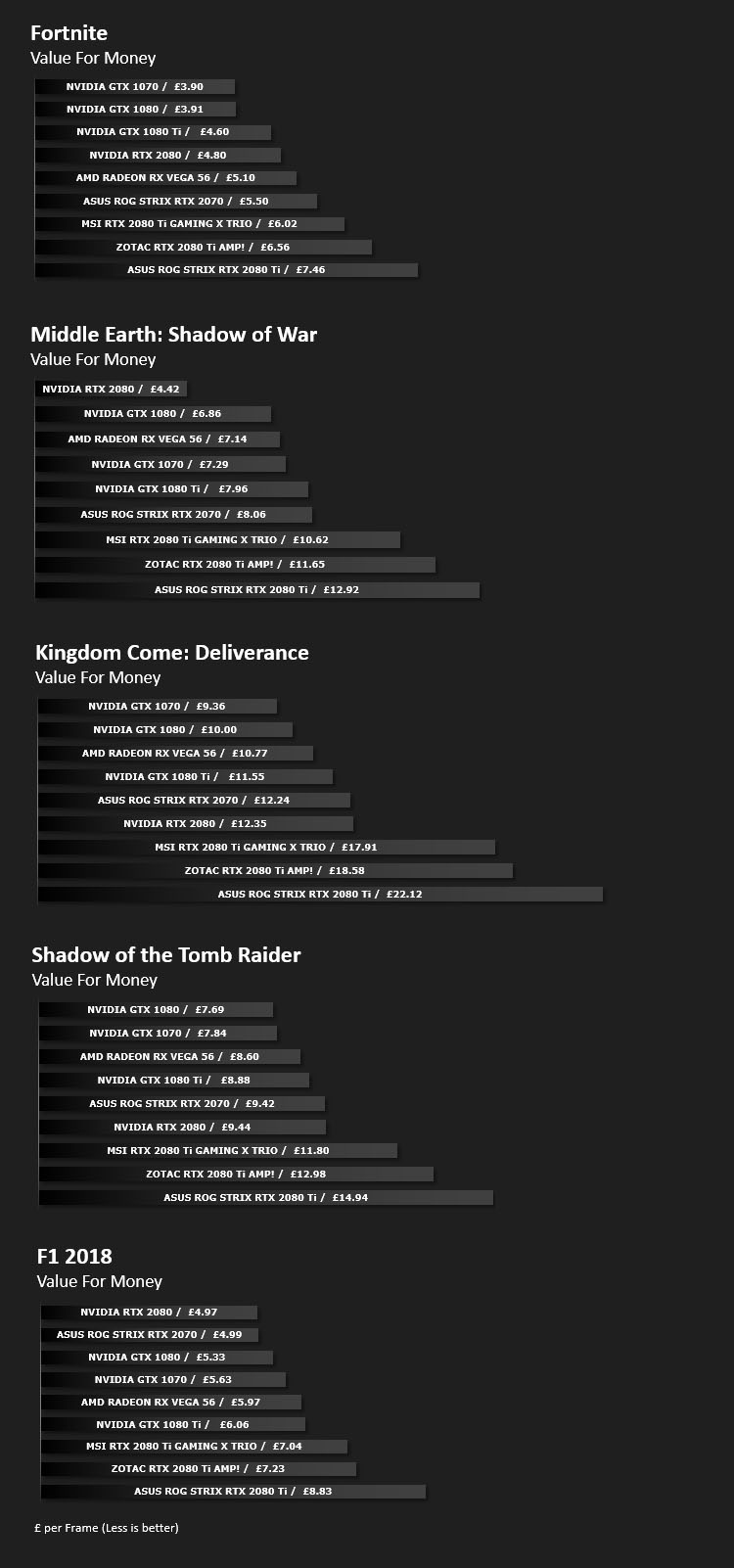
Value For Money
We make a simple calculation for this set of results. For each game we add all of the resulting FPS totals together and then divide by the four sets to give us an overall performance figure. While the figures alone do not give you an accurate picture of how the card will perform in any given scenario, they do tell you, when averaged, which GPU is the more capable across all of the benchmarks and settings tested.
Please note: we’ve used GBP for currency but since this is relative – regardless of which currency you use, this will give you a good indication of value for money.
Conclusion
Since this is our first RTX 2070 review, it’s difficult for us to compare the STRIX OC against others units of the same SKU, but we’ve been mightily impressed by what the ROG team offers in this new graphics card.
The biggest talking point with the introduction of the NVIDIA RTX 20-series has been the pricing. So far, the RTX 2070 is the most affordable of the models available and from a performance standpoint, slots right between the GTX 1080 and GTX 1080 Ti.
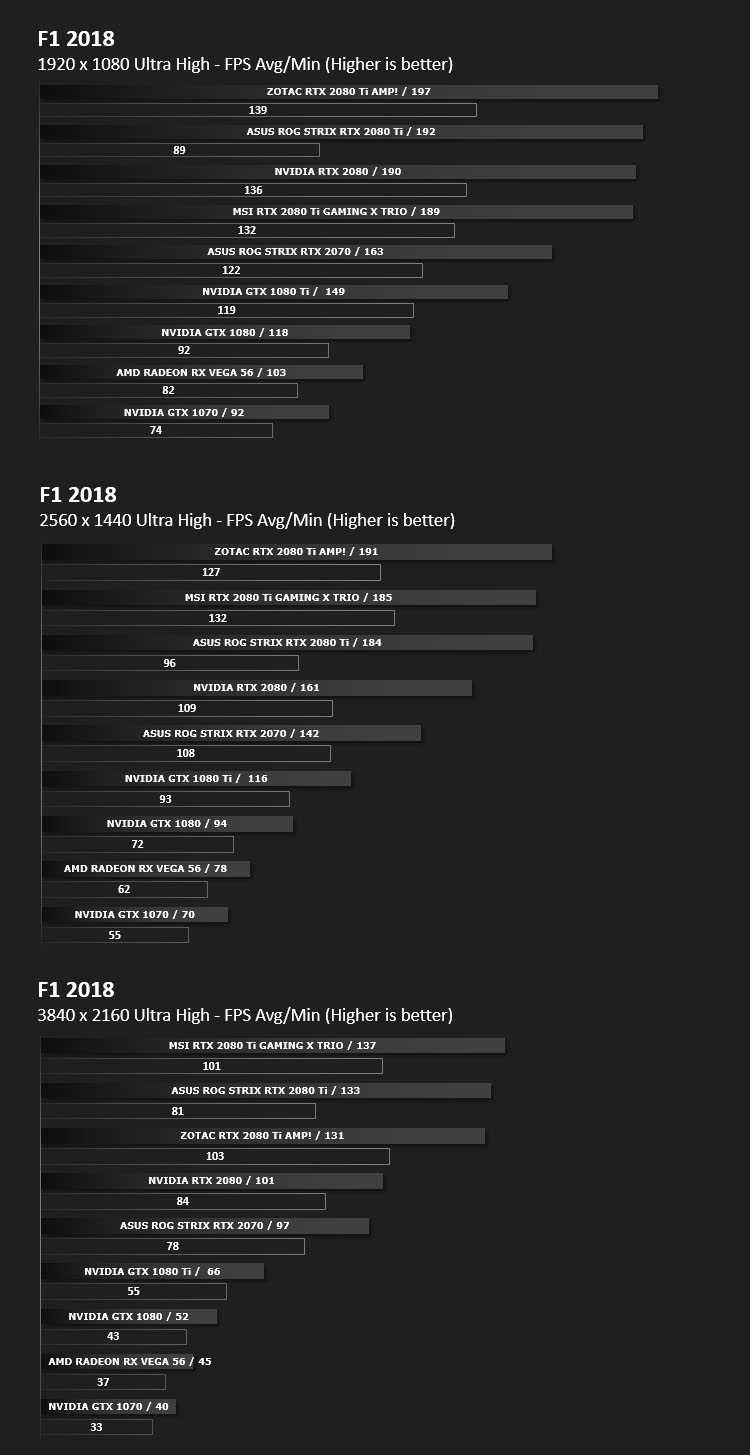
The STRIX RTX 2070 OC finds its sweetspot at 1440p, bringing in excess of 80fps – in some cases exceeding 100fps and on one occasion descending to 60fps. While tapping into this great performance, noise levels are kept to a minimum – even with the implementation of triple fan cooler. Just like its bigger brother (the STRIX RTX 2080 Ti), we can modify each individual fan speed if we desire, all via the Tweak II software. For those who are on the sensitive side in regards to sound/audio there is also the option to activate silent mode too.
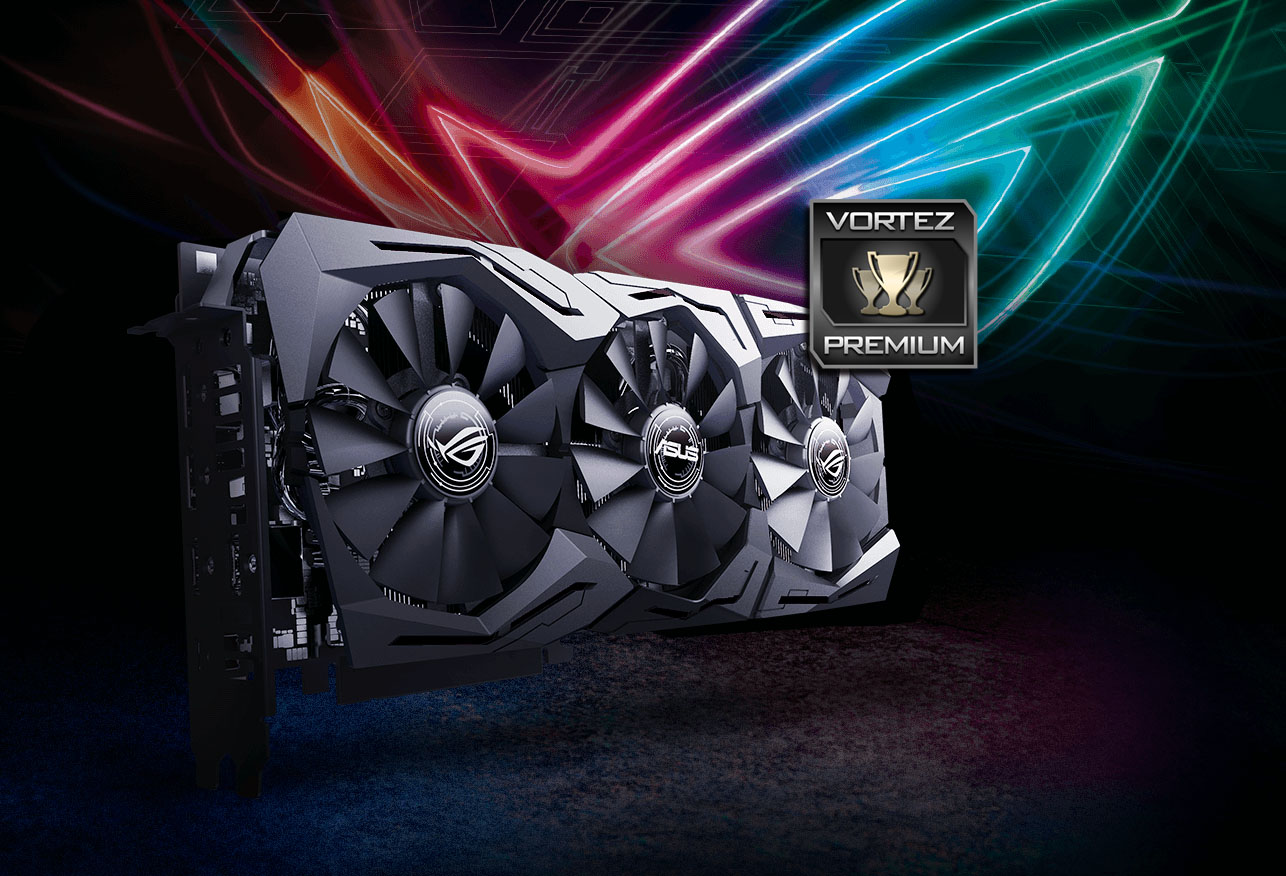
Beyond the standard features on offer, ROG includes some additional items which we think are great. If you aren’t wanting to install the Tweak II software, or are perhaps in-game and can’t minimize, there is a BIOS switch mounted on the card for shifting between quiet and performance modes and there is a dedicated button for disabling the RGB LEDs.
We’ve removed coolers off hundreds of graphics cards and often we discover substandard thermal pads for the VRMs. Most notably, with the RTX 2080 Founders Edition we encountered thermal pads which crumbled away once we detached the thermal solution. With the STRIX 2070 we were instantly impressed by what we uncovered. The protective thermal plate which sits over the components, underneath the heatsink has been engineered to high-quality and features premium thermal pads, which, even after multiple removals do not disfigure. Overall build quality on this unit is of the best we’ve seen.
In our efforts to manually overclock (beyond the factory overclock already applied), we were able to squeeze just 2% out of the GPU clock and 10% out of the memory clock. While the memory result is encouraging, the GPU is not so. It remains to be seen if this is the norm with RTX 2070s, so we’ll have to wait and see if other cards are limited in the same way.
This STRIX OC edition arrives with a price-tag of: £669 GBP – $629 USD – $1249 AUD. This is a similar figure to what the GTX 1080 Ti launched at. Sadly, the RTX 2080 falls short of the GTX 1080 Ti – however we do have access to next-gen features with this RTX 20-series and we’re hoping for some price-drops in the near future!
All the hallmarks of a ROG graphics card can be found in the STRIX RTX 2070 OC – avid gamers will find every attribute they desire.
Pros
+ Appealing design which is Aura-ready
+ Impressive build quality
+ Excellent 1440p performance
+ Low-noise with 0dB feature available
+ Very low temperatures
+ Each fan can be manually adjusted with GPU Tweak II
+ Arrives with USB 3.1 Type-C port
+ Extra features: RGB header, BIOS switch, lighting switch
+ 2-year warranty
Cons
– Limited overclocking headroom
– Competes with GTX 1080/Ti but costs more
+ Appealing design which is Aura-ready
+ Impressive build quality
+ Excellent 1440p performance
+ Low-noise with 0dB feature available
+ Very low temperatures
+ Each fan can be manually adjusted with GPU Tweak II
+ Arrives with USB 3.1 Type-C port
+ Extra features: RGB header, BIOS switch, lighting switch
+ 2-year warranty
Cons
– Limited overclocking headroom
– Competes with GTX 1080/Ti but costs more
Click here for an explanation of our awards at Vortez.net.
Stay connected with the Vortez Social Media pages:
Join in with the discussions on Discord