Designed specifically for the AMD Ryzen, GeIL present thoroughly tested, stable, memory that features HILM™ (Hybrid-Independent-Light-Module) technology, that allows dynamic RGB lighting.

Product on Review: EVO X AMD Edition
Manufacturer: GeIL
Street Price:
3200MHz C16 Dual-Channel (16GB): UK: £159 / US: $169
GeIL jump into the market with the EVO X memory modules, specifically tailored for the AMD Ryzen platform. GeIL are renowned for the long ‘burn-in’ testing, allowing them to guarantee performance, quality and stability. The EVO X is available with heatspreaders in either anodised black or white, and features HILM™ – Hybrid-Independent-Light-Module Technology. This is essentially a stand alone RGB lighting system which features manual RGB control, or can be controlled by the various motherboard manufacturers proprietary software, (Such as ASUS Aura, MSI Mystic Light, GIGABYTE RGB Fusion, and ASRock’s Aura RGB). This makes for a high-compatibility, and versatility in regards to the lighting.
GeIL have positioned this kit rather competitively and will go toe to toe against the likes of the Team T-Force Delta RGB, to which it features a similar XMP timings of 16-18-18-18-36 @ 3200MHz.
Overview by GeIL
Designed for AMD RyzenTM, EVO X AMD Edition Series ensures compatibility and brings outstanding performance on the latest AMD platform. Every memory is tested thoroughly and burned-in to guarantee the quality, helping you get the most out of your AMD Ryzen system.
Setting new benchmarks in high-end DDR4 memory, EVO X AMD Edition Series features GeIL’s latest innovation – HILM™ – Hybrid-Independent-Light-Module Technology, enabling dynamic RGB LED illumination. EVO X AMD Edition Series not only excels from previous series aesthetically, the technological breakthrough in high performance memory illumination transcends even further.
Setting new benchmarks in high-end DDR4 memory, EVO X AMD Edition Series features GeIL’s latest innovation – HILM™ – Hybrid-Independent-Light-Module Technology, enabling dynamic RGB LED illumination. EVO X AMD Edition Series not only excels from previous series aesthetically, the technological breakthrough in high performance memory illumination transcends even further.
Technical Specifications
Packaging & Product
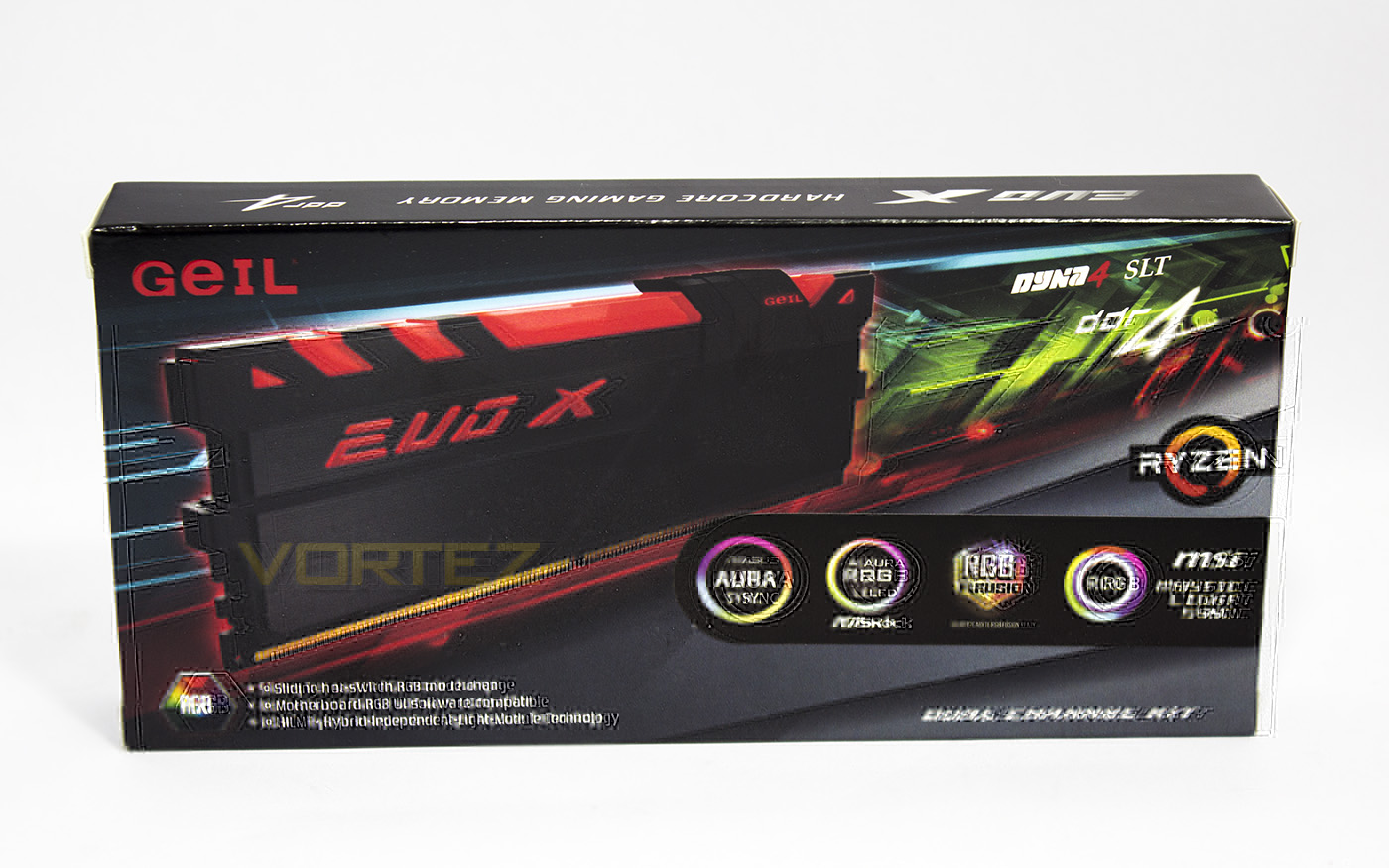
The EVO X packaging gives some very colourful imagery which gives a visual sensation of speed. It gives clear indication of its RGB compatibility, along with compatibility with AMD Ryzen CPUs.
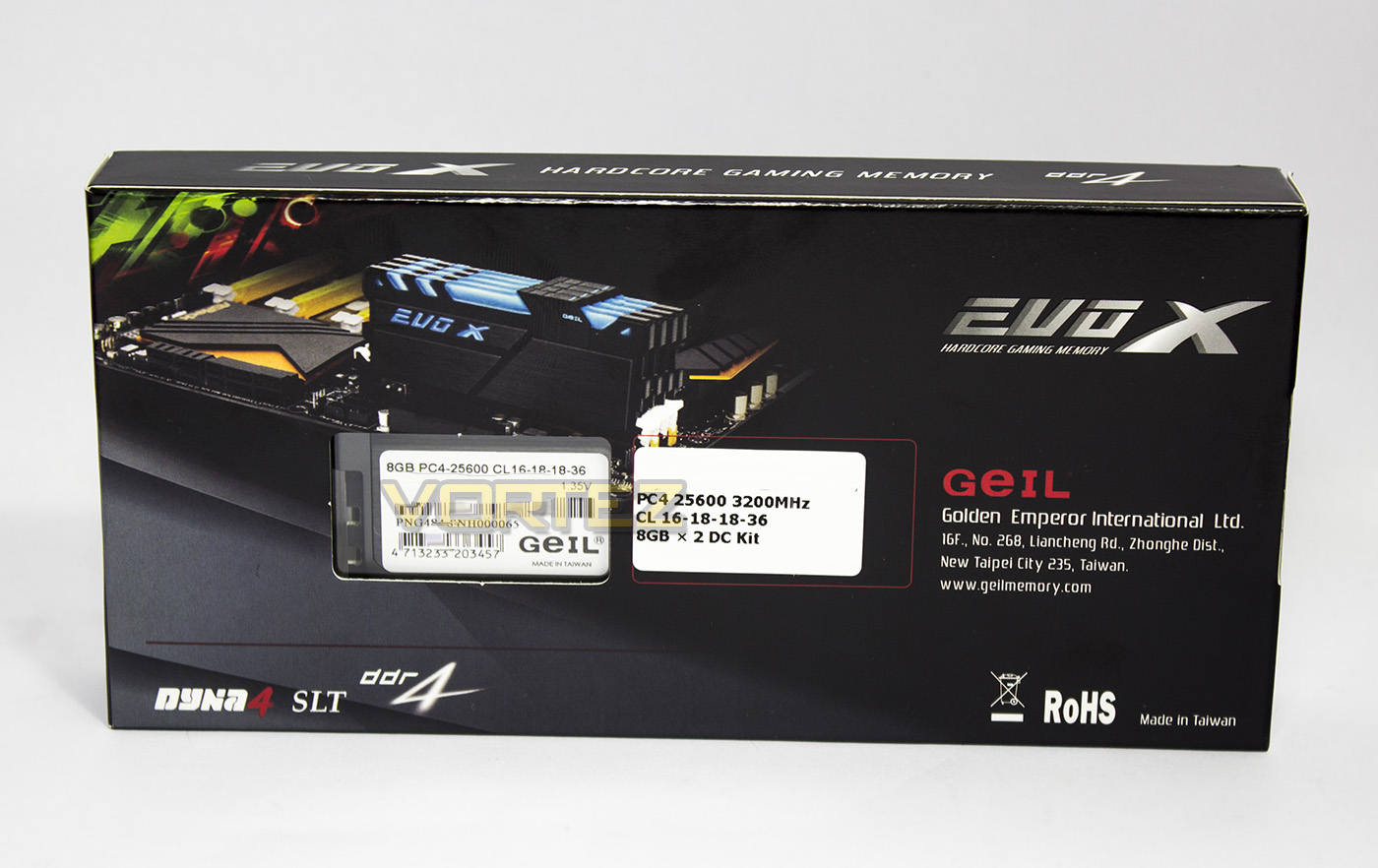
The reverse side of the packaging is a little more subdued with an image of the memory installed into a system, as well as giving details of the memorys frequency and timings.
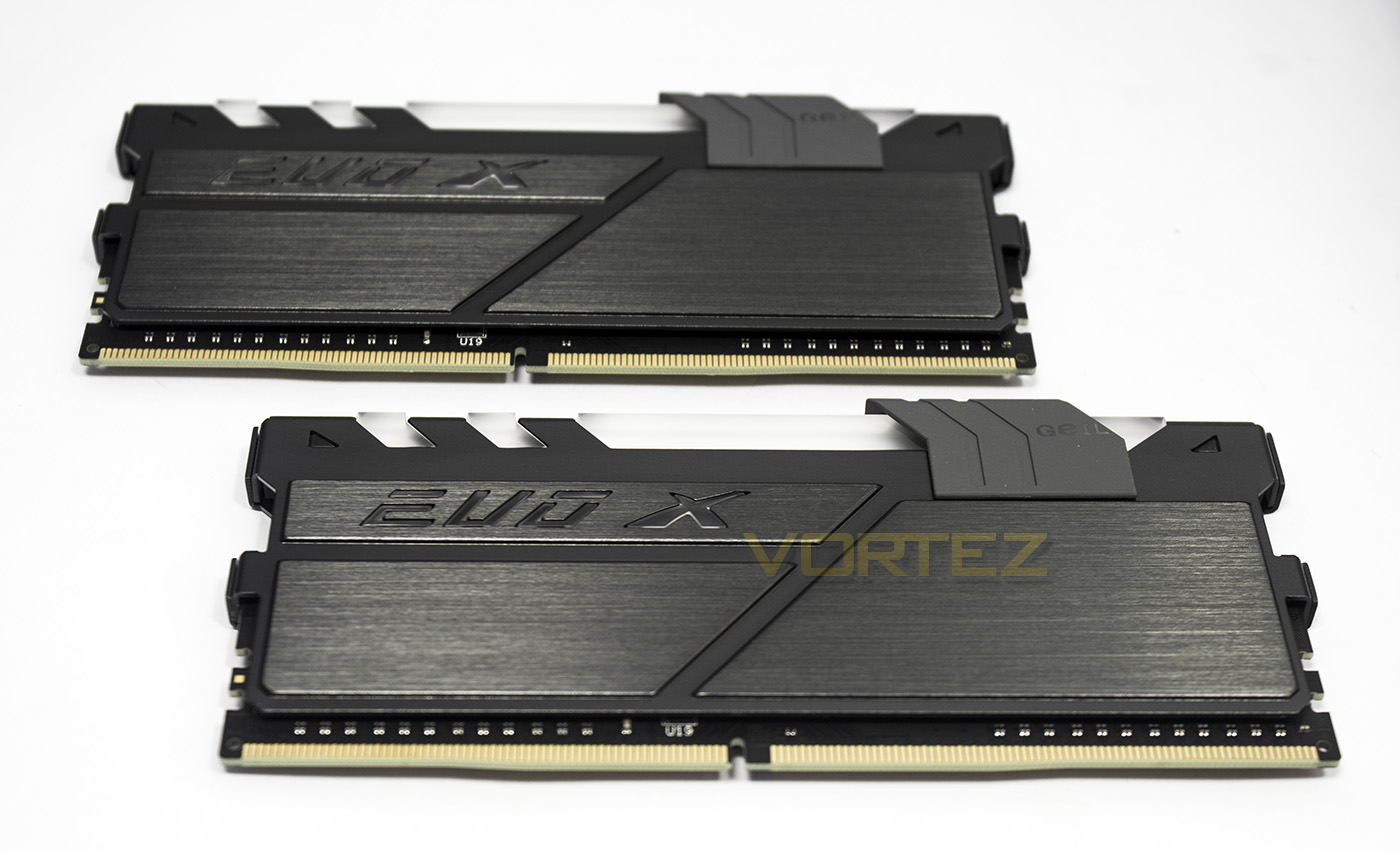
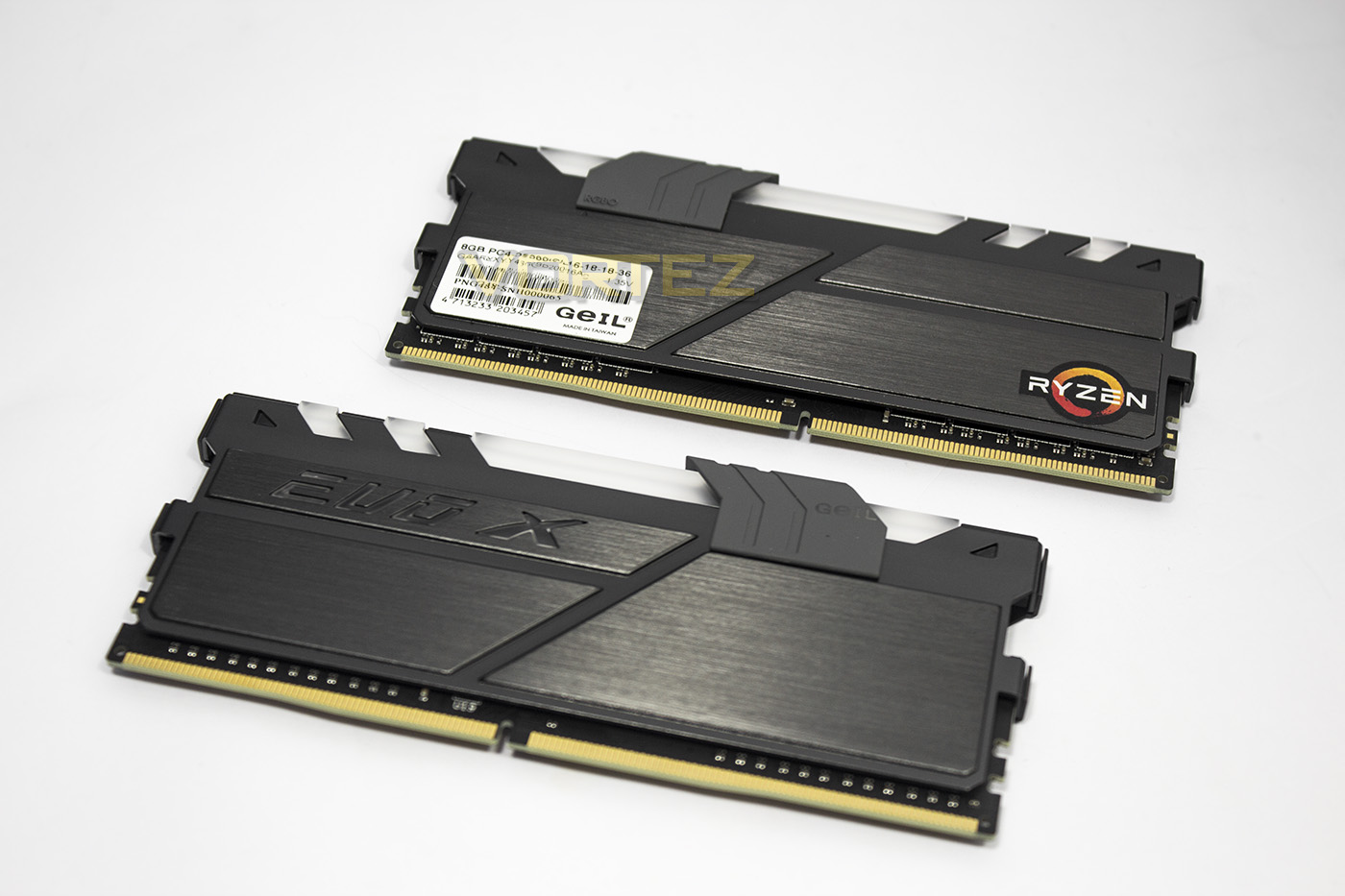
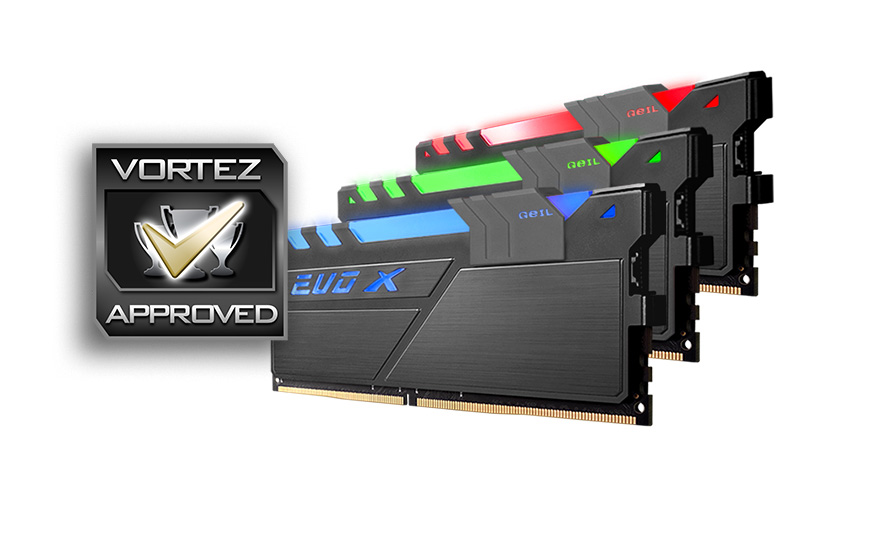
The EVO X memory features brushed anodised heatsinks with cutouts for the EVO X logo, allowing it to light up. At the stop is a plastic sliding switch, allowing for manual control of the RGB LED lighting.
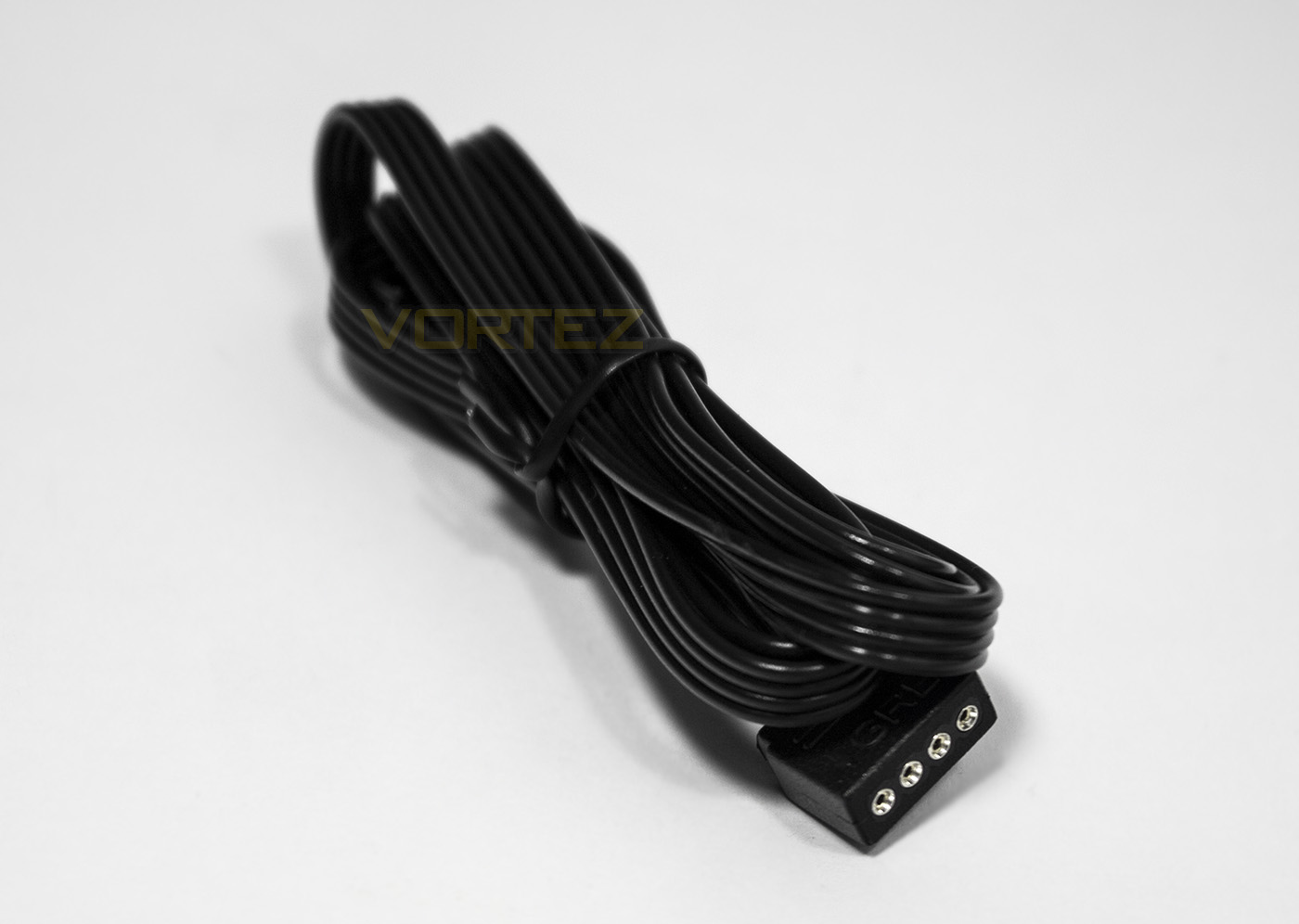
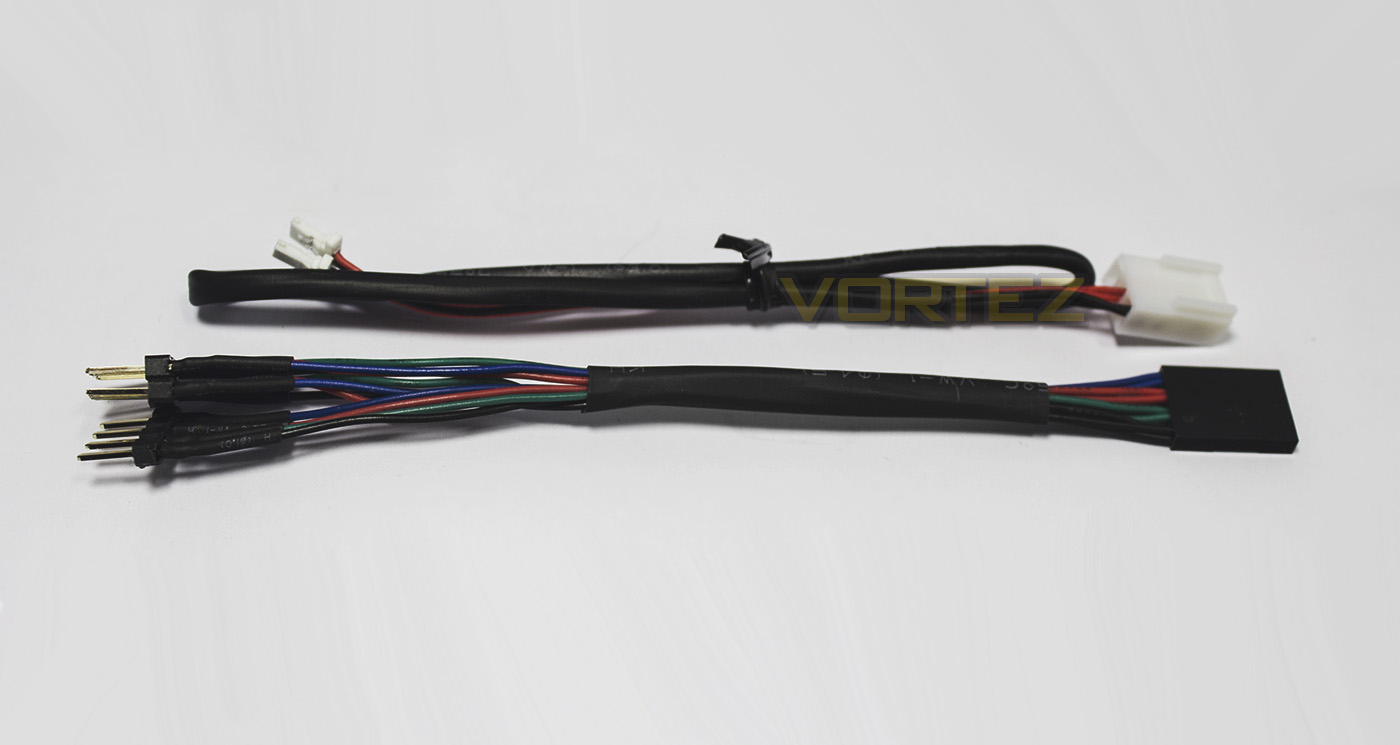
Inside the packaging we are greeted with an RGB header extension cable which splits into 3x 4pin RGB connectors which allows the HILM RGB module to be controlled via the various motherboard apps. Alternatively, you can connect the memory directly to a fan header for power, to which it can then be manually controlled.
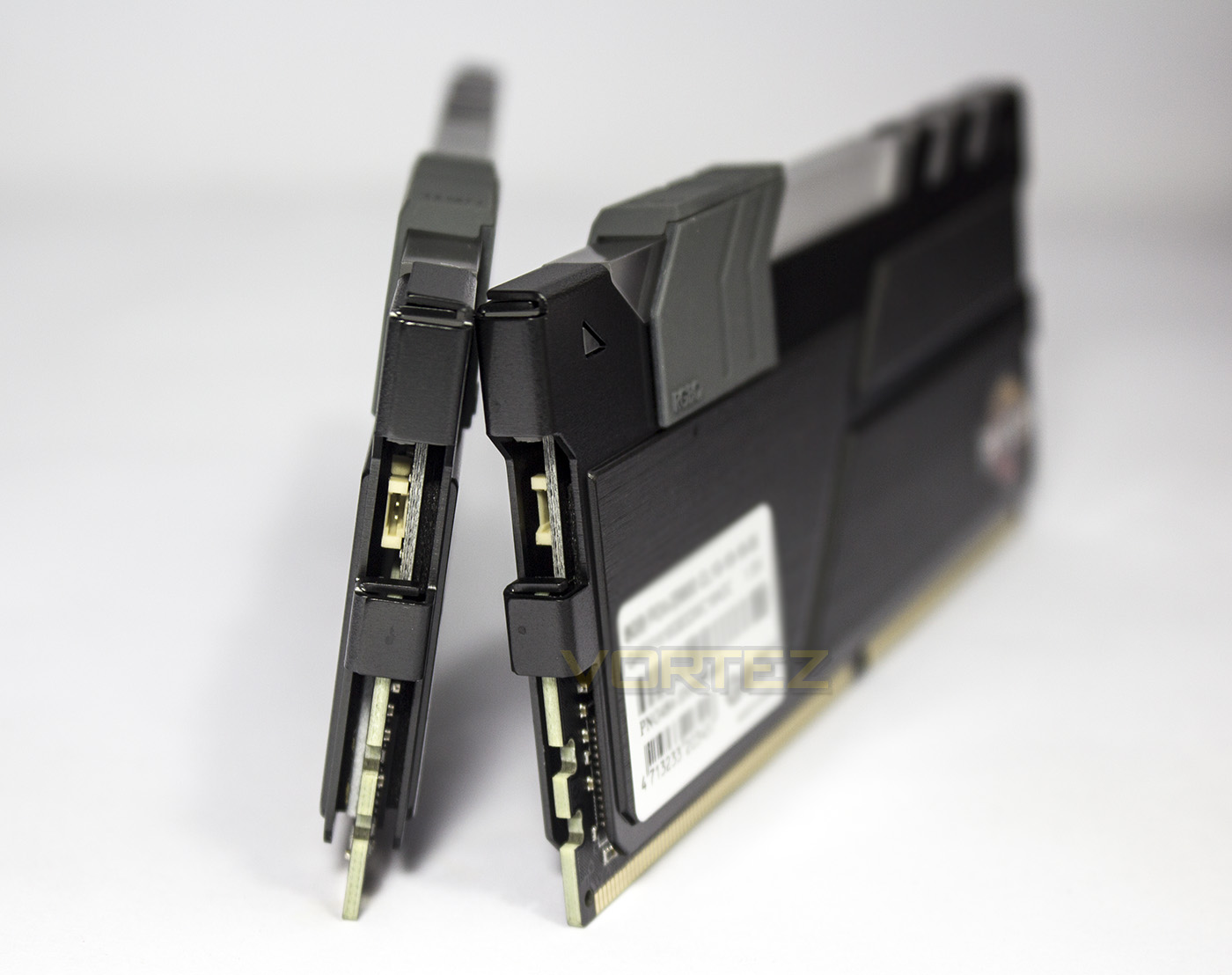
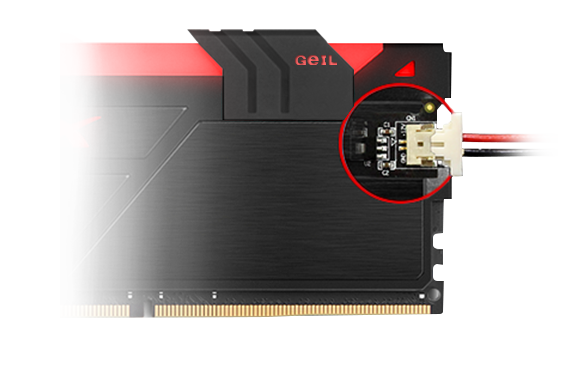
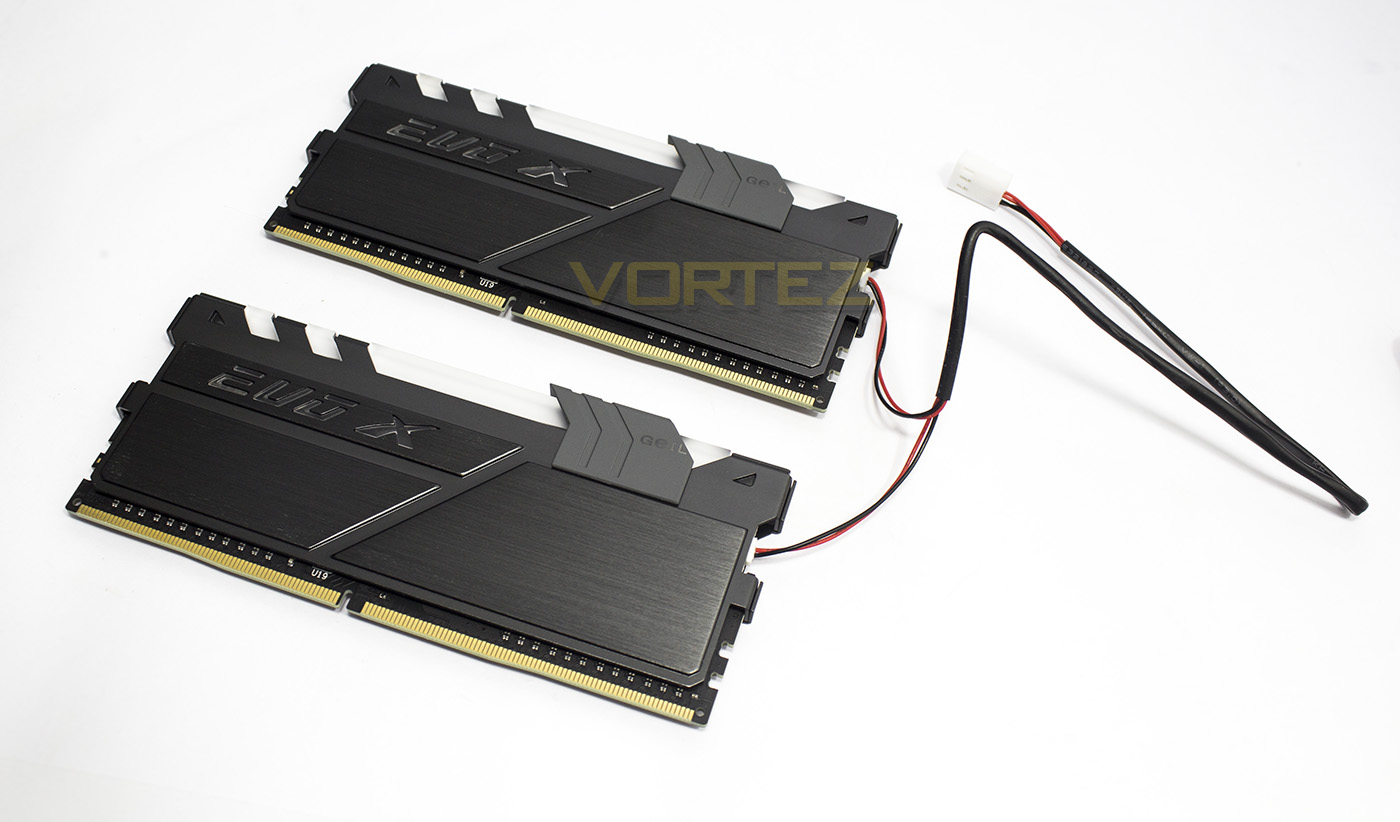
On one edge, we find mini two pin power connectors, to which the direct power cable can then be attached and connected to an available fan header for power. This enables the ‘manual’ control option. To use the manual lighting, the plastic sliding switch features small labels ‘R,G,B, and O’, When selected R, it will cycle through 256 colour spectrum, to which you can then ‘pause’ the cycle to a colour you like, using the ‘G’ setting. The ‘O’ setting instead cycles through 4 different colours, to which you can choose a colour by setting it to the ‘B’ mode. This will allow for Customisable RGB lighting on motherboards that do no feature an RGB header.
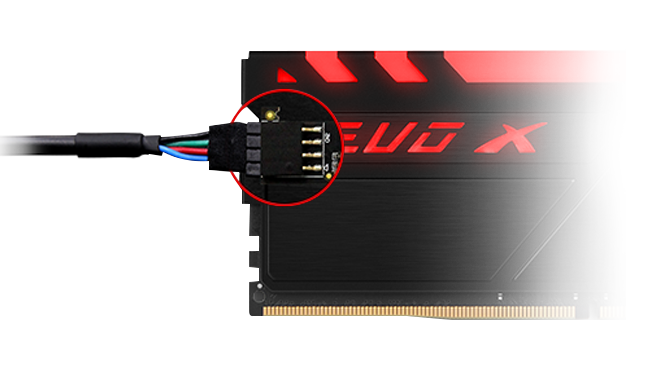
On the opposite side, there are sockets that allow you to connect the RGB header extension cable into, allowing you to have finer controls and more advanced effects of the RGB lighting.
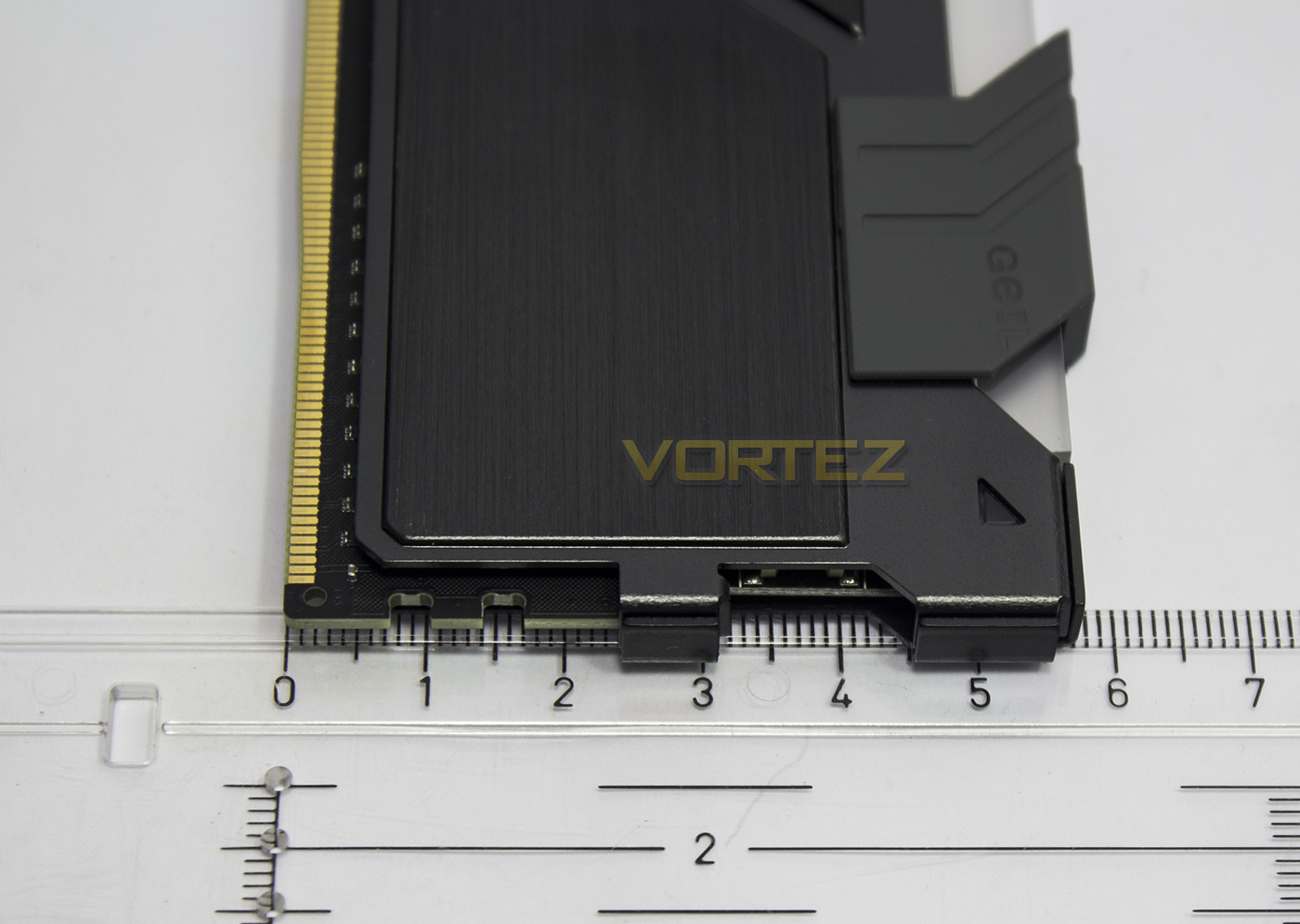
Right from the get go, we noticed that this memory is rather tall, and while not the most extreme at close to 60mm tall, the height will certainly limit its compatibility with many CPU air coolers. This is likely the downside to having an independent lighting module.
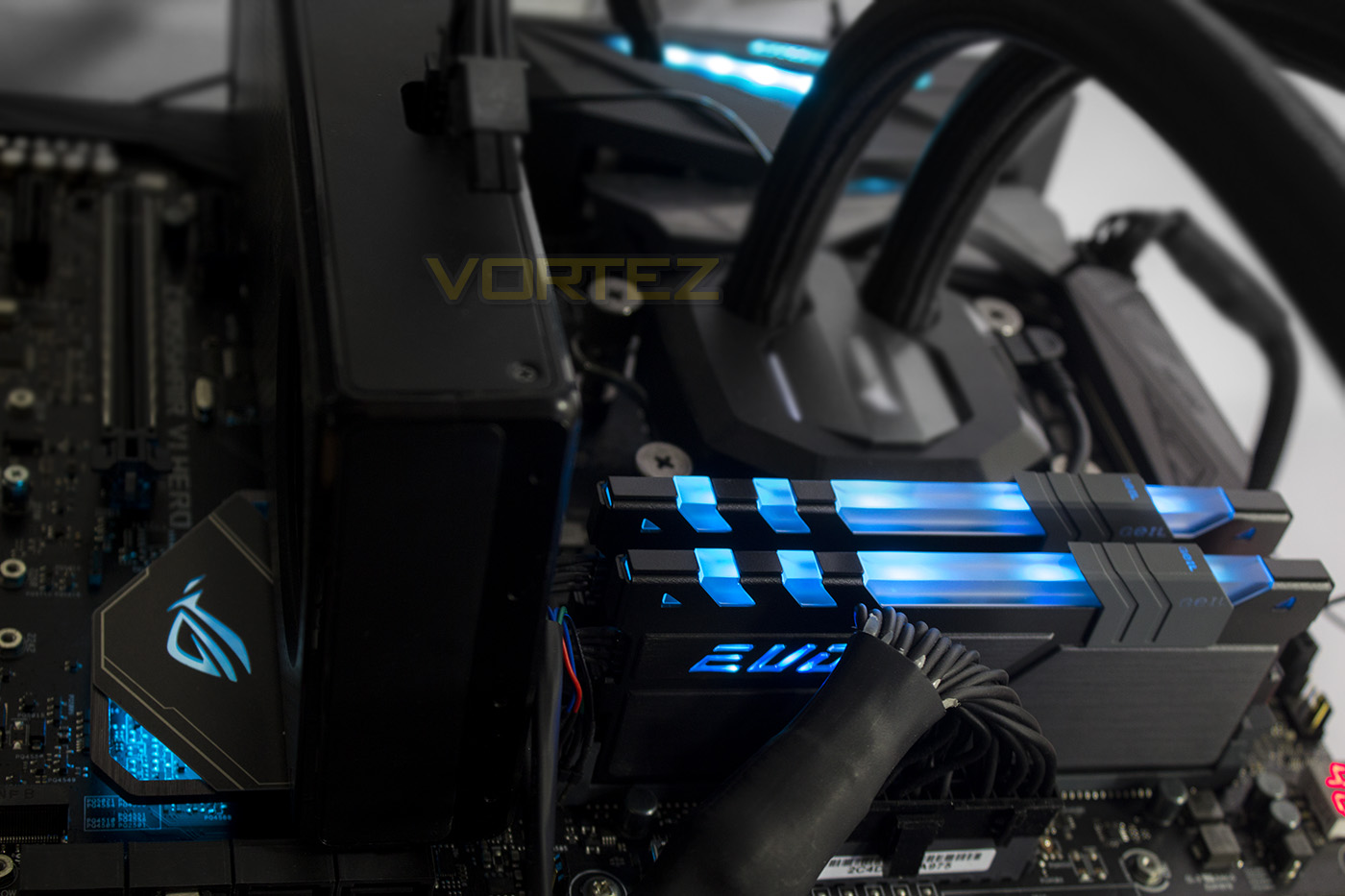
Syncing up with the system, the EVO X shines with our Crosshair VI Hero.
Test Setup
Memory Configurations
‘GeIL EVO X AMD Edition DDR4 3200MHz’
2666MHz @ 14-14-14-14-32-58-1T – Highest CL14
2666MHz @ 16-16-16-16-36-62-1T
2933MHz @ 16-16-16-16-36-62-1T
3200MHz @ 16-18-18-18-36-73-1T – XMP 2.0
3333MHz @ 16-18-18-18-36-82-1T
3466MHz @ 16-18-18-18-36-82-1T – Highest reached frequency
Test Setup
Cooling Corsair Hydro H115i
MotherboardASUS ROG Crosshair VI Hero
Graphics Radeon RX 480 8GB
Storage Corsair Force LE 480GB
PSU Corsair RM 750X 80 Plus Gold Certified PSU
Compared against
Corsair Vengeance LPX 3200MHz
Team Dark Pro ‘8 Pack’ 3200MHz
Team Delta RGB 2933MHz
G.SKILL Flare X 3200MHz
G.SKILL Trident Z RGB 3200MHz
HyperX Predator 3200MHz
‘GeIL EVO X AMD Edition DDR4 3200MHz’
2666MHz @ 14-14-14-14-32-58-1T – Highest CL14
2666MHz @ 16-16-16-16-36-62-1T
2933MHz @ 16-16-16-16-36-62-1T
3200MHz @ 16-18-18-18-36-73-1T – XMP 2.0
3333MHz @ 16-18-18-18-36-82-1T
3466MHz @ 16-18-18-18-36-82-1T – Highest reached frequency
Test Setup
Cooling Corsair Hydro H115i
MotherboardASUS ROG Crosshair VI Hero
Graphics Radeon RX 480 8GB
Storage Corsair Force LE 480GB
PSU Corsair RM 750X 80 Plus Gold Certified PSU
Compared against
Corsair Vengeance LPX 3200MHz
Team Dark Pro ‘8 Pack’ 3200MHz
Team Delta RGB 2933MHz
G.SKILL Flare X 3200MHz
G.SKILL Trident Z RGB 3200MHz
HyperX Predator 3200MHz
Benchmarks
Cinebench R15 – CPU
SiSoftware SANDRA – Memory bandwidth
AIDA64 – Memory Benchmarks
PCMark 8 – Photoshop
Games – Dawn of War III
SiSoftware SANDRA – Memory bandwidth
AIDA64 – Memory Benchmarks
PCMark 8 – Photoshop
Games – Dawn of War III
Other Software
Temperature Analysis: Aida64/Ryzen Master
System Monitoring and Stress Testing: AIDA64 Stability Test
CPU Specification Monitoring: CPU-Z
System Monitoring and Stress Testing: AIDA64 Stability Test
CPU Specification Monitoring: CPU-Z
Overclocking & Lighting
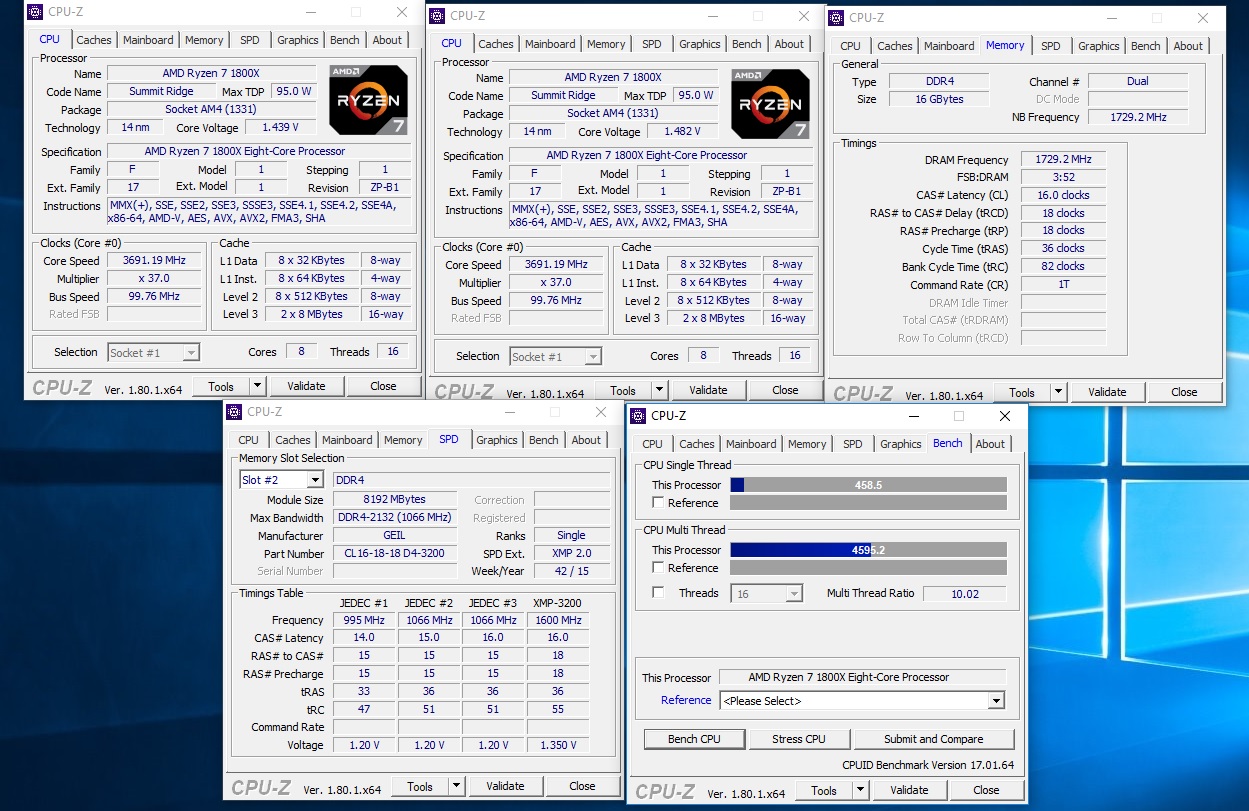
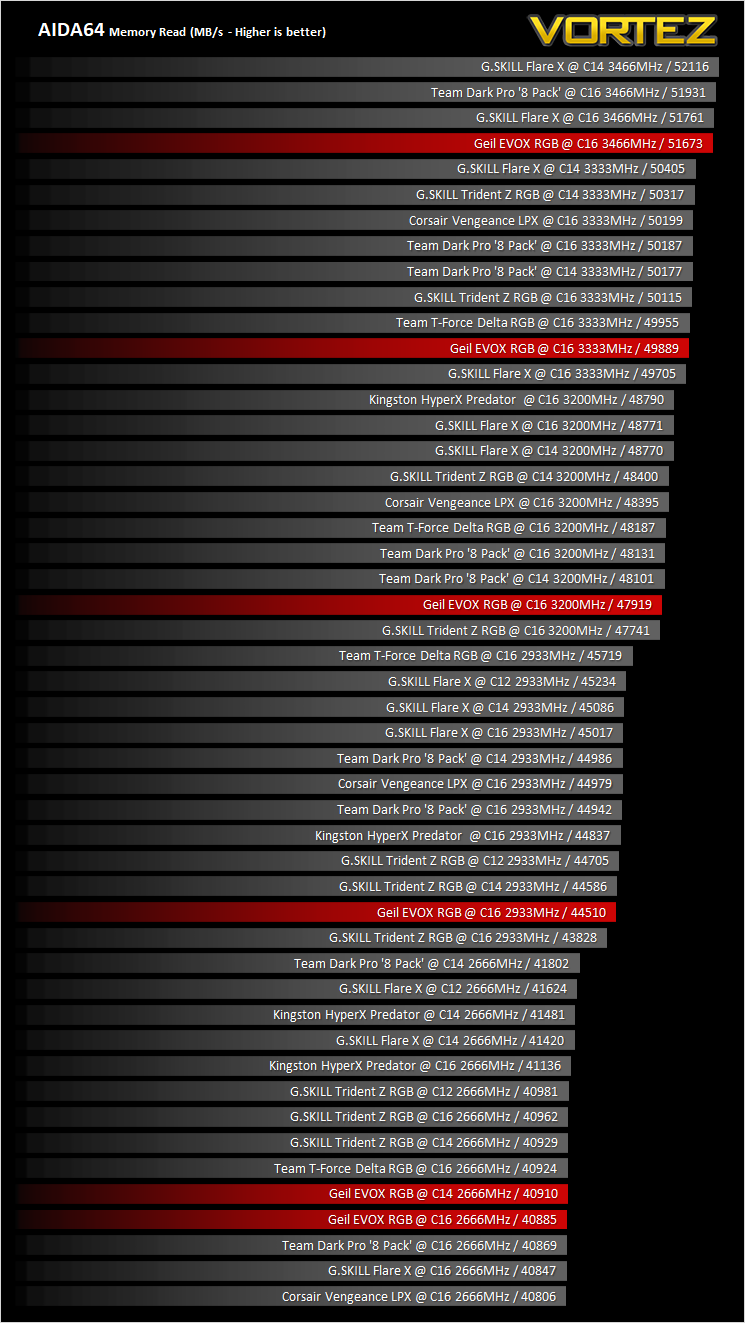
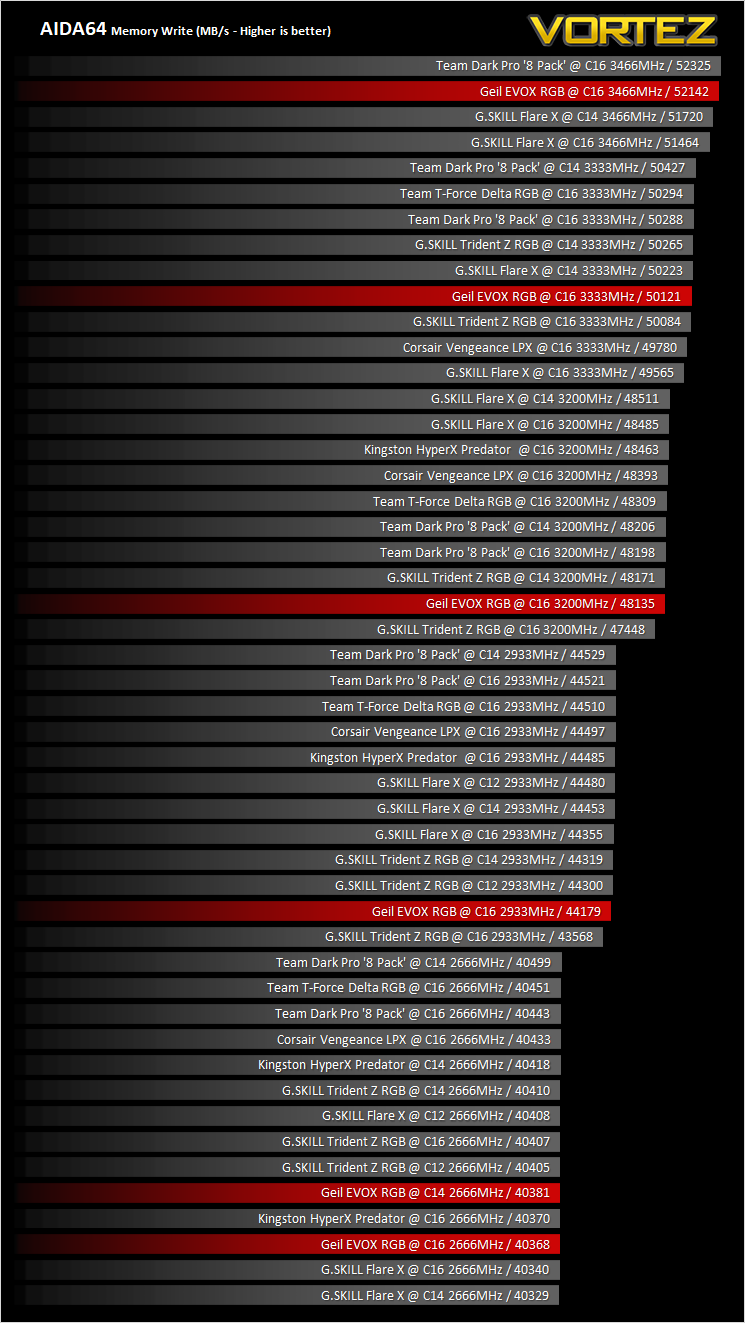
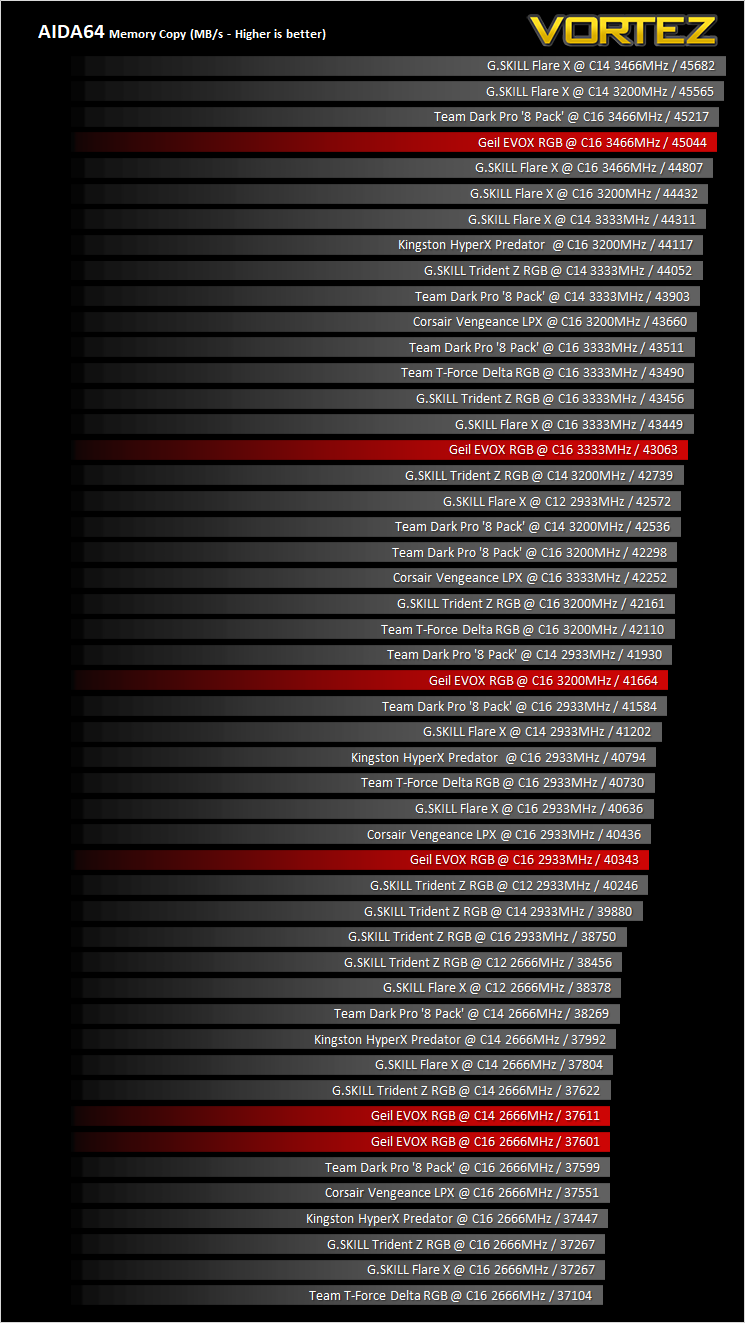
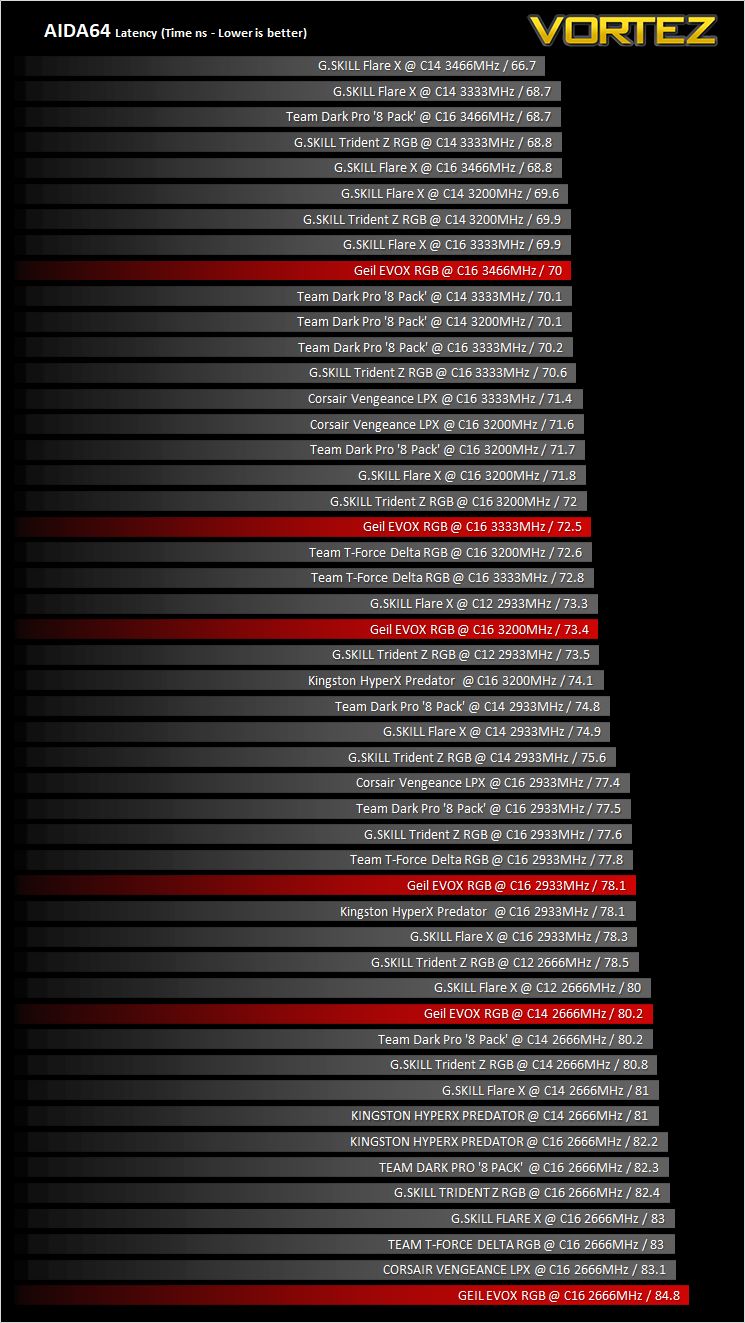
Though not as aggressively timed as some of the high performance kits we have recently looked at, we were a little sceptical in regards to the overclock potential. We managed to achieve a Cas latency of 14 at 2666MHz, and could only manage 16-16-16-16-36-63-1T at 2933MHz. The XMP timings of 16-18-18-18-36-82-1T surprisingly allowed us to take the memory to the IMC limit of our Ryzen 7 1800X (3466MHz) (@ 1.35V), however this was the limit, as further testing proved that the EVO X couldn’t quite make it to 3600MHz. This is a decent jump in frequency and should boost the performance a little better considering the relatively slack timings.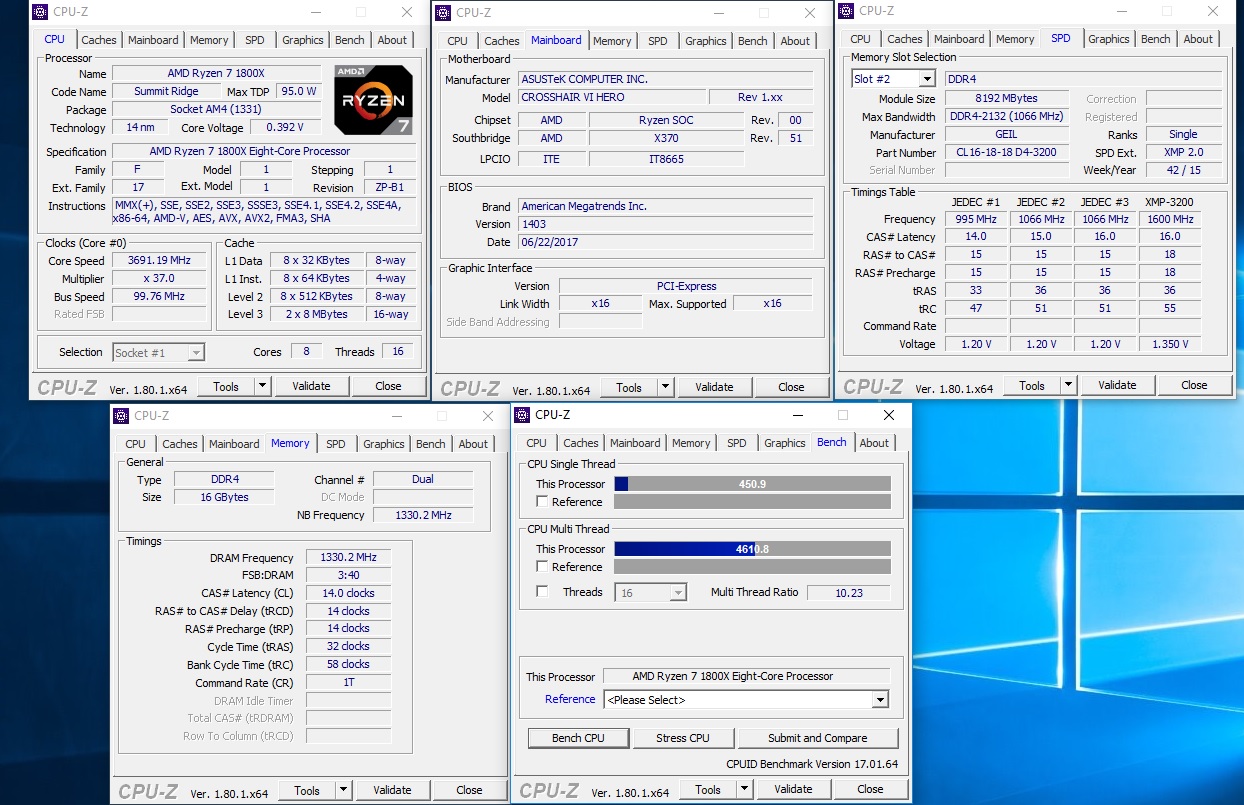
Memory Transfer Performance – AIDA64
AIDA64 Product PageMemory bandwidth benchmarks (Memory Read, Memory Write, Memory Copy) measure the maximum achiveable memory data transfer bandwidth. The code behind these benchmark methods are written in Assembly and they are extremely optimized for every popular AMD, Intel and VIA processor core variants by utilizing the appropriate x86/x64, x87, MMX, MMX+, 3DNow!, SSE, SSE2, SSE4.1, AVX, and AVX2 instruction set extension.
The Memory Latency benchmark measures the typical delay when the CPU reads data from system memory. Memory latency time means the penalty measured from the issuing of the read command until the data arrives to the integer registers of the CPU.
The Memory Latency benchmark measures the typical delay when the CPU reads data from system memory. Memory latency time means the penalty measured from the issuing of the read command until the data arrives to the integer registers of the CPU.
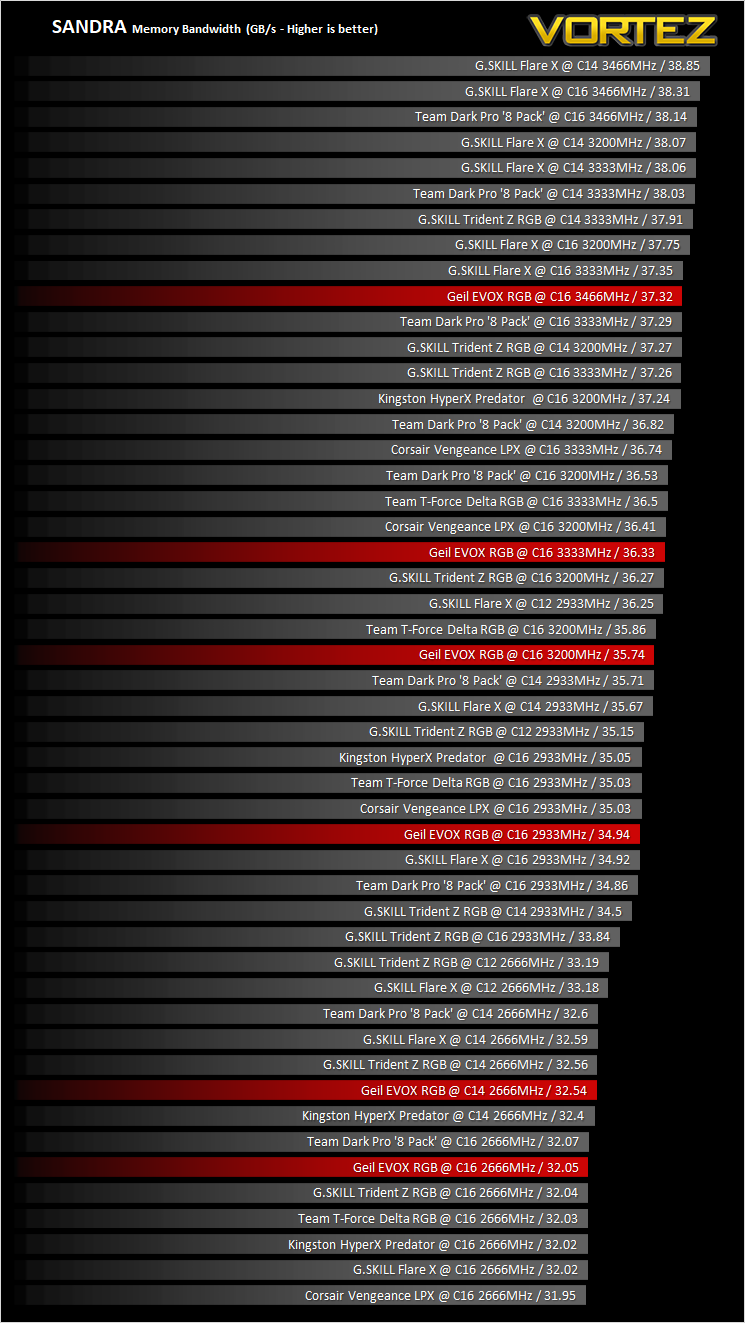
Bandwidth Performance – SiSoftware SANDRA
SANDRA isn’t always a benchmark that is included in hardware reviews but I believe it shouldn’t be ignored. SANDRA provides a vigorous package that tests your system in a rather large array of benchmarks. There are many aspects of benchmark that can be executed.
Processing Power Performance – Cinebench R15
CINEBENCH can measure systems with up to 64 processor threads. This test scene contains approximately 2,000 objects which in turn contain more than 300,000 polygons in total, and uses sharp and blurred reflections, area lights, shadows, procedural shaders, antialiasing, and much more. The result is displayed in points (pts). The higher the number, the faster your processor.
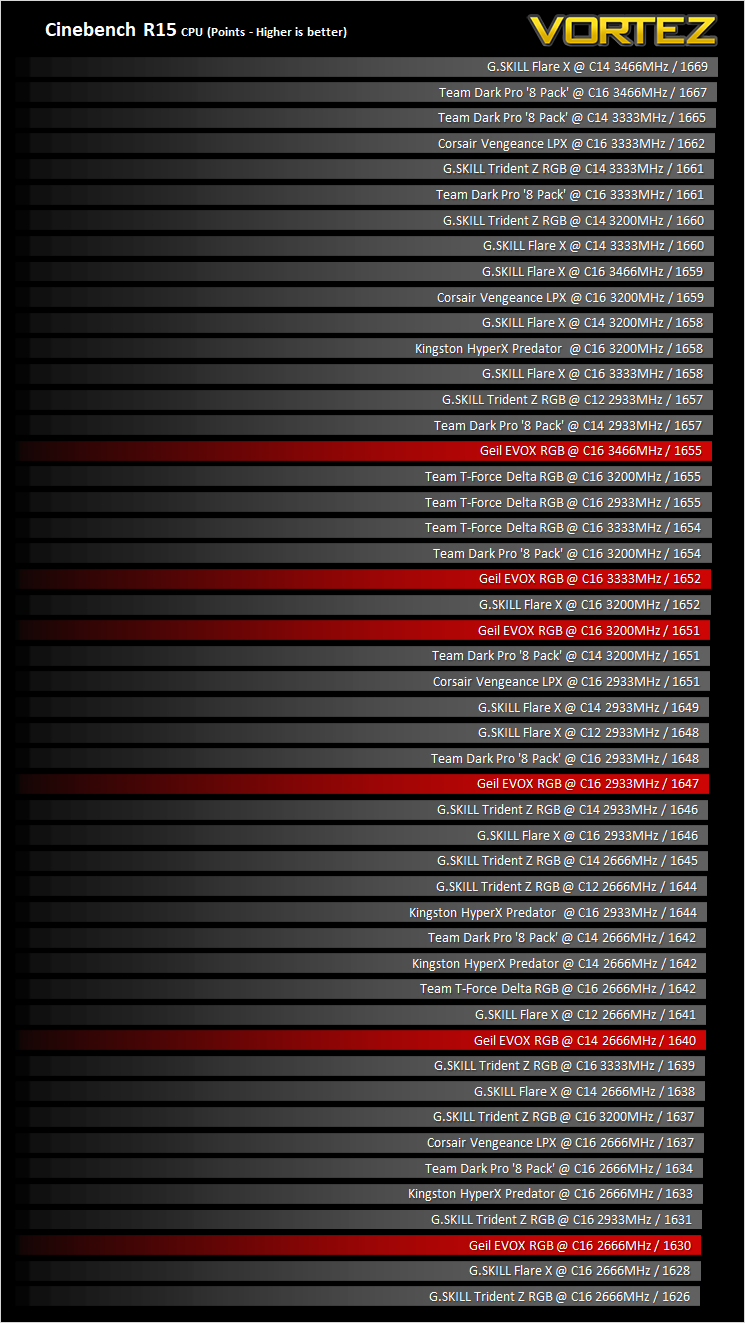
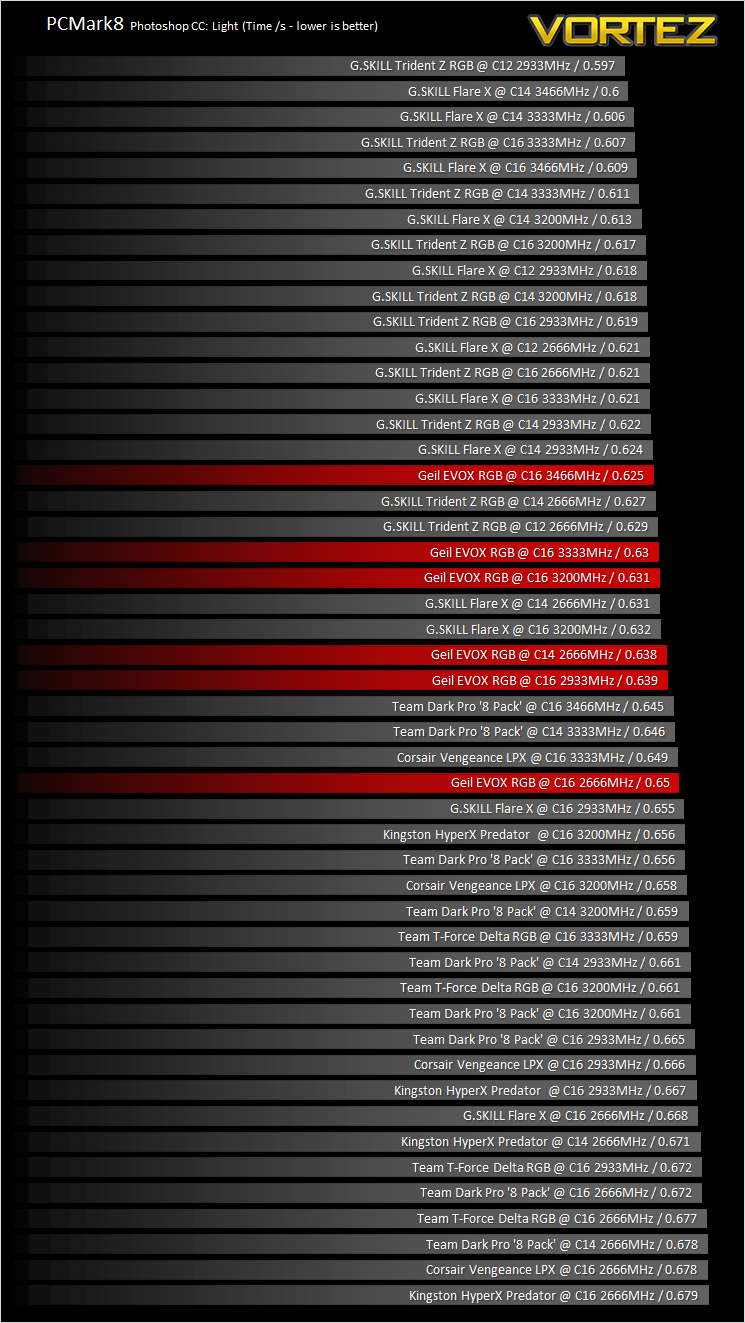
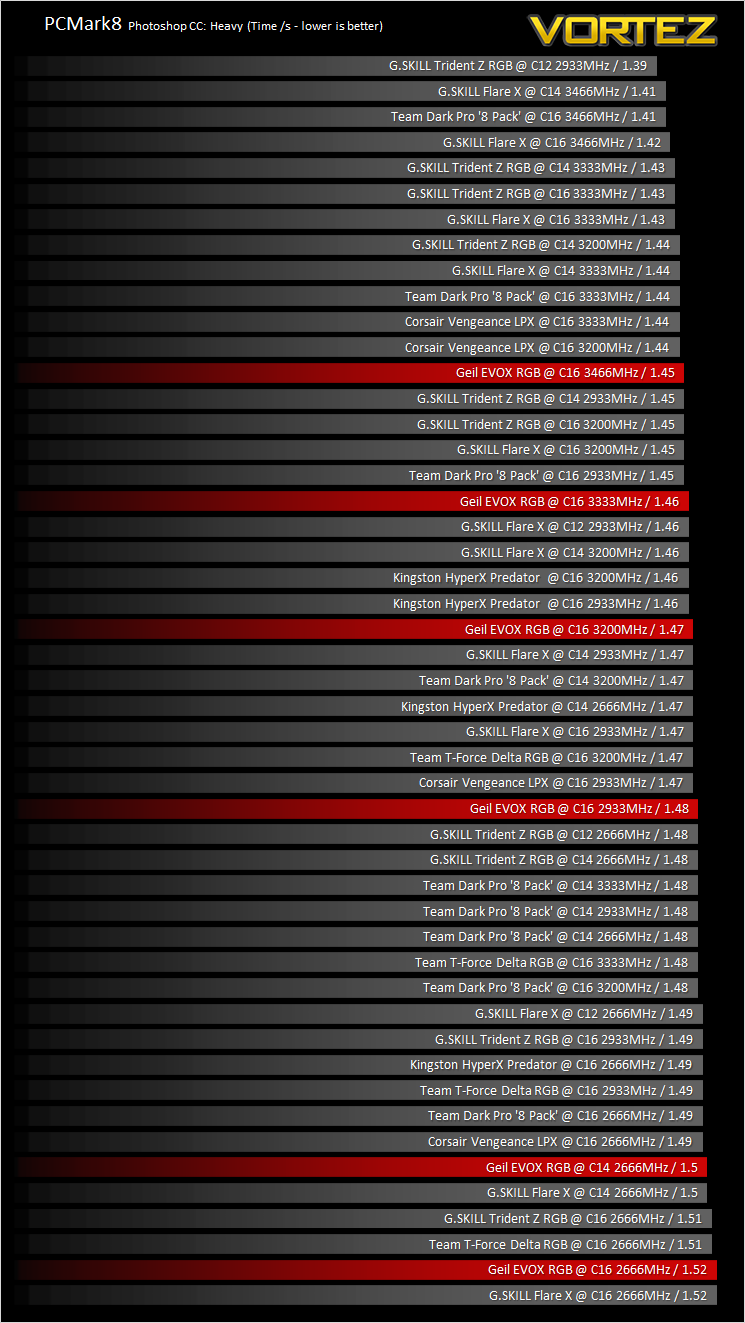
Image Editing Performance – PCMark 8 Photoshop
PCMark 8 Product Page Developed in partnership with Benchmark Development Program members Acer, AMD, Condusiv Technologies, Dell, HGST, HP, Intel, Microsoft, NVIDIA, Samsung, SanDisk, Seagate and Western Digital, PCMark 8 is the latest version in FutureMark’s popular series of PC benchmarking tools. Improving on previous releases, PCMark 8 includes new tests using popular applications from Adobe and Microsoft.
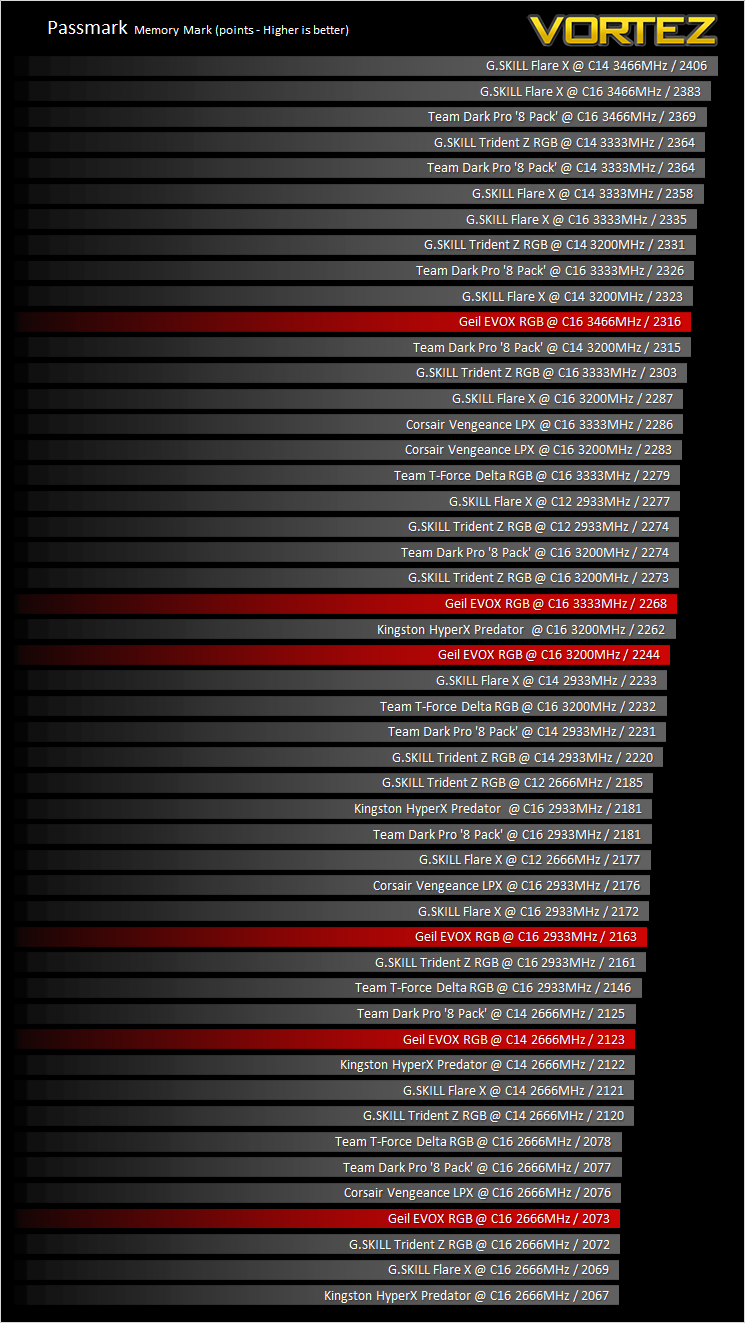
PassMark – Memory Mark
PassMark Performance Test. Fast, easy to use, PC speed testing and benchmarking. PassMark PerformanceTest allows you to objectively benchmark a PC using a variety of different speed tests and compare the results to other computers.
Gaming Performance – Dawn of War III
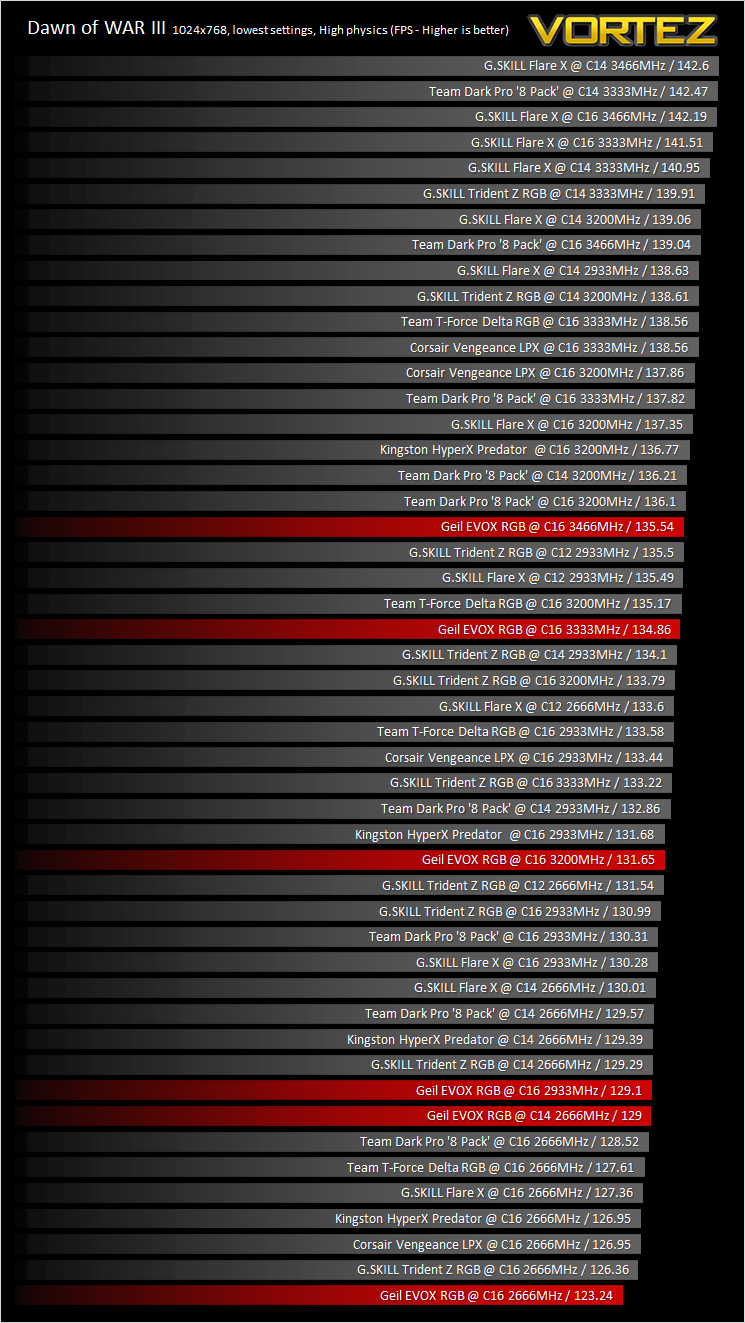
To test out the benefit of faster memory in a real world scenario, we have taken a recent game and created a CPU limited scenario by reducing the resolution and graphics settings to minimum, while setting the CPU dependent settings at their highest.
Conclusion
The EVO X AMD Edition memory modules come in with some surprises and neat tricks. As a memory kit, it gave a solid performance and can be overclocked little to boost the performance beyond the relatively slack XMP settings provided. The RGB lighting is clean, and can help create a great contemporary desktop system with customised themes/colours. Thanks to the HILM, the EVO X memory can provide customisable RGB lighting regardless of the motherboard you pair it with as it allows for manual control, or control via a motherboard RGB header (giving you control via any motherboard RGB lighting APP).
If the upside of this approach towards the RGB LED lighting is wide compatibility, the downsides of this approach is that the completely independent lighting module clearly needs a lot of space, pushing the EVO X to a somewhat monstrous height of 58-60mm. This will cause some limitations as to which CPU coolers you can then use. The other inherent downside, is that it requires CABLES to work, destroying any possibility of having a nice clean system build, on top of that, you will then be sacrificing an RGB LED motherboard header, or a fan header just to light up your memory modules (only use on or the other, never use both as this may damage the lighting system, and potentially the memory). This approach is somewhat understandable as it takes a lot of work as a 3rd party to get your memory circuitry to play nicely with various different apps from various different manufacturers, however, most people will likely be happy with conventional, well-price, non-RGB LED memory kits over the inconvenience of tall RGB memory kits that require additional cables to get things working.
The EVO X is an attractive RGB memory kit which, through its innovations, will give people the convenience of customising the RGB LED lighting regardless of their motherboard manufacturer.
Pros
+ Attractive aesthetics (Available in Black or White)
+ RGB lighting
+ Compatible with any RGB Sync App via RGB Header
+ Manual RGB control
+ Can be overclocked a little
+ Lifetime Warranty
Cons
– Requires additional cables for RGB lighting to work
– Tall modules (may cause compatibility issues with air coolers)
– Timings not as tight as they could be
+ Attractive aesthetics (Available in Black or White)
+ RGB lighting
+ Compatible with any RGB Sync App via RGB Header
+ Manual RGB control
+ Can be overclocked a little
+ Lifetime Warranty
Cons
– Requires additional cables for RGB lighting to work
– Tall modules (may cause compatibility issues with air coolers)
– Timings not as tight as they could be
Click here for an explanation of our awards at Vortez.net.