It’s time to look at what GIGABYTE has to offer in their top-tier AORUS Intel Z690 motherboard, the Z690 AORUS MASTER. Is this the best board that money can buy?

Product on Review: Z690 AORUS Master
Manufacturer: AORUS
Street Price: GBP £450 | USD $470 | AUD $900
So far in our venture into the world of Intel Alder Lake we’ve checked out GIGABYTE’s Z690 AORUS PRO and we were mightily impressed with what it has to offer. Today, we are back with the AORUS division yet again but this time we’re looking at an Intel Z690 motherboard which is slightly higher up the portfolio, stretching into the realms of top-tier.
The Z690 AORUS MASTER isn’t quite the flagship model for GIGABYTE, but it certainly isn’t far from it. This E-ATX motherboard packs in a huge array of features, some of which include 5x M.2 slots and 10x USB ports. The initial cost of this motherboard may put some off, but it seeks to cater for all requirements. Should you consider it?
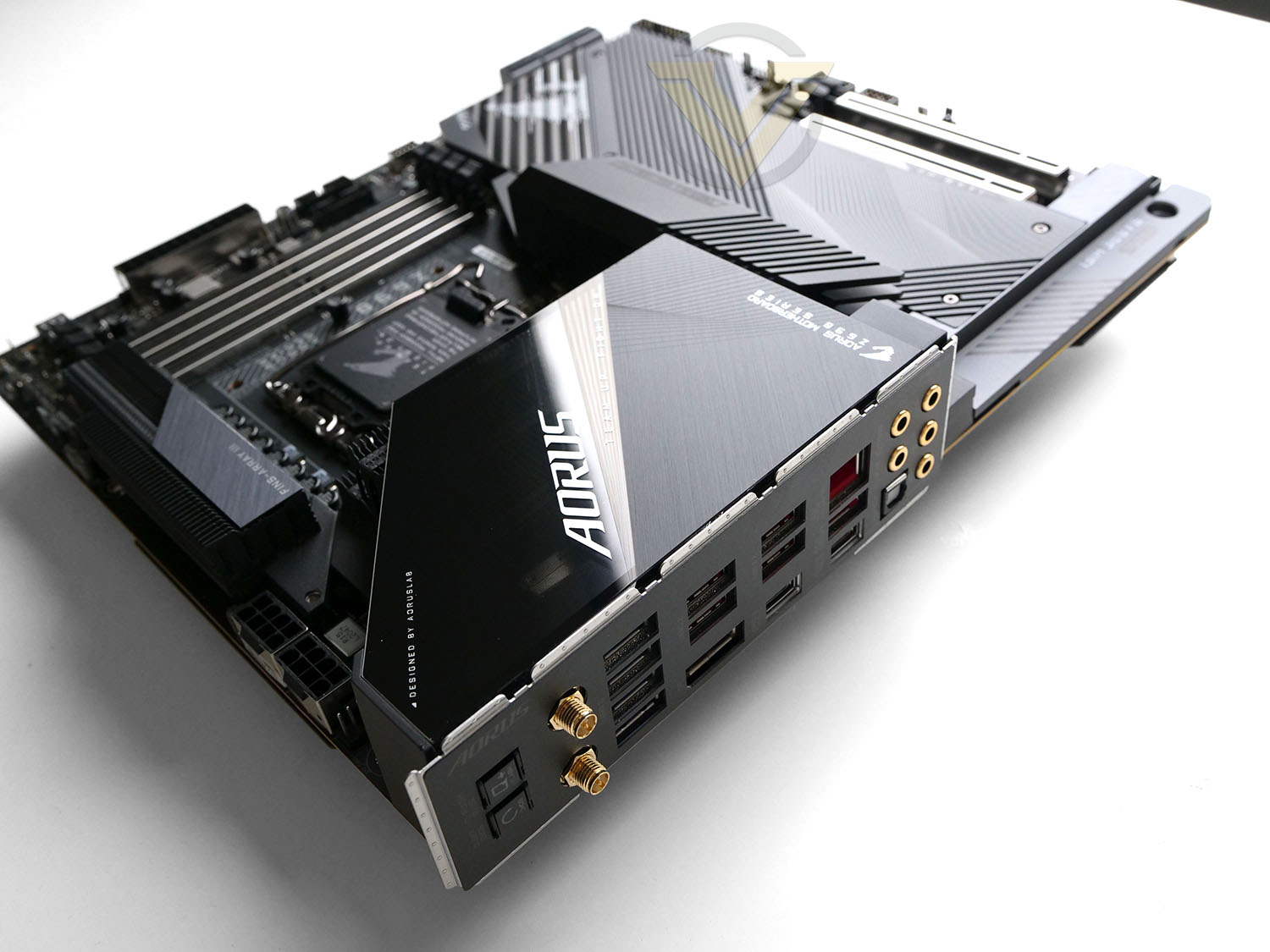
AORUS on the Z690 MASTER
Rule supreme with the Z690 AORUS gaming motherboards. The new king of gaming platform continues the legendary AORUS bloodline with the most robust power delivery and dominant thermal design, glorified with the complete memory overclocking technology to crown your PC with the best Alder Lake’s performance in all its gaming glory.
Technical Specifications
Below are the technical specifications concerning the Z690 AORUS MASTER:
CPU
Intel 12th Generation Core Processors
Chipset
Intel Z690 Chipset
Memory
DDR5 4800-6400 MHz
Dual Channel Memory Architecture
Supports Intel® Extreme Memory Profile (XMP)
Graphics
1 x DP 1.2
Expansion Slots
1 x PCI Express x16 slot, running at x16 (PCIEX16)
(The PCIEX16 slot conforms to PCI Express 5.0 standard.)
2 x PCI Express x16 slots, running at x4 (PCIEX4_1, PCIEX4_2)
(The PCIEX4 slots conform to PCI Express 3.0 standard.)
Multi-GPU Support
Supports AMD® CrossFire™ Technology
Storage
CPU:
1 x M.2 connector (Socket 3, M key, type 2260/2280/22110 PCIe 4.0 x4/x2 SSD support) (M2A_CPU)
Chipset:
2 x M.2 connectors (Socket 3, M key, type 2260/2280/22110 PCIe 4.0 x4/x2 SSD support) (M2P_SB, M2Q_SB)
1 x M.2 connector (Socket 3, M key, type 2242/2260/2280 PCIe 3.0 x4/x2 SSD support) (M2C_SB)
1 x M.2 connector (Socket 3, M key, type 2242/2260/2280 SATA and PCIe 4.0 x4/x2 SSD support) (M2M_SB)
6 x SATA 6Gb/s connectors
Ethernet
Marvell® AQtion AQC113C 10GbE LAN chip
Wireless & Bluetooth
Intel® Wi-Fi 6E AX210
The Wireless module is pre-installed in the M.2 (Key-E) slot
Supports MU-MIMO TX/RX, 2.4GHz/5GHz/6GHz1 (160MHz) up to 2.4Gbps
Supports 802.11 a/ b/ g/ n/ ac/ ax
Supports Bluetooth® 5.2
USB
Chipset:
2 x USB Type-C® ports, with USB 3.2 Gen 2×2 support
(1 port on the back panel, 1 port available through the internal USB header)
3 x USB 3.2 Gen 2 Type-A ports (red) on the back panel
Chipset+USB 3.2 Gen 2 Hub:
1 x USB Type-C® port on the back panel, with USB 3.2 Gen 2 support
2 x USB 3.2 Gen 2 Type-A ports (red) on the back panel
Chipset+2 USB 3.2 Gen 1 Hubs:
8 x USB 3.2 Gen 1 ports (4 ports on the back panel, 4 ports available through the internal USB headers)
Chipset+USB 2.0 Hub:
4 x USB 2.0/1.1 ports available through the internal USB headers
Audio
Realtek® ALC1220-VB CODEC
* The front panel line out jack supports DSD audio.
ESS ES9118 DAC chip
Support for DTS:X® Ultra
High Definition Audio
2/4/5.1/7.1-channel
Support for S/PDIF Out
Back Panel I/O Ports
1 x Q-Flash Plus button
1 x Clear CMOS button
2 x SMA antenna connectors (2T2R)
1 x DisplayPort
1 x USB Type-C® port, with USB 3.2 Gen 2 support
1 x USB Type-C® port, with USB 3.2 Gen 2×2 support
5 x USB 3.2 Gen 2 Type-A ports (red)
4 x USB 3.2 Gen 1 ports
1 x RJ-45 port
1 x optical S/PDIF Out connector
5 x audio jacks
Operating System
Windows 10/11 64bit
Form Factor
E-ATX Form Factor; 30.5cm x 25.9cm
Intel 12th Generation Core Processors
Chipset
Intel Z690 Chipset
Memory
DDR5 4800-6400 MHz
Dual Channel Memory Architecture
Supports Intel® Extreme Memory Profile (XMP)
Graphics
1 x DP 1.2
Expansion Slots
1 x PCI Express x16 slot, running at x16 (PCIEX16)
(The PCIEX16 slot conforms to PCI Express 5.0 standard.)
2 x PCI Express x16 slots, running at x4 (PCIEX4_1, PCIEX4_2)
(The PCIEX4 slots conform to PCI Express 3.0 standard.)
Multi-GPU Support
Supports AMD® CrossFire™ Technology
Storage
CPU:
1 x M.2 connector (Socket 3, M key, type 2260/2280/22110 PCIe 4.0 x4/x2 SSD support) (M2A_CPU)
Chipset:
2 x M.2 connectors (Socket 3, M key, type 2260/2280/22110 PCIe 4.0 x4/x2 SSD support) (M2P_SB, M2Q_SB)
1 x M.2 connector (Socket 3, M key, type 2242/2260/2280 PCIe 3.0 x4/x2 SSD support) (M2C_SB)
1 x M.2 connector (Socket 3, M key, type 2242/2260/2280 SATA and PCIe 4.0 x4/x2 SSD support) (M2M_SB)
6 x SATA 6Gb/s connectors
Ethernet
Marvell® AQtion AQC113C 10GbE LAN chip
Wireless & Bluetooth
Intel® Wi-Fi 6E AX210
The Wireless module is pre-installed in the M.2 (Key-E) slot
Supports MU-MIMO TX/RX, 2.4GHz/5GHz/6GHz1 (160MHz) up to 2.4Gbps
Supports 802.11 a/ b/ g/ n/ ac/ ax
Supports Bluetooth® 5.2
USB
Chipset:
2 x USB Type-C® ports, with USB 3.2 Gen 2×2 support
(1 port on the back panel, 1 port available through the internal USB header)
3 x USB 3.2 Gen 2 Type-A ports (red) on the back panel
Chipset+USB 3.2 Gen 2 Hub:
1 x USB Type-C® port on the back panel, with USB 3.2 Gen 2 support
2 x USB 3.2 Gen 2 Type-A ports (red) on the back panel
Chipset+2 USB 3.2 Gen 1 Hubs:
8 x USB 3.2 Gen 1 ports (4 ports on the back panel, 4 ports available through the internal USB headers)
Chipset+USB 2.0 Hub:
4 x USB 2.0/1.1 ports available through the internal USB headers
Audio
Realtek® ALC1220-VB CODEC
* The front panel line out jack supports DSD audio.
ESS ES9118 DAC chip
Support for DTS:X® Ultra
High Definition Audio
2/4/5.1/7.1-channel
Support for S/PDIF Out
Back Panel I/O Ports
1 x Q-Flash Plus button
1 x Clear CMOS button
2 x SMA antenna connectors (2T2R)
1 x DisplayPort
1 x USB Type-C® port, with USB 3.2 Gen 2 support
1 x USB Type-C® port, with USB 3.2 Gen 2×2 support
5 x USB 3.2 Gen 2 Type-A ports (red)
4 x USB 3.2 Gen 1 ports
1 x RJ-45 port
1 x optical S/PDIF Out connector
5 x audio jacks
Operating System
Windows 10/11 64bit
Form Factor
E-ATX Form Factor; 30.5cm x 25.9cm
Board layout and features
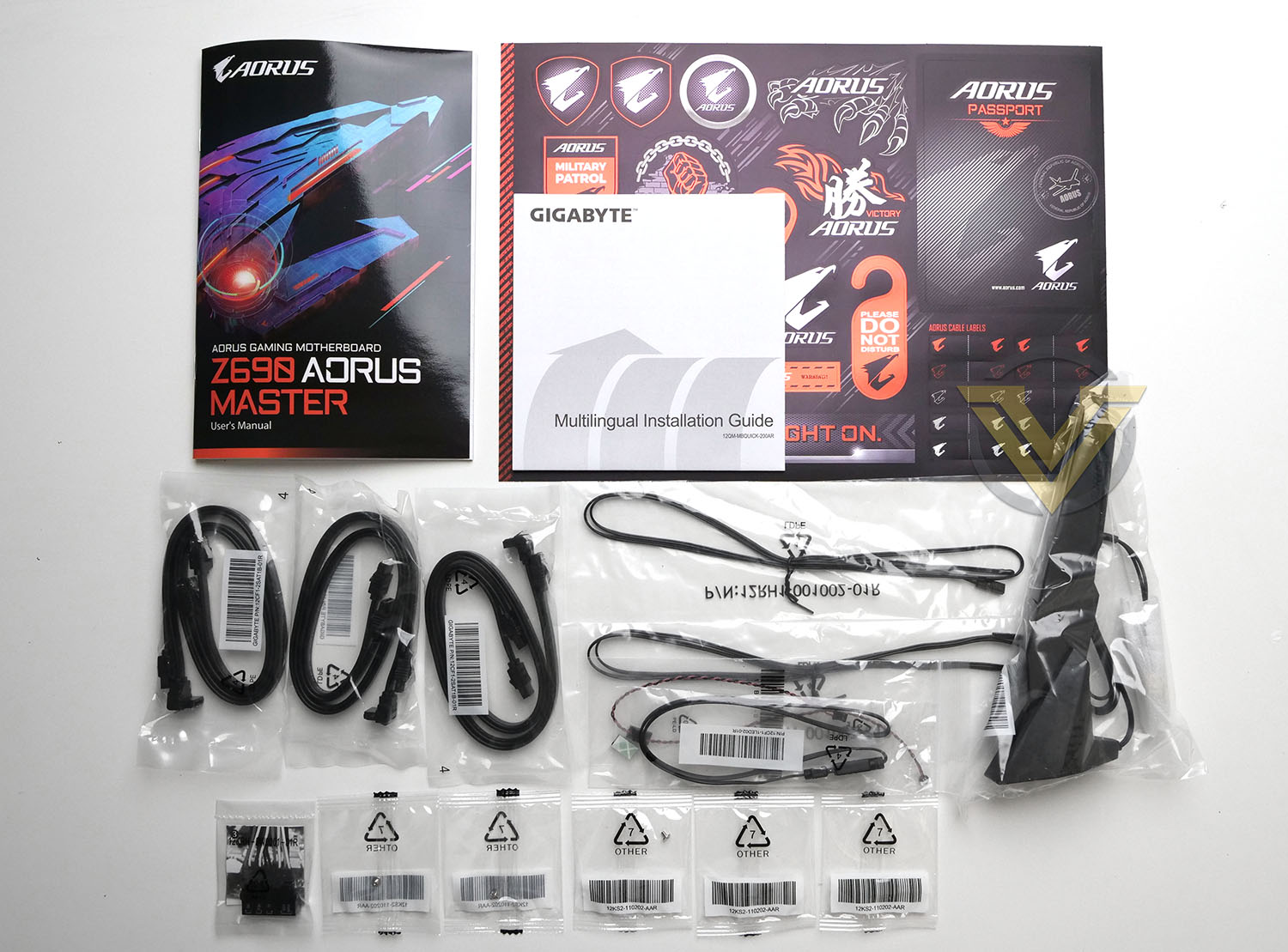
MASTER is a regarded as a high-end motherboard in the AORUS division, as such the accessories bundle is exhaustive. Gamers can expect a plethora of items to get the most out of this model and maximise on the user experience. NOTABLY:
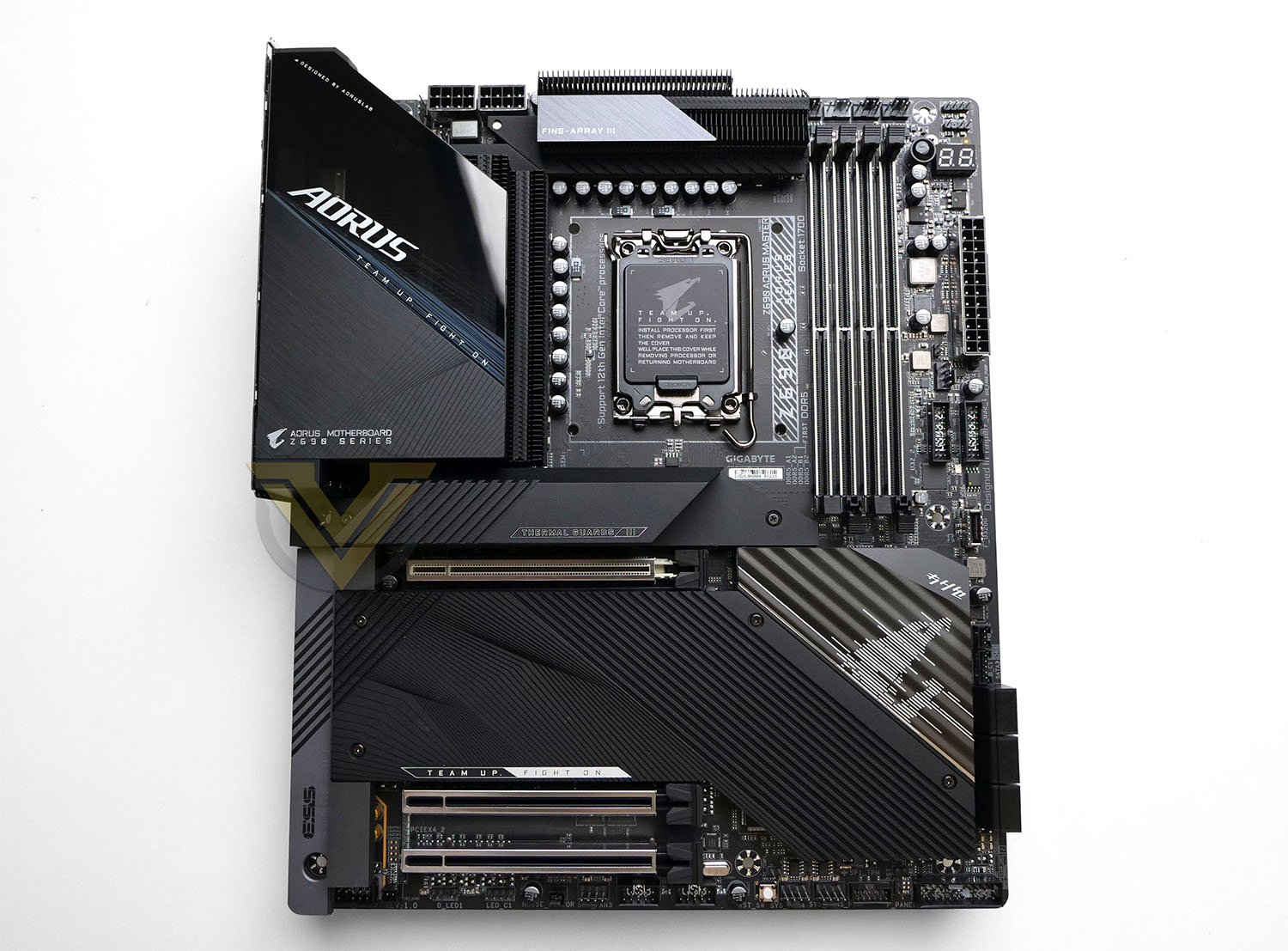
MASTER conforms to the E-ATX Form Factor and is therefore wider than a standard motherboard. With this model being wider, the designers are able to include more features.
The design of MASTER is fairly minimalist, it adopts a two-tone theme and looks very professional.
Being a Z690 motherboard, the socket is LGA 1700 and has support for Intel 12th Gen. Processors (Alder Lake). MASTER comes in with a phenomenal 19 + 1 + 2 digital phase design with the inclusion of 105A power stages and black solid caps. There are two gigantic heatsinks which cover the VRMs – and as we discovered in our testing, the thermal design is exceptional – keeping temperatures well within the realms of adequate. Behind these heatsinks we have twin 8-pin CPU connectors.
There are 10x 4-pin fan headers spread out at the top, side, bottom and middle of the board with designated compatibility for water pumps. 4 RGB LED headers are also present for additional lighting and these come in the form of 2x RGB LED and 2x addressable LED. This will link up to the RGB Fusion software. MASTER’s integrated RGB lighting involves the rear panel cover and the Z690 heatsink.
Memory support sees us able to use up to 128GB of DDR5 and up to 6400MHz and the slots have steel reinforcement for longevity. In the memory region there is also Debug LED panel which is a handy diagnostic feature identifying any problems on bootup and an onboard power button which is useful if you have this board on a test bench.
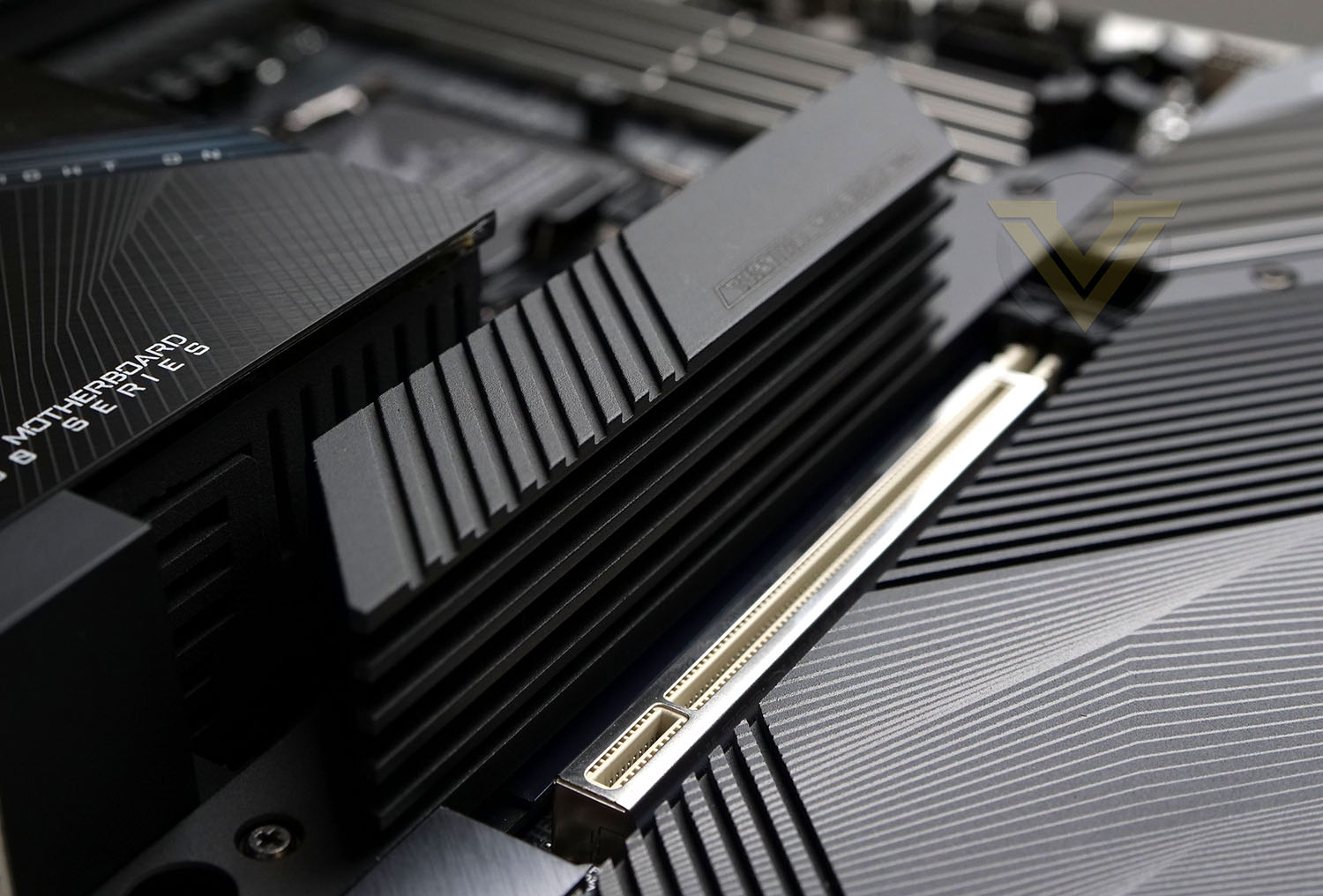
Connectivity for your computer case comes in the form of 1x USB 3.2 Gen 2 header and 2x USB 3.2 Gen 1 header for the front panel. In terms of storage, there are up to 6 SATA 6GB/s ports and a whopping 5x PCIe M.2 slots – 4x are PCIe 4.0 and the remaining is PCIe 3.0. All M.2 slots feature a corresponding heatsink to control temperatures – the upper slot has been given it’s own supersized aluminium fin stack.
For graphics delivery there is 1x PCIe 5.0 X16 slot and 2x PCIe 3.0 x16 slots. The upper slot is Gen5 and should be used if a single graphics card is operating – it operates at the full 16 lanes and features enhanced steel slot protection. The other PCIe are wired for just 4 lanes but still benefit from the steel reinforcement.
For audio, E uses the Realtec ALC 1220-VB processor. Most boards are using the newer 4080 but in our testing we struggled to see a performance difference. The audio package itself includes:
• ESS SABRE Hi-Fi 9118 DAC
• ALC1220-VB Audio
• Audiophile Grade WIMA Capacitors
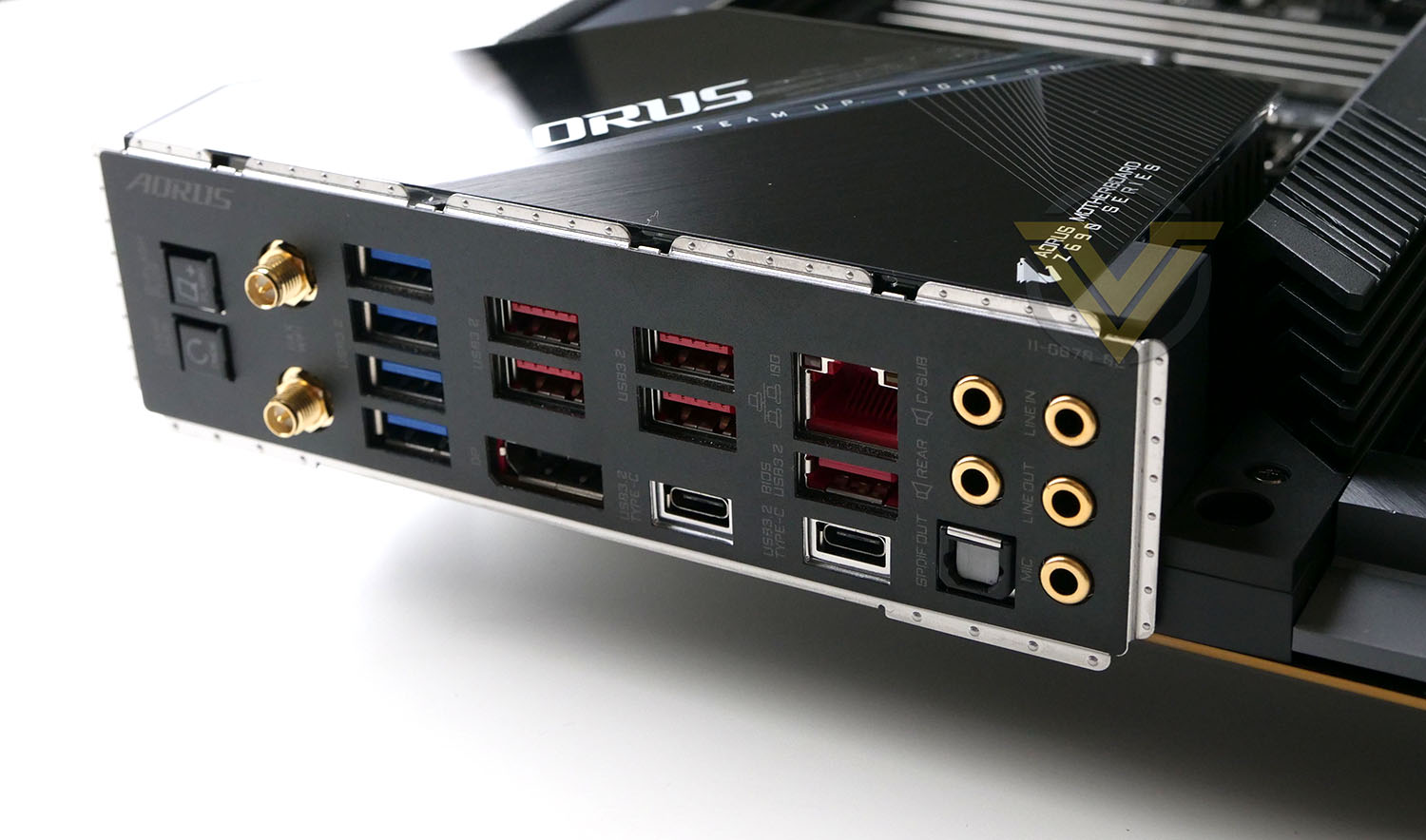
The back panel of MASTER is jam-packed with features and connectivity – Available we have:
1 x Q-Flash Plus button
1 x Clear CMOS button
2 x SMA antenna connectors (2T2R)
1 x DisplayPort
1 x USB Type-C® port, with USB 3.2 Gen 2 support
1 x USB Type-C® port, with USB 3.2 Gen 2×2 support
5 x USB 3.2 Gen 2 Type-A ports (red)
4 x USB 3.2 Gen 1 ports
1 x RJ-45 port
1 x optical S/PDIF Out connector
5 x audio jacks
Most notable is the inclusion of AQUANTIA® 10GbE BASE-T LAN for the wired network connection, this steps above the competition to offer 10 Gigabit ethernet possibilities. It’s wonderful to see so many USB 3.2 Gen 2 on this back panel!
Test Setup & Methodology
Notes: We’ve revamped our benchmark regime by removing a number of tests which reveal little, to no difference between each motherboard model. Gaming performance is one such area which has been removed due to the inability for each motherboard to offer any advantage over another. Instead, we have focussed on meaningful/tangible analysis which examines the VRM/chipset design, and the storage performance which will be far more informative to the end user.
TEST SETUP
CPU Intel Core i9-12900KCooling CORSAIR H150i ELITE LCD
Motherboard Z690 AORUS MASTER
Memory 64GB CORSAIR Dominator Platinum RGB 5200MHz DDR5
Graphics ZOTAC RTX 3070 Ti HOLO Extreme
Storage CORSAIR Force LX 512GB SSD
PSU Corsair RM 1000 80 Plus Gold Certified PSU
Monitor AOC U2879VF
BENCHMARKS
PCMark 10 – Overall Extended Score
SiSoftware SANDRA – SATA/PCIe Storage Tests
SiSoftware SANDRA – Processor Image Processing
SiSoftware SANDRA – SATA/PCIe Storage Tests
SiSoftware SANDRA – Processor Image Processing
OTHER SOFTWARE
Temperature Analysis: HWMonitor
Stress Testing Software: AIDA64 Stability Test
CPU Specification Monitoring: CPU-Z
Stress Testing Software: AIDA64 Stability Test
CPU Specification Monitoring: CPU-Z
Benchmarks: Power Consumption
In this first test we analyse the power efficiency from the wall for each motherboard (Minus the GPU). While each model uses the same chipset/platform, energy results can fluctuate between manufacturers due to the features and specifications that are integrated. First of all, for the idle tests the system is cold booted into Windows and no additional applications are executed – wattage is noted on the external energy monitor we use and then we open Aida64 stability test and execute a stress test, noting the highest reading on the monitor. Below are the results of this energy test.
Benchmarks: VRM & Chipset Cooling
Each motherboard manufacturer designs their board with a unique set of heatsinks to cover key areas like the VRM/mosfets and the chipset itself. In these test we use HWMonitor to identify the minimum values for VRM and chipset and then we load up Aida64 stability test again and perform a 20 minute run, recording the maximum value for both attributes.
Benchmarks: PCMark 10
PCMark 10 features a comprehensive set of tests that cover the wide variety of tasks performed in the modern workplace. With a range of performance tests, custom run options, and the new Battery Life Profile, PCMark 10 is the complete PC benchmark for the modern office.
Benchmarks: SATA Performance
In order to ascertain the SATA performance for our motherboards we use SiSoftware SANDRA and the File System Bandwidth performance test. This allows us to obtain the sequential read/write transfer rates for the drive being tested – Crucial MX300 SSD.
Benchmarks: PCIe M.2 Performance
In order to ascertain the PCIe M.2 performance for our motherboards we use SiSoftware SANDRA and the File System Bandwidth performance test. This allows us to obtain the sequential read/write transfer rates for the drive being tested – Kingston KC2500.
Benchmarks: CPU Image Processing
In our last test we observe the Image Processing performance from the CPU attached to the motherboard. For this we use SiSoftware SANDRA and the benchmark specifically designed for measuring the common algorithms associated with processing imagery.
Overclocking
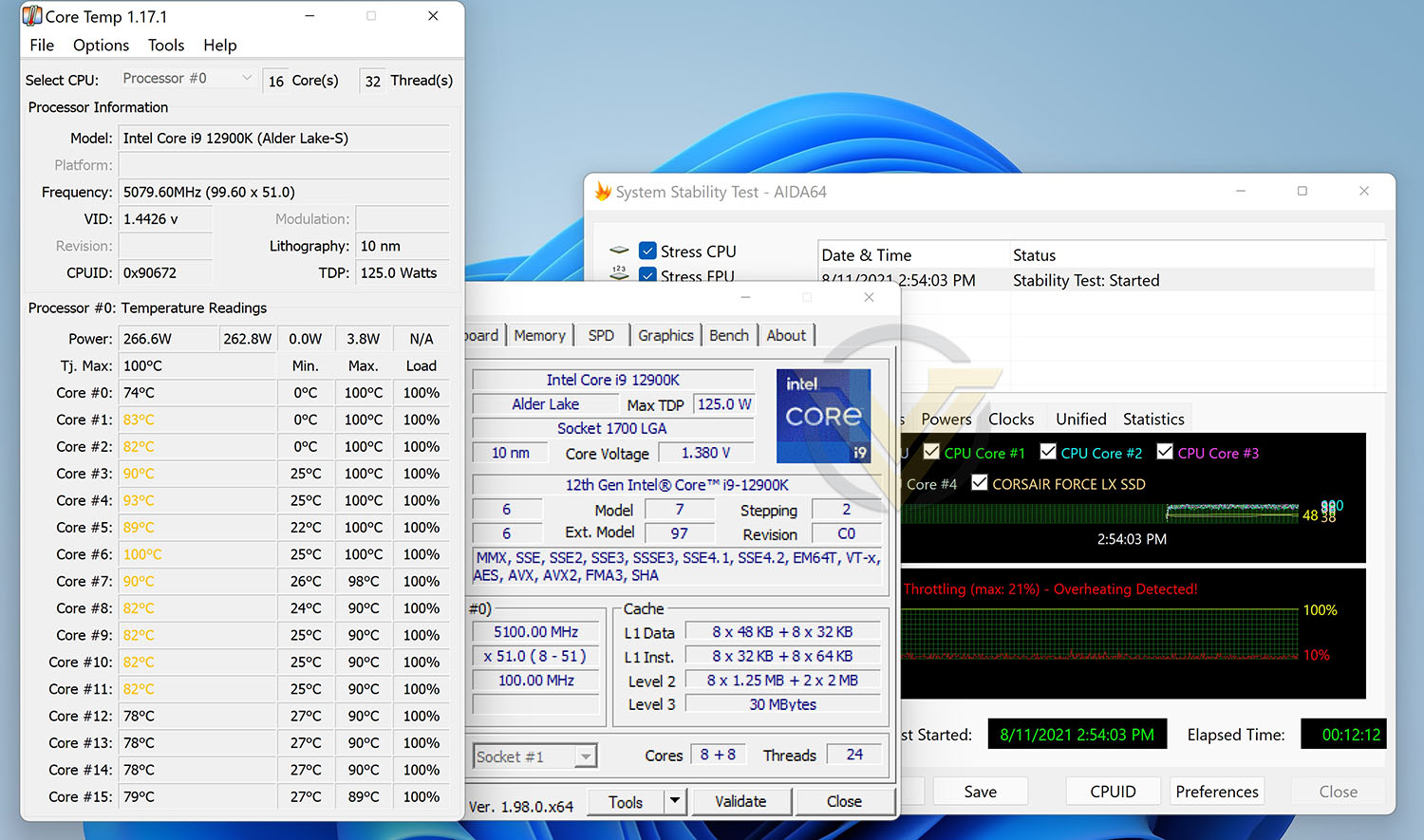
For the overclocking phase, we already know that our CPU (Intel Core i9-12900K) is able to reach 5.2GHz across all cores, and this is the object with each board we test – to pursue a 5.2GHz all-core OC.
MASTER managed to climb up to an all-core 5.1GHz overclock with the 12900K and required 1.38v – this is a great result and one of the best we have been able to achieve, however the temps, as you can see, sky rocket!
Conclusion
We’ve recently had a selection of Intel Z690 boards in for review which occupy the mid-to-upper end of the market, of the assortment, MASTER is the costliest of the bunch – but is it worth it?
Answering that question will largely depend on what you’re seeking to achieve. If you’re looking for almost every conceivable feature that Z690 has to offer, then yes you should certainly consider MASTER. In fact, we would go as far as to say that it betters the likes of the ASUS ROG STRIX Z690-E GAMING WIFI that we have previously reviewed, and yet both models are around the same price-point. MASTER offers way more in terms of USB connectivity, M.2 storage and additional perks which system builders are looking for.
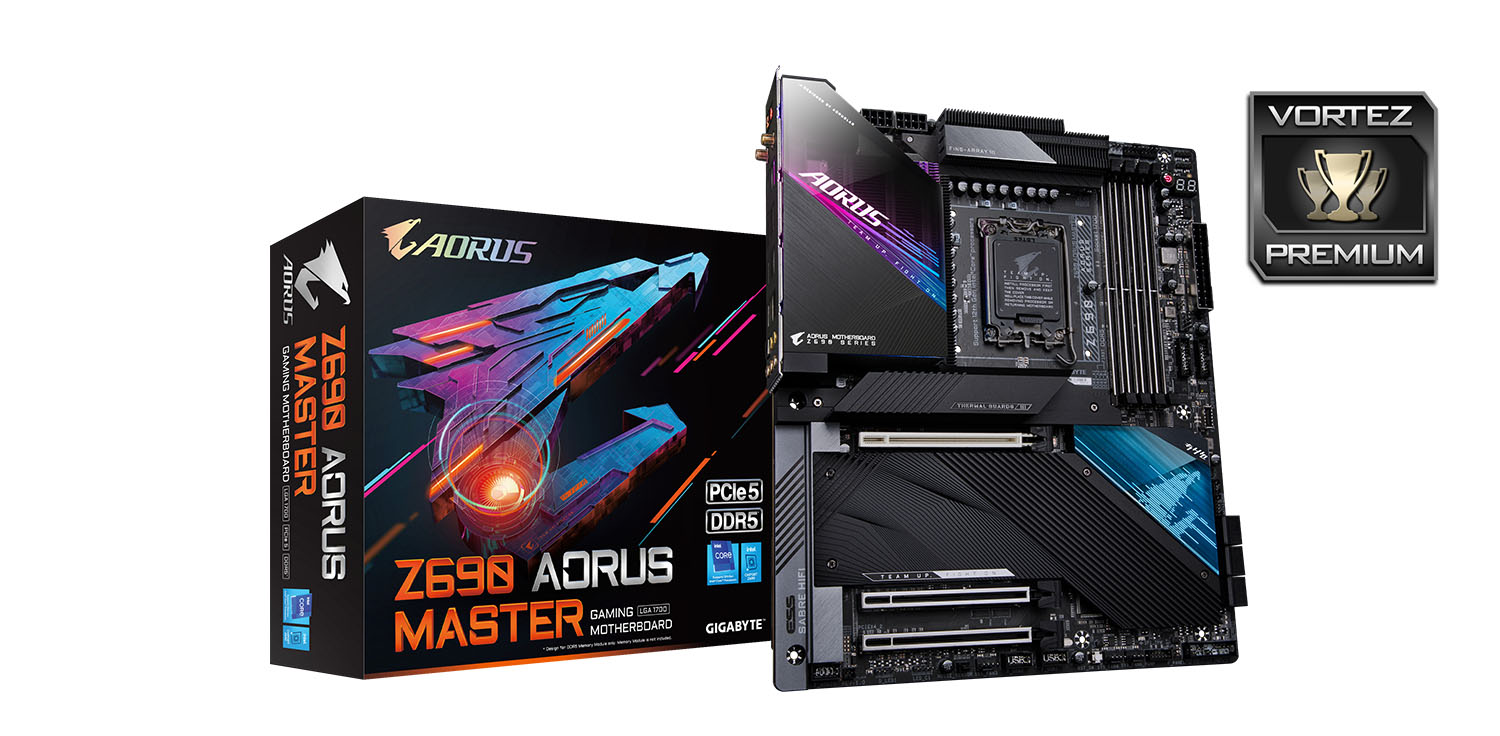
While not a huge issue, it should be noted that this board is E-ATX and it may not fit into all cases. By increasing the width of MASTER, we can host even more features and attributes – more specifically up to 5x M.2 slots and additional front panel connectivity.
Pricing for MASTER is not for a faint hearted. This model comes in at GBP £450 | USD $470 | AUD $900 and while it does have a lot to offer, it’s still a substantial sum of money, especially when you need to factor in DDR5 and a new CPU for any 12th Gen. upgrade.
MASTER performs very well, in our overclocking test we managed to push out 12900K to an all-core 5.1 GHz overclock. The VRM and chipset thermals were also very encouraging. Of the boards we’ve tested, MASTER came out as one of the better options in this regard.
If you’re looking for all the bells and whistles you should consider the Z690 AORUS MASTER – it excels in all areas and is a top-pick!
Pros
+ Pleasing design
+ Good RGB lighting features
+ Offers a total of 5x M.2 slots
+ Provides 10G Ethernet
+ Abundant supply of USB on back/front panel
+ Solid VRM configuration w/ good thermals
+ Overclocks easily
+ Performs very well
+ PCIe 5.0 X16 slot
+ Up to 10 fan headers
+ Support for Thunderbolt 4 add-in device
Cons
– Expensive!
+ Pleasing design
+ Good RGB lighting features
+ Offers a total of 5x M.2 slots
+ Provides 10G Ethernet
+ Abundant supply of USB on back/front panel
+ Solid VRM configuration w/ good thermals
+ Overclocks easily
+ Performs very well
+ PCIe 5.0 X16 slot
+ Up to 10 fan headers
+ Support for Thunderbolt 4 add-in device
Cons
– Expensive!
Click here for an explanation of our awards at Vortez.net.
Stay connected with Vortez social media pages: