







As if the NVIDIA GTX 780 wasn’t fast enough, Inno3D have released a heavily overclocked version complete with their iChill HerculeZ X3.

Product on Review:
Inno3D iChill GeForce GTX 780 HerculeZ X3 Ultra
Manufacturer and Sponsor: Inno3D
Price: £599.99 (at time of review)
When we first cast our eyes over the iChill HerculeZ X3 cooler in our Inno3D GTX760 review we were left thoroughly impressed. Not only did it top our cooling charts but it looked simply divine if somewhat over engineered for a GTX 760s requirements. Today however, we see just how well Inno3D’s cooling solution fairs when it has the sterner task of keeping the flagship GeForce GTX 780 cool. The GTX 780 hidden beneath the gorgeous cooler has also been overclocked at the factory to give the end user a Core Base Clock of 1006 MHz resulting in a Boost Clock of 1046 MHz. This makes the Inno3D iChill GTX 780 HerculeZ X3 Ultra one of the fastest GTX 780’s currently available.
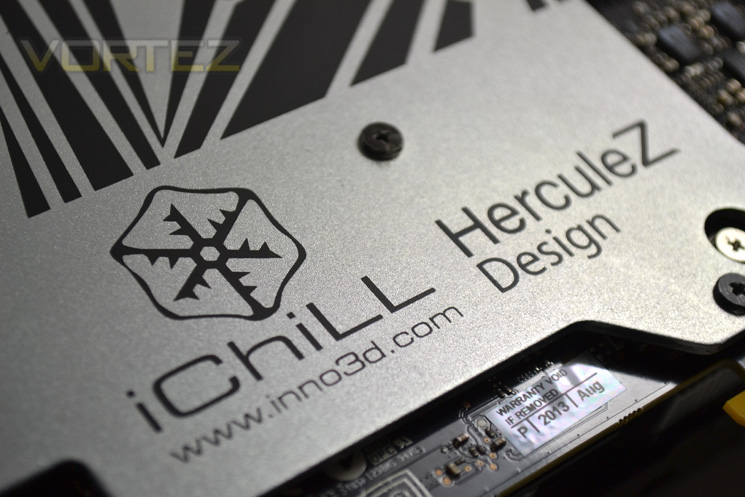
At these overclocks, we have seen the GTX 780 surpass the performance of the mighty GTX TITAN which is no mean feat. Of course this is with the GTX TITAN running at stock performance but it is testament to the GTX 780’s abilities that it can match a card costing over £200 more. Herein however lays the problem because at £599.99 (at time of review) the card may be one of the fastest GTX780’s available but it is also one of the most expensive. Other factory overclocked GTX 780’s weigh in at around the same price, all with their own cooling designs so it will be interesting to see if the Inno3D iChill GTX 780 HerculeZ X3 Ultra can replicate the success of their GTX760 version by beating the competition into submission.
About Inno3D
InnoVISION Multimedia Limited is a pioneering developer and manufacturer of a diverse range of cutting-edge multimedia PC hardware products established in 1998 Hong Kong. Our manufacturing operations have been set up since 1990 in Shenzhen, China. In this short period of time we focus on manufacturing OEM/ODM products as well as contracting out extensive production and research facilities to specialist companies. We have accomplished international recognition by PC’s top reviewers as becoming an outstanding success and one of the most fast growing companies in Asia.
Specification
GPU Engine Specs:
CUDA Cores 2304
Graphics Clock-Base Clock (MHz) 1006
Boost Clock (MHz) 1046
Texture Fill Rate (billion/sec) 186
Memory Specs:
Memory Clock (MHz) 6.2Gbps
Standard Memory Config (MB) 3072
Memory Interface GDDR5
Memory Interface Width 384-bit
Memory Bandwidth (GB/sec) 297.6
Feature Support:
OpenGL 4.3
Bus Support PCI-E3.0 X16
Certified for Windows 8 Yes
Supported Technologies (3D Vision, 3D Vision Surround, CUDA, DirectX 11, PhysX, SLI) Yes
SLI Options 2-way
Display Support:
Multi Monitor Yes, 3 active monitors in 3D mode + 1 montor in 2D mode
Maximum Digital Resolution (per output) 2560×1600
Maximum VGA Resolution (per output) 2048×1536
HDCP Yes
HDMI Yes
Standard Display Connectors HDMI, DP, Two Dual Link DVI
Internal Audio Input for HDMI Internal
HDMI Version 1.4a
Standard Graphics Card Dimensions:
Length 295mm
Height 125mm
Width 3-Slot
Thermal and Power Specs:
Maximum GPU Temperature (in C with ambient temperature 55c) 97 C
Maximum Graphics Card Power (W) 265W
Minimum System Power Requirement (W) 600W
Supplementary Power Connectors One 6-pin and One 8-pin
Cooler:
Fan Type Axial
Number of Fan 3
Number of Heatpipe 5
Accessories:
Driver CD Kit 1
DVI Dongle 1
Mouse Pad 1
6-pin PCI-E Power Cable 1
CUDA Cores 2304
Graphics Clock-Base Clock (MHz) 1006
Boost Clock (MHz) 1046
Texture Fill Rate (billion/sec) 186
Memory Specs:
Memory Clock (MHz) 6.2Gbps
Standard Memory Config (MB) 3072
Memory Interface GDDR5
Memory Interface Width 384-bit
Memory Bandwidth (GB/sec) 297.6
Feature Support:
OpenGL 4.3
Bus Support PCI-E3.0 X16
Certified for Windows 8 Yes
Supported Technologies (3D Vision, 3D Vision Surround, CUDA, DirectX 11, PhysX, SLI) Yes
SLI Options 2-way
Display Support:
Multi Monitor Yes, 3 active monitors in 3D mode + 1 montor in 2D mode
Maximum Digital Resolution (per output) 2560×1600
Maximum VGA Resolution (per output) 2048×1536
HDCP Yes
HDMI Yes
Standard Display Connectors HDMI, DP, Two Dual Link DVI
Internal Audio Input for HDMI Internal
HDMI Version 1.4a
Standard Graphics Card Dimensions:
Length 295mm
Height 125mm
Width 3-Slot
Thermal and Power Specs:
Maximum GPU Temperature (in C with ambient temperature 55c) 97 C
Maximum Graphics Card Power (W) 265W
Minimum System Power Requirement (W) 600W
Supplementary Power Connectors One 6-pin and One 8-pin
Cooler:
Fan Type Axial
Number of Fan 3
Number of Heatpipe 5
Accessories:
Driver CD Kit 1
DVI Dongle 1
Mouse Pad 1
6-pin PCI-E Power Cable 1
Features
Microsoft® DirectX® 11 Support 11.1 API (feature level 11_0)
Microsoft DirectX 11.1 API (feature level 11_0) DirectX 11 GPU with Shader Model 5.0 support designed for ultra high performance in the new API’s key graphics feature, GPU-accelerated tessellation
SMX
Next generation streaming multiprocessor built from the ground up for incredible performance and power efficiency.
NVIDIA GPU Boost 2.0Technology
Dynamically maximizes clock speeds based on workload and allows enthusiast class controls such as temperature target and fan controls, extra over-voltage headroom and optimizations for water-cooling solutions. This allows greater customization and overclocking options and enables gamers to push performance to new levels.
Microsoft® DirectX® 11
DirectX 11 GPU with Shader Model 5.0 support designed for ultra high performance in the API’s key graphics feature, GPU-accelerated tessellation.
NVIDIA® 3D Vision® Ready1
Support for NVIDIA 3D Vision, bringing a fully immersive stereoscopic 3D experience to the PC. A combination of high-tech wireless glasses and advanced software, 3D Vision transforms hundreds of PC games into full stereoscopic 3D. In addition, you can stream 3D movies and 3D digital photographs from 3DVisionLive.com in eye popping, crystal-clear quality.
NVIDIA® 3D Vision® Surround Ready2
With a single GeForce GTX 680 you can expand your PC games across three displays in full stereoscopic 3D for the ultimate “inside the game” experience.* NVIDIA Surround also supports triple screen gaming with non-3D Vision monitors. Add in a fourth accessory display to get access to your email, web, or other applications while you game.
NVIDIA FXAA Technology
Shader-based anti-aliasing technology available from the NVIDIA Control Panel that enables ultra-fast anti-aliasing in hundreds of PC games.
NVIDIA TXAA Technology
Support for new temporal anti-aliasing technique that delivers the ultimate combination of image quality and performance.
NVIDIA 3-way SLI® Technology3
Industry leading NVIDIA SLI technology offers amazing performance scaling in games across up to three GPUs.
NVIDIA PhysX® Technology
Full support for NVIDIA PhysX technology, enabling a totally new class of physical gaming interaction for a more dynamic and realistic experience with GeForce.
NVIDIA Adaptive Vertical Sync
Dynamically enables vertical sync based on your current frame rates for the smoothest gaming experience.
NVIDIA CUDA® Technology
Unlocks the power of the GPU’s processor cores to accelerate the most demanding tasks such as video transcoding, physics simulation, ray tracing, and more, delivering incredible performance improvements over traditional CPUs.
NVIDIA® PureVideo® HD Technology
The combination of high-definition video decode acceleration and post-processing that delivers unprecedented picture clarity, smooth video, accurate color, and precise image scaling for movies and video.
PCI Express 3.0
Designed for the new PCI Express 3.0 bus architecture offering the highest data transfer speeds for the most bandwidth-hungry games and 3D applications, while maintaining backwards compatibility with existing PCI Express motherboards for the broadest support.
Dual-link DVI
Able to drive flat-panel displays up to 2560×1600 resolution over a DVI connector.
DisplayPort
Drive the latest DisplayPort panels with support for resolutions up to 2560×1600.
HDMI4
Support for HDMI including GPU accelerated Blu-ray 3D support, x.v.Color, HDMI Deep Color, and 7.1 digital surround sound.
GPU Boost 2.0
GPU Boost caused a bit of a stir when it was first introduced because it did away with the traditional ‘absolute’ method of dictating MHz. Rather it worked by overclocking the card by different means. To achieve an overclock using GPU Boost, one increased the MHz and Voltage as per usual however the card would then ‘Boost’ when placed under load. So rather than having a fixed clockpseed, the GPU adjusts the clockspeed depending on load, ensuring the power is there when you need it rather than it being full on all of the time, thus saving power consumption and heat production by having the card overclock dynamically.
GPU Boost 2.0 is an evolution of this idea. The techs at NVIDIA have determined that GPU power was unnecessarily limiting performance when GPU temperatures was low. Instead of boosting GPU performance based on a power target, it is now based upon temperature with this temperature threshold being 80 degrees Celsius.
Because the boosting is now determined by temperature, noise levels are also reduced as NVIDIA claim the GTX cards deliver a better acoustic profile.
So to summarise, overclocking the card using GPU boost 2.0 means adjusting the temperature threshold, for example from 80c to 85c. The GPU clockspeed will then gradually increase until it reaches this new temperature and will be dynamically adjusted on-the-fly to stay within this threshold. Because of this it is much more difficult to claim one GPU is faster than another without having both working under precisely the same operating conditions.
It therefore should go without saying (but we will say it anyway) that the colder your card runs, the faster it should theoretically operate as a colder card allows overvolting and thus even higher clockspeeds.
GPU Boost 2.0 also features overvoltage control. NVIDIA make no bones that enabling this function will damage the long term operability of the graphics card and as with AMD’s overdrive, you have to acknowledge this fact before you can unlock the cards voltage control. We applaud NVIDIA for this because they have acknowledged that enthusiasts, like us here at Vortez, like to push hardware to the max and without voltage control, the whole process becomes so much more uninteresting and much more difficult.
So, because GTX760’s boost clock and voltage level are now tied to the GPU’s temperature, the voltage can be dialled higher which in turn will allow the GPU to attain higher clockspeed values. Obviously, increasingly board voltage, as with most other products, will gradually degrade the GPU through electron migration causing a premature death of the GPU. Voltage support will be offered on a board partner by partner basis however, we would be extremely surprised if it wasn’t enabled in every GTX780’s VBIOS.
We will see how GPU Boost 2.0 performs in our overclocking section later in the review.
GeForce Experience
GeForce Experience is a new application from NVIDIA that optimizes your PC in two key ways. First, it maximizes your game performance and game compatibility by automatically downloading the latest GeForce Game Ready drivers. Second, GeForce Experience intelligently optimizes graphics settings for all your favorite games based on your hardware configuration.
Some enthusiasts will view (excuse the pun) altering settings to get the very best from a game one of the ‘fun’ elements of owning a powerful graphics card. Others just want to play their game of choice without the endless testing and benchmarking to determine what settings work best. Many don’t have the inclination or indeed the time to learn what effect each setting has upon the games visual elements.It soon becomes a bind when upon a new driver release those settings which were great before can be bettered (or lowered) for a better gaming experience. FXAA, TSAA, MMAA or simply AA. Low, medium, high, ultra texture settings along with overall visual settings can be all too confusing when configuring a games visuals and while it would be easy to just crank everything up to maximum and hoping for the best, this all too often results in choppy, unplayable gaming ruining the gaming experience.
NVIDIA’s GeForce Experience removes much of the guess work when configuring a game thereby giving users the means to jump straight into the game with the best optimised settings for there hardware.
This handy utility will also keep your GPU updated with the latest driver that can be set to automatically download, ready to be installed as soon as they are available and also it gives you access to the beta drivers.
How does it work?
GeForce experience requires an internet connection which, once connected to the NVIDIA Cloud datacenter will download optimal game settings that are tailored to your PC based upon CPU, GPU and monitor resolution.
Low end hardware will have the visuals reduced to improve framerates while high end hardware will inevitably have higher settings assigned. This is all done with a click of a button which ensures that the game not only looks great but perhaps more importantly, plays smoothly.
Testing of the settings are done by NVIDIA themselves who benchmark the game, set a framerate target to ensure smooth gameplay then adjust the settings to ensure both framerate and smooth gameplay are optimised.
In our own tests, the utility worked well and is great for those who want to jump straight into the game with the minimal of fuss and furore of adjusting GPU settings.
Our one complaint is that the supported games list requires expanding. While most of the popular games are supported, many, especially some older but very popular titles are not.
Packaging & Accessories
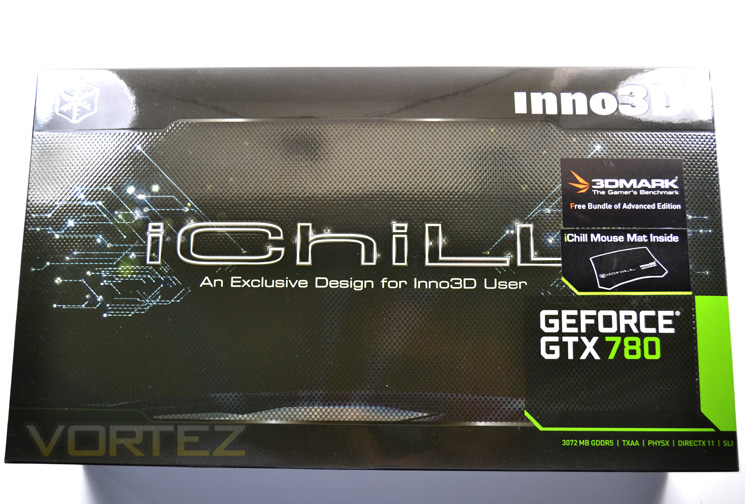
As with the GTX760 we reviewed from Inno3D, the GTX 780 version arrives in a high gloss medium sized box measuring 40 x 22cm. iChill dominates the front of the packaging which overall is quite attractive being based on a graphite backdrop.
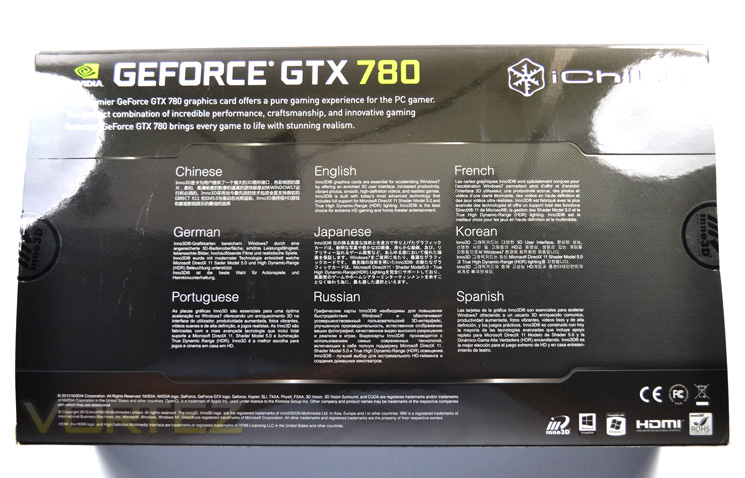
Flipping the box over we get nothing other than a multilingual introduction to Inno3D. We would have liked to have seen perhaps a breakdown of the cooling design or at the very least product features and specification. Sadly neither are to be found anywhere on the outer sleeve.
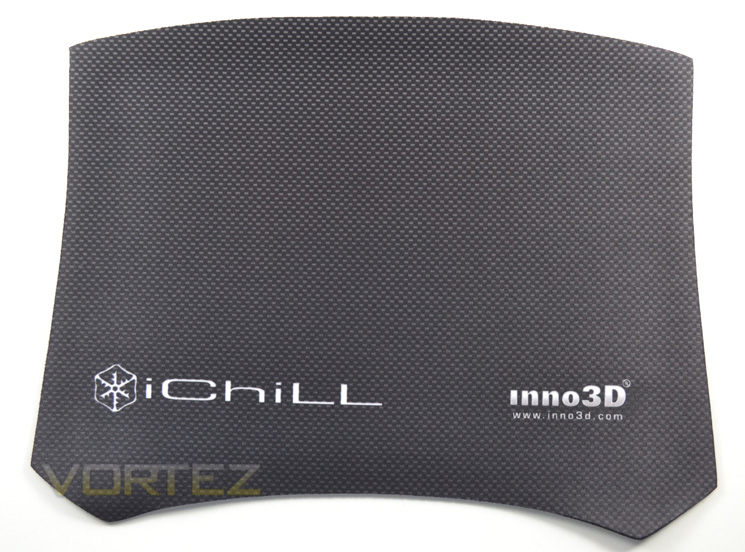
After removing the sleeve we are greeted with a Matt black box with a silver iChill logo embossed across the lid. Here is where things get interesting because we were very impressed with the contents of the box. Not only do you get the usual plethora of accessories but Inno3D also included a mouse mat, and a good one at that.
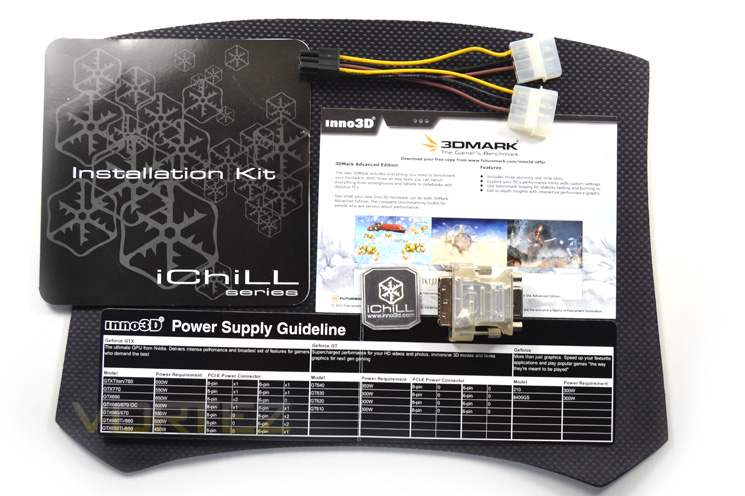
Continuing the included accessories, Inno3D have also bundled a free copy of Futuremark’s latest 3DMark benchmark. Buy from selected retailers and you will also receive a free copy of the latest Splinter Cell game too. The remainder of the accessories include a VGA-DVI adaptor; twin MOLEX – 6pin PCIe power cable adaptor, iChill case badge, installation guide, driver and utility CD, case badge, and a handy power supply guideline.
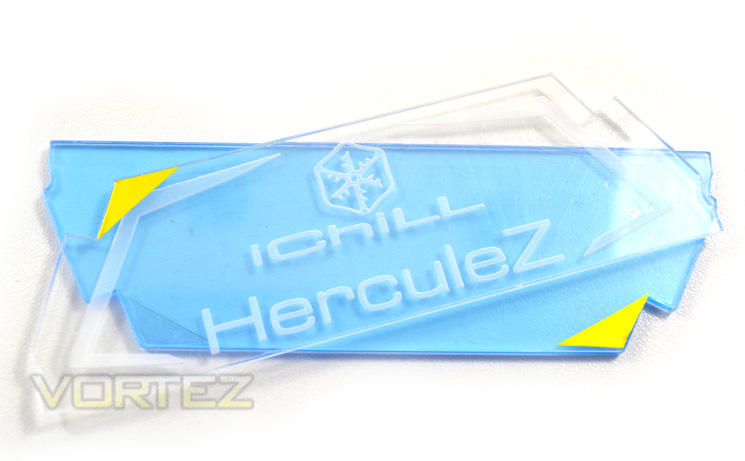
Finishing off the accessories are a pair of small Perspex sheets which allow you to modify the cards lighting to your own liking.
It’s not often we find manufacturers going the extra length to include a plethora of accessories but what we received from Inno3D, especially given the price point was nothing short of exceptional.
First Look
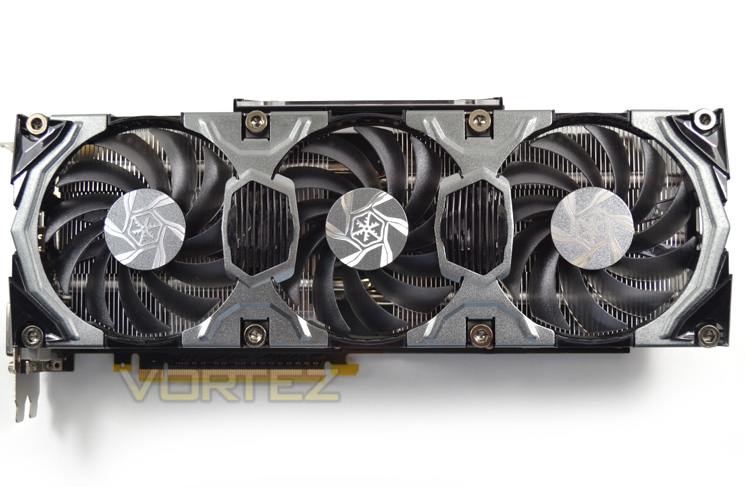
Having a powerful GPU inevitably means that that power needs to be harnessed. Cooling the GK110 core down we find the card is fitted with the iChill HerculeZ x3 cooler which completely blots out the black PCB beneath. The look is very industrial with oversized Allen screws and louvered vents the order of the day here.
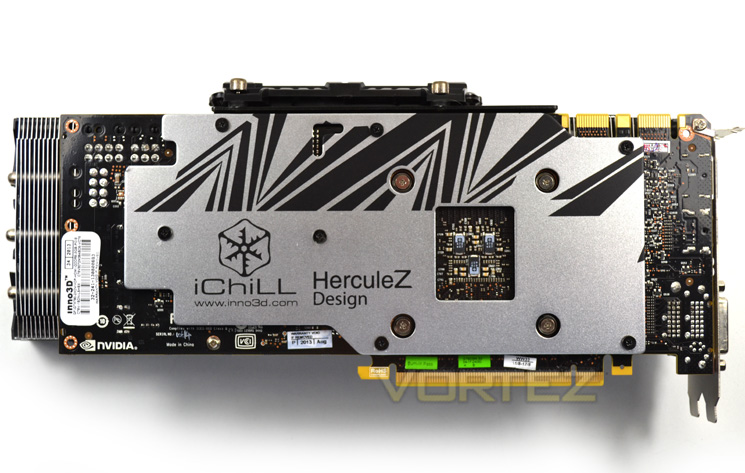
Typically, we find all the artistic effort goes into the area of the card we rarely see (above) however, iChill have seen fit to include a very dashing back plate that not only serves as PCB protection but also gives us some eye candy as the silver base coat is etched with a black design in the most attractive manner.
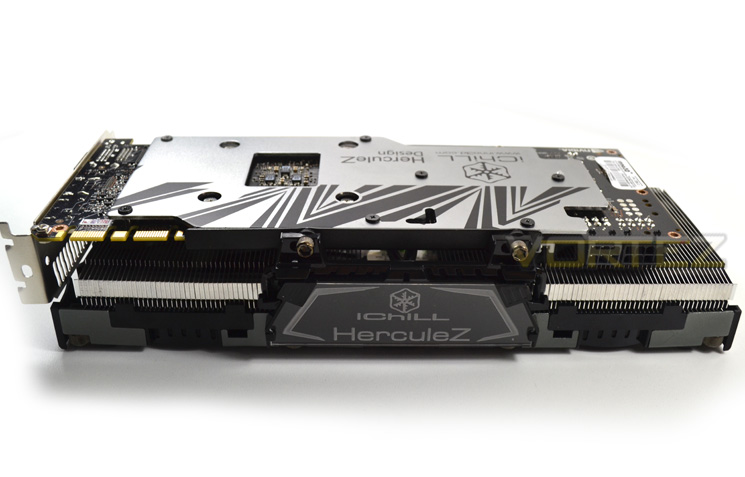
The great looks don’t stop there either as from a side profile we find Inno3D have let their engineers artistic freedom. While it it will never be accused of being sleek, we appreciate the effort that has gone into making the card as symmetrical as possible despite the cooler being considerably larger than the PCB itself.
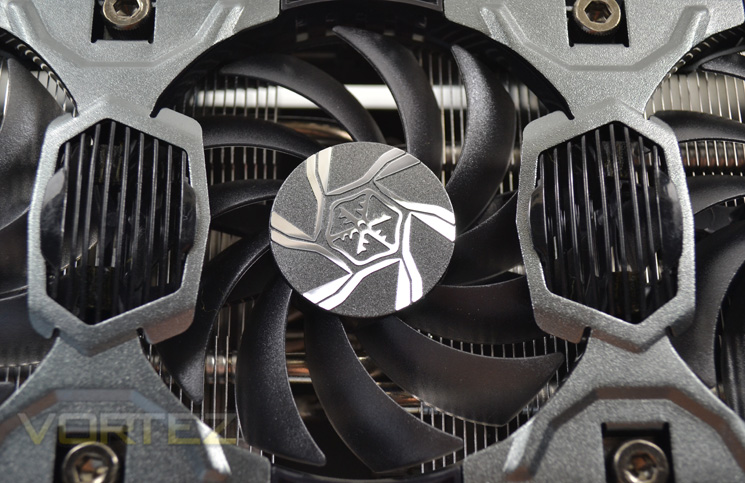
Each of the three fans measure 90mm and can be detached from the HerculeZ fan bearing for ease of cleaning. While the fans are PWM controlled, this feature can be totally disabled at the hardware end by activating the BOOST bypass jumper for the ultimate in fan speed/cooling potential.
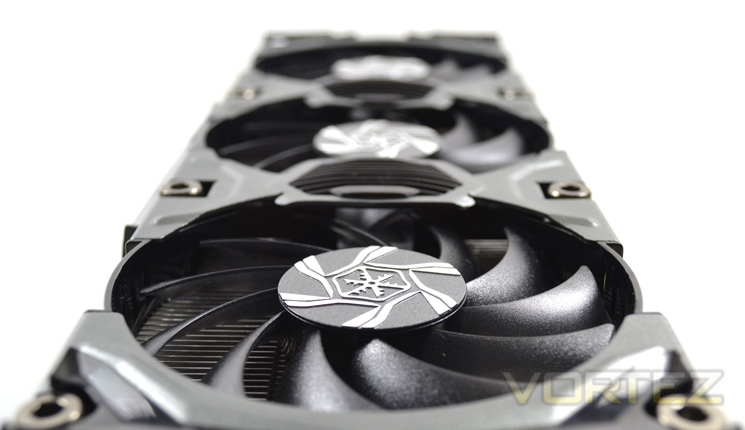
The card is a triple slot design measuring some 67mm in girth meaning you will lose two extra PCI ports in addition to the one PCIe port the card requires. It measure 295mm in length (cooler length) and 125mm in width so will overhang a standard ATX motherboard by some 50mm.
Let’s have a closer look shall we?
Closer Look
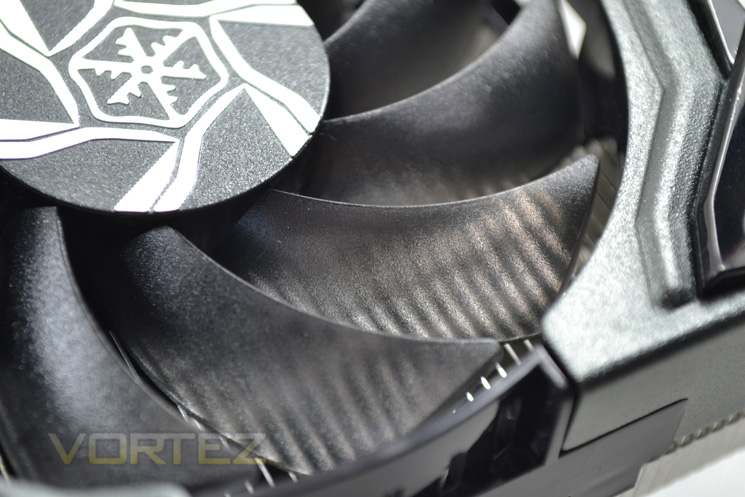
The fan blades are smoked black of which there are eleven per fan. Being a triple slot cooling design you would think that pairing two of these cards up would cook the GPU core due to lack of airflow assuming both cards are directly next to each other. Inno3D combat this by including side air intakes so the fans are never starved of fresh cool air.
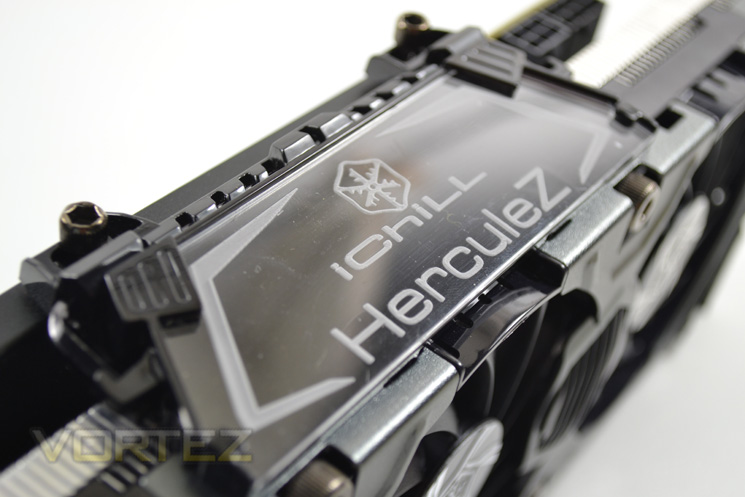
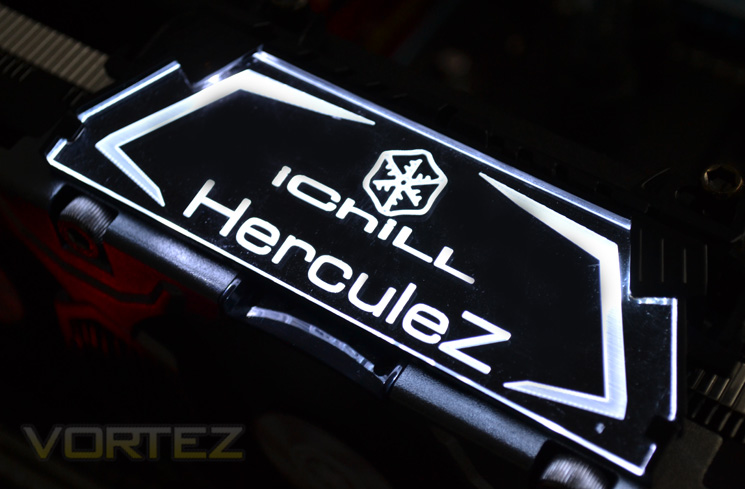
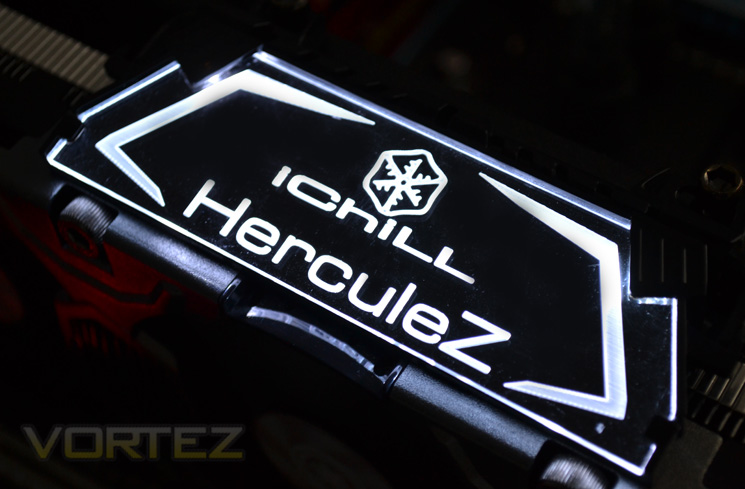
Rather than have a fixed emblem staring back at you, Inno3D have given you the choice of using either their own logo design or making one of your own. The logo is then neatly inserted into a side panel and illuminated by two very bright white LEDs. A simple concept but one we liked a lot!
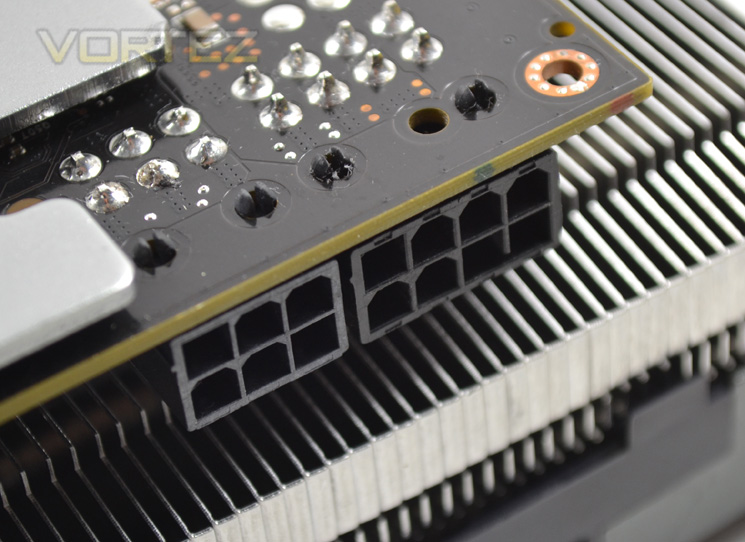
Being a powerful card, Inno3D recommend a minimum 600W PSU capable of delivering 42A on the 12v rail. This is fed through to the card via 8+6pin PCIe power cables.
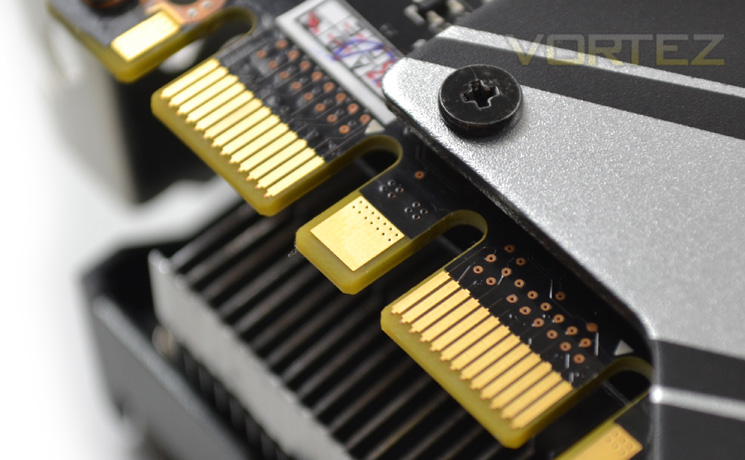
As with all GTX780’s, this card has twin SLI tabs for some SLI action. Not that the card needs a second one for accompaniment but us enthusiasts know, you can never have too much power!
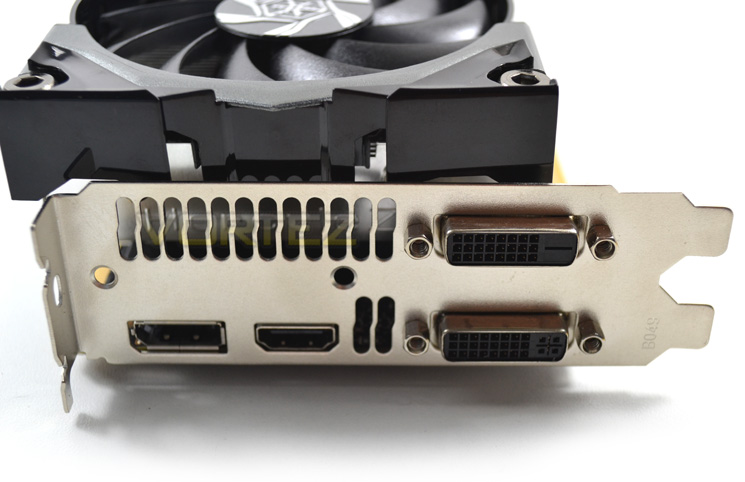
The I/O area features the usuall quartet of DVI-D, DVI-I, HDMAI 1.4a and DisplayPort outputs. There is also a vent area although this serves little practical purpose other than case venting as the GPU is an ‘in-case’ circulatory cooling design meaning hot dispelled air is exhausted into the case environment rather than expelling it directly out of the back of the case.
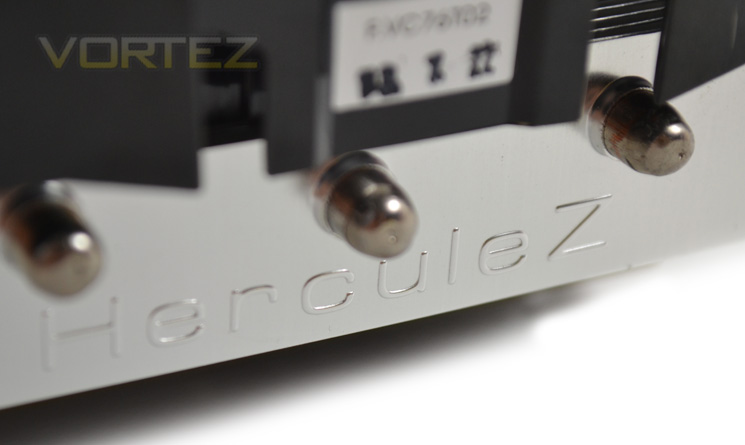
Lastly, here we see something that could be very easily overlooked. In the greater scheme of things, it makes no performance difference and you are unlikely to see this once installed so why are we making a big deal of it? It is the finer details; the little things if you will that separate a good product from a fantastic one. £600 is a lot of money to spend on a graphics card so at the very least, you want to know you have something special which will stand out from the crowd. This card has those little details, the little intricacies that make you smile, safe in the knowledge your hard earned cash was well invested.
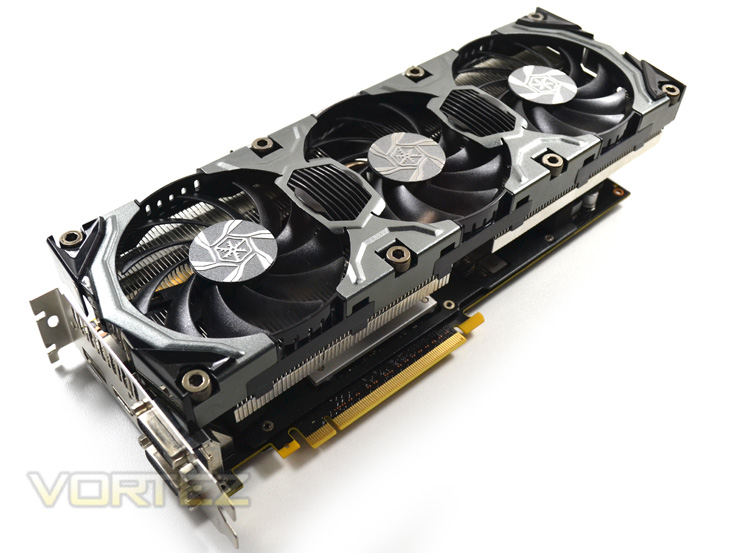
Overall, the gorgeous aesthetics and quality engineering thus far are clearly evident. We love the look of the card along with the small details. Having a silver/black colour scheme will mean it will look at home in any PC and truth be told if it doesn’t – you need to change your PC design because this has to be one of, if not the best looking card on the market today.
Let’s take the lid off examine the cooler and PCB in detail…
Detailed Look
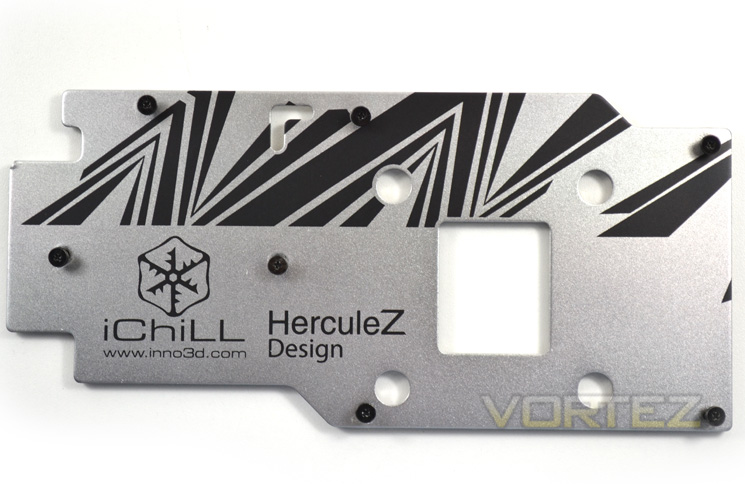
The first stage of disassembly is to remove the back plate. This was done by removing 7 screws which thread through the PCB and into the cooler
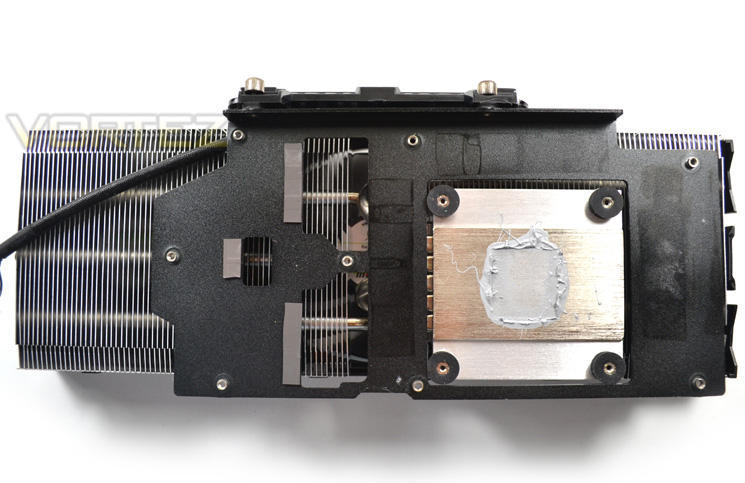
With the back plate removed, the main cooler can be detached by unscrewing four spring loaded screws along with a separate retaining screw which holds the mid-plate in place. The main cooler is made up of twin horizontal fin arrays coupled by 5 nickel plated copper heatpipes which are flattened at the brushed and plated base plate.
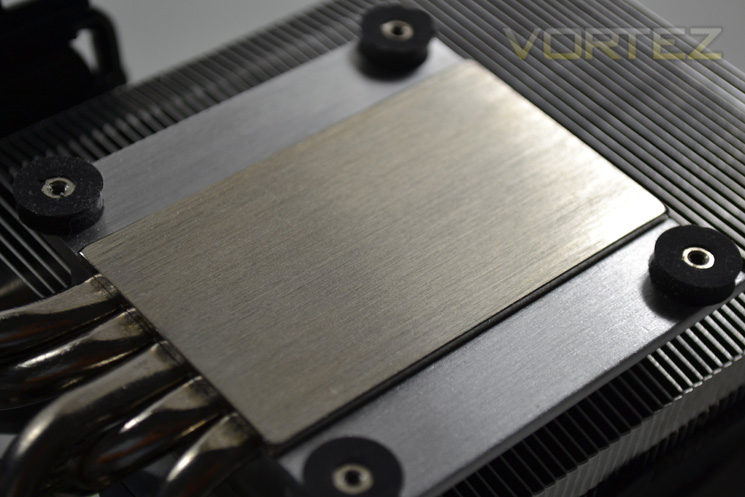
The base plate contact area is held in place by four screws which have rubber surrounds to prevent uneven fitting, thereby preventing damage to he delicate exposed GPU silicon core. Contact on our sample was excellent with just the right amount of paste used so we see no reason why you would need to replace the TIM on this card.
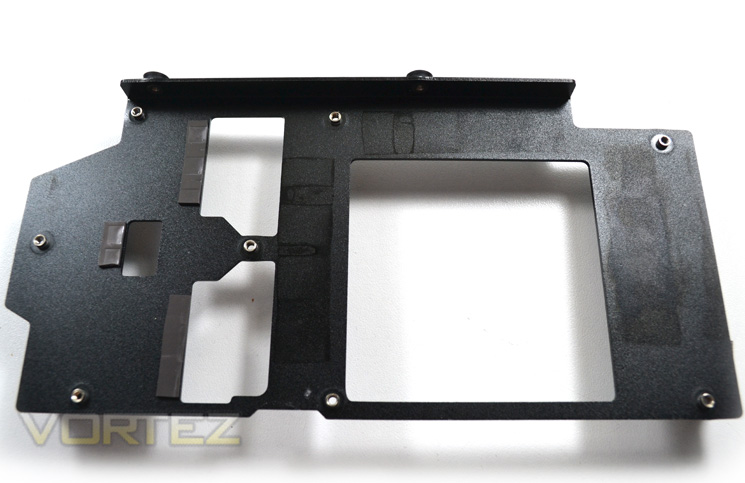
The mid-plate serves two purposes. Firstly it acts as a brace to prevent warping of the PCB under the heatsinks weight and secondly to directly cool both the memory modules and VRM.
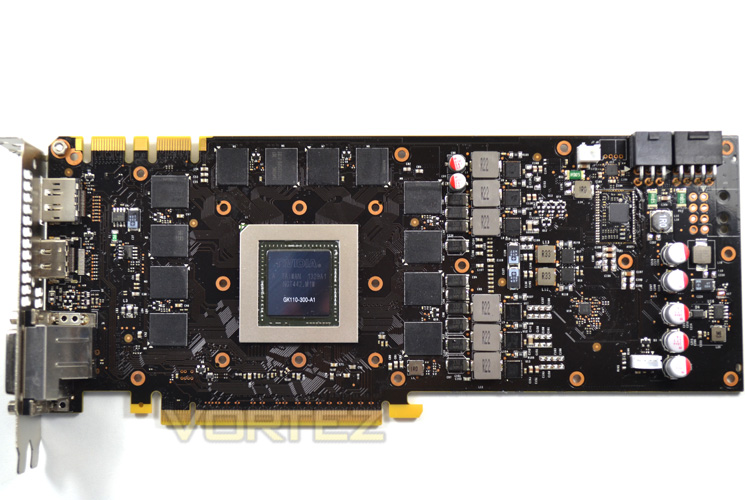
The PCB is identical to the reference design meaning a reference GTX 780 waterblock will fit without issue.
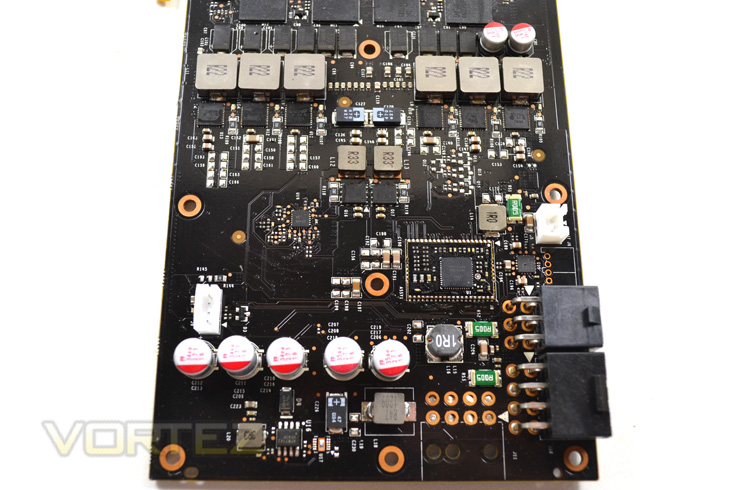
The VRM is a 6+2+1 phase power model, matching the reference design. Solid capacitors, RDS (ON) MOSFETs, and quality chokes are in abundance here as you would expect with such an expensive card. The power phase is controlled by the ON Semiconductor NCP4206 controller which we have seen a few times previously on other GPU’s and uses the Texas Instruments INA3221 which is a three-channel, high-side current and bus voltage monitor with an I2C interface.
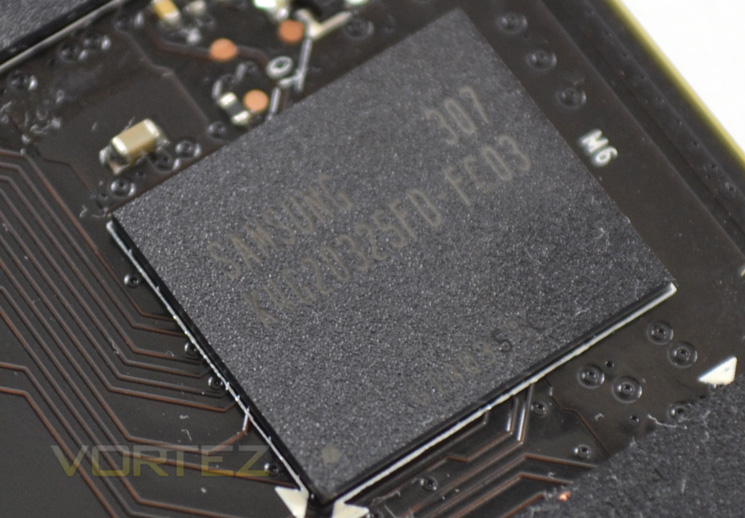
The memory IC’s carry the model number K4G20325F0-FC03 and hail from Samsung and are specified to run at 1500MHz (6000Mhz effective).
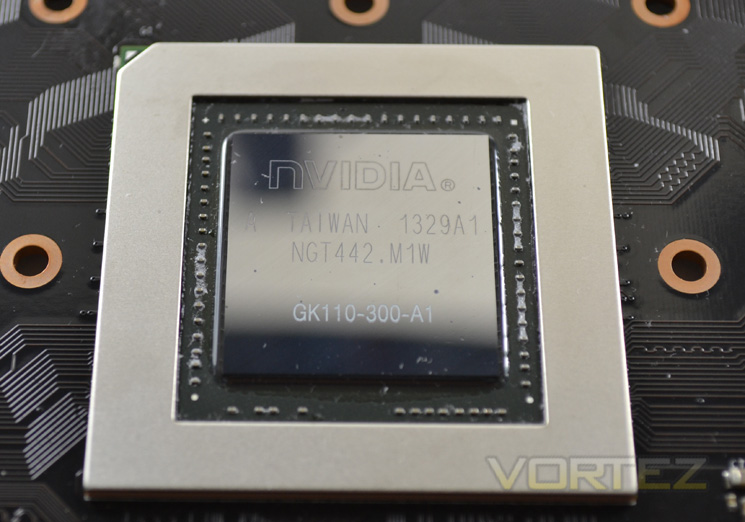
The GK110 is currently the fastest core available to gaming graphics cards. While it has two SMX disabled from the Titans 14, it makes up for this deficit by being overclocked from the factory to 1006MHz (1046MHz BOOST).
Test Setup & Testing Methodology
How we test graphics cards
Testing a graphics card is an extremely lengthy process. We sometimes see reviews where a graphic card has been tested using out of date equipment, out of date games and out of date drivers. While the latter can be excused due to the sheer amount of driver updates making a thorough review impossible we will however notify the reader when we have used a different driver to the normal for example a pre-release driver. For the most part however we will always use the same hardware and where possible the same drivers unless a newer driver rectifies an issue we have encountered or significantly improves performance to such an extent that continuing with an outdated driver is not feasible.
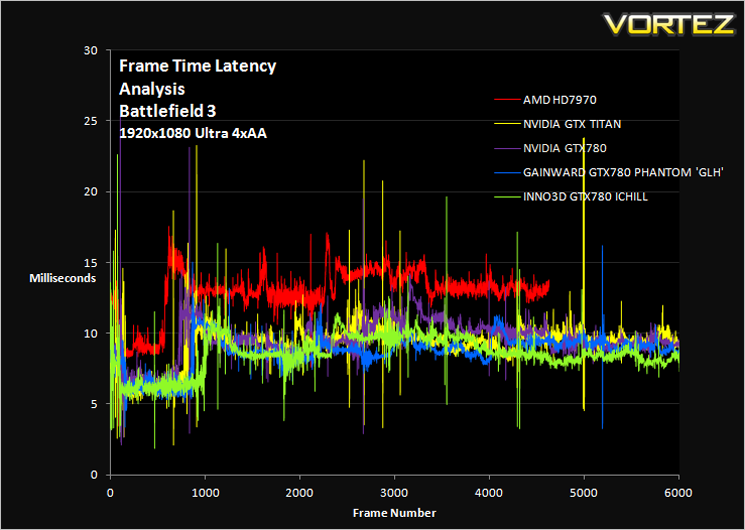
Frame Time Analysis
We have also seen the emergence of frame time analysis. We covered this in a separate article here: GPU Reviews: Why Frame Time Analysis is important so we won’t go into the reasoning again but to summarise, our testing comprises both FPS testing and perhaps arguably more importantly, frame time analysis. We also look at overall performance by equating averages across the games and finally before concluding our review we take a look at value for money.
HardwareWith the latest Intel chipset release we decided to update our ageing X58 setup to the new X79 chipset. Not only that but we will be using the flagship Core i7-3960X Extreme Edition processor clocked to 4.5GHz to ensure we have no CPU bottlenecks. With 16GB of ram on board there should be minimal paging so the benchmarks we run today will hopefully give a true reflection of the graphics card’s performance.
High End Graphics cards on test:
Inno3D iChill GTX 780 HerculeZ X3 Ultra 3GB GDDR5
(Forceware 320.49)ASUS GTX770 DIRECT II CU OC 2GB GDDR5(Forceware 320.49)
MSI GTX760 Twin Frozr Gaming 2GB GDDR5(Forceware 320.49)
GIGABYTE GTX780 Windforce x3 OC 3GB GDDR5(Forceware 320.49)
GAINWARD GTX780 PHANTOM ‘GLH’ 3GB GDDR5(Forceware 320.49)
INNO3D GTX760 ICHILL HERCULEZ 2GB GDDR5(Forceware 320.49)
GIGABYTE GTX770 WINDFORCE 3X OC 2GB GDDR5(Forceware 320.49)
ZOTAC GTX760 2GB GDDR5(Forceware 320.39)
NVIDIA GTX760 2GB GDDR5(Forceware 320.39)
]NVIDIA GTX760 2GB GDDR5 SLI(Forceware 320.39)
SAPPHIRE DUAL-X HD7950 3GB GDDR5 (Catalyst 13.6 beta)
CLUB 3D HD7970 royalAce 3GB GDDR5 (Catalyst 13.6 beta)
GAINWARD PHANTOM GTX 770 2GB GDDR5 (Forceware 320.18)
NVIDIA GeForce GTX 770 2GB GDDR5 (Forceware 320.18)
NVIDIA GeForce GTX 780 3GB GDDR5 (Forceware 320.18)
NVIDIA GeForce GTX 690 4GB GDDR5 (Forceware 314.22)
NVIDIA GeForce GTX TITAN 6GB GDDR5 (Forceware 314.22)
NVIDIA GeForce GTX TITAN SLI 12GB(2x6GB) GDDR5 (Forceware 314.22)
NVIDIA GTX680 2GB GDDR5 (Forceware 314.22)
AMD HD7970 3GB GDDR5 (AMD CAT 13.3 beta)
Motherboard: ASUS P9X79 Pro
CPU: Intel Core i7-3960X Extreme Edition @ 4.5GHz
RAM – 16GB (4x4GB) Corsair Vengeance (Red) DDR3 @ 1866MHz 9-10-9-27
Power Supply – Thortech Thunderbolt Plus 1200W
Hard Drive – Kingston HyperX 240GB
Cooler – Corsair H100
CPU: Intel Core i7-3960X Extreme Edition @ 4.5GHz
RAM – 16GB (4x4GB) Corsair Vengeance (Red) DDR3 @ 1866MHz 9-10-9-27
Power Supply – Thortech Thunderbolt Plus 1200W
Hard Drive – Kingston HyperX 240GB
Cooler – Corsair H100
Benchmarks
If you are a regular reader of our reviews you will know we like to test the latest hardware with the latest games and benchmarks on the market. Here are the games we have chosen:
Battlefield 3
Crysis 3
Far Cry 3
BioShock Infinite
DiRT: Showdown
The Elder Scrolls: Skyrim
Crysis 3
Far Cry 3
BioShock Infinite
DiRT: Showdown
The Elder Scrolls: Skyrim
We also take into consideration the benchmarkers out there so have included 3 of the more popular synthetic benchmarks available:
Unigine: Valley
Unigine: Heaven 4
Futuremark 3DMark Firestrike
Unigine: Heaven 4
Futuremark 3DMark Firestrike
Let’s see how today’s graphics card performed…
Temperature, Acoustics and Power Consumption
Power ConsumptionTo test for power consumption we use the included iPower Meter found with our Thortech PSU. As system load figures obviously differ from idle it is extremely difficult to get an accurate figure of system draw and then simply take this figure away from the overall amount because each game will generate varying levels of CPU and hard drive activity. Dynamic power adjustments which fluctuate in game will also affect accurate power figures thus rendering any such power consumption calculations redundant at worst and approximate at best.
We will therefore take our system readings averaged over a benchmark run of Tessmark (100% load) and after 20 minutes of being idle in Windows 7. These can then be used as a comparison to other graphics cards to determine how much more or less power you can expect a GPU to consume.
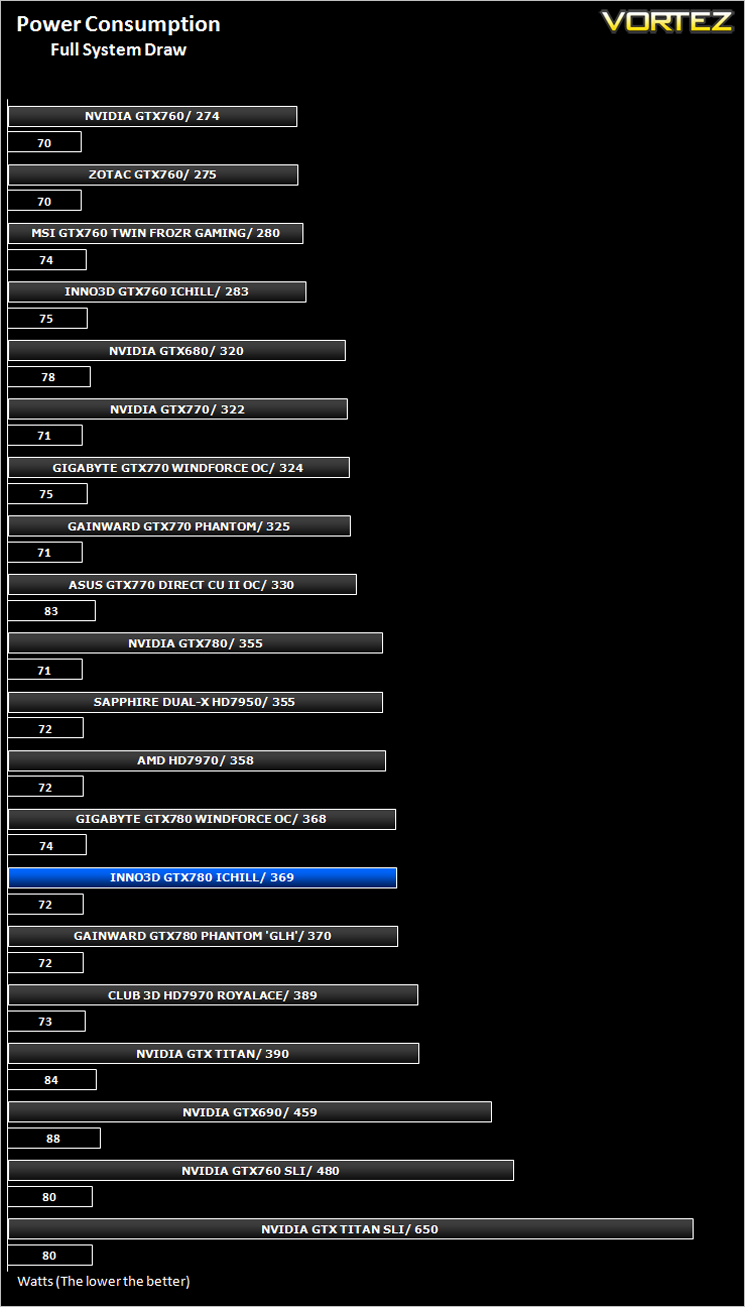
Power consumption was near identical with the other custom cooled (also 3 fans) GTX780s on test consuming around the 370W mark (full system) under nominal load conditions.
Temperature
To test temperatures we measured idle temperatures after booting windows, letting all applications finish loading and ran a few benchmarks. Once the benchmarks were complete we left the card to reach a cooling plateau where we then took the idle temperatures. For the load tests, we would normally run Furmark for 20 minutes, taking the absolute maximum temperature attained however we found that this throttled the card and resulted in spurious results. So we set Heaven running continuously for 20 minutes and used this as a temperature result as the card did not throttle with this application.
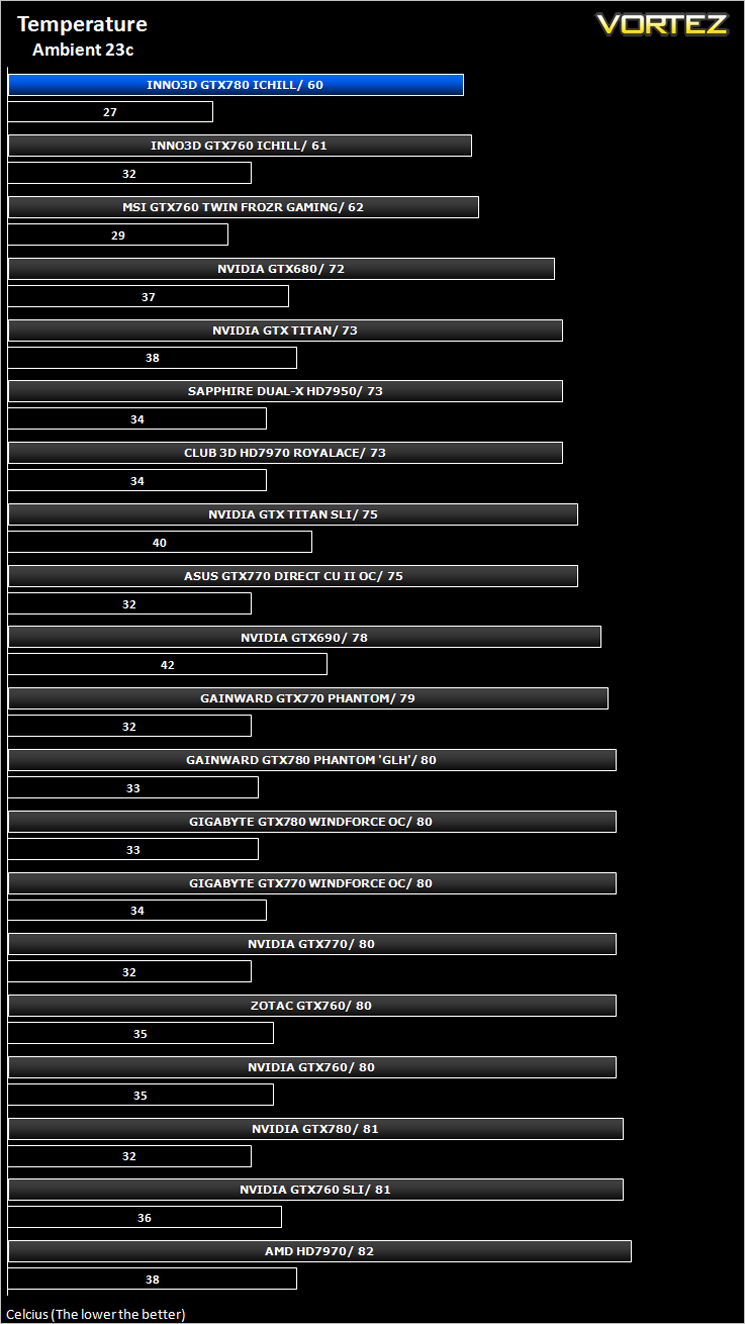
WOW! We had to run this test multiple times with a variety of software solutions to ensure we weren’t getting a misreport of the temperatures because at just 60C under load, it was far and away the best GTX780 cooling solution on test. Admittedly this was with the BOOST function enabled so the fans were running at 100% which perhaps is not reflective of a real world scenario but compared with others on test, the iChill cooling design certainly lives up to its name.
Acoustics
Silent in idle, barely audible under normal gaming conditions is the best way to describe the card. Disabling PWM control and allowing the fans to run full tilt meant the cards volume levels raised considerably but certainly not unbearable, at least for a few of those benchmark runs when you will happily sacrifice silence for cooling performance. We’re confident that the iChill cooler is the best GPU cooling solution this side of watercooling – it really is that good.
Let’s see how the card performs in our suite of benchmarks…
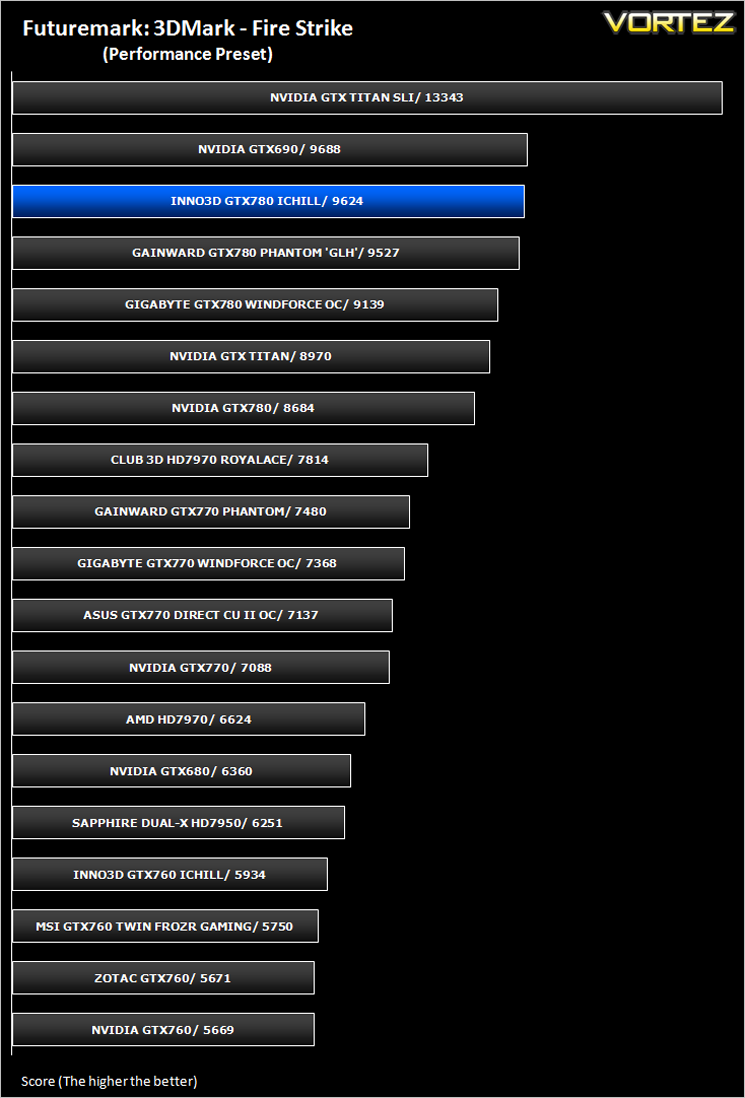
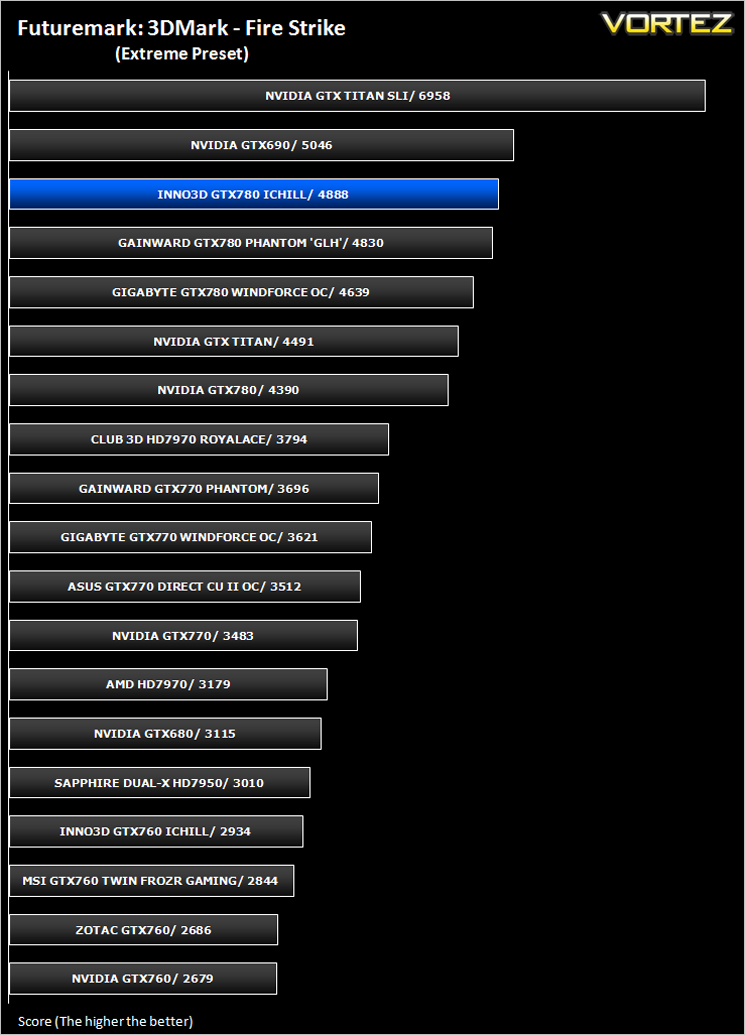
Futuremark 3DMark Fire Strike (Synthetic)
Fire Strike is the new showcase DirectX 11 benchmark designed for high-performance gaming PCs. It is Futuremark’s most ambitious and technical benchmark ever, featuring real-time graphics rendered with detail and complexity far beyond what is found in other benchmarks and games today.
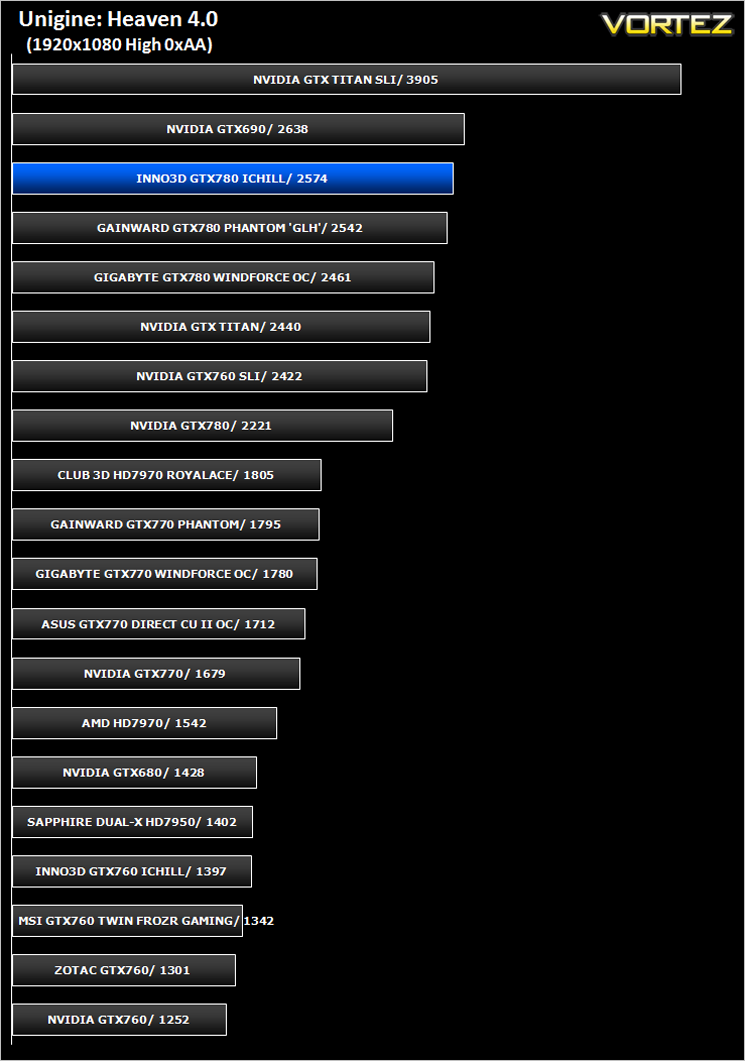
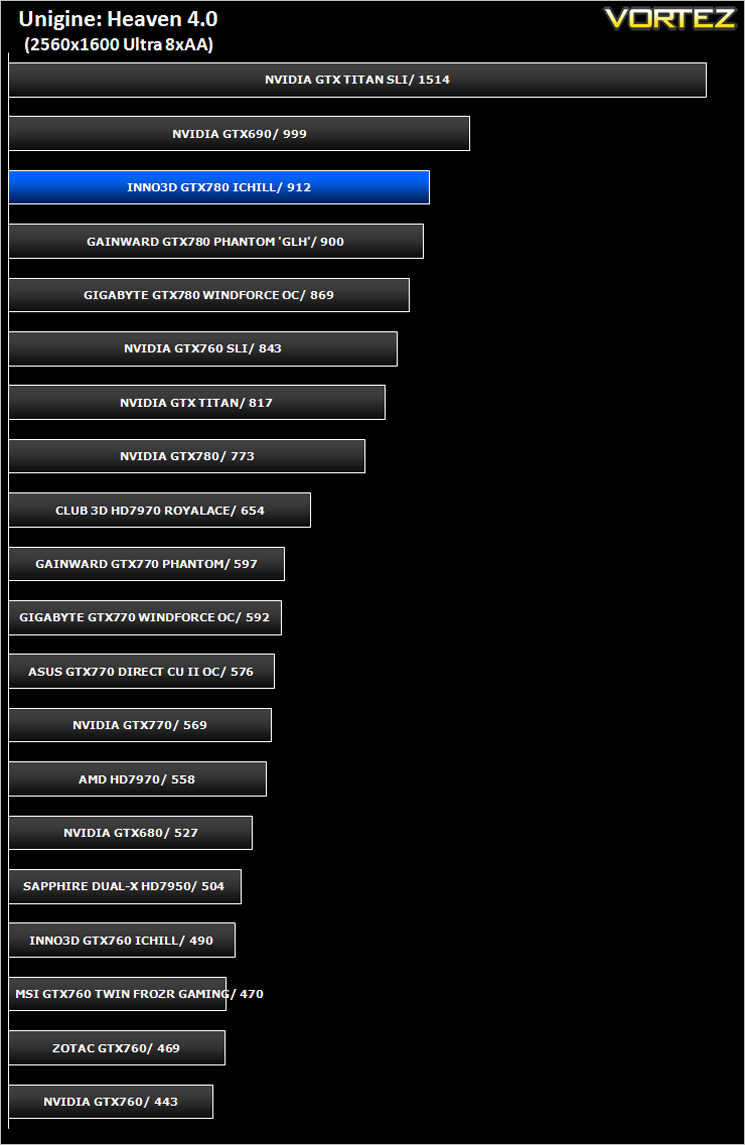
Unigine: Heaven 4 (Synthetic)
Heaven Benchmark with its current version 4.0 is a GPU-intensive benchmark that hammers graphics cards to the limits. This powerful tool can be effectively used to determine the stability of a GPU under extremely stressful conditions, as well as check the cooling system’s potential under maximum heat output. It provides completely unbiased results and generates true in-game rendering workloads across all platforms.
Unigine: Valley (Synthetic)
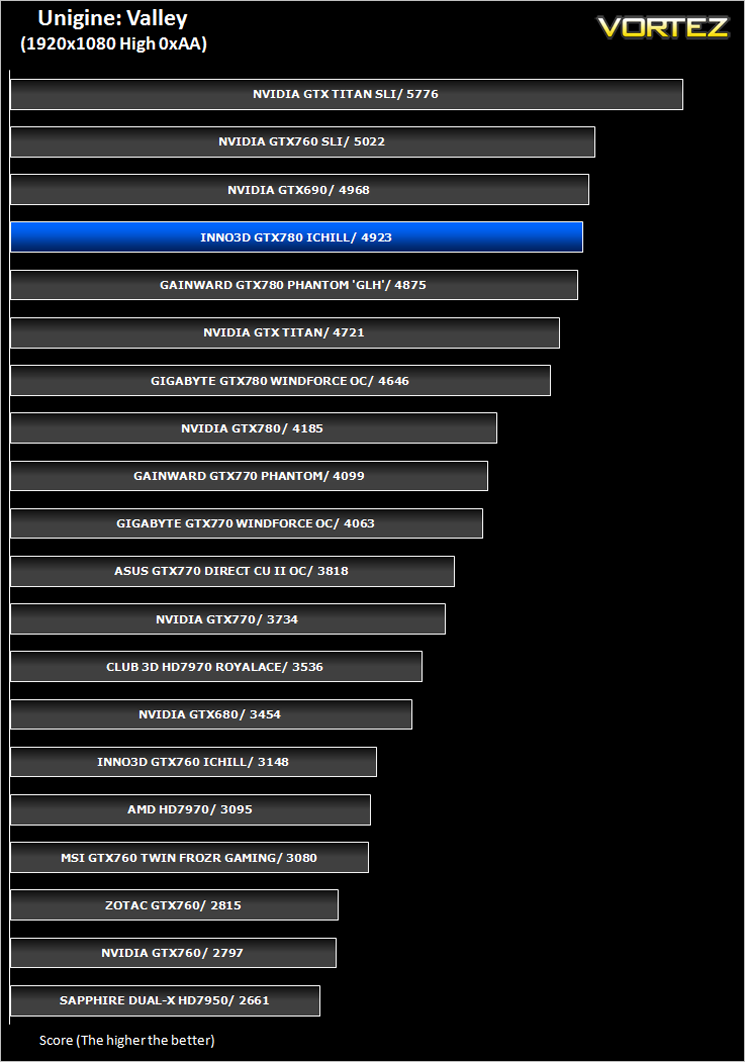
Valley Benchmark is a new GPU stress-testing tool from the developers of the very popular and highly acclaimed Heaven Benchmark. The forest-covered valley surrounded by vast mountains amazes with its scale from a bird’s-eye view and is extremely detailed down to every leaf and flower petal. This non-synthetic benchmark powered by the state-of-the art UNIGINE Engine showcases a comprehensive set of cutting-edge graphics technologies with a dynamic environment and fully interactive modes available to the end user.

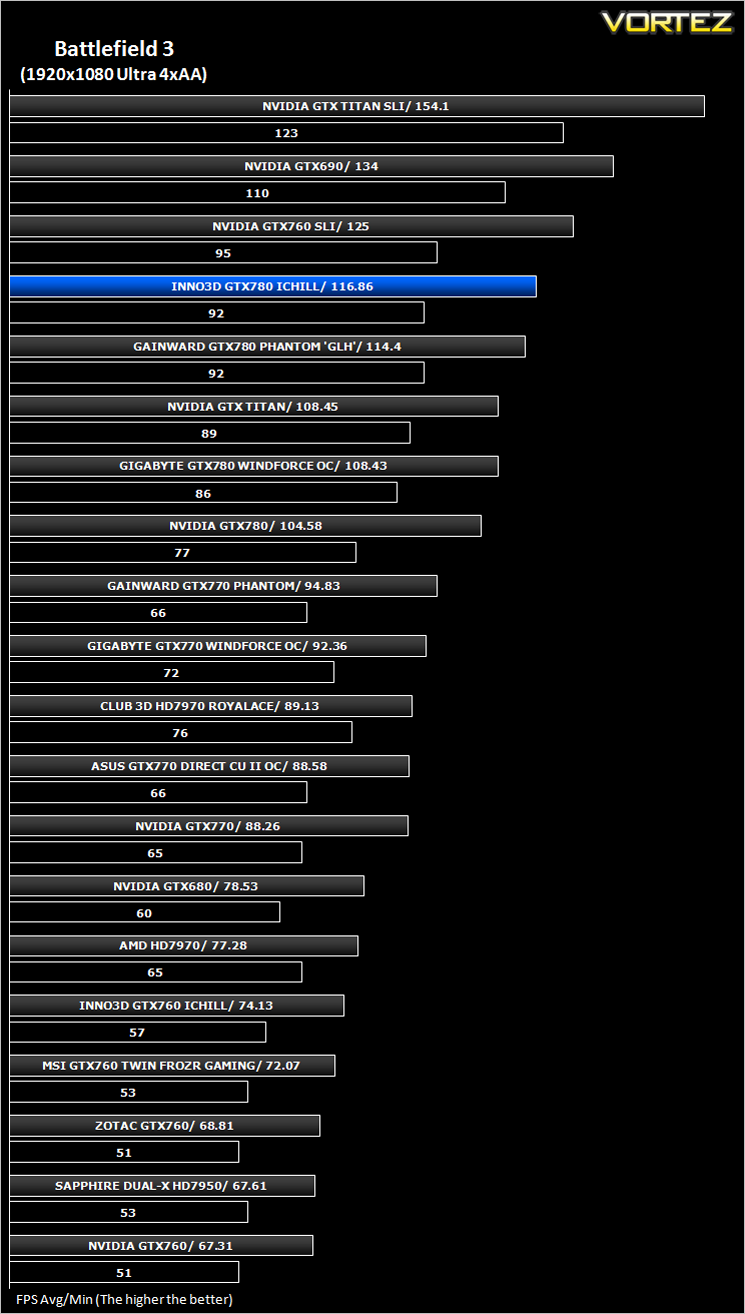
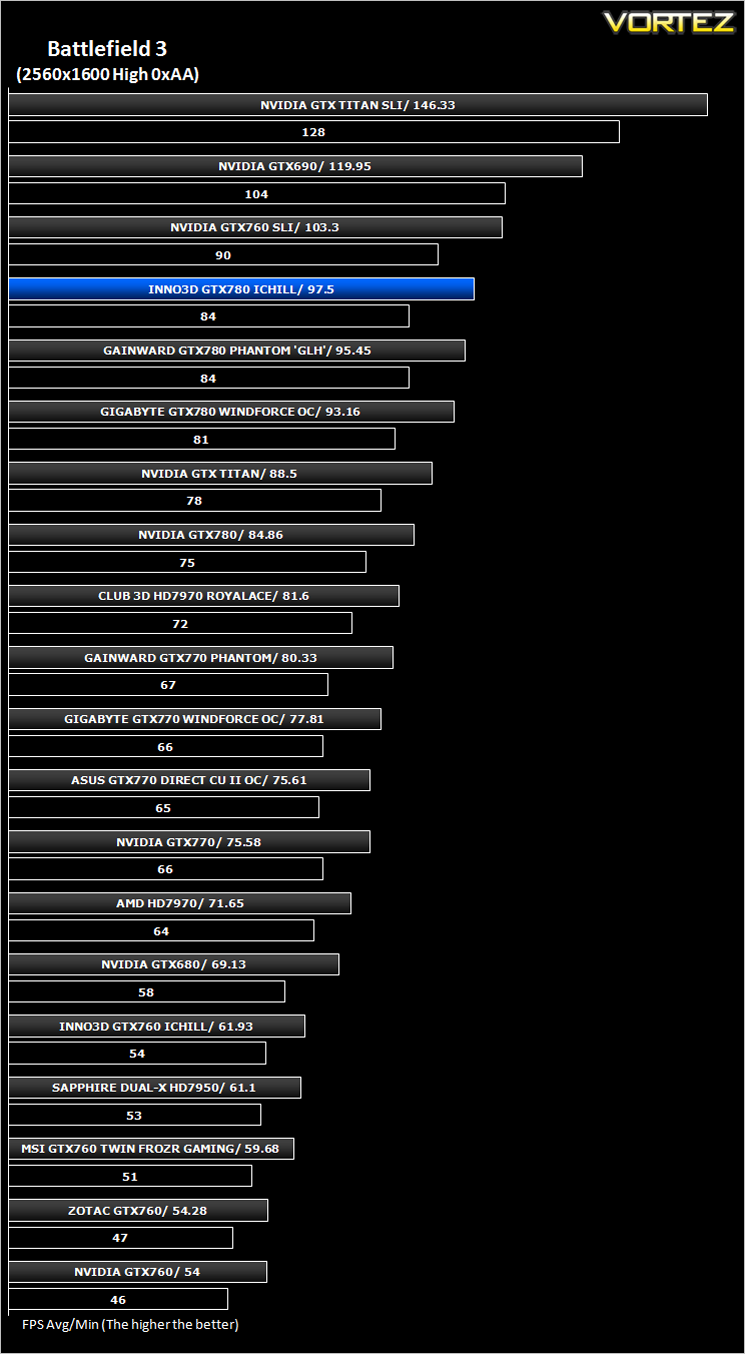
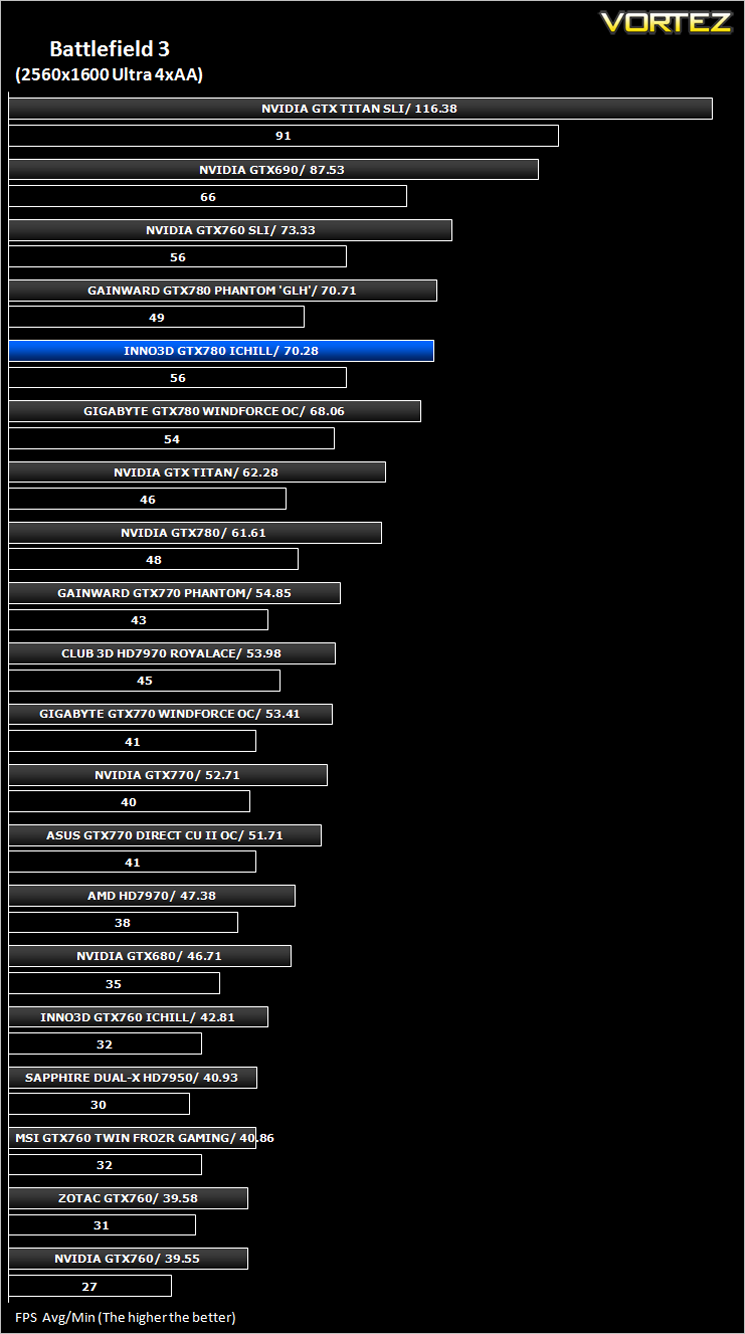
Battlefield 3 (FPS)
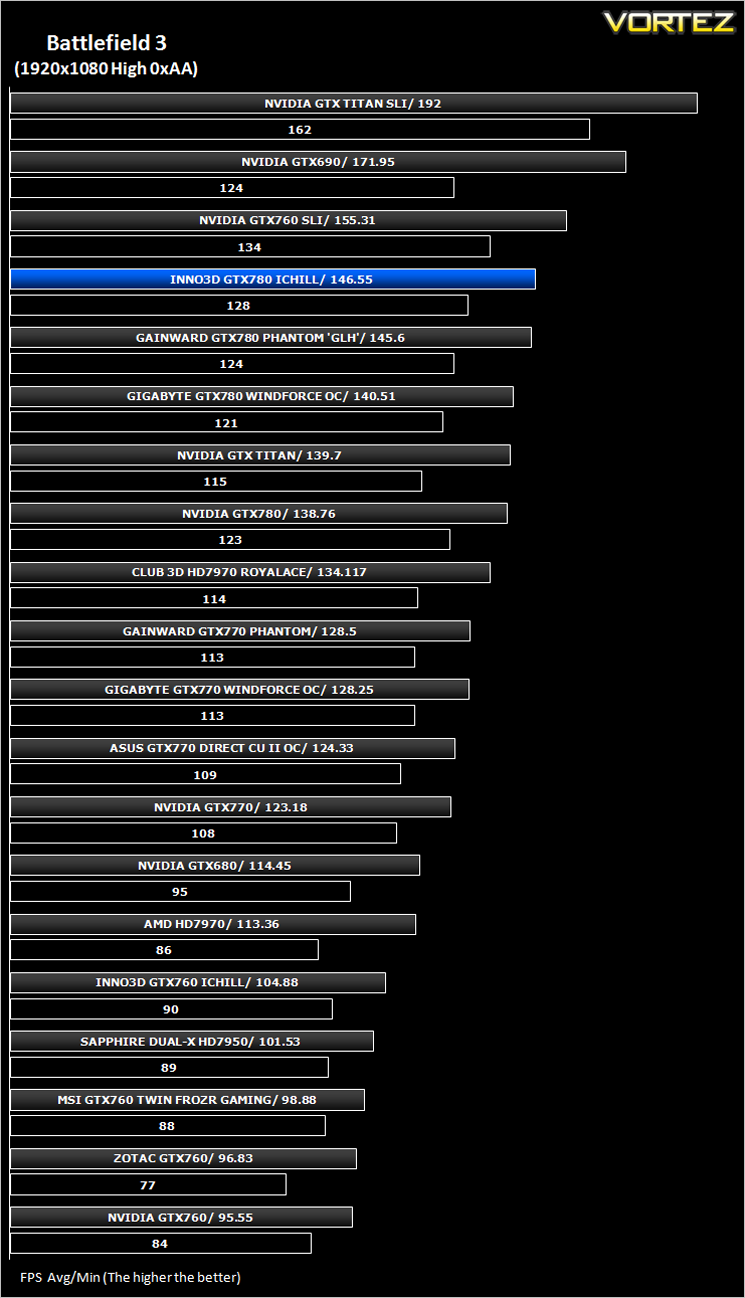
Battlefield 3 leaps ahead of its time with the power of Frostbite™ 2, the next installment of DICE’s cutting-edge game engine. This state-of-the-art technology is the foundation on which Battlefield 3 is built, delivering enhanced visual quality, a grand sense of scale, massive destruction, dynamic audio and incredibly lifelike character animations. As bullets whiz by, walls crumble, and explosions throw you to the ground, the battlefield feels more alive and interactive than ever before. In Battlefield 3, players step into the role of the elite U.S. Marines where they will experience heart-pounding missions across diverse locations including Paris, Tehran and New York.
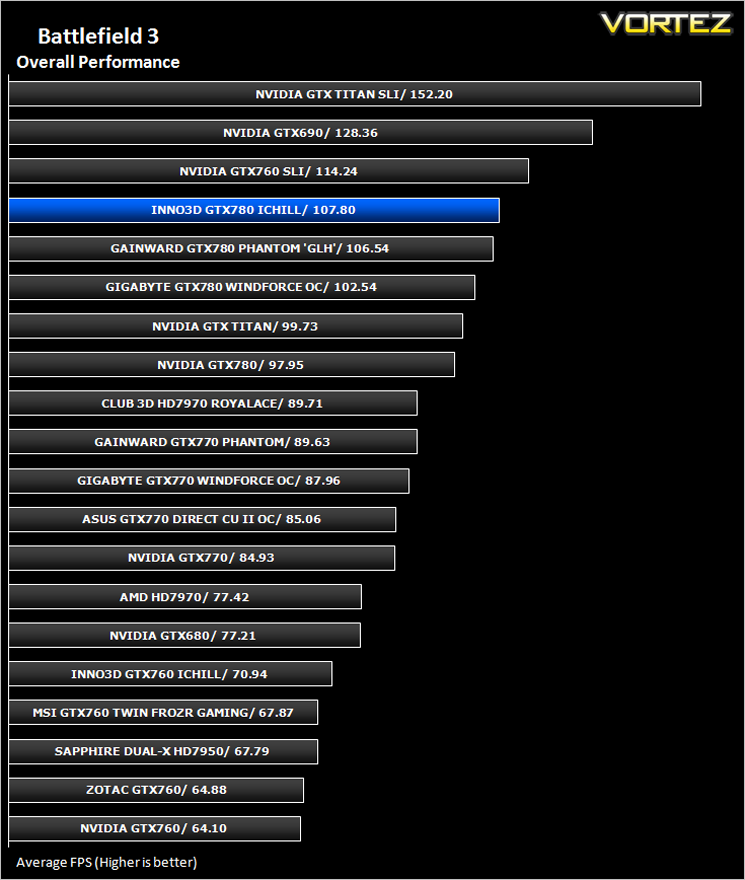
Average and minimum frames per second were measured using Fraps during the parking lot scene on Operation Sword Breaker. High and Ultra presets were loaded at both resolutions.
Crysis 3 (FPS)
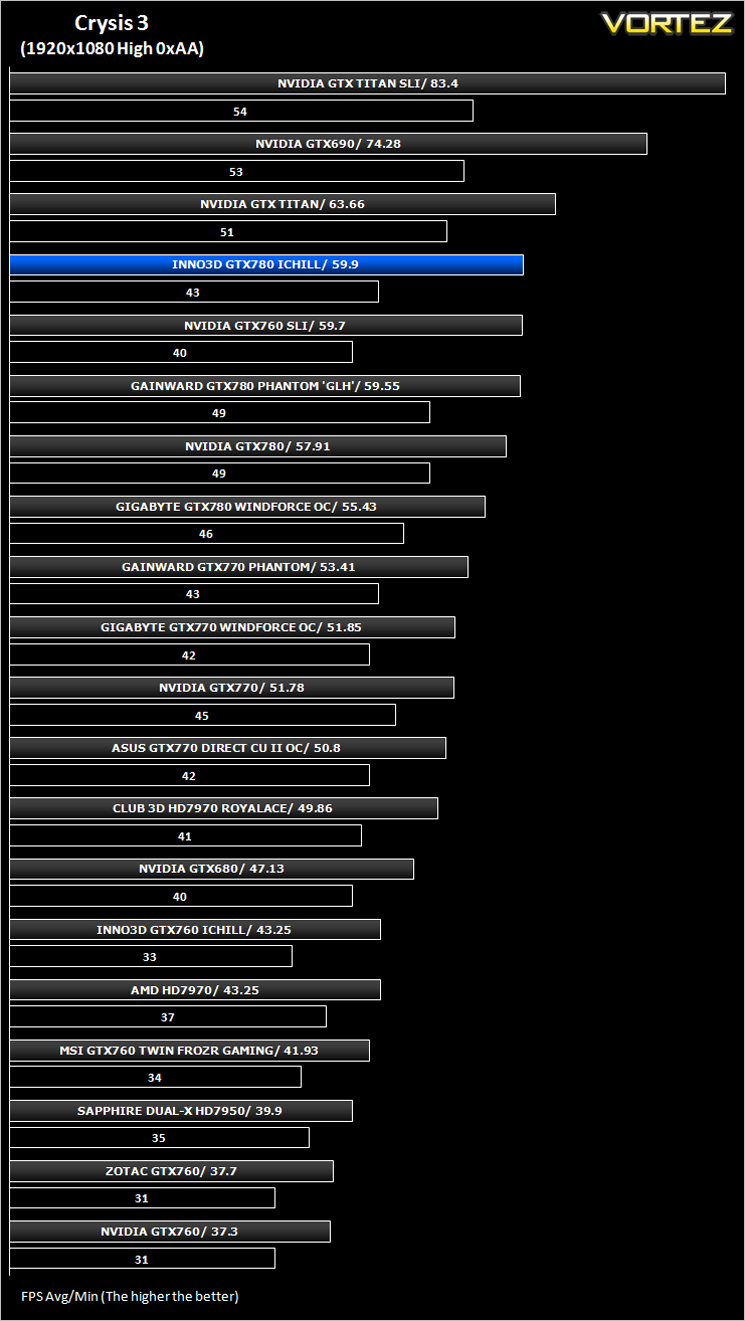
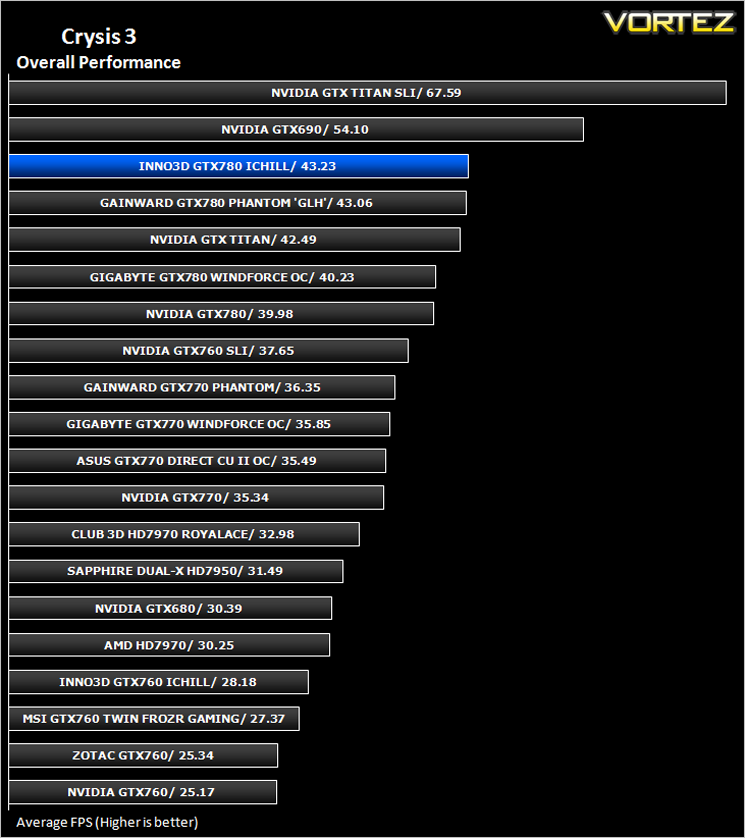
Crysis 3 from Electronic Arts is the fourth instalment of the Crysis franchise and sequel to Crysis 2. It uses the CryEngine 3 gaming engine which is perhaps the most advanced gaming engine to date and therefore the most demanding. The meme ‘Can it run Crysis’ has never been so apparent…
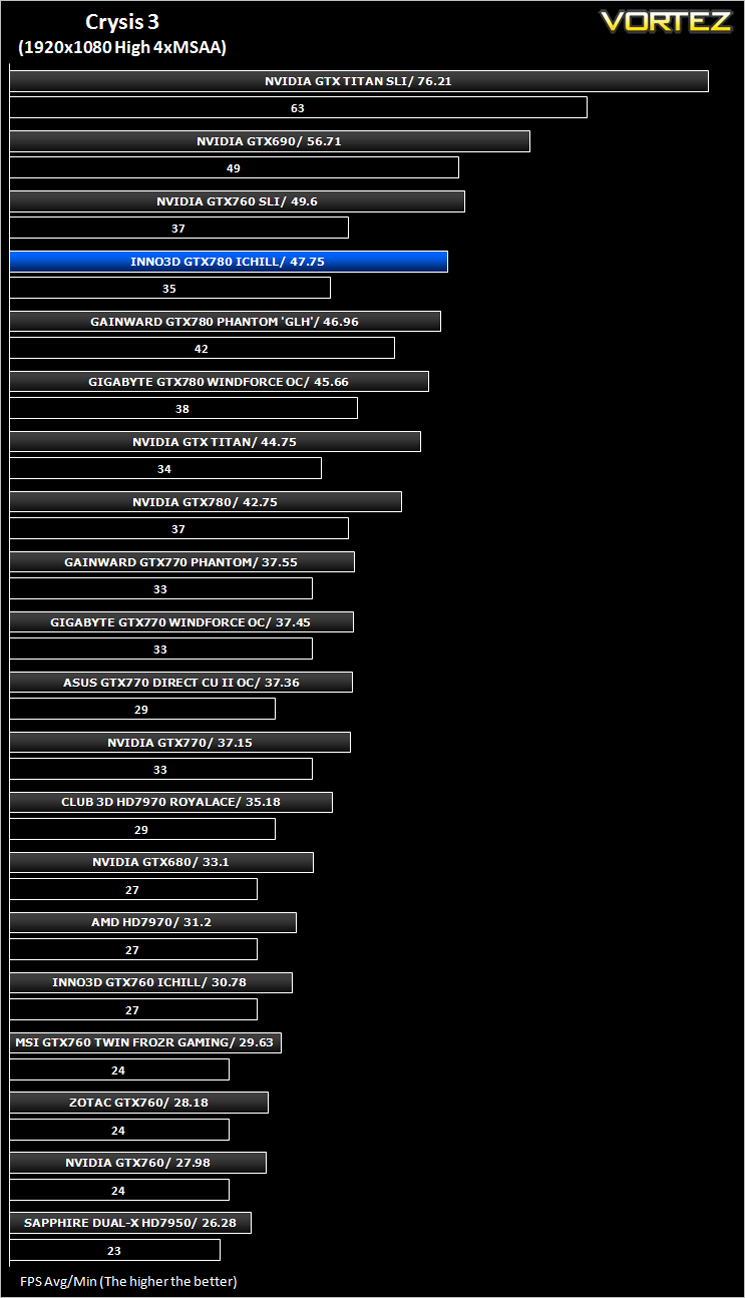
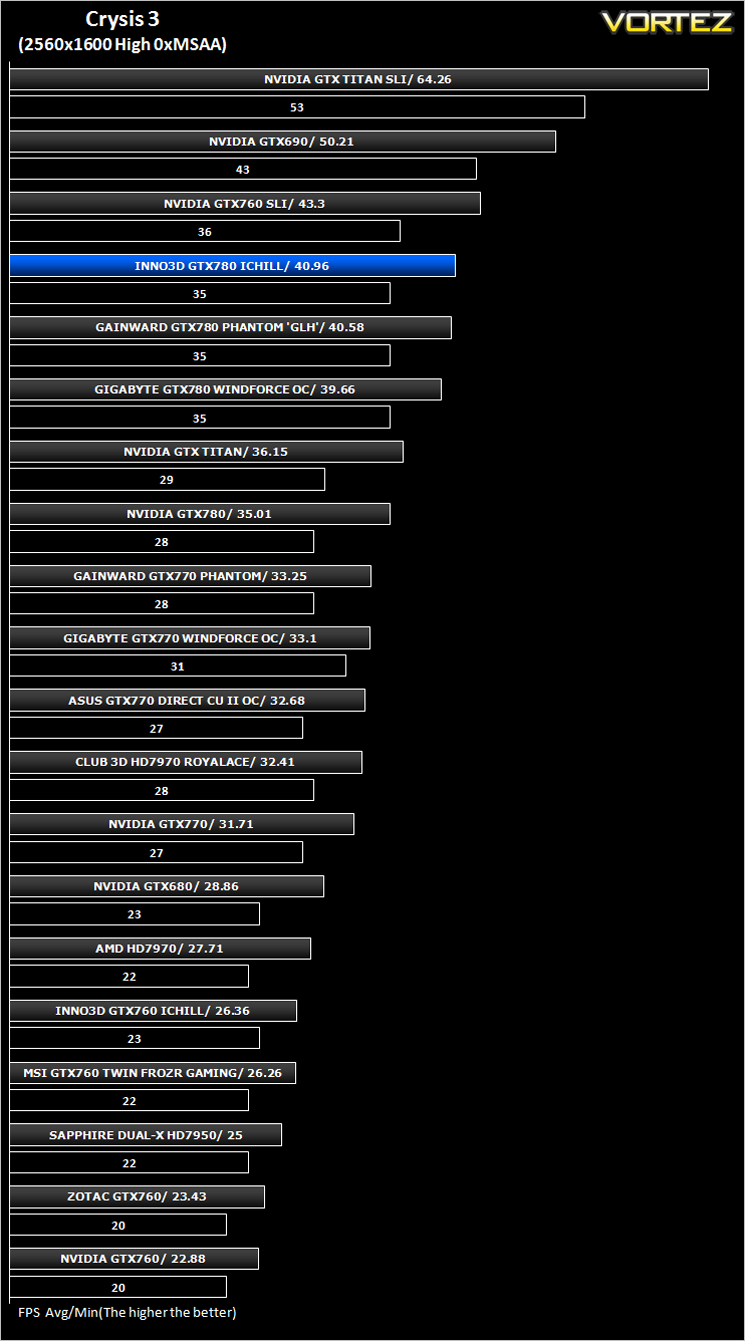
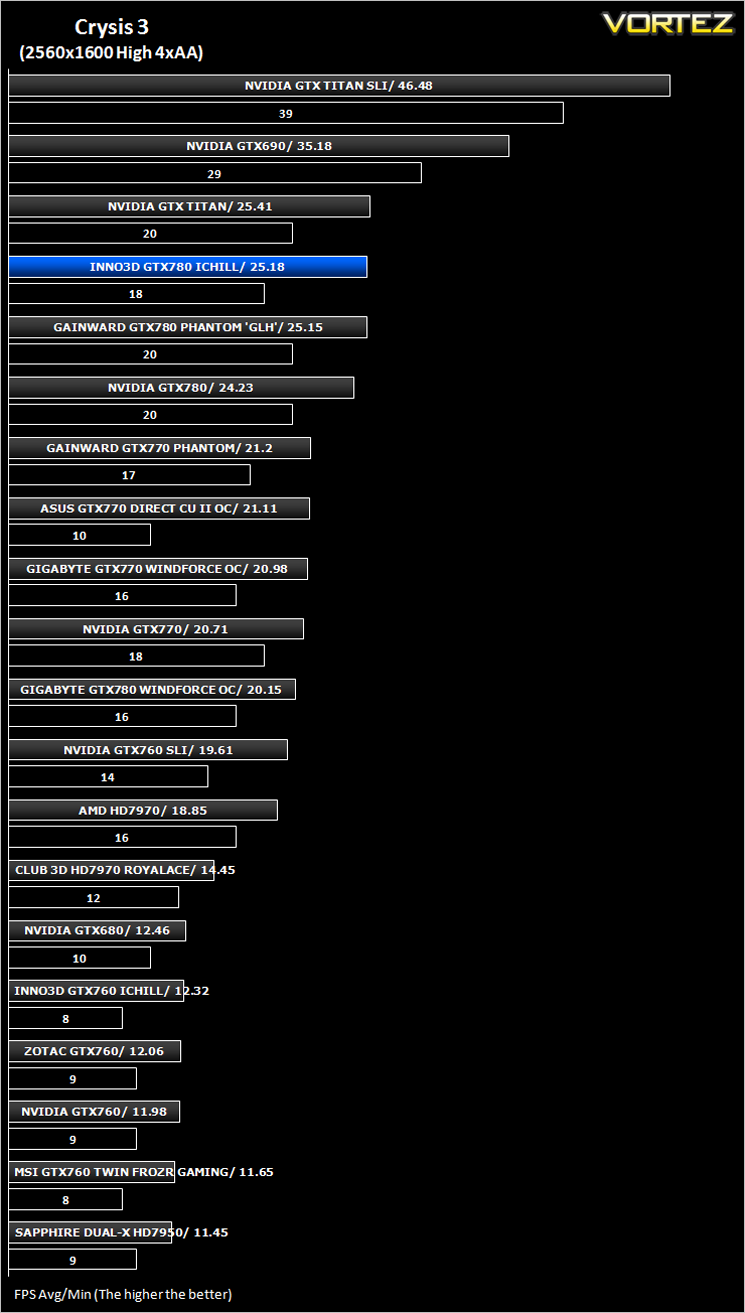
Far Cry 3 (FPS)
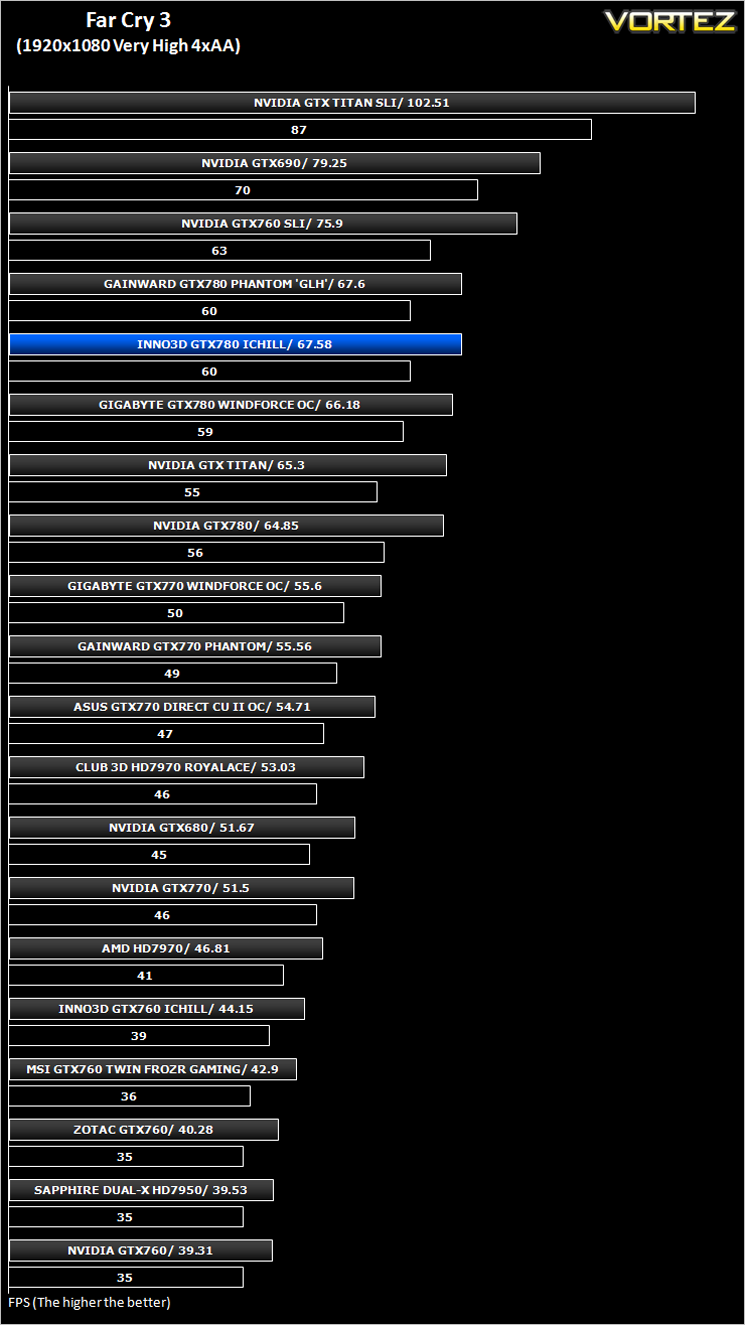
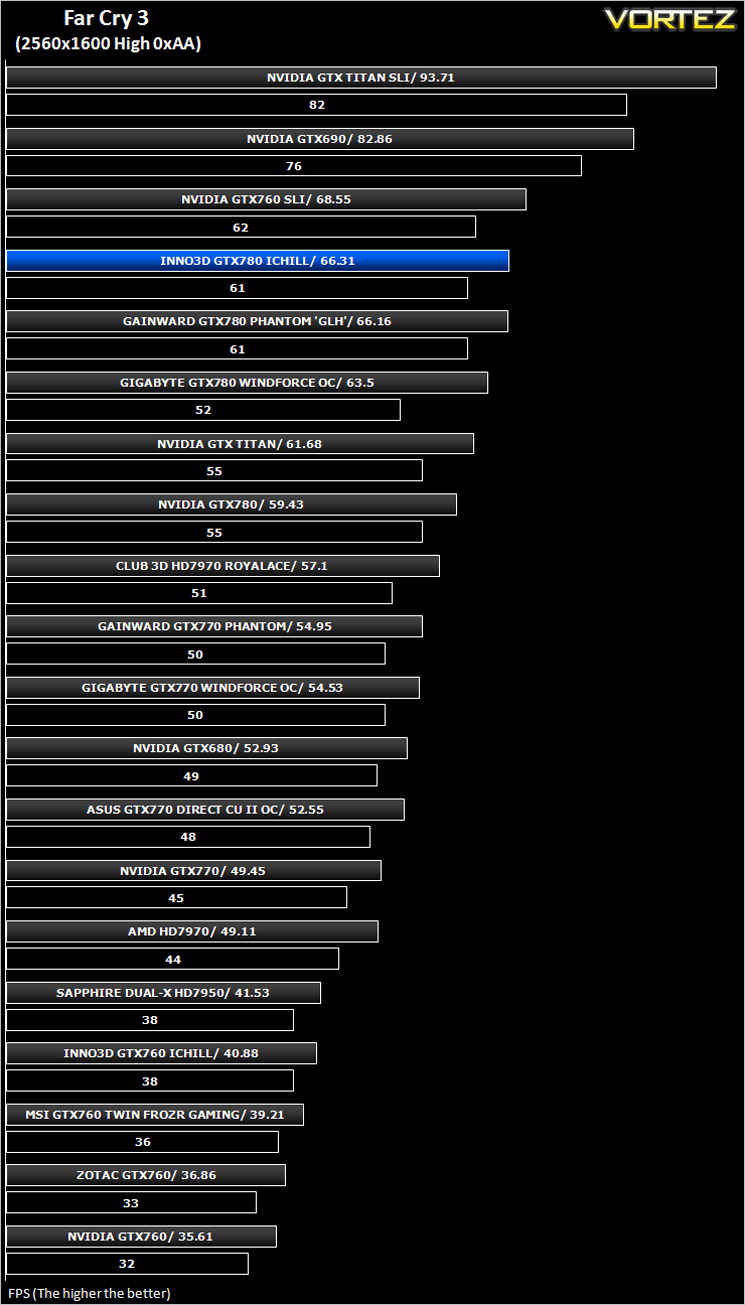
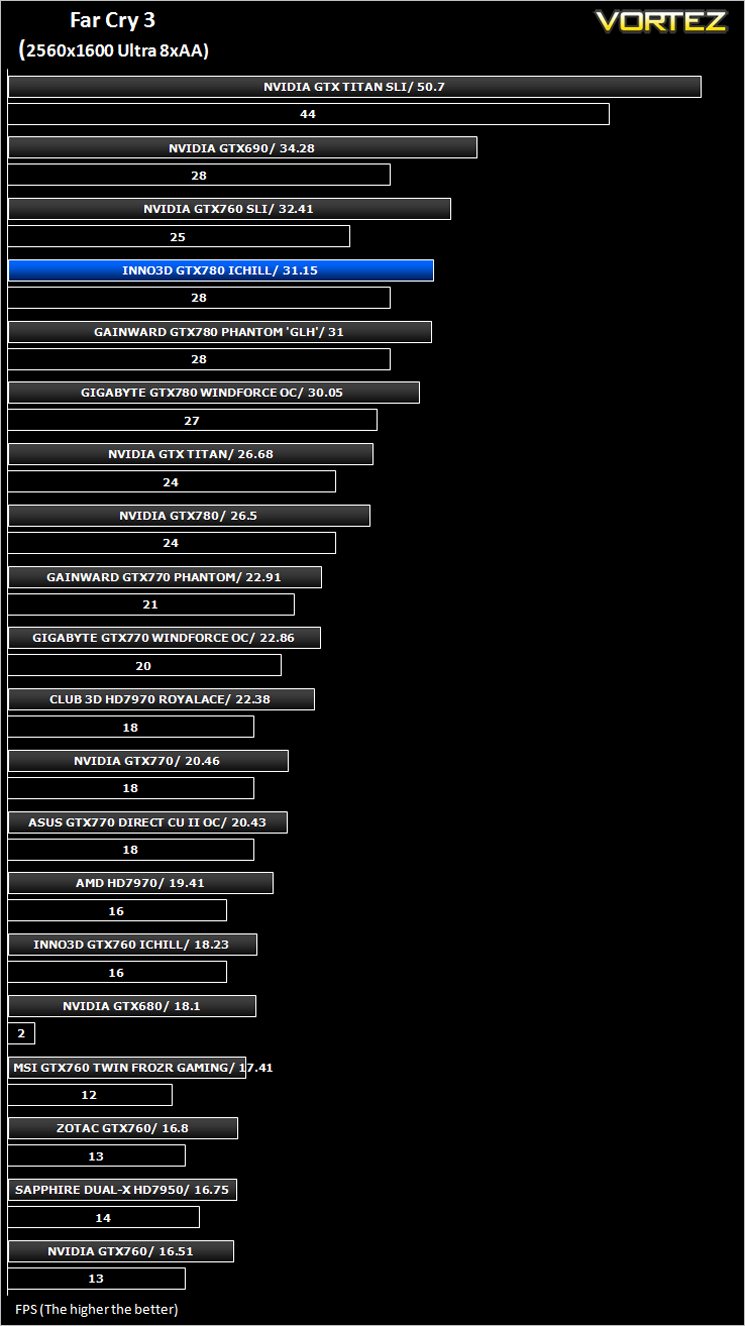
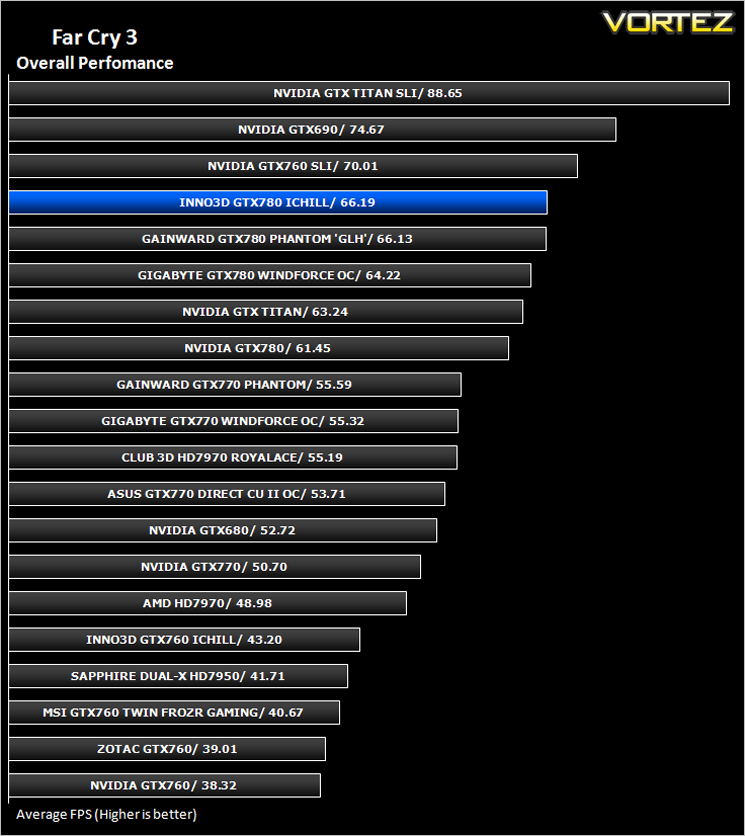
Far Cry 3 is a tropical survival shooter video game from Ubisoft Montreal and Massive studios. It’s open world design has similar traits to it’s forbear Far Cry 2 but it does it all so much better. With stunning visuals and settings to bring a PC to it’s knee’s, this game is so much more than the ‘just another console port’ it was reported to be.
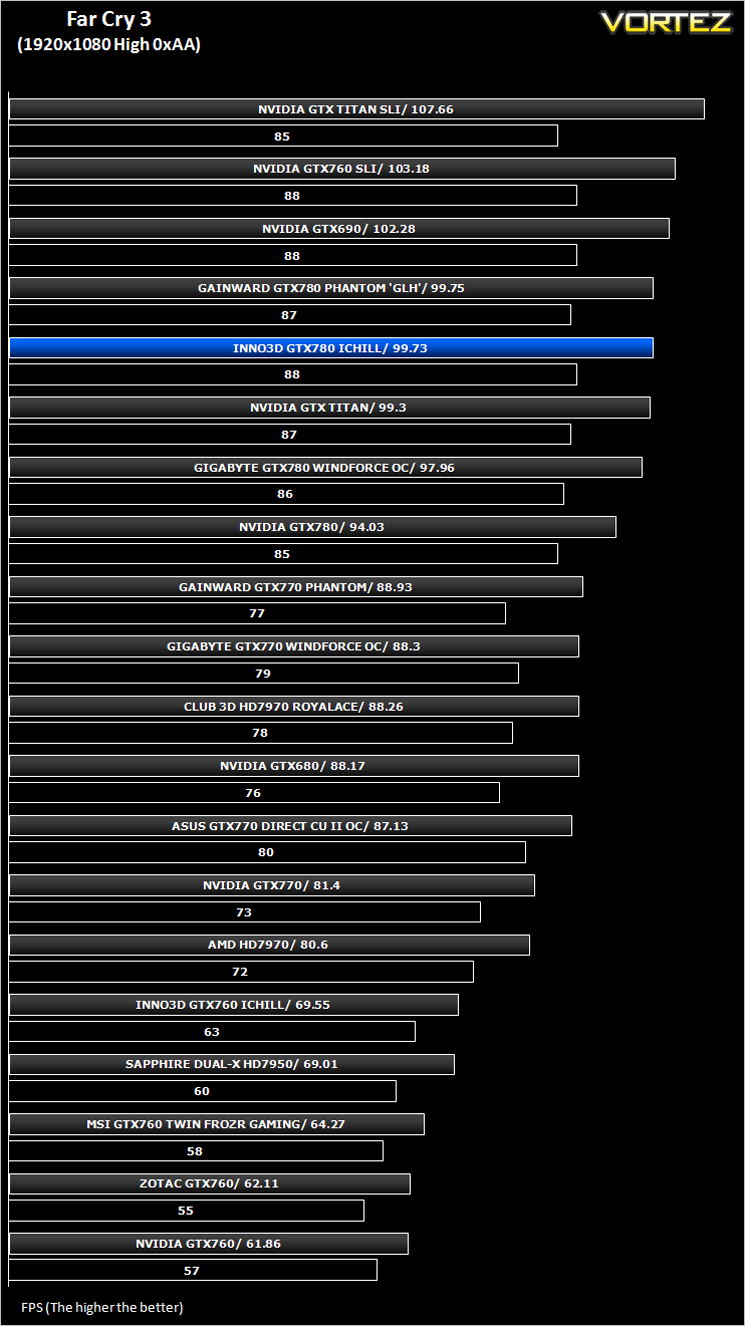
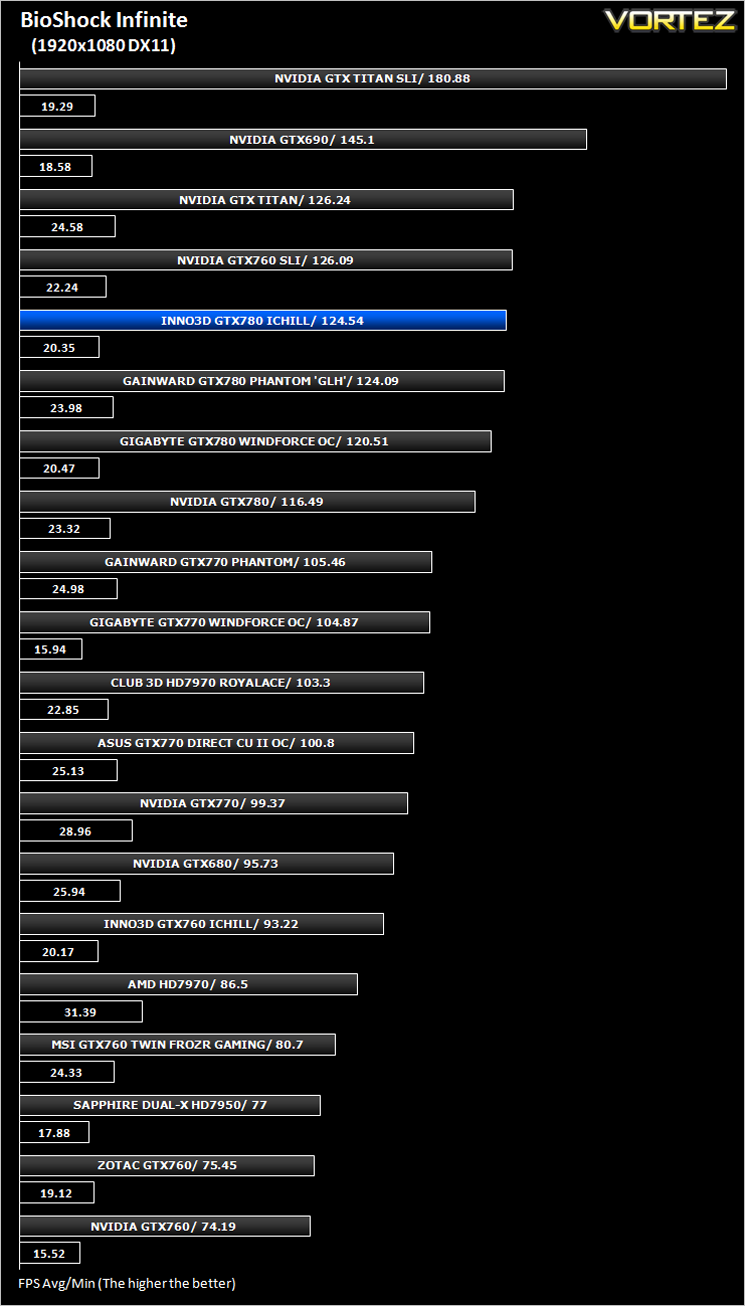
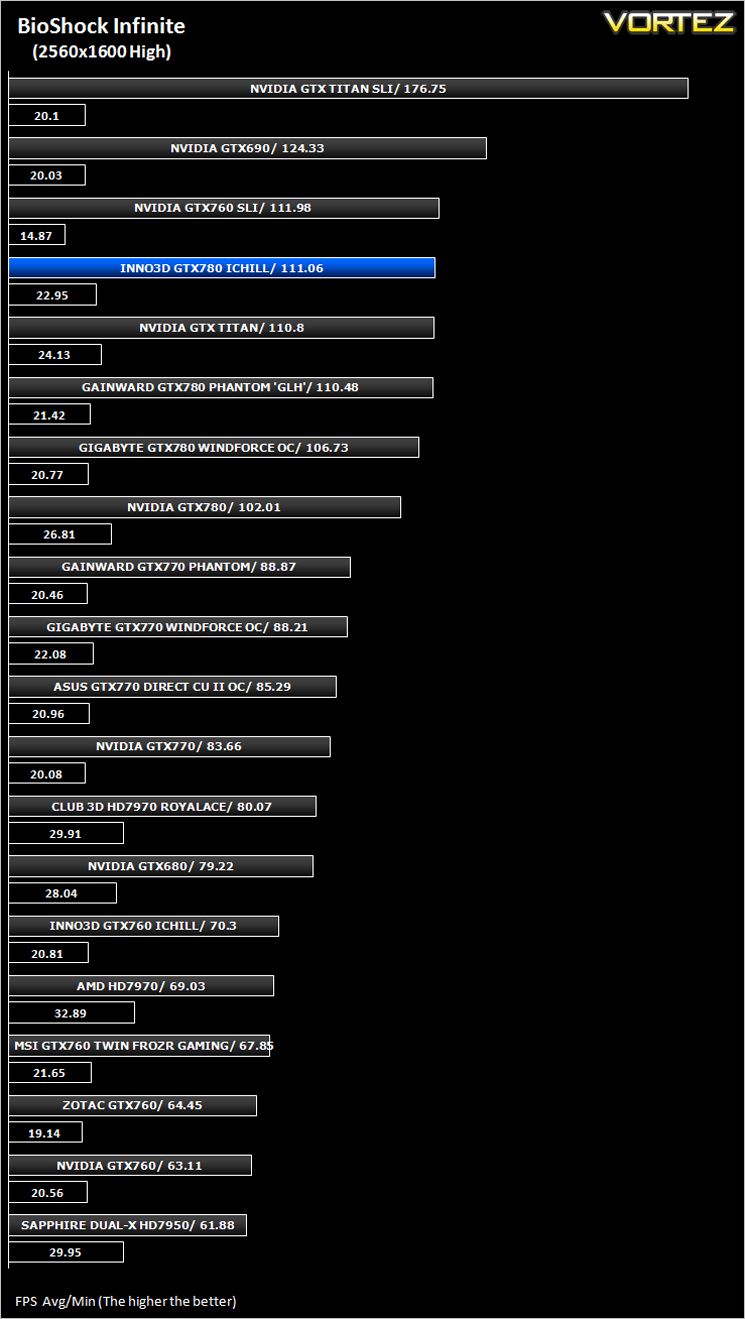
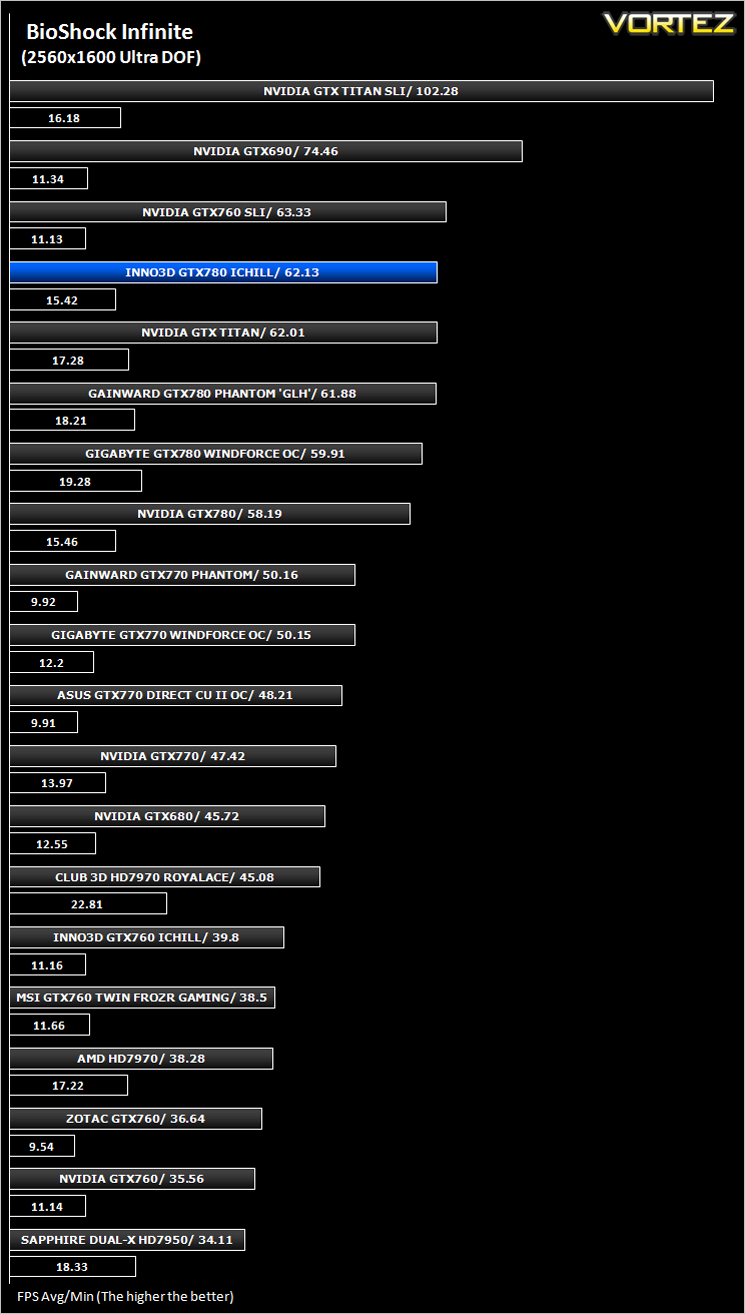
BioShock Infinite (FPS)
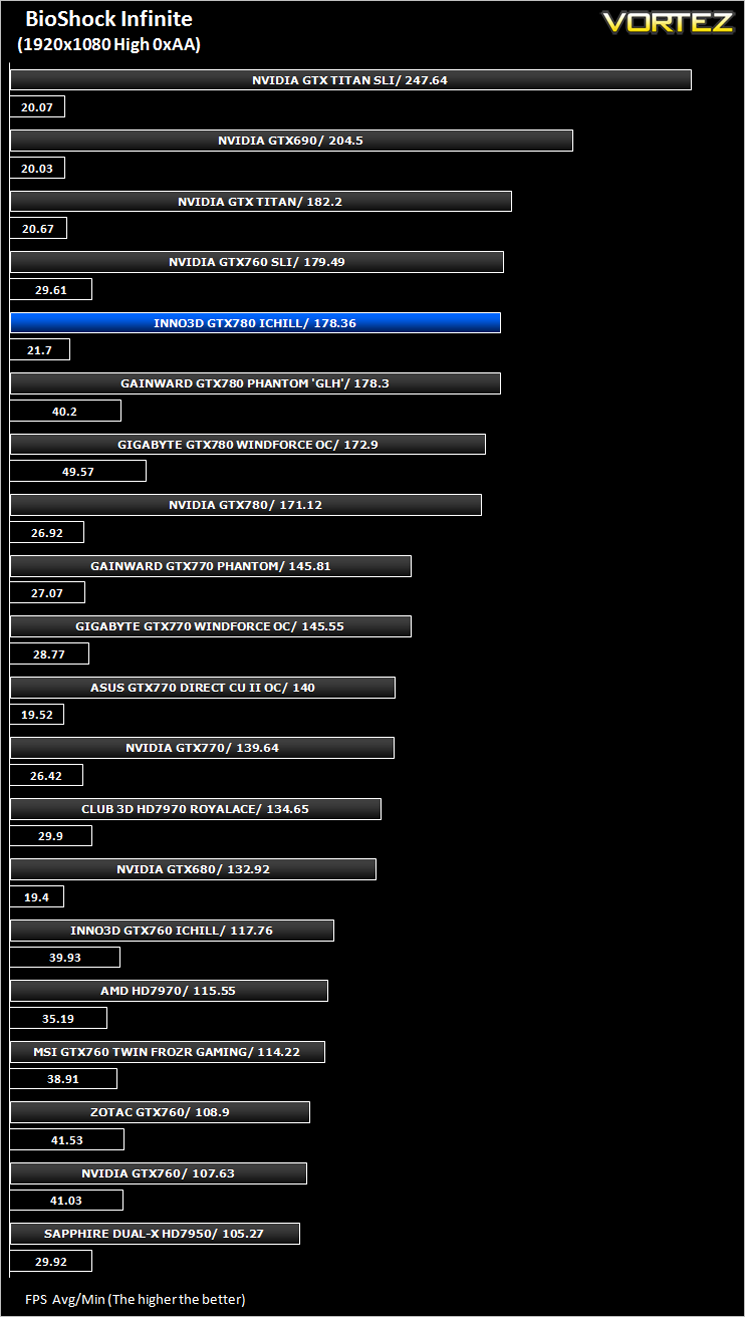
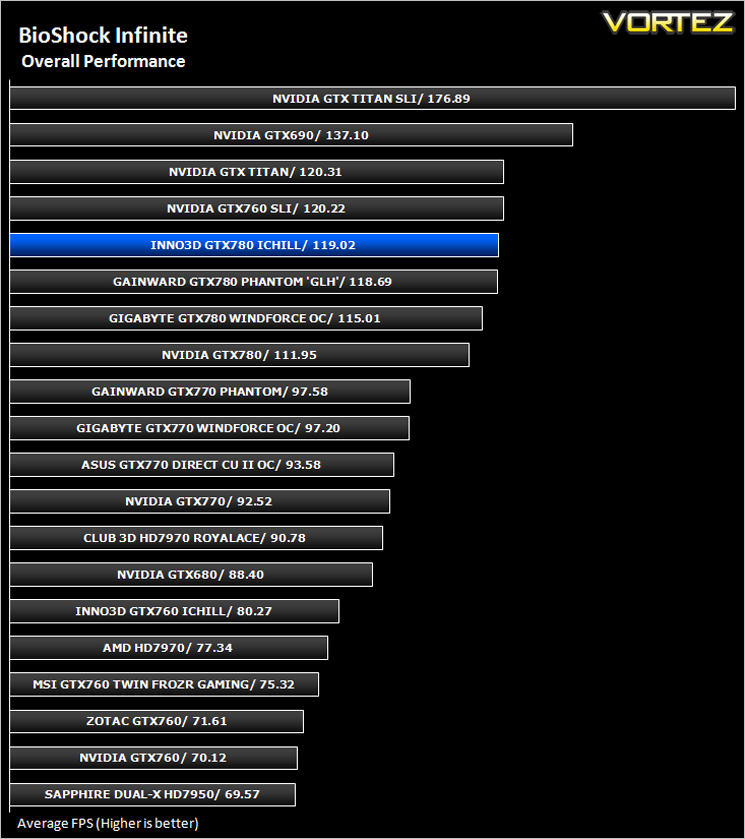
Set in 1912 during the growth of American exceptionalism, BioShock Infinite is a thrid person shooter developed by Irrational games and published by 2K Games. It is the third instalment of the BioShock franchise. the game utilises the Unreal Engine 3, modifying it with their own lighting engine to present a visually stunning experience like no other.
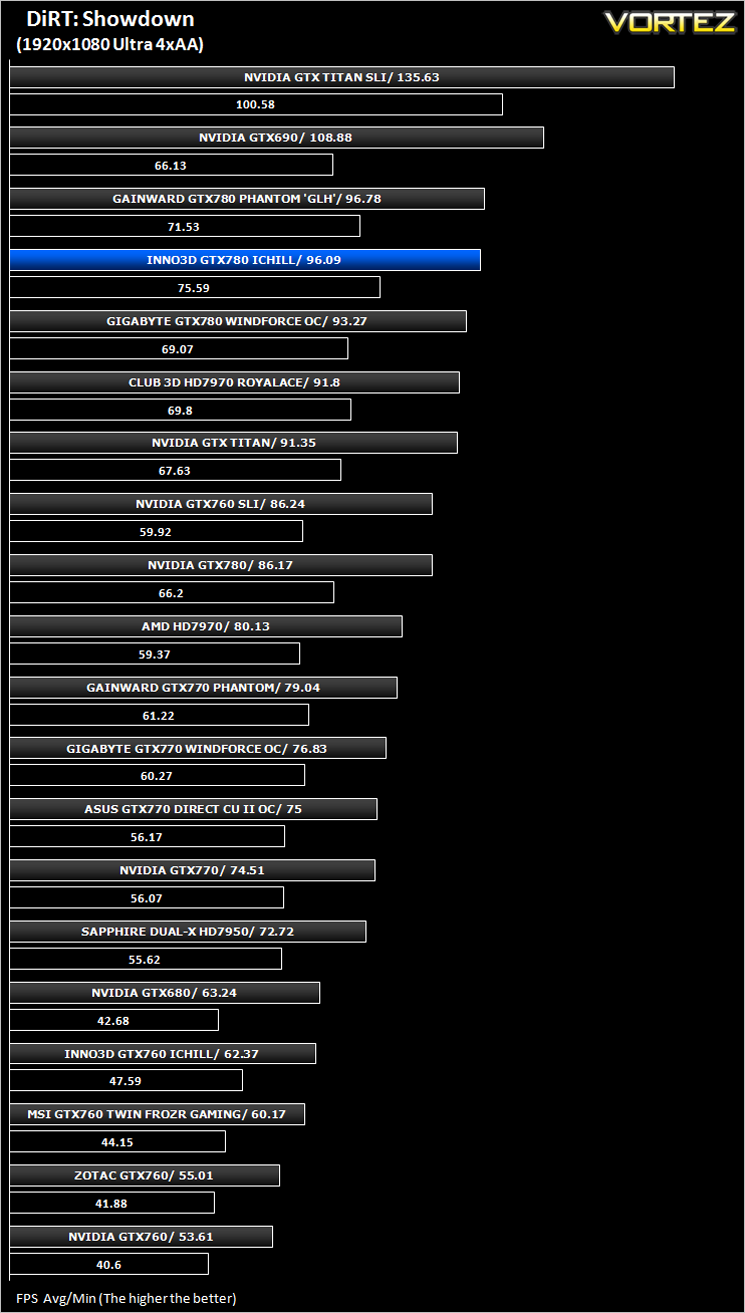
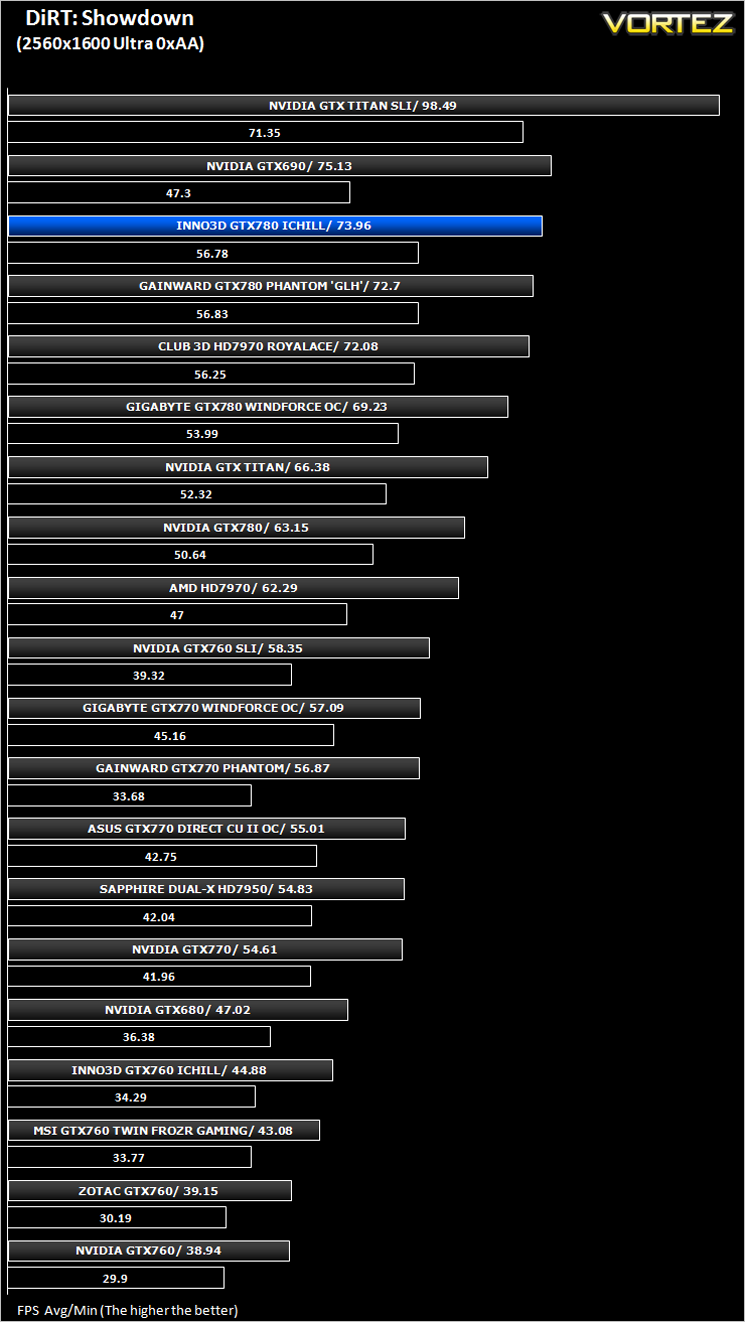
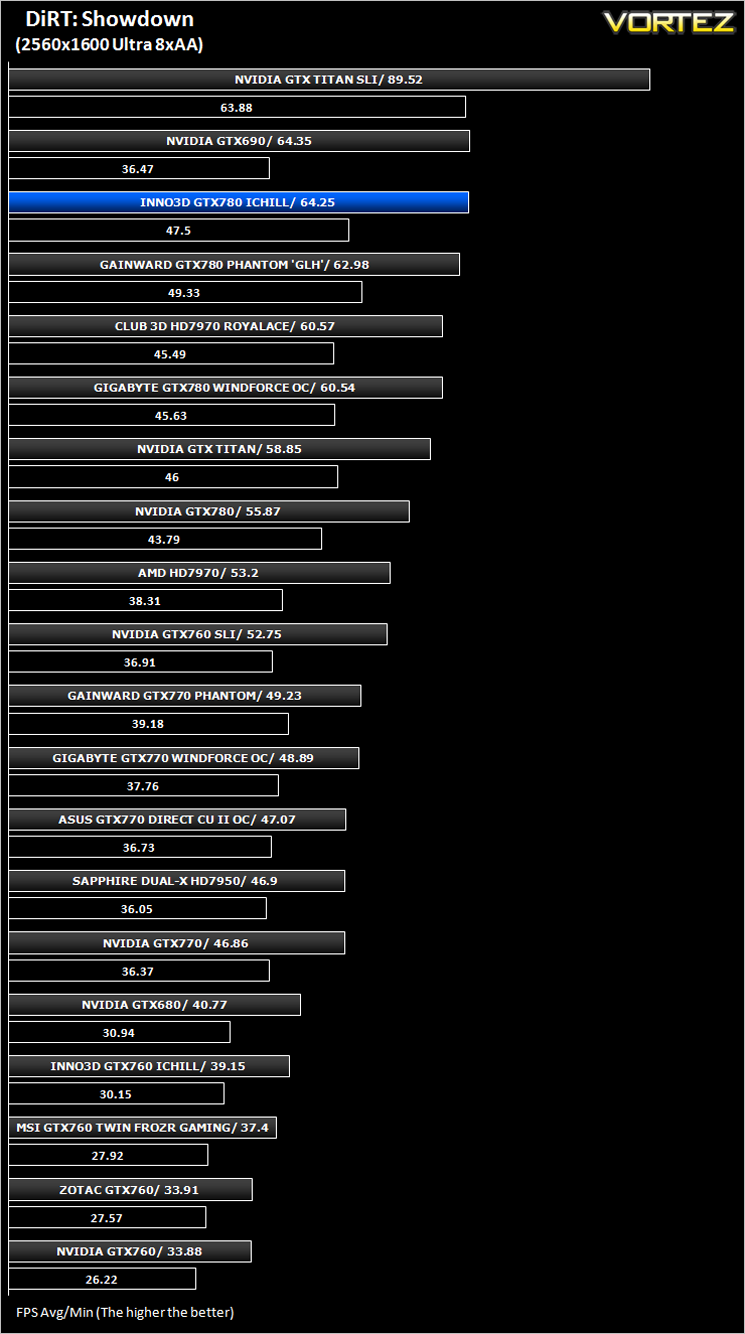
DiRT: Showdown (FPS)
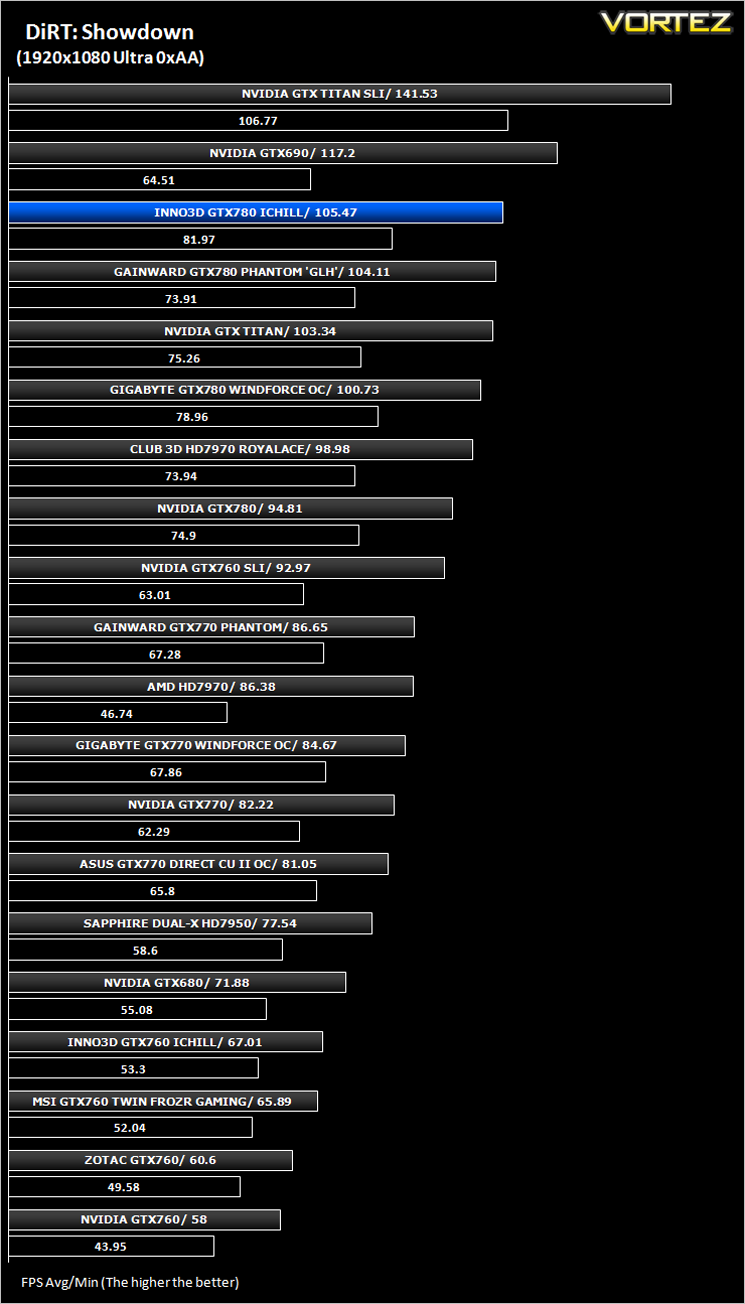
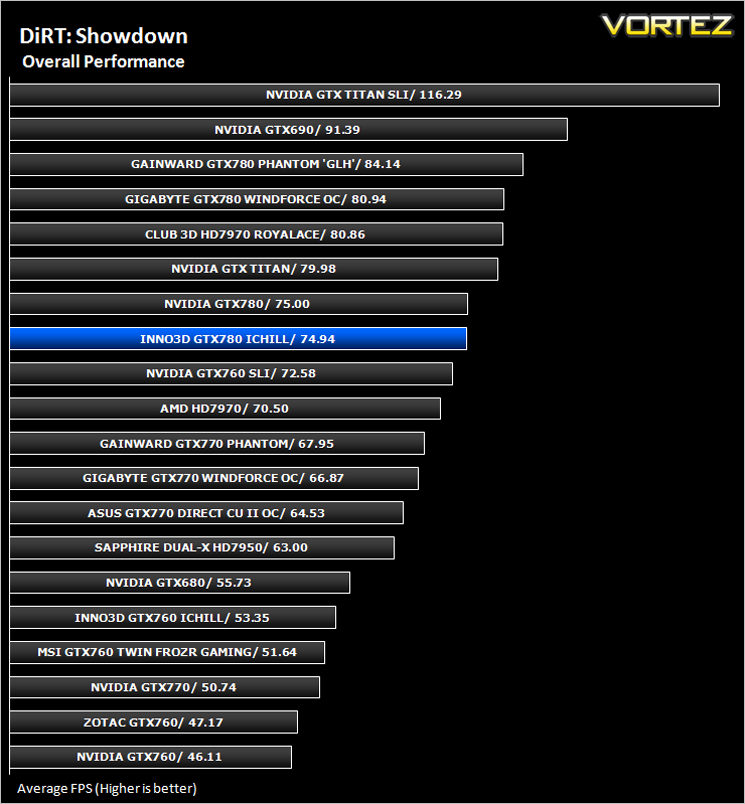
DiRT Showdown is the new arcade racing game from the team that brought you the award-winning DiRT series, uncaged in 2012. Pick up and play controls combine with electrifying events, frenzied crowds and stunning graphics to deliver high octane, dive in and drive thrills from event one.
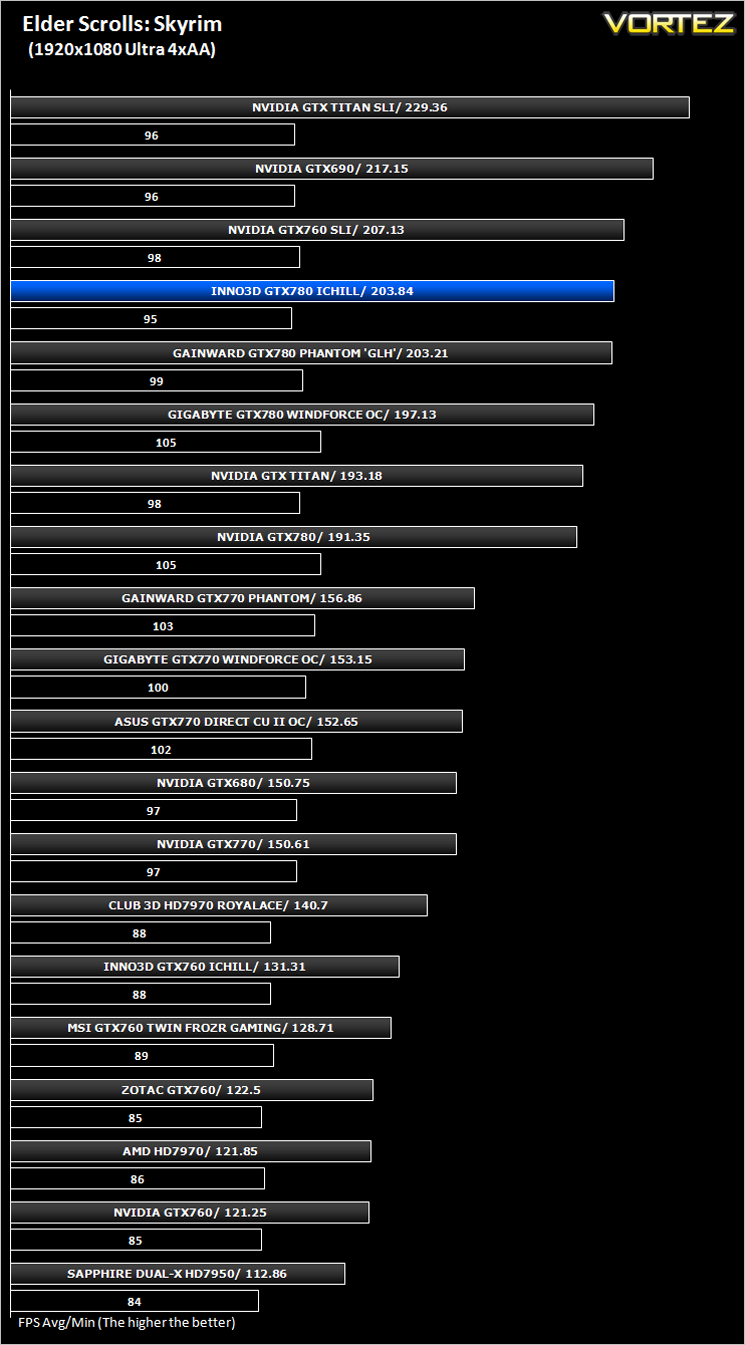
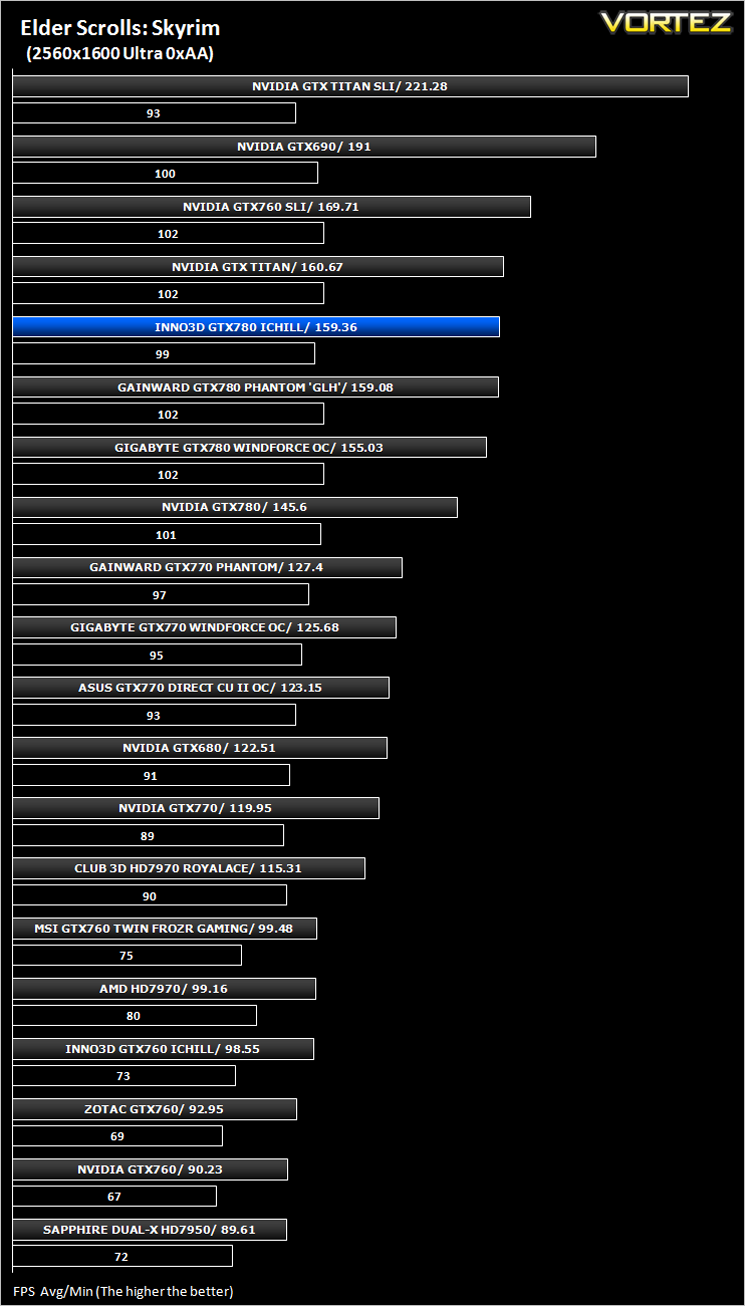
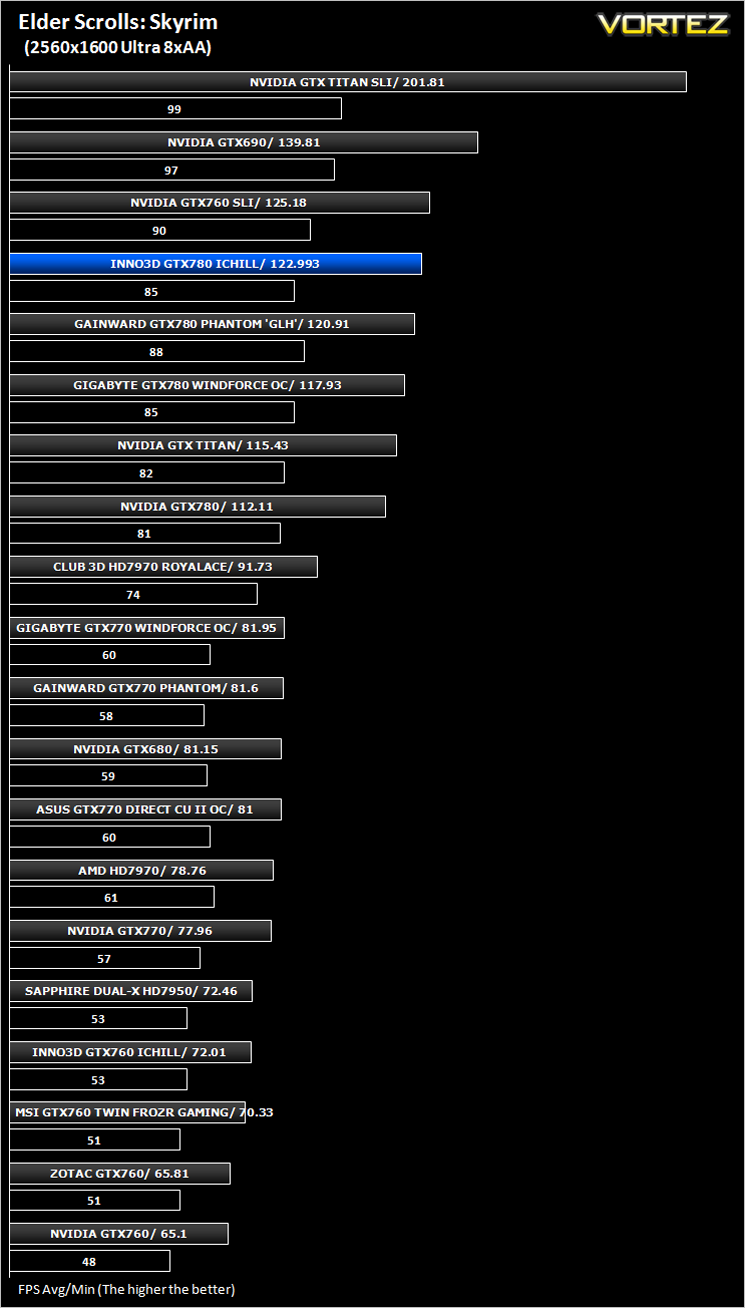
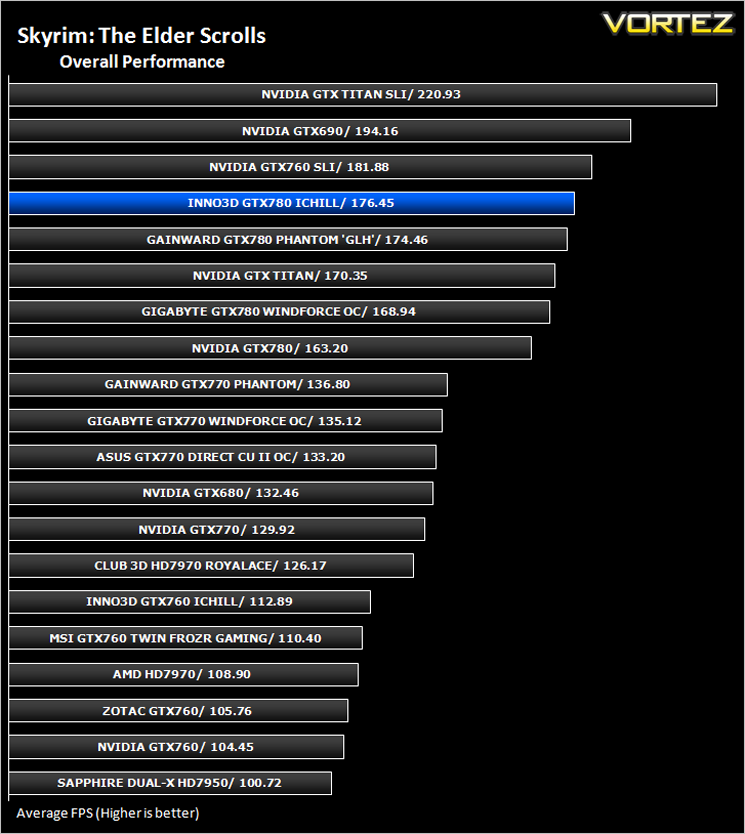
The Elder Scrolls: Skyrim (FPS)
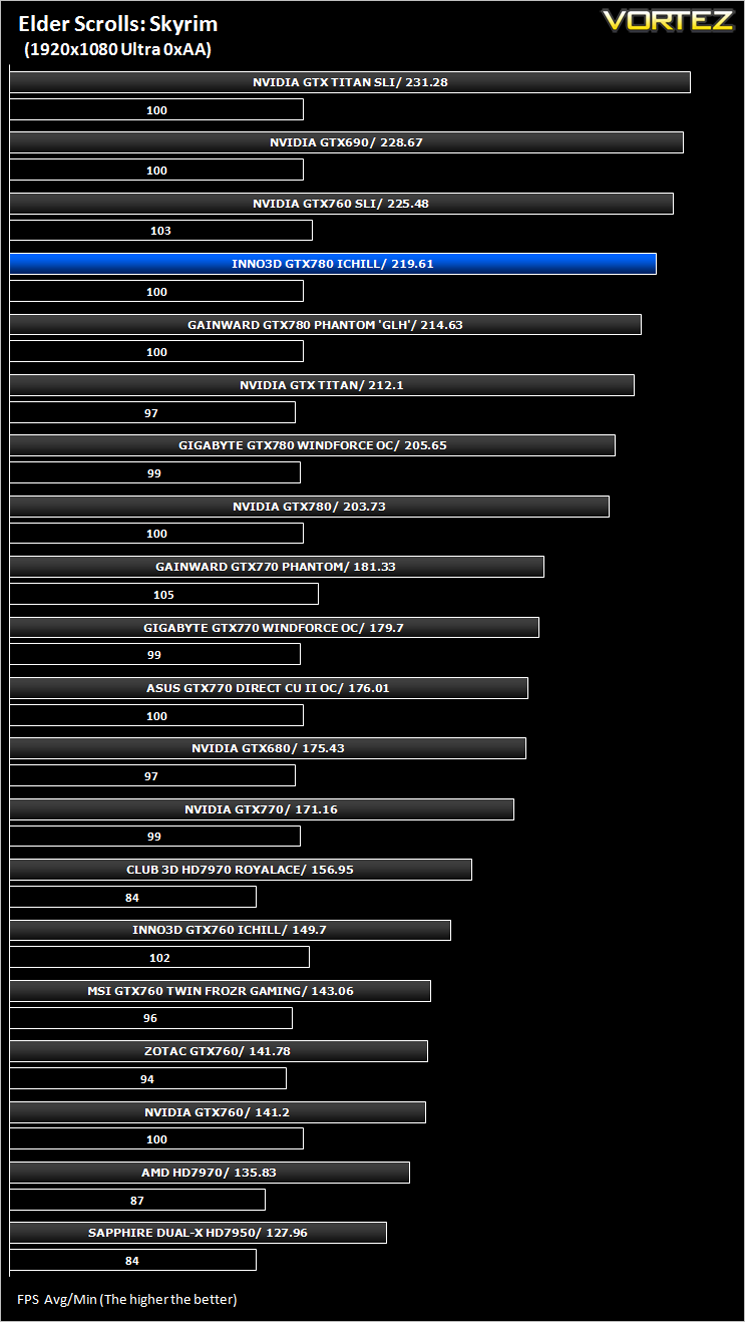
Skyrim is not a direct successor to the very popular Oblivion. Instead it takes place 200 years after the events of Oblivion. The non-linear playing that made the Elder Scrolls such a popular series does however make a return along with the beautiful scenery the encompasses the world of Skyrim.
Average and minimum frames per second were measured using Fraps during the drop down passage to Riverwood. V-sync was disabled to allow fluctuating (higher the 60) FPS for these runs. It is however recommended that v-sync is left enabled during normal gameplay due to the games dynamics.
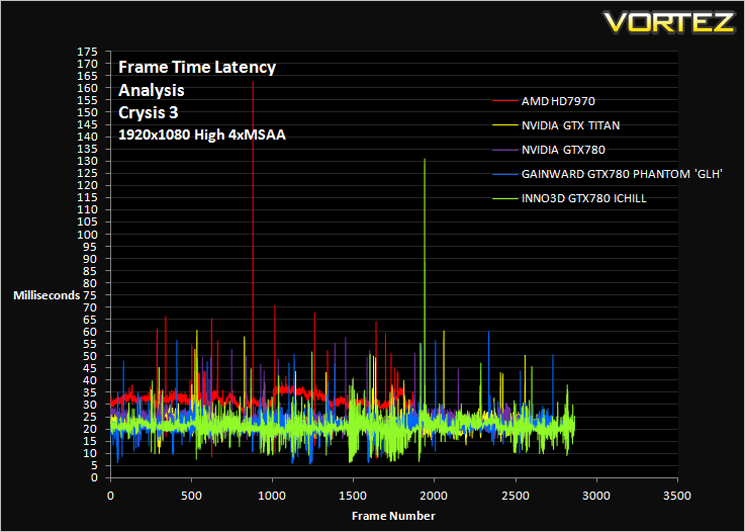
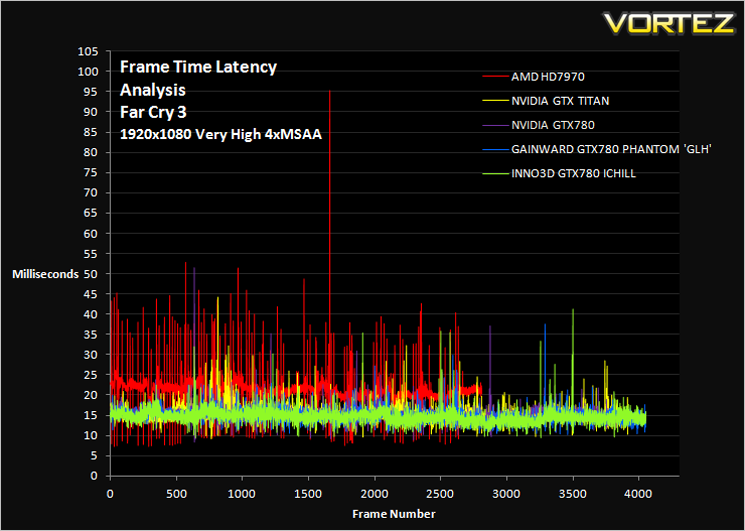
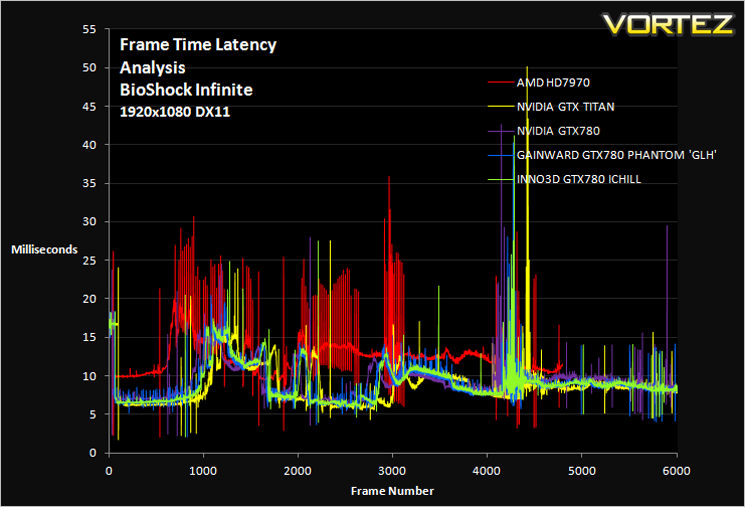
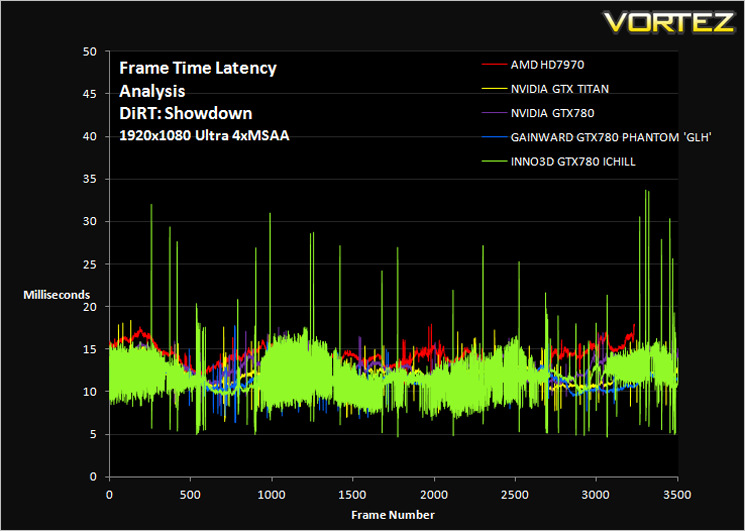
Gaming Experience (Frame Time Analysis)
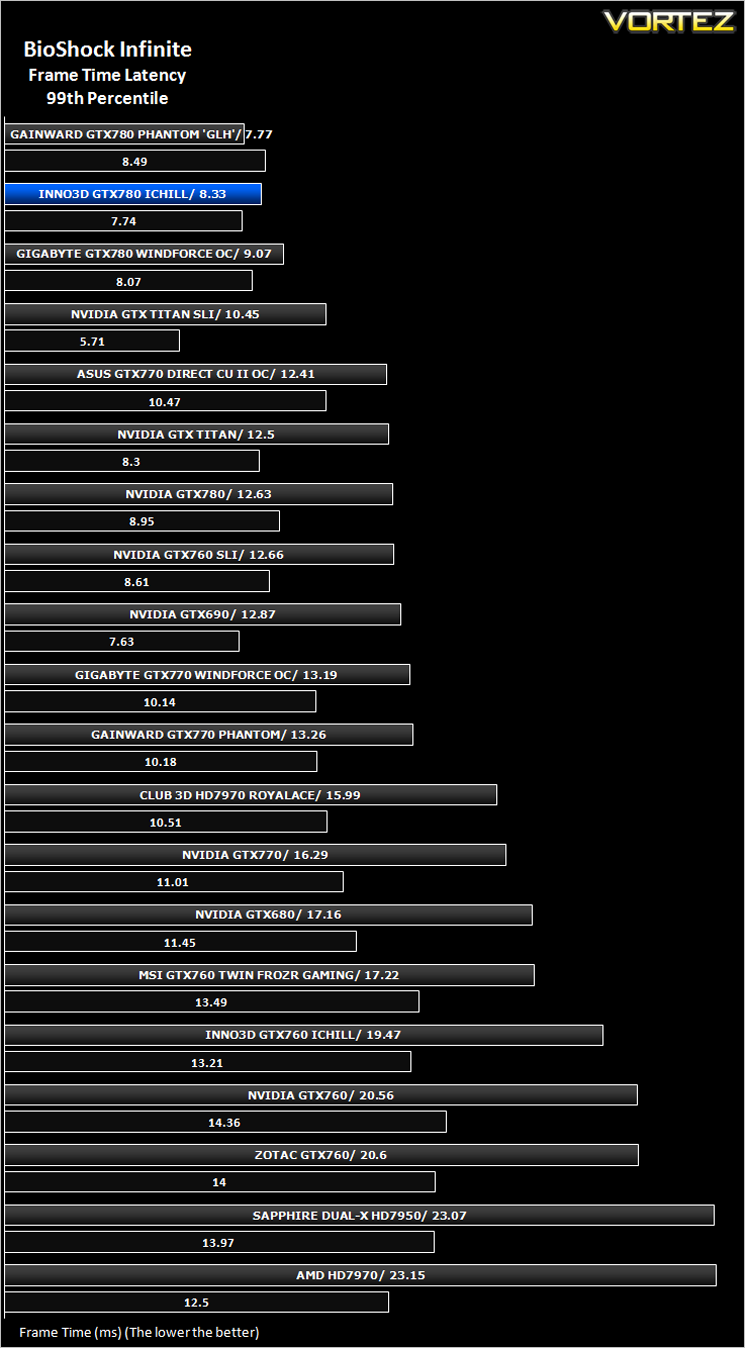
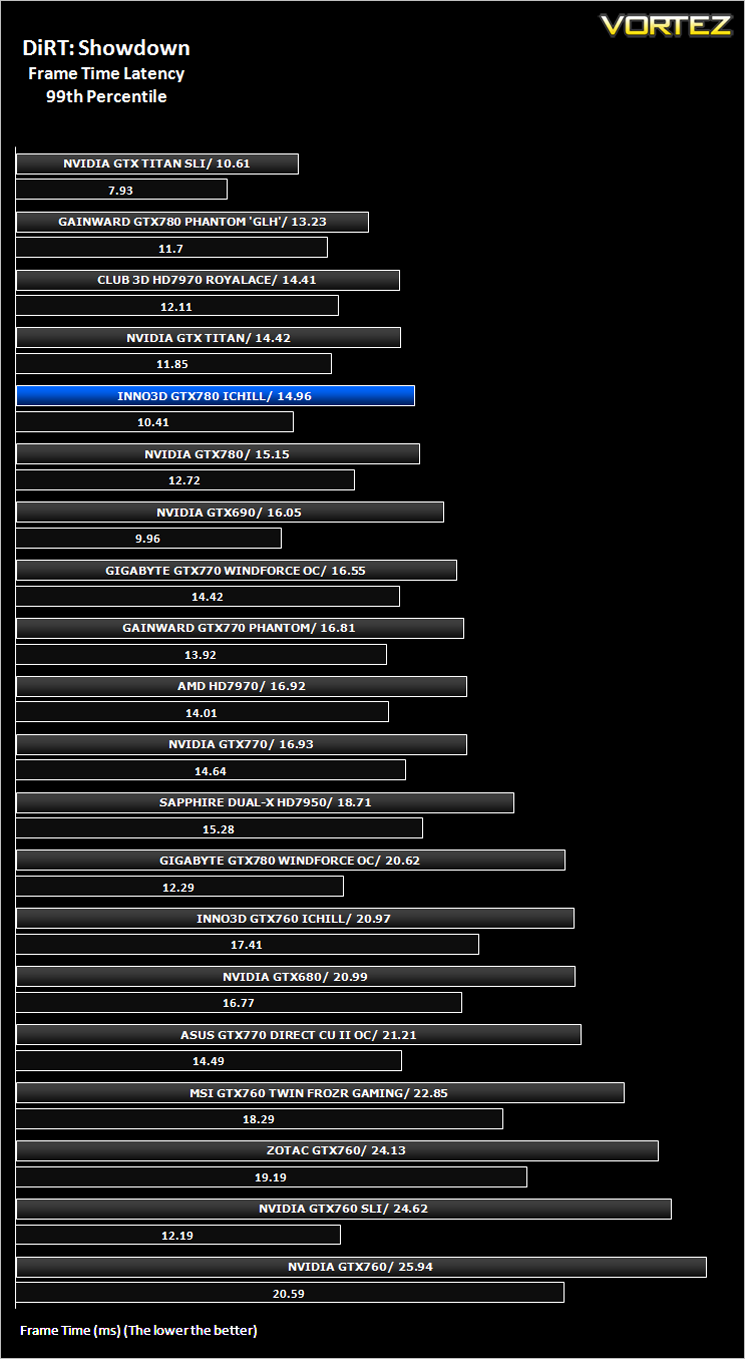
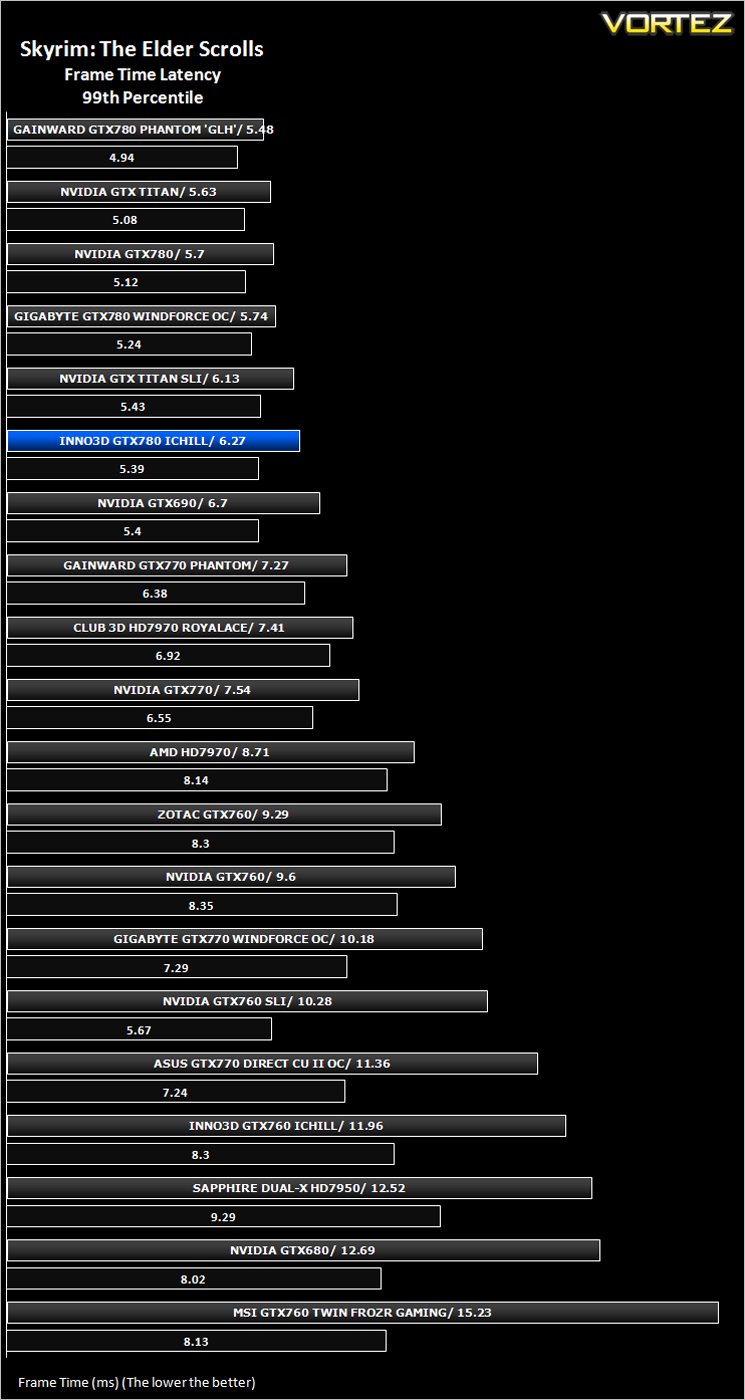
Here we take a look at both average (black) and 99th Percentile (coloured) response times of the graphics cards. It is highly unlikely a user will notice any micro stutter (also incorrectly referred to as lag but the effect can be interpreted to be similar) at anything below 30ms but every gamers perception differs.
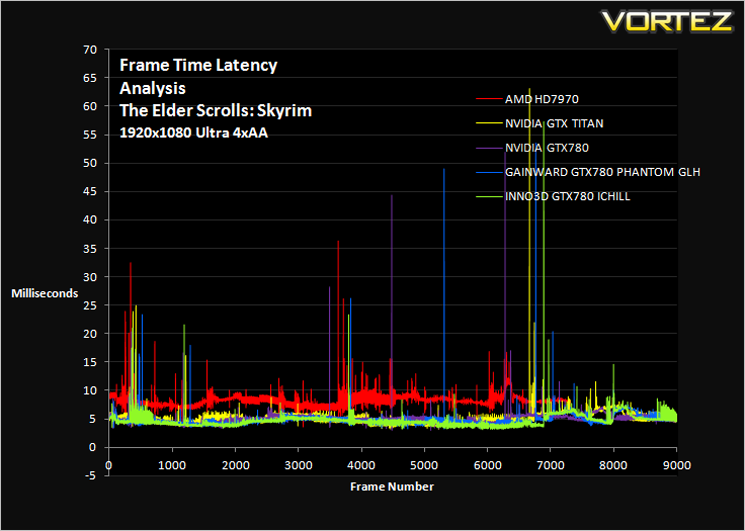
Comment
The graphs above may appear very daunting however, what you want to see is a smooth line (not fuzzy) with very few peaks and troughs. While you are unlikely to notice peaks and troughs below 30ms, any peak above 30ms may be seen as a stutter during gameplay. This will however depend greatly on your own perceptions. Multi card setups are more likely to show frame lag due to the nature of cross communicating to render frames.
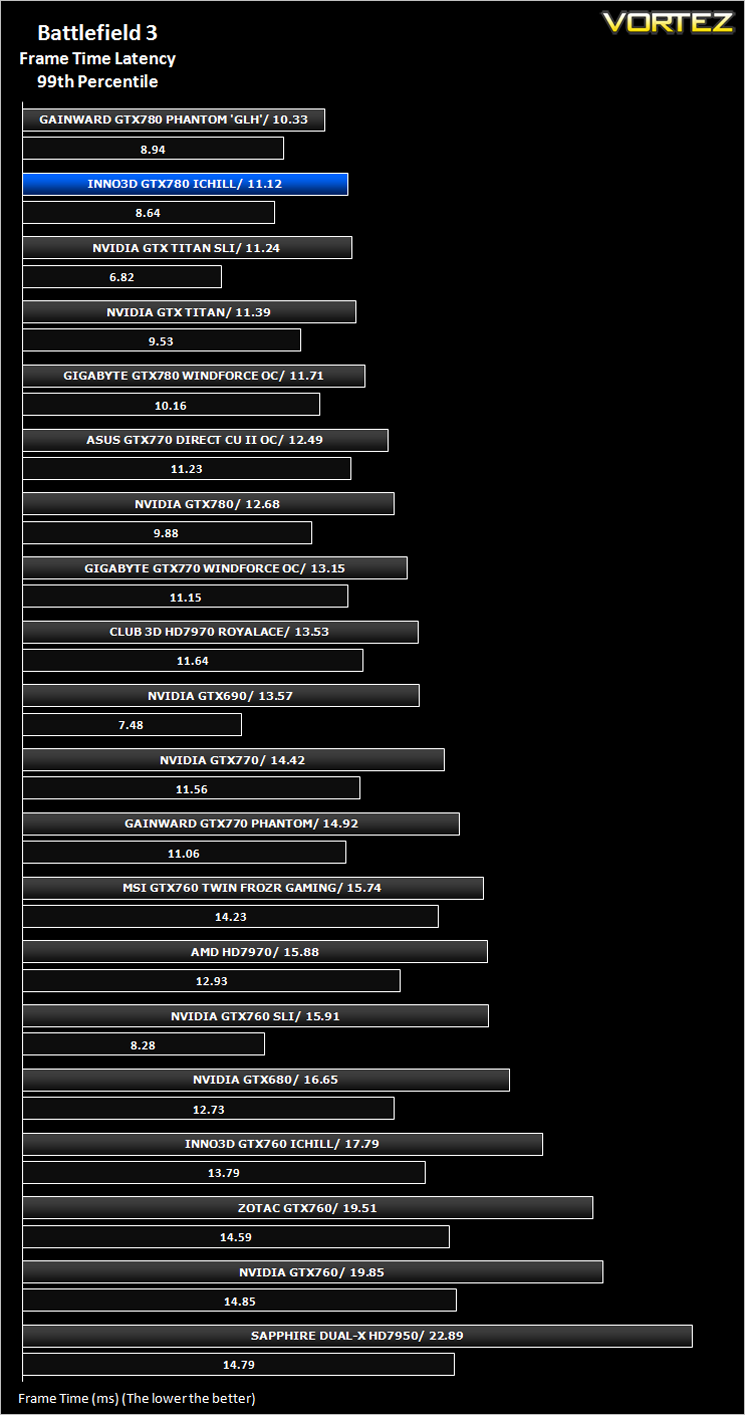
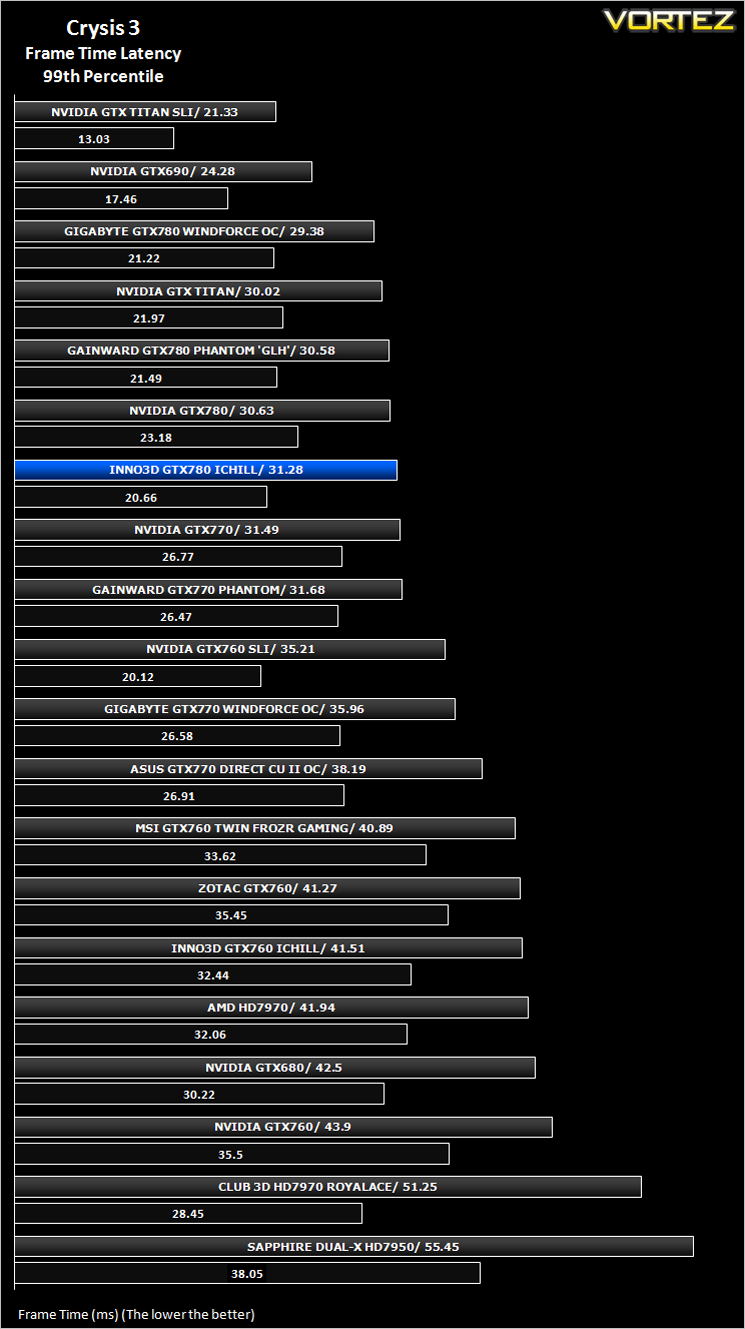
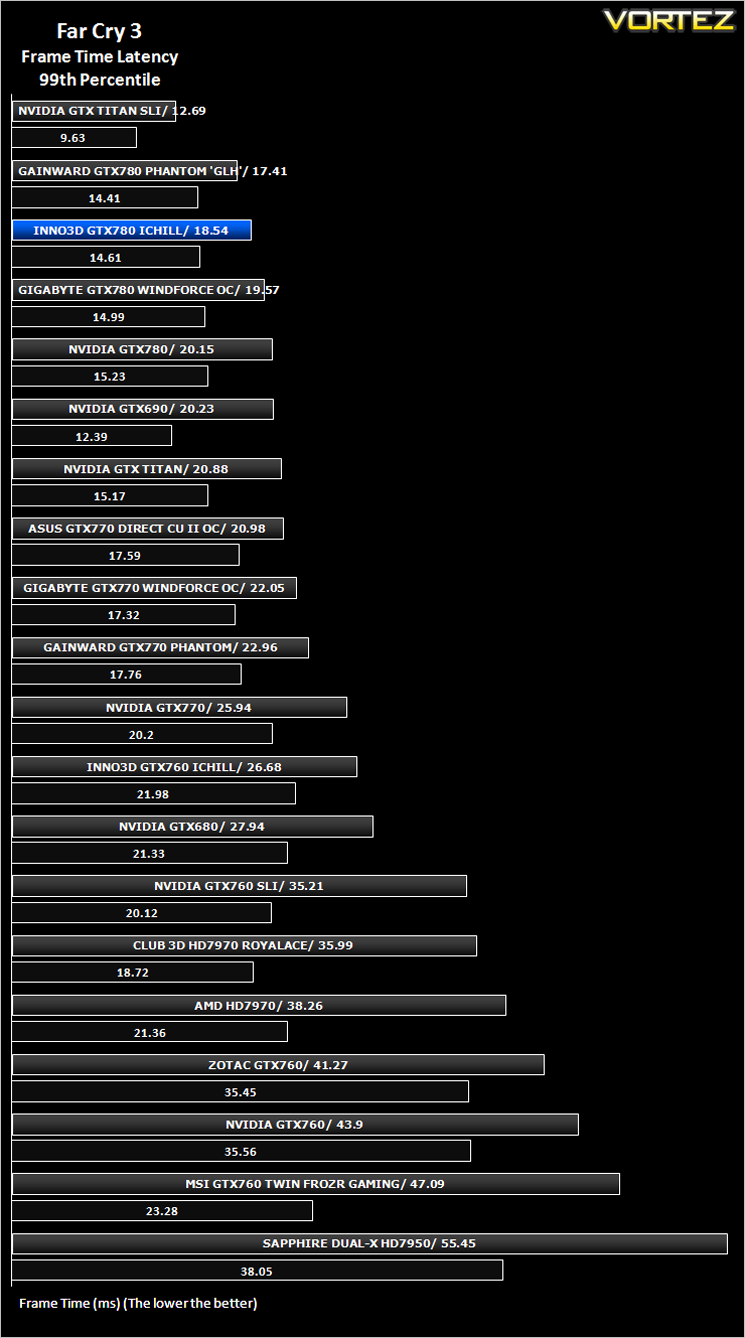
Average and 99th Percentile response times (Frame Time Analysis)
Here we take a look at both average (black) and 99th Percentile (coloured) response times of the graphics cards. It is highly unlikely a user will notice any micro stutter (also incorrectly referred to as lag but the effect can be interpreted to be similar) at anything below 30ms but every gamers perception differs.
Value For Money
We make a simple calculation for this set of results. For each game we add all of the resulting FPS totals together and then divide by the four sets to give us an overall performance figure. While the figures alone do not give you an accurate picture of how the card will perform in any given scenario, they do tell you, when averaged, which GPU is the more capable across all of the benchmarks and settings tested.
Overclocking (GPU BOOST 2.0)
For overclocking our NVIDIA cards we will be using EVGA’s Precision too (ver. 4.1) as this gives us all of the options we require. Should you desire, ASUS’ own GPU Tweak is equally good.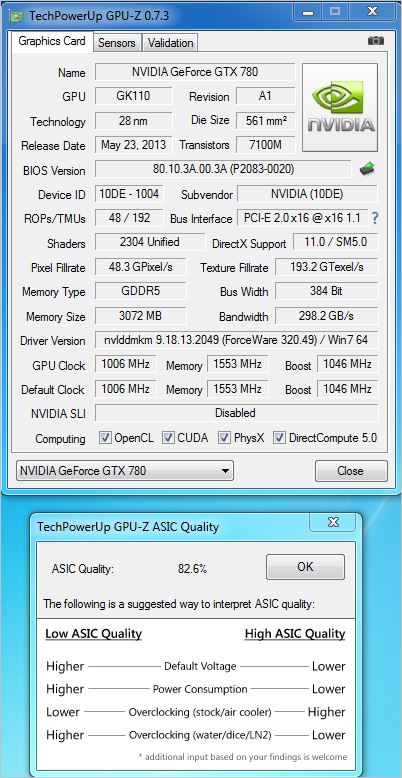
Above is a screenshot of GPU-Z showing the reference (factory overclocked) speeds and reference boost clocks. As previously stated, the core clock is among one of the fastest factory overclocks available on the GTX780. We have also included the ASIC rating of our sample. The ASIC rating basicly tells us how good the overclock will be. The higher the ASIC rating, the better the overclock is likely to be, particularly on air cooling at a given voltage. Average ASIC readings for our GTX 780s range from 70% to 80%. As you can see from the screenshot above, todays sample is very much above average so hopefully we will see some good overclocking results.
In truth, we are still dubious as to the real value of this reading but time will tell. As we have been asked on numerous occasions to include it in our reviews we felt it only right to show it although please take any of these values with a pinch of salt until we can confirm whether it does actually mean a higher or lower overclock will be achieved.
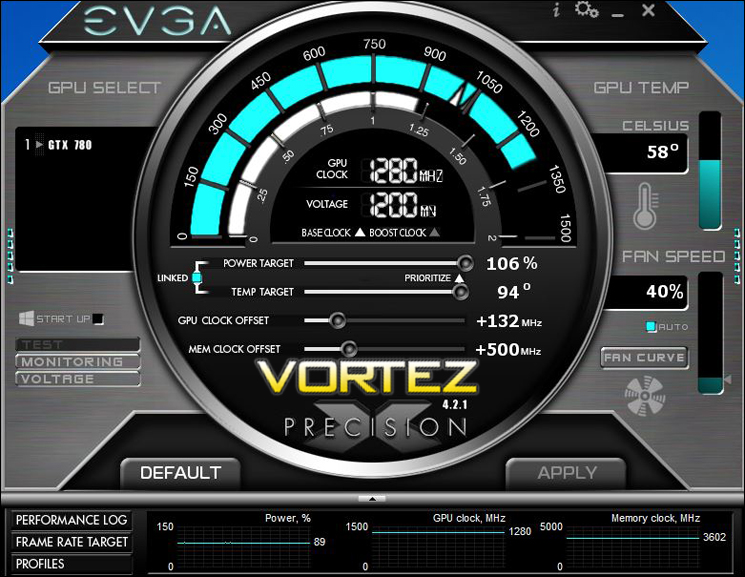
With such a high overclock already applied we were not expecting miracles and sadly we got none. Despite the fantastic cooling available it barely managed to beat our previous best overclock on the GTX 780 set by the Gainward GTX 780 Phantom GLH. Still, winning is winning so they say and the Inno3D GTX780 iChill HereculeZ x3 is the achieved the highest overall clockspeed on test maxing out at a blistering 1280MHz (BOOST) on the core. We did manage to clock a little higher but at this speed proved unstable in our endurance tests so we down clocked it until we gained stability.
Maybe there is something to the ASIC reading after all!
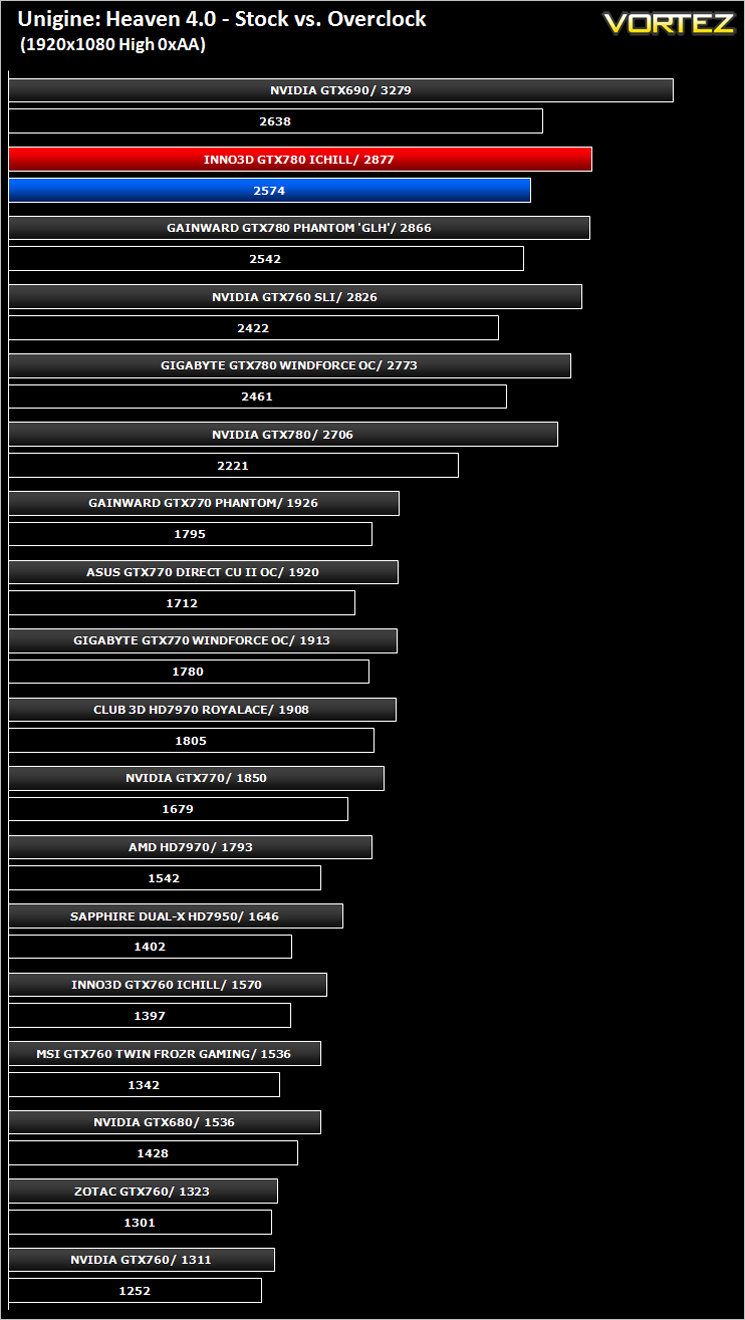
After settling on our stable clockspeed which was verified by multiple runs of Unigine Heaven and 3DMark we benchmarked the overclock and compared it to stock results with Unigine Heaven 4.0 to evaluate the benefits of overclocking the GPU.
Conclusion
Classing the Inno3d iChill GTX 780 HerculeZ X3 Ultra as anything other than exceptional is futile. It is among the fastest factory overclocked cards available, in our tests it proved to be on average the fastest GTX 780, it also manually overclocked the highest and was also the coolest. In our opinion it is the best looking, has the best accessories and as an overall package clearly comes out on top. What more could you want? We could end the review right there but we wont.
Bad points? They are difficult to find. The obvious stumbling block is the price because at £599.99 it is among the most expensive GTX780’s available at the time of writing. If bragging rights are what you desire most then the GTX TITAN for another £200 may be more to your liking. If you want the ultimate in performance then perhaps a GTX 690 is the better alternative. However, if the obscene amount of cash required to purchase those two cards cost put you off then the Inno3d iChill GTX 780 HerculeZ X3 Ultra is the card to go for. Don’t misunderstand us, £600 is still obscene in GPU terms but it is much easier to swallow considering the performance gains to be had from the top two cards from NVIDIA and for that £600 you do get a hell of a lot of performance.
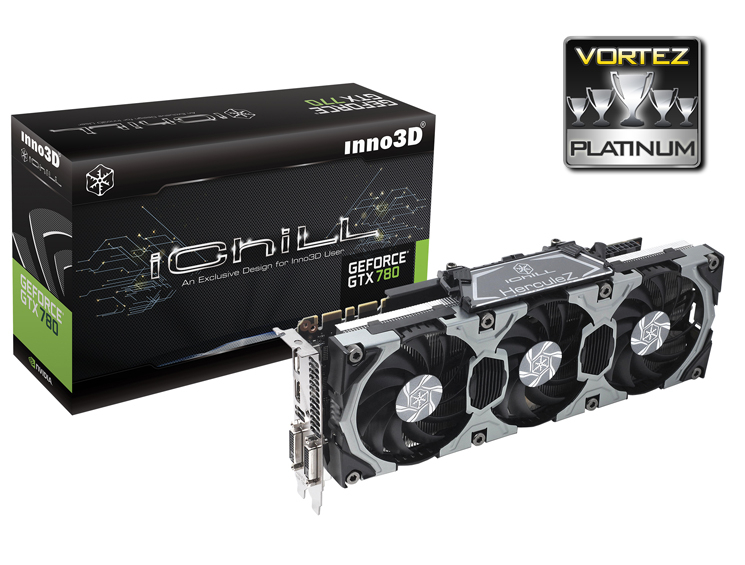
The thought and engineering that has gone into this graphics card is mind blowing. We honestly can’t think of anything more you could want from a graphics card save grab you an ice cold beer from the fridge! We could wax lyrical about the card all day because it is one of those products that sets new standards. We’re sure then you can understand why we have given the Inno3d iChill GTX 780 HerculeZ X3 Ultra our very best award.
To summarise:
The Inno3d iChill GTX 780 HerculeZ X3 Ultra epitomises all that a GPU should be: Extremely powerful, extremely quiet and extremely cool (in both senses of the word). Inno3D – we applaud you on a job very well done.
Pros
+ Huge factory overclock
+ Amazing performance
+ Fantastic looks
+ Superb cooling
+ Good selection of accessories
+ Best in class
Cons
– Expensive
– Bulky
+ Huge factory overclock
+ Amazing performance
+ Fantastic looks
+ Superb cooling
+ Good selection of accessories
+ Best in class
Cons
– Expensive
– Bulky

Click here for an explanation of our awards at Vortez.net.


