


Intel adds a new six-core Core-i7 processor to their Mainstream portfolio. Can this Coffee Lake 8700K offer any clear advantages over the 7700K?

Product on Review: Core i7-8700K
Manufacturer: Intel
Street Price: £360 GBP / $359 USD
It’s certainly been a busy 2017 so far for Intel. They began in January with the release of desktop Kaby Lake CPUs, otherwise known as the 7000-series, and the 200-series motherboards. This was followed by their first all-new new High-End Desktop platform in July, comprising both Kaby Lake-X and Skylake-X CPUs for which discrete launches are ongoing. Today sees market availability of yet another brand new desktop platform, and the first of the 8th Generation Core processor designs outside of the mobile market. Yes, it’s time for a big ol’ cup of Coffee…
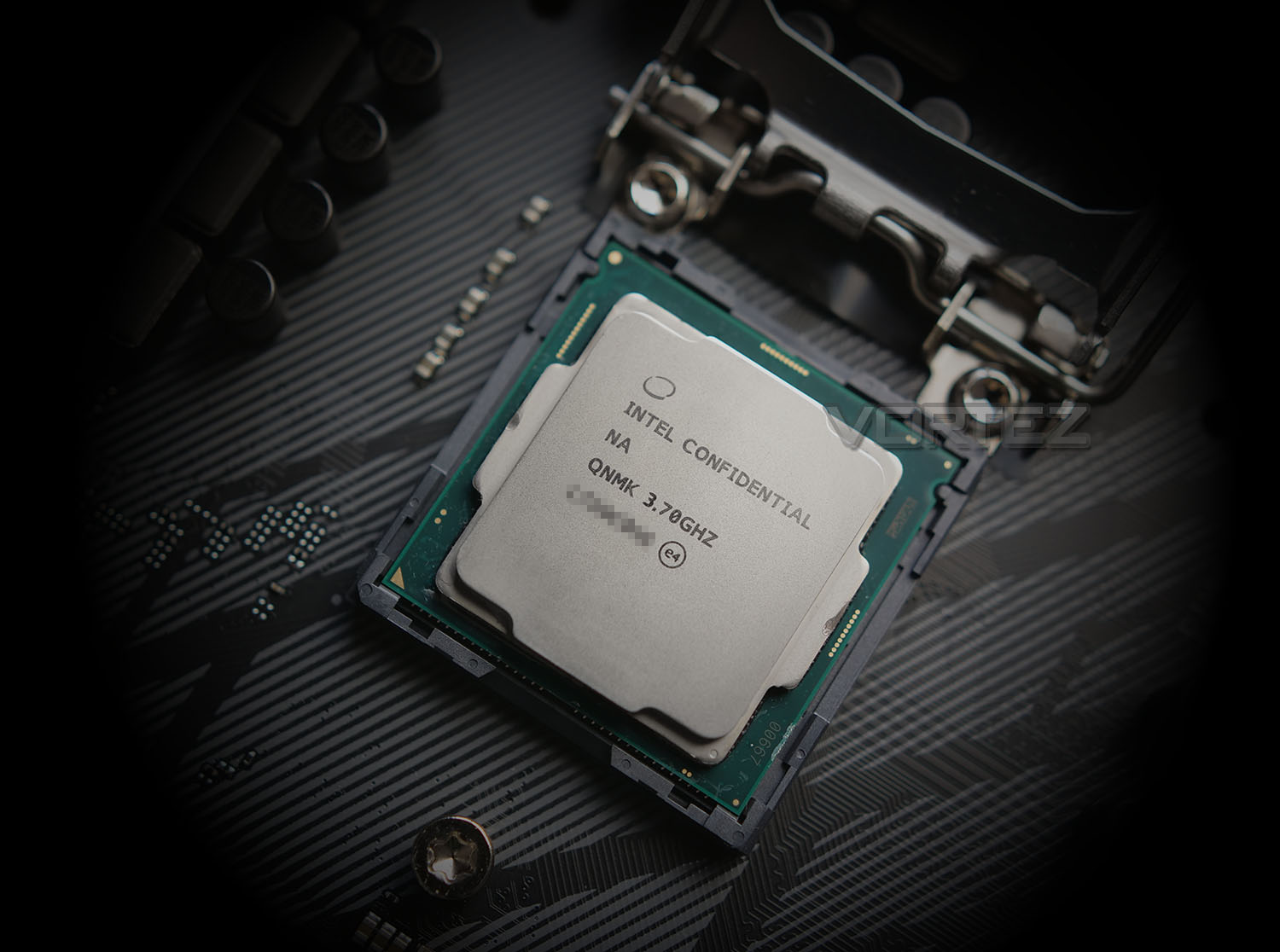
Codenamed Coffee Lake, but more formally known as 8th Generation Desktop CPUs or the 8000-series, the latest additions to Intel’s desktop processor portfolio were unveiled to the public two weeks ago but were the worst kept secret in the component market for some considerable time beforehand. Whether as part of a hurried reaction to AMD’s Ryzen, or a stop-gap measure before Cannonlake in 2018, for the first time in generations Intel are choosing to debut a mainstream desktop processor in the Performance sector.
So, what does this new platform bring? Simple: cores. Intel have taken up the gauntlet thrown down by AMD’s Ryzen CPUs and accelerated the launch of their 6-core mainstream designs, well ahead of the transition to an 11nm process node and Cannonlake microarchitecture.
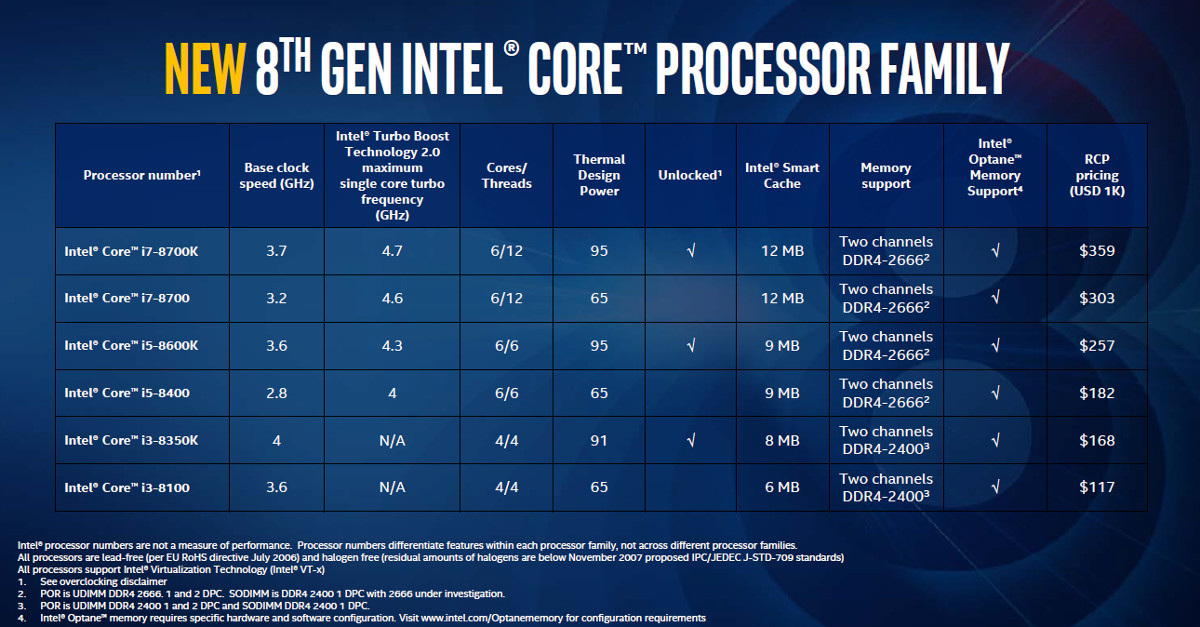
The Coffee Lake launch range is comprised of multiplier locked and unlocked 6-core and 4-core designs at prices from $117, with further SKUs on their way in the New Year. As with previously released mobile 8th Generation Core CPUs, Intel’s stated desire is to mark a step-change in performance at all product segments, and at the Core i3 level are accomplishing this by retiring dual-core designs. Yes, finally Intel’s mainstream won’t be shackled by having only two cores – that’s great news for regular consumers and budget gamers alike.
Alongside the new CPUs is a new series of motherboards. In general you will likely be seeing Z370 motherboards for a while, a design necessary for overclocking the latest Unlocked processors. The first round of 300-series motherboards are revisions to the 200-series with a broadly similar feature set, but without any form of backwards compatibility despite a similar LGA1151 socket. Intel has stated that a number of optimisations have been made to Z370’s power delivery for the 6-core CPUs, and that certainly sounds plausible.
Today’s review is of the Core i7-8700K, the Cannonlake flagship and highest-performance SKU at launch. Featuring six cores, each supporting Hyperthreading for a total of 12 simultaneous threads, at $359 it’s priced between AMD’s Ryzen 8-core/16-thread 1700 and 1700X. It’s also only a little over $20 more than the launch price of the i7-7700K, and so on paper is a big step forward in price/performance for Intel’s mainstream segment flagship.
The i7 is currently the only Coffee Lake class to support Hyperthreading; AMD meanwhile support Simultaneous Multithreading earlier in their product stack. Further down the range is the unlocked 6-core i5-8600K, with smaller cache and slightly reduced base clock. No doubt mainstream gamers will be watching this results for this part like hawks.
At the entry level point are a pair of quad-core Core i3’s, including a very exciting unlocked $168 i3-8350K. This could rival the Kaby Lake i5-7600K in performance, and potentially exceed it thanks to a slight up-tick in L3 Cache (from 6MB to 8MB), and is the most affordable unlocked Intel quad-core CPU launched in the post-Sandybridge era.
So, can Coffee Lake leave Kaby Lake in the dust and serve as a wake-up call to Intel’s dormant core market? How about its chances versus AMD’s 8-core Ryzen behemoth? Read on to find out.
Features & Specifications
Intel Core i7-8700K Tech. Spec.
– Optimised 14nm FinFET Process
– 6 Physical Coffee Lake cores, supporting 12 threads via Hyperthreading.
– 3.7 GHz Base Freq, 4.7 GHz Turbo Mode
– 12 MB L3 cache
– Intel HD 630 Graphics
– Socket LGA1151 (new revision)
– Fully Unlocked Multiplier
– DDR4 support (Dual Channel)
– 16 PCI-Express 3.0 lanes off CPU
– 24 PCI-Express Lanes off Chipset
– DMI 3.0
– 95W TDP
– 6 Physical Coffee Lake cores, supporting 12 threads via Hyperthreading.
– 3.7 GHz Base Freq, 4.7 GHz Turbo Mode
– 12 MB L3 cache
– Intel HD 630 Graphics
– Socket LGA1151 (new revision)
– Fully Unlocked Multiplier
– DDR4 support (Dual Channel)
– 16 PCI-Express 3.0 lanes off CPU
– 24 PCI-Express Lanes off Chipset
– DMI 3.0
– 95W TDP
CPU Features
Intel® Turbo Boost Technology 2.0: Dynamically increases the processor frequency up to 4.7GHz when applications demand more performance. Speed when you need it, energy efficiency when you don’t.
Intel® Hyper-Threading Technology: Allows each processor core to work on two tasks at the same time for up to 12 total independent tasks (threads) providing parallel processing capability for better multi-tasking with threaded applications.
Intel® Smart Cache: 12MB of shared cached allows faster access to your data by enabling dynamic and efficient allocation of the cache to match the needs of each core significantly reducing latency to frequently used data and improving performance.
CPU Overclocking Enabled (with Intel® Z370 chipset): Fully unlocked core multiplier, power, per core overclocking, base clock and memory ratios enable ultimate flexibility for overclocking.
Graphics Overclocking Enabled (with Intel® Z370 chipset): Unlocked graphics multiplier allows for overclocking to boost the graphics clock speed.
Integrated Memory Controller: Supports 2 channels of DDR4-2666 memory with 2 DIMMs per channel. Support for memory based on the Intel® Extreme Memory Profile (Intel® XMP) specification.
PCI Express* 3.0 Interface: Supports up to 8 GT/s for fast access to peripheral devices and networking with up to 16 lanes configurable as 1×16, 2×8, or 1×8 and 2×4 depending on the motherboard design.
Chipset/Motherboard Compatibility: Compatible with all Intel® 300 Series chipsets with the latest BIOS and drivers.
Intel® UHD Graphics 630: Integrated 3D performance with support for Microsoft DirectX* 12 and Ultra HD 4K resolution display for immersive mainstream gaming. The Intel® UHD Graphics 630 dynamic graphics frequency ranges up to 1200MHz.
– Vibrant Media: Enhanced, built-in visual features deliver a seamless visual PC experience for rich Ultra HD 4K entertainment and HD gaming.
– Intel® Quick Sync Video Technology: Media processing for incredibly fast conversion of video files for portable media players or online sharing including support for HEVC 10-bit (H.265) encode/decode to playback premium 4K Ultra HD content from selected service providers.
Intel® Hyper-Threading Technology: Allows each processor core to work on two tasks at the same time for up to 12 total independent tasks (threads) providing parallel processing capability for better multi-tasking with threaded applications.
Intel® Smart Cache: 12MB of shared cached allows faster access to your data by enabling dynamic and efficient allocation of the cache to match the needs of each core significantly reducing latency to frequently used data and improving performance.
CPU Overclocking Enabled (with Intel® Z370 chipset): Fully unlocked core multiplier, power, per core overclocking, base clock and memory ratios enable ultimate flexibility for overclocking.
Graphics Overclocking Enabled (with Intel® Z370 chipset): Unlocked graphics multiplier allows for overclocking to boost the graphics clock speed.
Integrated Memory Controller: Supports 2 channels of DDR4-2666 memory with 2 DIMMs per channel. Support for memory based on the Intel® Extreme Memory Profile (Intel® XMP) specification.
PCI Express* 3.0 Interface: Supports up to 8 GT/s for fast access to peripheral devices and networking with up to 16 lanes configurable as 1×16, 2×8, or 1×8 and 2×4 depending on the motherboard design.
Chipset/Motherboard Compatibility: Compatible with all Intel® 300 Series chipsets with the latest BIOS and drivers.
Intel® UHD Graphics 630: Integrated 3D performance with support for Microsoft DirectX* 12 and Ultra HD 4K resolution display for immersive mainstream gaming. The Intel® UHD Graphics 630 dynamic graphics frequency ranges up to 1200MHz.
– Vibrant Media: Enhanced, built-in visual features deliver a seamless visual PC experience for rich Ultra HD 4K entertainment and HD gaming.
– Intel® Quick Sync Video Technology: Media processing for incredibly fast conversion of video files for portable media players or online sharing including support for HEVC 10-bit (H.265) encode/decode to playback premium 4K Ultra HD content from selected service providers.
Closer Look
An Optimisation of an Optimisation
In 2016 Intel retired their tick-tock development strategy in favour of the ‘Process-Architecture-Optimisation’ cycle, reflecting the increasing cost and development time required to shrink the manufacturing node. Skylake was the most recent architectural step, whilst Kaby Lake was Skylake’s optimisation. However Coffee Lake doesn’t represent a process node shrink (which isn’t expected until Cannonlake), so what’s going on?
Simply put, Coffee Lake is a further optimisation of the Skylake architecture, but with one critical update: the addition of two cores in the monolithic die to bring the maximum in the package to six. Also, don’t mistake it for a repurposed Skylake-X die – whilst the Core i7-8700K has the same number of CPU cores as the i7-7800X, it doesn’t also support quad-channel memory; it does however include integrated graphics.
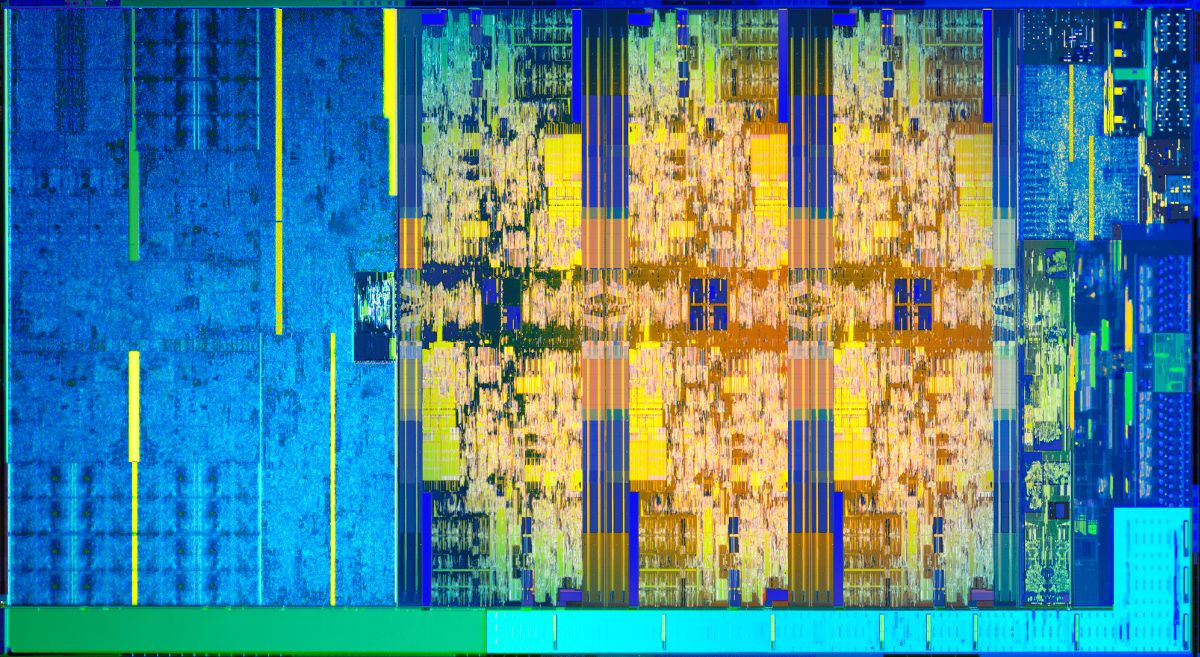
Intel 8th Generation Core S-series Die
Coffee Lake Features
With the exception of the two new cores and larger cache pool very little has changed under the hood in the transition from Kaby Lake to Coffee Lake. The I/O complex remains of a similar size, reflecting not substantial change in PCI-Express lanes in addition to continued dual- rather than quad-channel memory support. Both still support dual-channel DDR4 memory, 16 PCIe 3.0 lanes off the CPU, and DMI 3.0.
Most of the performance gap between the quad-core Kaby Lake and six-core Coffee Lake will be through the increased core count. The Coffee Lake i7-8700K additionally has an aggressive peak Turbo Mode of 4.7GHz, 200MHz higher than the i7-7700K, whilst a 3.7GHz base frequency when all six cores are operating is compares well with the 4.1GHz base of the quad-core design. These frequencies will be essentially meaningless if you engage in overclocking however.
One unheralded feature of Coffee Lake is per-core overclocking. A necessary inclusion to make use of variable Turbo frequencies dependant on which and how many of the 6-cores are under load, it may have additional application in accelerating specific tasks that have been allocated to pre-assigned cores. Whether this feature is of interest to enthusiast overclockers however remains to be seen.
PCI-Express 3.0
Like AMD, Intel have begun marketing their PCI-Express lane provision in its entirety, listing Coffee Lake as supporting up to 40 PCI-E 3.0 lanes. Intel allocate 16 lanes off-CPU, primarily for GPU(s) and supporting up to 2-way multi-GPU configuration, and 24 lanes for the chipset. By contrast AMD Ryzen CPUs have 24 lanes in total: 4 for the PCH/Chipset, 16 for Graphics and 4 dedicated to NVMe M.2 Storage. Ryzen Threadripper of course has more, but is currently catering to a very different market.
A more interesting comparison perhaps is with the Skylake X i7-7800X. Also a 6-core CPU with Hyperthreading, the 7800X supports up to 28-lanes off CPU, and as a result is better tailored to NVMe RAID, multi-GPU and other configurations which tax the available PCI-Express bandwidth. Your needs will therefore be critical in deciding between the mainstream flagship i7-8700K, or entry-level HEDT i7-7800X, rather than relying on standard CPU performance benchmarks which should be fairly similar.
Continued Intel Optane Support
As with Kaby Lake and the Core X HEDT range, Coffee Lake supports Intel Optane Memory. A high performance caching system for mechanical hard drives, Optane Memory is the natural successor to Rapid Storage Technology (AKA Intel RST) and provides a decent performance boost at modest pricing.
Intel Optane storage products have not yet set the consumer world on fire, and that is likely to remain the case unless consumer SSD substantially balloon in price or dip in performance. However it should be a consideration to those making a piecemeal upgrade to their system as the M.2 Optane Memory drives are themselves are relatively inexpensive.
On-board Graphics
There is not much change in the graphical capabilities of Coffee Lake vs Kaby Lake. Once again Intel UHD 630 is the order of the day, but the maximum operating frequency for the 8700K SKU has apparently been improved slightly to 1.2GHz from 1.15 GHz. Coffee Lake also allows some frequency control on the iGPU, and the feature as ever is very useful for encoding and transcoding media. System configurations without a discrete GPU will be able to enjoy 4K HDR content, adding considerable value to the platform as a Home Theatre PC. Video output will typically depend on motherboard model.
Intel Z370 Chipset Quick Overview
Coffee Lake CPUs are being launched alongside the Z370 motherboard range, a set of motherboards which can at best be viewed as Kaby Lake Refresh. They do not incorporate significant new functionality compared to Z270, but have been optimised to better support the more sensitive power requirements of the high-end 6-core CPUs.
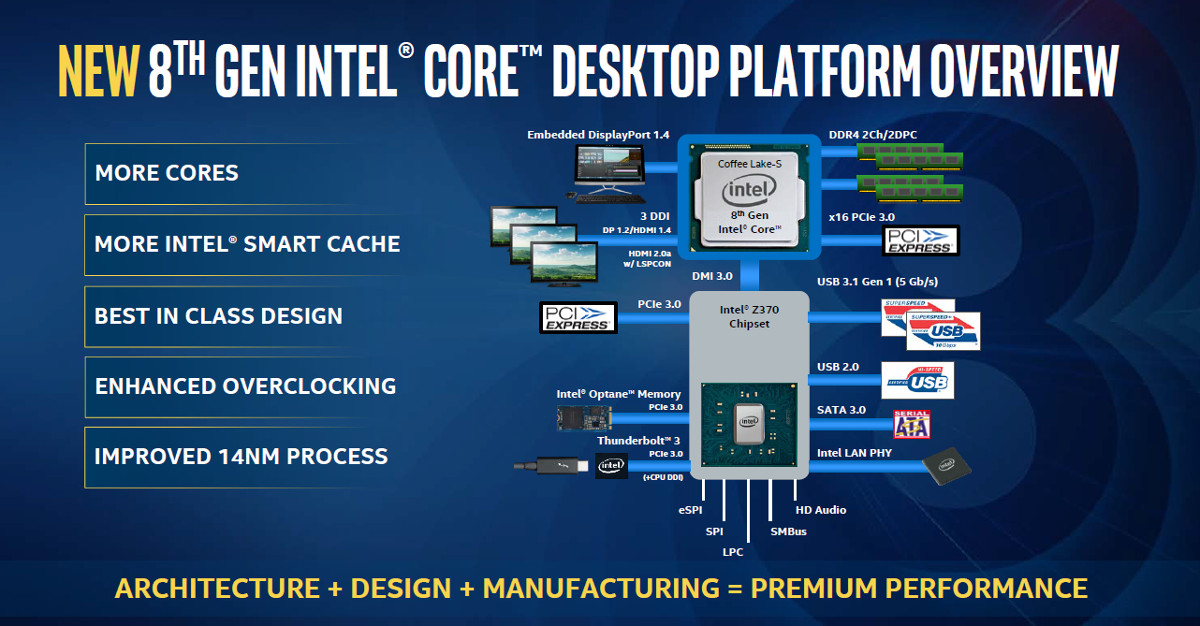
Features
Socket: LGA 1151 (Coffee Lake Only)
Thunderbolt 3.0 (Alpine Ridge)
USB 3.1 Gen1 (5 Gb/s)
C8 Power State Support
No Support for Intel Kaby Lake or Coffee Lake CPUs
Thunderbolt 3.0 (Alpine Ridge)
USB 3.1 Gen1 (5 Gb/s)
C8 Power State Support
No Support for Intel Kaby Lake or Coffee Lake CPUs
The Z370 chipset is believed to incorporate the same Kaby Lake Platform Controller Hub as the Z270, whereas the upcoming Z390 motherboards (scheduled for 2018) should feature an updated Cannonlake PCH supporting new features such as native USB 3.1 Gen 2. This may be a good argument for holding off on an upgrade until the new year, unless your requirements are particular pressing.
Once again dual-channel DDR4 RAM is the order of the day, but the supported reference memory standard has been increased to DDR4-2666 from DDR-2400. For consumers who rely on stock system configurations any improvement in the reference specification is welcome, although it will naturally also require the installation of higher-rated memory to take advantage of the new speed.
One curious point is marketing material which indicates the inclusion of updated Intel SmartSound Technology with new quad-core DSP (optional, not necessarily present on partner designs). SmartSound is utilised for voice command functionality and improved audio playback and effects incorporating 3rd-party technologies. Z270 made use of a dual-core DSP, and a quad-core version wasn’t expected to debut until Cannonlake.
Test Setup & Testing
For the purpose of testing the Intel Core i7-8700K we used the GIGABYTE AORUS Z370 ULTRA GAMING since this motherboard gave us the best overclock for this chip out of all the Intel Z370 motherboards we tested.
CPU being tested
Intel Core i7-8700K (3.7GHz) Coffee Lake
TEST SETUP
Cooling NZXT Kraken X52
Motherboard AORUS Z370 ULTRA GAMING
Memory 32GB Corsair Vengeance LPX 3000MHz
Graphics Radeon RX 480 8GB
Storage OCZ Vector 180 240GB SSD
PSU Corsair RM 1000 80 Plus Gold Certified PSU
Monitor AOC U2879VF
Capture Device Epiphan AV.iO 4K
COMPARED AGAINST
AMD Ryzen Threadripper 1950X
AMD Ryzen 5 1400 (3.2GHz) Summit Ridge
AMD Ryzen 5 1600 (3.2GHz) Summit Ridge
AMD Ryzen 7 1700 (3.0GHz) Summit Ridge
AMD Ryzen 7 1700X (3.4GHz) Summit Ridge
AMD Ryzen 7 1800X 3.6GHz) Summit Ridge
AMD FX-8350 (4.0GHz) PileDriver
Intel Core i9-7900X (3.3GHz) Skylake-X
Intel Core i7-7800X (3.5GHz) Skylake-X
Intel Core i7-7740X (4.3GHz) Kaby Lake-X
Intel Core i5-7700K (4.2GHz) Kaby Lake
Intel Core i5-7600K (3.8GHz) Kaby Lake
Intel Core i7-6950X (3.0GHz) Broadwell-E
Intel Core 7-6900K (3.2GHz) Broadwell-E
Intel Core i7-5960X (3.0GHz) Haswell-E
Intel Core i7-6700K (4GHz) Skylake
BENCHMARKS
Cinebench R15 – CPU/OpenGL Score
x264 HD 4.0 – 1st and 2nd pass encoding
SiSoftware SANDRA – CPU & Memory benchmarks
POV-RAY – CPU benchmarks
TrueCrypt – CPU benchmarks
AIDA64 – CPU benchmarks & Memory
PCMark 8 – Home Suite & Photoshop
3DMark FireStrike – 3D Benchmark
Games – Rise of the Tomb Raider & Total War: WARHAMMER
OTHER SOFTWARE
Temperature Analysis: RealTemp
Stress Testing Software: AIDA64 Stability Test
CPU Specification Monitoring: CPU-Z
Performance Monitoring: MSI Afterburner
Temperatures & Overclocking
Below are the temperatures for each of the CPUs – without any overclock applied. We’ve also compared to previously released AMD Ryzen chips as well as the former Kaby Lake, Broadwell-E and Skylake counterparts (which we’ve also benchmarked against on the subsequent pages too):

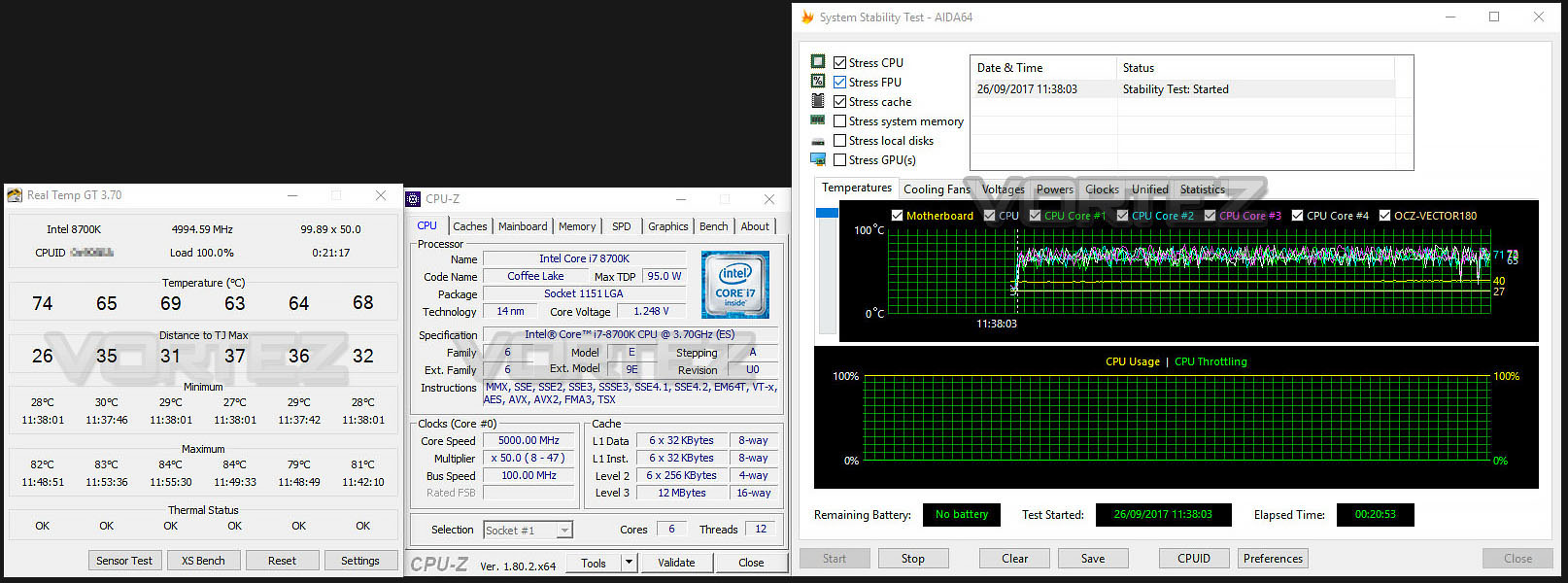
Overclocking
Moving to the overclocking phase of our review the above result further reinforces that we’re able to shift up to higher overclocks with the new 6-core 8700K.
Among the Intel Z370 motherboards we’ve tested the 8700K with, the AORUS Z370 ULTRA GAMING allowed us to achieve the best result. What became clear rather early on is that 8700K is able to nudge to the golden heights of 5GHz and beyond without much encouragement.
So, our best (and most stable) result saw us hit 5.0GHz with just 1.37v applied to the CPU voltage. The CPU would boot and bench beyond 5.0GHz but temperatures crept past the 90C mark which we set as the safe-zone parameter.
This is a fantastic result and a milestone which the 7700K wasn’t able to climb to. Our 7700K has a maximum overclock of 4.8GHz.
Power Consumption
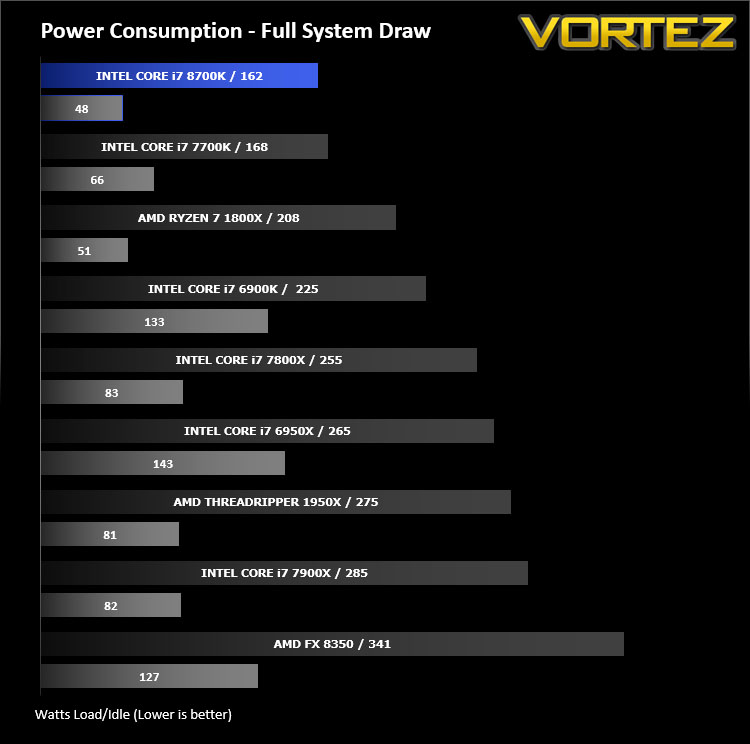
It’s interesting to note the power consumption across all processors. Although they are using a combination of different motherboard chipsets, energy results can fluctuate between manufacturers due to the features and specifications that are integrated. First of all, for the idle tests the system is cold booted into Windows and no additional applications are executed – the watts are noted on the external energy monitor we use and then the system is loaded with 3DMark FireStrike – watts are again monitored for the duration of the test and the highest rated wattage result is then noted down. Below are the results of this energy test.
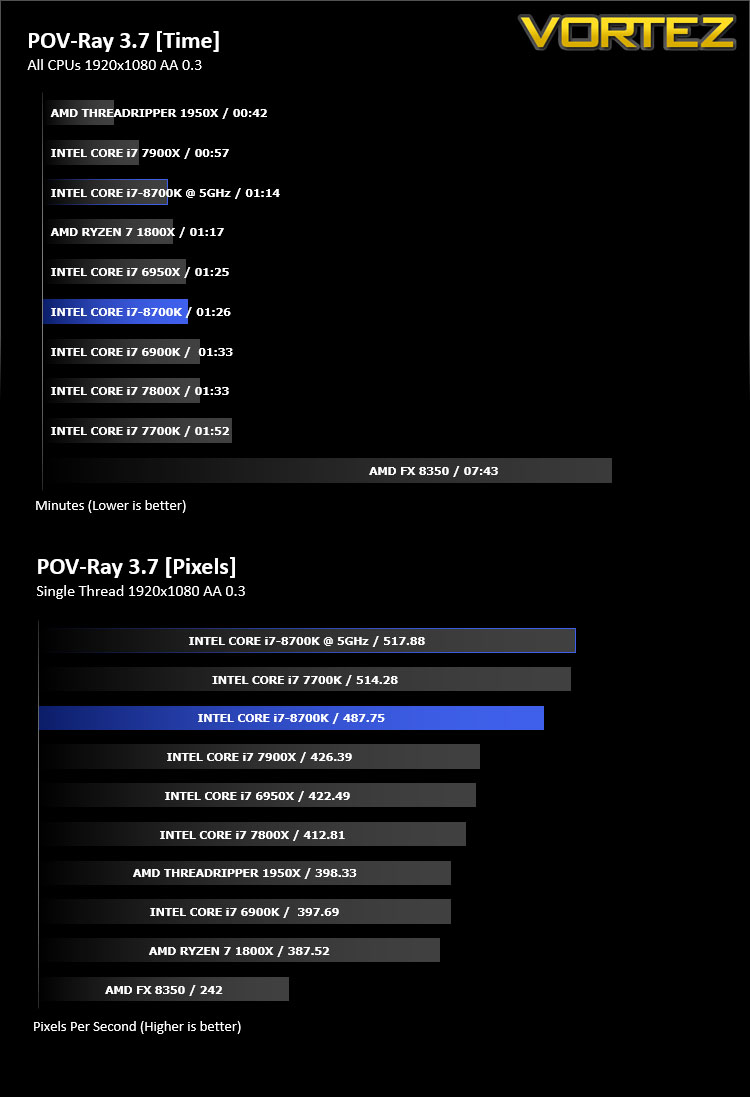
Ray Tracing Performance – POV-Ray 3.7
Persistence of Vision Raytracer’s PovRay is a free and open source 3D animator application with versions for computers with different operating systems.
This product allows users to build their custom 3D worlds with excellent quality despite their computer’s hardware. It has adjustable options for levels of radiance, refraction, and reflection. Calculation time may vary depending on the computer model, but PovRay can adapt to many computer builds, and is supported by the open source community.
This product allows users to build their custom 3D worlds with excellent quality despite their computer’s hardware. It has adjustable options for levels of radiance, refraction, and reflection. Calculation time may vary depending on the computer model, but PovRay can adapt to many computer builds, and is supported by the open source community.
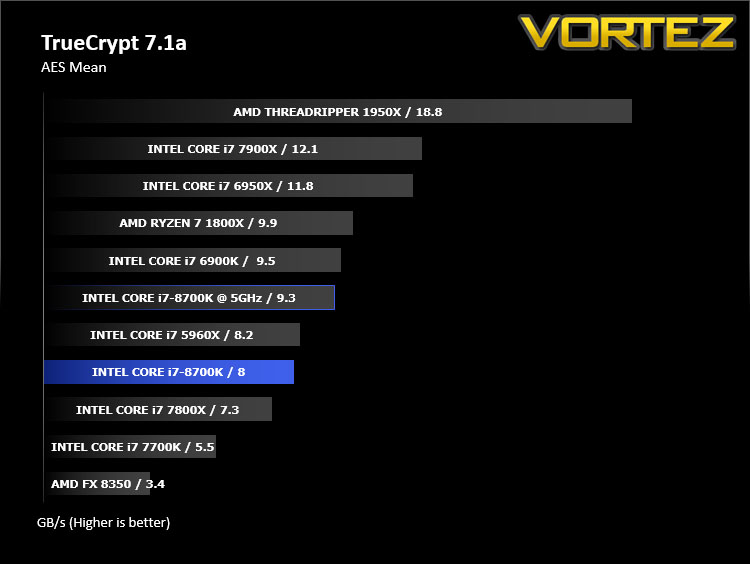
AES Encryption Performance – TrueCrypt 7.1a
TrueCrypt is a discontinued source-available freeware utility used for on-the-fly encryption (OTFE). It can create a virtual encrypted disk within a file or encrypt a partition or (under Microsoft Windows except Windows 8 with GPT) the entire storage device (pre-boot authentication).
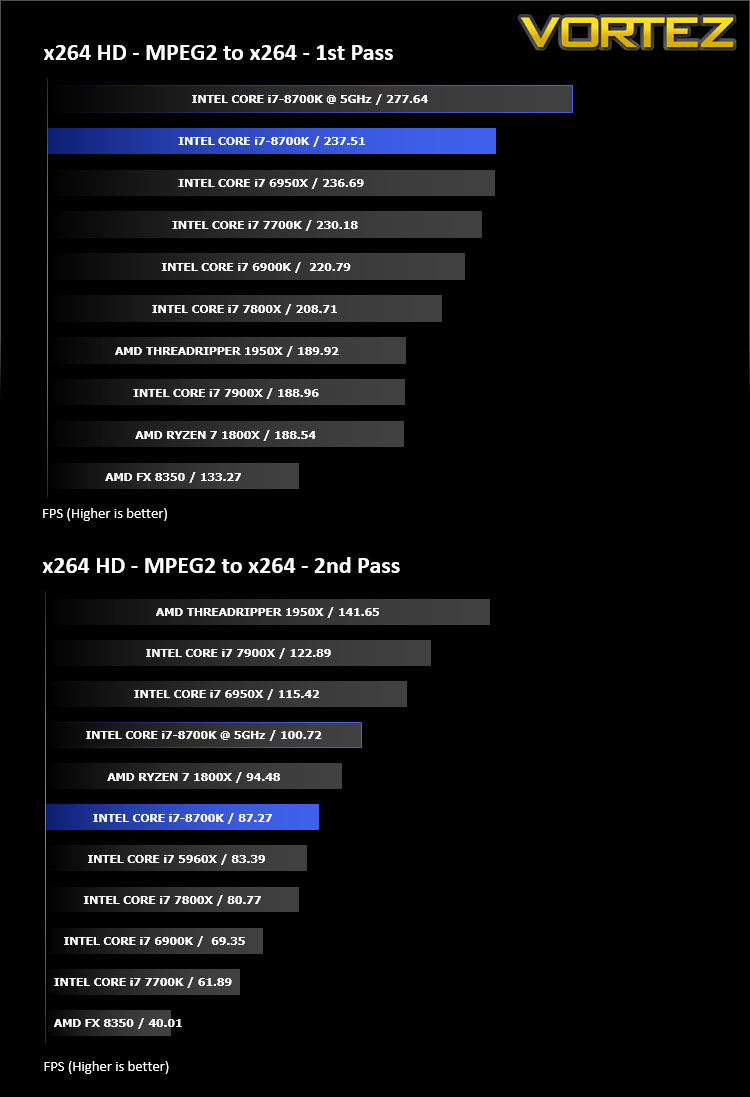
Encoding Performance – X264 HD
Simply put, this test measures how fast your machine can encode a short, DVD quality MPEG-2 video clip into a high-quality x264 video clip. What’s x264, you ask? It’s more or less the next-generation Xvid/DivX codec. I think it’s ideal for a benchmark because the application (x264.exe) reports fairly accurate compression results (in frames per second) for each pass of the video encoding process, and it uses multi-core processors very efficiently.
x264 HD gives results for 2 passes when compressing an MPEG-2 clip into x264. It presents 4 separate results for each pass giving a total of 8 – all results are given in FPS. For each pass I have averaged out the results.
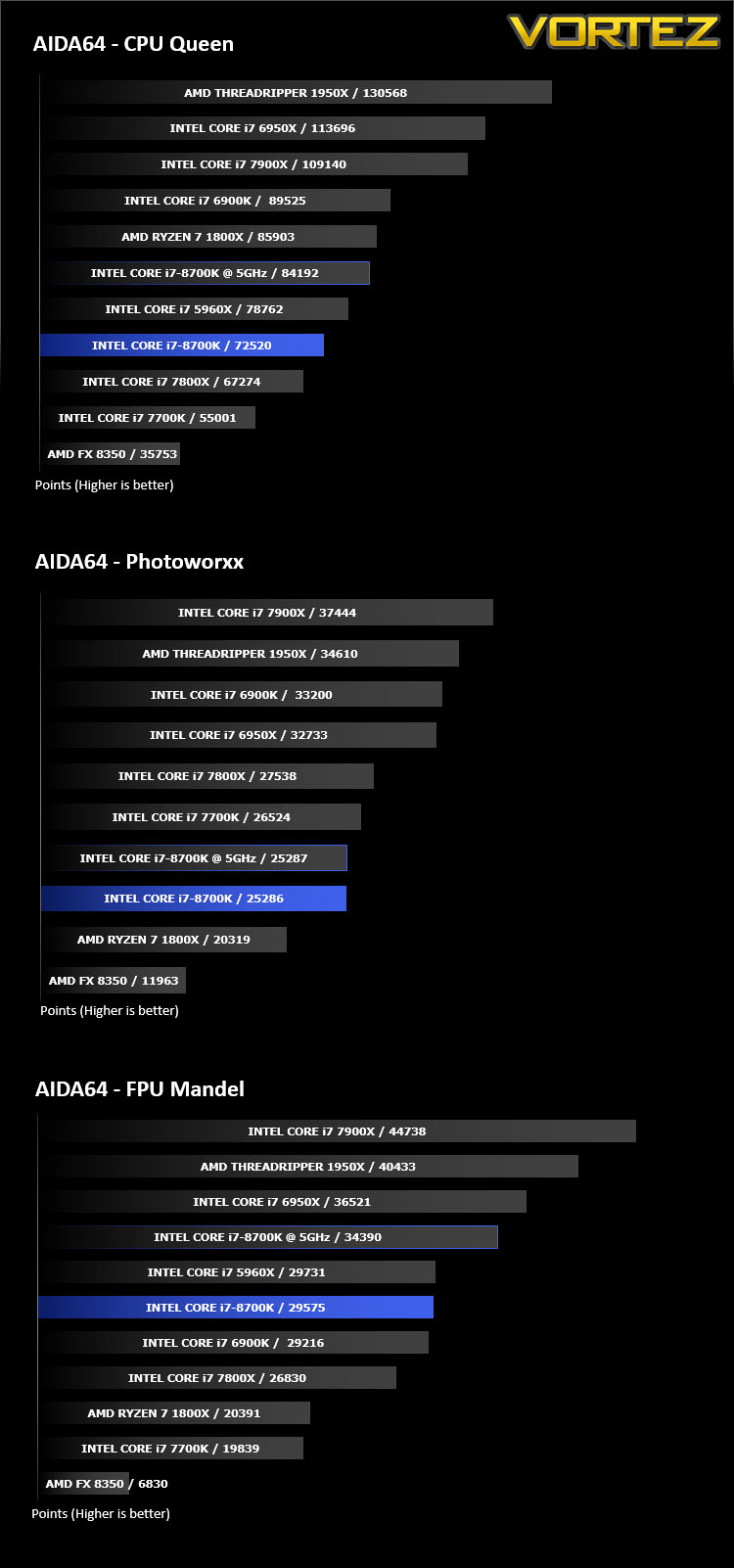
Processing Features Performance – AIDA64
AIDA64 Product PageThis simple integer benchmark focuses on the branch prediction capabilities and the misprediction penalties of the CPU. It finds the solutions for the classic “Queens problem” on a 10 by 10 sized chessboard. At the same clock speed theoretically the processor with the shorter pipeline and smaller misprediction penalties will attain higher benchmark scores. For example — with HyperThreading disabled — the Intel Northwood core processors get higher scores than the Intel Prescott core based ones due to the 20-step vs 31-step long pipeline. CPU Queen test uses integer MMX, SSE2 and SSSE3 optimizations.
Memory Transfer Performance – AIDA64
AIDA64 Product PageThis simple integer benchmark focuses on the branch prediction capabilities and the misprediction penalties of the CPU. It finds the solutions for the classic “Queens problem” on a 10 by 10 sized chessboard. At the same clock speed theoretically the processor with the shorter pipeline and smaller misprediction penalties will attain higher benchmark scores. For example — with HyperThreading disabled — the Intel Northwood core processors get higher scores than the Intel Prescott core based ones due to the 20-step vs 31-step long pipeline. CPU Queen test uses integer MMX, SSE2 and SSSE3 optimizations.

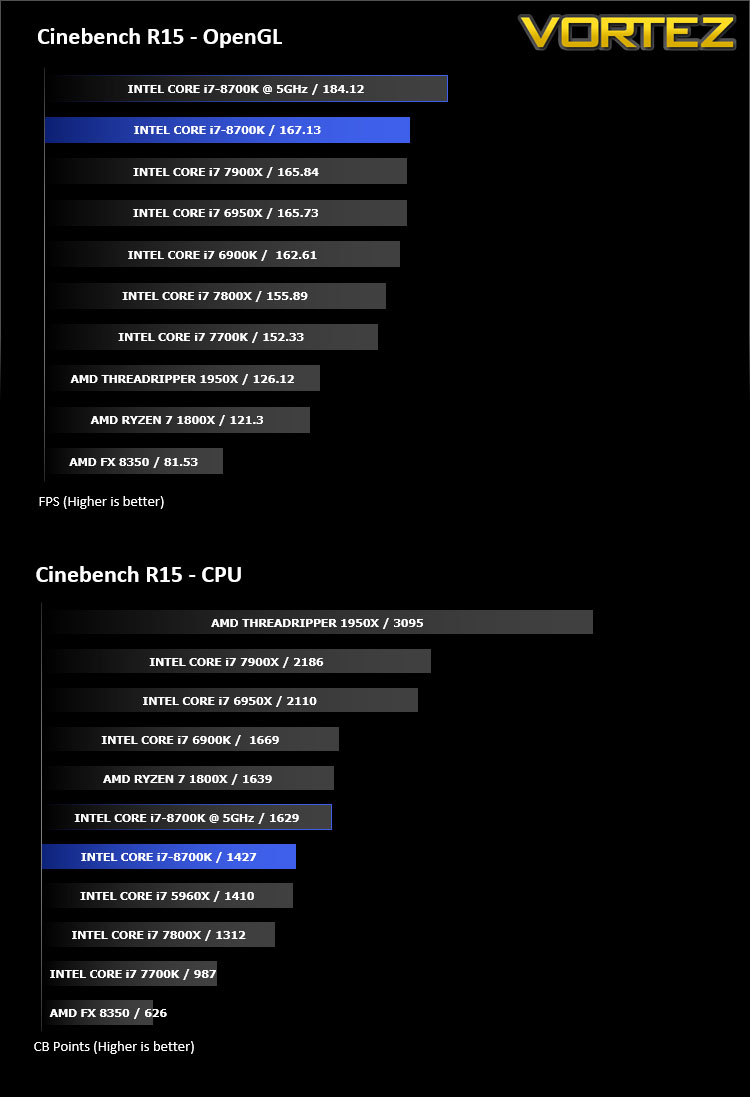
Processing Power Performance – Cinebench R15
CINEBENCH can measure systems with up to 64 processor threads. This test scene contains approximately 2,000 objects which in turn contain more than 300,000 polygons in total, and uses sharp and blurred reflections, area lights, shadows, procedural shaders, antialiasing, and much more. The result is displayed in points (pts). The higher the number, the faster your processor.
Bandwidth Performance – SiSoftware SANDRA
3DMark 11 Product PageSANDRA isn’t always a benchmark that is included in hardware reviews but I believe it shouldn’t be ignored. SANDRA provides a vigorous package that tests your system in a rather large array of benchmarks. There are many aspects of benchmark that can be executed. We will be considering – CPU and memory tests.


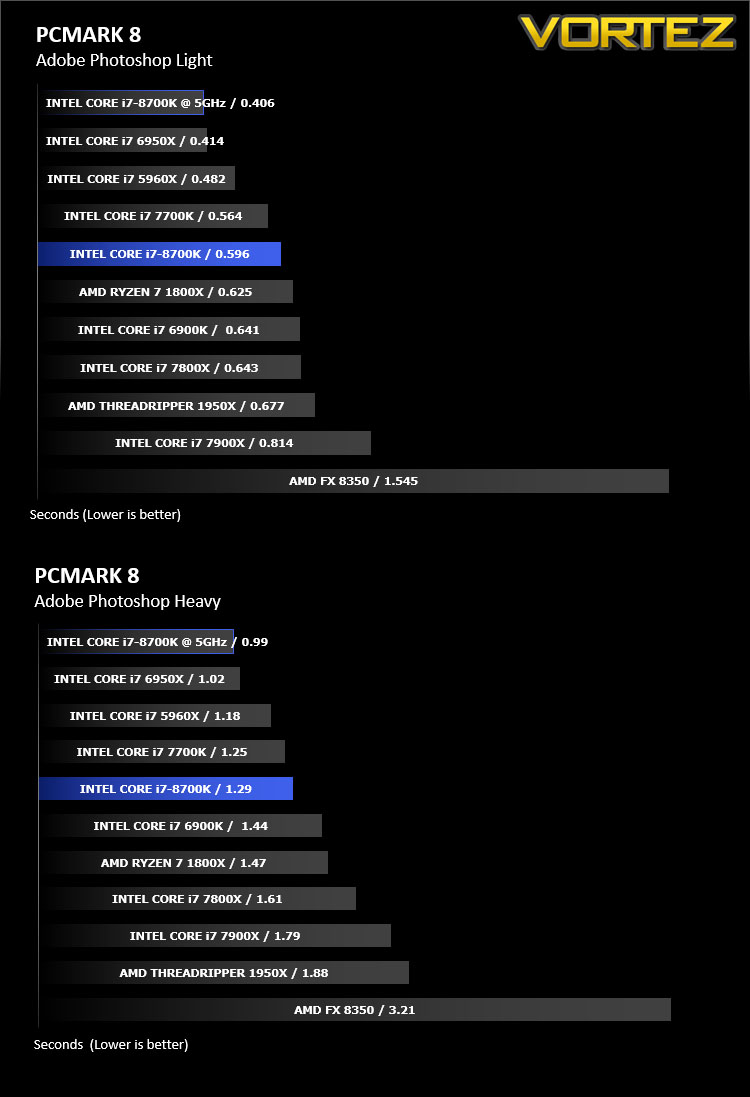
Image Editing Performance – PCMark 8 Photoshop
PCMark 8 Product Page Developed in partnership with Benchmark Development Program members Acer, AMD, Condusiv Technologies, Dell, HGST, HP, Intel, Microsoft, NVIDIA, Samsung, SanDisk, Seagate and Western Digital, PCMark 8 is the latest version in FutureMark’s popular series of PC benchmarking tools. Improving on previous releases, PCMark 8 includes new tests using popular applications from Adobe and Microsoft.
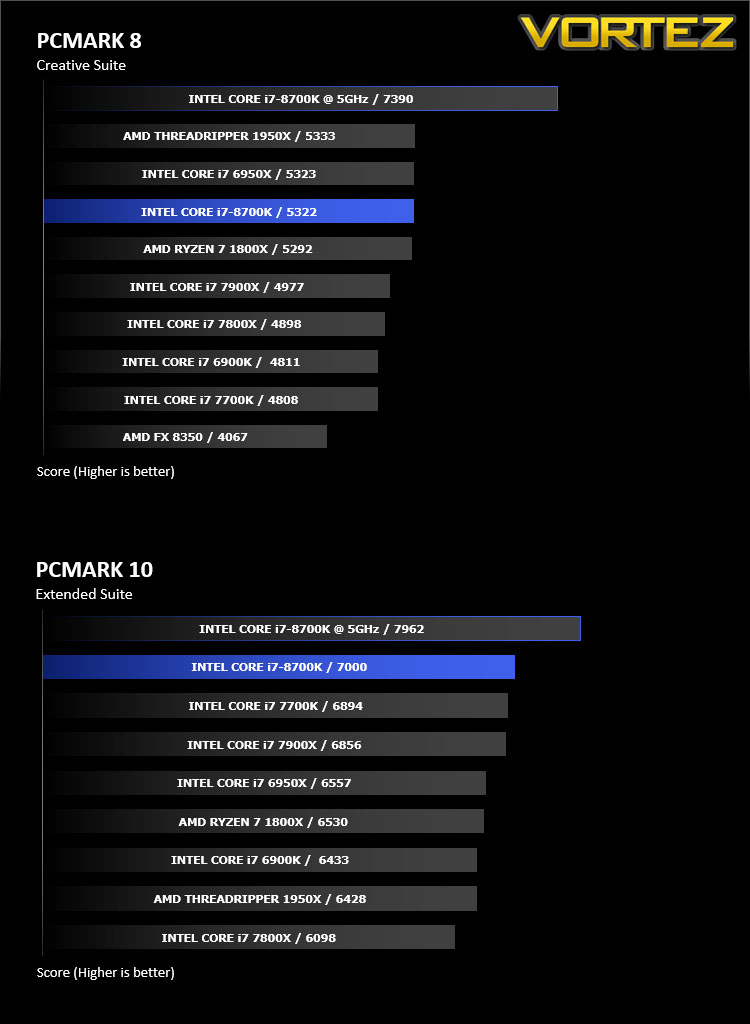
Overall System Performance – PCMark 8 & PCMark 10
PCMark 8 Product Page Developed in partnership with Benchmark Development Program members Acer, AMD, Condusiv Technologies, Dell, HGST, HP, Intel, Microsoft, NVIDIA, Samsung, SanDisk, Seagate and Western Digital, PCMark 8 is the latest version in FutureMark’s popular series of PC benchmarking tools. Improving on previous releases, PCMark 8 includes new tests using popular applications from Adobe and Microsoft.
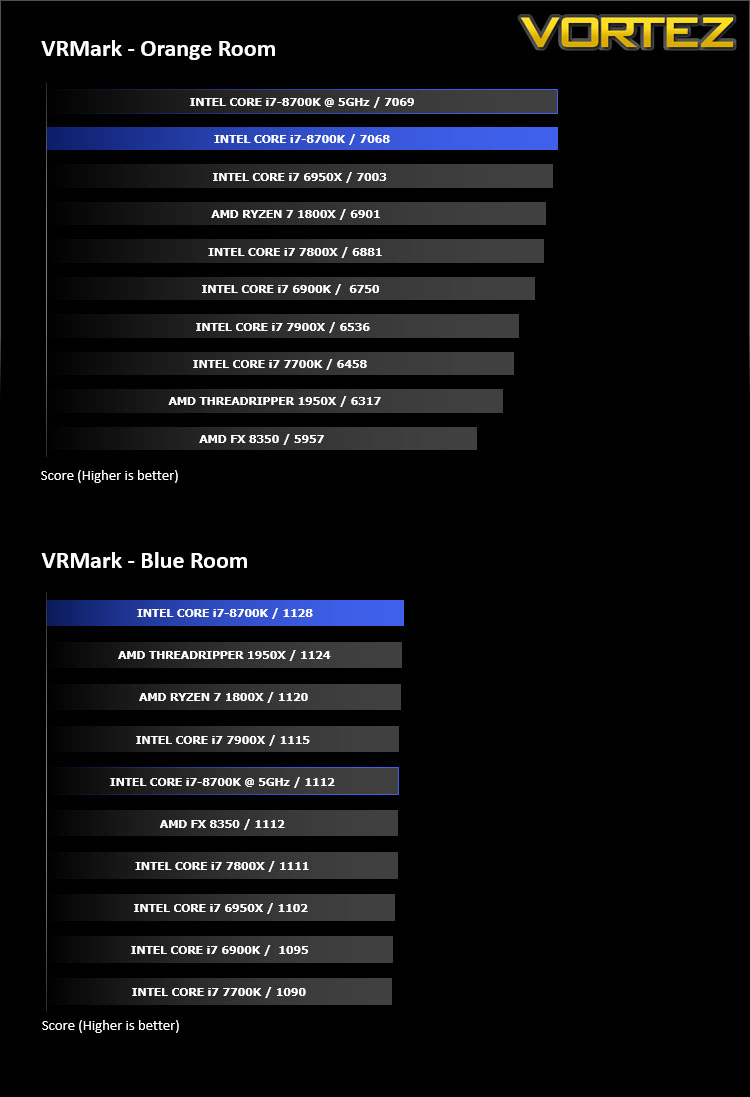
VR Performance – VRMark
VRMark Product PageVRMark includes two VR benchmark tests that run on your monitor, no headset required, or on a connected HMD. At the end of each test, you’ll see whether your PC is VR ready, and if not, how far it falls short.
3D Performance – 3DMARK FireStrike & TimeSpy
3DMark FireStrike Product PageFire Strike is our new showcase DirectX 11 benchmark designed for high-performance gaming PCs. It is our most ambitious and technical benchmark ever, featuring real-time graphics rendered with detail and complexity far beyond what is found in other benchmarks and games today. Fire Strike will only be available in the Windows editions of 3DMark initially.

Gaming Performance – Tomb Raider & Total War: WARHAMMER
It’s important for us to perform a number of game benchmarks as well as the synthetic tests because gamers will want to know if there are any significant benefits. So here we have two recent gaming titles benchmarked with a Radeon RX 480 installed.

Conclusion
So, Coffee Lake is real, it’s here, and you can buy it; but should you? Let’s start wrapping things up.
First we should address the elephant in the room: the proximity to Kaby Lake’s release, and indeed the Core X enthusiast platform. It is absolutely regrettable that those who recently invested in Kaby Lake, perhaps even in the last few months, would have been far better off waiting for a release apparently scheduled for Autumn 2017 some time ago. At every price point there is a Coffee Lake model that is, on paper, a major upgrade over Kaby Lake equivalents. Dissatisfaction will be further compounded by Z270 motherboards not being forwards compatible with the new CPUs, despite similar architecture. All we can say is that Intel are going to have to work hard to reassure loyal customers that their future purchases will not again be rendered obsolete within ten months of them being ‘new’. For example, when Cannonlake may hit the market.
Just as critically, Coffee Lake has rendered irrelevant Kaby Lake X CPUs at a stroke. It really is impossible to see any value to quad-core CPUs on the Enthusiast X299 platform without a major price cut. On the other hand a real and welcome dilemma between 8700K and 7800X has reared its head. With similar price points but quite different feature sets in terms of PCI-Express lane provision and on-board graphics, making sensible recommendations between the two will be the bread and butter of system integrators for some time to come. For our money the i7-8700K hedges it for most use-cases, but it’s a close run thing.
That being said, consumer chagrin would be unwarranted were Coffee Lake only a minor step forward over the previous generation. It’s a mixed blessing therefore that the i7-8700K is, in our testing, a substantially better performer than the i7-7700K. Multiple synthetic benchmarks exhibited double-digit percentage improvements over its processor, and thanks to Intel’s Turbo Boost 2.0 Technology it lost little headway in situations where all cores didn’t hit 100% utilisation – gaming for instance.
All this comes without introducing a huge premium into the range for the new cores. At the top end the MSRP of the i7-8700K is $20 (5%) more expensive than the 7700K, and the i5-8600K commands a similar differential to last year’s unlocked quad-core i5-7600K. On paper, and in our testing for the 8700K specifically, the 8th Generation Core CPUs are far better bang for your buck than the platform it replaces.
If you’re worried about overclocking, you perhaps needn’t be. Although once again Intel continued to use ‘paste’ TIM between CPU die and heatspreader, we were still able to push our engineering sample to 5GHz. That’s a little less than our i5-7600K (which hit 5.1GHz), a little more than the i7-7700K’s 4.8GHz, and still three bins above the max turbo and on standard cooling for a modern gaming platform. Veteran overclockers will no doubt be able to push the platform much further.
So, how does it compare to AMD’s resurgent mainstream range? Well, the jury will be a little more split. Whilst the i7-8700K is a step forward for Intel in so-called ‘mega-tasking’ scenarios, it certainly doesn’t dominate AMD’s 8-core Ryzen chips and is put in the shade in some synthetic tests that favour heavily threaded tasks. Gaming performance however still favours the Intel CPU thanks in part to aggressive single/dual-core clock speeds and higher IPC, and the monolithic chip design likely allows it to use its capacious cache more effectively.
And that’s really the take home from both the Core i7-8700K, and the Coffee Lake as a whole. Far more bang for your buck, better multi-core and multitasking performance than its predecessor, and a meaningful advance in Intel’s mainstream product segment. We’re excited to see what will be possible with the new quad-core unlocked i3 and six-core i5, and it’s been a while since we’ve said that of Intel’s complete lineup!
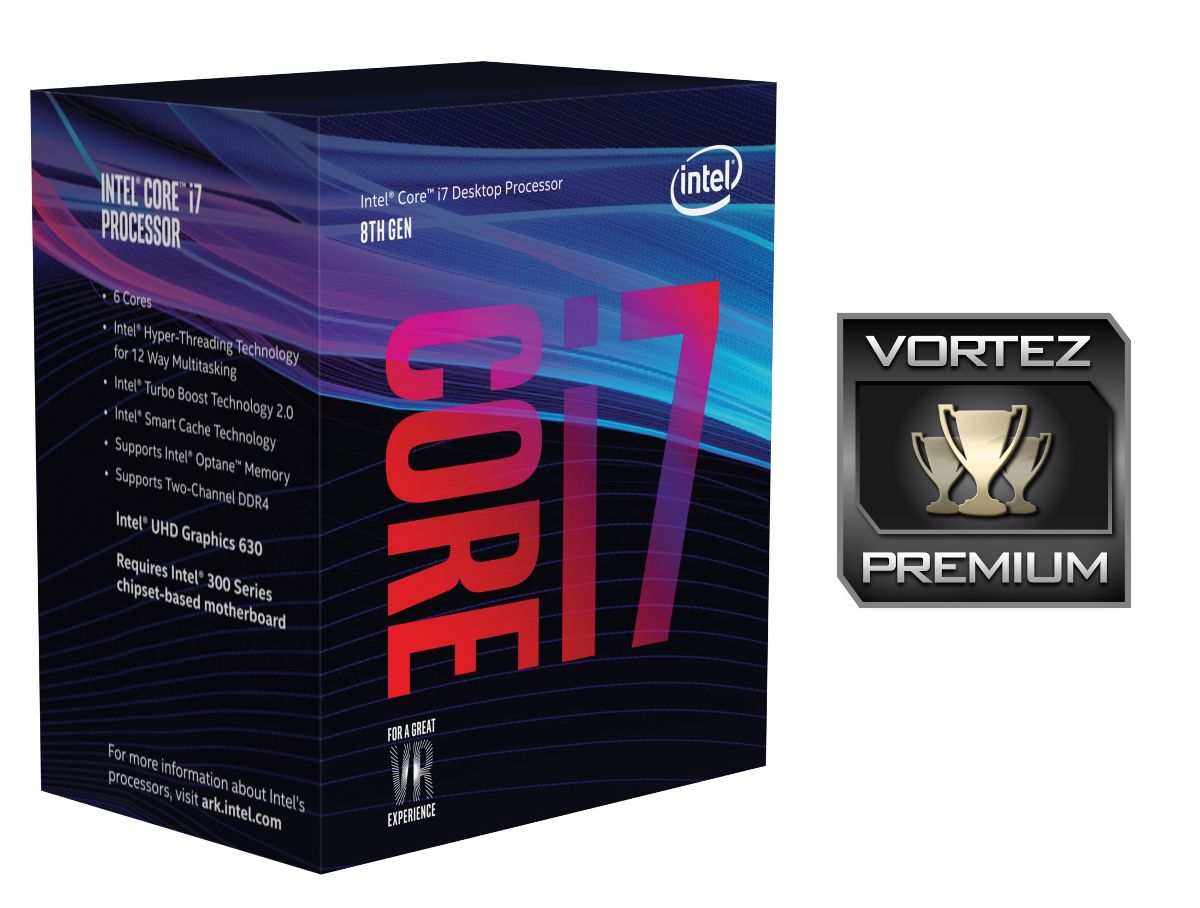
The Core i7-8700K is the ideal counterpunch to AMD’s top-end Ryzen CPUs. Featuring six discrete cores and 12MB of Cache, it’s a step forward that Intel ideally should have made on their mainstream platform sooner. Good synthetic performance metrics are paired with reliably great gaming, power efficiency, and a full-featured platform that includes on-board graphics and improved sound. Well worth your consideration, and we grant it the Vortez Premium Award.
Pros
+ Big step forward in price/performance
+ Impressive power efficiency
+ Temperatures remain under control
+ Solid overclocking potential
Cons
– Z370 fails to be a major update to the chipset
– Not backwards compatible
+ Big step forward in price/performance
+ Impressive power efficiency
+ Temperatures remain under control
+ Solid overclocking potential
Cons
– Z370 fails to be a major update to the chipset
– Not backwards compatible
Click here for an explanation of our awards at Vortez.net.
Stay connected with Vortez social media pages: