






Garrett, Master Thief swipes everything in his path, but can the new instalment in the classic franchise make off with one of our awards?

Title: Thief
Developer: Eidos Montreal
Publisher: Square Enix
Platform: PC, XBOX 360, XBOX One, PS3, PS4
Genre: First Person Stealth
Price: £35 MSRP
Approx Completion Time: 14 hours
Minimum Specification
OS: Windows Vista with Platform Update for Windows Vista
Processor: High-Performance Dual Core CPU or Quad Core CPU
Memory: 4 GB RAM
Graphics: AMD Radeon 4800 series / Nvidia GTS 250
DirectX: Version 10
Hard Drive: 20 GB available space
Processor: High-Performance Dual Core CPU or Quad Core CPU
Memory: 4 GB RAM
Graphics: AMD Radeon 4800 series / Nvidia GTS 250
DirectX: Version 10
Hard Drive: 20 GB available space
Recommended Specifications
OS: Windows 7, Windows 8
Processor: AMD FX 8000 series or better / Intel Quad i7 Core CPU
Memory: 4 GB RAM
Graphics: AMD Radeon HD R9 series or better / Nvdia GTX 660 series or better
DirectX: Version 11
Hard Drive: 20 GB available space*
*note that during installation Steam briefly increased the games footprint to ~50GB
Processor: AMD FX 8000 series or better / Intel Quad i7 Core CPU
Memory: 4 GB RAM
Graphics: AMD Radeon HD R9 series or better / Nvdia GTX 660 series or better
DirectX: Version 11
Hard Drive: 20 GB available space*
*note that during installation Steam briefly increased the games footprint to ~50GB
This review contains minor spoilers from the first hour of gameplay.
Thief: The Dark Project, created in 1998, was a standout title in a year punctuated by other classic video games including Half Life, Starcraft and Unreal. It is credited as the inspiration for strong stealth mechanics in first person titles such as Deus Ex, and the Dark Engine was the basis for another classic: System Shock 2. Looking Glass Studio’s legacy therefore is not to be trifled with, as legions of fans will attest.
This new Thief is part sequel, part reboot. Set hundreds of years in the future, it divorces itself in time from the key organisations and personalities of past games to approach the franchise with a clean slate. Although referenced surreptitiously, events of the previous titles aren’t obliquely referred to within the core story structure of the new game. Whilst that may disappoint some purists and long-time fans, it does allow newcomers to approach this instalment without knowing the ins-and-outs of the world’s backstory.
The City: Home of the Occult and Soul of the game.
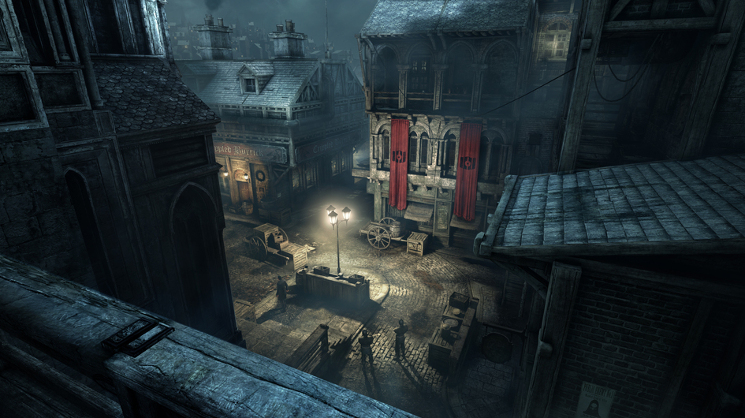
The central location in the Thief franchise is The City. That’s all it’s known as, and as such doesn’t have the historical baggage a specific real-world location would have. It resembles Victorian London – down to the narrow and winding streets and alleyways – but with an almost oppressive perpetual night. The technology on display is a mixture of the benign and bizarre common to steampunk universes, where pumps and pathways hide traps and other pitfalls for the unwary. Nonetheless an undercurrent of pagan mysticism flows inexorably through it, long suppressed.
Labyrinthine streets and sit below a thieves highway of platforms and ramps which allow traversal through The City’s districts. It feels very much like you might expect a Victorian-era town to feel – oppressive, dangerous, and menacing to any opportunistic footpad; however as Master Thief Garrett you are anything but a mere footpad. And yet, it is somewhat disheartening to realise that apart from the ever-present guards there’s simply not much life to this town, where even at night you would expect some bustling and many more people. Were it set in the future you would almost call it dystopian.
You take the role of Garrett, a master thief like his ancient namesake but with a young protégé under his wing – Erin. Within minutes of their introduction he professes an aversion to violence. Not, you understand, because he is a coward; rather because it is messy and leaves far too obvious a trail. Erin has no such compunction, rendering her targets unconscious or dead with a crack of her ‘Claw’ – a modified tool for climbing that goes beyond a simple blackjack. Where Erin prefers mobility and action, Garrett utilises stealth to reach the payoff.
It is this clash of styles which precipitates the tragedy that concludes the prologue. Erin and Garrett stumble on a ritual being acted out by the city’s ruling elite, the purpose of you know not what. Erin takes one too many risks and when happened upon by the city Thieftaker General both she and Garrett tumble into the ritual. The outcome is predictable: Erin is missing – presumed dead – whilst Garrett wakes up a year later with no memory of the intervening period. The bulk of the game story is uncovering the mystery of Garrett’s amnesia and discovering Erin’s fate, developing your skills in theft and stealth along the way.
Characters and The City
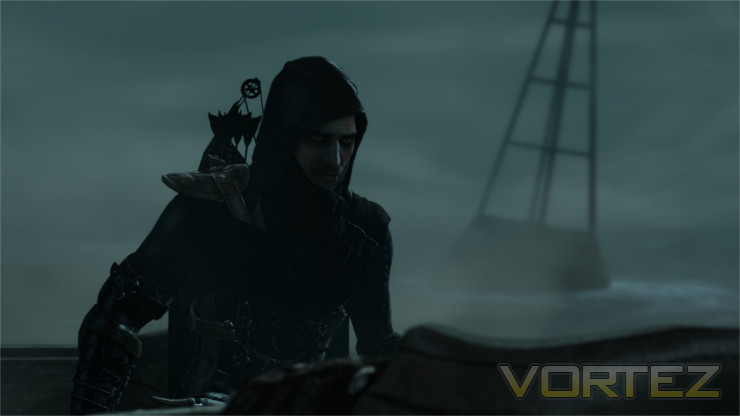
Garrett. He’s on a boat
The City has it’s only flavour and character which reflects the amoral (yet not overtly evil, Garrett has his principles) nature of the protagonist, but they are not the only players in this piece. Throughout you are introduced to other citizens of The City, each with their own competing or indeed unknown motivations.
Erin is Garrett’s protégé, although she has a very different take on their shared profession. Although talented she is much more willing to use force to reach her goals, leaving a trail of bodies behind if necessary. Much more prone to risk-taking, it is their initial conflict which serves as a catalyst which causes an outbreak of plague, her disappearance and the loss of a year for Garrett. Learning more about her past is central to uncovering the mystery of her disappearance and perhaps fixing what was put wrong.
Basso serves as Garrett’s fence, primary agent and friend. He doles out side-quests (client jobs or heists) and clues you in to some of the more important local happenings. His magpie Jenivere serves as pet and companion, and both characters are references to the Basso and Jenivere from the original games. He operates out of a room under The Crippled Burrick, a popular tavern amongst the rougher sort in town.
Orion is a local rabble-rouser seeking to overthrow the Baron and address The City’s ills. Introduced by Basso, early on he enlists you in the pilfering of a ritual book which may help uncover the cure to the recent plague outbreak.
Thadeus Harlan is the Thieftaker General, Garrett’s nemesis and chief crony of Baron Northcrest. Through the City Watch he enforces the Barons Law, whilst using the opportunity to line his own pockets. Ruthless and cunning but with a personal vendetta against the Master Thief, he counters Garrett at almost every turn but can never quite catch him.
Of some aid in your quest is the Queen of Beggers a blind old woman who serves as oracle and spiritual guide for many in The City. By tithing to her you can unlock additional passive abilities increasing your stealth, thievery and combat potential.
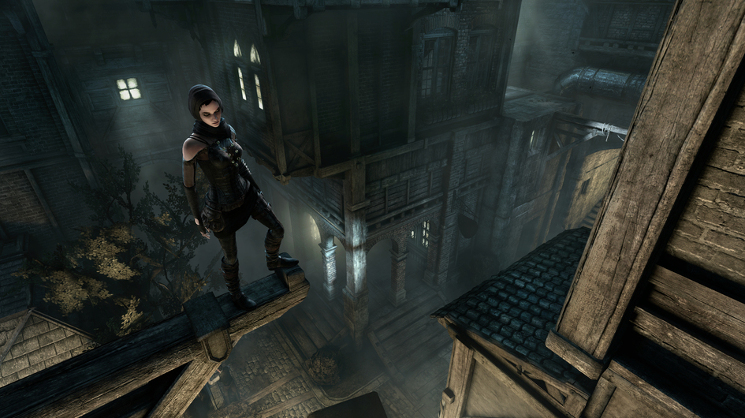
Erin, before her apparent death
Finally, we come to Baron Elias Northcrest, the aging Lord over The City and prime motivator in recent industrialisation. He once took a much more active role in City administration, but in the last year has become withdrawn and left the day-to-day running to his Thieftaker General. Through him, much of the worship of old magic has been suppressed; steel and steam now has primacy in The City.
Each of the characters has a fairly well fleshed out personality even if it does hold to stereotypes. By far the most interesting is Erin, although her backstory is only revealed slowly through the main missions and much needs to be inferred rather than is explicitly shown. The above aside, very few NPCs in the same have a discernible personality resulting in a city a little devoid of life and colour (both literal and figurative). The plague may be a reason for it, but it’s an all to convenient excuse for Eidos to skip fleshing out the world more than a bare minimum.
—
The City is split into districts such as the Stonemarket and smaller domains including the House Of Blossoms and Northcrest Manor. Both geographically and mechanically it exists as a central and persistent hub, whilst quest areas are instanced off for practical reasons. Many town houses are empty and littered with valuable loot and collectables, but the true measure of the thief is in traversing the town without being spotted by the ever-present City Watch. Except in clearly defined locations street-level in The City is not a safe place to be.
Home and refuge is the Clocktower, as well as a place to stash some of the unique loot you have acquired on your adventures. Uninhabited since Garrett’s disappearance, it will change to reflect your progression through the same and the status of your collections. For the completionist, it may well be the most important location in-game, detailing all your accomplishments as thief and lover of antiquities.
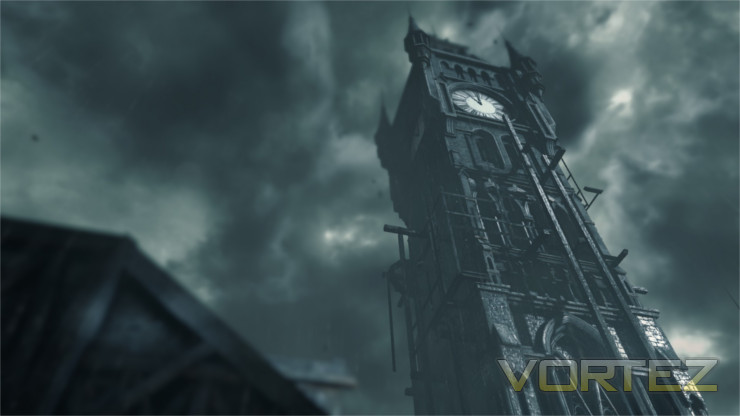
Home, kind of.
Navigation through the City is, perhaps understandably, a little awkward. Unfortunately the developers haven’t built it as one contiguous zone, and so there are obvious transition points between each district – a door, alleyway, passage or window. Many of them are hard to spot, but crucial in reaching a part of the next district which is not patrolled or a section quest objectives. Environmental features are dotted around which will aid you in your traversal and remain persistent when used, but other features will subtly change as you progress through the game.
Unfortunately the in-game map is very little help except in a general sense. Furthermore, Eidos have decided to use repeated tapping of the ‘E’ key a core part of opening windows and moving through passages, which gets quite tiresome after your 5th or 6th time (never mind the hundredth). Those who have played Deus Ex: Human Revolution will find this layout similar, although that game didn’t quite have the frustration of Thief.
Certain zones are split off as locations involving Game Story Chapters and Heists, which are only used for one in-game event and are non-persistent. They can be repeated however, capturing loot you may have missed or approaching it in a different manner without resetting your overall story progression.
Although Thief doesn’t have an open world feel, the game world is still well realised within the bounds of expectations of a current generation title optimised for running on consoles. Given that one of the criticisms of the original Thief was the immense scale of the game it’s forgiveable from a design point of view, but you’re left aching somewhat to see the whole map in context rather than just small portions at close to ground level.
Graphics and Sound Design
Test System
CPU: Intel Core i5 3750K @ Stock
Memory: 8GB (2 x 4GB) G-SKILL DDR3
GPU: ZOTAC GeForce GTX 660
OS: Windows 7
OS HDD: 64GB Kingston V100+ SSD
HDD: 160GB Western Digital Caviar SE 7200RPM
Monitor Resolution: 1080p
Memory: 8GB (2 x 4GB) G-SKILL DDR3
GPU: ZOTAC GeForce GTX 660
OS: Windows 7
OS HDD: 64GB Kingston V100+ SSD
HDD: 160GB Western Digital Caviar SE 7200RPM
Monitor Resolution: 1080p
Thief has been built using Unreal Engine 3, the same Engine used in the Batman: Arkham games and more recently in the sublime BioShock Infinite. As we have seen in the past it’s capable of some gorgeous views, especially a higher image quality settings, whilst being an extremely scalable engine capable of running on practically stream-powered hardware. Unsurprisingly therefore, given this studio also brought up Deus Ex: HR, Thief nails the aesthetic using high quality textures and solid motion capture for in-game models.
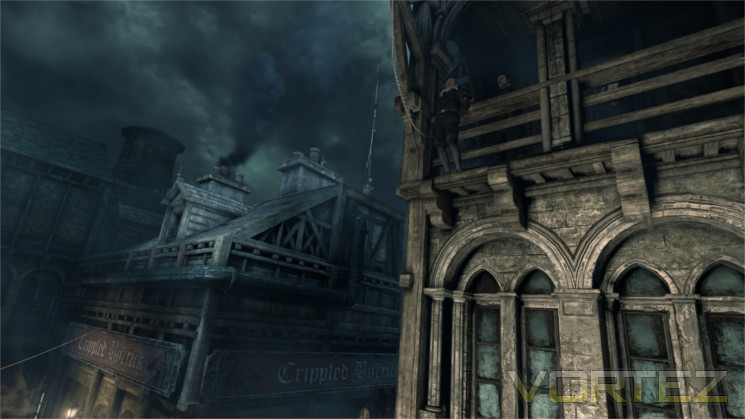
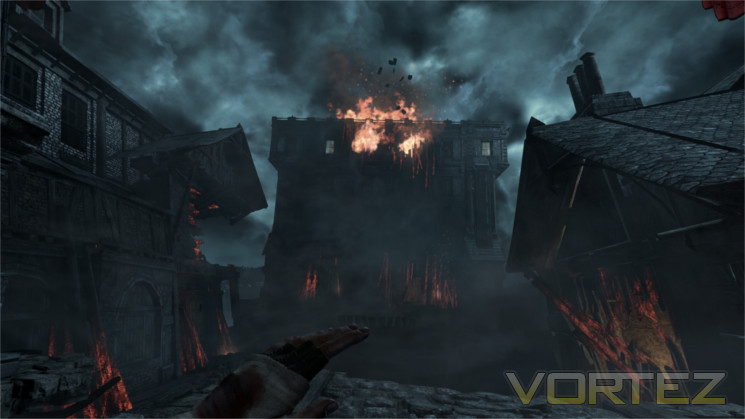
Every locale in The City is dark, dank and depressing. The art direction has obviously specified that, but it also makes navigation quite difficult in the hub zones. The texture details are good, but you never really get to see above the skyline to get an overarching view of the city as a whole. NPC models are often repeated throughout apart from key characters, giving the appearance of a city of clones. Thief also suffers from the Skyrim complaint of different NPCs looping with the same conversations, breaking immersion.
Unfortunately AMD TrueAudio Technology was unavailable at the time of review, and without it sound directionality was generally poor (although it certainly improves with a surround-sound setup). That’s quite disappointing in a game that makes awareness of your surroundings such an integral part to the game. The quality of effects themselves was very good, giving ample cues to in-game prompts and events without taking you out of the action.
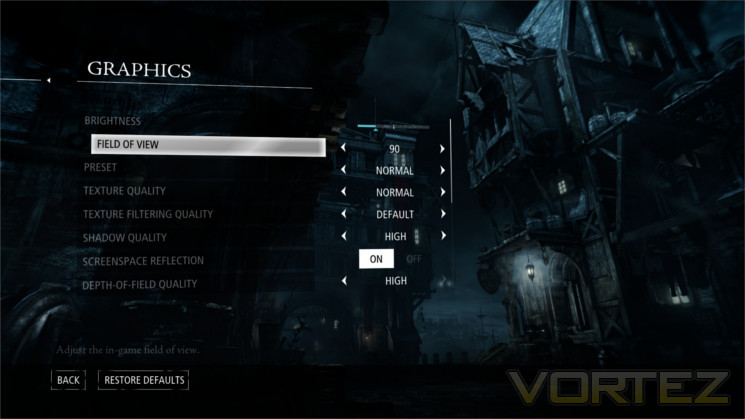
Those concerned that Thief might be a console port with customisation options carefully hidden will be gratified to note that most of the options PC gamers take for granted are included as standard. Editable either in a splash-screen prior to launching the game or within an in-game menu, the game offers usual resolution, V-Sync, SSAA and texture quality options. Additionally it goes a little beyond the normal by also adding an FoV slider, FXAA and tessellation option. Configuring the game to be optimal for your system should be relatively easy; as is typical adjusting shadow quality should be your first port of call to squeeze a few extra frames out.
Somewhat oddly for a title relying on stealth, brightness adjustment is buried in the graphics menu rather than utilising a prompt on game launch. Given that the game aesthetic is so reliant on the contrast between light and shadow we would have expected this to me more prominent, especially as the default setting is much lighter than one might expect.
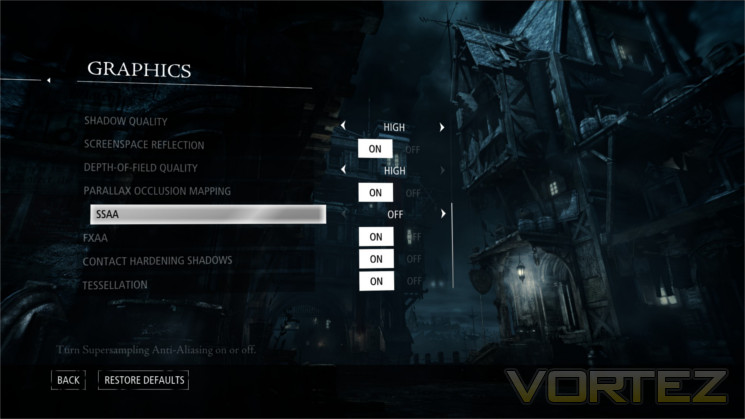
As the title is not a part of the NVIDIA The Way It’s Meant To Be Played stable it doesn’t offer TXAA or PhysX. Although we had no specific issues apart from rare minor texture artefacts the current GeForce driver is likely not yet optimised for the game, and certainly GeForce Experience does not yet present optimised settings. These are only minor points however which can be worked around with a little trial and error.
With our test setup the game was generally smooth, operating at around 40FPS during most situations. That’s reasonably fair given our decidedly mid-range test PC which just about hits the Recommended level advised by Eidos, but those with high-end PCs should see a significant and noticeable framerate benefit even at 1080p. Eidos have included a benchmarking tool for iterative testing of your in-game settings which is as always a great inclusion, so be sure to exploit that to the hilt to get the best out of your system that you can.
General Gameplay
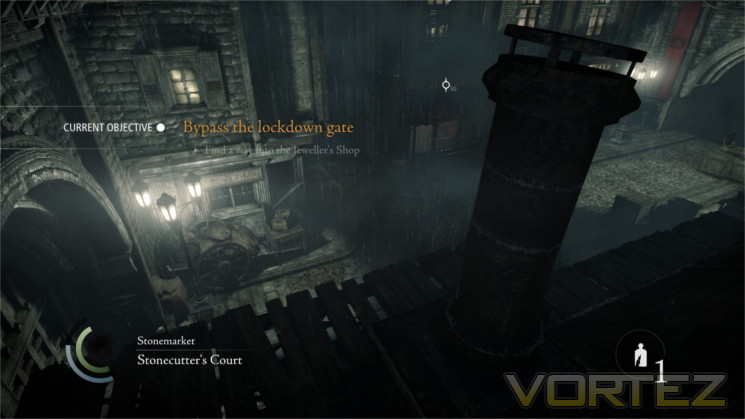
Thief is a single player game focussed around stealth gameplay and problem solving. The story is divided between eight chapters or missions, each of which are bookended by plot exposition either in the form of voiceover or cutscene rendered using the in-game cutscene. At times the audio sync for these scenes is off a little or may be abruptly ended, but the general standard is reasonable given that it’s not pre-rendered.
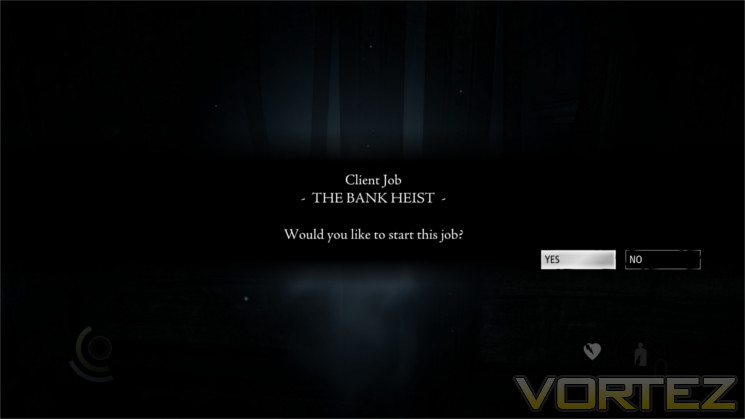
Difficulty is determined by choosing one of four options at the start: Rogue, Thief, Master or Custom. Rogue, Thief and Master simply determine the AI quality and cost of resources, whilst Custom allows the adjustment of each setting individually as well as enabling/disabling saves and other challenging criteria. Enabling Custom settings allows you to post times and scores for missions and client jobs/heists on a leaderboard, competing with other players the world over.
Whilst on a mission or client job you can return to town at any time through the menu, resetting any progress you may have made in that mission. Unless you have the option disabled through a custom setting you can save at almost any time on the PC (so long as you aren’t in a spot where you may alert guards). These two options together make progression straight-forward, although at times returning to a vendor to stock up on arrows and consumables can be frustrating due to patrols.
Challenge Modes
Through challenge modes you can return to specific missions and complete them using more difficult options such as a time restriction or no-detection clause. Results can then be shared with your friends or placed on a wider leaderboard. A couple of challenge modes are currently available, with more to be unlocked as DLC in the future.
—
In-game movements are governed by typical WASD, but there’s one glaring omission – a jump button; instead [SPACE] is used as a one-size-fits-all ‘jump up’, ‘climb up’, ‘jump over’, ‘jump across small gap’ and the like. There’s no means to jump and hang on to a ledge, cross chasms which at first glance look unpassable. As such every path you have is one clearly prescribed by the developers rather than novel or original, making Garrett seem clumsy or at least lacking in the nimbleness you would expect. It really is an odd decision, and one wonders if it was intended to fit a console sensibility or merely to preserve off-limits sections of the in-game world.
Given you spend most of you time creeping around the game could become quite plodding. An injection of pace is provided by the dash skill, which all you to rush for a few steps in your direction of travel. Completely silent, it allows you to skip between shadows or quickly move out of line of sight when necessary. Be warned however, if you dash through a bright area you’re still visible, can can be detected quite easily.
Lock Picking and other mini-games.
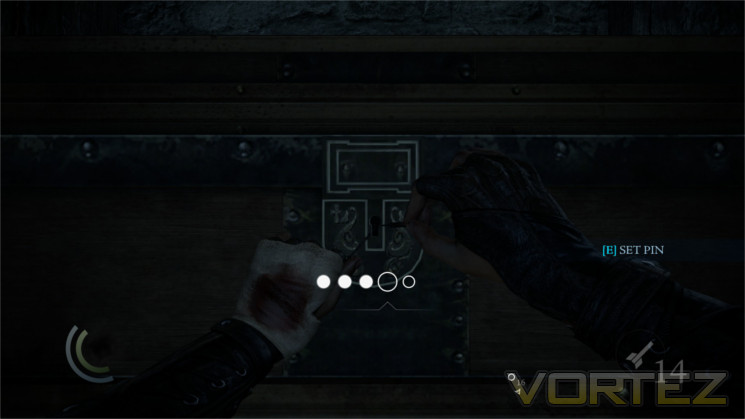
As a thief you are of course expected to pick the odd lock. Chests, small caches of loot and doors can each have locks of varying difficult, both in number of tumblers you have set in position and sensitivity for each. Generally though solving them doesn’t test skill in isolation, but is a tense experience if you’re hurrying to unlock it before a patrol returns.
Whilst not requiring skill, nor does the mechanic frustrate in the way similar mechanics have in other titles. Skyrim for example is notorious for both feather-sensitive master locks and consumable lockpicks which would be pretty inappropriate for Thief. Other example in-game mechanics such as finding hidden switches behind paintings are similarly more time rather than skill-testing, with the exception of specific locks such as the Barons Vault.
Focus
Focus is an upgradable ability which highlights points of interest in your vision with a blue or red aura. Blue typically refers to loot, consumables, locks and collectsables; red on the other hand almost exclusively indicates traps. It may also point you to locations of interest such as wire boxes or environmental features which you can interact with to disable traps or distract guards. In this respect it’s pretty useful, although can be toned down with custom difficulty options.
Staying in focus consumes the focus meter, which is replenished by the consumption of poppies. Even if the meter is empty you’re still given a small pulse of focus, allowing you to spot point of interest in your immediate line of sight. Managing focus is key to staying safe and spotting all the available loot.
In the way it operates it’s directly comparable to a similar mechanic from the recent Tomb Raider, although far more critical to in-game progression. As in Tomb Raider it’s easy to over-use it, breaking immersion to the detriment of the overall experience. Higher difficulties make it a much more scarce resource requiring careful husbanding.
Character Upgrades
Although it was initially planned, Thief doesn’t have have experience system; instead character progression is primarily through unlockable upgrades. Eight categories each with two tiers gradually improve one facet or your stealth, thievery or combat abilities requiring the investment of one Focus Point. Focus points are acquired by certain in-game events or by purchasing them from the Queen of the Beggers for gradually increasing amounts of gold (starting at 150g on Thief difficulty).
Whilst an important gold sink and gold of completionists none of the upgrades are strictly required to progress in the game. By shaving off small amounts of difficulty they make your life slightly easier, but equally those pushing for a challenge can ignore them entirely. Despite their marginal value they nonetheless provide another set of goals which could be seen to be expected in a modern game.
An additional upgrade system is through the Shady Dealer just outside the Crippled Burrick. He sells one-off augmentations to your backpack, armour, slow-fall capabilities and effectiveness of health and poppy consumables. For a price. Once again not necessary for progression in-game, they nonetheless easy the difficulty for a rather steep cost in your swiftly growing horde of gold.
Items and Consumables
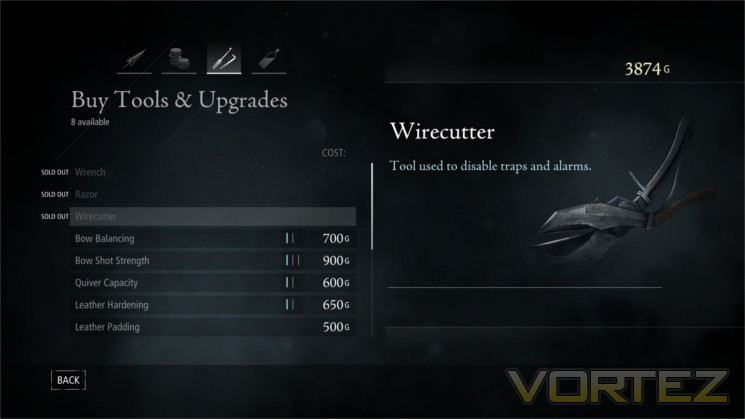
Closely associated with character upgrades are items, consumables and item upgrades which can be found around The City or bought from Dealers in town. The most critical are the wrench, wire cutters and razor which are unlocked at some point after Chapter 2 in the story. The wrench allows access through covered culverts and vents, whilst the wire-cutters disable alarms and some locks on doors and windows. The razor allows you to cut out valuable paintings to add to your own collection.
Other items are consumables used throughout the game and well worth keeping topped up. Arrows allow you to interact physically with your environment, or lethally with your enemies where necessary. Some are more useful than others but at the very least ensuring you have plenty of blunt heads and rope arrows before you set out on a mission or heist is sensible. Food and Poppies refill your health and focus bar, and you can stockpile a number at a time determined by your difficulty setting. Finally throwables can be used to distract guards, and if possible you should keep at least one on your person at all times. Thankfully there’s no complicated inventory management to process as loot is auto-sold when acquired, eliminating some tedious complexity present in games with stronger RPG elements.
You’re certainly not overloaded with items and most have an important role to play, but it is very easy to overlook entire inventory of the Shady Dealer. There’s very little signposting that the wrench et al are available and where to find them, which may mean significant confusion for some players.
Combat and Stealth
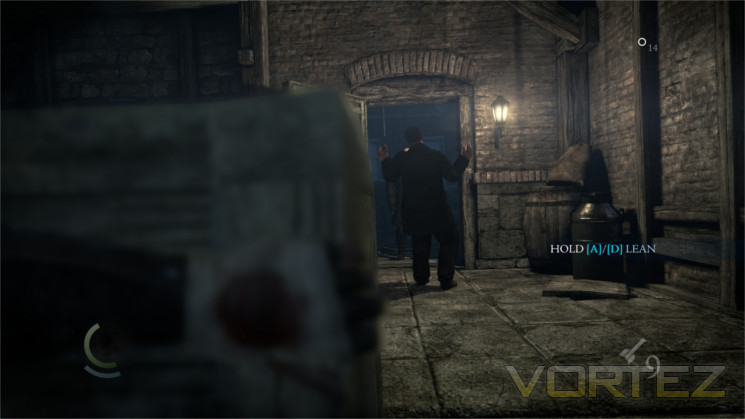
A large part of Thief can be summed up in one phrase – “stay silent, and stay out of sight”. Light, shadow and line of sight each play a critical role in ensuring that you stay hidden, whilst on-screen and audio warnings alert you to dangers you could otherwise be unaware of. Although combat is possible it’s not the games strong point.
A light meter in the left hand corner determines how much light you are in and thus how visible you are. If it’s fully white you’ll be spotted almost immediately, but if shadowed you can be extremely close and remain undetected by an even moderately alert guard. Moving between shadows quickly and soundlessly is critical through judicious use of the dash command and avoiding breakable items in your path.
When detectable an ‘eye’ meter above each NPC in range slowly fills up and you are slowly given audible feedback in the form of whispering with gathering intensity. The more light and the closer they are the more quickly it builds up. If not in line of sight you can still alert guards by the noise you generate, although perks and liberal use of the ‘CTRL’ toggle can greatly reduce the noise generated (at the cost of speed in the latter instance).
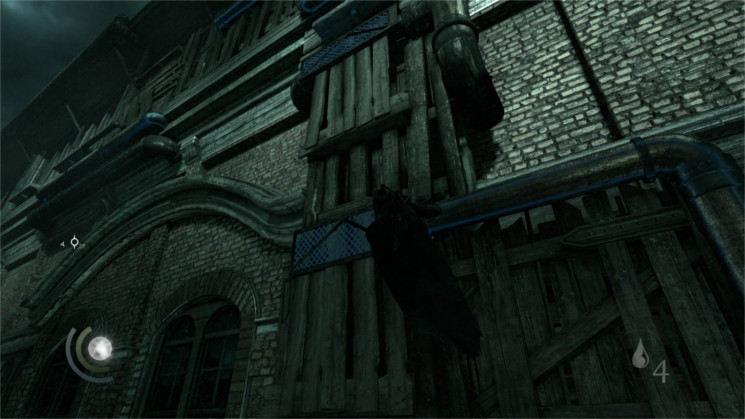
If detected you then need to escape out of line of sight or otherwise hide, but beware that enemies will follow you to your hiding place if they spot you. These are some of the most intense part of the game, where the musical score ramps up and you’re rushing to find a tunnel or ledge to make your escape. Be warned though, although there is no stamina bar there is a stamina mechanic. Run too long and you will run out of puff, slowing markedly and letting enemies easily catch you.
If there is no escape you can fight back if you choose, however doing so exposes the weaknesses of their combat system. At range you will tend to be sniped easily by accurate volleys from ranged guards whilst your own meagre supply of arrows is quickly depleted. In a melee combat is haphazard thanks to poor enemy AI and few tools you have at your disposal. Furthermore multiple enemies are deadly even on medium difficultly, while single guards could prove more than a match on the hardest setting. Stealth is the best policy, if for no other reason than the game just does it better.
If you can’t plot a route to avoid an enemies patrol individuals can be taken out with the blackjack takedown and then hauled to a hiding place. If the body is found however you will put the enemies on alert, so take care using this method.
Patches of illumination can sometimes be turned off by use of a switch (if electrical), water arrow (if fire) or quick wave of the hand (if candlelight). Note that a change light levels around them will put guards in higher states of awareness, making you more likely to be seen. They will also often turn the light back on if the source is close to them. If necessary therefore it can be a good distraction.
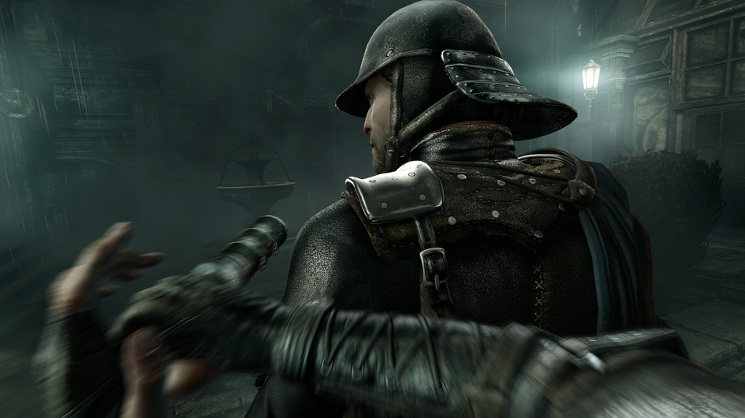
Speaking of distractions, you can also use throwables or environment effects to divert the attention of a guard. However this tends to only attract one guard from a group, and will put them in a much higher state of alert, so use appropriately.
The tendency for enemies to appear in groups can make most means of distraction or elimination unwise. In such cases it’s best to just circumvent them where possible. Generally speaking the developers have made such paths available if you look for them, but they may have other risks or contain fewer collectable rewards.
At times the tension engendered by the game is absolutely epic, but it is undermined by the quick-load & quick-save of the PC version. For better immersion it’s often best to just use the autosave points, but you can sometimes be tripped up by a glitchy AI or LOS causing you to fail instantly.
All in all, it works adequately as a stealth but poor as a FPS where the lacklustre AI becomes all too obvious. For some the collection game will prove to be popular, but other will quickly plough through the story content and then set the game aside to gather dust.
Concluding Thoughts
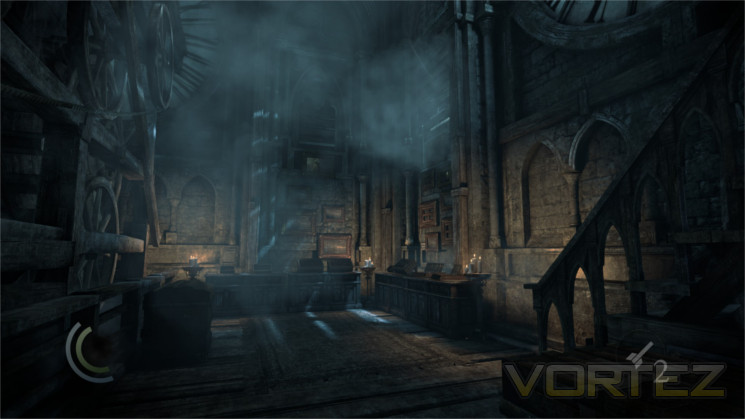
When many fans first heard of the venerable franchises return after an absence of almost a decade they were, understandably, enthusiastic. The fact that it was developed by the same studio which brought us the excellent Deus Ex: Human Revolution was further justification to be looking forward to the release. It comes as something of a disappointment therefore that Thief is some distance from being a classic.
Graphically, the setting and atmosphere is almost pitch perfect. The City feels dank, dirty and oppressive in just the way you imagine it should. Unfortunately the implementation butts up hard against the technical limitations of either the platform or the game engine, preventing any sort of true open world feel. Loading screens are hidden behind stock ‘opening window’ CG or moving through a passageway strewn with barrels and logs, and no amount of repeated presses of ‘E’ can hide that fact.
Frustrating isn’t the first word one should use for any game, but it does come up all too often with Thief. Despite an in-game map, navigation is at times difficult, especially around fixed watch stations rather than patrol routes. The map is only of moderate value and takes more time to bring up than it should, creating confusion when looking for alternative paths to take especially when not on a Chapter mission.
Core gameplay is where Thief begins to come into its own. The stealth mechanic is good, even if at times you’re pondering how the City Watch desperately needs to improve the vision testing portion of the entrance exam. Although you’re perhaps not being particularly ninja-like in your movements, getting past each guard in a mission feels like an achievement as you sigh with relief. Even though they can be fought off with judicious use of combat techniques, getting spotted feels like a failure state which often results in death (quibbles about being killed outside of line of site notwithstanding).
Much like the recently rebooted Tomb Raider – also published by Square Enix – the game rewards the completionist who wishes to acquire every collectable and uncover every secret. The vast majority of the game’s backstory is hinted at through documents and unique treasures found around the world which are easy to miss, potentially warranting a second playthrough or replaying selected chapters. However in this respect it often breaks the ‘show, don’t tell’ rule of good storytelling which we see in many other classic games. Whether it’s enough to keep you playing is really down to your approach to games in general.
While Thief won’t be held up as a classic of the genre it is still a creditable game that is well worth trying if you enjoyed the original titles in the franchise. It certainly impresses us enough to make us interested in a sequel or additional story DLC. Unfortunately it doesn’t feel by any stretch of imagination to be a ‘next generation’ title due to the rigid solutions to reaching your goals and the lack of emergent gameplay.
For £30/$60 you’ll get around 14 hours of gameplay, more if you’re a completionist. The story is serviceable and keeps you interested throughout, but it’s the atmosphere and stealth gameplay which keep your attention. When played as a FPS with RPG elements it’s frankly mediocre, but if treated as a hardcore ‘if you’re spotted, you’re dead’ style game it holds some genuinely tense and chilling moments. Unfortunately these moments are too few and far between for many people’s tastes.
If primarily stealth titles such as The Last Of Us or particular elements of Deus Ex: Human Revolution are your thing you could do worse than giving Thief a look. Dense in atmosphere and with a well-realised world, the game rewards the sneak and punishes the gung-ho in equal measure. Whilst not a classic, it doesn’t disgrace its more illustrious predecessors in the franchise and in of itself justifies a continuation of the series.
Pros
+ Strong Stealth Elements
+ Engaging Plot
+ Enough collectibles to satisfy your inner magpie
+ Good graphics
+ Excellent atmosphere with some truly tense moments
Cons
– Basic AI
– Predetermined pathways
– Confusing navigation
– Sub-zone transition AKA ‘Press E repeatedly’ mechanic
– No truly original elements.
+ Strong Stealth Elements
+ Engaging Plot
+ Enough collectibles to satisfy your inner magpie
+ Good graphics
+ Excellent atmosphere with some truly tense moments
Cons
– Basic AI
– Predetermined pathways
– Confusing navigation
– Sub-zone transition AKA ‘Press E repeatedly’ mechanic
– No truly original elements.

Click here for an explanation of our awards at Vortez.net.


