







This affordable mATX motherboard, based on the A75 (Hudson D3) chipset, has set out to offer competitive performance without the frills. Does it deliver?
Product on Review: Foxconn A75M
Manufacturer and Sponsor: Foxconn
Street Price: £55-70 est. retail

Foxconn are a brand familiar to many, offering stable and affordable motherboards in the mainstream while supporting their ‘Quantum’ brand with high quality components and features. Back in April we looked at the P67 Rattler, now we are taking a look at their A75M mATX motherboard for AMD’s A-Series APUs. Offering Native SATA 3.0 6Gb/s and USB 3.0 connectivity and HDMI 1.4a to support 3D Blu-Ray, this motherboard is targetting a mainstream audience that have no need for fancy buttons or features that decorate most higher end motherboards.
Let’s move on to the next step of our analysis.
Foxconn’s Overview
Technical Specifications
CPU
AMD FM1 socket CPU , Quad-Core CPU; Up to 4 “Husky” CPU Cores
Chipset:
AMD Hudson D3 co-lay D2 Chipset (default D3)
Memory:
Dual channel DDR3 1866/1600/1333 x 4 DIMMs, Max. 64GB
Expansion Slots:
• 1 x PCI Express x16 slot
• 1 x PCI Express x1 slot
• 2 x PCI bus slots
Serial ATA(SATA)/RAID:
• 6 x SATAIII, SATA RAID 0,1,10
Audio:
Supports 7.1 channel audio co-lay 5.1 channel
LAN:
Supports Gbe Lan
Back Panel I/O Ports:
• 1x PS/2 keyboard port
• 1x VGA port
• 1x DVI port
• 1x audio jack supports 3 jacks co-lay 6 jacks( default 6 jacks)
• 1x HDMI
• 6x USB 2.0 ports
• 2x USB 3.0 ports
• 1x RJ45 Lan port
Internal I/O Connectors:
• 1x ATX 24-Pin power connector
• 1x 4-pin ATX 12V power connector
• 3x 4-pin CPU / System Fan connector
• 1x CD-in connector
• 1x Speaker header
• 6x Serial ATA connectors
• 2x USB 2.0 headers
• 1x USB 3.0 header
• 1x parallel header
• 1x Intrusion Alarm header
• 1x TPM/TCM header
• 1x Buzzer (reserved)
• 1x COM header
• 1x Front Panel header
• 1x S/PDIF out header(reserved)
• 1x Front Audio header
• 1x IR/CIR header (default IR)
BIOS Features:
16Mb flash EEPROM w/ LAN boot PnP, ACPI, WfM, DMI 2.0
Support CD:
Drivers, Adobe Reader, SuperUtilities, Norton Internet Security
Form Factor:
mATX form factor 9.6×9.6 inch – 4 layers PCB
Packaging & First Look
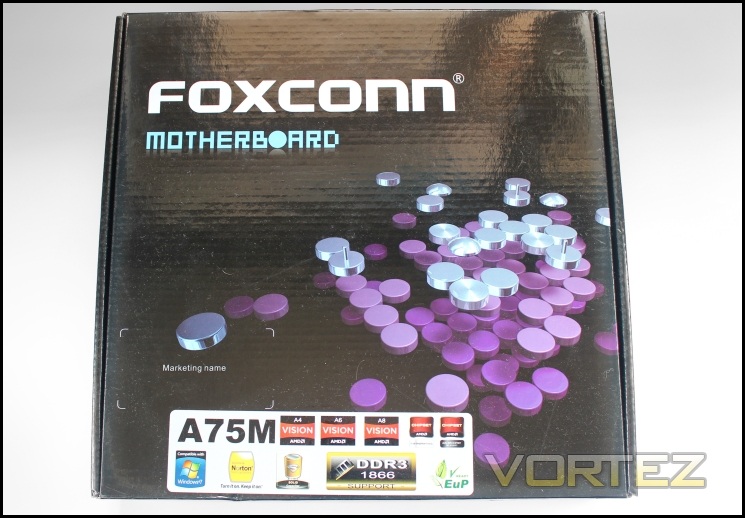
The Box art shows a 3D design pattern on a plain black background. Sleek and interesting, without the usual ‘gamer’ over the top branding. This reflects the audience this product is pitched at, your home/family or even office PC. Some features of the A75M are clearly on display too, supporting the AMD A4, A6 and A8 series APUs, 1866MHz memory, dual graphics, A75 chipset, solid capacitors and EuP ready.
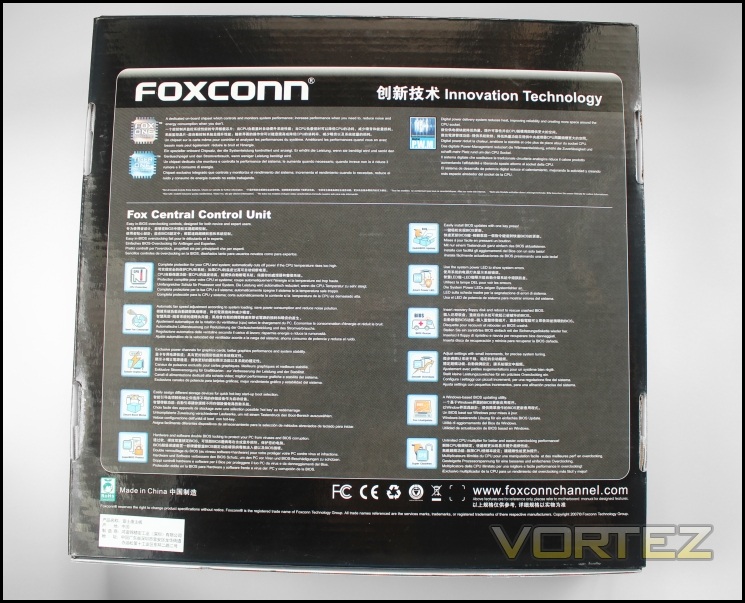
On the reverse side there is a comprehensive list of features. Some of the most impressive features included on this motherboard is to do with the BIOS. Including BIOS protect which is software and hardware dual BIOS as well as a quick BIOS update function and BIOS Rescue. Another worthy mention is that ALL power delivery systems are digital, much like ASUS’s DIGI+ VRMs. A major concern I have with some details listed are of various overclocking features, which, at least on this sample, do not seem to exist on testing.
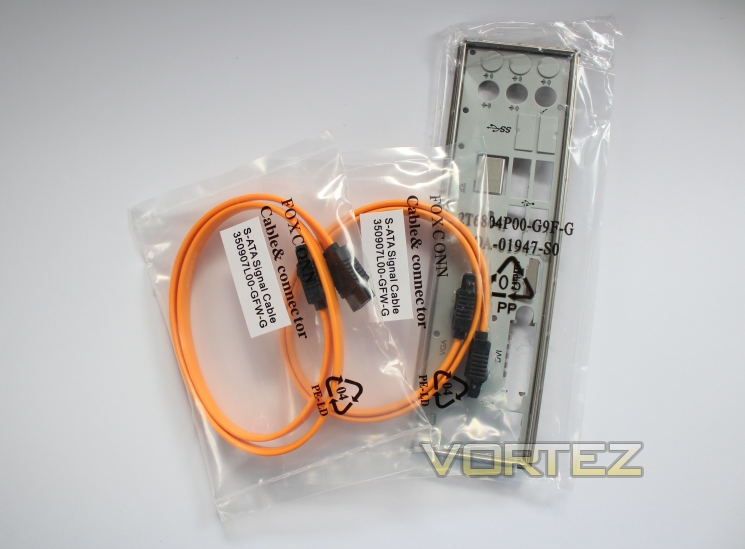
Packaging bundle was a little light with just two amber sata cables and I/O backplate. (Driver CD and Manual is likely to arrive with full retail packaging.)
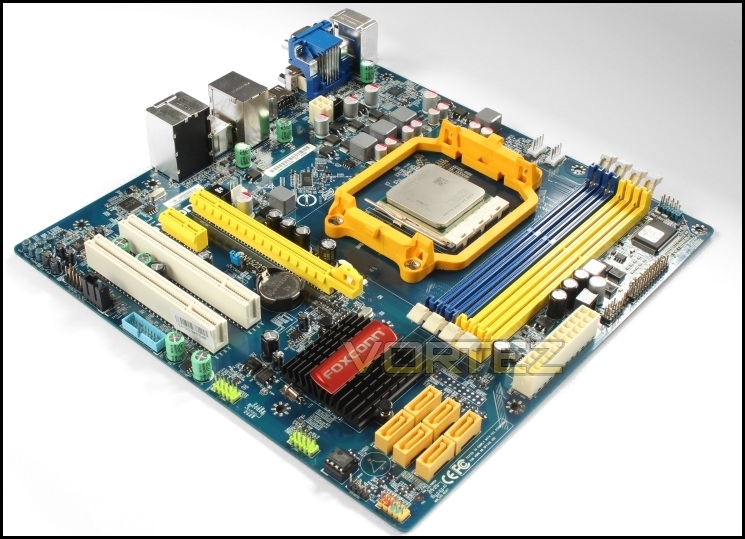
The board itself is neatly laid out in a familiar pattern with no space wasted on legacy features such as IDE, which thankfully has been almost completely phased out. Design aesthetics are questionable, with a dark blue PCB, much like GIGABYTE’s latest coming, topped with no less than three different hues of yellow, white, black, blue and a red logo thrown into the mix. It is a shame that Foxconn haven’t developed on the black/Yellow design for AMD motherboards and black/Red for Intel motherboards, though understandably, this is likely to be used in a system where design aesthetics aren’t going to be appreciated. Lack of non right-angled SATA ports too is a shame, though not a deal breaker.
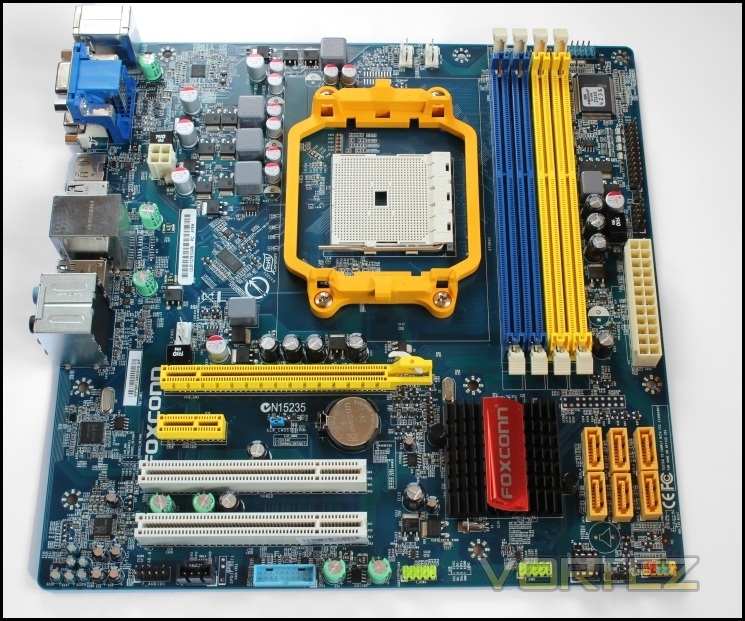
Let’s move on to take a closer look at this motherboards features.
Closer Look
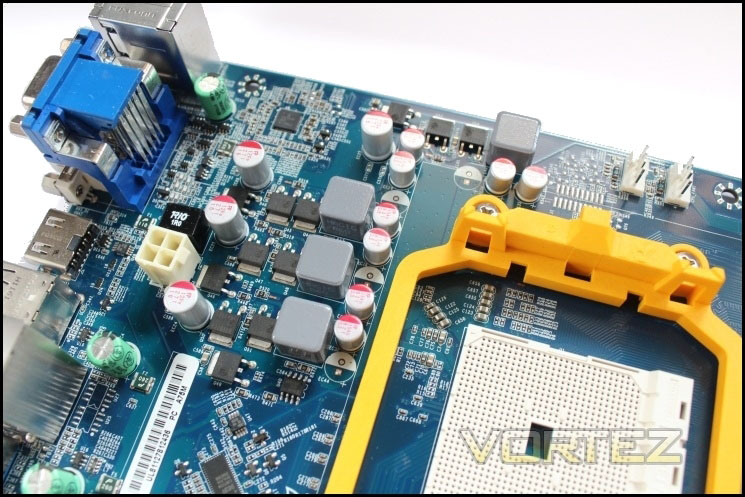
Around the FM1 socket we can see the use of solid capacitors and chokes fed by digital VRMs. Due to the digital VRMs that run much cooler than traditional VRMs, there is no need for a heatsink. Arranged in 3 + 1 phases there is plenty of power on tap for the efficient 32nm Llano chips. We can also see the 4 pin 12v ATX power socket as well as dual 4 pin PWM headers for CPU cooling, handy for coolers with two fans running in push/ pull.
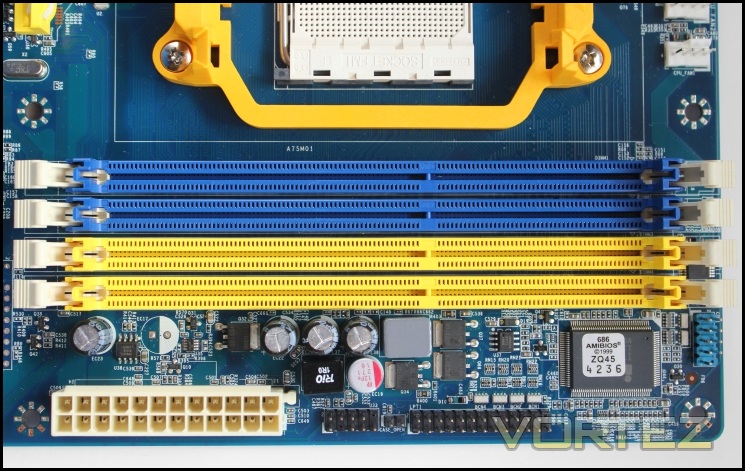
The memory DIMMs are colour coded per channel (A1 A2, B1, B2) rather than marking primary/ secondary channels to run dual channel (A1, B1, A2, B2). Or more simply first channel is blue and second channel is yellow, what this means is, to run memory modules in dual channel you must place 1 module in a blue slot and the second in a yellow slot. This, in my experience, goes against how many other boards mark their DIMMS as to be able to easily spot which slots are best to run your memory in dual/ triple channel mode. We can see that the memory, too, has a dedicated power phase.
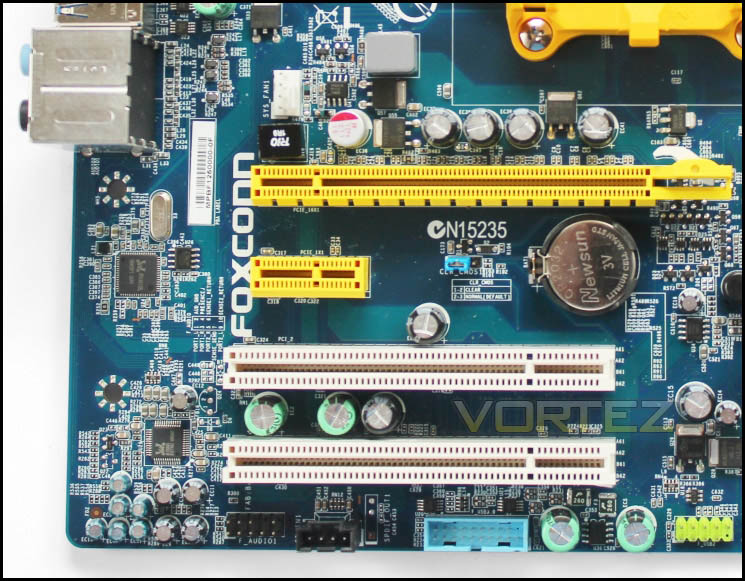
Supporting dual graphics with the APU we see a PCI-E 2.0 16x lane with a dedicated power phase followed by a PCI-E 1x and 2x legacy PCI lanes. In this quadrant of the board we can also see another 4pin PWM fan header, the realtek lan controller and HD audio chip, front audio header, USB 3.0 front header supporting 2x USB 3.0 ports as well as the clear CMOS jumper.
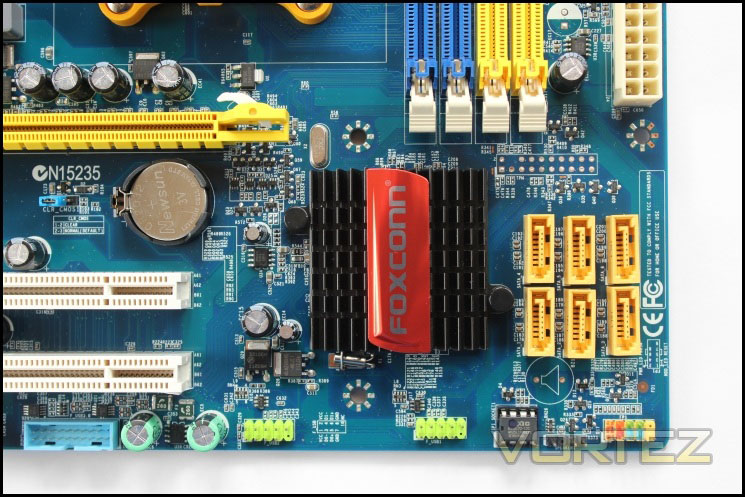
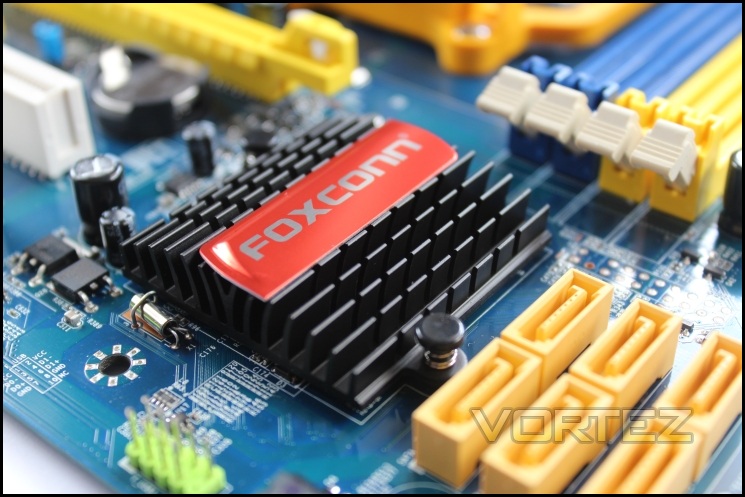
In the bottom right section of the A75M we see the black heatsink with the red Foxconn badge that is used to cool the Hudson D3 Fusion Controller Hub. This is what gives the motherboard it’s Native SATA 3.0 6Gb/s goodness. To the right of the heatsink we see the 6 SATA 3.0 ports. The bottom edge is lined with 2x USB 2.0 headers, each supporting 2x USB 2.0 ports, the BIOS chip, dedicated buzzer header and the power/ reset headers as can be expected.
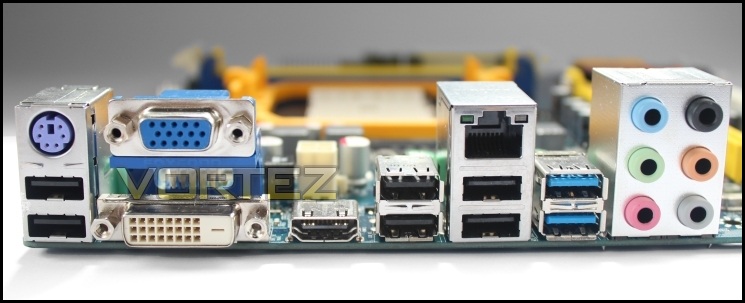
The rear I/O connections are comprehensive with PS2 keyboard, 6x USB 2.0, VGA, DVI and HDMI 1.4a video outputs, gigabit lan, 2x USB 3.0 and 7.1 audio with line in and mic jacks.
BIOS
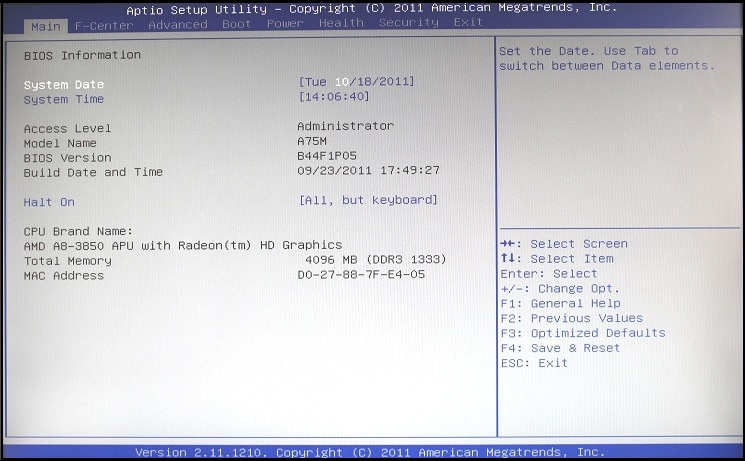
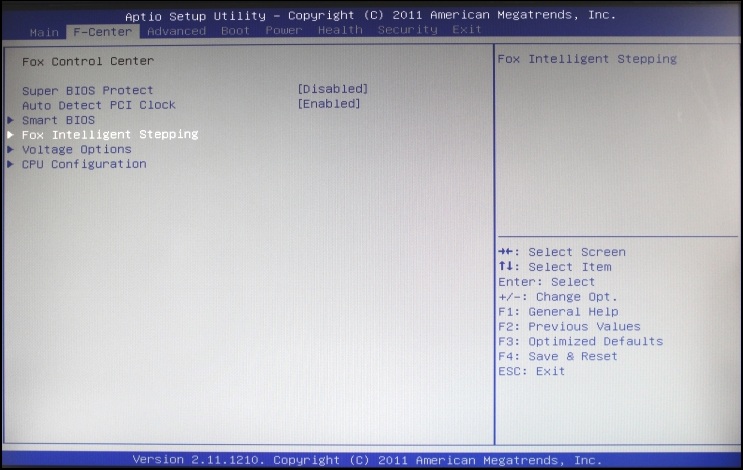
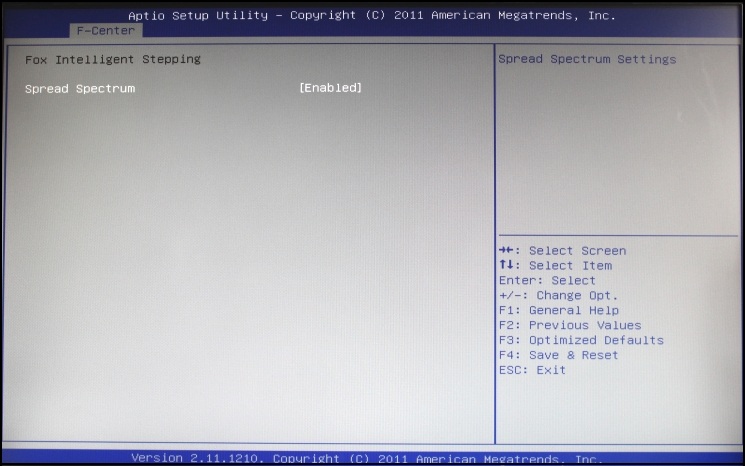
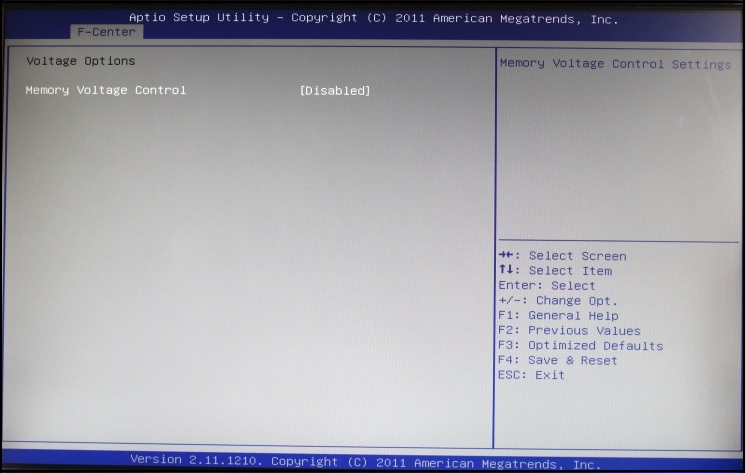
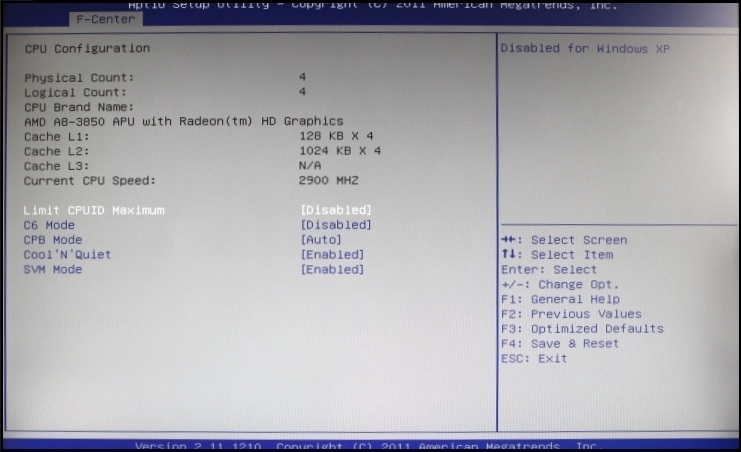
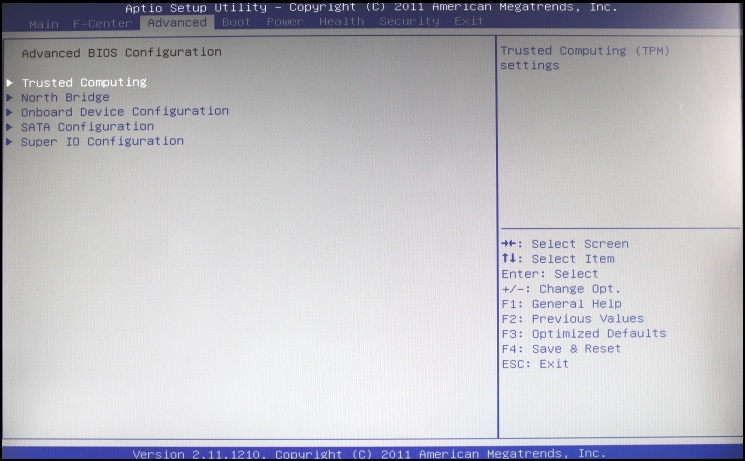
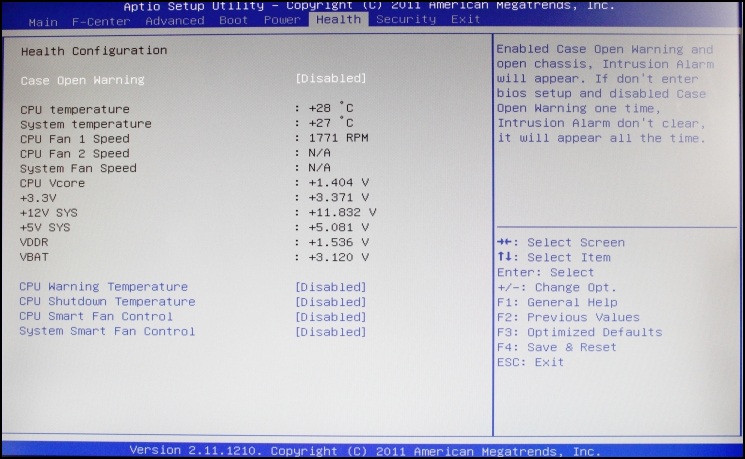
Using the familiar old AMI BIOS, we get to see all the system information as well as other features. Some users may be getting used to latest EFI BIOS and the benefits they bring but that unfortunately isn’t a feature of this motherboard. Upon browsing the BIOS I found a certain lack of overclocking features. This would not be an issue for if it wasn’t for the exclusion of RAM multipliers. As this motherboard and indeed, platform, is not aimed at overclockers, it could be forgiven for missing out certain overclocking functions, but not being able to set memory speeds is pretty much a disaster for this platform as scalable GPU performance can be had with increased memory speeds and bandwidth. Thus I am stuck with 1333MHz memory. The other issue with the exclusion of overclocking features is that this motherboard is touted to support 1866MHz ram as well as having overclocking features as per the livery on the packaging.
Bundled Software
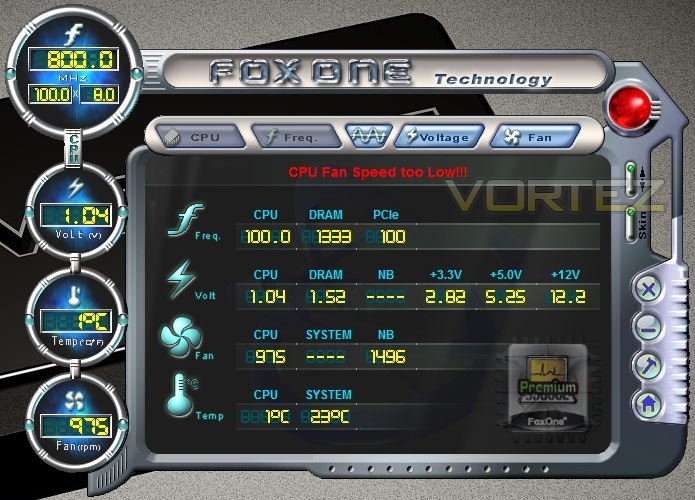
FoxOne
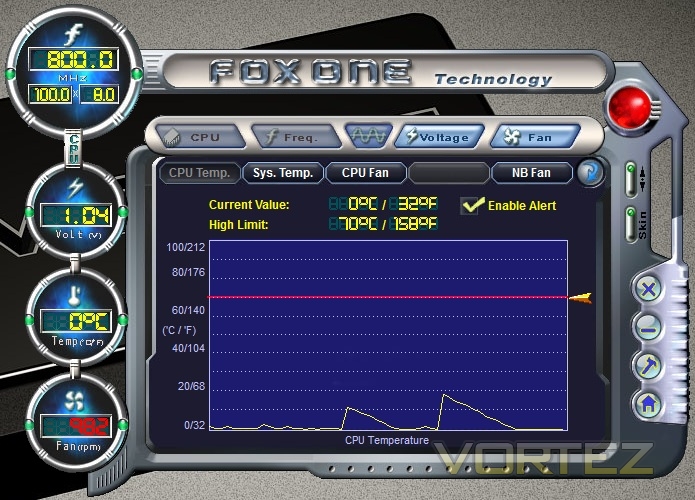
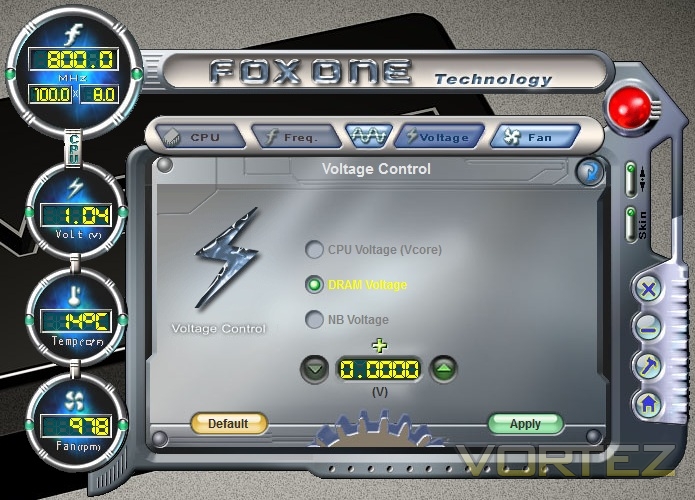
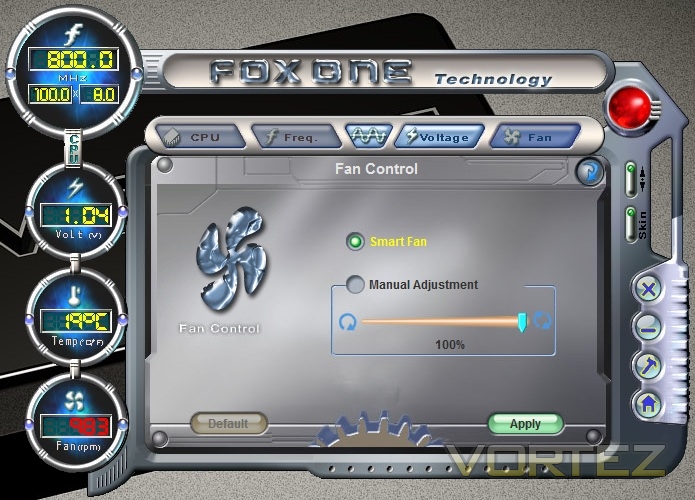
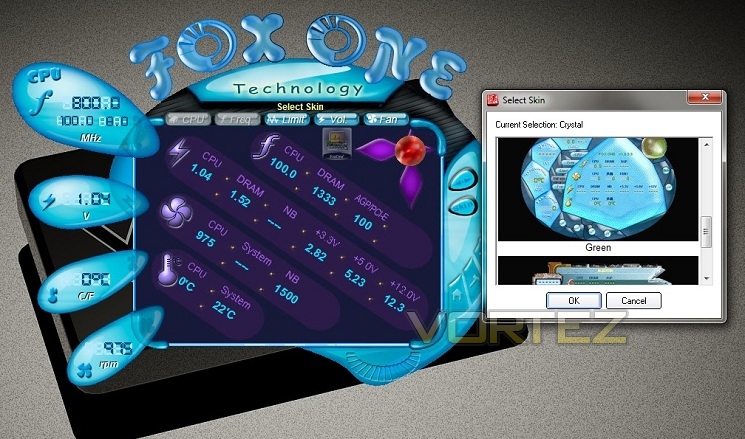
The use and development of this software on a higher end motherboard would make more sense as on a motherboard like this it is practically useless. Considering my APU is running at a cool 0°C (Temperature sensors do not work accurately) and there are no overclocking options, allowing me to increase the memory voltage just for LULZ while telling my fan RPM is too low with constant warnings and red flashing lights, could simply be misleading to the untrained mind. FoxOne does however have some nifty skins.
FoxLiveUpdate
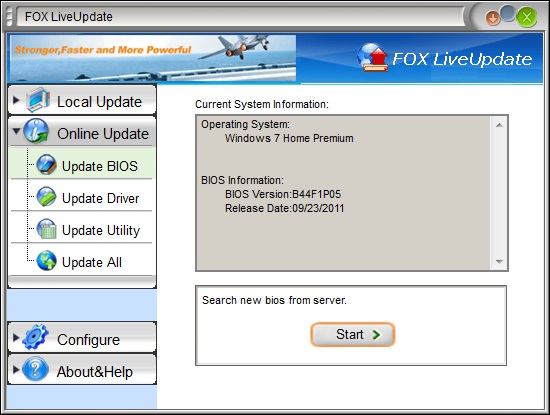
This feature is a pretty handy tool to help keep your BIOS up to date, allowing you to quickly and easily update the BIOS from within Windows. However, even with features like dual BIOS, and BIOS protect, remember that caution is needed when updating the BIOS. A power outage mid-update could spell disaster.
Test Setup & Overclocking
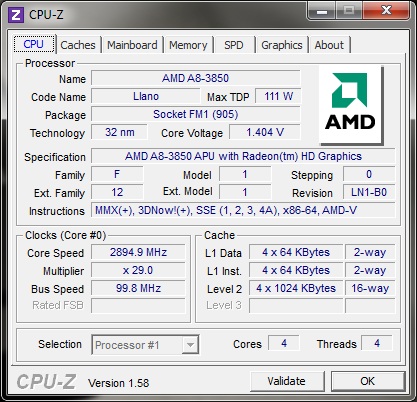
APU: AMD A8-3850
Motherboards
– Foxconn A75M
– GIGABYTE GA-A75M-UD2H
Memory Team Xtreem PC3 12800 DDR3 1600 7-7-7-21
CPU Cooler CoolerMaster Hyper 212+
Graphics
– Integrated Radeon HD 6550D
– Discrete AMD Radoen HD 6570
PSU OCZ StealthXtream 2 600W
HDD Western Digital Caviar Blue 500GB 7200RPM SATAIII
Overclocking
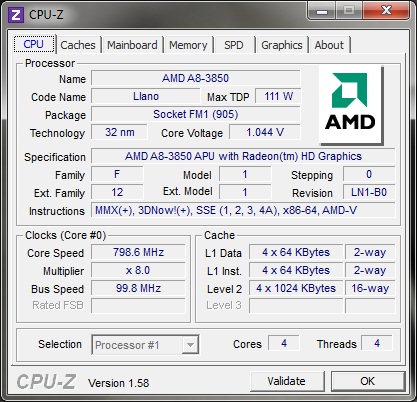
Unfortunately there were no options at all to overclock within the BIOS, however it is touted that this motherboard supports 1866MHz memory speeds, which is the native speed for the AMD A6 and A8 APUs as well as displaying supposed overclocking features on the packaging. Whether or not the overclocking features will be enabled via BIOS update or if they simply do not exist and the mention on the packaging is a mistake is to be seen. However, the primary deal breaker is the lack of manual DRAM settings which allows the use of faster memory speeds.
CrossfireX Setup
More bad news, despite my best efforts to try to get dual graphics to to work on the Foxconn A75M I could not get CrossfireX with the HD 6550 and HD 6570 to work. In the northbridge option in the Advanced BIOS tab, the only option available is to set IGP memory allocation. I set this to manual> 512MB in hoping this would manually force the motherboard to start with both iGPU and dGPU active, however this resulted in no POST and required me to clear CMOS to regain access to the system. This is another huge blow.
Power Consumption & Temperatures
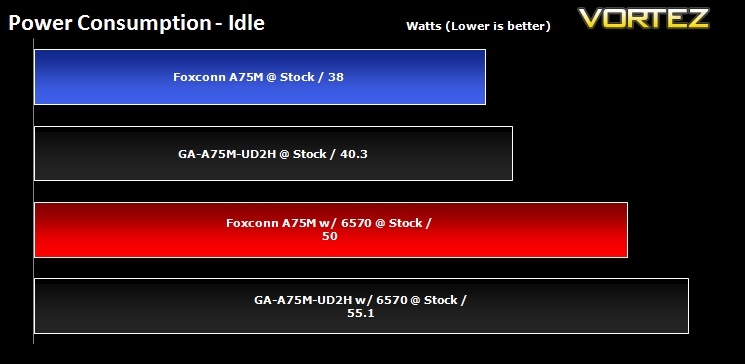
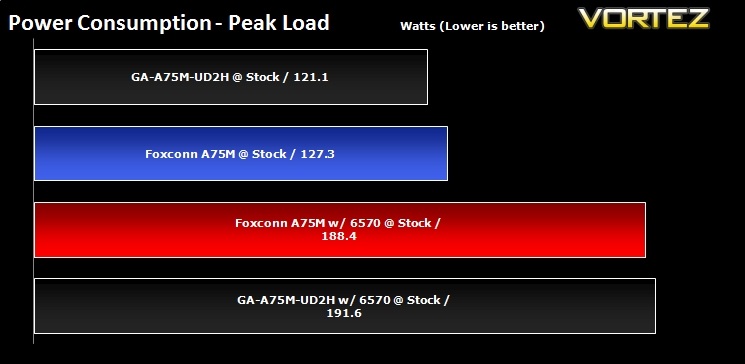
Foxconn take the cake here with significantly lower power draw, especially with the discrete HD 6570, is this the result of using digital power management? With the A8-3850 the peak load did jump a fair bit higher than on the GIGABYTE GA-A75M-UD2H.
Motherboard Temperatures
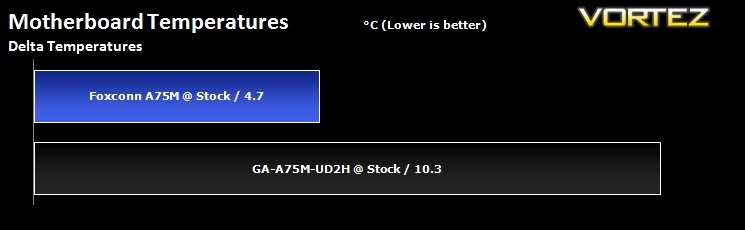
Motherboard temperatures can change depending on what features the motherboard has onboard. The Foxconn A75M, having digital power management, was more likely to have a much cooler temperature. The FCH heatsink too was cool to the touch in comparison to the GIGABYTE motherboard which was fairly hot to the touch. Delta temperatures were taken from a mean temperature of idle and loaded states. It is clear to see that Foxconn are keeping it cool.
Synthetic Benchmarks: AIDA64
Memory Tests
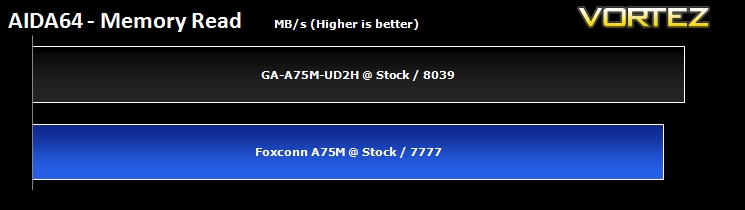
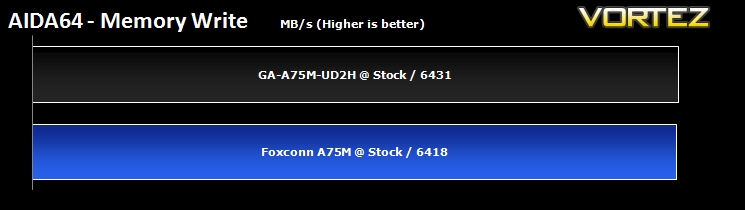
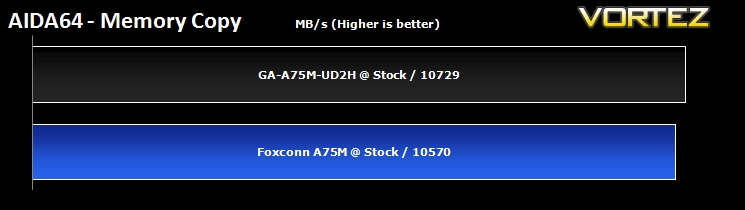
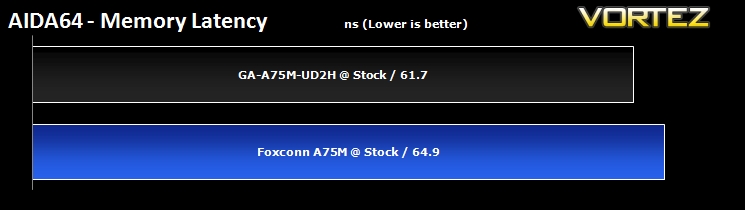
The Memory Latency benchmark measures the typical delay when the CPU reads data from system memory. Memory latency time means the penalty measured from the issuing of the read command until the data arrives to the integer registers of the CPU.
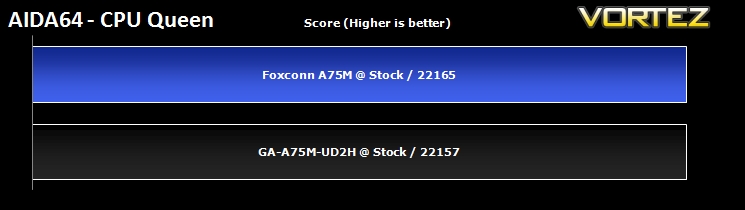
CPU Queen Benchmark
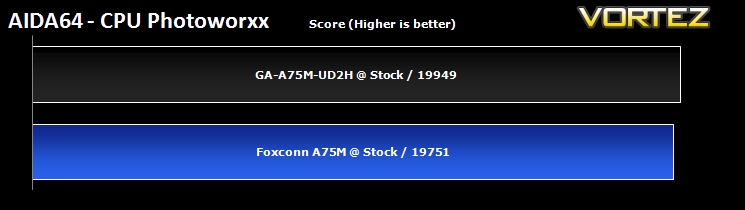
CPU Photoworxx Benchmark
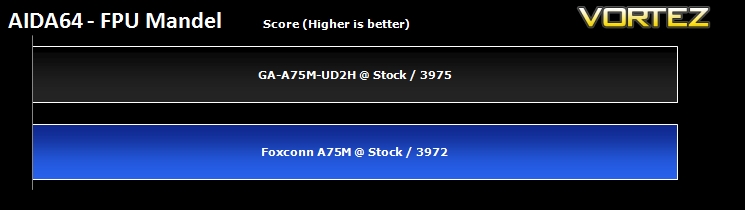
FPU Mandel Benchmark
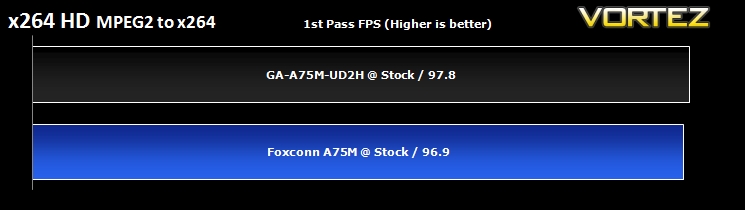
Synthetic Benchmarks: x264 HD
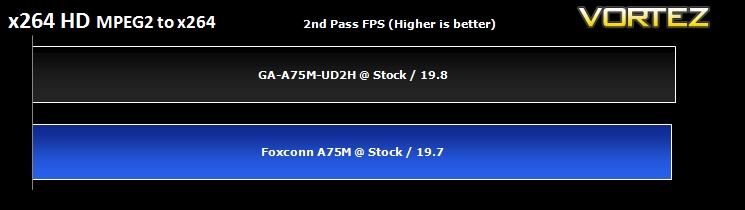
Results here how a fair difference in the first pass while both motherboards perform almost identical. If the motherboard had options to overclock we would be able to see a clear benefit in benchmarks such as this.
Synthetic Benchmarks: Cinebench 11.5
CPU Rendering
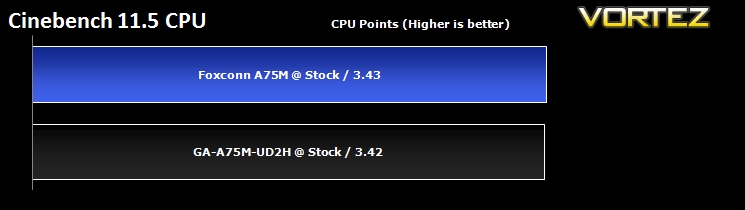
The Foxconn A75M managed to just take the top spot, likely within margin of error in the Cinebench 11.5 CPU rendering test.
Open GL Graphics Rendering
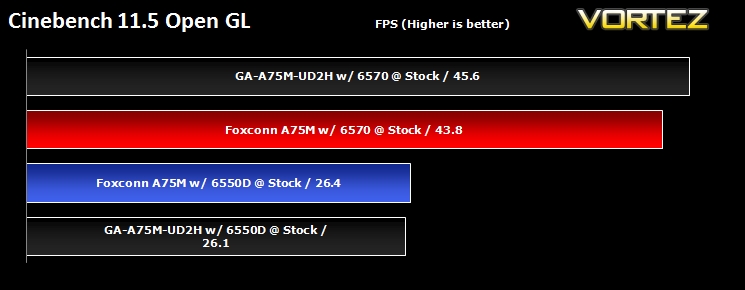
While we see the Foxconn trump the GIGABYTE board using the onboard HD 6550D, there is a significant difference when using the discrete graphics card. Is it possible that the PCI-E lanes are more affected by the 0.2MHz deficit than the APU or is this sheer electronic wizardry at play?
Synthetic Benchmarks: SiSoftware SANDRA 2011
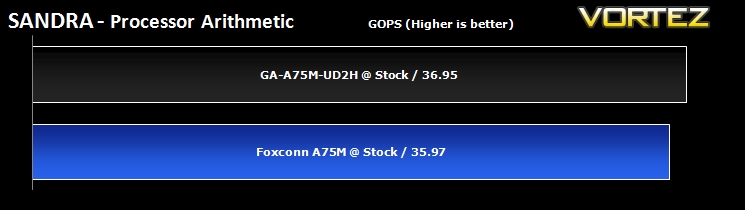
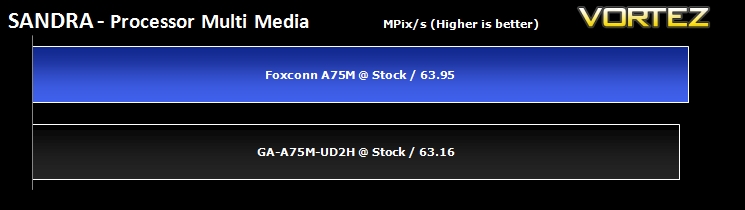
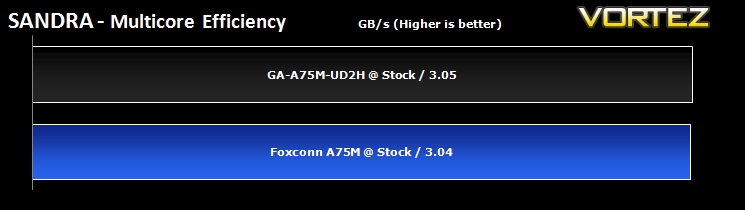
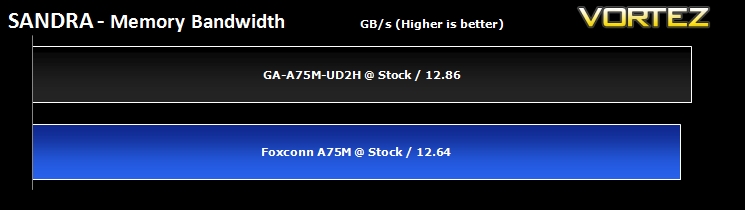
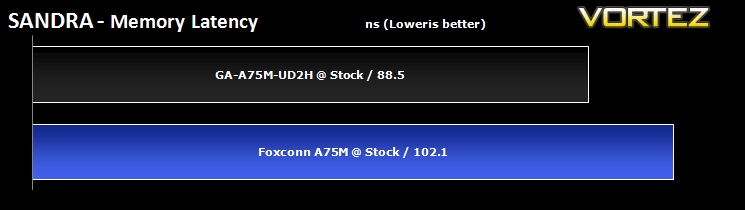
The Foxconn, other than suffering with latency problems, is able to keep par with the GIGABYTE motherboard, even beating it in CPU Multi media.
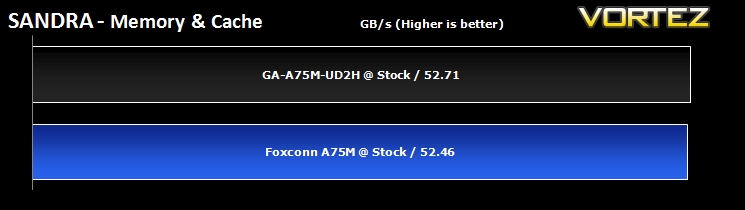
Synthetic Benchmarks: SiSoftware SANDRA 2011 cont…
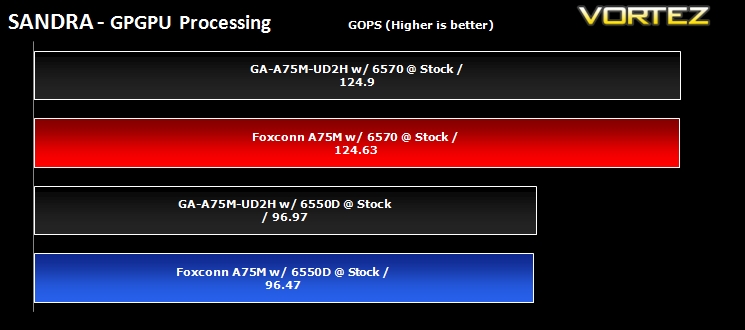
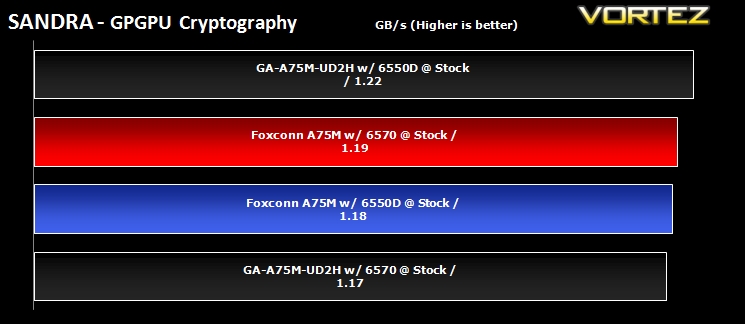
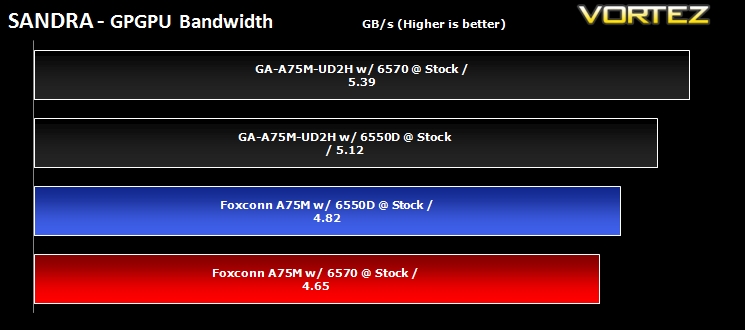
In the GPGPU tests, we generally see the same performance numbers as the GA-A75M-UD2H however it becomes apparent that the Foxconn A75M is starving the APU and dGPU of bandwidth, which is likely having a detrimental effect on system performance.
Synthetic Benchmarks: 3DMark Vantage & 3DMark 11
3DMark Vantage
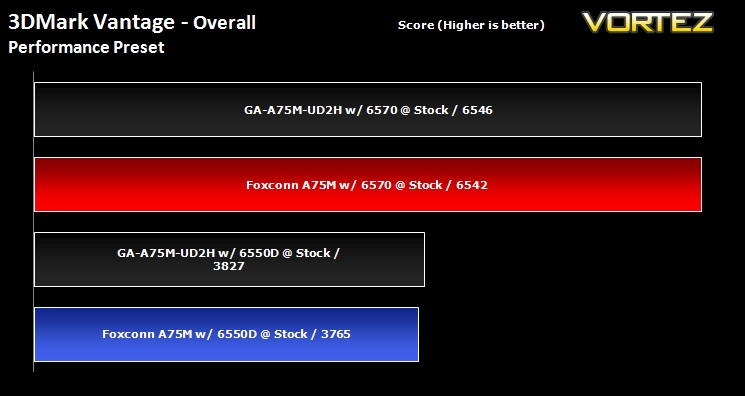
Staying close on par with the GIGABYTE motherboard, it has become apparent, however, that it is falling behind in most situations.
3DMark 11
Again we see a repetition of the A75M from Foxconn keeping pace with the GIGABYTE motherboard.
Synthetic Benchmarks: PCMark 7 & UNIGINE Heaven 2.5
UNIGINE Heaven 2.5
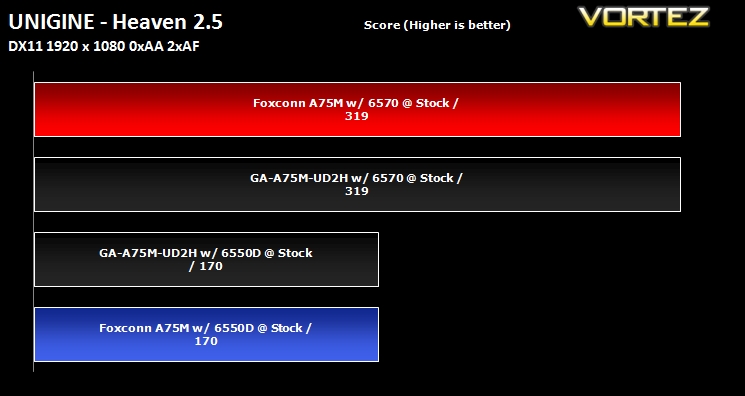
Identical scores all round. Par is Par.
PCMark 7
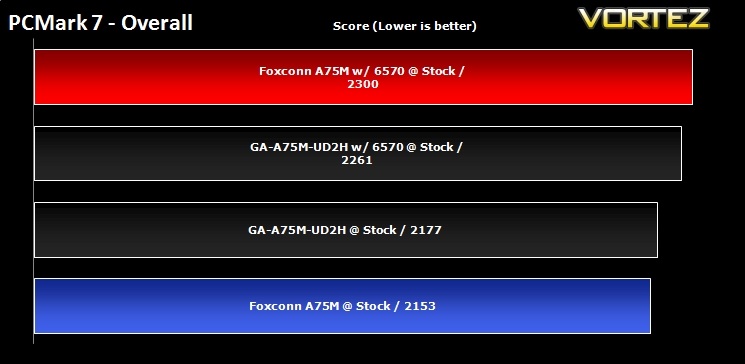
The Foxconn A75M taking the top spot when combined with the HD 6570, however it falls behind when using the integrated HD 6550D GPU.
Game Benchmarks: AVP, Deus Ex:HR, Shogun 2
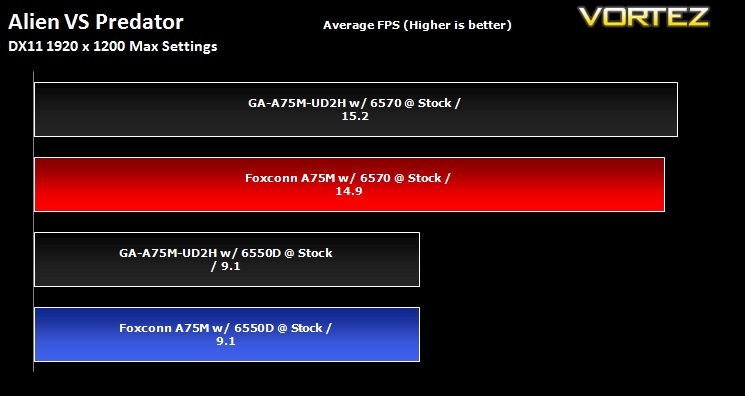
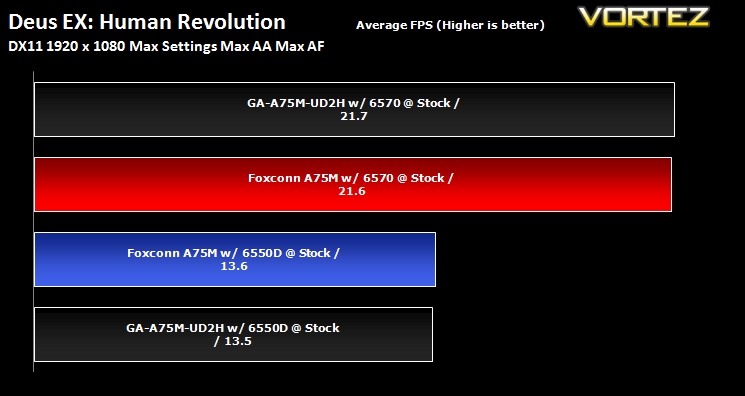
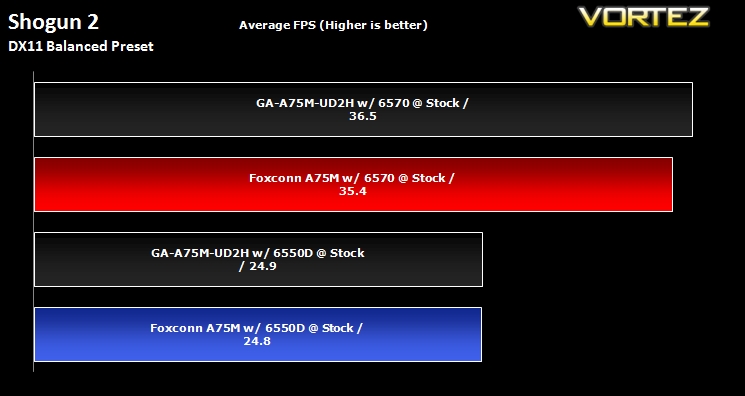
Continuing the trend of falling behind when using the Radeon HD 6570, the Foxcon A75M, regardless, keeps competitive performance throughout.
Alien Vs. Predator
The stand-alone Alien VS Predator benchmark tool was used for testing here. All the settings were set to very high and Tessellation was applied. The average FPS was recorded at the end.
Deus Ex: Human Revolution
Shogun 2
Conclusion
Not many motherboards on the market can claim to have every colour accounted for, however if aesthetics aren’t an issue, Foxconn have created a competitive motherboard worthy of consideration at the right price. At time of writing it would appear that availability is limited. There is a very competitive market for A75 motherboards from BIOSTAR, ASRock and GIGABYTE within the £55-60 region. For this board to be Really competitive, it would need to be priced around £45-50. The board functions well, but not including the ability to increase the speed of the DDR3 memory really lets it down.And here is why
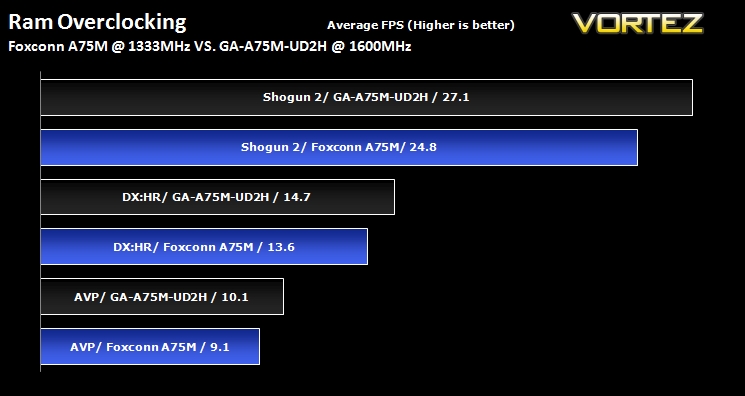
That 10% can really mean the difference between playable and not in games. Not being able to overclock the CPU or GPU isn’t as huge an issue as memory overclocking for that reason. Not being able to Crossfire with the HD 6570 too is a fairly big loss. This option to increase graphics performance as an affordable upgrade is a fairly substantial feature of the platform.
Those major issues aside, the board is efficient and has some neat features, such as the digital power management and the use of solid capacitors on all vital components. Performance is on near on par with GIGABYTE’s GA-A75M-UD2H with only memory bandwidth seeming to be the cause of any minor short coming. All things considered, is this a product I would buy? At the right price, Yes, to upgrade my mother’s or my Gran’s aging PC. Is this a product I would recommend? When staking my professional integrity, I can’t recommend something that cannot perform as advertised or stated by the manufacturer and for that reason the Foxconn A75M just misses out on an award. Let’s hope some of those issues can be fixed.
+ Power efficient
+ Digital power management
+ Competitive base performance
+ BIOS Protect
Cons.
– CrossfireX does not seem to work
– Not able to adjust RAM speeds/ No overclocking functions at all
– Does not have advertised features
– Questionable aesthetics
**UPDATE**
We have been informed a BIOS is due out in November to resolve issues with CrossfireX and CPU/Mem modifications.

Click here for an explanation of our awards at Vortez.net.


