







The AMD Radeon HD7000 series are the fastest cards on the planet. Today we take a look at the entry level in the range, the AMD Radeon HD7750…

Product on Review: AMD HD7750
Manufacturer and Sponsor: AMD
R.R.P: $109
The AMD Radeon HD 7750 is the trimmed down HD 7770 aimed squarely at the feet of someone looking for a discreet GPU that is a capable all-rounder without costing the earth. Often overlooked by many, the budget end of the market can introduce some very interesting cards that may not be able to perform at the very highest level yet offer acceptable performance in all areas that otherwise would not be tenable due to cost prohibitive graphics solutions. Take for example the HD7970, a fantastic graphics card for sure but is it really necessary for the mainstream market? At over £400 it has priced itself out of the running for many and while it may well be the fastest GPU on the planet, it makes little difference to those who participate in little gaming. What many system builders want is a graphics solution that offers silence, low temperatures, low power consumption able to display at all common resolutions along with adequate performance to address today’s software. AMD hopes to address these concerns with the new Cape Verde core.
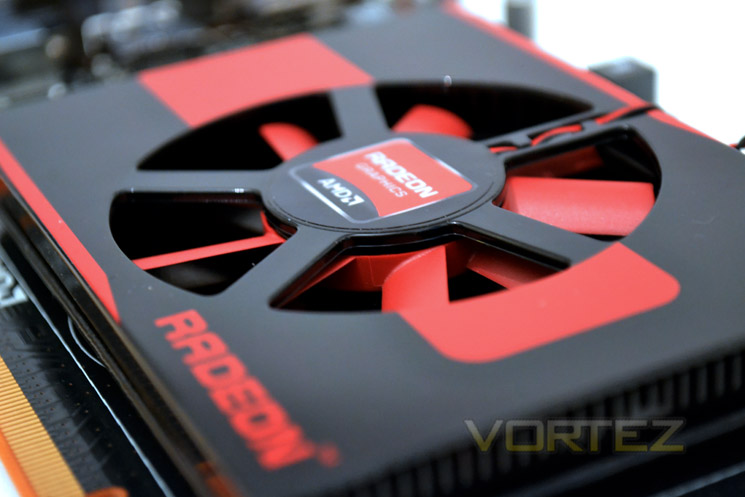
Priced competitively at $109 it is competing with the likes of NVIDIA’s GTS 450 and AMD’s own HD 6770 solutions. With a new 28nm core and incorporating AMD’s GCN (Graphics Core Next) architecture, AMD hope to place a large footprint at the budget end of the market which is perhaps more hotly contested than at the opposite end of the scale due to the sales figures involved.
With a claimed average FPS of greater than 30 in today’s most popular game titles which utilise DirectX 11 and a host of features including Eyefinity Support and HD3D the HD 7750 is vying to be the peoples champion, affordable, efficient yet powerful enough to satisfy the occasional gamer.
AMD Radeon HD 7750 Graphics
– Superior performance with the new and advanced 28nm GCN Architecture
– The easy upgrade for every system
– All award winning AMD Radeon HD 7000 Series features. For Everyone
– Superior performance with the new and advanced 28nm GCN Architecture
– The easy upgrade for every system
– All award winning AMD Radeon HD 7000 Series features. For Everyone
Let’s take a look at what Cape Verde has to offer…
Cape Verde Specifications
The AMD HD7700 series of graphics cards, codenamed Cape Verde are the third addition to the HD7000 series product line.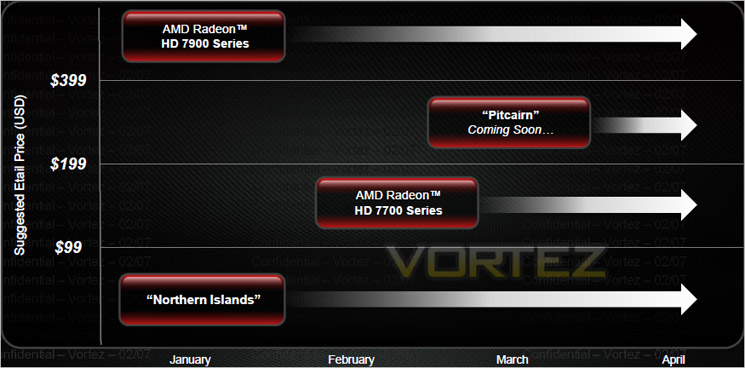
Prices are set to start at $159USD for the HD7770, while the AMD Radeon™ HD 7750 will be as low as $109USD. As with all new entrants into the market, prices are inflated a little and with the unstable economic markets we will have to wait and see what UK retail prices pan out at. Having a quick perusal over the specifications of the card I would expect the HD7750 to be priced between that of the NVIDIA GTX550Ti and the GTS 450. While far from the cheapest of graphics cards on the market it will be affordable for all but the most careful of consumers.
Cape Verde
Based on the new 28nm manufacturing process, AMD have managed to cram in 1.5 billion transistors. The 512 stream processors afford 819 GFLOPS of computational power. The cores reference clockspeed is 800Mhz and coupled with a gigabyte of GDDR5 clocked at 1125MHz gives a texture fillrate of 25.6 GT/s and a pixel fillrate of 12.8 GP/s.
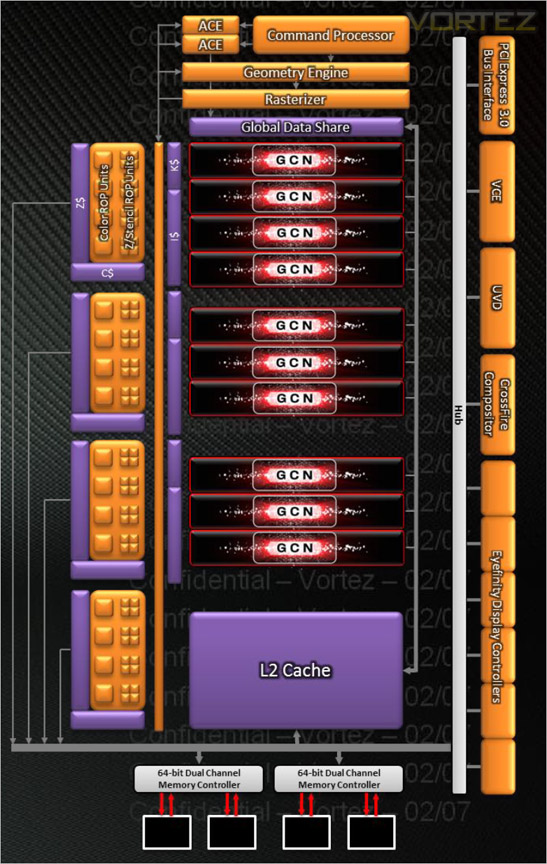
The Cape Verde Core on the HD7750 features 512 stream processors. It has 512KB of L2 read-write cache but sadly we see the new core doesn’t have the same 320-bit memory interface like we saw with the Tahiti but makes do with 128-bit. Regardless, the HD7750 produces up to 72 GB/s of bandwidth which is still impressive.
It is worth noting too that the typical board power consumption is reported to be around 55W with an idle power consumption of less than 3W thanks to AMD ZeroCore power technology. Let’s see how these specs measure up to the competition:
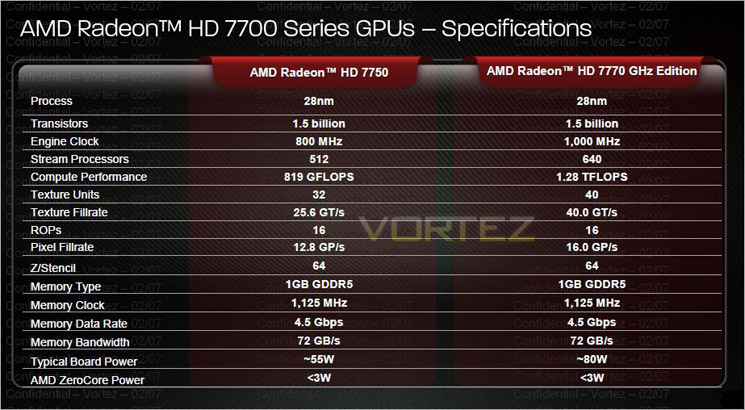
Compared to the HD 7770 we see that the smaller of the two sacrifices 200MHz clockspeed along with 128 stream processors. The resultant fillrates are somewhat affected but the good news is that the power consumption is also reduced.
It is worth noting at this point that the replacement for the hugely popular 6800 series, codenamed Pitcairn which will cater for the mid-high range of graphics card solutions will surface around March in March and with the Tahiti cored HD7900 series already upon us, the HD7000 series will be bringing up the rear.
So, while the HD7700 series may well be considered as ‘entry level’, it has all of the features of the flagship 7900 range of GPU’s which include GCN (Graphics Core Next), Eyefinity 2.0, HD3D, ZeroCore Power and PowerTune to name but a few.
Features
AMD Eyefinity Technology
AMD Eyefinity Technology provides advanced multiple monitor technology enabling an incredibly immersive graphic and computing experience with innovative display capabilities, supporting massive desktop workspaces and super-high resolution gaming environments. AMD Eyefinity technology with DisplayPort connectivity enables a single GPU to support up to six independent display outputs simultaneously, depending on the OEM implementation.
AMD Eyefinity technology works with games that support non-standard aspect ratios, which is required for panning across multiple displays. To enable more than two displays, one of two cases must be satisfied:
1) Additional panels with native DisplayPort™ connectors are used;
2) Certified DisplayPort™ adapters to convert your monitor’s native input to your cards
DisplayPort™ or Mini-DisplayPort™ connector(s) are used.
With the introduction and wide availability of DisplayPort™ to single-link DVI dongles, option 2 above is a low cost way to convert a set of already-owned monitors into an AMD Eyefinity technology ready display configuration.
Unlike a similar multi monitor gaming solution offered by NVIDIA, AMD Eyefinity technology does not require two graphics cards to work. Therefore, AMD offers a multi monitor gaming solution with potential for a lower setup cost.
Improved Tessellation
The latest iteration of architecture in the AMD Radeon™ HD 7770 GPU features a brand new Generation of Tesselator (Gen 9) in its Geometry Engine. This features optimizations such as; Increased vertex re-use, Off-chip buffering improvements and larger parameter caches. This helps Improve performance at all tessellation factors at up to 4x the throughput of AMD Radeon™ HD 6900 series graphics (Gen 8 ).
AMD HD3D Technology
AMD HD3D Technology is supported by an advanced and open ecosystem that, in conjunction with specific AMD hardware and software technologies, enables 3D display capabilities for many PC applications and experiences.
Your PC has evolved, offering unprecedented amount of games, photos and movies for you to play, watch, design, create, share and download in 3D. With the arrival of the latest in 3D technology you can now enjoy an enhanced visual experience on Stereo 3D-capable desktops and notebooks powered by AMD HD3D Technology.
HDMI 1.4a
More bandwith than standard HDMI allows full implementation of 60Hz Stereo 3D. Standard HDMI ports do not have adequate bandwidth for more than 3D 1080p at 24fps.
Ultra-high resolution (4k Panels)
– Current implementations currently use 4*DVI or 2*DP 1.1, which is expensive and unwieldy.
– AMD will move to a single-connector output for 4k via DP 1.2 HBR2 and HDMI 1.4a 3GHz mode.
AMD Quad Buffer SDK
– Native 3D support for Developers.
– functions with Dx9, 10 and 11
– Native support scheduled for Windows 8
Nearly 600 games support AMD’s implementation of 3D either natively or through middleware partners. Also support for many 3D displays already on the market including Samsung and LG’s proprietry implementation.
AMD ZeroCore Power
When a discrete GPU is in a static screen state it works to minimize idle power by enabling a host of active power saving functions including (but not limited to); clock gating, power gating, memory compression, and a host of other features. However, GPUs with AMD’s exclusive ZeroCore Power technology can take energy savings to entirely new heights by completely powering down the core GPU while the rest of the system remains active.
Nearly all PCs can be configured to turn off their displays after a long period of inactivity. This is known as the long idle state; where the screen is blanked but the rest of the system remains in an active and working power state (ACPI G0/S0). As soon as the system goes into long idle state and applications are not actively changing the screen contents, the GPU enters the ZeroCore power state. In the ZeroCore power state, the GPU core (including the 3D engine / compute units, multimedia and audio engines, displays, memory interfaces, etc.) is completely powered down.
However, one cannot simply remove the GPU and its associated device context completely; particularly when it is the only GPU in the system as is the case in many enthusiast platforms. The operating system and SBIOS must still be aware that a GPU is still present in the system. For this reason, the ZeroCore Power state maintains a very small bus control block to ensure that GPU context is still visible to the operating system and SBIOS. The ZeroCore power state also manages the power sequencing of the GPU to ensure that the power up/down mechanism is self-contained and independent of the rest of the system.
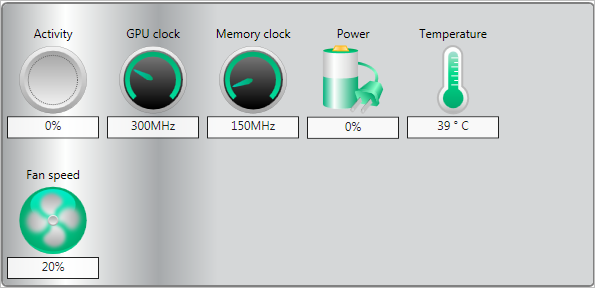
The enablement of the ZeroCore Power feature is controlled by the driver. The driver monitors the display contents and allows the GPU to enter the ZeroCore Power in the condition that the GPU enters long idle and subsequent work requests are no longer being submitted to the engine. If any applications update the screen contents, ZeroCore Power technology can periodically wake the GPU to update the framebuffer contents and put the GPU back into the ZeroCore Power state. Furthermore, applications such as Windows 7 desktop gadgets are architected to minimize activity and save power in the long idle state. These applications are active during screen-on mode to display dynamic content such as weather, RSS feeds, stock symbols, system status, etc. but also have the intelligence to suspend any updates and activity when the system enters long idle. These applications will not wake the GPU from the ZeroCore Power state in long idle.
AMD ZeroCore Power technology delivers tremendous energy savings. Many PCs remain in the long idle state for a variety of use cases that are highly relevant to everyday consumers, enthusiasts and professionals. In ZeroCore Power mode, users can still enjoy non-graphics activities such as file serving/streaming, motherboard audio and music, and remote access while the GPU core is essentially powered off.
ZeroCore Power technology also scales with AMD CrossFire™ technology. With an AMD CrossFire platform, all non-primary GPUs are in the ZeroCore Power state when not in use. For AMD CrossFire workloads, the driver will engage the non-primary GPUs to deliver full performance on-demand. The primary GPU can also enter the ZeroCore Power state during long idle as well. This delivers scalable benefits for the enthusiast. First, it effectively removes the power increase for users of AMD CrossFire under idle and light (single GPU) workloads. Second, it removes the noise penalty multiGPU users have always had to endure since the GPU fans are off in ZeroCore Power mode.
Nearly all PCs can be configured to turn off their displays after a long period of inactivity. This is known as the long idle state; where the screen is blanked but the rest of the system remains in an active and working power state (ACPI G0/S0). As soon as the system goes into long idle state and applications are not actively changing the screen contents, the GPU enters the ZeroCore power state. In the ZeroCore power state, the GPU core (including the 3D engine / compute units, multimedia and audio engines, displays, memory interfaces, etc.) is completely powered down.
However, one cannot simply remove the GPU and its associated device context completely; particularly when it is the only GPU in the system as is the case in many enthusiast platforms. The operating system and SBIOS must still be aware that a GPU is still present in the system. For this reason, the ZeroCore Power state maintains a very small bus control block to ensure that GPU context is still visible to the operating system and SBIOS. The ZeroCore power state also manages the power sequencing of the GPU to ensure that the power up/down mechanism is self-contained and independent of the rest of the system.
The enablement of the ZeroCore Power feature is controlled by the driver. The driver monitors the display contents and allows the GPU to enter the ZeroCore Power in the condition that the GPU enters long idle and subsequent work requests are no longer being submitted to the engine. If any applications update the screen contents, ZeroCore Power technology can periodically wake the GPU to update the framebuffer contents and put the GPU back into the ZeroCore Power state. Furthermore, applications such as Windows 7 desktop gadgets are architected to minimize activity and save power in the long idle state. These applications are active during screen-on mode to display dynamic content such as weather, RSS feeds, stock symbols, system status, etc. but also have the intelligence to suspend any updates and activity when the system enters long idle. These applications will not wake the GPU from the ZeroCore Power state in long idle.
AMD ZeroCore Power technology delivers tremendous energy savings. Many PCs remain in the long idle state for a variety of use cases that are highly relevant to everyday consumers, enthusiasts and professionals. In ZeroCore Power mode, users can still enjoy non-graphics activities such as file serving/streaming, motherboard audio and music, and remote access while the GPU core is essentially powered off.
ZeroCore Power technology also scales with AMD CrossFire™ technology. With an AMD CrossFire platform, all non-primary GPUs are in the ZeroCore Power state when not in use. For AMD CrossFire workloads, the driver will engage the non-primary GPUs to deliver full performance on-demand. The primary GPU can also enter the ZeroCore Power state during long idle as well. This delivers scalable benefits for the enthusiast. First, it effectively removes the power increase for users of AMD CrossFire under idle and light (single GPU) workloads. Second, it removes the noise penalty multiGPU users have always had to endure since the GPU fans are off in ZeroCore Power mode.
First Look
Comparison
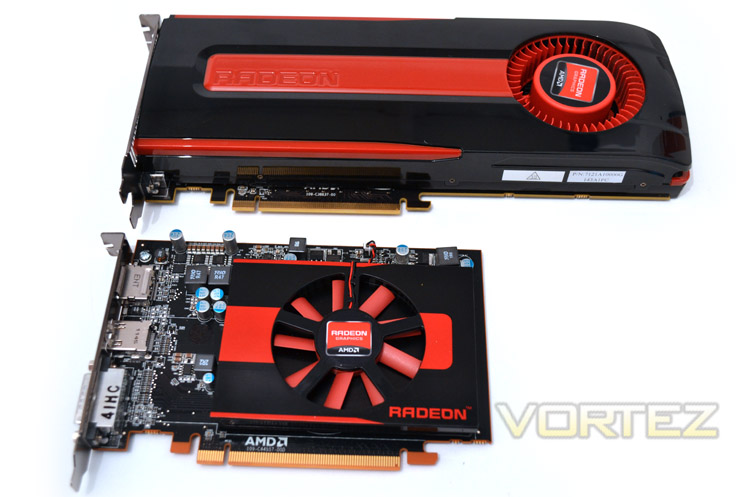
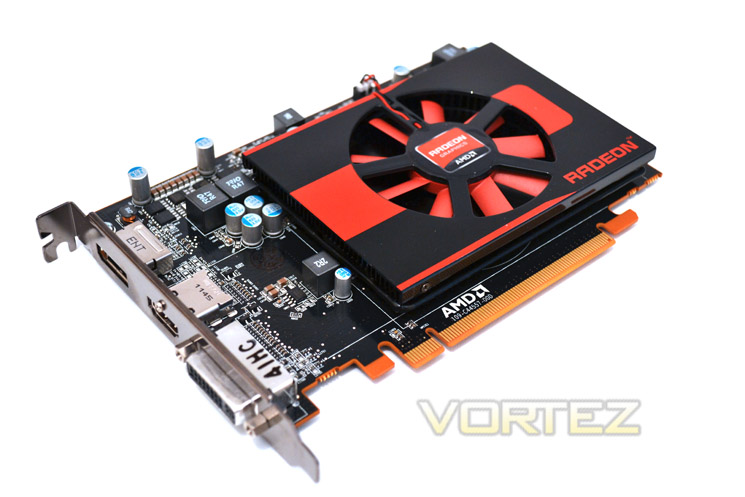
Above you get a feel for how small the card is against the high end HD 7970. The card measures 170mm in length and 98mm in width. The HD 7750 is a single slot design so should easily be accommodated regardless of case design.
Card Top
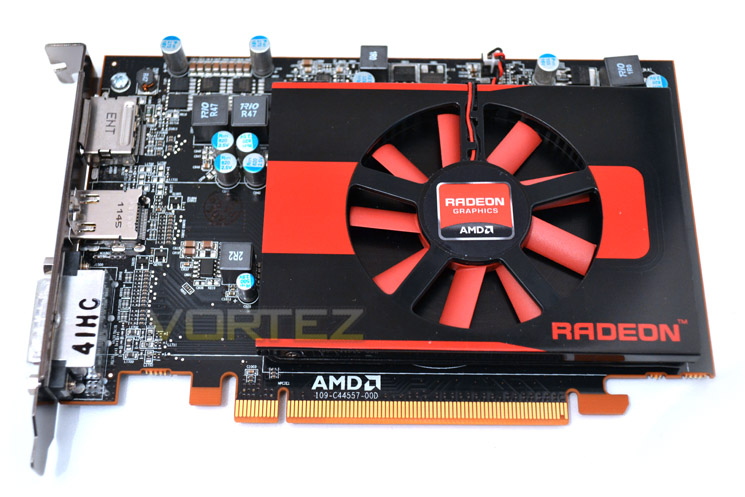
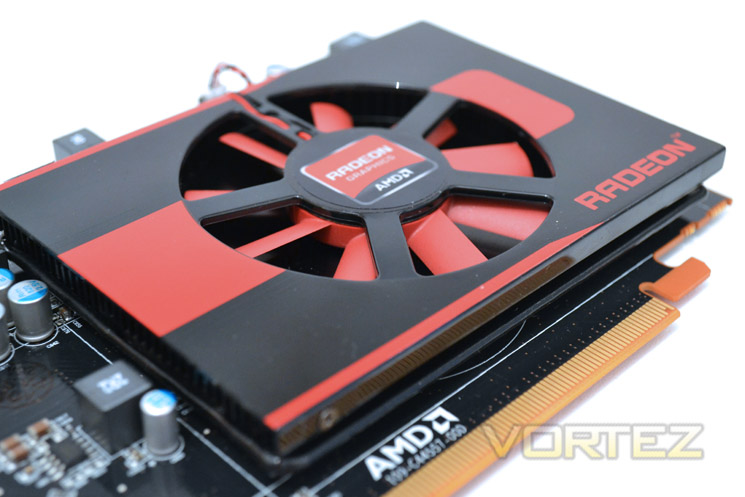
Aesthetically, the card is quite attractive although the all-metal glossy heatsink doesn’t cover the whole PCB. The fan size is 65mm and has 9 blades which are not too aggressively angled so noise will hopefully be kept to a minimum.
Card Bottom
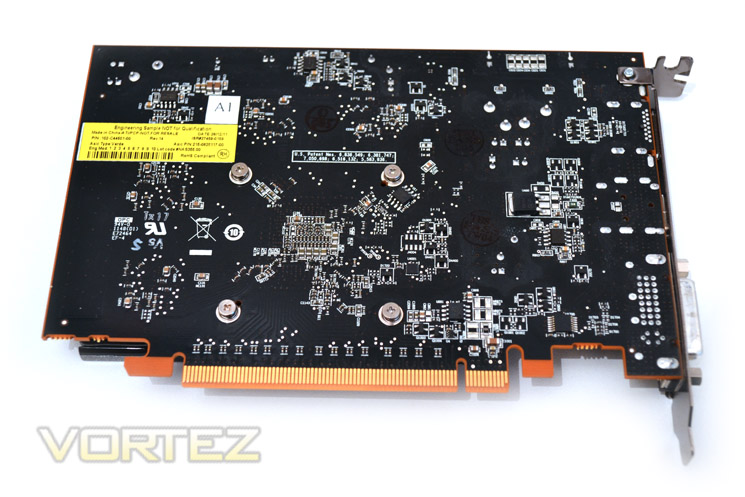
Unlike most AMD GPU’s we see that the HD 7950 does not come equipped with bracket to hold the cooler in place. Instead we have just four spring loaded screws. With four areas designated for the memory IC’s it is safe to assume that each module is 256MB making a total of 1GB of GDDR5.
I/O Backplate
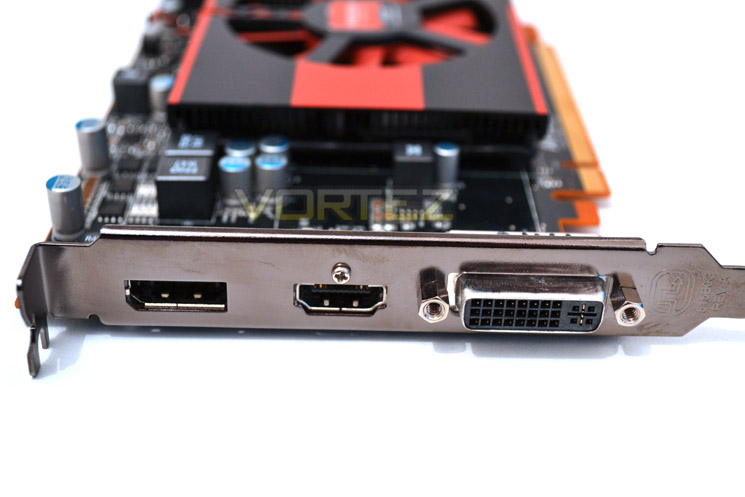
The I/O area of the card features a DVI port, HDMI and a DisplayPort. As this is a single slot design there is no need for a vented area.
Overview
Overall, the card looks functional but basic. With a very small cooler and a single slot design, this card is sure to appeal to those who are looking for a graphics solution that will fit in small enclosures such as a HTPC or media centre.
Let’s remove the cooler and take a closer looks at the PCB…
Closer Look
HD 7750 Heatsink
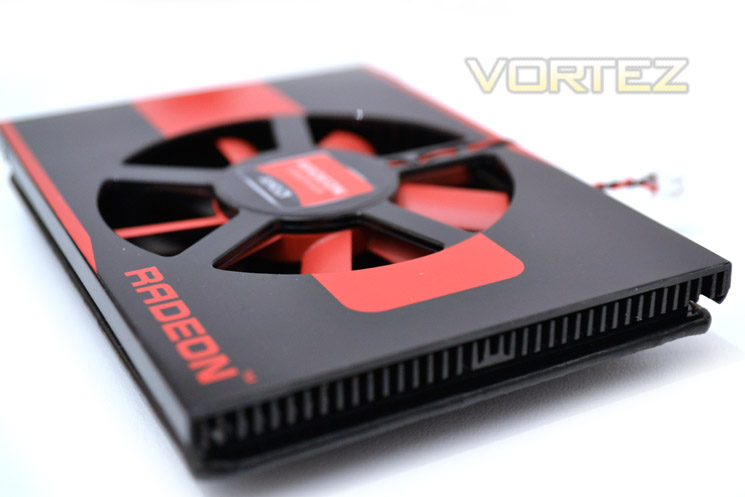
The heatsink is very small measuring just 108mm x 78mm with a height of just 10mm. It is an all aluminium affair with an 9 blade fin 65mm fan. Rather than the glossy plast we have seen in the higher specced models, the HD 7750’s black and red colour scheme is employed via paint.
HD 7750 Heatsink
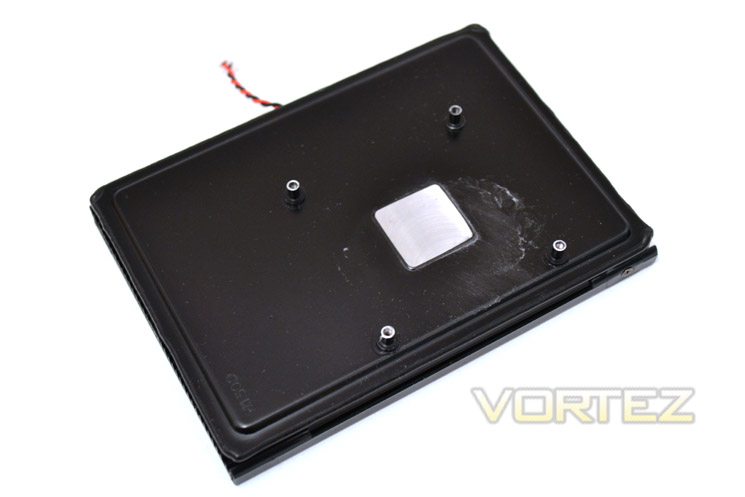
Flipping the heatsink over we see that only the core receives active cooling with a small raised area stripped of the painted surface to ensure good contact is made with the core.
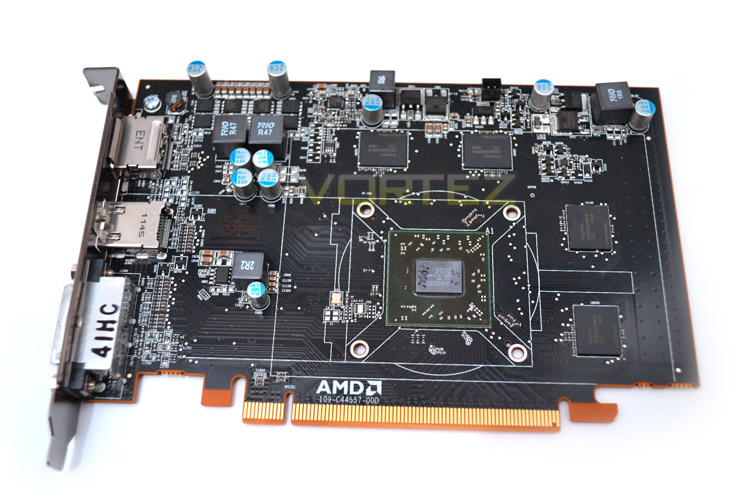
HD 7750 Naked
Stripping the HD 7750 of it’s heatsink was easy with just the four screws holding it in place. Caution however should be used as the the core is fully exposed and would easily be nibbled by the heatsink rendering the GPU useless when replacing the heatsink. The same HYNIX memory modules seen on the HD 7770 are utilised here so we expect similar overclocking results. As suggested earlier, the four 256MB memory modules partially frame the Cape Verde core.
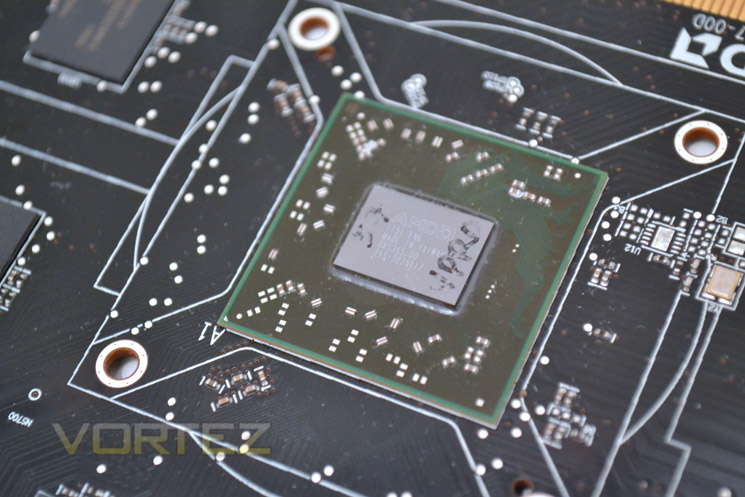
HD 7750 Core
The core of the HD 7750 is fully exposed which is reminiscent of the previous generation whereas the higher end GPU’s of the HD 7000 range now employ a partial IHS which serves to protect the core.
Let’s take a look at Today’s test setup…
Test Setup
With the latest Intel chipset release we decided to update our ageing X58 setup to the new X79 chipset. Not only that but we will be using the flagship Core i7-3960X Extreme Edition processor clocked to 4.5GHz to ensure we have no CPU bottlenecks. With 16GB of ram on board there should be minimal paging so the benchmarks we run today will hopefully give a true reflection of the graphics card’s performance.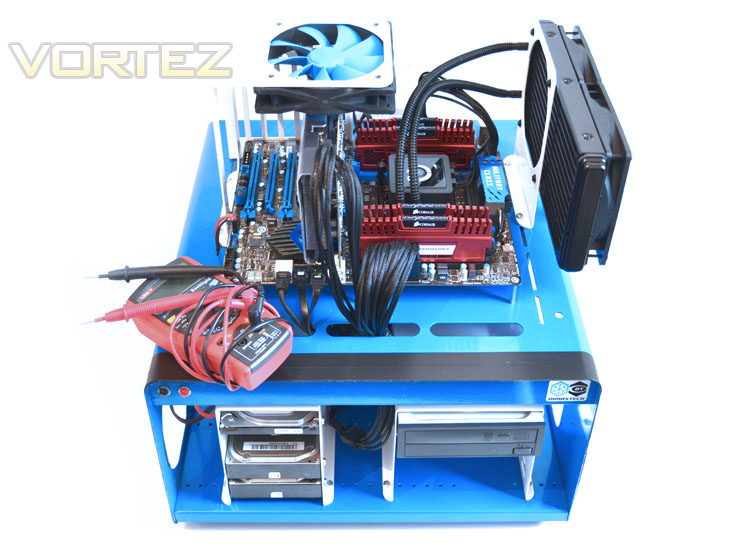
Some of the components for our test bench were kindly donated by CORSAIR who provided the majority of components without whom we would not have been able to bring you this review so a big thanks to them.
Graphics cards on test:
AMD HD7750
AMD HD7770
HIS HD7970 3GB GDDR5
XFX DD Radeon R7950 3072MB GDDR5
PowerColor PCS+ Radeon HD7950 3072MB GDDR5
AMD Radeon HD7950 3072MB GDDR5
AMD Radeon HD7970 3072MB GDDR5
ZOTAC GTX570 AMP! 1280MB GDDR5
NVIDIA GTX570 1280MB GDDR5
MSI GTX560Ti-448 Twin Frozr III 1280MB GDDR5
MSI GTX560Ti-384 Twin Frozr III 2GB GDDR5
For this review we will be using the very latest CAT 11.12 drivers.
Motherboard: ASRock X79 Extreme4-M
CPU: Intel Core i7-3960X Extreme Edition @ 4.5GHz
RAM – 16GB (4x4GB) Corsair Vengeance (Red) DDR3 @ 1866MHz 9-10-9-27
Power Supply – ANTEC High Current Pro 1200W
Hard Drive – Hitachi SATA II 250GB
Samsung F3 1TB
Cooler – Corsair H100
Benchmarks
We have also updated our range of benchmarks to include the following games which will give the graphics cards a challenge and sort the wheat from the chaff. Each benchmark will be run at both stock and maximum overclock settings and utilise 1920×1080 and 2560×1600 resolutions along with AA at various levels (application dependent):
Battlefield 3
Crysis 2
Crysis Warhead
Metro 2033
Batman: Arkham City
Elder Scrolls: Skyrim
DiRT 3
Futuremark 3DMark 2011
Unigine: Heaven 2.5
Crysis 2
Crysis Warhead
Metro 2033
Batman: Arkham City
Elder Scrolls: Skyrim
DiRT 3
Futuremark 3DMark 2011
Unigine: Heaven 2.5
Let’s see how today’s test sample performed…
Overclocking, Temperature & Power Consumption Analysis
As with all of our GPU cards, we like to push things to the maximum and to do this we use the latest version of MSI’s great Afterburner utility.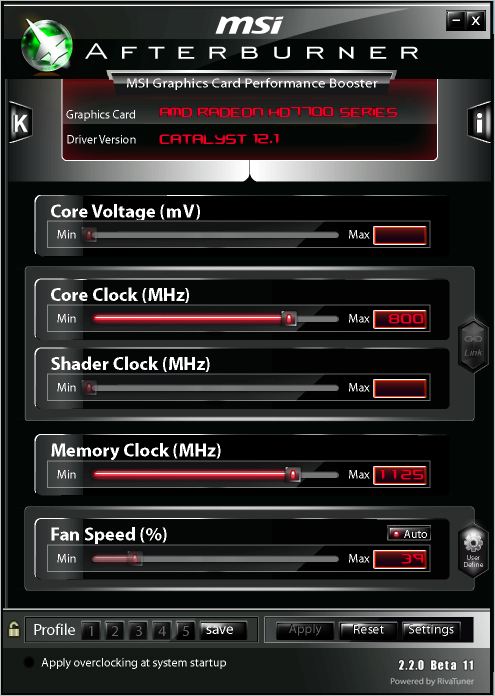
The HD7950 is weighs in at a moderate 800MHz on the core and the 1125MHz (4500MHz effective) on the memory which is nothing to be scoffed at. Regardless, I set out overclocking which was surprisingly easy…
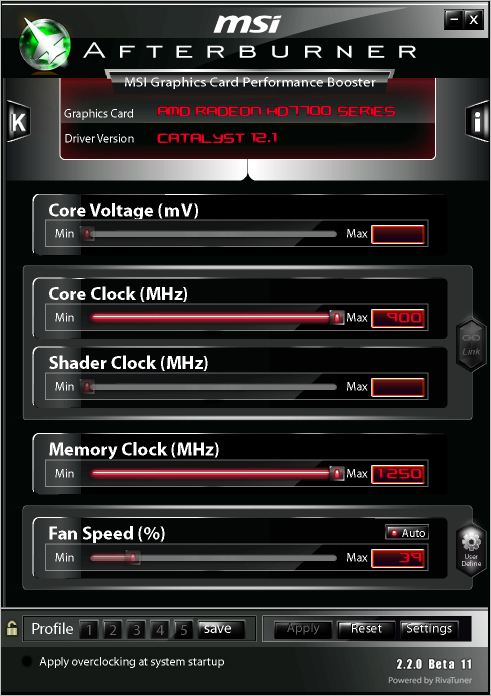
With no voltage adjustment available, the core and memory sliders could easily be maxxed out reaching 900MHz on the core and 1250 (5000Mhz effective) on the memory. At this speed the diminuitive HD7750 was rock solid stable which begs the question – why isn’t it clocked to this speed as standard?
Power Consumption
To test for power consumption we do not use anything to technical, just a wall meter which measures the total system power draw minus the monitor.
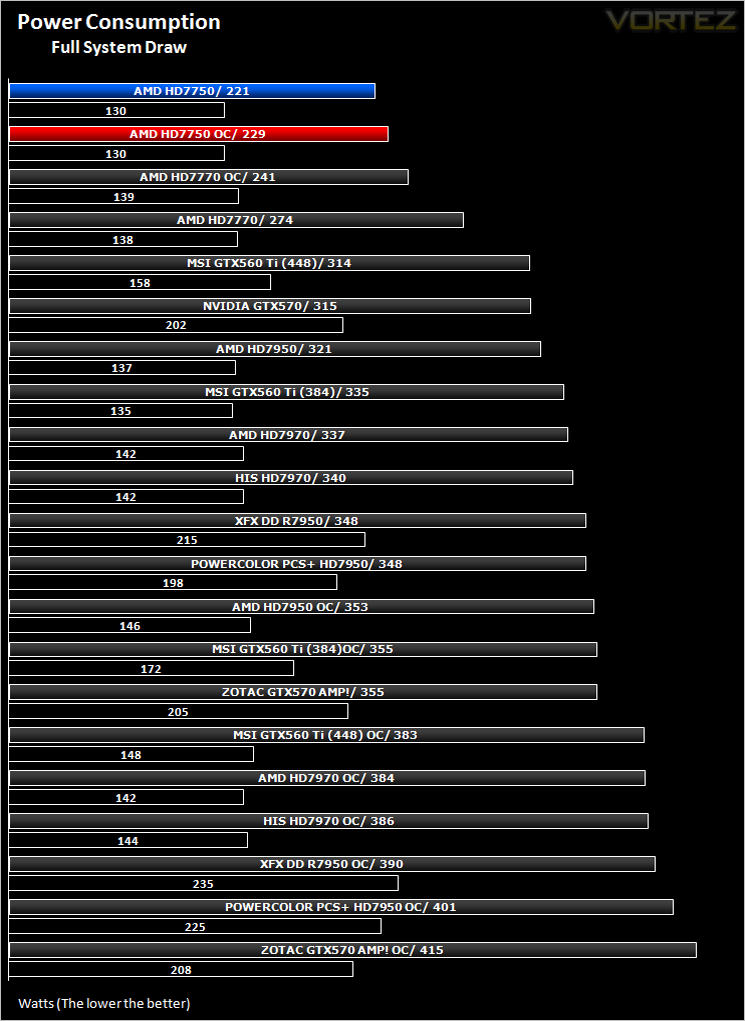
AMD claim an average power draw of 50W and while our results have shown this to be a conservative measurement, it is still the least power hungry of cards on test under load conditions consuming (full system) just 221W.
Temperature
To test temperatures we measured idle temperatures after booting windows, letting all applications finish loading and ran a few benchmarks. Once the benchmarks were complete we left the card to reach a cooling plateau where we then took the idle temperatures. For the load tests, we ran Furmark for 20 minutes, taking the absolute maximum temperature attained.
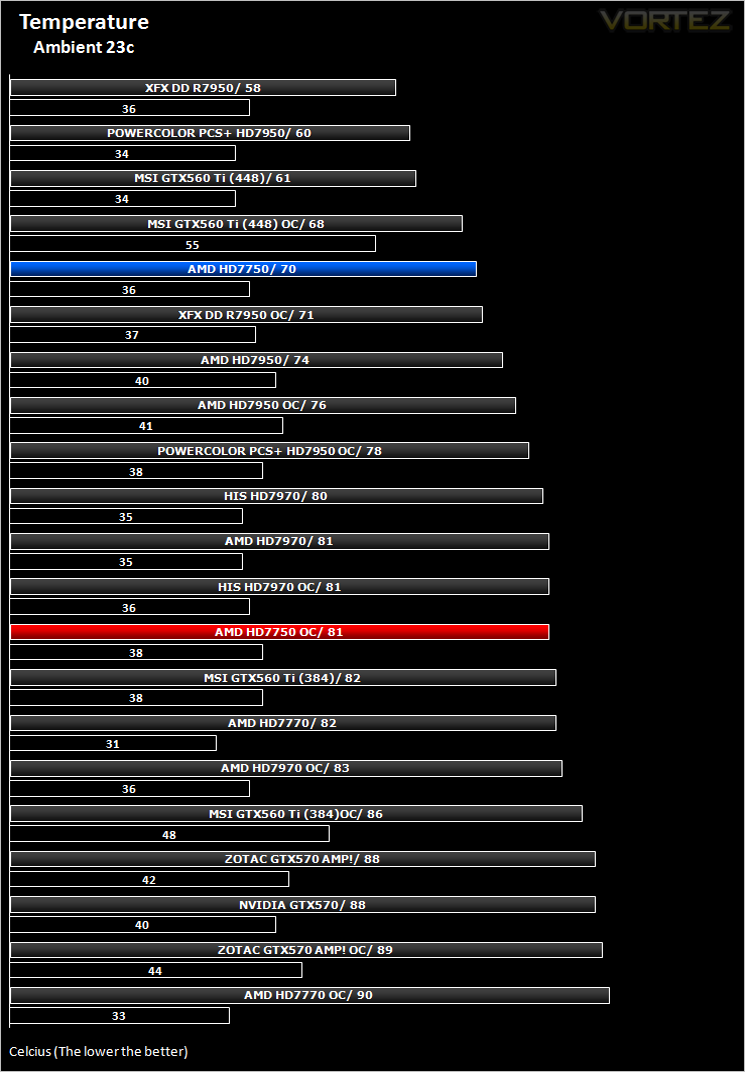
The card performed surprisingly well given the small heatsink. Topping out at 70c was a great result for the baby of the HD7700 range. Idle temperatures were also good under both stock and overclocked conditions and while 81c was beginning to reach uncomfortable levels, it was still well within the realm of safe operating conditions. I was also shocked at how quiet the card was. I barely noticed it above the enclosure fans with the GPU only raising a whine when placed under the most extreme stress of Furmark.
Let’s move on to our suite of benchmarks…
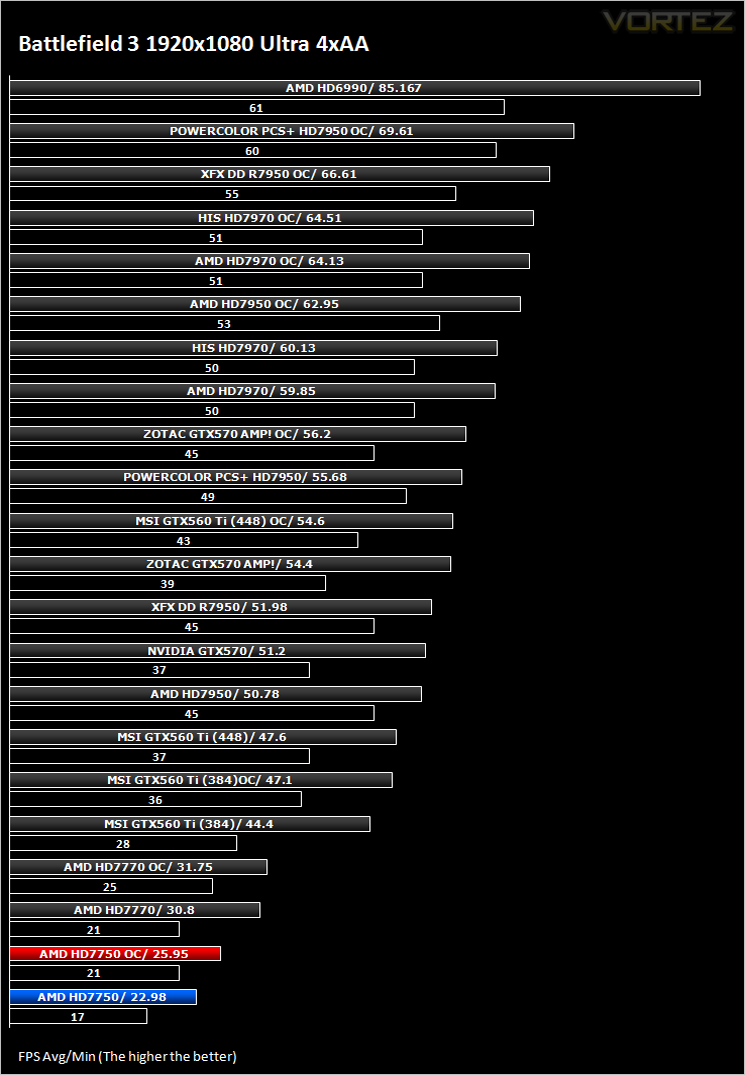
Battlefield 3
Battlefield 3 leaps ahead of its time with the power of Frostbite™ 2, the next instalment of DICE’s cutting-edge game engine. This state-of-the-art technology is the foundation on which Battlefield 3 is built, delivering enhanced visual quality, a grand sense of scale, massive destruction, dynamic audio and incredibly lifelike character animations. As bullets whiz by, walls crumble, and explosions throw you to the ground, the battlefield feels more alive and interactive than ever before. In Battlefield 3, players step into the role of the elite U.S. Marines where they will experience heart-pounding missions across diverse locations including Paris, Tehran and New York.
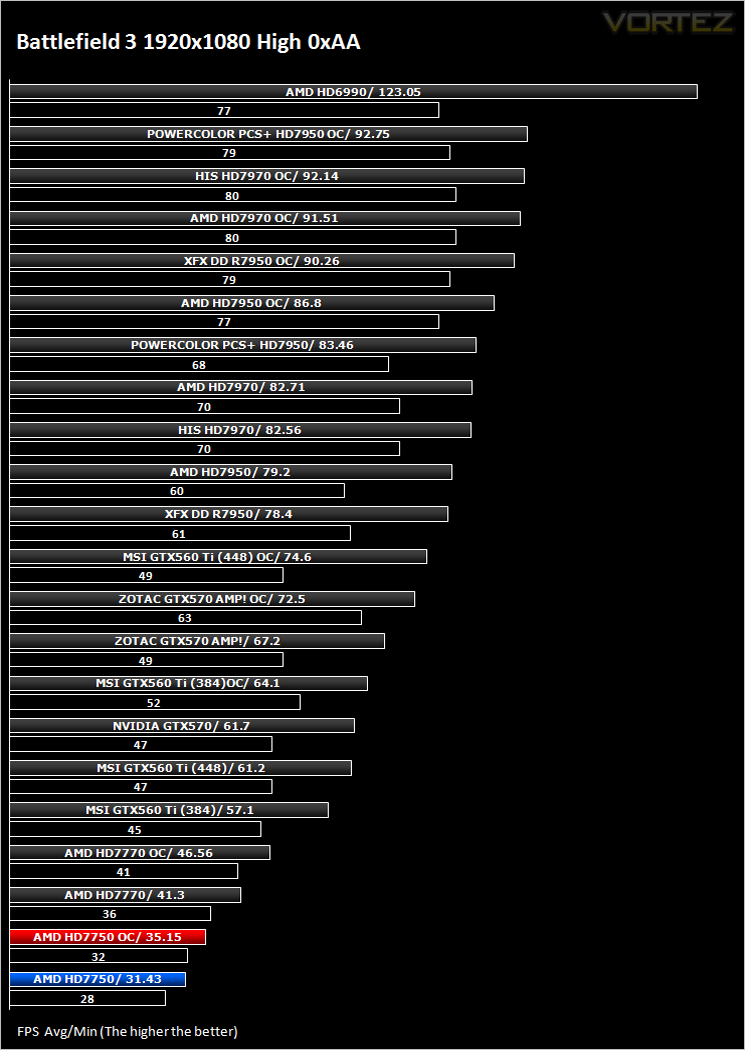
Average and minimum frames per second were measured using Fraps during the parking lot scene on Operation Sword Breaker. High and Ultra presets were loaded at both resolutions.
Crysis 2
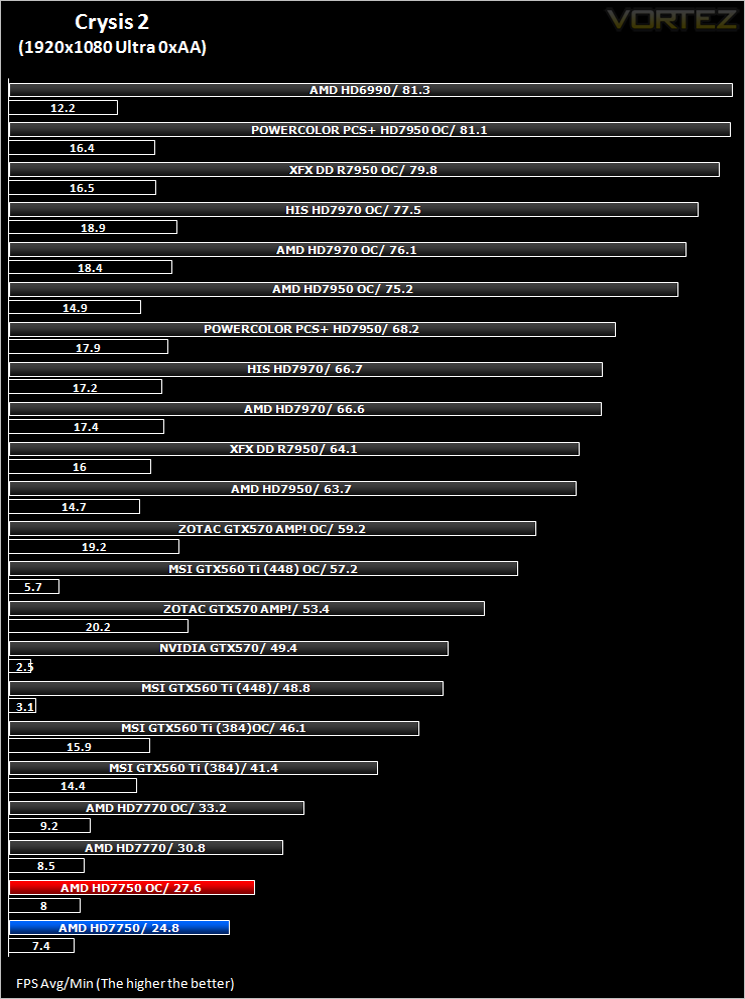
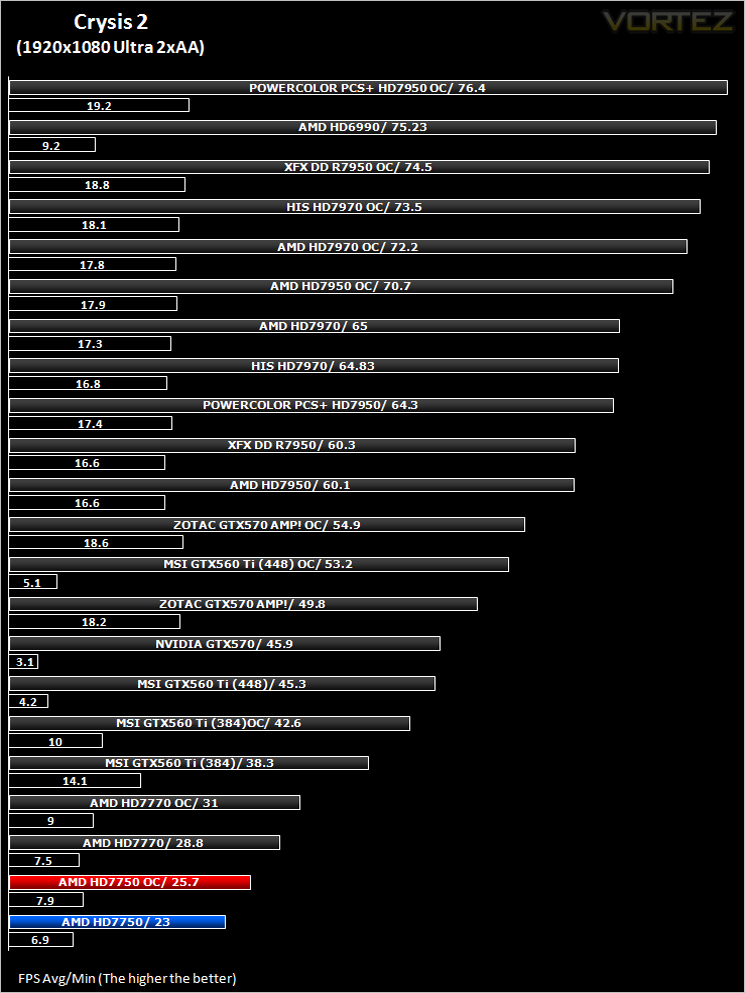
Crytek took an internet beating from its loyal fans due to the fact that they pandered to the console masses and dumbed down the graphics to DirectX 9. Fortunately, fans of the PC version of Crysis managed to force Cryteks hand and they have since developed a DX11 patch and have also enhanced the textures with added tesselation. It is for this reason that we have decided to include it in our suite of benchmarks.
To test the cards we used the Crysis 2 benchmark courtesy of Adrenaline with both the 1.9 patch, DX11 update and Hi-res texture pack. Settings were manually placed to Ultra, DX11 and tessellation enabled with the Central Park map being run 3 times per resolution benchmark test.
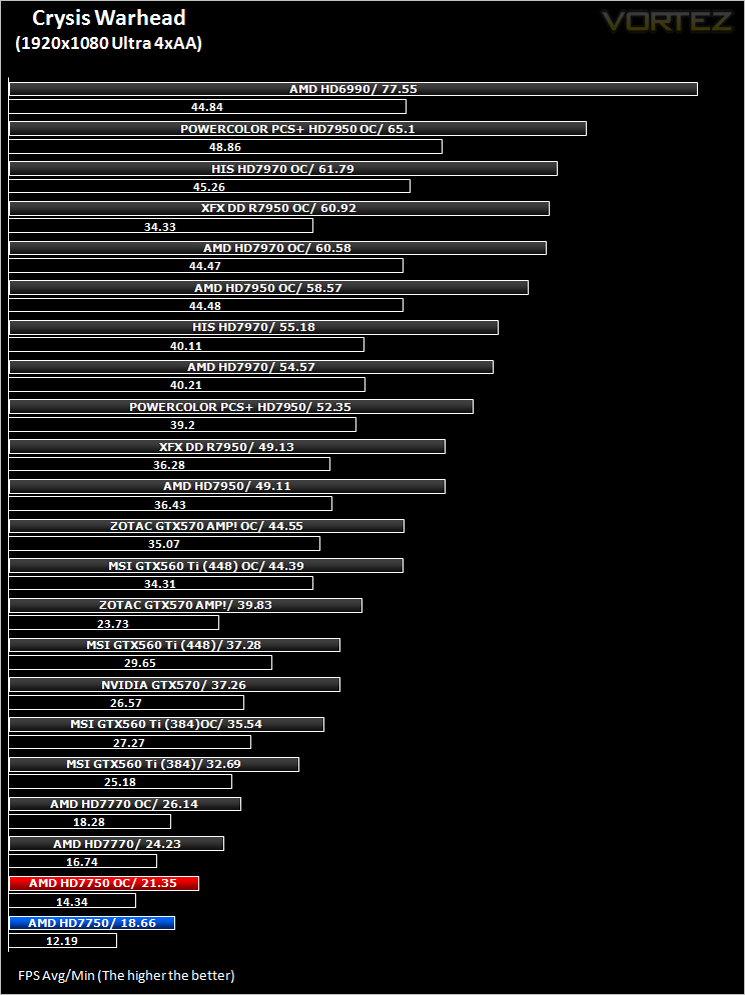
Crysis Warhead
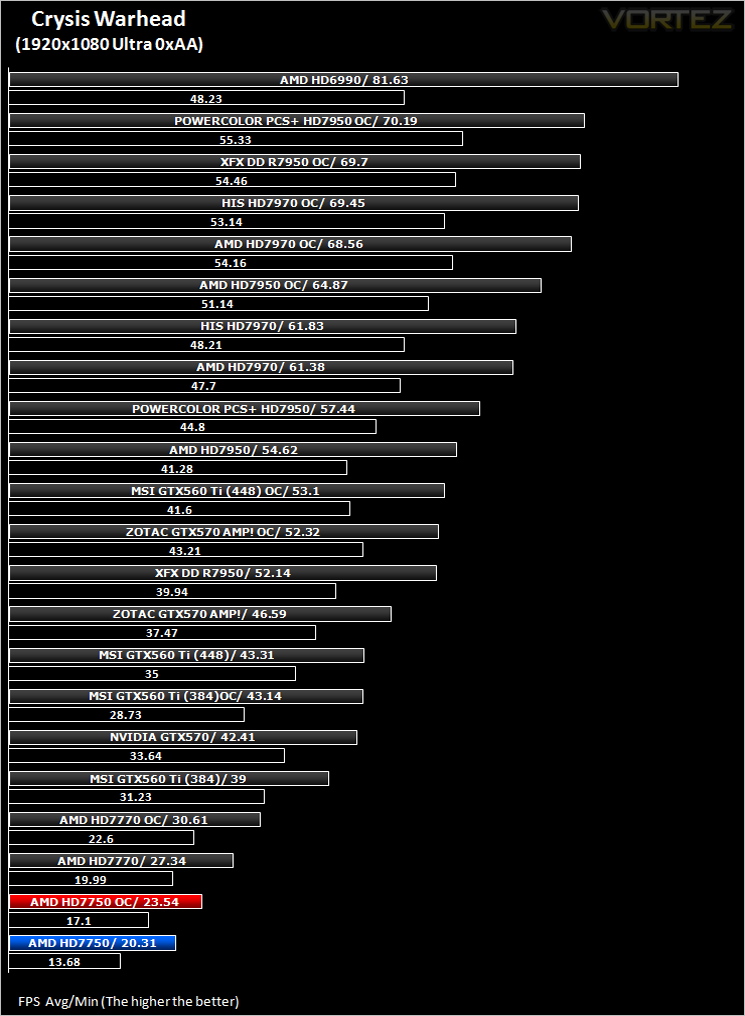
Following the success of Crysis, the stand alone expansion “Warhead” was hotly anticipated to bring more game play, more weapons, improved visuals whilst maintaining better performance, the latter being what gamers wanted most. After all how many people upgraded their rigs just to play this game… In the game, you play as the upbeat Brit Sergeant “Psycho” Sykes, chasing down a Korean nuclear warhead. Throw in some ice shooting aliens and we’re bound to have a great game. It sure delivered.
Testing was done using Framebuffer’s Crysis Warhead benchmarking tool. The tests were configured to DirectX 10 at Enthusiast levels. Each test on the Ambush map was looped three times from which the average FPS was recorded.
Metro 2033
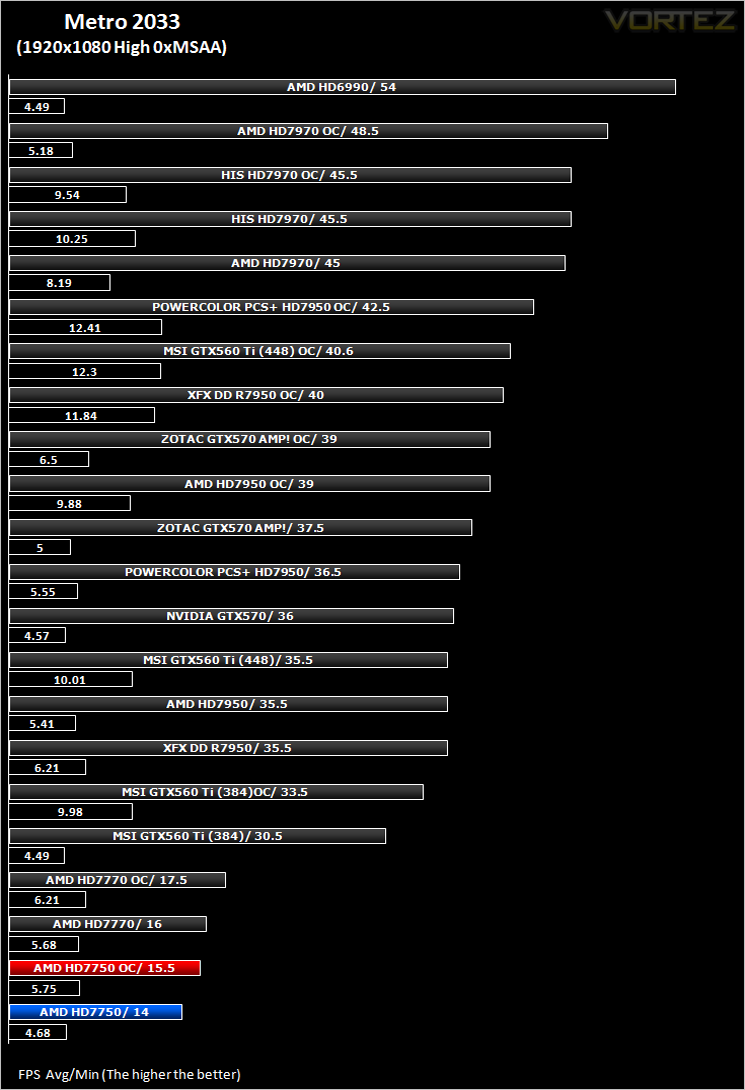
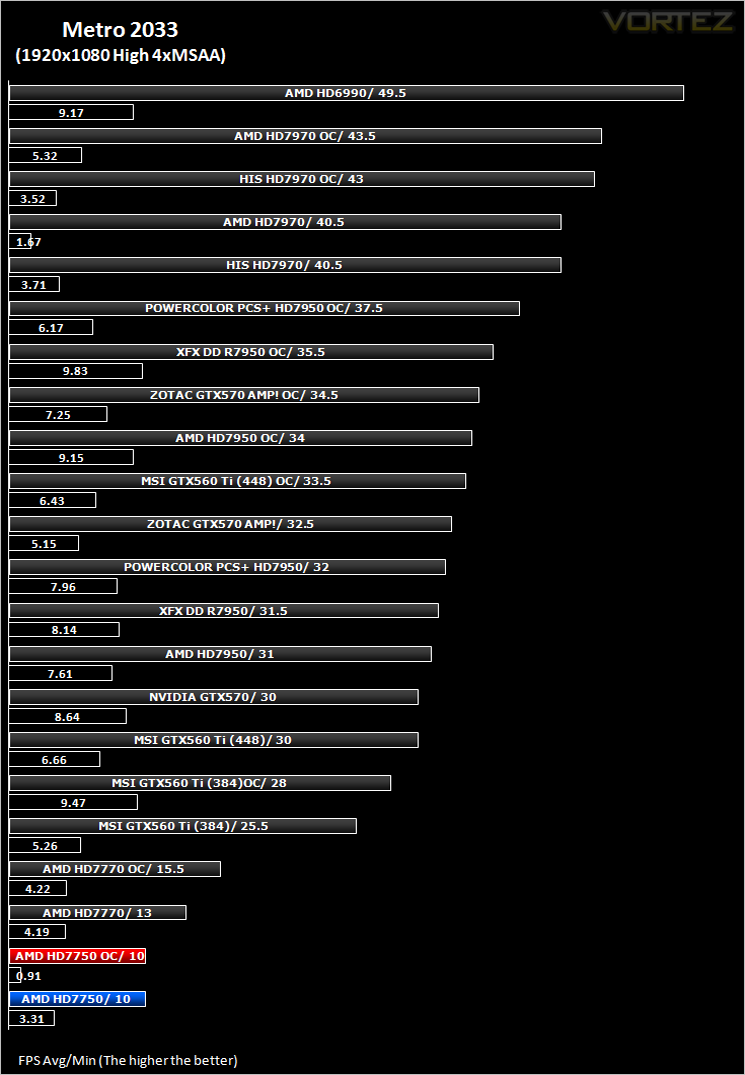
Based on the novel by the same name, Metro 2033 is a first person shooter with elements of survival horror. As Artyom, you trawl through the mutant infested metro systems of post-apocalyptic Moscow. The game delivers presents a grim ambience that reflects on the overall atmosphere of the underground setting. Metro 2033 uses the setting as a back drop to showcase some of the best visuals of any games out now, making it the ideal benchmark for those looking for the best graphics card.
The bundled benchmarking tool was used on Metro 2033, configuring the settings to High and making use of DirectX 11. The frontline scene was looped 3 times for each configuration. The average FPS was recorded at the end.
The Elder Scrolls V: Skyrim
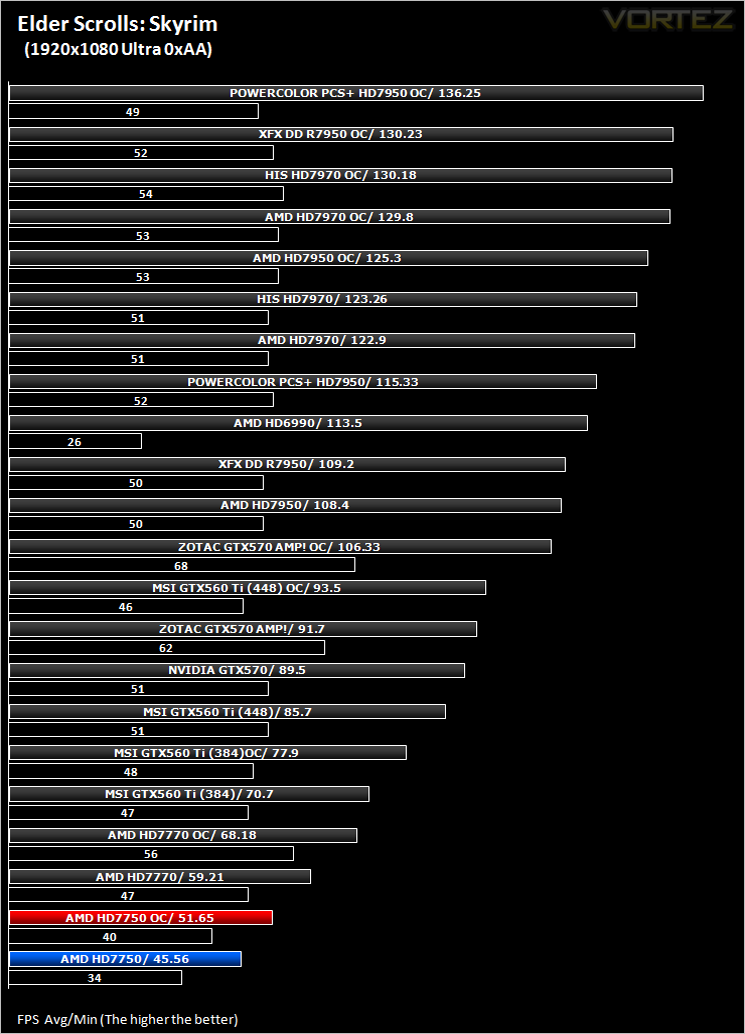
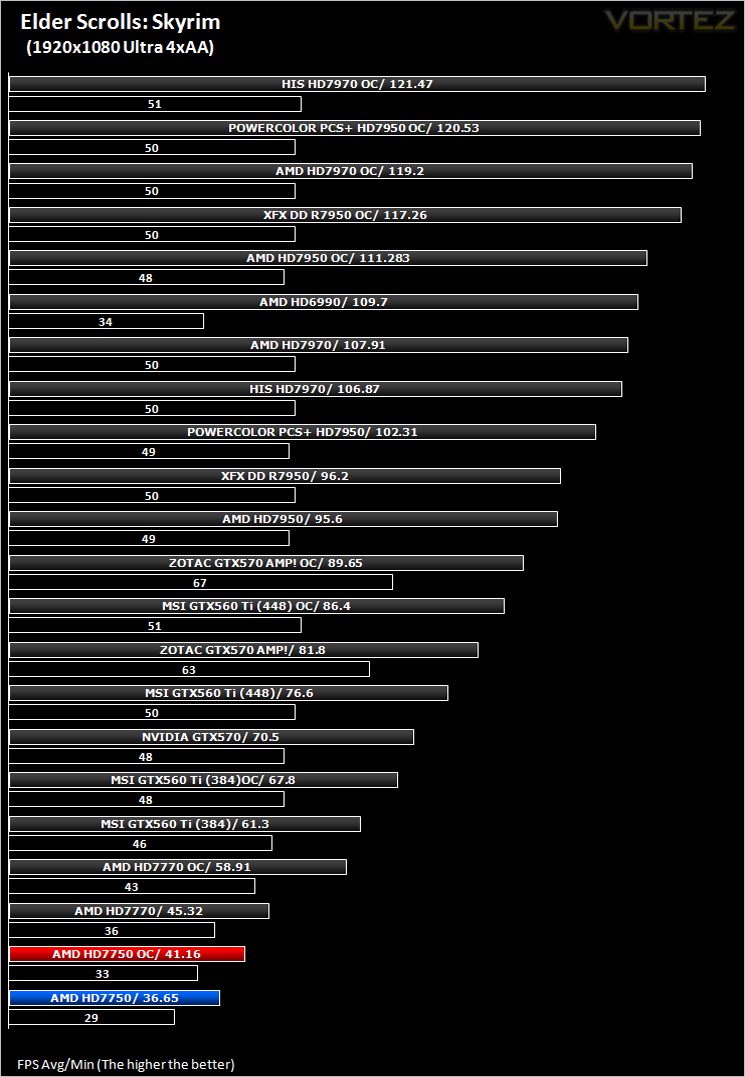
Skyrim is not a direct successor to the very popular Oblivion. Instead it takes place 200 years after the events of Oblivion. The non-linear playing that made the Elder Scrolls such a popular series does however make a return along with the beautiful scenery the encompasses the world of Skyrim.
Average and minimum frames per second were measured using Fraps during the drop down passage to Riverwood. V-sync was disabled to allow fluctuating (higher the 60) FPS for these runs. It is however recommended that v-sync is left enabled during normal gameplay due to the games dynamics.
Batman: Arkham City
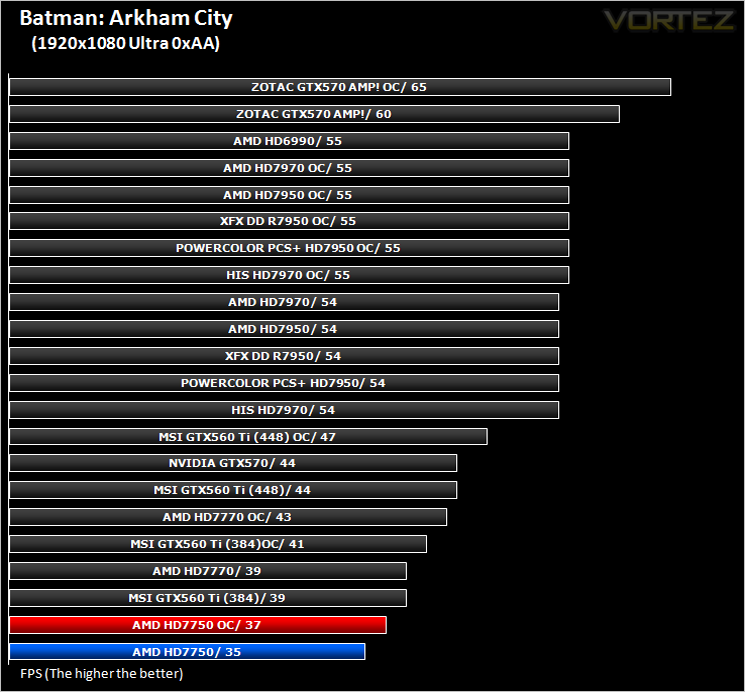
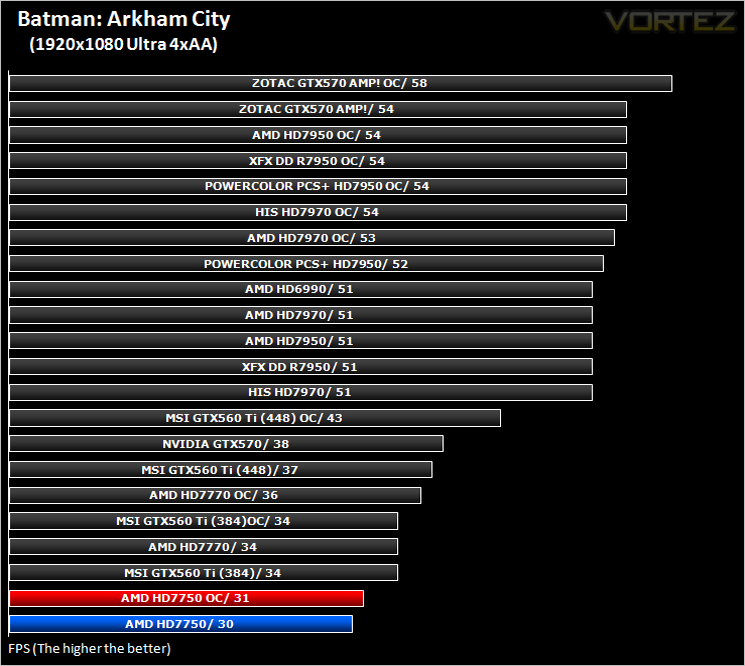
Batman: Arkham City builds upon the intense, atmospheric foundation of Batman: Arkham Asylum, sending players soaring into Arkham City, the new maximum security “home” for all of Gotham City’s thugs, gangsters and insane criminal masterminds. Set inside the heavily fortified walls of a sprawling district in the heart of Gotham City, this highly anticipated sequel introduces a brand-new story that draws together a new all-star cast of classic characters and murderous villains from the Batman universe, as well as a vast range of new and enhanced gameplay features to deliver the ultimate experience as the Dark Knight.
The results below were obtained from the builtin benchmark utility from the game. All the settings were set to
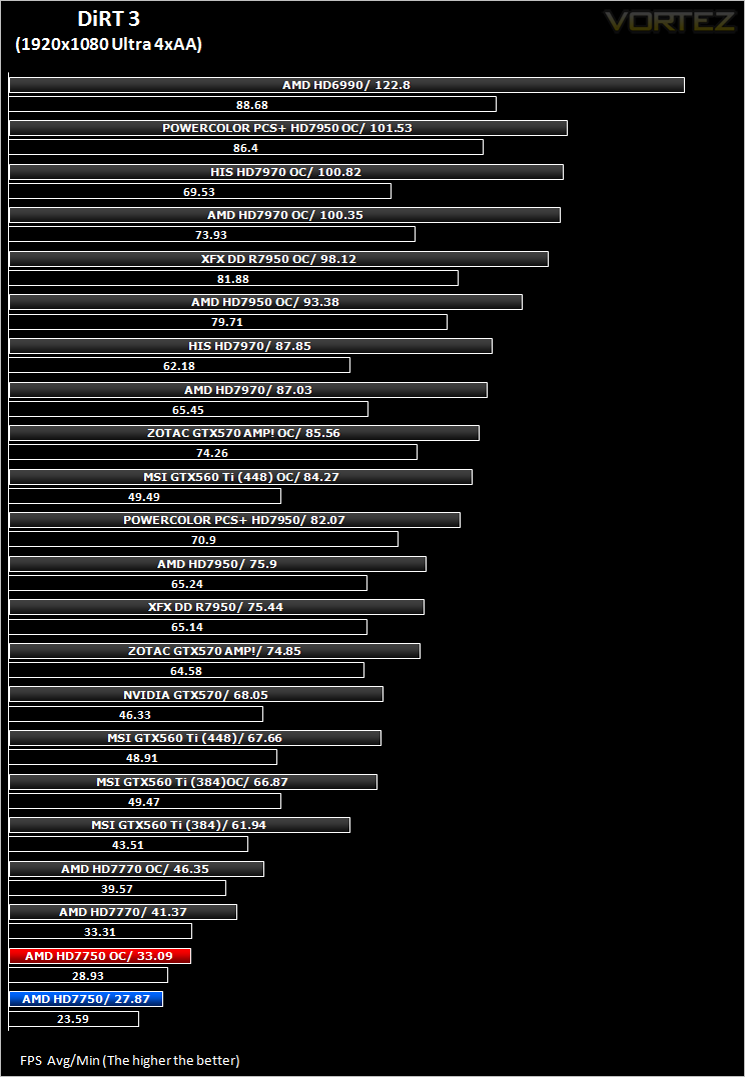
DiRT 3
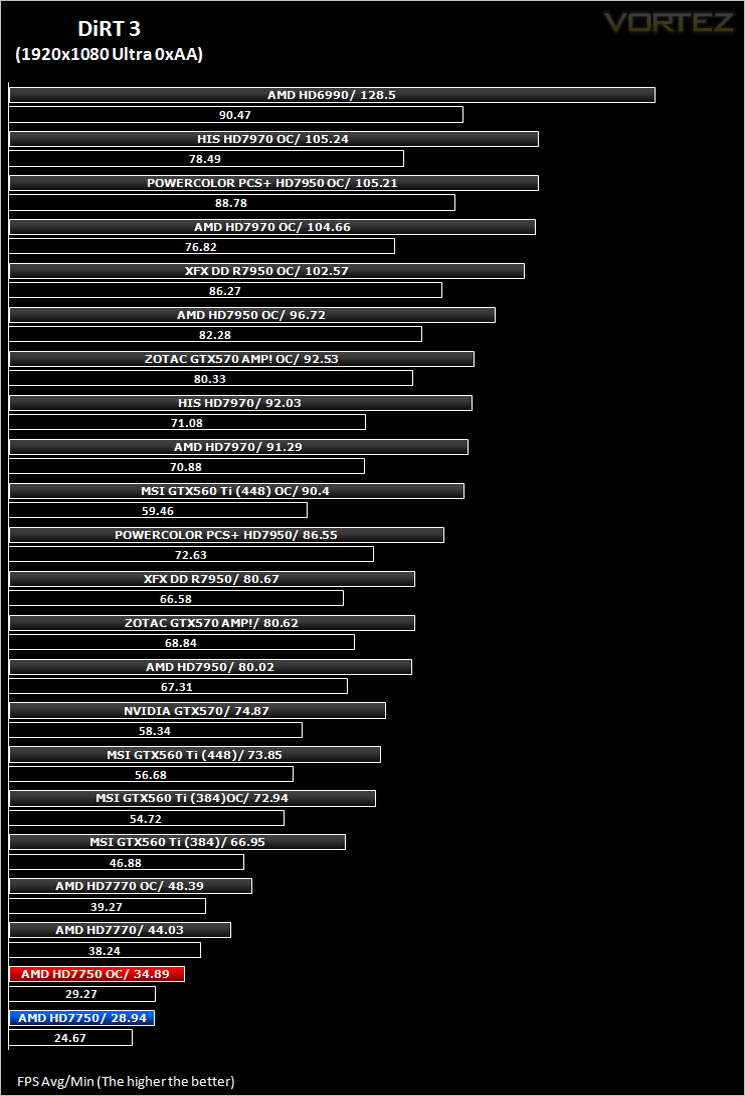
As players race to elevate their global standing, DiRT 3 is back delivering mud, sweat and gears world over: from the intense weather-beaten rally stages of Europe, Africa and the US, to executing performance driving showcases and career challenges where car control is pushed to spectacular limits.
The in-game benchmarking tool was used to test performance. All the display settings were set to the maximum available and DirectX 11 was applied. The average FPS was recorded at the end.
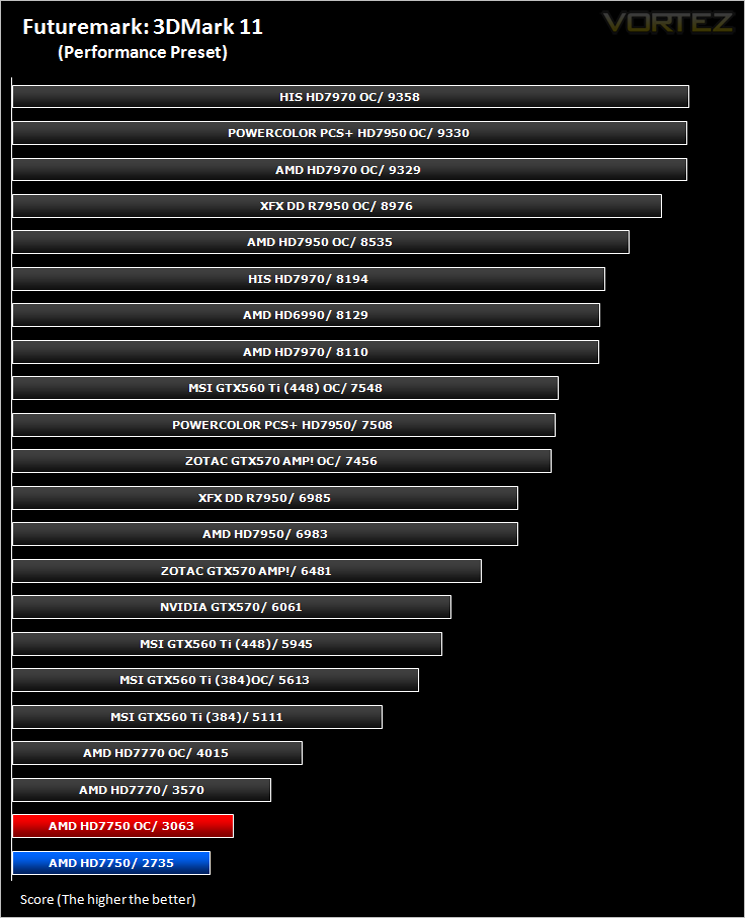
Futuremark: 3DMark 2011
3DMark 11 is the latest version of the world’s most popular benchmark. Designed to measure your PC’s gaming performance 3DMark 11 makes extensive use of all the new features in DirectX 11 including tessellation, compute shaders and multi-threading. The benchmark was run in both Performance and Extreme presets.
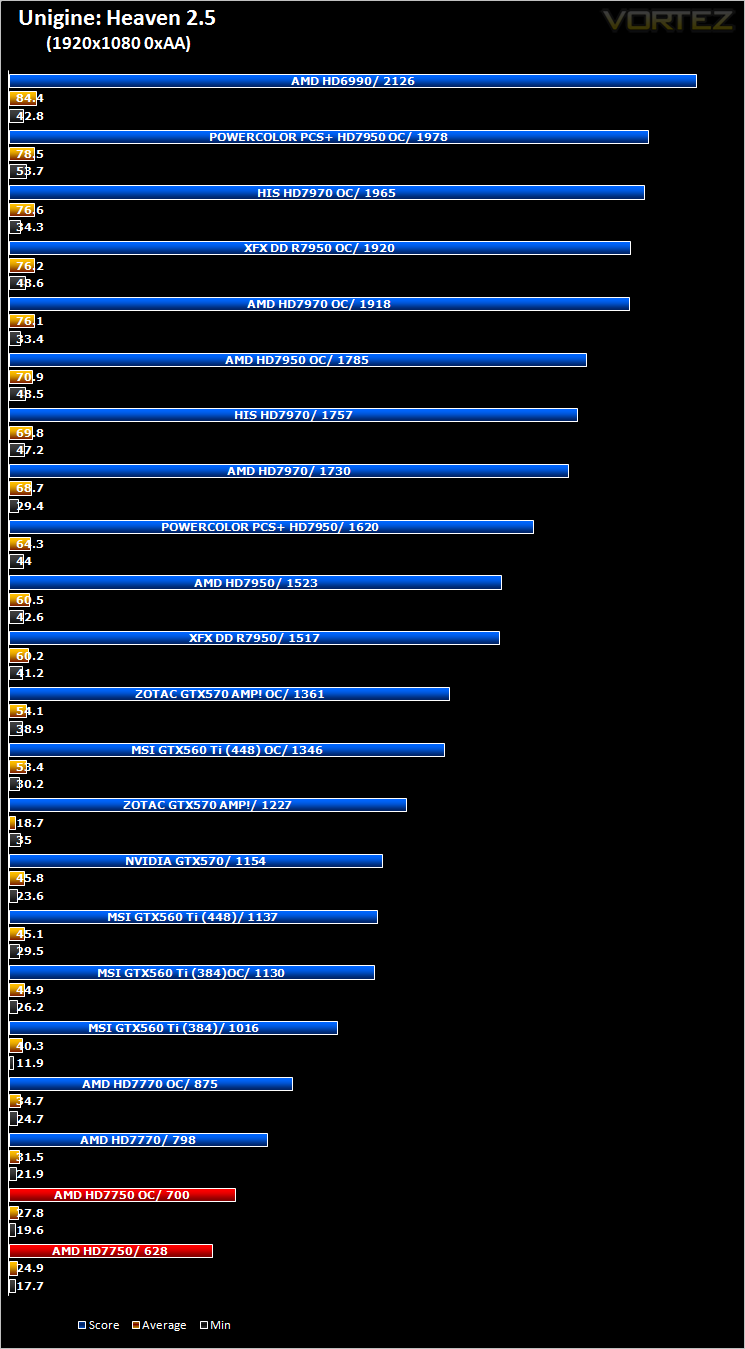
Unigine: Heaven 2.5
Heaven Benchmark is a DirectX 11 GPU benchmark based on advanced Unigine™ engine from Unigine Corp. It reveals the enchanting magic of floating islands with a tiny village hidden in the cloudy skies. Interactive mode provides emerging experience of exploring the intricate world of steampunk.
Conclusion
Let’s be honest here; I never expected this GPU to set the performance world on fire. In fairness we didn’t have any low spec GPU’s to hand in the short space of time we had with this card so comparing it against the likes of the GTX560Ti 2GB was a little unfair.The card didn’t disgrace itself by any means and held true to AMD’s claims in that for the most part, the card is quite happy knocking out frames per second higher than 30. While it may be propping up the rest of the field in the benchmark tests, it is clearly a useful card, capable of producing smooth framerates that will satisfy the occasional gamer. Avid gamers may wish to look for a more powerful GPU solution though as at anything higher than 1920×1080, especially with AA applied the card struggled to get above 10 FPS. In all honesty though, who is going to buy a budget graphics card for gaming at extreme resolutions?
The card consumes very little power which was great to see so you are not going to need Chernobyl to power this GPU making it ideal for small form factor PC’s. For a media centre or indeed a HTPC, this card will perform admirably and will no doubt serve you well if not because of its diminutive size, it’s low noise will certainly appeal.
Overall then what we have here is a handy little GPU that has the minerals to game at low FPS without the trimmings, it is quiet, consumes little power and produces little heat. Priced at $109 it is on the expensive side for the budget conscious which is a shame because as with the HD7770 we have also reviewed today, the pricing of the two graphics cards seems to be the biggest drawback each component has.
Pros:
+ Small, single slot design
+ Good GPU overclocking
+ Good cooling performance
+ Very Quiet (when fan below 40%)
+ Black PCB
Cons:
– Expensive at this performance level
– Unplayable framerates above 1920×1080
– 1GB GDDR5 may not be enough for some
+ Small, single slot design
+ Good GPU overclocking
+ Good cooling performance
+ Very Quiet (when fan below 40%)
+ Black PCB
Cons:
– Expensive at this performance level
– Unplayable framerates above 1920×1080
– 1GB GDDR5 may not be enough for some


Click here for an explanation of our awards at Vortez.net. Thanks to AMD for providing today’s review sample.


