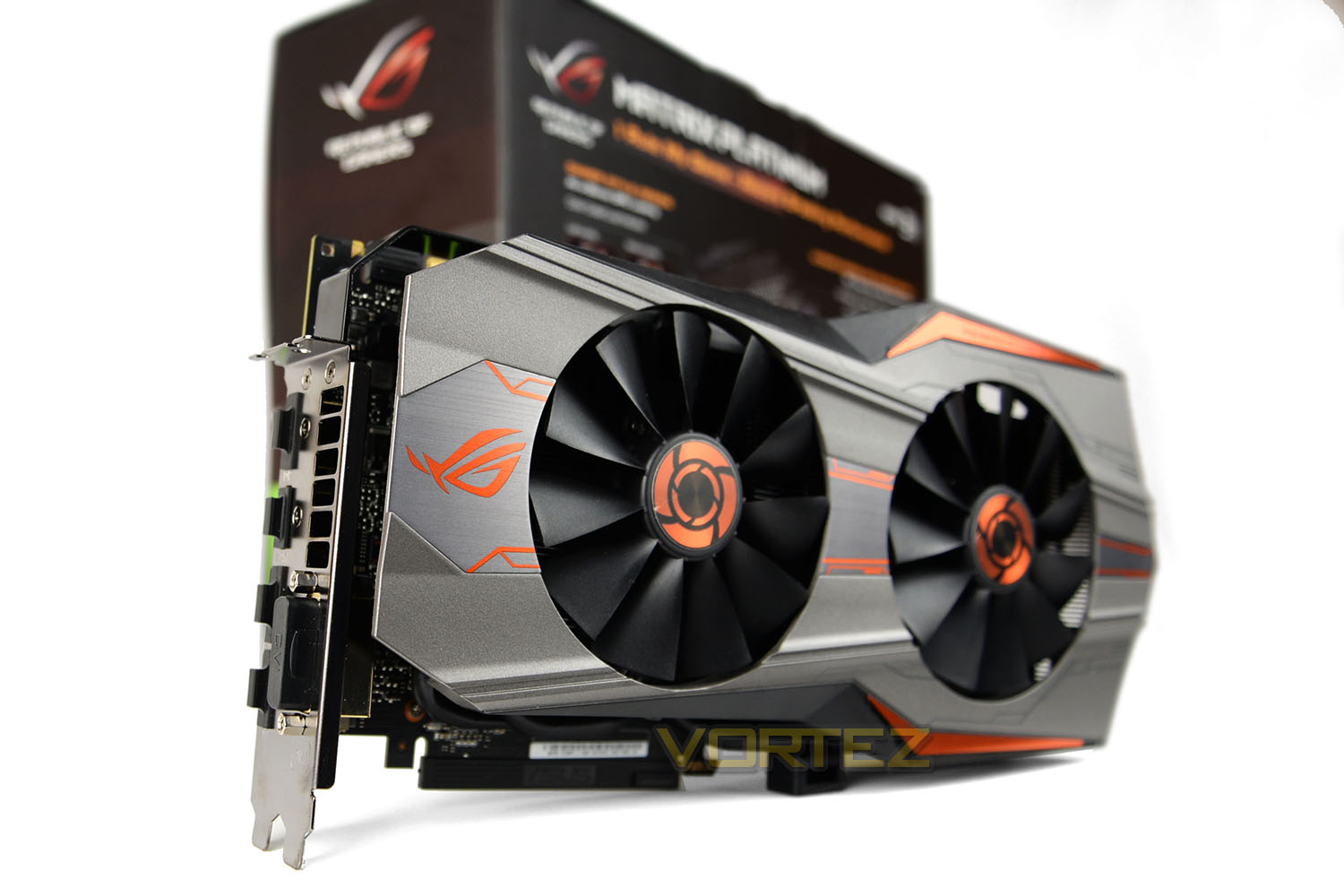
In the spotlight is the flagship ASUS graphics card – ROG MATRIX GTX 980Ti PLATINUM. This high-end GPU uses DirectCU II and has features tailored to extreme overclockers.

Product on Review: MATRIX GTX 980Ti PLATINUM
Manufacturer & Sponsor: ASUS
Street Price: £659.99 GBP / $750 USD
The GeForce GTX 980Ti has been a successful achievement for NVIDIA – taking the crown on the single-GPU battlefield. We’ve seen various custom designed GTX 980Tis since its release back in May 2015; ASUS themselves offering a variety of graphics cards under their different sub divisions.
In the spotlight today is a graphics card which has been highly anticipated for many months – the MATRX GTX 980Ti PLATINUM edition. Taking the top spot in the ASUS lineup, this ROG flagship seeks to modify just about every aspect of the GTX 980Ti that you could think of.
The MATRX GTX 980Ti PLATINUM comes factory overclocked and custom cooled via DirectCU II. Having the MATRIX badge means this card is primarily designed for overclocking enthusiasts and as such the PCB is loaded with features and components which lean in this very direction.
ASUS on MATRIX
ROG Matrix graphics cards are designed by overclockers for overclockers. Pre-loaded with a variety of ROG exclusive tools for instant and safe overclocking, ROG Matrix revolutionized how overclocking is done and continues to innovate and shatter world records.
Technical Specifications
Graphics Engine
NVIDIA® GeForce® GTX 980Ti
Bus Standard
PCI Express® 3.0
OpenGL
OpenGL® 4.5
Video Memory
6GB GDDR5
GPU Boost Clock
OC mode : 1317 MHz
Gaming mode : 1291 MHz
GPU Base Clock
OC mode : 1216 MHz
Gaming mode : 1190 MHz
CUDA Cores
2816
Memory Clock
7200 MHz
Memory Interface
384 bit
Digital MAX Resolution
5120 X 3200
DVI Output
1x Native Dual-link DVI-I
HDMI Output
1x Native HDMI 2.0
HDCP Compliant
YES
DisplayPort
3x Native DisplayPort 1.2
Accessory
2x Power Cable
1x ROG Metal Sticker
Software Bundled
ASUS GPU Tweak & Driver
Dimension
11.62 x 5.44 x 2 inches
29.5 x 13.8 x 5.09 cm
NVIDIA® GeForce® GTX 980Ti
Bus Standard
PCI Express® 3.0
OpenGL
OpenGL® 4.5
Video Memory
6GB GDDR5
GPU Boost Clock
OC mode : 1317 MHz
Gaming mode : 1291 MHz
GPU Base Clock
OC mode : 1216 MHz
Gaming mode : 1190 MHz
CUDA Cores
2816
Memory Clock
7200 MHz
Memory Interface
384 bit
Digital MAX Resolution
5120 X 3200
DVI Output
1x Native Dual-link DVI-I
HDMI Output
1x Native HDMI 2.0
HDCP Compliant
YES
DisplayPort
3x Native DisplayPort 1.2
Accessory
2x Power Cable
1x ROG Metal Sticker
Software Bundled
ASUS GPU Tweak & Driver
Dimension
11.62 x 5.44 x 2 inches
29.5 x 13.8 x 5.09 cm
Packaging & Bundle
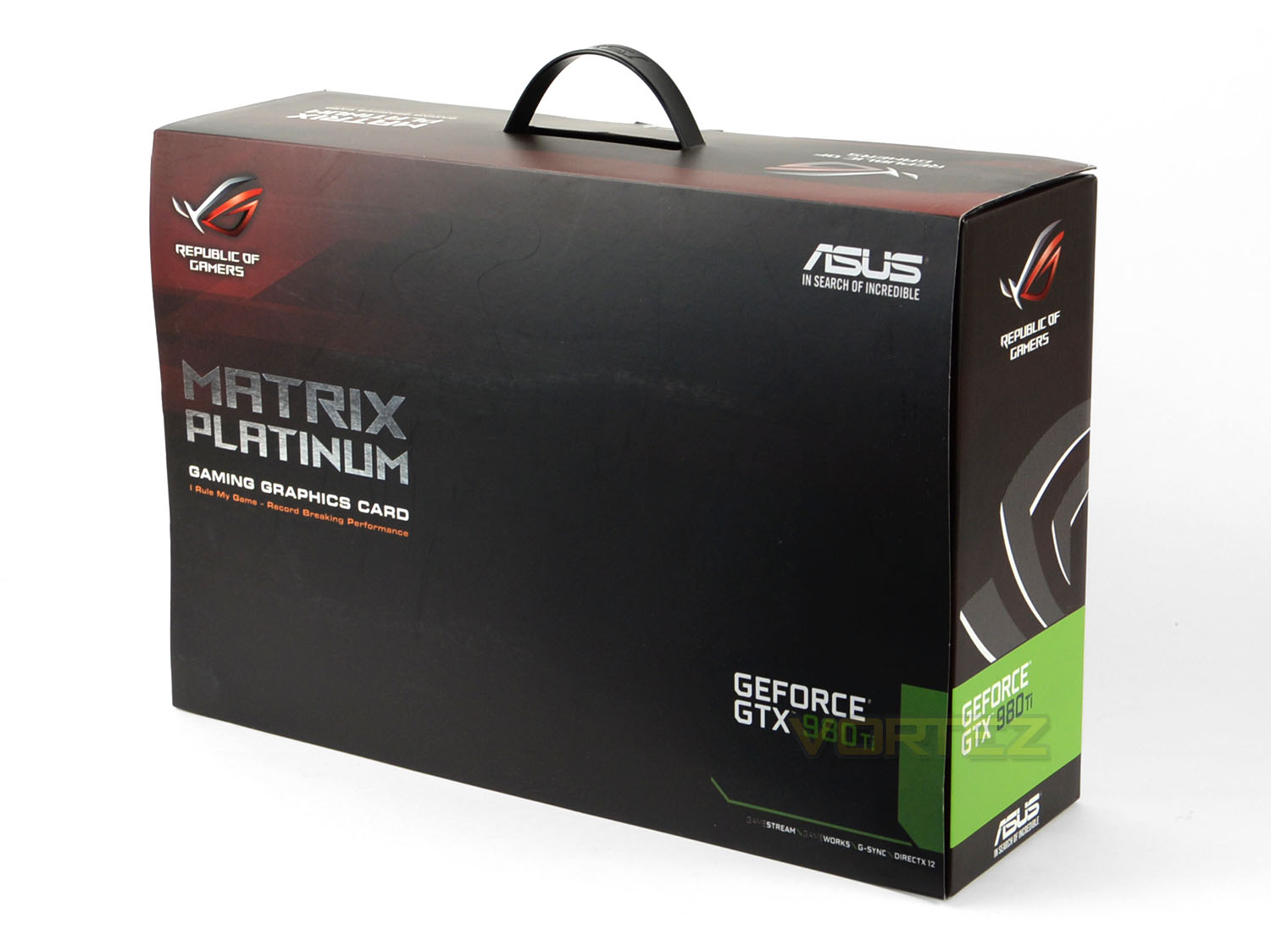
Situated in the Republic of Gamers series, the MATRX card arrives in a box which adopts the typical ROG styling. On the reverse there is a break-down of the essential features, including the technical specifications and a listing of the rear IO ports.
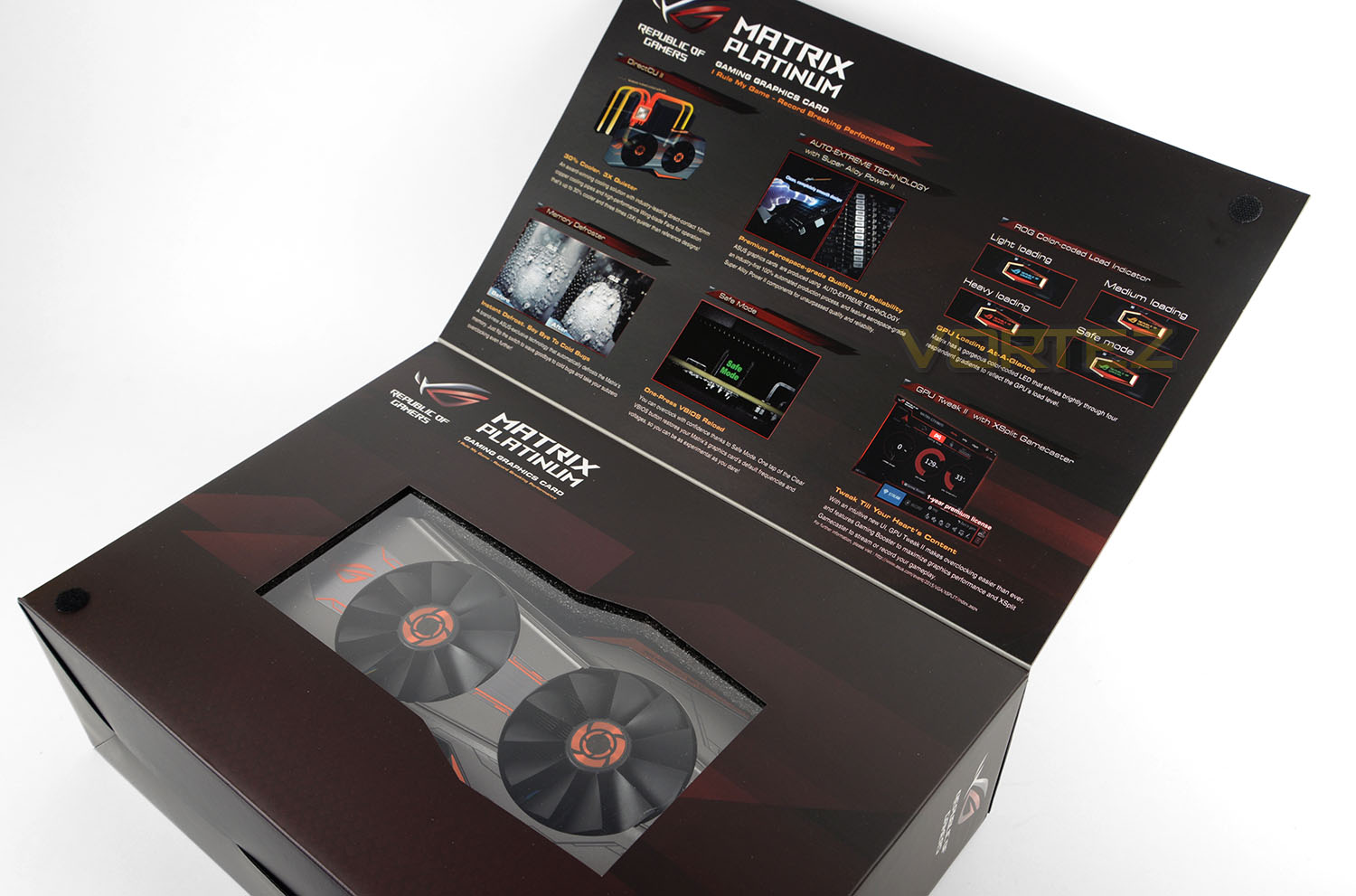
The front of the box opens out to allow a preview of the MATRIX graphics card and also supply some additional information surrounding the significant features.
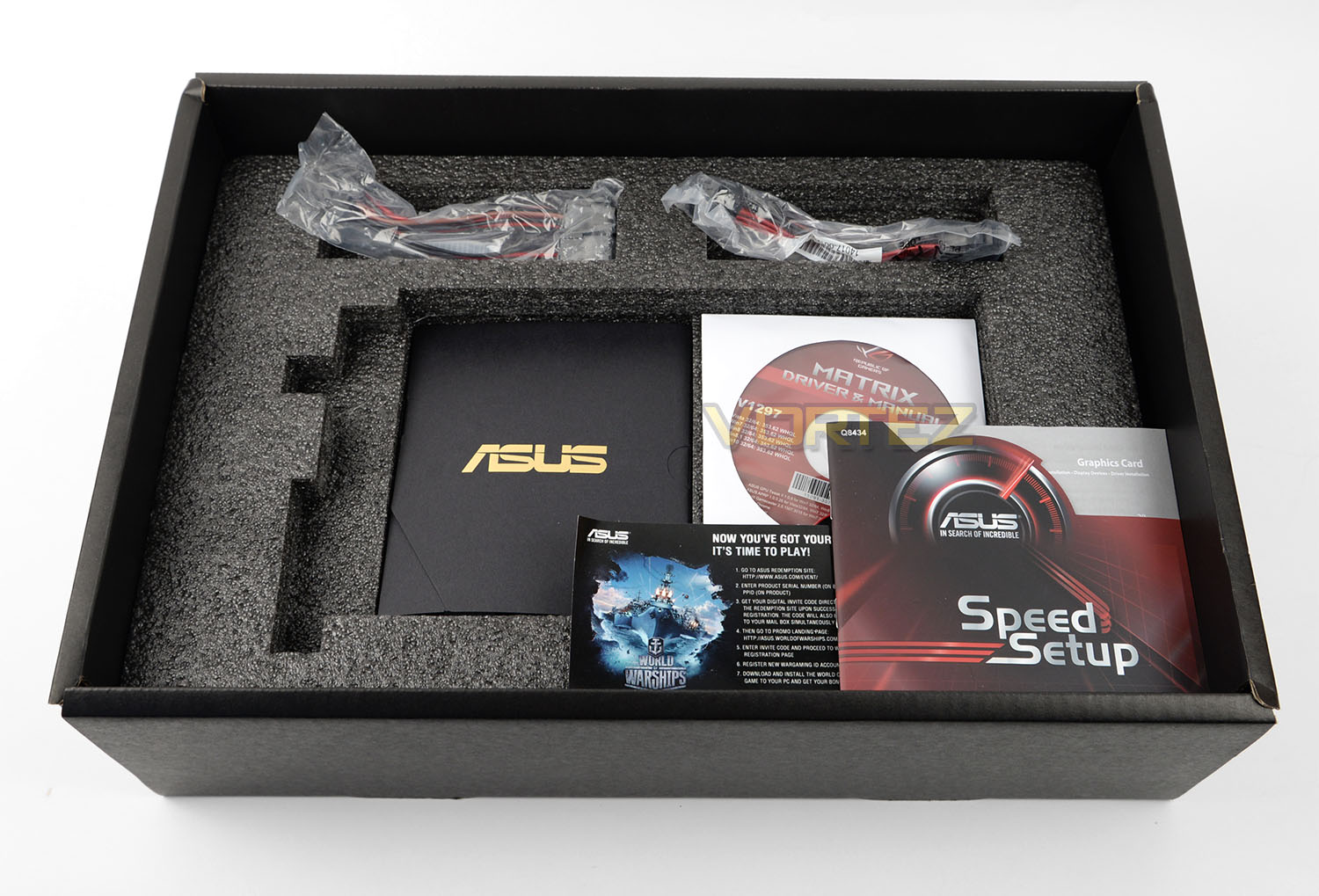
Inside, there is an inner box which contains the card and the accessories. The card is encased with some foam padding and the accessories are placed within a cardboard sleeve. There are just a few items included for the bundle and they are as follows:
• Driver/Software CD
• 2x Power Cables – Y-cable (8pin to dual 6-pin)
• Installation Guide
• Free Game
Closer Look (With Cooler)
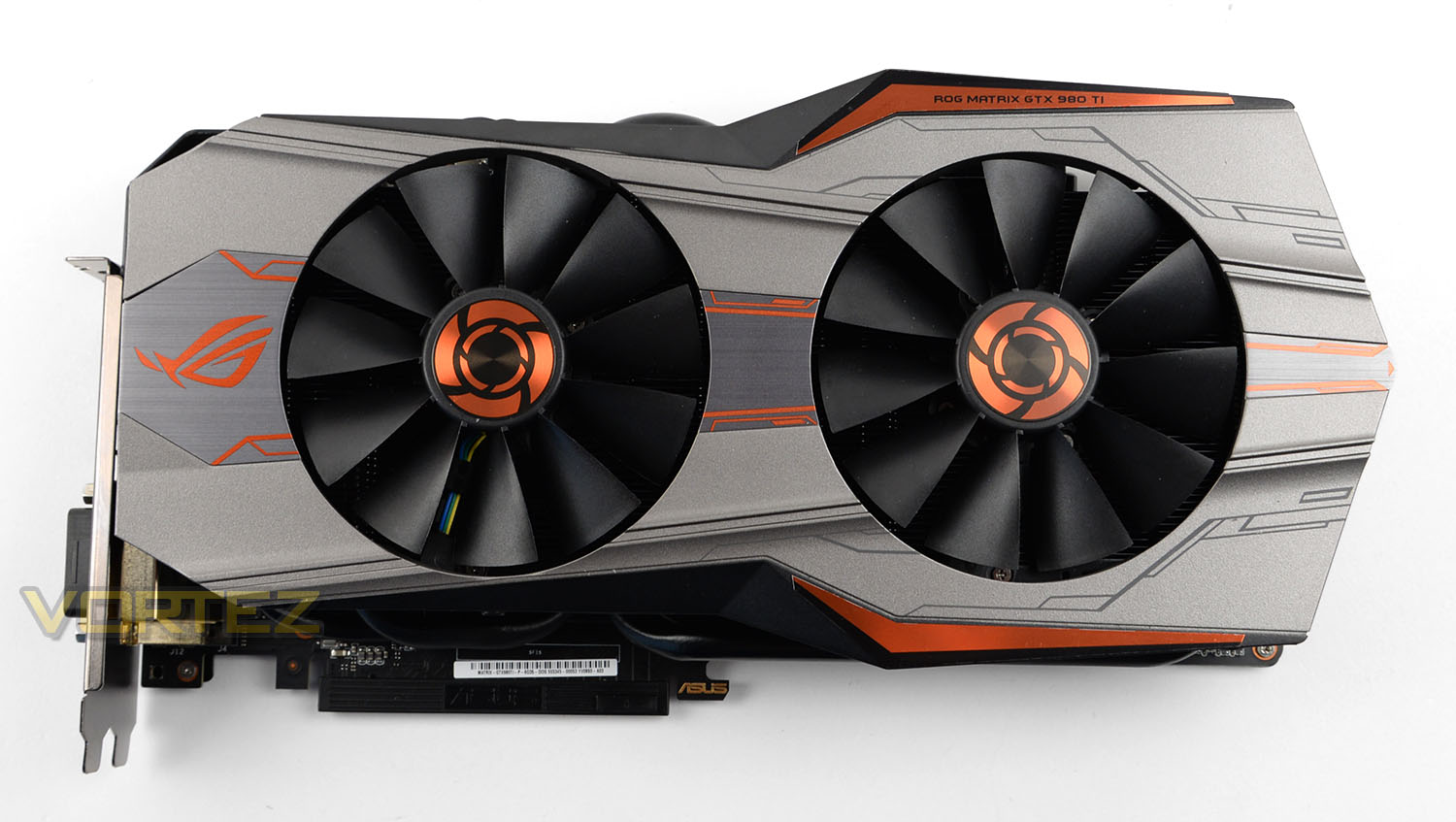
A key identifier for the MATRIX GTX980Ti is of course Direct CU II cooling solution which engulfs the PCB and indeed the entire design of this graphics card. Make no mistake, this graphics card is gigantic in its proportions, measuring: 29.5 x 13.8 x 5.09 cm. ASUS has designed to place a plastic shroud onto the card and around the twin 100mm cooling fans – this shroud is silver/orange and looks sleek and stylish. On the next page we’ll go into more detail on the actual cooling solution.
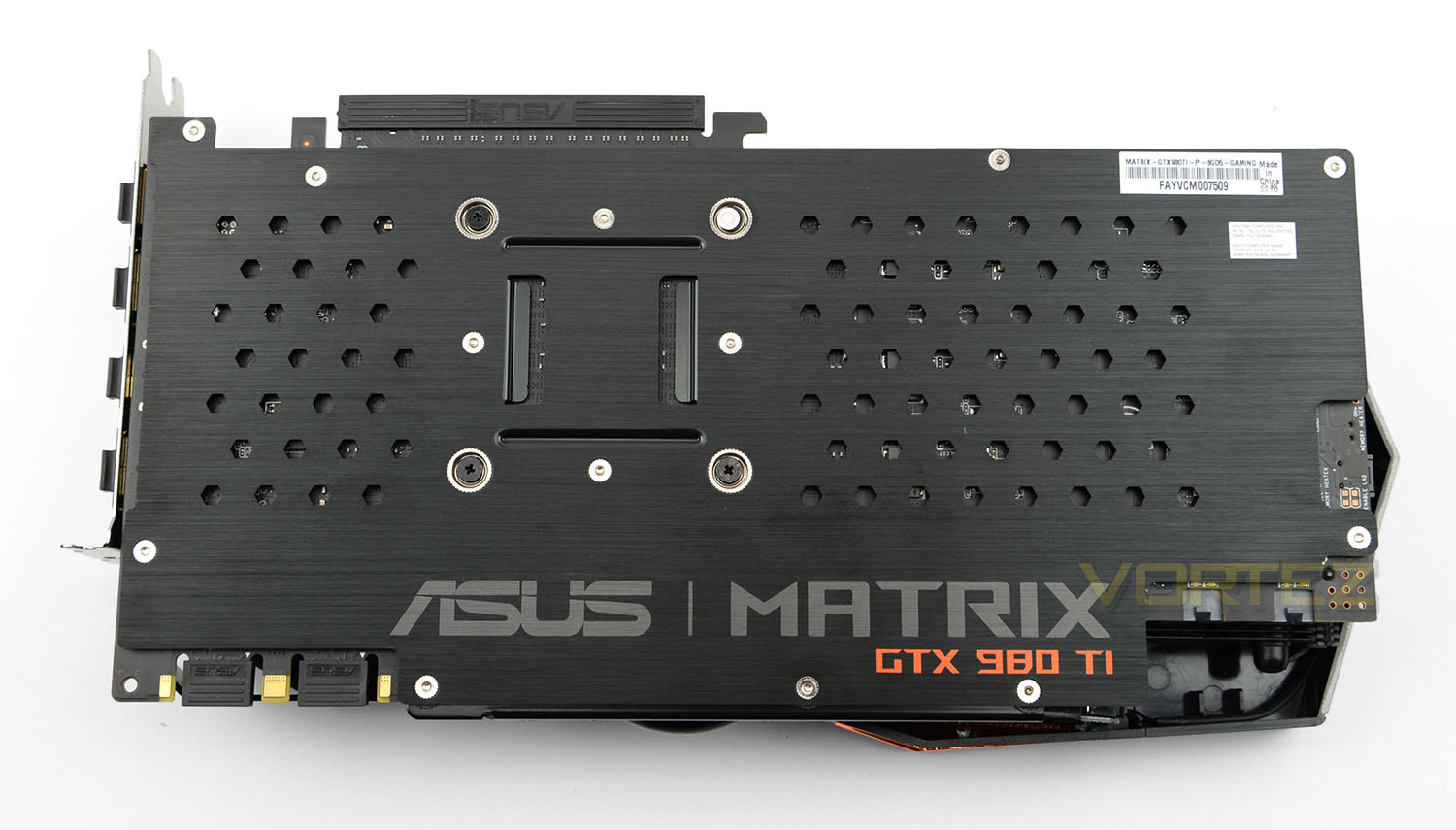
Flipping the card over, on the reverse we have a large aluminium backplate which protects the components on MATRX And also prevents the card from flexing/bending. There are two areas marked out with perforated cut-outs to supply some ventilation for the components underneath. Due to the size and weight of the cooler having a backplate like this is essential to maintain rigidity.
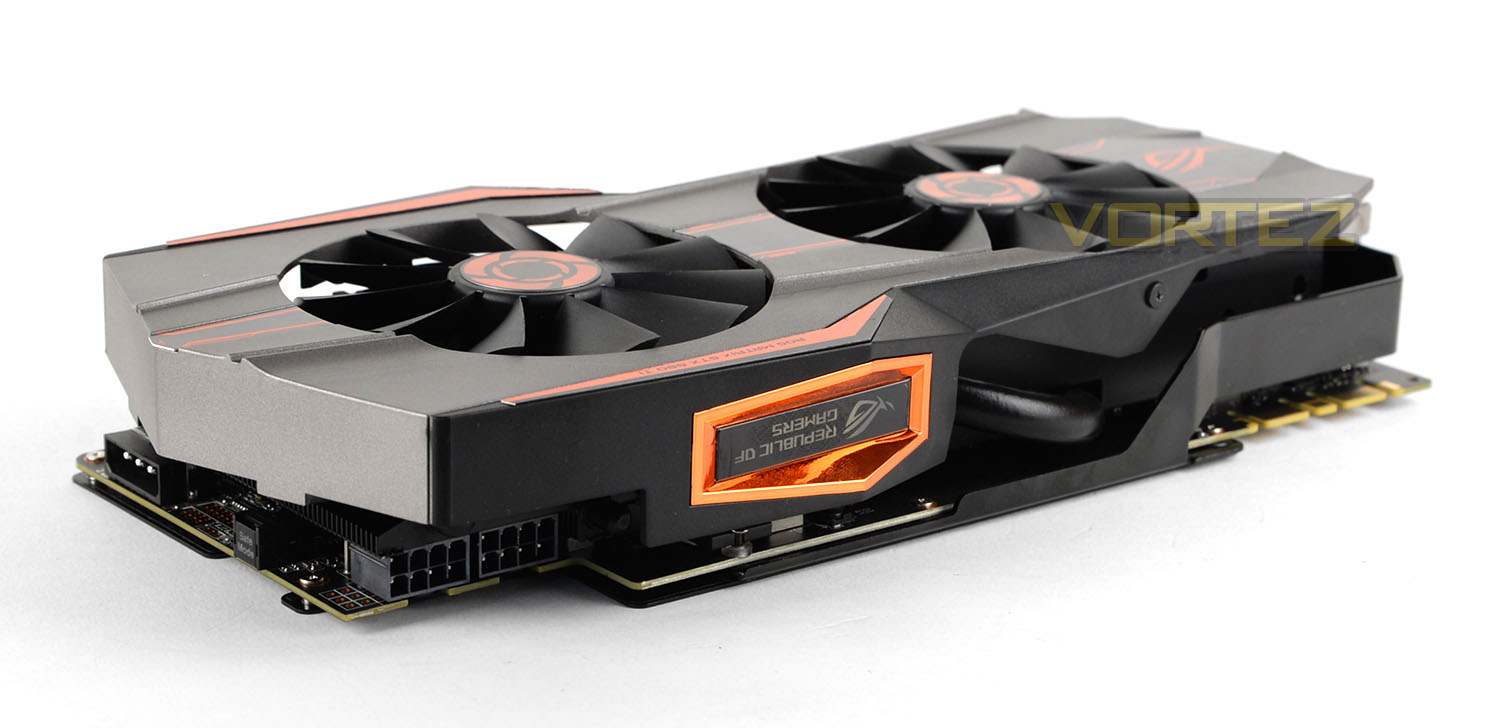
MATRIX opts for a twin-cooling fan configuration which is akin to the Direct CU II solution. These fans are 100mm fans use the patented wing-blade design – adding more air pressure and increasing the overall airflow.
Running down the outer edge of the MATRIX is the ROG logo panel which pulsates a variety of colours to indicate the current load usage. Blue – light load, orange – medium load, red – heavy load and green – safe mode.
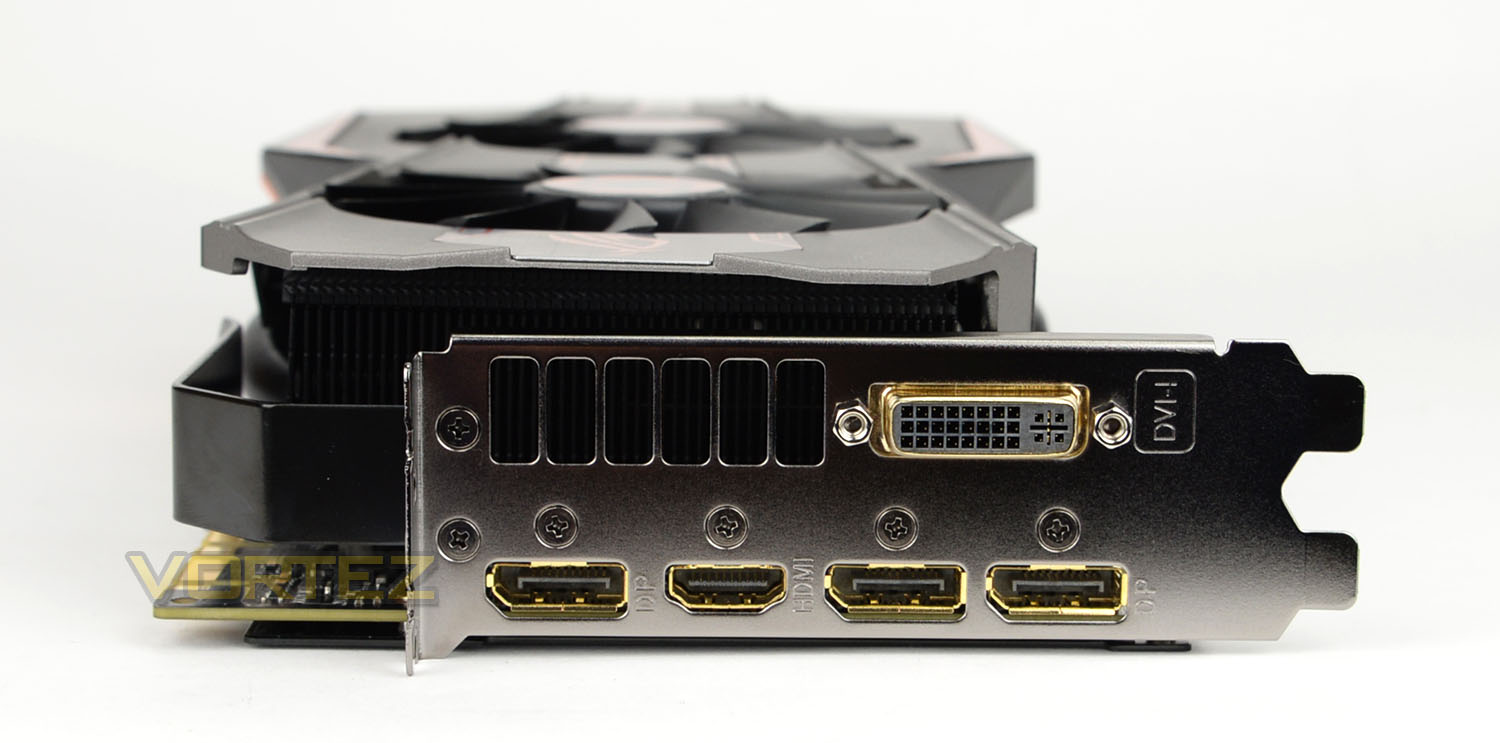
MATRIX is primarily concerned with ultra-high resolution gaming and as such there is full support for 4K, there are a plethora of ports on the IO plate. These include the following:
• 1x DVI-I port
• 3x DisplayPort 1.2
• 1x HDMI 2.0 port
All of these ports are gold-plated and having such a nice selection of ports paves the way for multi-screen configurations and ensures you’re able to run the card at optimum settings but if you’re planning to go for a single 4K screen configuration it’s a good idea to go with DP or HDMI to get the faster refresh rate.
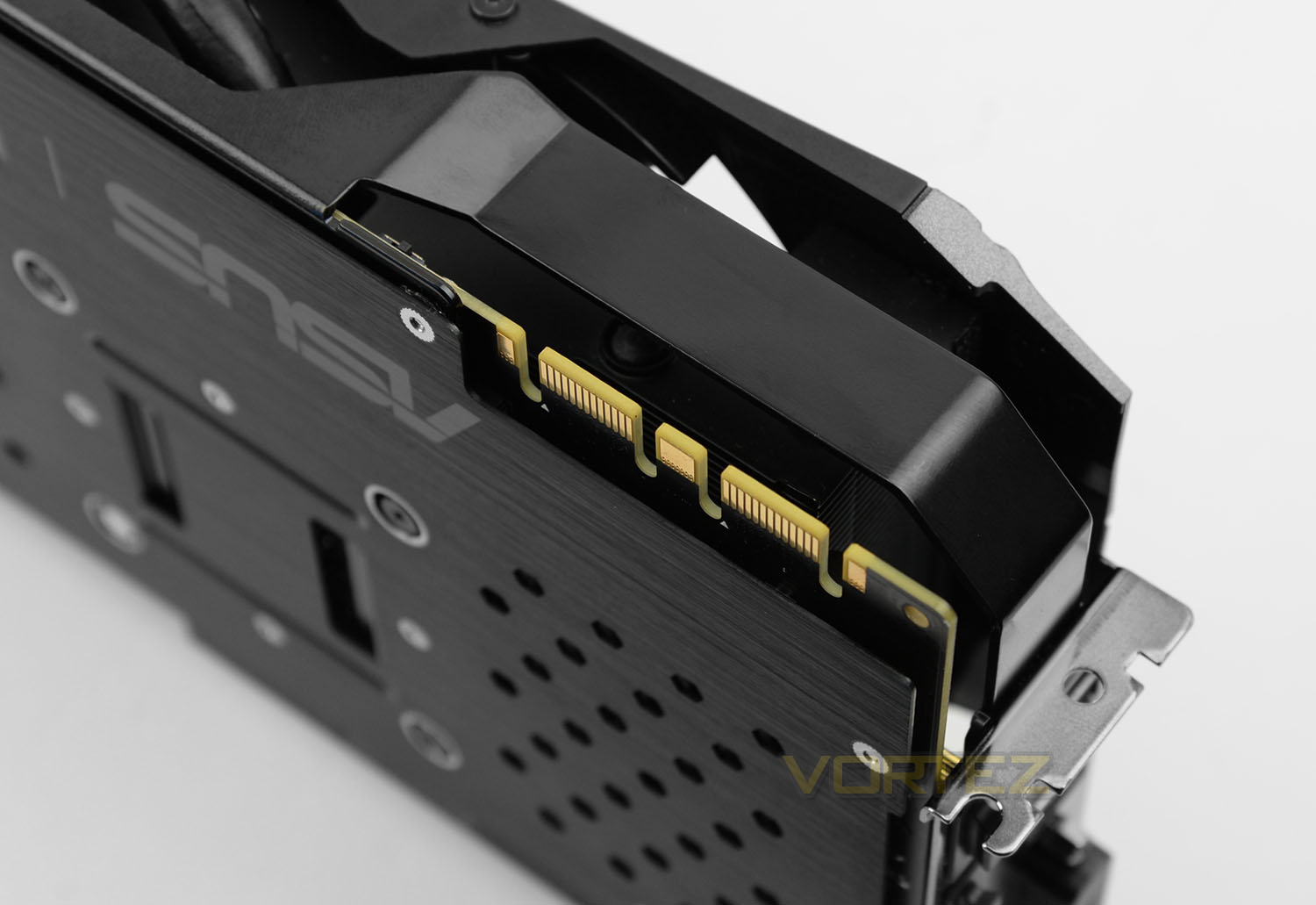
The GTX 980Ti is a flagship graphics card and as such it comes as no surprise that we have multi-SLI ports to pair up with more than one graphics card.
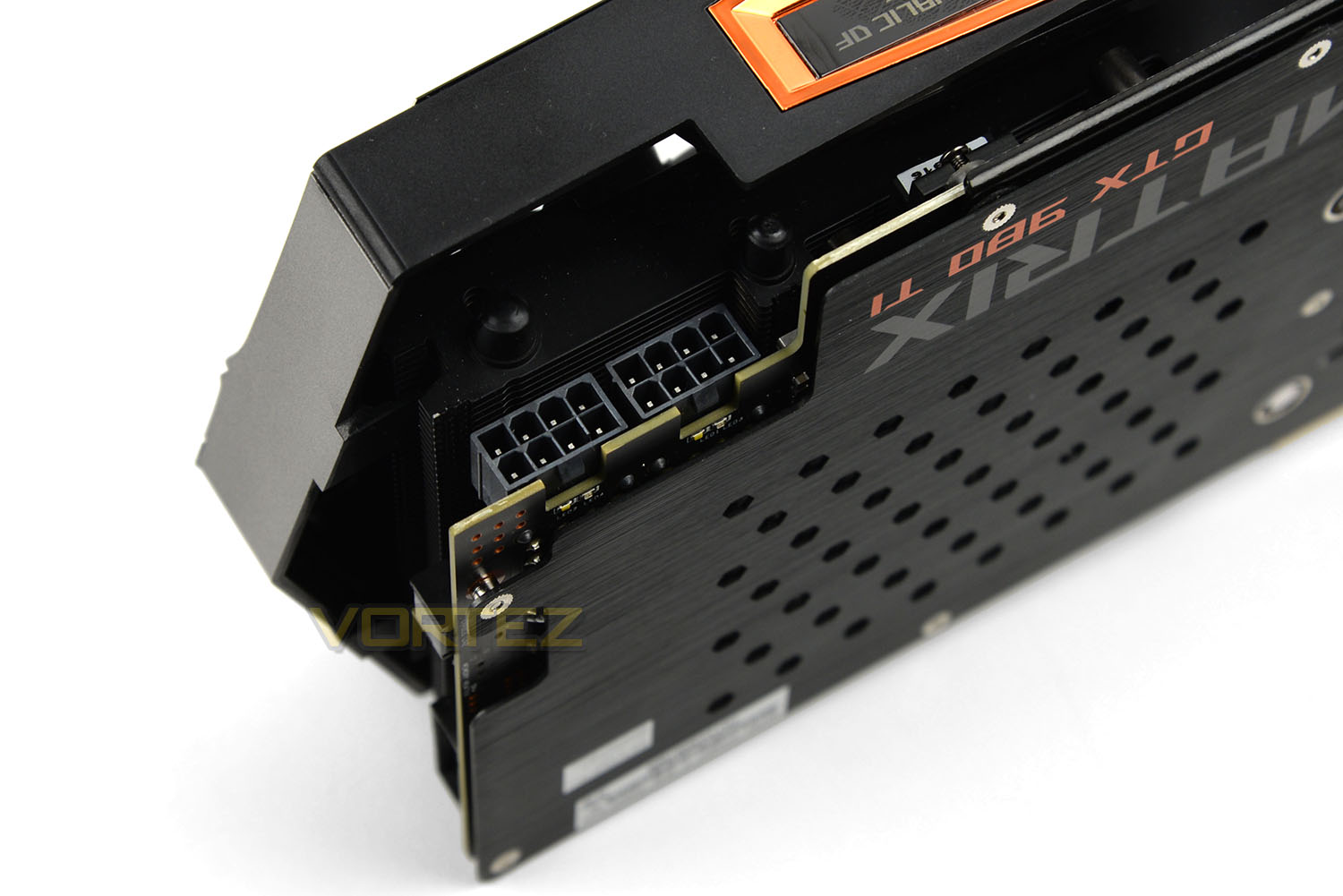
The reference GTX 980Ti required 6+8pin PCI express power but our MATRIX requires 8+8pin. The reference model also has a TDP rating of 250W, requiring a 600W power supply – although ASUS don’t mention this detail we expect similar specifications of the MATRIX.
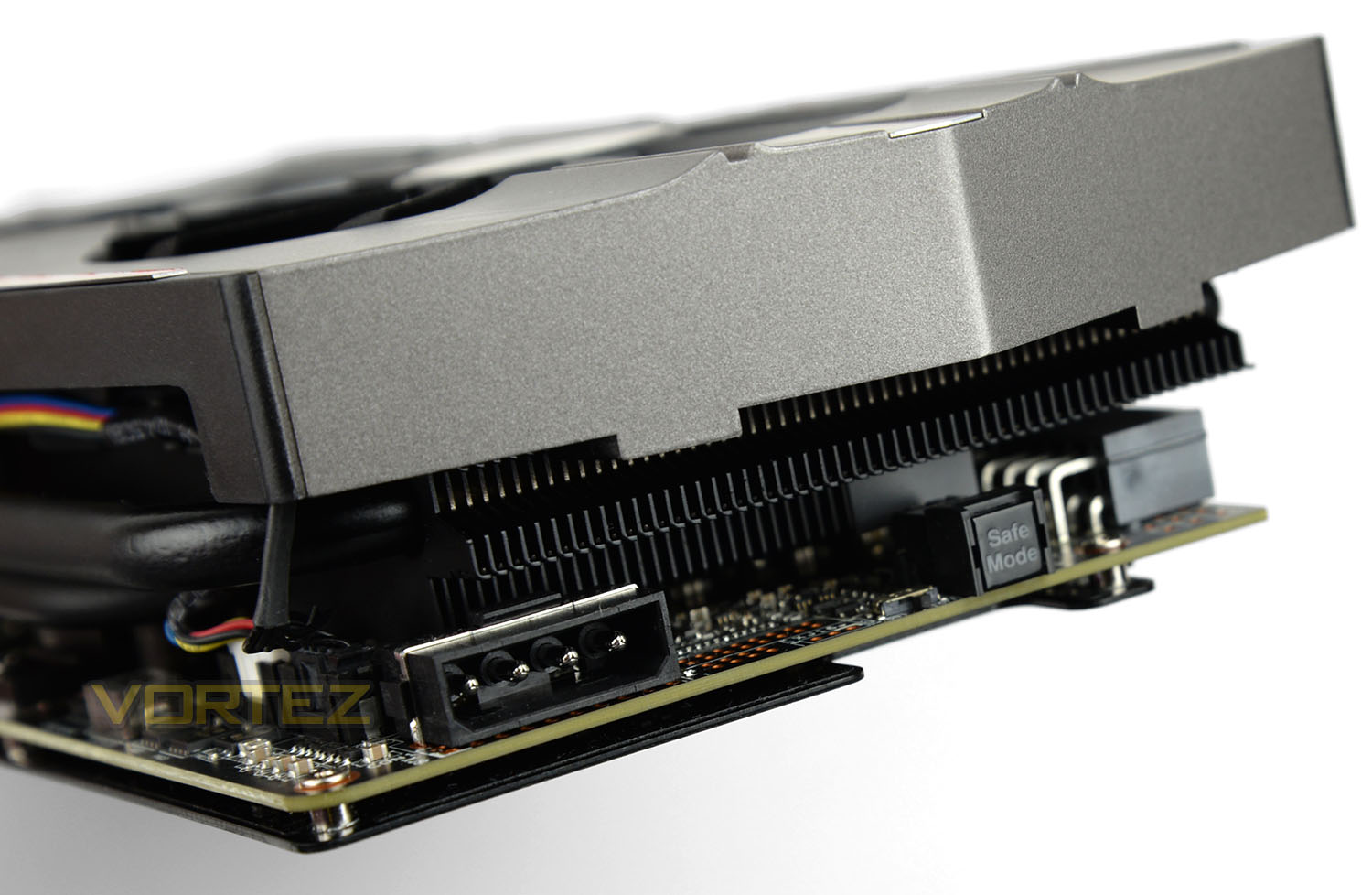
Additionally, at the end of the graphics card there is a Molex power connector which is designed to power the memory defroster circuit.
It is possible to cause the memory chips to overheat if memory defroster is activated, the Molex power is connected and the card is used under normal air-cooled usage.
Closer Look (Without Cooler)
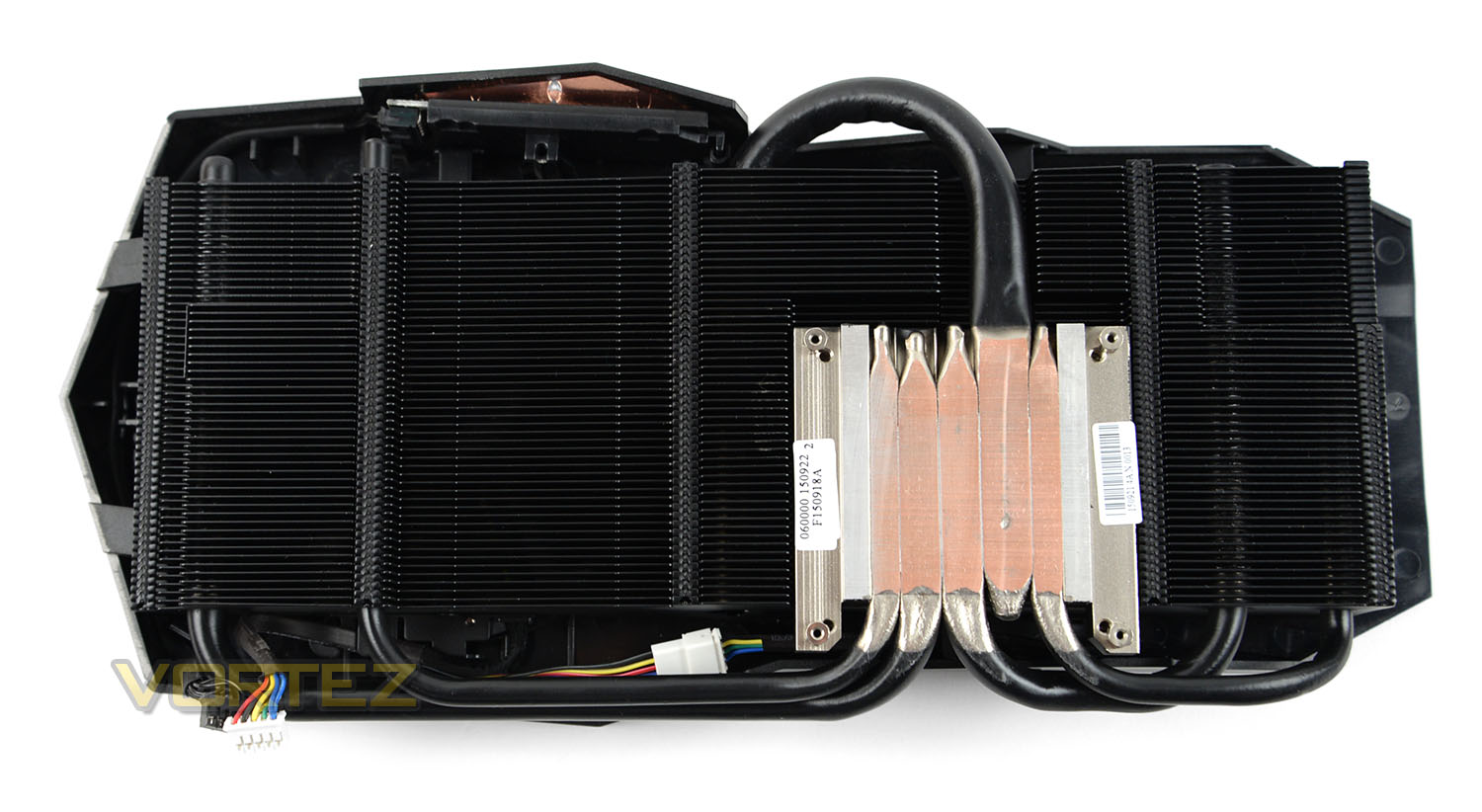
DirectCU II has been a successful venture for ASUS and the MATRIX card utilises this direct-contact heatsink. DirectCU II uses five copper heatpipes one of which is a whopping 10mm thick. ASUS also state that this solution uses CoolTech – allowing operation which achieves up to 30% better cooling and is three times quieter than the GTX 980Ti reference design.
Although this heatsink is unlikely to be seen while the shroud is attached, it looks especially sleek with its matt-black powder coating.
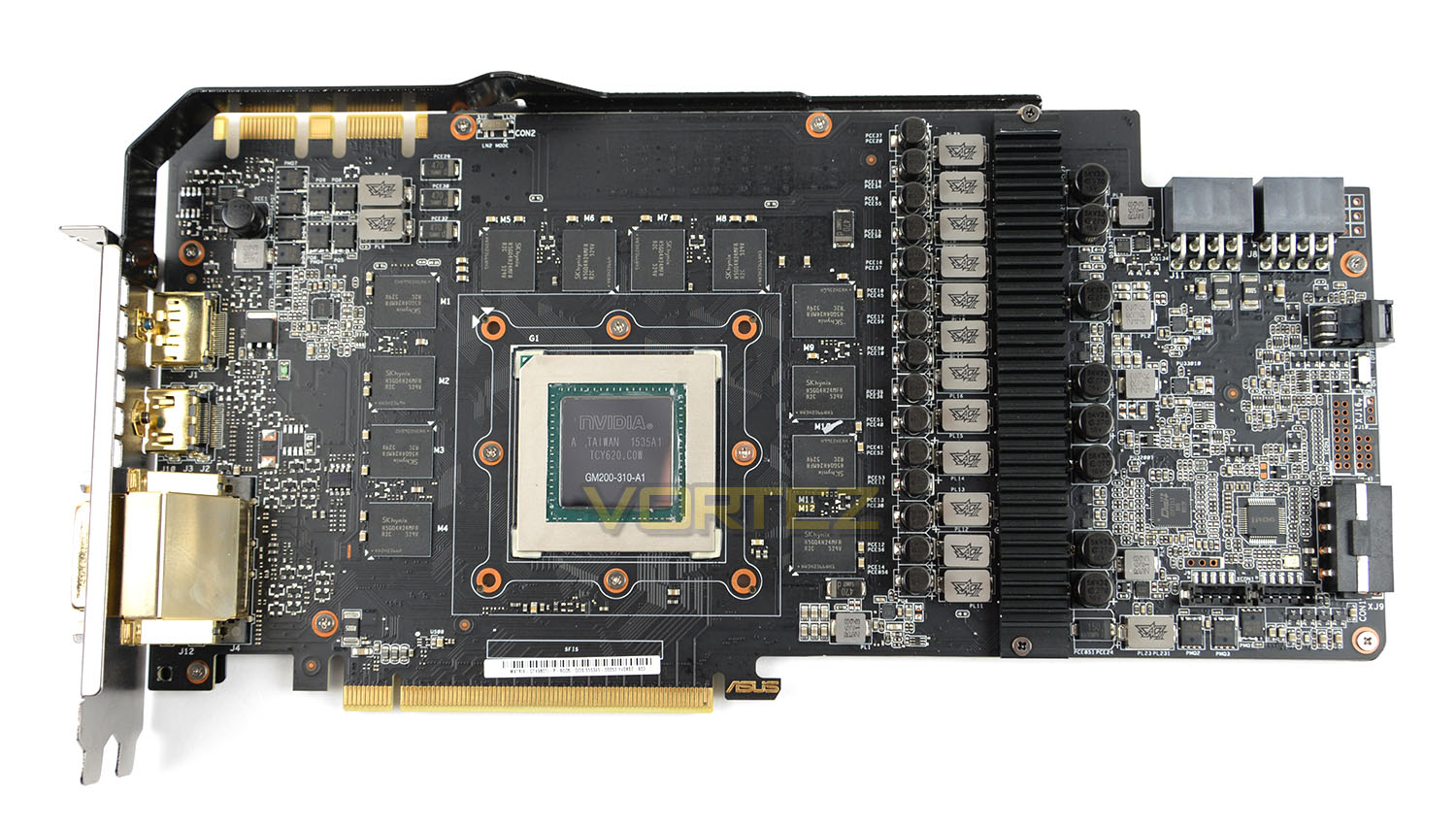
With the DirectCU II cooler detached from the graphics card we can see take a look at the inner-workings and see the full extent of that monolithic PCB. ASUS has placed a brace support running from the IO plate across the top to supply even more protection to prevent the board from bending.
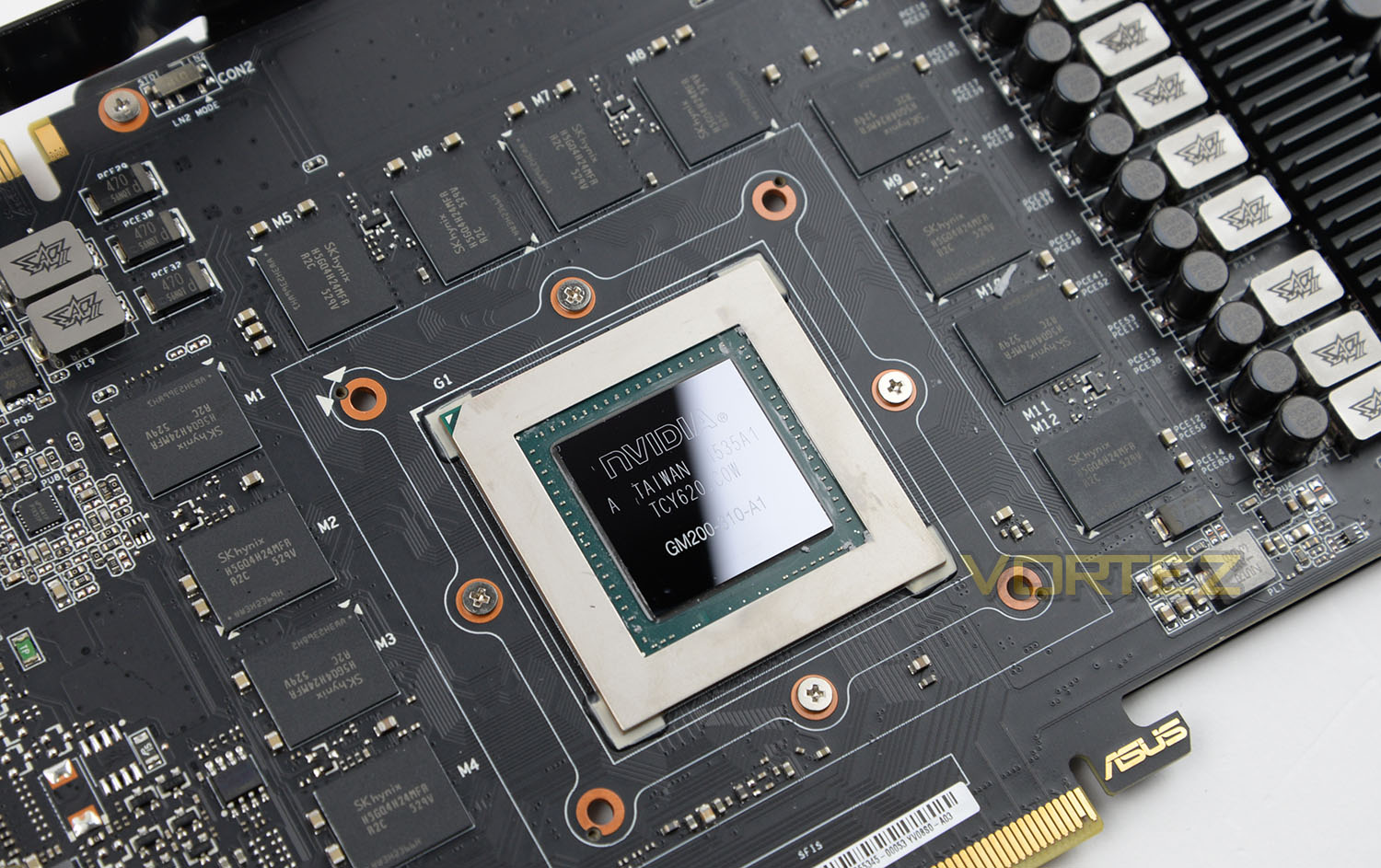 ]
]The driving force behind MATRIX is the GM200 core aka GTX 980Ti. This GPU comprises of 8 billion transistors created by the 28nm TSMIC process. ASUS has applied a factory overclock to this card, increasing the GPU clock to 1216MHz (13171MHz GPU boost) and the memory clock to 7200MHz.
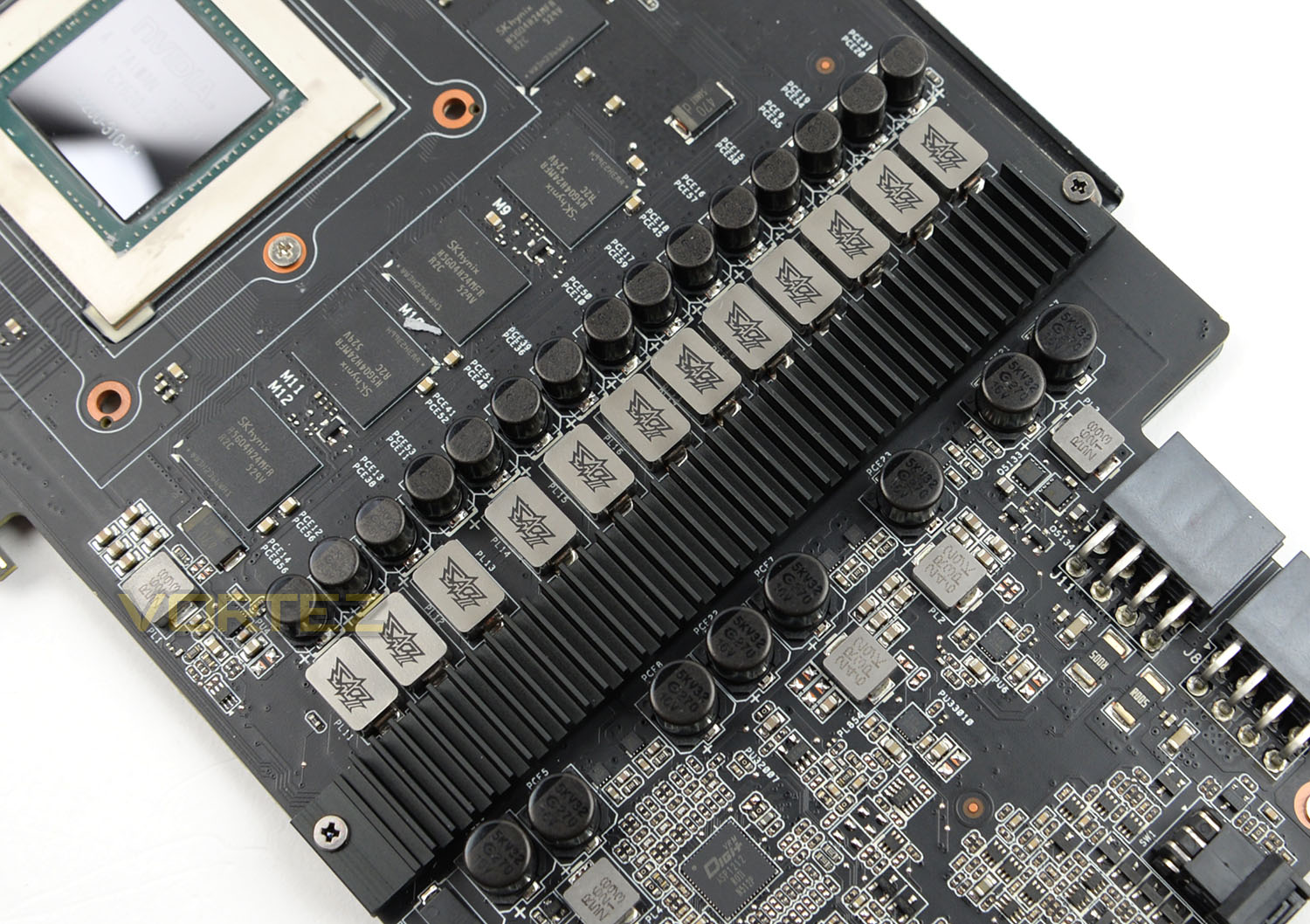
Our graphics card employs a 14-phase Digi+ Super Alloy Power II design, along with Super Alloy II CAPs, chokes, DrMOS, POSCAP. The end result means better temperatures, longer lifespan and less noise. The construction of this card is built 100% by machine via ASUS Auto-Extreme. Stringent quality control techniques are used and production is executed with absolute precision.
Test Setup & Methodology
How we test graphics cards
Testing a graphics card is an extremely lengthy process. We sometimes see reviews where a graphics card has been tested using out of date equipment, out of date games and even out of date drivers. While the latter can be excused due to the sheer amount of driver updates making a thorough review impossible we will however notify the reader when we have used a different driver to the normal for example a pre-release driver. For the most part however we will always use the same hardware and latest drivers so this does certainly need to be taken into consideration when viewing our testing results. Each game and benchmark is tested times with the lowest and highest scores omitted out of the 5 results and the average then taken from the three remaining to give us our final result for each resolution and setting used.
Hardware
With the latest Intel chipset release we decided to update our ageing X79 setup to the very latest X99 chipset. Not only that but we will be using the flagship Core i7-5960X Extreme Edition processor clocked to a realistic, achievable 4GHz to ensure we have no CPU bottlenecks. With 16GB (4x4GB) of GDDR4 at 2666MHz and a 500GB SSD there should be minimal paging so the benchmarks we run today will hopefully give a true reflection of the graphics card’s performance.
High End Graphics Cards on test:
ASUS MATRIX GTX 980Ti PLATINUM (Forceware 358.91)
ASUS STRIX GTX 980Ti DC3 OC (Forceware 353.30)
SAPPHIRE R9 Fury X (Catalyst 15.15)
XFX R9 390X Double Dissipation (Catalyst 15.15)
MSI R9 390X GAMING 8G (Catalyst 15.15)
NVIDIA GTX 980 Ti 6GB (Forceware 352.90)
ZOTAC GTX 970 AMP! EXTREME CORE(Forceware 344.75)
ZOTAC GTX 970 AMP! EXTREME(Forceware 344.75)
MSI GTX 970 GAMING 4G(Forceware 344.75)
GIGABYTE G1 GAMING SOC GTX 970(Forceware 344.75)
ASUS STRIX GTX 970 4GB GDDR5(Forceware 340.60)
NVIDIA GTX 980 4GB GDDR5(Forceware 340.52)
SAPPHIRE TRI-X R9-290X 4GB GDDR5(Catalyst 14.3)
Special thanks go to Intel, Corsair, MSI and AOC for providing the extreme spec components used for our test bench:
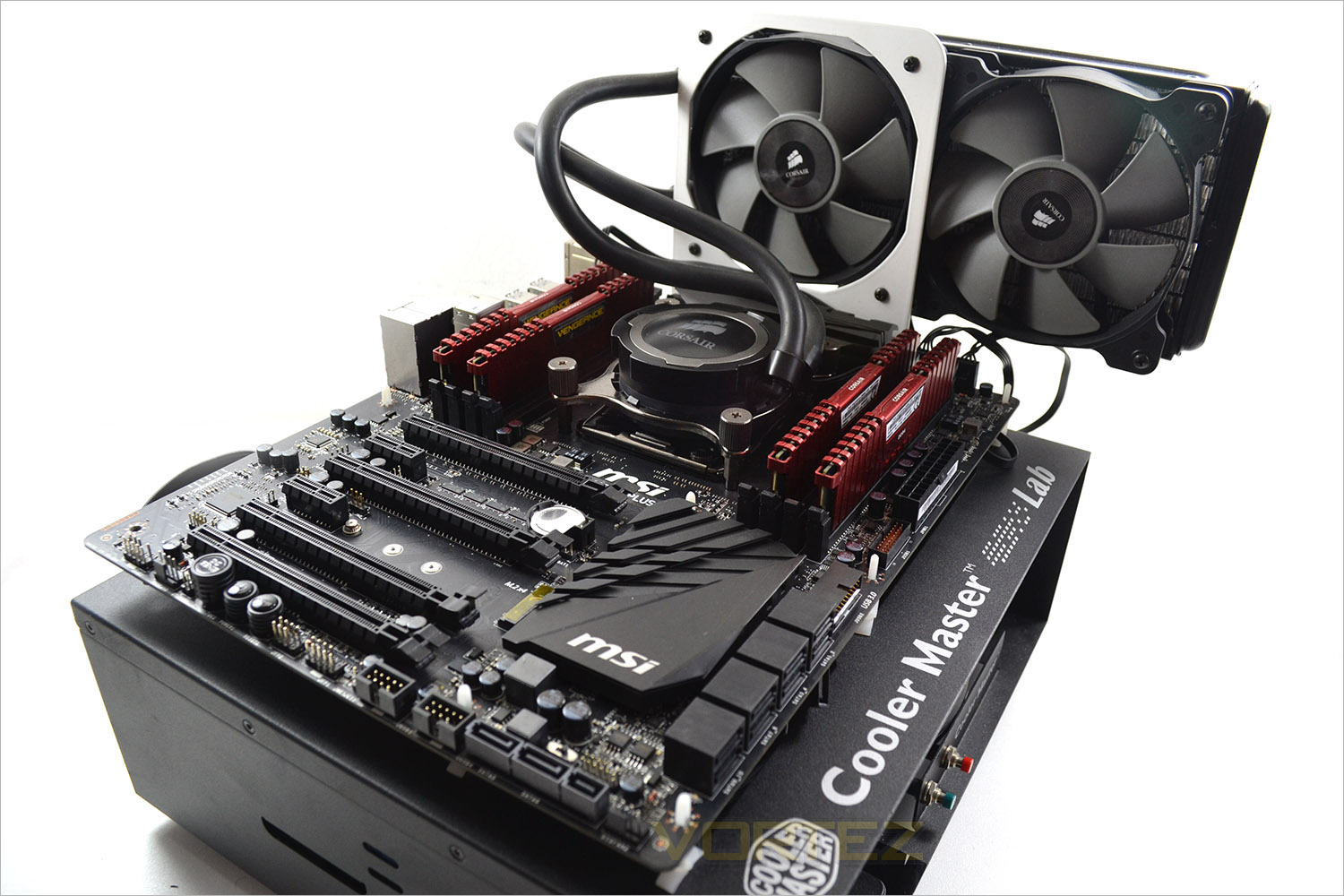
Motherboard: MSI X99S GAMING 9 AC
CPU: Intel Core i7-5960X Extreme Edition @ 4GHz
RAM – 16GB (4x4GB) Corsair LPX Vengeance (Red) DDR3 @ 2666MHz 16-17-17-35 C1
Power Supply – CORSAIR RM Series™ RM1000
Hard Drive – CORSAIR Force Series™ LX 512GB SATA 3 6Gb/s SSD
Cooler – CORSAIR Hydro Series™ H105 240mm Extreme Performance Liquid CPU Cooler
Monitor – AOC 28″ 4K U2868 PQU
CPU: Intel Core i7-5960X Extreme Edition @ 4GHz
RAM – 16GB (4x4GB) Corsair LPX Vengeance (Red) DDR3 @ 2666MHz 16-17-17-35 C1
Power Supply – CORSAIR RM Series™ RM1000
Hard Drive – CORSAIR Force Series™ LX 512GB SATA 3 6Gb/s SSD
Cooler – CORSAIR Hydro Series™ H105 240mm Extreme Performance Liquid CPU Cooler
Monitor – AOC 28″ 4K U2868 PQU
Benchmarks
If you are a regular reader of our reviews you will know we like to test the latest hardware with the latest games and benchmarks on the market. Here are the games we have chosen:
Battlefield 4
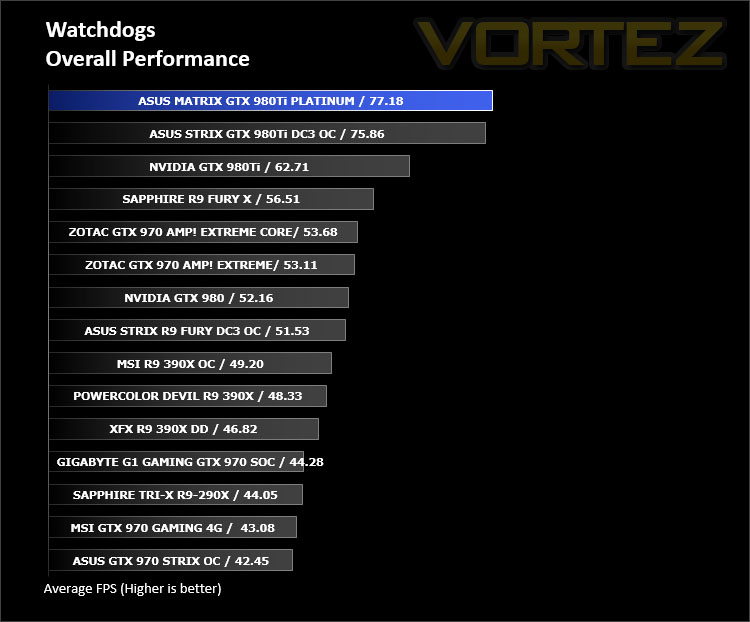
Watchdogs
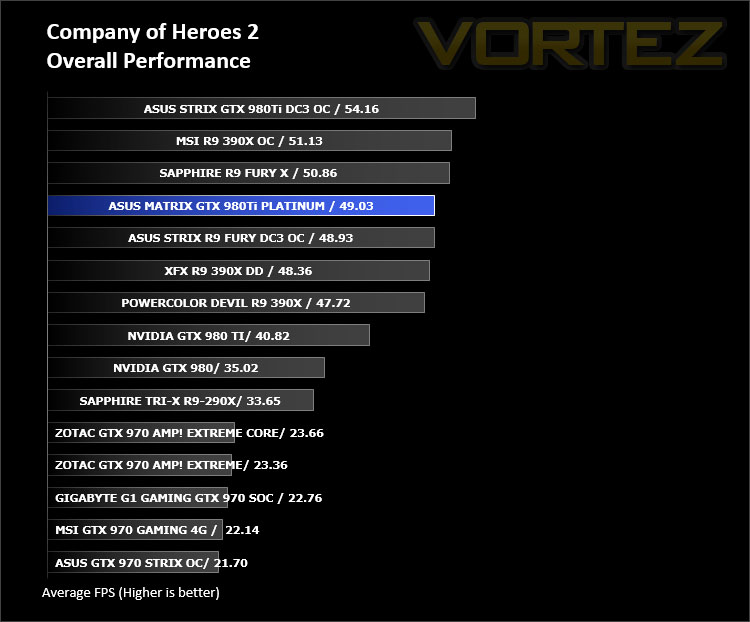
Company of Heroes 2
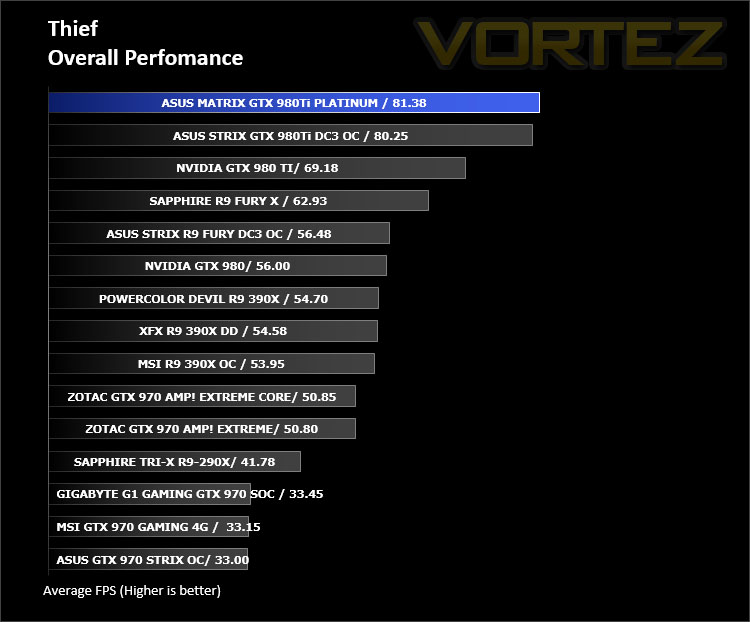
Thief
GRID: 2
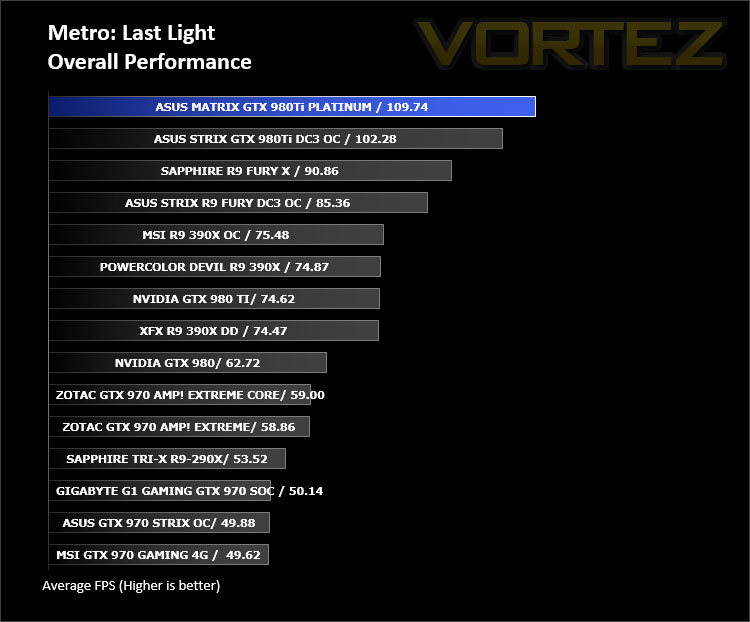
Metro: Last Light
Watchdogs
Company of Heroes 2
Thief
GRID: 2
Metro: Last Light
We also take into consideration the benchmarkers out there so have included three of the more popular synthetic benchmarks available:
Unigine: Valley
Unigine: Heaven 4
Futuremark 3DMark Firestrike
Unigine: Heaven 4
Futuremark 3DMark Firestrike
Let’s see how today’s graphics card performed…
Overclocking
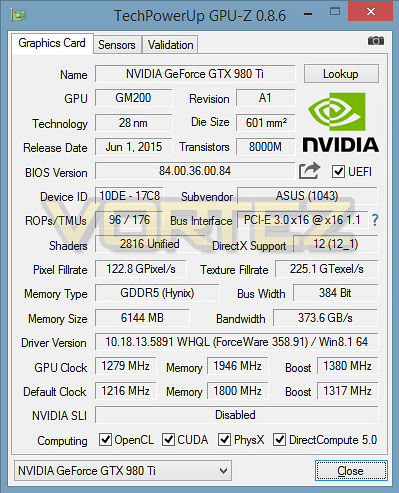
To overclock the MATRIX GTX 980Ti Platinum we used MSI Afterburner Tool since it gives extensive options for modifying the graphics card.
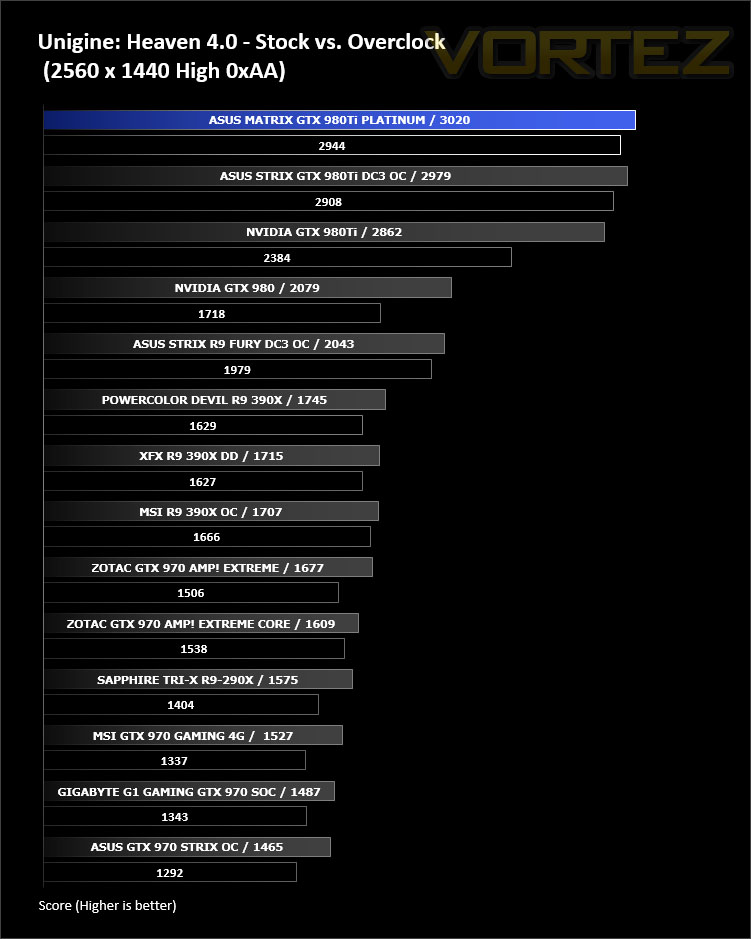
Overclocking the card was easy and we managed to boost the GPU and memory clock to a admirable point. Our result took the GPU clock from 1216MHz to 1279MHz and the memory clock from 1800MHz to 1946MHz. Pushing the card a little further meant we were able to receive a higher score in Unigine Heaven 4.0.
Power, Temperatures, Acoustics
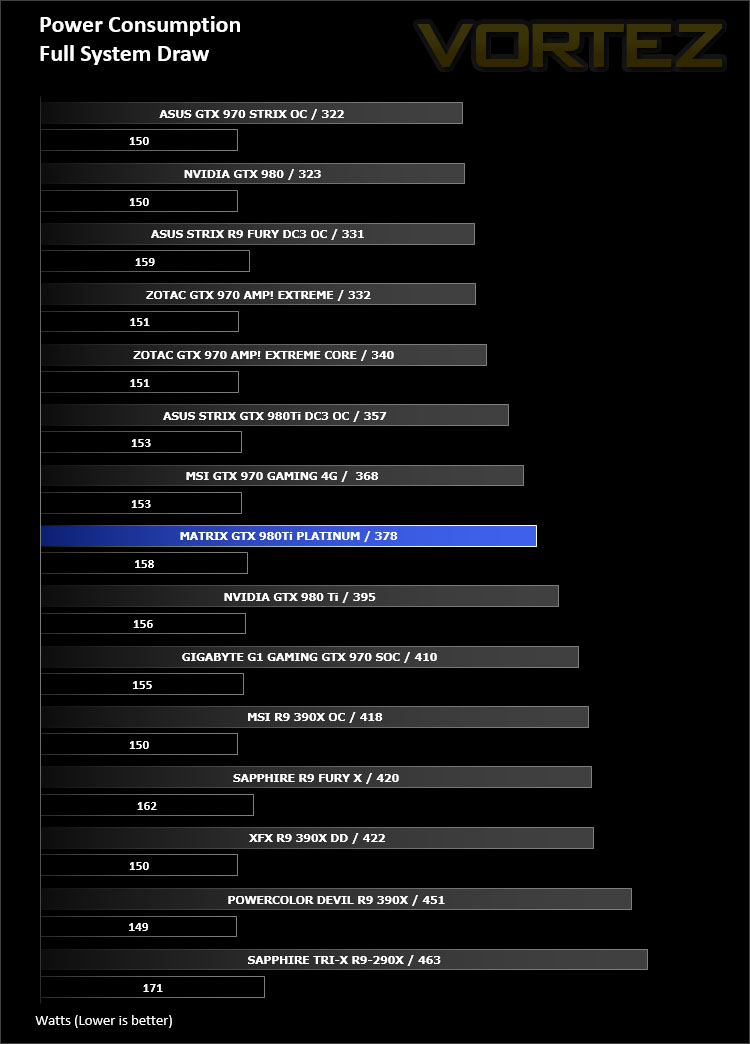
To test for power consumption we take a measurement from the plug socket. It is important to note that the figures below represent total system power use and not just the GPU. The CPU was always in a fixed state (4GHz overclock) so did not affect the additional power load when the GPU was placed under 100% load using Furmark which was ran for 15 minutes at which point a load reading was taken. Idle readings were taken 5 minutes after system boot to ensure any background services and applications had loaded.
Temperature
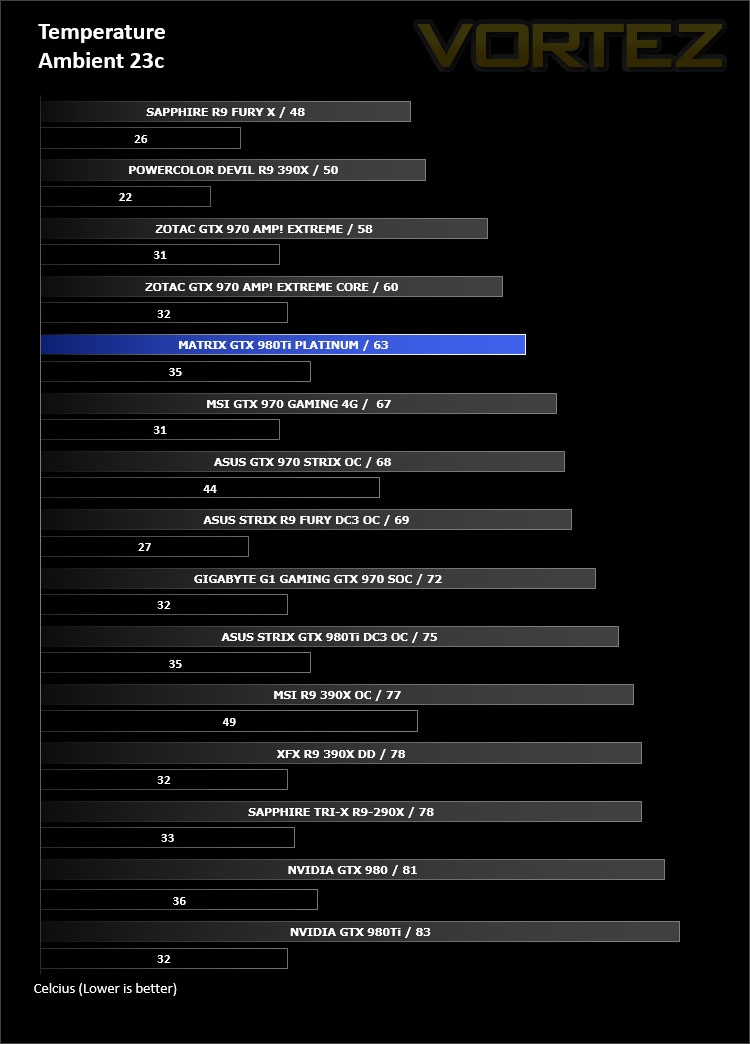
To test temperatures we measured idle temperatures after booting windows, letting all applications finish loading and ran a few benchmarks. Once the benchmarks were complete we left the card to reach a cooling plateau where we then took the idle temperatures. For the load tests, we would normally run Furmark for 20 minutes, taking the absolute maximum temperature attained however we found that this throttled the card and resulted in spurious results. So we set Heaven running continuously for 20 minutes and used this as a temperature result.
Acoustics
Noise from the cooling fan isn’t disruptive at all, even under full load – take a look and listen on our video.
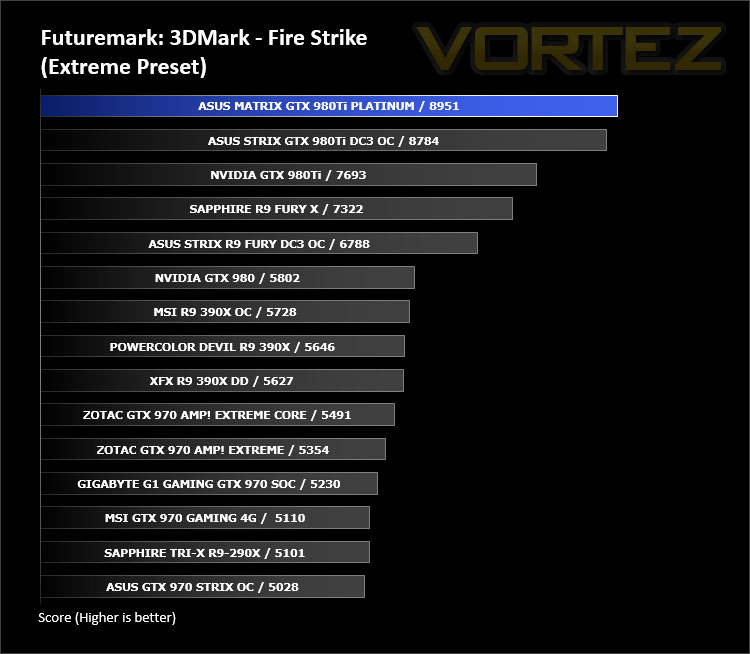
3DMark FireStrike
Fire Strike is the new showcase DirectX 11 benchmark designed for high-performance gaming PCs. It is Futuremark’s most ambitious and technical benchmark ever, featuring real-time graphics rendered with detail and complexity far beyond what is found in other benchmarks and games today.

Unigine Heaven 4.0
Heaven Benchmark with its current version 4.0 is a GPU-intensive benchmark that hammers graphics cards to the limits. This powerful tool can be effectively used to determine the stability of a GPU under extremely stressful conditions, as well as check the cooling system’s potential under maximum heat output. It provides completely unbiased results and generates true in-game rendering workloads across all platforms.


Unigine Valley
Valley Benchmark is a new GPU stress-testing tool from the developers of the very popular and highly acclaimed Heaven Benchmark. The forest-covered valley surrounded by vast mountains amazes with its scale from a bird’s-eye view and is extremely detailed down to every leaf and flower petal. This non-synthetic benchmark powered by the state-of-the art UNIGINE Engine showcases a comprehensive set of cutting-edge graphics technologies with a dynamic environment and fully interactive modes available to the end user.


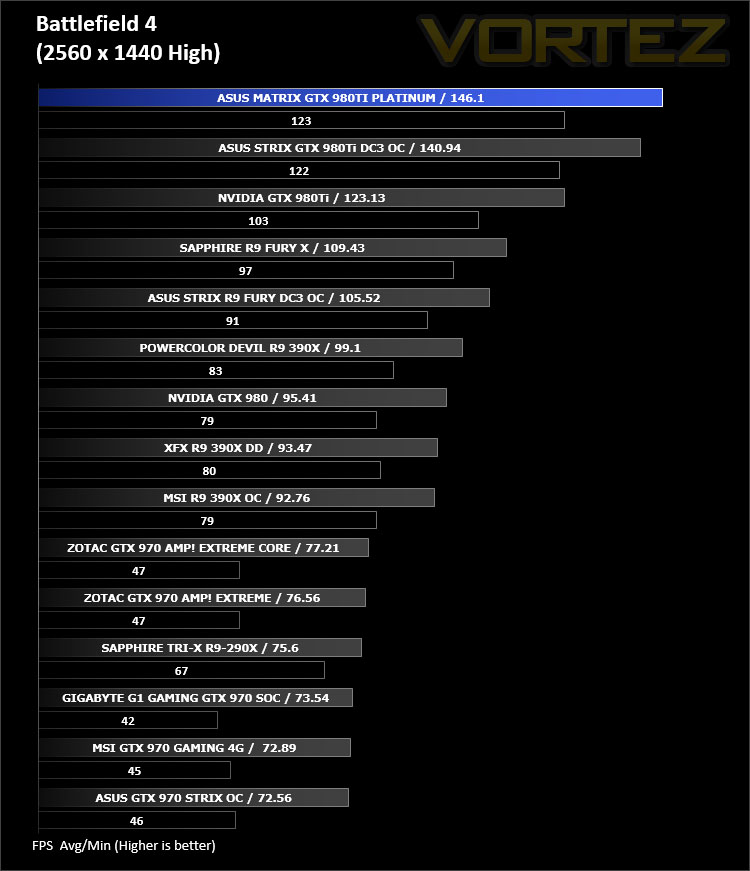
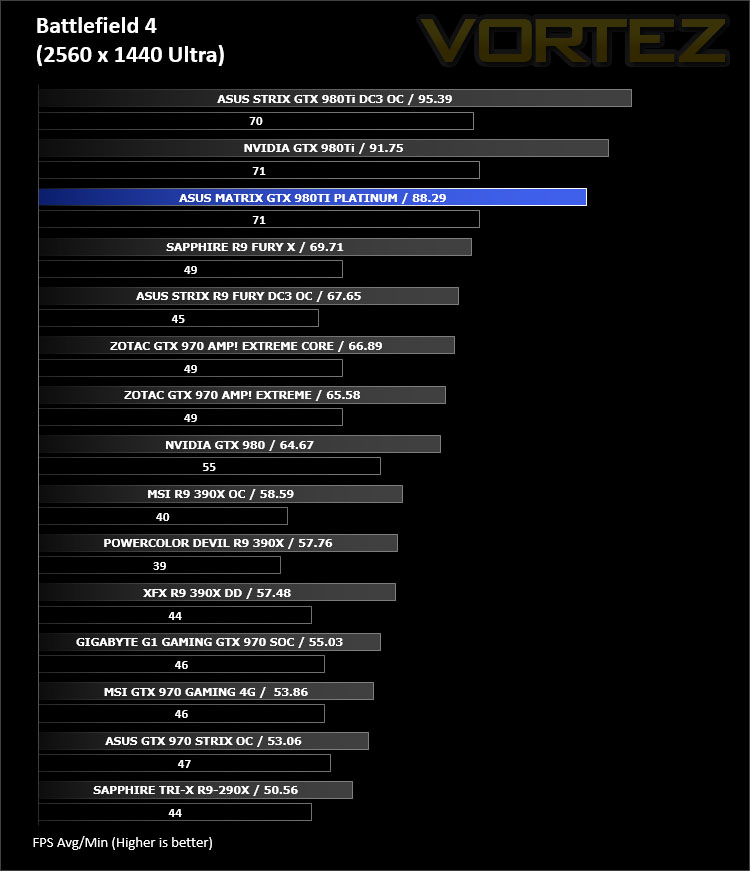
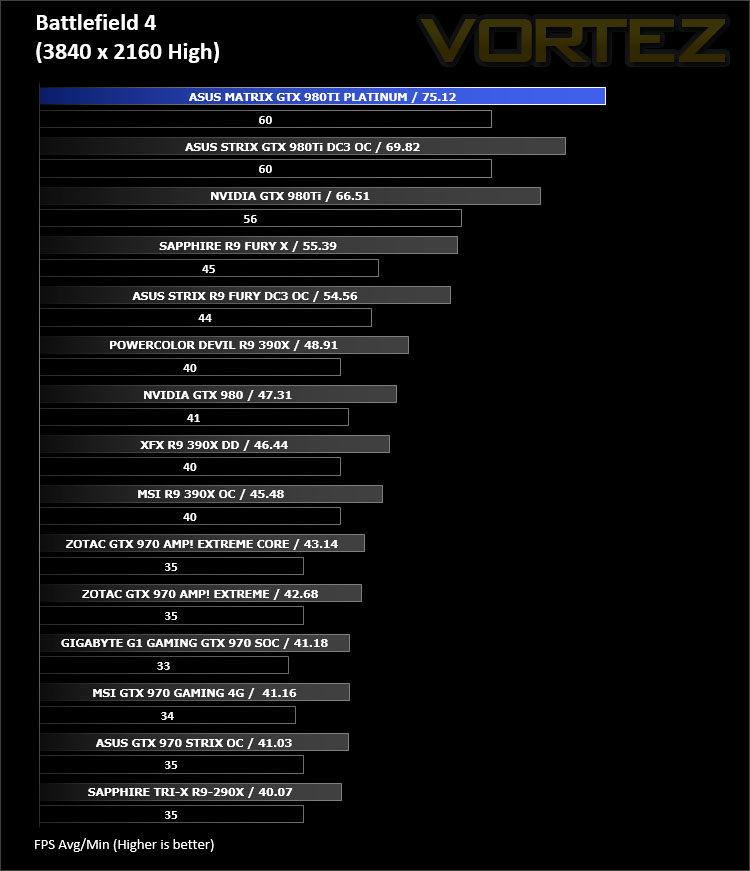
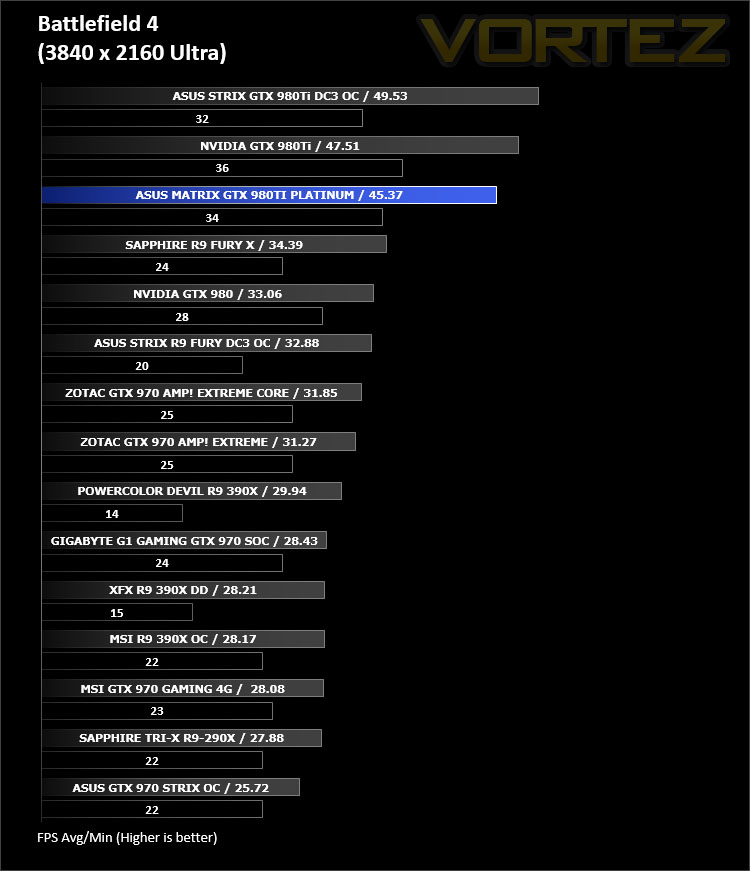
Battlefield 4
Battlefield 4 is a 2013 first-person shooter video game developed by Swedish video game developer EA Digital Illusions CE (DICE) and published by Electronic Arts. It is a sequel to 2011’s Battlefield 3 and is perhaps currently the most popular online First Person Shooter for PC gamers. It has an extremely powerful gaming engine that will stress components more than most FPS titles available.
Watchdogs
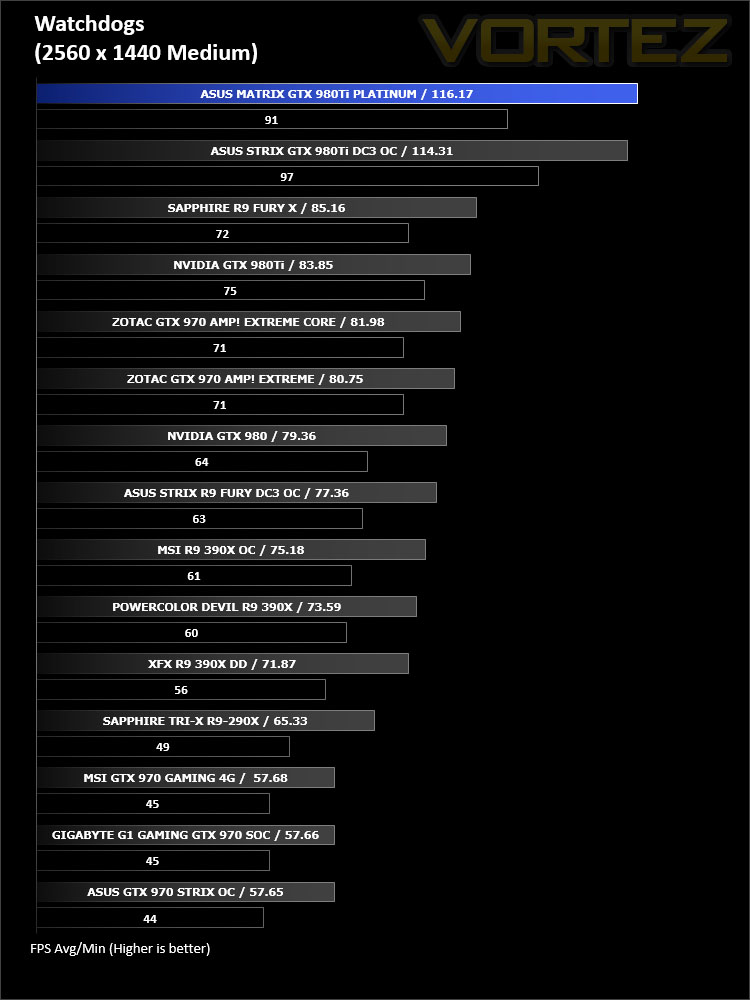
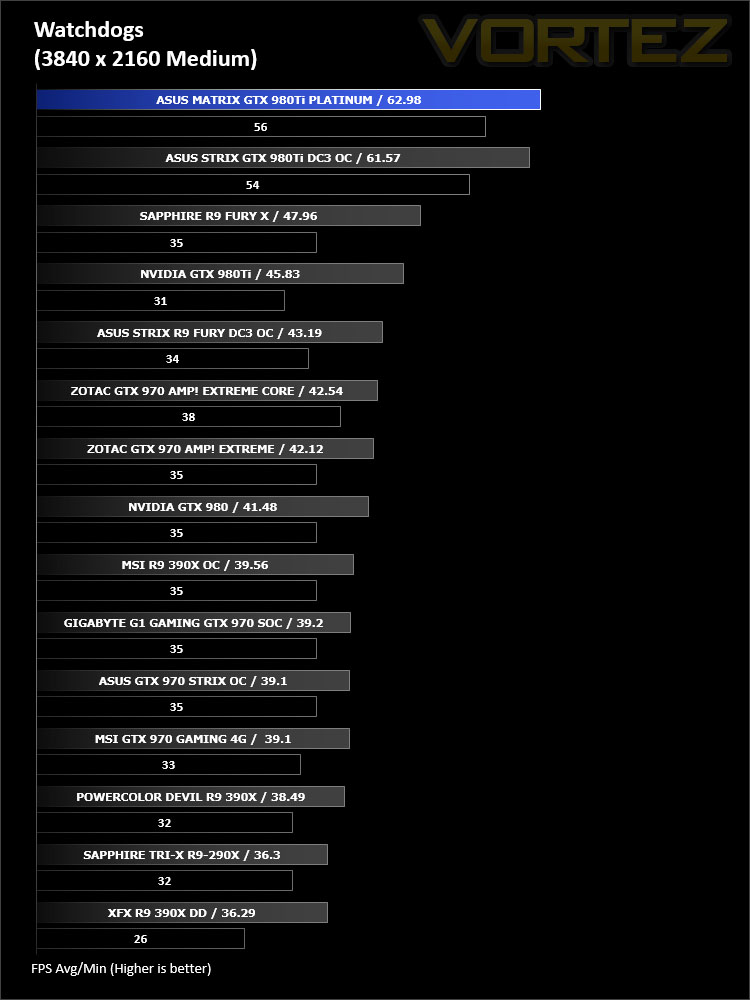
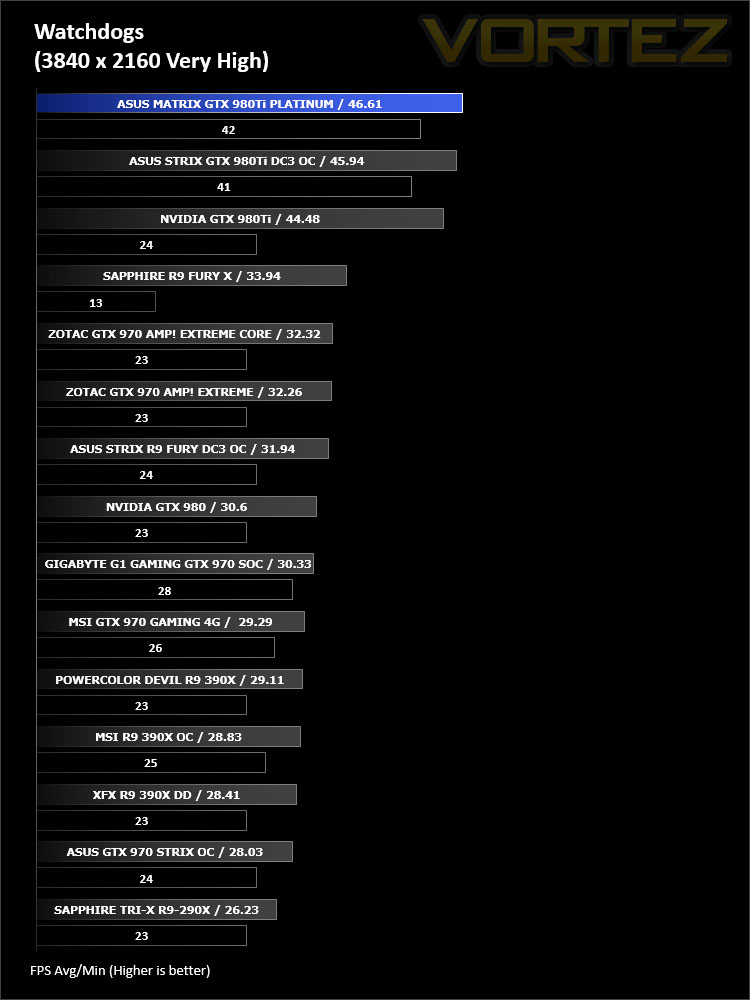
Watch Dogs is a 2014 open world action-adventure video game developed by Ubisoft Montreal and published by Ubisoft. Set within a fictionalized version of Chicago, Illinois, the single-player story follows a hacker and his efforts to seek revenge after the accidental death of his niece. The open world design lets players freely roam Chicago, which includes the urban city, open countryside, and slums. The game is played from a third-person perspective and its world is navigated on-foot or by vehicle. As such this is a very demanding game, especially when graphical options are turned up.

Thief
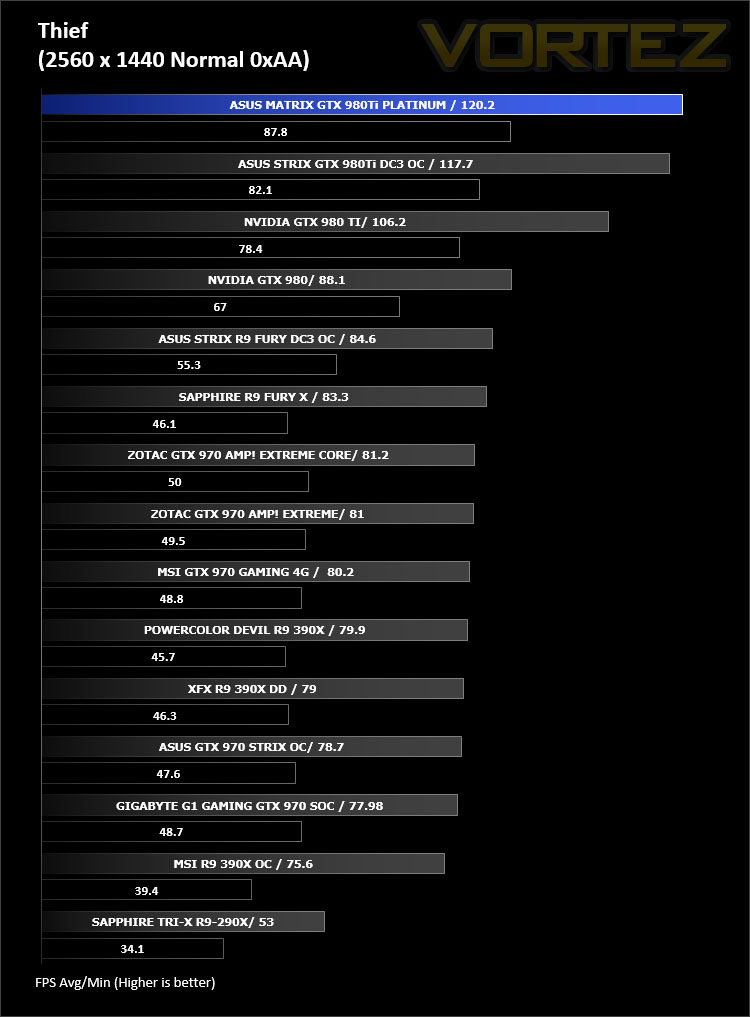
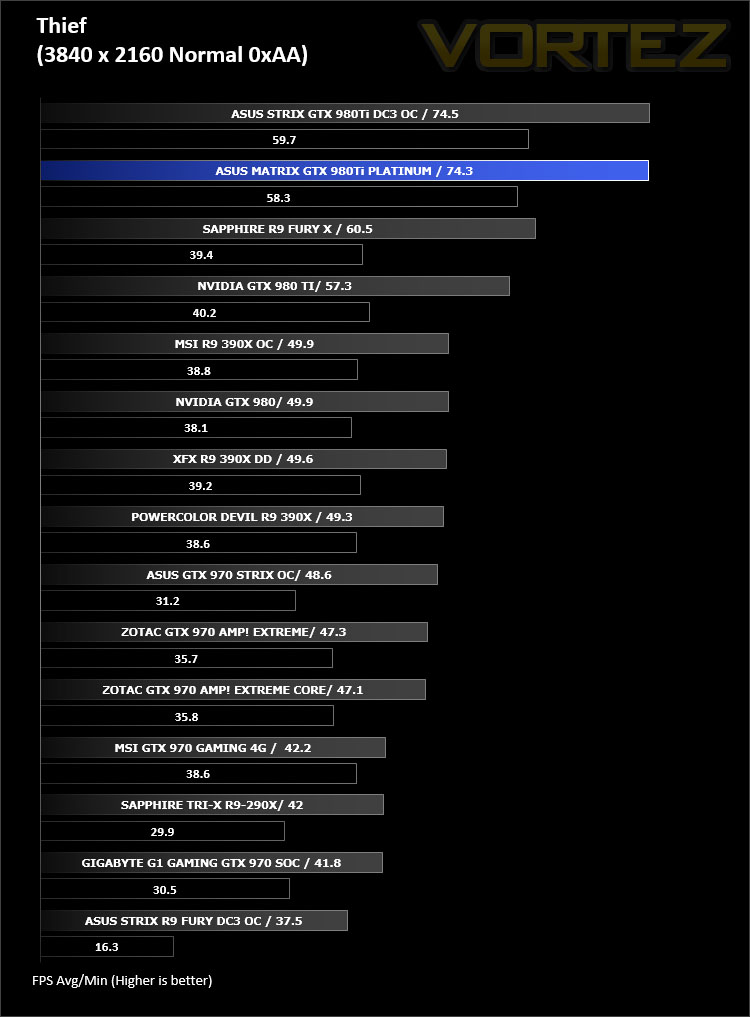
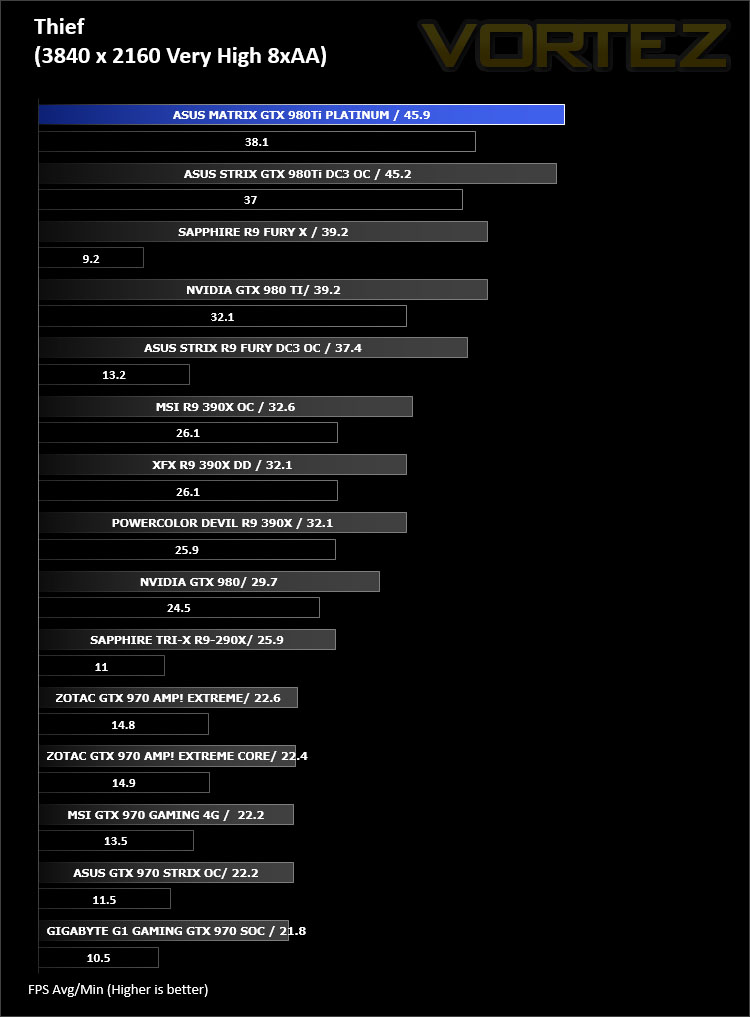
Thief is a stealth video game developed by the Canadian video game developer Eidos Montreal, and published by Square Enix. It is a revival of the cult classic Thief series of stealth games, of which it is the fourth game. Thief is set in a dark fantasy world inspired by Victorian, gothic, and steampunk aesthetics. Using a modified version of the Unreal Engine 3 it makes for a challenging game to pitch against our range of components.

Company of Heroes 2
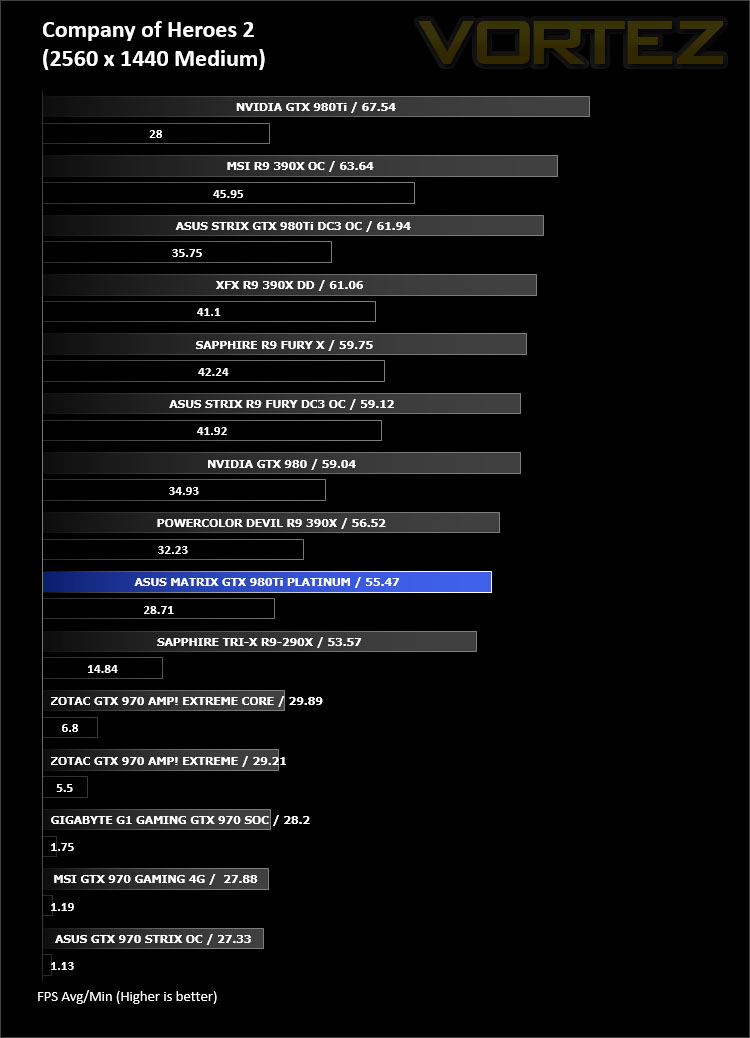
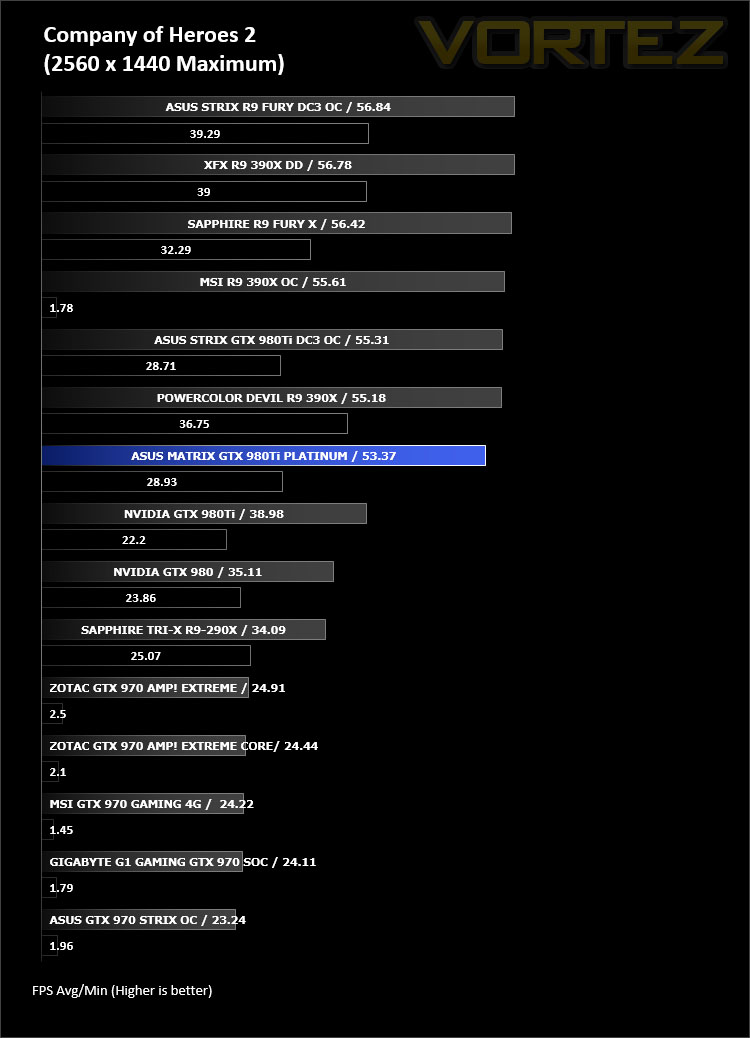
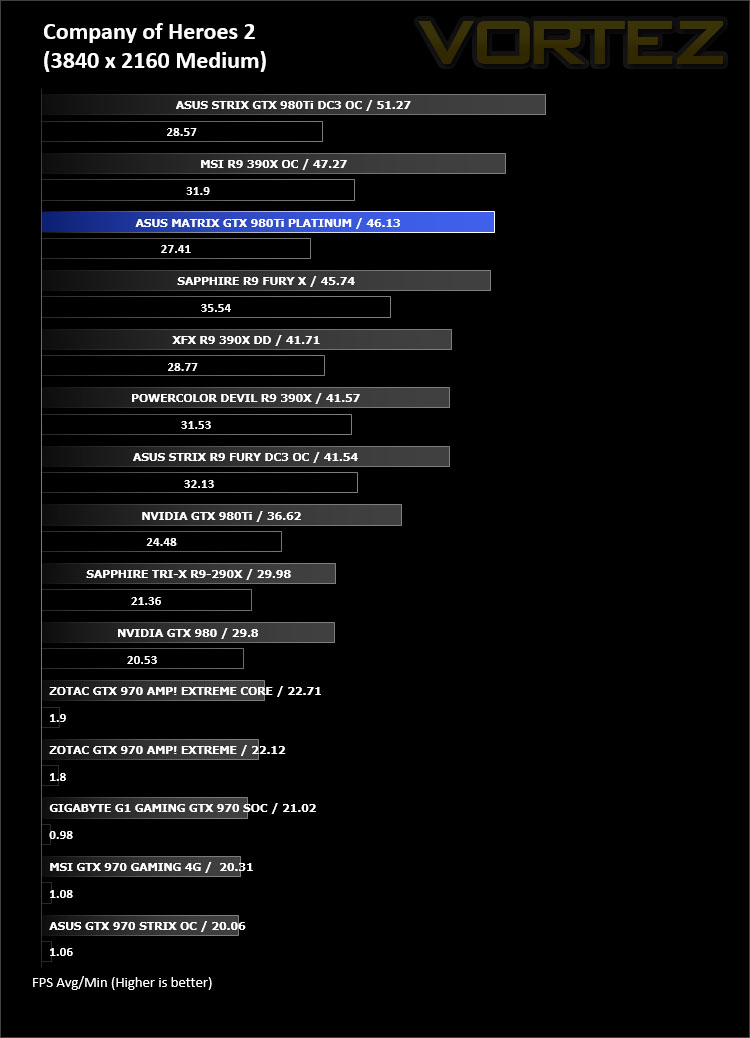
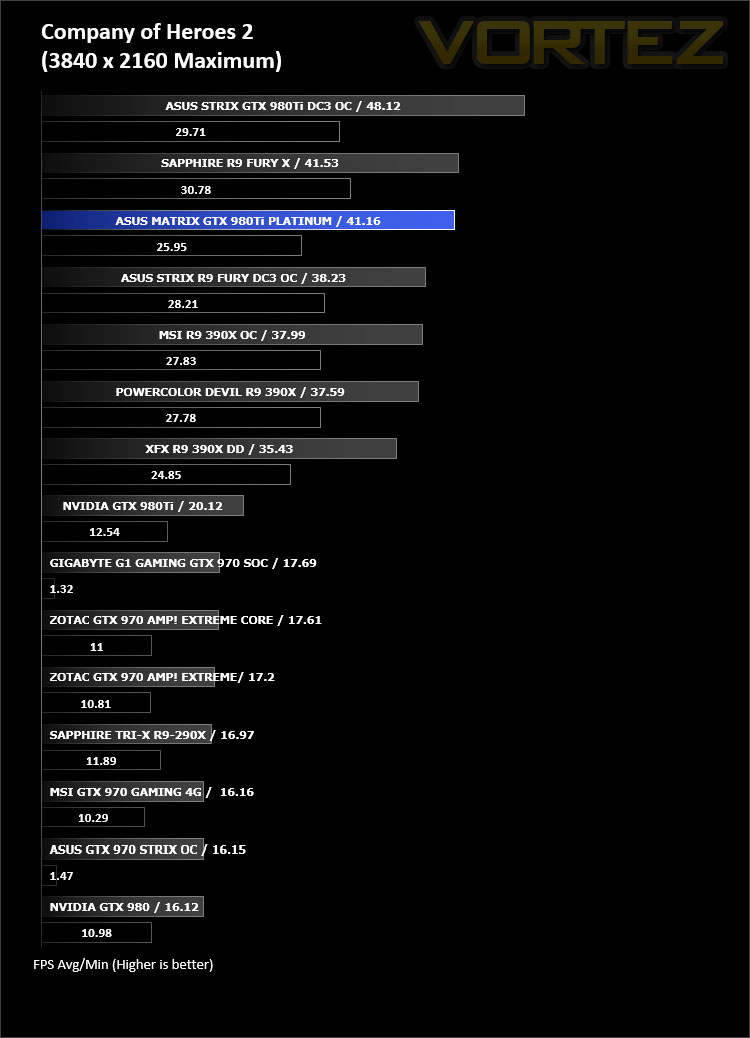
Company of Heroes 2 is a real-time strategy video game developed by Relic Entertainment. It is the sequel to the critically acclaimed 2006 game Company of Heroes.As with the original Company of Heroes, the game is set in World War II but with the focus on the Eastern Front, with players primarily controlling the side of the Soviet Red Army during various stages of the Eastern Front, from Operation Barbarossa to the Battle of Berlin. Company of Heroes 2 runs on Relic Entertainment’s proprietary Essence 3.0 game engine and is extremely demanding of both CPU and GPU.
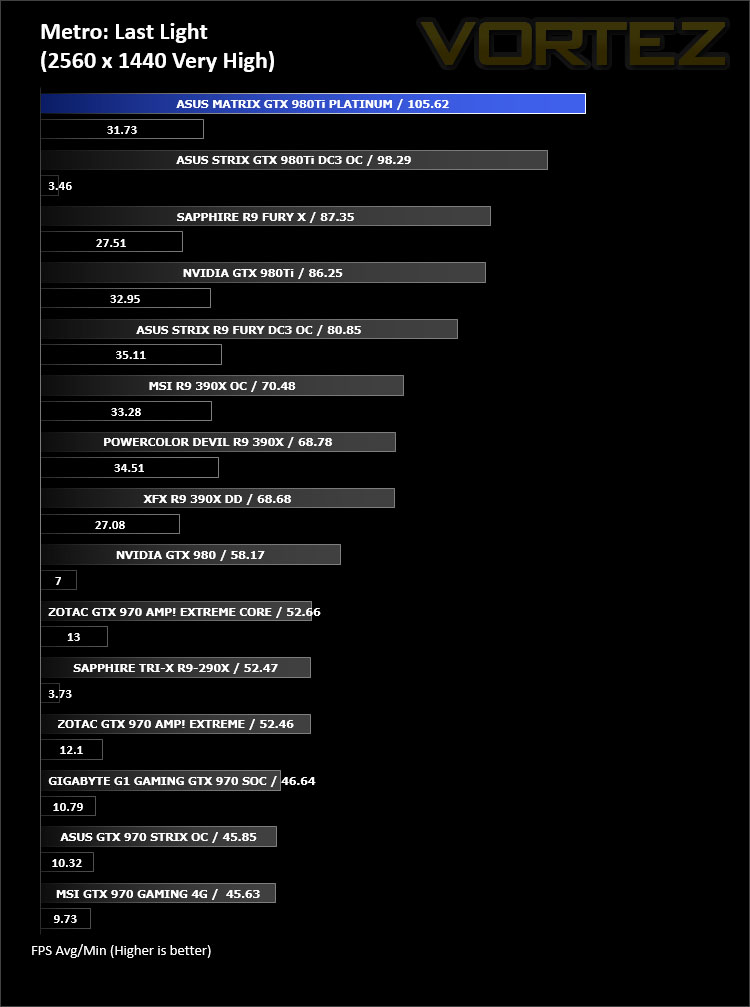
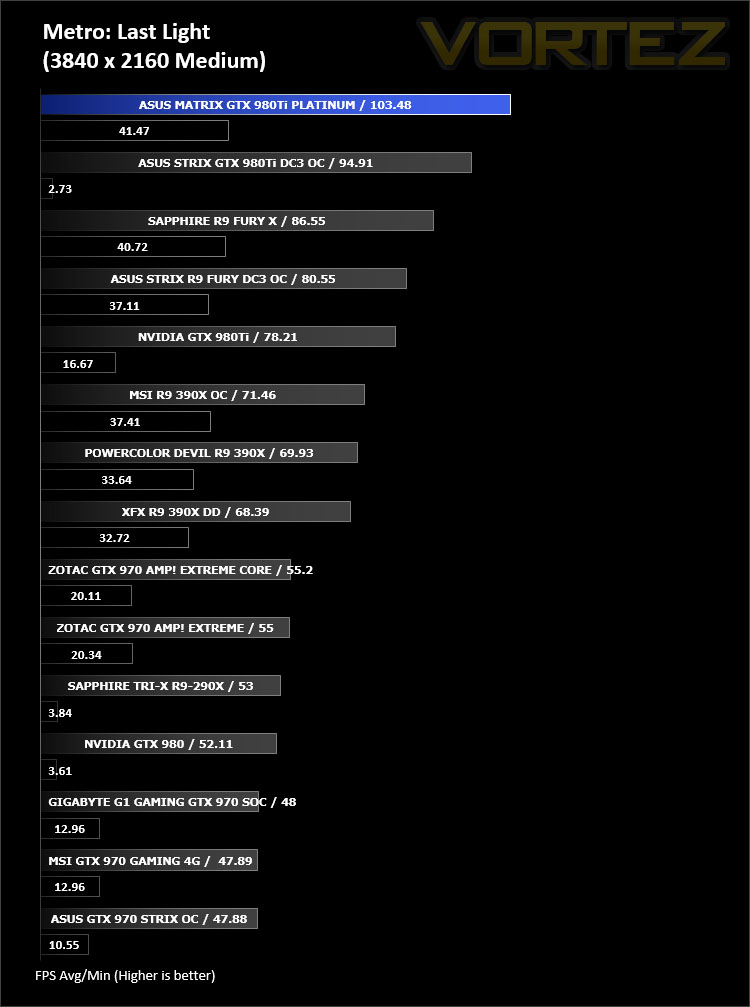
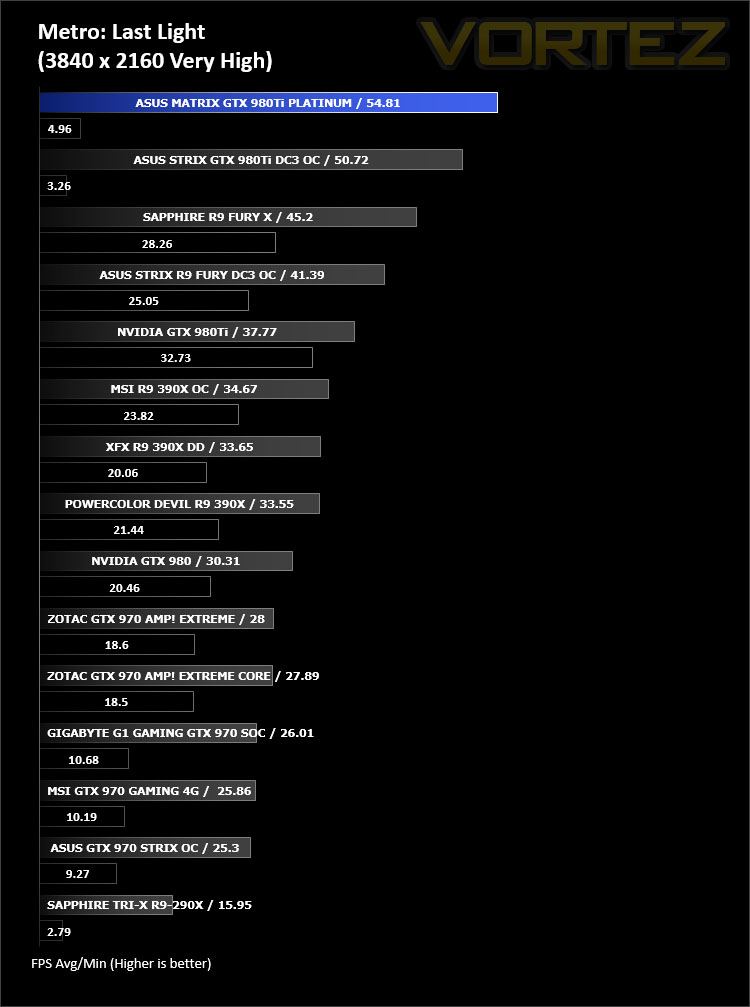
Metro Last Light
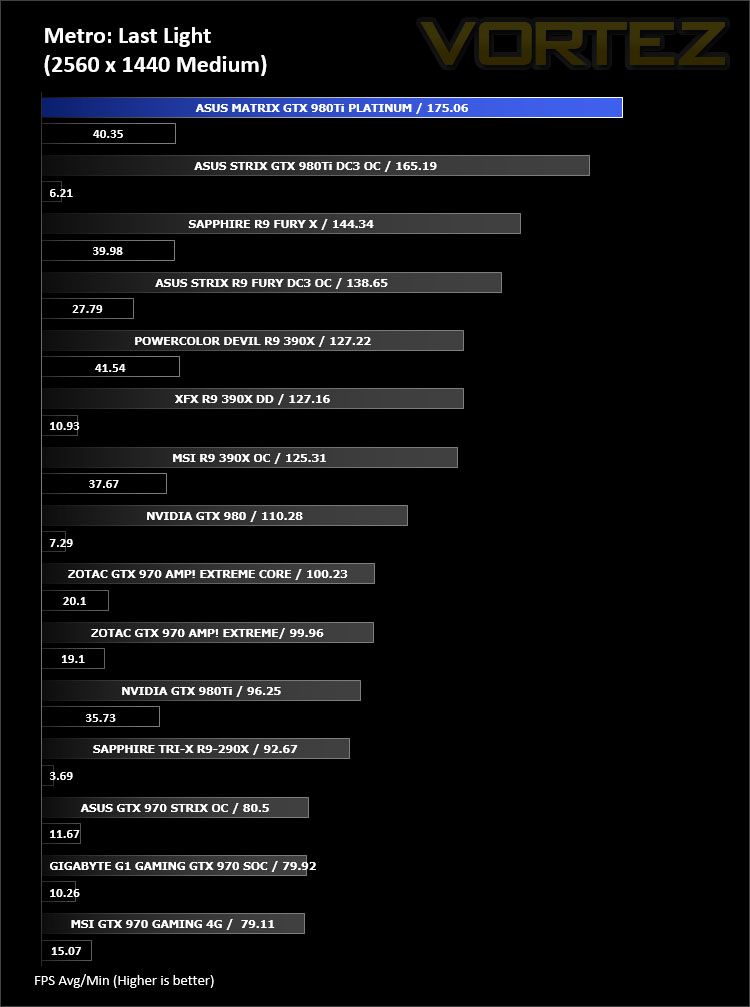
Metro: Last Light is a single-player post-apocalyptic-themed first-person shooter video game with stealth and survival horror elements, developed by Ukrainian studio 4A Games and published by Deep Silver. The game is set in a post-apocalyptic Moscow, part of the universe of the novel Metro 2033 and its sequels, written by Russian author Dmitry Glukhovsky. The second of our FPS titles, it runs on the 4A gaming engine which again, has the capability to stress even the best GPU components.
GRID 2
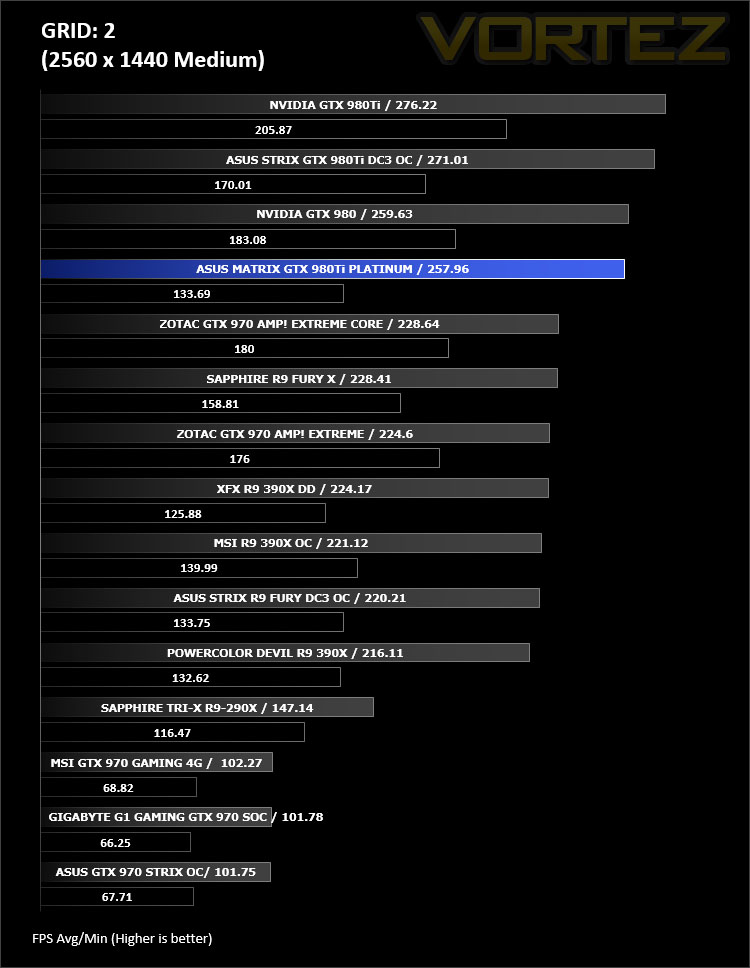
Grid 2 (stylised as GRID 2 and known as Race Driver Grid 2 in Japan) is a racing video game developed and published by Codemasters and is the sequel to 2008’s Race Driver: Grid. The game includes numerous real world locations and cities such as Paris. It also includes motor vehicles spanning four decades. In addition, it includes a new handling system that developer Codemasters has dubbed ‘TrueFeel’, which aims to hit a sweet spot between realism and accessibility. It uses the EGO 3.0 engine which while not overly challenging, is representative of games of this genre.
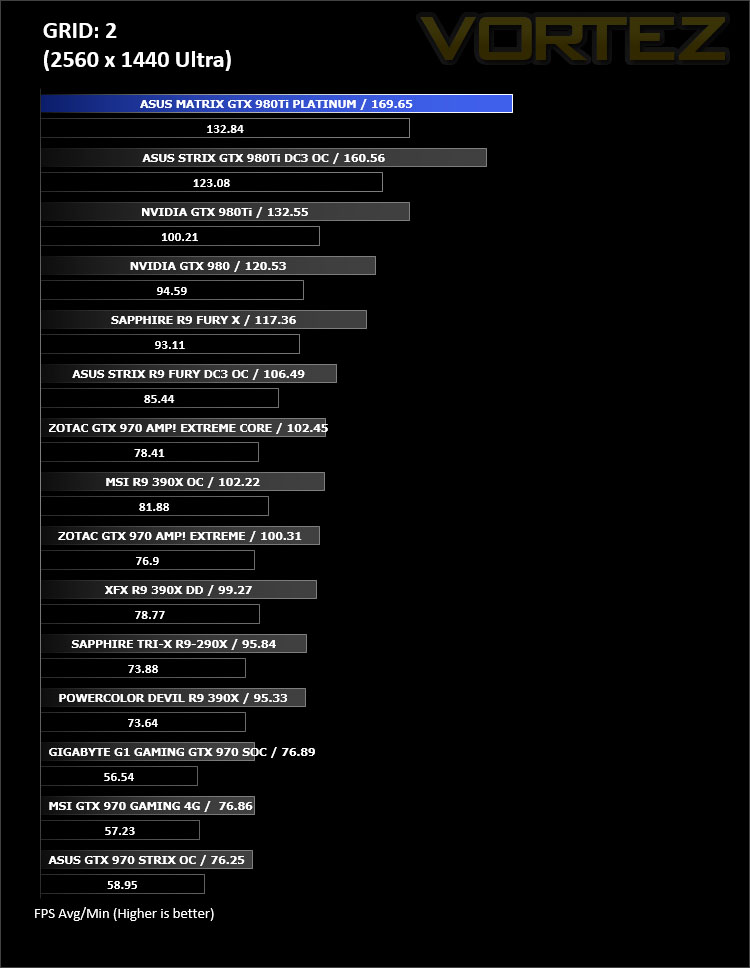
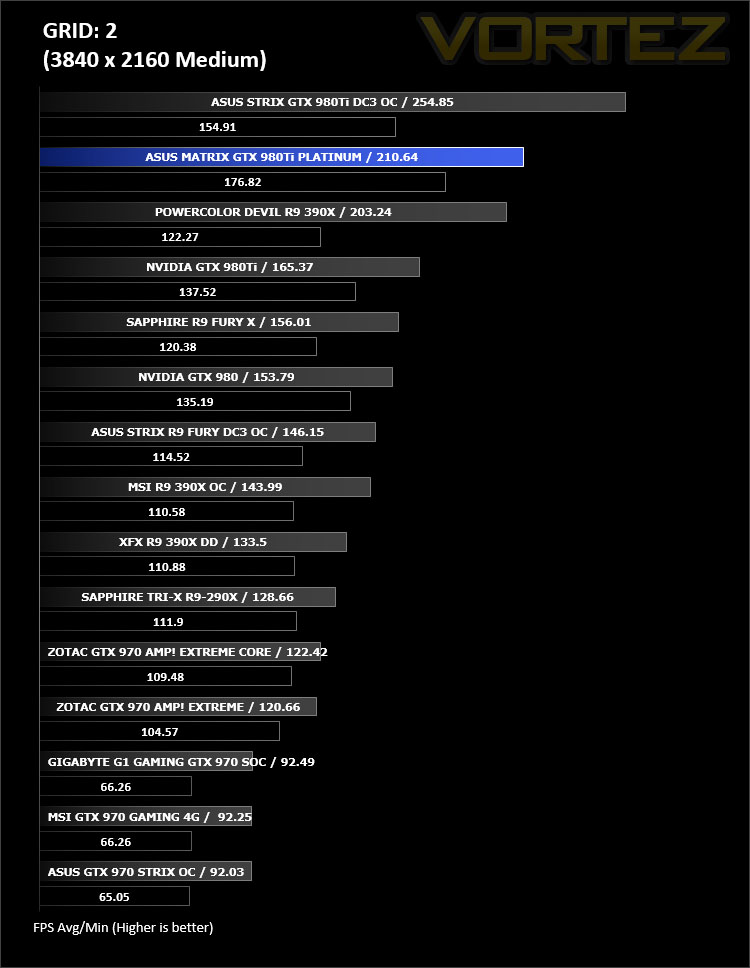
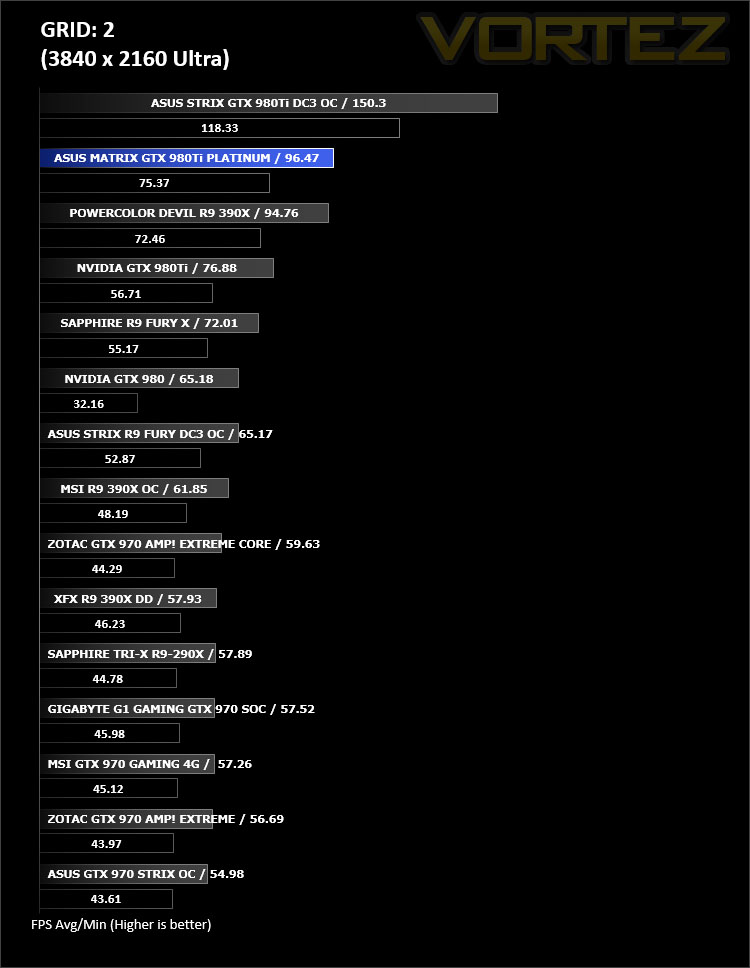
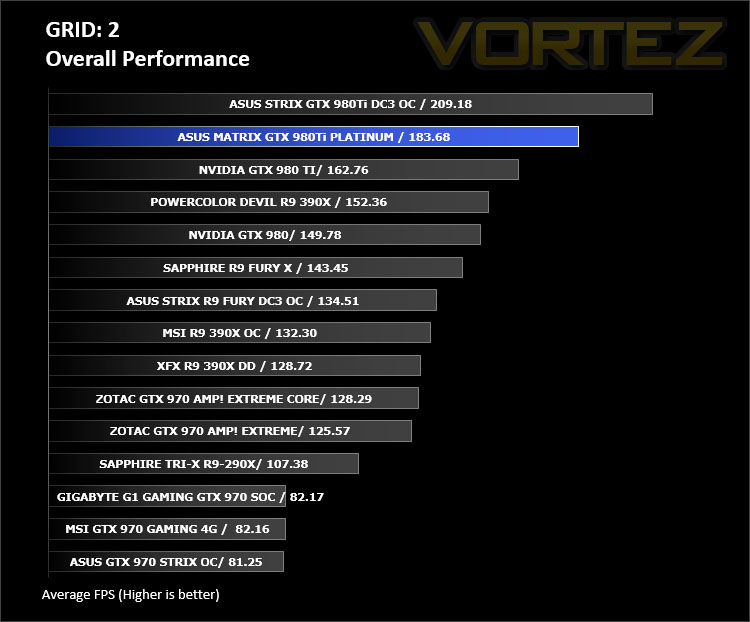
Overall Performance
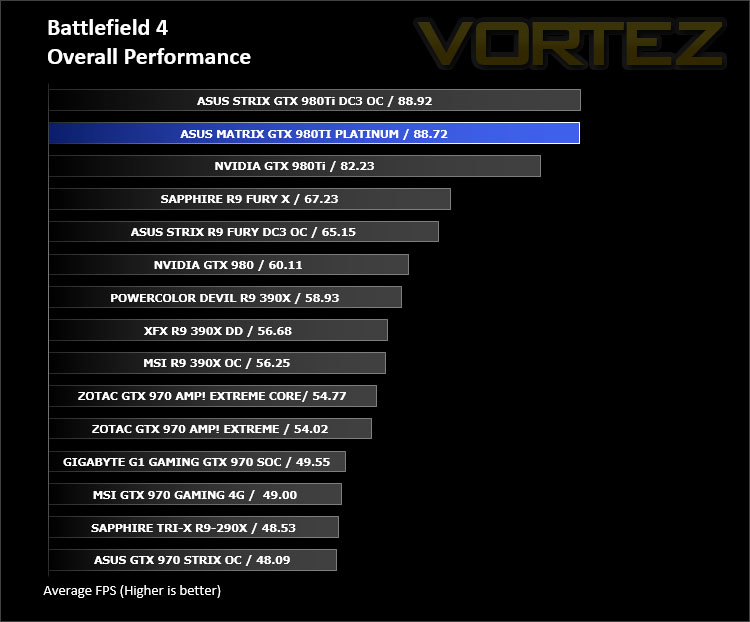
Here we take a look at the overall performance of the graphics card. This figure is determined by finding the average FPS across all of the settings used in a particular benchmark(game) to give us an overall value.
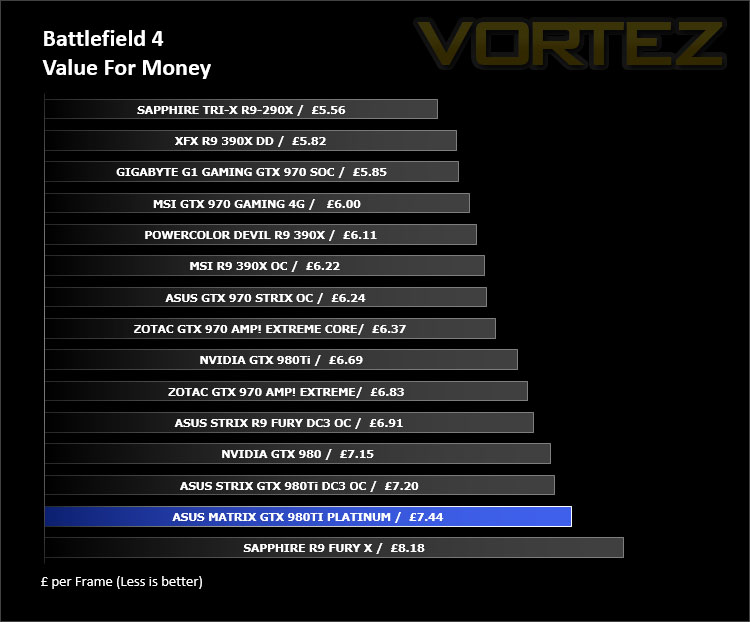
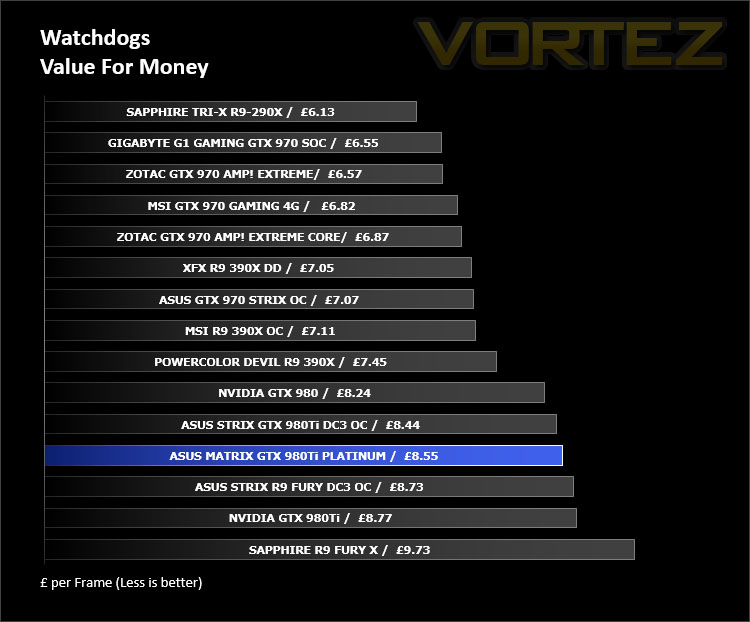
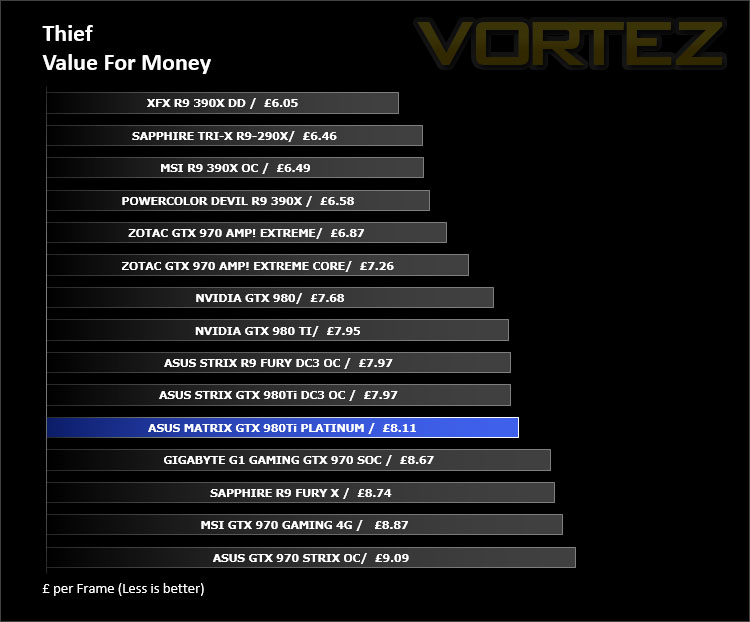
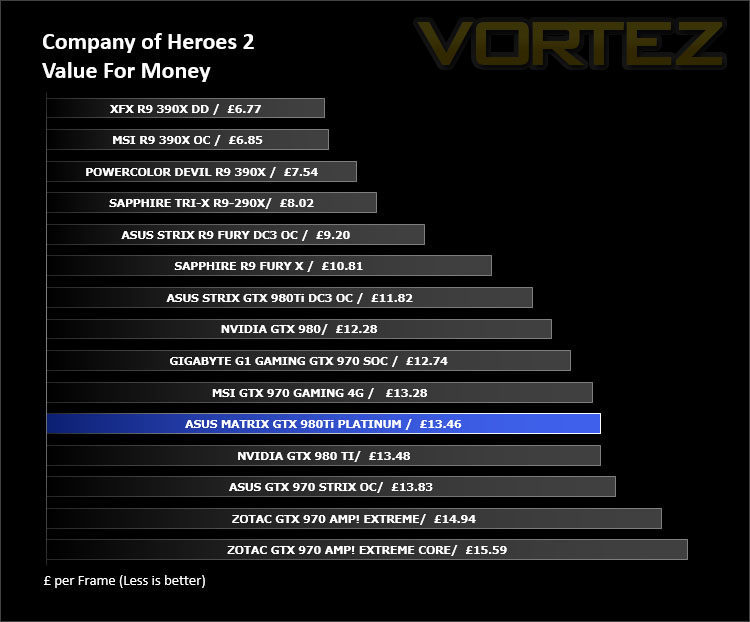
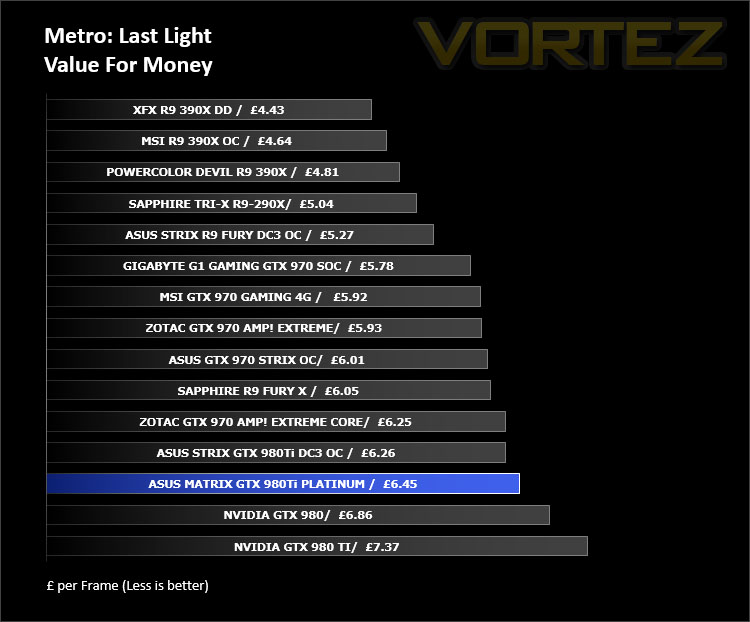
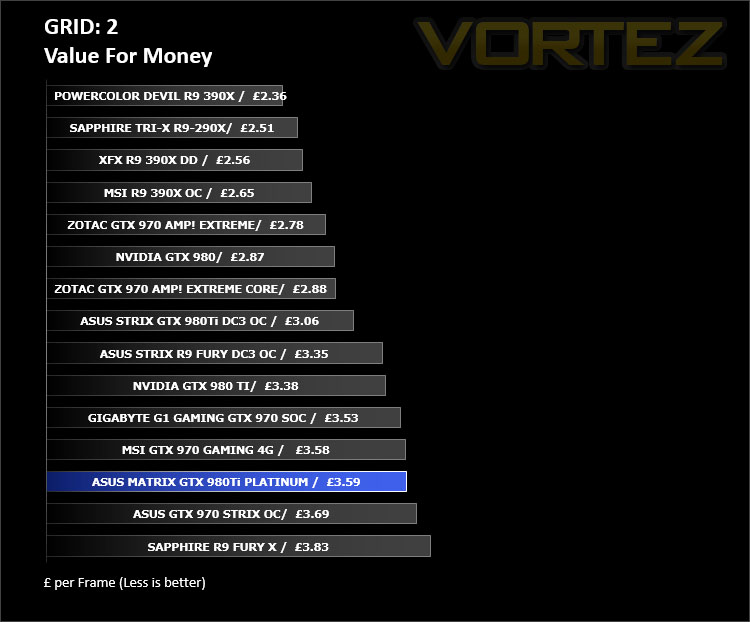
Value For Money
We make a simple calculation for this set of results. For each game we add all of the resulting FPS totals together and then divide by the four sets to give us an overall performance figure. While the figures alone do not give you an accurate picture of how the card will perform in any given scenario, they do tell you, when averaged, which GPU is the more capable across all of the benchmarks and settings tested.
Conclusion
Leading the way with the MATRIX GTX 980Ti PLATINUM, ASUS has confidently designed and produced a masterpiece. This custom cooled, pre-clocked beast improves on NVIDIA’s efforts in the reference card and makes a mockery of AMD’s Fury lineup.
The DirectCU II cooler has been a reliable solution for ASUS in the last few years and the version that our MATRIX card uses, delivers on both the cooling ability and low-noise levels. The NVIDIA GM200 GPU is well-known for generating quite a bit of heat but this cooler responds very well to this challenge – as our temperature testing in this review and our video review reports.
The MATRIX has no problems leading the way in the performance benchmarks (although there was some close rivalry to its counterpart the STRIX GTX 980Ti DC3). The factory overclock allows this card to remain consistent across a wide selection of games at different resolutions and different detail presets. Thanks to bump in rendering attributes and generous assortment of ports on the rear panel of the card, MATRIX can accommodate ultra-high resolutions across single and multiple screens.
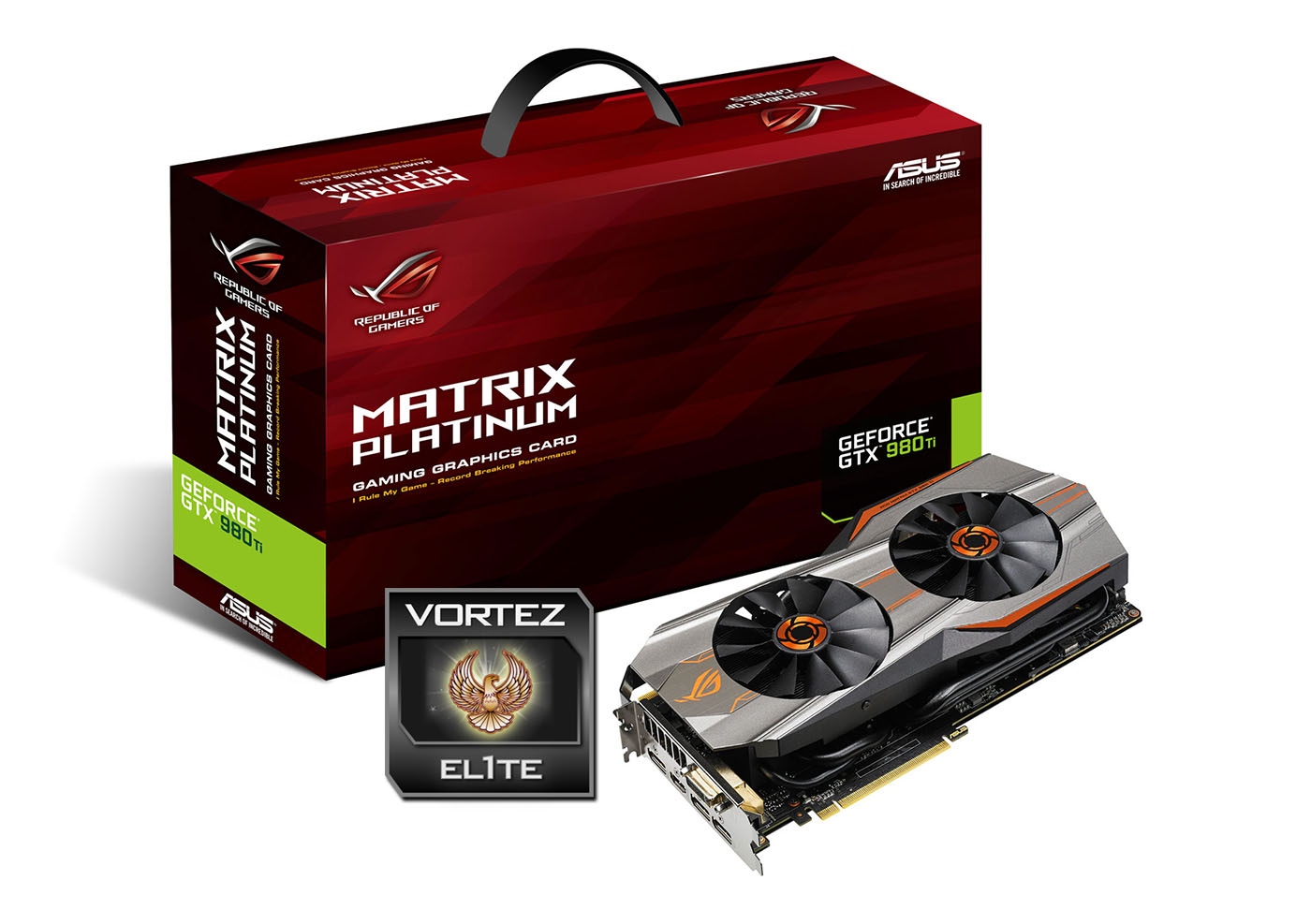
As we mentioned previously this graphics card has been fine-tuned for overclocking enthusiasts. The feature-set lends itself to enabling this type of user to get the most out of a flagship GPU and as such MATRIX is laden with options like the memory defroster, safe mode button and LN2 switch.
MATRIX GTX 980Ti PLATINUM is priced at £659.99 GBP / $750 USD. This is an incredibly large sum of money but a flagship offering of this calibre isn’t ever going to be cheap. MATRIX packs in an astounding number of advanced features which are tailored to enthusiasts who intend to have access to tools which allow indepth modifications and therefore the price is reflective of this.
The MATRIX GTX 980Ti PLATINUM is a declaration of ASUS’ prominence in the GPU arena. This flagship graphics card offers an astounding number of features for avid tweakers and delivers on low-noise, low temperatures and fantastic performance!
VIDEO REVIEW – VORTEZ TV
Pros
+ Attractive design
+ Low-noise
+ Low-temperatures
+ Excellent performance
+ DirectX 12 ready
+ 3 years warranty
Cons
– May struggle to fit in some cases
– Heavy
– Price
+ Attractive design
+ Low-noise
+ Low-temperatures
+ Excellent performance
+ DirectX 12 ready
+ 3 years warranty
Cons
– May struggle to fit in some cases
– Heavy
– Price