







The mid range 270X series benefits from a factory overclock and GIGABYTE’s Windforce cooler. See how it stacks up against a batch of mid-range graphics cards…

Product on Review: GV-R927XOC-2GD
Manufacturer and Sponsor: GIGABYTE
Street Price: £159.99
The GIGABYTE Windforce series of graphics cards have long been held in the highest regard here at Vortez thanks to the supreme cooling ability along with the factory overclocks applied to each card they produce. Of course, GIGABYTE also supply reference designed cards which are a little cheaper but we feel the extra few pounds it costs for the card to arrive on your doorstep factory overclocked and complete with one of the best aftermarket cooling designs is well worth the extra.
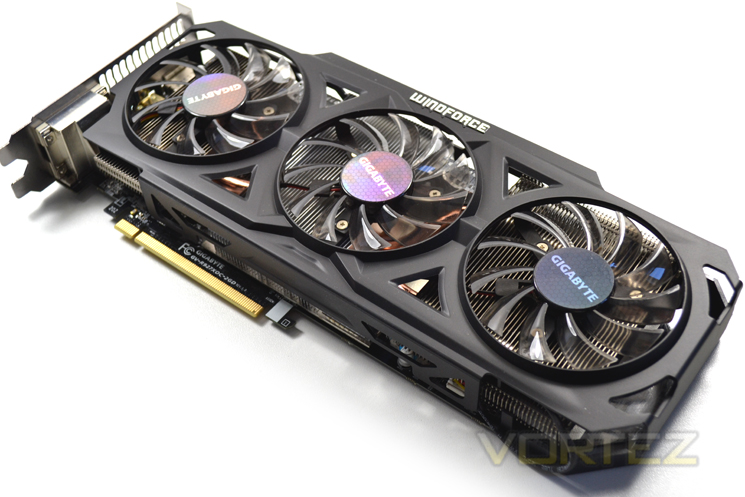
The AMD R9-270X has some very stiff competition in this highly contested market space because for the £159 GIGABYTE are asking for their R9-270X Windforce 3x graphics card, the options are varied from not only GIGABYTE’s direct competitors who also have their own versions of the R9-270X but also from the NVIDIA GTX760, itself a very capable card for not a lot more money. Today however we will be concentrating our efforts on the AMD card which in reference format received our silver and value awards. Today, we will see if the GIGABYTE version can better this result.
About GIGABYTE
GIGABYTE was founded in 1986, establishing our uncontested position in continuous technological innovation. By focusing on key technologies and achieving strict quality standards, GIGABYTE has been regarded as an innovative and trusted motherboard leader in the globe. To keep pace in a rapidly changing world, we have offered a comprehensive product line covering Motherboards, Graphics Cards, PC Components, PC Peripherals, Laptops, Slate Devices, Desktop PCs, Network Communications, Servers and Mobile Phones. We are dedicated to building up a full-range digital life, responding promptly and sonorously to consumer needs and desires.
Specification
AMD R9 270X Specification
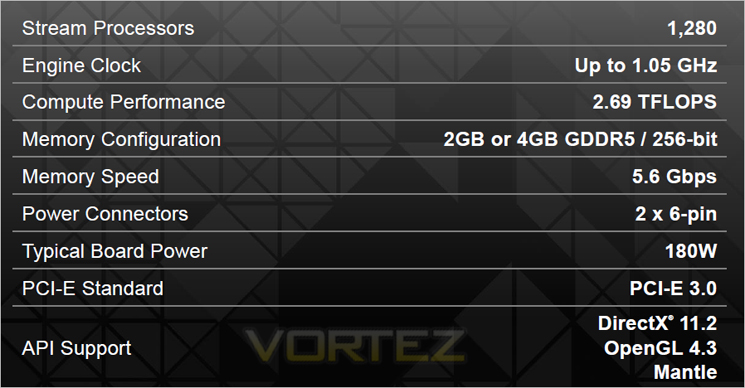
As you can see from the specifications above, the R9 270X features 1280 shaders. It also has 32 ROPs which results in a pixel and texture fillrate of around 33.6GPixel/s and 84 GTexels/s respectively.
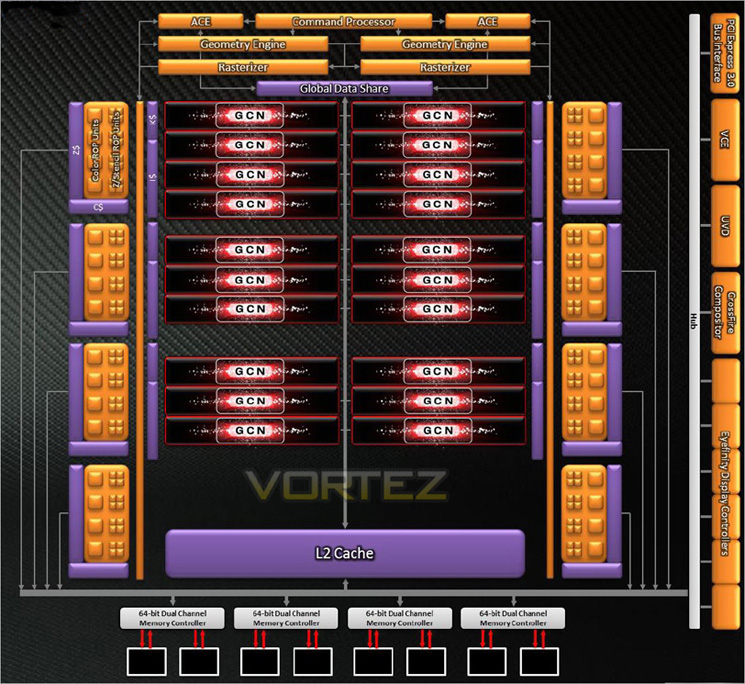
Pitcairn
While the 290x heralds the dawn of a new age with a huge 512bit memory controller, the R9 270X retains the 256-bit memory bus found on older cards. We were hoping AMD would see fit to increase this to at least a 384bit controller but alas, the more we look at the specifications of this card, the more we see it as a re-hash of the HD7870. After all, why would it be different? Both cards are based on the Pitcairn core, the 270X has simply been overclocked from the 1GHz HD7870 edition we saw last year to 1050MHz on the core. The memory has also received a healthy 200MHz boost to 1400MHz (5600 effective). The typical board power of 180W is also in line with the HD7870 as this had a typical draw of 175W so it isn’t any more power efficent either.
None of this is bad of course, it’s just we were expecting a little more from AMD. We already know how good the HD7870/50 cards are for the money and after two years we would think AMD would have introduced something a little more innovative for it’s mid range cards. Re-badging cards is not a bad thing if it means the end users is getting last years flagship performance at a cut-down cost but as you can see above, the specifications show us that the 270X is, on the face of it at least, a re-hash of the HD7870, itself a mid-range GPU that is now nearing end of life.
GIGABYTE R9 270X Windforce Specification
Chipset Radeon R9 270X
Core Clock Base / Boost clock:1050 / 1100 MHz
Memory Clock 5600 MHz
Process Technology 28 nm
Memory Size 2048MB
Memory Bus 256 bit
Card Bus PCI-E 3.0
Memory Type GDDR5
DirectX 11.2
OpenGL 4.3
PCB Form ATX
Digital max resolution 4096 X 2160(via a single HDMI connector and not supported with two DVI connectors)
Analog max resolution 2048 x 1536
Multi-view 3
I/O Dual-link DVI-I*1 / DVI-D*1 / DisplayPort*1 / HDMI*1
Card size L=297mm W=132mm H=43mm
Power requirement 500W(with two 6-pin external power connectors)
Core Clock Base / Boost clock:1050 / 1100 MHz
Memory Clock 5600 MHz
Process Technology 28 nm
Memory Size 2048MB
Memory Bus 256 bit
Card Bus PCI-E 3.0
Memory Type GDDR5
DirectX 11.2
OpenGL 4.3
PCB Form ATX
Digital max resolution 4096 X 2160(via a single HDMI connector and not supported with two DVI connectors)
Analog max resolution 2048 x 1536
Multi-view 3
I/O Dual-link DVI-I*1 / DVI-D*1 / DisplayPort*1 / HDMI*1
Card size L=297mm W=132mm H=43mm
Power requirement 500W(with two 6-pin external power connectors)
AMD Zerocore Power Efficiency
ENABLING THE WORLD’S MOST POWER EFFICIENT GPUS
When a discrete GPU is in a static screen state it works to minimize idle power by enabling a host of active power saving functions including (but not limited to); clock gating, power gating, memory compression, and a host of other features. However, GPUs with AMD’s exclusive AMD ZeroCore Power technology can take energy savings to entirely new heights by completely powering down the core GPU while the rest of the system remains active. Nearly all PCs can be configured to turn off their displays after a long period of inactivity. This is known as the long idle state; where the screen is blanked but the rest of the system remains in an active and working power state (ACPI G0/S0).
As soon as the system goes into long idle state and applications are not actively changing the screen contents, the GPU enters the AMD ZeroCore power state. In the AMD ZeroCore power state, the GPU core (including the 3D engine / compute units, multimedia and audio engines, displays, memory interfaces, etc.) is completely powered down. However, one cannot simply remove the GPU and its associated device context completely; particularly when it is the
only GPU in the system as is the case in many enthusiast platforms. The operating system and SBIOS must still be aware that a GPU is still present in the system. For this reason, the AMD ZeroCore Power state maintains a very small bus control block to ensure that GPU context is still visible to the operating system and SBIOS. The AMD ZeroCore power state also manages the power sequencing of the GPU to ensure that the power up/down mechanism is self contained
and independent of the rest of the system.
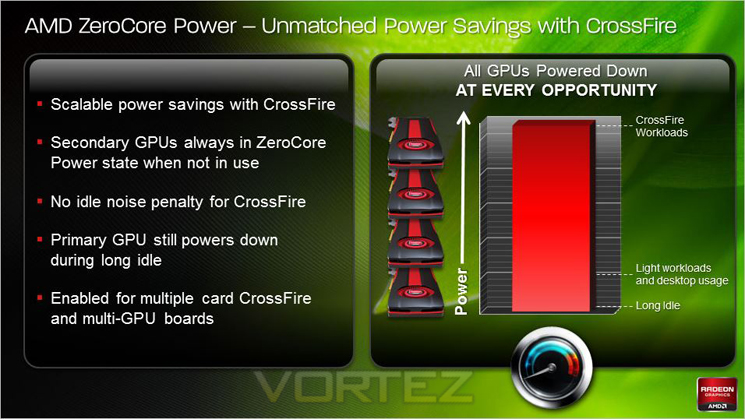
The enablement of the AMD ZeroCore Power feature is controlled by the driver. The driver monitors the display contents and allows the GPU to enter the AMD ZeroCore Power in the condition that the GPU enters long idle and subsequent work requests are no longer being submitted to the engine. If any applications update the screen contents, AMD ZeroCore Power technology can periodically wake the GPU to update the framebuffer contents and put the GPU
back into the AMD ZeroCore Power state. Furthermore, applications such as Windows 7 desktop gadgets are architected to minimize activity and save power in the long idle state. These applications are active during screen on mode to display dynamic content such as weather, RSS feeds, stock symbols, system status, etc. but also have the intelligence to suspend any updates and activity when the system enters long idle. These applications will not wake the
GPU from the AMD ZeroCore Power state in long idle.
AMD ZeroCore Power technology delivers tremendous energy savings. Many PCs remain in the long idle state for a variety of use cases that are highly relevant to everyday consumers, enthusiasts and professionals. In AMD ZeroCore Power mode, users can still enjoy non‐graphics activities such as file serving/streaming, motherboard audio and music, and remote access while the GPU core is essentially powered off.
GCN (Graphics Core Next)
Available on select, high-performance AMD Radeon™ R9 and HD 7000 Series graphics products, the Graphics Core Next (GCN) Architecture is a radically new approach to the design of a consumer GPU.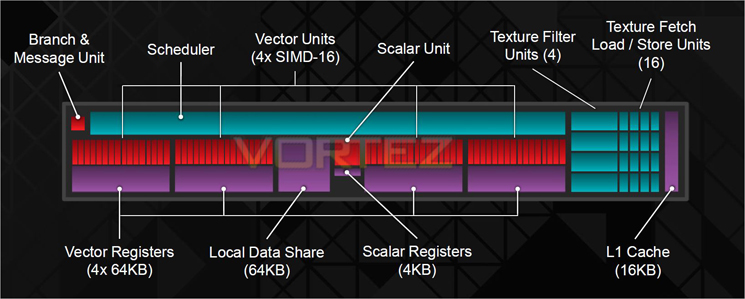
Designed to push not only the boundaries of DirectX® 11.2 gaming, the GCN Architecture is also AMD’s first design specifically engineered for general computing. Equipped with up to 32 compute units (2048 stream processors), each containing a scalar coprocessor, AMD’s 28nm GPUs are more than capable of handling workloads-and programming languages-traditionally exclusive to the processor. Coupled with the dramatic rise of GPU-aware programming languages like C++ AMP and OpenCL™, the GCN Architecture is truly the right architecture for the right time.
Performance
In simple terms, increasing the number of transistors in a GPU has a big impact on the potential performance of a graphics card-but transistors alone are not enough. It takes a truly great design, like the GCN Architecture, to effectively utilize that potential for real-world performance.
Below you will find just a few examples of how this truly next-generation architecture delivers on one very simple design goal: enable the world’s most powerful graphics cards.1
Starting with GPU utilization, AMD has taken great strides to ensure that the GCN Architecture is capable of efficiently using its hardware resources. This seems like such a simple idea, but designing a GPU to frequently approach its peak theoretical performance is a challenge the GCN Architecture tackles with ease.
The GCN Architecture is designed for improved utilization, which ensures that the GPU is making optimal use of its resources for maximum performance.
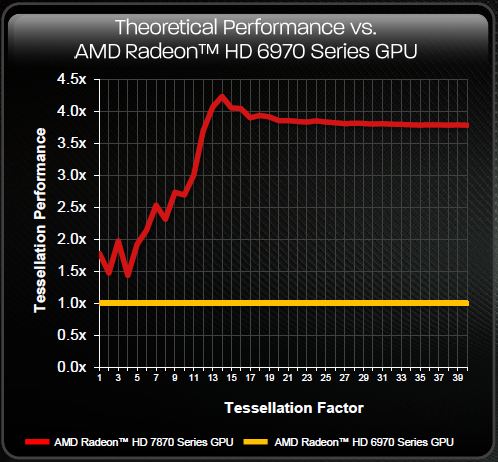
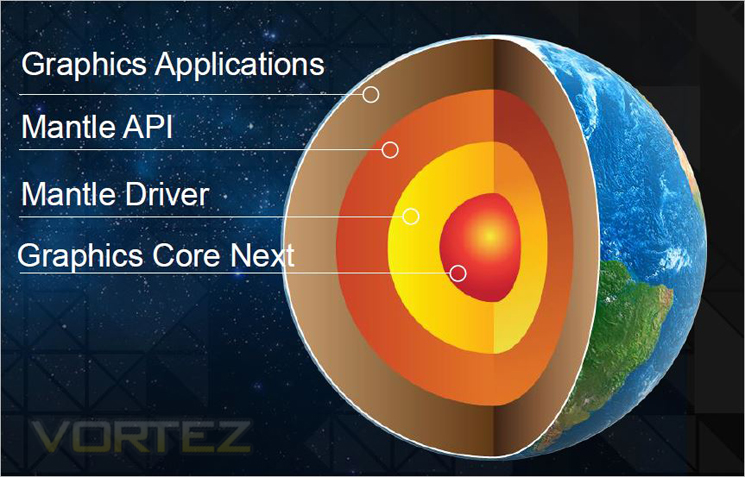
The GCN Architecture also benefits from dramatically improved tessellation performance. Games featuring this DirectX® 11 technology are considerably faster than they were on the previous generation of AMD Radeon™ products. There is also the new Mantle API which promises to dominate NVIDIA, especially in titles such as Battlefield 4. Project Mantle is one of AMD’s most innovative and game-changing features, delivered with the Radeon™ R9 and R7 Series product line. Mantle is a new application programming interface (API), leveraging the commonality between the next-gen consoles and Radeon™. It enables game developers direct communication to our GPUs, unlocking the true potential of GCN and resulting in significantly higher gaming performance at all segments. We will be looking at Mantle in a separate article but if what we hear is correct, Microsoft (who are responsible for DirectX) should be very worried.
Every gamer knows that the GPU’s clockspeed also has a big impact on the performance of a graphics card, and the GCN Architecture keeps that in mind.
But what many don’t know is that every graphics card is designed to draw only a certain amount of power from your PC’s power supply. This is called the Thermal Design Profile, or TDP, and it’s critical that the GPU architecture is capable of making the most of every watt. The GCN Architecture can do that thanks to a technology called AMD PowerTune technology.
AMD PowerTune is an intelligent system that performs real-time analysis of the games and applications that utilize a GPU. Examples of such software might include Battlefield 3 or Furmark. In the event that an application is not making the most of the power available to the GPU, AMD PowerTune can improve that application’s performance by raising the GPU’s clockspeed by up to 30%! Best of all, this technology is completely automatic and is designed specifically to improve gaming performance.
Available on all 28nm AMD Radeon™ products, AMD PowerTune is designed to enable significantly higher clockspeeds in your favorite games-automatically!
Image Quality
But performance is not enough for today’s demanding gamers. Image quality, or the clarity and accuracy of textures and effects, is equally important. The GCN Architecture is equipped with three key technologies that dramatically raise the bar in this regard.
Partially Resident Textures (PRT)
Even in the latest titles, gamers may have noticed that games often re-use or repeat textures, particularly on the ground or in background scenery such as mountains or trees. This is because increasing the physical size or number of textures in a game can have a negative impact on the performance of a GPU. PRT is a radical new technology that hopes to break this cycle.
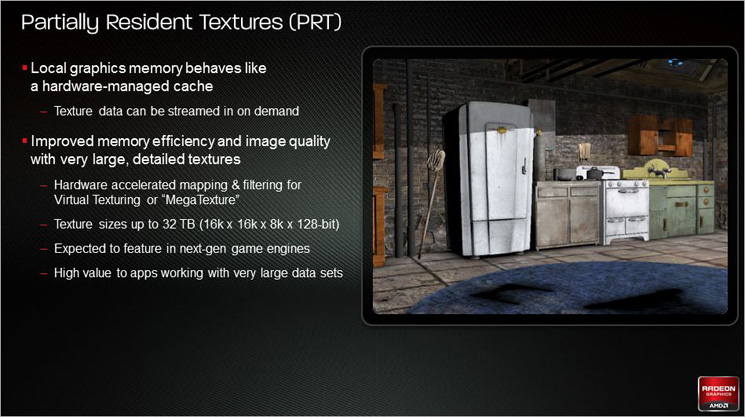
PRT can utilize absolutely enormous texture files, up to 32 terabytes large, with minimal performance impact. PRT accomplishes this by streaming small bits of these massive textures into the GPU as needed, giving compatible games a virtually endless supply of unique texture data it can apply to the game world. The GCN Architecture in 28nm AMD Radeon™ products is the first GPU design to feature a hardware implementation of this technology.
Partially Resident Textures (PRT) enables future games to utilize ultra-high resolution textures with the same performance as today’s small and often repetitive textures.
Improved Anisotropic Filtering (AF)
Available on every modern GPU, anisotropic filtering is a technique that assists the GPU in making sure textures in your favorite games remain razor sharp, even at a distance. Most games now offer the ability to enable this feature, and the AMD Catalyst™ driver suite has long provided players with the option to force enable anisotropic filtering for all of their games.
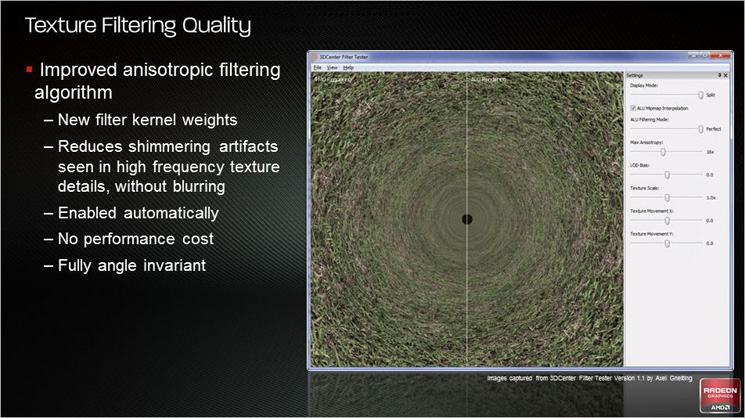
Where every GPU design differs, however, is in the way the anisotropic filtering is actually executed. The GCN Architecture has been specifically optimized to produce superior results when AF is enabled.
Improved anisotropic filtering in products like the AMD Radeon™ HD 7900 Series ensure gamers get sharper, better textures when this technology is enabled.
Improved DirectX® 11 Tessellation
As DirectX® 11 titles become more mature, game developers are naturally pushing the envelope of realism by utilizing a greater degree of special rendering effects. One such effect is tessellation, which can dynamically generate additional detail in a scene on the fly.
A wireframe scene of a rally car in DiRT 3 driving through water. On the left, notice there are no ripples. On the right, after tessellation, there is new and dynamic detail in the game.
As with anisotropic filtering, tessellation is not new to GPUs, but the manner in which tessellation is executed can have a large impact on the gaming experience. Because of this, the GCN Architecture has again been optimized to deliver up to 4x the performance of the AMD Radeon™ HD 6000 Series in heavily-tessellated games.
First Look
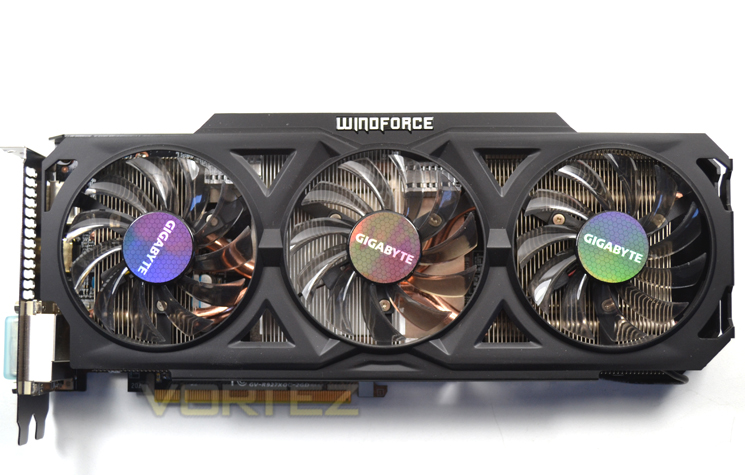
The graphics card is dominated by the Windforce 3x cooler which has a revised shroud. No longer is the shroud a shiny black plastic, instead it is an aluminium affair which is much stronger if somewhat heavier.
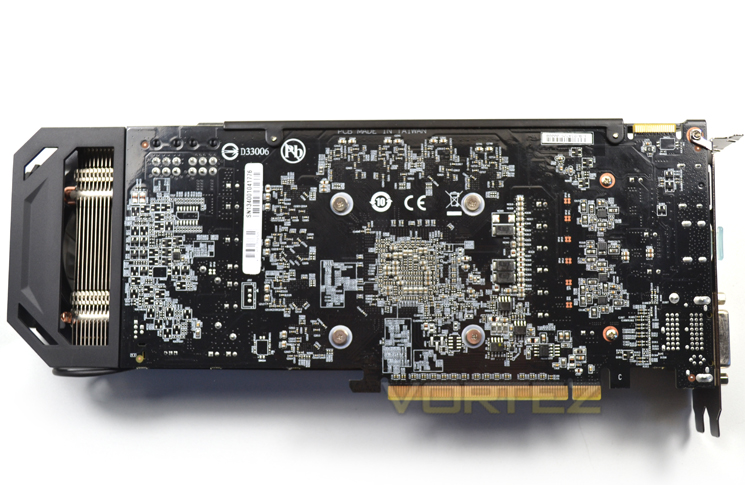
The PCB matches the shroud being a matt black affair. All of the memory chips are located the card but we would liked to have seen a backplate protecting the PCB from damage.
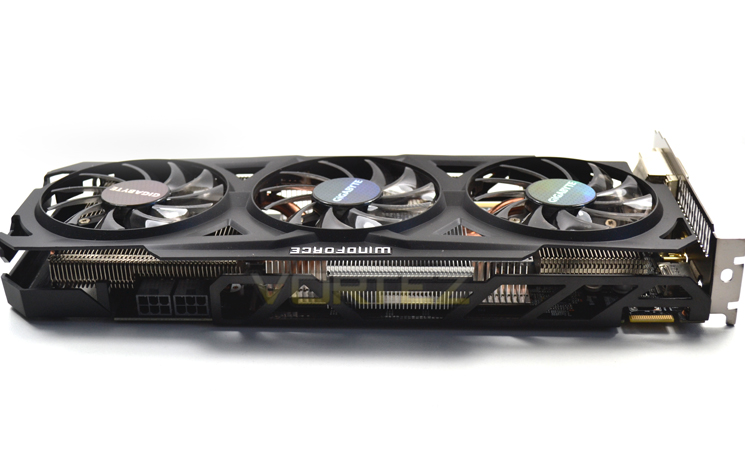
The profile of the card gives us a hint at the cooling power beneath the shroud. GIGABYTE have seen fit to add a midplate/brace to strengthen the card to prevent bowing under the weight of the large cooler.
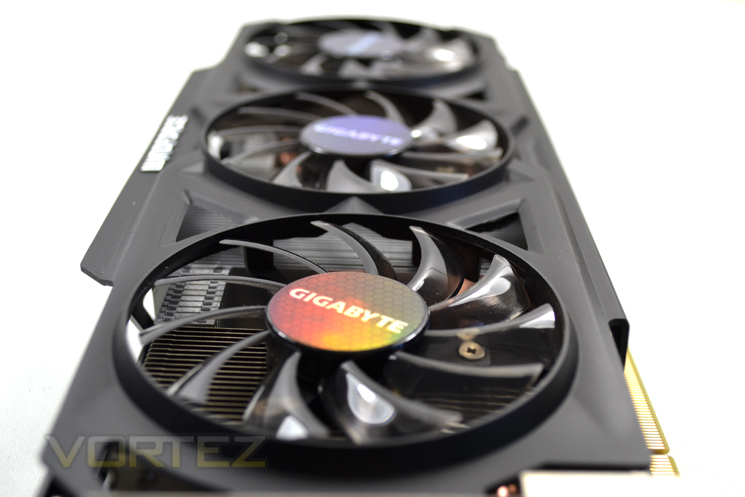
The card measures L=297mm W=132mm H=43mm which will mean there is a slight overhang on a standard ATX sized motherboard.
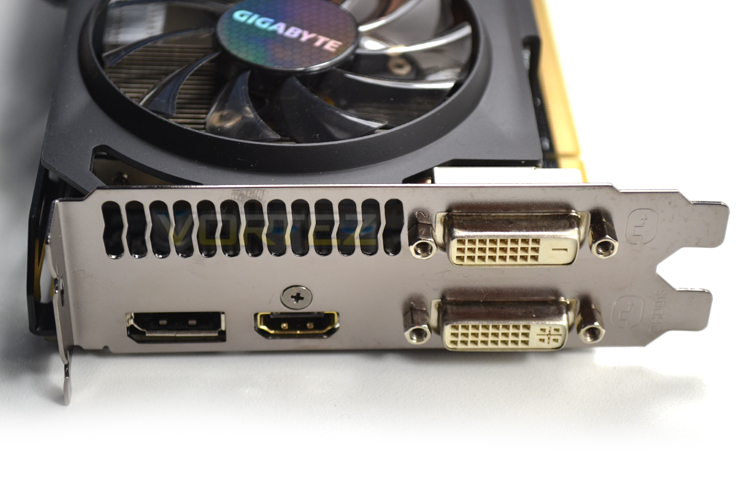
The I/O area features DVI-I, DVI-D, HDMI and DisplayPort. The card can support up to 6 displays with an additional DisplayPort 1.2 MST multihub. It can also use 3 different ports simultaneously so if you have 3 monitors, you can use any of the ports and theoretically, the card will be able to display from whichever of the four ports you choose.
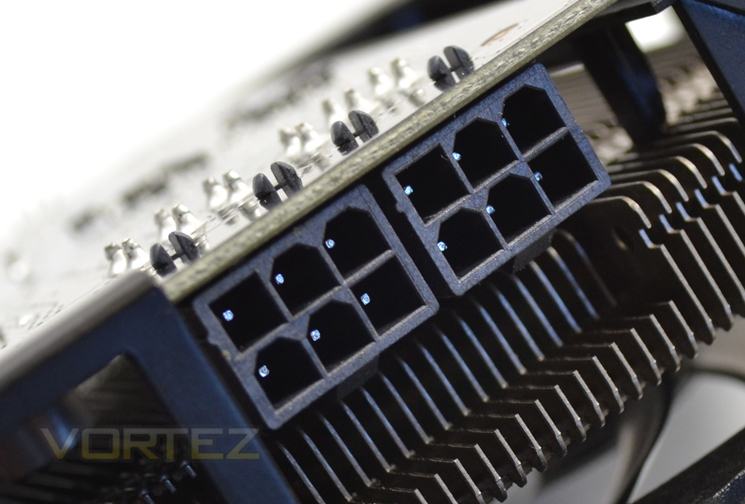
As the picture above shows, twin 6pin PCIe Power plugs will be required for the card. The power requirements of the R9 270X are 500W (600W for Crossfire).
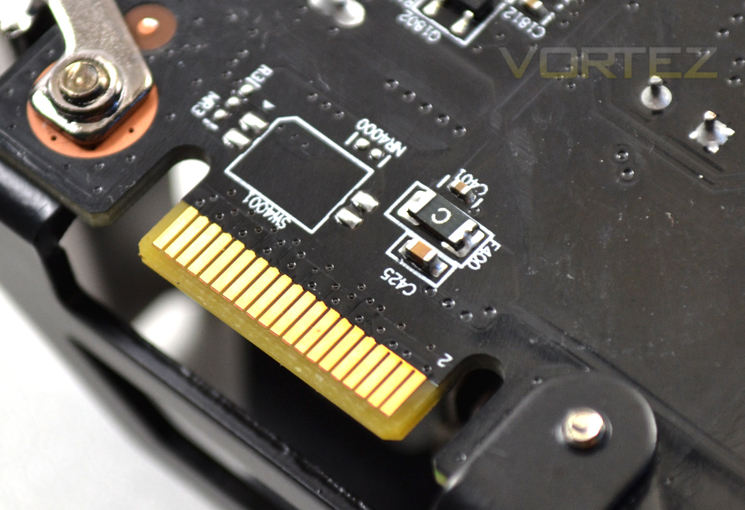
As with the 7800 series of graphics cards, the R9 270X has a single Crossfire tab meaning it can be paired up to another single AMD card from the same family.
Let’s take a closer look…
Closer Look
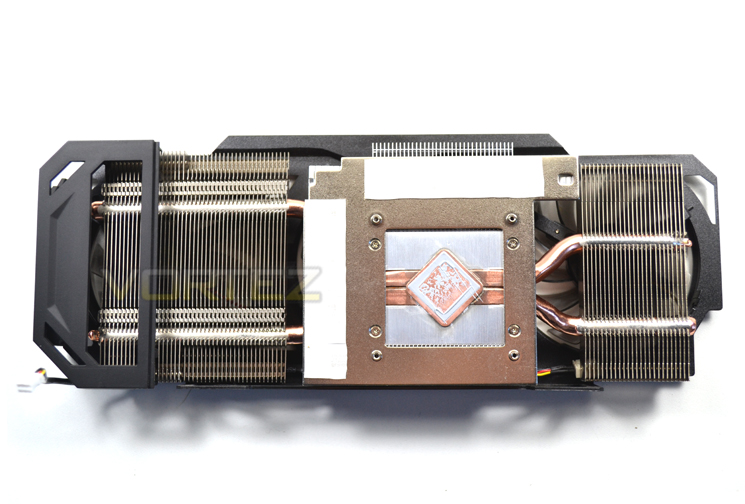
the Windforce design on this card features twin heatpipes which stretch from one side of the card to the other and are soldering in the centre to the copper core base plate. The heatpipes have 3 separate aluminium finned arrays which are horizontal in orientation meaning the heat from the core will be dissipated out into the case rather than out of the rear of the card.
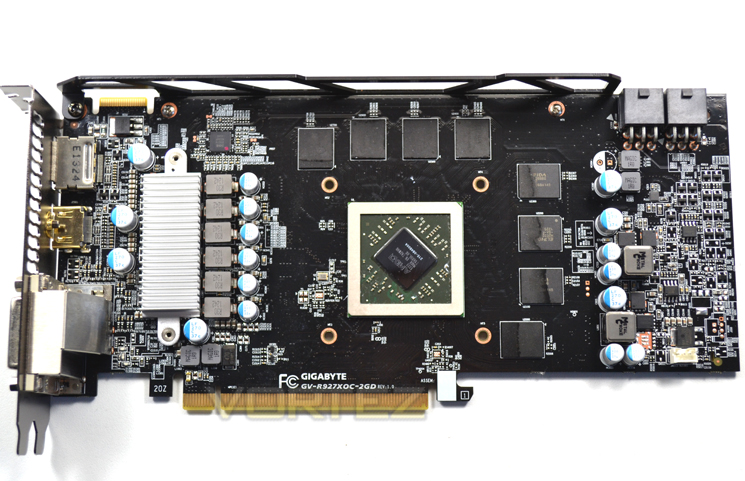
The has a similar layout to the reference design. All of the main components are in the same position however with an increase in VRM size it is unlikely a reference design full cover waterblock would fit the GIGABYTE card.
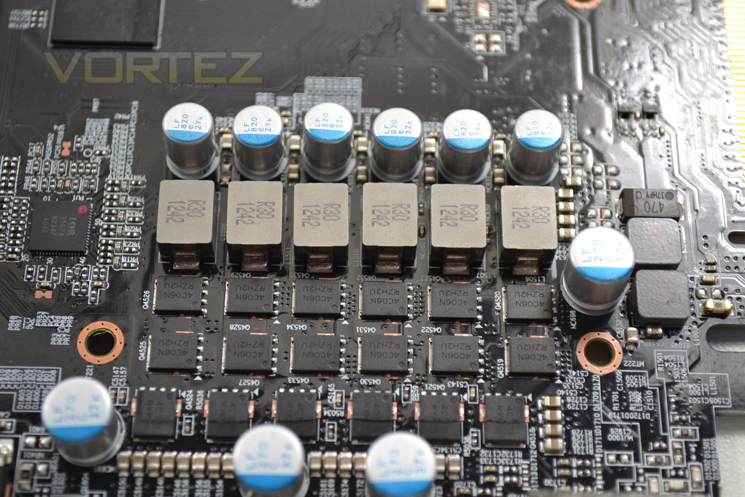
The VRM has been beefed up to a 6 phase power design rather than the 5 phases found on the reference design. This should, in theory, allow for higher stable overclocks.
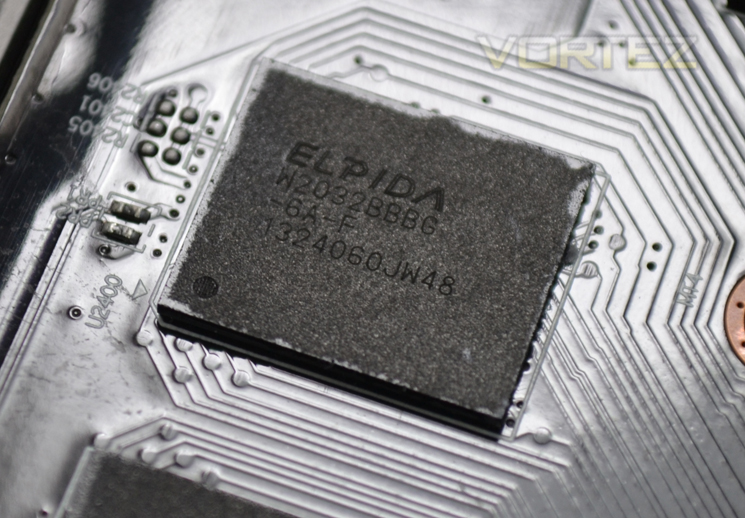
The GIGABYTE card has a change of memory manufacturer from Hynix found on the reference design to Elpida which carries the product code of W2032BBBG. Whether this will affect our overclocking remains to be seen.
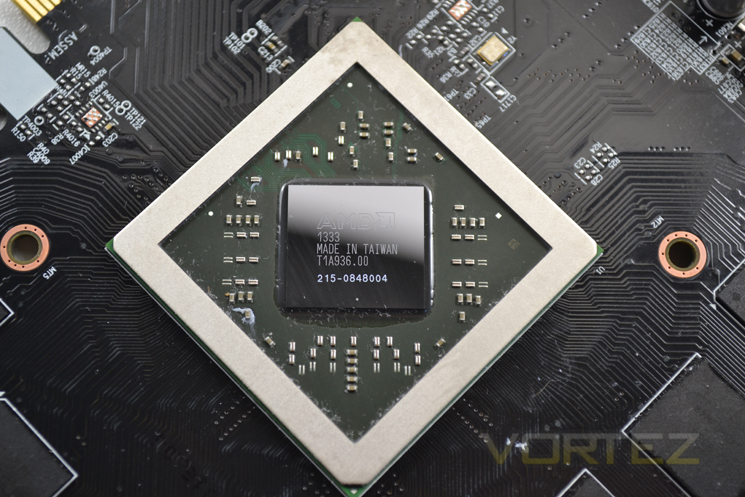
Finally, we reach the core of the GPU, codenamed Pitcairn. Pitcairn is a trimmed down version of the Tahiti core found on the HD79XX series of GPU’s so with the increased clockspeed on the R9 270X, especially with the factory overclock applied to this version, the deficit may be equalised.
Test Setup & Methodology
How we test graphics cards
Testing a graphics card is an extremely lengthy process. We sometimes see reviews where a graphic card has been tested using out of date equipment, out of date games and out of date drivers. While the latter can be excused due to the sheer amount of driver updates making a thorough review impossible we will however notify the reader when we have used a different driver to the normal for example a pre-release driver. For the most part however we will always use the same hardware and where possible the same drivers unless a newer driver rectifies an issue we have encountered or significantly improves performance to such an extent that continuing with an outdated driver is not feasible.
Frame Time Analysis
We have also seen the emergence of frame time analysis. We covered this in a separate article here: GPU Reviews: Why Frame Time Analysis is important so we won’t go into the reasoning again but to summarise, our testing comprises both FPS testing and perhaps arguably more importantly, frame time analysis. We also look at overall performance by equating averages across the games and finally before concluding our review we take a look at value for money.
HardwareWith the latest Intel chipset release we decided to update our ageing X58 setup to the new X79 chipset. Not only that but we will be using the flagship Core i7-3960X Extreme Edition processor clocked to 4.5GHz to ensure we have no CPU bottlenecks. With 16GB of ram on board there should be minimal paging so the benchmarks we run today will hopefully give a true reflection of the graphics card’s performance.
Mid-Range Graphics cards on test:
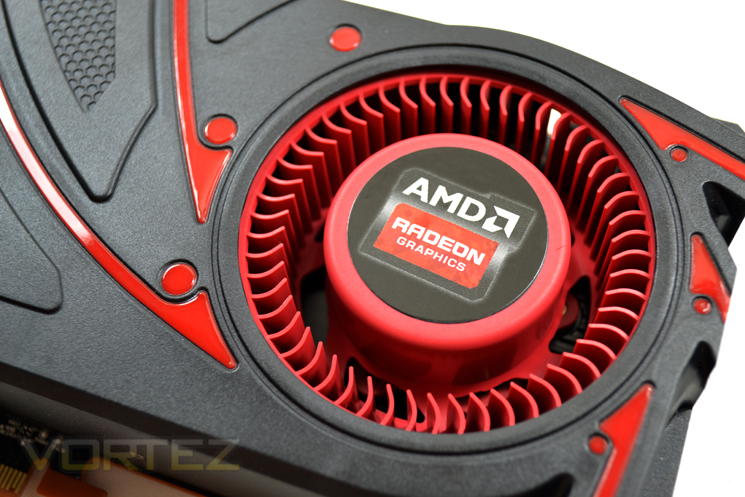
GIGABYTE Windforce OC R9 270X 2GB GDDR5
(AMD CAT 13.11 beta 9.2)AMD R9 270X 2GB GDDR5(AMD CAT 13.11 beta 5)
NVIDIA GTX760 2GB GDDR5(Forceware 320.39)
SAPPHIRE HD7950 3GB GDDR5(AMD CAT 13.3 beta)
HIS HD7850 IceQ X 1GB GDDR5(AMD CAT 13.3 beta)
HIS HD7790 IceQ Turbo 1GB GDDR5 (AMD CAT 13.3 beta)
MSI GeForce GTX 650Ti BOOST OC 2GB GDDR5 (Forceware 314.22)
Motherboard: ASUS P9X79 Pro
CPU: Intel Core i7-3960X Extreme Edition @ 4.5GHz
RAM – 16GB (4x4GB) Corsair Vengeance (Red) DDR3 @ 1866MHz 9-10-9-27
Power Supply – Thortech Thunderbolt Plus 1200W
Hard Drive – Kingston HyperX 240GB
Cooler – Corsair H100
CPU: Intel Core i7-3960X Extreme Edition @ 4.5GHz
RAM – 16GB (4x4GB) Corsair Vengeance (Red) DDR3 @ 1866MHz 9-10-9-27
Power Supply – Thortech Thunderbolt Plus 1200W
Hard Drive – Kingston HyperX 240GB
Cooler – Corsair H100
Benchmarks
If you are a regular reader of our reviews you will know we like to test the latest hardware with the latest games and benchmarks on the market. Here are the games we have chosen:
Battlefield 3
Crysis 3
Far Cry 3
BioShock Infinite
DiRT: Showdown
The Elder Scrolls: Skyrim
Crysis 3
Far Cry 3
BioShock Infinite
DiRT: Showdown
The Elder Scrolls: Skyrim
We also take into consideration the benchmarkers out there so have included 3 of the more popular synthetic benchmarks available:
Unigine: Valley
Unigine: Heaven 4
Futuremark 3DMark Firestrike
Unigine: Heaven 4
Futuremark 3DMark Firestrike
Let’s see how today’s graphics card performed…
Temperature, Acoustics and Power Consumption
Power Consumption
To test for power consumption we use the included iPower Meter found with our Thortech PSU. As system load figures obviously differ from idle it is extremely difficult to get an accurate figure of system draw and then simply take this figure away from the overall amount because each game will generate varying levels of CPU and hard drive activity. Dynamic power adjustments which fluctuate in game will also affect accurate power figures thus rendering any such power consumption calculations redundant at worst and approximate at best.
We will therefore take our system readings averaged over a benchmark run of Tessmark (100% load) and after 20 minutes of being idle in Windows 7. These can then be used as a comparison to other graphics cards to determine how much more or less power you can expect a GPU to consume.
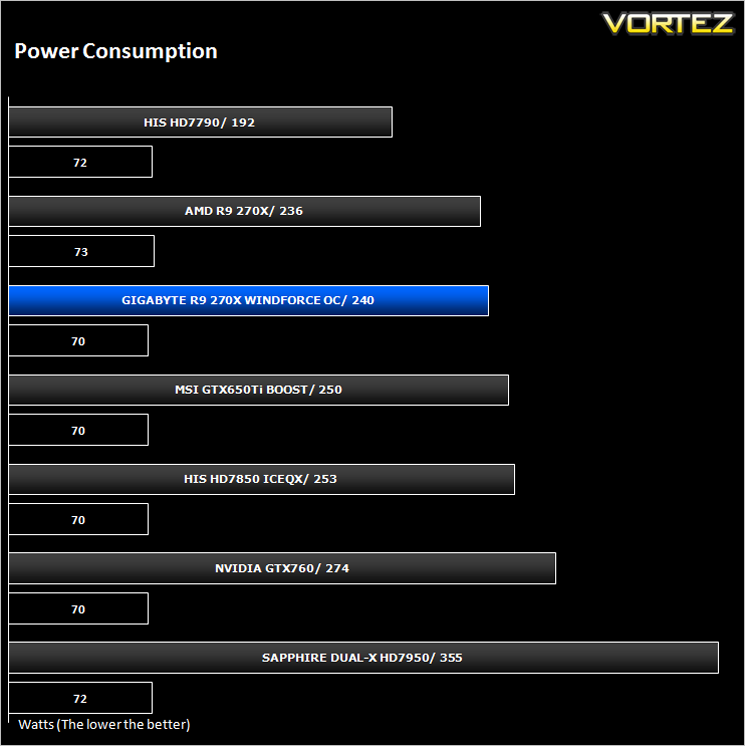
Consuming just a little more than the reference design we found that all of the comparable cards at these level appear to consume pretty much the same amount of power under both idle and load conditions.
Temperature
To test temperatures we measured idle temperatures after booting windows, letting all applications finish loading and ran a few benchmarks. Once the benchmarks were complete we left the card to reach a cooling plateau where we then took the idle temperatures. For the load tests, we would normally run Furmark for 20 minutes, taking the absolute maximum temperature attained however we found that this throttled the card and resulted in spurious results. So we set Heaven running continuously for 20 minutes and used this as a temperature result as the card did not throttle with this application.
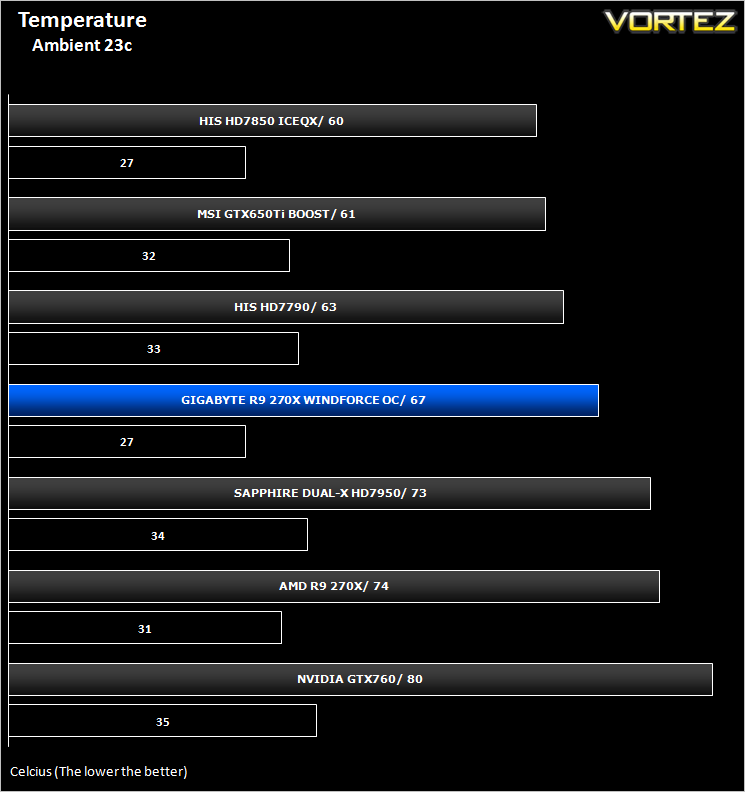
There has been much debate over the AMD reference design regarding how efficient it is at dissipating heat. Thankfully the Pitcairn core doesn’t put out nearly as much heat and thus the temperatures are much lower. Despite this, we can see that the GIGABYTE Windforce design keeps the cards temperatures some 10% lower than the reference design.
Acoustics
Perhaps the biggest complaint of the new range of AMD cards is the new cooler and more specifically the noise it generates. It is far from quiet and while one can adjust the fan profiles to suit your own tastes, it is still audible, often loud regardless of the settings applied. This description couldn’t be further from the truth with regard to the GIGABYTE card. IT was silent under both idle and load conditions. Even running Furmark for 15 minutes (an extreme heat test), the GIGABYTE card barely raised above silent levels.
Gaming Experience (Frame Time Analysis)
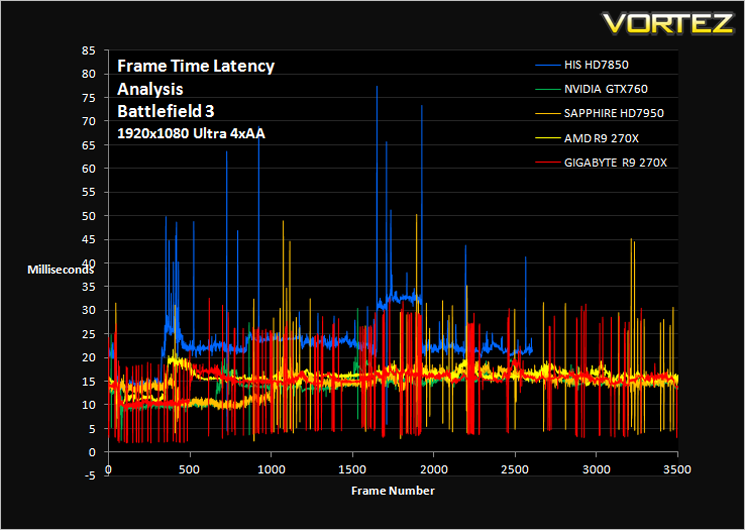
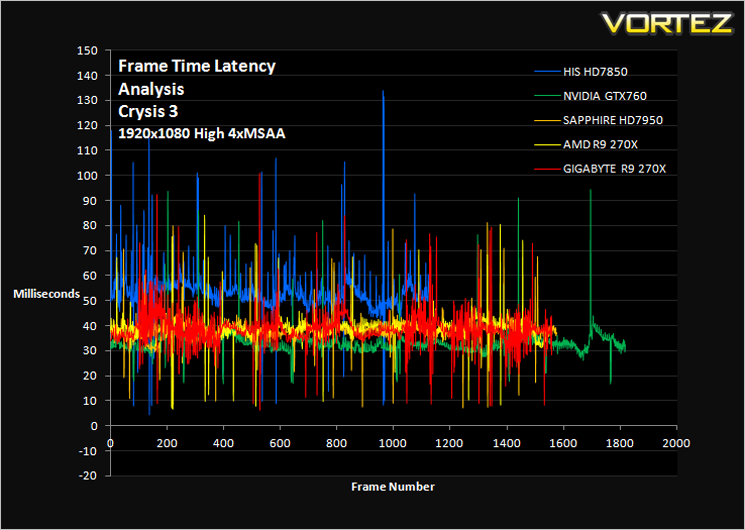
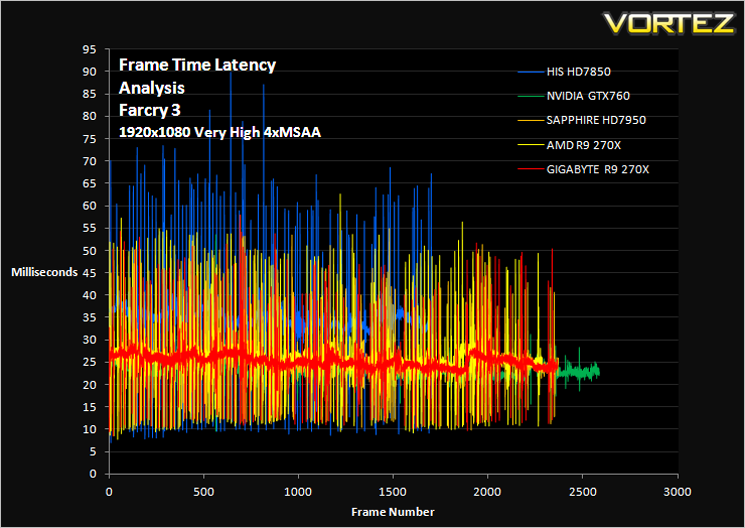
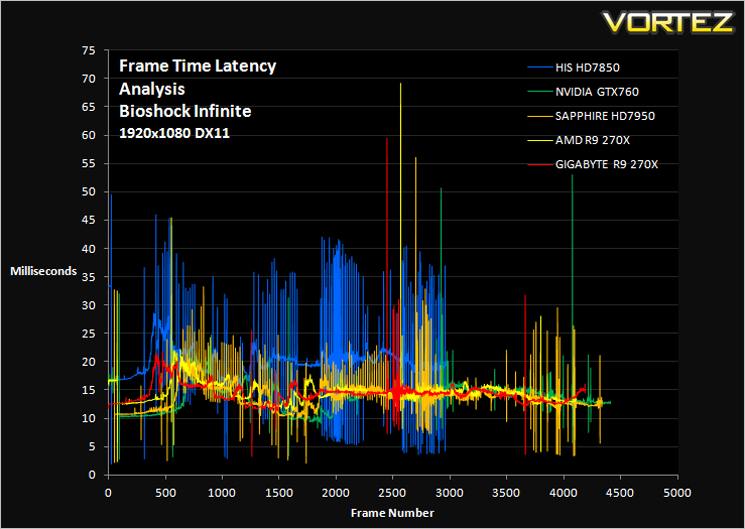
Gaming experience is what we like to refer to as the Laymans term for Frame Time analysis. Frame time analysis is in its most basic sense how smooth your gameplay will be. Ever had a powerful card rendering at 100FPS with ease for it to stall for a split second before resuming? This is what Frame Time Analysis shows us: The peaks during an otherwise smooth gaming experience. This is presented to you in two ways, by showing you a line graph of a 60 second FTA capture using FRAPS and then by deducing the average and 99th percentile response times.
Some claim this should be the way graphics cards are tested and we won’t argue here because there is little point in having a card which churns out an average 100FPS if it has micro stutters lasting 50ms (GPU response time) which spoils the fluidity of the game.
Some claim this should be the way graphics cards are tested and we won’t argue here because there is little point in having a card which churns out an average 100FPS if it has micro stutters lasting 50ms (GPU response time) which spoils the fluidity of the game.
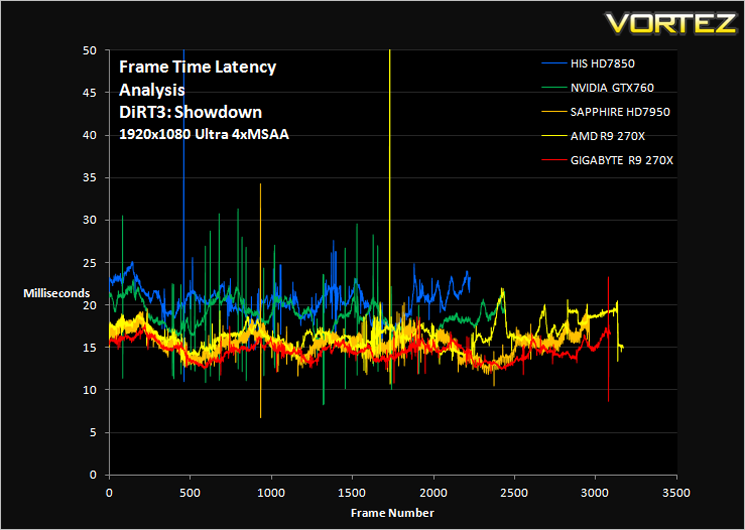
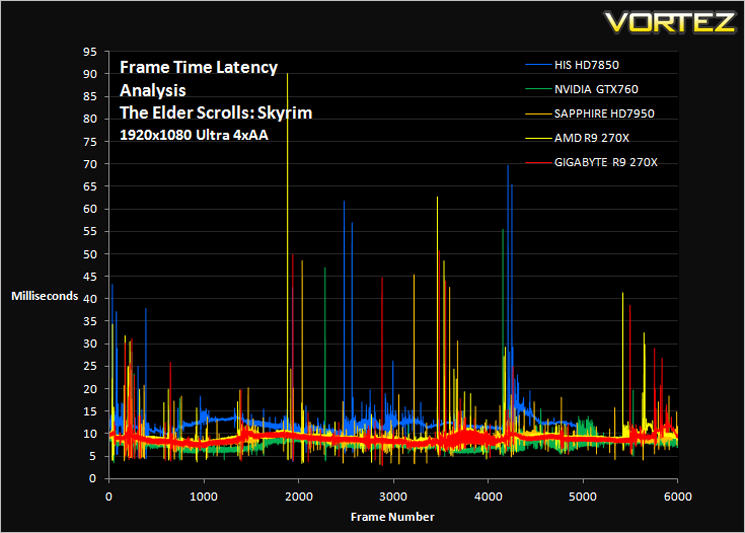
Comment
The graphs above may appear very daunting however, what you want to see is a smooth line (not fuzzy) with very few peaks and troughs. While you are unlikely to notice peaks and troughs below 30ms, any peak above 30ms may be seen as a stutter during gameplay. This will however depend greatly on your own perceptions.
Average and 99th Percentile response times (Frame Time Analysis)
Here we take a look at both average (black) and 99th Percentile (coloured) response times of the graphics cards. It is highly unlikely a user will notice any micro stutter (also incorrectly referred to as lag but the effect can be interpreted to be similar) at anything below 30ms but every gamers perception differs.
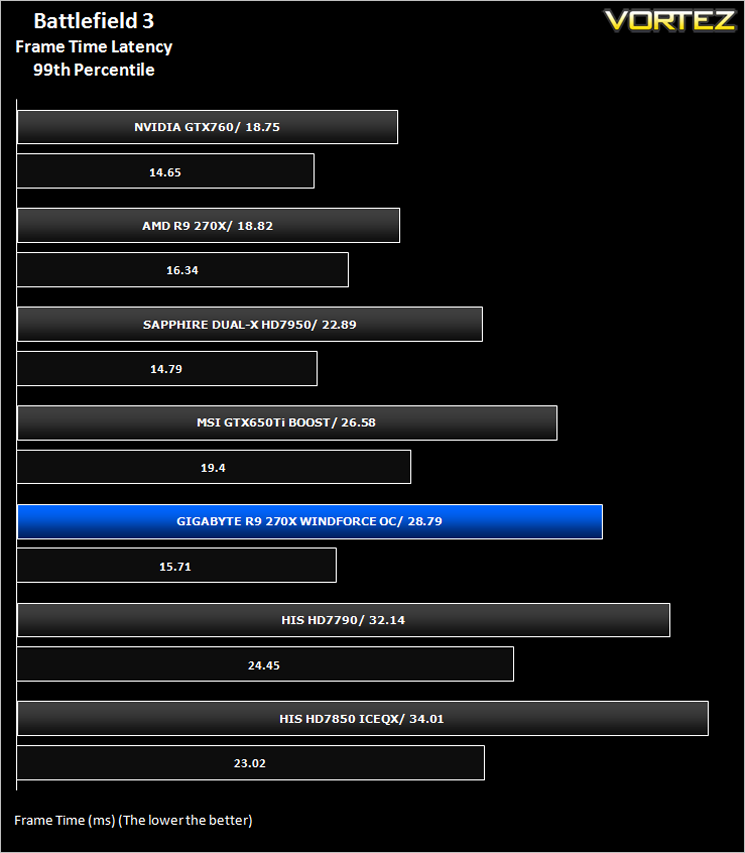
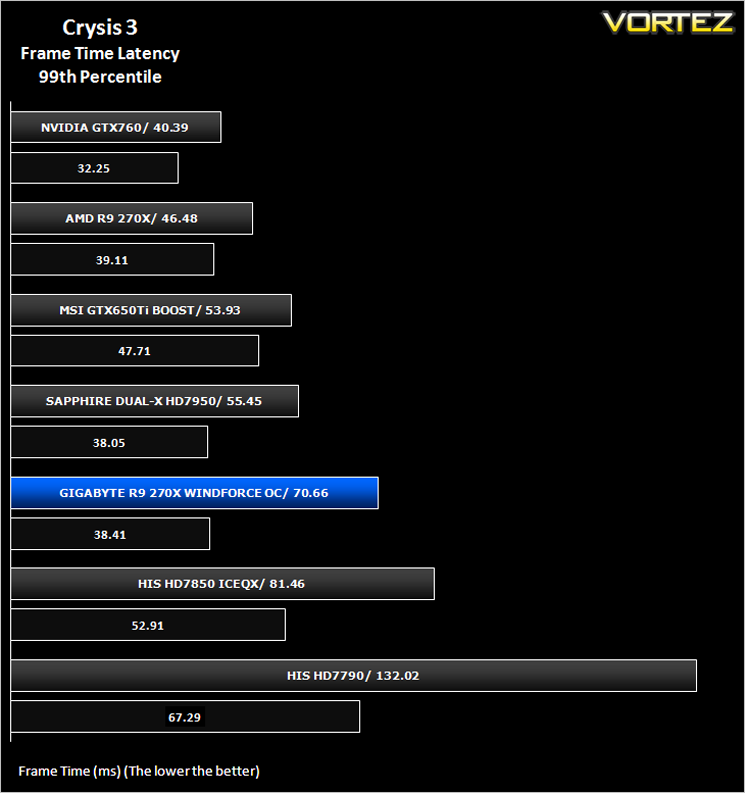
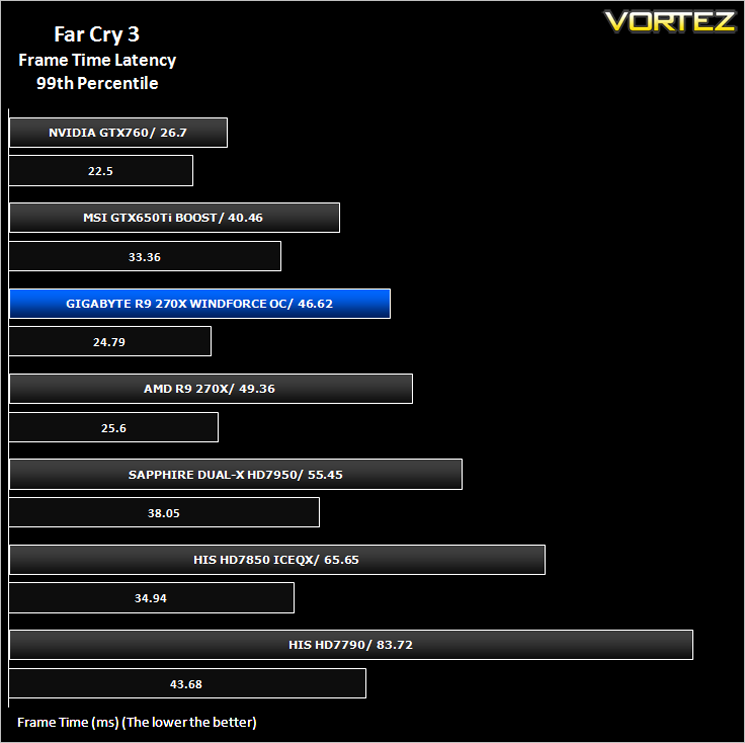
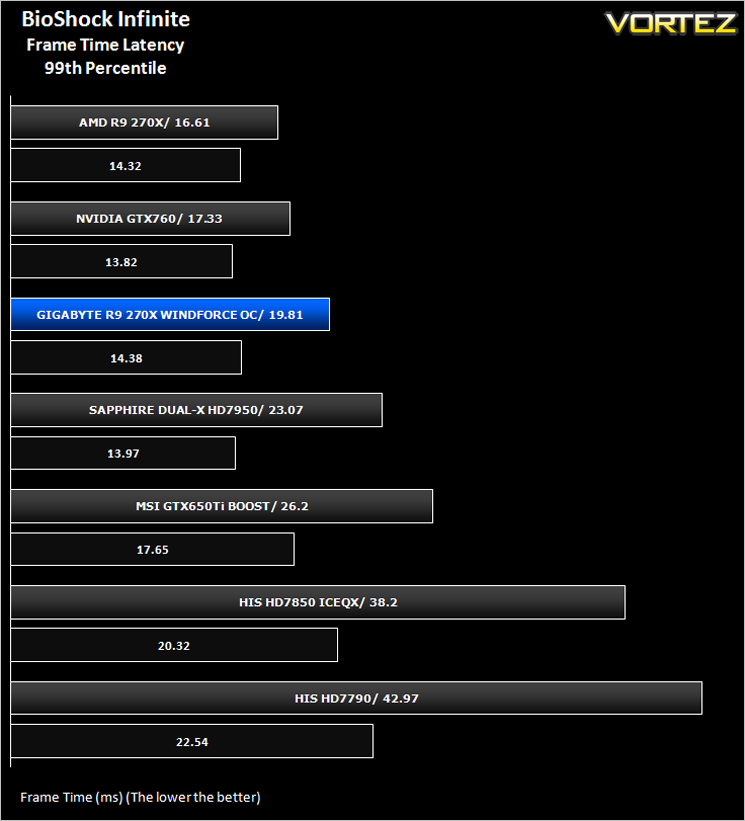
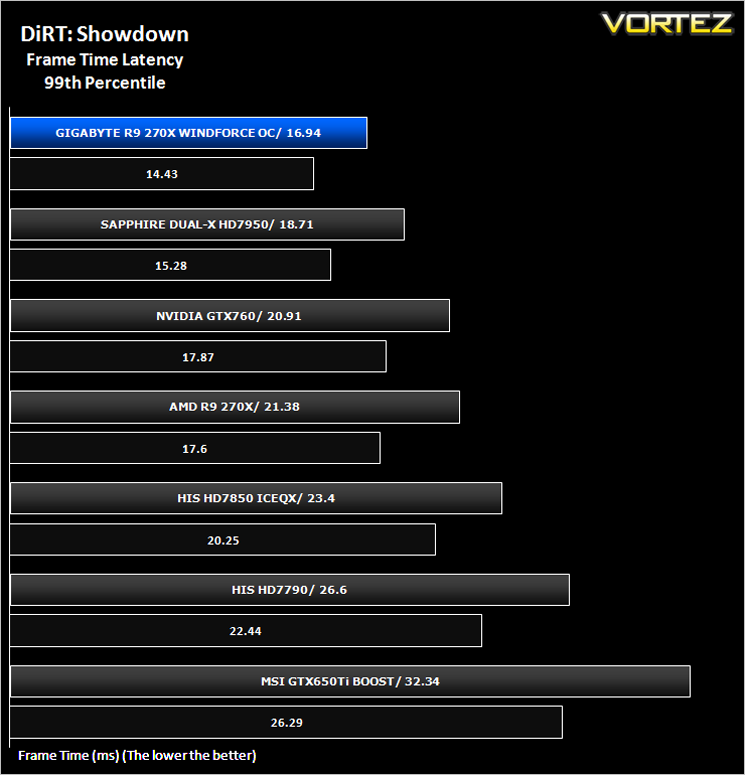
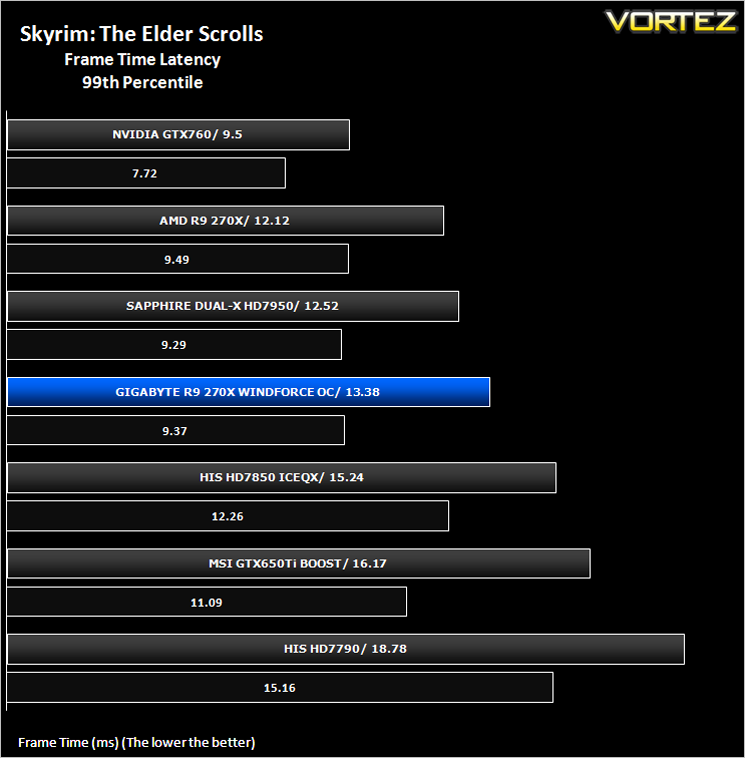
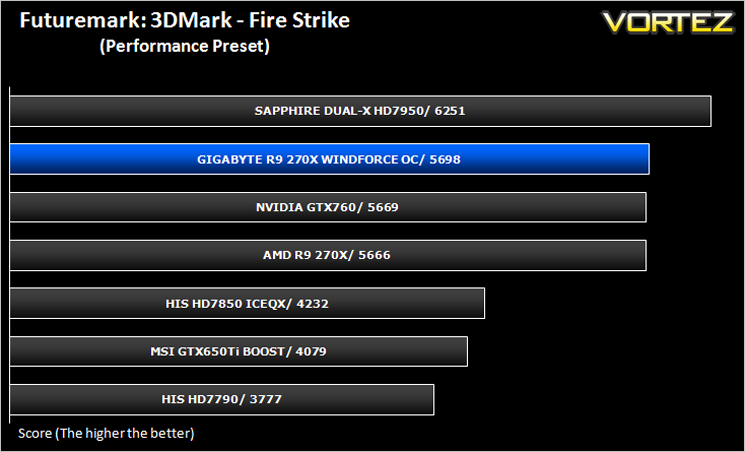
Futuremark 3DMark Fire Strike (Synthetic)
Fire Strike is the new showcase DirectX 11 benchmark designed for high-performance gaming PCs. It is Futuremark’s most ambitious and technical benchmark ever, featuring real-time graphics rendered with detail and complexity far beyond what is found in other benchmarks and games today.
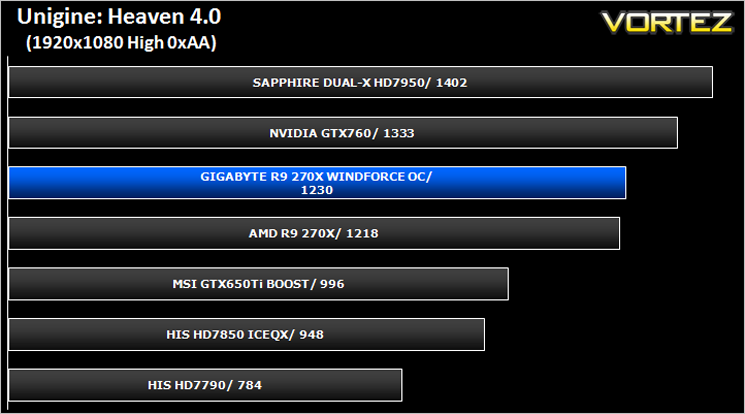
Unigine: Heaven 4 (Synthetic)
Heaven Benchmark with its current version 4.0 is a GPU-intensive benchmark that hammers graphics cards to the limits. This powerful tool can be effectively used to determine the stability of a GPU under extremely stressful conditions, as well as check the cooling system’s potential under maximum heat output. It provides completely unbiased results and generates true in-game rendering workloads across all platforms.
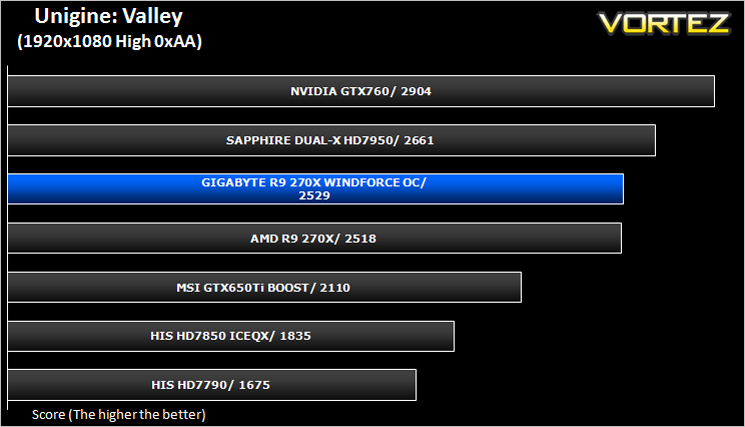
Unigine: Valley (Synthetic)
Valley Benchmark is a new GPU stress-testing tool from the developers of the very popular and highly acclaimed Heaven Benchmark. The forest-covered valley surrounded by vast mountains amazes with its scale from a bird’s-eye view and is extremely detailed down to every leaf and flower petal. This non-synthetic benchmark powered by the state-of-the art UNIGINE Engine showcases a comprehensive set of cutting-edge graphics technologies with a dynamic environment and fully interactive modes available to the end user.
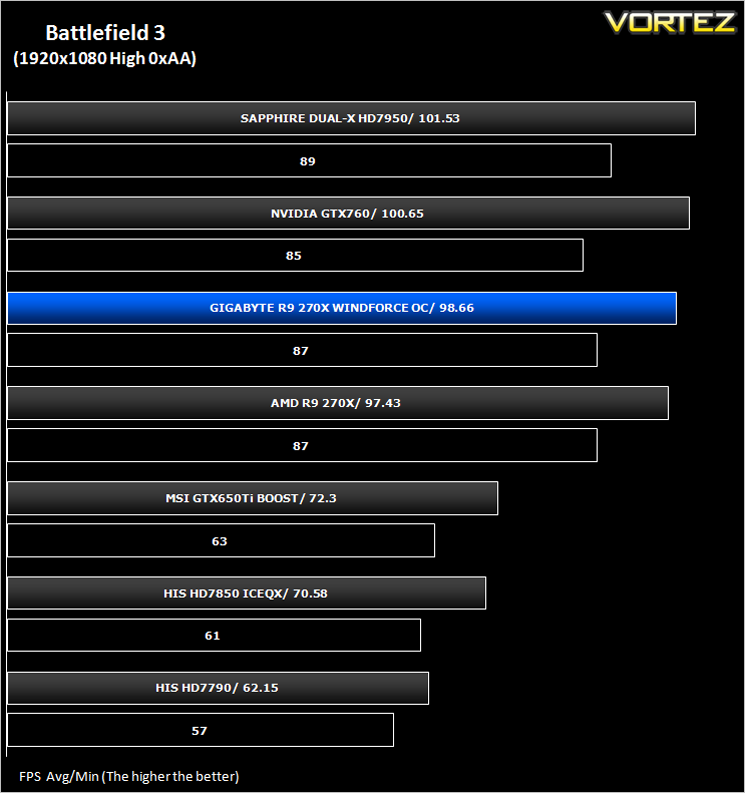
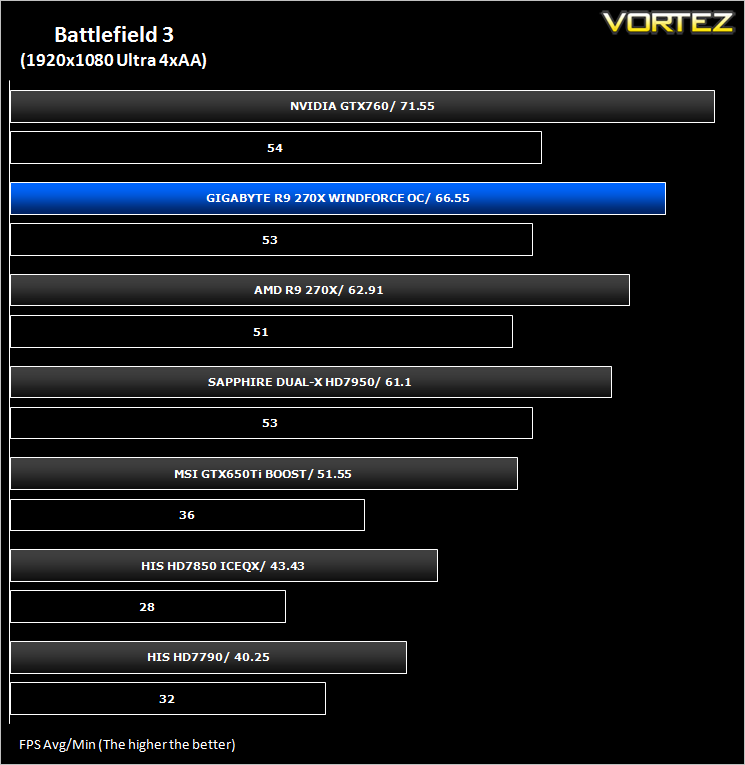
Battlefield 3 (FPS)
Battlefield 3 leaps ahead of its time with the power of Frostbite™ 2, the next instalment of DICE’s cutting-edge game engine. This state-of-the-art technology is the foundation on which Battlefield 3 is built, delivering enhanced visual quality, a grand sense of scale, massive destruction, dynamic audio and incredibly lifelike character animations. As bullets whiz by, walls crumble, and explosions throw you to the ground, the battlefield feels more alive and interactive than ever before. In Battlefield 3, players step into the role of the elite U.S. Marines where they will experience heart-pounding missions across diverse locations including Paris, Tehran and New York.
Average and minimum frames per second were measured using Fraps during the parking lot scene on Operation Sword Breaker. High and Ultra presets were loaded at both resolutions.
Crysis 3 (FPS)
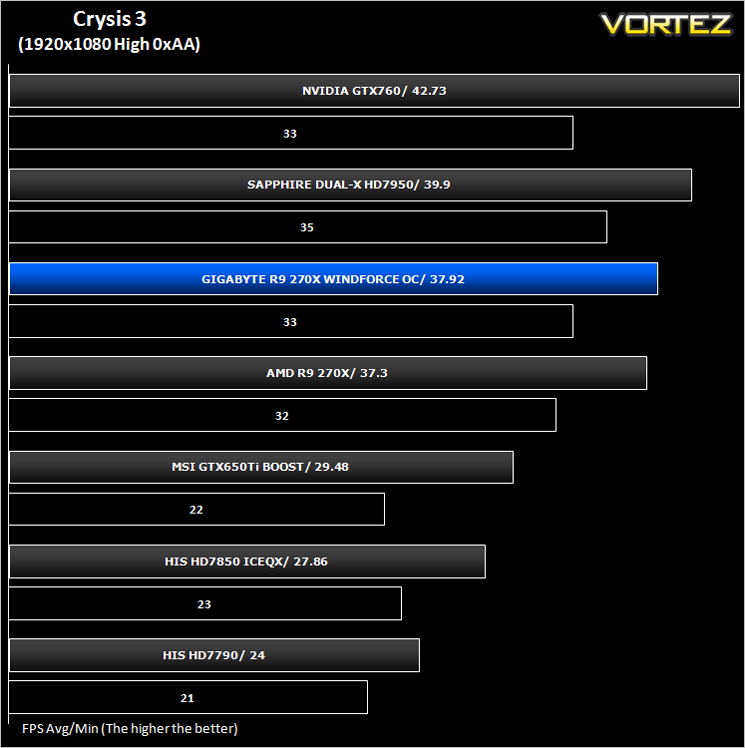
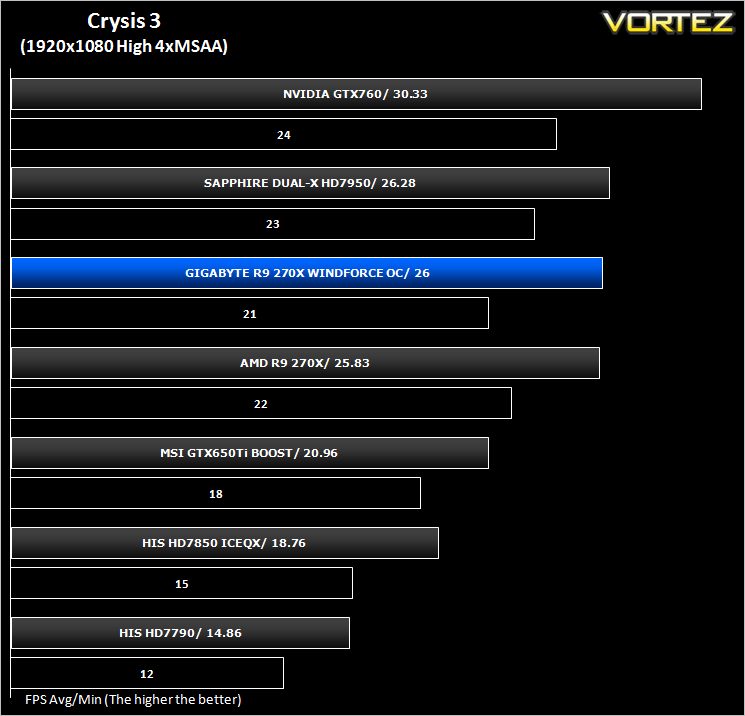
Crysis 3 from Electronic Arts is the fourth instalment of the Crysis franchise and sequel to Crysis 2. It uses the CryEngine 3 gaming engine which is perhaps the most advanced gaming engine to date and therefore the most demanding. The meme ‘Can it run Crysis’ has never been so apparent…
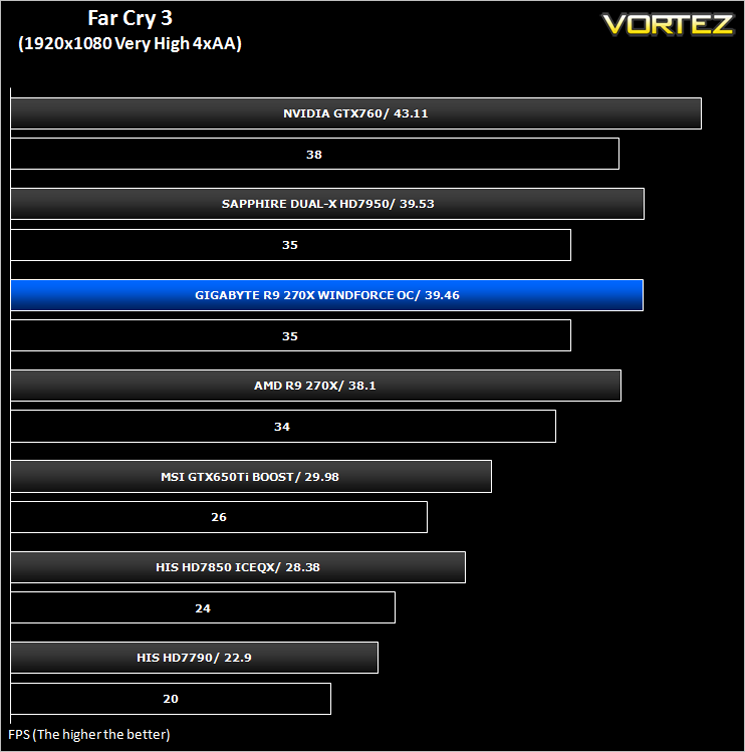
Far Cry 3 (FPS)
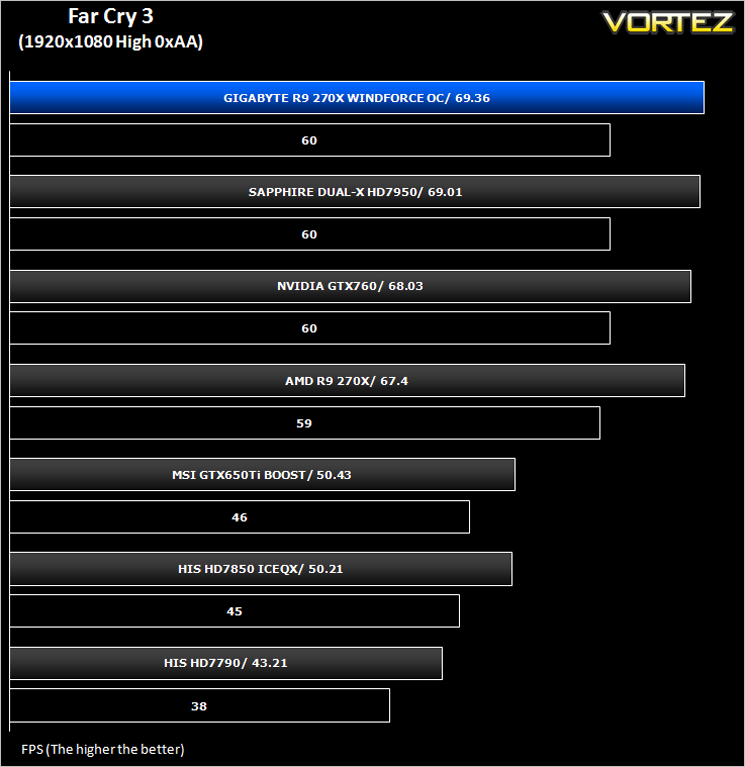
Far Cry 3 is a tropical survival shooter video game from Ubisoft Montreal and Massive studios. It’s open world design has similar traits to it’s forbear Far Cry 2 but it does it all so much better. With stunning visuals and settings to bring a PC to it’s knee’s, this game is so much more than the ‘just another console port’ it was reported to be.
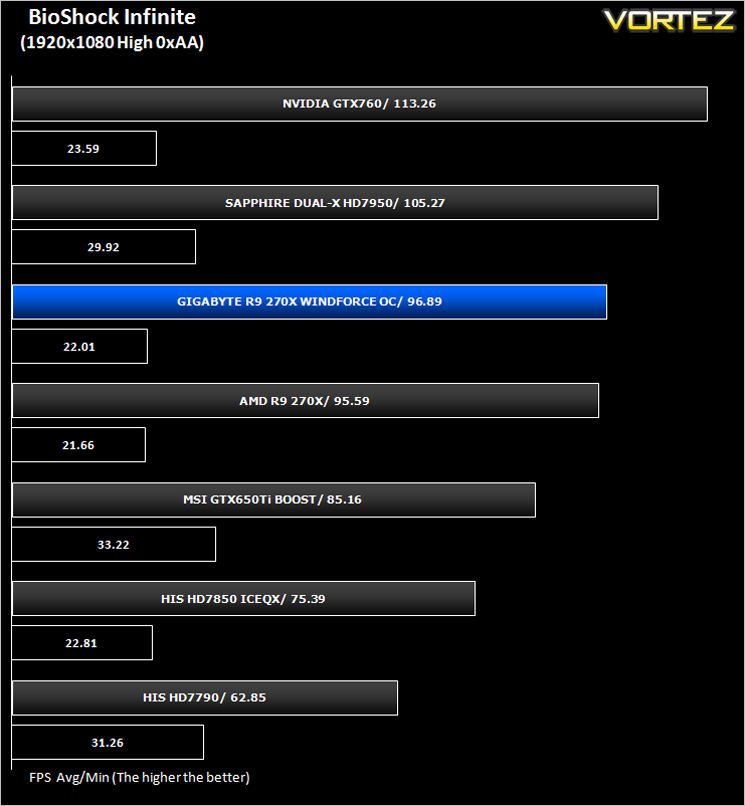
BioShock Infinite (FPS)
Set in 1912 during the growth of American exceptionalism, BioShock Infinite is a thrid person shooter developed by Irrational games and published by 2K Games. It is the third instalment of the BioShock franchise. the game utilises the Unreal Engine 3, modifying it with their own lighting engine to present a visually stunning experience like no other.
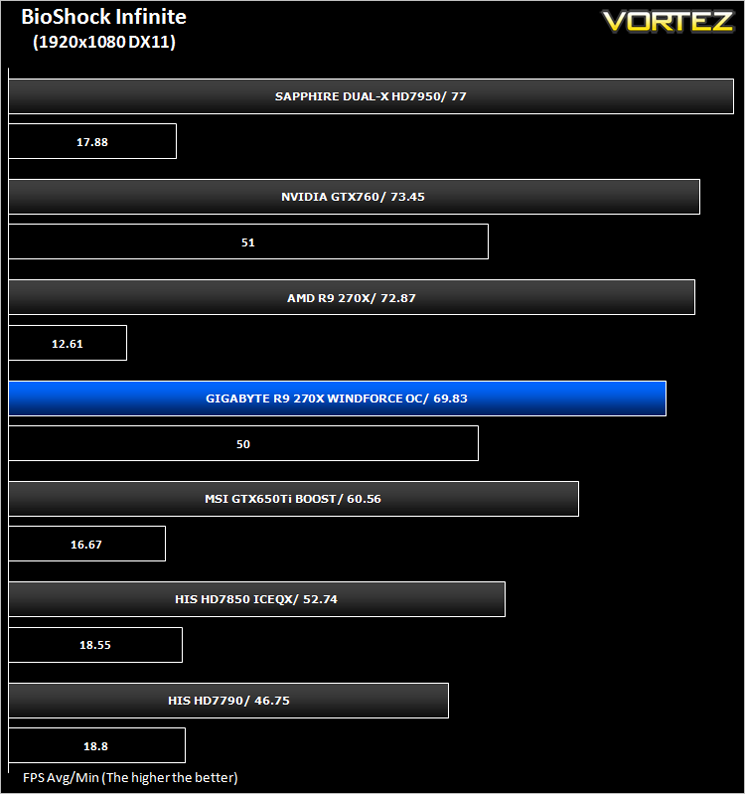
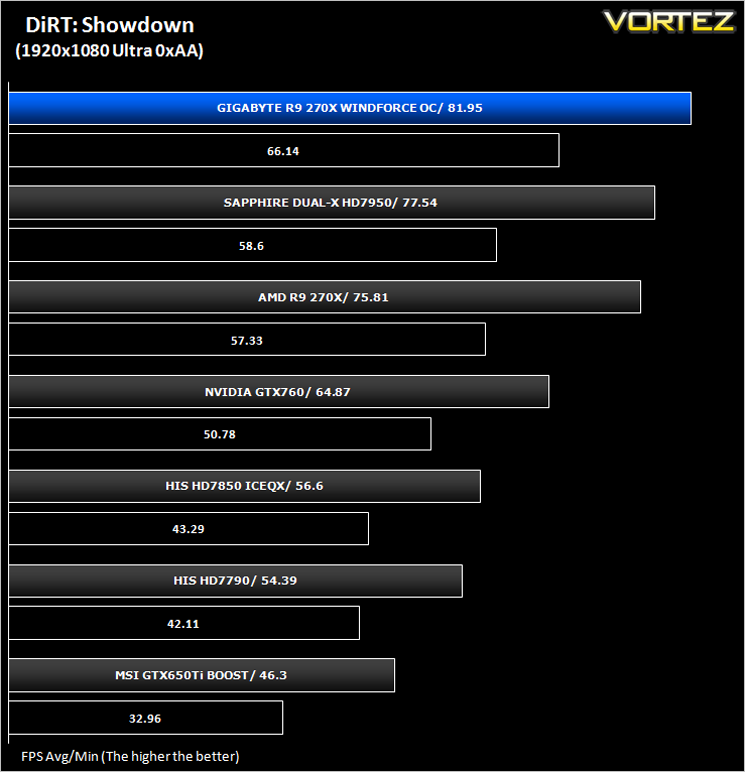
DiRT: Showdown (FPS)
DiRT Showdown is the new arcade racing game from the team that brought you the award-winning DiRT series, uncaged in 2012. Pick up and play controls combine with electrifying events, frenzied crowds and stunning graphics to deliver high octane, dive in and drive thrills from event one.
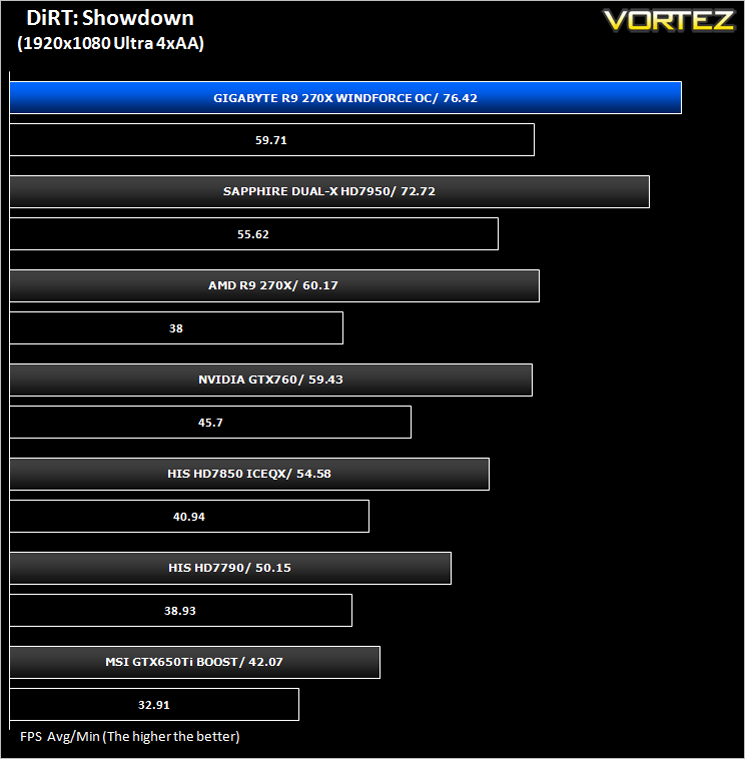
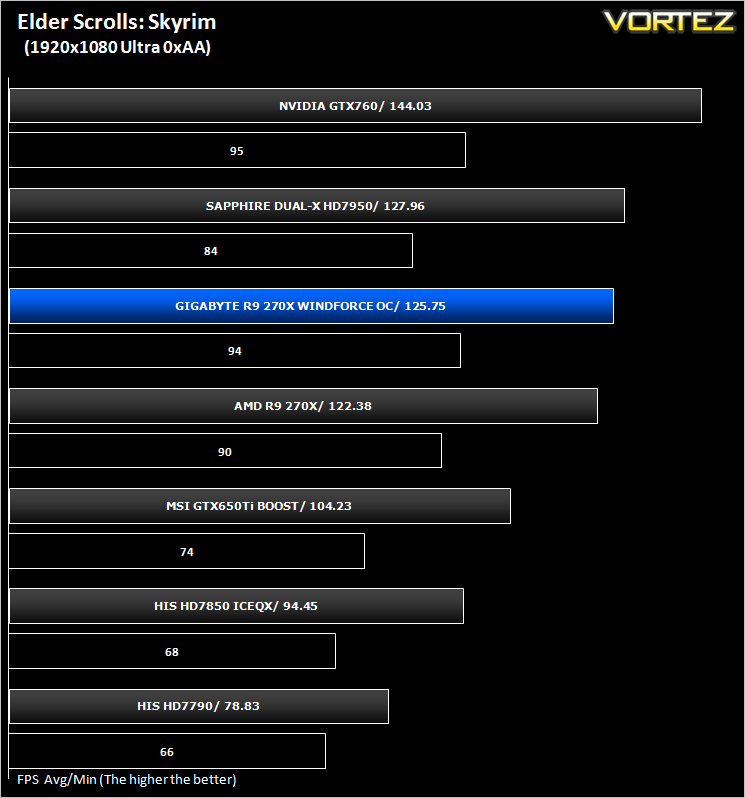
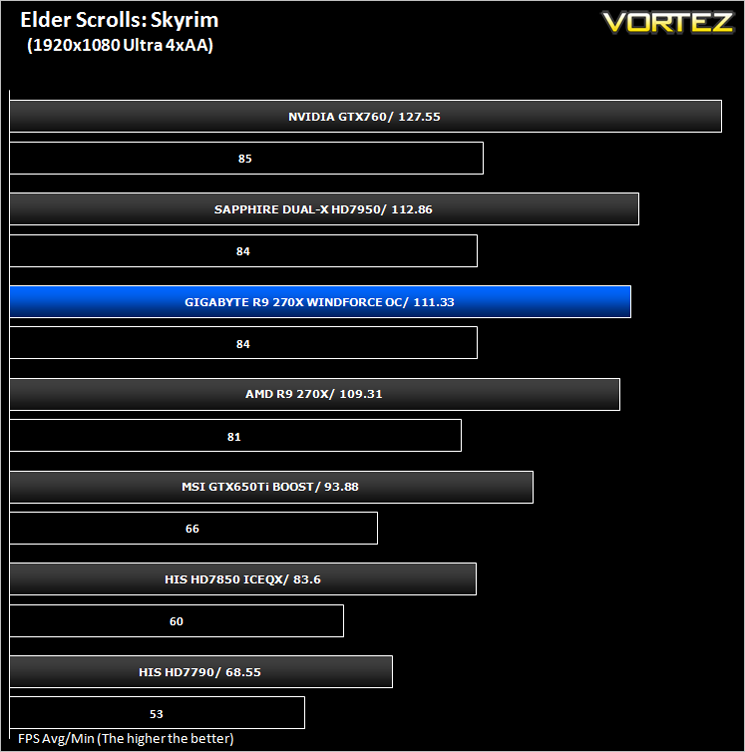
The Elder Scrolls: Skyrim (FPS)
Skyrim is not a direct successor to the very popular Oblivion. Instead it takes place 200 years after the events of Oblivion. The non-linear playing that made the Elder Scrolls such a popular series does however make a return along with the beautiful scenery the encompasses the world of Skyrim.
Average and minimum frames per second were measured using Fraps during the drop down passage to Riverwood. V-sync was disabled to allow fluctuating (higher the 60) FPS for these runs. It is however recommended that v-sync is left enabled during normal gameplay due to the games dynamics.
Value For Money
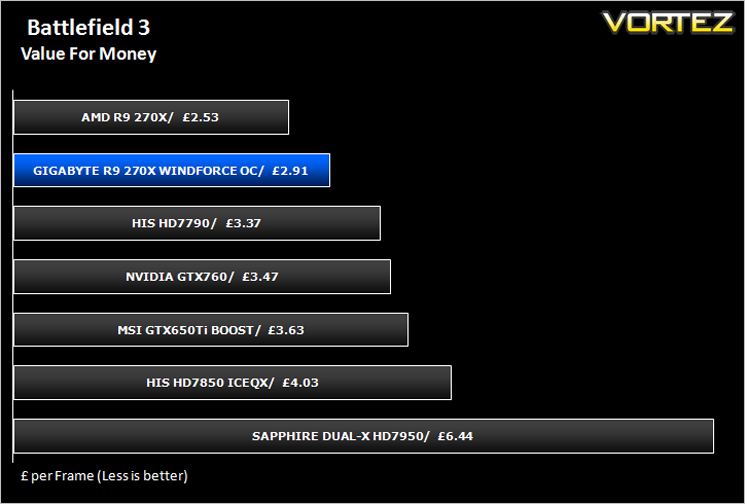
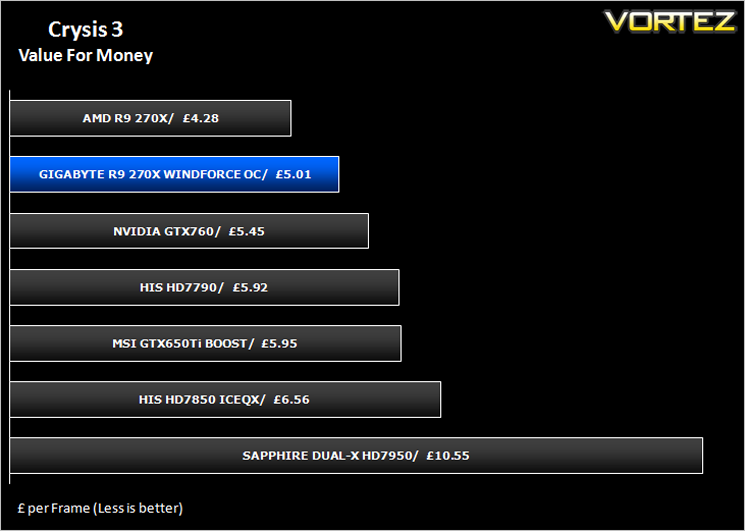
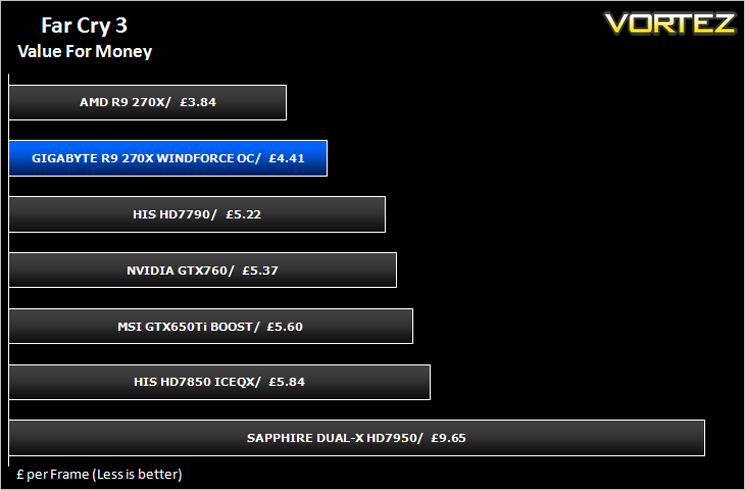
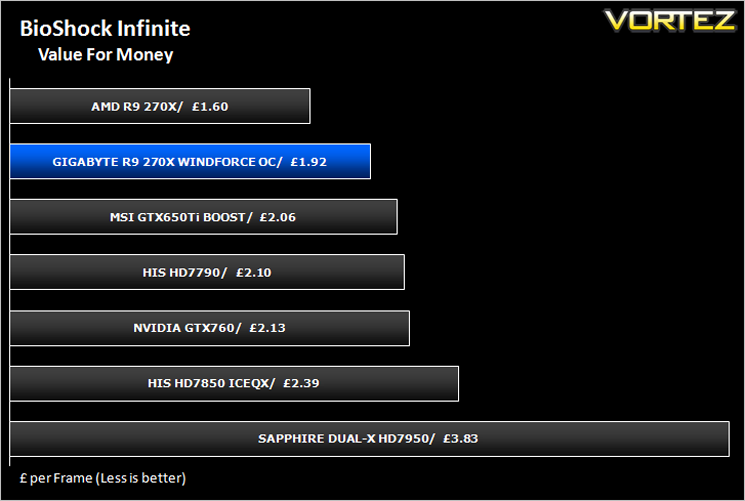
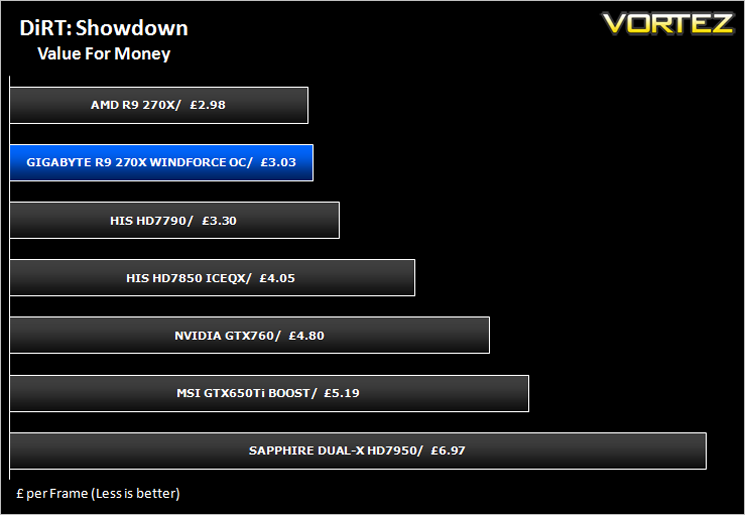
For those on a budget, this is perhaps the most important section of a graphics card review. For everyone else it will certainly make you think twice before calling the bank manager for an overdraft request. We calculate Value for money by taking the cost of the product and then dividing that figure by the overall performance figure which gives us a result in the guise of £ per frame – in effect how much every frame per second will cost you.
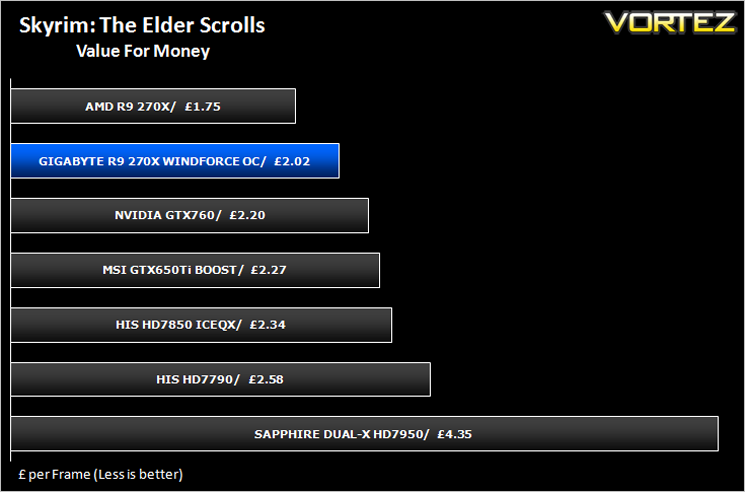
Overclocking
For overclocking our AMD cards we will be using MSI Afterburner as this gives us all of the options we require.
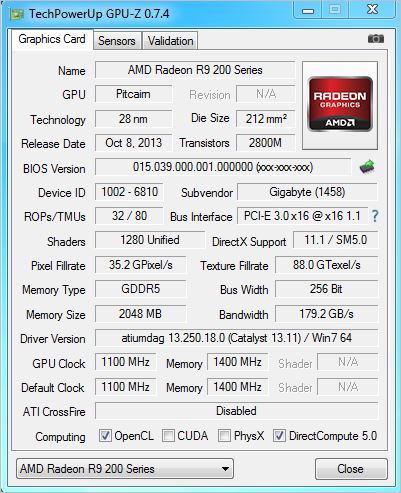
Above is a screenshot of GPU-Z showing the factory overclock of our sample.
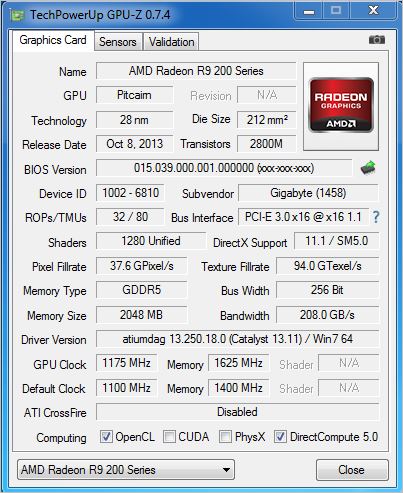
We innitially set the card to run at 1200MHz which for the most part didn’t cause too much trouble however it wasn’t stable during our looping runs of Unigine Heaven which seems to show up instability best. It wasn’t until we lowered the core clockspeed to 1175MHz, a mere 75MHz overclock, were we satisfied that the overclock was 100% stable. The memory overclock too was not quite as impressive, falling some 25MHz lower than our overclock upon reference design.
One does however have to remember that this GPU arrives pre-overclocked from the factory so manual overclocks were never going to be to the same scale as a reference card. We were however hoping that this card could surpass the reference design which sadly, it failed to do.
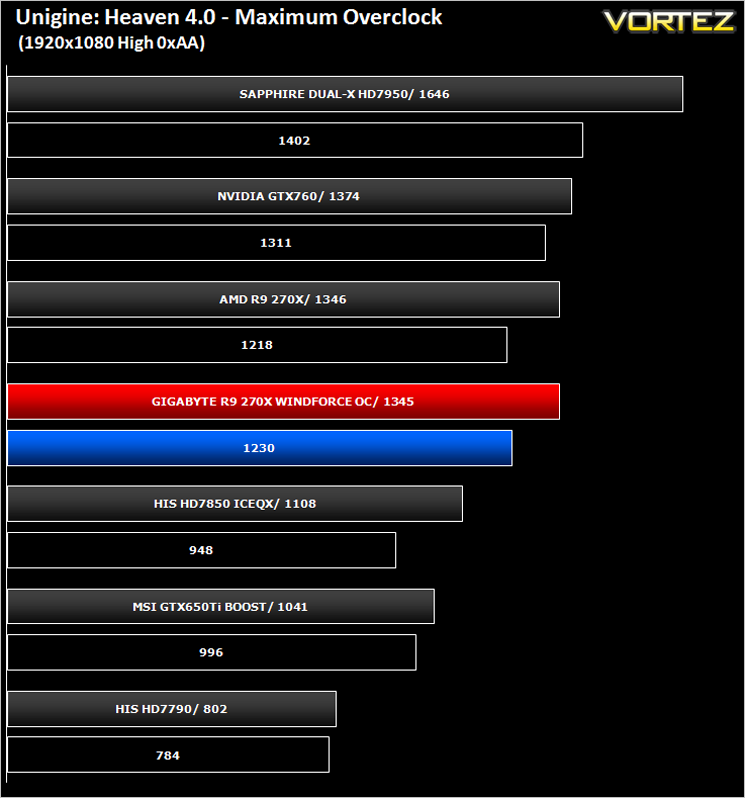
Above you can see the effects the overclock (red) had on the stock score (blue).
Conclusion
We have given AMD some heavy criticism over the reference design cooler which is in our opinion, not representative of such a good company. The GIGABYTE card puts some of these problems to bed. It is far cooler and perhaps most importantly much, much quieter. The PCB has also received a refresh with a higher specification on the VRM. Sadly, all of this didn’t allow the card to be overclocked any higher than the reference design which was a great shame as we were expecting better. The factory overclock is however most welcome and will be sufficient for most who will buy this card.
Comparing this card to the other AMD R9 270X versions available, you will find this cards factory overclock to be relatively conservative. the card is however cheaper than most and because you get such a great cooling design thrown into the deal we cannot grumble at the price.
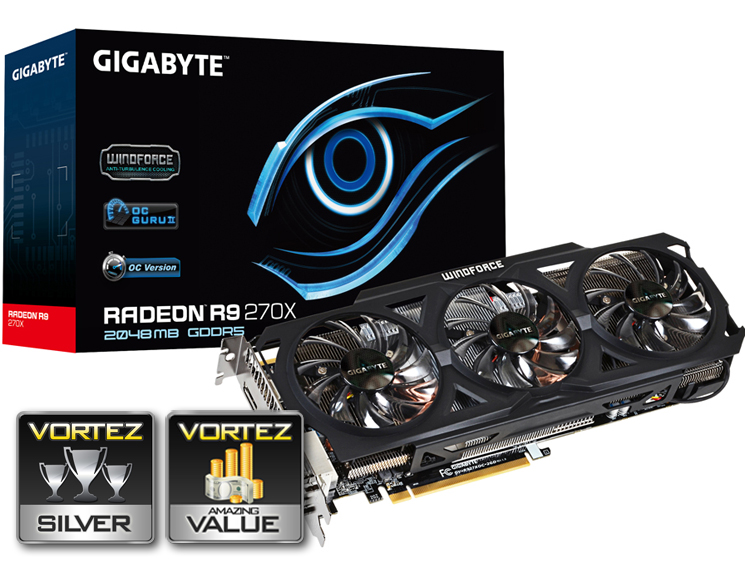
The Windforce cooler has certainly made this GPU a more attractive proposition as it puts right what AMD did wrong. It is priced about right too so if you are looking for a mid-range graphics card capable of playing the latest titles at 1080p, you could do a lot worse than to invest in this very capable yet quiet graphics card.
To summarise:
With the noisy AMD cooler replaced with the Windforce design, GIGABYTE have made the R9 270X a viable option for those looking mid-range performance.
Pros
+ Factory Overclock
+ Very quiet in operation
+ Great aesthetics
Cons
– Retains ‘old’ Pitcairn technology
– No better at overclocking than the reference design
+ Factory Overclock
+ Very quiet in operation
+ Great aesthetics
Cons
– Retains ‘old’ Pitcairn technology
– No better at overclocking than the reference design

Click here for an explanation of our awards at Vortez.net.

