







The 4th Generation of Vertex SSD is under the spotlight, featuring Indilinx Infused Everest 2 platform – a dual-ARM controller. Is this the best Vertex Solid State Drive yet?

Product on Review: Vertex 3 Solid State Drive
Manufacturer & Sponsor: OCZ Technology
Street Price: £100inc. VAT (GBP)
It was back in March at CeBIT 2012 that we first cast our eyes on OCZ’s upcoming Vertex 4. Weeks prior to its launch OCZ were keen to tease media with a short introduction to this 4th generation within the Vertex family. The significant pointer with Vertex 4 is the move away from SandForce, a bold move indeed after building such a strong relation with SandForce and the notorious SF-2281 Controller. You may recall that OCZ aquired Indilinx back in 2011 and ever since they have been developing their own Everest Controller – the Vertex 4 has obviously been in the pipeline for some time now and it is with great pleasure that we examine it today.
Vertex 4 uses Intel 25nm Synchronous Multi-Level Cell (MLC) NAND flash and a dual-ARM controller which utilises the SATA 3 (6GB/s) interface. Boasting up to 550MB/s sequential transfer rates and a whopping 5 year-warranty those who are keen Vertex advocates could be in for a treat. So let’s waste no further time and begin our analysis.
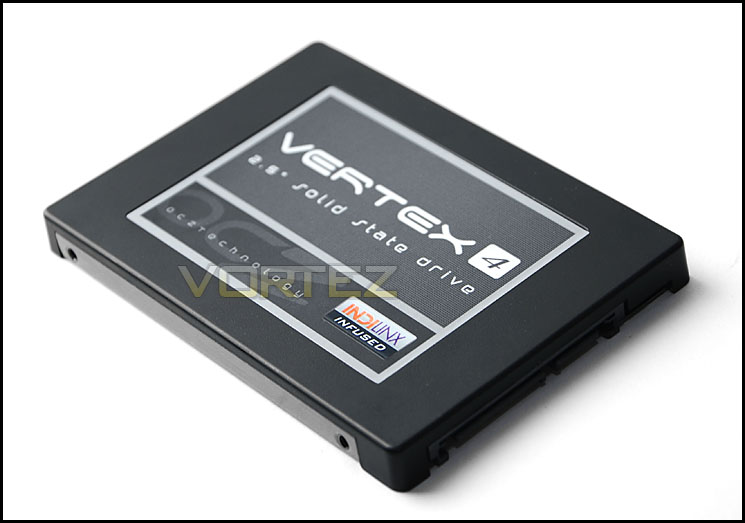
OCZ’s take on Vertex 4
As the fourth generation of the legendary Vertex family, the Vertex 4 Series pushes storage performance to the max and redefines the modern day computing experience. Vertex 4 SSDs are innovatively engineered to deliver industry-leading file transfer rates and superior system responsiveness, all while providing a more durable, reliable, and energy efficient storage solution compared to traditional hard drives. Designed to take full advantage of the SATA III interface, the Vertex 4 unleashes ultimate productivity, gaming, and multimedia applications.
Technical Specifications
Usable Capacities (IDEMA)
64GB, 128GB, 256GB, 512GB
NAND Components
2Xnm Synchronous Multi-Level Cell (MLC)
Interface
SATA III / 6Gbps (backwards compatible with SATA II / 3Gbps)
Form Factor
2.5 Inch
NAND Controller
Indilinx Everest 2
DRAM Cache
Up to 1GB
Dimensions (L x W x H)
99.8 x 69.63 x 9.3 mm
MTBF
2 million hours
Data Path Protection
ECC corrects up to 128 random bits/1KB
Data Encryption
256-bit AES-compliant, ATA Security Mode Features
Product Health Monitoring
Self-Monitoring, Analysis and Reporting Technology (SMART) Support
Power Consumption Idle
1.3 W Active: 2.5 W
Operating Temperature
0°C ~ 70°C
Ambient Temperature
0°C ~ 55°C
Storage Temperature
-45°C ~ 85°C
Shock Resistance
1500G
64GB, 128GB, 256GB, 512GB
NAND Components
2Xnm Synchronous Multi-Level Cell (MLC)
Interface
SATA III / 6Gbps (backwards compatible with SATA II / 3Gbps)
Form Factor
2.5 Inch
NAND Controller
Indilinx Everest 2
DRAM Cache
Up to 1GB
Dimensions (L x W x H)
99.8 x 69.63 x 9.3 mm
MTBF
2 million hours
Data Path Protection
ECC corrects up to 128 random bits/1KB
Data Encryption
256-bit AES-compliant, ATA Security Mode Features
Product Health Monitoring
Self-Monitoring, Analysis and Reporting Technology (SMART) Support
Power Consumption Idle
1.3 W Active: 2.5 W
Operating Temperature
0°C ~ 70°C
Ambient Temperature
0°C ~ 55°C
Storage Temperature
-45°C ~ 85°C
Shock Resistance
1500G
Packaging, Bundle & Closer Look
Vertex 4 is presented in a well-designed box which has a depiction of the drive on the front and fundamental features. OCZ are keen to reveal that Vertex 4 is driven by an Indilinx (dual-ARM controller) – unlike previous generations of Vertex SSD which were SandForce driven. The capacity of this drive is printed in the bottom right corner.
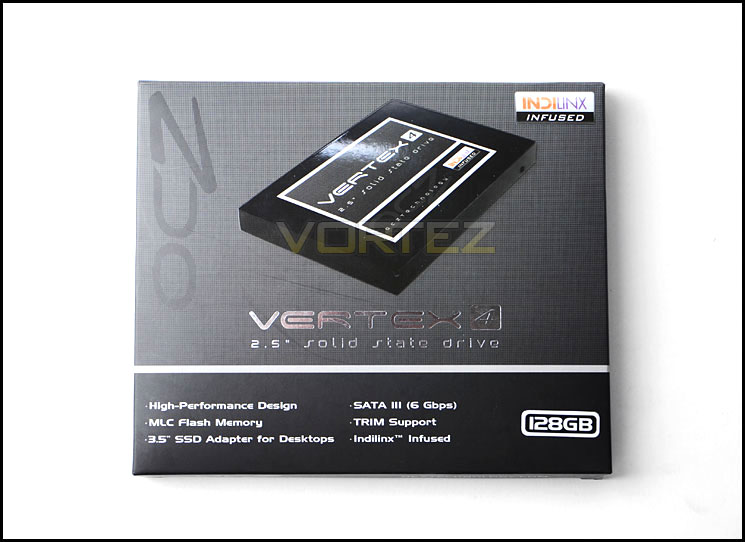
Vertex 4 packaging
Opening the box up reveals an assortment of included items within the bundle. Included items consist of:
• Vertex 4 SSD within anti-static bag
• 3.5” mounting plate
• Installation guide and warranty leaflet
• OCZ sticker
As is usual for OCZ’s SSD product-line, the Vertex 4 sits within a padded compartment and within an anti-static bag for protection.
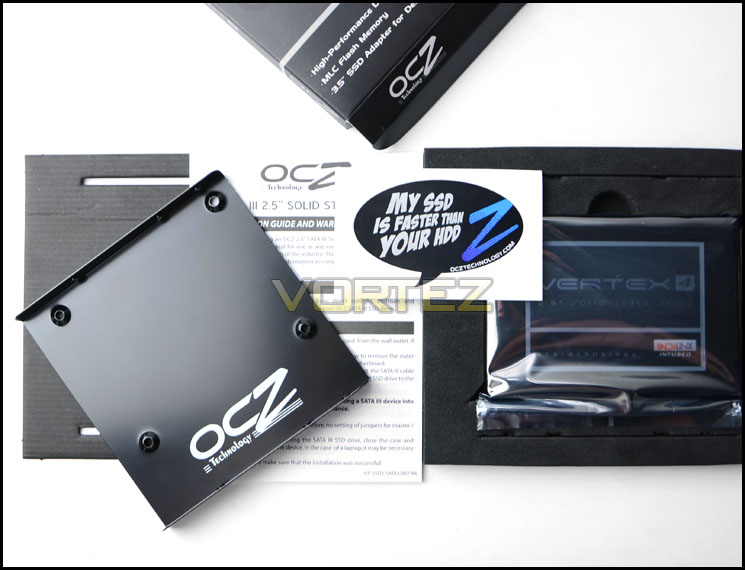
Included items within Vertex 4 bundle
Unveiling the Vertex 4 we are met with a very sleek looking exterior. Vertex 4’s outer shell is covered in a smooth, plastic cover – the centre having a product label identifying the drive.
Flipping the drive over the underside has a brushed steel plate with a specifications label detailing the serial number, capacity, form factor and other intricate information. Overall build quality is very good.
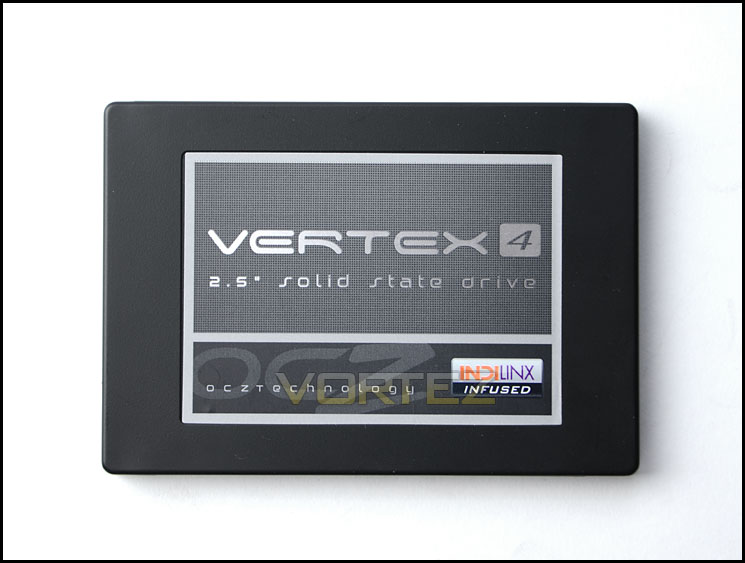
Vertex 4 in all its glory
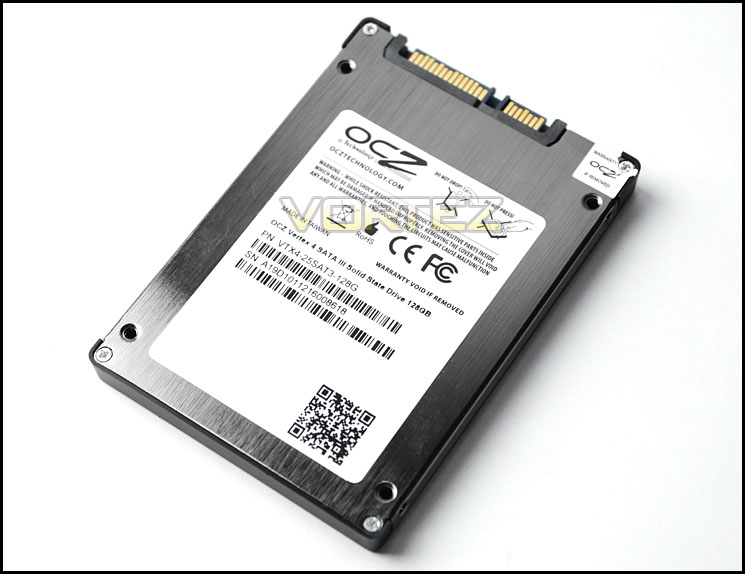
The underside of Vertex 4
To reveal the inner-workings of Vertex 4 – four screws need to be removed. After removing the cover from the drive the first thing to notice is the thermal adhesive pad attached to the cover. When the cover is in place this pad covers the dual-ARM controller – Indilinx Everest 2 platform.
Indilinx Everest 2 brings in better real world performance handling fully incompressible data more efficiently. Incompressible data include video, encrypted data, ZIP/RAR files etc. A plethora of features are available with this platform that includes Ndurance 2.0 technology which in turn delivers:
• Reduced Write Amplification without Compression
• Advanced Multi-Level ECC
• Adaptive NAND Flash Management
• Redundant NAND Array™ (RNA) Technology
Additional to this Vertex 4 also delivers the following features: Auto-Encryption and AES-256 Support Advanced ECC Engine (up to 128bits per 1KB) Superior Flexibility (extensive NAND compatibility; vendor-specific NAND commands).
Intel 25nm Synchronous Multi-Level Cell (MLC) NAND flash also features on Vertex 4, something which is in keeping with previous Vertex SSDs.
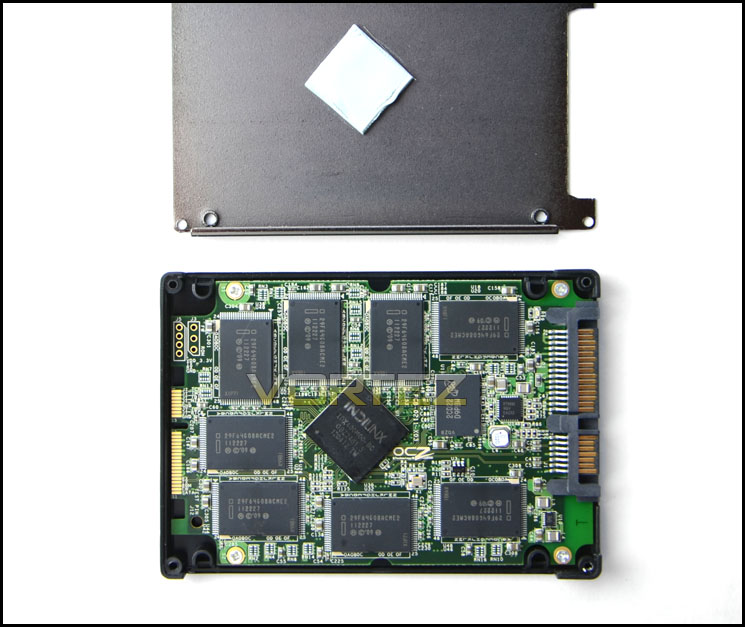
Vertex 4 PCB
With the inspection now over let’s see how Vertex 4 performs whilst under testing conditions against a list of rival drives.
Testing Methodologies
Our SSDs have recently been moved to a new test system as the Intel P67 setup has been decommissioned for the newer Intel Z77. As a result, the database whilst still having a reasonable number of test subjects to compare against isn’t as extensive as we would like so keep a look out over the coming weeks for more additions!
The system is formatted and a fresh version of Windows is installed with just drives in place – no additional applications. Windows is then updated to the latest release and the drivers are installed. Included in the list of benchmarks are the following applications:
ATTO Disk Benchmark v2.46
AS SSD
CrystalDiskMark 3.0
Iometer
SiSoftware SANDRA 2012
Windows 7 Boot Time Test
Test system
CPU Intel Core i5 3570K
Motherboard MSI Z77A-GD65
Graphics MSI R7970 Black Edition
Memory 8GB Corsair Vengeance 2133MHz
HDD
– OCZ Vertex 4 128GB (Sata Gbps)
– Kingston HyperX 3K 120GB (Sata Gbps)
– Kingston HyperX 240GB (Sata 6Gbps)
– ADATA S510 120GB (Sata 6Gbps)
– Intel 520 480GB (Sata 6Gbps)
– Samsung 830 Series 256GB (Sata 6Gbps)
– Samsung HD103SJ 1TB (Sata 3Gbps)
PSU OCZ 750W Fatal1ty
OS Microsoft Windows 7 Professional 64-Bit
Motherboard MSI Z77A-GD65
Graphics MSI R7970 Black Edition
Memory 8GB Corsair Vengeance 2133MHz
HDD
– OCZ Vertex 4 128GB (Sata Gbps)
– Kingston HyperX 3K 120GB (Sata Gbps)
– Kingston HyperX 240GB (Sata 6Gbps)
– ADATA S510 120GB (Sata 6Gbps)
– Intel 520 480GB (Sata 6Gbps)
– Samsung 830 Series 256GB (Sata 6Gbps)
– Samsung HD103SJ 1TB (Sata 3Gbps)
PSU OCZ 750W Fatal1ty
OS Microsoft Windows 7 Professional 64-Bit
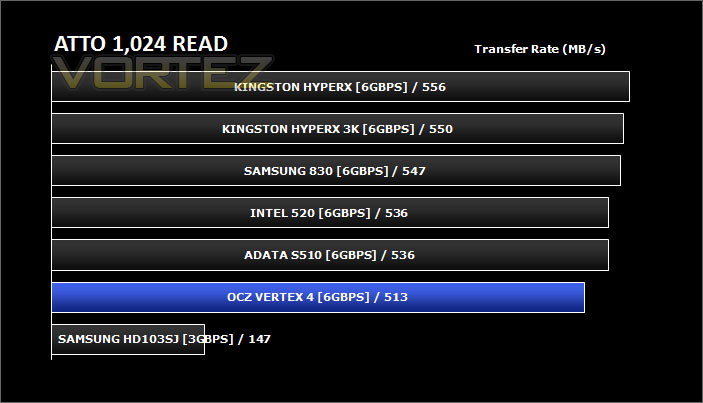
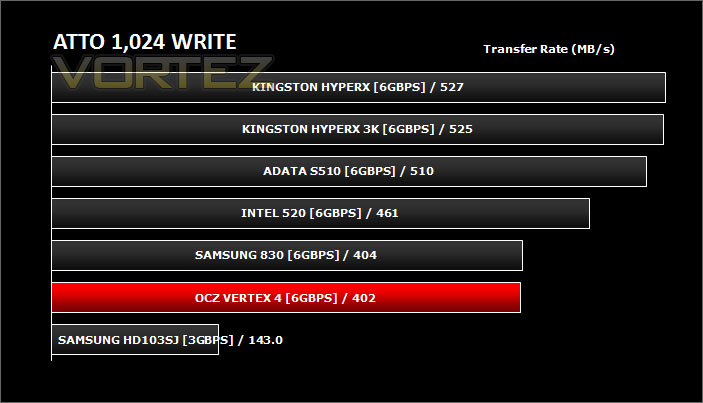
Benchmarks: ATTO Disk Benchmark v2.46
The ATTO Disk Benchmark performance measurement tool is compatible with Microsoft Windows. Measure your storage systems performance with various transfer sizes and test lengths for reads and writes. Several options are available to customize your performance measurement including queue depth, overlapped I/O and even a comparison mode with the option to run continuously. Use ATTO Disk Benchmark to test any manufacturers RAID controllers, storage controllers, host adapters, hard drives and SSD drives and notice that ATTO products will consistently provide the highest level of performance to your storage.
Benchmarks: AS SSD
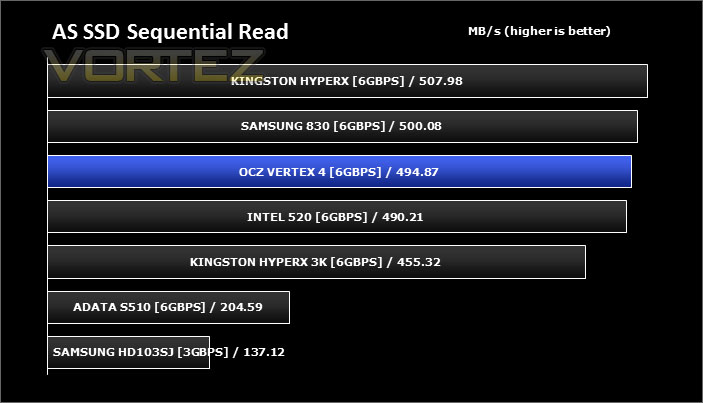
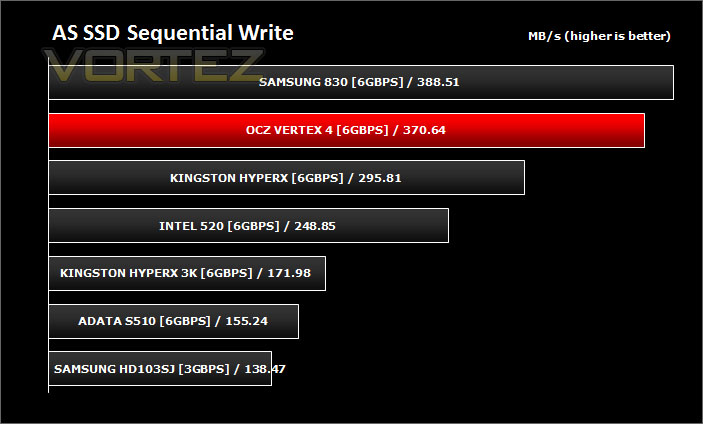
AS SSD Benchmark is a straightforward tool for measuring the speed of your SSD drive.
Simply launch the program, choose your drive, click Start, and it’ll test your SSD’s read and write speed in a variety of ways, delivering a score for each when it’s done. And if that’s not enough, there are also additional file copy and compression-related benchmarks available from the Tools menu. (The author’s support page is German only, but if you need further English explanations then there’s a thread on the program at the OCZ Technology forum.).
Simply launch the program, choose your drive, click Start, and it’ll test your SSD’s read and write speed in a variety of ways, delivering a score for each when it’s done. And if that’s not enough, there are also additional file copy and compression-related benchmarks available from the Tools menu. (The author’s support page is German only, but if you need further English explanations then there’s a thread on the program at the OCZ Technology forum.).
Benchmarks: CrystalDiskMark 3.0
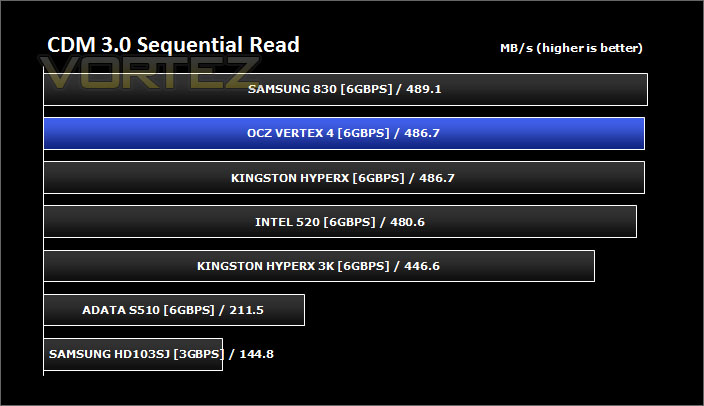
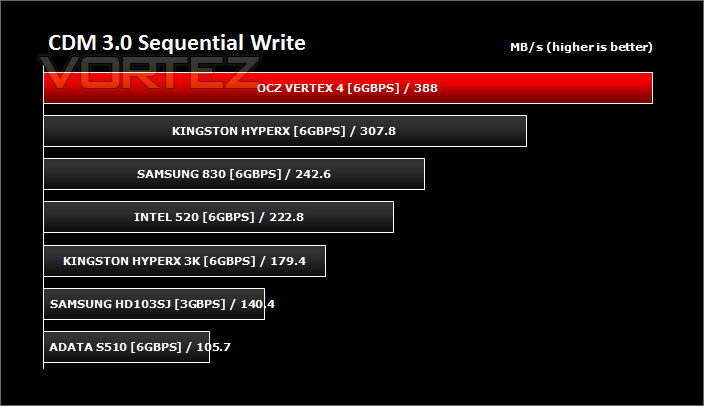
CrystalDiskMark is a disk benchmark software that analyses different types of hard drive. Giving sequential benchmark write and read statistics in MB/s. A simple program that is very useful.
Benchmarks: IOMeter
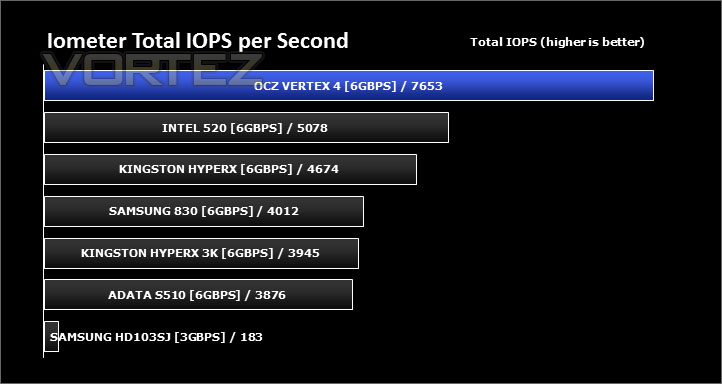
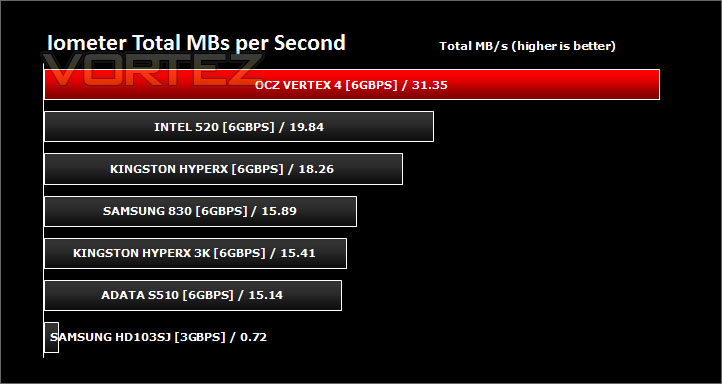
Iometer is based on a client–server model, where one instance of the Iometer graphical user interface is managing multiple ‘workers’ (each one representing a separate Dynamo.exe process) which are doing the I/O. Iometer performs Asynchronous I/O – accessing files or block devices (later one allowing to bypass the file system buffers).
Iometer allows the configuration of disk parameters such as the ‘Maximum Disk Size’, ‘Starting Disk Sector’ and ‘# of Outstanding I/Os’. This allows a user to configure a test file upon which the ‘Access Specifications’ configure the I/O types to the file.
Iometer allows the configuration of disk parameters such as the ‘Maximum Disk Size’, ‘Starting Disk Sector’ and ‘# of Outstanding I/Os’. This allows a user to configure a test file upon which the ‘Access Specifications’ configure the I/O types to the file.
For the purpose of this test. The 4K 50%/50% read/write file will be under the examination with 100% Random Distribution – reporting back on IOPS and MBs per Second.
Benchmarks: SiSoftware SANDRA 2012
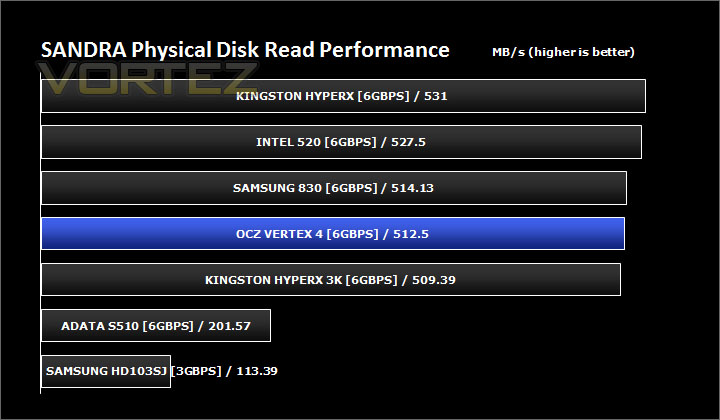
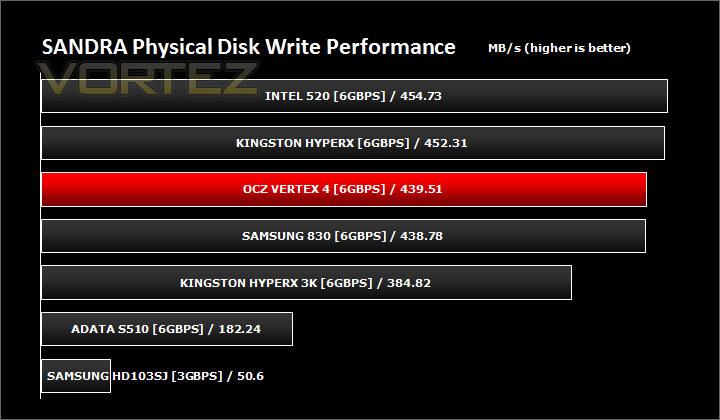
SiSoftware Sandra (the System ANalyser, Diagnostic and Reporting Assistant) is an information & diagnostic utility. It should provide most of the information (including undocumented) you need to know about your hardware, software and other devices whether hardware or software.
Sandra is a (girl) name of Greek origin that means “defender”, “helper of mankind”. We think that’s quite fitting.
It works along the lines of other Windows utilities, however it tries to go beyond them and show you more of what’s really going on. Giving the user the ability to draw comparisons at both a high and low-level. You can get information about the CPU, chipset, video adapter, ports, printers, sound card, memory, network, Windows internals, AGP, PCI, PCI-X, PCIe (PCI Express), database, USB, USB2, 1394/Firewire, etc.
Sandra is a (girl) name of Greek origin that means “defender”, “helper of mankind”. We think that’s quite fitting.
It works along the lines of other Windows utilities, however it tries to go beyond them and show you more of what’s really going on. Giving the user the ability to draw comparisons at both a high and low-level. You can get information about the CPU, chipset, video adapter, ports, printers, sound card, memory, network, Windows internals, AGP, PCI, PCI-X, PCIe (PCI Express), database, USB, USB2, 1394/Firewire, etc.
Benchmarks: Windows 7 Boot
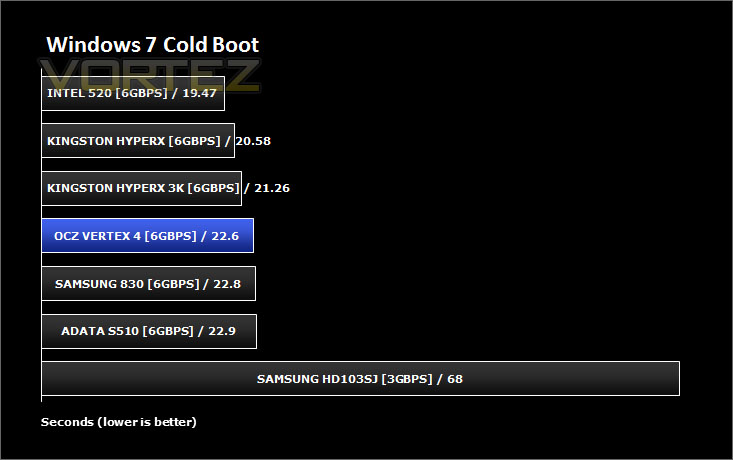
Synthetic testing is valuable in the examination of Solid State Drives. But some of the tests may not mean all that much to some readers so the final test in this review is a real world test showing the Windows 7 boot time.
In order to perform this test (and indeed all other benchmarks), a fresh install of Windows 7 Professional was installed on the HyperX 3K – the image of this install with no additional applications or drivers was exported for importing onto each drive at the time of testing. This will provide a clean and fair environment for comparing the boot times on each of the drives. The times were monitored using a stopwatch.
In order to perform this test (and indeed all other benchmarks), a fresh install of Windows 7 Professional was installed on the HyperX 3K – the image of this install with no additional applications or drivers was exported for importing onto each drive at the time of testing. This will provide a clean and fair environment for comparing the boot times on each of the drives. The times were monitored using a stopwatch.
Conclusion
The Vertex family has been a mainstay for OCZ over the years and to the enthusiast’s ear a product-line synonymous with quality and performance. The fourth generation of Vertex is now here but does a move away from SandForce present a step forwards or backwards?
Vertex 4 delivers some of the best and most consistent performance figures we have seen in our SSD testing. Sequential performance for this drive is very good – the drive certainly excelled in this area. Furthermore, against the price, Vertex 4 offers excellent price : performance ratio.
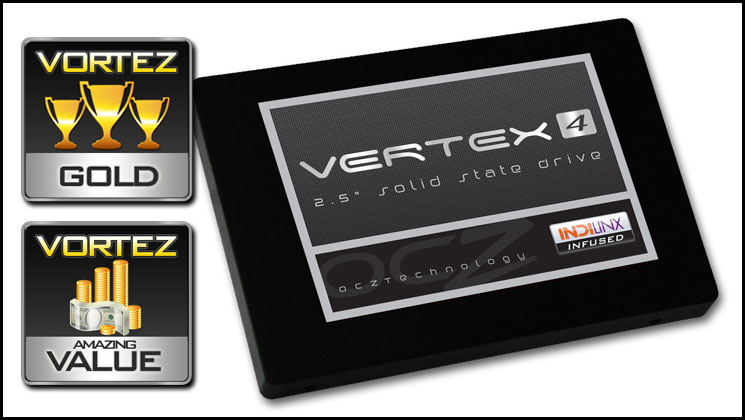
Priced at around £100inc. VAT this is less than £1 per GB and is a very attractive investment for the multitude wanting to jump onto the SSD bandwagon. For those who have been reluctant due to soaring prices this problem is now of no concern.
The 4th Generation of Vertex SSD delivers outstanding performance that is within the grasp of even the casual enthusiast. An impressive 5-years warranty makes the Vertex 4 a very hot product indeed and highly recommended by Vortez – Gold award.
Pros
+ Excellent price : performance ratio
+ Very affordable
+ Strong sequential performance
+ 5 years warranty
+ Auto-encryption
Cons
– There are none!
+ Excellent price : performance ratio
+ Very affordable
+ Strong sequential performance
+ 5 years warranty
+ Auto-encryption
Cons
– There are none!

Click here for an explanation of our awards at Vortez.net.


